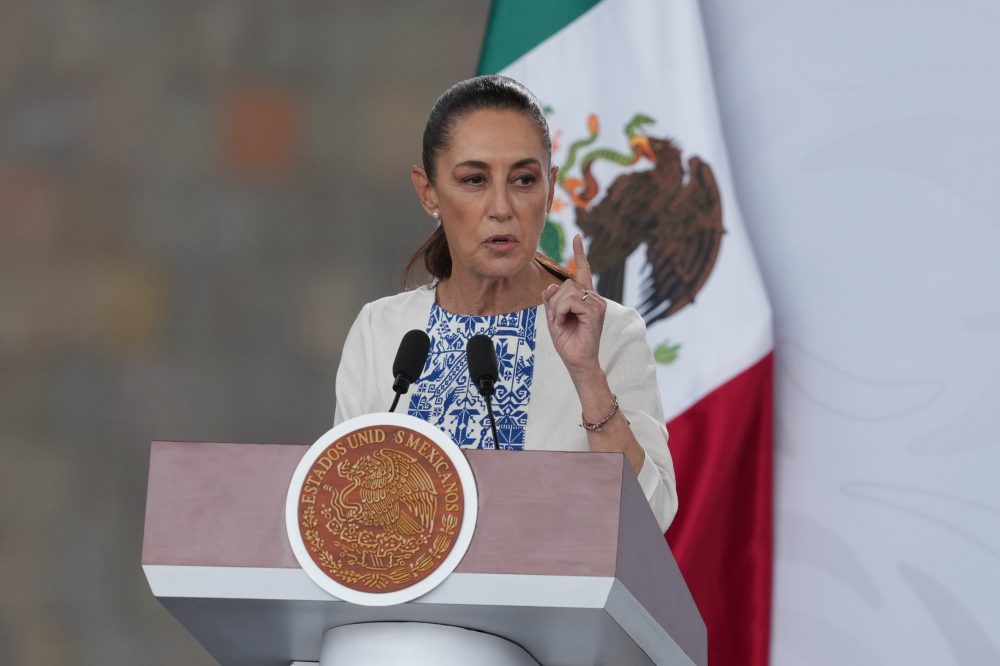
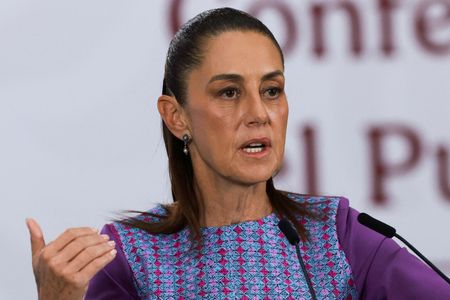
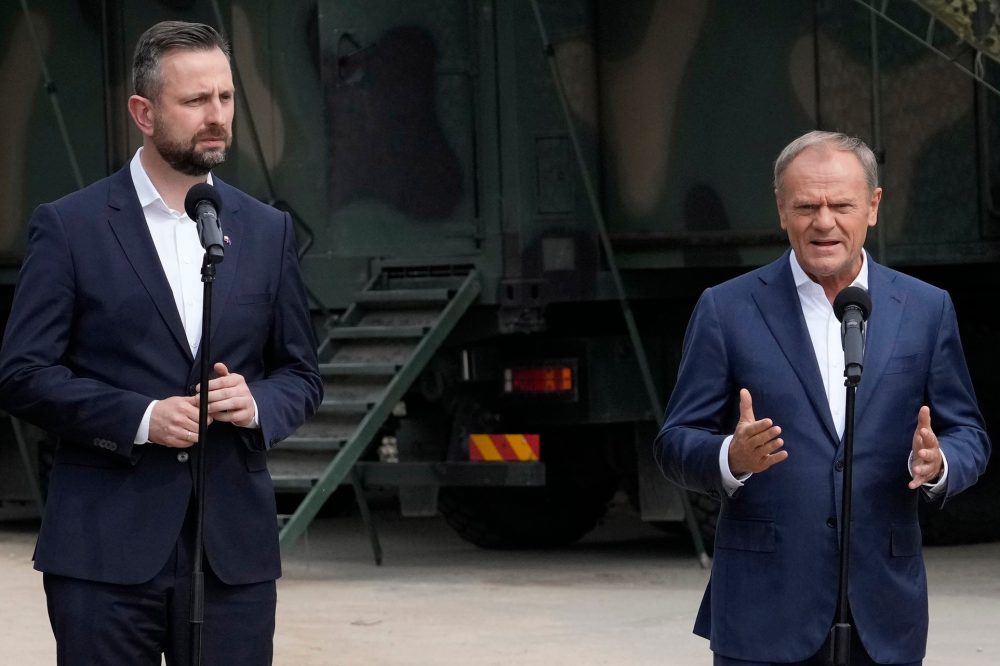
Mexican President Claudia Sheinbaum announced Thursday her intention to enhance security cooperation between the two nations during U.S. Homeland Security Secretary Markwayne Mullin’s upcoming visit to Mexico City. The discussions will focus on fighting drug trafficking, migrant smuggling, weapons trafficking, and improving intelligence cooperation.
The U.S. official’s two-day trip follows recent diplomatic friction stemming from the deaths of two CIA agents near Mexico’s northern border and federal drug trafficking charges filed against 10 Mexican government officials.
Since taking office in October 2024, Sheinbaum’s government has worked to balance cooperation with the Trump administration while protecting Mexico’s national sovereignty against potential U.S. military action threats.
“What we want is for us to continue working within the framework of that (security) understanding,” Sheinbaum stated during her morning press briefing, referencing previous discussions with the Trump administration.
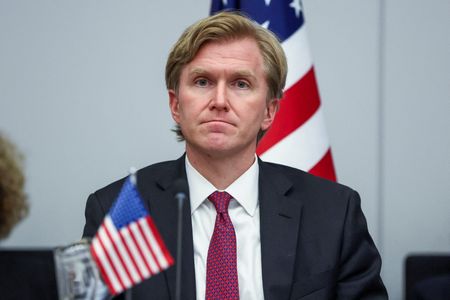
Mullin, who took over the role in March following Kristi Noem’s exit, will also conduct meetings with Mexico’s Security Cabinet during his visit.
The Mexican leader indicated Thursday she plans to address with Mullin the deaths of 15 Mexican migrants in U.S. Immigration and Customs Enforcement facilities since 2025, which sparked formal diplomatic complaints from her administration. Sheinbaum has ordered consular staff to conduct daily inspections of these detention facilities, and Mexico announced in March it would present these cases to the Inter-American Commission on Human Rights.
However, the Mexican president stated she would not discuss the cases of the 10 indicted officials during her talks with Mullin, noting that some of these individuals are members of the ruling Morena party.
In late April, New York’s Attorney General filed charges against Sinaloa Gov. Rubén Rocha, Culiacan mayor Juan de Dios Gámez, and eight additional current and former officials, alleging drug trafficking and illegal weapons possession.
Both Rocha and Gámez have temporarily left their positions to allow for the investigation launched by Mexico’s Attorney General’s Office, while former Sinaloa administration officials Gerardo Mérida and Enrique Díaz turned themselves in to U.S. authorities last week.
Relations between the countries became tense following the April 19 deaths of two CIA agents and two officials from the Chihuahua Attorney General’s Office when their vehicle crashed into a ravine in mountainous terrain between Chihuahua — which shares a border with Texas — and Sinaloa state, where authorities had recently shut down an illegal synthetic drug laboratory.
This incident led to an official complaint from the Sheinbaum administration to Washington, protesting that it had not been notified about the presence or activities of the two U.S. agents operating in the opposition-controlled state of Chihuahua.
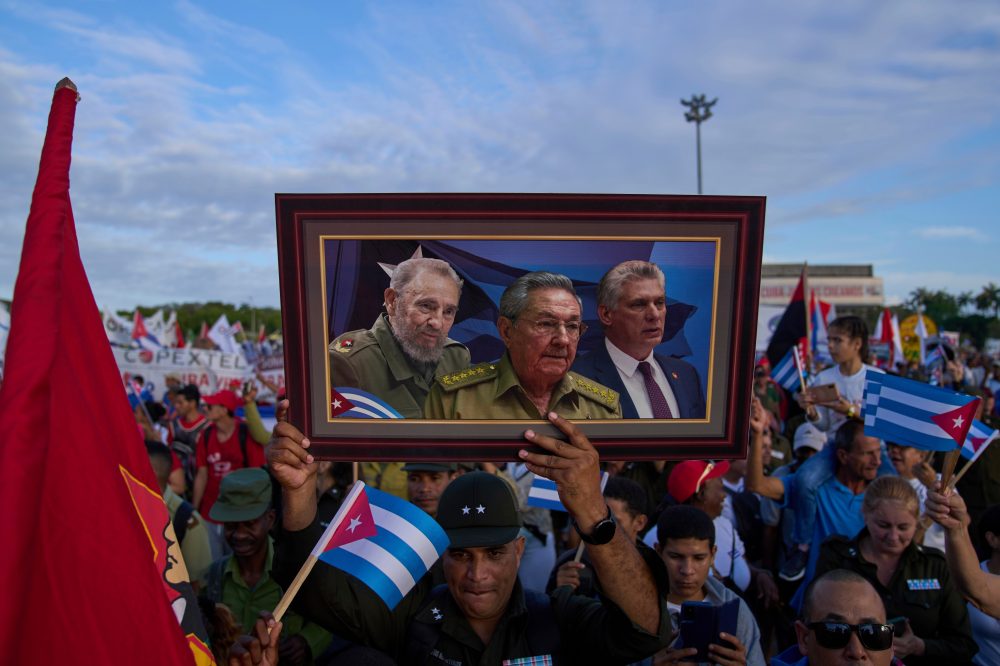
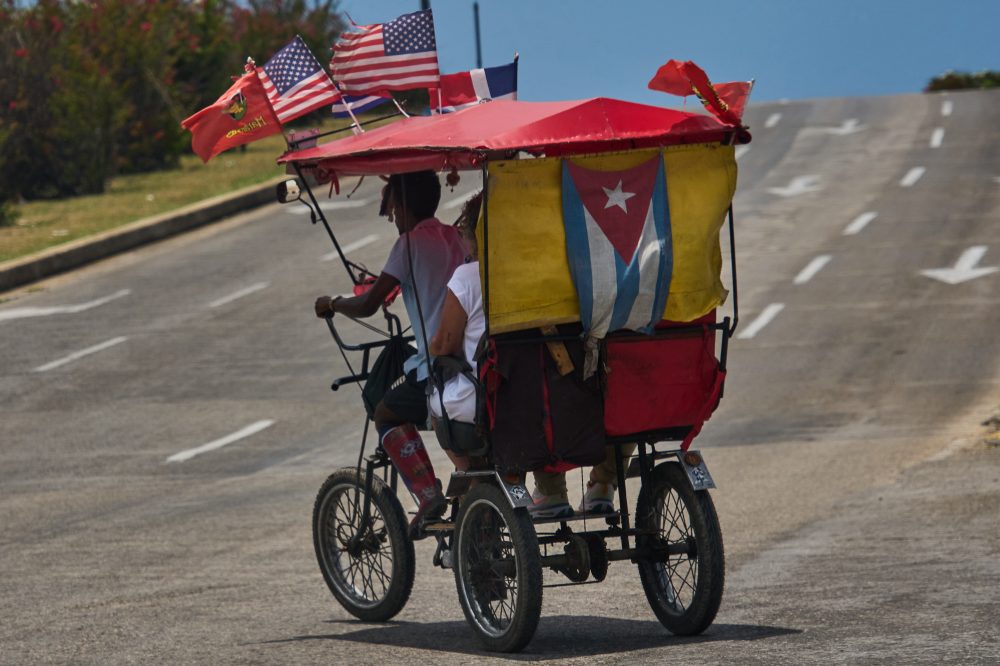
A Cuban military-controlled business empire has become the focal point of escalating tensions between Washington and Havana, with Secretary of State Marco Rubio placing blame squarely on the conglomerate for the island nation’s struggling economy.
The organization in question is GAESA, a military-run business network that Rubio, a Cuban American politician, accuses of being the true power behind Cuba’s economic troubles.
“Cuba is controlled by GAESA,” Rubio declared Wednesday in a Spanish-language video directed at Cuban citizens. “A ‘state within the state’ that is accountable to no one and hoards the profits from its businesses for the benefit of a small elite.”
Cuban leadership seldom discusses GAESA in public forums. Officials have consistently maintained that such privacy is essential when operating under a U.S. trade and financial embargo that significantly hampers the nation’s international business relationships.
Understanding GAESA’s Structure
The acronym represents Grupo de Administración Empresarial, which translates to ‘business administration group.’ This extensive network of military-operated enterprises is widely regarded as the most profitable and well-run business entity on the island.
The organization oversees numerous luxury hotels throughout the Caribbean nation, operates the major Mariel port facility, runs the primary commercial banking institution, and manages extensive networks of grocery stores, fuel stations and money transfer services.
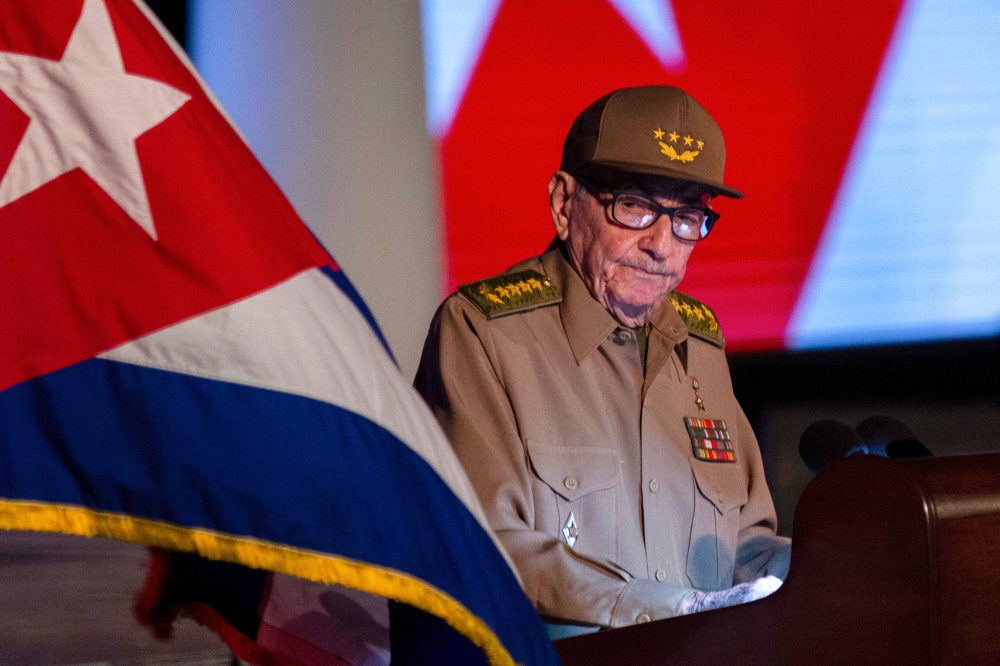
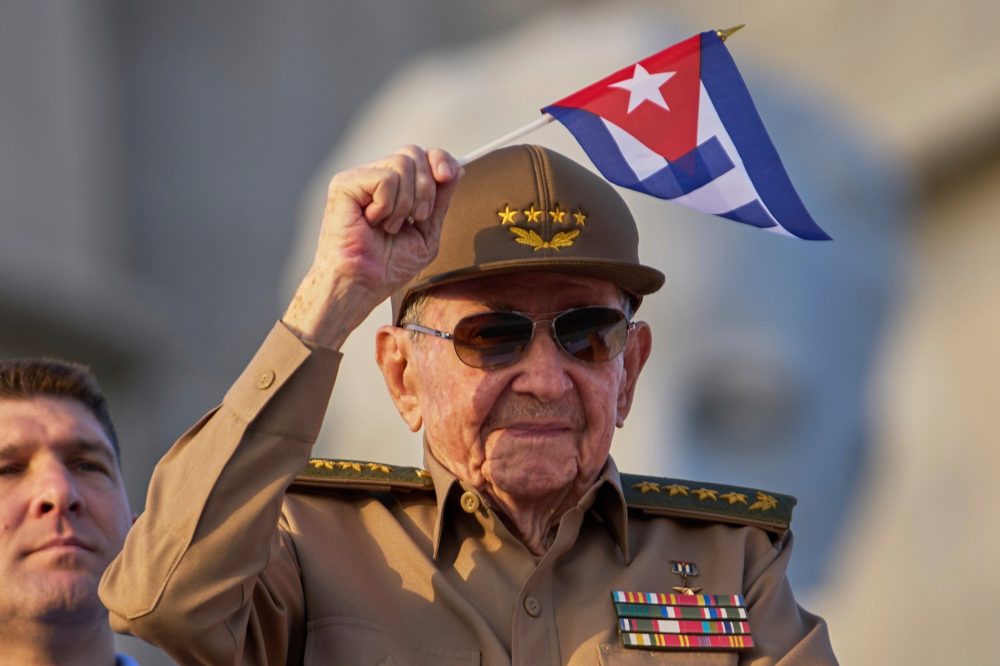
This closely monitored umbrella organization came into existence during the 1990s under then defense minister Raúl Castro’s direction and remains under the authority of the island’s Revolutionary Armed Forces.
Until his passing in 2022, Luis Alberto Rodríguez López-Calleja, who was formerly Raúl Castro’s son-in-law, served as GAESA’s leader. His replacement, Brigadier General Ania Guillermina Lastres, recently faced U.S. sanctions imposed by President Donald Trump’s administration earlier this month.
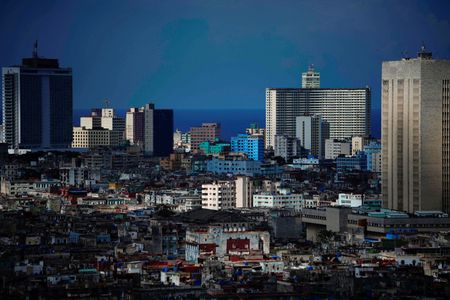
The organization’s influence is perhaps most dramatically illustrated by Torre K, a 42-floor structure housing the luxury Iberostar Selection La Habana hotel, which stands as the island’s tallest building. This GAESA-connected construction project was finished in 2025 during a period of declining tourism, and the tower and hotel currently remain unoccupied.
Washington’s Position on GAESA
During his five-minute address to Cuban citizens, Rubio referenced GAESA eight separate times.
The Trump administration claims GAESA accumulates earnings from the nation’s most lucrative sectors and channels these resources to benefit military leadership and Cuban elites.
“The real reason you don’t have electricity, fuel, or food is because those who control your country have plundered billions of dollars, but nothing has been used to help the people,” Rubio stated.
Washington has consistently targeted GAESA enterprises with sanctions, which effectively bars American tourists from staying at GAESA-operated accommodations.
Cuba’s Response Regarding GAESA
Cuban officials reject claims that GAESA corruption or profit-hoarding has caused the current economic difficulties, instead highlighting recent United Nations expert statements that Trump administration fuel restrictions have created “energy starvation” with serious implications for human rights and development.
Beyond this defense, the government provides minimal information about the business group. A review of the leading Communist Party publication Granma revealed only seven mentions of “GAESA” across two decades, with these references containing little substantive detail.
Cuban government representatives rarely make public statements about GAESA, and the organization’s financial information does not appear in the communist government’s official budget documents.
Multiple government officials have indicated over time that maintaining secrecy is crucial for operating strategic enterprises that generate foreign currency while facing extensive U.S. sanctions.
In 2024, Gladys Bejerano, who served as Cuba’s comptroller general and chief auditor, informed Spanish news agency EFE that GAESA fell outside her oversight responsibilities and characterized the military-led enterprise as having “superior discipline and organization.”
GAESA’s Economic Impact
No official data exists regarding what portion of Cuba’s economy falls under GAESA’s control. External analysts estimate the figure ranges between 40% and 70%.
Rubio claimed GAESA generates income that exceeds Cuba’s national budget by three times.
“Today, while you suffer, these businessmen have $18 billion dollars in assets and control 70% of Cuba’s economy,” he stated.
Recently, Cuba’s embassy in the UK responded on X to a Miami Herald article citing the $18 billion amount, asserting the report had exaggerated GAESA’s wealth by 24 times.
“Basic accounting dismantles this ‘bombshell,’” the embassy posted. “Why the deception? Inventing a secret $18 billion hoard provides a convenient political excuse to tighten the very illegal sanctions that suffocate the Cuban population.”
ISTANBUL (AP) — A Turkish appeals court delivered a significant blow to the nation’s primary opposition movement Thursday by invalidating the 2023 party election that brought its current leader to power.
The decision strikes another damaging blow against the Republican People’s Party, known as CHP, which has been battling numerous legal challenges aimed at its leadership and elected representatives.
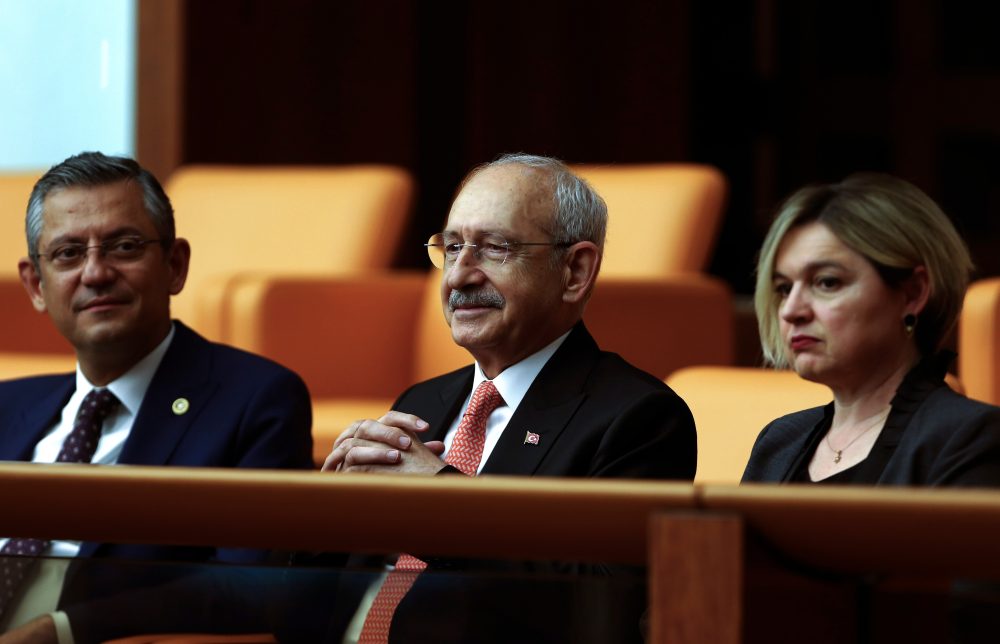
The appeals court in Turkey’s capital Ankara invalidated the CHP leadership election that installed Ozgur Ozel as party chairman, mandating his replacement with former leader Kemal Kilicdaroglu.
While a lower court previously rejected allegations of voting irregularities and improper conduct in Ozel’s election last year, Thursday’s appellate ruling reversed that earlier decision.
The court order triggered urgent discussions at CHP headquarters in Ankara, creating additional obstacles for opposition efforts to challenge President Recep Tayyip Erdogan’s more than 20-year grip on power. Substantial crowds assembled outside the building while law enforcement set up protective barriers.
Turkey’s next presidential contest is scheduled for 2028, though Erdogan retains the authority to schedule an earlier election. His primary political rival, Istanbul’s CHP mayor Ekrem Imamoglu, has been behind bars since March of last year while facing trial on corruption accusations.
The appellate court’s ruling temporarily removes Ozel and the party’s executive leadership from their positions. Kilicdaroglu and officials who served before the November 2023 party congress will assume their roles on an interim basis.
Speaking to broadcaster TV100, Kilicdaroglu urged party supporters to stay composed. “Our party is a very large party and it will solve its own problems internally,” he said. The 77-year-old leader was ousted after leading the party for 13 years without securing victory in any nationwide elections.
Ozel, for his part, worked to energize his base of support.
“I am not promising you a path to power through a rose garden,” he posted on X following the ruling. “I am promising you the ability to endure suffering but never surrender. I am promising you honor, dignity, courage and struggle!”
The CHP plans to contest Thursday’s decision before the Supreme Court in the near future.
Justice Minister Akin Gurlek, who previously handled multiple CHP cases as Istanbul’s top prosecutor, characterized the court’s decision as one that “reinforces our citizens’ trust in democracy.”
Numerous political analysts have argued that the legal actions targeting the CHP — primarily focused on corruption accusations — are politically driven attempts to weaken the party before upcoming elections. Government officials, however, maintain that Turkey’s judicial system operates independently without political interference.
Erdogan has governed Turkey since 2003, initially as prime minister before assuming the presidency. His winning streak faced a significant setback in 2019 when CHP candidates captured control of multiple major municipalities during local voting. In Istanbul, Imamoglu became a compelling and charismatic leader whom many believed capable of defeating Erdogan.
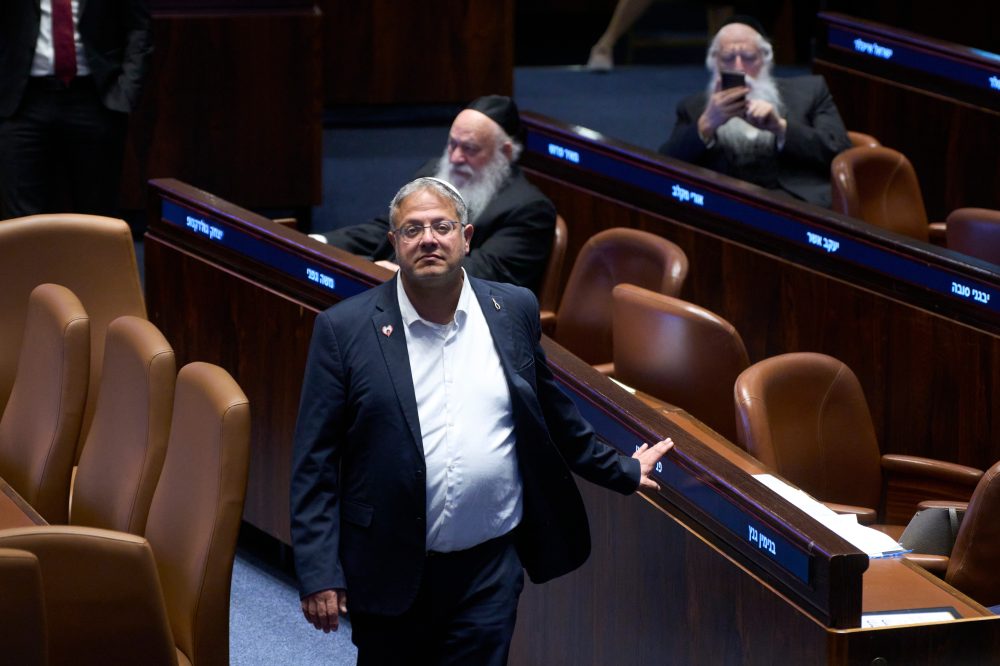
JERUSALEM (AP) — A controversial video showing Israel’s national security minister mocking detained Gaza flotilla activists has put a spotlight on Itamar Ben-Gvir’s lengthy record of provocative behavior and extreme political positions.
The far-right politician, who was rejected from mandatory military service as a young man due to his radical beliefs, has spent decades working his way from the political margins to become one of Israel’s most influential leaders.
Ben-Gvir faced widespread criticism this week after footage emerged showing his treatment of approximately 430 people detained from the Global Sumud Flotilla. Even coalition partner Prime Minister Benjamin Netanyahu condemned his actions.
The video clips show Ben-Gvir displaying a large Israeli flag above hunched detainees with bound hands. In another scene, he shouts “Am Israel Chai” — meaning “The nation of Israel lives” in Hebrew — at a kneeling person whose wrists are restrained with zip ties. Additional footage shows detainees with their faces pressed to the ground in an outdoor enclosure while the Israeli national anthem plays and armed officers surround them.
The 50-year-old heads an ultranationalist movement promoting West Bank settlements and has successfully reinvented himself from a political outsider to a major power broker in Israeli politics over several decades.
Ben-Gvir’s criminal record includes eight convictions for charges such as racism and backing a terrorist organization.
Military officials refused to allow him to serve when he reached conscription age, determining his political views were too radical.
As a young man, Ben-Gvir became known as a supporter of deceased extremist rabbi Meir Kahane. He first gained national attention in 1995 when he damaged the hood ornament on then-Prime Minister Yitzhak Rabin’s vehicle.
“We got to his car, and we’ll get to him too,” he declared at the time, making the statement just weeks before a Jewish extremist assassinated Rabin over his Palestinian peace initiatives.
In 1997, Ben-Gvir admitted to organizing protest campaigns, including death threats, that forced Irish performer Sinead O’Connor to cancel a Jerusalem peace concert.
Ben-Gvir’s ascent to political prominence represents years of calculated efforts by the media-savvy politician to achieve mainstream acceptance. His success also mirrors a broader conservative shift among Israeli voters that has elevated his religious, ultranationalist beliefs while reducing prospects for Palestinian statehood.
Professionally trained in law, Ben-Gvir built his reputation defending extremist Jews charged with attacking Palestinians.
His sharp humor and upbeat personality made him a regular media presence, helping launch his political career. He first won a parliamentary seat in 2021.
Ben-Gvir has advocated for exiling his political rivals. In 2022, he displayed a handgun and urged police to shoot Palestinian stone-throwers in a volatile Jerusalem area.
Through his Cabinet position, Ben-Gvir controls the nation’s police forces. He has used this authority to push Netanyahu to continue the Gaza conflict and recently claimed credit for preventing previous ceasefire agreements.
In his role as national security minister, he has directed police to take aggressive action against government critics.
Ben-Gvir, a resident of the West Bank settlement Kiryat Arba, obtained his Cabinet position following 2022 elections that brought Netanyahu and his far-right allies, including Ben-Gvir’s Jewish Power party, to power.
“Over the last year I’ve been on a mission to save Israel,” Ben-Gvir stated to journalists before that election. “Millions of citizens are waiting for a real right-wing government. The time has come to give them one.”
Throughout his time in office, Ben-Gvir has generated constant controversy — promoting widespread gun distribution to Jewish civilians, supporting Netanyahu’s disputed judicial reform plans, and regularly criticizing U.S. officials for perceived anti-Israel positions.
His responsibilities include overseeing the police force, prison system, and border security units operating in the Israeli-occupied West Bank.
Following Hamas’ October 7, 2023 attack that triggered the Gaza war, Ben-Gvir consistently opposed allowing humanitarian supplies into the territory, despite expert warnings about potential famine conditions.
In July 2025, Britain, Australia, Canada, New Zealand and Norway imposed sanctions on Ben-Gvir and one other Israeli minister for allegedly “inciting extremist violence” against Palestinians in the Israeli-occupied West Bank. The Netherlands has prohibited Ben-Gvir from entering the country.
He recently expressed satisfaction in Israel’s parliament after lawmakers passed legislation he championed authorizing capital punishment for Palestinians convicted of killing Israelis.
Ben-Gvir stepped down from Netanyahu’s Cabinet temporarily last year to protest the Gaza ceasefire agreement.
The ceasefire lasted from January 19 to March 1. While Ben-Gvir’s departure didn’t prevent the ceasefire, it did undermine Netanyahu’s governing alliance.
Ben-Gvir returned to the Cabinet when Israel terminated the ceasefire and resumed military operations in Gaza in March 2025. He has maintained his Cabinet position throughout the current Gaza ceasefire.
Mexican President Claudia Sheinbaum has instructed members of her ruling Morena party to step down from their positions if they have connections to corrupt activities, two party sources revealed to Reuters.
The directive was communicated during a gathering with Morena governors at the National Palace last Thursday, the sources indicated. One week earlier on May 7, she conveyed the same message to party lawmakers during a separate meeting.
Both the presidency and Morena declined to respond to requests for comment.
“The ultimatum was that if they are involved in anything shady, they must resign and face the consequences,” said one of the Morena sources, who spoke to Reuters on the condition of anonymity because the meeting was private. Sheinbaum did not mention names nor say what action would be taken if officials did not step down, the sources said.
This previously unreported communication to party members represents the most recent development following the significant U.S. indictment announced last month. The charges named Sinaloa State Governor Ruben Rocha and additional current and former officials for their suspected connections to the Sinaloa Cartel.
Publicly, Sheinbaum has denounced the U.S. extradition requests that came with the indictment, claiming they contained inadequate evidence for Mexico to authorize arrest warrants. She has demanded “clear” proof from the U.S. and stated that without it, the accusations seem politically driven.
However, the confidential discussions with Morena indicate Sheinbaum is pursuing a different approach within her own political organization.
Rocha holds significant influence within Morena and maintains close ties to former President Andres Manuel Lopez Obrador, who served as Sheinbaum’s predecessor and mentor. Rocha, who maintains his innocence, has temporarily withdrawn from his duties while a local investigation moves forward.
Reuters had previously documented that the U.S. indictment created divisions within Morena as different groups debate their response strategy. Some factions support shielding Rocha and others from U.S. interference, while another segment pushes for addressing corruption within the party’s membership.
The two party sources indicated growing worry within Morena that the U.S. might employ anti-terrorism legislation to target officials and that Morena could face implications similar to those imposed on various Mexican cartels.
During a routine press conference when questioned about this possibility, Sheinbaum dismissed the concern, stating she perceived “no risk” of Morena receiving designation as a foreign terrorist organization.
However, in private discussions, the sources revealed Sheinbaum has conveyed a different tone, cautioning party officials about potential dangers to Morena and its supporters if corruption accusations persist.
“We must guarantee the future of Morena,” she told her party members.
Sheinbaum is scheduled to meet with Department of Homeland Security Secretary Markwayne Mullin on Thursday as diplomatic tensions between the two nations continue rising.
The death of two U.S. officials in a vehicle accident in northern Mexico last month created a diplomatic dispute regarding their presence while traveling with a Mexican security convoy returning from a drug laboratory raid. Sources informed Reuters the U.S. officials were CIA officers.
The involvement of U.S. personnel in anti-cartel activities remains an extremely sensitive issue in Mexico. Sheinbaum has consistently stated her support for intelligence cooperation and security collaboration but refuses to permit U.S. agents or military forces to participate in operations within Mexican borders.
In comparison, U.S. President Donald Trump has consistently advocated for expanded use of U.S. military resources against Mexican cartels and has warned that the U.S. might act independently if Washington determines Mexico’s efforts are insufficient.
As tensions continue, a U.S. Department of State official announced the government has begun reviewing the more than 50 Mexican consulates operating in the United States, a process that could lead to closing some diplomatic facilities.
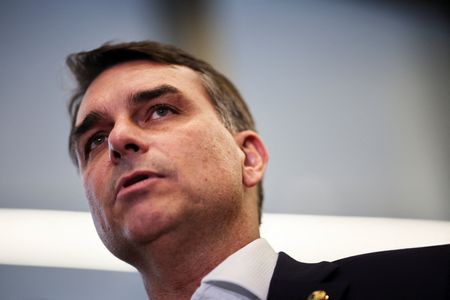
A Brazilian senator running for president is working to arrange a meeting with President Donald Trump at the White House, according to two sources with knowledge of the situation, as his campaign struggles with fallout from a banking scandal.
Sources indicate that Senator Flavio Bolsonaro may travel to the United States on Monday for a White House meeting with Trump next week. While one source confirmed an invitation from the White House, the exact timing remains unclear.
The right-wing senator, who is the oldest son of former President Jair Bolsonaro, has not responded through his spokesperson regarding the potential visit.
The Washington trip is being planned while the senator’s presidential campaign deals with a major controversy that has hurt his standing in polls against the current leftist president, Luiz Inacio Lula da Silva, with October elections approaching.
Earlier this month, the senator became connected to a major bank fraud case after acknowledging he had arranged millions in financing for a documentary about his father from Daniel Vorcaro, a banker currently imprisoned on charges of bribing government officials and cheating investors.
The senator has maintained that his discussions with the banker involved only a legitimate private investment deal without any wrongdoing or special treatment. He had earlier stated he had no dealings with the banker.
During this week, the senator visited Sao Paulo to meet with business executives who are becoming more concerned about his ability to defeat Lula in the upcoming election.
He also conducted meetings with top campaign staff members and made changes to his communications leadership.
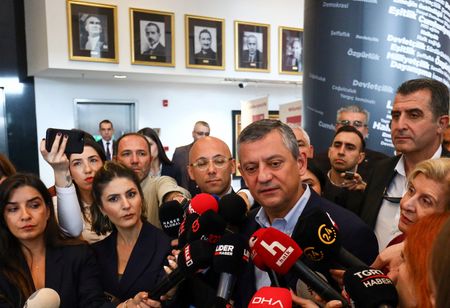
A court ruling in Turkey’s capital has invalidated the 2023 leadership election of the Republican People’s Party, the nation’s primary opposition group, potentially delivering a significant setback to those challenging President Tayyip Erdogan politically.
The court decision on Thursday declared that former chairman Kemal Kilicdaroglu should take back leadership from current chairman Ozgur Ozel, who was chosen during the now-nullified 2023 party congress.
MOSCOW, May 21 — A drone strike carried out by Ukrainian forces resulted in the deaths of three individuals when it hit a train locomotive in Russia’s Bryansk region on Thursday, according to state company Russian Railways.
The fatalities were all employees of Russian Railways who were struck during the attack at a railway station located in the town of Unecha.
The region’s acting governor, Yegor Kovalchuk, had previously confirmed that Unecha had been subjected to an assault.
The Bryansk region shares a border with Ukraine and has repeatedly been the target of Ukrainian military operations.
International criticism intensified Thursday following the release of a video showing Israel’s far-right security minister mocking activists from a Gaza-bound aid flotilla who were being held on the ground by authorities.
The handling of the activists by law enforcement under National Security Minister Itamar Ben-Gvir’s oversight prompted criticism from Israeli Prime Minister Benjamin Netanyahu and the United States, Israel’s closest ally.
The aid workers, whose ship was stopped Wednesday in international waters by Israeli naval units while attempting to transport humanitarian supplies to Gaza, were all expelled from Israel Thursday, according to the Israeli foreign ministry.
European nations called in Israeli diplomatic representatives to express disapproval of the video. Italy requested an official apology, Spain declared it would not accept mistreatment of its nationals, and France called for the immediate release of all those detained.
Britain’s foreign ministry stated the video “violates the most basic standards of respect and dignity for people”, while Poland’s foreign minister requested that Ben-Gvir be prohibited from entering the country.
U.S. Ambassador to Israel Mike Huckabee stated that Ben-Gvir had “betrayed (the) dignity of his nation”.
The widespread condemnation follows the release of campaign-style footage by Ben-Gvir and at least one other minister in Netanyahu’s administration, transport chief Miri Regev, showing them at the port criticizing the demonstrators, publicity-seeking behavior ahead of a possible early election in Israel.
Thameen al-Kheetan, spokesperson for the Office of the U.N. High Commissioner for Human Rights, stated the activists’ detention at sea appeared unlawful, and that any mistreatment should be examined with those responsible held accountable.
“It is not a crime to show solidarity and bring humanitarian assistance to the people who are in dire need of it in Gaza,” he told Reuters.
Italian journalist Alessandro Mantovani, among several activists separated from others and transported home earlier, claimed he was attacked upon arrival at Israeli detention in what he described as a container, calling it a “place of terror”.
“‘Beat you up’ means they kicked me in the legs and punched me in the face. These are people who know what they are doing, so I don’t have any major visible marks … They would beat you up and would tell you ‘Welcome to Israel’,” he told reporters upon arriving at Rome’s Fiumicino airport.
Another Italian activist, Dario Carotenuto, a lawmaker from the 5-Star Movement, reported being punched in the eye and kicked during detention.
Israel’s foreign ministry did not immediately respond to requests for comment regarding the activists’ claims. Participants in previous flotillas intercepted by Israel also reported abuse by Israeli forces, which Israel denied.
Flotilla organizers state they sought to challenge Israel’s blockade of Gaza by delivering humanitarian aid, which charitable organizations say remains insufficient despite a U.S.-brokered ceasefire between Israel and Hamas effective since October 2025 that includes promises of increased assistance.
The flotilla left southern Turkey this week before being intercepted Wednesday. Previous flotillas — including one carrying Swedish activist Greta Thunberg — were also stopped by Israel, with participants subsequently deported.
Israeli rights organization Adalah reported the estimated 430 activists had been freed from prison in southern Israel.
Turkey’s Foreign Minister Hakan Fidan announced his country was organizing special flights to transport Turkish citizens as well as third-country participants to Turkey. Those aboard the flotilla included citizens of Spain, South Korea and Ireland.
“We will continue to uphold the rights of our citizens and fulfil our humanitarian responsibility toward civilians in Gaza,” Fidan stated.
Ben-Gvir’s video depicts officers pushing an activist to the ground after she chants “Free, free Palestine”.
The footage also displays dozens of detained activists kneeling in lines with their hands zip-tied behind their backs, in what appears to be an outdoor Israeli port facility. In the background, soldiers armed with long guns can be seen patrolling the area from aboard a military vessel.
During Israel’s military campaign in Gaza, launched following the October 2023 Hamas attacks, Israeli forces frequently positioned detained Palestinians on the ground with their hands restrained.
“Look at them now. See how they look now, not heroes and not anything,” Ben-Gvir says in the video as he walks past the activists while carrying a large Israeli flag.
Netanyahu declared Ben-Gvir’s behavior was “not in line with Israel’s values and norms”.
Ben-Gvir’s political support includes some of Israel’s most nationalist voters, a group that Netanyahu’s Likud party has previously attempted to attract before national elections, the next of which is scheduled by October 27.
This week, Israel moved closer to a snap election after lawmakers gave initial approval to dissolve parliament.
Canada and Spain are among countries that have imposed sanctions on Ben-Gvir and far-right Finance Minister Bezalel Smotrich, citing allegations that they incited violence against Palestinians.
BEIRUT (AP) — Several months after being forced from her home by conflict, Soubhiye Zeiter begins each day with the same ritual: brewing a large cup of coffee and enjoying a few peaceful minutes at a flower-adorned small table outside her tent in Beirut.
However, the tranquility ends quickly once her coffee is ready.
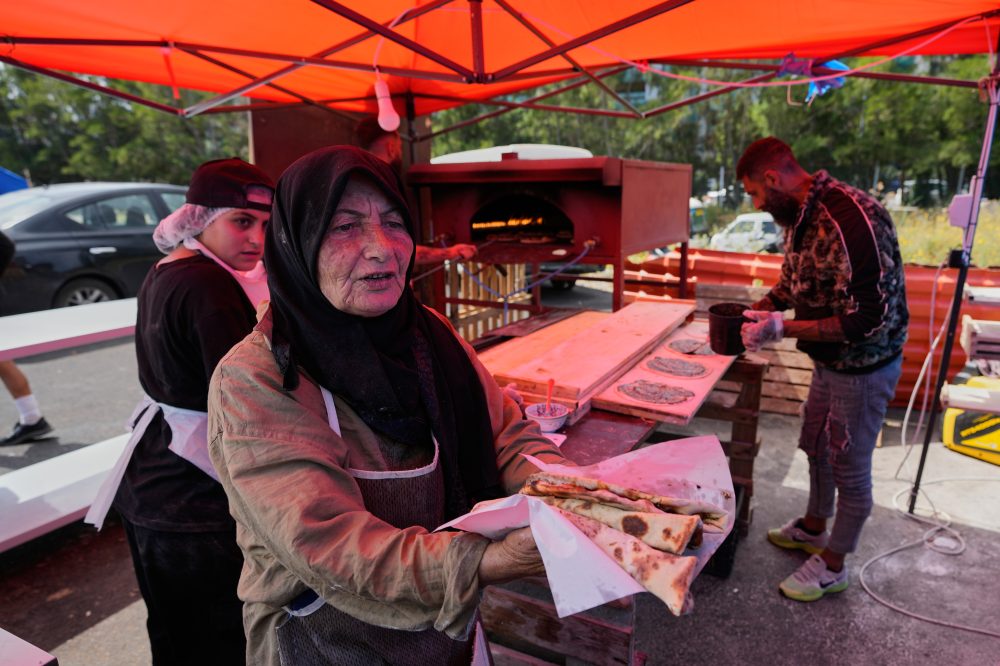
Before the morning progresses far, dozens of people have already formed lines outside Zeiter’s modest bakery operation in a tent camp located in Lebanon’s capital city, eager for her mana’eesh — the beloved Lebanese flatbread served for breakfast with toppings of cheese, meat or za’atar, a seasoning made from thyme and herbs. Kids dart between waiting customers, volunteers hurry trays of dough to and from ovens, and the 63-year-old Zeiter acknowledges almost every passerby, frequently inviting them to sit and share coffee.
Called Om Mohammed by many — an Arabic term meaning Mohammed’s mother — this grandmother evacuated her residence in Beirut’s southern suburbs along with 15 family members when the conflict between Israel and Hezbollah began. She had been residing just south of the capital when Israeli forces issued evacuation orders for the extensive neighborhoods before launching intensive air attacks.
The continuing conflict between Israel and the Hezbollah militant organization has forced more than one million residents to leave their homes in this small nation during months of border clashes. Numerous families abandoned villages in southern Lebanon and Beirut’s southern neighborhoods, finding refuge in schools, government buildings and tent camps throughout Beirut and the wider country.
Upon arriving at the tent camp situated between the Mediterranean Sea and the capital’s upscale downtown area, Zeiter initially visited a nearby location where relief supplies were being given out. However, after learning she would need to wait in line for hours and still might receive nothing, she chose instead to prepare meals for her family and others requiring assistance.
She started using her personal saj — a traditional circular metal cooking surface common throughout Lebanon — preparing approximately 200 mana’eesh daily and distributing them at no cost. As news of her efforts spread, more individuals arrived each morning, with some contributing ingredients. Eventually the waiting lines grew beyond what she could handle by herself.
Today, her small section of the camp resembles a community bakery. Individuals who learned about her work contributed a larger gas-operated oven that operates from early morning through late evening. Dough passes through a rolling machine. Volunteers wrap bread as fast as it emerges hot from ovens. The aroma of thyme and baking dough floats through rows of blue tents.
“We can’t keep up,” Zeiter said, laughing as people continued arriving at the stand. “We bake 3,000 to 3,500 mana’eesh daily and people still come and ask for more.”
What began as one woman preparing food for displaced children has evolved into a community project sustained almost completely by donations. She has gained recognition as somewhat of a local celebrity in her community, with the Beirut governor even stopping by to share coffee with her during an afternoon visit to tour the location.
“People started donating gas, some donated flour or za’atar, some brought oil, cheese, sometimes people brought meat, some brought yeast,” she said. “Whatever I need for this bakery, people are helping me out.”
For Zeiter, the bakery represents more than just providing food. She explains that she wants the tent camp to feel less like a place of grief and more like the communities people were compelled to abandon. During the day, she beckons to people walking by, encourages them to sit together, and attempts to recreate the type of environment she recalls from home.
“We’re all displaced. If I lost my home or got displaced that doesn’t mean that I have to lose my morale,” she said, wishing people even when scarred by war to love and care for each other. “Displacement shouldn’t change us.”
Despite the success of her community project, the sounds of drones flying overhead in the capital and reports of continuing Israeli attacks in southern Lebanon serve as stark reminders that life has been altered. She attempts to engage in activities from happier times, such as playing with her grandchildren and her small white dog, Bella.
Most significantly, she makes sure to prepare an additional pot of coffee — because she dislikes drinking coffee by herself — so she can welcome anyone passing her tent who wants to sit briefly. The flowers are important as well.
“What I love the most, in order to bring back memories, is to have flowers on the table or next to me when I drink coffee,” she said, her eyes filling with tears. “I feel like it makes up for things a little.”
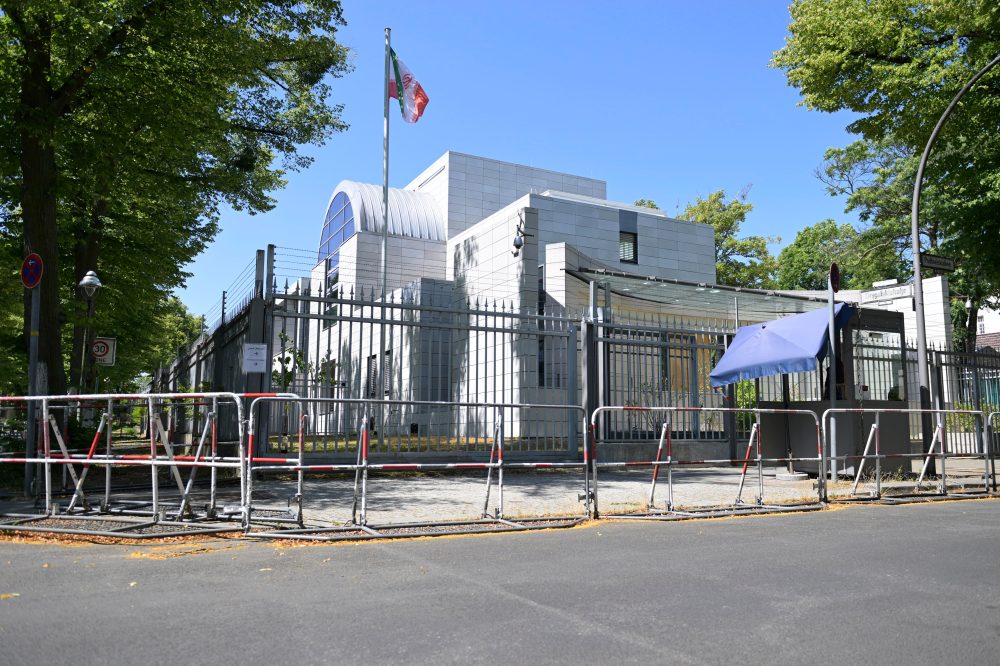
German federal prosecutors announced Thursday they have filed charges against two individuals accused of conducting espionage operations for Iranian intelligence services, with plans to target prominent Jewish figures in Germany.
The primary defendant, identified as Ali S. under German privacy protocols, holds Danish citizenship and was taken into custody in Denmark last June. A second suspect, Afghan national Tawab M., was also apprehended in Denmark during November. Court documents show prosecutors submitted their case against both men to Hamburg state court on May 7.
According to the charges, Ali S. faces multiple counts including intelligence service collaboration, covert sabotage activities, and attempted involvement in murder and arson schemes. Tawab M. has been charged with attempted participation in murder.
Investigators claim Ali S. operated under the direction of Iran’s paramilitary Revolutionary Guard intelligence division and maintained regular communication with the Guard’s expeditionary Quds Force.
The prosecution alleges that early in 2025, Ali S. received orders to collect detailed information about Josef Schuster, who leads Germany’s Central Council of Jews, and Volker Beck, a notable former German lawmaker who heads the German-Israeli Society. Additionally, he was tasked with surveilling two unidentified Jewish grocery store owners in Berlin.
“All this served for the preparation of assassination and arson attacks in Germany,” prosecutors stated in their official announcement.
Court filings indicate Ali S. conducted reconnaissance missions at multiple Berlin locations throughout last year while actively recruiting potential accomplices for the planned operations. By May 2025, he had established contact with Tawab M., who prosecutors say expressed willingness to obtain weapons for an unnamed third party and coordinate an assassination attempt against Beck.
Following Ali S.’s arrest last year, German Foreign Ministry officials summoned Iran’s ambassador for questioning. The Iranian Embassy responded by dismissing what they characterized as “unfounded and dangerous allegations” regarding any suspected plot against Jewish institutions.
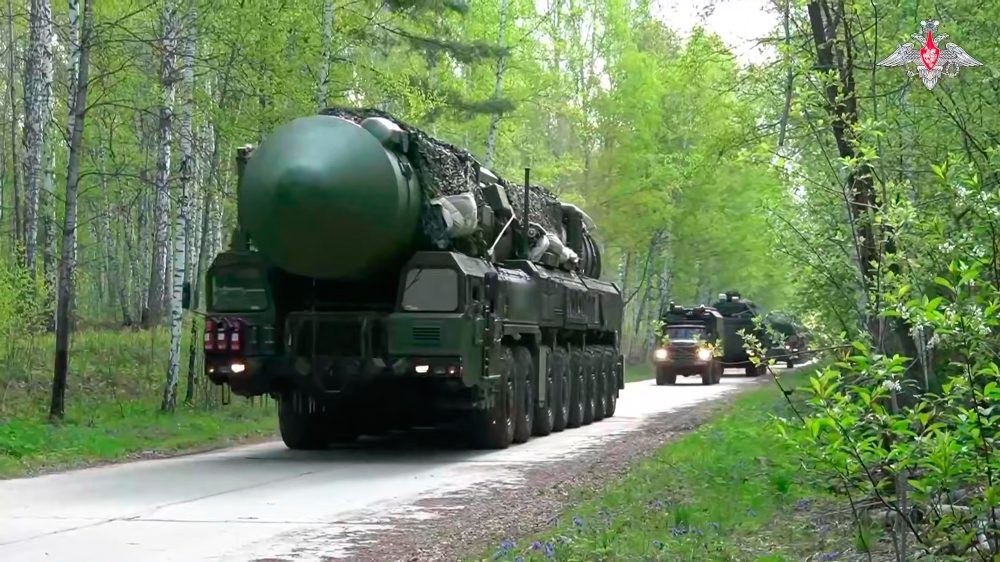
MOSCOW (AP) — Military vehicles transporting long-range ballistic missiles moved through wooded terrain, nuclear submarines departed from northern and Pacific naval bases, and flight crews launched aircraft as Russia and Belarus completed their joint nuclear military exercises on Thursday.
The president of Belarus, Alexander Lukashenko, examined Russian nuclear-capable Iskander short-range missiles at a military facility participating in the exercises, stating: “I dreamed about this machine a long time ago.”
The exercises, which lasted three days starting Tuesday, occurred during increased Ukrainian aerial attacks, including strikes on Moscow’s outskirts that resulted in three deaths and caused damage to multiple structures and industrial sites. These attacks have made it more challenging for Kremlin leadership to portray the Ukrainian conflict — now in its fifth year — as a remote situation that doesn’t impact ordinary Russian citizens’ daily lives.
According to Russia’s Defense Ministry, the military exercise included 64,000 personnel, more than 200 missile systems, over 140 aircraft, 73 naval vessels, and 13 submarines, with eight submarines equipped with nuclear warheads. The ministry stated the exercises would concentrate on “preparation and use of nuclear forces under the threat of aggression.”
The military exercises also rehearse coordination with Belarus, a partner nation that accommodates Russian nuclear armaments. Russian weapons stationed in Belarus include the newest intermediate-range nuclear-capable Oreshnik missile platform.
Russian President Vladimir Putin has consistently highlighted Moscow’s nuclear capabilities since deploying military forces to Ukraine in February 2022, seeking to prevent Western nations from increasing assistance to Kyiv.
During 2024, Putin approved an updated nuclear policy, stating that any conventional military action against Russia backed by a nuclear-armed nation would be viewed as a coordinated assault on his country. This warning was clearly designed to discourage Western powers from permitting Ukraine to attack Russia with extended-range weaponry and seems to substantially reduce the conditions for potentially deploying Moscow’s nuclear weapons.
The updated policy brought Belarus under Russian nuclear protection. Putin has indicated that Moscow will maintain authority over its nuclear weapons positioned in Belarus while permitting its partner to choose targets during potential conflicts.
LONDON — British officials unveiled a series of tax breaks on everyday items and family entertainment as the government works to address escalating household expenses and regain public support.
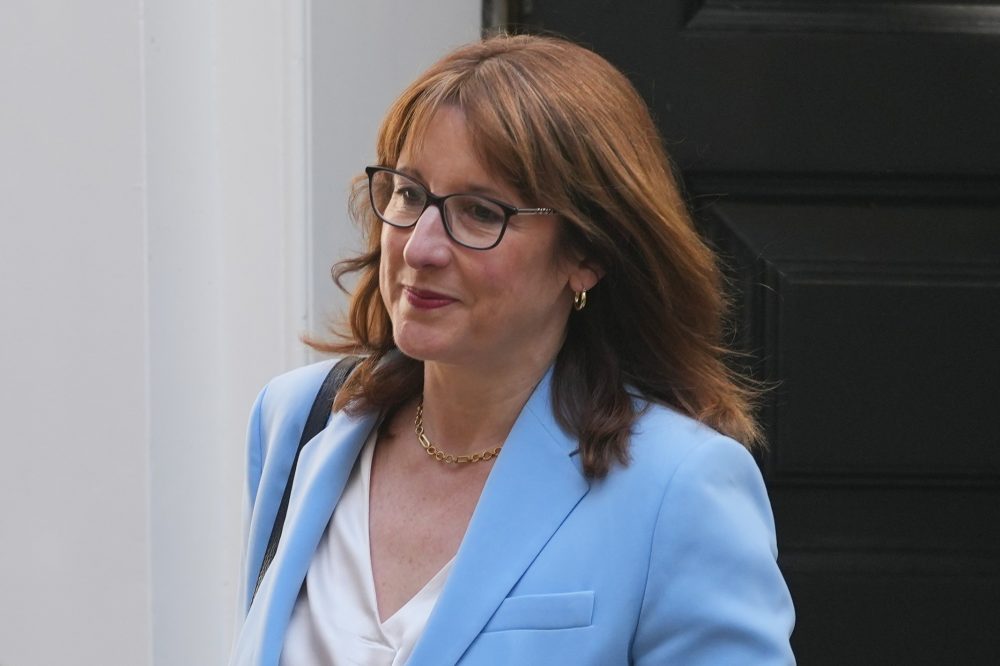
On Thursday, Treasury chief Rachel Reeves revealed modest relief measures aimed at countering increased costs linked to the Iran war, including lower import duties on cookies, chocolate and approximately 100 additional grocery store items.
British inflation dropped to 2.8% in April from March’s 3.3% rate, though economists anticipate another surge driven by climbing fuel, heating gas and electricity costs.
In response to these pressures, officials delayed a scheduled fuel duty hike and granted truckers a one-year exemption from road taxes to help counter skyrocketing gasoline prices caused by the practical shutdown of the Strait of Hormuz, a crucial oil shipping corridor.
However, Reeves stopped short of promising expanded assistance for home heating expenses.
The Treasury chief outlined initiatives aimed at stimulating summer economic activity, including complimentary bus transportation for children during August. Throughout the summer season, admission taxes for attractions such as zoos, theme parks and museums will drop from 20% to 5%.
Reeves explained the cost-of-living relief would be funded through eliminating tax advantages for oil and gas corporations operating internationally.
“This summer I want every family to be able to enjoy themselves,” Reeves said. “As the war in Iran pushes prices up at home, my economic plan is the right one. I will continue to make the right choices, to protect households and businesses, and build a stronger and more secure Britain.”
These policy announcements arrived as Prime Minister Keir Starmer attempts to maintain stability while facing pressure from Labour Party colleagues seeking his removal following poor local election outcomes.
The past two weeks have proven particularly challenging for Starmer, who guided the party to overwhelming victory fewer than two years earlier. Numerous Labour legislators have demanded his resignation, and political observers widely anticipate a leadership contest. Greater Manchester mayor Andy Burnham plans to secure a Parliamentary seat in a June 18 special election before potentially challenging Starmer for the top position.
Starmer maintains he will not step down and intends to defend his leadership role. According to British political procedures, any successor to Starmer as party leader would automatically assume the prime minister position without requiring a nationwide vote.
NEW DELHI (AP) — What started as a satirical internet project has transformed into a massive digital movement attracting millions of frustrated young Indians seeking an outlet for their discontent.
The Cockroach Janta Party, a mock political organization using the resilient insect as its emblem, has taken Indian social media by storm through absurdist comedy turned into political protest. Social platforms have been flooded with satirical content and brief videos ridiculing government corruption, unemployment, and political failures, with millions of users adopting the cockroach — celebrated for surviving in tough environments — as a humorous symbol of persistence.
The digital campaign’s growth has been remarkably swift. The Cockroach Janta Party, known as CJP, launched its website and social media presence on Saturday. By Thursday, its Instagram account had gathered over 15 million followers, dramatically exceeding the 8.8 million followers of Prime Minister Narendra Modi’s governing Bharatiya Janata Party on the same platform.
“Nothing of this was intentional,” CJP founder Abhijeet Dipke told The Associated Press, explaining that the movement’s surge demonstrated growing discontent among India’s youth.
“It is the younger people who were actually very frustrated. They didn’t have any outlet. They were really angry at the government,” said Dipke, a political communications strategist and Boston University student.
The CJP appeared online following comments by Supreme Court Chief Justice Surya Kant that sparked outrage among young Indians frustrated by joblessness, increasing living expenses, and recent government exam paper leaks that have disrupted hiring processes.
During a court session last week, Kant condemned what he called “parasites” undermining institutions and likened some jobless young people and activists to cockroaches.
“There are youngsters like cockroaches, who don’t get any employment or have any place in the profession,” Kant said. He noted that some turned to social media activism, journalism or public interest campaigns and “start attacking everyone.”
The statements rapidly circulated online, where numerous users interpreted them as condescending. Kant subsequently explained that his comments targeted people with fraudulent credentials and stated he didn’t mean to offend India’s youth.
However, the backlash soon resulted in the satirical CJP Instagram account, which embraced the cockroach as its political emblem and started sharing humorous content, fake campaign messages, and satirical criticism of Modi’s administration.
In a matter of days, it attracted tens of thousands of online supporters through Google form submissions, along with backing from some opposition politicians.
“We have to understand that five years ago nobody was ready to speak up against Modi or the government. The times are changing,” said Dipke, who previously collaborated with the Aam Aadmi Party, which grew from India’s anti-corruption movement in 2012.
Dipke emphasized that the CPJ operates independently from any actual political organization. However, its emergence reflects a wider pattern across South Asia, where young people have been central to anti-government protests recently, including revolts in Sri Lanka and Bangladesh and disturbances in Nepal.
“The youth are really frustrated and the government is not acknowledging their concerns,” Dipke said.
These challenges are particularly intense in India, where young people comprise more than a quarter of the population, yet many encounter limited employment prospects, ongoing joblessness, and increasing dissatisfaction with established political parties.
Many young voters also express anger toward Modi’s ruling Hindu nationalist party regarding issues such as increasing religious division, expanding inequality, and economic hardships.
The CJP heavily embraces self-deprecating humor.
Its satirical membership requirements include being jobless, lazy, constantly online, and skilled at professional complaining. Its platform uses comedy to tackle various controversial topics in Indian politics, including opposition claims of election fraud, criticism of connections between corporate media and government, and the naming of former judges to government positions.
Some critics, many supporting Modi, have rejected it as an online political stunt connected to the opposition, pointing to Dipke’s previous work with the Aam Aadmi Party. They also suggest the popularity boom will disappear as rapidly as it appeared, claiming it’s a digital campaign rather than a genuine grassroots effort.
But Dipke argued what started online would likely expand beyond social media.
“This is the movement that has arrived in India … it will change the political discourse,” he said. “It will continue online, and if required it will also come on the ground.”
The campaign has already started gradually moving offline, with some young supporters showing up at demonstrations wearing cockroach costumes.
So has the evident resistance.
On Thursday, Dipke posted on X that the CJP’s account on the platform, which had approximately 200,000 followers, had been blocked in India, representing one of the first clear restrictions on the rapidly expanding satirical movement. The explanation wasn’t immediately available.
Shortly after, Dipke revealed a new account for the organization, accompanied by a graphic stating “Cockroach is back.”
The message concluded: “You thought you can get rid of us? Lol.”
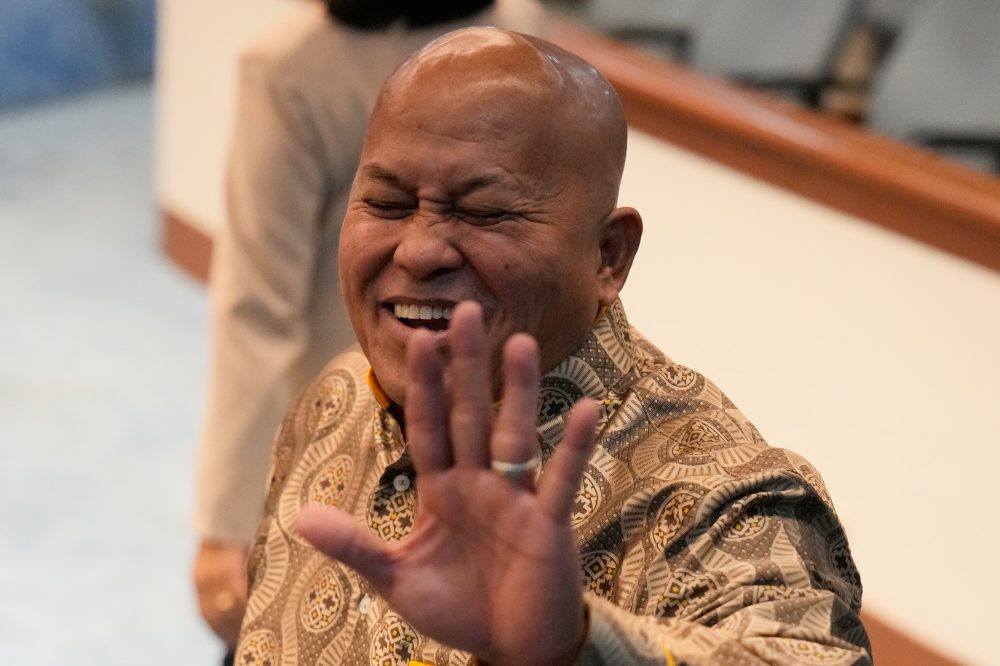
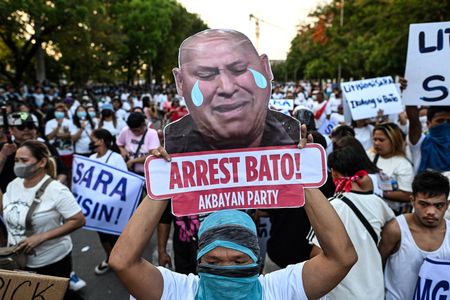
MANILA, Philippines — Philippine authorities received orders Thursday from the nation’s top justice official to carry out an International Criminal Court arrest warrant targeting a senator accused of crimes against humanity. Officials warned that anyone assisting the senator in avoiding the nationwide manhunt will face criminal prosecution.
Justice Secretary Fredderick Vida declared during a press briefing that Sen. Ronald Dela Rosa “is a fugitive from justice.” Vida stated, “He should be brought to the ICC to face the charges.”
The senator previously served as the country’s top police official and implemented former President Rodrigo Duterte’s violent anti-drug campaign that resulted in thousands of deaths, primarily among low-level suspects. These killings drew condemnation from Western nations and human rights organizations.
Former President Duterte, who held office from 2016 to 2022, was taken into custody last year and transported to The Hague, where he currently faces trial at the ICC on crimes against humanity charges.
The senator had asked the Philippines Supreme Court to invalidate his ICC warrant, claiming the nation is no longer a member of the international tribunal. However, the court rejected his request.
During his press conference, Vida indicated that law enforcement has information about dela Rosa’s location but declined to provide specifics. He emphasized that anyone found helping the senator avoid arrest would face criminal charges.
An ICC warrant made public on May 11 accuses dela Rosa of the crime against humanity of murder involving “no less than 32 persons” during the period from July 2016 through late April 2018, while he commanded the national police under Duterte and carried out the former president’s harsh enforcement policies.
Vida noted, “There were thousands, including minors and toddlers, who were killed.” He added, “It’s the government’s obligation to support and help them achieve justice.”
The senator had stayed away from the Senate for several months due to arrest concerns. Nevertheless, he unexpectedly appeared on May 11 to assist Sen. Alan Peter Cayetano in securing a narrow majority and winning control of the 24-member Senate’s leadership.
Cayetano transported dela Rosa to the Senate in his vehicle. National Bureau of Investigation officers attempted to execute the ICC arrest warrant at that time, but dela Rosa rushed into the Senate chamber and requested protection from Cayetano and supporting senators, who provided him sanctuary.
On May 13, two days afterward, dela Rosa escaped from the Senate following multiple gunshots fired by the building’s security team. Their supervisor explained these were warning shots after spotting armed government officers positioned in a nearby building, according to police sources.
The gunfire created panic among senators, staff members and reporters, including two from The Associated Press, who were inside the Senate facility.
Authorities stated they are examining whether the disturbance was intentionally created to enable dela Rosa’s getaway in an SUV operated by another supportive senator, Robinhood Padilla.
The senator’s legal troubles have emerged amid growing political tensions between the Duterte family and current leadership. Vice President Sara Duterte, daughter of the former president, has accused current officials of orchestrating what she called the “kidnapping” of her father and his transfer to the ICC.
The vice president, who has declared her intention to run for president in 2028, faced impeachment last week in a decisive vote by the House of Representatives, which is controlled by allies of the current administration.
Her Senate trial on criminal accusations including unexplained wealth, misappropriation of government funds and a public threat to assassinate the president is scheduled to begin in July. While she has denied the charges, she has declined to provide detailed responses to them.
Federal prosecutors have filed criminal charges against former Cuban President Raúl Castro for his involvement in shooting down civilian aircraft in 1996, marking a significant escalation in the Trump administration’s pressure campaign against Cuba’s government.
At the same time, Senate Republicans are poised to drop their proposal for $1 billion in security funding for the White House complex and Trump’s ballroom on Thursday. Additionally, Trump’s proposal to construct a triumphal arch in Washington is receiving renewed scrutiny from the U.S. Commission of Fine Arts, a federal body that recommended modifications before approving the plan last month.
The Latest:
Trump has intensified discussions about regime change in Cuba following his deployment of U.S. military forces to apprehend Venezuelan President Nicolás Maduro in January. A federal indictment against former Cuban leader Raúl Castro now sparks speculation about whether Trump might pursue similar action in Havana.
Below is a chronology of U.S. relations with the communist-controlled island, including multiple encounters with Raúl Guillermo Rodríguez Castro, Castro’s grandson referred to as “Raúlito.”
“China always firmly opposes illegal unilateral sanctions that lack a basis in international law and have no authorization from the United Nations Security Council and the abuse of judicial measures, and we also oppose external forces exerting pressure on Cuba under any pretext,” Foreign Ministry spokesperson Guo Jiankun said Thursday.
The U.S. should “stop wielding the stick of sanctions and judicial measures” against the country, Guo added. “China firmly supports Cuba in safeguarding its national sovereignty and national dignity and opposes external interference.”
Trump’s proposal to construct a triumphal arch in Washington is receiving renewed examination from a federal body that recommended modifications before approving the plan last month.
The planned 250-foot (76 meter) arch represents one of multiple projects the Republican president is advancing along with a White House ballroom to establish his legacy in Washington. Project opponents, including a vast majority of individuals who provided public feedback in April, argued the arch would exceed the height of every other monument in the capital and overwhelm the skyline.
He has indicated some of his additional projects, including applying a blue coating to the Lincoln Memorial Reflecting Pool’s interior, will enhance the city’s appearance ahead of July 4 celebrations marking America’s 250th anniversary.
The U.S. Commission of Fine Arts, whose members received Trump appointments, endorsed the arch concept during its April monthly session. Commissioners plan to review and potentially vote on revised proposals during Thursday’s meeting.
▶ Read more
More than a dozen young Republicans who assembled with beers and colorful cocktails at a Kentucky establishment called dEcORa this week were critiquing the presidential administration they had welcomed enthusiastically last year.
Their initial excitement for Trump had transformed into disappointment. What emerged at the bar was frustration that the Republican establishment — which they originally praised Trump for challenging, but which some now believe he perpetuates — had abandoned them.
This growing resentment has expanded a generational divide between younger and older conservatives as the party gradually contemplates a post-Trump future.
The Republican primary loss of Rep. Thomas Massie — who had cultivated younger and anti-establishment support while clashing with Trump — eliminated one of their most powerful congressional advocates.
▶ Read more
Senate Republican leadership plans to withdraw their proposal for $1 billion in security funding for the White House complex and Trump’s ballroom on Thursday following criticism from party members regarding the timing and insufficient details in the Secret Service request.
Under White House pressure, Republicans attempted to incorporate the funding into an approximately $70 billion measure restoring money to U.S. Immigration and Customs Enforcement and the Border Patrol. However, the security proposal faced opposition from some GOP legislators questioning the expense and taxpayer fund allocation.
While the bill’s language remains unpublished, the Senate aims to approve it this week and forward it to the House before departing for a weeklong Memorial Day break.
Sen. Thom Tillis, R-N.C., said the effort to add the security package to the bill was a “bad idea” and he does not think there is enough backing to pass it, even if the cost were reduced.
▶ Read more
Federal prosecutors announced Wednesday that they have filed criminal charges against former Cuban President Raúl Castro regarding the 1996 shootdown of civilian aircraft operated by Miami-based exile groups, as the Trump administration intensified pressure on the island’s socialist government.
The indictment alleges Castro directed the attack on two small aircraft operated by the exile organization Brothers to the Rescue. Castro, who will turn 95 next month, served as Cuba’s defense minister during the incident. The charges, secretly filed by a grand jury in April, include murder and aircraft destruction. Five Cuban military pilots also face charges.
When questioned about the extent American authorities would pursue to bring Castro before U.S. courts, acting Attorney General Todd Blanche stated: “There was a warrant issued for his arrest. So we expect that he will show up here, by his own will or by another way.”
The charges represent a genuine threat, analysts noted, following the January capture by U.S. forces of former Venezuelan President Nicolás Maduro to face drug charges in New York.
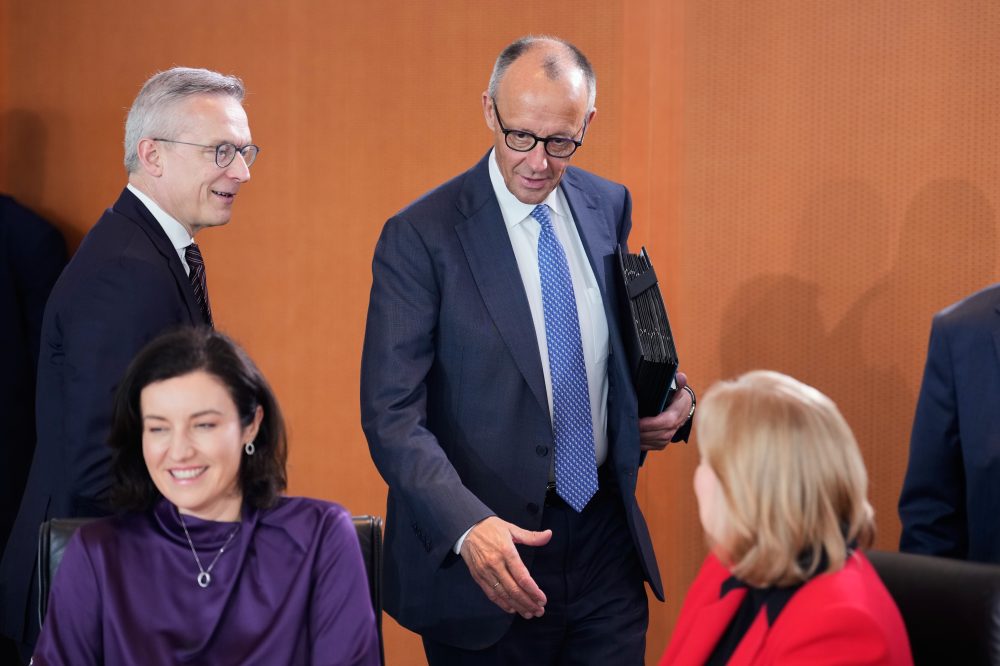
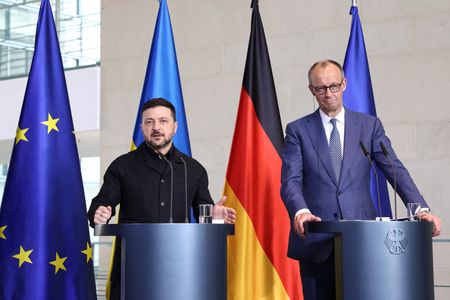
BRUSSELS (AP) — The leader of Germany is pushing the European Union to grant Ukraine a special ‘associate membership’ status while working to restart diplomatic efforts to end the conflict with Russia that has stretched beyond four years, according to correspondence obtained Thursday by The Associated Press.
The proposal from German Chancellor Friedrich Merz, addressed to top EU leadership, arrives as the 27-member union debates whether to pursue independent negotiations with Russian President Vladimir Putin, given that U.S.-facilitated discussions have stalled amid America’s focus on the Iran conflict.
Merz’s plan would allow Ukraine to participate in EU proceedings without the ability to vote, while also providing non-voting representation within the European Commission and European Parliament.
The German chancellor emphasized this approach “would not be a membership light,” and would “go far beyond” the current Association Agreement between the EU and Ukraine. His proposal includes a “snap-back mechanism” should Ukraine fail to maintain democratic standards.
Last month, European Council President Antonio Costa and European Commission President Ursula von der Leyen restated their position that formal membership discussions with Ukraine should begin “without delay,” a timeline Merz also supports.
Ukrainian President Volodymyr Zelenskyy expressed optimism Wednesday about potential advancement in membership talks, stating in remarks that it is “very important for us. Ukraine has fulfilled everything necessary for this progress.”
Nations seeking EU membership must align their legislation across 35 policy areas, from judicial standards to agricultural and maritime regulations. Unanimous approval from all 27 EU members is required to open and close each policy area.
Hungary has previously prevented negotiations from starting, though the recent government change in Budapest this month could shift that position.
However, Merz’s proposal may face resistance from European officials who maintain that EU membership should follow a merit-based process completed only after meeting all requirements.
The German leader suggested extending his approach to other aspiring member nations, particularly those in the Western Balkans, where EU leaders plan to convene for a summit next month.
Regarding the ongoing conflict, Merz stated his proposal “will help facilitate the ongoing peace talks as part of a negotiated peace solution. This is essential not only for Ukraine’s but for the entire continent’s security.”
Ukraine views EU membership as a crucial “security guarantee” for post-war stability. While NATO membership would provide the strongest protection, the Trump administration opposes this option, and others hesitate to admit a nation currently at war.
With U.S.-led mediation efforts struggling, EU countries are exploring whether to establish separate negotiation channels and identify potential mediators should Putin agree to discussions.
Costa stated earlier this month that “we need, in the right moment, to have talks with Russia to address our common issues on security.” He emphasized this shouldn’t “disturb” U.S.-led efforts but acknowledged Europe’s need to address its security interests.
European media has speculated about possible EU negotiators, including former German Chancellor Angela Merkel, who speaks Russian and has extensive experience with Putin, and former European Central Bank chief Mario Draghi.
Putin has indicated openness to discussions with Gerhard Schröder, another former German chancellor. However, officials have rejected this possibility, even in Germany, where Schröder’s connections to Russian energy companies and Putin relationship harmed his reputation following Russia’s 2022 invasion of Ukraine.
EU foreign policy chief Kaja Kallas called it unwise to let Putin select a negotiator, especially a “high-level lobbyist for Russian state-owned companies.”
Zelenskyy has endorsed European involvement, saying Sunday that “Europe must be involved in the negotiations. It is important for Europe to have a strong voice and presence in this process, and it is worth determining who will represent Europe specifically.”
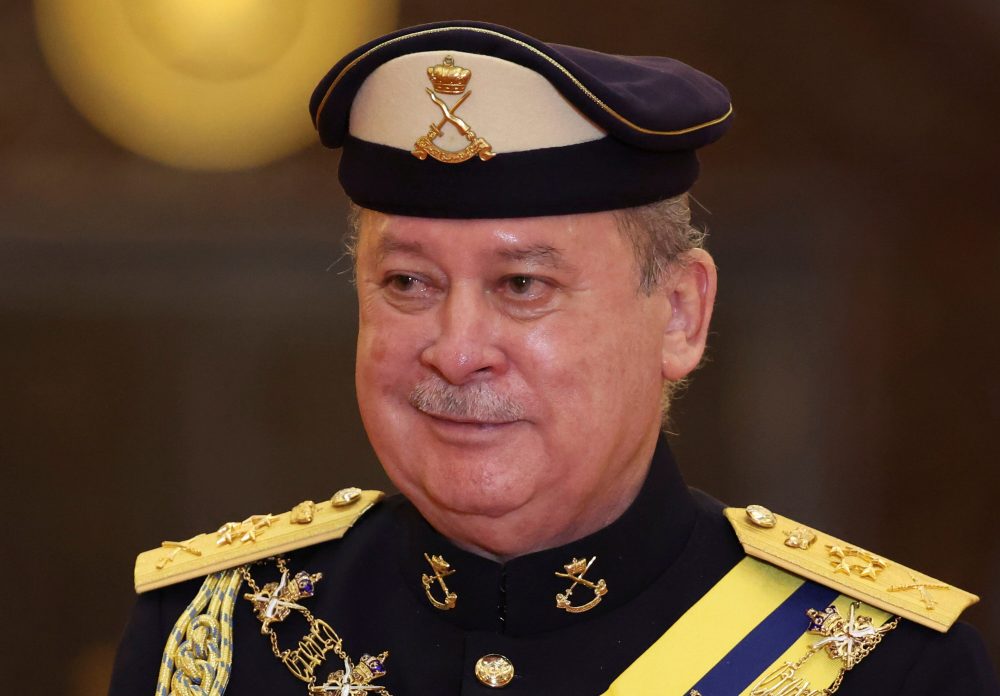
Malaysian authorities announced Thursday they have issued a formal demand to TikTok regarding the social media company’s inadequate response to removing harmful fake content directed at the nation’s monarchy.
The Communications and Multimedia Commission stated this action came after the spread of content described as “grossly offensive, false, menacing and insulting,” which featured artificially generated videos and doctored images connected to an account that falsely claimed ties to king Sultan Ibrahim Iskandar.
These issues touch on the delicate topics of race, religion and royalty “which are highly sensitive and may undermine public order, national harmony and respect for constitutional institutions,” the regulatory body explained in its announcement.
Even after previous notifications and discussions, the commission noted TikTok’s content oversight response was inadequate, particularly regarding swift content removal and preventing additional spread of such material.
The regulator revealed that TikTok — which has remained silent publicly about this situation — received a formal legal notice requiring the company to account for its oversight shortcomings and implement immediate corrective actions, including enhanced content monitoring systems and better enforcement against material violating Malaysian regulations and community guidelines.
The commission emphasized that social media companies operating within Malaysia must demonstrate increased accountability in stopping illegal and damaging activities on their platforms.
Officials cautioned they will persist in taking “firm and proportionate action” to guarantee digital platforms fulfill their obligations in creating a secure and respectful online space.
This development occurs as Malaysia intensifies its efforts to strengthen supervision of digital platforms, with government agencies recently increasing enforcement actions against social media corporations regarding dangerous content, fraudulent schemes, online betting and material considered offensive or threatening to public safety.
TikTok has not provided a response to The Associated Press’ request for commentary.
The United States has ordered its Jerusalem diplomatic mission to pressure Palestinian officials to abandon their candidacy for a UN General Assembly vice presidency position, according to a leaked State Department cable reported by The Guardian.
The diplomatic communication, dated May 19, directed the US embassy in Jerusalem to formally protest to Palestinian Authority officials and demand withdrawal of the candidacy by May 22. The message warned that consequences would result if the bid continued.
The report indicates Washington connected this matter to larger conflicts over Palestinian diplomatic efforts and financial disputes. The cable specified that Palestinians would see no advancement in retrieving tax and customs revenues held back by Israel unless they engage in good faith without taking disagreements to international courts.
These revenues represent 60% of the PA’s budget. The money has been mostly held back since the Gaza conflict started in October 2023 under policies put in place by Finance Minister Bezalel Smotrich.
The message also mentioned previous US pressure regarding UN leadership positions. It commended Palestinian envoy Riyad Mansour for pulling his candidacy for General Assembly president in February after American lobbying. The cable indicated Mansour had understood the seriousness of the matter and wanted to be constructive.
Palestinians are competing as part of a four-nation Asia-Pacific group for vice-presidential spots at the General Assembly. Though the position carries less authority than the presidency, the cable observed that vice presidents could be asked to chair assembly sessions.
The document stated: “In a worst case scenario, the next PGA [president of the general assembly] might assist the Palestinians in presiding over high-profile sessions related to the Middle East or during UNGA81 high-level week,” referring to September meetings and speeches scheduled in New York.
The communication also claimed the Palestinian candidacy “undermines President Trump’s Comprehensive Plan,” citing the US-backed Gaza ceasefire proposal and the Board of Peace.
The cable declared: “To be clear. We will hold the PA responsible if the Palestinian delegation does not withdraw its VPGA candidacy, and consequences will follow.”
The document further mentioned the temporary cancellation of visas for Palestinian officials before last August’s UN summit week, though the restrictions were eventually removed. “It would be unfortunate to have to revisit any available options,” the cable warned.
US officials refused to provide comment on The Guardian’s reporting.
When Israel’s legislative body, the Knesset, decides to dissolve itself, it’s not simply taking a recess or temporary break. Instead, it’s initiating the formal procedure to cut short its current term and force the nation into new elections.
Israel operates under a parliamentary system where citizens don’t vote directly for their prime minister. Instead, they cast ballots for political parties. These parties receive seats in the 120-member Knesset based on their portion of the nationwide vote, and a government forms when one member of the legislature—typically the head of the largest or most politically viable party—can build a coalition with majority backing.
Currently, the Knesset hasn’t completed its dissolution process. The legislature has only moved dissolution measures through preliminary readings, which represents the initial phase for this kind of legislation. Lawmakers initially supported a coalition-sponsored dissolution measure, then hours afterward voted 53-0 to approve a preliminary reading of an opposition measure sponsored by Blue and White MK Pnina Tameno, party chair Benny Gantz, and others. Both proposals must still go through committee review and pass three additional readings in the full Knesset. The final reading needs backing from at least 61 of the 120 legislative members.
A preliminary vote demonstrates political momentum, but it doesn’t terminate the Knesset’s current term. Agreements can still be reached, factions can change direction, and either measure can become stalled. Having both a coalition-supported measure and an opposition-supported measure also shifts the political dynamics. If the coalition withdraws its own proposal, the opposition’s version maintains another pathway to early elections. This creates additional pressure on the government to demonstrate advancement on military draft exemption legislation for ultra-Orthodox yeshiva students or face the risk of ultra-Orthodox parties shifting their support to the opposition route.
Should a dissolution law succeed, the legislation will establish the election date. The opposition measure would schedule elections exactly 90 days following the law’s passage. The coalition measure doesn’t specify a date, but states the Knesset House Committee would establish one no sooner than three months after final approval. Elections typically occur at least 90 days after the law passes and no later than five months afterward. In this situation, the election is anticipated to happen in September or October, though the exact date hasn’t been determined yet.
The government doesn’t cease to exist during this timeframe. Prime Minister Benjamin Netanyahu and his ministers stay in office until a new government forms. Israel follows the principle of governmental continuity: the current government continues governing until another government takes its place. Even if elections result in another stalemate and no new coalition can form, the existing government can remain in position during the interim.
Americans might consider this a caretaker government, and Israelis frequently use terms like “transitional government” in regular political discussion. More accurately, Israeli law refers to an “outgoing government” after a new Knesset is elected or after the government steps down. In practical terms, the previous government continues operating the state until a new one is sworn in.
The government doesn’t automatically forfeit its legal authority after dissolution. The state must still operate. Wars persist, budgets require management, emergencies occur, and government departments can’t post a “Back After Elections” notice on their doors.
However, its operational freedom becomes more constrained in practice. Transitional or outgoing governments are expected to show restraint, particularly regarding major appointments, long-term policy choices, and actions that could unnecessarily bind the next government. Courts and legal advisers have considered restraint especially crucial during election periods, when ministers might be tempted to use state authority, budgets, or appointments for political gain.
There’s no complete prohibition on government action during this time. If there’s an urgent security requirement, a fiscal necessity, or an issue that cannot responsibly be delayed, the government can still take action. A routine appointment or political spending decision may encounter stricter scrutiny than a wartime decision or an urgent measure required to maintain state operations.
The Knesset also remains in existence after dissolution until the new Knesset assembles. It doesn’t disappear immediately when the dissolution law passes. It can still create legislation, though practically its work is usually more restricted during an election period. Emergency provisions and expiring laws may still require attention so the state doesn’t lose legal authority during the transition.
Dissolution differs from a no-confidence vote. In Israel, a no-confidence motion is “constructive.” The Knesset cannot simply remove a government by declaring it no longer has confidence in it. To succeed, a no-confidence motion must receive at least 61 votes and support an alternative government, including its proposed prime minister, ministers, and basic policy framework. The system is structured to prevent a vacuum: if the Knesset removes one government, it must be prepared to install another.
A dissolution measure doesn’t install a new government. It sends the country to elections. A no-confidence vote means a new government is prepared. Dissolution means the voters are being asked to decide once more.
A dissolution vote also doesn’t necessarily indicate the government has formally lost a no-confidence vote. A coalition can break apart politically without being replaced by an alternative government. Coalition partners may refuse to support major legislation, threaten to leave, or support a dissolution measure because they believe elections are better than continuing under the current situation.
The current crisis focuses on the ultra-Orthodox draft dispute. Israel mandates that most Jewish citizens serve in the military, but ultra-Orthodox yeshiva students have historically received exemptions. This arrangement has become much more politically volatile since October 7, 2023, as reservists have served multiple tours and the military’s personnel requirements have increased. Ultra-Orthodox parties want legislation maintaining exemptions; many other Israelis view such exemptions as unacceptable during wartime.
For Netanyahu, the risk goes in both directions. If he accommodates the ultra-Orthodox parties, he risks angering reservists, secular voters, and segments of the right. If he fails to accommodate them, he risks losing the coalition partners that maintain him in power. The opposition measure creates another pressure point: even if the coalition attempts to slow or postpone its own dissolution effort, another parliamentary mechanism for early elections is now advancing.
Blue and White leader Benny Gantz characterized the opposition vote as evidence that the government’s time is limited. “This is the beginning of the end. This failed government will go home sooner or later,” he said.
For now, Israel has not completely entered an election campaign by law. It has entered the corridor leading there, and now there is more than one door. The Knesset still has to walk through one of them.
A diplomatic controversy has erupted after video footage surfaced showing Israeli National Security Minister Itamar Ben-Gvir ridiculing detained flotilla activists at Ashdod port, leading seven nations to summon Israeli diplomatic representatives.
Italy, France, Canada, the Netherlands, Belgium, and Portugal called in Israeli ambassadors to address the incident, while Spain summoned the Israeli charge d’affaires due to the absence of an ambassador currently stationed there.
The controversial video clips captured numerous international activists forced to kneel at the port facility with their hands apparently bound, as Ben-Gvir conducted a tour of the location. During one segment, the minister displayed a large Israeli flag while calling out in Hebrew, “Welcome to Israel, we are the masters.” Another clip showed restrained demonstrators listening to Israel’s national anthem from speakers, with Ben-Gvir remarking to one individual, “This is how it needs to be.”
These activists had been detained at Ashdod port following the Foreign Ministry’s announcement that the most recent flotilla effort to penetrate Israel’s naval blockade around Gaza had concluded.
According to the activists, their flotilla originated from Turkey with the goal of challenging the blockade, which they hold responsible for Gaza’s humanitarian crisis. Israeli officials maintain the blockade serves essential security purposes and claim some flotilla participants have connections to the HHI group, which Israel classifies as a terrorist organization due to suspected Hamas affiliations.
Foreign Minister Gideon Saar strongly criticized Ben-Gvir’s behavior in an official statement: “You knowingly caused harm to our state in this disgraceful display – and not for the first time.” Saar continued, “You have undone tremendous, professional and successful efforts made by so many people — from IDF soldiers to Foreign Ministry staff and many others.”
“You are not the face of Israel,” Saar declared to Ben-Gvir.
Prime Minister Benjamin Netanyahu acknowledged Israel’s authority to intercept “provocative flotillas of Hamas terrorist supporters,” but characterized Ben-Gvir’s treatment of the activists as “not in line with Israel’s values and norms.”
US Ambassador to Israel Mike Huckabee also weighed in on the social media platform X, writing: “Flotilla was a stupid stunt, but Ben Gvir betrayed the dignity of his nation. Despicable acts.”
Israel’s parliament faces a preliminary dissolution vote on Wednesday following the failure of coalition parties to come to terms on legislation that would formalize military service exemptions for ultra-Orthodox citizens.
Should the measure succeed, Israel may find itself heading to the polls sooner than anticipated, as elections would be required within five months of parliamentary dissolution. However, this would only marginally accelerate the timeline, given that the statutory election deadline was already established for October 27. Ultra-Orthodox political parties have expressed their preference for early September elections.
After the initial reading, the legislation would proceed to committee review before returning to the full parliament for three more readings. Parliamentary officials cleared all other legislation from Monday and Tuesday’s agenda in anticipation of the anticipated vote.
The schedule for finalizing the dissolution remains uncertain, though the bill is anticipated to advance rapidly through the legislative process. Meanwhile, coalition representatives are reportedly working to delay proceedings as much as feasible, despite evaluations suggesting the process could theoretically conclude within two days.
According to Ynet’s reporting, Prime Minister Benjamin Netanyahu continues working to push forward the draft exemption legislation in hopes of persuading ultra-Orthodox parties to abandon their call for early elections. The report indicates Netanyahu aims to maintain the coalition alliance before a national election by securing a deal with the ultra-Orthodox groups.
Concurrent with political discussions, the parliament’s Foreign Affairs and Defense Committee is set to conduct another Wednesday session regarding the draft exemption bill. The committee will also begin reviewing legislation to extend mandatory military service, which military leadership seeks to promote. Israel Defense Forces Chief of Staff Lt. Gen. Eyal Zamir cautioned that not extending mandatory service would seriously damage the military’s operational preparedness.
However, the legal adviser to the Foreign Affairs and Defense Committee stands against advancing the extension legislation prior to enacting what she characterized as an effective ultra-Orthodox conscription law.
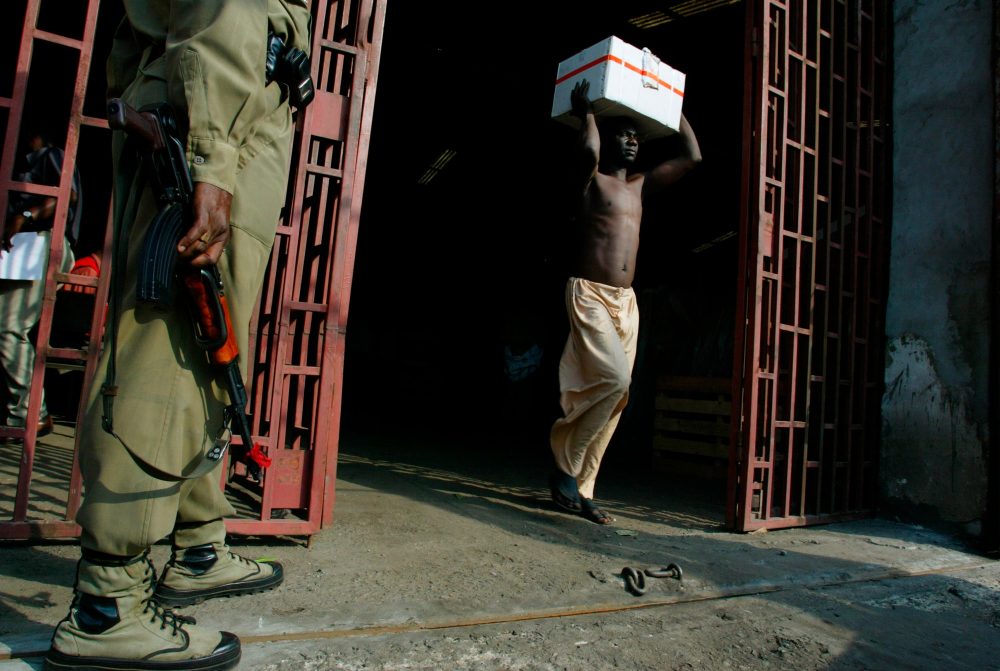
LAGOS, Nigeria — Nigerian drug enforcement officials announced they have dismantled a major international drug operation involving both Nigerian and Mexican nationals operating in the country’s southwestern territory.
The National Drug Law Enforcement Agency announced Wednesday evening that specialized officers discovered and closed down what they described as an “industrial-scale clandestine laboratory” hidden in an isolated wooded area in the Ijebu region of Ogun state, located near Lagos, Nigeria’s commercial hub. Officials characterized this as the nation’s largest drug seizure to date.
During the raid, authorities detained seven individuals described as members of the criminal organization, including four Nigerian citizens and three Mexican nationals, with an additional three suspects apprehended in subsequent operations, according to an agency statement.
“This network did not just traffic drugs; they were actively manufacturing industrial-scale quantities of highly lethal illicit substances right on our soil, threatening the national security and public health of Nigeria,” Brig Gen Mohamed Buba Marwa, the agency’s head, said.
The enforcement action led to the confiscation of 2.4 tons of chemical substances, including methamphetamine, valued at 480 billion naira ($363 million), along with two motor vehicles, the statement revealed.
The United Nations Office on Drugs and Crime has identified West and Central Africa as increasingly significant centers for international drug trafficking and production operations in recent years, citing weak border security and governmental corruption as contributing factors.
A major international summit between India and the African Union has been called off due to a rapidly spreading Ebola outbreak in Congo that health officials say is spiraling out of control.
India’s Ministry of External Affairs announced Thursday that the India-Africa Forum Summit, originally set for next week in the capital, has been postponed because of the “evolving health situation in parts of Africa.”
The cancellation comes as medical teams and humanitarian organizations in eastern Congo report they are overwhelmed by a deadly Ebola outbreak that appears to be expanding faster than authorities can contain it.
“The situation is worrying because this is gaining momentum,” Hama Amado, the field coordinator in the region for Alima, an aid organization, told reporters. “This is spreading in many areas. So everyone must mobilize.”
Amado emphasized the severity of the crisis, stating: “We are still far from saying that the situation is under control.”
The postponement was announced jointly, with officials citing “the importance of ensuring the full participation and engagement of African leaders and stakeholders, and mindful of the emerging public health situation on the continent.” India expressed solidarity with Africa and pledged support for continent-led health response efforts.
Medical personnel and relief organizations in eastern Congo say they urgently require additional equipment and personnel to combat the uncommon Ebola outbreak, while armed militant groups continue to pose security threats in a region already struggling with mass displacement and humanitarian emergencies.
This particular outbreak involves the Bundibugyo strain of Ebola, for which no vaccination or treatment currently exists. The virus went undetected for weeks after the initial known fatality while health authorities tested for a different, more prevalent form of Ebola and received negative results.
Medical teams and aid workers are now attempting to catch up with an outbreak that specialists believe is significantly larger than official numbers indicate. Current reports show 139 suspected fatalities and nearly 600 suspected infections.
The World Health Organization, which has assessed the global risk as low, has stated that “patient zero” remains unidentified.
Despite nearly 20 tons of emergency supplies being flown to the outbreak’s epicenter, physicians using expired protective masks were caring for suspected Ebola patients in regular hospital wards due to insufficient isolation facilities.
Quick identification of the virus is crucial for patient survival, but the area’s already fragile healthcare infrastructure and monitoring capabilities have been further damaged by reductions in international funding, according to experts. More than 920,000 people have been internally displaced in the province that has become the outbreak’s center, according to United Nations data.
“Communities in eastern DRC are already facing immense pressure from conflict, displacement, and a collapsing health system,” said Dr. Lievin Bangali, Senior Health Coordinator for the International Rescue Committee in the region. “Years of underfunding, compounded by recent cuts to front line health and outbreak preparedness programming, have weakened the ability to detect and respond to outbreaks quickly.”
The organization reported it was forced to halt surveillance operations in three of five areas in the province during the past year due to funding shortages.
At a medical facility in Rwampara, healthcare personnel in protective equipment managed the remains of suspected Ebola victims. Family members, who traditionally wash deceased relatives’ bodies themselves, observed as workers sanitized the corpses and placed them in caskets for transport to secure burial locations. Some family members broke down in tears.
Relatives described how the illness struck without warning, with rapid decline after symptoms were initially mistaken for other diseases like malaria.
“He told me his heart was hurting,” said Botwine Swanze, whose son died from the disease. “Then he started crying because of the pain. Then he started bleeding and vomiting a lot.”
The Ebola virus spreads rapidly and transmits through human populations via contact with bodily fluids including vomit, blood or semen. Signs include fever, vomiting, diarrhea, muscle aches and sometimes internal and external bleeding.
Educational institutions and religious centers continue operating normally in the affected city. Some local residents have begun wearing protective masks, which are becoming increasingly scarce.
“It’s truly sad and painful because we’ve already been through a security crisis, and now Ebola is here too,” said Justin Ndasi, a local resident.
Anxiety is mounting at medical facilities throughout the region. A team from Doctors Without Borders discovered suspected cases over the weekend at the city’s main hospital but could not locate any available isolation ward in the vicinity, according to Trish Newport, an emergency program manager, who posted on social media.
“Every health facility they called said, ‘We’re full of suspect cases. We don’t have any space.’ This gives you a vision of how crazy it is right now,” she explained.
At another hospital elsewhere in the province, suspected Ebola patients were housed in the same ward as other injured or sick individuals.
In the town where the first known victim’s body was transported, the nearby international border remains open and gold mining operations continue, said Chérubin Kuku Ndilawa, a civil society leader, illustrating the challenges of virus containment.
“There’s no panic. People continue with their normal lives, but they’re also starting to spread the word,” Ndilawa observed, noting the absence of public handwashing facilities.
The situation was markedly different at the local general hospital, where Dr. Didier Pay reported treating approximately 30 Ebola patients, and a student from the area’s medical technology institute died on Wednesday.
“The patients are scattered here and there in rather unusual conditions,” Dr. Richard Lokudu, the hospital’s medical director, explained. “We hope for the proper triage and isolation facilities to be installed today, and if that doesn’t happen, we will be completely overwhelmed.”
The facility is understaffed and personnel lack training to handle suspected cases, he noted. If confirmed infections increase, “we have no protection.”
The World Health Organization has classified the outbreak as a public health emergency of international concern. The organization’s Director-General Tedros Adhanom Ghebreyesus stated Tuesday he was “deeply concerned about the scale and speed of the epidemic,” while the organization’s regional chief predicted the outbreak could continue for at least two months.
Research into the outbreak’s origin continues, but “given the scale, we are thinking that it has started probably a couple of months ago,” said Anaïs Legand, a viral hemorrhagic fevers specialist at the organization.
Thus far, 51 infections have been verified in the country’s northern provinces, plus two cases in neighboring Uganda, Dr. Adhanom Ghebreyesus reported Wednesday. However, “the scale of the epidemic is much larger,” he acknowledged.
The London-based research center estimates that cases have been significantly undercounted and that actual numbers could already surpass 1,000. “The true magnitude remains uncertain,” researchers stated.
The region has long experienced attacks from various armed groups, and this ongoing instability now further hampers crisis response efforts. Local officials reported that militants associated with a terrorist organization killed at least 17 people Tuesday in a village in the affected province.
Fighters with the Allied Democratic Forces, which maintains connections to the terrorist group, killed civilians using machetes and firearms, destroyed homes and businesses, and took several people hostage. Civil society organizations warned that other villages in the area face similar attack threats.
The exact number of these fighters in the country remains unclear, but they maintain a substantial presence in the region and regularly target civilians. Another active armed group in the area consists of a loose association of militia groups primarily from a local ethnic farming community.
Authorities in Morocco report that a deadly building collapse occurred during the nighttime hours in the city of Fez, located approximately 124 miles east of the capital Rabat, claiming four lives and leaving six people injured.
Officials announced Thursday that an investigation is underway to determine the cause of the tragic incident. As a safety precaution, authorities ordered the evacuation of neighboring buildings due to concerns about additional potential structural failures, according to an official statement that did not include further specifics about the collapse.
Parliamentary elections taking place Sunday in Cyprus may fundamentally alter the Mediterranean island’s political structure, as public dissatisfaction with corruption issues and escalating living expenses strengthens backing for emerging political groups.
While Cyprus’s executive authority remains with the presidential office, increased success for political outsiders might divide parliament and create obstacles for supporting government proposals.
Polling data indicates that reform-focused movement ALMA and liberal party Volt may secure parliamentary seats for the first time, while far-right ELAM appears positioned to expand its presence, possibly becoming the third-largest force in the 56-member legislative body. This transformation would break the long-standing control held by Communist AKEL and right-wing DISY parties.
These developments might weaken backing for at least two of the three parties that supported President Nikos Christodoulides’ 2023 electoral victory, marking the initial nationwide evaluation of public opinion at his term’s midpoint.
Citizen trust has suffered in recent years due to a cash-for-passports controversy involving wealthy international investors, along with postponements of energy infrastructure developments that have resulted in Cypriots facing some of Europe’s steepest electricity costs.
Political analyst Christoforos Christoforou explained, “It’s going to be a vote of protest towards established parties which will also, to an extent, be directed towards the government.”
An unprecedented 753 candidates representing more than 18 parties are competing for seats. The current parliament includes seven represented parties.
Former auditor general Odysseas Michaelides, who established ALMA following his 2024 removal from office — which he claims resulted from his persistent inquiries about government expenditures — stated that voters have lost faith in the entire political framework.
Surveys place ALMA at approximately 8% to 10% support, as the movement advocates for stronger anti-corruption protections and institutional reforms.
Volt Cyprus, a pro-European organization polling beyond the 3.6% requirement for parliamentary entry, maintains that numerous voters feel disconnected due to corruption and insufficient accountability. Co-chair Andromachi Sophocleous characterized this as the consequence of existing in a “dysfunctional state.”
“We feel that the public is completely fed up with politics not bringing any improvement to their lives,” she told Reuters.
LONDON — Newly released government documents reveal that Queen Elizabeth II strongly advocated for the former Prince Andrew to receive the position of Britain’s trade envoy.
British officials made the confidential records public on Thursday concerning Andrew’s appointment to the role, coming just months after members of parliament criticized the king’s brother for prioritizing his relationship with Jeffrey Epstein over national duties.
“The Queen is very keen that the Duke of York should take on a prominent role in the promotion of national interests,” the head of Britain’s trade body wrote in a letter.
A separate government memo distributed to British trade personnel worldwide indicated that “HRH’s high public profile” would necessitate “careful and sometimes strict media management,” referring to Andrew.
FRANKFURT, Germany — European Union officials have revised downward their economic projections and anticipate elevated inflation rates as energy costs spike amid the Iranian conflict, though they believe the region will steer clear of a full recession.
“As a net energy importer, the EU’s economy is highly susceptible to the energy shock caused by the conflict in the Middle East,” the commission said in a statement Thursday. The rising cost of fuel “means higher household bills and surging business costs that reduce profits for many industries.”
In its spring economic forecast, the commission reduced growth expectations for eurozone nations to 0.9% this year, down from the previous autumn projection of 1.2%, while 2027 growth estimates dropped from 1.4% to 1.2%. Meanwhile, inflation projections for 2026 jumped to 3.0%, a significant increase from the earlier 1.9% estimate.
This updated inflation forecast surpasses the European Central Bank’s 2% target, prompting speculation that the ECB may implement interest rate increases this year to counter rising prices.
Energy markets experienced significant volatility following Iranian drone and speedboat threats that effectively halted most shipping through the Strait of Hormuz, a critical waterway handling approximately one-fifth of global oil and natural gas transport. Additionally, war developments have undermined consumer sentiment, which dropped to its lowest point in 40 months as concerns mount over potential job losses and accelerating inflation.
Despite these challenges, commission officials maintain that the economy will demonstrate continued modest expansion while avoiding a complete recession.
However, they cautioned that extended periods of elevated energy costs could further dampen growth prospects while pushing inflation even higher.
Ukrainian forces launched another deep-strike drone attack on Russian territory Thursday, targeting an oil refinery located more than 500 miles inside Russia and sparking fires that sent massive plumes of black smoke into the sky, according to President Volodymyr Zelenskyy.
Zelenskyy announced on social media that the attack hit the Syzran oil refinery, situated over 800 kilometers from the Ukrainian border. He shared video footage showing the aftermath of the strike.
Independent verification of the footage and confirmation of the attack was not immediately available. Vyacheslav Fedorishchev, who serves as governor of Russia’s Samara region, confirmed that Ukrainian drones killed two people in Syzran but did not reference the refinery attack. Russia’s Astra news outlet reported that the drones struck the Syzran facility, which is operated by oil and gas company Rosneft.
The attack demonstrates Ukraine’s expanding capabilities for medium and long-distance strikes, utilizing sophisticated drone and missile technology developed within the country as it continues fighting against Russia’s 4-year-old invasion. Other nations are now seeking Ukrainian military technology and expertise, a stark contrast to earlier in the conflict when Ukraine desperately needed foreign military assistance.
Zelenskyy revealed that Ukrainian drones had also struck another refinery the day before, as attacks on Russian oil facilities that help finance the invasion have become routine.
“Overall, our long-range plan for May is being carried out largely in full,” Zelenskyy said in a social media post late Wednesday. “The key targets are Russian oil refineries, storage facilities, and other infrastructure tied to these oil revenues.”
The intensifying campaign has damaged Moscow’s revenue streams while international sanctions continue to squeeze the Russian economy. Some strikes have penetrated over 1,500 kilometers into Russian territory, contributing to growing unease among Russians about the war and increasing pressure on Russian President Vladimir Putin.
Ukraine’s enhanced striking distance has also enabled its forces to push back Russian troops along certain sections of the front line, with Ukrainian forces achieving their most substantial battlefield progress since 2024, according to the Institute for the Study of War.
“Ukraine’s intensified midrange strike campaign against Russian logistics, military equipment, and manpower since early 2026 has also degraded Russian forces’ ability to conduct offensive operations across the theater and has also likely supported recent Ukrainian advances,” the Washington-based think tank said in an assessment late Wednesday.
Russia’s Defense Ministry reported that air defense systems intercepted 121 Ukrainian drones during the overnight period from Wednesday into Thursday.
In the Belgorod region along Ukraine’s border, eight people sustained injuries from Ukrainian drone attacks, regional governor Alexander Shuvayev reported.
Russia has similarly made substantial investments in drone technology, using them to attack civilian areas throughout Ukraine during the war, resulting in more than 15,000 civilian deaths according to United Nations figures.
Ukraine’s air force announced Thursday that it successfully intercepted 109 of 116 drones launched by Russia during the night.
The Russian strikes killed one civilian and wounded at least six others across Ukraine’s northern, southern and eastern regions, emergency services reported.
BEIJING (AP) — Chinese leader Xi Jinping recently conducted consecutive diplomatic meetings with U.S. President Donald Trump and Russian President Vladimir Putin, which appeared similar on the surface with formal ceremonies at Beijing’s Tiananmen Square, enthusiastic welcomes from children waving flags, and military honor guards with gleaming weapons. However, these visits highlighted the contrasting nature of China’s relationships with both nations.
Trump’s visit focused on stabilizing relations between the United States and China, whereas Putin’s trip aimed at strengthening the strategic alliance between Russia and China.
Xi provided ceremonial treatment during Trump’s stay, featuring an exclusive visit to Zhongnanhai, the former royal gardens that currently house China’s government headquarters. Beijing recognized that Trump appreciated prominent demonstrations of respect, according to George Chen, partner for Greater China practice for The Asia Group. “Xi knows this is what Trump values: being treated like a VIP, respected in front of the cameras.”
Regarding Putin, Chen noted that Xi focused on meaningful discussions. “Reaffirming the friendship treaty, signing new energy deals, and re-emphasizing their ‘no limits’ partnership,” he explained.
The visits differed in duration: the U.S. president remained in China for three days, compared to Putin’s two-day stay.
Both leaders received ceremonial welcomes at Tiananmen Square featuring honor guards, military bands, and children displaying Chinese and respective national flags.
Each leader also conducted private discussions with Xi at the Great Hall of the People, located adjacent to the square.
However, Trump’s visit did not feature a public ceremony for signing agreements, while Putin and Xi observed the formal signing of bilateral accords and memorandums of understanding.
Trump received an exclusive visit to the Temple of Heaven and toured the royal gardens of Zhongnanhai.
Putin alternatively spent considerable time with Xi within the Great Hall of the People, where both leaders viewed a photographic display showcasing China-Russia relations before sharing tea.
This marked Trump’s second presidential visit to China. For Putin, this represented his 25th trip to the nation.
The primary difference between both summits lay in their communication approaches.
During Trump’s visit, Xi emphasized maintaining relatively stable relations following months of conflict and trade disputes between the world’s largest economies. He encouraged the U.S. president to view China as an ally rather than an adversary, with both leaders committing to pursue what they termed “a constructive China-U.S. relationship of strategic stability.”
With Putin, Xi aimed to strengthen and expand a long-established partnership that holds strategic and economic significance for both nations.
While the U.S. and China continue working to stabilize their commercial relationships, Moscow and Beijing confirmed their status as crucial partners. Putin identified the “driving force” of their relationship as the energy industry, especially oil and natural gas.
Both sides executed over 40 cooperation agreements spanning trade, technology, and media collaboration. The leaders also endorsed a joint statement characterizing Russia and China as “important centers of power in a multipolar world.”
Trump and Xi, in comparison, did not endorse a joint statement or witness any agreement signings during the visit. Only after the U.S. president departed Beijing did both countries reveal details of several arrangements, with Washington announcing that China committed to purchasing U.S. agricultural goods at an annual rate of $17 billion and acquiring 200 Boeing aircraft.
“China and Russia reached more agreements, and with China and the U.S., what are the agreements? Even that is not very clear,” stated Claus Soong, an analyst at the Mercator Institute for China Studies in Berlin.
However, Lyle Morris, senior fellow on Chinese national security and foreign policy at Asia Society Policy Institute’s Center for China Analysis, noted the most unexpected outcome from the Xi-Putin meetings was the apparent absence of a formal agreement for the Power of Siberia 2 gas pipeline project, which would transport gas from Russia to China via Mongolia.
“This is a huge setback for Russia and Putin,” he stated.
Moscow shares Beijing’s position on Taiwan, the island democracy that China considers its territory. Meanwhile, the U.S. maintains a deliberately unclear position on the island while serving as its primary unofficial supporter and weapons supplier.
Xi informed Trump that Taiwan represents the most critical issue in bilateral relations and cautioned that mismanaging U.S. connections with the self-governing island could result in conflict between both countries.
Trump avoided public discussion of Taiwan during his visit. However, while returning to the United States, he characterized weapons sales to Taiwan as a “very good negotiating chip” with China, remarks that created concern on the island that Beijing claims as its territory.
With Putin, no disagreement appeared regarding this matter.
In the joint statement signed by Xi and Putin, Russia restated its opposition to Taiwanese independence “in any form” and expressed support for what it characterized as China’s efforts to protect its sovereignty and achieve “national unification.”
According to the Chinese Foreign Ministry, both parties also expressed concerns about what they described as “accelerated remilitarization” of Japan, amid tense China-Japan relations regarding Taiwan.
Wealthier nations delivered an unprecedented $136.7 billion in climate assistance to developing countries last year, marking a new milestone in global efforts to combat climate change, according to data released Thursday by the Organisation for Economic Co-operation and Development.
The funding represents a 3% increase from 2023 levels and supports initiatives such as renewable energy expansion and infrastructure improvements to defend against severe weather events, the OECD reported.
This achievement builds on a commitment made by affluent nations in 2009 to provide $100 billion annually by 2020 to assist vulnerable countries dealing with increasingly destructive climate disasters. That original goal was finally reached in 2022.
However, future funding levels may face uncertainty as the current administration has suspended contributions to global climate financing programs, potentially leading to reduced totals in 2025 data.
At the COP29 climate conference held in 2024, participating nations committed to expanding their financial support to $300 billion annually by 2035. Yet experts warn this amount remains insufficient compared to the trillions economists estimate developing countries require for rapid clean energy transitions and climate adaptation measures.
Developing nations maintain they cannot commit to more stringent emissions reduction agreements without reliable financial backing from the world’s wealthiest economies.
Notably absent from these figures is climate financing from the world’s second-largest economy. Despite its economic status, the nation is classified as “developing” under U.N. frameworks, excluding its international climate contributions from official tallies.
Ukrainian forces carried out a nighttime drone assault on a Russian oil processing facility owned by Rosneft in the Samara region, according to statements from Ukraine’s military leadership and President Volodymyr Zelenskiy on Thursday.
“Another Ukrainian long-range sanction against Russian oil refining – and we are continuing this line of action,” Zelenskiy wrote on the Telegram messaging platform.
“This time around, it was the Syzran oil refinery – more than 800 kilometers away from our border.”
The Ukrainian president shared video showing flames and thick smoke rising into the air from the targeted facility.
Regional authorities reported that two fatalities resulted from the drone assault on Syzran in the Samara region, though the local governor did not specify whether any infrastructure sustained damage during the operation.
According to Ukraine’s Unmanned Systems Forces, the strike ignited a significant blaze at the oil processing plant, which has the capability to refine between 7 and 8.9 million tons of crude oil annually.
Robert Brovdi, who leads Ukraine’s drone operations, stated this marked the 11th Russian petroleum facility that Ukrainian forces have struck during the month of May.
Israeli authorities have freed hundreds of international protesters who tried to break through the country’s naval blockade around Gaza and are now sending them out of the country, a legal advocacy organization reports.
Adalah, the Legal Center for Arab Minority Rights in Israel, announced Thursday that the majority of the international protesters are being transported to a civilian airport close to the southern Israeli city of Eilat for removal from the country.
Prime Minister Benjamin Netanyahu announced Wednesday that he had ordered the protesters to be removed from Israel “as soon as possible,” following his harsh criticism of Israel’s national security minister for releasing a controversial video that showed the minister mocking handcuffed and kneeling flotilla participants.
Netanyahu stated that while Israel has full authority to intercept “provocative flotillas of Hamas terrorist supporters,” National Security Minister Itamar Ben-Gvir’s treatment of the protesters was “not in line with Israel’s values and norms.”
Ben-Gvir published videos Wednesday depicting him moving among some of the roughly 430 detained individuals. One video showed protesters with bound hands in a kneeling position, their heads pressed to the floor in what looked like a temporary holding area on a ship’s deck.
The flotilla, consisting of more than 50 vessels, left for Gaza last week from Turkey, close to Cyprus. Organizers stated their goal was to bring fresh focus to the living conditions of nearly 2 million Palestinians in the Gaza Strip.
Israeli officials have characterized the flotilla as “a PR stunt at the service of Hamas” without genuine intentions to provide assistance to Gaza. The vessels transported only a small, symbolic quantity of aid.
Israeli military forces started intercepting the vessels approximately 268 kilometers (167 miles) off the Gaza coast, the flotilla’s website reported. Israel had previously halted 20 flotilla boats on April 30 near Crete.
This week, the U.S. Treasury placed sanctions on multiple European protesters aboard the flotilla, which U.S. Treasury Secretary Scott Bessent labeled “pro-terror.”
Israel has enforced a maritime blockade around Gaza since Hamas assumed control of the region in 2007. Israeli officials tightened these restrictions following the Hamas-led militant attacks on southern Israel that resulted in approximately 1,200 deaths and over 250 hostages on Oct. 7, 2023.
Opponents argue the blockade constitutes collective punishment. Israel maintains it’s designed to stop Hamas from obtaining weapons. Egypt, which controls the sole border crossing with Gaza not under Israeli authority, has also severely limited movement into and out of the territory.
Israel’s counter-offensive launched after the Oct. 7 attacks that triggered the war has resulted in more than 72,700 deaths, Gaza’s Health Ministry reports. The ministry, operating under Gaza’s Hamas-controlled government, does not distinguish between civilian and combatant casualties. It employs medical professionals who keep and publish comprehensive records considered generally credible by the international community.
LONDON (AP) — Britain’s government will publish classified documents Wednesday concerning Andrew Mountbatten-Windsor’s former position as trade envoy, following parliamentary demands for transparency after allegations emerged that the king’s brother prioritized his relationship with Jeffrey Epstein over national interests.
Parliament members passed a resolution in February requiring the documents’ release after the former royal, now called Andrew Mountbatten-Windsor, faced arrest on accusations of providing government intelligence to Epstein during his tenure as trade representative.
This action came after the U.S. Justice Department disclosed millions of documents concerning Epstein. These records revealed how the affluent financier leveraged a global network of wealthy, influential associates to build power and sexually abuse young women and girls.
The United Kingdom has experienced the most significant impact from these document revelations, as the controversy has sparked inquiries about how authority is exercised by nobility, high-ranking politicians and prominent business leaders, collectively referred to as “the Establishment.”
Throughout parliamentary discussions regarding Mountbatten-Windsor’s connections to Epstein, government officials and fellow legislators called for greater transparency from the royal family.
Trade Minister Chris Bryant stated that Mountbatten-Windsor pursued a continuous “self-enriching hustle” throughout his period as an active royal family member.
Mountbatten-Windsor was a “rude, arrogant and entitled man who could not distinguish between the public interest, which he said he served, and his own private interest,” Bryant said at the time.
Mountbatten-Windsor lost his royal designation last year when King Charles III attempted to shield the monarchy from increasing consequences of the Epstein controversy. The former prince worked as a special envoy for international trade from 2001 to 2011, when he was compelled to resign due to worries about his associations with dubious individuals in Libya and Azerbaijan.
KATHMANDU, Nepal — Mountain climbers achieved a historic milestone Wednesday when 274 people successfully reached the summit of Mount Everest in one day, marking a new single-day record, according to officials who announced the achievement Thursday.
The mountaineers capitalized on favorable weather conditions Wednesday, according to Rishi Ram Bhandari of the Expedition Operators Association Nepal. This represents the largest number of people to summit the mountain in one day using the well-traveled southern route located in Nepal.
Climbers can approach the summit from two directions: the southern approach in Nepal or the northern route through China’s Tibet region. In comparison, on May 22, 2019, the Nepal route saw 223 successful climbs while the Chinese route recorded 113 summits. However, Chinese officials have kept their route closed this climbing season.
Several individual climbing milestones were also achieved this week. Experienced mountain guide Kami Rita Sherpa reached the summit for his 32nd time, surpassing his previous record. Meanwhile, Pasang Dawa Sherpa, his nearest rival, completed his 30th successful climb this week. Additionally, Lakpa Sherpa made her 11th summit, extending her record as the woman with the most Everest climbs.
The current climbing season started later than usual due to safety concerns about a massive serac threatening the primary summit route. Approximately 494 climbers along with an equal number of Sherpa guides are planning summit attempts before the season concludes at month’s end. The mountain stands 8,850 meters (29,032 feet) tall.
Since New Zealander Edmund Hillary and Sherpa guide Tenzing Norgay first reached the summit on May 29, 1953, thousands of people have successfully climbed the peak.
Myanmar’s army-controlled government announced it has seized two border towns from opposition forces, representing major victories in the nation’s continuing civil conflict as military leaders work to regain territory previously controlled by resistance groups.
State-controlled Myanma Alinn newspaper reported Thursday that government forces took Tonzang, located near the Indian border, on Wednesday following a 10-day military campaign. The publication included photographs showing troops at the town’s government buildings and administrative facilities.
This announcement followed Wednesday’s report in the same newspaper stating that military forces had regained Mawtaung on Tuesday, a border town crucial for commerce with Thailand, after conducting operations for two weeks.
The military’s success in capturing Tonzang in Chin state’s northwest and Mawtaung in the Tanintharyi region’s south occurs as government forces have gained momentum in the nationwide struggle since mid-2025, following China-mediated truces and expanded military personnel through conscription efforts.
These developments follow Min Aung Hlaing’s call one month ago for new peace negotiations with the nation’s armed opposition organizations. Min Aung Hlaing leads the military-controlled government.
Both Chin and Tanintharyi regions have experienced severe fighting since military leaders overthrew Aung San Suu Kyi’s democratically chosen administration in 2021. When peaceful protests were violently suppressed, numerous military opponents armed themselves, plunging large portions of the nation into civil warfare.
Tonzang, positioned approximately 25 kilometers (15 miles) from the Indian frontier, had remained under allied Chin ethnic militia and local opposition control since May 2024.
Mawtaung, located roughly 630 kilometers (390 miles) southeast of Yangon, the nation’s most populous city, was controlled by the Karen National Union alongside other local opposition organizations.
Following over 207 military confrontations, 24 bodies from the KNU and allied forces were found and their weapons seized, according to newspaper accounts, which noted that some government security personnel also died.
The KNU and additional local opposition groups have not yet provided responses to comment requests.
Media limitations make independent verification of the town recaptures nearly impossible, although the military’s assertions remain unchallenged.
Authorities in Taiwan announced Thursday they are pursuing criminal charges against three individuals suspected of orchestrating an illegal scheme to ship advanced artificial intelligence servers to China, defying strict U.S. trade restrictions.
The U.S. Justice Department previously filed charges in March against three individuals connected to Super Micro, including one of the company’s co-founders, alleging they facilitated the smuggling of more than $2.5 billion worth of American AI technology to China in breach of export regulations.
Legal officials from Keelung, a city in northern Taiwan, released a statement indicating the three suspects under investigation were aware that Super Micro’s AI servers fell under stringent U.S. export restrictions and were prohibited from sale to mainland China, Hong Kong, and Macau.
According to prosecutors, the defendants allegedly worked together to acquire the servers within Taiwan and then used fraudulent paperwork and false information to export them to China in pursuit of “huge illegal profits.”
Neither Super Micro nor Nvidia provided immediate responses to requests for comment from Reuters. Both corporations have previously stated their commitment to following U.S. export regulations.
Prosecutors revealed that on Wednesday, they instructed Taiwan’s coast guard to conduct searches at 12 different sites, including the homes of the three suspects and associated business locations.
Officials confiscated evidence during the raids and either detained or called in the three defendants along with related witnesses for interrogation.
Taiwan serves as a semiconductor industry leader and is the primary manufacturer of the sophisticated chips that drive artificial intelligence development.
The island nation maintains stringent regulations designed to block the transfer of advanced technology and technical expertise to China, which considers Taiwan part of its territory and has intensified political and military pressure on Taiwan’s democratically elected leadership. Taiwan firmly rejects China’s territorial claims.
Emergency responders in China are conducting water rescues by swimming through dangerous floodwaters and deploying boats to save stranded residents after devastating storms claimed the lives of at least 25 people and forced widespread shutdowns of educational institutions, commercial operations and transportation networks across central and southwestern regions of the country on Wednesday.
Weather officials warn that additional downpours are forecast to continue battering southern and central regions, encompassing Jiangxi, Anhui, Hunan, Hubei, Guizhou, Guangxi, Guangdong and Hainan provinces, creating elevated dangers for mudslides, rapid flooding and serious urban water accumulation, according to government authorities.
Video footage from Chinese social media platform Douyin captured scenes in Dachong, located in southern Guangdong, where motor scooters disappeared beneath the water with only steering components remaining visible above the surface, while emergency teams in inflatable watercraft saved a resident who had sought refuge in a tree to avoid the rising waters.
Within Hubei province in central China, emergency response teams and military units were observed assisting local inhabitants in escaping perilous conditions, with many of those rescued being elderly community members.
Senior residents were transported from their residences using watercraft, while some rescue personnel entered flooded structures by swimming to reach individuals who had become trapped inside, according to video documentation from state television network CCTV.
Broadcasting footage from CCTV depicted one rescue scenario where emergency workers faced difficulties reaching a trapped individual surrounded by chest-deep water behind a doorway. The network reported that rescue teams required a full hour to successfully bring the person to a secure location.
Overhead camera footage revealed extensive flood coverage across large portions of Hubei province and its neighboring southern province of Hunan.
The exceptionally widespread zone of heavy precipitation, extending across more than 1,000 km (621 miles), resulted from the meeting of significant moisture sources originating from the Bay of Bengal, the South China Sea and the Pacific Ocean. The weather pattern’s slow movement also contributed to substantial accumulated rainfall totals, meteorological experts from China explained.
“A new round of rainfall will arrive tomorrow (Thursday), bringing significant precipitation to many areas in both the north and south,” China’s weather bureau said. Government officials indicated that regions such as Shaanxi, Sichuan, Hunan, Guangxi, and Guangdong would face additional torrential downpours.
Syria is set to make history by participating in the G7 summit for the first time since the international forum began nearly five decades ago, according to three sources with knowledge of the situation.
President Ahmed al-Sharaa will represent Syria as a guest nation at the upcoming summit scheduled for June 15-17 in Évian-les-Bains, located in southeastern France. This marks a significant milestone as Syria has never participated in a G7 gathering since the group’s establishment in 1975.
The invitation was personally delivered to Syrian Finance Minister Yisr Barnieh during the group’s financial discussions held in Paris this week, according to one source.
A Syrian official indicated that the nation’s involvement in the discussions will likely center on Syria’s potential role as a “strategic hub for supply chains” in light of the Strait of Hormuz closure.
Maritime traffic through the strait has been significantly disrupted since the Iran war began in late February, creating widespread economic turbulence globally.
As Syria works to emerge from its 14-year civil conflict as a Western ally, the country is focused on reconstructing an economy devastated by years of warfare and international sanctions.
Although many sanctions from the era of former Presidents Hafez and Bashar al-Assad have been relaxed, securing foreign investment and reestablishing standard banking relationships has progressed more slowly than many government officials anticipated.
A spokesperson for Russia’s Foreign Ministry accused Ukrainian President Volodymyr Zelenskiy on Thursday of attempting to intensify the war between the two nations.
Maria Zakharova made the allegation during a standard government briefing held in Moscow on May 21.
Mount Everest witnessed an unprecedented surge of mountaineers on Wednesday, with 274 climbers successfully reaching the summit from Nepal’s side of the mountain, according to hiking officials.
The achievement marks a new milestone for the world’s highest peak at 8,849 meters (29,032 feet), which sits along the Nepal-Tibet border and offers climbing routes from both countries.
This year’s climbing activity was concentrated entirely on Nepal’s side, as expedition operators report that Chinese officials did not grant any permits for the Tibetan route.
Rishi Bhandari, secretary general of the Expedition Operators Association of Nepal, announced Thursday that Wednesday’s total surpassed the former record of 223 successful climbs from Nepal’s side, which occurred on May 22, 2019.
“This is the highest number of climbers in a single day so far,” Bhandari told Reuters, noting that the final count might increase as additional summit teams may not have yet reported their achievements to base camp.
While Chinese climbing statistics remain unavailable, Bhandari indicated that typically around 100 mountaineers attempt the summit from Tibet during the standard April-May climbing window.
Department of Tourism official Himal Gautam confirmed receiving initial reports of more than 250 successful Wednesday climbs.
“We wait for climbers to return, give us photographs and other evidence to prove their ascents and provide them with climbing certificates,” Gautam explained to Reuters. “Only then we will be able to confirm the numbers.”
Nepal distributed 494 Everest climbing permits this season, with each permit carrying a $15,000 fee.
The massive influx of climbers has reignited criticism from mountaineering specialists who argue that Nepal permits excessive numbers on the mountain, creating dangerous bottlenecks and lengthy waiting lines in the “death zone” beneath the summit, where oxygen levels fall critically below human survival requirements.
Nepalese authorities have recognized the hazards posed by overcrowding and inexperienced mountaineers, responding with stricter regulations and increased permit costs.
According to a Thursday CNN report, Iran has begun resuming drone manufacturing operations during a six-week ceasefire that commenced in early April, based on information from two sources with knowledge of US intelligence assessments.
Intelligence from the United States suggests that Iran’s military capabilities are recovering at a pace that exceeds original projections, the report stated, referencing four sources.
The report could not be independently confirmed by Reuters.
On Wednesday, US President Donald Trump stated that America was prepared to move forward with additional strikes against Tehran should Iran refuse to accept a peace agreement, while indicating Washington might wait several days to “get the right answers.”
Malaysia’s telecommunications oversight body announced Thursday that it has delivered a formal legal demand to TikTok, accusing the social media giant of inadequate response to offensive material targeting the nation’s royal family.
The Malaysian Communications and Multimedia Commission stated the controversy stems from content linked to a profile claiming connections to King Sultan Ibrahim of Malaysia.
TikTok has not yet provided a response to requests for comment regarding the allegations.
According to the commission, the problematic material contained content that was “grossly offensive, false, menacing and insulting in nature,” featuring artificially generated videos and doctored photographs that potentially violate domestic regulations.
The regulatory body emphasized its firm stance against misusing digital platforms for distributing such material, especially when targeting Malaysian monarchy members.
“Such matters fall within the broader context of race, religion and royal issues, which are highly sensitive, undermines public order, national harmony and respect for constitutional institution,” the commission stated.
Officials noted that despite previous warnings and discussions, TikTok’s content oversight efforts proved inadequate, particularly regarding swift content removal and preventing continued spread of harmful posts.
The formal demand will compel TikTok, which is controlled by Chinese company ByteDance, to implement immediate corrective actions, including enhanced content oversight systems and more robust enforcement against material violating Malaysian regulations.
The platform must also submit a detailed response explaining its alleged oversight shortcomings, according to the commission.
Malaysian authorities have intensified oversight of social media platforms recently following documented increases in dangerous online material. Officials plan to implement age verification requirements this year, mirroring global efforts to restrict minors’ social media access.
ADELAIDE, May 21 – A populist political party in Australia has announced an ambitious energy plan that would establish a sovereign wealth fund similar to Norway’s model and give the federal government partial ownership of offshore oil and gas projects.
Pauline Hanson’s One Nation party presented the proposal during the Australian Energy Producers conference in Adelaide on Thursday. The party has experienced growing support this year, securing its first House of Representatives seat and receiving backing from Australia’s wealthiest individual, Gina Rinehart, who has provided financial support including donating aircraft and hosting fundraising events.
Rinehart controls energy assets through Hancock Energy, including coal seam gas properties in Queensland and traditional gas holdings in Western Australia. These holdings fall under state jurisdiction and would not be impacted by Hanson’s federal proposal, despite One Nation’s historical opposition to coal seam gas development.
Speaking to a crowded conference hall, Hanson declared: “We want more gas, more oil and more energy to drive our country forward.”
The party leader criticized the current Labor administration’s recently announced policy mandating that energy exporters set aside 20% of natural gas production for domestic east coast markets. This requirement, revealed in early May, has drawn strong opposition from industry leaders.
Hanson emphasized that her proposed Australian National Wealth Investment Corporation represented “not a socialist takeover” and would operate under industry leadership while focusing exclusively on federal waters.
Under the outlined framework, the federal government would acquire a 30% ownership stake in offshore permits, participate in both development expenses and cleanup costs, and reserve portions of production for domestic consumption including fertilizer and fuel manufacturing. The approval process would be streamlined to six months, according to Hanson.
Amplitude Energy CEO Jane Norman expressed support for the concept, suggesting that government partnership could create better alignment of interests. Norman revealed her company expects to invest A$20 million ($14.25 million) in obtaining federal approvals for offshore exploration activities.
However, MST Marquee analyst Saul Kavonic criticized the plan as “even more interventionist” than Labor’s current policies and warned it would burden taxpayers with additional costs.
Government officials from Ukrainian cities recently toured a massive underground facility carved into bedrock beneath Helsinki, marveling at a space designed to protect 6,000 people during emergencies.
These visitors represent just a fraction of approximately 800 international delegations that have examined Helsinki’s Merihaka civil protection facility — Finland’s largest dual-purpose shelter that has become a showcase for Finnish businesses seeking international customers worried about regional conflicts in Ukraine and Iran.
The enormous underground space measures 71,000 cubic meters, equivalent to a seven-story office building. Constructed in 2003, the facility operates 25 meters below ground and features athletic courts, fitness facilities, and children’s play areas used by residents every day.
When emergencies arise, the space can transform into a protective shelter equipped with sleeping quarters, water storage, and sanitation facilities within three days.
Finland’s difficult wartime relationship with Russia during World War Two shaped current building requirements that mandate protective shelters beneath residential and commercial structures of specified sizes.
These regulations have given Finnish firms expertise in shelter design and maintenance, including specialized radiation-resistant entryways, air filtration systems, emergency electrical systems, communications infrastructure, and waste management networks.
International visitors have included government representatives, business executives, and officials from major corporations like oil company Saudi Aramco, according to authorities and industry representatives.
Resilience Center Finland, a trade promotion organization launched in March, reports that the nation’s security and defense exports total tens of billions of euros, with shelter sales reaching several dozen million euros and showing substantial expansion opportunities.
“Within two years we won’t need to compete fiercely with our peers over getting a gig. Rather, it will very soon be a question of capacity running out,” said Ilkka Kivisaari, CEO of Finnish-Swiss-owned Verona Shelters Group, pointing to strong demand from Poland and Germany plus significant interest from Middle Eastern nations.
The Merihaka facility represents one of 48 large shelters and 5,500 smaller protective spaces throughout Helsinki — part of 50,500 such structures built across Finland following a Soviet invasion attempt during World War Two.
At another Helsinki shelter capable of housing 3,800 people, Juha Simola, CEO of Finnish Temet Group, arrived directly from the Czech Republic following a trade mission led by the country’s leader Alexander Stubb.
Simola was demonstrating shelter technology to representatives from Saudi Aramco, the world’s largest oil producer, and mentioned receiving inquiries from other Gulf region countries during the conflict with Iran.
“There was a quite big hit in Abu Dhabi and I got a phone call from there that please come quickly,” Simola told Reuters, declining to provide additional details.
His company is constructing a manufacturing facility in the United Arab Emirates, which plans to build hundreds of protective shelters, he said.
Temet, operating in this sector for seven decades, aims to generate 80% of revenue from international sales in coming years, according to Simola.
While Temet and Verona lead Finland’s shelter industry, several smaller companies focus on specialized components including blast-resistant doors and communication systems.
Building regulations require protective shelters beneath structures exceeding 1,200 square meters, said Pauliina Eskola, who heads the rescue department at Finland’s interior ministry, emphasizing the importance of standards and quality control.
Shelter construction costs for new apartment buildings in Finland range from 1.5% to 4% of total building expenses, paid by property developers, Verona’s Kivisaari explained.
High-profile visitors to Merihaka in recent years have included Ukrainian leader Volodymyr Zelenskiy, Polish counterpart Karol Nawrocki, and EU Commission chief Ursula von der Leyen.
“We came to gain the experience that’s available here, and we have a very big dream of building a sports complex like this,” said Tetiana Grunska, deputy head of the Balakliia City Military Administration in Ukraine, during a visit by the Mayors’ Club Ukraine, which represents over 600 current and former municipal leaders.
Poland is also modernizing its shelter infrastructure.
Polish authorities allocated 5.8 billion zlotys ($1.59 billion) over the past two years for rebuilding collective defense facilities, the interior ministry reported.
“We’re building from scratch. The situation in this respect was really dire in Poland – the last shelter was built in the mid‑1990s, so for 30 years nothing was done,” said Robert Klonowski, deputy director in the Polish interior ministry.
Ukraine and Poland have enacted new laws requiring shelters in certain new construction projects, but Mayors’ Club board member Yuliya Chufistova noted that stricter requirements have caused private developers to abandon projects in Ukraine.
“The price is higher when rules are more strict, so we need to find the balance,” she said.
Near Ukraine’s front lines in Grunska’s hometown of Balakliia, daily warning sirens during the war’s fifth year demonstrate the value of dual-purpose protective facilities.
One of the community’s few bomb shelters was constructed over the past year to function as a school, enabling children to attend classes several floors underground, protected from Russian drone and missile strikes.
Warning sirens sound 15 times daily or more, said boxing instructor Volodymyr Borshch.
“I would like there to be an underground shelter for sports activities as well, where it would be possible not just to wait out the air raid alert, but to carry out a full training session while we wait,” he told Reuters.
BUDAPEST, May 21 – Hungary’s governing Tisza party introduced legislation to parliament Wednesday evening proposing constitutional changes that would cap prime ministerial service at eight years maximum, a move that would prevent former leader Viktor Orban from returning to power.
Current Prime Minister Peter Magyar, who defeated nationalist Orban in April’s election following his 16-year tenure, has pledged to leverage his parliamentary super majority to reverse and modify laws enacted by Orban’s Fidesz party, including constitutional revisions, in an effort to restore democratic oversight mechanisms.
The proposed constitutional change, posted on parliament’s official website, states that individuals who have previously served as prime minister for eight years or more “cannot be elected prime minister.” The restriction applies to terms served after May 2, 1990.
The legislation also establishes that prime ministers must step down after completing eight total years in office, equivalent to two terms.
Additionally, the amendment creates a pathway to eliminate the Sovereignty Protection Office, an agency established by Orban in 2023 that maintained lists of media outlets considered threats to Hungary’s sovereignty and possessed authority to “probe activities that threaten the country’s sovereignty.”
Under the proposed legislation, Magyar’s administration would also regain control over founder rights of public-interest asset management foundations that oversee nearly two dozen universities, granting the government power to dissolve these organizations.
Should this occur, state resources valued at hundreds of billions of forints that Orban’s government transferred to these foundations would be returned to state control.
“The amendment makes it clear that although the foundations … are private entities, their assets are national assets,” the proposal states.
The African kingdom of Eswatini rapidly agreed to accept deported migrants from the United States after learning through diplomatic channels that the Trump administration was seeking African partners for such arrangements, according to three senior government officials familiar with the discussions.
Prime Minister Russell Dlamini held private discussions with then-Acting U.S. Charge d’Affaires Caitlin Piper in mid-February of last year regarding the deportation arrangement, the sources revealed.
After Dlamini brought the proposal to King Mswati III, who celebrated four decades of rule in April, the monarch quickly approved hosting the deportees, two sources said, describing previously undisclosed private negotiations.
The rapid approval, which has resulted in 19 migrants being held at a detention facility south of the capital Mbabane, demonstrates Eswatini’s eagerness to maintain strong ties with its American partner.
“The king embraced the deal as Eswatini’s contribution to world order,” King Mswati’s spokesperson, Percy Simelane, told Reuters of the decision.
America served as Eswatini’s primary external donor in 2024, with substantial funding directed toward HIV/AIDS initiatives, according to U.S. Official Development Assistance data. The small landlocked nation of 1.2 million has among the world’s highest HIV infection rates.
Under the arrangement to house up to 160 deportees, Eswatini – where one-third of residents survive on less than $2.15 daily according to World Bank poverty measurements – would receive $5.1 million, based on a leaked agreement document reviewed by Reuters.
ATTORNEYS QUESTION DEAL’S CONSTITUTIONALITY
The agreement to accept deportees from countries including Cuba, Jamaica, Cambodia and Laos has generated controversy and unusual public demonstrations, despite the monarch’s broad authority.
Small but uncommon demonstrations occurred in July outside the detention facility. Two attorneys are pursuing legal challenges, arguing the arrangement violates multiple constitutional provisions.
The legal violations include circumventing parliamentary approval, detaining individuals beyond the constitutionally mandated 48-hour limit without charges, denying legal representation, and holding people who committed no offenses within Eswatini’s borders.
“The government of Swaziland (Eswatini) have put themselves in a mess that they don’t know how to take themselves out of,” the lawyer for the deportees, Sibusiso Nhlabatsi, told Reuters.
“Swaziland (Eswatini) is regarded as a golden boy in Africa,” by the U.S., Nhlabatsi said. “I think we found ourselves in the good books … (and) wanted to stay there.”
Following months of legal efforts, Nhlabatsi secured a court victory on April 10 granting detainees access to legal counsel, though prison officials have not yet provided such access, he reported.
Eswatini’s correctional services director did not respond to requests for comment.
ARRANGEMENT MAINTAINED IN SECRECY
A U.S. State Department representative declined to address specific inquiries but stated “we remain unwavering in our commitment to end illegal and mass immigration and bolster America’s border security.”
The initial group of five deportees arrived in July of last year. Additional arrivals have brought the total to 19, with two individuals having been released and returned to their home countries.
Based on information from three government officials and three diplomatic sources, only the king, Queen Mother Ntfombi and Prime Minister Dlamini were aware of the arrangement until the migrants arrived.
“Bringing USA deportees to Eswatini (concerned) security. It had to start where it started and the rest of the system structures were to learn of the decision later,” said Simelane.
Two diplomatic sources and one government official reported that when the $5.1 million payment arrived in government accounts, officials including the finance minister were unaware of its purpose.
Simelane declined to provide additional comment.
BENEFICIAL U.S. TRADE TERMS AND HEALTHCARE AGREEMENT
In contrast to neighboring South Africa, Eswatini has preserved positive U.S. relations and secured favorable terms in a health agreement signed in December, supporting its struggling healthcare infrastructure.
Among 14 African nations signing bilateral U.S. health agreements in December to replace discontinued USAID programs, Eswatini received the highest per-person allocation of $205 million. The country also received 10% tariffs, one-third of those imposed on South Africa.
“The MOU had a significant impact,” health portfolio committee head Nxumalo Somntongo told Reuters, referring to the December health deals. He said they had made financing more sustainable and supply chains more reliable.
However, three sources and Nxumalo stated they were unaware of any evidence that restored aid or favorable trade terms were discussed as components of the deportee arrangement.
“To the best of our knowledge, no carrot, in the form of tariffs was dangled. Health aid was going on long before the deal and could not have been bait,” Simelane said.
HARSH DETENTION CONDITIONS
For some detainees and their families, the experience has been distressing.
Pheap Rom from Cambodia, one of the two released detainees, became alarmed upon realizing he was being transported to an African country rather than another U.S. ICE (Immigration and Customs Enforcement) facility.
“I was (so) scared, my knees were shaking,” he told Reuters last month in Phnom Penh.
The detention conditions in Eswatini were overcrowded, he reported, with four individuals sharing small cells.
The long-term partner of another deportee still held in Eswatini, Felix Perez, 64, said most of their phone conversations center on his fears of dying in detention due to poor health.
“It’s a thought I can’t shake,” the woman, who gave her name as Phyllis, told Reuters in a text message from her Louisiana home town. “To know he has to fight mosquitoes all night and can’t get proper care. I cry daily.”
Two fatalities occurred during a drone strike on the Russian town of Syzran in the Samara region along the Volga River, according to the local governor, as both Russia and Ukraine reported casualties from overnight cross-border attacks on May 21.
The town of Syzran, situated approximately 1,000 kilometers (620 miles) from Ukraine’s border, houses a major oil refinery. Governor Vyacheslav Fedorishchev did not indicate whether any facilities sustained damage when announcing the incident on Telegram.
Additional drone strikes injured three individuals in and near Shebekino, a town in Russia’s Belgorod region that borders Ukraine, according to regional authorities posting on Telegram.
Ukrainian emergency services reported on Telegram that Russian strikes on the Chernihiv region near the Russian border and the southeastern Dnipropetrovsk region resulted in two deaths and multiple injuries.
Independent verification of these incidents by Reuters was not possible. Both Russia and Ukraine maintain they do not intentionally target civilian populations.
Diplomatic efforts to resolve the conflict that started with Russia’s 2022 invasion of Ukraine have reached an impasse, with both nations continuing to launch regular attacks against each other, including targeting energy facilities.
During an overnight address, Ukrainian President Volodymyr Zelenskiy mentioned recent positive discussions with the United States, which has attempted to facilitate negotiations to end the conflict.
“If, in the coming weeks, we manage to return to meaningful trilateral communication and involve the Europeans, this would be the right outcome,” Zelenskiy said.
“For our part, we are ready for such steps. I count on our partners to be ready as well – and that the Russians will not hide.”
DUBAI, United Arab Emirates (AP) — A militant Iranian military commander connected to controversial operations spanning decades appears to have gained significant influence as diplomatic discussions with the United States remain uncertain.
Brig. Gen. Ahmad Vahidi, who commands Iran’s paramilitary Revolutionary Guard, has emerged as a key figure in shaping Iran’s aggressive approach to negotiations aimed at potentially ending the conflict with the United States, according to analysts. Sources suggest he belongs to a select inner circle maintaining direct communication with Iran’s Supreme Leader Ayatollah Mojtaba Khameini, who has remained out of public view after reportedly suffering injuries during the Feb. 28 Israeli attacks that resulted in his father’s death, Ayatollah Ali Khamenei.
Similar to many aspects of Iranian governance since hostilities commenced, the actual power structure for making critical decisions remains unclear. Within Iran’s religious leadership hierarchy, individuals competing for influence can rapidly gain or lose standing. Vahidi has not made any public appearances since Feb. 8, several weeks prior to the war’s outbreak.
A seasoned figure within Iran’s governing apparatus, Vahidi played a role in developing Iran’s backing of militant organizations throughout the region, faces accusations regarding his involvement in the 1994 attack on a Jewish facility in Argentina, and during 2022 directed internal security operations during a violent suppression of demonstrators.
After being promoted to Guard leadership this year following his predecessor’s death early in the conflict, he now oversees Iran’s most influential military organization, which controls ballistic missile stockpiles and operates small naval vessels that pose threats to Persian Gulf maritime traffic.
“Vahidi and members of his inner circle have likely consolidated control over not only Iran’s military response in the conflict but also Iran’s negotiations policy,” the Washington-based Institute for the Study of War said.
Iran’s military approach has focused on maintaining control over the Strait of Hormuz, preventing oil and gas shipments and creating worldwide energy shortages. Simultaneously, it has launched aggressive attacks against petroleum infrastructure, hospitality facilities and vital systems in Gulf Arab countries.
During diplomatic discussions, it has resisted U.S. requirements to relinquish its supply of highly enriched uranium, calculating that it can endure longer than the U.S. in the current confrontation and that President Donald Trump will hesitate to restart full-scale warfare that might cause additional harm to America’s Gulf partners.
This approach probably mirrors Vahidi’s aggressive methodology. “He comes from that mindset of unending revolution, unending resistance,” said Kenneth Katzman, a senior fellow at the The Soufan Group, a New York-based think tank. Vahidi believes “the U.S. needs to be challenged at every turn,” said Katzman, a senior Iran expert who advised the U.S. Congress for over 30 years.
Vahidi boasted in January that Iran’s defense power has developed to make it a “high risk for any military action by an enemy.”
Pakistan hosted talks in April between an Iranian delegation led by parliament speaker Mohammad Bagher Qalibaf and an American one headed by U.S. Vice President JD Vance. But it ended without any deal.
Qalibaf and Foreign Minister Abbas Araghchi returned home to face criticism from inside the theocracy suggesting they were too willing to make concessions. Qalibaf had to insist publicly that the talks had the support of the supreme leader.
Since then, Vahidi has become the main point of contact for those negotiating with Iran, said a regional official with direct knowledge of the mediation. The official spoke on condition of anonymity to discuss the sensitive diplomacy.
The extreme seclusion and unknown condition of the supreme leader have fueled speculation about jockeying among leaders for access to Khamenei and influence over him. In early May, President Masoud Pezeshkian, who many see as sidelined from influence by the Guard, went out of his way to say he “got to see our dear leader” and spoke to him for around two hours.
But Holly Dagres, a senior fellow at the Washington Institute for Near East Policy, said it’s likely the new supreme leader “is in lockstep with a more hard-line (Guard) — similar to his father, but in a more emboldened and uncompromising form.”
Analyst Kamran Bokhari wrote that figures like Vahidi “are not just managing war — they are actively reshaping succession, consolidating authority around a weakened supreme leader, and effectively ‘capturing’ the state through crisis governance.”
Born Ahmad Shahcheraghi in Iran’s southern city of Shiraz in 1958, Vahidi like many young men after the 1979 revolution joined the Revolutionary Guard and fought against the invasion by Iraqi leader Saddam Hussein that sparked a bloody, eight-year war.
Vahidi entered the Guard’s nascent intelligence arm and soon was overseeing operations outside Iran. He gained the favor of powerful patrons, including Akbar Hashemi Rafsanjani, a later president. Rafsanjani said in his autobiography that Vahidi was involved in the 1980s Iran-Contra scandal, in which the Reagan administration sold weapons to Tehran in an effort to free hostages held by Iranian-backed militants in Lebanon. The U.S. later used the money from those sales to fund Contra rebels in Nicaragua.
Rafsanjani later intervened to protect Vahidi when then-Supreme Leader Ayatollah Ruhollah Khomeini sought to prosecute members of the Guard who failed to stop an incursion by armed fighters from an Iranian exile group in the late 1980s during the war.
Around this time, Vahidi took over the newly formed Quds, or Jerusalem, Force. Over decades, the Quds Force helped create a network of proxy militant groups and allied governments around the Middle East. The Quds Force under Vahidi helped mastermind the 1994 bombing targeting Argentina’s largest Jewish community center, killing 85 people and wounding 300 others, prosecutors say. Iran has denied involvement.
American investigators also believe that under Vahidi, Iran organized the 1996 Khobar Towers bombing in Saudi Arabia, killing 19 U.S. service members and wounding hundreds. Tehran has denied being involved in that attack as well.
Vahidi left the Quds Force in 1998. In 2010, while he was defense minister, the United States imposed sanctions on him over alleged involvement in Iran’s nuclear program and its pursuit of weapons of mass destruction.
More recently, as interior minister, Vahidi oversaw police units involved in a bloody, monthslong crackdown on protests over the 2022 death of Mahsa Amini, who died in police custody after being arrested for not properly wearing the mandated headscarf to the liking of authorities.
An Iranian newspaper later published a classified document that showed Vahidi’s Interior Ministry ordered security agencies to monitor and photograph women not wearing the hijab, something he had denied was taking place.
At around that time, Vahidi said in public comments that calls to remove the hijab were a “colonial plan” by Iran’s enemies trying to undermine the Islamic Republic. “The hijab has been a big barrier against the progress of effete Western culture,” he said.
Vahidi’s role makes reaching an accord with Iran that much more difficult for the U.S. — as does the continued obscurity over Iran’s leadership.
Trump wants a single interlocutor in Iran for negotiations, but “the whole system has changed,” said Hamidreza Azizi, an Iran expert at the Middle East Institute.
“It is not a one-man show. Vahidi is one alongside others,” Azizi said. “Some we know and some we don’t know.”
Recent months have seen Ukrainian unmanned aircraft strike a power plant smokestack in Estonia, damage unoccupied fuel storage facilities in Latvia, and get intercepted by Romanian military aircraft operating from Lithuania.
Wednesday marked an unprecedented moment when residents of Vilnius took cover in underground parking structures as officials issued warnings about unknown drone movement in nearby Belarus – the first such incident in a NATO and European Union capital city.
While no recent casualties have occurred, the growing number of airspace breaches has led some Baltic officials to criticize Ukraine for these violations, which contributed to the downfall of Latvia’s government in May.
With U.S. President Donald Trump’s war in Iran driving up oil prices – a crucial income source for the Kremlin – Ukraine has intensified strikes on Baltic Sea shipping facilities used for Russian energy exports to damage Moscow’s financial resources.
Ukraine’s unmanned aircraft have traveled northward, passing near the boundaries of NATO countries Latvia, Lithuania, Estonia and Finland. Several went undetected before making emergency landings in Baltic territories.
Ukrainian authorities issued apologies, explaining the drones targeted military installations within Russia but were diverted by Russian electronic warfare tactics.
These repeated airspace breaches have raised concerns about defensive capabilities along NATO’s eastern border.
Here’s an examination of the circumstances:
Ukraine has intensified its offensive operations against Russia, concentrating on weapons manufacturing facilities, Baltic Sea shipping terminals and energy infrastructure as the Iran conflict has elevated oil prices.
The country has specifically focused on the Ust-Luga and Primorsk shipping facilities, located near Estonian and Finnish borders. Russia utilizes these ports to load vessels transporting oil exports across the Baltic Sea.
During a May assault that ignited sections of Primorsk port, over 60 Ukrainian drones were destroyed, according to Leningrad region governor Alexander Drozdenko.
Following wayward Ukrainian drones entering Latvian airspace on May 7, Defense Minister Andris Spruds and Prime Minister Evika Silina stepped down.
On May 19, a Romanian fighter aircraft stationed in Lithuania destroyed a Ukrainian drone above southern Estonia. Estonian Defense Minister Hanno Pevkur indicated it likely targeted Russian installations and instructed Ukraine to route its drones “as far from NATO territory as possible.”
Following Russia’s 2022 invasion of Ukraine, Nordic and Baltic countries have repeatedly raised concerns about electronic interference from Russia disrupting communications with aircraft, vessels and drones.
Throughout the Baltic area, Russia frequently employs jamming and spoofing techniques to redirect drones.
Satellite communication networks – collectively called the Global Navigation Satellite System, or GNSS – receive accurate timing signals from satellites approximately 20,000 kilometers (12,400 miles) above Earth. Smartphones, vehicles, marine or aviation navigation equipment compare signal reception times from multiple satellites to determine precise positioning.
Jamming happens when receivers are flooded by powerful radio transmissions on the same frequency bands as GNSS and other satellite navigation signals, preventing receivers from establishing location or timing. Spoofing involves broadcasting false signals mimicking genuine GNSS satellite transmissions, commonly called GPS, to trick phones, ships, or aircraft into believing they’re elsewhere.
Lithuanian Foreign Minister Kęstutis Budrys stated Tuesday that Russia is “deliberately” steering Ukrainian drones into Baltic airspace through electronic interference.
In September 2025, approximately 20 Russian drones entered Poland, highlighting weaknesses in NATO’s air defenses as expensive fighter jets were deployed. Those drones escaped advance detection, Estonia’s defense minister noted then.
Similarly undetected was a Ukrainian military drone carrying explosives that crashed in Lithuania last week, according to Vilmantas Vitkauskas, director of Lithuania’s National Crisis Management Centre, who spoke Sunday.
While Poland and Romania addressed drone intrusions last year by implementing new anti-drone technology – the first NATO alliance deployment specifically designed for drone threats – this system hasn’t been installed throughout the Baltic region.
Countering drones requires addressing complex technological, financial and administrative challenges and “there is no one solution against every type of drone,” said Colonel Janno Märk of the Estonian Defense Forces.
Multiple drone varieties operate at varying speeds and heights, necessitating comprehensive air defense strategies, Märk explained during military training exercises in southeastern Estonia.
Lithuanian foreign minister Budrys told AP in a Saturday interview that Baltic nations will likely need to continue addressing Ukrainian drone incursions as Kyiv now possesses capabilities to strike targets “deep in Russia” and Baltic Sea ports. The solution for countering these drones, he said, actually involves Ukraine’s assistance since the most effective anti-drone systems have been created in that country.
In a post on X, Budrys accused Moscow of “waging smear campaigns” after Russia’s Foreign Intelligence Service, the SVR, claimed Tuesday without evidence that Ukraine is preparing to launch drone attacks against Russia from Baltic territories.
The SVR alleged Ukrainian military personnel had already arrived in Latvia and warned that NATO membership wouldn’t shield the country from “just retribution.”
Ukrainian foreign ministry spokesman Heorhii Tykhyi said Tuesday that none of the Baltic states or Finland have permitted Ukraine to use their airspace for Russian strikes.
Budrys labeled the SVR claim a “transparent act of desperation” and an effort to create chaos while distracting from a “simple reality” – that Ukraine is severely damaging Russia’s military capabilities.
NATO Secretary-General Mark Rutte commended Tuesday the alliance’s handling of drone incidents, saying they received “a calm, decisive and proportionate response.”
“This is exactly what we planned and prepared for,” Rutte said, attributing the incursions to Russia’s war against Ukraine.
PODGORICA, Montenegro (AP) — This week, Montenegro commemorates two decades since gaining independence from its partnership with Serbia, marking a significant transformation period that has led the Balkan nation into NATO membership. The country now sets its sights on achieving complete European Union integration.
In an interview with The Associated Press during national celebrations, President Jakov Milatovic highlighted NATO membership as a crucial achievement and expressed confidence that the nation of 623,000 residents will accomplish its goal of becoming the EU’s 28th member by 2028.
The slogan “28 by 28” has been painted on aircraft belonging to the country’s national airline.
“We can achieve it,” Milatovic stated from his presidential office in Podgorica, the nation’s capital. “I am optimistic about it.”
Musical performances and various festivities are taking place throughout the capital city of Podgorica and other municipalities across Montenegro, a nation recognized for its breathtaking Adriatic coastline and majestic mountain ranges.
Among the six Western Balkan nations at various stages of the membership process, Montenegro stands as a leading candidate for EU admission. Multiple additional countries, including Ukraine, also aspire to eventual membership.
The European Union has established a working committee to develop an accession agreement for Montenegro — indicating that membership remains achievable.
EU representatives are anticipated to reinforce this message during a gathering in the Montenegrin coastal city of Tivat in early June with Western Balkan candidate nation leaders. The remaining candidates include Albania, Bosnia-Herzegovina, North Macedonia, Serbia and Kosovo.
Milatovic observed that EU support within Montenegro reaches approximately 80%. However, the nation must complete democratic and economic transformations, and the pace of completion “now is entirely up to Montenegro,” he emphasized.
Unity was significantly less evident when the country decided 20 years ago to exit the State Union of Serbia and Montenegro — which was itself among several states that emerged from Yugoslavia’s dissolution.
Divided between independence advocates and those favoring continued union with Serbia, Montenegro conducted a referendum on May 21, 2006, to determine its direction following a decade of conflicts and NATO airstrikes in 1999 designed to end the Kosovo war. The outcome: 55.5% voted for independence.
Separating from the joint state created division due to Montenegro’s deep historical connections with Serbia and because approximately one-third of Montenegrins identify as Serbs. Montenegro and Serbia share Orthodox Christian faith, speak similar languages and maintain centuries-old partnerships.
The independence movement was spearheaded by Montenegro’s former longtime leader Milo Djukanovic, who guided the country toward NATO membership and away from Russia, another traditional Slavic partner.
“Twenty years ago, the citizens of Montenegro took decision-making into their own hands, and that was the basis of our development,” the president stated.
“The major progress probably happened when the country became a part of NATO in 2017,” he continued. “Being a part of NATO for a small country like Montenegro is very important because NATO is indeed a security guarantee for our independence and statehood.”
As a candidate since 2010, Montenegro continues to encounter numerous obstacles on its EU path, according to former European integration minister Jovana Marovic. A primary focus involves reinforcing state institutions.
“What was missing in the last 14 years, we have to provide now just in six months,” she stated. “So it’s really demanding, but the process is going on.”
For Montenegro’s population, economic conditions and living standards represent top concerns. Alongside democratic transformations, Montenegro has implemented the euro as its currency, though the economy remains limited and heavily reliant on tourism.
Zorana Popivoda, 28, praised Montenegro’s independence restoration. However, she noted, “then you go into a store and you see that you can buy absolutely nothing.”
President Milatovic, 39 and trained as an economist, condemned previous Montenegrin leadership for insufficient action during independence’s early years to advance democratic reforms and combat organized crime and corruption.
“I think that over the last 20 years, we can objectively say that the country experienced progress,” he remarked, “but also that Montenegro had a number of missed opportunities.”
THE HAGUE, Netherlands — The International Court of Justice will deliver a significant ruling Thursday regarding workers’ rights to strike, potentially clarifying whether employees can legally refuse to work as a form of protest.
The court’s 15 judges were requested in 2023 by the International Labor Organization, a United Nations agency, to resolve an internal disagreement about whether one of the ILO’s agreements grants workers strike privileges.
This agreement has received approval from 158 nations and has been integrated into United Nations labor standards, guidance from the Organization for Economic Cooperation and Development, and global trade deals. While the United States participates in the ILO, it has not approved this particular agreement.
Though advisory rulings lack legal enforcement power, they hold substantial influence and this determination could affect labor laws across the globe.
Various United Nations agencies have the authority to request the ICJ’s input on legal matters and receive advisory guidance. In the previous year, the court delivered a significant advisory ruling stating that nations might violate international law if they don’t implement measures to safeguard the environment from climate change.
Throughout October hearings, the court in The Hague received testimony from 18 nations and five global organizations, including the ILO, while numerous other countries provided written statements. Most participants supported workers’ strike rights.
MANILA, May 21 – Philippine authorities announced Thursday that they will enforce an International Criminal Court arrest warrant against Senator Ronald dela Rosa, with law enforcement officials directed to take him into custody.
Justice Secretary Fredderick Vida declared that the arrest warrant is valid and must be carried out. Vida characterized dela Rosa as someone evading justice who must be delivered to the ICC to answer criminal charges.
PARIS (AP) — Paris’ most historic bridge is disappearing this week beneath a massive artistic creation, as renowned street artist JR — often called the “French Banksy” — has completed inflating an enormous “cave” structure over the Pont Neuf.
The impressive rocky illusion is engulfing the centuries-old bridge, which has transported Parisians over the Seine River for more than four centuries. As of Thursday, the installation created the appearance of an ancient cliff formation emerging in the center of the city.
The inflation work, completed during nighttime hours following weather-related postponements, represents the most spectacular phase of an endeavor that has been developing for over a year.
This ranks among Paris’ most daring public art installations in recent decades, financed through sales of JR’s artwork and several corporate sponsors, and won’t welcome visitors until June 6.
“We’re about to leave something pretty incredible in the middle of Paris,” JR told The Associated Press earlier this year at his studio in the city’s east, wearing his trademark hat and shades.
The bridge’s metamorphosis has been captured by AP photographers since March using time-lapse equipment, including cameras positioned on an elevated rooftop overlooking the river, recording the bridge’s gradual concealment over time.
From an external perspective, the artwork resembles a stone formation that “literally” disrupts the cityscape, explained JR, who has gained recognition for mounting massive photographic works on structures, walls and rooftops worldwide. This project aims to encourage Parisians to do something uncommon on their most trafficked bridge: pause.
The public will have free access to walk through an extended, darkened passage that blocks all natural light and where, JR notes, visitors “will lose track of time.”
The scale is remarkable. The construction spans 120 meters (393 feet) in length and rises 18 meters (59 feet) high — equivalent to a six-story structure.
Despite its size, it consists almost completely of air — 80 fabric sections containing 20,000 cubic meters of it — and has a total weight of just five tons. The material was manually sewn by 25 craftspeople in a Brittany village.
The historic stonework remains untouched.
Releasing the air would cause the cliff to deflate like an exhaled breath — a scenario JR’s technical team practiced repeatedly in an Orly airport hangar to ensure that any power failure would result in a controlled, gentle descent.
The installation, titled La Caverne du Pont Neuf, honors a legendary Parisian art duo.
In 1985, artist Christo and his wife, Jeanne-Claude, covered this same bridge with pale golden material — using 13 kilometers of rope, enduring a decade of municipal negotiations, and attracting three million visitors over two weeks. Their work helped establish the concept of large-scale art in contemporary urban spaces.
A nearby plaza now bears their names.
“It’s pretty hard to go after them,” JR said.
His concept, he explained, involves returning “mineral and nature” to the city center. Rather than concealing the bridge, he’s revealing it — returning the carved stone to its origins in the limestone quarries that built Paris.
The cave also serves as a cautionary message. JR designed it referencing Plato’s allegory, where captives confuse wall shadows with actual reality.
“What are our caves today? Our phones,” he said. “Because we believe that our algorithm on social media is the reality.”
He then acknowledges the irony: to experience his cave commentary about screens, visitors must use their phones.
Technology company Snap has created an augmented-reality component that reveals hidden elements invisible to the naked eye.
The audio features deep, mineral-like tones from Thomas Bangalter, previously of Daft Punk — who was 10 when Christo covered the bridge.
The cave will operate continuously from June 6-28, blocking vehicle traffic and remaining visible from riverbanks, passing watercraft, and even the Eiffel Tower’s summit.
The timing aligns with Paris Fashion Week, World Music Day and the overnight Nuit Blanche arts celebration.
Following removal, the fabric materials will be repurposed or recycled. Air, JR emphasizes, creates no lasting impact.
Eventually, like the golden covering four decades earlier, the cave will vanish — and the Pont Neuf, predating both the republic and revolution, will emerge unchanged.
WASHINGTON, England (AP) — Noisy. Damaged. Confusing.
When British citizens share their thoughts about their former colonial territory in 2026, these enduring perspectives of America and its people emerge. However, after two and a half centuries since breaking away from British rule, the nation’s previous governors find it impossible to discuss the United States without first bringing up President Donald Trump, nearly always before cataloging the numerous characteristics they respect and value in the ambitious country overseas.
“It’s Trump’s world now, isn’t it?” states Mark Keightley, a printing equipment specialist working in the Cambridge region, roughly an hour north of London.
Throughout the previous year, The Associated Press questioned British residents — from George Washington’s family estate near Scotland to Cambridge, Bristol and London — with a straightforward inquiry: “What do you think of America now?” Nearly every response, including from individuals like Keightley who back certain presidential policies, starts with a thoughtful silence, then a diplomatic reference to Trump and his administration.
“Your president …” “The current state of politics …” and “He …” with clear understanding of the subject, represent common responses. These reactions reveal as much about British views of their former territory as the analysis that typically follows. When questioned whether discussing America without mentioning Trump is feasible, the consistent response from these conversations: Absolutely not.
“My own opinion of America is now dictated by the president and he’s not covering himself in glory as far as I’m concerned,” expressed Eddie Boyle of Falkirk, Scotland, while crossing Westminster Bridge in London recently. “It’s a shame that such a long arrangement between the two countries has been tarnished.”
British citizens feeling let down by American reality represents nothing new.
Charles Dickens expressed similar sentiments to a friend during his 1842 journey to the young country, where he received acclaim from Boston to New York and Washington — and allegedly made substantial money from public performances of his writings. However, he remained appalled by the continued existence of slavery, which Britain had ended in 1833. The celebrated freedom of speech that Americans had protected in the First Amendment, he noted, had deteriorated into “a press more mean, and paltry, and silly, and disgraceful than any country I ever knew.”
Additionally, he documented in a travel account, Americans engaged in public spitting — a “filthy custom.”
“This is not the Republic I came to see. This is not the Republic of my imagination,” he expressed to William Charles Macready on March 22, 1842. “In every respect but that of National Education, the Country disappoints me.”
Through the decades, the development of U.S.-U.K. relations progressed so that no single incident or leader can characterize it completely.
Multiple turning points encouraged Britain to regard America as a lasting authority rather than a fleeting, rebellious phase. These included the War of 1812 — essentially a second confrontation between the nations. While ending without a clear winner, the battle strengthened American independence and positioned the United States as a formidable commercial and military presence.
The young nation then endured its internal Civil War. Subsequently, within a century, the United States assisted Britain in preventing Nazi control and, alongside other Allied nations, conquered Germany in World War II. Forty years afterward, the celebrated partnership between President Ronald Reagan and Prime Minister Margaret Thatcher contributed to ending Soviet power in 1991.
“They did something great there,” Maria Miston of Suffolk, stopping recently beside Big Ben, remarks about Thatcher and Reagan. “They actually managed to bring the Cold War to an end.” She observes that the U.S.-directed invasion of Iraq in 2003 harmed the superpower’s reputation globally. Furthermore, she believes conditions haven’t improved. “We’ve just gone backwards since then.”
Throughout his second presidency, the American leader initially tolerated his counterpart, British Prime Minister Keir Starmer, but later criticized him as “not Winston Churchill” following the premier’s decision against involving the U.K. in the U.S. conflict with Iran.
Trump has indicated he views the king, rather than the prime minister, as his equal. The president felt honored by the king’s offer for an exceptional second state visit to England — including an elaborate royal feast at Windsor Castle — last year plus Charles’ recent Washington trip. During his U.S. visit, Charles described the four-century U.S.-British partnership as “more important today than it has ever been,” while also endorsing governmental checks and balances — interpreted as subtle Trump criticism.
The White House shared on social platforms that the two are “TWO KINGS,” — possibly responding to “No Kings” demonstrations that attracted participants nationwide during Charles’ visit. The contradiction wasn’t overlooked in the birthplace of the Declaration of Independence, the U.S. Constitution, Thomas Paine’s “Common Sense,” and additional founding documents that opposed Charles’ five-times great-grandfather, King George III, and monarchical rule generally.
In Britain, where surveys indicated substantial resistance to the king’s visit initially, Charles’ actions received praise as effective diplomatic influence. This appeared particularly significant considering clear disagreement between the monarch and president regarding environmental matters, plus Trump’s proposal to make Canada the 51st state, where Charles serves as head of state.
“May I say, well done in the Americas,” rock star Rod Stewart told Charles at a May 11 gala within earshot of reporters. “You were superb, absolutely superb, put that little rat bag in his place.”
Surveys indicate British opinion of America has declined. Just 28% of British adults supported U.S. leadership in a Gallup survey from late summer and early fall 2025, with 68% expressing disapproval. This aligns with attitudes toward U.S. leadership during Trump’s initial presidency, and falls below approval ratings under Democratic President Joe Biden, when approximately 45% of U.K. adults endorsed American leadership.
The Pew Research Center’s 2025 Global Attitudes Survey, conducted that spring, discovered roughly half of U.K. adults held positive views of the U.S. British adults maintained more optimistic opinions during Biden’s first two years, when about two-thirds viewed the U.S. favorably. This dropped to 54% by spring 2024.
U.S.-U.K. relations have faced challenges historically. The Suez Canal crisis in 1956, for instance, demonstrated Britain’s declining influence and American dominance internationally. Ten years later, Britain rejected U.S. pressure to participate in the Vietnam War.
Over time, observing America has evolved into entertainment for Britain, serving to measure how effectively — or ineffectively, or entertainingly — their Atlantic relatives practice democracy.
Currently, British citizens freely recognize extensive American qualities they admire along with those that frustrate or puzzle them. Positive aspects include: American determination, national prosperity, military strength, geographic scale, entertainment industry, and endurance despite racial conflicts and the January 6, 2021, Capitol attack.
Simultaneously exist concerns: America’s gun violence appears incomprehensible from Great Britain, where handguns became illegal in 1997 following a school shooting. U.S. immigration restrictions seem contradictory to many British people since America began with immigrants. However, like much of Europe, the U.K. faces similar challenges with unauthorized border crossings.
Leading the confusion list is Trump, the 47th president during this period when the United States marks 250 years of independence. Discussing him requires social caution, British people explain, with Brexit remaining a sensitive division and populist reform, supported by some Trump allies, gaining ground in recent local voting.
“How can someone like that become president?” Mark Gibson wondered over a beer recently at The Cross Keys pub in Washington, below the first president’s family estate. He comprehends why Americans chose other leaders, even when disagreeing with them. But Trump? “I don’t understand it. He’s had bankruptcies and legal troubles.”
“But,” Gibson continues, “I guess that’s what people wanted. They elected him twice.”
A top German official has unveiled a plan to provide Ukraine with special standing in European Union operations as a stepping stone toward complete membership, suggesting this approach could support efforts to resolve the ongoing conflict sparked by Russia’s military action.
According to a communication to EU leadership obtained by Reuters, the German chancellor recommended Ukraine receive a new designation as an “associate member” that would enable Ukrainian representatives to participate in EU leadership gatherings and ministerial sessions without voting privileges.
The German official also recommended that EU nations make a “political commitment” to extend the organization’s mutual defense provision to Ukraine “in order to create a substantial security guarantee”.
Political experts indicate that establishing a definitive pathway to EU membership could prove crucial for President Volodymyr Zelenskiy when presenting any peace agreement to Ukrainian citizens, especially if Ukraine fails to reclaim all its territory or secure NATO membership as many anticipate.
However, European representatives indicate that achieving complete membership for Ukraine within the coming years remains unrealistic, despite a target date of 2027 being included in a 20-point peace framework discussed between the United States, Ukraine and Russia.
This proposal attempts to bridge the gap between rapid admission and Ukraine’s present status as a candidate nation beginning the membership journey.
“My proposal reflects Ukraine’s particular situation, a country at war. It will help facilitate the ongoing peace talks as part of a negotiated peace solution,” the German leader stated, noting this was “essential not only for Ukraine’s but for the entire continent’s security”.
The standard membership process typically involves extensive bureaucratic procedures, including comprehensive negotiations and legal changes to satisfy EU democratic and economic requirements.
EU admission demands approval and confirmation from all 27 member nations, creating potential for considerable hurdles.
The German official detailed advantages Ukraine might gain through associate membership, a classification not currently recognized in EU regulations.
Such advantages could encompass a Ukrainian non-voting associate representative on the European Commission and non-voting delegates in the European Parliament.
The chancellor noted that safeguards could be established to reverse Ukraine’s status if the country fails to maintain rule-of-law principles or falls behind in the admission process.
The proposal would not impact other candidate nations, and the German leader suggested the organization “look into innovative solutions” for countries that have pursued EU membership for extended periods.
The German official indicated plans to present these concepts to other European leadership.
“My aim would be to reach an agreement soon, and to set up a dedicated Task Force to work out the details,” the communication stated.
Israeli officials have freed South Korean citizens who were detained after authorities intercepted a humanitarian ship traveling to Gaza, according to South Korea’s presidential office on Thursday.
The South Korean government had previously condemned Israel’s action in taking control of the aid vessel and detaining its nationals, and has now expressed satisfaction with their freedom, according to a presidential spokesperson.
A federal court in Australia has imposed a $465,000 fine on X Corp. for violating online safety requirements related to child exploitation material on its platform.
Federal Court Justice Michael Wheelahan delivered the penalty Thursday, ordering the Texas-headquartered social media company to pay 650,000 Australian dollars. The judge also mandated X pay an additional AU$100,000 ($71,000) toward eSafety Commissioner Julie Inman Grant’s legal expenses within 45 days.
The decision brings closure to a three-year court dispute where X maintained it wasn’t required to respond to eSafety’s inquiries.
X acknowledged violating Australia’s Online Safety Act by not submitting a complete report addressing questions from eSafety in a transparency notice dated Feb. 22, 2023, according to the agency’s attorney Christopher Tran. The company had until March 29 of that year to submit its responses.
X’s legal representative Perry Herzfeld informed the court that eSafety did not claim the violations persisted beyond May 5, 2023.
“That was a period of change and transition for the company,” Herzfeld said, in a reference to Elon Musk taking over.
The transparency notice was originally sent to Twitter Inc., which became part of X through a merger in March 2023.
Tran noted that both X and eSafety considered the financial penalty suitable.
“It’s appropriate because X Corp. is obviously a large company and a large figure is needed to ensure that a contravention is not treated as a cost of doing business,” Tran said.
Last July, the full Federal Court determined X must comply with eSafety’s transparency requirements. This decision supported an earlier judge’s ruling from October 2024.
Inman Grant, who previously worked at Twitter, emphasized that genuine transparency plays a crucial role in keeping technology companies accountable.
“In early 2023, we asked some of the world’s biggest technology companies, including Twitter, to report on steps they were taking to comply with the Australian Basic Online Safety Expectations in relation to the proliferation of child sexual exploitation and abuse materials on their platforms,” Inman Grant said in a statement.
“This is not only a key part of our work as Australia’s online safety regulator, it also provides the Australian public with important information about how these companies are tackling the worst-of-the-worst content on their platforms,” she added.
X has not yet provided a response to requests for comment regarding Thursday’s ruling.
Law enforcement officials in Mexico have detained six political figures as part of an ongoing investigation into corruption and organized crime activities in the central state of Morelos, according to special prosecutor Ulises Lara, who announced the arrests in a video statement on Wednesday evening.
Among those taken into custody was the municipal president of Atlatlahucan, along with the former municipal president of Yecapixtla, Lara confirmed.
The arrests came on the same day that authorities announced they had frozen financial accounts belonging to 22 individuals and 10 organizations connected to what officials describe as a corruption network operating in Morelos.
The Trump administration has issued warnings that it could revoke visas for Palestinian representatives at the United Nations unless their ambassador abandons his campaign for vice president of the U.N. General Assembly, according to internal State Department communications obtained by Reuters.
A diplomatic cable from Wednesday directs American embassy staff in Jerusalem to communicate that Palestinian U.N. ambassador Riyad Mansour’s General Assembly campaign “fuels tensions” and poses risks to Trump’s Gaza peace initiative, potentially triggering Washington’s retaliation if pursued.
“To be clear, we will hold the PA responsible if the Palestinian delegation does not withdraw its VPGA candidacy,” stated the cable, which was classified as sensitive but unclassified, referencing the Palestinian Authority that maintains limited governance in the West Bank.
The State Department’s guidance to American diplomats highlighted the September 2025 waiver of visa restrictions for Palestinian officials working at the Palestinian U.N. office in New York.
“It would be unfortunate to have to revisit any available options,” the cable warned, according to initial reporting by NPR.
The Palestinian U.N. office has not yet provided a response to requests for comment.
A State Department representative stated: “We take seriously our obligations under the U.N. Headquarters Agreement. Due to visa record confidentiality, we have no comment on Department actions with respect to specific cases.”
Trump’s Gaza strategy, devastated following more than two years of conflict, remains stalled due to Hamas’s unwillingness to surrender arms and ongoing Israeli military operations in Gaza that have weakened an October ceasefire agreement.
Israeli military forces continue controlling more than half of Gaza’s land, having destroyed most standing structures and forcing all civilians to evacuate.
The cable revealed that Mansour had previously abandoned his campaign for General Assembly president following American pressure in February, but noted that winning the less prominent vice presidency would still allow him to oversee General Assembly proceedings.
“Therefore, there is still a risk that the Palestinians could preside over GA sessions during UNGA81 unless they withdraw from the race,” the communication stated, referencing the U.N. General Assembly’s 81st annual high-level gathering scheduled for September.
“In a worst-case scenario, the next PGA might assist the Palestinians in presiding over high-profile sessions related to the Middle East or during UNGA81 high-level week,” the document continued.
Elections for the U.N. General Assembly president and 16 delegations serving as vice presidents are scheduled for June 2.
The Palestinian Authority, which speaks for Palestinian people at the United Nations under the official designation State of Palestine, lacks full membership status and voting rights in the 193-member General Assembly. They maintain observer state standing, equivalent to the Holy See (Vatican).
Taiwan’s Foreign Ministry announced Thursday that President Lai Ching-te would welcome the opportunity for a conversation with U.S. President Donald Trump, marking what could be an historic diplomatic moment.
No direct communication has taken place between leaders of the United States and Taiwan since 1979, when Washington transferred its diplomatic recognition from Taipei to Beijing. Beijing views Taiwan as part of its territory and maintains it has not ruled out military force to achieve control over the island.
On Wednesday, Trump indicated he would engage in dialogue with Lai, though he provided no additional specifics about such a conversation.
The Foreign Ministry in Taiwan echoed statements Lai delivered Wednesday, noting that any discussion with Trump would include his message that China threatens regional stability while his administration remains committed to preserving current conditions in the Taiwan Strait.
“In addition to being committed to maintaining the stable status quo in the Taiwan Strait, President Lai is also happy to discuss these matters with President Trump,” the ministry added, without elaborating.
A similar diplomatic breakthrough occurred in late 2016 when Trump, as president-elect, conducted a phone conversation with Taiwan’s then-President Tsai Ing-wen, breaking established U.S. diplomatic protocol spanning decades.
China has expressed frustration over continued U.S. military assistance to Taiwan aimed at preventing Chinese military intervention, particularly through weapons sales.
Taiwan’s leadership continues to reject Beijing’s claims of sovereignty over the island.
A South Korean news outlet reported Wednesday evening that Chinese President Xi Jinping could travel to North Korea within the coming week, according to a high-ranking government official.
The Yonhap news agency cited another government source who indicated that Chinese security and protocol personnel had recently been present in Pyongyang, suggesting Xi’s trip could occur in late May or early June.
According to the senior official quoted in the report, Xi plans to serve as an intermediary between U.S. President Donald Trump and North Korean leader Kim Jong Un, following Xi’s recent hosting of Trump.
South Korea’s foreign ministry has not yet provided a response to the reported information.
As North Korea’s primary economic and political partner, China has worked to strengthen relationships that had deteriorated during the COVID-19 pandemic.
Kim Jong Un traveled to Beijing last year, where he appeared with Xi and Russian President Vladimir Putin during a significant military parade.
Trump, who previously held three meetings with Kim during his earlier presidency to discuss North Korea’s nuclear activities, has indicated willingness to engage with the North Korean leader again, citing their positive working relationship.
Elon Musk’s social media company X Corp has acknowledged violating Australia’s internet safety regulations by failing to respond to official requests for information about child protection measures, according to attorneys representing both sides in the case.
During Federal Court proceedings on Thursday, Christopher Tran, an attorney representing the eSafety Commissioner, stated that “The respondent admits that it contravened the Act,” in reference to Australia’s Online Safety Act.
The case centers on X Corp’s failure to comply with regulatory demands to disclose details about the platform’s efforts to combat child exploitation on its service.
China is delaying a planned visit from a senior Pentagon official while pressuring the United States over a massive $14 billion arms deal with Taiwan, according to a Financial Times report published Thursday.
The Pentagon’s under-secretary of defence for policy, Elbridge Colby, had been in discussions with Chinese officials about a summer trip to Beijing. However, sources familiar with the negotiations told the Financial Times that China has indicated it cannot green-light the visit until President Donald Trump makes a decision about moving forward with the weapons package.
Neither the Pentagon nor China’s foreign ministry immediately provided comment when contacted by Reuters, and the news agency said it could not independently confirm the Financial Times reporting.
Following his recent Beijing trip last week, Trump told media he remains undecided about whether to move ahead with the substantial weapons sale, creating uncertainty around American support for the democratically-run island.
In an unusual step for an American president, Trump announced Wednesday he plans to have a conversation with Taiwan’s President Lai Ching-te, a move that could strain U.S.-China relations. According to a source briefed on the matter, no call has been arranged yet between the two leaders.
China typically responds with anger to any direct communication between the United States and Taiwan, viewing the island as part of Chinese territory.
While Trump administration officials point out that the president has authorized more Taiwan weapons sales than any previous U.S. leader, Trump has also consistently praised his relationship with Chinese President Xi Jinping as “amazing.”
Federal law mandates that Washington supply Taiwan with defensive capabilities, and lawmakers from both parties have pushed the Trump administration to move forward with arms sales.
Taiwan’s Defence Minister Wellington Koo expressed being “cautiously optimistic” about future U.S. weapons sales during remarks made Tuesday.
An uprising at a southeastern Cuban farm in October 1868, called “The Cry of Yara,” began the island’s long struggle for freedom from Spanish rule.
Independence finally came on May 20, 1902, but only after decades of conflict including the “Great War” lasting almost a decade, the “Little War” spanning more than a year, the Cuban War of Independence, and the Spanish-American War.
Despite achieving independence, Cuba’s current socialist leadership refuses to commemorate May 20, and their supporters across the island follow suit.
The 1902 independence came with strings attached through the Platt Agreement, crafted by a U.S. senator from Connecticut. This arrangement granted America authority to interfere in Cuban matters “for the preservation of Cuban independence” and permitted the U.S. to acquire or lease territory for military installations on the island.
Though former U.S. President Franklin D. Roosevelt later abolished the agreement, it created lasting resentment among many Cubans.
“There is only one thing to be grateful for on that day,” Cuban President Miguel Díaz-Canel posted Wednesday on X. “It instilled in Cubans of that time an anti-imperialist sentiment that each subsequent generation has felt deepen with new and constant threats to the independence and sovereignty of the nation.”
The president characterized May 20 as representing “intervention, interference, dispossession, frustration.”
However, Cubans and Cuban-Americans who oppose the revolution and current government do honor May 20.
“It is their 4th of July,” explained Jason Reding Quiñones, Miami’s top U.S. federal prosecutor and son of a Cuba political refugee.
Wednesday found him joining other officials to reveal charges against former Cuban President Raúl Castro, accused in the 1996 destruction of civilian aircraft piloted by Miami-based exiles over Cuban waters.
Reding stated that May 20 “reminds us that the pursuit of freedom, dignity and accountability spans generations and still lives alive and well in the heart of the Cuban community.”
The White House released an extensive presidential statement Wednesday honoring May 20. It praised and remembered those “who have sacrificed for a free Cuba,” while announcing fresh sanctions and cutting financial connections to the island.
“The regime in Havana today is the direct betrayal of the nation their founding patriots bled and died for,” the statement declared. “For nearly seven decades, the island’s communist government has violently dismantled political freedom, denied its people fair elections, viciously silenced dissent, and strangled the Cuban economy into a state of collapse.”
Cuban officials quickly responded to the criticism.
Cuban Foreign Affairs Minister Bruno Rodríguez denounced the statement as “superficial and ill-informed” in an X post, calling it an “insult” to Cuba’s citizens.
Cuban leadership also criticized U.S. Secretary of State Marco Rubio for releasing a Spanish-language video message on May 20, just hours before Castro’s indictment became public. Rubio claimed the Cuban government has stolen billions while leaving citizens without power, fuel, or food, rejecting claims that a U.S. energy embargo was responsible.
Instead, the Cuban government marks Jan. 1, 1959 as its authentic Independence Day, when revolutionary forces succeeded and forced dictator Fulgencio Batista into exile.
Rodríguez maintained that “the Revolution put an end to almost six decades of economic and political control by the United States, with three military interventions and the political and military support of two bloody dictatorships.”
The island also observes July 26, designated as National Rebellion Day, remembering an unsuccessful 1953 assault that preceded the revolution.
The foreign affairs minister emphasized that Cuba “has every right” to remain a free and independent nation controlling its own political and economic destiny: “Cuba will defend that right at any cost.”
Federal prosecutors have filed criminal charges against former Cuban President Raúl Castro, accusing him of murder and conspiracy in the 1996 shooting down of two civilian aircraft flown by Miami-based Cuban exiles near the Caribbean nation.
The charges represent part of increased pressure from the Trump administration on Cuba’s socialist leadership to open its markets to American businesses and distance itself from U.S. enemies. Meanwhile, a U.S. embargo on fuel and other essential supplies has led to widespread power outages, food scarcity and economic crisis across the nation.
At the time of the aircraft downing, Castro, who is now 94 years old, held the position of Cuba’s defense minister. The two small aircraft belonged to Brothers to the Rescue, an exile organization that had been releasing leaflets over Havana encouraging Cubans to rebel against their leadership. Soviet-manufactured military jets destroyed the two unarmed civilian aircraft, resulting in the deaths of all four men on board.
Here’s what to know about Castro, the indictment and the 1996 incident.
According to the indictment, Castro is charged with approving the use of lethal force against Brothers to the Rescue following the organization’s January 1996 flights that dropped pro-Democracy materials over Cuba. Federal prosecutors stated that Castro and his elder brother, Fidel Castro, who held the presidency then, made the final decisions regarding the kill orders.
The indictment alleges that in February 1996, Raúl Castro directed Cuban military leaders to begin preparation using Russian MiG fighter aircraft to locate, monitor and intercept the organization’s small aircraft near the nation’s coastline. On Feb. 24, the two aircraft were destroyed, resulting in the deaths of four U.S. nationals, including three American citizens. A third aircraft successfully fled.
The indictment names Castro along with five other individuals, including MiG aircraft operators. Castro faces charges of conspiracy to kill U.S. nationals plus multiple murder counts and aircraft destruction charges. The murder and conspiracy allegations carry maximum penalties of death or life imprisonment if convicted, though it remains uncertain whether Castro will ever appear in a U.S. legal proceeding.
Acting U.S. Attorney General Todd Blanche, who revealed the indictment Wednesday in Miami, stated he anticipated Castro would come to the U.S. for trial, either “by his own will or by another way.”
Blanche explained that the federal government frequently charges individuals located outside the United States and employs various approaches to bring them before the courts.
Former Venezuelan President Nicolás Maduro was indicted on drug-related charges before he and his wife were seized by U.S. Special Forces in the Venezuelan capital in January.
Around 1:30 p.m. on Feb. 24, 1996, the three Brothers to the Rescue aircraft departed from an airport in Miami-Dade County, Florida.
While flying over international waters, beyond Cuban territorial airspace, two of the three unarmed Cessna aircraft were destroyed by the Cuban MiG operators without any advance notice, federal prosecutors stated. The MiG operators then pursued the third aircraft, which managed to avoid destruction, officials said.
However, a Cuban representative maintained at a United Nations Security Council session in late February 1996 that the two aircraft were breaching Cuban territorial airspace when destroyed and one civilian pilot had disregarded warnings against entering that airspace, according to Security Council documentation. The representative also claimed the U.S. failed to take adequate steps to prevent such airspace breaches by U.S. pilots, despite Cuban warnings.
Brothers to the Rescue originated in 1980, during the unexpected migration of 125,000 Cubans to the United States. The organization sought to assist Cuban refugees in the Florida straits by releasing supplies from small aircraft and notifying the U.S. Coast Guard throughout the months-long emergency.
Cuba’s current president, Miguel Díaz-Canel, criticized the indictment against Castro and accused U.S. authorities of misrepresenting the 1996 aircraft destruction. He described it as “a political action without any legal basis, that only seeks to bolster the case they are fabricating to justify the folly of a military aggression against Cuba.”
He posted on X that the aircraft destruction represented “legitimate self-defense” following repeated and dangerous breaches of Cuba’s airspace by “notorious terrorists.”
The Cuban government issued a statement declaring that the Cuban people completely support Castro. “Homeland or Death, We Will Prevail,” the statement said.
Marlene Alejandre-Triana, whose father, Armando Alejandre Jr, was among those killed in the 1996 shootdown, called the charges “long overdue.” She said her father only wanted to bring freedom to his Cuban homeland.
The charges against Castro were also welcomed by members of the Cuban community in Miami.
“He’s a criminal,” said Peter Hernandez, whose family owns a fruit and vegetable market in the Little Havana neighborhood and whose parents moved from Cuba to South Florida before he was born. He added he would support the U.S. sending its military to arrest Castro.
Castro held the role of minister of the Cuban military throughout his brother Fidel Castro’s multi-decade presidency. He assumed the presidency in 2006 during his brother’s illness and remained in office until 2018, when he transferred authority to Díaz-Canel, a trusted ally.
In 2008, Castro initiated a series of reforms that expanded Cuba’s private sector and allowed citizens greater freedom to travel and access information. In 2014, he led historic talks with former U.S. President Barack Obama that resulted in the reopening of embassies and the re-establishment of diplomatic relations.
While he retired in 2021 as head of the Cuban Communist Party, he is widely believed to wield power behind the scenes.
UNITED NATIONS (AP) — In an overwhelming show of support, the United Nations General Assembly endorsed a resolution Wednesday calling for robust climate action, despite diplomatic pressure from the United States to scuttle the proposal.
The 193-nation assembly backed a non-binding measure that supports a groundbreaking advisory ruling issued last July by the UN’s highest court. That opinion declared that nations failing to safeguard the environment from climate impacts are breaking international law.
“The world’s highest court has spoken. Today, the General Assembly has answered,” UN Secretary-General António Guterres said in a statement. “This is a powerful affirmation of international law, climate justice, science, and the responsibility of states to protect people from the escalating climate crisis.”
The final tally showed 141 nations in favor, 8 opposed, and 28 abstaining. Among those voting against were the United States, Russia, Iran and Saudi Arabia — countries that rank among the world’s top oil producers and greenhouse gas contributors. Climate change stems primarily from burning coal, oil and natural gas.
The approved text calls for nations to develop climate action plans aimed at keeping global temperature increases under 1.5 degrees Celsius (2.7 degrees Fahrenheit), eliminate subsidies for fossil fuel development and extraction, and demands that violating countries provide “full reparation” for environmental harm.
The 2015 Paris climate accord established the goal of capping warming at 1.5 degrees Celsius above pre-industrial levels from the mid-1800s, spawning the rallying cry “1.5 to stay alive.” However, scientists now warn that even their most optimistic projections exceed that critical threshold.
The UN measure originally contained more forceful language from the International Court of Justice ruling that would have created an “International Register of Damage” to document evidence and compensation claims. That provision was stripped after nearly twelve rounds of negotiations to gain broader backing.
The resolution’s passage occurred despite reporting by The Associated Press in February revealing that the Trump administration had been lobbying other countries to pressure Vanuatu — the small island nation that originally proposed the draft — to pull it from consideration.
In instructions sent to all US embassies and consulates, the State Department stated it “strongly objects” to the initiative and warned that approval “could pose a major threat to US industry.”
During Wednesday’s proceedings, Tammy Bruce, the deputy US ambassador to the UN, criticized the measure again, describing it as “highly problematic” and asserting that Washington maintains significant legal and policy objections despite modifications to the proposal.
“The resolution includes inappropriate political demands relating to fossil fuels and on other climate topics,” Bruce addressed the assembly prior to the vote.
However, delegates from Vanuatu and fellow island states, who worry about their nations’ survival due to climate impacts, emphasized the importance of the General Assembly supporting the court’s ruling, which has been praised as a watershed moment in international climate law.
“We should be honest with one another about why this matters,” Odo Tevi, the Vanuatu ambassador to the UN, stated before the vote. “It matters because the harm is real and it is already here, along our islands and coastlines, for communities facing drought and failed harvests.”
He continued, “The states and peoples bearing the heaviest burden are very often those who contributed least to the problem.”
The world body’s decision follows years of mounting frustration among Pacific island nations witnessing their territories vanish.
In Tuvalu, where land sits merely 2 meters (6.6 feet) above sea level on average, over one-third of residents have sought climate migration visas to Australia, though only limited numbers receive approval annually. Projections indicate much of the nation will be submerged during high tides by 2100.
In Nauru, officials have started marketing passports to affluent foreigners — providing visa-free travel to numerous countries — as a strategy to raise funds for potential relocation initiatives.
Louis Charbonneau, UN director of Human Rights Watch, stated Wednesday that by supporting the court decision, the UN “reaffirmed the global commitment to protect human rights.” He observed that this occurred “despite efforts by the US and other oil-producing states to stifle attempts to combat climate change.”
American military forces intercepted an Iranian oil vessel in the Gulf of Oman on Wednesday, marking another escalation in the ongoing standoff over the critical Strait of Hormuz shipping route.
The boarding of the tanker comes as President Donald Trump faces mounting domestic pressure from his own party. Republican lawmakers are grappling with political challenges before November’s midterm elections as fuel costs surge and international energy markets remain volatile.
In a significant congressional move Tuesday, the Senate pushed forward a bill aimed at compelling Trump to end military involvement in the Iran conflict, with the measure passing 50-47 as more Republicans broke ranks with the president.
According to U.S. Central Command’s social media announcement, military personnel searched the vessel M/T Celestial Sea and diverted it after intelligence suggested it was attempting to reach an Iranian harbor. This incident represents at least the fifth commercial ship boarding since the administration established the Iranian shipping blockade in mid-April, implemented during a ceasefire period to force Tehran into reopening the strait and negotiating a war settlement.
The tanker seizure followed Trump’s Monday announcement that he had canceled planned military strikes against Iran to allow room for diplomatic progress. The president revealed he had authorized “a very major attack” scheduled for Tuesday but postponed it after Gulf allies requested a two to three-day delay, believing they were close to reaching an agreement.
The president has established multiple deadlines for Tehran, only to extend them repeatedly.
Prior to the American blockade, Iranian authorities had permitted certain vessels they deemed favorable to transit the waterway while imposing substantial transit fees, drawing criticism for essentially holding the world economy hostage.
Military officials recently reported that 1,550 ships from 87 nations remain trapped in Persian Gulf waters.
Nearly three months after hostilities commenced with American and Israeli air operations on February 28, Iran continues controlling the strategic strait while U.S. forces maintain their blockade of Iranian harbors and Iranian-connected vessels across distant waters beyond the Middle East.
Last month, American forces seized an oil tanker in the Bay of Bengal that had previously faced sanctions for smuggling Iranian petroleum. Days afterward, U.S. personnel captured another vessel linked to Iranian oil smuggling operations in Indian Ocean waters between Sri Lanka and Indonesia.
In early May, Trump announced the military would begin “guiding” stranded vessels out of the Iranian-controlled strait. The following day, he suspended the ship protection mission to explore potential diplomatic solutions.
Several days later, American forces engaged and disabled two Iranian oil tankers following an exchange of gunfire with Iranian military units in the Strait of Hormuz. Military officials stated the tankers were attempting to break through the blockade. The previous day, the military reported preventing Iranian attacks on three Navy vessels and conducting retaliatory strikes on Iranian military installations.
Brazilian President Luiz Inácio Lula da Silva enacted two executive orders Wednesday that intensify regulatory oversight of major technology companies by strengthening their accountability for illegal user-generated content and creating pathways for government investigations into their content moderation practices.
The new regulations create a more challenging operating environment in Brazil for technology giants like Google, Meta and TikTok, companies that have historically sought to distance themselves from criminal activities conducted by users on their platforms.
The initial executive order modifies existing government regulations to comply with a Brazilian Supreme Court ruling that holds major technology companies accountable when they fail to remove content following judicial directives. The order also authorizes the country’s national data protection agency to conduct investigations in such instances. The second order creates standards for protecting women in digital spaces.
According to a government statement, platforms will now be required to review all complaints and immediately delete content determined to be criminal while notifying the responsible party of their action. Companies that fail to comply may face warnings, financial penalties, or temporary service suspensions.
Major technology companies have not issued statements regarding the Brazilian government’s decision.
Patricia Peck, who serves on Brazil’s Data Protection Authority council and has written 46 books on law and technology, noted that the country’s executive and judicial branches have encouraged technology companies to take active measures against online crimes despite apparent legislative gridlock in congress.
“We don’t have specific legislation to hold these platforms responsible, we are taking a side road,” Peck told The Associated Press. “Those who develop these technologies must think about it with perspective of ethics, privacy, and security as a standard.”
Following last year’s Brazilian Supreme Court decision, these companies have been required to actively monitor content involving hate speech, racism and incitement to violence and take action to eliminate it.
The president’s action also broadens existing legal frameworks to address increasing digital fraud, online scams and emerging forms of digital violence.
Mattheus Puppe, a specialist in Brazil’s digital law, explained that the executive orders aim to prevent platforms from generating revenue from illegal content while reinforcing the Supreme Court’s ruling. However, he questions whether the government’s efforts will effectively reduce online criminal activity.
“It is not clear how well this will work because the agency that was chosen to investigate cases can barely do its job now,” Puppe said. “But it is true that it shouldn’t be up to companies to know what is lawful and what is not.”
Brazil’s regulatory strategy toward technology companies increasingly mirrors that of the European Union, which has worked to limit the influence of social media companies and other digital platforms.
However, this approach has created tension in the relationship between the South American country and the U.S. government. Critics have raised concerns that the measures could endanger free speech if platforms begin removing potentially problematic content as a precautionary measure.
A law took effect earlier this year designed to protect minors from addictive, violent, and pornographic online material. The legislation mandates that minors under 16 connect their social media profiles to a legal guardian for oversight and prohibits platforms from implementing addictive design elements such as infinite scroll and automatic video playback.
THE HAGUE, Netherlands — United Nations courts established to pursue justice for war crimes during Yugoslavia’s brutal breakup in the early 1990s and Rwanda’s 1994 genocide concluded their final proceedings Wednesday, marking the end of a multi-decade international justice effort.
Presiding Judge Iain Bonomy called the session “a truly historic milestone,” officially closing proceedings related to Félicien Kabuga, the suspected genocide financier who passed away Saturday.
Kabuga, believed to be in his 90s with disputed exact age and battling severe dementia, had been held at the United Nations detention center in The Hague after being declared unfit for trial in 2023. No nation agreed to accept him, extending his case indefinitely.
Lucy Gaynor, a historian at the University of Amsterdam, described the Kabuga case being the final proceeding as “symbolic of the state of international justice,” noting the field currently faces crisis.
“Countries put limits on what they are willing to do,” she said.
Medical experts had determined travel posed too great a risk for Kabuga, and despite tribunal efforts, no neighboring nations offered him asylum, leaving him in legal uncertainty.
His death occurred exactly six years after his 2020 arrest near Paris, following nearly twenty years as a fugitive.
Kabuga’s matter was the final active case at the International Residual Mechanism for Criminal Tribunals, the UN-operated entity that assumed remaining cases when the International Criminal Tribunal for Rwanda closed in 2015 and the International Criminal Tribunal for the former Yugoslavia ended operations in 2017.
These twin tribunals, both created by UN Security Council mandate in the early 1990s, secured convictions against 155 individuals for atrocity crimes and established groundwork for the International Criminal Court’s 2002 creation.
Situated just 2 miles from the former insurance facility that housed the residual mechanism, the ICC was designed as a permanent global court to prosecute humanity’s gravest crimes and eliminate the need for conflict-specific ad hoc tribunals.
U.S. President Donald Trump has imposed sanctions on the ICC for pursuing investigations involving American and Israeli officials, as neither country belongs to the court’s 125-member coalition.
Multiple nations have declined to apprehend Russian President Vladimir Putin and Israeli Prime Minister Benjamin Netanyahu, both subjects of ICC arrest warrants, while Italy refused to surrender a Libyan warlord last year, instead returning him to Tripoli via government aircraft.
For Rwandans, Kabuga’s death underscores accountability system failures. Genocide survivor Agnes Mukamurenzi, who was familiar with Kabuga, believed he deserved prolonged imprisonment. “I wish he lived longer in prison to feel the pain. During the genocide, he played a key role that saw many innocent lives taken,” she told AP.
Wednesday’s 12-minute session occurred in an adapted conference room one floor above the building’s main courtroom, where Ratko Mladic, the military leader dubbed the “Butcher of Bosnia,” received a genocide conviction and Croat commander Slobodan Praljak consumed lethal poison during an appeal hearing.
The residual mechanism abandoned the courtroom last year, reducing to minimal staff, and now confronts an uncertain future. Its authorization expires in June without any transition plan for remaining responsibilities, including monitoring detention conditions for 41 individuals still serving sentences.
The fate of millions of archived document pages and thousands of evidence items remains unclear, including Mladic’s personal handwritten diaries and copies of the inflammatory newspaper Kangura that Kabuga allegedly funded.
In January, Trump withdrew the U.S. from the organization, eliminating millions in financial backing.
Upon learning of Kabuga’s death, Dr. Philibert Gakwenzire, who leads IBUKA, the umbrella organization representing survivors of the 1994 Rwanda Genocide, stated that although Kabuga died without facing trial, “history is the true judge.”
MEXICO CITY — As the 2026 FIFA World Cup approaches with less than 30 days remaining, travelers landing at Mexico City’s Benito Juárez International Airport find themselves walking through what looks like an active construction zone, complete with drilling sounds, scattered construction materials, and incomplete floors.
The ongoing construction work exists alongside numerous World Cup promotional displays, including oversized soccer ball replicas and trophy displays that serve as distractions from the renovation disruptions that have been ongoing for twelve months.
Sitting near one of six cranes still positioned at Terminal 1’s entrance, 28-year-old engineer Luis Ibarra expressed no frustration with the construction activity. He pointed out that the airport has long dealt with water damage, roof leaks, and serious overcrowding issues.
Airport officials informed The Associated Press that completing this major renovation at Mexico’s busiest airport requires more than 3,000 workers operating in 20-hour shifts daily.
The project has faced significant challenges.
After one full year of renovation work — with the initial phase now over 90% finished — difficulties have been “more than we expected,” Juan José Padilla, general director of the Benito Juárez International Airport, told the AP. He said the unforeseen obstacles resulted from infrastructure that’s five decades old and missing original construction plans for certain sections.
“We are facing years of neglect,” said Padilla, recognizing that prolonged underinvestment had impacted the terminals that process approximately 120,000 passengers each day.
Under these circumstances, work commenced in May 2025 on a $500 million modernization effort. The extensive project receives complete funding from the airport operations, which have been under Mexican Navy management since 2023.
Project coordinator Capt. Arturo Flores explained that the comprehensive upgrade encompasses new exterior terminal designs, updated bathroom facilities, improved baggage collection areas, and replacement of almost 100,000 square meters of flooring and lighting systems. Internal redesign efforts have also recovered 30,000 square meters of passenger waiting areas. The second phase will start in August — after the World Cup concludes — and continue until December.
The improvements also feature expanded security camera coverage — increasing from 2,200 to more than 4,000 units — which will utilize artificial intelligence technology to identify suspicious vehicles, baggage, or people.
Padilla mentioned that an anti-drone system is also planned for installation soon to handle any emergency situations.
This month, Mexico’s foreign ministry revealed an agreement with the U.S. Department of Transportation to implement the 2015 bilateral transportation agreement through additional new measures.
These measures involve increasing the number of slots — designated time periods for aircraft departures and arrivals — which Washington had sought for U.S. carriers. Under the former administration, available slots at the capital’s airport dropped from 61 to 43 hourly, before rising slightly to 44 last year.
Regarding this matter, Padilla announced that slot availability for both international and domestic carriers will soon expand to 46.
This current airport enhancement represents a significant project by President Claudia Sheinbaum, coming after a difficult period under her predecessor, Andrés Manuel López Obrador, who had tried to redirect capital aviation operations to a new, military-operated airport at a different site — a plan that never succeeded in gaining support.
WASHINGTON — Federal prosecutors have filed charges against former Cuban President Raúl Castro, marking the most recent escalation in the Trump administration’s ongoing pressure campaign targeting the Caribbean nation’s socialist leadership.
Castro faces allegations related to his involvement in the 1996 downing of two aircraft operated by Brothers to the Rescue, a Miami-based exile organization. Castro served as defense minister during that incident.
President Donald Trump has intensified discussions about regime change in Cuba following military operations in Venezuela earlier this year that resulted in President Nicolás Maduro’s capture. Additionally, a White House-imposed economic blockade has caused power outages, food scarcity, and widespread economic collapse throughout Cuba.
The charges arrive during a period of escalating friction between Trump’s administration and Cuban leadership. Simultaneously, the United States maintains an unstable ceasefire in its conflict with Iran.
Following the Venezuelan operation that led to Maduro’s capture, Secretary of State Marco Rubio stated Cuba’s government was “in a lot of trouble,” while the president renewed demands for American control of Greenland.
Trump issued a stern warning to Cuban leadership as Venezuela’s close ally prepared for possible civil unrest after Maduro’s removal. Trump urged the Cuban government “to make a deal BEFORE IT IS TOO LATE.”
Cuba’s president, Miguel Díaz-Canel, replied, “Those who turn everything into a business, even human lives, have no moral authority to point the finger at Cuba in any way, absolutely in any way.”
Trump enacted an executive order establishing tariffs on goods from nations that sell or supply oil to Cuba, a measure that could further devastate the island’s economy.
One day before the Iranian conflict commenced, Trump revealed the United States was conducting discussions with Havana and suggested the possibility of a “friendly takeover of Cuba,” without providing specifics.
Trump mentioned that Rubio was engaging with Cuban officials “at a very high level.”
While Trump didn’t elaborate on his statements, he appeared to suggest that the Cuba situation, involving one of Washington’s most bitter enemies for decades, was reaching a crucial juncture.
Raúl Guillermo Rodríguez Castro, Castro’s grandson known as “Raúlito,” conducted a private meeting with Rubio during a Caribbean Community summit in St. Kitts in February.
Díaz-Canel confirmed that Cuba and the United States conducted negotiations, representing the first official acknowledgment by the Caribbean nation of widely speculated discussions with the Trump administration during an energy emergency.
He explained the talks “were aimed at finding solutions through dialogue to the bilateral differences between our two nations. International factors facilitated these exchanges.”
A sanctioned Russian oil vessel reached Cuba, marking the first fuel delivery to the island in three months.
Díaz-Canel declared he would not step down from office.
Two high-ranking State Department officials — Jeremy Lewin, who oversees all U.S. foreign assistance, and Michael Kozak, the senior U.S. diplomat for Latin America — headed a delegation to Havana and conducted meetings with Rodríguez Castro, according to a U.S. official with knowledge of the encounters.
Díaz-Canel stated in an interview that he would not resign and that the United States lacks legitimate grounds to conduct military action against the island or attempt his removal.
During an appearance on NBC’s “Meet the Press,” the president indicated that a Cuban invasion would be expensive and threaten regional stability.
Díaz-Canel addressed a rally attended by hundreds to mark the 65th anniversary of the Cuban Revolution’s socialist declaration.
“The moment is extremely challenging and calls upon us once again, as on April 16, 1961, to be ready to confront serious threats, including military aggression. We do not want it, but it is our duty to prepare to avoid it and, if it becomes inevitable, to defeat it,” Díaz-Canel stated.
Reports surfaced that an American delegation recently conducted meetings with Cuban government representatives, indicating renewed diplomatic efforts. This marked at least the third encounter with Rodríguez Castro.
A senior State Department official met with Rodríguez Castro earlier that month, according to a department representative who wasn’t authorized for public comment and spoke anonymously regarding the sensitive issue.
The official didn’t identify which U.S. representatives met with Rodríguez Castro, whose grandfather reportedly maintains significant influence in Cuban government despite lacking an official position. A second U.S. official confirmed Rubio wasn’t part of the Havana delegation.
A Cuban diplomat at the United Nations declared that Havana would reject any American “ultimatums” demanding political prisoner releases as part of renewed negotiations.
In an Associated Press interview, Cuban Ambassador to the U.N. Ernesto Soberón Guzmán said internal matters concerning detainees “are not on the negotiating table.” Political prisoner releases were a primary U.S. requirement as the longtime enemies conducted discussions in Cuba for the first time in ten years.
Senate Republicans blocked Democratic legislation that would have required Trump to terminate the U.S. energy blockade on Cuba without Congressional authorization.
The war powers resolution vote demonstrated continued Republican support for Trump as he acts independently to project American power across various global conflicts, including Venezuela, Iran and Cuba — among the U.S.’s nearest neighbors.
U.S. officials stated the United States wasn’t considering immediate military action against Havana despite Trump’s repeated warnings that “Cuba is next” and that American naval vessels deployed in the Middle East for the Iran conflict could return via the island.
Officials participating in preliminary discussions with Cuban authorities also informed the AP that they remain pessimistic about the communist government accepting an offer including tens of millions in humanitarian aid, two years of complimentary Starlink internet service for all Cubans, agricultural support and infrastructure assistance.
However, they noted Cuba hadn’t completely rejected the proposal, which included conditions the government has historically opposed, even after the Trump administration implemented additional sanctions on Havana.
U.S. and Cuban officials confirmed that CIA Director John Ratcliffe conducted meetings with Cuban representatives including Raúl Castro’s grandson during a senior-level island visit.
Ratcliffe met with Rodríguez Castro, Interior Minister Lázaro Álvarez Casas and the Cuban intelligence chief, discussing intelligence collaboration, economic stability and security matters. A CIA official verified the meetings to the AP.
The Justice Department was preparing to pursue charges against Castro, three sources familiar with the situation informed the AP.
One source indicated the potential charges were related to Castro’s suspected involvement in the 1996 downing of two aircraft operated by Miami-based exile group Brothers to the Rescue. Castro held the defense minister position during that period.
All three sources requested anonymity because they weren’t authorized to discuss an active investigation. The Cuban government didn’t respond to requests for comment regarding the potential charges, which CBS initially reported.
The State Department implemented additional sanctions on multiple Cuban government entities, including the Interior Ministry and National Police and Intelligence Directorate, as the Trump administration continued increasing pressure on the island.
Federal prosecutors announced grand jury charges against Castro regarding the downing of the two Brothers to the Rescue aircraft in 1996.
OTTAWA, May 20 – Canadian Prime Minister Mark Carney delivered sharp criticism of Israel on Wednesday, calling the nation’s handling of Gaza flotilla activists “abominable” in an unusually strong rebuke of a close ally.
The Canadian government announced plans to call in Israel’s ambassador following the release of a video by National Security Minister Itamar Ben-Gvir that showed him mocking the detained activists, who were forced into kneeling positions with their hands bound behind their backs.
“The abominable treatment of civilians aboard the flotilla, including that which is documented in footage shared by Itamar Ben-Gvir, is unacceptable,” Carney wrote on social media.
“Canada has already imposed strict sanctions on Mr. Ben-Gvir, including asset freezes and a travel ban, in response to his repeated incitement of violence.”
Israeli naval forces had stopped the activist flotilla in international waters on Tuesday before bringing those aboard to an Israeli port.
Under Carney’s leadership, Canada has taken an increasingly firm stance toward Israel. Carney became head of the Liberal Party and Prime Minister in March 2025, succeeding Justin Trudeau.
Last September, Carney declared Canada’s recognition of Palestinian statehood, a move that drew anger from Israeli officials.
A United States federal grand jury has issued criminal charges against Raul Castro, who previously served as Cuba’s president.
Castro, now 94 years old, is facing multiple serious criminal charges. Among the accusations are four separate murder charges connected to an incident targeting a humanitarian organization that took place more than three decades ago.
The indictment represents a significant legal development involving the former Cuban leader who stepped down from power years ago.
British defense officials announced Wednesday that Russian military aircraft conducted a dangerous intercept of a Royal Air Force surveillance plane over the Black Sea last month, describing the encounter as a risky incident that could heighten tensions between NATO and Russia.
According to defense ministry officials, the British Rivet Joint aircraft was conducting standard surveillance operations in international airspace over the Black Sea and was not carrying weapons. The plane faced multiple intercepts from a Russian Su-35 fighter, which approached close enough to activate emergency warning systems aboard the British aircraft, officials reported. Additionally, a Russian Su-27 made six separate passes, coming as close as six meters to the front of the Rivet Joint plane.
Defense officials characterized this as the most serious Russian aggressive action toward a British surveillance aircraft since 2022, when a Russian plane fired a missile over the Black Sea near a UK aircraft. Moscow later attributed that earlier incident to equipment failure.
British Royal Air Force surveillance missions are conducted regularly alongside allied forces to help protect NATO’s eastern borders, according to officials.
The announcement comes during a week that has seen multiple security concerns in the Baltic area, including a drone breach of Lithuanian airspace and a fighter aircraft downing what authorities believe was a Ukrainian drone over Estonia.
Earlier this year, Britain sent naval forces to counter potential attacks on underwater cables and pipelines by Russian submarines that operated in and near British waters for more than a month, officials said.
Nine individuals from West African nations arrived in Sierra Leone Wednesday aboard a deportation flight from the United States, marking the beginning of a new agreement between the two countries.
Foreign Minister Timothy Kabba confirmed to Reuters the previous week that Sierra Leone has committed to accepting up to 300 West African migrants annually who face deportation from the United States, with monthly arrivals capped at 25 people.
The group that landed Wednesday consisted of seven men and two women originally from Ghana, Senegal, Guinea and Nigeria, according to Patrick Robin, who leads Kenvah Solutions, the private company contracted to provide housing for the deportees at two hotels located near the airport.
The duration of the deportees’ stay in Sierra Leone remains uncertain, as a government spokesperson has not responded to inquiries for clarification. “We will look after them in a dignified and comfortable way for up to two weeks,” Robin stated, noting that under “exceptional circumstances” some individuals might remain at the facilities for 30 days.
This West African-only deportee arrangement mirrors a similar agreement with Ghana. Reuters has documented cases where deportees sent to Ghana, Equatorial Guinea and other African nations were subsequently compelled to return to their countries of origin, despite having received court-ordered protection in the United States designed to prevent such outcomes.
While Robin indicated that “most of” Wednesday’s arrivals expressed a desire to return home, a Reuters observer noted that at least one deportee appeared reluctant to exit the aircraft before being convinced to do so.
What Sierra Leone receives in return for accepting these deportees remains unclear.
A February report from Democrats on the Senate Foreign Relations Committee revealed that while the total expense of third-country removals is unknown, over $32 million has been directly transferred to five nations — Equatorial Guinea, Rwanda, El Salvador, Eswatini and Palau.
A State Department spokesperson declined to provide comment on the matter.
French officials are investigating claims of foreign election meddling that targeted hard-left political candidates during municipal elections in March, the country’s Interior Minister Laurent Nunez announced Wednesday.
The investigation centers on allegations that an Israeli company called BlackCore orchestrated a disinformation campaign against at least three mayoral candidates from the France Unbowed (LFI) party. According to Reuters reporting from last week, the operation involved creating misleading websites and fake social media profiles that made false accusations of criminal conduct, along with negative digital advertisements.
When questioned by LFI lawmaker Francois Piquemal, one of those allegedly targeted, Nunez confirmed the ongoing investigation and called the campaign “extremely grave.”
The Interior Minister also committed to publicly releasing a complete report from electoral security officials about the suspected operation. This pledge came after the satirical publication Le Canard Enchaine reported that there were attempts to suppress the report’s release.
Reuters was unable to confirm the identity of BlackCore’s operators, determine its actual location, or locate any records of the company in Israeli business databases.
The company did not respond to multiple contact attempts through its website and LinkedIn profile, both of which have since been removed from the internet.
MIAMI (AP) — Federal prosecutors were set to reveal criminal charges Wednesday targeting former Cuban President Raúl Castro, as the current administration intensifies its pressure campaign against Cuba’s socialist leadership, sources with knowledge of the situation reported.
Miami-based federal prosecutors have been developing an indictment connected to Castro’s suspected involvement in the 1996 destruction of two aircraft flown by Brothers to the Rescue, a Miami-headquartered exile organization. The 94-year-old Castro served as Cuba’s defense minister during that period.
The anticipated charges encompass murder and aircraft destruction, according to one source briefed on the matter. These individuals requested anonymity since they lacked authorization to speak publicly before the official announcement.
Acting Attorney General Todd Blanche along with other senior Justice Department leadership were scheduled to attend a Miami ceremony Wednesday commemorating the victims of the aircraft attack.
President Donald Trump has been issuing military threats against Cuba following U.S. forces’ capture of Venezuelan President Nicolás Maduro, Cuba’s long-standing ally. Following Maduro’s removal, the White House implemented a blockade cutting off fuel deliveries to Cuba, resulting in widespread power outages, food scarcity and economic devastation throughout the nation.
Following Maduro’s detention, Trump has intensified discussions about Cuban regime change after promising earlier this year to execute a “friendly takeover” of the nation unless its leaders opened their economy to American investment and expelled U.S. enemies.
Trump’s initial presidency brought drug-trafficking charges against Maduro and used those accusations to justify his removal through a surprise military operation in January that transported the Venezuelan president to New York for prosecution.
Secretary of State Marco Rubio on Wednesday called on Cuban citizens to demand a free-market system with new leadership that he claimed would establish a fresh direction in U.S. relations.
“In the U.S., we are ready to open a new chapter in the relationship between our people,” Rubio, the son of Cuban immigrants, said in a Spanish-language video message. “Currently, the only thing standing in the way of a better future are those who control your country.”
Cuba’s deputy foreign minister, Carlos F. de Cossío attacked Rubio on X, claiming he “lies so repeatedly and unscrupulously about Cuba and tries to justify the aggression he inflicts on the Cuban people.” Rubio “knows full well that there is no excuse for such cruel and ruthless aggression.”
No evidence suggests Castro will be brought into U.S. custody in the near future.
He assumed the presidency from his ill older brother Fidel Castro in 2006 before transferring authority to a loyal ally, Díaz-Canel, in 2018.
Though he stepped down as Cuban Communist Party leader in 2021, he is widely thought to maintain influence from behind the scenes, highlighted by his grandson Raúl Guillermo Rodríguez Castro’s prominent role, who previously held secret discussions with Rubio.
Last week, CIA Director John Ratcliffe visited Havana for discussions with Cuban leadership, including Castro’s grandson. Two additional senior State Department representatives met with the grandson in April.
“The symbolic nature is absolutely crucial,” said Lindsey Lazopoulos Friedman, a former prosecutor at the U.S. attorney’s office in Miami who handled national security cases and crimes involving Cubans.
“Even though Raúl Castro will likely stay and die in Cuba, you can use the indictment as a pressure point, a tactical advantage, to extract other concessions like the release of prisoners or to keep Russia out,” she added.
Beginning in 1995, aircraft operated by Brothers to the Rescue members, an organization established by Cuban exiles, flew over Havana distributing pamphlets encouraging Cubans to rebel against the Castro regime.
Cuban authorities complained to the U.S. government, cautioning they would protect their airspace. Federal Aviation Administration officials also launched an inquiry and met with the organization’s leadership to encourage them to halt the flights, according to declassified government documents obtained by George Washington University’s National Security Archive.
“This latest overflight can only be seen as further taunting of the Cuban Government,” an FAA official wrote in an email to her superiors after one intrusion in January 1996. “Worst case scenario is that one of these days the Cubans will shoot down one of these planes.”
However, these warnings were ignored and on Feb. 24, 1996, missiles launched by Russian-manufactured MiG-29 fighter aircraft destroyed two unarmed civilian Cessna planes shortly north of Havana just outside Cuba’s airspace. All four occupants perished.
Guy Lewis, who served as a federal prosecutor, discovered evidence connecting senior Cuban military leaders to cocaine smuggling by Colombia’s Medellin cartel. After the shootdown, the probe expanded, and prosecutors pursued charges against Raúl Castro for directing a massive racketeering operation by Cuba’s military forces.
“The evidence was strong,” Lewis said in an interview.
Ultimately, the Clinton administration charged four people, including the MiG pilots, the Cuban air force commander and the leader of a Cuban intelligence network in Miami — the sole individual to serve time in a U.S. prison — for supplying crucial information about the flights.
The event prompted the U.S. to strengthen its stance against Cuba, despite the Cold War’s conclusion and the declining memory of the Castros’ support for revolution throughout Latin America.
However, Castro himself escaped charges as the Clinton administration — which had quietly attempted to improve Cuban relations before the incident — expressed foreign policy concerns regarding such a prominent indictment.
“Raúl was definitely one who slipped through the noose,” Lewis said. “The crime is notorious. Three U.S. citizens and one legal permanent resident were killed in a premeditated orchestrated murder. That should never be forgotten.”
An organization established by Cuban exiles called Brothers to the Rescue sits at the core of the U.S. Justice Department’s effort to pursue criminal charges against former Cuban leader Raúl Castro, a development that could resurrect one of the most contentious episodes in the nations’ troubled history spanning decades.
According to a source with knowledge of the probe who spoke to The Associated Press, the possible charges relate to Castro’s suspected involvement in the 1996 downing of two aircraft flown by the Miami-headquartered exile organization. At that time, Castro served as defense minister, positioning him as the country’s second-highest official behind his brother Fidel.
The source requested anonymity as they lacked permission to speak publicly about an active investigation.
Brothers to the Rescue launched operations in 1980 amid the unexpected exodus of 125,000 Cubans to the United States. Established by emigrant José Basulto, the organization sought to assist Cuban refugees navigating the Florida straits through aerial supply drops and Coast Guard notifications.
The extended crisis started when some Cubans demonstrated against travel limitations enforced by President Fidel Castro’s communist regime, prompting Castro to open Mariel port to departing citizens, resulting in the straits becoming crowded with desperate individuals.
The administration of U.S. President Bill Clinton modified immigration policies to prevent Cubans from attempting the dangerous journey north on unstable, improvised vessels. However, Brothers to the Rescue, alternatively called by its Spanish designation Hermanos al Rescate, persisted in flying near Cuban airspace and antagonizing Havana.
On Feb. 24, 1996, three aircraft transporting Brothers to the Rescue members flew into an area near the 24th parallel, located a brief distance north of Havana and some of Cuba’s most critical installations.
Cuban military aircraft destroyed two of the exiles’ defenseless civilian Cessnas, resulting in the deaths of all four occupants. A third aircraft, transporting the group’s leader, barely avoided the same fate.
American University Cuba expert William LeoGrande and National Security Archive senior researcher Peter Kornbluh stated this week that their 2015 publication, “Back Channel to Cuba: The Hidden History of Negotiations between Washington and Havana,” demonstrates how the Clinton administration’s continuous advisories about provoking Cuba failed to deter Hermanos al Rescate.
“Only after the shootdown did the FAA issue a concrete ‘cease and desist’ order against Basulto for what it called ‘careless or reckless’ operations that ‘endanger the lives or property of others,’” the authors stated.
Given Hermanos al Rescate’s provocation of the Cuban government, the U.S. failure to halt the organization, and the Cuban air force’s attack on civilian aircraft, “there’s no good guys in this story,” LeoGrande observed.
U.S. counterintelligence apprehended five Cuban intelligence operatives who had penetrated Brothers to the Rescue. This narrative was dramatized in the film “The Wasp Network.”
Two of the Cuban operatives completed lengthy prison terms while three were freed through a prisoner swap that preceded former President Barack Obama’s diplomatic opening with Raúl Castro.
Two Cuban fighter pilots and their superior officer who were also charged in connection with the shootdown have stayed beyond U.S. law enforcement jurisdiction while residing in Cuba.
Castro has faced U.S. criminal scrutiny previously. In 1993, federal prosecutors in Miami contemplated charging him and other high-ranking Cuban military leaders with drug trafficking based on Colombian trafficker testimony that surfaced during former Panamanian leader Manuel Noriega’s narcotics trial, the AP reported in 2006.
However, charges were never filed as the Clinton administration expressed foreign policy objections.
A Spanish court has identified the son of a fashion retail mogul as a suspect in connection with his father’s deadly fall from a cliff, according to court documents reviewed by Reuters.
Jonathan Andic, age 45, was named by a Barcelona court on Tuesday as part of an ongoing investigation into the death of fashion executive Isak Andic, who plunged more than 100 meters (328 feet) from a cliff located near the Catalan capital.
According to the court filing, Judge Raquel Nieto Galvan stated there was “sufficient evidence to suggest that the death of (Isak Andic) may not have been accidental, and that (Jonathan Andic) played an active and premeditated role in his father’s death.”
Attempts to reach Jonathan Andic’s legal representative for comment were unsuccessful. A family spokesperson declined to provide comment, pointing to Tuesday’s statement that described the investigation as a chance to demonstrate his innocence.
The judge indicated that their troubled relationship stemmed from Jonathan’s “obsession with money to the extent that he asked his father (Isak Andic) for an inheritance while he was still alive,” according to Nieto Galvan’s written findings.
Text messages on WhatsApp revealed that Jonathan Andic had expressed “feelings of hatred, resentment and thoughts of death, and blaming his father for his situation.”
The court documents suggest Jonathan sought either to obtain his inheritance during his father’s lifetime “or for the figure of the father to cease to exist, either in his thoughts or in reality.”
WORKPLACE AND FAMILY TENSIONS
Court testimony revealed that some of the animosity originated from incidents in 2015 when Isak Andic initially granted his son expanded duties at Mango before abruptly removing those responsibilities. This sequence of events led to what the court described as “a crisis on a professional, personal and family level, particularly with his father” for Jonathan Andic.
While Jonathan Andic acknowledged to the judge that his father had taken back some authority he had been granted at Mango, he disputed that this situation had caused any professional or personal friction between them.
The court filing indicates that Jonathan learned in mid-2024 of Isak’s intention to modify his will to establish a charitable foundation for those in need, which resulted in “a marked change” in his behavior. He then attempted to repair relations with his father, who agreed to Jonathan’s suggestion for the December 14 hiking trip so they could have a private conversation.
Jonathan’s actions both before and after the deadly hiking excursion also drew scrutiny. Vehicle tracking data revealed he had traveled to the identical location on December 7, December 8 and December 10, despite his claims that he had only visited the area once, two weeks prior to his father’s death.
Jonathan provided inconsistent accounts of what transpired during two emergency service phone calls and in a subsequent police statement.
Police conducted four reconstructions and determined that the footprint evidence at the location and the manner of the body’s fall did not align with an accidental slip.
Investigators found that he had fallen feet-first in a sliding motion. Additionally, there were no injuries to his palms, which led authorities to eliminate the possibility that he had stumbled over a rock.
Jonathan Andic also replaced his mobile phone, resulting in the loss of all its stored information, claiming it had been taken during a three-day visit to Quito, Ecuador in March 2025. The timing of the phone’s disappearance aligned with news coverage indicating the case had been reopened, the judge noted.
Morocco and France are working together on a groundbreaking partnership agreement that will be finalized during King Mohammed VI’s upcoming state visit to France, foreign ministers from both nations announced Wednesday.
Moroccan Foreign Minister Nasser Bourita revealed to reporters that this will mark Morocco’s first treaty with any European nation, following discussions with French Foreign Minister Jean-Noel Barrot in Rabat. The ministers did not provide a timeline for the royal visit.
The diplomatic relationship between the two countries has strengthened significantly after Paris acknowledged Rabat’s authority over the contested Western Sahara region in 2024.
“Moroccan-French partnership is living its best era at all levels,” Bourita stated, highlighting cooperation in defense manufacturing, security matters, and aviation sectors.
Barrot emphasized the historic nature of the agreement, noting “this will be the first treaty of its kind with a non-European country.” He explained the pact aims to establish a foundation for enduring bilateral relations, though specific terms and provisions were not disclosed by either side.
Regarding the Western Sahara dispute, Barrot confirmed France supports renewed direct negotiations between all involved parties, based on autonomy under Moroccan control and consistent with UN Security Council resolution 2797. This stance has strained France’s relationship with Algeria, which supports the Polisario Front’s independence movement for Western Sahara.
Barrot described Morocco as France’s primary economic ally in Africa and a crucial logistical and financial gateway to the continent, making collaboration “natural” between the nations.
As France has reduced its footprint in West Africa and the Sahel region, Morocco has grown its regional presence through various sectors including commerce, fertilizer production, banking, telecommunications, and construction enterprises.
BELFAST, May 20 – A Belfast court ruled Wednesday that Eleanor Donaldson, spouse of ex-Northern Ireland political figure Jeffrey Donaldson, cannot proceed to trial on charges connected to historical sexual offenses due to her medical condition.
Her husband, the former Democratic Unionist Party leader, is scheduled to face trial next week on charges including one rape count, 13 indecent assault counts involving a female minor, and four gross indecency counts toward a child. Jeffrey Donaldson has entered not guilty pleas to all charges.
The joint trial proceedings for both Jeffrey and Eleanor Donaldson have been postponed for over a year because of Eleanor’s health problems. Her charges include allegations of aiding and abetting rape.
Following testimony from medical experts Wednesday, Judge Paul Ramsey determined Eleanor Donaldson was medically unfit to participate in standard trial proceedings.
Instead, Eleanor will undergo what’s called a trial of the facts, a process where jurors determine whether the defendant performed the alleged acts, rather than rendering a traditional guilty or not guilty verdict.
Jeffrey Donaldson, formerly among Northern Ireland’s most prominent political figures, abruptly resigned from his leadership position of the region’s biggest pro-British unionist party in March 2024. His departure came after the DUP announced he faced charges involving historical allegations.
JERUSALEM (AP) — For the majority of the last 17 years, Israeli Prime Minister Benjamin Netanyahu has maintained his grip on power largely through a strong partnership with ultra-Orthodox religious factions.
However, this partnership is now fracturing his governing coalition and creating another significant challenge for the veteran Israeli leader as the nation prepares for elections scheduled for later this year. The October 7, 2023, assault — along with the unresolved conflicts that followed — are also creating pressure on his leadership.
Following 2 1/2 years of continuous combat across multiple regions, much of it requiring reservists, numerous Israelis have grown weary of an established arrangement that permits ultra-Orthodox men to avoid military duty. This frustration has reached even Netanyahu’s own political supporters.
The ultra-Orthodox community is simultaneously outraged by his inability to make their exemptions legal. They pulled their coalition backing two weeks ago, resulting in a preliminary vote to disband parliament, called the Knesset, on Wednesday.
This action initiated a sequence that could advance elections from October to September.
Netanyahu continues attempting to advance legislation that would make the exemptions legal and honor a commitment to his religious allies, but this seems unlikely given the fierce resistance from many within his own coalition.
Deputy Foreign Minister Sharren Haskel, who completed three years in a combat unit and strongly backs Netanyahu, stated she was among no fewer than seven coalition members who will oppose the draft legislation, making it impossible to pass.
“The ultra-Orthodox are trying to extort us. It’s immoral. It’s not fair,” Haskel declared, wearing her military uniform during Wednesday’s dissolution vote to emphasize her opposition and showcase her own military background.
Two significant ultra-Orthodox parties abandoned Netanyahu this month after he informed them he didn’t anticipate being able to advance the exemptions legislation. This departure stripped his coalition of a parliamentary majority and represents one of the primary reasons for the Knesset dissolution bill.
“He made a promise to his most loyal allies in the coalition, and he could not deliver, he kept postponing,” explained Shmuel Rosner, a senior fellow at the Jewish People Policy Institute, a Jerusalem think tank.
Yitzhak Pindrus, a legislator from one of the groups, informed The Associated Press on Tuesday that his faction has no intentions of rejoining the coalition.
“We need the draft bill,” he stated.
Israel’s political environment is extremely divided, and no single party has ever secured a majority in the 120-member Knesset.
Rather, parties must form partnerships to assemble a majority, which frequently requires negotiations that grant smaller parties disproportionate power.
The ultra-Orthodox presently hold 18 Knesset seats, comparable to previous years, but have remained essential to Netanyahu. In return for his backing of government funding and the draft exemptions, they have supported him through regional conflicts and ongoing corruption charges.
Netanyahu has historically depended on “automatic support” from the ultra-Orthodox, noted Gilad Malach, an expert on the ultra-Orthodox at the Israel Democracy Institute, a research organization in Jerusalem.
This backing enabled Netanyahu to stay in office through the most devastating attack in Israel’s history.
The coalition, which also encompasses ultra-nationalist parties, “was much more stable than I ever imagined,” Rosner observed. “Maybe it’s because they realized in a new election, they’re going to get defeated, and that’s why they stuck together.”
Should Netanyahu somehow advance some version of the draft exemption legislation, it could dramatically reshape the electoral landscape. It would drive large portions of the population, who have previously backed Netanyahu but are struggling under hundreds of days of reserve service, to support opposition parties that promise equal military duty, Malach explained.
Netanyahu seems to have minimal prospects of continuing as prime minister following October’s elections without ultra-Orthodox backing. And he likely represents their sole opportunity for legislation that would prevent mandatory enlistment from being considered in the next government.
Yet maintaining ties with the ultra-Orthodox threatens to damage Netanyahu’s position with the general public, creating a dilemma as the country approaches elections.
Most Jewish men must complete nearly three years of military duty, followed by years of reserve service. Jewish women serve two mandatory years.
Annually, approximately 13,000 ultra-Orthodox men reach the draft age of 18, but fewer than 10% join the military, according to a parliamentary committee.
Confronting severe soldier shortages, the military is considering extending the mandatory service period.
The ultra-Orthodox, who comprise roughly 13% of Israeli society and represent the fastest expanding demographic, have historically received exemptions when studying full-time in religious seminaries. The exemptions trace back to the state’s founding in 1948, when a small group of students sought to rebuild the Jewish scholarship tradition after it was destroyed by the Holocaust.
These exemptions — along with the government payments many seminary students receive until age 26 — have angered many Israelis. Israel currently maintains simultaneous military operations in Gaza, Lebanon, and Syria, while also fighting a conflict with Iran, which has strained its strong military to its limits.
The Supreme Court declared the exemptions illegal in 2017, but repeated extensions and government stalling tactics have kept them active.
Within Israel’s Jewish majority, mandatory military duty is widely viewed as a unifying experience and coming-of-age ritual. Many in the isolated ultra-Orthodox community worry that military service would subject young people to secular influences.
A seagull created an unforgettable moment during King Charles III’s Wednesday visit to Northern Ireland when nature called at an inopportune time.
The bird released its droppings from overhead, striking the monarch’s jacket and splashing onto nearby individuals, including journalists covering the event.
“It’s well it didn’t land on my head,” the king remarked with humor, as reported by Irene Marting, who observed the messy encounter and spoke with the unruffled monarch moments later.
“Being hit by a seagull, it’s supposed to be good luck,” Marting commented. “We’re so thrilled he’s come to Northern Ireland to see us and it’s really nice to see him in Newcastle.”
The monarch was touring the southeastern coastal community during his second day of a three-day royal visit alongside Queen Camilla. The queen avoided the messy situation as she was conducting her own separate engagement at Royal Hillsborough, where she attempted to draw a pint of Guinness at a local establishment.
Earlier that day, the king may have inadvertently predicted his predicament while touring a food pantry, where he picked up toilet paper and commented, “very important.”
Ukrainian President Volodymyr Zelenskiy announced Monday that his country will deploy additional military forces to its northern territories and increase diplomatic efforts with Belarus in response to intelligence suggesting Russia is preparing a new northern offensive targeting the capital region.
According to Zelenskiy, Ukrainian intelligence has identified five potential scenarios that Russia has developed to expand the conflict through northern routes.
“We analysed in detail the available data from our intelligence agencies on Russia’s planning of offensive operations in the Chernihiv-Kyiv direction,” Zelenskiy posted on X, mentioning the city located north of the capital along the route to Belarus. “Our forces in this sector will be increased.”
Over recent weeks, Zelenskiy has issued renewed alerts about possible northern threats originating from Belarus, Russia’s close partner. He has reported detecting suspicious activity along the border area, though he has not shared specific details.
Ukraine’s top military commander, Oleksandr Syrskyi, stated Tuesday that intelligence indicates the Russian General Staff is actively developing and preparing offensive strategies from northern positions.
Neither Russian nor Belarusian officials have responded to these claims.
BELARUS INVOLVEMENT
Zelenskiy indicated that Moscow is attempting to pull Belarus further into the conflict, noting that Belarus previously permitted Russian forces to use its territory for the 2022 invasion of Ukraine.
He stated that Ukraine’s Foreign Ministry will develop “additional measures of diplomatic influence regarding Belarus,” though he did not elaborate on specific actions.
During the original large-scale invasion in 2022, Ukrainian forces successfully defended against a massive Russian armored convoy that tried to capture the capital from the north.
Belarus has maintained its position as Moscow’s strongest ally throughout the conflict. Russian attack drones have traveled through Belarusian airspace during strikes on Ukraine, and Belarus has announced the deployment of Russia’s Oreshnik intermediate-range hypersonic ballistic missile system.
“As of now, we haven’t detected any movement of equipment or personnel directly at our border, but of course, we can see the pressure Russia is putting on Belarus,” stated Ukraine’s border guards spokesman, Andriy Demchenko, in comments to Ukrinform news agency Wednesday.
President Donald Trump announced Wednesday his plans to engage in dialogue with Taiwan’s President Lai Ching-te, marking a potentially significant shift in diplomatic protocol.
“I’ll speak to him,” Trump informed reporters. “I speak to everybody. … We’ll work on that, the Taiwan problem.”
The president’s willingness to engage in this conversation follows his recent visit to China last week, which Trump described as “amazing” during Wednesday’s remarks.
Such direct communication between American and Taiwanese leaders would represent a major diplomatic milestone, as no direct conversations have taken place since the United States transferred its diplomatic recognition from Taipei to Beijing in 1979.
This potential dialogue could provoke anger from China, which considers the democratically-run island part of its territory.
Following his recent meeting with China’s President Xi Jinping, Trump indicated he remains undecided about moving forward with a substantial weapons package valued at up to $14 billion for Taiwan.
American law mandates that Washington supply Taiwan with defensive capabilities, and lawmakers from both major political parties have pressed the Trump administration to maintain weapons transfers.
Approximately 430 protesters who were captured while attempting to breach Israel’s naval blockade around Gaza were brought to the Israeli port city of Ashdod on Wednesday aboard military vessels, where National Security Minister Itamar Ben-Gvir confronted them and demanded they be imprisoned for an extended period.
Footage distributed by Ben-Gvir depicted the minister moving through groups of the captured protesters while surrounded by law enforcement and military personnel, carrying a large Israeli flag and declaring “Welcome to Israel, we are the landlords.” The video captured one restrained protester yelling “Free Palestine” as Ben-Gvir passed by, prompting security forces to immediately force the individual to the ground.
The recording revealed protesters with their hands restrained behind them, kneeling with their faces to the floor in what appeared to be a temporary holding facility at Ashdod port and on a ship’s deck.
In additional footage, Ben-Gvir remarked that the protesters “came here all full of pride like big heroes. Look at them now,” while requesting Israeli Prime Minister Benjamin Netanyahu to authorize their extended detention.
“I say to Prime Minister Netanyahu, give them to me for a long, long time, give them to us for the terrorist prisons, that’s what it should look like,” Ben-Gvir said.
The Legal Center for Arab Minority Rights in Israel, known as Adalah, condemned Israeli officials for “employing a criminal policy of abuse and humiliation against activists.”
Adalah released a statement claiming this mirrored previous patterns of mistreatment by Israeli officials toward protesters in earlier flotilla operations “for which Israel faced zero accountability.” The organization reported that its attorneys and other volunteers were offering legal assistance to protesters at Ashdod while demanding their immediate freedom.
“The international community must take urgent measures to protect the flotilla members against this brutal and illegal conduct by Israeli officials,” the group said.
Italian Foreign Minister Antonio Tajani contacted Israeli counterpart Gideon Saar during overnight hours, pressing for the swift release of Italian nationals — including a lawmaker and a journalist — and requesting protection of their safety and rights.
Israeli military forces on Tuesday intercepted the final vessels from the flotilla that attempted to challenge the blockade — the most recent initiative to draw attention to the dire circumstances facing nearly 2 million Palestinians in Gaza.
Flotilla coordinators alleged Israeli troops opened fire on five vessels during the seizures, resulting in some damage. Israel’s Foreign Ministry stated that no live rounds were discharged and that “nonlethal means” were directed at the ships as a warning, without targeting or harming demonstrators.
Israeli forces had started intercepting the flotilla approximately 167 miles (268 kilometers) from Gaza’s shoreline, based on the flotilla’s website. The ships had left Turkey the previous week.
Israel has characterized the flotilla as “a PR stunt at the service of Hamas” without genuine intentions to provide aid to Gaza. The vessels transported a token amount of humanitarian supplies.
On Monday, the Israeli navy intercepted 41 vessels from the flotilla in international waters near Cyprus and detained everyone aboard.
More than a dozen Irish citizens participated in the flotilla, including the sister of Irish President Catherine Connolly. Irish Prime Minister Micheál Martin has denounced Israel’s seizure of the boats in international waters as “absolutely unacceptable.”
Turkey and the Palestinian militant group Hamas have characterized the seizures as “piracy.” Italy, Spain and Indonesia urged Israel to free the protesters and guarantee their safety.
The U.S. Treasury, however, imposed sanctions against several European activists aboard the flotilla, which U.S. Treasury Secretary Scott Bessent called “pro-terror.”
Israel has enforced a maritime blockade of Gaza since Hamas assumed control of the region in 2007. Israeli officials tightened it following the Hamas-led militant attacks on southern Israel that resulted in approximately 1,200 deaths and saw more than 250 people taken hostage on Oct. 7, 2023.
Opponents argue the blockade constitutes collective punishment. Israel has maintained that the blockade aims to prevent Hamas from obtaining weapons. Egypt, which controls the sole border crossing with Gaza not under Israeli authority, has also severely limited movement in and out.
Gaza’s Health Ministry reports that Israel’s retaliatory campaign following the Oct. 7 attacks has resulted in more than 72,700 deaths. The ministry, operating under Gaza’s Hamas-run government, does not provide a breakdown between civilians and combatants. The ministry consists of medical professionals who maintain and publish detailed records considered generally reliable by the international community.
WARSAW, Poland — Polish leadership expressed relief Wednesday following American officials’ clarification that halting the deployment of 4,000 U.S. military personnel to the central European nation represents only a temporary postponement.
Last week, the Polish administration responded with shock upon learning that 4,000 service members from the Army’s 2nd Armored Brigade Combat Team, 1st Cavalry Division would not arrive as originally scheduled to the nation that shares a border with Ukraine.
The Trump administration had earlier announced reductions to American military presence in Germany, creating concerns and drawing criticism across Europe and in Washington.
Tuesday evening, chief Pentagon spokesperson Sean Parnell characterized the situation as a “temporary delay” of the deployment of U.S. forces to Poland, calling the nation a “model U.S. ally.”
Within the NATO military alliance, Poland allocates the highest percentage of its economy to defense spending, approximately 4.7% in 2025.
Parnell explained the postponement resulted from America’s reduction of brigade combat teams assigned to Europe from four down to three, noting the Pentagon must determine optimal troop positioning.
Also speaking Tuesday evening, Vice President JD Vance rejected characterizations that the U.S. was decreasing troop numbers in Poland: “That’s not a reduction. That’s just a standard delay in rotation that sometimes happens in these situations.”
Polish Prime Minister Donald Tusk said Wednesday he was pleased to hear “Washington’s declaration that Poland will be treated as it deserves.”
Polish Defense Minister Władysław Kosiniak-Kamysz, who held discussions with Defense Secretary Pete Hegseth Tuesday evening, stated the updated American position confirms that the “U.S. presence is maintained.”
He continued: “Sometimes a rotating model can change into a permanent model and this is always much better.” Approximately 10,000 U.S. troops are regularly based in Poland, with most serving on rotational assignments.
Polish authorities indicated they were assured of participation in conversations regarding the restructuring of American forces across Europe.
America did not specify the duration of the postponement. The Polish defense minister expressed hope for clarification regarding troop presence in coming weeks.
However, Tusk cautioned that Europeans should harbor no misconceptions about Washington’s commitment to reducing its military footprint on the continent and Europeans’ responsibility to address the shortfall.
Wednesday, NATO Secretary-General Mark Rutte noted U.S. allies have understood for a year that the Trump administration would withdraw some forces from Europe and it anticipates, “rightly, for Europe and Canada to take a bigger responsibility for the conventional defense of NATO and particularly, of course, the European part of NATO.”
Rutte indicated the U.S. “will stay involved” but may eventually redirect resources to other global regions.
The Trump administration has cautioned that Europe must assume responsibility for its own security, including Ukraine’s, going forward.
Trump and the Pentagon have announced plans to reduce at least 5,000 troops in Germany following Chancellor Friedrich Merz’s comments that the U.S. was being “humiliated” by Iran’s leadership and his criticism of what he termed insufficient strategy in the conflict.
GOTEMBA, Japan — American Marines launched twelve rockets from a truck-mounted system Wednesday during a training exercise at a military range located in the foothills of Japan’s famous Mount Fuji, practicing with equipment that has become increasingly vital to U.S. military operations.
The High Mobility Artillery Rocket System (HIMARS) consists of a rocket launcher installed on a military vehicle that can quickly emerge from hiding, launch its payload, and rapidly relocate to prevent enemy retaliation. These rapid deployment and repositioning methods, known as “shoot and scoot” strategies, are gaining significance as battlefield drones become more common, making fixed positions easier targets.
American forces have deployed this system in Iraq and Afghanistan, and U.S. Central Command recently reported using it in initial strikes against Iran, where it fired an advanced precision-guided missile capable of hitting targets several hundred miles distant.
This capability holds special significance in the Pacific region, where the United States aims to prevent a potential Chinese attack on Taiwan, which China considers its territory and has not dismissed conquering through military action. HIMARS units equipped with the newest missiles could potentially strike locations in the Taiwan Strait separating Taiwan from mainland China if positioned on Japanese or neighboring islands.
However, HIMARS typically uses shorter-distance rockets, and Wednesday’s training at the U.S. military’s Camp Fuji, located approximately two hours by car from Tokyo, utilized only practice rounds.
This marks just the second occasion HIMARS has been tested at Camp Fuji, with the drill conducted in close partnership with Japanese military personnel. Officials temporarily shut down a public highway that passed between the launch site and target area as a safety measure during the exercise.
A recent survey indicates that conservative candidate Keiko Fujimori maintains an advantage in Peru’s upcoming presidential runoff election scheduled for June 7, according to polling data released Wednesday.
The Ipsos Peru survey shows Fujimori capturing 39% of voter support, while her leftist opponent Roberto Sanchez trails with 35% in the head-to-head matchup. The polling was conducted between May 16-17 and the results were published in Peru 21, a local newspaper.
BRUSSELS (AP) — Following intense internal discussions, the European Union gave final approval Wednesday to a trade agreement with the United States that establishes a 15% ceiling on tariffs for most European exports, preventing a potential confrontation with President Donald Trump before his July 4 deadline.
Sharp disagreements erupted within the 27-member union’s legislative body and leadership, threatening the carefully negotiated agreement that governs the enormous flow of commerce between two of the globe’s biggest economic powers, both currently dealing with serious consequences from the conflict in Iran.
Within the European Parliament, members threatened to reject the commercial pact that European Commission President Ursula von der Leyen had negotiated last July with United States President Donald Trump at his Turnberry golf facility in Scotland, after extended discussions following his administration’s worldwide wave of tariff impositions.
The agreement between von der Leyen and Trump launched additional months of detailed negotiations between Washington and Brussels, even as European criticism of the arrangement intensified after Trump made threats regarding Greenland, a semi-independent Danish territory. He has since stepped back from those threats, at least temporarily.
“A deal is a deal, and the EU honours its commitments,” stated the EU executive in a social media message celebrating the accord.
European legislators had successfully demanded the inclusion of safeguards in the agreement should the U.S. retreat or hesitate on specific terms, according to Bernard Lange, who chairs the parliamentary trade committee.
“If there is something going wrong, of course, we are self-confident to act on that,” he stated.
The basic framework of the agreement is straightforward: a 15% tariff ceiling on most European imports, while duties on US industrial products would drop to zero. Although the deal imposed higher costs on consumers and businesses compared to the former average of 4.8%, it also provided commercial certainty for future planning, a benefit credited with helping Europe sidestep recession last year.
Given the ongoing blockade of the Strait of Hormuz that continues pushing up costs as Middle Eastern warfare persists, affecting interest rates and inflation from Latvia to Louisiana, supporters of the EU-U.S. agreement maintain that resolving trade disputes between them is essential during this period of worldwide economic uncertainty.
The American Chamber of Commerce in Brussels released a statement expressing relief at seeing the EU achieve agreement on the deal. “The trilogue agreement is a sign that the EU is honouring its commitments under the deal,” it stated, enabling Washington and Brussels to “move beyond tariffs” and address complex matters like vital supply chains.
The EU’s trade negotiator, Maroš Šefčovič, explained that the final effort to approve the deal occurred after five hours of “an intensive night” of trilogue talks between the European Council, European Parliament and the EU’s executive, the European Commission.
He noted that once the political agreement receives formal adoption by legislators in upcoming weeks, “this outcome will reinforce stability in EU-U.S. trade and open the door even wider to constructive cooperation on many issues of strategic importance.”
However, European concerns remain about whether the White House can deliver on the agreement after the U.S. Supreme Court ruled this year against the legal foundation Trump had relied upon to implement that tax.
This situation left Trump searching for alternative legal justifications, and his administration has implemented a 10% tax while examining trade imbalances and national security concerns, to establish new tariffs compensating for lost revenue. In May, a federal court determined that Trump had exceeded the tariff authority Congress had granted the president under existing law, rendering the new tariffs “invalid” and “unauthorized by law.”
This could potentially encompass tariffs Trump has threatened to impose on EU automobiles and trucks in a social media message where he also criticized the EU regarding the deal for not “as usual” adhering to it, without specifying the sources of disagreement.
Following the EU’s completion of its internal democratic procedures, it now awaits a favorable response from Washington, according to Lange, the EU legislator.
“That’s, of course, a big question mark. I have not my crystal ball here with me,” he stated.
TEL AVIV, Israel — Israeli defense industry sales have reached unprecedented levels as companies showcase military technology proven effective in recent conflicts, even as international criticism mounts over the country’s wartime actions.
When defense officials contacted Massivit about utilizing its specialized 3D printing capabilities for military drone components, company CEO Yossi Azarzar eagerly agreed to shift focus from entertainment industry clients like Disney, DreamWorks and Netflix.
“I stopped thinking about Hollywood sets,” Azarzar explained. “The entertainment industry is a nice customer — defense is a necessity.”
The Israeli weapons industry has experienced remarkable growth amid ongoing conflicts in Gaza, with Hezbollah, and with Iran. Industry representatives report that nations publicly critical of Israeli arms manufacturers are still discreetly submitting purchase orders. Companies, including those like Massivit without prior military experience, can demonstrate their products undergo continuous battlefield testing and enhancement.
Israeli weapons exports have more than doubled during the past five years, reaching a record $15 billion in 2024, according to the Defense Ministry. Major manufacturers including Elbit and Israel Aerospace Industries both posted double-digit sales increases last year, though complete 2025 statistics remain unreleased.
Missiles, rockets and air-defense systems comprise over half of Israeli arms sales. Israel has now overtaken the United Kingdom as the world’s seventh-largest weapons supplier, marking the first time it achieved this ranking, according to Stockholm International Peace Research Institute data from March.
“This tremendous achievement is a direct result of the successes of the (army) and defense industries. … The world sees Israeli strength and seeks to be a partner in it,” stated Israel’s defense minister, Israel Katz.
The recent Defense Tech Expo in Tel Aviv demonstrated growing international demand for Israeli military equipment, with manufacturers highlighting weapons and systems developed through recent combat experiences. However, the event also exposed tensions between military technology promotion and political controversy, as protesters condemned Gaza’s widespread destruction as a weapons testing ground.
Spain terminated a contract for anti-tank missile systems from an Israeli company subsidiary last year. Slovenia announced comprehensive bans on weapons imports, exports and transit involving Israel following its Gaza operations. After Hamas’s Oct. 7, 2023 attack killed approximately 1,200 people and captured roughly 250 hostages, Israeli retaliation has resulted in over 72,700 Palestinian deaths, according to Gaza Health Ministry figures that don’t separate combatants from civilians. Multiple countries and human rights organizations have alleged Israeli war crimes.
Israel’s Defense Ministry maintains its equipment serves defensive purposes and rejects claims of using battlefields for weapons testing.
Human rights advocates assert Israel has introduced new weapons and technologies during Gaza operations, particularly involving artificial intelligence, big data and targeting systems.
“The regional war has drawn heavily on Israel’s deadly playbook and provided a boon to Israeli and other defense and technology companies able to parlay the use of their products in Gaza to attract more business,” said Omar Shakir, executive director of DAWN, a U.S.-based organization founded by murdered journalist Jamal Khashoggi promoting Middle Eastern human rights.
While critics argue Israel’s weapons sector profits from battlefield-tested technologies, experts note this practice isn’t unique.
“Countries have had to dramatically increase defenses because of the proliferation of global conflicts and they need systems that will work. And most countries don’t have the time right now to build their own defense systems locally and quickly,” explained Seth J. Frantzman, an adjunct fellow at the Foundation for Defense of Democracies who has monitored Israel’s arms industry for ten years and authored “Drone Wars.”
Many nations turn to Israel because they witness real-time proof these munitions and systems function effectively, he noted.
Massivit’s sales have skyrocketed since transitioning to military drone component production, including a 200% increase in buyer inquiries following U.S.-Israeli strikes on Iran in late February, Azarzar reported.
The company’s specialized 3D printing creates large drone components within days rather than weeks. Beyond Israeli military contracts, the technology has attracted European, American, Southeast Asian and Indian defense and aerospace interest.
Other defense contractors report similar success.
Tomer Malchi, co-founder and CEO of ASIO, said Israeli army orders for the company’s ruggedized Orion smartphone have jumped 400% since Gaza fighting began.
These devices employ mapping, augmentation and artificial intelligence to assist soldiers with mission planning, navigation and real-time threat response. ASIO recently concluded agreements with a major U.S. defense contractor and maintains discussions with approximately 20 additional countries, Malchi said.
Israel’s Defense Ministry identifies anti-drone technology as a future innovation priority, citing challenges encountered during Iranian conflicts. Drones prove difficult to detect on radar systems designed for high-speed missiles and may be confused with birds or aircraft.
Israel Weapon Industries has created a system enabling soldiers to more precisely eliminate tactical drones. At a central Israeli shooting range, an IWI instructor demonstrated the technology by firing at a mock drone target. A computer chip integrated into soldiers’ rifles provides enhanced accuracy and efficiency while significantly reducing fatigue and other human factors by maintaining trigger pressure.
The Arbel system launched in 2024 and now serves over two dozen countries, according to Semion Dukhan, IWI’s European operations head.
IWI’s customers include nations that have publicly rejected Israeli business relationships, though Dukhan declined to identify them.
“People and politicians say things they need to say … what they say is not necessarily what is going on underneath the surface,” he observed, noting countries ultimately seek optimal equipment for their personnel.
Citizens in Lithuania’s capital city were ordered to seek immediate shelter Wednesday after military officials detected drone activity close to the Belarus border, highlighting security anxieties among NATO’s eastern member countries amid Russia’s ongoing conflict with Ukraine.
Military authorities issued an emergency alert instructing people throughout the capital region to “immediately head to a shelter or a safe place.”
The warning, which remained active for approximately one hour, prompted officials to shut down airspace above the city’s main airport. President Gitanas Nauseda and Prime Minister Inga Ruginiene were moved to secure locations, while Lithuania’s parliament, known as the Seimas, was also evacuated according to BNS news agency reports.
This marked the first significant emergency that forced citizens and government officials in a European Union and NATO member capital to seek shelter since Russia launched its comprehensive invasion of Ukraine in February 2022.
Lithuania shares borders with Russia-allied Belarus on its eastern side and Russia’s Kaliningrad territory to the west. Wednesday’s emergency alert followed military detection of drone movement within Belarus, though no unmanned aircraft were observed flying over Lithuanian territory.
NATO Secretary-General Mark Rutte praised the alliance’s handling of multiple recent drone incidents on Wednesday, describing the response as “a calm, decisive and proportionate response.” Rutte stated: “This is exactly what we planned and prepared for,” while attributing the situation to Russia’s war against Ukraine.
Over recent months, Ukrainian drones targeting Russia have repeatedly entered or crashed within NATO member territory. Western authorities have attributed these incidents to suspected Russian electronic interference with the unmanned aircraft. Russia has escalated its warnings that it would strike back if Ukrainian drones are launched from Baltic nations or if those countries assist in their deployment against Russian targets.
Lithuanian Foreign Minister Kęstutis Budrys posted on social media Tuesday evening that “Russia is deliberately redirecting Ukrainian drones into Baltic airspace while waging smear campaigns” against Lithuania, Latvia and Estonia. “It’s a transparent act of desperation — an attempt to sow chaos and distract from a simple reality: (Ukraine) is hitting Russian military machine hard.”
Budrys made this statement just hours after a NATO aircraft destroyed a Ukrainian drone above southern Estonia. Ukraine issued an apology for the “unintended incident,” though did not provide details about what occurred.
Latvia’s government fell apart last week following disagreements about managing several incidents involving wandering drones believed to originate from Ukraine. The defense minister was compelled to step down after his political party withdrew support, leading the prime minister to also resign. The ruling coalition had faced pressure for months due to various other disputes.
As aerial attacks have intensified recently, Russia and Ukraine have occasionally launched hundreds of drones daily against each other.
Ukraine’s air force reported Wednesday that it destroyed 131 of 154 drones Russia sent overnight. The unmanned aircraft that penetrated air defenses resulted in three civilian deaths and injured 18 others, including two children, according to officials.
Ukraine maintained its aerial offensive against Russia’s critical oil infrastructure, with military leadership reporting overnight strikes on a significant Russian oil refinery and a pipeline pumping facility.
Russian media also suggested that a chemical facility in the southern Stavropol region was struck and ignited, though local authorities did not verify any direct impact.
The United Kingdom government, which strongly backs Ukraine’s military efforts, has relaxed strict penalties on Russian oil processed into diesel and jet fuel in third countries as fuel costs increase due to the Iran conflict.
The exemption takes effect Wednesday and reflects mounting supply worries about specific fuels caused by the effective closure of the crucial Strait of Hormuz shipping route.
This action follows U.S. Treasury Secretary Scott Bessent’s announcement two days earlier that Washington was providing a 30-day extension allowing countries to import Russian oil currently aboard ships at sea, designed to address oil supply shortages.
The decision represents a continuing policy shift by the Trump administration, which had previously indicated that Russian oil sanctions would be reinstated. Initially declared in early March, the temporary suspension of sanctions received its first extension in April.
JAKARTA, Indonesia — The Indonesian government is implementing sweeping new rules that will place state-owned companies in charge of exporting crucial natural resources, including palm oil, coal, and iron alloys.
Speaking to parliament on Wednesday, President Prabowo Subianto revealed that Indonesia has suffered losses of up to $908 billion from commodities being sold below their true value on international markets. Enhanced government oversight will generate additional revenue for state budgets, he explained, calling the practice of underreporting exports to avoid taxes “fraud or deception.”
“The primary objective of this policy is to strengthen oversight and monitoring — and to combat under-invoicing, transfer pricing and the diversion of export proceeds,” Prabowo said.
Indonesia dominates global markets as the top supplier of thermal coal and palm oil. The Southeast Asian country, home to approximately 287 million people, also possesses the planet’s largest confirmed nickel deposits — a strategic mineral both China and the United States are vying to secure.
Currently, government-owned companies manage just a small fraction of Indonesia’s commodity export operations, according to industry analysts.
Enhanced government involvement will provide Indonesia with stronger “bargaining power” when negotiating with major world powers seeking access to the nation’s abundant natural resources, according to Dinita Setyawati from the energy research organization Ember.
The centralized commodity management approach might also help Indonesia tackle persistent environmental damage from excessive resource extraction, she noted, though success will hinge on proper policy execution.
“There’s going to be a question of trust,” Setyawati said. “Most notoriously, corruption needs to be watched to make sure that everything goes according to what it should be.”
In recent months, authorities have intensified efforts against illegal mining activities. The administration has promoted domestic processing of materials like coal and nickel, implementing a ban on unprocessed nickel ore exports in 2020.
This week’s declaration from Prabowo represents the administration’s most significant step toward direct commodity oversight, said Putra Adhiguna from the Energy Shift Institute, a Jakarta-based research group.
He explained the measures will increase government income and help offset budget gaps created by expanded subsidies designed to shield consumers from elevated fuel costs resulting from energy market disruptions linked to the Iran conflict. This could substantially affect the nation’s economy.
Indonesia’s central bank increased its benchmark interest rate by half a percentage point to 5.25% on Wednesday, primarily responding to the declining value of the rupiah currency.
The export oversight initiative’s initial stage is scheduled for June through August, when private firms will transfer their trading operations to government-owned enterprises. State companies are projected to oversee all commercial transactions between international purchasers and domestic suppliers by September.
“This policy will optimize tax revenue and government revenue, as well as the management and sale of our natural resources,” Prabowo said. He continued that “we do not want our revenue to be the lowest simply because we lack the courage to manage what belongs to us, what belongs to the Indonesian people.”
DUBAI, United Arab Emirates (AP) — Civilians in Tehran are now being taught how to use Kalashnikov-style assault rifles by members of Iran’s Revolutionary Guard in public demonstrations. Military parades through the city showcase vehicles equipped with Soviet-era machine guns, while a ballistic missile similar to those used against Israel was recently displayed at a mass wedding ceremony.
These public displays of armaments have become commonplace in Tehran, serving as a bold statement of resistance as U.S. President Donald Trump warns he might resume military action against Iran if diplomatic talks fail and the nation continues controlling the Strait of Hormuz.
The military exhibitions underscore real security concerns Iran is grappling with: Trump has hinted that American troops might forcibly seize Iran’s enriched uranium supplies and has previously acknowledged providing weapons to Kurdish forces for distribution to anti-government demonstrators.
However, these shows also serve to bolster and inspire hardline supporters while providing rare public spectacle during uncertain times, as citizens deal with widespread job losses, business shutdowns, and soaring costs for food, medicine, and essential items. The implication that more hardliners will be armed could also help prevent future uprisings against Iran’s religious government, which brutally crushed nationwide protests in January through a crackdown that activists claim resulted in more than 7,000 deaths and tens of thousands of arrests.
“This is necessary for all our people to get trained because we are in a war situation these days,” said Ali Mofidi, a 47-year-old Tehran resident at a weapons training Tuesday night. “If necessary, everyone should be available and know how to use a gun.”
For months, state-controlled television and government text messages have flooded citizens with appeals to join the “Janfada,” meaning “ones who sacrifice their lives.” At one time, hardliners urged families with sons as young as 12 to send them to Revolutionary Guard checkpoint duties — a practice Amnesty International condemned as a war crime.
Government leaders claim more than 30 million Iranians — in a nation of approximately 90 million — have signed up through online registration or at public events to give their lives for Iran’s theocracy. This number cannot be independently verified, and there has been no evidence of large-scale mobilization similar to what Ukraine experienced before Russia’s 2022 full-scale invasion, when authorities distributed weapons and citizens collaborated to create gasoline bombs.
Nevertheless, there have been multiple public announcements and television presenters have appeared with weapons during live state TV broadcasts as part of efforts to stoke enthusiasm.
“Looking back at the moment I registered my name, I realize I wasn’t truly contemplating the dangers of fighting on the front lines. In that moment, like everyone else, my thoughts were solely on Iran,” wrote journalist Soheila Zarfam in a column for the state-owned Tehran Times newspaper. “My life might end, but Iran would endure, and that was all that truly mattered.”
Iranian Nobel Peace Prize laureate Shirin Ebadi has criticized the public weapons demonstrations, particularly footage of young boys handling assault rifles, saying: “Scenes like these are reminiscent of child hostage-taking and arming by groups such as Boko Haram in Nigeria, and militias in Sudan and Congo.”
A recent government-organized demonstration by nomads in Iran saw them carrying everything from bolt-action Lee–Enfield rifles of the British Empire to a blunderbuss, a predecessor of the shotgun more familiar to the age of pirates on the high seas.
But during weeks of an unsteady ceasefire, most of the weapon demonstrations appear focused on Tehran, not the rural areas where there is a tradition of keeping rifles and shotguns at home.
At a demonstration Tuesday night in Tehran, male and female participants divided into separate classes. Hadi Khoosheh, a member of the Revolutionary Guard’s all-volunteer Basij force and trainer, demonstrated how to handle a folding-stock Kalashnikov-style assault rifle.
“At the end of the training those who completed the course will receive a card titled ‘Janfada,’ proving they have received basic and preliminary training for this type of gun and they are able to use it if, God forbid, something happens to our country,” Khoosheh said.
However, the weapons training was rudimentary at best for the young boys and older men gathered. One struggled to insert the rifle’s magazine and inadvertently pointed the barrel of the unloaded weapon at others — a major safety breach that people are taught to avoid in basic firearms training.
“Definitely we will stand against (the Americans) and won’t give up even an inch of our soil,” said Mofidi, the man at the training. “No matter if they come from the sea or land, we will stand by our flag.”
Turkey’s top diplomat will address fellow NATO foreign ministers this week regarding the upcoming alliance summit scheduled for the Turkish capital in July, according to a foreign ministry official who spoke Wednesday.
Foreign Minister Hakan Fidan is set to participate in NATO foreign ministers’ discussions on Thursday and Friday in Helsingborg, Sweden.
The Turkish capital will serve as the venue for the next NATO leaders’ gathering on July 7-8.
According to the ministry source, Fidan plans to outline Turkey’s goals for the Ankara meeting and update partner nations on Turkish preparations to make the event a significant occasion that reinforces NATO’s unity and integrity.
The foreign minister will also share details about Turkey’s NATO contributions and showcase “Turkey’s best practices regarding the conversion of defence expenditure into capabilities.”
Fidan intends to stress the importance of advancing transatlantic defense industry partnerships within NATO without limitations.
Another Turkish diplomatic official indicated that members of the Istanbul Cooperation Initiative (ICI), which includes several Middle Eastern nations, along with Japan, New Zealand, South Korea and Australia — referred to as the Indo-Pacific Four — might receive invitations to participate in the Ankara summit at the foreign minister level.
The official noted that NATO member countries will reach consensus in the coming days regarding summit attendees, with potential discussion of this matter during the Sweden gathering.
LONDON (AP) — British officials have discreetly relaxed restrictions on Russian oil imports in a bid to protect citizens from rising living costs caused by the blockage of a crucial Middle Eastern shipping route.
New trade permissions that took effect Wednesday allow the importation of Russian crude that has been processed into jet fuel and diesel by third-party nations, including India and Turkey.
The conflict between the U.S.-Israel alliance and Iran, along with Iran’s blockade of the strait, has caused global fuel costs to skyrocket and raised fears about jet fuel availability. Approximately one-fifth of global oil typically moves through this waterway.
U.K. Treasury minister Dan Tomlinson stated the modifications are “for a time limited period and on a very specific issue.”
Since Russia launched its comprehensive invasion in 2022, Britain has stood as one of Ukraine’s most steadfast supporters, with officials maintaining that their Russian sanctions remain among the world’s most stringent.
However, lawmaker Emily Thornberry, who chairs Parliament’s Foreign Affairs Committee, warned that Ukrainians would “feel very let down” by this decision. She argued that Ukraine’s partners should continue pressuring Russia’s petroleum sector because it “is absolutely crippling their economy.”
American officials have similarly loosened Russian restrictions. This week, Treasury Secretary Scott Bessent approved a 30-day sanctions exemption permitting purchases of Russian oil shipments currently in transit.
Tuesday saw finance ministers from the United States, Britain and other Group of Seven developed countries release a collective statement confirming “our unwavering commitment to continue to impose severe costs on Russia in response to its continued aggression against Ukraine.”
NEW DELHI (AP) — Among the bustling streets of New Delhi, where three-wheeled auto-rickshaws often serve as moving advertisements, travelers are encountering an unexpected sight: portraits of U.S. President Donald Trump.
The image appears alongside the message “Happy Birthday America!”
Roughly 100 three-wheelers displaying prominent pictures of Trump and the Statue of Liberty have emerged throughout India’s capital over recent weeks. In a metropolis where countless rickshaw backs typically showcase advertisements for obscure medical clinics, language schools and natural health products, the American promotional material is particularly noticeable.
U.S. Ambassador to India Sergio Gor launched this distinctive marketing effort last month. The campaign represents part of America’s wider initiative to commemorate the nation’s 250th independence milestone, featuring festivities, cultural programs and public engagement activities across multiple nations.
When revealing the program on social media last month, the U.S. Embassy declared, “Freedom is on the move … literally!”
The embassy also encouraged Delhi residents to hail these specially marked vehicles, stating, “Catch them if you can — they’ll be popping up all over Delhi soon.”
The United States aims to repair diplomatic relationships with India following tensions created by Trump’s trade policies, which increased tariffs on various Indian products. U.S. Secretary of State Marco Rubio is anticipated to arrive in New Delhi this weekend.
However, numerous auto-rickshaw operators find the campaign meaningless.
Ganesh Kumar, whose rickshaw displays one of the Trump advertisements, explained he initially declined when campaign organizers contacted him.
“I told them I didn’t want it,” Kumar stated. However, he changed his mind after organizers presented him with an appealing offer.
“They said, ‘Please let us put (the poster). We’ll give you a packet of tea,’” he recalled.
Pradeep Kumar, another driver, mentioned he accepted the poster primarily because his auto-rickshaw’s covering was damaged and required replacement.
When questioned about his understanding of the advertisement’s message, Kumar responded: “I know he is Trump. Don’t know much other than that.”
While German Chancellor Friedrich Merz faces declining public support, far-right politician Ulrich Siegmund from the Alternative for Germany (AfD) is experiencing a surge in popularity that could make history.
Supported by national polling that shows his party leading Merz’s conservative coalition by up to 7 percentage points, the 35-year-old politician anticipates becoming Germany’s first AfD state leader following September elections in the eastern state of Saxony-Anhalt.
Months before formal campaign activities begin, Siegmund has been connecting with constituents through “citizen dialogues” to build support.
“People have simply had enough. They want their old, safe Germany back,” he explained to Reuters following a gathering in Halberstadt last week, where supporters lined up for photos. “There’s a wonderful sense of a new beginning in the state. And that’s exactly what we need.”
The town of Halberstadt, home to approximately 40,000 residents and featuring a medieval cathedral and traditional half-timbered architecture, defies the stereotype of economic decline often associated with former East Germany.
Despite challenges facing its traditional smoked sausage industry, the community has attracted significant investment, including a 500 million euro ($580 million) Daimler Truck logistics facility that employs 450 people. A renovated downtown shopping area is scheduled to open next month.
Nevertheless, Halberstadt hasn’t escaped the broader pessimism affecting Germany as global economic conditions deteriorate and Chinese competition threatens the nation’s manufacturing sector.
“People aren’t actually doing that badly,” observed Halberstadt mayor Daniel Szarata, a member of Merz’s Christian Democrat party. “But uncertain times always fuel fear.”
Throughout Europe, traditional political parties have lost support to groups like the AfD, which received slightly more than 20% in last year’s election and now polls at 29% according to a recent INSA survey, similar to Britain’s Reform Party, which gained significantly in recent local contests.
In Berlin, Merz’s coalition of conservatives and center-left Social Democrats has struggled with reform efforts while attempting to revitalize a job-shedding economy.
The administration has emphasized its immigration restrictions, a key issue driving AfD support since former Chancellor Angela Merkel welcomed over one million refugees in 2015.
However, Merz’s personal approval ratings have dropped to as low as 16% in Infratest dimap polling, as international conflicts have increased energy costs and the economy approaches stagnation.
The regional AfD chapter, which claims Germany faces losing its national character to widespread immigration and progressive social policies, has been labeled “far-right extremist” by the Saxony-Anhalt branch of the Verfassungsschutz, Germany’s internal security agency.
This designation hasn’t damaged the party’s electoral prospects. Current polling in Saxony-Anhalt, which has fewer foreign residents than more industrialized western regions, shows support reaching 41%, approaching the threshold needed for single-party governance.
“I like the fact they want to do something for us Germans,” said Ruediger Printky, one of hundreds attending Siegmund’s presentation. “Everything’s getting more expensive. And nobody is doing anything right. When I look at fuel prices and what the government has done, it’s a disaster.”
Established parties have committed to avoiding cooperation with the AfD through a “firewall” approach intended to prevent its participation in coalition governments.
But Siegmund, who views Saxony-Anhalt as a stepping stone toward national AfD success, declares his intention to govern independently.
The firewall represents an attack on democratic principles, he argued, “and that’s why here in Saxony-Anhalt, we’re saying quite clearly we have to go it alone.”
Through Germany’s federal structure, state administrations oversee education, law enforcement and domestic security, while participating in national governance via the upper parliamentary chamber, the Bundesrat. A far-right electoral victory would send shockwaves throughout the nation.
In Saxony-Anhalt, the AfD disputes claims that it threatens democratic institutions, while making clear its plans for substantial changes. The possibility of controlling the interior ministry and regional security services concerns government officials.
“If we take control of the interior ministry, we will be responsible for the Verfassungsschutz. Then we’ll have a look at the files,” stated Christian Hecht, an AfD state legislator who shared the platform with Siegmund in Halberstadt.
Szarata described the polling figures as “very, very alarming” while expressing hope that voters would reconsider their choices at the ballot box.
“They [the AfD] have the advantage that they have never had to prove they can run anything,” he explained. “People are investing their hopes, though honestly, I don’t think those hopes will be fulfilled.”
Siegmund, who maintains an approachable demeanor and substantial TikTok presence, rejects criticisms about lack of governing experience, blaming established parties for current problems while attacking the media, Merz’s coalition, transgender rights advocates and environmental activists.
In the packed auditorium, attendee Rene Doering seemed persuaded by the message. “You just have to give them a chance,” he commented.
BEIJING – Three people were wounded during a stabbing incident at a Shanghai dining establishment on Tuesday, according to China’s foreign ministry officials who spoke Wednesday.
The victims included two citizens from Japan and one Chinese citizen who were attacked by an individual described as having mental health problems, ministry representatives confirmed.
“The injured were promptly taken to hospital for treatment, and the suspect has been apprehended by police,” ministry spokesperson Guo Jiakun said during a regular press conference.
The attack occurred at a restaurant in Shanghai, with all three victims receiving immediate medical attention following the incident.