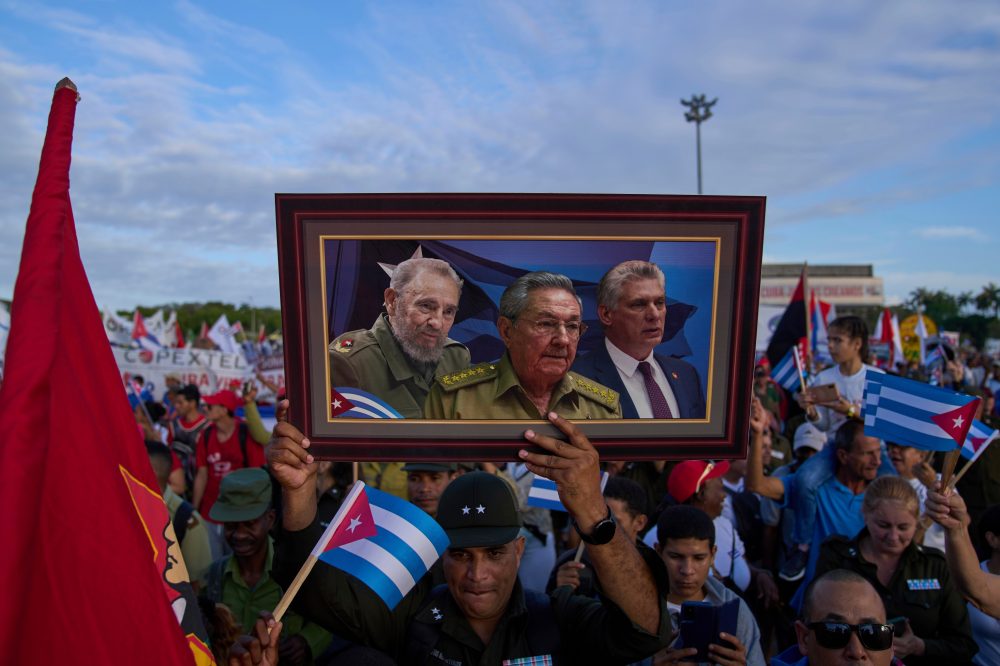

Federal prosecutors have filed criminal charges against former Cuban President Raúl Castro for his involvement in shooting down civilian aircraft in 1996, marking a significant escalation in the Trump administration’s pressure campaign against Cuba’s government.
At the same time, Senate Republicans are poised to drop their proposal for $1 billion in security funding for the White House complex and Trump’s ballroom on Thursday. Additionally, Trump’s proposal to construct a triumphal arch in Washington is receiving renewed scrutiny from the U.S. Commission of Fine Arts, a federal body that recommended modifications before approving the plan last month.
The Latest:
Trump has intensified discussions about regime change in Cuba following his deployment of U.S. military forces to apprehend Venezuelan President Nicolás Maduro in January. A federal indictment against former Cuban leader Raúl Castro now sparks speculation about whether Trump might pursue similar action in Havana.
Below is a chronology of U.S. relations with the communist-controlled island, including multiple encounters with Raúl Guillermo Rodríguez Castro, Castro’s grandson referred to as “Raúlito.”
“China always firmly opposes illegal unilateral sanctions that lack a basis in international law and have no authorization from the United Nations Security Council and the abuse of judicial measures, and we also oppose external forces exerting pressure on Cuba under any pretext,” Foreign Ministry spokesperson Guo Jiankun said Thursday.
The U.S. should “stop wielding the stick of sanctions and judicial measures” against the country, Guo added. “China firmly supports Cuba in safeguarding its national sovereignty and national dignity and opposes external interference.”
Trump’s proposal to construct a triumphal arch in Washington is receiving renewed examination from a federal body that recommended modifications before approving the plan last month.
The planned 250-foot (76 meter) arch represents one of multiple projects the Republican president is advancing along with a White House ballroom to establish his legacy in Washington. Project opponents, including a vast majority of individuals who provided public feedback in April, argued the arch would exceed the height of every other monument in the capital and overwhelm the skyline.
He has indicated some of his additional projects, including applying a blue coating to the Lincoln Memorial Reflecting Pool’s interior, will enhance the city’s appearance ahead of July 4 celebrations marking America’s 250th anniversary.
The U.S. Commission of Fine Arts, whose members received Trump appointments, endorsed the arch concept during its April monthly session. Commissioners plan to review and potentially vote on revised proposals during Thursday’s meeting.
▶ Read more
More than a dozen young Republicans who assembled with beers and colorful cocktails at a Kentucky establishment called dEcORa this week were critiquing the presidential administration they had welcomed enthusiastically last year.
Their initial excitement for Trump had transformed into disappointment. What emerged at the bar was frustration that the Republican establishment — which they originally praised Trump for challenging, but which some now believe he perpetuates — had abandoned them.
This growing resentment has expanded a generational divide between younger and older conservatives as the party gradually contemplates a post-Trump future.
The Republican primary loss of Rep. Thomas Massie — who had cultivated younger and anti-establishment support while clashing with Trump — eliminated one of their most powerful congressional advocates.
▶ Read more
Senate Republican leadership plans to withdraw their proposal for $1 billion in security funding for the White House complex and Trump’s ballroom on Thursday following criticism from party members regarding the timing and insufficient details in the Secret Service request.
Under White House pressure, Republicans attempted to incorporate the funding into an approximately $70 billion measure restoring money to U.S. Immigration and Customs Enforcement and the Border Patrol. However, the security proposal faced opposition from some GOP legislators questioning the expense and taxpayer fund allocation.
While the bill’s language remains unpublished, the Senate aims to approve it this week and forward it to the House before departing for a weeklong Memorial Day break.
Sen. Thom Tillis, R-N.C., said the effort to add the security package to the bill was a “bad idea” and he does not think there is enough backing to pass it, even if the cost were reduced.
▶ Read more
Federal prosecutors announced Wednesday that they have filed criminal charges against former Cuban President Raúl Castro regarding the 1996 shootdown of civilian aircraft operated by Miami-based exile groups, as the Trump administration intensified pressure on the island’s socialist government.
The indictment alleges Castro directed the attack on two small aircraft operated by the exile organization Brothers to the Rescue. Castro, who will turn 95 next month, served as Cuba’s defense minister during the incident. The charges, secretly filed by a grand jury in April, include murder and aircraft destruction. Five Cuban military pilots also face charges.
When questioned about the extent American authorities would pursue to bring Castro before U.S. courts, acting Attorney General Todd Blanche stated: “There was a warrant issued for his arrest. So we expect that he will show up here, by his own will or by another way.”
The charges represent a genuine threat, analysts noted, following the January capture by U.S. forces of former Venezuelan President Nicolás Maduro to face drug charges in New York.
▶ Read more