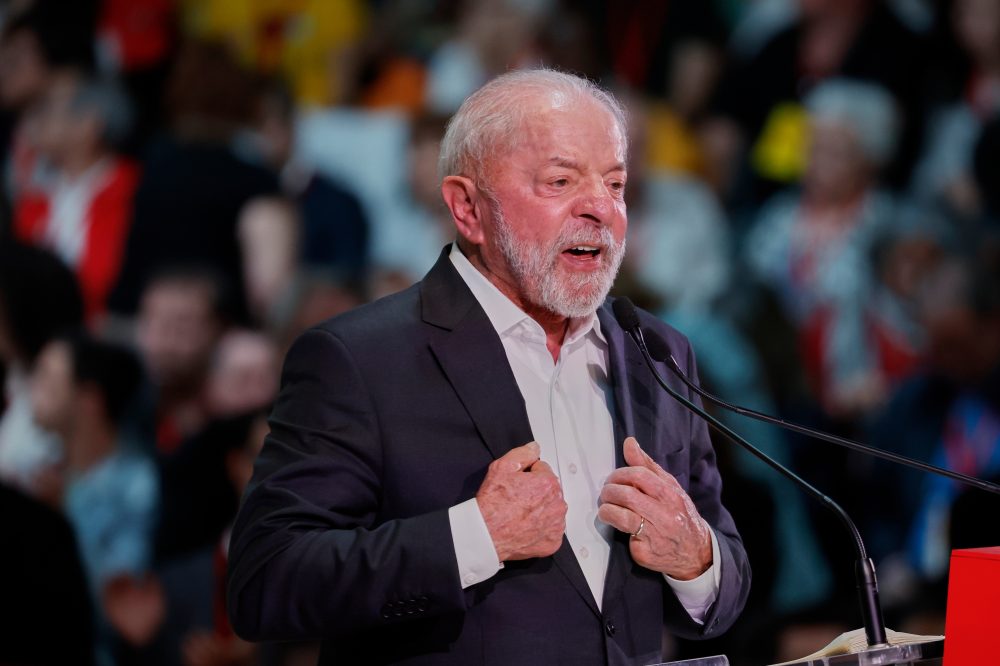

Brazilian President Luiz Inácio Lula da Silva enacted two executive orders Wednesday that intensify regulatory oversight of major technology companies by strengthening their accountability for illegal user-generated content and creating pathways for government investigations into their content moderation practices.
The new regulations create a more challenging operating environment in Brazil for technology giants like Google, Meta and TikTok, companies that have historically sought to distance themselves from criminal activities conducted by users on their platforms.
The initial executive order modifies existing government regulations to comply with a Brazilian Supreme Court ruling that holds major technology companies accountable when they fail to remove content following judicial directives. The order also authorizes the country’s national data protection agency to conduct investigations in such instances. The second order creates standards for protecting women in digital spaces.
According to a government statement, platforms will now be required to review all complaints and immediately delete content determined to be criminal while notifying the responsible party of their action. Companies that fail to comply may face warnings, financial penalties, or temporary service suspensions.
Major technology companies have not issued statements regarding the Brazilian government’s decision.
Patricia Peck, who serves on Brazil’s Data Protection Authority council and has written 46 books on law and technology, noted that the country’s executive and judicial branches have encouraged technology companies to take active measures against online crimes despite apparent legislative gridlock in congress.
“We don’t have specific legislation to hold these platforms responsible, we are taking a side road,” Peck told The Associated Press. “Those who develop these technologies must think about it with perspective of ethics, privacy, and security as a standard.”
Following last year’s Brazilian Supreme Court decision, these companies have been required to actively monitor content involving hate speech, racism and incitement to violence and take action to eliminate it.
The president’s action also broadens existing legal frameworks to address increasing digital fraud, online scams and emerging forms of digital violence.
Mattheus Puppe, a specialist in Brazil’s digital law, explained that the executive orders aim to prevent platforms from generating revenue from illegal content while reinforcing the Supreme Court’s ruling. However, he questions whether the government’s efforts will effectively reduce online criminal activity.
“It is not clear how well this will work because the agency that was chosen to investigate cases can barely do its job now,” Puppe said. “But it is true that it shouldn’t be up to companies to know what is lawful and what is not.”
Brazil’s regulatory strategy toward technology companies increasingly mirrors that of the European Union, which has worked to limit the influence of social media companies and other digital platforms.
However, this approach has created tension in the relationship between the South American country and the U.S. government. Critics have raised concerns that the measures could endanger free speech if platforms begin removing potentially problematic content as a precautionary measure.
A law took effect earlier this year designed to protect minors from addictive, violent, and pornographic online material. The legislation mandates that minors under 16 connect their social media profiles to a legal guardian for oversight and prohibits platforms from implementing addictive design elements such as infinite scroll and automatic video playback.