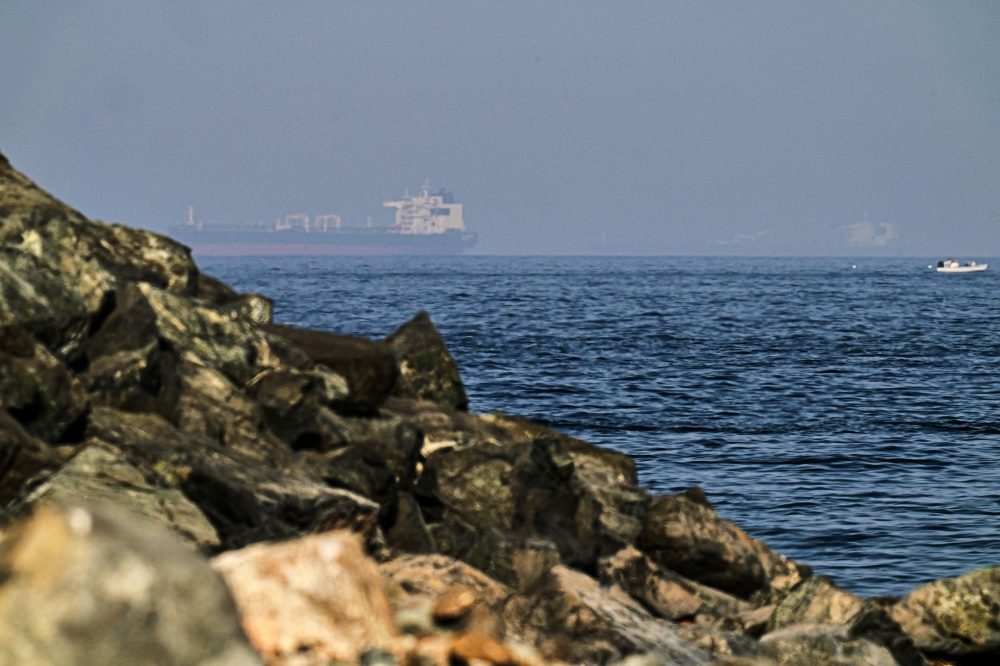

American military forces intercepted an Iranian oil vessel in the Gulf of Oman on Wednesday, marking another escalation in the ongoing standoff over the critical Strait of Hormuz shipping route.
The boarding of the tanker comes as President Donald Trump faces mounting domestic pressure from his own party. Republican lawmakers are grappling with political challenges before November’s midterm elections as fuel costs surge and international energy markets remain volatile.
In a significant congressional move Tuesday, the Senate pushed forward a bill aimed at compelling Trump to end military involvement in the Iran conflict, with the measure passing 50-47 as more Republicans broke ranks with the president.
According to U.S. Central Command’s social media announcement, military personnel searched the vessel M/T Celestial Sea and diverted it after intelligence suggested it was attempting to reach an Iranian harbor. This incident represents at least the fifth commercial ship boarding since the administration established the Iranian shipping blockade in mid-April, implemented during a ceasefire period to force Tehran into reopening the strait and negotiating a war settlement.
The tanker seizure followed Trump’s Monday announcement that he had canceled planned military strikes against Iran to allow room for diplomatic progress. The president revealed he had authorized “a very major attack” scheduled for Tuesday but postponed it after Gulf allies requested a two to three-day delay, believing they were close to reaching an agreement.
The president has established multiple deadlines for Tehran, only to extend them repeatedly.
Prior to the American blockade, Iranian authorities had permitted certain vessels they deemed favorable to transit the waterway while imposing substantial transit fees, drawing criticism for essentially holding the world economy hostage.
Military officials recently reported that 1,550 ships from 87 nations remain trapped in Persian Gulf waters.
Nearly three months after hostilities commenced with American and Israeli air operations on February 28, Iran continues controlling the strategic strait while U.S. forces maintain their blockade of Iranian harbors and Iranian-connected vessels across distant waters beyond the Middle East.
Last month, American forces seized an oil tanker in the Bay of Bengal that had previously faced sanctions for smuggling Iranian petroleum. Days afterward, U.S. personnel captured another vessel linked to Iranian oil smuggling operations in Indian Ocean waters between Sri Lanka and Indonesia.
In early May, Trump announced the military would begin “guiding” stranded vessels out of the Iranian-controlled strait. The following day, he suspended the ship protection mission to explore potential diplomatic solutions.
Several days later, American forces engaged and disabled two Iranian oil tankers following an exchange of gunfire with Iranian military units in the Strait of Hormuz. Military officials stated the tankers were attempting to break through the blockade. The previous day, the military reported preventing Iranian attacks on three Navy vessels and conducting retaliatory strikes on Iranian military installations.