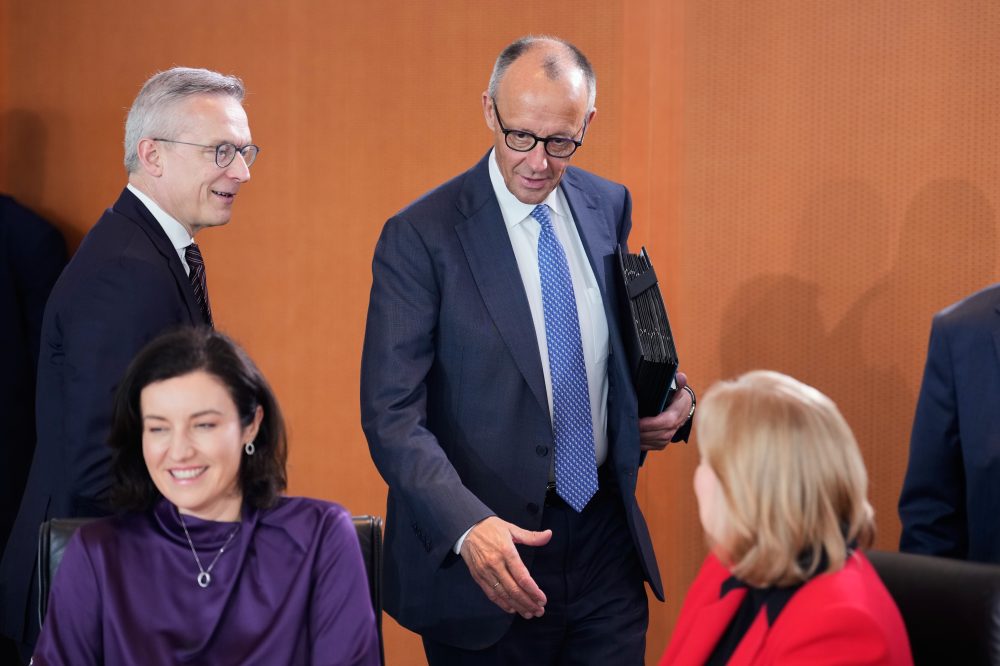

BRUSSELS (AP) — The leader of Germany is pushing the European Union to grant Ukraine a special ‘associate membership’ status while working to restart diplomatic efforts to end the conflict with Russia that has stretched beyond four years, according to correspondence obtained Thursday by The Associated Press.
The proposal from German Chancellor Friedrich Merz, addressed to top EU leadership, arrives as the 27-member union debates whether to pursue independent negotiations with Russian President Vladimir Putin, given that U.S.-facilitated discussions have stalled amid America’s focus on the Iran conflict.
Merz’s plan would allow Ukraine to participate in EU proceedings without the ability to vote, while also providing non-voting representation within the European Commission and European Parliament.
The German chancellor emphasized this approach “would not be a membership light,” and would “go far beyond” the current Association Agreement between the EU and Ukraine. His proposal includes a “snap-back mechanism” should Ukraine fail to maintain democratic standards.
Last month, European Council President Antonio Costa and European Commission President Ursula von der Leyen restated their position that formal membership discussions with Ukraine should begin “without delay,” a timeline Merz also supports.
Ukrainian President Volodymyr Zelenskyy expressed optimism Wednesday about potential advancement in membership talks, stating in remarks that it is “very important for us. Ukraine has fulfilled everything necessary for this progress.”
Nations seeking EU membership must align their legislation across 35 policy areas, from judicial standards to agricultural and maritime regulations. Unanimous approval from all 27 EU members is required to open and close each policy area.
Hungary has previously prevented negotiations from starting, though the recent government change in Budapest this month could shift that position.
However, Merz’s proposal may face resistance from European officials who maintain that EU membership should follow a merit-based process completed only after meeting all requirements.
The German leader suggested extending his approach to other aspiring member nations, particularly those in the Western Balkans, where EU leaders plan to convene for a summit next month.
Regarding the ongoing conflict, Merz stated his proposal “will help facilitate the ongoing peace talks as part of a negotiated peace solution. This is essential not only for Ukraine’s but for the entire continent’s security.”
Ukraine views EU membership as a crucial “security guarantee” for post-war stability. While NATO membership would provide the strongest protection, the Trump administration opposes this option, and others hesitate to admit a nation currently at war.
With U.S.-led mediation efforts struggling, EU countries are exploring whether to establish separate negotiation channels and identify potential mediators should Putin agree to discussions.
Costa stated earlier this month that “we need, in the right moment, to have talks with Russia to address our common issues on security.” He emphasized this shouldn’t “disturb” U.S.-led efforts but acknowledged Europe’s need to address its security interests.
European media has speculated about possible EU negotiators, including former German Chancellor Angela Merkel, who speaks Russian and has extensive experience with Putin, and former European Central Bank chief Mario Draghi.
Putin has indicated openness to discussions with Gerhard Schröder, another former German chancellor. However, officials have rejected this possibility, even in Germany, where Schröder’s connections to Russian energy companies and Putin relationship harmed his reputation following Russia’s 2022 invasion of Ukraine.
EU foreign policy chief Kaja Kallas called it unwise to let Putin select a negotiator, especially a “high-level lobbyist for Russian state-owned companies.”
Zelenskyy has endorsed European involvement, saying Sunday that “Europe must be involved in the negotiations. It is important for Europe to have a strong voice and presence in this process, and it is worth determining who will represent Europe specifically.”