
WASHINGTON, England (AP) — Noisy. Damaged. Confusing.
When British citizens share their thoughts about their former colonial territory in 2026, these enduring perspectives of America and its people emerge. However, after two and a half centuries since breaking away from British rule, the nation’s previous governors find it impossible to discuss the United States without first bringing up President Donald Trump, nearly always before cataloging the numerous characteristics they respect and value in the ambitious country overseas.
“It’s Trump’s world now, isn’t it?” states Mark Keightley, a printing equipment specialist working in the Cambridge region, roughly an hour north of London.
Throughout the previous year, The Associated Press questioned British residents — from George Washington’s family estate near Scotland to Cambridge, Bristol and London — with a straightforward inquiry: “What do you think of America now?” Nearly every response, including from individuals like Keightley who back certain presidential policies, starts with a thoughtful silence, then a diplomatic reference to Trump and his administration.
“Your president …” “The current state of politics …” and “He …” with clear understanding of the subject, represent common responses. These reactions reveal as much about British views of their former territory as the analysis that typically follows. When questioned whether discussing America without mentioning Trump is feasible, the consistent response from these conversations: Absolutely not.
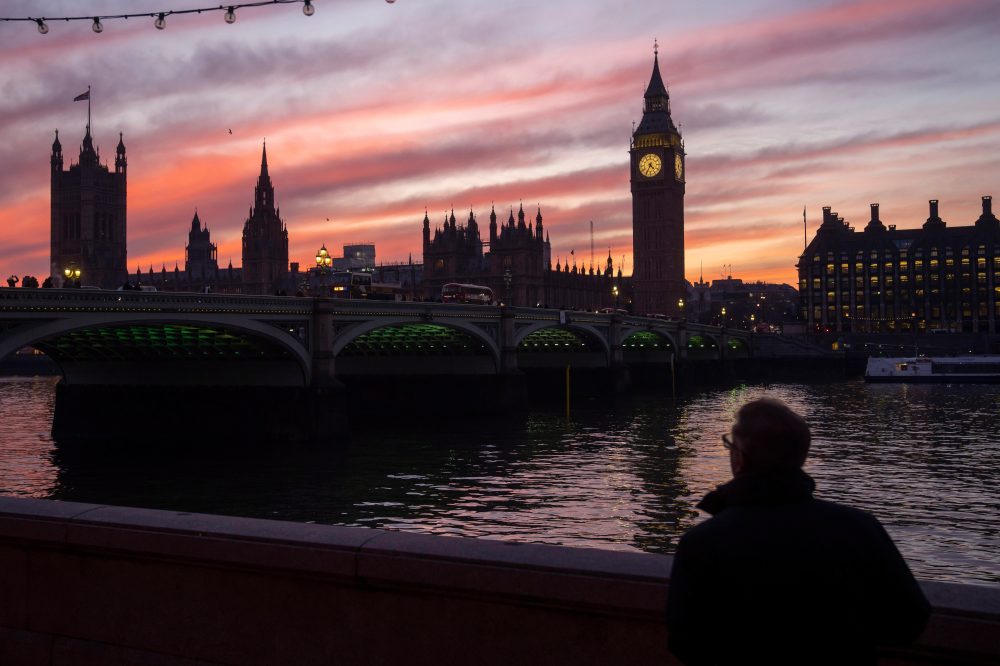
“My own opinion of America is now dictated by the president and he’s not covering himself in glory as far as I’m concerned,” expressed Eddie Boyle of Falkirk, Scotland, while crossing Westminster Bridge in London recently. “It’s a shame that such a long arrangement between the two countries has been tarnished.”
British citizens feeling let down by American reality represents nothing new.
Charles Dickens expressed similar sentiments to a friend during his 1842 journey to the young country, where he received acclaim from Boston to New York and Washington — and allegedly made substantial money from public performances of his writings. However, he remained appalled by the continued existence of slavery, which Britain had ended in 1833. The celebrated freedom of speech that Americans had protected in the First Amendment, he noted, had deteriorated into “a press more mean, and paltry, and silly, and disgraceful than any country I ever knew.”
Additionally, he documented in a travel account, Americans engaged in public spitting — a “filthy custom.”
“This is not the Republic I came to see. This is not the Republic of my imagination,” he expressed to William Charles Macready on March 22, 1842. “In every respect but that of National Education, the Country disappoints me.”
Through the decades, the development of U.S.-U.K. relations progressed so that no single incident or leader can characterize it completely.
Multiple turning points encouraged Britain to regard America as a lasting authority rather than a fleeting, rebellious phase. These included the War of 1812 — essentially a second confrontation between the nations. While ending without a clear winner, the battle strengthened American independence and positioned the United States as a formidable commercial and military presence.
The young nation then endured its internal Civil War. Subsequently, within a century, the United States assisted Britain in preventing Nazi control and, alongside other Allied nations, conquered Germany in World War II. Forty years afterward, the celebrated partnership between President Ronald Reagan and Prime Minister Margaret Thatcher contributed to ending Soviet power in 1991.
“They did something great there,” Maria Miston of Suffolk, stopping recently beside Big Ben, remarks about Thatcher and Reagan. “They actually managed to bring the Cold War to an end.” She observes that the U.S.-directed invasion of Iraq in 2003 harmed the superpower’s reputation globally. Furthermore, she believes conditions haven’t improved. “We’ve just gone backwards since then.”
Throughout his second presidency, the American leader initially tolerated his counterpart, British Prime Minister Keir Starmer, but later criticized him as “not Winston Churchill” following the premier’s decision against involving the U.K. in the U.S. conflict with Iran.
Trump has indicated he views the king, rather than the prime minister, as his equal. The president felt honored by the king’s offer for an exceptional second state visit to England — including an elaborate royal feast at Windsor Castle — last year plus Charles’ recent Washington trip. During his U.S. visit, Charles described the four-century U.S.-British partnership as “more important today than it has ever been,” while also endorsing governmental checks and balances — interpreted as subtle Trump criticism.
The White House shared on social platforms that the two are “TWO KINGS,” — possibly responding to “No Kings” demonstrations that attracted participants nationwide during Charles’ visit. The contradiction wasn’t overlooked in the birthplace of the Declaration of Independence, the U.S. Constitution, Thomas Paine’s “Common Sense,” and additional founding documents that opposed Charles’ five-times great-grandfather, King George III, and monarchical rule generally.
In Britain, where surveys indicated substantial resistance to the king’s visit initially, Charles’ actions received praise as effective diplomatic influence. This appeared particularly significant considering clear disagreement between the monarch and president regarding environmental matters, plus Trump’s proposal to make Canada the 51st state, where Charles serves as head of state.
“May I say, well done in the Americas,” rock star Rod Stewart told Charles at a May 11 gala within earshot of reporters. “You were superb, absolutely superb, put that little rat bag in his place.”
Surveys indicate British opinion of America has declined. Just 28% of British adults supported U.S. leadership in a Gallup survey from late summer and early fall 2025, with 68% expressing disapproval. This aligns with attitudes toward U.S. leadership during Trump’s initial presidency, and falls below approval ratings under Democratic President Joe Biden, when approximately 45% of U.K. adults endorsed American leadership.
The Pew Research Center’s 2025 Global Attitudes Survey, conducted that spring, discovered roughly half of U.K. adults held positive views of the U.S. British adults maintained more optimistic opinions during Biden’s first two years, when about two-thirds viewed the U.S. favorably. This dropped to 54% by spring 2024.
U.S.-U.K. relations have faced challenges historically. The Suez Canal crisis in 1956, for instance, demonstrated Britain’s declining influence and American dominance internationally. Ten years later, Britain rejected U.S. pressure to participate in the Vietnam War.
Over time, observing America has evolved into entertainment for Britain, serving to measure how effectively — or ineffectively, or entertainingly — their Atlantic relatives practice democracy.
Currently, British citizens freely recognize extensive American qualities they admire along with those that frustrate or puzzle them. Positive aspects include: American determination, national prosperity, military strength, geographic scale, entertainment industry, and endurance despite racial conflicts and the January 6, 2021, Capitol attack.
Simultaneously exist concerns: America’s gun violence appears incomprehensible from Great Britain, where handguns became illegal in 1997 following a school shooting. U.S. immigration restrictions seem contradictory to many British people since America began with immigrants. However, like much of Europe, the U.K. faces similar challenges with unauthorized border crossings.
Leading the confusion list is Trump, the 47th president during this period when the United States marks 250 years of independence. Discussing him requires social caution, British people explain, with Brexit remaining a sensitive division and populist reform, supported by some Trump allies, gaining ground in recent local voting.
“How can someone like that become president?” Mark Gibson wondered over a beer recently at The Cross Keys pub in Washington, below the first president’s family estate. He comprehends why Americans chose other leaders, even when disagreeing with them. But Trump? “I don’t understand it. He’s had bankruptcies and legal troubles.”
“But,” Gibson continues, “I guess that’s what people wanted. They elected him twice.”