
TEL AVIV, Israel — Israeli defense industry sales have reached unprecedented levels as companies showcase military technology proven effective in recent conflicts, even as international criticism mounts over the country’s wartime actions.
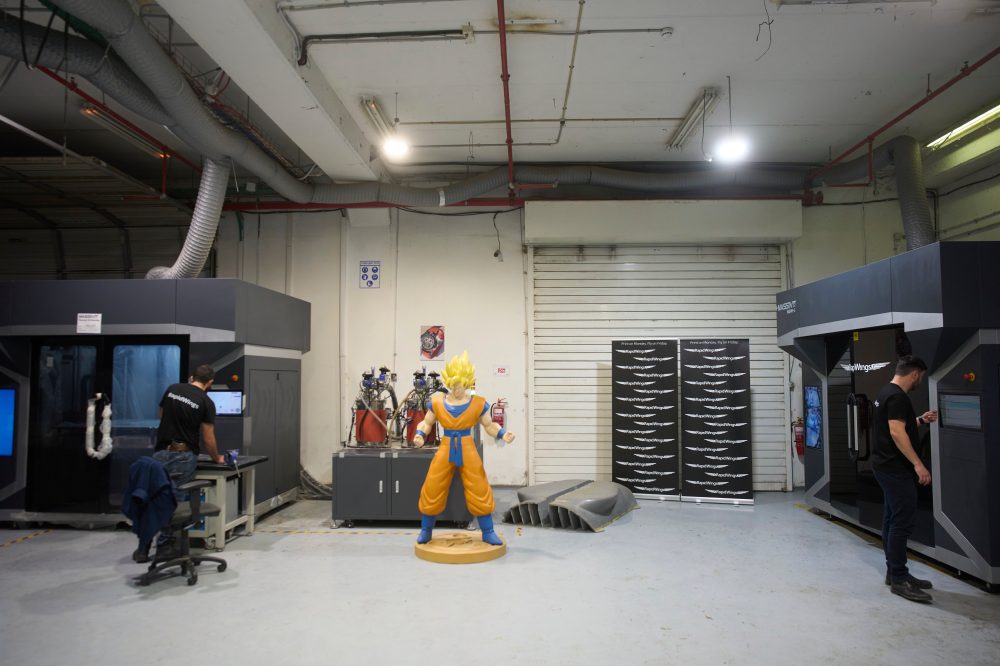
When defense officials contacted Massivit about utilizing its specialized 3D printing capabilities for military drone components, company CEO Yossi Azarzar eagerly agreed to shift focus from entertainment industry clients like Disney, DreamWorks and Netflix.
“I stopped thinking about Hollywood sets,” Azarzar explained. “The entertainment industry is a nice customer — defense is a necessity.”
The Israeli weapons industry has experienced remarkable growth amid ongoing conflicts in Gaza, with Hezbollah, and with Iran. Industry representatives report that nations publicly critical of Israeli arms manufacturers are still discreetly submitting purchase orders. Companies, including those like Massivit without prior military experience, can demonstrate their products undergo continuous battlefield testing and enhancement.
Israeli weapons exports have more than doubled during the past five years, reaching a record $15 billion in 2024, according to the Defense Ministry. Major manufacturers including Elbit and Israel Aerospace Industries both posted double-digit sales increases last year, though complete 2025 statistics remain unreleased.
Missiles, rockets and air-defense systems comprise over half of Israeli arms sales. Israel has now overtaken the United Kingdom as the world’s seventh-largest weapons supplier, marking the first time it achieved this ranking, according to Stockholm International Peace Research Institute data from March.
“This tremendous achievement is a direct result of the successes of the (army) and defense industries. … The world sees Israeli strength and seeks to be a partner in it,” stated Israel’s defense minister, Israel Katz.
The recent Defense Tech Expo in Tel Aviv demonstrated growing international demand for Israeli military equipment, with manufacturers highlighting weapons and systems developed through recent combat experiences. However, the event also exposed tensions between military technology promotion and political controversy, as protesters condemned Gaza’s widespread destruction as a weapons testing ground.
Spain terminated a contract for anti-tank missile systems from an Israeli company subsidiary last year. Slovenia announced comprehensive bans on weapons imports, exports and transit involving Israel following its Gaza operations. After Hamas’s Oct. 7, 2023 attack killed approximately 1,200 people and captured roughly 250 hostages, Israeli retaliation has resulted in over 72,700 Palestinian deaths, according to Gaza Health Ministry figures that don’t separate combatants from civilians. Multiple countries and human rights organizations have alleged Israeli war crimes.
Israel’s Defense Ministry maintains its equipment serves defensive purposes and rejects claims of using battlefields for weapons testing.
Human rights advocates assert Israel has introduced new weapons and technologies during Gaza operations, particularly involving artificial intelligence, big data and targeting systems.
“The regional war has drawn heavily on Israel’s deadly playbook and provided a boon to Israeli and other defense and technology companies able to parlay the use of their products in Gaza to attract more business,” said Omar Shakir, executive director of DAWN, a U.S.-based organization founded by murdered journalist Jamal Khashoggi promoting Middle Eastern human rights.
While critics argue Israel’s weapons sector profits from battlefield-tested technologies, experts note this practice isn’t unique.
“Countries have had to dramatically increase defenses because of the proliferation of global conflicts and they need systems that will work. And most countries don’t have the time right now to build their own defense systems locally and quickly,” explained Seth J. Frantzman, an adjunct fellow at the Foundation for Defense of Democracies who has monitored Israel’s arms industry for ten years and authored “Drone Wars.”
Many nations turn to Israel because they witness real-time proof these munitions and systems function effectively, he noted.
Massivit’s sales have skyrocketed since transitioning to military drone component production, including a 200% increase in buyer inquiries following U.S.-Israeli strikes on Iran in late February, Azarzar reported.
The company’s specialized 3D printing creates large drone components within days rather than weeks. Beyond Israeli military contracts, the technology has attracted European, American, Southeast Asian and Indian defense and aerospace interest.
Other defense contractors report similar success.
Tomer Malchi, co-founder and CEO of ASIO, said Israeli army orders for the company’s ruggedized Orion smartphone have jumped 400% since Gaza fighting began.
These devices employ mapping, augmentation and artificial intelligence to assist soldiers with mission planning, navigation and real-time threat response. ASIO recently concluded agreements with a major U.S. defense contractor and maintains discussions with approximately 20 additional countries, Malchi said.
Israel’s Defense Ministry identifies anti-drone technology as a future innovation priority, citing challenges encountered during Iranian conflicts. Drones prove difficult to detect on radar systems designed for high-speed missiles and may be confused with birds or aircraft.
Israel Weapon Industries has created a system enabling soldiers to more precisely eliminate tactical drones. At a central Israeli shooting range, an IWI instructor demonstrated the technology by firing at a mock drone target. A computer chip integrated into soldiers’ rifles provides enhanced accuracy and efficiency while significantly reducing fatigue and other human factors by maintaining trigger pressure.
The Arbel system launched in 2024 and now serves over two dozen countries, according to Semion Dukhan, IWI’s European operations head.
IWI’s customers include nations that have publicly rejected Israeli business relationships, though Dukhan declined to identify them.
“People and politicians say things they need to say … what they say is not necessarily what is going on underneath the surface,” he observed, noting countries ultimately seek optimal equipment for their personnel.