Category: World News

  • Vietnamese Leader To Lam Gains Unprecedented Power in Historic Political Shift

    Vietnamese Leader To Lam Gains Unprecedented Power in Historic Political Shift

    Vietnam’s National Assembly unanimously approved Communist Party chief To Lam for the position of state president on Tuesday, granting him dual leadership authority that political analysts say represents the most significant concentration of power in the Southeast Asian nation in decades.

    The parliamentary approval, which was widely expected, formally breaks with Vietnam’s longstanding tradition of shared leadership among multiple officials. This shift toward centralized control mirrors developments in neighboring China and could fundamentally alter how the single-party state operates moving forward.

    Lawmakers endorsed the Communist Party’s selection of Lam, a decision that party officials confirmed was reached during closed-door discussions in late March. The 68-year-old former security chief now holds both the general secretary and presidential positions simultaneously for a five-year term, after securing his second stint as party leader this past January.

    Following the legislative vote, Lam addressed parliament members in remarks broadcast on television, expressing gratitude for the dual appointment. He outlined his vision for the country, promising “a new growth model with science, technology, innovation, and digital transformation as the primary driving forces.” Lam also emphasized his commitment to strengthening national defense capabilities through domestic resources.

    Singapore-based political expert Le Hong Hiep from the ISEAS Yusof Ishak Institute warned about potential consequences of this power consolidation. “Concentrating greater power in To Lam’s hands could pose risks to Vietnam’s political system, such as increased authoritarianism,” Hiep noted. However, he acknowledged that streamlined leadership “could enable Vietnam to formulate and implement policies more quickly and effectively,” potentially boosting economic development.

    Alexander Vuving from the Asia-Pacific Center for Security Studies in the United States described the change as transformative. The dual role arrangement “will shift Vietnam’s domestic politics to a new normal where most of the old assumptions about Vietnam’s politics, including those about collective leadership, are no longer valid,” Vuving explained.

    This marks Lam’s second time holding both positions simultaneously. He previously served in both capacities for several months in 2024 following the death of former General Secretary Nguyen Phu Trong. Even after temporarily stepping back from the presidency in favor of military leader Luong Cuong, Lam continued conducting presidential duties, including extensive international travel and diplomatic meetings with foreign officials.

    Throughout his initial tenure as party leader, Lam has pursued ambitious economic restructuring aimed at enhancing Vietnam’s global competitiveness, though his initiatives have generated mixed reactions. He has committed to achieving double-digit economic growth by moving away from the low-wage manufacturing model that has traditionally powered Vietnam’s export economy under foreign corporate leadership.

    While Lam’s reform agenda has sometimes created uncertainty within government circles and the business community, he has demonstrated adaptability in his approach. He supports expanding private sector conglomerates but has also issued guidance reinforcing the importance of state-owned companies, apparently to maintain support from party conservatives.

    International businesses, which play a crucial role in Vietnam’s export-focused economy, generally view the country’s political consistency favorably and regard Lam as business-friendly. Nevertheless, his promotion of domestic corporate champions and aggressive growth targets have sparked concerns among some observers about potential favoritism, corruption vulnerabilities, speculative bubbles, and inefficient resource allocation.

    In international relations, Lam has maintained a balanced approach. He continues Vietnam’s established “Bamboo Diplomacy” strategy, working to maintain equilibrium among major global powers while pursuing broader international cooperation.

    Boston College visiting scholar Khang Vu believes the leadership consolidation will not alter Vietnam’s foreign policy direction. “Lam’s double-hat would not signal any changes in Vietnam’s foreign policy, even if there are concerns that Vietnam is concentrating more power in a single individual,” Vu stated.

  • Taiwan Opposition Leader Heads to China for Peace Talks Amid Military Tensions

    Taiwan Opposition Leader Heads to China for Peace Talks Amid Military Tensions

    The head of Taiwan’s primary opposition party departed Tuesday for China on what she calls a diplomatic mission aimed at preventing conflict, while Taiwanese officials revealed the current positioning of Chinese naval vessels surrounding the island.

    Cheng Li-wun, who leads the Kuomintang (KMT) party, embarked on her journey during a period of heightened military tensions with China, which considers Taiwan part of its territory. Her trip also coincides with legislative delays over a proposed $40 billion increase in Taiwan’s defense budget.

    Before heading to the airport from her party’s offices, Cheng addressed reporters about what she described as a “historic journey for peace,” while acknowledging that some citizens have concerns about her visit.

    “If you truly love Taiwan, you will seize even the slightest chance, every possible opportunity, to keep Taiwan from being ravaged by war,” Cheng stated.

    “So I would rather believe that all Taiwanese people hope this trip will succeed, because we can transform the most dangerous place in the world into the safest place in the world,” she added.

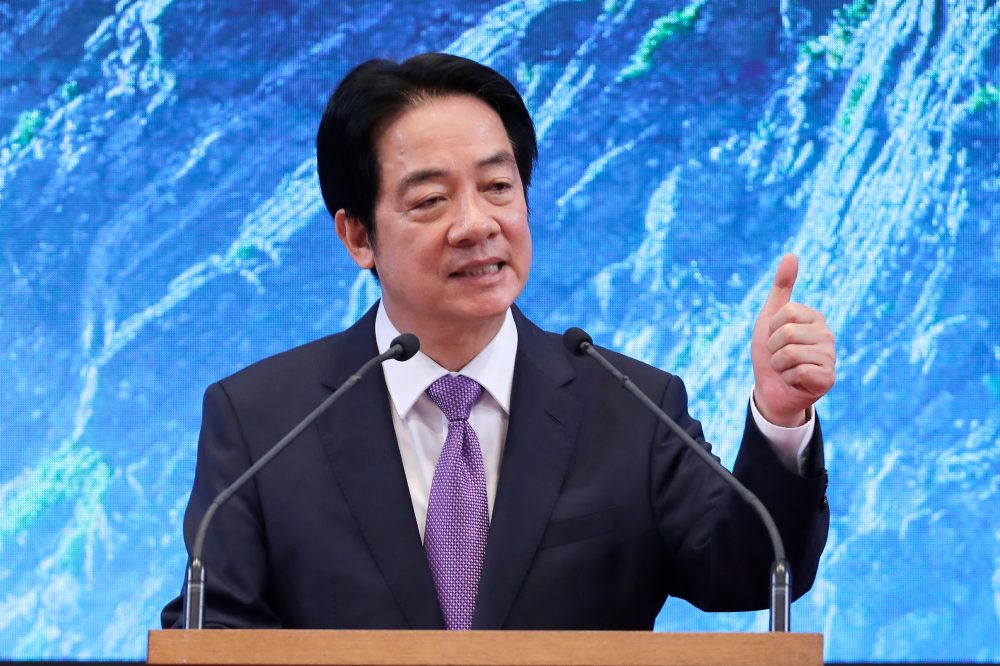
    Beijing maintains its position that military action remains an option for bringing Taiwan under Chinese control and refuses diplomatic contact with Taiwan’s current President Lai Ching-te, whom Chinese officials label a “separatist.”

    On Monday evening, Kuan Bi-ling, who oversees Taiwan’s coast guard through the Ocean Affairs Council, shared a Facebook image showing current Chinese naval deployments around Taiwan – including two vessels positioned off the eastern coastline and one ship each stationed to the north, northwest, and southwest of the island.

    “When you depart, you are doing so from within what they see as the ‘Taiwan cage’,” Kuan explained to parliamentary reporters Tuesday, referencing China’s military terminology for Taiwan’s planned T-Dome air defense system while discussing Cheng’s diplomatic mission.

    During separate parliamentary remarks, Chiu Chui-cheng, Taiwan’s chief official handling China relations through the Mainland Affairs Council, emphasized that Beijing should work with Taiwan’s democratically chosen leadership.

    “We call on Chairwoman Cheng Li-wun, when facing the Communist Party authorities in person, to demand that they immediately stop their compounded pressure against Taiwan, including military aircraft and naval harassment,” Chiu stated.

    Cheng’s China visit occurs one month ahead of a planned summit between U.S. President Donald Trump and Chinese President Xi in Beijing.

    Although Trump and Xi may reach cooperative agreements on agricultural trade and aircraft components during their Beijing meeting, discussions are anticipated to cover contentious issues including Taiwan, where diplomatic breakthroughs appear unlikely.

    During a February phone conversation, Xi cautioned Trump that the United States “must carefully handle arms sales to Taiwan.”

    This marks the first visit by a KMT leader to China in ten years, though Chinese officials have not confirmed whether Xi will definitely meet with Cheng, who plans to remain in Beijing starting Thursday.

    Her itinerary includes an initial stop in Shanghai followed by rail travel to Nanjing, where the tomb of party founder Sun Yat-sen is located. Sun Yat-sen led the overthrow of China’s final imperial dynasty and established the Republic of China in 1912.

    The KMT-controlled republican government relocated to Taiwan in 1949 following their defeat in a civil conflict against Mao Zedong’s communist forces.

  • Vietnamese Leader To Lam Gains Unprecedented Power in China-Style Consolidation

    Vietnamese Leader To Lam Gains Unprecedented Power in China-Style Consolidation

    Vietnam’s National Assembly has unanimously selected Communist Party General Secretary To Lam to serve as the nation’s president for the next five years, according to parliamentary officials following Tuesday’s vote.

    This expected decision represents a departure from Vietnam’s longstanding tradition of shared leadership among multiple officials, concentrating power under a single leader in a manner that experts believe could push the communist nation toward increased authoritarian control, while potentially allowing for quicker policy decisions similar to neighboring China.

    National Assembly members approved Lam’s selection after the Communist Party formally nominated him during meetings concluded in late March.

    The 68-year-old former public security chief now holds dual authority to govern Vietnam for five years ahead, having already secured his second term as general secretary this past January.

    “Concentrating greater power in To Lam’s hands could pose risks to Vietnam’s political system, such as increased authoritarianism,” stated Le Hong Hiep, senior fellow at the ISEAS Yusof Ishak Institute in Singapore.

    Nevertheless, this power concentration “could enable Vietnam to formulate and implement policies more quickly and effectively,” which would support economic expansion, he noted.

    The merging of these two positions “will shift Vietnam’s domestic politics to a new normal where most of the old assumptions about Vietnam’s politics, including those about collective leadership, are no longer valid,” explained Alexander Vuving from the Asia-Pacific Center for Security Studies in the United States.

    Lam previously occupied both roles temporarily following the 2024 death of former party General Secretary Nguyen Phu Trong.

    Despite transferring the presidency to army general Luong Cuong, Lam continued functioning as though he maintained the position, conducting extensive international travel and representing Vietnam in diplomatic meetings with foreign officials.

    During his initial tenure as party leader, Lam introduced comprehensive economic reforms aimed at enhancing Vietnam’s competitiveness, generating both support and opposition.

    Following his reappointment as party chief, Lam pledged to achieve double-digit economic growth through a fresh development strategy reducing dependence on low-cost manufacturing, which has historically driven Vietnam’s export-focused economic success under foreign multinational leadership.

    While Lam’s initiatives have occasionally created uncertainty within government circles and business communities, he has demonstrated practical adaptability in their implementation.

    He has supported private conglomerate expansion, though prior to his reappointment, he also released guidance emphasizing state-owned enterprises’ primary importance to satisfy party traditionalists.

    International investors, who play a crucial role in Vietnam’s export-dependent economy, frequently commend the nation’s political stability and view Lam as business-friendly. However, his support for domestic champions and aggressive growth targets have sparked concerns among some regarding preferential treatment, corruption possibilities, asset inflation, and resource misallocation.

    Regarding international relations, Lam has maintained a practical approach.

    He has preserved Vietnam’s “Bamboo Diplomacy” strategy while working to maintain balanced relationships with major global powers and expanding international partnerships.

    “Lam’s double-hat would not signal any changes in Vietnam’s foreign policy, even if there are concerns that Vietnam is concentrating more power in a single individual,” said Khang Vu, a visiting scholar at Boston College.

  • Engineering Students Hang VW Beetle on Canadian Rock Face in Bold Stunt

    Engineering Students Hang VW Beetle on Canadian Rock Face in Bold Stunt

    SQUAMISH, British Columbia — Officials in British Columbia are warning residents to avoid a cliff area above a major highway where engineering students apparently hung a red Volkswagen Beetle shell as part of an elaborate stunt.

    Provincial authorities announced Monday that BC Parks crews are working to take down the vehicle and anticipate completing the removal by week’s end. The Environment Ministry confirmed that both the Royal Canadian Mounted Police and park officials have been called in to look into the incident.

    The hollowed-out car emerged on the cliff face overlooking Highway 99 in Squamish last week, displaying a prominent “E” painted on its top — a marking that suggests University of British Columbia engineering students were continuing their longstanding practice of positioning Beetle shells in challenging spots.

    This type of stunt has occurred before. In 2009, another Beetle dropped from the Iron Workers Memorial Bridge, leading Vancouver police to arrest five students who had unsuccessfully tried to hang it from the bridge structure.

    University representatives have not yet responded to requests for comment about the latest incident.

    Squamish Mayor Armand Hurford expressed concern about the location chosen for the prank, describing the Stawamus Chief rock formation area as a “sacred place” that holds significant cultural importance for the Squamish Nation.

    The mayor noted that the location draws many outdoor enthusiasts for hiking and climbing activities, and emphasized that what “may have felt like an innocent prank” has negatively impacted the local community.

    “This is an area that deserves respect, and that wasn’t the case here,” Hurford said in the statement.

  • Japanese Citizen Held in Iran Since January Gets Bail Release

    Japanese Citizen Held in Iran Since January Gets Bail Release

    A Japanese citizen who spent nearly three months detained in Iran has been granted bail and released from custody, according to Japan’s government officials.

    Chief Cabinet Secretary Minoru Kihara announced during a Tuesday press conference that the individual, who was taken into custody on January 20th, was freed on bail this past Monday. Kihara reported that the person appears to be in good health but declined to share additional information including the detainee’s name or what charges were involved.

    Earlier this year in February, Radio Free Europe published reports indicating that Shinnosuke Kawashima, who serves as the Tehran bureau chief for Japan’s public broadcasting network NHK, had been arrested by Iranian authorities and moved to a prison facility.

    When the arrest reports first emerged, NHK representatives stated that “there is nothing we can answer at this stage” while emphasizing that protecting their staff members’ safety remained their highest concern.

    Japanese government officials subsequently acknowledged that one of their citizens was being held in Iran and confirmed they had established communication with both the detained person’s relatives and Iranian government representatives.

    The detention occurred during a period of heightened tensions involving Iran, particularly following the start of hostilities between the United States and Israel against the Middle Eastern nation on February 28th.

  • Saudi Defense Forces Stop 7 Ballistic Missiles Aimed at Eastern Region

    Saudi Defense Forces Stop 7 Ballistic Missiles Aimed at Eastern Region

    Defense officials in Saudi Arabia announced Tuesday that their forces successfully shot down seven ballistic missiles that were fired toward the kingdom’s Eastern Region, with fragments from the destroyed projectiles landing in the vicinity of energy infrastructure.

    According to the defense ministry, teams are currently working to evaluate potential damage from the incident, though officials did not identify the source of the missile attack.

    Since the beginning of the U.S.-Israeli conflict with Iran, Saudi Arabia has faced hundreds of missile and drone attacks from Iranian forces, with most being successfully neutralized by defense systems, according to government officials.

    Iran has conducted military strikes against Israel as well as Gulf Arab nations that provide hosting facilities for U.S. military operations.

  • Middle East Conflict to Hurt Global Economy, IMF Director Warns

    Middle East Conflict to Hurt Global Economy, IMF Director Warns

    The ongoing conflict in the Middle East will drive up inflation while dampening global economic growth, according to the International Monetary Fund’s top official who spoke with Reuters on Monday.

    Kristalina Georgieva, who serves as the IMF’s managing director, made these comments as the organization prepares to release updated economic projections next week.

    Without the current warfare, the IMF had been anticipating modest improvements to worldwide growth estimates of 3.3% for 2026 and 3.2% for 2027.

    “Had we not had this war we would have seen a small upgrade of our growth projections. Instead, all roads now lead to higher prices and slower growth,” Georgieva explained.

    According to the IMF chief, even if fighting ends quickly followed by swift recovery, the organization would still make a “relatively small” downward adjustment to growth predictions while raising inflation estimates. Should the conflict drag on, she warned the economic impact would be more severe.

    Georgieva revealed that several nations have approached the IMF seeking financial support, though she declined to identify which countries made these requests. She noted the fund could expand current lending arrangements to address these nations’ requirements.

  • Pakistan Backtracks on Massive Fuel Price Increase Following Citizen Protests

    Pakistan Backtracks on Massive Fuel Price Increase Following Citizen Protests

    Pakistan’s leadership made a swift policy reversal late Friday evening, backing down from a dramatic gasoline price increase after citizens expressed overwhelming anger and frustration.

    Prime Minister Shehbaz Sharif delivered a national address announcing the price reduction, recognizing the serious economic hardships facing the country’s population.

    The government cut gasoline prices by 80 Pakistani rupees per liter through a reduced petroleum levy, setting the new cost at PKR 378 per liter (approximately $5.14 per gallon). Diesel prices remained at their current level of PKR 520.35 per liter.

    Just one day earlier, Energy Minister Ali Pervaiz Malik and Finance Minister Muhammad Aurangzeb had revealed increases of PKR 137.23 per liter for gasoline and PKR 184.49 per liter for diesel. These hikes temporarily pushed gasoline to PKR 458.41 per liter ($6.23 per gallon) before officials reversed course. The petroleum levy had jumped from PKR 105 to PKR 160 per liter but now sits at PKR 80 per liter after the rollback.

    Government representatives initially defended the dramatic price jumps by pointing to the ongoing US-Israel-Iran conflict and rising global oil costs. Sharif also announced several relief measures including transportation subsidies, frozen railway ticket prices, and a six-month extension of federal cabinet salary donations.

    “War is ongoing in the Gulf, and as a result, oil prices across the region are soaring. The sharp rise in oil prices has also gripped Pakistan,” Sharif said.

    This represented the second fuel price jump within a month’s time. On March 4, both gasoline and diesel had increased by PKR 55 per liter. During the past month, gasoline costs climbed 77% while diesel rose 87%, triggering widespread public demonstrations.

    Opposition voices have criticized these policies as poorly planned decision-making and questioned the reasoning behind such severe increases while oil continues moving through the Strait of Hormuz.

    Political opponents also claim the administration has avoided reducing its own expenditures, instead placing financial strain on citizens already experiencing significant economic hardship.

    Wahid, a rickshaw driver, told The Media Line that he barely earns PKR 1,000 ($3.59) a day and now faces an impossible choice: whether to buy fuel or feed his children.

    Prior to the government’s midnight policy change, the political party Jamaat-e-Islami had organized nationwide protests against the fuel cost increases, threatening demonstrations and a potential transportation strike.

    In their official response, Jamaat-e-Islami declared the price reduction insufficient, demanding the government eliminate or significantly lower petroleum taxes and levies that were already in effect and had been substantially raised in the recent price adjustment.

    The party issued a warning that without meeting their demands, they would organize supporters to march to provincial chief ministers’ homes and initiate a nationwide transportation strike designed to shut down road traffic and transport operations.

  • Four Killed in Iranian Missile Strike on Haifa; Multiple Wounded Across Israel

    Four Killed in Iranian Missile Strike on Haifa; Multiple Wounded Across Israel

    Emergency crews confirmed Monday that all four individuals missing after an Iranian missile directly struck a building in Haifa on Sunday have been found dead, according to Fire and Rescue Services officials. The victims included an elderly man and woman both in their 80s, along with their approximately 40-year-old son and his female partner, who was around 35 years old.

    Rescue workers managed to retrieve two bodies from the collapsed structure, while operations continued to reach the other two victims. The recovery efforts faced additional challenges when another missile attack targeted the same neighborhood, causing more destruction and leaving four residents with minor injuries.

    Monday morning brought fresh violence when a projectile hit a residential building’s private parking area in Haifa, resulting in smoke inhalation injuries for four people: two 5-year-old girls and two adults in their 40s.

    The most serious injury occurred in Petah Tikva, where a 34-year-old woman suffered severe wounds from interceptor missile debris during the barrage. Emergency medical personnel from Magen David Adom rushed her to Beilinson Hospital, where doctors later upgraded her condition from serious to moderate-to-serious. Video from the scene revealed her damaged vehicle with broken windows and captured the moment she was struck while standing near the car.

    Israeli authorities documented at least 15 impact locations throughout central Israel, with the Tel Aviv metropolitan area bearing significant damage. One Tel Aviv building sustained a direct hit, leaving one person with moderate injuries.

    Medical responders also treated a 90-year-old Tel Aviv woman who was seriously injured while attempting to reach a bomb shelter during the attack.

  • Iranian Intelligence Chief Dies in Dawn Strike on Tehran

    Iranian Intelligence Chief Dies in Dawn Strike on Tehran

    Iran’s Revolutionary Guard Corps announced Monday that intelligence chief Majid Khademi died in what Tehran describes as a joint American-Israeli operation that took place during early morning hours in the Iranian capital.

    The Revolutionary Guard stated that Khademi was “martyred in the criminal terrorist attack by the American-Zionist enemy … at dawn today,” according to Iranian media reports.

    Israeli military sources reported that their air force carried out the nighttime operation in Tehran using detailed intelligence provided by Israel’s military intelligence division.

    Khademi brought extensive military and security expertise to his role and held significant influence within Iran’s Revolutionary Guard. He stepped into the intelligence position after Mohammad Khatami’s death and was tasked with collecting intelligence that informed Iran’s top leadership decision-making.

    Israeli officials accused Khademi of orchestrating attacks on Israeli and Jewish facilities around the globe. They also alleged he participated in operations targeting Americans and directed monitoring of Iranian civilians to crush domestic demonstrations.

    The Israeli military reported Sunday that they had also eliminated Mohammad Reza Ashrafi Kahi, who led commercial operations for the Revolutionary Guard’s petroleum division in Tehran.

    Military sources said Ashrafi managed business operations for the unit that generates billions annually and was instrumental in building military strength for the Revolutionary Guard and its allied organizations, including the Houthis, Hezbollah and Hamas.

  • Iran Launches Missile Attacks on Kuwait Oil Facilities, UAE Tech Companies

    Iran Launches Missile Attacks on Kuwait Oil Facilities, UAE Tech Companies

    Defense forces in Kuwait and the United Arab Emirates scrambled Monday to counter incoming Iranian missiles and drone attacks, with falling wreckage from successful intercepts causing civilian injuries and property damage throughout both nations.

    Kuwaiti military officials confirmed they were actively countering “hostile missile and drone threats.” These Monday strikes came one day after attacks damaged several locations throughout Kuwait, including the Shuwaikh facility that serves as headquarters for both the oil ministry and Kuwait Petroleum Corporation.

    Kuwait Petroleum Corporation disclosed “severe material damage” following Sunday’s drone attacks on its operational facilities. The nation’s electricity and water ministry confirmed that two water desalination facilities also sustained damage. Government media outlets reported another strike damaged a state office building, though no injuries occurred there.

    Throughout the UAE, defense operations continued nationwide as military officials said their defensive systems were “actively engaging with missiles and UAV (Unmanned Aerial Vehicle) threats.” Officials explained that loud sounds heard across the country resulted from these defensive actions.

    Debris from one successful intercept hit Raneen Systems, a company located in Abu Dhabi’s Musaffah industrial district, causing moderate injuries to a worker from Ghana, the Abu Dhabi Media Office confirmed.

    In another UAE incident, Fujairah officials responded after an Iranian drone approached the Du telecommunications company building on Sunday. No one was hurt in that incident.

    Emergency responders in Sharjah worked to extinguish a blaze at Khor Fakkan Port after intercept debris landed at the location Sunday. One worker from Nepal suffered serious injuries requiring hospitalization, while three Pakistani nationals received treatment for minor to moderate injuries.

  • London Festival Chief Defends Booking Controversial Rapper Despite Sponsor Exodus

    London Festival Chief Defends Booking Controversial Rapper Despite Sponsor Exodus

    The head of London’s Wireless Festival is defending his choice to feature rapper Ye as the main act, even as major corporate sponsors abandon the event over the controversial booking.

    Festival Republic’s managing director Melvin Benn issued a public statement Monday supporting the decision to schedule the artist formerly called Kanye West for the summer concert series.

    “Forgiveness and giving people a second chance are becoming a lost virtue in this ever-increasing divisive world,” he wrote. “I would ask people to reflect on their instant comments of disgust at the likelihood of him performing (as was mine) and offer some forgiveness and hope to him as I have decided to do.”

    The performer, who officially changed his name in 2021, is scheduled to appear before approximately 150,000 festival attendees during the three-day event running July 10-12.

    The 48-year-old artist has faced intense criticism over the past few years for making antisemitic statements and expressing praise for Adolf Hitler. In recent actions, he released a track titled “Heil Hitler” and promoted merchandise featuring Nazi symbols on his website. This past January, he issued an apology through a full-page Wall Street Journal advertisement, attributing his behavior to bipolar disorder and describing “a four-month long, manic episode of psychotic, paranoid and impulsive behavior that destroyed my life.”

    Major festival backers including Pepsi, Rockstar Energy, and Diageo have withdrawn their sponsorship following the headliner announcement, though primary sponsor Pepsi declined to specify their reasoning. British Prime Minister Keir Starmer described the booking decision as “deeply concerning.”

    Benn’s defense emphasized the artist’s continued presence in mainstream media. “Ye’s music is played on commercial radio stations in this country. It is available via live streams and downloads in this country without comment or vitriol from anyone and he has a legal right to come into the country and to perform in this country,” his statement read.

    “We are not giving him a platform to extol opinion of whatever nature, only to perform the songs that are currently played on the radio stations in our country and the streaming platforms in our country and listened to and enjoyed by millions,” the festival organizer added.

    The rapper recently returned to major live performances with two shows at Los Angeles’ SoFi Stadium last week, his first significant American concerts in almost five years. Attendees seemed willing to separate his musical work from his personal controversies, particularly after his public apology.

    Concert-goer Yovani Contreras explained his perspective: “I don’t really bring into politics or the way someone’s personal opinion are. I’m into the music artistry. Like, I just, to me, Ye is always gonna be Ye. Kanye is always gonna be Kanye.”

    Representatives for the artist did not respond to requests for comment Monday.

  • Venezuelan Acting President Continues Beyond Court-Set 90-Day Limit

    Venezuelan Acting President Continues Beyond Court-Set 90-Day Limit

    CARACAS, Venezuela (AP) — Venezuela’s acting president Delcy Rodríguez continues in her temporary leadership role despite her court-mandated 90-day appointment ending last Friday, following Nicolás Maduro’s arrest by U.S. authorities in January.

    The duration of Rodríguez’s continued presidency remains uncertain, as Venezuelan lawmakers have not held a public vote to extend her appointment beyond the Friday deadline.

    The high court’s ruling maintains that Maduro retains his official presidential status, with his “forced” absence due to what officials call a “kidnapping” temporarily preventing him from carrying out presidential responsibilities.

    Venezuela’s constitution allows the vice president — Rodríguez’s previous position — to serve during temporary presidential absences for up to 90 days, according to the constitutional article the court cited. The national assembly has the authority to extend these interim appointments for another 90-day period.

    Should lawmakers declare the presidency permanently vacant, the National Assembly, which Rodríguez’s party controls, could call for emergency elections.

    Government press officials have not responded to media inquiries about the situation.

    Ronal Rodríguez, who studies Venezuelan politics at Colombia’s Universidad del Rosario Venezuela Observatory, noted the government’s history of using legal interpretations to maintain power, especially since Maduro assumed office in 2013.

    “And it would be no surprise if they did so again now,” he said. “They will most likely try to come up with some kind of explanation, such as it being Good Friday or the way the days were counted, but in the end, everything will be validated by a ruling from the Supreme Tribunal of Justice.”

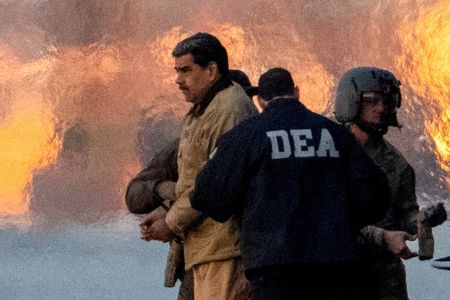
    U.S. authorities arrested Maduro and his spouse, Cilia Flores, on January 3 in Caracas and transported them to New York to face drug trafficking accusations. Both individuals have entered not guilty pleas.

    Rodríguez and other government officials have called for the couple’s release, characterizing their detention as an abduction. Similar demands appear on billboards and wall murals throughout Caracas.

    The Trump administration surprised many Venezuelans by choosing to collaborate with Rodríguez after Maduro’s removal, rather than supporting opposition political groups. She has spearheaded cooperation with the administration’s step-by-step approach to resolving Venezuela’s multifaceted crisis, promoting her petroleum-rich country to global investors and opening the energy industry to private investment and international dispute resolution. Rodríguez has also dismissed key officials, including Maduro’s loyal defense secretary and chief prosecutor.

    President Donald Trump has commended her efforts.

    The U.S. Treasury Department removed sanctions against Rodríguez last week, while the State Department designated her as Venezuela’s “sole Head of State” last month.

    The United States withdrew recognition of Maduro as Venezuela’s rightful leader in 2019, one year after he declared victory in an election widely viewed as fraudulent due to the exclusion of opposition parties and candidates.

  • Venezuela’s Opposing Factions May Join Forces to Protect US-Based Assets

    Venezuela’s Opposing Factions May Join Forces to Protect US-Based Assets

    Political adversaries in Venezuela are exploring unprecedented collaboration to protect the nation’s assets located within the United States, following Washington’s formal acknowledgment of interim President Delcy Rodriguez and the resulting confusion over legal representation in American courts.

    Legal representatives for both Rodriguez’s administration and opposition forces submitted a joint request Monday to Manhattan-based U.S. Magistrate Judge Sarah Netburn, asking for a 45-day suspension of proceedings where creditors are attempting to claim funds connected to the state-owned oil enterprise Petroleos de Venezuela. The pause would allow time to establish proper legal representation for Venezuela’s interests.

    This request indicates possible collaboration between previously hostile political factions in defending American assets, including the Houston-based oil refinery Citgo Petroleum, from various creditors. These creditors include bondholders of PDVSA and Venezuelan government debt, businesses that lost Venezuelan properties through expropriation, and individuals claiming damages from alleged terrorist activities.

    Venezuela’s information ministry, responsible for handling government media inquiries, has not yet provided a response to requests for comment.

    The relationship between Venezuela’s opposition and the country’s socialist administration has historically been marked by bitter conflict. Opposition forces have maintained control over American assets like Citgo since 2019, when Washington first implemented sanctions against PDVSA as part of efforts to pressure former President Nicolas Maduro, who is now imprisoned, to step down from power.

    Following Maduro’s capture by American forces, Washington officially recognized Rodriguez as Venezuela’s legitimate leader in March. According to a Reuters report from April 1, citing four sources familiar with the transition, Rodriguez is now making preparations to assume control of PDVSA’s American subsidiary boards, including Citgo.

    The American government’s recognition of Rodriguez’s administration led Judge Netburn to request clarification from all parties regarding who possessed the authority to speak for Venezuela in legal proceedings.

    Judge Netburn approved the suspension request on Monday. Legal counsel for both the government and opposition are required to provide an update on selecting permanent legal representation for Venezuela’s interests by May 21.

  • Ukrainian Defense Firm Develops Low-Cost Alternative to Patriot Missile System

    Ukrainian Defense Firm Develops Low-Cost Alternative to Patriot Missile System

    A Ukrainian defense company responsible for creating the nation’s Flamingo cruise missile is collaborating with European firms to develop an affordable air defense system, according to a senior company official speaking with Reuters.

    Fire Point’s co-founder and chief designer Denys Shtilierman revealed that his company is working to create a budget-friendly alternative to the increasingly scarce Patriot missile defense system, with plans to launch by next year.

    As global conflicts in Ukraine and Iran create widespread security concerns, Shtilierman explained that Fire Point wants to reduce the expense of stopping a ballistic missile to under $1 million.

    The executive also disclosed that Fire Point is waiting for government clearance on a potential investment from a Middle Eastern business group. This deal would value the company at $2.5 billion and could lead to new ventures, including satellite launches in low Earth orbit.

    Ukraine’s battlefield experience fighting Russian military forces has positioned the country as a pioneer in affordable defense technology. Following recent conflicts in the Gulf region, Kiev has used this expertise to establish security partnerships with governments throughout the area.

    Numerous Ukrainian defense companies are now looking to export their additional production capacity and capitalize on increased global military spending. Although the government has recently relaxed wartime export limitations, each potential agreement still faces thorough review and requires state authorization.

    Ukraine and many Western allies depend heavily on the American-manufactured Patriot system for ballistic missile defense. However, Patriot missiles are becoming increasingly difficult to obtain due to extensive use in Gulf operations against Iranian attacks. Europe’s sole anti-ballistic system, the Italian-French SAMP/T, has limited production numbers.

    According to Shtilierman, the Patriot system – built by Raytheon and Lockheed Martin – typically needs two or three defense missiles to destroy a ballistic projectile, with each missile costing several million dollars.

    “If we can decrease it to less than $1 million, it will be … a game changer in air defence solutions,” he stated during the interview. “We plan to intercept the first ballistic missile at the end of 2027.”

    While Shtilierman refused to identify the European companies participating in development discussions, he said Fire Point is “deeply interested” in partnerships involving radar, missile guidance, and communication systems – technologies where the company needs additional expertise.

    He mentioned that European firms such as Weibel, Hensoldt, SAAB and Thales offer strong radar capabilities.

    Established following Moscow’s 2022 invasion, Fire Point has become Ukraine’s largest producer of long-range drones used in most attacks deep within Russian territory.

    Recently, the company’s FP5 long-range cruise missile – widely called the Flamingo – has struck Russian military installations and weapons factories, including a ballistic missile facility located nearly 1,400 kilometers inside Russian borders.

    Shtilierman reported that Fire Point is completing development of two supersonic ballistic missiles. The smaller FP-7 missile, with approximately 300-kilometer range, will see its first military use “in the close future,” he said, comparing it to Lockheed Martin’s ATACMS short-range ballistic system.

    The larger FP-9, designed to deliver an 800-kilogram warhead up to 850 kilometers, is entering testing phases and would put Moscow within Ukraine’s ballistic weapon range, he added.

    Shtilierman suggested that attacks on Moscow, protected by some of the world’s strongest air defenses, would create a “mass shift in the Russian mind and the mind of top guys in Russia.”

    Russia’s defense ministry did not provide comment when contacted.

    Fabian Hoffmann, a missile specialist and senior researcher at the Norwegian Defence University College, noted that while Russia has successfully intercepted ATACMS missiles, increased ballistic missile usage could strain Russian air defenses already weakened by Ukrainian attacks.

    Although Fire Point’s 2027 timeline for launching a low-cost air defense system appears “ambitious,” Hoffmann said strong government demand would exist beyond Ukraine’s military requirements, even if the system’s effectiveness per missile was lower than the Patriot’s.

    Ukraine’s anti-monopoly agency has until approximately October to approve the proposed $760-million purchase of a 30% Fire Point stake by the Middle Eastern investor, Shtilierman explained.

    Ukrainian news outlets have named the potential buyer as Emirati defense company Edge Group. Neither Edge Group nor Ukraine’s anti-monopoly authorities responded to requests for comment.

    This investment would initiate a project to construct a space launch facility in the UAE, ultimately aiming to establish a network of low-orbit European satellites. Shtilierman noted that the country’s proximity to the Indian Ocean and geographic conditions favor space launches.

    “We built a carbon winding machine, which allows us to wind a big solid rocket booster for satellite delivery,” he explained, adding that while the project remains conceptual, agreements exist “with a couple of Western companies.”

    Whether or not the UAE agreement moves forward, Shtilierman said Fire Point would avoid additional investors until demonstrating success with its missile defense system, which will utilize the company’s FP7 missile.

    Fire Point has received inquiries from Gulf nations regarding purchases of existing drone products and awaits Ukrainian government approval to begin exports. Shtilierman stated the company can export up to 2,500 long-range drones monthly.

    However, exporting the Flamingo missile faces greater challenges due to regulatory obstacles, he noted.

    Fire Point reports producing hundreds of long-range strike drones daily, each costing approximately 50,000 euros ($57,775), plus three Flamingo missiles at roughly 600,000 euros each. He acknowledged certain “bottleneck” problems with Flamingo production, particularly engine manufacturing.

    Fire Point will boost Flamingo production when a new internal engine begins mass production in October and a rocket fuel facility in Denmark becomes operational later this year, he said. The Danish plant awaits two final government approvals.

  • Trump Issues Tuesday Ultimatum to Iran, Threatens Major Military Action

    Trump Issues Tuesday Ultimatum to Iran, Threatens Major Military Action

    President Donald Trump delivered a stark warning to Iran on Monday, stating the nation could face complete military devastation within a single evening if officials fail to agree to ceasefire terms by Tuesday night.

    Speaking during a White House press briefing, Trump issued the ultimatum: “The entire country can be taken out in one night, and that night might be tomorrow night.”

    The president had previously established Tuesday evening as the final deadline for Iran to accept a ceasefire agreement or face extensive attacks targeting power facilities and other vital infrastructure.

    Defense Secretary Pete Hegseth announced during the same briefing that Monday would see the most intensive military strikes since operations against Iran began, with Tuesday expected to bring even greater force.

    Trump also provided extensive details about a weekend rescue operation that successfully retrieved a downed American pilot from Iranian soil. The president explained how the unidentified airman sought refuge in mountainous terrain, continuously moving to higher elevations to improve his chances of being found.

    “It was like finding a needle in a haystack,” Trump remarked about the search efforts.

    The recovery mission involved hundreds of American military personnel working to locate the pilot before Iranian forces could capture him, according to Trump.

    CIA Director John Ratcliffe, present at the briefing, revealed that the agency conducted a “deception campaign” designed to mislead Iranian officials about the airman’s actual location.

    Ratcliffe reported that Saturday morning brought confirmation that “one of America’s best and bravest was alive and concealed in a mountain crevice, still invisible to the enemy, but not to the CIA.”

    The pilot, who was shot down Friday, was successfully extracted Sunday morning.

    Trump described the rescue operation in dramatic terms: “In a breathtaking show of skill and precision, lethality and force, America’s military descended on the area, the real area, engaged the enemy, rescued the stranded officer, destroyed all threats and exited Iranian territory while taking no casualties of any kind.”

    Hegseth noted that the rescued airman activated an emergency beacon to signal his position, and his initial communication upon rescue was: “God is good.”

  • UK Officials Consider Banning Rapper Ye From Music Festival Over Antisemitic Comments

    UK Officials Consider Banning Rapper Ye From Music Festival Over Antisemitic Comments

    LONDON – British officials are facing mounting calls to prevent rapper Ye, formerly known as Kanye West, from entering the United Kingdom after organizers announced him as the featured performer for July’s Wireless Festival.

    The 48-year-old artist has faced widespread condemnation for making antisemitic statements and expressing support for Nazi ideology, resulting in multiple social media platform suspensions including on X.

    The festival booking announcement triggered immediate backlash, with several major corporations withdrawing their financial backing from the event. The opposition Conservative Party has formally requested that Home Secretary Shabana Mahmood use her authority to block his entry into Britain.

    A Home Office representative confirmed to Reuters that officials are currently examining his authorization to visit the country. While the department typically avoids commenting on specific cases, Mahmood possesses the legal power to personally deny Ye entry to the UK. Earlier this year in January, officials revoked travel permissions for Dutch far-right activist Eva Vlaardingerbroek for distributing misleading information.

    Neither festival representatives nor Ye’s management team provided immediate responses when contacted for comment.

    The Jewish Leadership Council issued a statement last week criticizing organizers for selecting Ye amid increasing incidents targeting Jewish individuals and institutions.

    Prime Minister Keir Starmer expressed strong disapproval of the booking decision, calling it “deeply concerning.”

    “Antisemitism in any form is abhorrent and must be confronted firmly wherever it appears,” Starmer stated in remarks initially published by the Sun on Sunday.

    “Everyone has a responsibility to ensure Britain is a place where Jewish people feel safe and secure.”

    A representative for London Mayor Sadiq Khan indicated the rapper’s statements contradict the city’s principles, while emphasizing that festival organizers made the booking choice independently.

    Australia previously canceled the performer’s visa in July following his release of “Heil Hitler,” a track that promoted Nazi ideology. This action occurred months after Ye advertised merchandise featuring swastika symbols on his website.

    In January, Ye purchased a full-page advertisement in the Wall Street Journal to express remorse for his antisemitic statements, citing an undiagnosed brain injury and untreated bipolar disorder as contributing factors. He also apologized for previously expressing admiration for Adolf Hitler and using Nazi symbolism.

    The artist has not appeared in Britain since his headline performance at Glastonbury in 2015.

    Major beverage companies Diageo and Pepsi, a longtime festival supporter, announced they were ending their partnerships with the Wireless event due to Ye’s involvement. PepsiCo also confirmed that its Rockstar Energy division had terminated its sponsorship agreement.

    PayPal informed Reuters on Monday that its corporate branding would be removed from all future Wireless festival marketing materials.

  • Red Cross Chief Calls for War Rules Compliance Amid Middle East Tensions

    Red Cross Chief Calls for War Rules Compliance Amid Middle East Tensions

    ZURICH – The head of the International Committee of the Red Cross called on world leaders Monday to follow international warfare standards both in their statements and military actions, following escalating tensions between the United States and Iran in the Middle East.

    ICRC President Mirjana Spoljaric issued a statement emphasizing that “States must respect and ensure respect for the rules of war in both what they say and what they do.” She added, “The world cannot succumb to a political culture that prioritises death over life.”

    Spoljaric warned that intentional targeting of crucial civilian infrastructure and nuclear sites through threats or military strikes should not become standard practice in modern conflicts.

    While the Red Cross statement addressed ongoing Middle Eastern hostilities, it did not specifically identify any particular nations involved.

    Critical civilian facilities including electrical grids, water treatment plants, medical centers, transportation networks, residential areas, and educational institutions have been targeted in fighting that started with joint U.S.-Israeli operations against Iran in late February, prompting Iranian retaliation throughout the region.

    President Trump has issued an ultimatum demanding Iran reach an agreement by Tuesday’s end to restore shipping through the Strait of Hormuz, a crucial energy transport corridor, or face strikes on Iranian power facilities and transportation infrastructure.

    Israeli forces targeted Iran’s biggest petrochemical facility on Monday, according to Israel’s defense minister.

  • North Korea Praises South Korean Leader’s Apology Over Drone Incidents

    North Korea Praises South Korean Leader’s Apology Over Drone Incidents

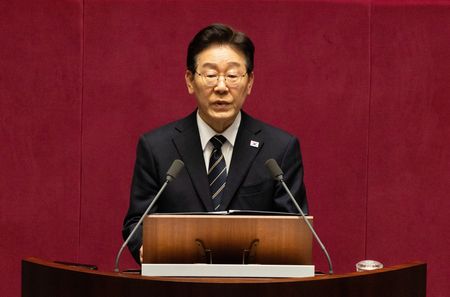
    In an unusual diplomatic development, North Korea has praised South Korean President Lee Jae Myung for apologizing over unauthorized drone flights that crossed into North Korean territory.

    During a cabinet meeting on Monday, President Lee expressed remorse for at least two separate drone incidents that he said were conducted by civilians acting against government policy. He characterized these actions as an “act of revolt” against South Korea itself.

    North Korea had previously claimed that drones from the South had breached its airspace and accused Seoul of serious provocation, stating they had shot down the aircraft.

    Kim Yo Jong, the influential sister of North Korean leader Kim Jong Un, responded positively to Lee’s statements through the KCNA state news agency. “Our government appreciated it as a very fortunate and wise behaviour for its own sake,” she said, referring to the South Korean president’s comments.

    She added that her brother viewed Lee’s apology as “a manifestation of a frank and broad-minded man’s attitude.” Kim Yo Jong frequently speaks on foreign policy issues and is believed to represent her brother’s positions.

    This diplomatic tone represents a dramatic shift from North Korea’s recent harsh rhetoric, where it has labeled South Korea its “most hostile enemy” and declared that unification was no longer possible.

    The Korean Peninsula remains divided, with both nations technically still at war following their 1950-53 conflict that concluded with an armistice rather than a peace treaty.

    Lee revealed that an internal investigation discovered that a National Intelligence Service worker and an active military member were connected to the drone incidents, which he said violated South Korea’s constitution prohibiting provocative acts against North Korea.

    “Although it was not our government’s intention, we express our regret to the North over the fact that unnecessary military tensions were caused by the irresponsible and reckless actions of some individuals,” Lee stated during the cabinet session.

    Since assuming office in June, President Lee has attempted multiple diplomatic initiatives with North Korea to repair relations that had deteriorated to historic lows, emphasizing that peaceful coexistence would benefit both nations economically.

  • Israel Strikes Iran’s Crucial Energy Hub for Second Time

    Israel Strikes Iran’s Crucial Energy Hub for Second Time

    FRANKFURT, Germany (AP) — Israeli forces have launched their second assault on Iran’s South Pars natural gas facility and its connected petrochemical operations — a crucial energy infrastructure that powers Iranian homes while generating significant export revenue.

    On Monday, Israel’s defense minister confirmed that Israeli forces struck a major petrochemical facility at Asaluyeh, the land-based industrial component of the gas field located beneath the Persian Gulf waters.

    Defense Minister Katz described the “powerful strike” as targeting what he termed “the largest petrochemical facility in Iran … responsible for about 50% of the country’s petrochemical production.”

    Such strikes against South Pars carry significant consequences, as demonstrated when Israel’s previous March 18 assault led Iran to retaliate against energy infrastructure throughout other Middle Eastern nations, escalating regional tensions and creating widespread concern.

    Following the March incident, U.S. President Donald Trump stated that Israel would refrain from future South Pars attacks, though he warned via social media that continued Iranian strikes on Qatar’s energy infrastructure would prompt American retaliation to “massively blow up the entirety” of the facility.

    The South Pars natural gas field represents Iran’s primary domestic energy source in a nation that frequently faces electricity generation challenges. This underwater gas field — the world’s largest — spans both Iranian and Qatari territories, known as South Pars on Iran’s side and the North Field on Qatar’s side.

    Natural gas plays a vital role in Iranian society, powering electricity generation and home heating systems. Iran ranks as the world’s fourth-largest natural gas consumer, trailing only the United States, China, and Russia, according to Columbia University’s Center on Global Energy Policy, despite having a significantly smaller economy. Unlike other Middle Eastern nations, Iran depends heavily on gas heating due to its colder climate, with much of this usage receiving government subsidies that discourage conservation efforts.

    Beyond domestic energy needs, the petrochemical facility generates crucial export income. The extracted gas produces essential chemical components including ethylene, propylene, methanol, ammonia, and urea, which manufacturers use to create plastic pipes, packaging materials, textiles, household items, and fertilizers. Major importing nations include Turkey, China, India, and various Southeast Asian countries, according to Iranian mining and petrochemical export company Irminex. Iran’s petrochemical sector maintains competitive advantages through reduced raw material costs thanks to direct South Pars gas access.

    Israeli Prime Minister Benjamin Netanyahu claims these revenues support Iran’s paramilitary Islamic Revolutionary Guards Corps. “Today we destroyed the largest petrochemical plant in Iran,” Netanyahu stated. “In other words, we are systematically destroying the money machine of the Revolutionary Guards.”

    Despite possessing substantial energy reserves on paper, Iran has experienced power shortages due to gas supply disruptions. Last July, public facilities were forced to close during a heat wave that overwhelmed the electrical grid.

    Therefore, South Pars attacks potentially threaten both civilian welfare and export earnings simultaneously.

    Qatar, with its 3 million residents, has invested billions developing the field for liquefied natural gas production, previously exporting from its Ras Laffan facility before wartime shutdowns. This profitable operation made Qatar responsible for approximately one-fifth of global LNG supplies before conflict forced Ras Laffan’s closure.

    Iran’s situation differs dramatically with its 93 million population. International sanctions and insufficient investment have prevented LNG export terminal development. Instead, Iran channels its gas through domestic pipeline networks for cooking, home heating, electricity generation, and industrial raw materials. Iran exports relatively modest amounts — roughly 9 billion cubic meters — compared to Qatar’s previous 120 billion cubic meters.

    Consequently, South Pars petrochemical operations provide Iran with alternative methods to monetize its vast gas reserves.

    Iran previously planned three Persian Gulf coastline LNG export projects, including partnerships with Total Energies and Shell. However, nuclear program sanctions have blocked these initiatives by preventing necessary technology imports and investment. A third Asaluyeh site reportedly nears completion after nearly two decades of construction.

  • Trump Holds Firm on Iran Negotiation Deadline Set for Tuesday

    Trump Holds Firm on Iran Negotiation Deadline Set for Tuesday

    President Donald Trump declared Monday that his established Tuesday deadline for Iran to reach an agreement will not be extended, despite describing Tehran’s recent peace offer as meaningful but insufficient.

    The president has threatened extensive strikes against Iranian infrastructure should his Tuesday evening ultimatum pass without resolution. Iranian officials have dismissed Trump’s imposed timeframe.

    Speaking to media during a White House Easter egg celebration on the South Lawn, Trump commented on Iran’s diplomatic efforts. “They made a proposal, and it’s a significant proposal. It’s a significant step. It’s not good enough,” the president stated.

    Trump expressed optimism about a swift resolution, telling reporters: “It could end very quickly, the war, if they do what they have to do. They have to do certain things. They know that, they’ve been negotiating I think in good faith.”

    Administration officials have been conducting indirect discussions with Iran through Pakistani intermediaries, seeking an agreement where Iran would abandon nuclear weapons development and reopen the Strait of Hormuz shipping channel. Iranian negotiators have indicated they seek a permanent conflict resolution rather than a temporary halt to hostilities.

    The president characterized Iran’s current negotiating team as less extreme than previous representatives who were eliminated in military strikes. “We think they’re actually smarter,” Trump observed, noting they appear “not as radicalized” compared to their predecessors.

    Regarding Iran’s petroleum resources, Trump suggested he would prefer American control of Iranian oil reserves, though he acknowledged such action would likely lack public support domestically.

  • Iran Turns Down U.S. Ceasefire Proposal, Demands Complete War Resolution

    Iran Turns Down U.S. Ceasefire Proposal, Demands Complete War Resolution

    CAIRO, April 6 – Iran has delivered its official response to a United States peace proposal through Pakistani diplomatic channels, declining temporary ceasefire measures and instead demanding a complete resolution to the ongoing conflict, according to the state-run IRNA news agency on Monday.

    The Iranian government’s counter-proposal includes ten specific conditions that address broader regional stability concerns. These conditions encompass ending all regional hostilities, establishing secure navigation protocols for the Strait of Hormuz, removing economic sanctions, and implementing reconstruction efforts, according to the news agency.

  • Afghanistan Weather Disaster Claims 110 Lives as Flooding Continues

    Afghanistan Weather Disaster Claims 110 Lives as Flooding Continues

    KABUL, Afghanistan — Officials in Afghanistan report that devastating weather conditions have now claimed at least 110 lives, with seven individuals still unaccounted for as forecasters predict more severe rainfall ahead.

    The violent storms and torrential rains started approximately two weeks ago, impacting nearly all of Afghanistan’s 34 provinces. According to the Disaster Management Authority, the most recent 24-hour period saw 11 additional fatalities and six new injuries. The seven missing persons are believed to have been swept away by rushing floodwaters in various locations.

    During the two-week period, the combination of floods, mudslides, and lightning has resulted in 110 fatalities and left 160 people wounded, officials reported. The destruction includes 958 homes completely leveled and an additional 4,155 structures suffering significant damage.

    On Monday, the Defense Ministry reported deploying helicopter rescue operations to extract two individuals who had become trapped by floodwaters in Herat province in the western region.

    The disaster has wiped out more than 325 kilometers (200 miles) of roadways, while also damaging commercial properties, farmland, water channels, and drinking water sources, impacting 6,122 families according to authorities. Officials noted these numbers remain preliminary.

    Weather officials have issued alerts for Tuesday covering nearly the entire nation, urging citizens to avoid rivers and flood-prone areas.

    Afghanistan experienced similar deadly weather earlier this year when heavy snowfall and sudden floods killed dozens nationwide.

    Transportation has been severely disrupted with two major highways remaining closed for multiple days due to landslides and flooding. Travelers are being forced to use lengthy alternate routes. The critical Kabul to Jalalabad highway, which connects the capital to Pakistan’s border and eastern Afghan provinces, has been impassable since Thursday. Additionally, the route from Jalalabad northeast to Kunar and Nuristan provinces has been blocked by rockslides since Sunday.

    Afghanistan regularly experiences deadly flash flooding triggered by snow and heavy rainfall, often killing dozens or hundreds at once. Spring flooding in 2024 resulted in more than 300 deaths.

  • Iraqi Oil Official: Exports Could Rebound Rapidly if Hormuz Strait Reopens

    Iraqi Oil Official: Exports Could Rebound Rapidly if Hormuz Strait Reopens

    BASRA, Iraq – The leader of Iraq’s state-operated Basra Oil Company announced that the nation could revive crude oil shipments to approximately 3.4 million barrels daily within seven days, contingent on the conclusion of hostilities with Iran and the reopening of the Strait of Hormuz.

    According to a Reuters analysis, Iraq has experienced the most severe decline in petroleum revenues among Persian Gulf oil-producing nations due to the waterway’s effective shutdown, primarily because the country has limited alternative shipping pathways.

    However, Iraq, which ranks as OPEC’s second-largest oil producer, has the capability to rapidly resume production levels that existed before U.S.-Israeli military strikes against Iran in late February resulted in the strategic waterway’s closure. The Strait normally handles approximately one-fifth of worldwide oil and liquefied natural gas shipments.

    IRAN’S ASSURANCES REMAIN UNOFFICIAL

    Bassem Abdul Karim revealed that Iran has only offered oral commitments that would grant Iraqi oil tankers clearance to navigate through the Strait.

    “We have not received any formal documents regarding permission for Iraqi tankers to pass,” he said in an interview with Reuters.

    Abdul Karim explained that current output from Iraq’s southern petroleum fields stands at roughly 900,000 barrels daily, though he emphasized that ending the conflict and securing safe transit through the Strait could push exports to 3.4 million barrels per day within one week.

    President Donald Trump has issued ultimatums to Tehran, warning of unleashing “hell” unless an agreement is reached by Tuesday’s end to restore traffic flow through the Strait of Hormuz.

    DRAMATIC DECLINE IN IRAQI PETROLEUM PRODUCTION

    Iraqi energy officials reported to Reuters last month that the country’s oil output fell approximately 80% to roughly 800,000 barrels daily as warfare prevented exports and filled storage facilities to capacity.

    With restricted distribution channels for Iraqi petroleum, the Rumaila field’s production decreased to about 400,000 barrels per day from its pre-conflict level of 1.35 million barrels daily, while the Zubair field dropped to 300,000 barrels per day from 340,000 barrels daily before hostilities began, Abdul Karim stated.

    Multiple smaller drilling sites continue operating at reduced capacity to maintain associated gas production needed for domestic electricity generation, while shutdowns at other locations have provided opportunities for maintenance activities, he noted.

    Iraq’s total field production reached 4.3 million barrels daily before the war commenced, which should provide sufficient capacity to export 3.4 million barrels per day despite conflict-related infrastructure damage.

    Natural gas production from Basra region fields has fallen to approximately 700 million standard cubic feet daily, compared to about 1.1 billion standard cubic feet per day before the war, mainly due to reduced petroleum extraction, Abdul Karim reported.

    SATISFYING DOMESTIC REFINERY NEEDS

    To meet internal consumption requirements, the Basra Oil Company transports around 400,000 barrels per day of crude to northern Iraq, including approximately 150,000 barrels daily by truck and roughly 250,000 barrels per day through domestic pipeline infrastructure, supplying refineries with demand totaling 500,000 barrels daily.

    The northern Kirkuk fields currently produce about 380,000 barrels per day, Abdul Karim confirmed.

    When questioned about drone strike impacts, Abdul Karim described attacks on petroleum facilities as causing “major losses to the continuity of production and oil operations,” noting that both international and Iraqi service companies have been targeted.

    A dual-drone assault targeting the Rumaila oilfield on Saturday injured three Iraqi employees, according to security and energy sources who spoke with Reuters.

    Abdul Karim said the attack on Rumaila field’s northern section struck locations used by American oilfield service corporations Schlumberger and Baker Hughes, sparking a fire that crews subsequently extinguished.

    Both Schlumberger and Baker Hughes did not immediately provide responses to comment requests.

  • Ex-Russian Governor Gets 14 Years for Stealing Defense Money

    Ex-Russian Governor Gets 14 Years for Stealing Defense Money

    MOSCOW – A former regional governor in Russia received a lengthy prison term Monday after being convicted of stealing public money meant for border security.

    Alexei Smirnov, who previously led the Kursk region, was ordered to serve 14 years behind bars following his corruption conviction, according to Russian state media reports.

    The sentencing comes as part of a broader criminal investigation targeting multiple former Kursk officials accused of pocketing money allocated for constructing frontier defense systems. The Kursk region sits along Russia’s border, and Ukrainian forces occupied portions of the territory for several months during 2024.

  • Chinese Leader Pushes Energy Independence Amid Middle East Conflict

    Chinese Leader Pushes Energy Independence Amid Middle East Conflict

    Chinese President Xi Jinping is pushing for rapid expansion of his nation’s energy infrastructure as Middle East conflicts continue to shake global oil markets, according to reports from Beijing.

    The leader of the world’s second-largest economy stressed the importance of water-based power generation and environmental protection while calling for careful expansion of atomic energy programs, state media CCTV reported Monday.

    Xi referenced the ruling Communist Party’s leadership in his remarks, stating: “The Party Central Committee has gained a profound grasp of global energy development trends and made major decisions by advancing the new energy security strategy in depth.”

    The Chinese president’s comments did not specifically reference the ongoing Middle East warfare, though the timing comes as the United States and Iran consider a Pakistani-mediated proposal to resolve their five-week conflict. Tehran continues to resist international pressure to quickly reopen the critical Strait of Hormuz shipping lane.

    Energy experts note that China faces less vulnerability to rising petroleum costs compared to other major economies. The nation relies on coal for over half its power needs, maintains substantial oil reserves, and receives only about 5% of its total energy consumption through imports passing the Strait of Hormuz.

    Xi defended China’s energy strategy, saying: “The path we took in being the first to develop wind and solar power has now proven to be forward-looking. At the same time, coal-fired power remains the foundation of our energy system and must continue to play its supporting role.”

    China currently operates more than half the globe’s coal-burning power facilities, making it the largest producer of carbon emissions worldwide. This has created ongoing tensions with Western climate programs. The country continues treating coal power as essential backup infrastructure while simultaneously expanding renewable energy sources.

    Despite highlighting coal’s importance in China’s power grid, Xi emphasized his nation’s commitment to environmentally-friendly development approaches.

    State media quoted officials saying: “A greener, more diversified and resilient new energy system will provide a strong guarantee for China’s energy security and economic development.”

    Major infrastructure projects are moving forward, including construction that began last July on what will become the world’s largest hydroelectric dam along the Tibetan Plateau’s eastern edge.

    Additionally, China General Nuclear Power Group started building a solar thermal facility Monday at 4,550 meters elevation in Tibet, according to state news agency Xinhua.

  • Middle East Oil Crisis Creates Winners and Losers as Strait Remains Blocked

    Middle East Oil Crisis Creates Winners and Losers as Strait Remains Blocked

    LONDON – A new analysis reveals how the blockade of a critical Middle Eastern shipping route has created vastly different economic outcomes for oil-producing nations in the region.

    The shutdown of the Strait of Hormuz – which normally handles roughly 20% of the world’s oil and natural gas shipments – has resulted in massive financial gains for some countries while devastating others, according to recent data.

    Iran closed off the strategic waterway following American and Israeli military strikes against Iranian targets in late February, which escalated into broader regional hostilities. Tehran later announced it would permit passage for ships without American or Israeli connections, allowing some tankers to navigate the narrow passage, though global energy markets remain severely disrupted.

    The crisis sent international Brent crude prices soaring 60% during March, marking the largest monthly price jump on record.

    President Donald Trump has issued an ultimatum to Iran, warning he will unleash “hell” on Tehran unless a deal is reached by Tuesday’s end to restore normal shipping traffic through the strait.

    The financial impact on regional oil exporters has been determined largely by their geographic advantages or disadvantages.

    Countries with access to alternative shipping methods – including Iran itself, along with Oman, Saudi Arabia, and the United Arab Emirates – can utilize pipelines and ports that avoid the blocked strait entirely.

    Meanwhile, oil from Iraq, Kuwait, and Qatar remains effectively stranded, as these nations lack backup routes to reach global markets.

    An Iranian government source told reporters that Iran refuses to reopen the strait as part of any temporary truce agreement, following Trump’s latest demands. Tehran has consistently rejected previous American ultimatums, stating it will not accept humiliation.

    Neil Quilliam, an associate fellow with the Chatham House think tank, noted the long-term implications: “Now that Hormuz has been closed, it can be closed again and again, and that poses a major threat to the global economy. The genie is out of the bottle.”

    The International Energy Agency has characterized this conflict as the most severe energy supply disruption in global history, with over 12 million barrels daily of regional production halted and approximately 40 energy installations damaged.

    March export data analysis shows Iraq and Kuwait both experienced roughly 75% drops in estimated oil export earnings compared to the previous year. In contrast, Iran’s revenues jumped 37% while Oman’s increased 26%. Saudi Arabia saw a 4.3% revenue boost, and the UAE experienced a modest 2.6% decline as higher prices compensated for reduced shipping volumes.

    For Saudi Arabia, elevated oil prices translate to increased government income through royalties and taxes from state-controlled Aramco, which is predominantly owned by the government and its investment fund.

    This revenue boost comes at an opportune time for the kingdom, which had been running budget shortfalls due to heavy investments in economic diversification projects aimed at reducing oil dependency.

    Aramco representatives declined to provide comments regarding the revenue calculations. Officials from other affected nations and their petroleum companies have not yet responded to inquiries.

    Saudi Arabia’s primary alternative shipping route is its 746-mile East-West pipeline system, constructed during the 1980s Iran-Iraq conflict specifically to circumvent Hormuz. The pipeline links eastern oil production areas to the Red Sea port of Yanbu and currently operates at its maximum 7 million barrel daily capacity.

    With approximately 2 million barrels consumed domestically, Saudi Arabia has roughly 5 million barrels available for export daily. Yanbu port handled an average of 4.6 million barrels per day during the week beginning March 23, despite attacks on the facility on March 19.

    Saudi crude exports declined 26% year-over-year in March to 4.39 million barrels daily, but higher prices still increased export values by approximately $558 million compared to the previous year. The kingdom had strategically increased February exports to their highest levels since April 2023, anticipating potential American military action against Iran.

    Despite the East-West pipeline advantage, Quilliam warned that Saudi Arabia remains exposed to additional attacks by Iran or its Yemeni allies, the Houthis, targeting western energy infrastructure and ships transiting the Bab el-Mandeb Strait toward the Red Sea.

    The UAE has received partial protection through its Habshan-Fujairah pipeline, which can handle 1.5-1.8 million barrels daily while bypassing the strait. However, the country’s estimated oil export revenues still dropped more than $174 million year-over-year in March, and Fujairah has faced multiple attacks causing loading interruptions.

    Among Gulf producers, Iraq suffered the steepest revenue decline – falling 76% to $1.73 billion. Kuwait followed with a 73% drop to $864 million.

    Iraq’s state oil marketing organization SOMO reported April 2 that March oil revenues totaled approximately $2 billion, closely matching independent estimates.

    Both nations likely face even sharper April declines, as their March figures benefited from shipments that departed during the conflict’s early days. One Iraqi crude tanker successfully navigated the strait last week after Iran announced Iraq would be exempt from shipping restrictions.

    Adriana Alvarado, VP of sovereign ratings at Morningstar DBRS, explained that Gulf governments have options to maintain financial stability, including utilizing fiscal reserves or accessing debt markets.

    “Apart from Bahrain, the Gulf states have enough fiscal room to deal with the shock, with government debt at moderate levels below 45% of GDP,” she stated.

    The crisis’s long-term consequences remain uncertain. While some Western oil companies and political leaders advocate for increased fossil fuel investment to guard against supply disruptions, other analysts argue renewable energy offers superior protection.

    Demonstrating how the crisis might accelerate the transition away from oil dependence, France’s TotalEnergies and UAE state-backed renewable firm Masdar announced a $2.2 billion joint venture last week to rapidly expand renewable energy infrastructure across nine Asian nations.

  • Journey Through War-Torn Iran Reveals Destruction Amid Ongoing Daily Life

    Journey Through War-Torn Iran Reveals Destruction Amid Ongoing Daily Life

    ZANJAN, Iran — Dark banners drape the border checkpoint while images of Iran’s fallen Supreme Leader Ayatollah Ali Khamenei look down, vowing revenge against America and Israel.

    Yet during the lengthy 12-hour journey south toward Tehran, ordinary life persists, with scattered evidence of the current conflict, including a Shiite religious facility that authorities report was struck in a recent aerial attack.

    Reporters from the Associated Press completed this trek on Saturday following their entry into Iran from Turkey. Their journey provided insights into a nation positioned at the heart of a regional conflict that has disrupted global markets and continues unabated five weeks following Khamenei’s death in the initial American and Israeli offensive.

    The Iranian government has authorized the Associated Press to deploy an additional reporting team for a limited assignment. AP maintains existing operations within Iran. The visiting journalists must work alongside a handler from a government-connected organization, though AP maintains complete editorial authority over its reporting.

    Evidence of wartime devastation first appeared in Zanjan, a northwestern city located roughly six hours from the border crossing.

    Government representatives report that an aerial bombardment struck a religious community facility called a husseiniyah, resulting in two fatalities and destroying both a medical clinic and library. Additional sections of the complex, portions dating back centuries, sustained damage including its golden dome structure.

    When questioned regarding the attack, Israeli military officials stated they had targeted “a military headquarters,” adding that they attempt to prevent damage to civilian infrastructure, without providing further details.

    “It has hurt me a lot and distressed me a lot,” said Somayeh Shojaei, a local resident who has attended religious and cultural events at the center. “With these airstrikes, (the U.S. and Israel) are showing their malicious intent to the whole world,” she said.

    The bombardment claimed the lives of the library’s caretaker and an Iranian Red Crescent volunteer responder, according to Jaafar Mohammadi, the regional director of cultural and Islamic guidance.

    Mohammadi explained that economically disadvantaged individuals had accessed free medical care at the clinic while students utilized the library containing over 35,000 volumes, including historical manuscripts.

    He stated he remained uncertain about the reasoning behind targeting the facility.

    “Iran wanted to negotiate for peace with (U.S. President Donald) Trump, but Trump responded with war,” Mohammadi said. “He started the war, but we will definitely be the victorious side.”

    American and Israeli forces have conducted thousands of bombing missions throughout the nation, while Trump has threatened to attack Iran “back to the Stone Ages, where they belong.” During the weekend, he restated his Monday ultimatum for Iran to reopen the Strait of Hormuz, a crucial passage for petroleum and natural gas transport.

    Iran’s remaining leadership has maintained their defiant stance and governmental control, dismissing what they characterize as unrealistic American peace terms. Israel has shown no signs of reducing its military operations and has encouraged Iranians to remove their current government.

    Despite the war creating international upheaval — along with fear and worry among Iranians — everyday activities persist.

    Throughout multiple cities along the Tehran route, AP journalists observed regular vehicle traffic, operating businesses, and pedestrians on sidewalks. One restaurant offered traditional Iranian cuisine including grilled lamb with rice, barley soup, and saffron beverages while R.E.M.’s “Losing my religion” played through speakers.

    Numerous women were visible conducting daily activities without the government-mandated head coverings, enforcement of which has relaxed in recent years.

    The reporting team traveled through two security checkpoints approaching Tehran without being detained.

    The capital appeared unusually quiet after midnight hours. Intense aerial bombardments had targeted mountainous areas surrounding the city the night before.

    Tehran remains on the conflict’s front lines, experiencing repeated bombing waves that American and Israeli officials claim target military and domestic security installations. Iranian authorities report more than 1,900 casualties, though the breakdown between military personnel and civilians remains unclear.

    The AP team observed multiple destroyed government facilities and police stations. They encountered several checkpoints staffed by plainclothes Basij internal security personnel and uniformed Revolutionary Guard members.

    Security forces stopped them once, requesting they open their vehicle and display press credentials before allowing them to proceed.

    Government fuel subsidies keep gasoline prices at approximately 15 U.S. cents per gallon, though citizens can only purchase about 5 gallons per transaction. No evidence of fuel shortages or waiting lines was apparent.

    In Zanjan, Mohamoud Maasoumi, a former military member, described the American conflict as involving “the world’s arrogance” — tensions tracing back to a 1953 CIA-supported overthrow that remains vivid in many Iranians’ memories. He voiced confidence that Iran’s leadership would protect the nation.

    “The enemy sees that we are not ever succumbing,” he said.

  • Fiji Cruise Ship Runs Aground Near Famous Movie Island, 30 Evacuated

    Fiji Cruise Ship Runs Aground Near Famous Movie Island, 30 Evacuated

    A tourism cruise ship carrying 30 passengers became stranded on a coral reef in Fiji waters over the weekend, prompting a safe evacuation of all aboard, according to the vessel’s operating company.

    The incident involving the MV Fiji Princess occurred Saturday when the ship became grounded near Monuriki Island, which gained fame as the filming location for the Tom Hanks movie ‘Cast Away’ in 2000, Blue Lagoon Cruises announced Monday.

    According to the company’s official statement, the 182-foot vessel was initially anchored in calm conditions when unexpected severe weather moved through the area. “Whilst the investigation is in its early stages, conditions upon the ship anchoring in the area were calm, and it appears a severe squall caused the ship’s anchor to drag towards a nearby reef whereby the ship became grounded,” the statement said.

    Rescue operations began at dawn Sunday when a ferry arrived to assist the stranded vessel. All 30 passengers successfully left the ship with their personal items and luggage intact, with no reported injuries during the evacuation process.

    The evacuated travelers were transported to Denarau Island for safety.

    Environmental protection measures were implemented quickly, with Blue Lagoon Cruises confirming that all removable fuel and oils had been extracted from the vessel by Monday to prevent potential contamination of the surrounding waters.

    Recovery operations have been ongoing since Sunday under the supervision of an Australian salvage expert who arrived on scene to coordinate the ship’s removal efforts.

    Officials from the Maritime Safety Authority of Fiji, the agency responsible for regulating marine operations in the region, have not yet provided comment on the incident.

  • Greek Leader Pushes for Quick Decision on Lawmakers in EU Farm Fraud Case

    Greek Leader Pushes for Quick Decision on Lawmakers in EU Farm Fraud Case

    ATHENS, April 6 (Reuters) — Greece’s Prime Minister Kyriakos Mitsotakis called on European Union prosecutors Monday to rapidly determine whether to bring charges against members of his conservative New Democracy party who are under investigation in a major agricultural subsidy fraud case, as he works to limit political damage from the growing scandal.

    The investigation has shaken the government following European prosecutors’ decision last year to charge numerous Greek livestock farmers with fraudulently claiming pastureland ownership to illegally obtain millions of euros in EU agricultural subsidies, reportedly with assistance from government workers and conservative political figures.

    Expanding their investigation, prosecutors requested last week that Greece’s parliament remove legal immunity from at least 11 conservative members of parliament, including previous cabinet ministers, to enable investigation into suspected crimes against the European Union’s financial interests.

    The charges facing the legislators, who enjoy constitutional protection from prosecution under Greek law, include encouraging breach of trust and computer fraud, based on evidence collected by Greek law enforcement.

    Mitsotakis, who has reorganized his cabinet, acknowledged in a public statement that the request represents a significant development but noted the cases differ in seriousness and expressed his commitment to protecting the lawmakers’ right to be presumed innocent.

    “I am calling on the European Public Prosecutor’s Office, once (their) parliamentary immunity has been lifted, to proceed swiftly with all investigative acts and to decide whether, how many and whom it intends to prosecute,” he said.

    Mitsotakis additionally promised reforms to enhance transparency and combat favoritism, including a proposal that parliament members appointed as ministers be replaced in parliament rather than serving in both roles simultaneously.

    EU PROSECUTORS PROVIDE EVIDENCE TO GREEK PARLIAMENT

    Parliament received the evidence provided by European prosecutors along with their immunity removal request on Saturday.

    The materials, reviewed by Reuters, include recorded conversations between the parliament members — some former ministers or their staff — and high-ranking officials from OPEKEPE, the agency responsible for managing EU agricultural subsidies.

    “We’ll be exposed … we certainly need to fix this,” one legislator told an OPEKEPE representative. Prosecutors contend in the documents that the lawmakers used their political influence to pressure agency personnel.
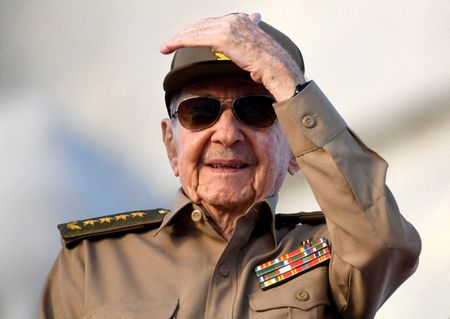
    Greek constitution protects lawmakers and ministers from prosecution, requiring parliamentary action to remove their immunity.

    New Democracy controls 156 seats in the 300-member parliament. Two former ministers involved in the investigation have rejected any wrongdoing and proactively requested their immunity be removed.

    An ethics committee will examine the matter on Tuesday, with parliament anticipated to vote on removing the lawmakers’ immunity next week.

  • Lebanon Strike Hits Christian Official, Deepens Political Divisions

    Lebanon Strike Hits Christian Official, Deepens Political Divisions

    A deadly Israeli airstrike late Sunday targeted an apartment building in a Christian community outside Beirut, claiming the lives of a local political figure and escalating tensions within Lebanon regarding Hezbollah’s involvement in the ongoing conflict.

    The attack occurred in Ain Saadeh, a Christian-majority town located in the hills east of Lebanon’s capital. Three people died in the strike – a man and two women who were located one floor beneath the apartment that was actually targeted, according to Lebanon’s health ministry and the town’s mayor.

    Among the casualties were Pierre Moawad, a regional official with the Lebanese Forces Party, and his spouse Flavia, the anti-Hezbollah Christian political organization confirmed.

    The month-long warfare has intensified existing rifts between those who support the Iran-backed Hezbollah movement and Lebanese citizens who hold the militant group responsible for sparking another confrontation with Israel barely over a year since the previous conflict ended.

    “We are paying a heavy price for a war into which we have been dragged by the lawless organisation Hezbollah,” Lebanese Forces parliamentarian Razi El Hage told Lebanese broadcaster MTV.

    Israel launched its comprehensive air and ground offensive following Hezbollah’s March 2 rocket attacks into Israeli territory, which the group conducted in support of Iran. Lebanese officials report that more than 1,460 people have died in the Israeli campaign.

    The Israeli military’s evacuation orders have affected vast portions of southern Lebanon, eastern regions, and Beirut’s southern neighborhoods, forcing over one million residents to flee their homes. The majority of displaced people belong to the Shi’ite Muslim population that forms Hezbollah’s primary base of support.

    Christian area residents and local leaders have voiced worries that displaced populations might be sheltering militants who could become Israeli targets. Some local governments are now screening individuals seeking rental housing in their communities.

    Christian legislator Nadim Gemayel, who opposes Hezbollah, expressed concerns to Reuters last month that Israel might be intentionally forcing Shi’ite populations into other Lebanese regions to create inter-community conflicts.

    Unlike many previous strikes, Israeli forces issued no evacuation warning before Sunday’s attack. Local residents confirmed that no displaced individuals were residing in the targeted building or nearby structures.

    “I’ve been in my house for 20 years, I’ve never even seen this apartment lit. There’s no one in it,” Antoine Aalam, a 70-year-old man who lives across from the targeted apartment, told Reuters on Monday.

    Israeli military officials told Reuters they had attacked a “terror target east of Beirut” but provided no additional information.

    “Reports that several uninvolved individuals were harmed as a result of the strike are being reviewed,” the military stated.

    Military representatives refused to address concerns that attacks on Christian communities were designed to increase sectarian hostilities.

    Despite the 2024 ceasefire that concluded the previous Hezbollah conflict, Israeli forces have maintained their presence in southern Lebanon while continuing periodic strikes. Lebanese appeals for new peace negotiations have been ignored by Israel.

    The Sunday evening attack occurred just hours after Lebanese President Joseph Aoun delivered his first televised speech since hostilities began, declaring that the nation’s “primary concern is preserving civil peace, which is a red line.”

    Additional Israeli strikes on Sunday killed five people in Beirut’s southern suburbs, including a teenage girl and two Sudanese migrant workers. Another attack on a vehicle in southern Lebanon killed a married couple and wounded their two children.

  • Russia Accuses Ukraine of Pipeline Sabotage Plot in Serbia

    Russia Accuses Ukraine of Pipeline Sabotage Plot in Serbia

    MOSCOW – Russian government officials on Monday accused Ukraine of likely being behind explosive devices discovered near a major gas pipeline in Serbia that transports Russian energy to Hungary, though they acknowledged lacking definitive proof at this time.

    The allegations emerged after Hungarian Prime Minister Viktor Orban called an emergency defense meeting on Sunday following the discovery of explosives near the TurkStream pipeline. Orban, who is facing a challenging reelection campaign ahead of Sunday’s vote, has previously stated that Ukraine has spent years attempting to disconnect Europe from Russian energy sources, but stopped short of directly accusing Kyiv of responsibility for this specific incident.

    Ukraine’s foreign ministry has categorically denied any connection to the explosive devices found near the pipeline infrastructure.

    Kremlin spokesperson Dmitry Peskov described the situation as extremely concerning during a press briefing with reporters. “The situation is potentially very dangerous. This is a vital energy artery, which is currently operating under extreme strain. And prior to this, as we know, the Kyiv regime was directly involved in such acts of sabotage against critical energy infrastructure,” Peskov stated.

    “It is highly likely that signs of the Kyiv regime’s involvement will be found this time too,” he continued, expressing Moscow’s expectation that Hungarian and Serbian authorities would take steps to reduce the security threat.

    Peskov also referenced recent diplomatic discussions, saying: “We also hope that, during recent talks (Ukrainian President Volodymyr) Zelenskiy held in Ankara, the head of the Kyiv regime was made aware that such aggressive actions against the infrastructure of the South Stream and Blue Stream pipelines are unacceptable.”

  • Global Survey Reveals Wide Divide on Views of Homosexuality

    Global Survey Reveals Wide Divide on Views of Homosexuality

    A recent worldwide survey conducted by the Pew Research Center examined global perspectives on the moral acceptance of homosexuality, revealing dramatic differences across nations. Nigeria emerged as the country with the highest percentage of residents who view homosexuality as morally unacceptable, with an overwhelming 96% of respondents expressing this view. Indonesia and Turkey also ranked among the countries with similarly high levels of moral disapproval. On the opposite side of the global spectrum, Sweden led nations where homosexuality is widely accepted, with 94% of those surveyed considering it morally acceptable. Within the United States, the survey found that 60% of participants expressed moral acceptance of homosexuality.

  • Spanish Socialist Party Surges in Polls Over Anti-War Position

    Spanish Socialist Party Surges in Polls Over Anti-War Position

    MADRID, April 6 – New polling data reveals that Spain’s Socialist Party has experienced a boost in voter approval following Prime Minister Pedro Sanchez’s firm stance against the U.S.-Israeli military campaign targeting Iran, while the far-right Vox party’s support has weakened, according to two surveys released Monday.

    Sanchez has positioned himself among the most outspoken Western leaders condemning what he describes as an unlawful and dangerous military action, taking concrete steps including shutting down Spanish airspace to American aircraft participating in the strikes and prohibiting their use of shared military installations in Spain’s southern region.

    The far-right Vox party – which maintains close ties to U.S. President Donald Trump’s MAGA movement – has strongly condemned Sanchez’s position on the conflict.

    Recent polling by the state-run CIS organization revealed that 85% of Spanish citizens oppose the military action.

    Fresh survey results from Sigma Dos, conducted for El Mundo newspaper, indicate the Socialist Party’s support climbed to 27.7% from the previous month’s 26.4%, narrowing the gap with the conservative People’s Party (PP). A separate poll by 40dB for El Pais newspaper placed Socialist support at 28.6%, representing an increase from 27.7%.

    Conversely, Vox experienced a decline to 17.1% in April from 18.3% according to Sigma Dos polling, while the 40dB survey showed a smaller decrease of 0.1 percentage point to 18.7%.

    The People’s Party maintained its lead in both surveys, capturing 32.5% and 31.1% of voter preferences respectively, with modest gains of less than one percentage point in each poll. The party has criticized Sanchez for harming Atlantic alliance relationships and has avoided publicly condemning Trump and Israel, although its leadership has adopted the “no to war” message.

    Both surveys indicate a notable pattern of voter migration from political extremes toward the two major mainstream parties. The People’s Party appears to be preventing further voter defection to Vox, while the Socialists are attracting previous supporters of Sumar, their hard-left coalition partner.

    Despite these shifts, Spain’s divided political landscape continues to require coalition governments, with both polls suggesting a potential right-wing majority if elections occurred today.

    The country’s next scheduled general election is set for August 2027.

    Both polling organizations surveyed approximately 2,000 respondents, with each study carrying a 2.2% margin of error.

  • Iranian Leaders Reject Trump’s Strait of Hormuz Ultimatum Amid Rising Tensions

    Iranian Leaders Reject Trump’s Strait of Hormuz Ultimatum Amid Rising Tensions

    Senior Iranian leadership has rejected President Trump’s ultimatum regarding the reopening of the Strait of Hormuz, adopting a confrontational stance as both nations continue to exchange missile strikes.

    The dismissal of Trump’s deadline comes amid heightened tensions between the two countries, with military actions escalating on both sides. Iranian officials have maintained their defiant position despite increasing pressure from the United States.

    The ongoing conflict has seen continued missile exchanges between the warring nations, with no immediate signs of de-escalation as diplomatic efforts appear to have stalled.

  • Iran Develops Counter-Proposal to International Ceasefire Plan

    Iran Develops Counter-Proposal to International Ceasefire Plan

    Iranian officials announced Monday they have developed their own counter-proposal to recent ceasefire initiatives that were delivered through diplomatic intermediaries, according to the country’s foreign ministry spokesperson.

    Foreign ministry spokesperson Esmaeil Baghaei told reporters that Tehran has established a list of conditions based on the nation’s interests, which have already been transmitted through diplomatic back-channels. He noted that previous American proposals, including a 15-point framework, were turned down for being “excessive.”

    Baghaei emphasized during Monday’s news briefing that diplomatic talks were “incompatible with ultimatums and threats to commit war crimes.”

    “Iran does not hesitate to clearly express what it considers its legitimate demands and doing so should not be interpreted as a sign of compromise, but rather as a reflection of its confidence in defending its positions,” Baghaei stated during the press conference.

    When questioned by an Iranian reporter about ongoing diplomatic efforts to establish a ceasefire between Iran and the United States, Baghaei confirmed “We have formulated our own responses” and indicated that specific details would be revealed at an appropriate time.

  • Deadly Russian Drone Strike Claims 3 Lives in Odesa as Ukraine Hits Oil Targets

    Deadly Russian Drone Strike Claims 3 Lives in Odesa as Ukraine Hits Oil Targets

    KYIV, Ukraine — Ukrainian officials reported Monday that a nighttime Russian drone strike on the southern port city of Odesa claimed the lives of three civilians, including two women and a 2-year-old child, as Ukraine simultaneously launched its own drone offensive against Russian oil export facilities along the Black Sea.

    The devastating assault severely damaged a residential apartment building in Odesa, prompting rescue teams to work through the night using floodlights to extract four survivors from the debris.

    Ukrainian President Volodymyr Zelenskyy reported on X that eleven individuals required hospitalization following the attack, among them a pregnant woman and two young children, with the youngest victim being under one year of age.

    Since launching its invasion more than four years ago, Russia has consistently targeted civilian areas throughout Ukraine, resulting in over 15,000 deaths according to United Nations data.

    The overnight bombardment extended beyond Odesa, with Russian forces also striking power infrastructure across the Chernihiv, Sumy, Kharkiv and Dnipro regions, Zelenskyy confirmed.

    Regional power companies reported that more than 300,000 homes lost electricity in northern Chernihiv after distribution centers sustained damage from the attacks.

    Zelenskyy revealed that Russian forces have unleashed more than 2,800 attack drones, nearly 1,350 powerful glide bombs and over 40 various missiles against Ukraine in just the past seven days.

    During a recent Associated Press interview, Zelenskyy voiced concerns that conflicts involving Iran are depleting weapon stockpiles Ukraine desperately needs for defense, particularly American-manufactured Patriot air defense systems capable of intercepting missiles.

    “Russia has no intention of stopping” its invasion, Zelenskyy stated Monday, emphasizing that the country’s allies “need to strengthen air defense together so that the interception rate of drones and missiles continues to increase.”

    Ukraine has responded by developing indigenous long-range drone technology capable of striking targets up to 1,500 kilometers (900 miles) within Russian territory.

    These Ukrainian drones have recently focused on Russian oil infrastructure, particularly as Moscow seeks to increase exports following temporary sanctions relief from the Trump administration aimed at easing supply shortages. Ukrainian officials argue that Russia will use additional oil revenues to purchase more weapons for continued attacks.

    Russian Defense Ministry officials claimed their air defenses successfully intercepted 50 Ukrainian drones during overnight operations.

    Krasnodar Governor Veniamin Kondratyev reported that eight individuals, including two children, sustained injuries during multiple Ukrainian drone strikes on Novorossiisk, a major Russian Black Sea port. The assault damaged six apartment complexes and two residential homes, according to his statement.

    Unverified media sources suggested the drones specifically targeted the Sheskharis oil terminal located at the Black Sea port.

    Ukrainian drone operations last week successfully struck oil facilities in Russia’s Gulf of Finland region in the northwest part of the country.

  • Iranian Official Blasts UN Nuclear Agency Over Facility Attack Response

    Iranian Official Blasts UN Nuclear Agency Over Facility Attack Response

    Iran’s top nuclear official has sharply criticized the United Nations’ atomic oversight body, claiming its failure to respond decisively to attacks on nuclear facilities is encouraging further aggression.

    Mohammad Eslami, who leads Iran’s atomic energy organization, sent a formal complaint Monday to the head of the International Atomic Energy Agency regarding repeated strikes against the Bushehr nuclear power station.

    According to Eslami’s letter, Iran’s sole operational nuclear facility has come under attack four separate times, with the latest incident occurring April 4 near the plant. That assault resulted in the death of one security worker and left several others wounded.

    The Iranian official expressed grave concern about potential catastrophic outcomes, warning that strikes on an active nuclear reactor could lead to radioactive contamination with “irreparable consequences” affecting both people and the environment across the region.

    Eslami characterized these incidents as violations of international law and condemned what he termed the agency’s “lack of decisive action.” He argued that simply voicing concern without taking concrete steps would only encourage additional attacks on nuclear infrastructure.

  • Iranian Military Claims Drone Attack on US Forces at Kuwait Island Base

    Iranian Military Claims Drone Attack on US Forces at Kuwait Island Base

    Iranian military officials announced Monday they conducted a drone attack against American forces stationed on Bubiyan Island in Kuwait, according to a video statement released through state-controlled media.

    Ebrahim Zolfaqari, speaking for Iran’s Khatam al-Anbiya Central Headquarters, claimed the operation specifically targeted satellite communications equipment and weapons stockpiles on the island using unmanned aircraft. He stated that American troops had moved to this location from the Arifjan military installation following multiple previous Iranian strikes on that facility.

    The island represents Kuwait’s largest coastal landmass and sits in the northwestern section of the Persian Gulf region.

    Kuwait’s health ministry reported that six individuals sustained injuries from debris that fell into a residential neighborhood in the country’s northern region during the Iranian assault.

  • Ukraine Reclaims 185 Square Miles of Territory Since January, Military Leader Says

    Ukraine Reclaims 185 Square Miles of Territory Since January, Military Leader Says

    Ukrainian military forces have successfully recaptured 185 square miles of territory across southeastern and eastern front line areas since the end of January, according to the nation’s top military commander Oleksandr Syrskyi.

    Following a recent front line inspection, Syrskyi reported that Ukrainian forces had restored control over a dozen settlements – eight located in the eastern Dnipropetrovsk region and four in the southeastern Zaporizhzhia region.

    However, the military leader warned that Russian forces remain committed to their spring assault campaign across the battle lines.

    “Russian troops are not abandoning their plans for further offensive operations and are regrouping their available forces and equipment,” Syrskyi wrote on the Telegram messaging platform late Sunday evening.

    “Despite significant losses in personnel and military equipment, the invaders aim to seize more Ukrainian territory and establish a ‘buffer zone’ in the Dnipropetrovsk region.”

    Syrskyi emphasized that Ukrainian defenders have successfully held their defensive positions throughout the recent fighting.

    Ukrainian President Volodymyr Zelenskiy declared last week that the battlefield conditions for Ukraine represented the most favorable circumstances since mid-2023.

    Defense experts indicate that Ukraine’s southeastern counterattacks are effectively hampering Russian military operations near Pokrovsk in the eastern Donetsk region, while also disrupting the broader Russian spring campaign along more than 750 miles of front line positions.

    “Ukrainian counter attacks in the Hulyaipole and Oleksandrivka directions continue to present the Russian military command with dilemmas that overstretched Russian forces appear challenged to meet,” stated the Washington-based Institute for the Study of War in Monday’s analysis.

    Russian forces have maintained their advance in eastern Donetsk territory, particularly north of Pokrovsk, a crucial supply center, according to statements from Russia’s defense ministry reported by state media last week.

    The fight for Pokrovsk has continued since summer 2024 as Russian forces attempt to solidify their hold over the Donetsk region.

    Syrskyi confirmed he toured the Pokrovsk area and directed additional ammunition and supply deliveries to reinforce Ukrainian positions in that sector.

    As diplomatic efforts to resolve the conflict remain stalled, Ukraine has escalated its long-distance strike operations targeting Russian petroleum facilities. During the previous two weeks, Ukrainian forces have attacked Russian Baltic coastal ports and oil installations in the Leningrad region.

  • North Korean Leader’s Teen Daughter May Be His Chosen Successor, Seoul Says

    North Korean Leader’s Teen Daughter May Be His Chosen Successor, Seoul Says

    SEOUL, South Korea — Intelligence officials in South Korea now believe it’s reasonable to consider North Korean dictator Kim Jong Un’s teenage daughter as his likely successor, marking their most definitive statement yet about the girl’s rising prominence in the isolated nation’s power structure.

    The teenager, whom North Korean state media has called Kim’s “most beloved” or “respected” child, has been appearing alongside her father at major public events since the end of 2022, fueling international speculation that she’s being prepared to take over leadership.

    During a private briefing with South Korea’s National Assembly, National Intelligence Service director Lee Jong-seok told lawmakers the girl should be viewed as Kim’s potential successor when questioned about her political position, according to lawmaker Lee Seong Kweun who was present at the meeting.

    When lawmakers asked about potential objections from Kim’s sister Kim Yo Jong, who has long been considered the regime’s second-most powerful figure, the intelligence director indicated she lacks meaningful authority, citing what he called “reliable intelligence” sources.

    This represents the intelligence service’s most confident evaluation of the girl’s status to date. Earlier in 2024, the agency first officially suggested she was probably being groomed as her father’s heir. By February, intelligence officials said they believed she was nearly certain to be named the country’s future leader.

    However, some experts question this analysis, arguing that North Korea’s deeply patriarchal culture makes it unlikely to accept female leadership. Others point out that Kim, who is 42 years old, may be too young to designate a successor, which could potentially undermine his current authority.

    The girl is believed to be named Kim Ju Ae and approximately 13 years old, though North Korean media has never confirmed these personal details. Her suspected name comes from former basketball player Dennis Rodman, who mentioned holding Kim Jong Un’s infant daughter during a 2013 visit to Pyongyang.

    Since its founding in 1948, North Korea has been continuously governed by male members of the Kim dynasty. Kim Jong Un assumed control following his father Kim Jong Il’s death in late 2011. Kim Jong Il had previously taken power after the death of his father and the nation’s founder, Kim Il Sung, in 1994.

    Recent public appearances by the girl have included operating a tank during military exercises overseen by her father and both of them shooting handguns during a tour of an ammunition manufacturing facility.

    During Monday’s intelligence briefing, officials suggested North Korean leadership has deliberately arranged these military-focused events to strengthen her defense credentials and “dispel skepticism about a woman successor,” lawmaker Lee reported.

    Park Sunwon, another legislator who attended the briefing, provided similar accounts of the intelligence agency’s analysis regarding the girl’s recent military-themed public appearances.

  • High-Ranking Russian Military Officer Dies in Crimean Plane Crash

    High-Ranking Russian Military Officer Dies in Crimean Plane Crash

    MOSCOW – A high-ranking Russian military officer perished in a fatal aircraft accident that claimed 30 lives in Russian-occupied Crimea last week, according to statements from Russian officials reported Monday.

    Alexander Otroshchenko, who led the 45th Army of the Northern Fleet’s Air Force and Air Defence units, was among those who died in the incident, according to Andrei Chibis, the governor of Russia’s northern Murmansk region where the fleet operates.

    The military transport An-26 aircraft struck a cliff in Crimea on March 31. Russia’s Defence Ministry reported soon after the incident that initial investigations pointed to technical failure as the likely cause.

    The An-26 aircraft model entered military service in the late 1960s and has also been utilized by commercial carriers for cargo operations, though the aircraft type has been linked to several fatal incidents in recent years.

    In 2022, a Ukrainian An-26 went down in Ukraine’s southeastern Zaporizhzhia region, resulting in one fatality. Two years earlier, another aircraft of the same model crashed during a training mission in northeastern Ukraine, killing 26 of the 27 individuals aboard.

    An An-26 crash in South Sudan in 2020 killed eight people, including five Russian nationals. In 2017, four out of 10 passengers died when an An-26 crashed while attempting to land in Ivory Coast in West Africa.

  • Iranian Intelligence Chief Majid Khademi Dies, State Media Confirms

    Iranian Intelligence Chief Majid Khademi Dies, State Media Confirms

    Iranian state television confirmed Monday the passing of Majid Khademi, who served as the intelligence chief for Iran’s Revolutionary Guards forces.

    Government media outlets made the announcement without providing any circumstances or details surrounding Khademi’s death.

    The Revolutionary Guards represent Iran’s elite military force, and Khademi held a senior leadership position overseeing the organization’s intelligence operations.

  • Indonesia Files Genocide Charges Against Myanmar’s New President

    Indonesia Files Genocide Charges Against Myanmar’s New President

    JAKARTA – Civil rights organizations in Indonesia filed criminal charges Monday against Myanmar’s recently-elected President Min Aung Hlaing, alleging he committed genocide against the Rohingya Muslim minority population.

    Myanmar holds membership in the Association of South East Asian Nations (ASEAN), though diplomatic ties have deteriorated following Min Aung Hlaing’s 2021 military takeover, which sparked ongoing civil conflict and created a humanitarian emergency that has displaced countless Rohingya Muslims into refugee camps.

    Indonesia serves as ASEAN’s headquarters and represents the world’s largest Muslim-majority nation, making it a destination for Rohingya refugees escaping Myanmar or overcrowded camps by sea.

    Under Min Aung Hlaing’s military leadership, Myanmar’s forces conducted a 2017 campaign that drove more than 730,000 Rohingya people from their communities into neighboring Bangladesh, where survivors reported systematic murders, widespread sexual violence and deliberate burning of villages.

    The formal complaint submitted to Indonesia’s Attorney General came from Yasmin Ullah, a Rohingya refugee who escaped Myanmar, alongside prominent Indonesian leaders including a former attorney general and the head of Muhammadiyah, a major Indonesian Muslim organization, according to their Monday statement.

    The complainants indicated they would provide documentation of systematic displacement affecting the Rohingya – recognized as the world’s largest population without citizenship – along with evidence of killings carried out by the military government, noting that Indonesian prosecutors have officially accepted their case.

    “It is the first time under Indonesia’s new penal code that a case has been officially received and I warmly welcome this historic development as a milestone for all Rohingya people on their long march to justice and accountability,” Ullah said.

    The legal team explained that Indonesia’s criminal laws permit “universal jurisdiction” for particularly severe crimes, allowing prosecution without regard to the victims’ citizenship or the location where alleged crimes occurred.

    Indonesia’s Attorney General’s Office has not yet provided a response to requests for comment.

    Gambia, another nation with a Muslim majority, presented arguments in January before the United Nations’ highest court, claiming Myanmar systematically targeted the Rohingya Muslim minority for elimination and subjected them to horrific conditions in a groundbreaking genocide case.

    Myanmar has consistently rejected genocide accusations. The military government did not immediately respond to Monday’s request for comment.

    Min Aung Hlaing secured the presidency through legislative voting last week following his military-supported party’s victory in December and January elections that Western nations condemned as fraudulent, cementing his political control.

    The 2021 military coup has generated continuous public demonstrations and nationwide opposition movements.

  • Pakistan Proposes Peace Plan Between Iran and U.S. as Tensions Mount

    Pakistan Proposes Peace Plan Between Iran and U.S. as Tensions Mount

    A diplomatic initiative spearheaded by Pakistan has delivered a peace framework to both Iranian and American officials, with implementation potentially beginning Monday, according to a source familiar with the negotiations.

    Pakistan developed and transmitted the peace proposal overnight to both nations, presenting a dual-phase strategy that begins with an immediate halt to hostilities and progresses toward a comprehensive settlement, the source revealed.

    “All elements need to be agreed today,” the source stated, explaining that the initial agreement would take the form of a memorandum of understanding completed electronically with Pakistan serving as the exclusive communication bridge between the parties.

    Earlier reporting by Axios on Sunday indicated that American, Iranian and regional diplomatic intermediaries were exploring a possible 45-day truce as part of a two-stage agreement that might ultimately bring permanent resolution to the conflict.

    According to the Reuters source, Pakistan’s military leader Field Marshal Asim Munir maintained continuous overnight communication with U.S. Vice President JD Vance, special diplomatic representative Steve Witkoff, and Iran’s Foreign Minister Abbas Araqchi.

    The proposed agreement would establish an immediate cessation of hostilities and reopen the strategically important Strait of Hormuz, allowing 15 to 20 days for negotiating a more extensive resolution. Officials have tentatively named this potential agreement the “Islamabad Accord,” which would establish a regional framework governing the strait and conclude with face-to-face negotiations in Pakistan’s capital.

    Neither American nor Iranian representatives provided immediate responses to requests for comment. Pakistan’s foreign ministry spokesman Tahir Andrabi refused to discuss the matter.

    Iranian leadership has previously communicated to Reuters their desire for a lasting ceasefire with assurances against future attacks from both America and Israel. They confirmed receiving diplomatic messages through multiple intermediaries including Pakistan, Turkey and Egypt.

    The comprehensive agreement is anticipated to include Iranian pledges to abandon nuclear weapons development in return for sanctions relief and access to previously frozen financial assets, according to the source.

    Two Pakistani officials indicated that Iran has not yet committed despite intensive diplomatic and military engagement efforts.

    “Iran has not responded yet,” one official explained, noting that proposals supported by Pakistan, China and the United States for temporary hostilities suspension have received no firm commitment.

    Chinese officials did not immediately respond to requests for comment regarding their involvement.

    This latest diplomatic effort emerges as escalating tensions have sparked concerns about potential disruptions to maritime traffic through the Strait of Hormuz, a crucial pathway for international oil transportation.

    President Donald Trump has recently made public appeals for swift conflict resolution, issuing warnings about potential consequences if a ceasefire agreement is not achieved within a brief timeframe.

    The ongoing conflict has created increased instability in energy markets, with commodity traders monitoring developments that could impact oil flows through the strategic waterway.

  • S. Korea Intelligence: Kim Jong Un’s Teen Daughter Set to Inherit Power

    S. Korea Intelligence: Kim Jong Un’s Teen Daughter Set to Inherit Power

    South Korean intelligence officials say they have reliable evidence that North Korean leader Kim Jong Un is preparing his teenage daughter to take over the isolated nation, according to lawmakers briefed on the assessment Monday.

    The National Intelligence Service told parliamentary members that their conclusion stems from what they called “credible intelligence” rather than speculation, following a closed-door briefing attended by both ruling and opposition party representatives.

    Intelligence officials pointed to recent propaganda footage showing Kim’s daughter operating a tank as evidence designed to showcase her military credentials and address potential concerns about a female successor, lawmakers reported.

    North Korea’s official news agency KCNA released photographs last month depicting Kim and his daughter driving a new tank, adding to previous images that showed her shooting rifles and handling pistols at firing ranges.

    These military-themed photo opportunities mirror Kim Jong Un’s own public appearances during the early 2010s when his father was preparing him for leadership, noted ruling Democratic Party lawmaker Park Sun-won, who described the scenes as paying “homage” to that earlier succession period.

    The intelligence agency’s latest evaluation represents an upgrade from previous assessments that suggested the girl, believed to be approximately 13 years old and named Ju Ae, was simply being prepared for potential succession.

    According to lawmakers citing the intelligence briefing, Ju Ae’s frequent appearances at military and defense events aims to reduce skepticism about female leadership while building a succession storyline.

    Previous intelligence reports indicated the agency views her growing public profile as evidence she’s already functioning as the second-most powerful figure in North Korea’s hierarchy.

    People Power Party lawmaker Lee Seong-kweun said intelligence officials dismissed speculation that Kim’s sister Kim Yo Jong might oppose the focus on Ju Ae, noting that Kim Yo Jong lacks independent authority.

    However, some regional experts cautioned against reading too much into the tank imagery as definitive proof of succession planning.

    Hong Min, a researcher at the Korea Institute for National Unification, argued that Ju Ae’s tank appearance alone doesn’t confirm her status as heir apparent, pointing out that she appeared with her father rather than alone, unlike Kim Jong Un’s independent military demonstrations during his preparation for power.

  • UAE Demands Open Shipping Routes in Any Future US-Iran Agreement

    UAE Demands Open Shipping Routes in Any Future US-Iran Agreement

    A senior United Arab Emirates official has declared that guaranteed passage through the Strait of Hormuz must be included in any future agreement between the United States and Iran, cautioning that failure to address Tehran’s nuclear ambitions and weapons programs could lead to greater regional instability.

    Anwar Gargash, who serves as diplomatic adviser to the UAE president, emphasized during a weekend press conference that the Strait of Hormuz – the world’s most vital oil shipping channel – cannot be turned into a weapon. He stressed that protecting this waterway represents a global economic necessity rather than a regional negotiating tool.

    “The Strait of Hormuz cannot be held hostage by any country,” Gargash stated, emphasizing that navigation freedom through this passage “has to be part and parcel of the settlement of any conflict with clear agreement on that.”

    While expressing the UAE’s desire to see the conflict end, Gargash cautioned against a cease-fire that would leave underlying causes of regional tension unaddressed.

    “We don’t want to see more and more escalation,” he explained. “But we don’t want a ceasefire that fails to address some of the main issues that will create a much more dangerous environment in the region…notably (Iran’s) nuclear programme, the missiles and drones that are still raining down on us and on other countries.”

    President Donald Trump has issued ultimatums to Tehran, threatening to unleash “hell” unless Iran agrees to terms and reopens the Strait of Hormuz by his Tuesday deadline. In a profanity-filled social media post Sunday on Truth Social, Trump warned of additional attacks on Iranian energy and transportation infrastructure, moves that some critics argue would violate international law.

    For over five weeks, American and Israeli forces have conducted sustained missile and air attacks against Iran, targeting what they describe as immediate threats from the nation’s nuclear weapons development, ballistic missile stockpiles, and backing of regional militant groups.

    CRISIS SCENARIO BECOMES REALITY

    Gargash announced the UAE’s willingness to participate in any American-led international mission to protect shipping through the strait.

    Approximately 20 percent of the world’s oil and liquefied natural gas shipments typically move through this waterway daily, but Iranian military actions have dramatically reduced traffic, sparking a worldwide energy emergency.

    The current crisis began on February 28, when American and Israeli forces struck Iran following the collapse of nuclear negotiations between Washington and Tehran. Iran responded with successive waves of missiles and drone attacks against Israeli targets, American military installations across the region, and crucial Gulf energy infrastructure, including aviation facilities, ports, and commercial districts.

    Regional authorities report that the UAE has endured more intensive Iranian attacks than any other Gulf nation.

    Gargash noted that for years, the UAE’s most feared worst-case scenario involved a comprehensive Iranian assault – a situation that has now materialized. Nevertheless, he said his country has shown remarkable strength and adaptability under these challenging circumstances.

    He maintained that the UAE’s economic foundations remain solid and position the nation for eventual recovery, while acknowledging the considerable work ahead.

    According to Gargash, Iran’s aggressive approach will likely strengthen rather than weaken Gulf state security partnerships with Washington, solidifying America’s military presence in the region and expanding Israel’s influence. He confirmed that the United States will continue as the UAE’s primary security ally and that Abu Dhabi plans to deepen this partnership as regional dangers grow.

    Regional analysts view Iran’s attacks on Gulf energy infrastructure and shipping routes as a deliberate strategy to increase costs for Washington’s Arab allies. By targeting oil installations, ports, and critical waterways including the Strait, Iran hoped that Gulf states, concerned about economic damage and regional consequences, would pressure the United States to end its military campaign.

    This approach built on years of Gulf efforts to maintain balanced relationships with both Washington and Tehran, contain regional tensions, and prevent direct military confrontation. Many Gulf countries had reestablished diplomatic ties with Iran and attempted to protect their economies from regional disruptions, believing that engagement would reduce risks.

    Gargash argued that Iran’s leadership is battling to save the “regime, not the country,” contending that no responsible government would accept such devastation merely to claim resistance. He said the UAE does not desire conflict with Iran, but cautioned that trust remains impossible under Tehran’s current leadership.

    The UAE official expressed appreciation for international support his country has received, specifically highlighting France as a reliable ally and commending Washington for its extraordinary assistance, especially in enhancing the UAE’s air defense systems.

  • Iran-Israel Conflict Escalates as Trump Sets Infrastructure Strike Deadline

    Iran-Israel Conflict Escalates as Trump Sets Infrastructure Strike Deadline

    Weekend military strikes across multiple Iranian cities resulted in over 25 deaths from Sunday through Monday, according to reports from the ongoing conflict zone. Meanwhile, Israeli rescue teams continue searching through debris in Haifa where two people died and two remain unaccounted for following Sunday’s Iranian missile attack.

    President Donald Trump escalated his warnings against Iran on Sunday, threatening devastating attacks on the nation’s essential infrastructure unless Tehran reopens the Strait of Hormuz shipping lane before his Tuesday ultimatum expires.

    In a profanity-laced social media message, Trump declared that Tuesday would mark “Power Plant Day, and Bridge Day, all wrapped up in one, in Iran.”

    The military conflict, which started with combined U.S.-Israeli operations on February 28, has resulted in thousands of casualties, disrupted international markets, blocked crucial maritime trade routes, and driven fuel costs higher. Both nations have targeted civilian areas, prompting United Nations officials and international legal experts to warn about potential war crimes violations.

    Recent developments include:

    Iranian drone forces struck a telecommunications facility in Fujairah, United Arab Emirates, on Monday, according to the state-operated WAM news service. The assault focused on a building owned by the government-backed du telecommunications company. Fujairah authorities confirmed no injuries occurred in the incident, WAM reported.

    South Korea’s intelligence officials told parliament members Monday that North Korea shows no evidence of supplying weapons or military assistance to Iran. Agency representatives suggested during a private legislative briefing that Pyongyang may be avoiding involvement to keep diplomatic options open with the Trump government, according to two attending lawmakers.

    While North Korea’s Foreign Ministry has criticized the U.S.-Israeli military actions against Iran as unlawful, intelligence sources noted that Pyongyang hasn’t issued formal condolences for the death of Iran’s former supreme leader, Ayatollah Ali Khamenei. North Korean leader Kim Jong Un has recently promoted “new Cold War” concepts and sought expanded partnerships with nations opposing U.S. policies, including sending a trade delegation to Iran in April 2024.

    South Korea announced plans to deploy at least five vessels to Saudi Arabia’s Yanbu port over the coming weeks, establishing alternative oil shipping pathways through the Red Sea. The Trade, Industry and Resources Ministry stated Monday that ship deployments will begin in phases starting mid-April, with potential fleet expansion based on Saudi partnership agreements.

    Ministry officials declined to name participating companies but indicated some domestic oil refiners might contract with foreign shipping firms. South Korea also intends to dispatch special diplomatic representatives to Saudi Arabia, Oman, and Algeria to strengthen efforts securing backup fuel sources, according to ruling party representative Ahn Do-geol.

    Iranian authorities executed another individual convicted on charges related to January’s nationwide protest movement. The judiciary’s Mizan news outlet identified the executed person as Ali Fahim in Monday’s report, though execution timing remained unclear. Fahim faced conviction for allegedly raiding a military installation to obtain weapons.

    Amnesty International stated that Fahim and co-defendants “were subjected to torture and other ill-treatment in detention, including beatings, floggings, prolonged solitary confinement, and death threats at gunpoint before being convicted in grossly unfair trials that relied on forced ‘confessions’ extracted under torture and lasted only a few hours.”

    The Human Rights Activist News Agency reported that Fahim and others had entered a Tehran facility belonging to the volunteer Basij militia, a Revolutionary Guard branch, after the building was already burned, then were coerced into confessions.

    Israeli emergency services reported Monday morning that Iranian missiles targeted several locations across central Israeli cities. In Petah Tikva, medical personnel treated a woman with serious chest wounds from shrapnel fragments before transporting her to Beilinson Hospital. City firefighters worked to extinguish vehicle fires while conducting searches to ensure no individuals remained trapped beneath rubble.

    Tel Aviv medics evacuated a man with minor glass fragment injuries to Ichilov Hospital. Magen David Adom rescue service footage documented residential building damage from the assault.

    Israeli military forces issued their fourth public warning Monday morning about incoming Iranian missile volleys.

    Emergency response teams in the northern port city of Haifa reported multiple Iranian missile impact sites early Monday. Four people sustained minor injuries at one location, including two children. The missile strikes damaged residential neighborhoods and an industrial facility, with the factory suffering shrapnel damage from defensive interceptions.

    Officials could not confirm whether all reported damage resulted from interception debris or direct missile impacts. Magen David Adom video footage from affected areas showed active fires and destroyed vehicles in what appeared to be residential districts.

    These latest missile attacks followed Sunday’s Iranian strike on another Haifa residential area that killed two people and wounded others. Two additional individuals remain missing beneath Sunday’s rubble, with their status unknown.

    In Abu Dhabi, United Arab Emirates, local authorities reported that a Ghanaian man sustained shrapnel injuries after Iranian missile interception over the city’s Musaffah district. This area sits close to Al Dhafra Air Base, which houses U.S. military personnel and has faced repeated Iranian targeting throughout the conflict.

  • German Military Clarifies New Exit Rules for Men of Military Age

    German Military Clarifies New Exit Rules for Men of Military Age

    German defense officials are rushing to provide clarity on a newly implemented regulation that mandates men of military age to obtain government approval before departing the country for extended stays.

    The provision became active in January as part of revised military service legislation, but the requirement affecting potentially millions of German men between ages 17 and 45 remained largely under the radar until a local news outlet brought attention to it on Friday.

    A defense ministry representative emphasized that Germany maintains voluntary military service and noted the ministry is “currently drafting specific regulations for granting exemptions from the requirement for approval, also to avoid unnecessary bureaucracy.”

    The updated military service legislation was enacted last year as part of Germany’s effort to strengthen its armed forces and fulfill NATO obligations, responding to growing concerns that the nation has depended too heavily on U.S. military support while tensions with Russia have heightened calls for enhanced European defense capabilities.

    According to the defense ministry representative, the law aims to establish a comprehensive and dependable military registration framework.

    “In the case of an emergency, we must know who may be residing abroad for an extended period,” the spokesperson explained in written comments.

    The official declined to provide additional details about how the approval process might ultimately function.

    German leadership aims to expand active military personnel from the current 183,000 to 260,000 by 2035, with Chancellor Friedrich Merz previously emphasizing to military commanders the urgent need for the country to develop self-defense capabilities and recruit additional soldiers.

    Political opposition figures criticized the government over the weekend for generating uncertainty through the legislation’s implementation.

  • Three Dead, Including Child, in Russian Drone Strike on Ukraine Port City

    Three Dead, Including Child, in Russian Drone Strike on Ukraine Port City

    KYIV, April 6 – A deadly Russian drone assault struck Ukraine’s major Black Sea port city of Odesa in the early morning hours of Monday, leaving three people dead, including a child, and injuring ten others, according to regional officials.

    Oleh Kiper, the regional governor for Odesa, announced the casualties on the messaging platform Telegram, stating that “Overnight, Odesa came under another heavy attack by the enemy.”

    The drone strike caused extensive damage across the city, with Kiper reporting that “Residential buildings, critical infrastructure and administrative facilities were hit. There is significant damage.”

    As the conflict enters its fifth year, Russian forces have intensified their targeting of Odesa, which serves as Ukraine’s primary port and a crucial logistics center in the country’s south. The city handles the bulk of Ukraine’s grain shipments and other maritime trade.

  • 41 Coal Workers Trapped Underground After Strike Damages Mine in Ukraine War Zone

    41 Coal Workers Trapped Underground After Strike Damages Mine in Ukraine War Zone

    A mining operation in the war-torn Luhansk region has left 41 workers stranded underground after an attack damaged critical electrical systems at the Bilorichenska coal facility on Monday, according to Russian-appointed regional authorities.

    The strike targeted infrastructure that powers the mining operation in the Moscow-controlled territory, cutting off normal evacuation routes for the trapped workers, officials reported.

    “All the relevant services are taking steps to rescue the miners and restore power to the mine,” said Leonid Pasechnik, who serves as the Moscow-installed regional administrator.

    Pasechnik confirmed that rescue teams have successfully made contact with the stranded workers and verified they have access to drinking water while emergency crews work to restore electrical power needed for safe evacuation procedures.

  • Seoul: North Korea Develops Advanced Carbon-Fiber Missiles for Multiple Warheads

    Seoul: North Korea Develops Advanced Carbon-Fiber Missiles for Multiple Warheads

    South Korean officials revealed Monday that North Korea’s recent rocket engine testing is part of an effort to develop advanced intercontinental ballistic missiles using carbon fiber construction capable of delivering multiple warheads.

    The March ground test involved a solid-fuel rocket engine that intelligence analysts believe is being designed for North Korea’s newest long-range missile system.

    According to South Korean lawmakers, this latest engine appears to generate more power than the version tested in 2024, which military experts already determined could reach any target across the continental United States.

    North Korea typically launches its long-range missiles on high-arcing paths that end with the weapons landing in ocean waters near its eastern coastline or beyond Japan, rather than testing them at their full intended range.

    Parliament member Park Sun-won told reporters that North Korean media displayed the missile’s carbon fiber construction during the engine test. “North Korean media showed the airframe of the missile at the new engine test that was built with carbon fibre, which is lightweight while strong, allowing the projectile to carry multiple warheads,” Park said.

    Park made his comments after attending a private intelligence briefing conducted by South Korea’s National Intelligence Service.

    North Korean leader Kim Jong Un attended the March 28 testing and described it as a major enhancement to his nation’s strategic military capabilities.

    Despite United Nations Security Council prohibitions on missile and nuclear testing, North Korea continues to advance its development of increasingly sophisticated and powerful missile systems.

  • EU Leaders Hope Hungarian Election Could End Years of Political Obstruction

    EU Leaders Hope Hungarian Election Could End Years of Political Obstruction

    BUDAPEST, Hungary (AP) — The upcoming Hungarian elections scheduled for April 12 could send major ripples throughout the European Union, as numerous officials within the 27-member alliance are hoping to see the end of nationalist Prime Minister Viktor Orbán’s tenure, viewing him as a threat to the bloc’s future stability.

    Currently trailing in polling data, Orbán has maintained control for 16 years as the EU’s most tenured leader, challenging the union’s governance framework designed to maintain peace through economic and political cooperation following the devastation of two world wars. His challenger Péter Magyar informed the Associated Press that he would work to restore Hungary’s relationship with the EU should he win the election.

    The European Union currently faces massive challenges including the growth of right-wing populist movements, ongoing conflicts in Ukraine and Middle Eastern regions, Russian interference operations, China’s economic expansion, and a White House administration that has disrupted longstanding transatlantic partnerships.

    However, Orbán’s blocking tactics have hampered EU responses to these issues. Political experts and lawmakers indicate he has exploited his veto authority and developed an intricate knowledge of how the union distributes member funding to consolidate his authority and wield disproportionate influence by obstructing decision-making processes to secure favorable deals.

    “He entered a club, read the rules, figured out how he can rig the rules, and then started to be a free rider and blackmail all of the other club members,” said Dániel Hegedűs, deputy director with the Berlin-based Institute for European Politics. “The question is, how long will the club members tolerate it?”

    The relationship wasn’t always contentious. Following the Cold War’s end, Hungary became an EU member alongside nine other nations in 2004 during the bloc’s most significant expansion. There was considerable optimism surrounding Hungary’s membership, according to Jim Townsend, a fellow at the Center for a New American Security.

    However, following economic downturns, Orbán gained power by pledging economic prosperity for all social classes, explained Gábor Scheiring, a former Hungarian parliament member currently teaching at Georgetown University in Qatar. He also forged relationships with conservative leaders throughout the union.

    Orbán subsequently began attacking the EU, frequently drawing comparisons between Brussels and the Soviet Union, despite receiving substantial EU financial assistance, while resisting demands to halt democratic deterioration.

    Between 2014 and 2022, “Hungary was one of the biggest beneficiaries of EU funds,” Scheiring said. “Orbán could navigate the EU system really well: get all the money and get away with his political shenanigans.”

    The EU became increasingly frustrated with Orbán’s inability to guarantee judicial independence and press freedom while controlling corruption. The union started withholding billions in funding from Budapest in 2022 due to violations of rule-of-law principles.

    Following Russia’s comprehensive invasion of Ukraine in 2022, Orbán repeatedly employed his veto authority to obstruct efforts supporting Kyiv and imposing sanctions on Moscow. His close relationship with Russian President Vladimir Putin drew significant attention.

    Last month, when Orbán backed out of a December agreement to provide Ukraine with a 90-billion euro ($104-billion) loan, the typically diplomatic European Council President Antonio Costa displayed visible frustration: “Nobody can blackmail the European Union institutions,” he said.

    Many view the EU’s requirement for unanimous agreement on major decisions as a significant weakness. Critics argue this has prevented the bloc from taking stronger positions on other crucial matters like the Gaza conflict.

    Internal European Parliament documentation reveals that Orbán has used his veto more frequently than any other leader in EU history, according to German lawmaker Daniel Freund.

    “It’s staggering. No one else even comes close,” Freund said. “This is the biggest design flaw in the EU that he has exposed.”

    Orbán’s obstructionist tactics have sparked discussions about reforming the union’s founding treaties to protect against future authoritarian leaders — or Orbán himself, should he secure reelection.

    Several options exist for addressing this issue, though each comes with constraints.

    The EU could decrease the number of matters requiring unanimous approval. This would enable measures to pass with simple majority support from the 27 national leaders representing approximately two-thirds of the bloc’s population.

    Hegedűs suggested the European Commission “could play even more hardball” by developing sanctions targeting specific violations of EU regulations.

    Some officials have even suggested invoking Article 7 of the EU Treaty, a legal mechanism that could strip Hungary of its voting privileges within the bloc.

    Such action would need approval from all other EU leaders, but Slovak Prime Minister Robert Fico has indicated he would block such a proposal.

    Additional tools remain available to the EU.

    The European Commission has withheld approval for Hungary’s request to access approximately 16 billion euros ($18.4 billion) from an EU program designed to enhance member nations’ defense capabilities. The 18 other countries that submitted funding proposals have received approval.

    Should Orbán win reelection, the EU could leverage this funding as negotiating leverage to secure concessions such as removing his veto of the 90 billion euros for Ukraine, Hegedűs suggested. However, there’s no assurance he won’t identify other policies to obstruct once Hungary receives the funds.

    “What will the EU offer in two to three or four months when the next strategic decision will come and Orbán will block again?” Hegedűs said.

    Orbán’s behavior has triggered a reassessment of how the EU evaluates new member applications and oversees existing members.

    Current membership discussions with Moldova, Montenegro and Ukraine are increasingly influenced by the challenging experience with Hungary.

    In February, European Commissioner for Enlargement Marta Kos noted that the 12 countries including Hungary that joined the EU from 2004-2007 “led to a new era of stability for our continent and an impressive level of economic convergence.”

    Without specifically mentioning Hungary or other nations, Kos stated that a key lesson from 2004 is that “we need to have safeguards that ensure new members stick to the rules.”

    “If countries go backwards on our fundamentals, such as democracy and rule of law, the safeguards must bite,” the commissioner said, adding: “No Trojan horses.”

  • Ukrainians Celebrate Spring by Releasing War-Rescued Bats Into Wild

    Ukrainians Celebrate Spring by Releasing War-Rescued Bats Into Wild

    KYIV, Ukraine — When darkness began settling over a nature preserve outside Ukraine’s capital, families gathered to witness volunteers carefully opening fabric pouches to set bats free into the evening sky.

    Over 1,000 onlookers — including families, soldiers taking a break from duty, and wildlife lovers, some sporting Gothic clothing — erupted in cheers and clapping as each winged creature darted through the air.

    The Saturday evening celebration featured the release of hundreds of bats, many of which had been saved from conflict zones in eastern Ukraine, as part of several springtime events happening across the nation.

    “This is important for us as an organization because these are on a red list of endangered animals. Preserving them is very important,” said Anastasiia Vovk, a volunteer at the Ukrainian Bat Rehabilitation Center, which organized the release.

    Ukraine’s 28 different bat species all receive protected status because their numbers continue dropping.

    The gathering provided much-needed comfort and family entertainment following a brutal winter filled with freezing temperatures, constant Russian aerial bombardments, and devastating electrical grid failures.

    During Saturday’s event, youngsters wearing bat-themed clothing watched volunteers use tweezers to feed the animals mealworms before setting them free. Some children were permitted to put on protective gloves and hold the creatures themselves.

    “Life goes on despite the war,” said Oleksii Beliaiev, a 54-year-old Kyiv resident who attended with his family. “The war is the main thing right now, but there has to be something else as well.”

    Beliaiev operates a small printing company and volunteers his time supporting military initiatives.

    The ongoing conflict has forced both people and animals from their homes. Bombing destroys the shelters where bats live, while explosions frighten these small creatures, according to wildlife specialists.

    “In winter, bats hibernate, and if they are disturbed, they can die. They reproduce slowly — one or two offspring per year — so populations recover very slowly,” said Alona Shulenko, who headed Saturday’s release.

    “As natural hibernation sites disappear, bats move into cities, into cracks in buildings and balconies. But repairs or destruction of these places can kill entire colonies,” she said.

    Ukraine’s bat population consists entirely of insect-eating species that receive legal protection, and the nation sits along a crucial eastern European migration pathway.

    The rescue organization reports saving over 30,000 bats in total, including 4,000 during this past winter alone.

    “We are all living in wartime, and everyone has their own struggles,” Shulenko said. “But we are doing what we know best. … If we stop what we are doing, thousands of bats will die.”

  • Over 25 Dead in Iran Strikes as Trump’s Strait Deadline Approaches

    Over 25 Dead in Iran Strikes as Trump’s Strait Deadline Approaches

    DUBAI, United Arab Emirates (AP) — A coordinated military campaign by Israel and the United States resulted in more than 25 deaths across Iran on Monday, while Tehran launched retaliatory missile strikes against Israel and neighboring Gulf states. The escalation comes as President Donald Trump’s ultimatum for Iran to reopen the Strait of Hormuz approaches its Monday night deadline.

    Throughout the night, explosions echoed across Tehran as low-altitude aircraft conducted sustained operations over Iran’s capital city. Dense black smoke billowed near Azadi Square following a strike that damaged Sharif University of Technology facilities.

    Israeli officials confirmed two fatalities in Haifa after debris from a residential building collapse, with search teams continuing efforts to locate two additional missing persons amid ongoing Iranian missile bombardments targeting northern Israeli communities early Monday.

    Both Kuwait and the United Arab Emirates deployed their air defense networks to counter incoming Iranian missiles and unmanned aircraft as Tehran maintained pressure on regional allies. Iran’s continued assault on energy infrastructure throughout the region, combined with its control over the Strait of Hormuz—a waterway that typically handles one-fifth of global oil shipments during peacetime—has driven worldwide energy costs dramatically higher.

    Facing mounting domestic pressure from worried consumers, Trump established a Monday night deadline for Tehran, warning that failure to negotiate the strait’s reopening would trigger American attacks on Iranian power facilities and infrastructure, potentially setting the nation “back to the stone ages.”

    “Tuesday will be Power Plant Day, and Bridge Day, all wrapped up in one, in Iran,” Trump declared in a social media message, warning that Iran would be “living in Hell” if the strait remained closed.

    Tehran has demonstrated no indication of abandoning its control over maritime traffic through the strait, which operated without restrictions before the February 28 U.S.-Israeli assault that initiated the current conflict.

    After Trump’s profanity-filled Easter Sunday social media posts, Iranian parliamentary speaker Mohammad Bagher Qalibaf condemned the infrastructure targeting threats as “reckless.”

    “You won’t gain anything through war crimes,” Qalibaf posted on X. “The only real solution is respecting the rights of the Iranian people and ending this dangerous game.”

    Brent crude oil prices climbed to $109 during early Monday trading, representing approximately 50% growth since hostilities began.

    While Iran has permitted limited vessel passage through the strait since fighting commenced, no ships from the United States, Israel, or nations perceived as supporting them have been allowed through. Some vessels have secured passage through payments to Iran, though overall maritime traffic has declined more than 90% compared to the same timeframe last year.

    Despite Trump’s military ultimatums, diplomatic initiatives continue seeking solutions to restore waterway access.

    Oman’s Foreign Ministry announced meetings between deputy foreign ministers and specialists from Iran and Oman to explore proposals ensuring “smooth transit” through the strategic passage.

    Egypt reported that Foreign Minister Badr Abdelatty conducted discussions with U.S. envoy Steve Witkoff and Iranian Foreign Minister Abbas Araghchi, along with officials from Turkey and Pakistan. Russia confirmed that Araghchi also held talks with Russian Foreign Minister Sergey Lavrov.

    Monday morning’s strikes included an attack on Tehran’s Sharif University of Technology, where Iranian outlets documented damage to campus structures and an adjacent natural gas distribution facility.

    The specific targets within the university grounds remained unclear, as the institution has suspended in-person classes for online instruction due to the conflict. Multiple nations have previously imposed sanctions on the university due to its military collaboration, particularly regarding Iran’s ballistic missile development program overseen by the Revolutionary Guard paramilitary forces.

    An attack near Eslamshar, located southwest of Tehran, claimed at least 13 lives according to the semi-official Fars news agency. The state-run IRAN daily newspaper reported five additional deaths when residential areas in Qom were struck, with six more fatalities in strikes across other cities.

    Iranian state television confirmed three more deaths when an airstrike destroyed a Tehran residence.

    Iranian casualties have exceeded 1,900 since the conflict began, though government officials have not provided updated figures in recent days.

    In Lebanon, where Israeli ground forces have conducted operations, more than 1,400 people have died and over 1 million have been displaced. Eleven Israeli soldiers have lost their lives while engaging Iranian-supported Hezbollah fighters.

    Additional casualties include more than two dozen deaths across Gulf Arab states and the occupied West Bank, 19 reported deaths in Israel, and 13 U.S. service members killed.

  • Gaza Doctor Sees Similar Healthcare Attacks Now Happening in Lebanon

    Gaza Doctor Sees Similar Healthcare Attacks Now Happening in Lebanon

    SIDON, Lebanon — Dr. Mohammed Ziara witnessed firsthand how Israeli forces devastated Gaza’s medical infrastructure two years ago, bombing hospitals, targeting ambulances, and forcing patient evacuations.

    Today, Ziara — alongside fellow healthcare professionals, human rights organizations, and civilians — cautions that an identical situation is developing in Lebanon.

    Israeli forces are advancing deep into Lebanon’s southern regions during their offensive against Hezbollah, the Iranian-supported militant organization and political entity that has maintained effective authority over significant portions of Lebanon’s Shiite population.

    When describing its military approach in this conflict, Israel’s armed forces reference the destruction they caused in Gaza following Hamas’s October 7, 2023, assault. Israeli aircraft distributed pamphlets over Beirut recently, stating that following “great success in Gaza, a new reality is coming to Lebanon, too.”

    “I’ve lived this before,” said Ziara, a burn specialist originally from Gaza City, speaking to The Associated Press Thursday at the public hospital in Lebanon’s coastal city of Sidon. “I cannot go back to Gaza now,” Ziara explained. “But I can be here, in Lebanon.”

    Similar to its accusations against Hamas in Gaza, Israel claims Hezbollah operates from civilian locations and utilizes hospitals and ambulances for military operations. Israeli forces have increasingly struck emergency responders and medical facilities, compelling multiple hospitals to evacuate.

    “I was besieged in a hospital,” Ziara recalled about his Gaza experience. “I lost my brother in an airstrike. I feel what these people feel.”

    Since fighting between Israel and Hezbollah resumed on March 2, Israeli bombardments have claimed the lives of at least 54 healthcare professionals through Sunday, Lebanon’s health ministry reports.

    Israeli forces have conducted 152 strikes targeting emergency medical personnel and ambulances, while forcing six hospitals and 49 health clinics to close through direct attacks or intimidation, ministry officials state.

    In Sidon, Ziara and his colleagues from the UK-based charity Interburns have established Lebanon’s public healthcare system’s first dedicated burn treatment center — an essential facility in this crisis-affected nation where the Israel-Hezbollah conflict has already claimed 1,461 lives and injured 4,430 people, ministry data shows. Israeli officials claim to have eliminated hundreds of Hezbollah fighters during recent bombing campaigns and ground operations.

    Israel’s military contends that Hezbollah’s utilization of medical infrastructure renders these sites valid military objectives under international law. However, it provides no evidence supporting these assertions.

    Hezbollah rejects claims of conducting military operations within civilian locations. While the organization’s presence in residential neighborhoods is well-established, no independent confirmation exists regarding its use of hospitals for military activities.

    Interburns, which provides burn treatment training to local medical staff worldwide, started developing the Sidon unit during the 2024 Israel-Hezbollah conflict. Lebanese officials requested the team’s return when hostilities resumed last month.

    As the first major city north of Israel’s evacuation zone encompassing nearly all of southern Lebanon, Sidon receives increasing numbers of wounded individuals daily.

    Twenty-seven-year-old Kamal Fakih dislikes when people inquire about March 17 events.

    His reluctance stems not from emotional pain but from complete memory loss. He regained awareness a day later at Sidon’s hospital, his body burned and cut by shrapnel from an Israeli airstrike.

    After stabilization, Fakih attempted to contact the paramedic who rescued him and his friend Hassan from burning debris, hoping to learn details and express gratitude for saving their lives. However, by the time Fakih obtained contact information, Muhammad Tafili had perished alongside a fellow paramedic in an Israeli strike on ambulances in Kfar Tebnit village on March 28, according to Lebanon’s health ministry.

    That identical day, Israeli attacks killed seven additional medics across four other villages, World Health Organization records show. The casualties included a medic struck while responding to an Israeli airstrike that killed three journalists from pro-Hezbollah television networks. Video evidence reveals two consecutive strikes — the first targeting journalists in their vehicle, the second hitting paramedics rushing to assist.

    Israel’s military labeled the two medics and two of the three deceased journalists as Hezbollah operatives. This assertion concerned watchdog organizations that observed similar justifications for killing over 260 journalists and 1,700 healthcare workers in Gaza, United Nations humanitarian officials report.

    While Lebanese medical personnel and journalists died during the 2024 Hezbollah conflict, “this time is different,” stated Ramzi Kaiss, Human Rights Watch’s Lebanon researcher.

    He referenced a shocking pledge by Israeli Defense Minister Israel Katz last week that Israel would demolish all southern Lebanon houses to protect border communities from Hezbollah rockets “in accordance with the model used in Rafah and Beit Hanoun in Gaza” — two cities Israel nearly completely destroyed during its Hamas offensive in the territory.

    “There’s a new kind of brazenness in declaring an intent to commit unlawful attacks,” Kaiss observed. “It appears impunity has emboldened the Israeli military.”

    Extensive Israeli evacuation directives in recent weeks have displaced over one million Lebanese northward. As southern regions faced intense bombardment, medical clinics closed or halted services. Nabih Berri Hospital became overwhelmed with casualty influxes. To create space, it evacuated dozens of patients.

    Such transfers require coordination between Lebanon’s army, health ministry, and UN peacekeeping forces — a communication chain that doctors say creates potentially fatal delays. Patient admissions present additional challenges; the Sidon burn unit must discharge patients to accommodate new arrivals.

    However, referrals continue arriving, straining a healthcare system already devastated by economic collapse.

    “The health system is on its knees,” Ziara said, as the hospital lost power until backup generators activated ten minutes later, reflecting Lebanon’s ongoing electricity crisis. “Now front-line hospitals are lacking staff and supplies. They’re overwhelmed.”

    Lebanese civilians report that Israeli bombs strike without warning and hit randomly, creating a growing sentiment that Palestinians in Gaza understand well — that no location offers safety.

    Fifty-three-year-old Mohammad Qubaisi said his Zuqaq al-Blat neighborhood in central Beirut had received no Israeli evacuation notice before March 18, when Israeli explosives struck his seventh-floor apartment.

    While carrying his wife from the smoking wreckage, he called for his sons. His oldest, Adam, responded. But he heard nothing from Jad.

    Qubaisi rushed back into the burning heat searching for his 15-year-old. When he awakened at the hospital hours later, his face scarred with second-degree burns, he understood his son was dead.

    Israeli military officials stated they were targeting Hezbollah. Qubaisi disagreed.

    “These are civilian buildings, not military targets. They hit us and we still don’t know why,” he said from the Sidon hospital. “We were sleeping safely in our home, and look what happened to us.”

  • Trump Issues Ultimatum to Iran Over Strait Closure, Hints at Possible Deal

    Trump Issues Ultimatum to Iran Over Strait Closure, Hints at Possible Deal

    (This story contains strong language in paragraph 7)

    WASHINGTON/CAIRO, April 6 (Reuters) — President Donald Trump has issued an ultimatum to Iran, warning of severe consequences if the nation fails to negotiate and reopen the Strait of Hormuz by his Tuesday deadline, while simultaneously commending American special operations forces for their successful rescue of a downed airman in a dangerous mission deep within Iranian territory.

    For over five weeks, American and Israeli forces have conducted sustained missile strikes and aerial bombardments against Iran, targeting what officials described as urgent threats from the nation’s nuclear weapons program, ballistic missile capabilities, and backing of regional proxy forces.

    Iran has responded by effectively shutting down the Hormuz waterway, which serves as a crucial passage for approximately one-fifth of global oil and natural gas shipments, while launching attacks against American military installations and other strategic targets throughout the Gulf region.

    Monday morning brought fresh explosions to Tehran, with a joint U.S.-Israeli attack on a residential structure south of the capital reportedly claiming at least 13 lives, according to an Iranian state media official. Reuters could not independently confirm this information.

    Using his Truth Social platform on Sunday, Trump posted an expletive-filled message threatening additional strikes against Iranian energy and transportation infrastructure, actions that critics argue would constitute war crimes.

    “Tuesday will be Power Plant Day, and Bridge Day, all wrapped up in one, in Iran,” he declared.

    “There will be nothing like it!!! Open the Fuckin’ Strait, you crazy bastards, or you’ll be living in Hell – JUST WATCH! Praise be to Allah. President DONALD J. TRUMP”

    Demonstrating the contradictory communication style that has confused allies, adversaries, and financial markets, Trump simultaneously told Fox News on Sunday that Iran was engaged in negotiations, with a potential agreement possible by Monday.

    Sunday evening brought an Axios report indicating that the United States, Iran, and regional intermediaries are discussing terms for a potential 45-day ceasefire that could pave the way for a permanent resolution to the conflict, according to four sources with knowledge of the discussions from U.S., Israeli, and regional circles.

    Reuters was unable to independently confirm this reporting. Neither the White House nor the State Department provided immediate responses to requests for comment.

    According to the report, mediators are working on a two-stage agreement, beginning with a 45-day cessation of hostilities, followed by comprehensive terms for ending the war.

    IRAN CONDEMNS ‘RECKLESS’ US, HITS GULF

    Tehran is insisting on a complete halt to hostilities, with parliamentary speaker Mohammad Baqer Qalibaf criticizing Trump’s threats and accusing him of being influenced by Israeli Prime Minister Benjamin Netanyahu.

    “Your reckless moves are dragging the United States into a living HELL for every single family, and our whole region is going to burn because you insist on following Netanyahu’s commands,” he wrote Sunday on X.

    Despite the sustained U.S.-Israeli bombardment, Iran demonstrated its continued military capacity by expanding attacks on Gulf energy infrastructure, deploying drones and missiles against petrochemical facilities in Kuwait, Bahrain, and the United Arab Emirates.

    The Revolutionary Guards also announced Sunday that they had struck an Israeli-connected vessel at Dubai’s Jebel Ali port.

    In Kuwait, drone attacks ignited fires and caused “severe material damage” at petrochemical plants operated by Kuwait Petroleum Corporation subsidiaries, the company reported.

    These attacks highlighted Iran’s continued ability to conduct cross-border operations and disrupt infrastructure across multiple Gulf nations, revealing weaknesses in energy and maritime security systems.

    Israel also faced continued attacks, with media coverage showing search-and-rescue teams working through debris in the northern city of Haifa on Sunday following an Iranian missile strike on a residential building. Israeli emergency responders reported treating nine individuals, with media later confirming that rescuers had recovered two bodies from the wreckage.

    COMMANDO OPERATION

    Trump revealed the airman’s rescue in the early Sunday hours, characterizing the mission as “one of the most daring” operations in American military history.

    The rescued airman, who served as weapons officer on an F-15 fighter jet downed on Friday, sustained injuries but “will be just fine,” Trump stated in an X message. The aircraft’s pilot had been recovered previously.

    Operating under nighttime cover, American commandos penetrated deep into Iranian territory undetected, navigated a 7,000-foot (2,100-meter) mountain ridge, and successfully extracted the stranded American weapons specialist before Sunday dawn.

    Two MC-130 transport aircraft that had delivered approximately 100 special operations personnel to the challenging terrain south of Tehran experienced mechanical problems and became unable to depart, a U.S. official informed Reuters.

    Military commanders faced a critical decision, authorizing additional aircraft to enter Iran for a staged extraction of the forces.

    The rescue teams were evacuated in phases, with U.S. forces destroying the disabled MC-130s and four additional helicopters within Iran to prevent sensitive equipment from falling into enemy hands.

    Iranian officials confirmed that several American aircraft were destroyed during the operation.

    The conflict, which began with coordinated U.S. and Israeli air strikes throughout Iran on February 28, has resulted in thousands of casualties, primarily in Iran and Lebanon.

    Lebanese health ministry reports indicated that Israeli airstrikes claimed another 11 lives in Lebanon on Sunday.

  • South Korea Weighs Oil Import Risks as Middle East Shipping Routes Face Disruption

    South Korea Weighs Oil Import Risks as Middle East Shipping Routes Face Disruption

    South Korean President Lee Jae Myung declared Monday that his nation must tolerate some level of risk to maintain crude oil imports from Middle Eastern countries, even as shipping disruptions plague the Strait of Hormuz.

    During a cabinet meeting, Lee explained the difficult position his country faces. “There are not many alternative routes, and if shipments are cut off altogether because of heightened risk, it could have a serious impact on South Korea’s crude supply and pose a major risk to the public, so we need to strike a balance and accept a certain degree of risk,” the president stated.

    South Korean officials have been working with oil-producing nations including Saudi Arabia, Oman and Algeria to establish backup supply channels, according to ruling Democratic Party lawmaker Ahn Do-geol, who spoke to reporters Monday.

    Ahn revealed that diplomatic initiatives led by the foreign ministry could include sending special envoys to facilitate these discussions.

    The Industry Ministry is advancing plans to send five South Korean-flagged ships along the Red Sea shipping route, Ahn noted. Government officials have also considered releasing oil from strategic reserves to private refineries initially, then replacing those supplies once alternative shipments reach the country.

    Finance Minister Koo Yun-cheol held discussions Friday with representatives from Gulf Cooperation Council nations to maintain consistent deliveries of oil, liquefied natural gas, naphtha, urea and other essential materials, the ministry announced Sunday.

    South Korea, similar to other Asian nations, depends heavily on energy imports, including shipments through the Strait of Hormuz. Before U.S. and Israeli air strikes targeted Iran on February 28, this waterway carried 20% of global oil supplies. Iran has since essentially blocked the passage, causing energy costs to surge and raising concerns about worldwide economic recession.

    The Energy Ministry outlined plans to achieve a goal of generating 100 gigawatts of renewable energy by 2030 ahead of schedule, while increasing renewable power generation to over 20% of the total energy mix.

    Border regions with North Korea will be designated for solar power development, and residents living near new high-voltage transmission lines will have opportunities to invest directly in these projects and receive income from them, ministry officials said.

    South Korea has also established objectives for hydrogen-based steel production, which substitutes hydrogen for coal or gas. A 300,000-ton demonstration facility is scheduled for completion by 2028, with full commercial implementation planned for after 2037.

  • Taiwan Opposition Leader Heads to China for Potential Peace Talks with Xi

    Taiwan Opposition Leader Heads to China for Potential Peace Talks with Xi

    The leader of Taiwan’s primary opposition party departed Tuesday for China on what she describes as a diplomatic peace effort, with a possible meeting scheduled with Chinese President Xi Jinping during escalating tensions between the two nations.

    Cheng Li-wun, who heads the Kuomintang (KMT) party, is making this journey while Chinese military activities around Taiwan have intensified and as the opposition-controlled legislature blocks government proposals for an additional $40 billion in military expenditures.

    Both Taiwan’s ruling and opposition parties have launched competing social media campaigns surrounding this visit, each using contrasting themes of conflict versus harmony.

    “Peace is the only foundation for prosperity, and the hope for Taiwan’s future,” the KMT declared in a Sunday statement, accompanied by a promotional video showing young citizens enjoying leisure activities and gazing at stars.

    Taiwan’s governing Democratic Progressive Party responded with sharp criticism on Facebook, accusing the KMT of attempting to “cooperate with the Chinese communists’ scheme to weaken Taiwan’s defence capabilities,” referencing the stalled defense budget that has U.S. support.

    During a press briefing with international media last month, Cheng stated that “peace cannot possibly be achieved through defence capabilities alone” and emphasized that diplomatic solutions are equally crucial.

    Her China visit occurs one month ahead of a planned summit between U.S. President Donald Trump and Xi Jinping in Beijing.

    Although both sides might reach cooperative agreements on agricultural trade and aircraft component commerce, discussions are anticipated to address contentious issues including Taiwan, where meaningful advancement appears unlikely.

    During a February phone conversation, Xi urged Trump that the United States “must carefully handle arms sales to Taiwan.”

    This marks the first visit by a KMT leader to mainland China in ten years, though Chinese officials have not confirmed whether Xi will definitely meet with Cheng during her Beijing stay beginning Thursday.

    Taiwan’s Mainland Affairs Council, which oversees cross-strait policy, stated last week that Cheng should urge Beijing to cease military intimidation and acknowledge Taiwanese citizens’ right to determine their own destiny.

    Beijing refuses diplomatic engagement with Taiwan President Lai Ching-te, labeling him a “separatist.”

    China has never ruled out military action to gain control over Taiwan but maintains that “peaceful reunification” remains its preferred approach.

    Chinese authorities have intensified recent campaigns attempting to convince Taiwanese citizens of potential advantages, including energy security guarantees, which Taiwanese officials have dismissed.

    Last Friday, China’s Eastern Theatre Command, responsible for any potential Taiwan military operation, released an illustrated image depicting how “Taiwan province” would appear during the traditional Tomb Sweeping Festival if unified with China.

    The illustration showed people placing flowers at a “Monument for the complete reunification of the motherland” located at Taipei’s Machangding Memorial Park, where alleged communist operative Wu Shi was executed by KMT forces in 1950.

    KMT troops retreated to Taiwan in 1949 following their defeat in a civil war against Mao Zedong’s communist forces.

    Taiwanese public opinion surveys consistently demonstrate minimal support for accepting Beijing’s authority under its “one country, two systems” framework.

    When questioned by international reporters about her position on “reunification,” Cheng indicated that such discussions remain premature.

    “What we need to deal with now is how to create peaceful and stable cross-strait relations,” she explained.

  • Diplomatic Talks Underway for Potential 45-Day Iran Ceasefire Deal

    Diplomatic Talks Underway for Potential 45-Day Iran Ceasefire Deal

    Diplomatic negotiations involving the United States, Iran, and several regional mediators are reportedly focusing on a potential 45-day temporary ceasefire agreement, according to a report published Sunday by Axios.

    Four sources with direct knowledge of the discussions – including U.S., Israeli, and regional officials – provided details about the ongoing talks to the news outlet. However, Reuters was unable to independently confirm these reports.

    Neither the White House nor the State Department provided immediate responses when asked to comment on the negotiations.

    According to the Axios report, the diplomatic framework being discussed involves two distinct phases. The initial stage would establish a 45-day pause in hostilities, creating a window for negotiators to work toward a lasting resolution to the conflict.

    The second stage would focus on reaching a comprehensive agreement to permanently end the war, sources indicated.

    Officials noted that the temporary ceasefire period could be lengthened if negotiators need additional time to finalize terms for a permanent settlement.

    Meanwhile, President Donald Trump established a firm deadline in comments to the Wall Street Journal on Sunday, stating that Iran must reopen the Strait of Hormuz by Tuesday evening or face potential strikes against key infrastructure targets.

  • South Korean President Apologizes to North Korea Over Unauthorized Drone Flights

    South Korean President Apologizes to North Korea Over Unauthorized Drone Flights

    South Korean President Lee Jae Myung issued a formal apology to North Korea on Monday following unauthorized drone flights that crossed into North Korean territory, which he described as the work of individual actors operating without official government authorization.

    During a cabinet meeting, the president stated: “Although it was not our government’s intention, we express our regret to the North over the fact that unnecessary military tensions were caused by the irresponsible and reckless actions of some individuals.”

    According to Lee, a government investigation revealed that a National Intelligence Service worker and an active military officer were connected to the unauthorized flights. The president emphasized that South Korea’s constitution prohibits individual acts of aggression toward North Korea.

    Earlier this year in January, North Korean officials claimed that drones launched from South Korea had breached their airspace, characterizing the incident as a serious act of aggression and stating they had destroyed the aircraft.

    Initially, South Korean officials rejected claims of military participation and initiated a combined military-police investigation. The probe resulted in prosecutors filing charges against a South Korean man in his thirties for breaking aviation regulations and national security statutes related to the unauthorized drone operations.

    Tensions between the two nations have escalated in recent months, with North Korea designating South Korea as its primary adversary and rejecting diplomatic overtures from Lee’s government.

  • Global Markets React as Trump Issues Iran Ultimatum Over Strait of Hormuz

    Global Markets React as Trump Issues Iran Ultimatum Over Strait of Hormuz

    SINGAPORE – Financial markets across Asia displayed volatile trading patterns Monday morning following President Donald Trump’s ultimatum to Iran regarding the critical Strait of Hormuz shipping lane.

    Trump has issued stark warnings promising devastating consequences if Tehran fails to reopen the strategic waterway by his Tuesday deadline, specifically threatening to target civilian infrastructure such as electrical facilities and transportation networks.

    The president’s aggressive stance has created anxiety among financial traders who fear Iran may launch retaliatory strikes against Gulf region targets in response to any American military action.

    Trading volumes remained light Monday due to regional holidays, with S&P 500 electronic futures declining 0.2%. Meanwhile, MSCI’s comprehensive Asia-Pacific stock index excluding Japan gained 0.5%, Japan’s Nikkei 225 climbed 1.2%, and South Korea’s Kospi jumped 2%.

    Energy markets saw significant movement as Brent crude futures increased 1.4% to reach $110.58 per barrel. This followed Sunday’s OPEC+ decision to boost production quotas by 206,000 barrels daily for May, though several key producers behind the Strait of Hormuz cannot meet these targets due to war-damaged facilities and infrastructure.

    Investment analyst Ed Yardeni from Yardeni Research noted the week’s focus on Middle Eastern developments, stating: “This week will continue to be dominated by developments in the Middle East, though a heavy slate of data releases — including the FOMC March minutes, February personal income, and March CPI — will compete for attention.”

    Yardeni further explained Trump’s position in his research analysis: “Trump warned Iran that unless the Strait is opened immediately, Monday will be Obliteration Day, when the U.S. will bomb Iran’s electric power plants.”

    Friday’s positive employment data showed stronger-than-anticipated job growth, with nonfarm payrolls adding 178,000 positions in March – the largest monthly gain in over a year. Unemployment dropped to 4.3% from 4.4% as workforce participation declined.

    These employment figures create complexity for Federal Reserve policy decisions ahead of their April 29 meeting. Market indicators suggest traders don’t anticipate any central bank rate changes until September 2027, according to CME Group’s monitoring tools.

    Currency markets showed the dollar index holding steady at 100.23 against major trading partners. U.S. 10-year Treasury yields rose 1.4 basis points to 4.3584%.

    Japanese government bonds reached their highest yields since February 1999, with rates climbing 2.0 basis points to 2.4% amid inflation concerns. The dollar remained unchanged against the yen at 159.635.

    Precious metals declined with gold falling 0.8% to $4,638.54. Digital currencies showed gains as bitcoin rose 1.9% to $68,915.85 and ethereum increased 2.4% to $2,117.61.

  • Chinese Coal Workers Switch to Tourism as Nation Shifts to Clean Energy

    Chinese Coal Workers Switch to Tourism as Nation Shifts to Clean Energy

    DATONG, China (AP) — When Yang Haiming reached retirement age at 60 after decades in coal mining, he didn’t slow down. Instead, he launched himself into an entirely different field.

    Yang represents a generation of laborers who fueled China’s economic expansion by extracting coal from deep underground mines in Datong, a city recognized as China’s coal capital located in northern Shanxi province. Today, as China shifts its focus toward renewable energy sources instead of coal, Yang has gotten ahead of the transformation that his former colleagues are now being compelled to navigate.

    He currently operates a restaurant serving lamb skewers to tourists who visit the Yungang Grottoes, an important historical site from the 6th century featuring Buddhist stone carvings in caves that attracts millions of annual visitors.

    If Shanxi province operated as an independent nation, it would rank as the globe’s largest coal producer. Its approximately 800,000 miners extracted 1.3 billion tons in 2025, representing nearly one-third of China’s total coal output. Several million additional workers hold positions that depend indirectly on coal, spanning from transportation to food service. The province faces significant transformation as China expands renewable energy at such a rapid pace that it satisfied almost all of the country’s increased power demand last year, while developing tourism has become a primary objective.

    Specialists emphasize the importance of ensuring coal workers aren’t abandoned during this transition — a concern for many.

    “It doesn’t feel like money’s coming into this industry,” said Zhou Hongfei, a coal miner.

    Following the standard practice for China’s state-owned enterprises, the coal company constructed Yang’s village directly adjacent to the mine — designated No. 9 — where residents would be employed. The location once buzzed with thousands of workers and their families, featuring a school, daycare facility, and sports complex. An elevated railway line runs through the area to transport coal throughout the country.

    Currently, the No. 9 mine functions primarily as a museum, although one section remains operational. The school stands vacant with locked gates. Many of the low-rise apartment buildings are only partially occupied, often housing people drawn by affordable rent rather than miners.

    Yang remembers profitable times before nearby villages were demolished.

    “There were so many people, especially during the new year days,” he said. “It was crowded everywhere. Now the bustling scenes have gone, and so has the feeling.”

    Those who remained, like Yang, have attempted to profit from visitors to the Yungang Grottoes. During a visit by Associated Press reporters, one retired coal miner walked the streets engaging in conversations hoping to attract customers to his noodle restaurant. Primarily elderly residents strolled the streets, enjoying the sunshine.

    Yang belongs to the small group of workers who have successfully made a career change.

    There are many “who don’t know what to do, who say they don’t have the right skill sets for anyone else. All they know is to be a coal miner, or the easiest fallback option is for them to go back to farming,” said Tom Wang, a Shanxi native, environmental activist and founder of People of Asia for Climate Solutions.

    Zhou, 36, mentioned considering a move to tourism but was unsure how to proceed. He also worries about providing for his wife and 8-year-old daughter.

    “To really be able to make contact with and then switch into a new industry is very hard, and the truth is, I don’t dare,” he said. “If you leave this industry, you don’t know if it’ll work out. Can I adapt? And what if this ends up being a burden for my family?”

    Mining salaries fluctuate with market demand. Before Yang’s retirement eight years ago, he could earn up to 10,000 renminbi (approximately $1,450) during profitable months. He reports that his restaurant now generates higher income.

    The province is working to cultivate various alternative industries, from investing in coal-to-hydrogen initiatives to promoting its local “youmai,” an oat variety that residents use to create a distinctive type of noodles.

    However, Shanxi’s primary emphasis and greatest achievement for post-coal life has been tourism. Hang Kan, who leads the Yungang Research Institute overseeing the grottoes and serves as a representative in the National People’s Congress, last year advocated for accelerating development of the culture and tourism sector into “a strategic pillar” that “promotes people’s welfare” in Shanxi.

    His statements followed the popular video game Black Myth: Wukong, where the main character explores the grottoes and numerous surrounding locations, creating a surge in visitors. The total increased to 4.5 million in 2024, rising from 3 million the previous year, according to state media.

    Yan Jiali, a tour guide in the area, reported that this boom has generated increased interest in positions like hers, which requires passing a government examination to obtain licensing.

    “Even my mom’s friends would come ask me about taking this test,” she said.

    Wang, the activist, hopes that the high-technology industries now receiving national priority will assist Shanxi’s transition by creating employment opportunities. After all, he noted, the province’s coal powered China’s development into an economic giant.

    “What if DeepSeek comes over to Shanxi and says, OK, we will start a data center here? What if Baidu comes over to Shanxi?” he said, referencing China’s domestic technology companies.

    Few believe Shanxi can completely abandon coal mining. Experts view coal as an essential backup for China’s security requirements, and the Iran war has again demonstrated how susceptible energy supply networks are to interruptions.

    The government recently refused to establish limits on coal usage, stepping back from its pledge to gradually decrease coal consumption, according to analysts at the Centre for Research on Energy and Clean Air.

    “The confidence hasn’t grown to the point where they can entirely depend on renewable energy,” said Qi Qin, an analyst at CREA.

    Actually, China has continued expanding coal power facilities on a massive scale, activating 78 gigawatts in 2025, exceeding what India accomplished in an entire decade. One gigawatt can supply power to approximately 320,000 Chinese households annually.

    Even if demand remains stable, workers must also consider that their mines may become depleted. Some of the older mining operations in Datong are approaching the end of their productive life. When this occurs, workers can be transferred to other mines that might be distant and offer lower compensation.

    Another coal mine employee, Xu, has secured a second position as a ride-share driver, spending roughly 5 hours daily driving after completing his primary job. Xu — who refused to provide his complete name due to concerns about consequences from the state-owned mine — expressed doubt that the advantages of industries replacing coal would be distributed fairly, whether tourism or renewable energy.

    “This tourism industry, how do I get in there?” he asked. “For Datong, those who can enjoy the benefits of this tourism boom, it’s mostly the big hotels and maybe some restaurants, noodle shops, but what do you think regular people can get?”

  • U.S.-China Trade Tensions Continue as Trump Plans May Beijing Visit

    U.S.-China Trade Tensions Continue as Trump Plans May Beijing Visit

    President Donald Trump is preparing for a significant diplomatic trip to Beijing in May, where he will meet with Chinese President Xi Jinping for the first time in eight years. The highly anticipated visit occurs against the backdrop of escalating economic tensions between the United States and China over the past year.

    The economic dispute between these global superpowers has transformed from initial retaliatory tariff exchanges into a complex series of negotiations involving multiple high-level meetings, phone conversations, and presidential discussions throughout the previous year.

    Recent Developments in 2025

    In March, the United States initiated fresh Section 301 investigations targeting unfair trade practices within Chinese industries. Beijing responded by launching similar reciprocal probes. Originally planned for earlier in the spring, Trump postponed his China visit to mid-May due to ongoing conflicts in Iran.

    During the same month, Treasury Secretary Scott Bessent and Trade Representative Jamieson Greer conducted negotiations with Chinese Vice Premier He Lifeng and senior trade official Li Chenggang in Paris. Both delegations characterized these sixth-round discussions as “constructive.”

    February saw the U.S. Supreme Court striking down Trump’s comprehensive global tariff program, though the President indicated his intention to continue utilizing tariffs as a policy tool.

    In January, China concluded 2025 with an unprecedented trade surplus, benefiting from strategic trade diversification toward Southeast Asian, African, and Latin American markets as shipments to America continued declining.

    Major 2025 Trade Events

    October marked a significant escalation when China expanded its control over essential minerals, broadening restrictions on rare earth element exports while increasing oversight of semiconductor consumers. The U.S. responded by imposing additional 100% duties on Chinese products and implementing new export limitations on crucial software. Both nations also targeted maritime shipping operations.

    Later that month, Trump and Xi held talks in Busan, South Korea, reaching a new trade agreement. The deal involved American tariff reductions in exchange for Chinese commitments to combat illegal fentanyl trafficking, restart soybean imports from the U.S., and temporarily halt rare earth export restrictions.

    September featured discussions regarding TikTok ownership changes, while Washington sought expanded trade opportunities in chemicals, aircraft components, and engine parts with Beijing.

    From June through August, Trump declared progress in trade relations after certain Chinese rare earth magnet manufacturers obtained export permits. The U.S. began approving licenses for Nvidia to ship advanced artificial intelligence processors to China, while Trump called for China to increase American soybean purchases fourfold. The tariff suspension received a 90-day extension.

    May’s inaugural trade negotiations in Geneva produced a 90-day ceasefire that reduced elevated tariffs. However, three weeks later, Trump accused China of breaking promises regarding mutual tariff rollbacks and mineral export restriction relief. Chinese officials countered that America had implemented numerous “discriminatory restrictive” policies targeting China.

    April began with Trump’s return to office, implementing a 10% penalty tariff on Chinese merchandise. Early that month, he announced comprehensive “Liberation Day” tariffs affecting all imports, further straining Chinese relations. China retaliated, leading to escalating tariff battles exceeding 100% on both sides. Beijing simultaneously began limiting certain rare earth exports.

  • Middle East Nations Brace for Potential US Ground Operations in Iran

    Middle East Nations Brace for Potential US Ground Operations in Iran

    Concerns about expanded conflict are growing throughout the Middle East as tensions between the United States and Iran reach a critical juncture. Regional leaders are now worried not just about continued airstrikes, but about the possibility of American ground forces entering Iranian territory.

    Though U.S. officials haven’t announced plans for a major invasion, military options previously considered off-limits are now under consideration. These include covert operations, special forces missions, and targeted seizures of key locations. For countries throughout the region, this shift provides little reassurance as they prepare for potential widespread consequences.

    Any visible American military presence within Iran’s borders, regardless of duration or scope, could disrupt the region’s delicate balance. Leaders are assessing potential impacts ranging from critical Suez Canal shipping routes to vulnerable Persian Gulf energy infrastructure. Such escalation could spark extensive militia responses, disrupt global energy supplies, and overwhelm already struggling regional economies.

    Nations throughout the area aren’t preparing for full-scale occupation scenarios, but rather for unpredictable consequences. Even limited American ground operations could significantly worsen current energy market disruptions, activate militias across multiple regions, and eliminate remaining diplomatic options for neighboring countries. The primary concern involves crossing a significant escalation boundary that could fundamentally alter engagement rules and potentially trigger widespread retaliation.

    Egypt faces primarily economic rather than military threats from such developments. The country is currently struggling with severe financial difficulties, including reduced Suez Canal revenues due to Red Sea instability, declining foreign currency reserves, and dependence on strict International Monetary Fund reforms. Expanded warfare involving American troops in Iran wouldn’t draw Egypt into combat, but could devastate its economy through reduced maritime trade, increased import expenses, and further weakening of the Egyptian pound.

    Samir Ragheb, former Egyptian military general and president of the Arab Foundation for Development and Strategic Studies, described Cairo’s situation as fundamentally about survival. “While Egypt is not adjacent to the battlefield, it would be adjacent to every consequence of it,” he warned. The immediate impact would affect the Suez Canal directly. “Egypt is already bleeding revenue under current regional tensions,” with ongoing American military preparations freezing investment and unsettling markets. “A full-scale ground invasion would push the Canal toward near-total collapse in traffic,” Ragheb explained, noting that shipping companies avoid war zones and would “reroute to the Cape of Good Hope.”

    This situation could create what Ragheb termed a “double-fisted” shock. With the Strait of Hormuz potentially closed, rising oil costs would increase Egypt’s energy import expenses precisely when canal revenues—the country’s traditional buffer against such crises—disappear. “Egypt would not be enduring a short crisis resolved by a ceasefire,” he warned, referencing the chaotic aftermath that would follow extended combat. “The economic bleeding would not be a temporary wound; it would be a sustained hemorrhage.”

    Domestic consequences would emerge quickly. The Egyptian pound, stabilized through significant social costs, already faces pressure before a crucial IMF loan review scheduled for the year’s second quarter. Broader regional conflict would eliminate any remaining economic protection. “For the average citizen, this would translate to a singular, dangerous reality: inflation,” Ragheb said. He ultimately cautioned that “it is inflation—not geopolitics—that has historically pushed Egyptian streets to the breaking point.”

    Saudi Arabia’s strategic considerations differ significantly. While Riyadh has less exposure to canal revenues, it confronts serious geographic vulnerabilities: the possibility that open American ground campaigns in Iran could prompt Tehran or allied militias to launch widespread attacks against Gulf energy infrastructure, export facilities, and crucial maritime passages. The concern extends beyond managing current hostilities, as direct U.S. military presence in Iran could fundamentally change Tehran’s targeting approach, making Arab neighbors central conflict points.

    Saudi leaders must carefully balance their response to these threats. Abdulaziz Alshaabani, a Saudi political analyst, emphasized that Riyadh’s cautious approach shouldn’t be interpreted as supporting American offensive action.

    “In Saudi Arabia, the general reaction is cautious rather than supportive of escalation. The priority remains avoiding a wider regional war, especially given the direct risks to energy infrastructure and internal security,” he explained.

    Beyond domestic stability concerns, Alshaabani highlighted tangible fears of becoming collateral damage in an uncontrolled U.S.-Iran confrontation. “There is also clear concern about potential spillover effects, including missile attacks, disruptions to oil flows, and threats to maritime routes such as the Strait of Hormuz,” he warned.

    Turkey’s position reflects less abstract neutrality and more firm rejection of joining U.S.- and Israeli-led military action against Iran. While Ankara maintains its NATO framework membership, it has no interest in direct military confrontation with Tehran.

    Barın Kayaoğlu, chair of the Department of American Studies at the Social Sciences University of Ankara, observed that domestic sentiment strongly opposes escalation. “The general mood and public opinion surveys are quite negative toward the war and the US and Israel,” he told The Media Line. Referencing public anger over ongoing Gaza conflict, he added, “Israel is already in the doghouse for the genocide in Gaza. Iran is becoming the icing on the cake.”

    Therefore, Turkey’s strategic approach remains focused on maintaining distance. Kayaoğlu recalled his early conflict assessment: “At the beginning of the conflict, I said something to the effect of ‘As long as the Iranian attacks are less than a week and no Turkish citizen is hurt, and no property is damaged, we’ll be fine.’”

    However, complete detachment proves difficult. Housing alliance infrastructure increases Turkey’s exposure even without direct combat involvement. “Turkey’s NATO role makes full neutrality difficult, because even if Ankara stays out politically, its infrastructure is still part of the Western security architecture,” Kayaoğlu pointed out.

    Beyond military complications, Ankara faces significant domestic vulnerabilities. “The economic costs of escalation—especially energy prices and trade disruptions—are a major factor behind Turkey’s cautious stance,” Kayaoğlu explained. Additionally, he warned that “instability in Iran could also affect border security, particularly in Kurdish areas, which is another reason Ankara prefers containment over confrontation.”

    Turkey’s reluctance to target Tehran also connects closely with its coordination with Azerbaijan. Both countries manage complex networks of trade, transit routes, and border security alongside Iran. Military alignment against their neighbor could destabilize these relationships and expose critical logistics pathways.

    “Turkey and Azerbaijan are not joining the Iran war because it is not their fight,” Kayaoğlu said. “Both countries are trying to avoid turning their territory into a staging ground for escalation, while still maintaining ties with Western partners.” Ultimately, he concluded, “Both Ankara and Baku are prioritizing regional stability and energy security over participation in a conflict that could undermine their own strategic interests.”

    While Egypt fears economic collapse and Saudi Arabia prepares for infrastructure attacks, Iraq confronts much darker, existential concerns: reliving its own devastating history in warfare where battle lines won’t respect borders.

    For Iraqi citizens, memories of the U.S. invasion remain prominent. Mustafa Saadoon, head of the Iraqi Observatory for Human Rights, explained that 2003 memories still shape how the country views current escalation. “I believe Iraqis today live with a genuine obsession over a repeat of the 2003 tragedy, but with a doubled sense of fear this time,” he told The Media Line.

    The fear stems from how deeply Iranian-aligned groups have penetrated the Iraqi state. “Iraq is no longer just a potential battlefield; it has become a ‘defensive backyard’ organically intertwined with the Iranian interior through armed factions possessing vast military and political influence,” Saadoon warned. Because these proxy networks wield such power, he argued that Baghdad’s neutrality attempts are largely meaningless. “This renders the ‘disassociation’ policy the government attempts to promote a mere diplomatic ambition, clashing with the reality of ‘ideological weaponry’ that may act independently of official state decisions.”

    Open U.S.-Iranian conflict, Saadoon cautioned, would immediately destroy the country’s fragile security, cut energy supplies, and shatter civil peace. “The conflict will not be viewed as a passing regional event, but as a political and economic earthquake that will violently reshuffle internal cards, placing Iraqi sovereignty between the hammer of international obligations and the anvil of cross-border loyalties.”

    Importantly, for Middle Eastern states, the danger threshold falls well below full-scale American occupation. As these regional viewpoints demonstrate, even limited U.S. ground operations in Iran would serve as a devastating force multiplier, overwhelming already fragile systems. Whether Egypt risks losing its economic safeguards, Saudi Arabia anticipates energy grid attacks, Turkey fears neutrality collapse, or Iraq faces becoming a proxy battlefield again, the concerns are universally intense. The region isn’t simply preparing for continued warfare, but for crossing a volatile new escalation boundary—one that could trigger an unstoppable chain reaction across global shipping lanes, energy markets, and political divisions, leaving neighboring governments virtually no capacity to absorb the consequences.

  • Search Continues for Four Missing After Iran Missile Strike in Haifa

    Search Continues for Four Missing After Iran Missile Strike in Haifa

    Search and rescue operations continued late Sunday evening in Haifa after an Iranian missile directly struck a residential building, leaving four individuals unaccounted for and injuring at least four others, authorities reported as the Israel-Iran conflict entered its sixth week.

    According to police statements, four people remained missing following the attack, while emergency responders confirmed the wounded included an 82-year-old man and a 10-month-old infant.

    The attack occurred during an evening wave of missile strikes targeting both northern and southern regions of Israel. Israeli Defense Forces confirmed that a structure in the Haifa area sustained a direct missile impact after military systems detected incoming projectiles from Iran and engaged air defense systems. The Home Front Command subsequently announced that civilians could exit protective shelters, though search and rescue operations continued at multiple strike locations.

    Emergency personnel reported that the Haifa structure suffered partial collapse, making rescue efforts more challenging. Initial reports from Israel’s fire and rescue services indicated three people were missing, but police updates later in the evening confirmed four individuals were unaccounted for, indicating casualty figures were still being assessed as crews worked through the debris. Those injured sustained wounds from the blast and flying debris.

    Haifa, which serves as Israel’s primary northern urban center and houses significant residential areas, port operations, and critical energy facilities, has faced repeated attacks throughout the ongoing conflict. Recently, a missile struck a fuel tanker and industrial facility at Israel’s Oil Refineries in the city, though officials reported no injuries or public safety threats from that earlier incident. Sunday’s direct strike on residential housing demonstrated once again that civilian areas remain vulnerable despite Israel’s multi-layered missile defense systems being operational.

  • CIA Used Deception Tactics in Iran Rescue Operation, Fox News Reports

    CIA Used Deception Tactics in Iran Rescue Operation, Fox News Reports

    A recent rescue operation to extract a downed American airman from Iran involved sophisticated CIA deception tactics and cutting-edge surveillance technology, according to new reporting from Fox News on Sunday.

    Fox News correspondent Trey Yingst and additional network reporting revealed that the operation relied heavily on intelligence strategy rather than military force alone. The CIA deliberately spread misleading information through Iranian networks, falsely claiming that U.S. forces had already located the missing weapons systems officer and were evacuating him by sea from a different location.

    This disinformation campaign was designed to redirect Iranian military attention away from the actual rescue zone while American intelligence analysts worked to verify the authenticity of the airman’s distress beacon. Officials initially worried the signal could be an Iranian trap, but once they confirmed its legitimacy, the extraction proceeded rapidly.

    Following verification, CIA Director John Ratcliffe provided briefings to Secretary of War Pete Hegseth, Joint Chiefs Chairman Gen. Dan “Raizin’” Caine, and President Donald Trump, according to Fox’s reporting.

    The network also disclosed that the injured airman had taken refuge in mountainous territory while Iranian military units conducted search operations and offered monetary incentives to local residents for assistance in his capture. U.S. forces deployed MQ-9 Reaper drones to establish security perimeters around the area, while military aircraft conducted strikes against nearby threats to prevent Iranian forces from advancing.

    The timeline showed remarkable speed: aircraft were airborne within eight hours of the decision, and American personnel had boots on Iranian soil within approximately 12 hours.

    While President Trump highlighted the successful mission to demonstrate progress in broader military objectives, Fox’s investigation emphasized how the operation’s success stemmed from intelligence expertise, rapid execution, and strategic misdirection rather than overwhelming military power.

    Reuters independently reported that Israeli intelligence services also contributed to pinpointing the airman’s location and helped eliminate concerns about the distress signal being fraudulent.

  • Second Downed US Airman Successfully Rescued from Iran in Daring Operation

    Second Downed US Airman Successfully Rescued from Iran in Daring Operation

    American military forces have successfully retrieved the second crew member from an F-15E Strike Eagle fighter aircraft that was shot down over Iranian territory, according to U.S. officials. The dangerous rescue operation concluded Sunday after spanning two days in enemy territory, highlighting the escalating tensions between the United States and Iran.

    President Donald Trump announced the successful recovery on Sunday, confirming that the wounded airman was now secure following what officials characterized as an intricate mission supported by extensive aerial protection and elite military units.

    Sunday’s rescue involved the second occupant of the dual-seat fighter aircraft. Military personnel had already retrieved the first crew member soon after the aircraft was brought down on Friday, but the second airman remained trapped in Iranian territory while American forces worked urgently to locate him before Iranian military units could capture him. The service member was eventually extracted safely.

    In a Truth Social message, President Trump expressed enthusiasm about the successful mission, posting “WE GOT HIM!” He continued: “My fellow Americans, over the past several hours, the United States Military pulled off one of the most daring Search and Rescue Operations in US History.” The President also noted that while the recovered officer sustained injuries, he “will be just fine.”

    Reports indicate the recovery operation required American special forces personnel and significant air backup, while Iranian military units were simultaneously conducting their own search for the missing crew member. Iranian authorities claimed that multiple “enemy aircraft” were shot down during the rescue efforts, although these assertions remain unconfirmed by independent sources.

    This incident represents one of the most significant military setbacks for Washington since tensions intensified, challenging previous assumptions about unchallenged American air dominance over Iran. The situation also carries substantial political implications: Iran’s capture of a living American service member would have provided Tehran with considerable propaganda value and negotiating leverage. With both crew members now safely recovered, the conflict has moved into a more intense and dangerous stage.

  • Iraqi Forces Enter Iran Amid Growing Tensions, Sparking Civilian Safety Concerns

    Iraqi Forces Enter Iran Amid Growing Tensions, Sparking Civilian Safety Concerns

    Iranian government media outlets have broadcast footage depicting fighters from Iraq’s Popular Mobilization Forces, known as Hashd al-Shaabi, crossing into Iran’s Khuzestan province, sparking outrage among Iranian citizens who believe these militia groups are being deployed to suppress domestic dissent and bolster the current regime.

    On Tuesday, Iranian President Masoud Pezeshkian posted a message on X, the social media platform that has been inaccessible to regular Iranian citizens for several years, expressing gratitude to the “Muslim people of Iraq” for supporting Iran during what he termed an “unjust” conflict. In his post, Pezeshkian stated, “I warmly shake the hands of the people, officials, and fighters of Iraq in Mesopotamia.”

    According to reports, PMF forces allegedly crossed into Iran in January and provided support to the Islamic Revolutionary Guard Corps during violent operations against civilians. The presence of these foreign militia forces has intensified concerns about the Iranian government’s use of proxy groups to maintain control and suppress opposition movements within the country.

    The deployment has generated significant backlash from Iranian citizens who view the arrival of these Iraqi forces as further evidence of their government’s willingness to use foreign fighters against its own population during periods of civil unrest.

  • Chilean Zoo Hosts Easter Egg Hunt – But It’s Only for the Animals

    Chilean Zoo Hosts Easter Egg Hunt – But It’s Only for the Animals

    SANTIAGO, Chile — While children around the world searched for Easter eggs this weekend, animals at Chile’s biggest private zoo got their own special hunt.

    Bioparque Buinzoo in Santiago hosted its yearly Easter-themed activity on Sunday, where meerkats, monkeys, lemurs and other creatures foraged for specially-packaged food treats designed to look like festive eggs.

    This unique celebration serves dual purposes at the Chilean zoo — providing entertainment for guests while encouraging the animals to practice their natural hunting and foraging instincts.

    Zoo staff distributed small decorated pouches filled with meat throughout the habitats of smaller wild cats like caracals, who climbed tree branches to reach their holiday snacks.

    One meerkat discovered a basket containing eggs nestled among rocks in its living space. Meanwhile, monkeys and lemurs enjoyed fruits concealed inside brown paper packages adorned with bunny ears.

    Zoo director Ignacio Idalsoaga explained that “in nature, these animals spend much of their life looking for food,” which is why the facility aims to replicate this natural behavior.

    He emphasized that the special treats were “not chocolate eggs” but rather foods that match what these species would consume in the wild.

    According to Idalsoaga, this Easter tradition has continued for 16 years at the zoo. This year’s event included a new addition — sheep that had to work for their food pellets by extracting them from a brightly-colored ball with openings.

    “Our creative team has been very imaginative this year,” Idalsoaga noted.

  • Russian Military Reports Shooting Down 148 Ukrainian Drones in Single Night

    Russian Military Reports Shooting Down 148 Ukrainian Drones in Single Night

    Moscow’s defense forces reported Monday morning that they successfully intercepted 148 Ukrainian drones during a concentrated three-hour assault, while utility workers scrambled to restore electricity to approximately half a million homes affected by the overnight strikes.

    The drone offensive on Sunday night resulted in casualties, including the death of a civil defense volunteer in the Belgorod border region, an area that has repeatedly faced Ukrainian military operations. Additionally, unmanned aircraft struck a residential tower in the Black Sea coastal city of Novorossiysk.

    According to Russia’s Defense Ministry, the interceptions occurred primarily across the nation’s central and southern territories during an intense window from 8 p.m. to 11 p.m. local time on Sunday.

    Novorossiysk Mayor Andrei Kravchenko confirmed that fragments from destroyed drones had impacted a multi-story residential complex, though no information about potential injuries was immediately available.

    The annexed Crimean peninsula also faced sustained aerial attacks, with Sevastopol’s governor reporting four separate drone assaults throughout Sunday. Officials stated that seven additional drones were eliminated during the most recent wave of attacks on the strategic port city.

    In Ukraine’s eastern Donetsk region, currently under Russian control, Moscow-appointed administrator Andrei Chertkov announced that repair teams had successfully restored electrical service to the major urban centers of Donetsk and Makiivka following Ukrainian strikes targeting power infrastructure.

    Chertkov had previously disclosed that close to 500,000 homes lost electrical power during the attacks. Restoration efforts remained ongoing in communities still experiencing blackouts.

    Emergency repair operations were also underway throughout Russian-controlled portions of the Zaporizhzhia region, where widespread power failures occurred following the strikes.

  • Global Oil Markets Surge as Middle East Conflict Disrupts Supply

    Global Oil Markets Surge as Middle East Conflict Disrupts Supply

    TOKYO – Global crude oil markets experienced significant gains Monday following the Easter weekend, driven by escalating military conflict involving the United States, Israel, and Iran that threatens worldwide petroleum distribution networks.

    International benchmark Brent crude climbed $2.40 per barrel, representing a 2.2% increase to reach $111.43 by late Monday evening GMT. Meanwhile, U.S. West Texas Intermediate futures jumped $3.00 per barrel, a 2.7% surge that brought trading prices to $114.57.

    The energy market volatility comes as President Donald Trump escalated tensions with Iran over the weekend. In a profanity-filled social media message posted on Easter Sunday, Trump issued ultimatums to Iranian leadership, warning of strikes against the nation’s electrical infrastructure and transportation networks by Tuesday unless the critical Strait of Hormuz waterway is immediately reopened to international shipping.

  • Dangerous US Military Rescue in Iran Nearly Derailed by Equipment Failure

    Dangerous US Military Rescue in Iran Nearly Derailed by Equipment Failure

    WASHINGTON – What began as a flawlessly executed military operation in Iran nearly turned into disaster when critical equipment failures threatened to strand roughly 100 elite US commandos deep in enemy territory.

    The dramatic rescue mission unfolded with clockwork precision initially, as American special forces penetrated Iranian airspace undetected during nighttime hours, climbed a towering 7,000-foot mountain ridge, and located a stranded US weapons specialist, according to a US official who spoke anonymously to Reuters.

    The operation targeted the second crew member from an F-15E Strike Eagle fighter jet that Iranian forces had shot down over Isfahan province on Friday. While the pilot had been successfully recovered earlier, the weapons specialist – a colonel according to President Trump – remained trapped behind enemy lines with an injured ankle, hiding in a rocky crevice on a hilltop.

    Everything changed when two MC-130 transport planes experienced mechanical problems and became unable to take off from their landing site south of Tehran, the official revealed.

    “If there was a ‘holy shit’ moment, that was it,” the source said, praising rapid decision-making that ultimately prevented catastrophe.

    Military commanders faced an agonizing choice: risk sending additional aircraft into hostile territory or potentially lose an entire special operations team. They chose the dangerous option, dispatching replacement planes to evacuate the stranded forces in multiple trips over several tense hours.

    The bold strategy succeeded. All personnel were extracted safely, though US forces had to destroy the disabled MC-130s and four helicopters rather than leave sensitive military technology in Iranian hands.

    Prior to the rescue attempt, the CIA had conducted a disinformation operation, deliberately spreading false intelligence within Iran suggesting American forces had already located and were moving the missing airman. US military units also jammed electronic communications and bombed roads around the rescue site to prevent Iranian interference.

    The rescued airman had followed standard Survival, Evasion, Resistance and Escape protocols, eventually establishing contact with US military personnel and verifying his identity to ensure the rescue team wasn’t walking into an ambush.

    Smaller turboprop aircraft ultimately completed the extraction, chosen for their ability to operate from improvised landing areas, according to sources familiar with the operation’s details.

    During the mission, the White House, Pentagon and US Central Command maintained unusual silence. Trump remained so quiet that local reporters checked whether he was hospitalized at Walter Reed.

    Once the operation concluded successfully, Trump celebrated the achievement.

    “Over the past several hours, the United States Military pulled off one of the most daring Search and Rescue Operations in U.S. History,” Trump declared in his statement, noting the airman sustained injuries but “he will be just fine.”

    The rescue capped a challenging period that began Friday when initial search efforts met fierce Iranian resistance. Two Black Hawk helicopters involved in the earlier search sustained damage from Iranian fire but managed to escape. Additionally, an A-10 Warthog aircraft was hit over Kuwait, forcing its pilot to eject, though details about crew injuries remain unclear.

    The ongoing conflict has claimed 13 American military lives with over 300 wounded, according to US Central Command figures. No US personnel have been captured by Iranian forces.

    Despite Trump’s repeated claims about Iranian military weakness, defense experts note that Iran’s ability to consistently target US aircraft demonstrates significant capability. Iranian military officials announced Saturday they had employed a new air defense system to down the Friday fighter jet.

    Intelligence reports indicate Iran retains substantial missile and drone capabilities. As recently as one week ago, US assessments showed only about one-third of Iran’s missile arsenal had been definitively destroyed, with another third possibly damaged or buried in underground facilities.

    Following the successful rescue, Trump issued stern warnings to Tehran regarding the Strait of Hormuz, demanding Iran reopen the critical waterway for global oil shipments.

  • Russian Oil Port Restarts Operations Following Ukrainian Drone Strikes

    Russian Oil Port Restarts Operations Following Ukrainian Drone Strikes

    Operations have restarted at a crucial Russian oil export terminal following several days of interruptions caused by Ukrainian drone strikes in the Baltic Sea region, according to a Bloomberg News report released Sunday.

    The report indicates that an Aframax-class tanker called the Jewel started taking on cargo Saturday, based on shipping data reviewed by Bloomberg.

    In late March, Ukrainian drones targeted Russia’s Ust-Luga port facility five separate times within a 10-day span, with industry sources telling Reuters that the attacks hit oil loading infrastructure managed by Transneft, Russia’s state-owned pipeline company.

    Reuters was unable to independently confirm the Bloomberg report, and Transneft has not responded to requests for comment.

    Previous reporting by Reuters indicated that drone strikes, a disputed pipeline attack, and vessel seizures have affected at least 40% of Russia’s oil shipping capability, according to calculations using market information from last month.

  • 31 Hostages Freed After Attack on Nigerian Churches During Easter Service

    31 Hostages Freed After Attack on Nigerian Churches During Easter Service

    Military forces in Nigeria successfully freed 31 people who were kidnapped during violent attacks on churches during Easter Sunday worship services in the country’s northwest region, according to army officials.

    The assault occurred while congregants were attending Easter services in Ariko village, located in Kaduna state’s Kachia local government area. Military personnel discovered five bodies at the location and are currently tracking down those responsible for the attack.

    According to Caleb Maaji, who leads the Christian Association of Nigeria’s Kaduna state chapter, gunmen targeted two separate churches in the village on Sunday. Maaji reported that seven people lost their lives and an undetermined number were abducted during the violence.

    “Findings are still ongoing,” Maaji told Reuters.

    This latest incident highlights the ongoing security challenges facing Nigeria’s northwest region, where criminal organizations have operated from remote forest camps for years, carrying out kidnapping schemes and village raids for financial gain.

  • Trump Threatens Iran After Daring Airman Rescue Mission

    Trump Threatens Iran After Daring Airman Rescue Mission

    American special operations forces completed a dangerous rescue mission deep within Iranian territory, extracting an airman whose fighter jet was downed, while President Donald Trump issued fierce warnings to Tehran regarding the blocked Strait of Hormuz shipping lane.

    Trump revealed details of the rescue operation during early Sunday morning through social media, calling the mountainous region mission “one of the most daring” operations in American military history.

    The rescued serviceman served as weapons officer aboard an F-15 fighter aircraft that Iranian forces shot down Friday. Though injured during the incident, Trump assured the public the airman “will be just fine” in his X platform message. Military personnel had already recovered the aircraft’s pilot on Friday.

    In a separate, profanity-filled social media statement, Trump demanded Iran immediately reopen the Hormuz waterway, which serves as a critical passage for approximately one-fifth of global oil and natural gas shipments. The strait has remained largely blocked since hostilities erupted five weeks earlier.

    “Tuesday will be Power Plant Day, and Bridge Day, all wrapped up in one, in Iran,” Trump declared on his Truth Social account, signaling potential strikes against energy and transportation systems that legal experts argue could breach international law.

    “There will be nothing like it!!! Open the Fuckin’ Strait, you crazy bastards, or you’ll be living in Hell – JUST WATCH! Praise be to Allah. President DONALD J. TRUMP,” he wrote.

    Israel, America’s wartime partner, intensified pressure by attacking a significant Iranian petrochemical complex Saturday. A senior Israeli defense official revealed plans for additional energy facility strikes pending American authorization.

    Despite his aggressive rhetoric, Trump created confusion by telling Fox News Sunday that Iran appeared open to negotiations, suggesting a potential agreement could emerge by Monday.

    Iranian Parliamentary Speaker Mohammad Baqer Qalibaf responded to Trump’s threats with his own condemnation, accusing the president of following Israeli Prime Minister Benjamin Netanyahu’s influence.

    “Your reckless moves are dragging the United States into a living HELL for every single family, and our whole region is going to burn because you insist on following Netanyahu’s commands,” Qalibaf posted online.

    Iran demonstrated continued military capability despite ongoing American-Israeli attacks, expanding strikes against Gulf region energy infrastructure through drone and missile assaults targeting petrochemical facilities in Kuwait, Bahrain, and the United Arab Emirates.

    Revolutionary Guards forces also claimed responsibility for hitting an Israeli-connected ship at Dubai’s Jebal Ali port.

    Kuwaiti facilities suffered drone attacks that ignited fires and caused “severe material damage” at petrochemical plants operated by Kuwait Petroleum Corporation subsidiaries, according to company statements.

    These attacks highlighted Iran’s sustained ability to conduct cross-border operations and damage infrastructure throughout multiple Gulf nations, revealing weaknesses in regional energy and shipping centers.

    Israeli territory also experienced Iranian retaliation, with missile strikes hitting residential areas in Haifa’s northern districts. Israeli emergency responders reported treating nine injured civilians while search teams worked through building debris.

    The successful airman rescue eliminated potential hostage crisis complications for Trump, avoiding additional public relations challenges amid growing American skepticism about the conflict’s impact on global economic stability.

    Military officials confirmed the operation involved dozens of aircraft and faced intense Iranian resistance, with Israeli forces providing assistance during the mission.

    Pennsylvania Republican Senator Dave McCormick, drawing from Army experience and administration contacts, revealed the rescued pilot climbed approximately 7,000 feet up mountainous terrain to reach the extraction location.

    Iranian forces claimed destroying several American aircraft during the rescue attempt, including two transport planes and two Black Hawk helicopters. Social media footage verified by Reuters showed burned aircraft wreckage in the operation area.

    The New York Times reported that two transport aircraft became disabled during the mission, forcing American commanders to destroy them rather than allow Iranian capture. Three replacement aircraft were dispatched to extract military personnel.

    A senior Washington administration official disclosed that the rescue incorporated a CIA disinformation operation, spreading false intelligence within Iran suggesting American forces had already located and were moving the missing airman.

    While Iranian forces responded to the deceptive reports, rescue teams found the weapons officer sheltering in a mountain crevice and successfully extracted him, the official explained.

    The current conflict began February 28 with coordinated American and Israeli airstrikes across Iran, subsequently expanding into Lebanon where Israel resumed operations against Iranian-supported Hezbollah forces.

    Casualty numbers continue rising, primarily in Iran and Lebanon, where Israeli airstrikes killed eleven additional people Sunday, according to Lebanese health ministry reports.

    Pakistani-mediated peace negotiations have failed to produce agreements between the warring parties.

    “What we care about are the terms of a conclusive and lasting END to the illegal war that is imposed on us,” Iranian Foreign Minister Abbas Araqchi stated on social media.

    Iran’s control over the narrow Strait of Hormuz shipping channel along its southern coastline has driven crude oil prices dramatically higher, creating economic pressure for consumers and businesses worldwide.

  • Iraq Begins Shipping Oil Through Syria After Strait of Hormuz Disruptions

    Iraq Begins Shipping Oil Through Syria After Strait of Hormuz Disruptions

    Baghdad has launched oil shipments through Syrian territory after disruptions at the Strait of Hormuz blocked conventional export pathways, according to Iraqi officials.

    Iraq’s Oil Ministry has verified that shipping operations are now underway, utilizing land-based tankers to move fuel oil across the border to Syria. From there, the oil will be loaded onto ships at Syrian ports for delivery to international buyers. Officials say this alternative route will help stabilize the country’s economy and offset some of the dramatic income losses experienced in recent weeks.

    Information shows that Iraq, which depends overwhelmingly on petroleum sales for government revenue, has taken a massive financial hit since navigation problems began in the Strait of Hormuz. The nation’s oil income has fallen approximately 70% within a single month.

    This dramatic revenue drop has forced Baghdad to pursue emergency alternatives, even expensive and complicated ones like land transport through Syria – a route that hasn’t been utilized for several decades.

    During the opening stage, shipment amounts will be between 10,000 and 15,000 barrels daily, with intentions to slowly increase volumes based on logistical capabilities and cooperation between Baghdad and Damascus.

    Reports indicate that agreements have been finalized to eventually ship as many as 50,000 barrels per day, showing intentions to significantly expand this alternative pathway.

    This arrangement also signals Syria’s re-emergence in regional energy transportation, as the country will function as a transit hub for Iraqi petroleum moving toward Mediterranean markets.

    Oil deliveries reach Syria’s Baniyas port facility, where workers transfer the cargo to oceangoing vessels bound for final destinations, especially in European markets.

    The partnership between both nations will breathe new life into previously abandoned routes, including the Kirkuk-Baniyas pipeline system, which formerly served as a major channel for Iraqi oil shipments before being shut down for many years due to regional conflicts and warfare.

    While this development is important, energy analysts point out that land-based transportation costs significantly more than ocean shipping through Gulf waters. Nevertheless, current circumstances have made it the most practical alternative given the limitations affecting established routes.

    This situation underscores the risks of depending on a single export pathway, especially in areas where political tensions frequently flare up, showing why diversifying shipping options has become a strategic necessity.

    The Iraqi choice extends beyond economic considerations and includes political ramifications, indicating increased cooperation between Baghdad and Damascus in energy matters while boosting Syria’s role as a regional participant in petroleum commerce.

    Shifting exports toward Mediterranean ports could also provide Iraq with better access to European customers and decrease reliance on Gulf shipping lanes, which have become more susceptible to various threats.

    An important question persists: Will this pathway become a lasting change in Iraq’s oil export approach, or simply serve as a short-term response to the present emergency?

    Evidence suggests this is a temporary measure, though it might develop into a permanent strategic choice if infrastructure and pipeline systems are enhanced to lower expenses and boost operational effectiveness.

    This move represents a new chapter in regional energy markets, where traditional export channels can no longer be taken for granted, making diversification essential rather than optional.

  • Trump Sets Tuesday Night Deadline for Iran to Reopen Strait of Hormuz

    Trump Sets Tuesday Night Deadline for Iran to Reopen Strait of Hormuz

    President Donald Trump has established a specific deadline of Tuesday evening for Iran to reopen the Strait of Hormuz, warning of severe consequences if the country fails to comply, according to a Wall Street Journal interview conducted on Sunday.
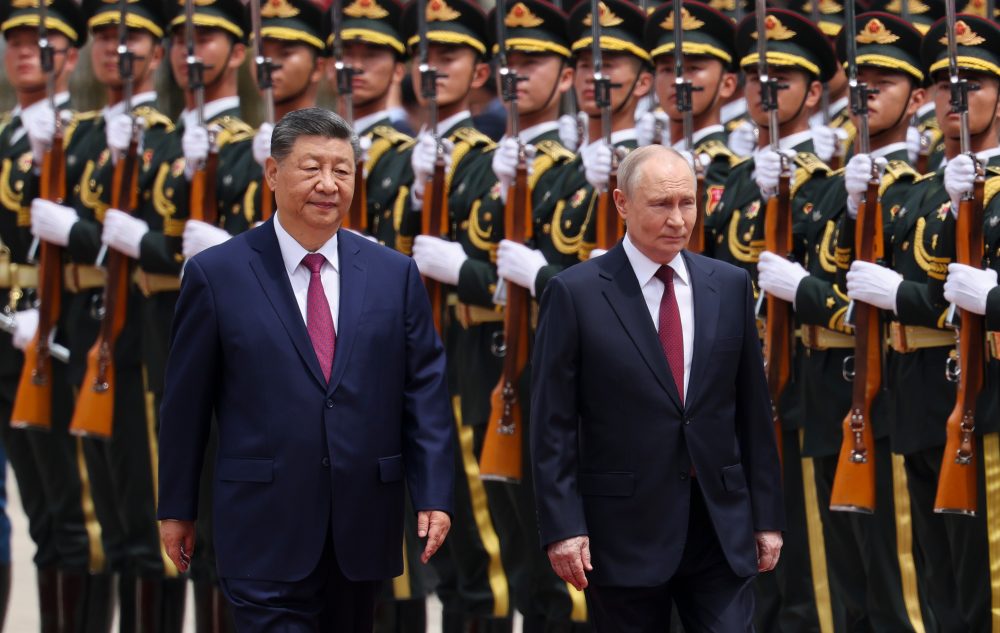
    “If they don’t do something by Tuesday evening, they won’t have any power plants and they won’t have any bridges standing,” Trump stated during his conversation with the Journal.

    Following the interview, Trump posted a cryptic message on social media that read: “Tuesday, 8:00 P.M. Eastern Time!” The post made no reference to Iran or provided additional context. White House representatives were unavailable for immediate comment regarding the social media message.
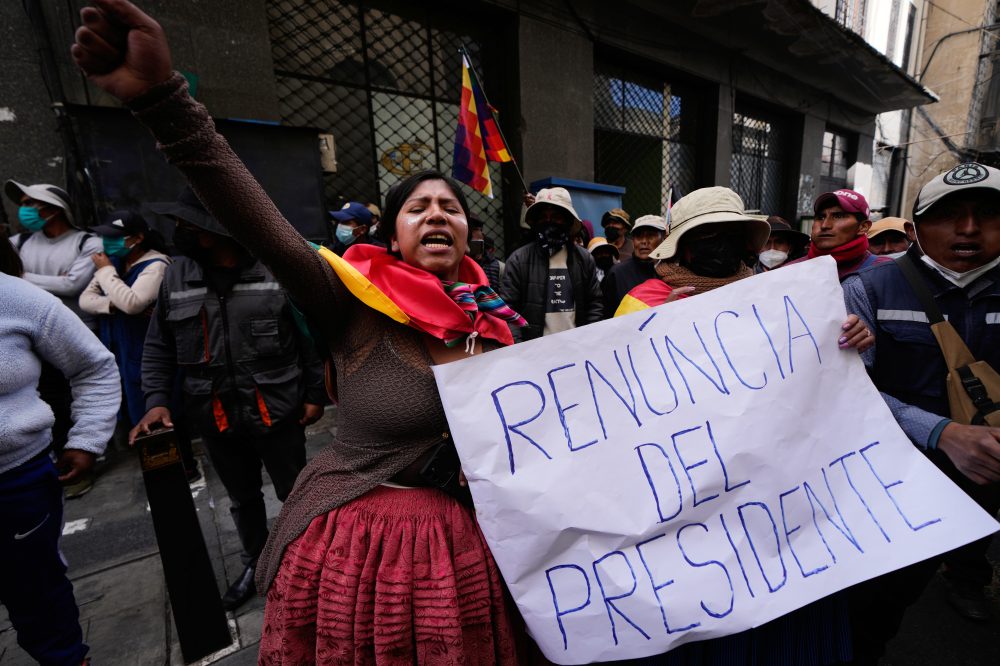
    Earlier on Sunday, Trump had previously indicated that Iran would face infrastructure strikes if the strait remained closed past Tuesday, though he had not specified an exact time until the Journal interview.

  • Russia Calls on US to Drop Ultimatum Approach Toward Iran

    Russia Calls on US to Drop Ultimatum Approach Toward Iran

    Moscow called on Washington Sunday to drop its confrontational approach toward Iran and pursue diplomatic dialogue instead, following discussions between top Russian and Iranian officials.

    The Russian Foreign Ministry released the statement after Russian Foreign Minister Sergei Lavrov spoke with his Iranian counterpart Abbas Araqchi about ongoing tensions in the region.

    According to the ministry, both nations “called for efforts to avoid actions, including in the U.N. Security Council, that could undermine the remaining chances for advancing political and diplomatic efforts to resolve the crisis.”

    Moscow voiced support for reducing regional tensions “in the interests of long-term and sustainable normalisation of the situation in the Middle East, which would be facilitated by the United States abandoning the language of ultimatums and returning the situation to a negotiating track.”

    The Russian statement comes amid heightened tensions between the United States and Iran, with Moscow positioning itself as an advocate for diplomatic solutions over confrontational rhetoric.

  • UK Prime Minister Criticizes Kanye West Festival Booking After Antisemitic Comments

    UK Prime Minister Criticizes Kanye West Festival Booking After Antisemitic Comments

    Growing opposition emerged Sunday against rapper Kanye West’s scheduled headlining performance at a major London music festival, with British Prime Minister Keir Starmer voicing strong criticism of the booking.

    Pepsi has already pulled its lead sponsorship from the Wireless Festival scheduled for July 10-12 at Finsbury Park in north London. Advocates are now calling on additional sponsors, including Budweiser and PayPal, to withdraw their support as well.

    The beverage company offered no specific explanation for ending its partnership with the event, despite promotional materials advertising the festival as “Pepsi presents Wireless.”

    “Pepsi has decided to withdraw its sponsorship of Wireless Festival,” the company stated Sunday.

    The controversial artist, who legally changed his name to Ye in 2021, was set to perform for approximately 150,000 festival attendees across three nights.

    West has faced widespread condemnation in recent years for making antisemitic statements and expressing praise for Adolf Hitler. In the past year, he released a track titled “Heil Hitler” and advertised Nazi swastika merchandise on his website.

    The 48-year-old performer issued an apology in January through a full-page advertisement in the Wall Street Journal, attributing his behavior to his bipolar disorder. He described experiencing “a four-month long, manic episode of psychotic, paranoid and impulsive behavior that destroyed my life.”

    At a sold-out Los Angeles performance Friday at SoFi Stadium – his first major U.S. show in nearly five years – fans seemed willing to overlook his controversial statements and accept his January apology.

    However, Prime Minister Starmer expressed serious concerns about the festival booking decision.

    “Antisemitism in any form is abhorrent and must be confronted clearly and firmly wherever it appears,” Starmer told The Sun on Sunday newspaper. “Everyone has a responsibility to ensure Britain is a place where Jewish people feel safe and secure.”

    The controversy comes amid rising antisemitic incidents across the United Kingdom.

    On Saturday, authorities ordered two men and a teenage boy to remain in jail on charges related to setting fire to four ambulances operated by a Jewish community organization in northwest London. Additionally, two people were killed in an October attack at a Manchester synagogue.

    Phil Rosenberg, who leads the board of deputies of British Jews, called the decision to book West “absolutely the wrong decision.”

    Festival organizers did not respond to requests for comment.

  • Tragic Easter Event: Tree Crushes Family During German Egg Hunt, Killing 3

    Tragic Easter Event: Tree Crushes Family During German Egg Hunt, Killing 3

    FRANKFURT, Germany — A devastating accident during an Easter celebration in northern Germany has claimed three lives, including an infant, after powerful winds caused a massive tree to crash down on participants.

    The tragedy unfolded around 11 a.m. Sunday near Satrupholm when a towering 100-foot tree collapsed onto a group enjoying an Easter egg hunt. Approximately 50 people from a local residential center that assists expectant mothers, new parents, and children were participating in the woodland event when disaster struck.

    Emergency responders found four individuals trapped beneath the fallen tree. Two victims — a 21-year-old woman and a 16-year-old girl — received immediate medical attention but succumbed to their injuries at the location. The young woman’s 10-month-old daughter was rushed to a medical facility but later died from her injuries. An 18-year-old woman sustained severe injuries and was airlifted to a hospital for treatment.

    The residential facility operates under state funding as part of Germany’s child welfare network, providing support services for pregnant women and mothers requiring assistance, according to facility information.

    Mental health professionals were dispatched to provide counseling services following the incident. News photographs from the location revealed colorful Easter eggs strewn across the ground and emergency personnel covering two victims with white coverings.

    German meteorological services had issued advisories warning of dangerous wind conditions in the area prior to the accident.

    Leadership from the Schleswig-Holstein region expressed their shock over the incident. Regional Governor Daniel Günther, Interior Minister Magdalena Finke, and Youth and Families Minister Aminata Touré released a collective statement saying they were “deeply shaken” by the tragedy.

    “Our thoughts are with the family members of the dead, with the injured, and with everyone who had to experience this terrible occurrence,” the officials stated through the dpa news agency.

  • Hamas Military Wing Rejects Any Calls for Disarmament

    Hamas Military Wing Rejects Any Calls for Disarmament

    The military branch of Hamas announced Sunday that discussions regarding the organization’s weapon surrender represent what they described as continuing efforts against Palestinians.

    During a broadcast statement, a representative from Hamas’ armed division declared the organization would reject such proposals “under any circumstances.” The spokesperson characterized bringing up disarmament in what he termed a “crude manner” as part of what he labeled genocide against Palestinian people.

  • 32 Migrants Rescued, 71 Missing After Boat Capsizes Near Italy

    32 Migrants Rescued, 71 Missing After Boat Capsizes Near Italy

    Commercial vessels operating near Italy’s coastline pulled 32 migrants from the water and recovered two bodies during Easter weekend after their boat capsized while attempting the dangerous journey from Libya to Europe, according to rescue organizations.

    The survivors and victims were handed over to Italian coast guard officials and transported to Lampedusa island, rescue groups Mediterranea Saving Humans and Sea-Watch reported.

    Italy’s interior ministry declined to comment on the incident, while the Italian Coast Guard has not yet responded to inquiries. Easter Sunday is observed as a significant religious holiday throughout Italy.

    According to statements from those rescued, the vessel initially carried 105 people before 71 went missing during the crossing, the humanitarian organizations stated.

    Footage released by Sea-Watch captured approximately twelve individuals holding onto an overturned orange vessel as a commercial ship approached for rescue operations.

    Harsh weather conditions have created turbulent seas across the Mediterranean region this year, reducing departure attempts from North African shores while creating dangerous situations for those who do attempt the crossing.

    According to the International Organization for Migration (IOM), no fewer than 683 people have perished in the central Mediterranean during 2024, representing one of the deadliest periods since 2014.

  • Trump Confirms Rescue of Two US Pilots Shot Down Over Iran

    Trump Confirms Rescue of Two US Pilots Shot Down Over Iran

    President Donald Trump revealed on Sunday morning that American military forces had successfully retrieved a second aviator who spent nearly 48 hours evading capture in Iranian territory after his aircraft was downed.

    The recovery operation occurred following an intensive manhunt across what military sources describe as Iran’s rugged mountain terrain. Military personnel had already pulled the first crew member to safety on Friday, shortly after their F-15E Strike Eagle went down. This marked the initial American warplane lost to Iranian defensive fire since the conflict began on February 28th between the United States, Israel, and Iran.

    “This is the first time in military memory that two U.S. Pilots have been rescued, separately, deep in Enemy Territory,” Trump posted on his Truth Social platform. “WE WILL NEVER LEAVE AN AMERICAN WARFIGHTER BEHIND!”

    According to Trump’s account, Friday’s retrieval of the initial airman occurred during “broad daylight.” White House officials deliberately withheld confirmation of that successful operation to protect the ongoing search for his fellow crew member, which culminated in Saturday night’s mission extending into early Sunday.

    The nighttime extraction required “dozens of aircraft” equipped with combat weaponry, Trump disclosed. Iranian authorities had offered substantial compensation to anyone who could capture the missing service member.

    American forces maintained constant surveillance of the downed aviator’s position “24 hours a day, and diligently planning for his rescue,” according to Trump’s statement.

    “This brave Warrior was behind enemy lines in the treacherous mountains of Iran, being hunted down by our enemies, who were getting closer and closer by the hour,” the president wrote.

    Trump identified the rescued airman as holding colonel rank and suffering from significant injuries, though he assured the public the officer would be “just fine.” No information was provided regarding the first crew member’s medical status.

    Iranian state television broadcast footage showing dark smoke rising from what officials claimed were destroyed American transport aircraft and two helicopters.

    A regional intelligence source familiar with the operation revealed that mechanical problems forced American military commanders to deploy additional aircraft to complete the rescue mission. The source indicated that U.S. forces destroyed two transport planes they were unable to retrieve due to the equipment failure. The official requested anonymity when discussing the classified operation.

    Iranian media outlets reported Friday that a second American aircraft, identified as an A-10, had crashed after sustaining damage from Iranian forces. U.S. military officials have not provided any updates on that aircraft or its crew members.

  • Easter Sunday Airstrikes Leave 11 Dead in Lebanon Violence

    Easter Sunday Airstrikes Leave 11 Dead in Lebanon Violence

    Lebanese officials reported that Israeli military operations claimed the lives of at least 11 people on Easter Sunday, as violence continued to escalate in the region.

    Seven fatalities occurred in the southern Lebanese village of Kfarhata, where Lebanon’s health ministry confirmed a 4-year-old child was among those killed in the strike. The attack came after Israeli forces had ordered residents to evacuate the area overnight.

    A separate strike targeted the Jnah district of Beirut, resulting in four deaths and leaving 39 people wounded, according to ministry officials.

    The violence unfolded as Lebanese Christians, representing approximately one-third of the nation’s population, observed Easter Sunday celebrations. The day became one of the deadliest since hostilities intensified in early March.

    Residents of Beirut reported hearing constant sounds of explosions and military aircraft throughout the day. State media documented eight separate strikes hitting the capital’s southern suburbs.

    Lebanese military officials also confirmed that one of their soldiers was killed in an Israeli operation in the country’s south earlier Sunday.

    The previous day, Israeli forces had issued evacuation warnings for the Masnaa border crossing with Syria, Lebanon’s primary connection point with its neighbor. Military officials claimed the Iranian-backed Hezbollah organization was using the crossing for military activities.

    The current conflict began on March 2 when Hezbollah initiated rocket attacks against Israel in solidarity with Tehran. Israel responded with strikes and ground operations in southern Lebanon, creating what officials describe as the most significant regional escalation of the broader Middle East crisis.

    Casualty figures have mounted on both sides. Sources indicate that over 400 Hezbollah fighters have been killed through late March, while Israeli military reports show at least 10 of their troops have died in southern Lebanon operations.

    Lebanese health authorities updated their casualty count Sunday, reporting that Israeli attacks have killed 1,461 people since the conflict began, representing an increase of 39 deaths in approximately 24 hours. More than one million Lebanese have been forced from their homes.

    Israeli officials have announced plans to establish a “security zone” extending up to 30 kilometers into Lebanese territory. Evacuation orders now cover roughly 15 percent of Lebanon’s land area.

    Despite the warnings, tens of thousands of Lebanese citizens have chosen to remain in their homes in the south, including approximately 9,000 Lebanese Christians living in border communities who have expressed their determination to stay.

  • Chinese Foreign Minister Pledges Cooperation with Russia on Middle East Crisis

    Chinese Foreign Minister Pledges Cooperation with Russia on Middle East Crisis

    BEIJING – Chinese Foreign Minister Wang Yi expressed his nation’s commitment to working alongside Russia through the United Nations Security Council to help reduce escalating tensions across the Middle East region, according to a Sunday report from China’s state news agency Xinhua.

    During a telephone conversation with Russian Foreign Minister Sergei Lavrov, Wang emphasized that achieving an immediate ceasefire represents the most effective approach to resolving shipping challenges in the strategically important Strait of Hormuz. Wang reiterated China’s longstanding position favoring diplomatic solutions and peaceful negotiations to address international conflicts.

    The diplomatic exchange between the two foreign ministers occurred in advance of an upcoming United Nations Security Council decision on a resolution proposed by Bahrain aimed at safeguarding commercial vessels operating in and around the vital Strait of Hormuz waterway.

  • Democratic Republic of Congo Agrees to Accept US Deportees in New Partnership

    Democratic Republic of Congo Agrees to Accept US Deportees in New Partnership

    KINSHASA, Congo (AP) — The Democratic Republic of Congo has announced a new partnership with the Trump administration to accept migrants through a third-country deportation program, making it the latest African nation to participate in such an arrangement.

    According to a statement from the Congolese Ministry of Communications released Sunday, deportees are scheduled to begin arriving in the country this month. Officials did not specify exact dates or provide details about how many individuals are expected to arrive.

    The ministry characterized the agreement as a short-term arrangement that demonstrates Congo’s “commitment to human dignity and international solidarity.” Under the terms of the deal, the United States will handle all logistical expenses, ensuring no financial burden falls on the Congolese government.

    This partnership expands the Trump administration’s third-country deportation network to include at least eight African nations. Many of these countries have been significantly affected by recent U.S. policies that have limited trade relationships, foreign aid, and migration opportunities.

    Recent findings from Democratic staff members of the Senate Foreign Relations Committee reveal that the Trump administration has allocated approximately $40 million to deport roughly 300 migrants to nations other than their countries of origin.

    Legal experts and advocacy groups have expressed concerns about the nature of these international agreements, particularly those involving African nations. Several participating countries, including Eswatini, South Sudan, and Equatorial Guinea, have documented histories of authoritarian governance and problematic human rights practices.

    A significant point of controversy surrounding these deportation agreements involves migrants who have received protection orders from U.S. immigration courts, specifically prohibiting their return to their home countries due to serious safety risks.

    Congolese officials emphasized that deportees will not be automatically transferred, stating: “Each situation will be subject to individual review in accordance with the laws of the Republic and national security requirements.”

  • Ukraine’s Zelenskyy Makes First Trip to Syria for Defense Talks

    Ukraine’s Zelenskyy Makes First Trip to Syria for Defense Talks

    Ukrainian President Volodymyr Zelenskyy traveled to Syria on Sunday for his first-ever visit to the country, where he conducted talks with Syrian President Ahmed al-Sharaa, according to two Syrian officials who spoke to Reuters on April 5.

    A Syrian government adviser indicated that the discussions centered on defense-related issues in the context of the broader regional conflict affecting the area.

  • Royal Family Celebrates Easter at Windsor Without Prince Andrew

    Royal Family Celebrates Easter at Windsor Without Prince Andrew

    Members of Britain’s Royal Family gathered at Windsor Castle on Sunday for their annual Easter celebration, though several notable family members were missing from the traditional service.

    King Charles and Queen Camilla led the Easter Matins ceremony at St. George’s Chapel, accompanied by Prince William, his wife Catherine, and their three children. The service represents a significant event for the monarch, who serves as the supreme governor of the Church of England.

    Dean of Windsor Christopher Cocksworth welcomed the royal couple upon their arrival for the morning service. Queen Camilla, dressed in a striking red hat and matching coat, was presented with a small bouquet of flowers during the festivities.

    Following the conclusion of the religious ceremony, both Charles and Camilla greeted well-wishers in the crowd, exchanging “Happy Easter” wishes with attendees.

    Prince Edward and Anne, the Princess Royal, along with other royal family members, also participated in Sunday’s service.

    Notably missing from this year’s Easter gathering was the King’s younger brother, Andrew Mountbatten-Windsor, who had participated in the previous year’s celebration alongside his former wife Sarah Ferguson. Andrew was taken into police custody in February on allegations of misconduct in public office.

    His daughters, Princesses Beatrice and Eugenie, also chose not to attend Sunday’s service. According to a royal source who spoke last week, the princesses made their own decision to skip the event, rather than being excluded by King Charles.

    The King chose not to issue an Easter message this year. On Saturday, relatives of Jeffrey Epstein accuser Virginia Giuffre called upon Charles to meet with survivors during his upcoming state visit to the United States, noting the timing coincides with the anniversary of her passing.

    Giuffre had previously alleged that the deceased American financier Epstein had trafficked her to Mountbatten-Windsor when she was 17 years old.

    The former prince, who has consistently denied these accusations and stated he has no memory of encountering Giuffre, reached a financial settlement with her in 2022 while not acknowledging any wrongdoing.

    In related church news, Sarah Mullally, who serves as the archbishop of Canterbury and is the first woman to lead the Church of England, delivered her inaugural Easter sermon at Canterbury Cathedral on Sunday.

  • Stanford Law Professor Weighs In on Letter Claiming Iran Conflict Breaks UN Rules

    Stanford Law Professor Weighs In on Letter Claiming Iran Conflict Breaks UN Rules

    A Stanford University legal scholar provided analysis on international law questions surrounding an open letter that characterizes military conflict with Iran as breaching United Nations charter provisions.

    Allen Weiner, who works with Stanford’s Program in International and Comparative Law, spoke with NPR’s Ayesha Rascoe about the legal implications of the letter and broader questions of international law governing such conflicts.

    The discussion focused on how international legal frameworks apply to current military actions and what role UN charter provisions play in determining the legitimacy of international conflicts.

  • American Pilot Successfully Rescued After Fighter Jet Downed Over Iran

    American Pilot Successfully Rescued After Fighter Jet Downed Over Iran

    WASHINGTON — American military forces successfully retrieved a service member who had been stranded in Iranian territory following the downing of their fighter aircraft, officials announced Sunday. The rescue comes as President Donald Trump has issued fresh ultimatums to Tehran demanding the reopening of the Strait of Hormuz.

    Tehran continues to show defiance, launching attacks against economic and infrastructure facilities in nearby Gulf Arab nations.

    The successful extraction concluded a U.S. search-and-rescue mission that began after an F-15E Strike Eagle went down on Friday in Iranian territory. Iranian officials had offered bounties for capturing any “enemy pilot.” According to Trump, the rescued aviator sustained injuries but remains in stable condition.

    “This brave Warrior was behind enemy lines in the treacherous mountains of Iran, being hunted down by our enemies, who were getting closer and closer by the hour,” Trump wrote on social media.

    Military officials had previously rescued a second crew member from the same aircraft.

    The downed fighter represents the first American military aircraft to crash within Iranian borders since U.S. and Israeli forces initiated their military campaign against Iran on February 28.

    Trump declared last week that American forces would conclude the conflict “very fast.” However, just two days afterward, Iranian forces successfully shot down two U.S. military aircraft, demonstrating both the continued dangers of the air campaign and Iran’s capacity to retaliate despite military setbacks.

    With Iran maintaining its grip on the Strait of Hormuz, Trump issued weekend social media warnings threatening to unleash “all Hell” unless the waterway reopens by Monday. The president has made similar threats previously, extending deadlines when mediators claimed progress toward a negotiated settlement.

    The second aircraft lost was a U.S. A-10 attack plane. Details about the crew’s condition and the exact crash location remain unclear.

    Iranian state television broadcast footage Sunday showing what officials claimed were fragments of American aircraft destroyed by Iranian forces, accompanied by images of dense black smoke billowing skyward. The network reported that Iranian forces had shot down an American transport aircraft and two helicopters participating in the rescue mission.

    A regional intelligence source familiar with the operation told The Associated Press that U.S. military personnel destroyed two transport planes due to mechanical failures, requiring additional aircraft to complete the rescue operation.

    The source requested anonymity when discussing the classified mission.

    Iranian drone strikes targeted infrastructure and economic facilities across Gulf nations. In Kuwait, the attacks severely damaged power generation facilities and a petrochemical complex, while also disabling a water desalination facility, according to the Ministry of Electricity. Officials reported no casualties from these strikes.

    Bahrain experienced drone attacks that ignited fires at a national oil company storage facility and a government-operated petrochemical plant, the kingdom’s official news service reported.

    United Arab Emirates officials responded to multiple fires at the Borouge petrochemicals facility, which they attributed to intercepted debris from Iranian attacks. Operations at the Ruwais plant, located near the UAE’s western border with Saudi Arabia, have been suspended.

    These retaliatory strikes followed Israel’s attack on an Iranian petrochemical facility that Prime Minister Benjamin Netanyahu claimed generated funds used to finance the ongoing conflict.

    The petrochemical sector represents a crucial economic component for many Gulf nations. Facilities in Bahrain, the UAE, and Iran process oil and gas into products including plastics, polymers, and fertilizers, generating billions in export income.

    Trump reiterated his demands for Iran to reopen the Strait of Hormuz by Monday or face severe retaliation, posting Saturday on social media: “Remember when I gave Iran ten days to MAKE A DEAL or OPEN UP THE HORMUZ STRAIT. Time is running out — 48 hours before all Hell will reign down on them.”

    The strategic waterway serves as a vital passage for global energy shipments, particularly oil and gas exports from the Persian Gulf to European and Asian markets. Disruptions in this area have created market instability and forced oil and gas-importing nations to pursue alternative supply sources.

    Pakistan’s Foreign Ministry spokesperson Tahir Andrabi informed the AP that his government’s ceasefire mediation efforts remain “right on track” following Islamabad’s announcement last week about hosting upcoming discussions between American and Iranian representatives.

    Officials from Pakistan, Turkey, and Egypt are collaborating to facilitate negotiations between the United States and Iran, according to two regional sources.

    The potential agreement includes halting hostilities to enable diplomatic resolution, according to a regional official participating in the mediation efforts and a Gulf diplomat briefed on the discussions. Both sources spoke anonymously to discuss confidential diplomatic activities.

  • Grain Ship Sinks in Sea of Azov, Killing One Crew Member

    Grain Ship Sinks in Sea of Azov, Killing One Crew Member

    A grain-carrying cargo vessel has gone down in the Sea of Azov, resulting in one fatality and leaving two crew members unaccounted for, according to a Russian-appointed official’s announcement Sunday on the Telegram platform.

    Vladimir Saldo, the Moscow-appointed administrator for Russian-occupied areas of Ukraine’s Kherson region, reported that nine crew members successfully reached the shoreline and survived the incident. All survivors are Russian citizens, Saldo confirmed.

    The official stated that an assistant to the ship’s captain perished in the maritime disaster, while two individuals remain missing. Saldo indicated that authorities have launched an investigation to determine the cause of the sinking.

  • Lebanese Military Reports Soldier Death in Israeli Strike

    Lebanese Military Reports Soldier Death in Israeli Strike

    Lebanon’s armed forces announced Sunday that one of their personnel was fatally wounded during an Israeli military operation targeting the southern portion of the country.

    The military confirmed the soldier’s death following the strike, though additional details about the circumstances surrounding the incident were not immediately provided.

    The reported fatality represents the latest development in ongoing tensions between the neighboring nations along their shared border region.

  • Sweden Frees EU-Sanctioned Oil Tanker After Baltic Sea Spill Investigation

    Sweden Frees EU-Sanctioned Oil Tanker After Baltic Sea Spill Investigation

    Swedish maritime officials have freed an oil tanker that faces European Union sanctions after determining there wasn’t enough proof the vessel caused an environmental disaster in Baltic waters.

    Coast guard representatives announced they couldn’t establish adequate evidence linking the Flora 1 tanker to an 8-mile oil slick found last Thursday in the Baltic Sea.

    Officials also confirmed that Cameroon verified the ship operated under their national flag, which remained uncertain when maritime authorities stopped the vessel and its 24 crew members on Friday, according to coast guard statements.

    European Union officials placed the Flora 1 on their sanctions registry for transporting Russian petroleum while “practicing irregular and high-risk shipping practices.” These dangerous operations can involve disabling automatic tracking systems that broadcast vessel locations to nearby ships.

    The penalties target what officials call a “shadow fleet” that developed following price restrictions on Russian petroleum implemented by the Group of Seven democratic nations to reduce funding for Russia’s Ukrainian military campaign. These restrictions work by preventing insurance and shipping companies from handling oil above the established price limit.

    This maritime network consists of older tankers with ownership and insurance based in nations that ignore the price restrictions. The advanced age of these vessels and their lack of Western insurance coverage has created safety worries about potential spills and responsibility for cleanup costs.

    According to Ukrainian government records, a Hong Kong corporation owned the Flora 1 as of late 2025, and the vessel also faces sanctions from Britain, Canada, Australia, Switzerland, and New Zealand. The ship has switched names six times and changed flag countries nine times. Maritime observers have documented the vessel disabling its automatic tracking system to conceal its whereabouts and conducting ship-to-ship transfers that can mask oil cargo origins.

    Current sanctions prohibit any business dealings with the designated vessels.

  • Israel Assisted US in Rescuing Stranded American Airman from Iran

    Israel Assisted US in Rescuing Stranded American Airman from Iran

    An Israeli security official disclosed on April 5th that Israel contributed intelligence support to assist American forces in retrieving a U.S. airman who became stranded in Iran. According to the official, Israel also temporarily suspended its military operations in the region to ensure the rescue effort could be carried out successfully.

    The cooperation between the two allies highlights the coordination that takes place behind the scenes during sensitive military operations in the Middle East. The Israeli official confirmed that the country’s intelligence services played a supporting role in helping American personnel safely extract their fellow serviceman from Iranian territory.

  • China Executes French National After 20 Years on Death Row for Drug Crimes

    China Executes French National After 20 Years on Death Row for Drug Crimes

    BEIJING – Chinese officials confirmed Sunday they executed a French national who had been on death row since 2010 for drug trafficking offenses, defending their judicial process amid criticism from France regarding the handling of the case.

    The Chinese embassy in France issued a statement about the execution of 62-year-old Chan Thao Phoumy, who had served 20 years behind bars before his death sentence was carried out.

    French foreign ministry officials expressed disappointment Saturday, stating they “particularly regretted” that Chan’s legal representatives were barred from attending the court’s final proceedings, which they said violated his legal rights.

    As one of the nations with the harshest penalties for drug-related crimes worldwide, China has previously executed foreign nationals found guilty of smuggling substantial quantities of narcotics across its borders, though the government does not publicly release execution data.

    Chan, who was born in Guangzhou in southern China but later became a naturalized French citizen, was among 89 individuals taken into custody in 2005 on drug trafficking charges. He initially received a life sentence in 2007.

    A court in his birth city upgraded his sentence to death in 2010 due to his involvement in a drug enterprise valued at 100 million yuan (approximately $15 million) that manufactured, transported and distributed large quantities of crystal methamphetamine throughout China.

    While China’s legal system allows for capital punishment when defendants are caught with as little as 50 grams of heroin or methamphetamine, executions typically occur in cases involving significantly larger trafficking operations.

  • Italian Ambassador Heading Back to Switzerland After Diplomatic Dispute

    Italian Ambassador Heading Back to Switzerland After Diplomatic Dispute

    ZURICH – Switzerland’s foreign ministry announced that Italy’s diplomatic representative will resume his duties in the country following a diplomatic standoff that lasted several months.

    Ambassador Gian Lorenzo Cornado is scheduled to arrive in Bern on Monday, according to Swiss officials. His return comes after Italy withdrew him from his position in January as a formal protest against how Swiss authorities managed the aftermath of a catastrophic nightclub fire.

    The deadly blaze occurred on New Year’s Day at a drinking establishment in the mountain resort town of Crans-Montana, claiming the lives of 41 individuals. Among the victims were six Italian citizens. The tragedy ranks among Switzerland’s most devastating disasters in recent decades.

    Italian officials expressed strong objections when Swiss authorities decided to release the establishment’s owner on bail, prompting Rome to recall its ambassador as a diplomatic protest. The move highlighted tensions between the neighboring countries over the handling of the investigation and legal proceedings.

  • DRC Agrees to Accept US Deportees from Other Nations Under Trump Deal

    DRC Agrees to Accept US Deportees from Other Nations Under Trump Deal

    The Democratic Republic of Congo announced Sunday it has reached an agreement with the Trump administration to accept individuals being deported from the United States who are not Congolese nationals.

    Officials in Kinshasa released a statement confirming the arrangement, which would see the Central African nation receive third-country nationals removed from U.S. territory under the new partnership deal.

    The announcement marks a significant development in U.S. immigration policy, as the agreement provides an alternative destination for deportees who may not be accepted by their countries of origin.

  • Fire Forces Evacuation of Moscow Military Academy, 100 People Safely Removed

    Fire Forces Evacuation of Moscow Military Academy, 100 People Safely Removed

    Emergency crews successfully evacuated approximately 100 individuals from a military academy in Moscow after a fire broke out at the facility on Sunday, according to reports from Russian news agency TASS citing local officials.

    Preliminary reports indicate that all personnel were safely removed from the structure with no one remaining inside during the incident.

    A defense ministry representative told TASS that the blaze originated from an electrical short circuit that occurred at approximately 11:22 a.m. local time (8:22 a.m. GMT).

  • Hungarian Leader Reports Explosives Discovered at Serbia Gas Pipeline

    Hungarian Leader Reports Explosives Discovered at Serbia Gas Pipeline

    Hungarian Prime Minister Viktor Orban revealed Sunday that Serbian authorities discovered explosive devices at a crucial gas pipeline facility that connects Hungary and Serbia.

    The Hungarian leader disclosed the information after speaking by phone with Serbian President Aleksandar Vucic about the security incident. Orban, who maintains a close political relationship with Vucic and is preparing for elections on April 12, shared details of the discovery through a social media announcement.

    “Serbian authorities have found destructive explosives and the equipment needed for activation at the critical gas infrastructure connecting Serbia and Hungary. An investigation is underway. I have called an extraordinary defense council this afternoon,” Orban stated in his Facebook post.

    The discovery prompted Orban to immediately schedule an emergency defense council meeting for Sunday afternoon as authorities work to determine the circumstances surrounding the explosive materials found at the strategic energy infrastructure.