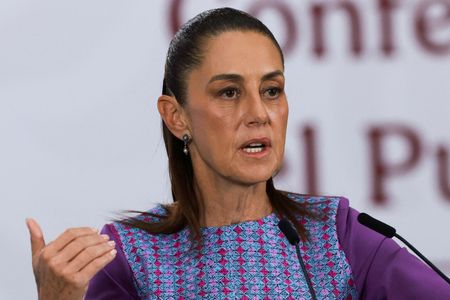

Mexican President Claudia Sheinbaum has instructed members of her ruling Morena party to step down from their positions if they have connections to corrupt activities, two party sources revealed to Reuters.
The directive was communicated during a gathering with Morena governors at the National Palace last Thursday, the sources indicated. One week earlier on May 7, she conveyed the same message to party lawmakers during a separate meeting.
Both the presidency and Morena declined to respond to requests for comment.
“The ultimatum was that if they are involved in anything shady, they must resign and face the consequences,” said one of the Morena sources, who spoke to Reuters on the condition of anonymity because the meeting was private. Sheinbaum did not mention names nor say what action would be taken if officials did not step down, the sources said.
This previously unreported communication to party members represents the most recent development following the significant U.S. indictment announced last month. The charges named Sinaloa State Governor Ruben Rocha and additional current and former officials for their suspected connections to the Sinaloa Cartel.
Publicly, Sheinbaum has denounced the U.S. extradition requests that came with the indictment, claiming they contained inadequate evidence for Mexico to authorize arrest warrants. She has demanded “clear” proof from the U.S. and stated that without it, the accusations seem politically driven.
However, the confidential discussions with Morena indicate Sheinbaum is pursuing a different approach within her own political organization.
Rocha holds significant influence within Morena and maintains close ties to former President Andres Manuel Lopez Obrador, who served as Sheinbaum’s predecessor and mentor. Rocha, who maintains his innocence, has temporarily withdrawn from his duties while a local investigation moves forward.
Reuters had previously documented that the U.S. indictment created divisions within Morena as different groups debate their response strategy. Some factions support shielding Rocha and others from U.S. interference, while another segment pushes for addressing corruption within the party’s membership.
The two party sources indicated growing worry within Morena that the U.S. might employ anti-terrorism legislation to target officials and that Morena could face implications similar to those imposed on various Mexican cartels.
During a routine press conference when questioned about this possibility, Sheinbaum dismissed the concern, stating she perceived “no risk” of Morena receiving designation as a foreign terrorist organization.
However, in private discussions, the sources revealed Sheinbaum has conveyed a different tone, cautioning party officials about potential dangers to Morena and its supporters if corruption accusations persist.
“We must guarantee the future of Morena,” she told her party members.
Sheinbaum is scheduled to meet with Department of Homeland Security Secretary Markwayne Mullin on Thursday as diplomatic tensions between the two nations continue rising.
The death of two U.S. officials in a vehicle accident in northern Mexico last month created a diplomatic dispute regarding their presence while traveling with a Mexican security convoy returning from a drug laboratory raid. Sources informed Reuters the U.S. officials were CIA officers.
The involvement of U.S. personnel in anti-cartel activities remains an extremely sensitive issue in Mexico. Sheinbaum has consistently stated her support for intelligence cooperation and security collaboration but refuses to permit U.S. agents or military forces to participate in operations within Mexican borders.
In comparison, U.S. President Donald Trump has consistently advocated for expanded use of U.S. military resources against Mexican cartels and has warned that the U.S. might act independently if Washington determines Mexico’s efforts are insufficient.
As tensions continue, a U.S. Department of State official announced the government has begun reviewing the more than 50 Mexican consulates operating in the United States, a process that could lead to closing some diplomatic facilities.