
An organization established by Cuban exiles called Brothers to the Rescue sits at the core of the U.S. Justice Department’s effort to pursue criminal charges against former Cuban leader Raúl Castro, a development that could resurrect one of the most contentious episodes in the nations’ troubled history spanning decades.
According to a source with knowledge of the probe who spoke to The Associated Press, the possible charges relate to Castro’s suspected involvement in the 1996 downing of two aircraft flown by the Miami-headquartered exile organization. At that time, Castro served as defense minister, positioning him as the country’s second-highest official behind his brother Fidel.
The source requested anonymity as they lacked permission to speak publicly about an active investigation.
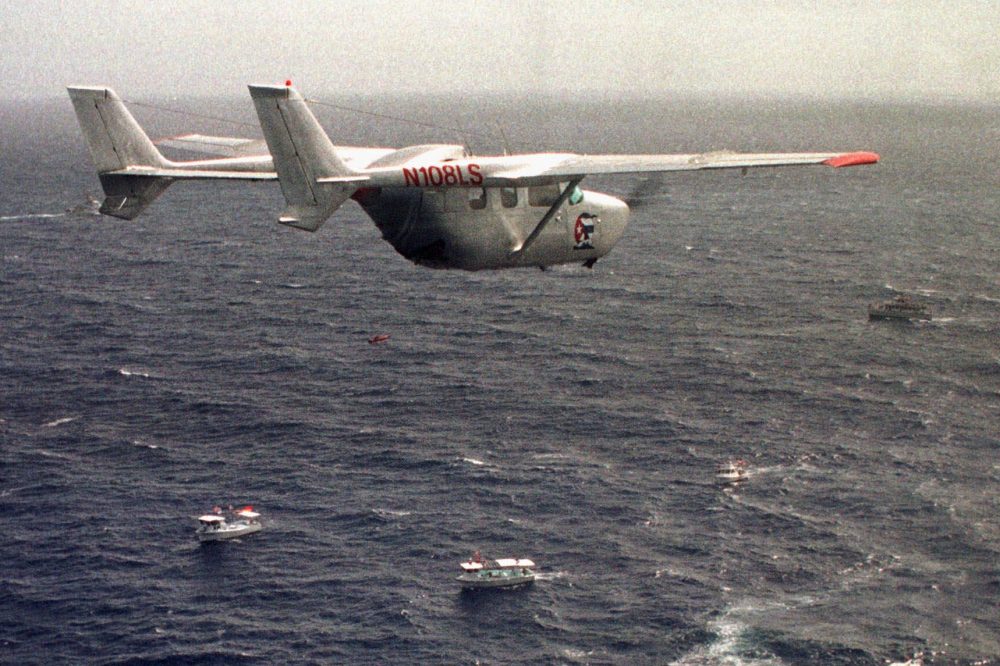
Brothers to the Rescue launched operations in 1980 amid the unexpected exodus of 125,000 Cubans to the United States. Established by emigrant José Basulto, the organization sought to assist Cuban refugees navigating the Florida straits through aerial supply drops and Coast Guard notifications.
The extended crisis started when some Cubans demonstrated against travel limitations enforced by President Fidel Castro’s communist regime, prompting Castro to open Mariel port to departing citizens, resulting in the straits becoming crowded with desperate individuals.
The administration of U.S. President Bill Clinton modified immigration policies to prevent Cubans from attempting the dangerous journey north on unstable, improvised vessels. However, Brothers to the Rescue, alternatively called by its Spanish designation Hermanos al Rescate, persisted in flying near Cuban airspace and antagonizing Havana.
On Feb. 24, 1996, three aircraft transporting Brothers to the Rescue members flew into an area near the 24th parallel, located a brief distance north of Havana and some of Cuba’s most critical installations.
Cuban military aircraft destroyed two of the exiles’ defenseless civilian Cessnas, resulting in the deaths of all four occupants. A third aircraft, transporting the group’s leader, barely avoided the same fate.
American University Cuba expert William LeoGrande and National Security Archive senior researcher Peter Kornbluh stated this week that their 2015 publication, “Back Channel to Cuba: The Hidden History of Negotiations between Washington and Havana,” demonstrates how the Clinton administration’s continuous advisories about provoking Cuba failed to deter Hermanos al Rescate.
“Only after the shootdown did the FAA issue a concrete ‘cease and desist’ order against Basulto for what it called ‘careless or reckless’ operations that ‘endanger the lives or property of others,’” the authors stated.
Given Hermanos al Rescate’s provocation of the Cuban government, the U.S. failure to halt the organization, and the Cuban air force’s attack on civilian aircraft, “there’s no good guys in this story,” LeoGrande observed.
U.S. counterintelligence apprehended five Cuban intelligence operatives who had penetrated Brothers to the Rescue. This narrative was dramatized in the film “The Wasp Network.”
Two of the Cuban operatives completed lengthy prison terms while three were freed through a prisoner swap that preceded former President Barack Obama’s diplomatic opening with Raúl Castro.
Two Cuban fighter pilots and their superior officer who were also charged in connection with the shootdown have stayed beyond U.S. law enforcement jurisdiction while residing in Cuba.
Castro has faced U.S. criminal scrutiny previously. In 1993, federal prosecutors in Miami contemplated charging him and other high-ranking Cuban military leaders with drug trafficking based on Colombian trafficker testimony that surfaced during former Panamanian leader Manuel Noriega’s narcotics trial, the AP reported in 2006.
However, charges were never filed as the Clinton administration expressed foreign policy objections.