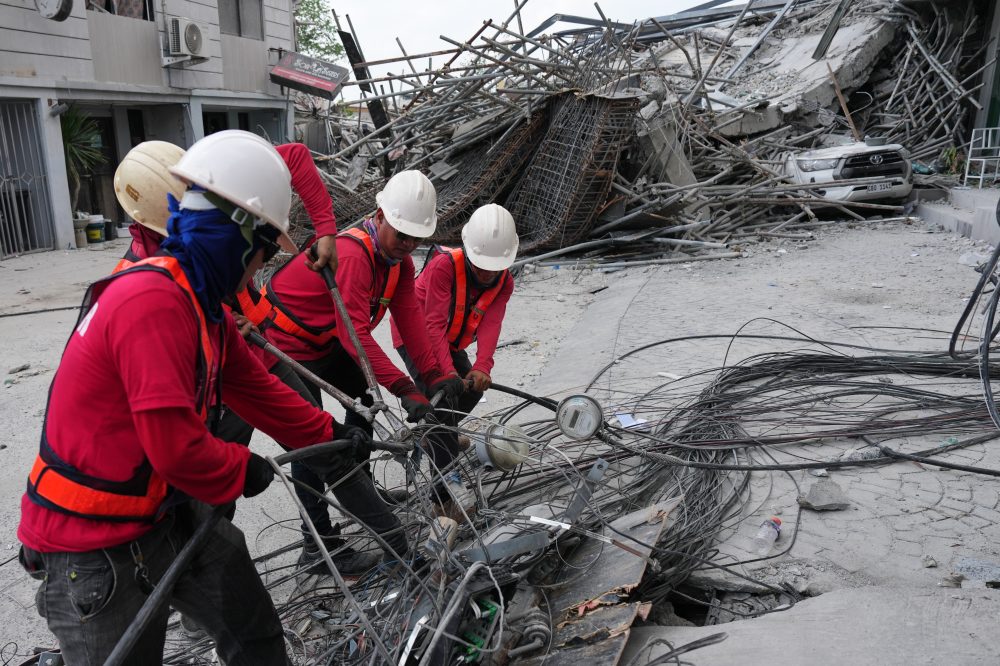
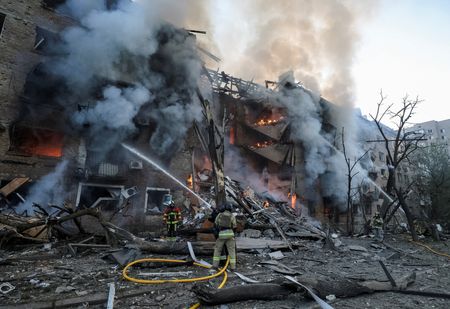
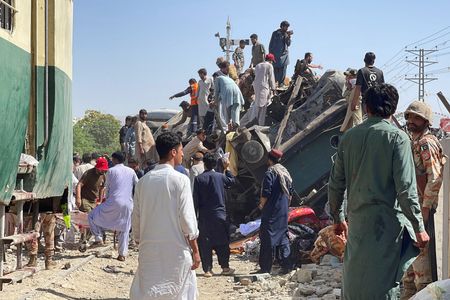
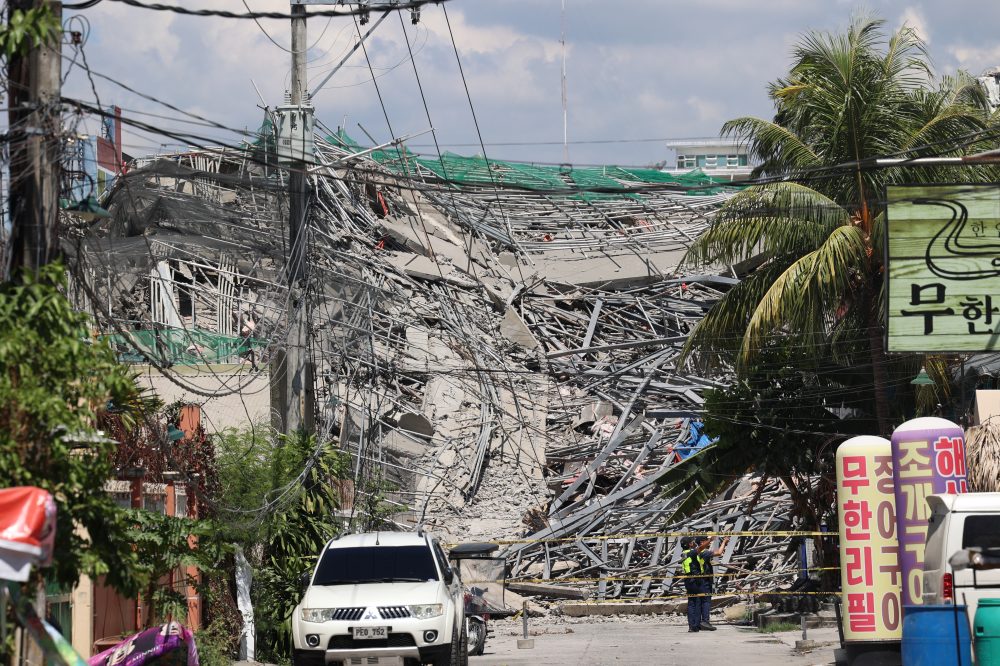
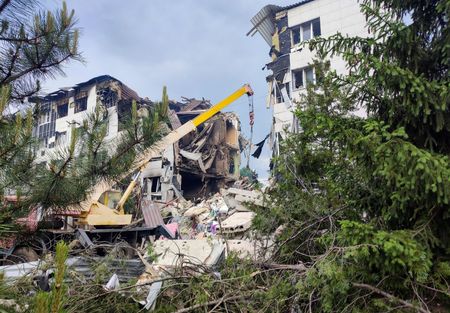
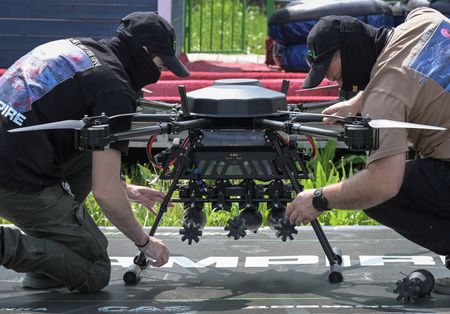
ANGELES, Philippines — Emergency crews recovered two construction workers from the debris of a collapsed nine-story hotel building early Monday morning in a northern Philippine city, raising the fatality count to three while 17 people remain unaccounted for, according to local authorities.
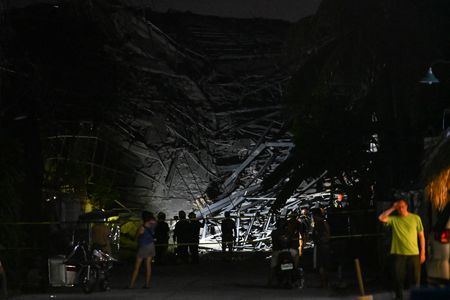
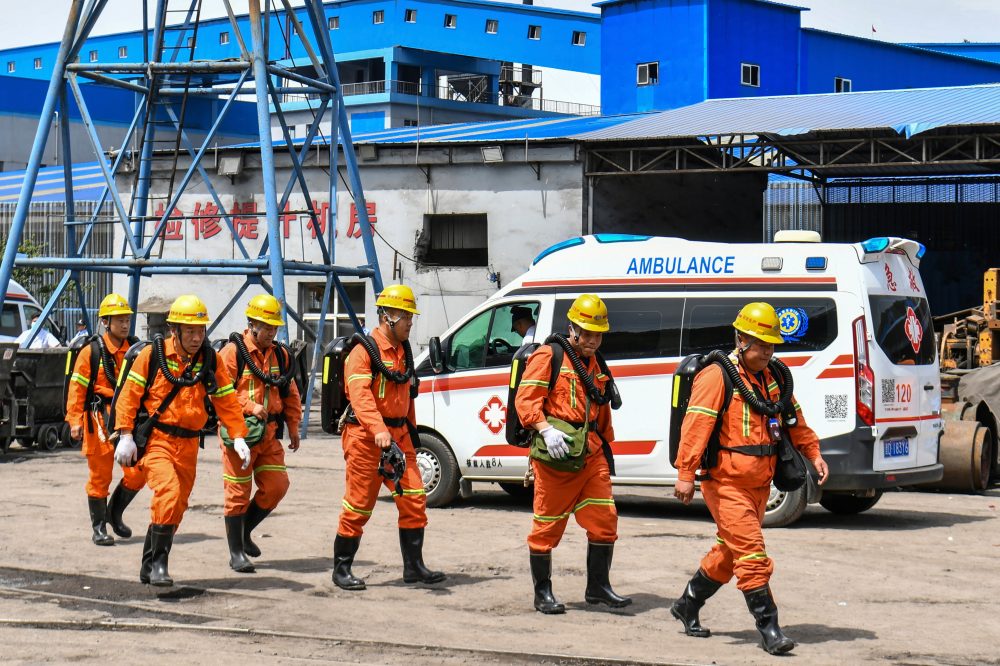
The first worker was found deceased, while rescue teams worked frantically in the pre-dawn hours attempting to save the second worker’s life inside an ambulance positioned near the massive debris field of concrete chunks, mangled steel rods, and twisted aluminum framework that once formed the structure in Angeles City, located in Pampanga Province. Medical personnel ultimately ceased their revival attempts and departed the scene.
This heartbreaking moment unfolded before a small gathering of reporters, including representatives from The Associated Press, who observed as hundreds of emergency responders — primarily firefighters and law enforcement — worked tirelessly for hours to free the two workers, who had been conscious but pinned beneath heavy concrete and metal beams.
Emergency teams attempted to deliver fluids and medications through IV lines to one of the pinned workers amid the wreckage in a frantic bid to sustain him through the intense summer temperatures, regional police chief Brig. Gen. Jess Mendez explained to the AP.
“He never made it despite all the efforts,” he said.
The third fatality involved a Malaysian visitor who had been staying at a nearby budget lodging facility that sustained partial damage from the cascade of falling debris. A second guest at the same establishment suffered injuries but successfully escaped, authorities reported.
Following the thunderous collapse of the incomplete structure after severe storm activity, Angeles City Mayor Carmelo Lazatin announced that search and rescue operations would continue rather than transitioning to body recovery mode.
“My best hope is that we can rescue more people alive,” Lazatin told the AP. “We don’t want to give the families of the trapped workers any bad news.”
Growing distress and concern grip the family members of those still buried, who maintain vigil in temporary shelters erected close to the wreckage site.
“I’m losing hope because of what I see— slow rescue work,” said Lea Mendoza Casilao, a 47-year-old sardine factory worker whose boyfriend, a mason, was among those still trapped in the rubble.
She had delivered a week’s worth of rice and canned fish for him at the job site, but explained they would never have their planned weekend meeting after the structure where he had been resting collapsed in the early Sunday morning hours.
Lazatin explained that rescue personnel were proceeding with extreme caution due to massive concrete sections being supported only by tangled aluminum framework that could potentially fall and endanger the rescue teams.
A total of 26 construction workers either escaped or were successfully extracted from the failing structure, where they had been sleeping on plywood sheets at ground level. Among the 17 workers who remain missing, one has been spotted but rescue teams have not yet been able to reach him, officials confirmed.
National police chief Gen. Jose Melencio Nartatez Jr. announced his department will assist with an “ongoing investigation to determine the cause of the incident and possible violations of safety and building regulations.”
Angeles City previously served as the location for one of America’s most significant Air Force installations beyond the continental United States, transforming Angeles and surrounding communities into major entertainment and business centers within the primary northern Philippine island of Luzon.
Clark Air Base, situated approximately 80 kilometers (50 miles) north of Manila, ceased operations in the early 1990s.
The former military installation has evolved into a thriving industrial and tourist destination known as the Clark Freeport Zone, and remains encircled by vestiges of the American military era including adult entertainment districts, drinking establishments, nightlife venues, tattoo parlors and affordable accommodations.
MELBOURNE, Australia — The leader of Australia’s primary domestic intelligence service testified Monday that he had redirected resources from counterterrorism operations to focus on espionage and foreign interference several years prior to a deadly shooting that claimed 15 lives at a Sydney Hanukkah event.
Mike Burgess, who heads the Australian Security Intelligence Organization known as ASIO, appeared before a comprehensive government investigation examining antisemitism’s growth in Australia leading up to the December 14 attack at Bondi Beach.
The intelligence agency lowered Australia’s National Terrorism Threat Level from “probable” to “possible” in November 2022 — placing it at the second-lowest rating on their five-level system — following the defeat of the Islamic State group in the Middle East and the end of their recruitment efforts.
Following this change, ASIO redirected attention toward foreign interference and espionage cases while maintaining adequate staffing for counterterrorism operations, according to Burgess.
“Because terrorism has the potential to cause people to lose their lives or get harmed, it always remained a priority for us. There was just less activity that we were investigating because the nature of the environment had changed and the number of tasks we were looking at had reduced,” Burgess testified.
“At the same time, every rock we lifted up we found espionage or foreign interference that needed to be inquired and investigated and so resources were moved over there,” he continued.
Following the Hamas-led assault on Israel on October 7, 2023, Burgess said he took the unusual step of issuing a public warning about how inflammatory rhetoric could spark violence — something no previous ASIO director had done.
“Before the Israeli government responded to that horrific attack, we saw the strong emotions appear in this country where we had people celebrating the Hamas terrorist attack,” Burgess stated.
The intelligence chief reported that threatening and intimidating conduct toward Jewish Australians continued through late 2023, especially in New South Wales, Victoria and Queensland. This behavior intensified to include targeting Jewish-owned businesses and religious sites by October 2024, he noted.
ASIO raised Australia’s terrorism threat level back to “probable” in August 2024.
The Royal Commission on Antisemitism and Social Cohesion, Australia’s most authoritative form of investigation, must deliver its findings to the government before the first anniversary of what became the country’s deadliest mass shooting since 1996.
Prosecutors claim the father-and-son shooters, Sajid and Naveed Akram, drew inspiration from IS and carried homemade IS banners to Bondi.
Both attackers sustained injuries during a police confrontation, with the father dying from his wounds, all within eight minutes of the shooting’s start. The son faces charges for terrorist activity, 15 murder counts and 40 attempted murder counts. He has not entered any pleas.
Richard Lancaster, who directs the legal team as Senior Counsel Assisting the Royal Commission, revealed that only four police officers were present when the attackers began firing on approximately 1,000 attendees.
In the first 29 seconds of gunfire, 10 people died and another was injured, Lancaster reported.
Eleven police officers arrived within five minutes, with three sustaining wounds, he added.
The Community Security Group, a Jewish safety organization, had asked the New South Wales Police Force to station officers at the waterfront park throughout the Hanukkah celebration, Lancaster explained. Instead, officers received orders to make periodic visits.
Law enforcement assigned the Hanukkah event the lowest security classification on their three-level system, with a local commander overseeing police deployment, Lancaster said.
In contrast, Jewish High Holy Days in September and October received top-level security status, with the specialized Police Force Major Events Group coordinating with the Police Force Counter Terrorism and Special Tactics Command.
“There is no evidence that any intelligence agency or law enforcement agency had any actual knowledge or specific information to suggest there might be an armed attack on the Hanukkah celebration,” Lancaster testified.
“In that sense, it was a surprise attack,” he concluded.
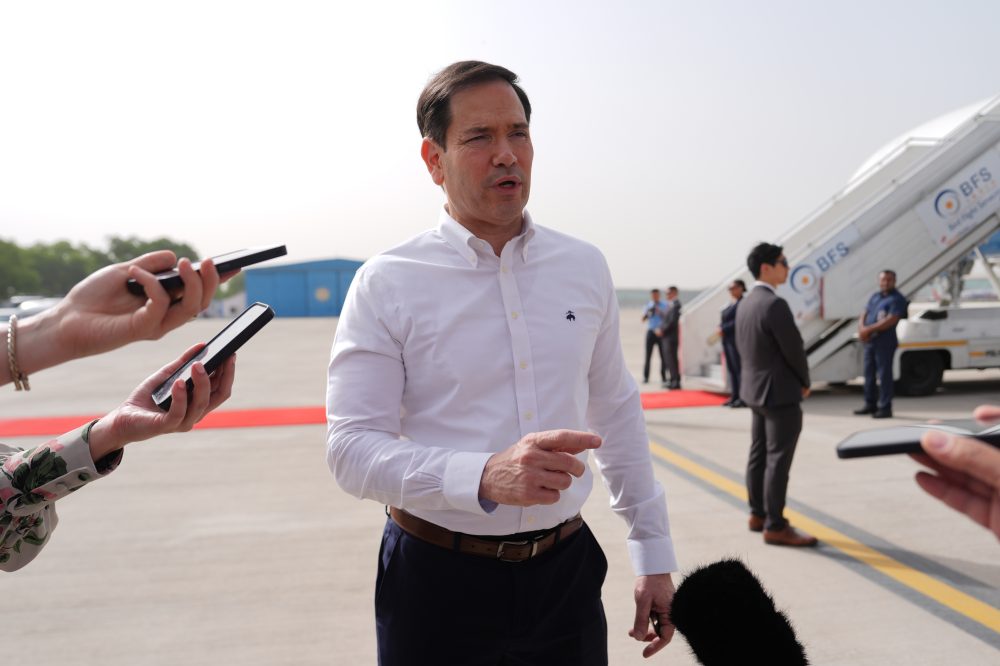
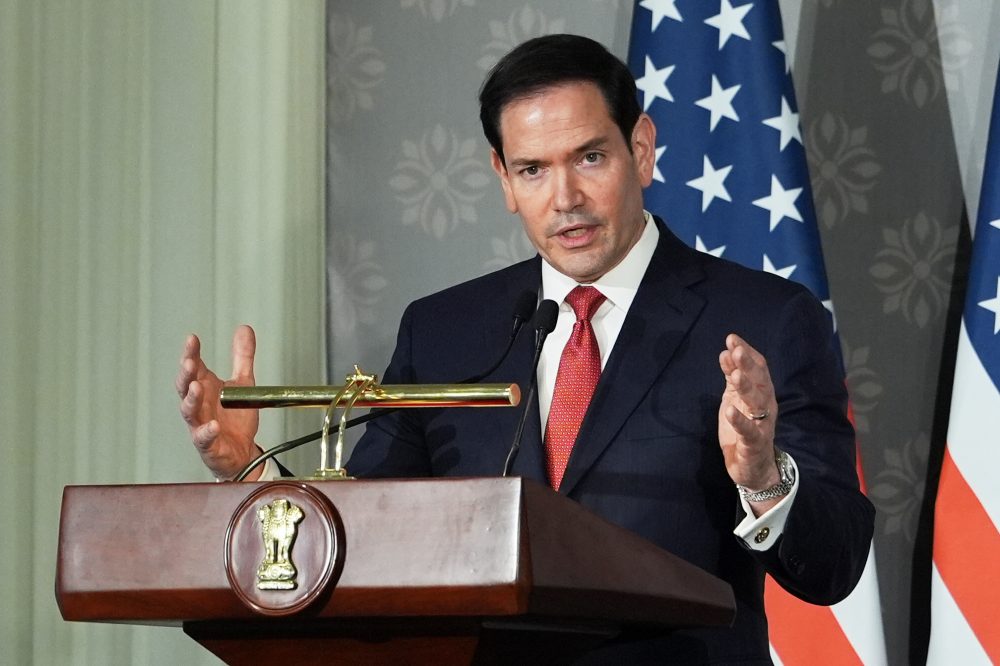
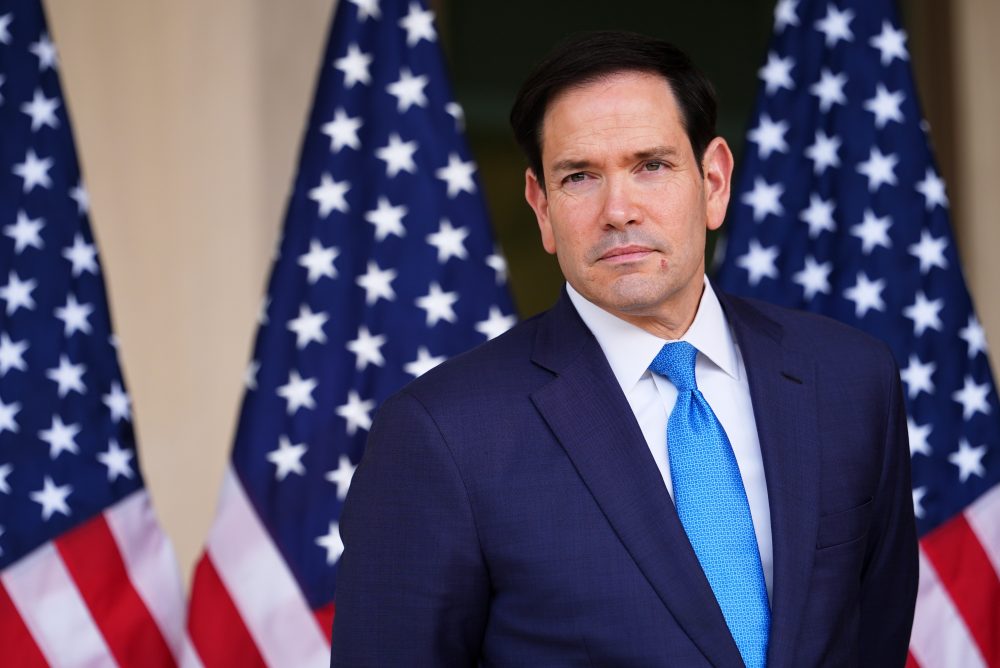
NEW DELHI (AP) — America’s top diplomat Marco Rubio traveled to India this week as both nations work to repair diplomatic relationships that have become strained while attempting to strengthen strategic and economic partnerships amid ongoing trade disputes.
During Sunday discussions with Indian Prime Minister Narendra Modi and Foreign Minister Subrahmanyam Jaishankar, Rubio emphasized collaboration in areas including trade, energy, defense and maritime security. The Secretary of State indicated both nations continue to share strategic goals and voiced confidence about reaching a comprehensive trade agreement.
The four-day diplomatic mission will also feature discussions with representatives from the Quadrilateral Security Dialogue, an Indo-Pacific partnership commonly referred to as the Quad.
Here’s the significance of Rubio’s diplomatic mission for India-U.S. relations:
Diplomatic ties between India and America have become tense in recent months following the Trump administration’s decision to implement significant tariffs on Indian exports, partially due to New Delhi’s ongoing Russian oil purchases. This action frustrated Indian leadership and raised questions within India’s government about America’s dependability as a partner.
Both nations subsequently negotiated a temporary trade agreement that reduced certain tariffs and increased Indian acquisitions of American products, including energy resources. However, negotiations for a comprehensive trade agreement remain incomplete.
Even with these diplomatic challenges, India and America are continuing to expand defense and technology partnerships, as Washington considers India crucial for balancing China’s power in the Indo-Pacific area.
In Sunday’s discussions with Jaishankar, Rubio characterized India as among America’s most vital strategic allies and expressed confidence that both countries would complete a bilateral trade agreement in the near future. Rubio also delivered an invitation from U.S. President Donald Trump for Modi to visit Washington this year.
Rubio’s diplomatic visit is also scheduled to feature Tuesday meetings with foreign ministers from India, Australia and Japan, which comprise the Quad alliance membership alongside America.
This partnership has emerged as an important forum for collaboration on maritime security, supply chains and regional strategy as China increases its military and economic presence throughout the Indo-Pacific.
The Quad has consistently condemned China’s behavior in the South China Sea, charging Beijing with militarizing contested waters. China’s government has responded by accusing the Quad of attempting to limit China’s growth and regional power.
Current trade disputes between Washington and New Delhi, combined with Trump’s recent China visit, have generated increased focus on this alliance.
Praveen Donthi, a senior analyst at the International Crisis Group, explained that India’s expanding global significance has been largely connected to its function in countering China’s regional power, and any modification in American policy toward Beijing might impact New Delhi’s strategic importance to Washington.
“If the U.S. changes its approach towards China, it will diminish India’s importance,” Donthi said.
The Iran conflict has intensified India’s energy challenges, creating concerns about shipments through the Strait of Hormuz, an essential pathway for the nation’s crude oil imports. Increasing fuel expenses have added economic pressure on India.
Jaishankar stated Sunday that India would continue increasing energy imports, including from America, while diversifying suppliers to maintain market stability and affordable pricing. He indicated New Delhi seeks energy markets to stay open and unrestricted to support worldwide economic expansion.
India’s acquisition of discounted Russian crude oil since the Ukraine conflict began has occasionally created tension with America.
Washington has encouraged India to boost purchases of American oil and gas as part of broader initiatives to diversify energy sources, with Rubio highlighting enhanced energy cooperation during New Delhi meetings.
Beyond official discussions, Rubio’s visit has also featured cultural activities.
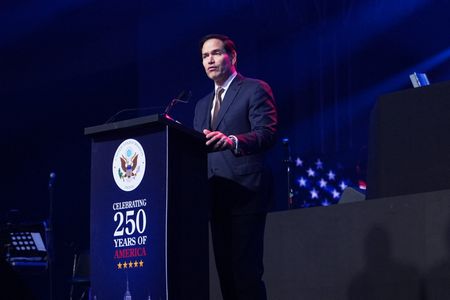
He started the trip in Kolkata and toured the Missionaries of Charity headquarters established by Mother Teresa. He also participated in a gala reception in New Delhi celebrating the 250th anniversary of American independence.
Rubio’s schedule includes visits to Agra and Jaipur, two of India’s most popular tourist locations famous for monuments, forts and palaces.
International tensions surrounding the war in Iran, America’s strategic focus in Asia, and escalating disputes over Taiwan are expected to take center stage at Singapore’s premier defense conference this week.
The Shangri-La Dialogue, scheduled for May 29-31, brings together defense ministers, military leaders, intelligence officials, diplomats, policy experts and defense contractors for both public presentations and private discussions at the annual gathering.
Vietnam’s President To Lam will present Friday evening’s main address, but attention will center on U.S. Defense Secretary Pete Hegseth as he speaks amid ongoing efforts to resolve the Iranian conflict.
President Donald Trump announced Sunday that he had instructed his negotiators to avoid rushing into any agreement with Iran, as his administration tempered expectations for a quick resolution to the three-month conflict.
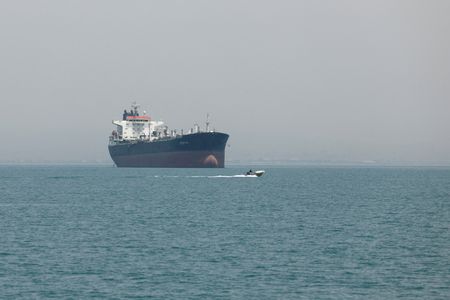
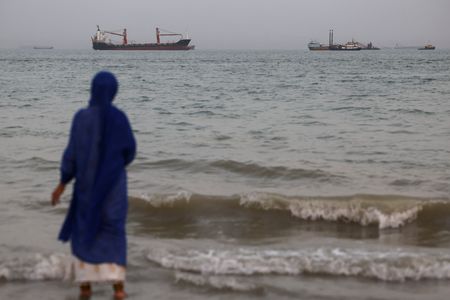
The American naval blockade of Iranian vessels in the Strait of Hormuz will “remain in full force and effect until an agreement is reached, certified, and signed,” Trump posted on Truth Social. Iran has effectively closed the strait since fighting began February 28, blocking a crucial shipping route that normally handles approximately 20 percent of worldwide oil and gas transport.
Regional partners are anticipated to closely watch Hegseth for indications that President Trump’s government is stretched too thin, drawn into Middle Eastern warfare, engaged in European disputes including German troop withdrawals, and therefore less focused on Asian concerns.
“There will likely be some continued anxiety over the unpredictability and volatility of U.S. policy, and the consequences for stability,” said Chong Ja Ian, a political scientist at the National University of Singapore.
“The most pressing issue for Asia would be the U.S.-Israel-Iran conflict and its effects on energy supply.”
The Iranian conflict has disrupted the worldwide economy through significantly increased oil costs that fuel inflation and stress supply networks for everything from fertilizer to food products, creating particular challenges for Asia’s import-reliant nations.
Uncertainty remains over China’s participation after Beijing declined to attend last year’s forum, allowing Washington to dominate the proceedings while China later criticized Hegseth for “vilifying” the country.
China’s defense ministry has not announced whether Defense Minister Dong Jun will participate or which other representatives might attend. The ministry did not reply to Reuters’ inquiry.
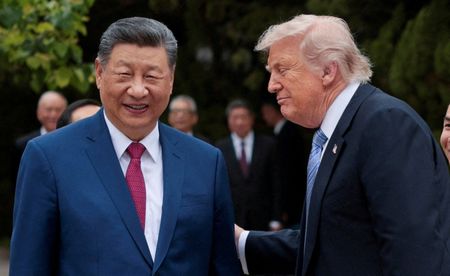
Hegseth’s appearance follows the recent summit between Chinese President Xi Jinping and Trump in Beijing, occurring during heightened Taiwan-related tensions.
China has intensified pressure on Taiwan through expanded military activities near the island, maintaining Taipei’s alertness for additional Chinese actions after the leadership meeting.
China considers democratically ruled Taiwan part of its territory, a stance Taiwan’s government disputes.
“In the aftermath of the summit, I suspect he will tread carefully on China,” said Bonnie Glaser, head of the Indo-Pacific Program of the German Marshall Fund think-tank, adding that Hegseth might further push allies and partners to spend more on defence.
Military representatives indicate the Chinese delegation will likely encounter direct questions about how extensive anti-corruption campaigns targeting senior officers are impacting Chinese military preparedness.
Experts anticipate discussions on how smaller nations manage U.S.-China competition, along with attention on maritime conflict zones in the South China Sea and Strait of Malacca, plus defense expenditures.
Vietnam’s Lam is expected to emphasize Hanoi’s neutral stance as it strengthens relationships with both Washington and Beijing while asserting its territorial claims against China.
Recently appointed to both Communist Party leadership and the presidency, Lam represents Vietnam’s most influential leader in recent decades and is positioned to assume a greater diplomatic presence.
WASHINGTON/ISLAMABAD, May 25 (Reuters) – America will either secure a favorable deal with Iran or handle the situation through alternative means, Secretary of State Marco Rubio announced Monday, while Washington tempered expectations for a quick resolution to the three-month conflict.
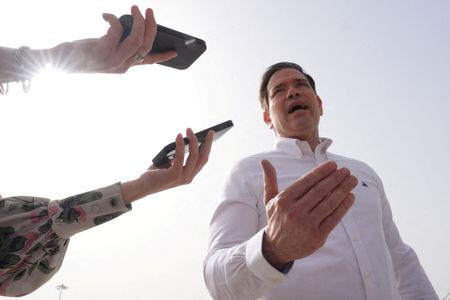
Speaking to the press in New Delhi, Rubio indicated that diplomatic efforts would be given full opportunity to work before considering other options, following President Donald Trump’s Sunday statement that he had instructed negotiators against rushing into any Iranian agreement.
“There was a pretty solid thing on the table in terms of their ability to open up the strait, get the strait open, enter into a very real, significant, time-limited negotiation on the nuclear matter, and hopefully we can pull it off,” Rubio stated.
The previous day, Trump posted on Truth Social that America’s naval blockade of Iranian vessels in the Strait of Hormuz would “remain in full force and effect until an agreement is reached, certified, and signed.”
“Both sides must take their time and get it right,” he continued.
Iranian officials have not yet responded publicly. However, the Tasnim news agency, which has connections to Iran’s Revolutionary Guards, reported that America continues to block certain aspects of a possible agreement, particularly Tehran’s request for unfrozen assets.
Energy markets responded positively Monday, with oil prices dropping 6% to two-week minimums as investors grew hopeful that Washington and Tehran were progressing toward a peaceful resolution.
Expectations for a quick agreement rose Saturday when Trump announced that both nations had “largely negotiated” a memorandum of understanding for a peace framework that would reopen the Strait of Hormuz.
Prior to the hostilities, this vital shipping channel handled one-fifth of worldwide oil and liquefied natural gas transportation.
Both nations continue disagreeing on several complex matters, including Iran’s nuclear program, Israel’s military operations in Lebanon against the Iranian-supported Hezbollah organization, and Tehran’s insistence on sanction removal and the release of billions in Iranian petroleum revenues held in international banks.
STICKING POINTS
A high-ranking Trump administration official described what he characterized as the current framework of negotiated issues.
The official, speaking without attribution, revealed that Iran had accepted “in principle” to reopen the Strait of Hormuz in return for America ending its naval blockade, and to eliminate Tehran’s weapons-grade uranium stockpile.
America believes Iran’s Supreme Leader Ayatollah Mojtaba Khamenei has approved the general structure of the agreement, the official noted.
Iranian officials have not immediately verified this or explained the meaning of an “in principle” commitment.
The American official explained that Washington envisions initially reopening the waterway and ending the naval blockade. Working out nuclear program specifics would require additional time.
The official disputed claims that Iran had rejected disposing of its enriched uranium reserves. “It’s a question about how,” the official explained.
Another senior administration official revealed Sunday that the proposed structure would allow negotiators 60 days to finalize an agreement.
Iranian sources previously informed Reuters that in subsequent phases, “feasible formulas” might be developed to address the enriched uranium stockpile disagreement, potentially including diluting the material under U.N. nuclear agency oversight.
Iran has consistently rejected American and Israeli claims of pursuing nuclear weapons, maintaining its right to enrich uranium for peaceful uses, though the concentration levels achieved exceed power generation requirements.
Trump, whose public support has suffered due to the conflict’s effect on American energy costs and who faces legislative attempts to limit his military authority, has consistently emphasized the possibility of an agreement to end the conflict that began February 28 between America and Israel.
A fragile ceasefire has remained in place since early April.
The president responded to those criticizing his negotiation approach and willingness to reach compromises with Iran.
“If I make a deal with Iran, it will be a good and proper one … So don’t listen to the losers, who are critical about something they know nothing about,” Trump wrote Sunday.
Any agreement strengthening the current unstable ceasefire would provide market relief but wouldn’t immediately resolve the worldwide energy crisis that has increased fuel, fertilizer, and food expenses.
The American-Israeli military campaign against Iran resulted in thousands of Iranian deaths before being halted in early April.
Israel has also caused thousands more casualties and displaced hundreds of thousands in Lebanon during its invasion targeting the militant organization Hezbollah. Iranian attacks on Israel and nearby Gulf nations have resulted in dozens of deaths.
Iranian authorities carried out the execution of a man connected to nationwide anti-government demonstrations that took place in January, according to state media reports released Monday.
State media sources identified the executed individual as Abbas Akbari.
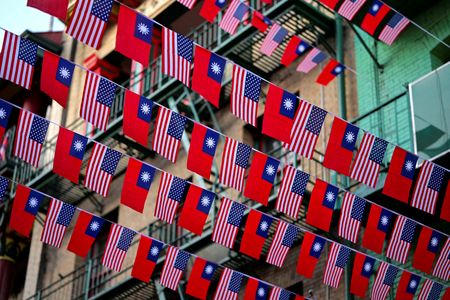
Taiwan’s top diplomat indicated Monday that his government would welcome a phone conversation between President Trump and Taiwan’s president, though he emphasized that no preparatory discussions have taken place between the two nations.
Such a conversation between the leaders would mark a historic first and could potentially strain relations between Washington and Beijing, which considers the democratically-run island nation part of its territory. Direct communication between American and Taiwanese presidents has been absent since Washington transferred its diplomatic recognition from Taipei to Beijing in 1979.
Last Wednesday, Trump reiterated his intention to have a conversation with Taiwan President Lai Ching-te, clearing up earlier uncertainty about whether his initial comments following a recent meeting with Chinese President Xi Jinping were made inadvertently.
During questioning by lawmakers in parliament, Taiwan Foreign Minister Lin Chia-lung explained that while Trump would need to initiate such contact, no bilateral discussions about arranging the call have occurred, though such preparations would be necessary if the conversation were to happen.
“If there were a phone call between the heads of state of the United States and Taiwan, I think we would view that very positively,” Lin said.
“I believe the president’s side is well prepared,” he added, referring to Lai. “But of course, this also depends on President Trump and how he might proactively bring it about.”
Last week, Lai indicated that if given the chance to speak with Trump, he would express concerns that China was threatening peace and that no nation has the authority to “annex” the island. Lai did not indicate whether any conversation had been arranged.
Reuters reported Friday that the U.S. and Taiwan have not established concrete arrangements for presidential discussions.
The situation affects a proposed $14 billion military equipment package for Taiwan, which Trump has indicated he has not yet decided upon. In December, Washington greenlit $11 billion worth of weapons for Taiwan, representing the largest such approval to date.
Officials from both Taipei and Washington have stated that U.S. policy regarding Taiwan has not changed following the Trump-Xi meeting.
The U.S. remains obligated under the 1979 Taiwan Relations Act to supply Taiwan with defensive capabilities.
Lai, who disputes Beijing’s territorial claims, has consistently proposed dialogue with China but has been rejected. Beijing labels him a “separatist”.
America’s top diplomat issued a firm warning to Iran on Monday, declaring the United States will pursue either successful negotiations or handle the situation through “another way.”
Secretary of State Marco Rubio emphasized that diplomatic efforts will be given full opportunity to work before the nation considers “alternatives,” speaking to reporters during his visit to New Delhi.
According to Rubio, there appears to be “a pretty solid thing on the table in terms of their ability to open up the strait, get the strait open, enter into a very real, significant, time-limited negotiation on the nuclear matter, and hopefully we can pull it off.”
Eleven Australian aid workers have returned home following their detention by Israeli forces during an international humanitarian mission to Gaza, bringing with them disturbing accounts of their treatment while in custody.
The activists were part of a 430-person volunteer group from 40 nations operating 50 vessels that were stopped in international waters last week as they attempted to transport aid supplies to Gaza.
The returning Australians arrived at various airports over the weekend and Monday, landing in Sydney, Melbourne, and Brisbane after what organizers describe as a traumatic ordeal.
Documentary filmmaker and activist Juliet Lamont described her experience to reporters Monday, saying she endured physical violence and sexual assault during her capture.
“That was just the beginning of four days of absolute hell. I’ve looked into the eyes of the most soulless people in the universe, and nothing came back. These people need to be stopped,” Lamont said.
Fellow Australian activist Sam Woripa Watson reported suffering a broken rib along with multiple bruises and cuts. Watson also described witnessing other volunteers being subjected to tasers, rubber bullets, and stun grenades.
The flotilla’s organizing group, Global Sumud Flotilla, claims to have recorded evidence of at least 15 instances of sexual abuse. According to their statement, the most severe incidents occurred aboard an Israeli vessel that had been modified into a temporary detention facility using barbed wire and shipping containers.
Israeli prison authorities have categorically rejected all accusations of mistreatment, sexual assault, and abuse. Reuters was unable to independently confirm the activists’ claims.
The controversy has intensified international criticism of Israel, particularly after far-right Police Minister Itamar Ben-Gvir posted video footage showing him mocking detained activists who were restrained on the ground.
Australian Foreign Minister Penny Wong condemned the video as “shocking and unacceptable.” Australia previously imposed travel restrictions and financial penalties on Ben-Gvir last year due to his role in encouraging violence against Palestinians in the West Bank.
Search and rescue operations continue in the Philippines after emergency crews recovered two additional bodies from a collapsed construction site, raising the fatality count to three people, authorities announced Monday.
Maria Leah Sajili, information officer at the regional Bureau of Fire Protection, confirmed in a telephone interview that one victim showed vital signs during extraction but subsequently passed away, while the second person went into cardiac arrest while still buried in the debris.
The multi-story structure under construction came down in Angeles, a city located north of Manila, the nation’s capital. Authorities have launched an investigation to determine what triggered the building’s collapse.
Emergency teams are working to extract another body from the wreckage, though Sajili noted it won’t be included in the official count until recovery is complete.
Thermal imaging equipment has detected breathing patterns and heartbeats underneath the collapsed structure, suggesting additional survivors may be trapped, according to Sajili.
Seventeen individuals remain unaccounted for, with the majority being construction workers who were documented as present at the worksite when the incident occurred, Sajili reported.
The first fatality was a 65-year-old Malaysian citizen whose remains were found Sunday in an adjacent hotel structure that was also impacted by the collapse.
Building permits showed the structure was approved as a nine-story condominium-hotel, but construction crews were adding a swimming pool to an unauthorized tenth level, officials revealed.
Angeles City Mayor Carmelo Lazatin informed media that local authorities are attempting to contact the property owner for answers, including verification of how many workers were present during the collapse.
Relatives of the missing workers have expressed mounting anger and impatience over the speed of rescue efforts.
Lea Casilao, who made the journey from Manila, said she simply wants consistent updates regarding her husband, a construction worker believed to be buried in the rubble.
“My youngest child keeps asking, but I do not have answers,” the 47-year-old said.
Lorena Angcao, 50, shared similar concerns, stating officials should provide regular information to waiting families.
Angcao explained that her brother and sister-in-law, who operated as vendors close to the construction site, are among the missing persons. “They can’t feel what we’re feeling,” she said.
GIBRALTAR (AP) — Hundreds of British naval personnel are standing by off Gibraltar’s coast, ready to deploy for a mine-clearing operation in the Strait of Hormuz that remains uncertain.
President Donald Trump has criticized allies for insufficient support during the U.S. conflict with Iran, as Iran’s control over the strategic waterway has disrupted global shipping and driven up energy costs. In March, Trump told NATO partners to “go get your own oil” and handle strait security independently.
At Gibraltar, the British Overseas Territory on the Iberian Peninsula’s southern edge, the Royal Navy is making preparations for exactly that mission — but only after peace negotiations conclude. Trump announced Saturday that an agreement with Iran has been “largely negotiated” following discussions with Israel and regional partners, though final details remain pending.
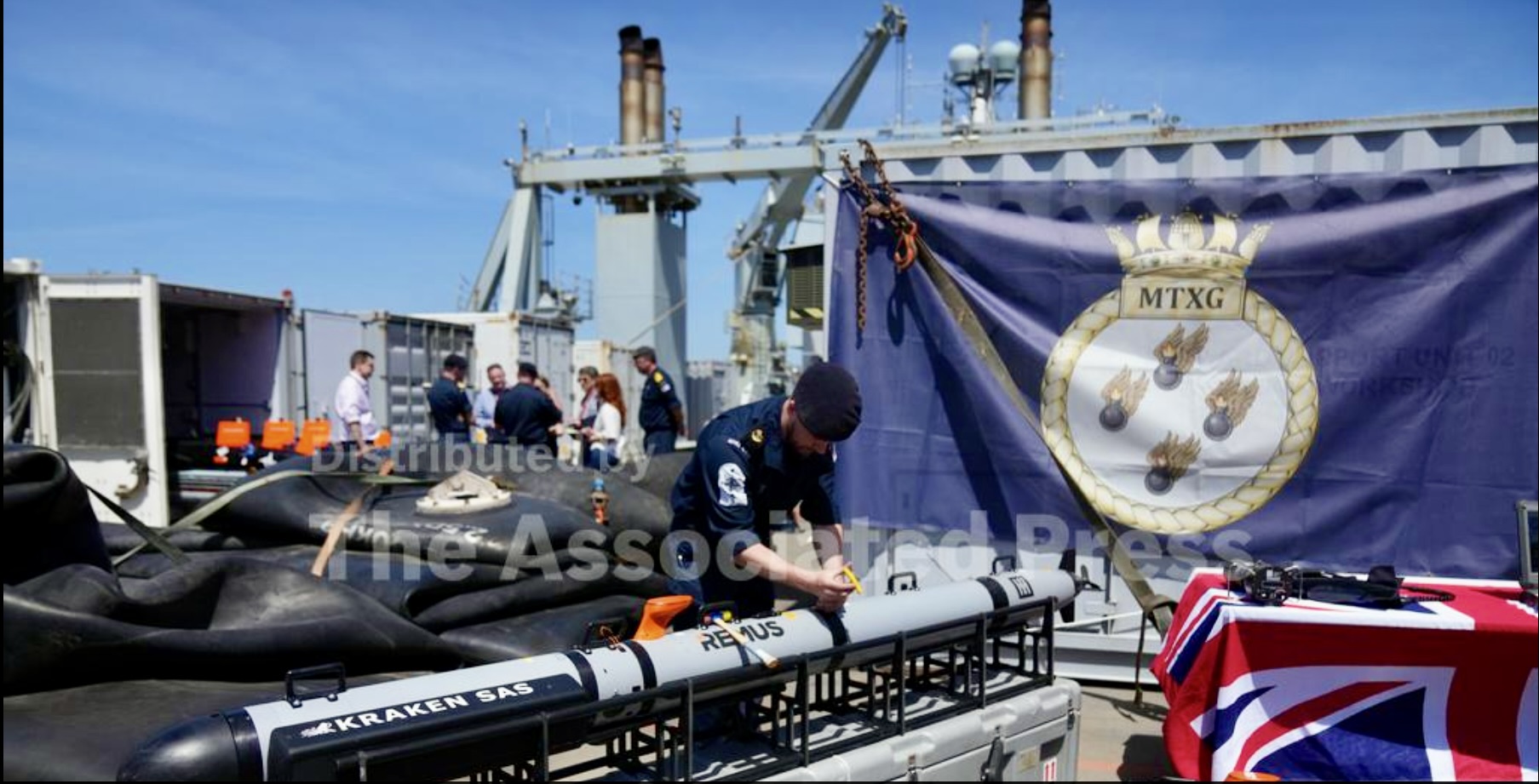
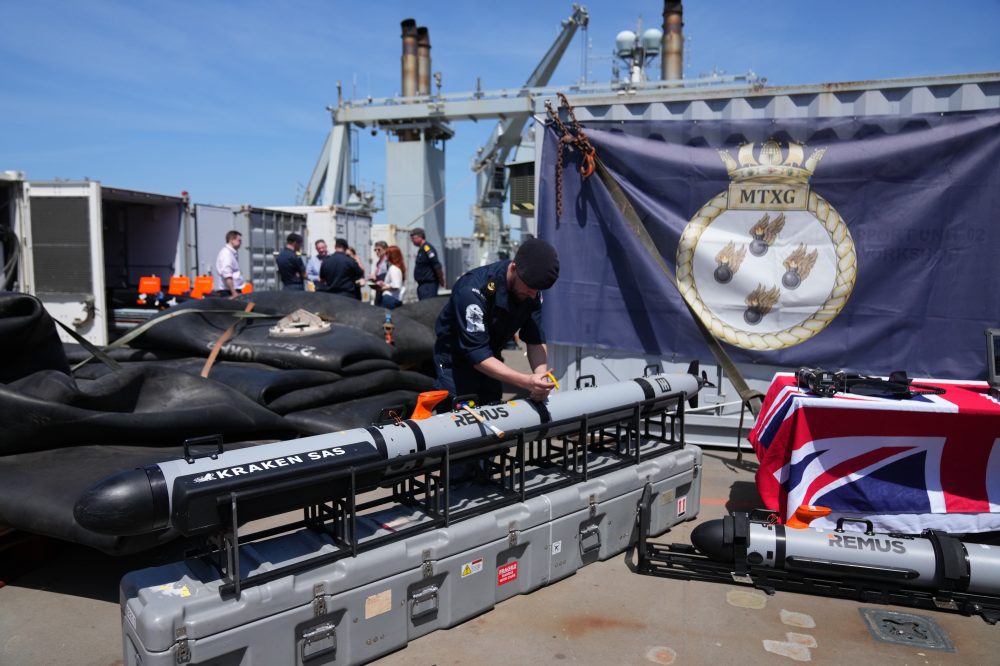
Britain’s Armed Forces Minister Al Carns brought reporters aboard the RFA Lyme Bay as preparations continue for a potential international mission, with the U.K. and France leading efforts to secure the waterway. During the visit, crews were loading the amphibious vessel with ammunition and sonar-equipped mine-hunting drones at the Mediterranean gateway.
The RFA Lyme Bay, carrying several hundred crew members, will soon leave Gibraltar to meet up with the destroyer HMS Dragon and allied vessels for air support before transiting the Suez Canal toward the Persian Gulf.
“Which other country can pull together 40 nations and come up with a solution to deal with a complex problem that we couldn’t predict because we weren’t involved?” Carns asked when questioned by The Associated Press about Trump’s expectations for Britain.
Following the February 28 launch of the U.S.-Israeli military action, Tehran responded by essentially shutting down the strait, a vital passage for regional oil, natural gas and fertilizer exports, creating worldwide economic disruption. Britain has particularly drawn Trump’s criticism, with the president calling the British fleet “toys” and describing Prime Minister Keir Starmer as “not Winston Churchill.”
According to Carns, more than 6,000 vessels have been prevented from transiting the strait since hostilities started.
Iranian mines could pose varied dangers
Iran may have deployed a “huge” array of mines across the strait, according to Cmdr. Gemma Britton, who leads the Royal Navy’s Mine and Threat Exploitation Group. These explosive devices could be rocket-powered, tethered by cables, or positioned on the ocean floor with triggers activated by sound, motion or light.
AP reporters were shown automated systems capable of scanning seabed and water column areas with sonar technology in roughly half the time required for manned vessels to survey and chart hazardous zones. These unmanned sonar-equipped craft generate images of underwater objects ranging from fishing equipment to infrastructure pipelines. These images help identify mines that can then be examined using sophisticated acoustic equipment and cameras, Britton explained.
Several systems aboard the RFA Lyme Bay can be transferred to smaller craft that launch and operate independently from the main vessel, which serves as a command ship positioned safely outside suspected mine areas, Britton noted. This approach minimizes personnel exposure to danger zones.
Traditional mine disposal involves a diver manually attaching explosive charges to mines before swimming to safety for detonation. However, the RFA Lyme Bay is testing a remote-controlled underwater vehicle that can place charges near mines and trigger them without human divers, Britton said.
The initial focus will be establishing a clear transit corridor through the strait to enable approximately 700 stranded ships to depart, she explained. Subsequently, crews would clear a reverse-direction lane for incoming vessels, though completely clearing the entire strait might require months or years.
Deployment remains uncertain
Whether mines actually exist in the strait — or whether British and allied forces will ultimately deploy — remains unclear.
A U.S. official, speaking anonymously about sensitive military information, told AP that American forces have neither located nor eliminated any mines in the strait, and no vessels have sustained mine damage. Commercial shipping has continued at reduced levels throughout the conflict.
When AP asked whether the British preparations were partially theatrical to please the U.S., Carns acknowledged some mines may have exploded or drifted away, but said such uncertainty fails to satisfy commercial insurance requirements. Insurance companies demand “absolute certainty” before authorizing renewed strait transit.
“That’s what this capability will provide,” he stated.
The multinational strait security operation would commence only after fighting ends.
“Final aspects and details of the Deal are currently being discussed, and will be announced shortly,” Trump posted Saturday on social media, without specifying timing.
Recent weeks have seen multiple claims of near-completed agreements.
“We don’t know when the Americans, Iranians and Israelis are going to come up with a suitable solution,” Carns said.
Until then, the RFA Lyme Bay and its personnel will remain on standby and be “really, really ready,” Carns added.
KUALA LUMPUR – A workplace tragedy at a Malaysian offshore oil facility has resulted in three fatalities and one injury during routine maintenance operations on Sunday, according to the state energy company.
The Malaysian state energy firm Petronas, formally known as Petroliam Nasional Berhad, announced Monday that the deadly incident took place at approximately 12:50 p.m. local time at the FSO Sepat facility located off the coast of Terengganu state on Malaysia’s eastern peninsula.
Company officials confirmed that three workers were declared deceased upon reaching the hospital, while a fourth employee who sustained injuries was transported for emergency medical care and continues to be monitored by medical staff.
“Investigations into the cause of the incident are ongoing in coordination with the relevant authorities,” the company stated in its official announcement.
The energy company declined to release additional information about the circumstances surrounding the tragedy.
According to Malaysia’s state news agency Bernama, the workers had entered a lifeboat positioned on the floating storage and offloading platform with plans to descend into ocean waters for maintenance duties. Local law enforcement sources told Bernama that the rope or connecting mechanism securing the lifeboat appears to have failed, resulting in the workers plunging into the water below.
Colombia’s three main presidential contenders brought their campaigns to a close Sunday with large-scale public events, setting the stage for the May 31 election that political experts believe will lead to several weeks of intense and divisive campaigning before a June 21 runoff vote.
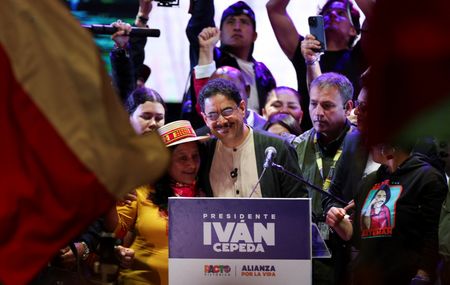
According to the most recent polling data before the May 31 election, leftist politician Ivan Cepeda, 63, held a slim lead among the candidates. However, the same survey suggested he would be defeated in the June runoff against either of his conservative opponents. Previous polling had indicated he would prevail in a second-round contest.
Cepeda has committed to advancing the social reform agenda initiated by current President Gustavo Petro, but he faces scrutiny over the sitting president’s unsuccessful “total peace” strategy that seeks to resolve conflicts through dialogue with illegal armed organizations operating in the nation.
Opposition voices claim Cepeda maintains connections to former leaders of the disbanded FARC guerrilla movement, whose breakaway groups continue to play significant roles in the ongoing six-decade conflict that has included right-wing paramilitary forces, narcotics traffickers and resulted in over 450,000 deaths.
Running closely behind Cepeda in the polls was Abelardo De La Espriella, 47, a business executive and attorney who has promised to reduce taxes, boost investment in mining and energy sectors, and launch military operations against illegal armed organizations and drug trafficking networks.
De La Espriella has encountered criticism for his legal representation of disputed clients, including businessman Alex Saab, who stands accused of serving as a financial intermediary for Venezuela’s ousted president Nicolas Maduro. Saab was extradited to the U.S. last week to face criminal charges.
Running in third place in polling was Paloma Valencia, 48, whose platform includes expanding military forces, reducing government size and lowering tax rates. She has received endorsement from former President Alvaro Uribe.
“We can expect a fear-mongering campaign focused on each candidate’s worst attributes,” Sergio Guzman, director of consulting firm Colombia Risk Analysis, told Reuters.
According to Guzman, accusations like “corrupt, amoral, guerrillas, drug traffickers, and paramilitary sympathizers” will likely characterize the political discourse leading up to the runoff election.
The incoming president will confront significant challenges including restoring public safety, strengthening the nation’s financial position, addressing informal employment issues and tackling poverty and inequality.
Cepeda held his final campaign event in the Caribbean coastal city of Barranquilla, while De La Espriella chose Colombia’s second-biggest city and corporate hub Medellin, and Valencia concluded her campaign in the capital Bogota.
Detainees at a correctional facility in Venezuela’s Barinas region climbed onto the building’s roof Sunday in a dramatic demonstration against alleged violence by guards and administrative misconduct.
The inmates set mattresses ablaze during their rooftop demonstration and demanded the dismissal of the facility’s administrator, claiming guards had fired weapons at unarmed detainees.
“We want justice. They are shooting us, the guards and the wardens,” one detainee stated in footage distributed by the Venezuelan Prison Observatory, a local advocacy organization, on X. The video showed an individual with what appeared to be a gunshot injury to his torso.
The demonstrating prisoners maintained they were conducting a peaceful protest when correctional staff discharged firearms, resulting in injuries to some detainees.
Government officials in Venezuela have not yet provided a response to inquiries about the incident.
In footage circulated by the advocacy group, detainees demanded the dismissal of the newly installed facility administrator Elvis Macuare Guerrero. The prisoners alleged their garments had been confiscated, family visits had been prohibited, and they faced coercion to participate in narcotics trafficking.
Relatives of the detainees confronted National Guard personnel equipped with protective shields outside the facility, attempting without success to prevent their entry. These family members reported to the advocacy organization that they heard shouting and explosive sounds shortly after the officers went inside.
The advocacy organization stated it was recording the incidents and would submit reports to human rights monitoring agencies.
Venezuela’s correctional system has drawn international attention as the administration of interim President Delcy Rodriguez enacted legislation to free hundreds of individuals classified as political detainees. The U.S. launched an operation against Caracas in January, resulting in the capture of then-President Nicolas Maduro.
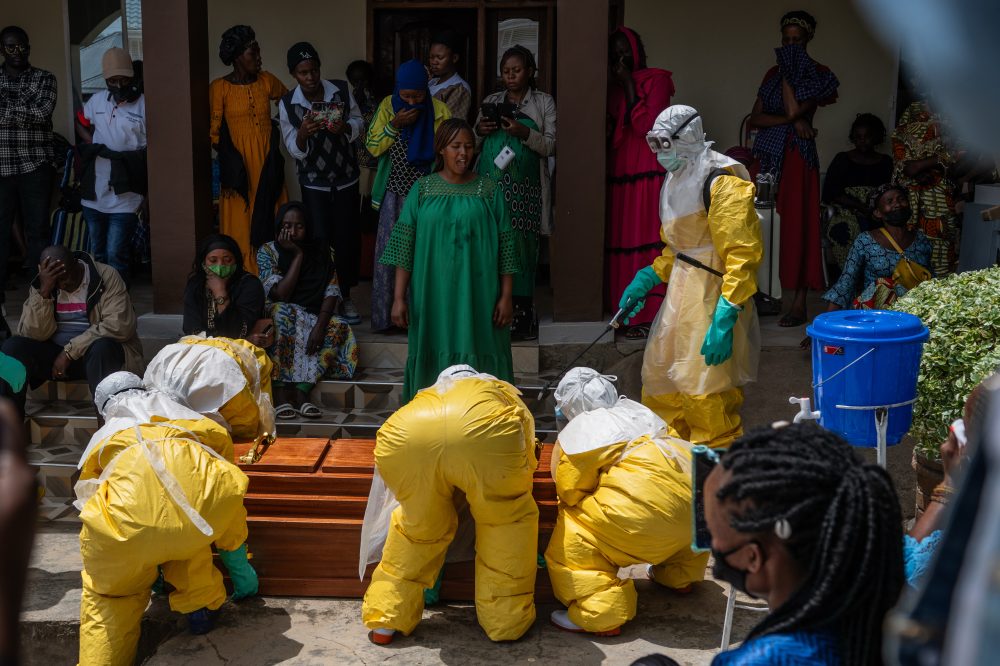
KINSHASA, Congo — Medical workers at a Congo hospital scrambled to evacuate Ebola patients Sunday night after furious men broke into the facility demanding the remains of deceased relatives, amid sounds of gunfire in the surrounding area.
The assault on Monbgwalu General Hospital left casualties unknown, according to Dr. Richard Lokudu, the facility’s medical director, who spoke with The Associated Press. The intruders insisted on receiving two bodies of family members who had died.
“There was gunfire and the medics were trying to evacuate the patients and the staff,” Lokudu explained during a phone interview.
“Monbgwalu General Hospital is on general alert,” he stated, noting he lacked additional information about the developing crisis.
This incident represents the third assault in seven days targeting medical centers where healthcare workers battle limited resources while treating potential Ebola patients, highlighting the difficulties surrounding this outbreak that the World Health Organization has labeled a public health emergency of international concern.
Remains of Ebola victims carry extreme infection risks and can trigger additional transmission when families handle burial preparations and hold funeral ceremonies.
Congo’s government has ordered that burial procedures for suspected victims be handled by officials when feasible, a policy that has sparked resistance from grieving families and communities. Friday brought new restrictions as authorities prohibited funeral gatherings and assemblies exceeding 50 people across northeastern Congo to limit viral transmission.
Saturday saw Mongbwalu residents attack and burn down a tent facility established by Doctors Without Borders for treating suspected and confirmed Ebola patients.
That assault resulted in 18 individuals with suspected infections fleeing the site, with their current whereabouts unknown, Lokudu had reported previously.
Thursday witnessed another treatment facility destroyed by fire in Rwampara after relatives were prohibited from claiming a local man’s body who allegedly died from Ebola.
The World Health Organization has elevated the outbreak’s threat level to “very high” for Congo, upgrading from the previous “high” classification, while maintaining that global spread probability remains minimal.
Sunday morning brought updated figures from Congo’s Ministry of Communication via X, reporting 904 suspected Ebola cases, predominantly in northeastern Ituri Province — a substantial increase from the previously reported total exceeding 700 suspected infections.
The ministry listed total suspected Ebola fatalities at 119, though regional breakdowns totaled 220 deaths. Officials were unavailable to clarify this numerical inconsistency.
No vaccine exists for the Bundibugyo virus, an uncommon Ebola strain that circulated undetected for weeks throughout Ituri after the initial reported death in late April in Bunia, the provincial capital, while authorities tested unsuccessfully for a more prevalent Ebola variant.
The International Federation of Red Cross and Red Crescent Societies announced Saturday that three volunteers had perished from the outbreak in Mongbwalu. The organization believes these healthcare workers became infected March 27 while handling corpses during a humanitarian operation unconnected to Ebola.
If verified, this information would dramatically alter the outbreak’s established timeline.
New Zealand announced Monday it will impose stricter English language standards for certain work visa categories while creating new philanthropic opportunities for investor visa holders, according to Immigration Minister Erica Stanford.
The policy updates take effect June 1 and affect the Accredited Employer Work Visa program and the Active Investor Plus Visa Growth category. Officials are also working to launch two additional skilled residence programs in August.
Under the revised rules, English proficiency requirements for the Accredited Employer Work Visa will now include skill level 3 positions in areas like hospitality and skilled trades. This brings those roles in line with standards already required for skill levels 4 and 5.
“Being able to communicate in basic, everyday English ensures that workers understand their rights and engage effectively at work and in the community while they are here,” Stanford stated.
The English language mandate does not affect Global Workforce Seasonal Visa or Peak Seasonal Visa candidates, and existing workers seeking job changes are also exempt from the requirement.
Meanwhile, applicants for the Active Investor Plus Visa Growth category will now have the option to direct up to 20% of their investment total toward charitable contributions. This allows up to NZ$1 million ($587,600) of the required NZ$5 million minimum investment to go to philanthropic causes, with remaining funds still required to go toward higher-growth investments.
A small aircraft accident in northern Israel’s Jezreel Valley claimed the lives of two retired Israeli Air Force officers on Sunday morning, according to emergency services and local media outlets.
Officials identified the victims as Lt. Col. (res.) Yuval (Eyal) Inbar, 50, a former squadron commander, and retired Lt. Col. Itai Talmi, 70, who also served as an Air Force officer and later worked as a captain for El Al.
The fatal accident happened during the morning hours of May 24, 2026, when the small plane went down in farming fields close to Tel Adashim in northern Israel.
According to Magen David Adom, both men, described as being around 50 years of age, sustained life-threatening injuries when their small plane crashed. Emergency medical teams rushed both victims to HaEmek Medical Center in Afula while performing life-saving procedures, but hospital staff ultimately declared them deceased.
Emergency services received the initial report at 9:06 a.m. through Magen David Adom’s 101 emergency dispatch center serving the Gilboa region.
First responders reported that crews who reached the crash site discovered the plane severely damaged in an open field close to the moshav.
Magen David Adom motorcycle unit paramedic Maor Atadgi described the emergency response to Ynet.
“This is a difficult incident. We arrived at the scene with ambulances, intensive care units, and motorcycles as an immediate response. They led us through the area to the crashed plane, which had severe metal damage, and nearby were 2 men who were unconscious, without a pulse, and not breathing.”
Atadgi continued, “We immediately began advanced resuscitation efforts and evacuated them in MDA intensive care units to the hospital while their condition was critical.”
Authorities continued investigating the crash circumstances and gathering additional information throughout Sunday.
Pakistan’s Federal Shariat Court has overturned legislation that removed criminal penalties for attempted suicide, determining the changes conflict with Islamic principles.
The court made this decision after reviewing multiple petitions challenging the law that Parliament enacted.
In 2022, the National Assembly modified the Pakistan Penal Code by eliminating attempted suicide from criminal offenses. The amended law prohibited legal prosecution of individuals who attempted suicide.
The Federal Shariat Court explained in its decision that governments must safeguard citizens’ lives and emphasized that criminalizing suicide attempts previously served to discourage such actions and prevent them through fear of prosecution.
The court determined that mental illness alone does not justify eliminating this law.
During proceedings, government representatives cited World Health Organization statistics showing millions of annual suicide deaths globally, with mental illness being the leading factor.
The federal government maintained that the law’s main purpose was recognizing that people who attempt suicide typically experience psychological problems or mental health issues.
Government officials additionally argued that since suicide attempters are victims themselves, these situations should be addressed medically rather than legally, without criminal prosecution.
Officials contended that people in these circumstances often face mental, economic, and social pressures, requiring medical care instead of punishment.
However, the Federal Shariat Court countered that suicide and attempted suicide stem from factors beyond just mental illness or psychological distress.
These factors may encompass suicide attempts for terrorist purposes, hunger strikes seeking political or economic benefits, public self-immolation using kerosene, and sometimes suicide attempts influenced by internet content or mobile apps.
The court noted that while each suicide attempter faces unique circumstances, removing criminal status from all suicide attempts regardless of motivation is inappropriate.
The court pointed out that Pakistan’s Constitution already contains provisions for helping individuals with mental disabilities.
The Federal Shariat Court also consulted the Council of Islamic Ideology, which declared suicide a serious sin requiring discouragement.
Tanzeela Javed, an Islamabad-based clinical psychiatrist, told The Media Line “In most cases, attempted suicide is associated with treatable mental health conditions such as depression, anxiety disorders, trauma-related disorders, or acute psychosocial stressors like financial hardship or relationship breakdown.”
She added “Prevention strategies are never purely medical; they also require social support systems, crisis services, and responsible public policy. The most effective frameworks internationally tend to treat suicide prevention as a public health priority while still ensuring appropriate safeguards in exceptional contexts”.
Javed emphasized, “Ultimately, the clinical goal is not punishment, but risk reduction, treatment access, and preservation of life through early and non-judgmental intervention.”
Prime Minister Benjamin Netanyahu is organizing a restricted security cabinet session for Sunday night to address a developing agreement between the United States and Iran, as Israeli leadership expresses worries about specific terms in the proposed memorandum of understanding that could halt hostilities with Hezbollah and postpone comprehensive nuclear discussions.
A representative for one of the ministers scheduled to attend the session confirmed the meeting to The Times of Israel, noting that a specific time has not been established.
Based on reports from Kan, Netanyahu has expressed worry about at least two components of the proposed deal: a mandate to cease military actions against Lebanon and the deferral of meaningful talks about Iran’s nuclear program to a later phase of negotiations.
The memorandum of understanding being considered would extend the ceasefire for 60 days and mandate that Iran reopen the Strait of Hormuz, while the United States would terminate its naval blockade. Throughout the 60-day timeframe, the US would consider removing sanctions against Iran, while American forces would stay in the area until negotiations are completed.
Hostilities between Israel and Hezbollah would cease under the agreement, though Israel would maintain the capability to respond with military force if Hezbollah initiates attacks.
Israel was excluded from Saturday’s “phone summit” that included the United States and leaders from Saudi Arabia, Qatar, the UAE, Bahrain, Kuwait, Oman, Egypt, Jordan, and Turkey discussing the revised memorandum of understanding. Reuters indicated that Pakistan also joined the call.
Israeli broadcaster N12 stated that Netanyahu considers the proposal potentially detrimental to Israel. An Israeli official mentioned in the coverage said US special envoy Steve Witkoff strongly backed the agreement and “wants a deal at almost any price, and is placing immense pressure on Trump not to resume the war.”
Two American officials informed The New York Times that Iran had consented as part of the developing arrangement to surrender its stockpile of highly enriched uranium.
The coverage indicated that the proposal does not detail how Tehran would give up the material, and talks on implementation were delayed to the subsequent round of nuclear negotiations.
The coverage stated that Iran initially opposed including uranium provisions in the first stage of the agreement, but American officials communicated through intermediaries that military operations would continue without such an understanding.
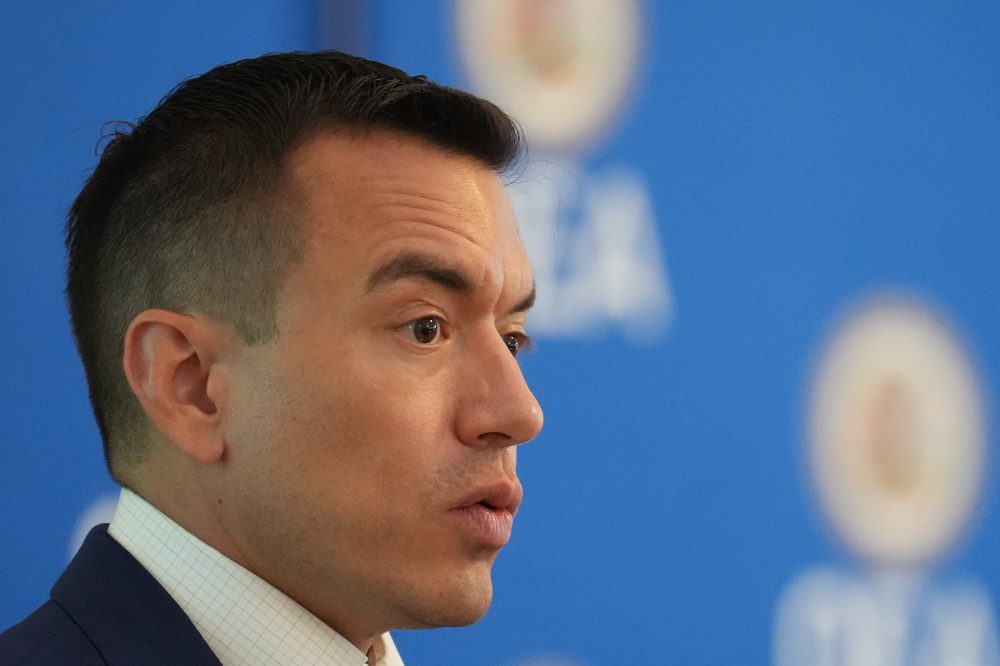
During his annual State of the Union speech on Sunday, Ecuador’s President Daniel Noboa highlighted his administration’s crime-fighting initiatives backed by the United States while also pointing to improvements in economic measures.
Speaking before the National Assembly in Quito, the capital city, Noboa pointed to the transfer of twelve crime leaders to the U.S. and the confiscation of nearly 300 tons of illegal drugs as proof of what he called a strong and successful strategy against organized crime, which remains the primary worry for citizens of Ecuador during this decade.
“We will seek them out, find them and extradite them,” Noboa declared regarding wanted criminals, emphasizing that the South American nation cannot progress “if families live in fear” because of organized crime.
The country has faced challenges controlling drug-related violence beginning in 2021 as competing cartels form alliances with neighborhood gangs and fight over control of trafficking routes and coastal ports for moving cocaine. Ecuador sits between Colombia and Peru, which are the world’s leading cocaine-producing nations.
According to the Ministry of the Interior, Ecuador experienced its worst homicide rate in decades last year with 50 killings for every 100,000 people.
To address this crisis, Noboa, who won reelection last year for a four-year period, has implemented emergency powers allowing military forces to execute various anti-crime tactics, including combined patrols with law enforcement and searches of properties without warrants. Earlier this year, Ecuador’s armed forces also conducted a joint mission with U.S. military against a training facility reportedly operated by Colombian drug dealers, striking the location using drones, helicopters and boats.
Civil society organizations have criticized Noboa, arguing his aggressive tactics have not succeeded in lowering crime rates while endangering innocent people.
Glaedys González, who analyzes the Andean region for the International Crisis Group, stated Sunday that Noboa may have presented an overly positive view of the nation’s security situation in his address, but “progress on violence is far from being achieved.”
“It is evident that the situation in Ecuador has reached unprecedented levels,” González said.
During Sunday’s address, Noboa also highlighted economic improvements, informing legislators that poverty decreased from 26% to 21.4% in 2025 while severe poverty fell from 10.4% to 8.4%.
Noboa initially won office in 2023 through a special election that occurred after former President Guillermo Lasso disbanded the National Assembly and cut short his own presidency.
Ireland’s center-right ruling Fine Gael party and the smaller center-left Social Democrats each secured victories in Sunday’s by-elections, while a figure identified by courts as leading a notorious criminal organization failed once again to win office.
The outcomes represented a setback for the left-wing nationalist Sinn Fein party, which has emerged as one of Ireland’s three major political forces and had aimed to capture a seat in the Dublin Central district where party leader Mary Lou McDonald currently serves as a representative.
The weak performance by Fianna Fail, the other party in the governing coalition, across both contests may intensify criticism of Prime Minister Micheal Martin from members of his own party.
Daniel Ennis of the Social Democrats claimed victory in Dublin, building on the party’s success from the general election held 18 months earlier when it expanded its representation from six to 11 seats in the 174-member legislative body.
The party now holds the position as parliament’s fourth-largest faction, achieving this status just over ten years since its establishment.
The results indicated that the Social Democrats attracted some progressive voters who previously supported Sinn Fein, though the main opposition party also saw erosion of its traditional working-class base to increasingly popular right-wing candidates, continuing a trend from 2024.
Gerry Hutch, identified by an Irish court in 2023 as leading a prominent criminal organization in Ireland, secured 11% of initial preference votes to finish in fourth place. Running on a platform that included anti-immigration positions, Hutch barely failed to secure one of four Dublin Central seats during the 2024 general election.
In media statements, Hutch has rejected claims that he leads a criminal enterprise.
Sean Kyne, a former junior minister representing Fine Gael, achieved the rare distinction of becoming just the fourth government party candidate to win a by-election since 1982. His success in the western Galway county preserved the coalition’s substantial parliamentary majority.
Independent Ireland, a recently formed rural-oriented right-wing party that prominently backed recent public demonstrations against rising fuel costs, posed the strongest challenge to Kyne.
The election results highlighted the divided state of Ireland’s voting public, with four parties spanning the political spectrum engaged in tight competition for the two available seats.
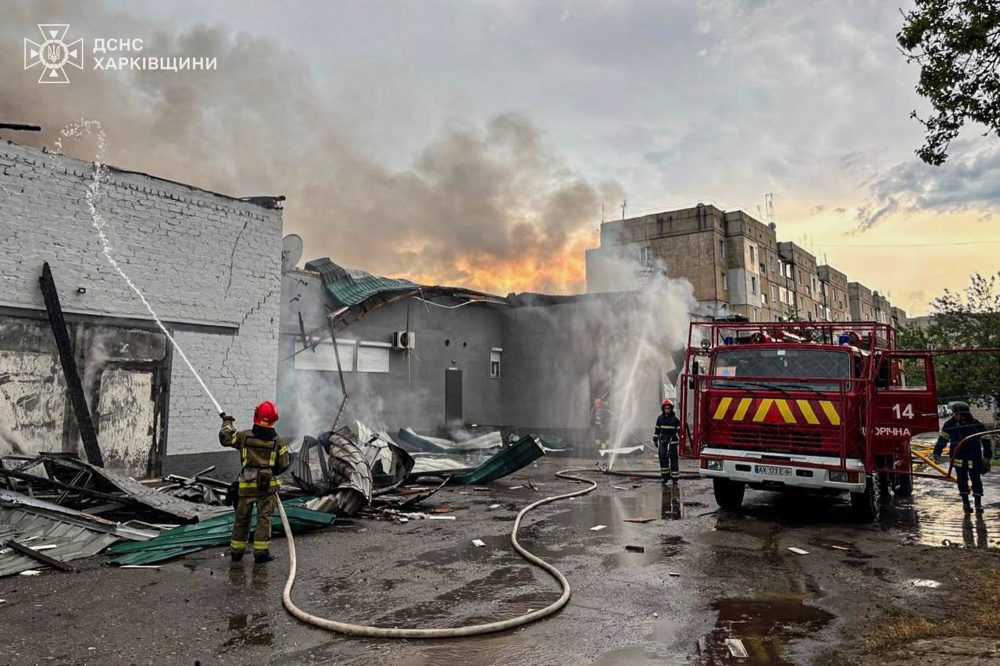
STAROBILSK, Russian-controlled Ukraine, May 24 (TV Delmarva) — Investigation teams spent Sunday examining the destroyed remains of a dormitory building following what Russian officials describe as a deadly Ukrainian drone assault in the Luhansk region, an area under Russian occupation during the ongoing four-year conflict.
Officials reported that rescue operations ended late Saturday evening, with the final casualty count from the attack on the educational facility reaching 21 victims, including numerous young women.
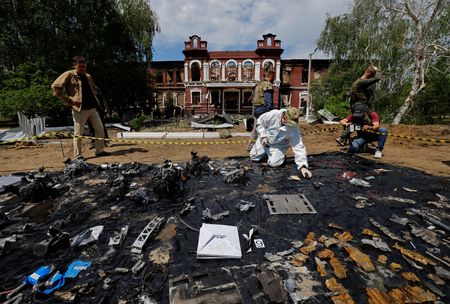
The structure’s front wall showed massive damage with large openings and shattered glass throughout. Debris consisting of bent metal pieces and broken concrete scattered around what had been the building’s central yard, while damaged furniture and classroom equipment remained stacked inside.
An investigator wearing safety equipment studied metal fragments and other wreckage arranged on a protective covering while personnel from Russia’s Investigative Committee gathered evidence from Friday’s incident.
Reuters covered this story from Starobilsk during an official press tour arranged by Russia’s Foreign Ministry on May 24, 2026.
Ukrainian military officials rejected claims of responsibility for the strike, stating they had targeted a specialized drone operations unit in the vicinity and maintained adherence to international humanitarian standards.
Reuters could not independently confirm the details of what occurred.
“Three waves of UAVs (drones) 10-15 minutes apart,” Russia’s Human Rights Commissioner, Yana Lantrova, told journalists outside the damaged structure while a group displayed photographs of the deceased.
“Sixteen UAVs in total. They waited for the children to run out. They fired directly at the children.”
The educational institution, located in eastern Luhansk region and annexed by Russia months following the Kremlin’s February 2022 invasion of Ukraine, displayed official Russian government emblems.
Posted on one interior wall were guidelines for responding to “the threat of terrorism.”
Russian President Vladimir Putin directed his armed forces to develop retaliatory options against Ukraine following the incident.
Less than 24 hours later, during the early hours of Sunday, Russia launched an assault on Kyiv and nearby regions using hundreds of drones and missiles in what represented one of the most intense bombardments of the capital since the conflict began.
The nighttime attack resulted in four deaths and included the deployment of a Russian Oreshnik hypersonic missile targeting an area south of Kyiv.
Eight Arab-Islamic nations issued a harsh rebuke on Sunday against Israeli police minister Itamar Ben-Gvir for his conduct toward humanitarian workers who were detained while attempting to deliver aid to Gaza.
The controversy erupted after Ben-Gvir shared a video showing him mocking activists who were restrained on the ground during their detention. Several of the detained individuals, who had been part of a flotilla seeking to transport humanitarian supplies to Gaza, have since claimed they suffered physical abuse while in custody – allegations that Israel’s prison service has rejected.
In their joint statement, the foreign ministers from Saudi Arabia, Egypt, Jordan, Qatar, the United Arab Emirates, Turkey, Indonesia and Pakistan declared: “Ben-Gvir’s deliberate public humiliation of detainees is a disgraceful assault on human dignity and a clear violation of Israel’s obligations under international law, including international humanitarian law, and international human rights law.”
Nigerian President Bola Tinubu secured his party’s nomination for the upcoming presidential election after winning Saturday’s primary by an overwhelming margin, according to results released Sunday.
The All Progressives Congress party conducted its presidential primary following an unexpected challenge from Stanley Osifo. Tinubu dominated the voting, capturing close to 11 million votes while Osifo received only 16,500.
The president has earned praise from international investors following his implementation of significant economic reforms, which included eliminating fuel and electricity subsidies, dismantling foreign exchange restrictions, and restructuring the nation’s tax system.
Tinubu’s path to re-election became clearer when an opposition alliance aimed at presenting a unified candidate against him fell apart earlier this month.
The president assumed office in 2023 following his victory over two primary opponents, who later contested the election results in court claiming fraud. Tinubu maintained that his victory was legitimate.
Approximately 2,000 demonstrators marched through Bilbao, Spain on Sunday, expressing outrage over how Basque police officers handled activists returning from a Gaza aid mission who had been held in Israeli custody.
The controversy erupted Saturday at Bilbao airport when a family member of one of six returning activists attempted to reach them, but was forcibly stopped by an officer, sparking confrontations between both groups, according to footage from state broadcaster TVE.
Video evidence revealed officers using batons to strike individuals and forcing others to the ground while bystanders shouted in disapproval. Prior to the altercation, the activists had apparently blocked passenger exits, prompting police intervention to relocate them.
The Basque regional police department announced Sunday that it has opened an inquiry to assess whether officers followed proper protocols. Reuters has contacted the Spanish government seeking their response.
During Sunday’s demonstration, pro-Palestinian marchers displayed signs criticizing the Basque police department and claiming the regional government was cooperating with Zionism.
The activists had been freed from Israeli custody following their detention aboard a flotilla attempting to deliver humanitarian supplies to Gaza. Event organizers claimed Friday that the activists faced mistreatment during Israeli detention, with multiple individuals requiring hospitalization for injuries and no fewer than 15 alleging sexual violence, including rape.
Israel’s prison service rejected these accusations, and Reuters could not independently confirm the activists’ allegations.
Spain joined other Western nations Thursday in expressing outrage after Israeli minister Itamar Ben-Gvir shared a video of himself ridiculing the activists while they were restrained on a prison floor.
Francesca Albanese, a UN expert on the Palestinian territories, has urged accountability for those involved in the Bilbao airport incident, while Amnesty International has called for a comprehensive investigation.
The Israeli Embassy in Spain has requested an “explanation” from the Spanish government regarding the airport events.
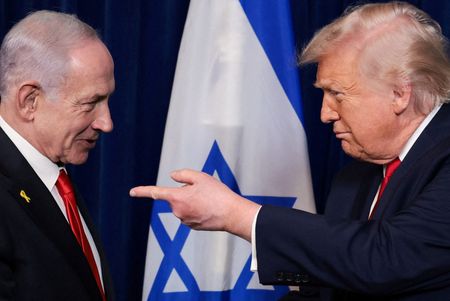
Israel’s Prime Minister conveyed to the U.S. President during a Saturday phone conversation that his nation would continue operating freely against security threats in Lebanon, according to an Israeli government source.
The discussion occurred as the President revealed that Washington and Iran had “largely negotiated” a memorandum of understanding regarding a peace agreement that would restore access to the Strait of Hormuz, a crucial maritime route that has been essentially blocked since the U.S. and Israel began their military campaign against Iran in February.
“In last night’s conversation with President Trump, the Prime Minister emphasized that Israel will maintain freedom of action against threats in all arenas, including Lebanon, and President Trump reiterated and supported this principle,” the Israeli political source told Reuters on Sunday, asking not to be named.
Hope increased for a possible resolution to the three-month conflict after the President announced that Pakistan was helping broker an emerging deal to restore navigation through the Strait of Hormuz.
Iran’s Fars news agency reported the proposed agreement includes provisions preventing the U.S. and its partners from attacking Iran or its allies, while Iran would commit to avoiding preemptive strikes against them.
A prominent Israeli politician expressed opposition to accepting any ceasefire in Lebanon, where Israeli forces have deployed to combat the Iranian-supported Hezbollah militia, as part of negotiations with Iran.
The Israeli source indicated that the U.S. continues briefing Israel on the ongoing diplomatic talks with Iran.
“President Trump made it clear that he will stand firm in negotiations on his consistent demand for the dismantling of the Iranian nuclear program and the removal of all enriched uranium from its territory,” the source said, “and that he will not sign a final agreement without these conditions being met”.
The President posted on Truth Social that his conversation with Israel’s leader had proceeded “very well”.
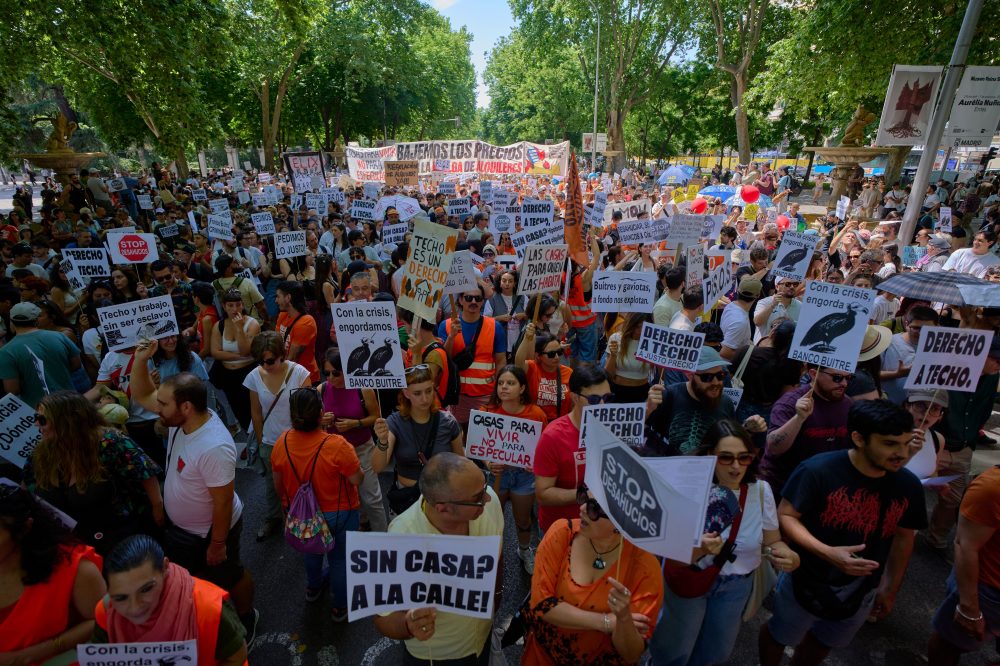
Thousands of demonstrators filled Madrid’s city center Sunday, voicing their frustration over escalating housing prices that have pushed homeownership and rental costs beyond reach for many Spanish citizens, despite the nation’s recent economic growth. The problem is particularly acute in major urban centers like Madrid and Barcelona.
The housing affordability crisis poses a significant political challenge for Socialist Prime Minister Pedro Sánchez as he approaches the 2027 elections.
Spain has historically emphasized homeownership with limited public rental housing available. According to analysts, rental prices have climbed due to heightened demand from tourism growth and population increases tied to immigration.
Demonstrators carried signs and voiced chants emphasizing housing as a basic right. One sign displayed the message: “We want neighbors, not tourists.”
Among those marching was Estrella Baudu, a 28-year-old teacher currently residing with her grandmother. “The situation for many young people like me is quite complicated, and it is very difficult to find a rental home due to the prices and low salaries,” she said.
The housing demonstration occurred one day following a separate large-scale protest in Madrid targeting Sanchez, amid growing political tensions surrounding corruption accusations and general government dissatisfaction.
Home purchases have become financially impossible for many Spanish residents, with market forces and speculation inflating costs, particularly in major metropolitan areas and coastal regions.
In recent weeks, Spain’s government approved an extensive 7 billion euro ($8.23 billion) initiative aimed at constructing additional public housing over four years while providing assistance to young renters and prospective homebuyers who face the greatest burden from elevated housing expenses.
“The government may say it is taking measures, but the reality for those of us who rent is that we are receiving notices from our landlords who want to evict us,” said protester Fernando de los Santos, a 36-year-old university professor. “The only thing they offer us are abusive price increases.”
A related legislative measure that would have continued temporary rent controls failed to gain parliamentary approval, leaving the Sánchez administration vulnerable to additional housing-related criticism in the near term.
Spanish citizens have organized multiple street demonstrations nationwide in recent years to oppose high rental and purchase costs. A primary demand involves stricter regulation of tourist rental properties that have expanded throughout Spanish city centers, as the country welcomed a record 97 million international visitors last year.
Housing expenses increased nearly 13% compared to the previous year by late 2025, based on data from Eurostat, the EU statistics agency.
Spain’s central bank calculates that the Southern European country of 50 million residents faces a shortage of 700,000 homes when comparing housing demand to new construction rates.
KATHMANDU, Nepal — A veteran British mountaineering guide shows no signs of slowing down after achieving a remarkable milestone on the world’s tallest peak.
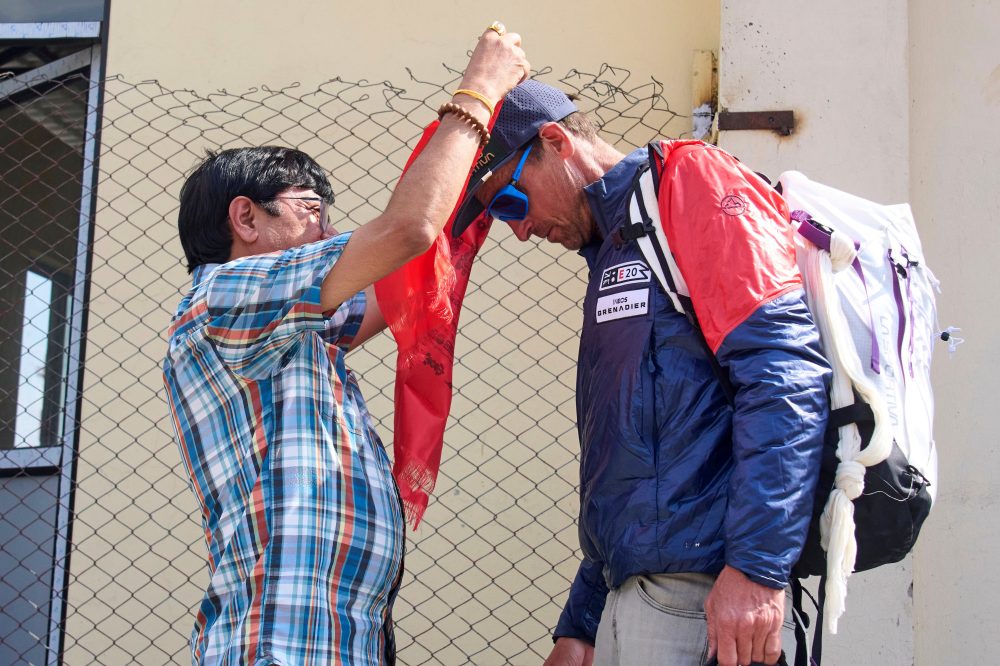
Kenton Cool, a climber from southwest England, reached Mount Everest’s summit for the 20th time this week, establishing a new record for most successful climbs by a non-Sherpa guide on the 8,849-meter (29,032-foot) mountain.
“Maybe another two or three more times,” Cool said when speaking with reporters following his flight from the mountain region to Kathmandu on Sunday.
The 52-year-old mountaineer had previously indicated last year that he planned to attempt Everest perhaps just once more before turning his attention to other, smaller peaks.
Cool joined hundreds of other climbers and their Sherpa guides who successfully reached the summit in recent days, despite delays created by a dangerous serac threatening the climbing route. The hazardous conditions forced mountaineers to attempt their climbs during a brief window of favorable weather, creating significant crowding at the top.
Wednesday saw 274 climbers reach the summit in a single day, establishing a new daily record for the popular southern route located in Nepal.
“We had no issues. We had no crowds, we had a great summit,” Cool explained, noting that his successful climb occurred on Friday.
While climbers can approach the summit from Nepal’s southern side or from the northern face in China’s Tibet region, Chinese officials have blocked access to their route this season. Nepal’s authorities granted climbing permits to 494 mountaineers, each accompanied by an equal number of Sherpa guides.
Veteran guide Kami Rita Sherpa, who holds climbing records of his own, has recommended limiting climber numbers due to excessive crowding this season.
Cool disagreed with restricting climber quantities, instead advocating for greater focus on the expertise and knowledge of permit holders attempting the mountain.
“It is the various companies being little more diligent on who they take, so they are making sure there is the experience of the climbers and then just being little more careful with when they want to climb,” he explained.
Nepal’s mountaineering officials are working to implement new rules that would require climbers to demonstrate previous experience, though current regulations only mandate payment of $15,000 permit fees.
Benin’s newly inaugurated president, Romuald Wadagni, promised during Sunday’s ceremony to tackle increasing security concerns and make sure economic progress reaches ordinary citizens in meaningful ways.
The Constitutional Court confirmed Sunday that Wadagni secured his victory on April 12, capturing more than 94% of votes cast against opponent Paul Hounkpe.
The incoming leader replaces Patrice Talon, who governed the West African country from 2016 and departed after completing two terms as required by the constitution.
At 49 years old, the former finance minister brings a decade of experience in that position and is anticipated to build upon Talon’s reform policies that produced consistent economic expansion and enhanced the nation’s business environment.
“Our economy has progressed. That’s a fact. But we all know that national growth only makes sense when it becomes visible in people’s everyday lives,” Wadagni stated during his swearing-in speech.
His administration plans to emphasize employment opportunities, availability of essential services, and social safety nets.
“The development of Benin must be experienced in every component of society and in every territory of the Republic,” he declared.
The new president also recognized growing security concerns, as extremist organizations spreading from the Sahel region have increased attacks in Benin’s northern areas over recent years.
“Benin will not yield to fear or complacency,” he stated, promising enhanced collaboration with neighboring nations confronting similar threats.
Representatives from Niger, Burkina Faso and Mali, the Sahel nations most affected by these security issues, attended the inauguration ceremony along with several other countries.
In an area where certain leaders have attempted to prolong their time in office, Wadagni emphasized his dedication to democratic principles.
“I will serve with the constant awareness that power is never a personal privilege,” he remarked.
The previous administration barely weathered an attempted coup in December, highlighting the unstable political and security conditions Wadagni inherits as he begins his presidency.
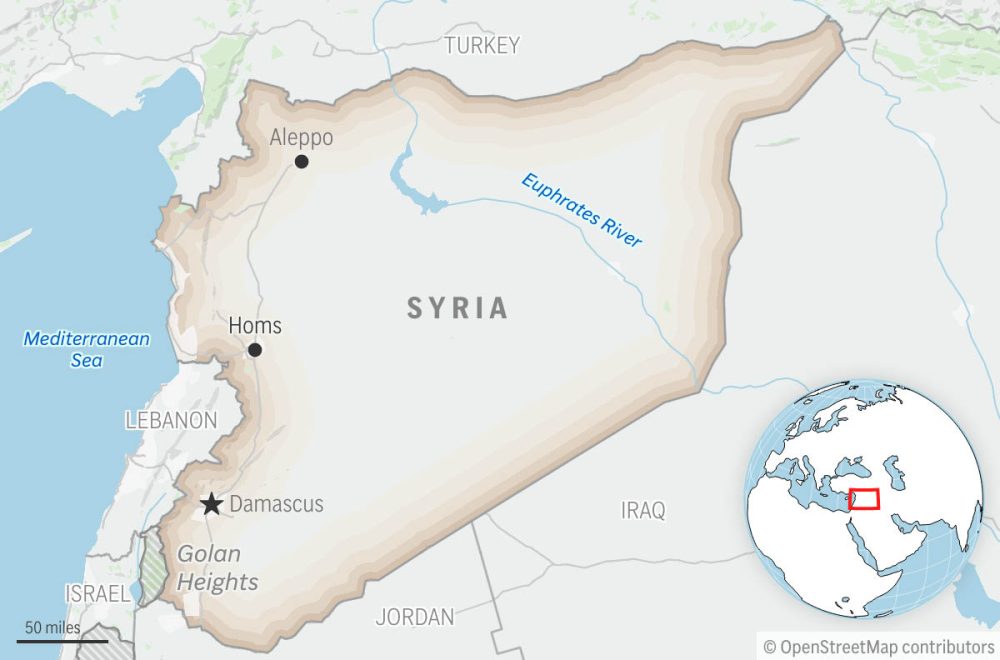
HASSAKEH, Syria (AP) — Parliamentary voting took place Sunday across Syria’s Kurdish-populated northeastern Hassakeh province and the community of Kobani, territories that returned to government authority following military action in January.
The remainder of Syria participated in People’s Assembly elections last October, nearly twelve months following the collapse of the Assad dynasty during a rebel campaign. At that time, however, extensive portions of the nation’s northeastern territory remained under Kurdish-led Syrian Democratic Forces authority, particularly Hassakeh and Kobani.
The nation continues to struggle with the catastrophic effects of its civil conflict that lasted from 2011 through 2024, with doubt persisting among significant portions of minority populations now governed by Islamist leadership, while countless Syrians face economic hardship.
During January, government military operations against Kurdish forces brought those areas back under Damascus control, now governed by interim President Ahmad al-Sharaa’s Islamist-led administration.
Sunday’s balloting determined the final 11 positions in Syria’s inaugural parliament following former President Bashar Assad’s removal from power. Hassakeh accounts for nine positions while Kobani in Aleppo province represents two additional seats.
Although legislative contests during Assad’s rule lacked genuine competition and essentially involved internal Baath Party member selection, the current system under al-Sharaa also falls short of complete democratic representation. Electoral colleges within Syria’s districts select most parliamentary positions, while al-Sharaa personally selects the remaining third of lawmakers.
Nevertheless, participants expressed contentment with the procedure as progress in Syria’s post-conflict and post-authoritarian transition.
“We want representatives who will amplify the voices of people the Hassakeh,” Mukhalaf al-Hatthal, one of the voters in Qamishli, told The Associated Press. He said the biggest concerns are related to infrastructure, agriculture and maintaining peace. “There is a great democratic atmosphere here.”
However, Masoud al-Majeed, another member of the electoral college, said he hoped that the voting process will change, adding the current one does not represent everyone.
HONG KONG (AP) — Thousands of festival-goers flocked to Cheung Chau, an outer island of Hong Kong’s bustling metropolis, to participate in the famous bun celebration that honors a hundred-year-old custom based on seeking peace and divine favor.
Visitors and locals endured sweltering temperatures to observe youngsters in elaborate outfits participating in the “Piu Sik” procession, meaning “floating colors.” Young participants, portraying mythical gods, historical figures, or community leaders, were elevated on platforms above the spectators as they traveled through the island’s tight pathways.
The main attraction occurs at midnight with the “bun-scrambling” contest, where competitors scale a structure laden with plastic buns. Contestants must gather buns within a designated timeframe, with each bun worth varying points based on its position. Victory goes to whoever accumulates the most points, while a separate “Full Pockets of Lucky Buns” prize recognizes the person collecting the most buns overall.
The climbing event was halted for many years following a 1978 incident when bun structures fell down, causing injuries to numerous participants. Officials brought back the custom in 2005.
Hong Kong’s Intangible Cultural Heritage Office explains that local folklore tells of Cheung Chau suffering from a deadly epidemic, prompting villagers to bring in religious leaders to establish a prayer altar beside a temple for divine intervention. Residents also carried religious statues through community streets. Following these ceremonies, the disease ended, leading Cheung Chau inhabitants to continue hosting this event, also called the Cheung Chau Jiao Festival, to ward off calamity and seek divine protection and tranquility, according to the office.
This celebration has emerged as among Hong Kong’s most sought-after tourist experiences in recent times. Visitors frequently purchase steamed buns marked with Chinese symbols meaning “peace” and “safety” along with festival-themed keepsakes.
ANKARA, May 24 – Law enforcement officers deployed tear gas and forced their way past the entrance barriers of Turkey’s primary opposition party building on Sunday to remove leadership that had been ordered out by the courts, according to an eyewitness account.
A higher court ruled Thursday to remove Republican People’s Party (CHP) leader Ozgur Ozel from his position, invalidating the outcome of the CHP leadership vote that brought him to power in 2023 due to alleged procedural violations.
The judicial decision restored former CHP chairman Kemal Kilicdaroglu to the leadership role, who had been defeated by President Tayyip Erdogan in the country’s national election during that same year.
A court in Bahrain has imposed life sentences on nine people and sentenced two additional defendants to three years behind bars for working with Iran’s Revolutionary Guard Corps (IRGC) in activities the court characterized as “hostile and terrorist acts” targeting Bahrain, according to the state news agency’s Sunday report.
According to the court statement, those convicted participated in collecting intelligence about sensitive locations and enabling related financial transactions.
On May 9, Bahrain’s interior ministry announced the detention of 41 individuals allegedly connected to the IRGC. Security officials discovered a network with ties to the IRGC, while prosecutor investigations also examined cases involving support for Iranian attacks, the ministry stated.
Following a war launched by the United States and Israel against Iran on February 28, Iran conducted strikes against targets in Bahrain and other Gulf Arab nations that host American military installations.
President Donald Trump announced that negotiations with Iran concerning Middle East warfare have been “largely negotiated,” following weekend discussions with Israel and regional partners about reopening the Strait of Hormuz.
However, other administration figures urged restraint on Sunday, with Secretary of State Marco Rubio stating that “significant progress, although not final progress has been made” during the talks.
During his four-day trip to India for conferences with Indian, Australian and Japanese representatives, Rubio expressed optimism for positive developments in the near future.
According to Rubio, the discussions have achieved one of Trump’s primary objectives, “that is a world that no longer has to be in fear or worry about an Iranian nuclear weapon.”
Trump revealed on Saturday that he had conducted conversations with officials from Saudi Arabia, the United Arab Emirates, Qatar, Pakistan, Turkey, Egypt, Jordan and Bahrain, plus a separate discussion with Israel.
“Final aspects and details of the Deal are currently being discussed, and will be announced shortly,” Trump posted on social media without providing specifics.
This development followed a week during which the U.S. considered launching additional strikes against the Islamic Republic that could have shattered the delicate ceasefire.
According to two regional sources, the prospective agreement would involve Iran’s pledge to abandon nuclear weapons development and Tehran’s consent to surrender its stockpile of highly enriched uranium.
One source with firsthand knowledge of the discussions explained that the method for Iran’s uranium surrender remains under negotiation throughout a 60-day timeline.
The source indicated that portions of the material would likely be diluted, while remaining quantities could be sent to another nation, possibly Russia.
The International Atomic Energy Agency reports that Iran possesses 440.9 kilograms (972 pounds) of uranium enriched to 60% purity, which represents a brief technical leap from the 90% weapons-grade threshold.
The official stated that the Strait of Hormuz would reopen progressively alongside the U.S. lifting its blockade of Iranian ports.
The second briefed official revealed that America would permit Iran to market oil through sanctions exemptions. Relief from sanctions and release of Iran’s frozen assets would be negotiated within the 60-day period, the source added.
Both sources confirmed the proposed deal encompasses ending hostilities between Israel and Hezbollah, plus a pledge against meddling in regional nations’ internal matters. The officials requested anonymity to discuss private negotiations.
Three months have elapsed since the U.S. and Israel struck Iran on Feb. 28, eliminating senior Iranian leadership including its supreme leader and disrupting nuclear discussions between America and Iran for the second time in under a year. Iran retaliated against Israel and neighbors housing U.S. military presence, alarming Gulf states that had viewed themselves as secure zones in a volatile region.
A ceasefire has remained intact since April 7. However, Iran’s effective closure of the Strait of Hormuz to vessels transporting regional petroleum, natural gas and other essential materials has become a center of worldwide anxiety and economic hardship.
Israeli leadership worries that Hezbollah, the Lebanese militant organization aligned with Iran, continues posing a major threat to Israel and that Lebanon lacks capability to disarm the group.
Prime Minister Benjamin Netanyahu cautioned Trump that Israel “maintains freedom of action against threats in all arenas, including Lebanon,” according to a source familiar with their conversation. The source requested anonymity due to lack of media authorization.
The source reported that Trump clearly informed Netanyahu he would not approve any final arrangement without requirements that Iran dismantle its complete nuclear program and eliminate all enriched uranium from Iranian territory.
Israel’s Minister of Science and Technology Gila Gamliel, a member of Netanyahu’s Likud party and part of his national security cabinet, told Israel’s Army Radio on Sunday morning that Israel is taking a “wait-and-see” approach.
A fragile, U.S.-mediated ceasefire in the Israel-Hezbollah conflict in Lebanon has existed since April 17, a war that commenced two days following the Iran conflict’s start.
Regardless of the ceasefire, combat persists on both sides. Hezbollah fires daily drones and missiles at Israeli forces and northern Israel, while Israel attacks Lebanese targets as its military maintains presence across extensive areas of southern Lebanon.
The Lebanese Health Ministry reports over 3,000 deaths in the recent fighting round. Furthermore, 22 Israeli soldiers and one defense contractor have died in or around southern Lebanon, and two civilians have perished in northern Israel, primarily from Hezbollah drones, Netanyahu’s office confirmed.
ANKARA (AP) — A tense confrontation unfolded Sunday at Turkey’s primary opposition party offices, where members have barricaded themselves inside to prevent a court-mandated leadership change from taking place.
The crisis at the Republican People’s Party, known as CHP, began Thursday after an appeals court overturned the party’s November 2023 leadership election that brought Ozgur Ozel to power, replacing former chairman Kemal Kilicdaroglu.
The court decision removes Ozel and the current executive committee from their positions, mandating that Kilicdaroglu and his previous leadership team be reinstated. Party officials argue this judicial intervention represents a politically motivated attack designed to undermine their organization amid numerous ongoing legal battles targeting party members and elected representatives.
The 77-year-old Kilicdaroglu had stepped down after leading the party for 13 years without securing victory in any nationwide contests. In contrast, Ozel achieved a significant triumph against President Recep Tayyip Erdogan’s Justice and Development Party during his first major test in the 2024 local elections.
Turkey’s next presidential contest is scheduled for 2028, though Erdogan retains the authority to schedule an earlier vote. His primary political rival, Istanbul Mayor Ekrem Imamoglu from the CHP, has been behind bars since March of last year while facing corruption-related charges in court.
Political analysts widely believe the numerous legal proceedings against the CHP, primarily involving corruption accusations, represent an effort to weaken the opposition before upcoming elections. Government officials maintain that Turkey’s judicial system operates without political interference and makes independent decisions.
The overwhelming majority of party members have shown support for Ozel. He and most party officials have remained inside the CHP’s Ankara headquarters since Thursday’s court ruling, preventing the court-appointed leadership from accessing the building. Both factions planned to hold discussions Sunday afternoon seeking a resolution to the crisis.
Media outlets reported that a group appeared outside the building whom Ozel characterized as non-party members sent to create intimidation. Police numbers increased throughout the morning, and Kilicdaroglu’s attorney, Celal Celik, formally requested Ankara law enforcement assistance in clearing the building. The Ankara Governor’s office issued a statement granting approval for this request.
Erdogan has maintained control over Turkey as either prime minister or president since 2003. His winning streak faced a significant challenge in 2019 when the CHP captured control of multiple major cities during local elections. Imamoglu gained prominence in Istanbul as a compelling political figure whom many believed capable of defeating Erdogan in future contests.
Health officials in Gaza report that three family members, including an infant, were killed when Israeli forces struck an apartment building at a refugee camp in the central part of the territory on Sunday.
According to medical personnel, the attack at the Nuseirat refugee camp claimed the lives of Mohammad Abu Mallouh, his wife Alaa Zaqlan, and their six-month-old son Osama.
Israeli military officials have not yet provided a response regarding the deadly incident.
The violence continues despite a ceasefire agreement reached in October through mediation by U.S. President Donald Trump. The truce has not succeeded in ending Israeli military operations in Gaza, as Israel and Hamas remain at an impasse during indirect negotiations concerning the militant organization’s disarmament.
Under the current ceasefire arrangement, Israel maintains authority over more than half of Gaza’s territory, while Hamas retains control of a narrow coastal strip.
Gaza health authorities report that 880 Palestinians have died in Israeli military operations since the ceasefire took effect. These statistics do not separate militant fighters from non-combatants.
Israeli military sources indicate that four of their soldiers have been killed by militants during this same timeframe.
Hamas has not released casualty figures for its own forces. Israeli officials state that their military actions following the ceasefire are designed to thwart potential attacks and prevent individuals from approaching the armistice boundary established with Hamas.
Turkish government officials directed law enforcement to forcibly remove the current leadership of the nation’s primary opposition party from their headquarters on Sunday, following through on a court decision that has triggered a significant political upheaval.
Law enforcement officers in riot gear and large crowds assembled outside the Republican People’s Party (CHP) headquarters in Turkey’s capital after the Ankara governor’s office issued directives to remove party members who support the current leader Ozgur Ozel.
An appeals court in Turkey ruled on Thursday to invalidate the outcome of a party convention where Ozel won leadership in 2023, referencing unspecified procedural violations. The judicial decision restored former CHP Chairman Kemal Kilicdaroglu to power, who had previously been defeated by President Tayyip Erdogan in that year’s presidential race.
On Saturday, Ozel urged that a new party convention should take place immediately, while Kilicdaroglu stated that such a gathering would occur at a suitable moment.
The current CHP leadership supporting Ozel has denounced the judicial decision as a “judicial coup” and Ozel vowed to challenge it through the legal system while remaining “day and night” at the party’s headquarters in Ankara.
Party legislators on Saturday chose Ozel to lead the CHP’s legislative caucus.
MELBOURNE, Australia — Authorities in Australia report a deadly shark encounter at the Great Barrier Reef on Sunday, marking the country’s second fatal attack in just over a week.
A 39-year-old man lost his life while spearfishing with three companions at Kennedy Shoal, located off the Queensland state coastline south of Cairns, according to Police Inspector Elaine Burns.
“The man had been spearfishing when he was attacked and died from a critical head injury,” Burns told reporters.
The Cairns resident was transported by boat around midday to Hull Heads, a tourist destination, where emergency medical personnel were standing by. According to an ambulance service statement, he had “sustained injuries not compatible with life.”
Kennedy Shoal serves as a shallow coral reef destination favored by recreational anglers. The location also draws diving enthusiasts to explore the Lady Bowen, a shipwreck from the 19th century.
Before the attack occurred, anglers had reported bull shark sightings in the vicinity.
Just over a week earlier, on May 16, another spearfisher, Steve Mattabonni, was fatally attacked at a coral reef near Rottnest Island off Western Australia state’s southwest coastline.
The 38-year-old Perth man was transported by boat to the vacation island, where medical responders could not save his life.
Officials suspect a five-meter (16-foot) white shark was responsible for that incident.
In recent decades, Australia has recorded an average of more than three deadly shark encounters annually. This latest fatality represents Australia’s third shark-related death for 2026.
Earlier this year, 12-year-old Nico Antic passed away in a hospital following an attack by a suspected bull shark near a Sydney beach on Jan. 18.
While prospects for peace between Israelis and Palestinians appear bleak, business entrepreneurs from both communities are forging partnerships that demonstrate cooperation remains possible despite deep divisions.
The 50:50 Startups program continues to bring together Arab and Jewish business founders who collaborate on ventures that span the conflict lines. However, this year’s group of participants is notably smaller than in previous years due to travel limitations caused by the ongoing war.
Program co-founder Amir Grinsteen established the initiative seven years ago with the belief that joint business ventures could create enduring connections between the two communities, potentially advancing peace efforts through economic collaboration.
The entrepreneurs’ willingness to work together offers a glimpse of what cooperation might look like, even as broader political reconciliation efforts have stalled.
Citizens of Cyprus headed to voting stations Sunday for a parliamentary election anticipated to strengthen anti-corruption advocates and far-right movements while diminishing centrist political parties that support President Nikos Christodoulides.
The election, being monitored closely as an indicator of public opinion before the 2028 presidential race, saw more than half a million eligible voters choosing 56 legislators from an unprecedented pool of 753 candidates.
While Cyprus operates under a presidential government structure, Sunday’s election serves as a measure of support for Christodoulides, who lacks his own political party and depends on other parties’ support to advance legislative initiatives.
Voting concluded at 1500 GMT, with definitive results anticipated approximately two hours afterward.
Political newcomers appeared positioned to make advances as three centrist parties – Diko, Dipa and EDEK – that currently back the president faced weakening voter support for at least two of them, according to recent polling data.
The nation’s established political organizations, including right-wing DISY and Communist AKEL parties, have similarly been ceding influence to emerging political movements.
Polling data indicated advances for far-right ELAM party, along with political newcomers ALMA and Volt, which have focused their campaigns on improved transparency and eliminating corruption – a concern ranking high among voter priorities.
Sunday’s election results may compel Christodoulides to pursue backing from different sources, according to political observers, with some indicating that ELAM and DISY might be potential partners. Neither Christodoulides nor the two parties have made statements regarding potential post-election partnerships.
The election occurred amid ongoing cost-of-living challenges, housing affordability issues and migration concerns – topics that have shaped political discussion in the European Union member nation during recent months.
MOSCOW, May 24 – Russian military forces launched overnight strikes against Ukrainian targets using four different missile systems – Oreshnik, Iskander, Kinzhal and Zircon weapons – according to reports from Russian state media outlets on Sunday.
Moscow characterized the attacks as a response to Ukrainian strikes against civilian areas within Russian territory, state news agencies reported.
According to the Russian Defence Ministry, as quoted by the Interfax news agency, the missile strikes successfully targeted Ukrainian military command centers, air bases and facilities connected to Ukraine’s defense manufacturing sector.
Reuters was unable to independently confirm the military claims from the battlefield.
BEIJING, May 24 – Fatal flooding in China’s Chongqing municipality has claimed three lives while 17 individuals remain unaccounted for, according to reports from China’s state-run Xinhua news agency.
The casualty count was updated as of 2:30 pm (0630 GMT) on Sunday, following intense rainfall that struck Chongqing’s Yongchuan district beginning Saturday evening and continuing into the early morning hours of Sunday, Xinhua reported.
Emergency rescue operations are currently in progress.
China’s national planning agency has designated 20 million yuan ($2.94 million) from central government funds to support disaster recovery efforts and rebuild damaged infrastructure and public services in Chongqing, according to an announcement made Sunday on the National Development and Reform Commission’s official WeChat platform.
A deadly blast along railway tracks in Quetta, Pakistan has claimed the lives of at least 24 individuals, according to reports from Al Arabiya news outlet on Sunday, which cited official sources.
The explosion also left more than 50 people wounded and caused a cargo train to derail, with gunshots heard following the initial blast, Al Jazeera reported.
Maritime tensions escalated for a second consecutive day as Taiwanese and Chinese coast guard vessels maintained a tense face-off near the Pratas islands in the South China Sea, Taiwan’s Coast Guard reported on Sunday.
Beijing considers democratically ruled Taiwan part of its territory, a claim that the government in Taipei disputes. Over the last five years, China has intensified military activities around the island as part of its pressure campaign against Taiwan.
The Pratas islands, positioned between southern Taiwan and Hong Kong under Taiwanese control, are considered by security analysts to be particularly susceptible to Chinese assault given their remote location more than 400 kilometers (250 miles) from Taiwan’s main island.
According to Taiwan’s Coast Guard, they detected a Chinese Coast Guard vessel approaching the Pratas on Saturday and quickly deployed their own ship, which issued warnings. The two vessels then “engaged in an intense verbal confrontation over sovereignty via radio.”
The Chinese vessel announced it was conducting routine operations and declared that China possessed sovereignty and jurisdiction over the Pratas, Taiwan’s Coast Guard reported.
“Please do not destroy peace. You should return and strive for democracy. That is the correct way to serve your country,” the Taiwanese ship responded, according to footage released by Taiwan’s coast guard.
China’s Taiwan Affairs Office did not provide a response when contacted for comment.
A Taiwan Coast Guard official informed Reuters that the Chinese vessel remained positioned 21 nautical miles northeast of the Pratas, with the standoff ongoing as of Sunday afternoon.
The official, who requested anonymity due to the delicate nature of the situation, noted that China’s language regarding jurisdiction and sovereignty was uncommon, as was the extended duration of its presence in waters so near the Pratas.
The Pratas, which form an atoll that also serves as a Taiwanese national park, receive minimal defense coverage from Taiwan, with coast guard units rather than military forces responsible for protection.
Earlier this year in January, Taiwan reported that a Chinese surveillance drone momentarily flew over the Pratas, which Taiwan’s defense ministry characterized as a “provocative and irresponsible” action.
Polish authorities are investigating a fraudulent emergency call that led firefighters to break into a Gdansk apartment belonging to a relative of President Karol Nawrocki on Saturday, according to Prime Minister Donald Tusk.
The prime minister convened an emergency meeting of the Government Security Center on Sunday following the bogus report, which he described as part of an escalating pattern of fake emergency calls targeting the country.
According to the interior ministry, emergency dispatchers received a report claiming there was a fire at the apartment. First responders were deployed to the scene, where firefighters forced entry into the residence of Nawrocki’s family member.
“The apartment was inspected and found no fire hazard or injured persons, as the premises were empty. Due to the situation, the police are conducting an investigation to identify the perpetrators,” a spokesperson for the interior ministry stated.
Prime Minister Tusk characterized the event as “another telephone provocation” and acknowledged that while emergency responders acted appropriately, officials must examine current protocols for detecting such hoax calls and work swiftly to catch those responsible.
“The provocateurs’ actions are aimed at national security. At all of us. We will use all available methods to identify and apprehend the saboteurs, regardless of where they come from or who directs them,” Tusk posted on the social media platform X.
QUETTA, Pakistan — An explosive device detonated alongside railroad tracks in the southwestern Pakistani city of Quetta on Sunday as a passenger train traveled through the area, injuring more than 30 people, according to local authorities.
Video footage posted online showed the blast’s impact caused two train cars to flip over and ignite, creating dense black smoke that billowed into the sky.
The bombing occurred in a location where security personnel are typically positioned, severely damaging multiple nearby structures and destroying over a dozen parked cars along the street, witnesses and social media images revealed.
Medical staff at area hospitals reported treating more than 30 injured victims, with several patients in critical condition.
Balochistan government official Babar Yousafzai confirmed that authorities were continuing their investigation into the explosion but declined to provide additional information.
Quetta serves as the provincial capital of Balochistan, a region plagued by ongoing insurgent activity.
The province, rich in oil and mineral resources, has experienced a prolonged low-intensity insurgency led by separatist organizations like the banned Baloch Liberation Army, or BLA, which seeks independence from Pakistan’s federal government. These militant groups regularly attack security personnel, government facilities and civilians throughout the province and other parts of the nation.
While no organization has yet taken credit for Sunday’s bombing, investigators will likely examine the BLA’s involvement, as the group has accepted responsibility for comparable incidents previously.
Despite Pakistani officials’ claims of successfully suppressing the insurgency, attacks in Balochistan continue to occur.
Earlier in 2024, a suicide bombing at a Balochistan railway station claimed at least 26 lives, including military personnel.
Emergency teams in northern China continued their search for survivors Sunday following a catastrophic gas explosion that claimed at least 82 lives at a coal mining facility, marking the nation’s most devastating mining disaster in recent years.
The deadly incident occurred Friday evening at the Liushenyu coal mine situated in Qinyuan county within Changzhi city. An Associated Press journalist observed law enforcement and security personnel stationed at the mining site’s entrance while emergency response vehicles remained positioned throughout the area.
State media outlets reported that hundreds of emergency responders and medical staff were deployed to assist in the ongoing rescue operations.
Following the tragic gas explosion in Shanxi province, Chinese President Xi Jinping demanded a complete investigation and called for holding accountable all parties responsible for the disaster.
During a Saturday evening press briefing, local authorities confirmed that two individuals remain unaccounted for while numerous miners received hospital treatment. Officials revised the fatality count downward from an initial report of 90 deaths, citing confusion at the scene and incorrect information supplied by the mining company as reasons for the earlier discrepancy.
According to state media accounts, some hospitalized miners remembered observing smoke during the incident before losing consciousness.
Local authorities stated the coal mining operation had committed “serious” legal violations, though they declined to specify the exact nature of these infractions. China’s state broadcaster CCTV previously reported that facility blueprints submitted by the Liushenyu coal mine failed to accurately represent the actual underground structure, creating obstacles for rescue teams.
The official Xinhua News Agency reported that individuals responsible for the company operating the mine had been “placed under control.”
In response to the tragedy, local government officials announced plans for a “comprehensive, blanket” examination of the coal mining industry, including evaluations of gas drainage systems, ventilation equipment, safety monitoring technology, and underground facility layouts.
Shanxi province, an inland region situated southwest of Beijing with approximately 34 million residents, serves as China’s primary coal-producing area where hundreds of thousands of workers are employed in mining operations.
An extensive review of coal mining operations could impact the province’s capacity to maintain its yearly output of roughly 1.3 billion tons of coal, representing nearly one-third of China’s total production.
Despite the country’s push toward renewable energy sources, coal continues to play a significant role in China’s energy portfolio due to its abundant supply and affordability. While mining incidents have historically been frequent, government officials have introduced various safety improvement measures in recent years.
An explosive device detonated close to railway tracks in Pakistan’s Quetta as a passenger train traveled through the area, injuring more than 30 people, according to a report from the Associated Press on Sunday that cited local officials.
Medical personnel reported that area hospitals treated over 30 injured individuals, with multiple victims in serious condition, according to the report.
Authorities in Australia report that a 39-year-old man lost his life following a shark encounter at the Great Barrier Reef on Sunday, marking the nation’s second deadly shark incident within the past month.
According to a Queensland Police Service spokesperson, the victim suffered bite injuries near Kennedy Shoal, a reef area located approximately 45 kilometers (28 miles) from Queensland’s coastline in northeastern Australia. Emergency responders transported the man to shore where medical personnel were waiting.
Despite immediate medical attention upon reaching land, the man succumbed to his injuries, officials confirmed. Authorities have not released the victim’s identity.
This tragedy comes just over a week after another fatal shark encounter that claimed the life of a 38-year-old individual near Perth in Western Australia on May 16.
While Australia experiences approximately 20 shark encounters annually, conservation data shows most incidents do not result in death. Beach drownings claim significantly more lives than shark attacks across the continent.
Earlier this year in January, authorities temporarily shut down numerous beaches along Australia’s eastern coastline, including those in Sydney, following four shark encounters within a 48-hour period. Officials attributed those incidents to heavy rainfall that created cloudy water conditions, which tend to draw sharks closer to shore while limiting their ability to see clearly.
NEW DELHI (AP) — Secretary of State Marco Rubio conducted diplomatic discussions with Indian Foreign Minister Subrahmanyam Jaishankar on Sunday as both nations work to stabilize relations that have deteriorated to their worst state in more than twenty years.
The diplomatic mission occurs amid significant economic and political tensions between Washington and New Delhi, primarily caused by tariff measures implemented by President Donald Trump that increased import duties on numerous Indian products.
Rubio landed in India on Saturday for his inaugural official diplomatic visit to the country, scheduled ahead of Tuesday’s gathering with officials from India, Australia and Japan – the four nations comprising the Indo-Pacific coalition called the Quad.
“India is at the cornerstone of how the United States approaches the Indo-Pacific, and not just through the Quad, but bilaterally,” Rubio said in New Delhi.
The Secretary of State’s four-day diplomatic mission includes visits to multiple cities and attendance at a formal celebration in New Delhi commemorating America’s 250th independence anniversary.
“In the past one year, statements and rhetoric coming from Washington on some of India’s most sensitive security concerns and trade matters have not been helpful and have created a trust deficit,” said Ashok Malik, a former policy adviser in India’s Foreign Ministry.
“Certain misgivings will remain,” Malik added, noting Rubio’s visit will be considered an achievement if the talks somewhat stabilize the relationship and check further deterioration.
Policy analysts note tensions between America’s worldwide strategic objectives and India’s goals as a developing regional power. With historical connections to Russia, India has consistently displayed reluctance as it develops closer American ties, demonstrating India’s persistent skepticism of U.S. motives based on cultural distinctions and Cold War-period attitudes.
Nevertheless, Indian-American relations gradually strengthened over twenty years into an extensive strategic alliance, increasingly influenced recently by mutual concerns regarding China’s expanding aggression in the Indo-Pacific region and expressed diplomatically through Quad discussions.
The Quad alliance has consistently criticized China for demonstrating military strength in the South China Sea and forcefully advancing its ocean territory demands. Beijing argues its military operations are entirely defensive to safeguard what it describes as China’s legitimate territorial rights and characterizes the Quad as efforts to limit its economic development and regional power.
Following the presidential inauguration in January 2025, Rubio’s initial formal overseas diplomatic activity involved conferences with Quad nation foreign ministers in group and individual meetings.
Nevertheless, multiple incidents since the previous year have pushed diplomatic relations to their current low point.
Despite strong connections and frequent perception as political partners, Indian Prime Minister Narendra Modi minimized Trump’s contribution in negotiating a ceasefire following brief India-Pakistan military hostilities sparked by the April 2025 attack on predominantly Hindu visitors in Indian-controlled Kashmir. Meanwhile, Pakistan actively pursued Trump’s support and even promoted him for the Nobel Peace Prize.
Economic disputes emerged subsequently, with the Trump administration implementing tariffs against India regarding its reduced-price Russian oil purchases that further damaged relations between both countries.
“In India, there is some skepticism about U.S. policy and predictability,” said Malik, who heads the India chapter of The Asia Group advisory firm in the U.S. He said what has happened in the past year between India and the U.S. “can’t be forgotten or erased easily.”
When conflict erupted in Iran during February, America increased cooperation with Pakistan, which presented itself as an intermediary between Washington and Tehran, heightening concerns in New Delhi. Trump’s recent prominent diplomatic visit to China has further increased India’s uneasiness.
Indian-American relations face challenges “due to a few structural tensions and Trump only brought them to the fore,” said Praveen Donthi, a senior analyst with the International Crisis Group.
“New Delhi’s foreign policy, increasingly colored by its domestic politics, has become more black-and-white in the last decade, as evidenced by its deep discomfort with the U.S.’s ties with Pakistan and its moves toward detente with China,” Donthi said.
Policy experts suggest these developments demonstrate the increasing complexity of Indian-American relations founded on mutual strategic objectives, yet progressively influenced by conflicting priorities and an evolving global political environment.
“New Delhi is likely to exercise strategic patience and wait for Trump to leave office,” Donthi said. “India would hope that the bipartisan consensus on India in the U.S. survives his term and that it can start building on that again.”
Iranian officials carried out the execution of an individual accused of espionage activities involving the United States and Israel, according to reports from the country’s judicial authorities on Sunday.
The executed person, named as Mojtaba Kian, had been convicted of transmitting sensitive information about Iran’s military defense capabilities to what officials described as “the enemy,” the judiciary’s Mizan news agency stated.
The charges were connected to alleged intelligence sharing that occurred during wartime operations, Iranian judicial sources reported.
The United States and Iran are reportedly nearing completion of an agreement that would extend a ceasefire for two months while reopening the Strait of Hormuz, according to a Saturday report from Axios citing a U.S. official.
The news outlet reports that under the proposed 60-day arrangement, the Strait of Hormuz would operate without tolls, and Iran would commit to removing mines it has placed in the waterway to ensure safe passage for vessels.
As part of the arrangement, the United States would end its blockade of Iranian ports and provide certain sanctions exemptions to permit Iran’s unrestricted oil sales, according to the report.
The potential agreement would also require Iran to pledge never to develop nuclear weapons and to enter discussions about halting its uranium enrichment activities while eliminating its stockpile of highly enriched uranium, Axios reported.
Two sources informed Axios that Iran has provided verbal assurances through intermediaries regarding the extent of concessions it would make concerning enrichment suspension and surrendering nuclear materials.
The United States would also commit to discussions about removing sanctions and releasing frozen Iranian assets during the two-month timeframe, according to the Axios report.
The White House has not yet responded to requests for comment from Reuters regarding the report.
Chinese authorities have revised downward the number of fatalities from a catastrophic coal mine explosion, announcing Saturday evening that 82 people died in what officials are calling the country’s most devastating mining incident in nearly two decades.
The deadly gas explosion occurred Friday night at the Liushenyu coal mine located in China’s northern Shanxi province. Early reports from government media outlets had indicated that at least 90 workers lost their lives in the blast.
Despite the reduced casualty count, this tragedy still stands as China’s most fatal mining incident since 2009, when 108 workers perished in a gas explosion at the Xinxing Mine in Heilongjiang province.
Authorities explained during Saturday’s press briefing that confusion following the disaster resulted in the original incorrect fatality count.
“After the incident the scene was chaotic, the company’s count of the number of workers was not clear, which led to the initial inaccurate number,” said Guo Xiaofang, the head of Shanxi’s Qinyuan county, where the mine is located.
At the time the explosion occurred, 247 workers were performing their duties below ground.
According to Guo, two individuals remain missing, while 128 workers sustained injuries requiring hospitalization and 35 escaped without harm.
The mining facility operates under the ownership of Shanxi Tongzhou Coal Coking Group, and authorities have shuttered all four of the company’s mining operations while detaining corporate leadership, officials announced during the news briefing.
A front-page editorial appeared Sunday morning in the state-controlled People’s Daily newspaper, demanding increased focus on workplace safety and urging officials to “completely reverse the tendency to prioritise development over safety.”
According to Xinhua news agency, President Xi Jinping issued orders Saturday for authorities to “spare no effort” in providing medical care to survivors and continuing search and rescue efforts. The president also mandated a full investigation into the disaster.
Officials revealed during the press conference that the mining operation has an annual coal production capacity of 1.2 million tons. China extracted 4.83 billion tons of coal last year, which serves as the foundation of the nation’s electrical power generation.
President Donald Trump came to the defense of Japanese Prime Minister Sanae Takaichi during discussions with Chinese President Xi Jinping at their summit earlier this month, according to a report from Japan’s Yomiuri Shimbun newspaper published Sunday. The report cites unnamed government sources.
Relations between Japan and China have grown tense since Takaichi made comments last November suggesting that if China were to hypothetically attack Taiwan – the democratically ruled island that China considers its territory – Japan might respond militarily.
During the summit meeting in Beijing, Xi told Trump that both Takaichi and Taiwanese President Lai Ching-te represent dangers to peace in the region and asked Trump not to back them, according to the Yomiuri’s reporting.
Trump reportedly replied that he believes Takaichi is not the type of leader who should face such criticism.
Representatives from the Japanese prime minister’s office, Japan’s foreign ministry, and the U.S. embassy in Tokyo were not available to provide comment outside of normal business hours.
Following his two-day China visit, Trump spoke by telephone with Takaichi. During that conversation, both leaders confirmed their “ironclad” partnership between their nations, according to Takaichi’s previous statements.
KYIV, Ukraine — Ukrainian forces faced a relentless overnight bombardment as Russian missiles and drones targeted the capital in a severe assault that rattled structures throughout the downtown area, striking near government facilities, homes, and educational institutions.
Local officials reported at least 10 wounded individuals based on initial counts. Warning sirens wailed throughout the evening hours while smoke clouds drifted over the city following the strikes. News correspondents on the ground documented thunderous blasts occurring close to the downtown core and government facilities.
The bombardment continued into Sunday morning, with additional missiles and drones anticipated to strike the capital.
Destruction was documented throughout no fewer than nine districts of the capital, including residential structures, according to Kyiv military administration head Tymur Tkachenko in a Telegram post.
Within Kyiv’s Shevchenko district, an educational facility sustained damage during the assault while civilians took shelter inside, Mayor Vitalii Klitschko said. City officials confirmed that grocery stores and storage facilities throughout the area also suffered damage.
Numerous neighborhoods experienced destruction across the broader Kyiv region, regional governor Mykola Kalashnyk reported.
Previously, Ukrainian President Volodymyr Zelenskyy cautioned that Russia intended to deploy the hypersonic Oreshnik ballistic missile, based on intelligence from the U.S. and Western partners. Ukraine’s Air Force subsequently issued warnings about a potential Oreshnik launch.
Officials could not immediately confirm whether this missile system was deployed during the nighttime assault.
Russian forces initially deployed the multiple-warhead Oreshnik against the Ukrainian city of Dnipro in November 2024. The weapon was employed for a second time in January targeting the western Lviv region.
President Vladimir Putin described the Oreshnik, which translates to “hazelnut tree” in Russian, as traveling at 10 times sound speed, or Mach 10, with the capability to demolish underground bunkers “three, four or more floors down.”
The weapon moves “like a meteorite” and cannot be stopped by any missile defense system, Putin claimed, stating that multiple such missiles, even equipped with conventional warheads, could match the destruction of a nuclear attack.
ANGELES CITY, Philippines — A construction project spanning nine floors crumbled in the early morning hours of Sunday in Angeles City, located in Pampanga province north of the Philippine capital. Twenty-two workers successfully escaped the collapse while others remain unaccounted for, according to police reports.
The structure came down before sunrise amid a severe thunderstorm. More than 100 police officers and government officials are working frantically to locate and rescue individuals believed to be buried beneath the debris, stated police Brig. Gen. Jess Mendez.
Speaking from the collapse site, Mendez reported no confirmed fatalities at this time, though he noted that several of the 22 workers who managed to flee the building sustained injuries.
The exact number of trapped workers remains unclear. However, Jay Pelayo, who heads Angeles City’s information office, estimated that approximately 30 workers could still be buried in the wreckage, based on information from a construction foreman who escaped as the building fell.
Angeles City previously housed one of the most significant U.S. Air Force installations outside American territory before its closure in the early 1990s. This military presence helped transform Angeles and surrounding communities into major entertainment and business centers within Luzon, the Philippines’ primary northern region.
The former military installation, now known as the Clark Freeport Zone, sits approximately 80 kilometers (50 miles) north of Metro Manila.
Emergency crews are working to locate survivors after a nine-story construction project collapsed in Angeles City, located north of Manila in the Philippines, according to a local government official who spoke Sunday.
Jay Pelayo, the Angeles City information officer, reported to DZBB radio that eight individuals in the surrounding area have been pulled to safety, while 11 others successfully escaped on their own, including the site foreman.
The site foreman provided information indicating that approximately 30 to 40 individuals remain unaccounted for, Pelayo told DZBB.
Rescue teams continue their efforts to locate survivors, Pelayo confirmed. The cause of the structural failure remains unknown at this time, though the city engineer is examining the project’s construction records, he noted.
The concrete construction of the collapsed structure presents significant challenges for rescue workers attempting to clear away debris, Pelayo explained.
Photos released by DZBB revealed the building had been reduced to rubble consisting of concrete chunks and bent steel, with green safety mesh visible throughout the wreckage.
“The assessment is not yet finished. The unified command system is still working on it, and it is too early to determine the cause of the collapse, which is still being evaluated,” Pelayo said.
“Power lines were hit and were now being secured. We are calling on residents in the area to cooperate with authorities so rescue operations for those trapped are not delayed, and no one else is put at risk,” he said.
President Donald Trump announced Saturday that a peace agreement with Iran has been mostly finalized, stating the deal would restore access to the Strait of Hormuz, though Iranian media sources are challenging his assertions.
The president shared on social media that the developing agreement would restore operations at the critical shipping corridor, whose blockade has disrupted worldwide energy markets since hostilities began in February following U.S. and Israeli military actions against Iran. Trump did not elaborate on other components of the potential agreement.
“Final aspects and details of the Deal are currently being discussed, and will be announced shortly,” Trump wrote on Truth Social.
However, Fars reported early Sunday that the agreement would permit Iran to control the Strait of Hormuz and described Trump’s statements about the strait as “inconsistent with reality.”
Iran announced Saturday it was pursuing a memorandum of understanding to end the conflict following meetings between its senior officials and Asim Munir, Pakistan’s army chief.
Pakistan’s military described the negotiations as yielding “encouraging” developments. Two Pakistani officials familiar with the discussions characterized the potential deal as “fairly comprehensive to terminate the war.”
A message posted on Pakistani Prime Minister Shehbaz Sharif’s X account commended Trump for his “extraordinary efforts to pursue peace.”
Reuters sources indicate the proposed framework would proceed through three phases: officially concluding the war, addressing the Strait of Hormuz situation, and establishing a 30-day negotiation period for a more extensive agreement, with possible extensions.
One Pakistani official noted that if the U.S. endorses the memorandum, additional discussions could occur following the conclusion of the Eid holiday on Friday.
The president, whose public support has suffered due to the war’s effect on domestic energy costs, said Friday he would skip his son’s wedding this weekend, citing Iran among his reasons for remaining in Washington.
Trump posted on Truth Social about Saturday phone conversations with officials from Saudi Arabia, Qatar, the United Arab Emirates, Jordan, Egypt, Turkey and Pakistan. Axios reported these leaders urged Trump to accept the developing framework.
A separate conversation with Israeli Prime Minister Benjamin Netanyahu proceeded “very well,” Trump noted.
Pakistan has worked to bridge the gap between Iran and the U.S. following weeks of warfare that have kept the essential Hormuz passage closed to most maritime traffic despite an uneasy ceasefire.
Trump has consistently stated that U.S. military action against Iran aimed to prevent nuclear weapons development. Iran has rejected claims it seeks nuclear weapons and maintains its right to uranium enrichment for peaceful uses.
“The trend this week has been towards a reduction in disputes, but there are still issues that need to be discussed through mediators. We will have to wait and see where the situation ends in the next three or four days,” said Iranian Foreign Ministry spokesperson Esmail Baghaei.
Iran has insisted on strait oversight, termination of the U.S. port blockade, and removal of sanctions on Iranian oil exports.
Baghaei indicated that while the U.S. shipping blockade issue matters, Iran’s main concerns are stopping potential new U.S. attacks and resolving the ongoing Lebanese conflict, where Iran-supported Hezbollah fighters are battling Israeli forces operating in southern Lebanon.
Pakistan’s army chief Munir departed Tehran Saturday after discussions with Iran’s chief negotiator Mohammad Baqer Qalibaf and Foreign Minister Abbas Araqchi.
Qalibaf stated Iran’s military had restored its strength during the ceasefire and warned that if the U.S. “foolishly restarts the war,” the results would be “more forceful and bitter” than when the conflict began.
Throughout weeks of fighting, Iran has maintained its stockpile of near-weapons-grade enriched uranium along with its missile, drone and proxy force capabilities.
British naval personnel aboard the RFA Lyme Bay, currently stationed near Gibraltar, are standing by for a potential mine-clearing operation in the Strait of Hormuz, though the mission remains uncertain pending ongoing peace negotiations.
Following criticism from U.S. President Donald Trump that allies haven’t contributed enough to America’s military efforts against Iran, which has effectively blocked the crucial shipping route and caused energy costs to spike globally, Trump challenged NATO partners in March to “go get your own oil” and secure the waterway independently.
From Gibraltar, a British territory at the southern edge of the Iberian Peninsula, the Royal Navy is making preparations for exactly that mission — though deployment will only occur after a peace settlement is finalized. Trump announced Saturday that negotiations with Iran have been “largely negotiated” following discussions with Israel and regional partners, though final details remain outstanding.
Armed Forces Minister Al Carns brought a select group of journalists to tour the RFA Lyme Bay while it prepares for a potential multinational operation, spearheaded by Britain and France, to restore security to the strait. During Carns’ briefing, crews were loading the amphibious vessel with munitions and sonar-equipped underwater drones designed for mine detection.
The RFA Lyme Bay, carrying several hundred crew members, will eventually leave Gibraltar to rendezvous with the destroyer HMS Dragon and partner vessels for aerial support before transiting the Suez Canal toward the Persian Gulf.
“Which other country can pull together 40 nations and come up with a solution to deal with a complex problem that we couldn’t predict because we weren’t involved?” Carns responded when The Associated Press questioned what Trump expects from Britain as an ally.
Following the U.S.-Israeli military action that commenced February 28, Iran responded by essentially sealing off the strait, a vital passage for regional oil, natural gas and fertilizer exports, creating worldwide economic disruption. Britain has particularly faced Trump’s criticism, with the president calling the British fleet “toys” and comparing Prime Minister Keir Starmer unfavorably to “Winston Churchill.”
According to Carns, no fewer than 6,000 vessels have been prevented from transiting the strait since hostilities started.
Cmdr. Gemma Britton, who leads the Royal Navy’s Mine and Threat Exploitation Group, explained that Iran might have deployed a “huge” array of explosive devices throughout the waterway. These weapons could include rocket-powered mines, tethered explosives, or seabed devices activated by acoustic signals, motion, or illumination.
Journalists were shown unmanned systems capable of mapping the ocean floor and water column using sonar technology in roughly half the time required for manned vessels to survey and chart potential hazards. These robotic craft generate detailed images of underwater objects, from commercial fishing equipment to infrastructure pipelines. These visuals help identify explosive devices that can then be investigated using sophisticated sound-based detection and camera systems, Britton explained.
Several systems aboard the RFA Lyme Bay can be deployed on smaller craft that launch and operate independently from the main vessel, which serves as a command platform positioned safely away from suspected minefields, according to Britton. This approach minimizes personnel exposure to danger.
Traditional mine disposal involves divers manually attaching explosive charges to detected mines before retreating to trigger detonation. However, the RFA Lyme Bay is testing remote-controlled submersibles that can descend and position charges near mines before activating them from a safe distance, Britton noted.
The immediate objective will focus on establishing a clear transit corridor through the strait to enable approximately 700 stranded ships to depart. Subsequently, crews will open a reverse-direction lane for incoming vessels, though Britton cautioned that completely clearing the entire waterway could require months or even years.
Whether mines actually exist in the strait — or whether Britain and its partners will ultimately deploy to remove them — remains unclear.
When AP asked if the British preparations were primarily theatrical, intended to improve relations with America, Carns acknowledged that some mines may have already exploded or drifted away, but noted that such uncertainty fails to satisfy commercial insurance providers. These companies require “absolute certainty” before authorizing vessel passage through the strait again.
“That’s what this capability will provide,” he stated.
The multinational strait security mission would only proceed after fighting concludes.
“Final aspects and details of the Deal are currently being discussed, and will be announced shortly,” Trump posted Saturday on social media, without specifying a timeline.
Recent weeks have seen multiple claims that an agreement was near completion.
“We don’t know when the Americans, Iranians and Israelis are going to come up with a suitable solution,” Carns acknowledged.
Until then, the RFA Lyme Bay and its personnel will remain on standby and will be “really, really ready,” Carns assured.
Ukraine’s capital city faced a large-scale assault involving missiles and drones during the early morning hours of Sunday, following warnings from Ukrainian air forces about a potential hypersonic Oreshnik ballistic missile launch by Russia.
The city experienced multiple explosions just after 1 a.m. local time, occurring shortly after military officials announced the possibility of an Oreshnik missile strike through their Telegram communications channel. The mayor of Kyiv, Vitali Klitschko, reported via Telegram that no fewer than three individuals sustained injuries and multiple residential structures suffered damage throughout the capital. He also noted that burning debris was discovered on the grounds of a centrally-located school.
On Saturday, President Volodymyr Zelenskiy had issued a warning that Russia was planning to use the Oreshnik missile system against Ukraine, based on intelligence gathered from Ukrainian, American, and European sources. Ukrainian air force officials have not yet provided confirmation regarding whether an Oreshnik missile successfully struck any targets during the attack.
This marks the third time Russia has deployed the Oreshnik weapon system against Ukraine. President Vladimir Putin has previously claimed this missile cannot be intercepted due to its reported speed exceeding ten times the velocity of sound.
The president’s earlier warning followed Putin’s directive to his armed forces to develop retaliatory options against Ukraine in response to a drone attack on student housing facilities in the Russian-occupied Luhansk area of eastern Ukraine.
Ukrainian military officials stated their forces had aimed at a Russian drone operations center during that strike.
PANAMA CITY, Panama (AP) — Venezuelan opposition figure and Nobel Peace Prize winner María Corina Machado declared Saturday her intention to seek the presidency once more and expects to return to Venezuela by the close of 2026.
Speaking during a gathering with other Venezuelan opposition figures in Panama, Machado’s announcement comes over four months following the White House’s surprising choice to distance itself from her and instead collaborate with a loyalist from Venezuela’s ruling party after the U.S. military detained former President Nicolás Maduro.
Machado has remained in exile since December, after surfacing from nearly a year of hiding within Venezuela and departing for Norway to receive the Nobel prize.
During her remarks to journalists in Panama City, she stated that she and fellow opposition leaders present continue their dedication to achieving a democratic transition “through free and fair presidential elections, where all Venezuelans inside and outside the country vote.”
However, the timing of Venezuela’s next presidential election remains uncertain.
U.S. President Donald Trump and top administration figures have commended acting President Delcy Rodríguez, who succeeded Maduro and has opened Venezuela’s petroleum sector to American investment during a period of rising oil costs linked to conflict in Iran.
The Trump administration has also reduced discussion of elections, despite Venezuela’s constitutional requirement for such contests within 30 days when a president becomes “permanently unavailable.”
According to Machado, organizing an election under democratic standards would require seven to nine months of preparation. Essential reforms include selecting impartial electoral officials, updating voter registration systems, and ensuring opposition candidates can campaign without government obstruction.
Machado emerged as Maduro’s most formidable challenger in recent years, though his administration prevented her candidacy in the 2024 presidential race, prompting her to select former ambassador Edmundo González Urrutia as her ballot representative.
Ruling party officials proclaimed Maduro victorious just hours after voting ended, yet Machado’s organized campaign gathered documentation demonstrating González had won against Maduro by more than a 2-to-1 ratio.
On Saturday, she informed reporters of her readiness to face any presidential contender in “an impeccable election.”
“I will be a candidate, but there may be others, of course,” she said. “I would love to compete with everyone, with anyone who wants to be a candidate.”
Indian Prime Minister Narendra Modi’s recent diplomatic tour across five nations from May 15 to 20 included stops in the United Arab Emirates, the Netherlands, Sweden, Norway, and Italy, but his visit to Rome delivered the most significant strategic outcomes. The Italian leg of the journey demonstrated how New Delhi is expanding its global partnerships by integrating commerce, technology, defense, connectivity, and corridor development into a unified diplomatic strategy.
During the Rome meetings, India and Italy upgraded their relationship to a Special Strategic Partnership and signed a comprehensive joint declaration covering commerce, investment, supply chains, critical minerals, clean technologies, semiconductors, ports, maritime security, defense industrial cooperation, innovation, space, migration, and the India-Middle East-Europe Economic Corridor (IMEC). Both nations also confirmed their goal of increasing bilateral trade to €20 billion by 2029.
This enhancement positions Italy as more than just a ceremonial diplomatic partner in India’s European strategy. Italy represents a major EU economy, a Mediterranean nation, a NATO ally, and one of the Western governments demonstrating significant political commitment to IMEC. For India, Rome serves as a valuable European bridge and potential Mediterranean gateway that New Delhi seeks to develop as a strategic advantage.
The official India-Italy declaration contained remarkably detailed practical commitments. Both governments expressed their intention to establish resilient supply chains, expand industrial and technology partnerships, and enhance cooperation across multiple sectors including textiles, clean technologies, semiconductors, automotive, energy, tourism, pharmaceuticals and medical technologies, digital technologies, steel, ports, and infrastructure. They also advocated for stronger connections between stock exchanges, investment funds, banks, insurers, and other financial institutions.
The partnership is being institutionalized beyond mere public announcements. The leaders committed to annual meetings, including during multilateral events, and agreed to utilize the Joint Strategic Action Plan 2025-2029 as their primary operational framework. This plan was initially adopted in 2024, but the Rome declaration provided renewed political momentum and positioned it as the centerpiece of bilateral follow-up efforts.
IMEC occupied a central position in the discussions. Modi and Italian Prime Minister Giorgia Meloni reconfirmed their dedication to the corridor, described its transformational possibilities, and urged the first IMEC ministerial meeting to take concrete actions in 2026. The declaration characterizes the project as a pathway not only for goods, but for broader commercial, digital, and strategic connections linking India, the Gulf, and Europe.
The maritime component proved equally significant. India and Italy endorsed a memorandum of understanding on maritime transport and ports and instructed their ministries to establish a joint working group for implementation. They also agreed to initiate a Maritime Security dialogue to enhance cooperation, coordination, information sharing, and best practices. The message was unmistakable: connectivity is being approached not as a separate technical matter, but as an integral part of a security framework.
The technology agenda followed similar patterns. The leaders announced the establishment of INNOVIT India, an innovation hub in India designed to strengthen both countries’ innovation ecosystems, support startup acceleration, improve market access and business matching, and deepen university collaboration and talent mobility. The declaration identifies fintech, healthcare, semiconductors, logistics and supply chains, agritech, energy, quantum computing, and artificial intelligence as priority areas.
They also emphasized cooperation in supercomputing, renewable energy, green hydrogen, the sustainable blue economy, and space. This breadth explains why the meeting held significance: it represented more than symbolic diplomacy. It constituted a practical effort to integrate industrial policy, advanced technology, and strategic geography into a unified relationship.
According to Rajat Ganguly, editor-in-chief of the Journal of Asian Security and International Affairs, the Rome visit reflects a broader transformation in Indian foreign policy. “I see this as India’s growing confidence in what I call a polyalignment foreign policy,” he told The Media Line. “What this effectively means is that India does not want to get pushed into one particular corner or another. A lot of people are saying that India should be more strongly in favor of BRICS against the US. This is not India’s approach to foreign policy right now. India wants to be a good partner with multiple actors.”
BRICS represents a coalition of major emerging economies pursuing greater economic and diplomatic influence in an increasingly multipolar global system. It began with Brazil, Russia, India, and China holding their first formal leaders’ summit in 2009; South Africa joined in 2010, and the bloc expanded again in 2024 and 2025 to include countries such as Egypt, Ethiopia, Iran, the United Arab Emirates, and Indonesia.
Ganguly explained the logic is apparent in India’s capacity to maintain separate relationships, even when they point in conflicting directions. “You could have India-US on one side, India-Russia on one side. … India is very close to Israel, but India is also very close to Iran,” he said. “From India’s point of view, that is probably the most useful thing: to have multiple partners, multiple friends, and not allow the difficulties between friends, let’s say, to affect their relationship with India. Iran and Israel are a classic example. India wants to have beneficial relations with both.”
This reasoning helps clarify why Italy holds importance for New Delhi. Ganguly characterized Italy as a significant trade partner and a pro-India advocate within the European Union. “Italy is a very important trade partner, and you may remember this new trade route from India to the Gulf, then on to Israel, then Greece and Italy into Europe,” he said. “If you look at it from that point of view, then obviously Italy is very, very important for India. Italy is also a voice within the European Union that is very pro-India.”
The personal rapport between Modi and Meloni also contributes, in Ganguly’s assessment. “I think Meloni’s position on many different things probably aligns quite well with Modi and his ideas,” he said. “As two prime ministers, they are probably quite aligned in terms of their political ideology, in terms of their outlook for the world, for Europe, and for India. From Modi’s point of view, Europe is very important as an alternative power center.”
He also contended that Meloni has attempted to demonstrate independence even from leaders she previously strongly supported. “Meloni used to be a very big Trump supporter,” Ganguly said. “But what she is also asserting is that she is autonomous. She supports Trump when it is good for Italy. But if she is required to criticize Trump because Trump is doing things that are not good for Italy, she will do that,” adding, “What it shows is that she has got a spine, that she is not going to bend backward for anybody.”
Leo Goretti, associate dean at Rome Business School, positions India in a somewhat different but complementary framework. He characterized the country as a “swing country” in the global system, positioned between the democratic West and a broader coalition of states seeking to reshape the international order from outside its traditional center.
He described India as “halfway between the link with the democratic and Western world and the positioning within a front of countries that somehow claim a reform of the multilateral system, of the international liberal order, starting from the outside, like the BRICS.” In his perspective, India represents a key nation, and maintaining dialogue, partnership relationships, if not friendship or even alliance with India, remains crucial for Western countries.
For Goretti, the India connection also provides Meloni an opportunity to position Italy as more than a reactive European middle power. “All this means that at this moment India can actually represent an interlocutor through which Meloni can try to relaunch the country’s foreign policy, which in recent months has seen Italy in a rather difficult situation, more reactive than proactive,” he told The Media Line.
He was cautious not to characterize this as a departure from the West. “In my opinion, this Italian government also contains different positions on this issue,” Goretti said. “I believe that the perspective of Prime Minister Meloni is a perspective that she has coherently carried out over time: the search for a united Western front. I consider it an extremely complicated perspective, if not impossible, with Trump actually translating it into concrete politics.”
Goretti added that Meloni’s approach remains connected to a Western framework even if Washington no longer appears fully committed to the same concept. “My impression is that Meloni’s position tends to be continuous in this effort to keep the Western front united,” he said, “while emphasizing the fact—and this is the paradox—that the main exponent of that front, the United States, does not seem at this moment to be interested in this type of politics, and hence all the frustrations and failures of the case.”
He also identified pressure points within the Italian right, where some smaller factions favor a more openly multipolar interpretation of world politics. “There are minority components, let’s say, in the area of the radical right, both inside and outside the government, that probably have a perspective much more linked to this ideal of a multipolar world, in which … one tries to navigate between the Russian power policy, the American one, potentially also the Chinese one, etc.,” he said. “But I believe that this is a component that, at this moment, is quite a minority, which, however, is destined to become more and more noisy before the next elections.”
The Rome meeting occurred during the same week that BRICS foreign ministers convened in New Delhi and failed to produce a joint statement due to disagreements over the Middle East. Reuters reported that rivals Iran and the UAE were among the countries unable to reach consensus on a common text, and India issued only a chair statement that referenced “differing views among some members” on West Asia and the Middle East.
This incident highlighted the limitations of viewing BRICS as a unified anti-Western alliance. “India, as one of the founding members, is the classical balancer,” Ganguly said, adding that “India is basically saying that BRICS should not be like a Cold War institution, where it is almost zero-sum politics: that BRICS is anti-America, anti-West, and therefore BRICS is in conflict with the West and with the US. We do not want that.”
He observed that the bloc’s internal disagreements are becoming more difficult to manage as membership expands. “Right now, there are 10 members, and it was not possible to get all 10 members to agree on a joint communique at the end of the meeting, particularly because the UAE and Iran did not see eye to eye,” he said. “Therein lies the problem: India’s perception of BRICS is very different from Russia’s and China’s. It is also very different from Iran’s and the UAE’s, for example.”
For Goretti, this broader uncertainty is encouraging both India and Europe to diversify their partnerships. He argued that the transatlantic relationship no longer appears as stable or automatic as it once did, which explains why countries such as Italy are examining India and other middle powers more closely. The solution, in his view, is not to abandon the West but to avoid overdependence on a single power axis.
This is where the India-EU relationship becomes relevant to the Italy narrative. The European Commission states that negotiations on the Free Trade Agreement (FTA) concluded on January 27, 2026, and that the agreement would eliminate or reduce tariffs on over 96% of EU goods exports while saving approximately €4 billion annually in duties. The commission also indicates the EU and India relaunched negotiations in 2022 for a separate Investment Protection Agreement and an Agreement on Geographical Indications.
The Rome declaration incorporated this broader European track into the bilateral relationship by welcoming the conclusion of the FTA negotiations and the India-EU Comprehensive Strategic Agenda. It also supported the India-EU Trade and Technology Council as a platform for cooperation in trade, critical technologies, and economic security.
Despite all this ambition, IMEC remains the most challenging component of the arrangement. India and Italy both characterized the corridor as transformational, but the project relies on stability across the Gulf and the eastern Mediterranean, where conflict and disruption remain active threats. The declaration expressed deep concern over the situation in West Asia and the Middle East, welcomed the ceasefire announced on April 8, 2026, and called for de-escalation, dialogue, diplomacy, freedom of navigation, and the resumption of global flows through the Strait of Hormuz.
Goretti stated that if instability persists across Yemen, Hormuz, and Iran, the corridor will remain challenging to implement. “It is certain that if there is an arc of instability and war that involves Yemen, the Strait of Hormuz, and Iran, this represents a huge problem for such an ambitious project,” he said. He also noted that current disruptions already impact routes between India and Europe.
This represents the fundamental tension at the core of the Modi-Meloni meeting. The strategic direction is evident. The relationship is more comprehensive than previously. The institutional framework is more substantial than in earlier phases. However, the route on which much of the broader vision depends still passes through one of the most volatile regions globally. Italy can help provide political support for the project, but it cannot independently supply the stability necessary to make it function at full capacity.
Ganguly argued that India’s westward expansion will continue through a network of relationships rather than a single corridor. “India’s presence in the Middle East is going to grow through the UAE, through Israel, and through very, very good ties with Saudi Arabia now,” he said. “From the Middle East, there will be Cyprus and Greece, and then into Italy and into Europe.”
He stated the common element is that India does not view these relationships as mutually exclusive. “India would say, no, no, no, each relationship is completely independent,” he said. “What we use to judge each relationship is whether it is good for India. And only India will decide what is good for India.”
This explains why the Rome visit was notable. It was not simply a cordial meeting between two leaders with some political chemistry. It represented a practical step in a larger strategy of diversification, corridor-building, and strategic autonomy. India and Italy are attempting to connect trade, technology, defense, mobility, and maritime security within a single framework, while also fitting that framework into broader India-EU and Indo-Mediterranean politics.
What remains unclear is how much of this ambition can be realized in a geopolitically strained environment. The declaration is comprehensive. The objectives are specific. The cooperation is extensive. However, the stability required to support IMEC, facilitate smooth trade flows, and ensure sustained maritime access still depends on a region where conflict can rapidly spread across borders and disrupt plans.
For Europe, this represents part of a larger transformation. Goretti said the past year and a half has served as a wake-up call for those who believed the transatlantic relationship would remain the unquestioned foundation of foreign and security policy. He argued that Europe now needs to expand its portfolio of partners, including India, the Gulf states, Brazil, and other middle powers, to avoid being forced into a pure US-China rivalry.
This broader logic provides the real context for Modi’s tour. The Gulf remains important for energy and connectivity. The Netherlands remains significant for trade and technology. Sweden and Norway remain valuable for innovation and green transition. Italy matters because it connects all of these themes to the Mediterranean and to the question of how Europe and Asia will link in the coming years.
The meeting in Rome, therefore, was less about one friendship than about an emerging pattern. India and Italy are both attempting to hedge against uncertainty by deepening ties, expanding options, and building practical cooperation around supply chains, advanced technology, and connectivity. Whether this framework becomes a functioning alternative to older routes and older assumptions will depend less on diplomatic declarations than on the ability of the wider region to avoid another round of disruption.
The Israel Defense Forces announced that Staff Sgt. Noam Hamburger, a 23-year-old soldier from Atlit, died Friday when a drone operated by Hezbollah from Lebanon hit Israeli forces positioned near the northern border within Israeli territory.
The fallen soldier worked as a combat specialist focusing on technology and maintenance within the 9th Battalion of the 401st Brigade.
Military officials reported that the attack left one soldier with serious injuries and a noncommissioned officer with minor wounds. Medical teams transported both injured personnel for treatment while their families received notification.
The IDF stated that approximately 25 minutes following the initial strike, another explosive drone touched down in the identical location. This second incident resulted in no casualties.
In an interview with Ynet, Liat Hamburger, the victim’s mother, shared memories of her son: “Noam was pleasant and kind, he was simply a great gift to any mother. He always had a big smile, was an excellent student and loved to learn.”
The family had maintained contact with him just before the fatal incident occurred. “He managed to speak with us the day before the tragedy, he wished us a happy Shavuot holiday. We planned to come to him the next day with treats he loved, but then he didn’t answer us and it was very strange, we had a feeling that something happened,” she explained.
Liat Hamburger revealed that her son was looking forward to completing his military service and returning to civilian life. “He was about to be discharged soon with many plans. It’s simply incomprehensible that our Noam with his big heart, his heart of gold, won’t return anymore,” she stated.
American military forces carried out a training exercise above Venezuela’s capital city on Saturday, marking the first such operation in the South American country since U.S. forces launched an assault on Caracas and detained President Nicolas Maduro along with his wife Cilia Flores on January 3.
According to Venezuelan officials, that January assault resulted in the deaths of no fewer than 100 individuals.
Saturday’s training operation, which Venezuelan leadership said they had approved as preparation for potential medical crises or natural disasters, featured a pair of MV-22B Osprey aircraft that touched down close to the American embassy, along with naval vessels that moved into Venezuelan Caribbean waters.
Venezuela’s information ministry has not yet provided a response to requests for comment.
In an official statement, the U.S. embassy expressed its continued dedication to “ensuring the implementation” of President Donald Trump’s three-part strategy, “particularly the stabilization of Venezuela.”
Embassy officials confirmed that Francis Donovan, who leads the U.S. Southern Command responsible for American military activities throughout the Americas, was present in Caracas during the exercise.
“This keeps us on guard,” said Evelyn Rebolledo, 57, an administrator living in the capital.
“A foreign country flying over the city itself, this is new to us and more so coming from the United States, given the current situation and all the turmoil in the country. It leaves us in a state of uncertainty.”
The Trump administration has endorsed the leadership of Delcy Rodriguez, who previously served as Maduro’s vice president, and her government has enacted legislation allowing American companies access to Venezuela’s extensive petroleum and mineral resources.
An expert from a nonpartisan policy organization weighed in on the uncertain situation surrounding modifications to American military positioning across Europe, as Secretary Rubio engaged in discussions with NATO partners.
Kristine Berzina, who serves as a Senior Fellow at The German Marshall Fund think tank, addressed the unclear circumstances involving evolving strategies for U.S. military presence in European nations.
The discussions come at a time when questions have emerged about potential changes to how American forces are positioned throughout the region, creating uncertainty among alliance members about future military arrangements.
President Donald Trump announced Saturday that a memorandum of understanding for a peace agreement with Iran has been mostly completed and would result in opening the Strait of Hormuz, with final details expected to be revealed in the near future.
“Final aspects and details of the Deal are currently being discussed, and will be announced shortly,” Trump wrote on Trump Social.
The president made his announcement following individual phone conversations with leaders from Muslim majority countries and Israeli Prime Minister Benjamin Netanyahu.
President Donald Trump announced Saturday that he believes there’s an equal likelihood the United States will either negotiate a diplomatic solution with Iran or launch renewed military operations, as Israeli Prime Minister Benjamin Netanyahu convened security meetings over concerns about proposed agreement terms.
Speaking with Axios reporter Barak Ravid, President Trump described the odds as a “solid 50/50” chance of either achieving what he called a “good” deal or to “blow them to kingdom come.” Trump indicated the proposed deal should tackle uranium enrichment and Iran’s current stockpile, though Axios noted these matters likely wouldn’t be immediately resolved under the current memorandum being considered.
The president announced plans to meet with envoys Steve Witkoff and Jared Kushner, alongside Vice President JD Vance.
“I think one of two things will happen: either I hit them harder than they have ever been hit, or we are going to sign a deal that is good,” he said.
Trump also noted that some administration officials favor diplomatic solutions while others support renewed military operations. He rejected suggestions that Netanyahu was “worried,” but acknowledged the Israeli leader was “torn” about the proposed deal.
On Saturday, President Trump conducted a phone conference with leaders from Saudi Arabia, Qatar, the UAE, Bahrain, Kuwait, Oman, Egypt, Jordan and Turkey to discuss the revised memorandum of understanding. Pakistan also joined the conversation, according to Reuters, while Israel did not participate.
Israeli broadcaster N12 reported that Netanyahu called together his security cabinet regarding what he considered a proposal that would disadvantage Israel.
An Israeli official quoted in the report stated that Witkoff was heavily promoting the agreement and “wants a deal at almost any price, and is placing immense pressure on Trump not to resume the war.”
The report indicated the proposed conditions would require Iran to reopen the Strait of Hormuz in return for economic incentives, while talks about Iran’s nuclear program and enriched uranium reserves would occur at a later time. Iran’s ballistic missile program was reportedly excluded from the negotiations.
CANNES, France – Romanian filmmaker Cristian Mungiu claimed the prestigious Palme d’Or award at the Cannes Film Festival on Saturday for his latest work “Fjord.”
This marks Mungiu’s second victory at the festival’s highest honor, following his 2007 triumph with “4 Months, 3 Weeks and 2 Days.”
The film features performances by Sebastian Stan and Renate Reinsve and explores the cultural tensions that arise when a devout family from Romania settles in a small Norwegian community.
Violent confrontations between law enforcement and demonstrators broke out in Serbia’s capital Saturday as massive crowds gathered demanding immediate elections and calling for President Aleksandar Vucic to step down after more than ten years in power.
Tens of thousands of people packed Slavija Square, a major intersection in Belgrade, continuing a wave of unrest that began 18 months ago following a fatal building collapse that sparked a student-driven campaign against alleged government corruption and poor oversight.
Riot police surrounded Belgrade’s city hall, located about a kilometer from the demonstration site, before scattered confrontations erupted between demonstrators and officers near the presidential complex and outside a park where Vucic’s backers have maintained an encampment since March of last year.
Law enforcement deployed teargas and stun grenades while forcing protesters back down the street. Demonstrators responded by igniting trash-filled containers.
Numerous rally participants displayed pins featuring red handprints with the message “Your hands are bloody,” while carrying signs declaring “The students are winning.”
The anti-establishment demonstrations began following the collapse of a railway station canopy in Novi Sad, a northern Serbian city, on November 1, 2024. Opposition figures, demonstrators, and civil rights organizations claim the incident reflects widespread governmental incompetence.
Vucic and his political allies reject claims of corruption and suppression of dissent, stating they have pursued accountability for those responsible for the building failure.
Speaking to the enthusiastic crowd before violence erupted Saturday, Mirjana Nikolic, who serves as rector at Belgrade’s University of Arts, declared: “This government is … afraid of those who are defending their dignity and their rights.”
Law enforcement officials estimated attendance at the square and nearby streets at 34,300 people. However, the Archive of Public Gatherings, an organization that tracks public demonstrations, calculated participation at approximately 100,000.
“I came here to show how many of us there are, how many unhappy citizens are and that it is a high time to organise election to make things better,” said Dragan Djuric, a 55-year-old farmer from the town of Sabac who attended the demonstration.
JOHANNESBURG (AP) — Activists from South Africa who were taken into custody after their vessels were stopped while attempting to break through Israel’s Gaza blockade claimed Saturday that Israeli forces beat and tortured them while in detention.
The Global Sumud Flotilla consisting of 50 ships was stopped Monday in international waters approximately 250 miles (400 kilometers) from Israel’s coastline as participants attempted to break the blockade and bring humanitarian supplies to Palestinians in Gaza. The detained individuals reported being confined for multiple days at Israel’s K’tziot prison, where several claimed they received electric shocks during questioning about their involvement in the flotilla operation.
Israeli officials have rejected claims of abuse against the detained flotilla participants, stating the allegations were “false and entirely without factual basis.” No immediate response was available regarding Saturday’s accusations.
Pro-Palestinian demonstrators and family members welcomed the activists as they returned to South Africa from Turkey on Saturday morning.
The activists reported experiencing particularly brutal treatment once Israeli forces discovered their South African nationality, given that South Africa has brought Israel before the International Court of Justice with genocide accusations regarding Gaza.
“Water was withheld from us for extended periods. The food they provided was unfit for human consumption. Bathroom access was denied for many hours, and when we began to object, rubber bullets were fired at us,” activist Faizel Moosa stated.
Moosa, who previously fought against apartheid during South Africa’s struggle against white minority governance, described the detention conditions as the most severe he had ever endured.
“Having been detained under the apartheid system during our liberation fight, this experience was significantly worse. This demonstrates the daily reality that Palestinians face,” Moosa explained.
Dr. Margaret Connolly, who participated with an Irish group in the flotilla, described never feeling such terror while detailing the dehumanizing detention conditions.
She reported witnessing people being struck with firearms. Prisoners who had their clothing removed and were refused blankets were forced to crowd together in cold temperatures to avoid hypothermia.
Connolly, the sister of Irish President Catherine Connolly, was part of 15 Irish participants who received enthusiastic welcomes from supporters and relatives upon arriving in Dublin on Saturday.
She stated that Israeli personnel failed to supply adequate water or hygiene supplies, and her medical equipment was seized, preventing her from delivering appropriate medical treatment. She noted that bread packaging and clothing fabric used for bandages and arm supports were subsequently confiscated.
“Their intention was for us to endure suffering,” Connolly stated. “Many soldiers speaking with American accents yelled down: ‘You should have thought of this before you came.’”
Three Chilean citizens who were held by Israel during their attempt to reach Gaza with humanitarian aid also returned home Saturday, where they condemned the Chilean government for what they characterized as failure to act in securing their freedom.
Víctor Chanfreau, Claudio Caiozzi and Carolina Eltit participated in the Global Sumud Flotilla. A substantial crowd of supporters welcomed the three at Santiago’s airport with Palestinian flags, protest signs and cheering.
“The Chilean government performed terribly, which was expected,” Chanfreau informed reporters at the airport, describing the Chilean Foreign Ministry’s diplomatic response during their detention as “negligent.”
Eltit described being assaulted and confined “under terrible conditions, without toilet paper, one restroom for 190 individuals, lying in the sun, bound at hands and feet.”
Connolly criticized the Irish government for declining to impose sanctions on Israel.
Activist Qutb Hendricks urged the South African government to increase pressure on Israel by prohibiting coal sales and other supply exports to the nation.
A conservative presidential candidate in Colombia has experienced a significant boost in voter support during the final week before the country’s upcoming election, positioning him as the likely winner should a runoff become necessary.
According to the most recent AtlasIntel survey published Saturday – the final polling data before Colombia’s May 31 election – leftist candidate Ivan Cepeda maintains a narrow advantage with 38.7% support, while right-wing businessman Abelardo De La Espriella follows closely at 37.3%.
Despite trailing in the initial vote count, polling data suggests De La Espriella would prevail in a head-to-head runoff scenario, capturing 50% compared to Cepeda’s 41.3%.
The polling results come from 4,531 interviews conducted from May 18 through May 21. During the campaign’s final week, De La Espriella experienced a notable 4-point increase from the previous AtlasIntel survey, while Cepeda saw a modest 1-point rise.
Centro Democratico Party candidate Paloma Valencia, representing the right-wing faction, holds third place with 14.3% of voter preferences, dropping slightly more than 2 points. Polling indicates she would also defeat Cepeda in a runoff matchup, earning 44.6% versus his 41.5%.
Different Paths Forward for the Nation
Cepeda has committed to building upon the policies established by current President Gustavo Petro, Colombia’s first leftist leader, by expanding social programs aimed at addressing inequality and continuing diplomatic efforts with illegal armed organizations.
In contrast, De La Espriella has promised to halt such negotiations while adopting an aggressive approach toward criminal activity and narcotics trafficking, providing support for private investment and business development, and strengthening the nation’s mining and energy industries.
Valencia has outlined plans to increase military and police forces, initiate aggressive campaigns against criminal organizations and guerrilla groups, support business growth, and reduce taxation.
These opposition campaign platforms would represent a significant departure from Petro’s current administration. The former M19 rebel leader halted new petroleum and natural gas exploration permits as part of his initiative to transition the nation toward more environmentally sustainable energy alternatives.
Petro’s four-year presidency concludes in August. Should no candidate secure more than half of the valid ballots from the 41 million registered voters, a runoff election between the top two finishers will take place on June 21.
The Trump administration finds itself at a crossroads in its three-month standoff with Iran, alternating between threats of military action and attempts at diplomatic engagement. Both strategies have failed to produce a decisive outcome in the escalating tensions.
The administration’s approach has been marked by inconsistency, swinging between aggressive posturing and diplomatic outreach as officials search for an effective strategy to resolve the conflict.
BELGRADE, Serbia — Massive crowds converged on Serbia’s capital Saturday for a demonstration organized by protesting university students, despite the authoritarian government’s attempts to prevent large-scale gatherings that have challenged President Aleksandar Vucic’s strongman leadership over the past year.
Demonstrators flooded into Belgrade’s central square from multiple routes, with many displaying banners and wearing shirts bearing the youth movement’s “Students win” slogan. Earlier that day, vehicle convoys had arrived in Belgrade from towns across Serbia.
“Students managed to gather us here with their youth and wonderful energy; I really believe that we have right to live normally,” said demonstrator Maja Milas Markovic.
The student movement sparked a countrywide surge of anti-corruption street demonstrations seeking justice for a November 2024 railway station disaster in northern Serbia that claimed 16 lives. The protests resulted in the resignation of then-Prime Minister Milos Vucevic, though Vucic later launched a harsh crackdown on demonstrators.
In an apparent effort to limit attendance from other regions of the Balkan nation, Serbia’s state railway company suspended all train service to and from Belgrade on Saturday.
Vucic supporters, meanwhile, assembled at a park encampment outside the Serbian presidency building — a setup he established before a major anti-government demonstration last March to serve as a barrier against protesters. Loud folk music played from the fenced compound, which was surrounded by fully equipped riot police.
Student organizers emphasized their rally would remain peaceful. However, concerns about potential violence persist given Vucic’s supporters — who often wear hoods and masks — have previously assaulted student demonstrators.
The Serbian president has drawn international criticism for his harsh response to the protest movement. Michael O’Flaherty, the Council of Europe Commissioner for Human Rights, condemned Serbia’s government in a report this week and stated he “will monitor the situation closely” on Saturday.
While Serbia officially pursues European Union membership, it has maintained strong relationships with Russia and China. The EU’s chief enlargement official warned last month that the democratic deterioration under Vucic could result in Serbia losing approximately 1.5 billion euros ($1.8 billion) in European Union funding.
Saturday’s demonstration took place at Belgrade’s Slavija Square, which hosted a massive anti-government protest in March 2025. That gathering ended abruptly amid what experts later claimed — though the government disputed — was the deployment of a sonic weapon against peaceful protesters.
Student leaders now indicate they intend to challenge Vucic in upcoming elections this year or next, hoping to remove the right-wing populist administration from power. Vucic announced this week that voting could occur between September and November this year.
Vucic, his administration, and pro-government media outlets have labeled opposition figures as terrorists and foreign operatives seeking to harm the nation — language that has intensified political divisions.
CARACAS, Venezuela — American military personnel carried out a rapid response training drill at the United States Embassy in Venezuela’s capital on Saturday, more than four months following the removal of former President Nicolás Maduro from office.
A pair of Marine Corps Osprey aircraft — dual-purpose vehicles that function as both helicopters and traditional airplanes — circled above the recently reopened American diplomatic facility in Caracas. The aircraft touched down in the embassy’s parking area, with powerful air currents from their rotors causing nearby tree limbs to sway as military personnel emerged from the vehicles.
“Ensuring the military’s rapid response capability is a key component of mission readiness, both here in Venezuela and around the world,” the embassy said on Instagram.
Venezuelan officials had previously disclosed plans for the training exercise earlier in the week. Foreign Minister Yván Gil explained that American forces would perform the drill as preparation “in the event of medical emergencies or catastrophic emergencies.”
The military exercise occurred nearly two months following the formal reopening of the American embassy in Caracas. The diplomatic facility’s restoration came after the United States reestablished complete diplomatic ties with the South American nation following Maduro’s removal in early January.
Several Caracas residents assembled near the embassy grounds on Saturday to observe the military aircraft, while dozens of others congregated in different parts of the city to demonstrate against the exercise. Those protesting displayed a Venezuelan flag bearing the words “No to the Yankee drill.”
American military aircraft previously appeared over Caracas on January 3, when specialized forces descended from helicopters on ropes and apprehended Maduro along with his wife. The pair were transported to New York to face charges related to drug trafficking. Both have entered not guilty pleas.
Ukrainian President Volodymyr Zelenskiy announced Saturday that Russia is gearing up to launch an attack against Ukraine utilizing a hypersonic Oreshnik ballistic missile, based on intelligence gathered from Ukraine, the United States, and European sources.
This alert follows Russian President Vladimir Putin’s directive to his armed forces on Friday to develop retaliatory options against Ukraine following a drone attack that hit a student dormitory in the Russian-occupied Luhansk area of eastern Ukraine.
Ukrainian military officials have rejected any involvement in that dormitory attack.
“We are seeing signs of preparation for a combined strike on Ukrainian territory, including Kyiv, involving various types of weaponry. The specified intermediate-range weapons could be used in such a strike,” Zelenskiy wrote in a post on X, without referencing the drone incident.
Moscow has previously deployed the Oreshnik weapon against Ukraine on two occasions. Russian President Vladimir Putin has claimed this missile cannot be intercepted due to its reported speed exceeding 10 times the velocity of sound.
Russia initially launched an Oreshnik at what it described as a Ukrainian military manufacturing facility in November 2024. Ukrainian officials reported that the weapon carried non-explosive dummy warheads during that strike, resulting in minimal destruction.
A second strike occurred in January 2026, with the missile hitting the Lviv region in Ukraine’s western territory.
“We are drawing the attention of our partners in the United States and in Europe to the fact that the use of such weapons and the prolongation of this war also sets a global precedent for other potential aggressors,” Zelenskiy stated.
In January, the leaders of Britain, France and Germany characterized Russia’s deployment of an Oreshnik ballistic missile in western Ukraine as “escalatory and unacceptable.”
Zelenskiy emphasized that Kyiv expects a global response and seeks “a response that is not post factum, but preventive.”
He added that international pressure must be applied to Moscow to prevent the conflict from expanding further.
WASHINGTON — President Donald Trump indicated Saturday that American and Iranian negotiators are making significant progress toward reaching an agreement to end their ongoing conflict, based on his remarks to CBS News.
According to CBS, Trump stated that any final deal must prevent Iran from developing nuclear weapons and guarantee that Iran’s enriched uranium materials are “satisfactorily handled.”
“I will only sign a deal where we get everything we want,” Trump stated in the interview.
Officials from Iran, the United States, and mediating nation Pakistan all confirmed Saturday that meaningful progress has occurred during negotiations aimed at ending nearly three months of warfare.
In a separate conversation with Axios, Trump indicated he plans to review the most recent Iranian proposal with his advisers Saturday and could decide by Sunday whether to return to military action.
“Either we reach a good deal or I’ll blow them to a thousand hells,” Trump told Axios.
The president has shifted between diplomatic engagement and threats of military force since a ceasefire began six weeks ago, allowing negotiators time to address Iran’s nuclear activities and the reopening of the Strait of Hormuz, a vital oil and gas shipping corridor currently under Tehran’s control.
Officials from Iran and the United States are reporting advancement in diplomatic discussions Saturday, with Pakistan’s top military commander facilitating additional meetings in Tehran while the Trump administration considers launching fresh strikes against Iran.
Speaking to reporters in India, U.S. Secretary of State Marco Rubio confirmed “there’s been some progress made” and indicated “there may be news later today.”
Following discussions with Field Marshal Asim Munir, Iran’s parliament speaker Mohammad Bagher Qalibaf stated that Iran has reconstructed its military capabilities following weeks of conflict and a tenuous ceasefire, according to state television coverage.
Qalibaf, who served as Iran’s primary representative during landmark direct discussions with American officials last month, warned that any resumption of attacks by President Donald Trump would result in consequences “more crushing and more bitter” than those seen at the conflict’s beginning.
Iran’s state-run IRNA news agency reported comments from Foreign Ministry spokesperson Esmail Baghaei, who clarified that nuclear matters remain outside the scope of current discussions. Tehran prioritizes ending the ongoing conflict before addressing its nuclear activities, which have been central to international disputes.
According to Baghaei, negotiators are working to complete a memorandum of understanding, with both sides’ positions drawing closer in recent discussions.
“Over the past week, the trend has been toward narrowing differences,” he stated. “We will have to wait and see what happens over the next three or four days.”
Rubio emphasized ongoing diplomatic efforts, saying “even as I speak to you now there is some work being done. There is a chance that whether it’s later today, tomorrow, in a couple days we may have something to say.”
The Secretary of State reiterated America’s position that Iran cannot possess nuclear weapons, must surrender its highly enriched uranium stockpiles, and must ensure the Strait of Hormuz remains accessible to international shipping.
Trump previously announced he was postponing military action against Iran due to “serious negotiations” taking place and at the urging of regional allies. The president has established multiple deadlines for Tehran before retreating from those positions.
The conflict began when American and Israeli forces launched attacks on February 28, interrupting ongoing diplomatic discussions with Iran. Iran responded by essentially blocking the Strait of Hormuz, a crucial passage for regional oil, natural gas, and fertilizer shipments, creating worldwide economic disruption.
The United States subsequently imposed a naval blockade on Iranian ports. U.S. Central Command announced Saturday that American forces have redirected over 100 commercial ships and disabled four vessels since the blockade’s implementation on April 13.
Two officials in Islamabad described positive developments in discussions between Pakistan’s army chief and Iranian leadership, characterizing the talks as heading “in the right direction.” The officials requested anonymity as they lacked authorization for public statements.
Munir conducted meetings with Iranian Foreign Minister Abbas Araghchi, President Masoud Pezeshkian, and additional high-ranking officials, according to the two sources, who noted that Islamabad remains committed to facilitating another round of direct negotiations.
It remains unclear whether Pakistan’s army chief met with Brig. Gen. Ahmad Vahidi, commander of Iran’s paramilitary Revolutionary Guard, who has emerged as an influential voice in shaping Iran’s hardline negotiating position.
Diplomatic negotiations between Iran and the United States showed meaningful advancement Saturday, with all parties including mediator Pakistan reporting significant headway toward ending nearly three months of warfare.
Iran’s foreign ministry announced its focus on completing a memorandum of understanding following meetings between Iran’s chief negotiator Mohammad Baqer Qalibaf and Foreign Minister Abbas Araqchi with Pakistan’s army chief Asim Munir in Tehran.
Munir also conducted discussions with President Masoud Pezeshkian before departing the Iranian capital, according to Iranian state media. Pakistan’s military described the past day’s negotiations as producing “encouraging” advancement toward reaching a final agreement.
Speaking from India during his visit, U.S. Secretary of State Marco Rubio confirmed diplomatic advancement and suggested Washington might issue statements on the matter soon.
“There’s been some progress done, some progress made, even as I speak to you now, there’s some work being done. There is a chance that, whether it’s later today, tomorrow, in a couple days, we may have something to say,” Rubio told reporters in New Delhi.
Iranian Foreign Ministry spokesperson Esmail Baghaei stated: “The trend this week has been towards a reduction in disputes, but there are still issues that need to be discussed through mediators. We will have to wait and see where the situation ends in the next three or four days.”
BOTH NATIONS MAINTAIN CORE POSITIONS
Pakistan’s diplomatic intervention seeks to bridge gaps between Iran and America following weeks of warfare that resulted in the closure of the crucial Strait of Hormuz shipping lane to most vessels despite an unstable ceasefire, disrupting worldwide energy markets.
Negotiations reportedly focused on a 14-point proposal from Iran, which Tehran views as the primary framework for discussions, along with communications passed between both nations.
Baghaei emphasized that while America’s shipping blockade against Iran remained significant, Tehran’s main concerns were stopping potential new American military actions and resolving the continuing Lebanese conflict, where Iran-supported Hezbollah fighters are battling Israeli forces operating in southern Lebanon.
Rubio restated Trump administration requirements: “Iran can never have a nuclear weapon. The straits need to be open without tolls. They need to turn over their enriched uranium.”
Qalibaf declared Iran would continue defending its “legitimate rights” through both military and diplomatic means, while expressing distrust toward “a party that has no honesty at all,” repeating previous Iranian accusations.
He warned that Iran’s military had strengthened its capabilities during the ceasefire period and that if America “foolishly restarts the war,” the results would be “more forceful and bitter” than when fighting initially began.
U.S. President Donald Trump, facing political pressure due to war-related energy price increases affecting American consumers, announced Friday he would skip his son’s wedding this weekend, citing Iran among his reasons for remaining in Washington.
Throughout weeks of fighting, Iran has maintained its stockpile of weapons-grade enriched uranium along with missile, drone and proxy military capabilities that both America and Israel seek to eliminate.
Ukrainian forces launched successful strikes against Russian energy infrastructure on Saturday, targeting the Sheskharis oil terminal and Grushova oil depot near the Black Sea, according to military officials.
The nighttime assault ignited flames at the Sheskharis facility, described as among the Black Sea’s most significant oil terminals, Ukraine’s general staff reported via the Telegram messaging platform. Military officials also confirmed that a vessel called Chrysalis sustained damage during operations in the Black Sea.
These attacks represent part of Ukraine’s expanded offensive strategy against Russian petroleum processing and transport infrastructure over recent months, aimed at cutting Moscow’s oil and gas export income that funds its military operations.
Robert Brovdi, who leads Ukraine’s drone operations, reported Saturday that Ukrainian unmanned aircraft had targeted 13 significant Russian oil installations during May’s first 23 days.
Brovdi stated earlier this week that Ukrainian strikes had forced six out of Russia’s ten primary oil refineries to halt crude oil processing operations.
Reuters was unable to confirm these military claims independently.
In additional operations, Ukrainian leadership announced drone strikes against Metafrax Chemical, a major Russian industrial facility in the Perm region that provides materials to Moscow’s defense sector. Officials said the plant ceased operations following the attack.
Brovdi reported through Telegram that Ukrainian drones also struck a Russian military frigate and hovercraft missile vessel near the Novorossiysk naval installation on Saturday morning.
“The extent of the damage is unknown,” Brovdi added.
PHNOM PENH, Cambodia — Fourteen garment factory workers lost their lives and 93 others sustained injuries in two separate vehicle crashes that occurred Saturday across Cambodia, with the majority of victims being women.
Cambodia’s textile industry serves as the nation’s primary source of export revenue, relying on affordable labor costs to remain competitive. Workers typically earn between $200-300 monthly, including overtime pay.
The deadlier of the two accidents took place in Kampong Chhnang province, situated roughly 60 kilometers (37 miles) north of Phnom Penh, the capital city. A large cargo truck collided with an open-bed truck that was transporting employees to their workplace, resulting in nine fatalities and 53 injuries, the Labor Ministry reported in an official statement.
The second tragedy unfolded in Svay Rieng province in the southeastern region, an area known for its concentration of garment manufacturing facilities. A worker transport bus left the roadway and rolled over, claiming five lives and injuring 40 additional passengers.
Open-bed trucks serve as the standard transportation option for factory employees. These vehicles typically provide no seating or bench arrangements, leaving riders to remain standing throughout their commute, which dramatically elevates the potential for serious injuries or fatalities during accidents.
In response to the incidents, the Labor Ministry expressed being “deeply shocked by two horrific traffic accidents that occurred simultaneously” and urged rigorous adherence to traffic regulations to avoid future tragedies.
Data from the Transport Ministry reveals that traffic collisions claimed 1,467 lives in 2025, establishing vehicle accidents as the predominant cause of accidental deaths throughout the Southeast Asian country.
The nation’s textile manufacturing sector, which includes apparel, footwear, and travel goods production, provides employment for approximately 800,000 to 1 million workers across roughly 1,900 manufacturing facilities. According to the country’s Ministry of Commerce, this industry generated over $15.5 billion in export revenue during the previous year.
MADRID, May 23 – Authorities arrested several masked individuals Saturday after they attempted to breach security barriers surrounding the official residence of Spain’s Socialist Prime Minister Pedro Sanchez during a large demonstration demanding his resignation over multiple corruption allegations.
Law enforcement officers detained the group on the primary roadway leading to Madrid’s Moncloa Palace, the prime minister’s family residence, according to footage broadcast on Spanish television networks.
Massive crowds of protesters displayed signs reading “Resignation of the socialist mafia” along with other critical messages, while waving numerous Spanish national flags during the March for Dignity event, coordinated by the Spanish Civil Society association.
Representatives from the opposition People’s Party and the far-right Vox party participated in the demonstration, which remained mostly peaceful throughout.
Earlier this week on Tuesday, a Spanish court revealed that former Spanish Socialist prime minister Jose Luis Rodriguez Zapatero is under investigation for allegedly orchestrating an influence-peddling and money-laundering operation, adding to the current leftist administration’s mounting corruption troubles.
Zapatero, who serves as a crucial supporter of the sitting prime minister, rejected all allegations of misconduct on Tuesday.
Event coordinators claimed 80,000 participants joined the demonstration, while the Spanish government’s Madrid representative estimated attendance at approximately 40,000 people.
Tehran’s lead negotiator delivered a firm message during weekend diplomatic meetings, declaring that Iran will not yield on its core national interests while pursuing peace talks with Washington.
Parliament Speaker Mohammad Baqer Qalibaf made the statement Saturday during discussions with Pakistani army chief Asim Munir in Tehran, according to state television coverage. The Iranian official characterized the United States as an unreliable negotiating partner.
Pakistan is spearheading regional diplomatic efforts to bridge the gap between the two nations following weeks of warfare that forced the closure of the Strait of Hormuz to most commercial vessels. The shipping disruption has created instability in global energy markets, despite a fragile ceasefire currently in place.
The Pakistani military leader also held meetings with President Masoud Pezeshkian and Foreign Minister Abbas Araqchi during his Tehran visit before departing, Iranian state media reported.
Discussions focused on a 14-point proposal from Iran that serves as the primary framework for negotiations, along with messages passed between both sides.
Qalibaf emphasized Iran’s commitment to defending its “legitimate rights” through both military action and diplomatic channels, while expressing distrust toward “a party that has no honesty at all” – a criticism Tehran has voiced repeatedly.
The Iranian speaker warned that the country’s military forces have strengthened their position during the current ceasefire. Should the United States “foolishly restarts the war,” he cautioned, the results would be “more forceful and bitter” than when fighting initially began.
Secretary of State Marco Rubio acknowledged Friday that some advancement toward an agreement has occurred, though significant work remains. Iran’s foreign ministry countered that substantial disagreements persist between the parties.
Throughout the weeks of conflict, Iran has maintained its stockpile of highly enriched uranium approaching weapons-grade levels, along with its missile, drone and proxy force capabilities that both the United States and Israel seek to restrict.
Denmark’s King Frederik on Saturday requested that caretaker Prime Minister Mette Frederiksen make another attempt at forming a government following the breakdown of center-right negotiations headed by Defence Minister Troels Lund Poulsen.
This development provides Frederiksen, whose Social Democrats continue to hold the position as Denmark’s largest political party even after significant electoral setbacks, with an opportunity to claim a third straight term leading the country.
Earlier this month, Poulsen, who heads the right-wing Liberal Party, had been tasked with investigating potential government arrangements after Frederiksen’s initial coalition discussions fell apart when the centrist Moderate Party withdrew from negotiations.
Frederiksen will likely need to offer compromises to Moderate Party leader Lars Lokke Rasmussen, whose backing is considered crucial following the March election that resulted in parliament being divided between 12 different parties.
The Social Democrats secured 38 seats in Denmark’s 179-member parliament, a decline from their previous 50 seats in 2022, marking their poorest electoral performance since 1903.
These extended negotiations have hindered government operations during a critical period for Denmark, as the country works to address tensions with U.S. President Donald Trump’s administration regarding Greenland.
PARIS, May 23 – France announced Saturday it will prohibit Israeli far-right police minister Itamar Ben-Gvir from entering the country, according to Foreign Minister Jean-Noel Barrot, who said the move represents mounting international frustration over how Gaza flotilla activists were handled.
“As from today, Itamar Ben-Gvir is banned from entering French territory,” Barrot posted on X.
“Along with my Italian counterpart, I am asking the European Union to also take sanctions against Itamar Ben-Gvir,” he continued.
International leaders expressed fury after Ben-Gvir shared footage showing himself mocking activists bound to Gaza who were being restrained on the ground, with several later claiming they suffered physical abuse while in custody.
Ben-Gvir’s actions drew criticism from Israeli Prime Minister Benjamin Netanyahu as well as the United States, Israel’s closest supporter. Netanyahu described Ben-Gvir’s behavior as “not in line with Israel’s values and norms.”
The activists, whose ship was seized earlier this week in international waters by Israeli naval personnel while attempting to transport humanitarian supplies to Gaza, were eventually expelled from Israel after being initially held in custody.
At least 90 workers lost their lives in a devastating gas explosion at a coal mining facility in China’s Shanxi province, according to state media reports released Saturday.
The deadly incident occurred Friday evening at the Liushenyu coal mine located in Changzhi city, China’s official Xinhua News Agency confirmed. Approximately 247 workers were present during their shifts when the explosion took place.
The province of Shanxi serves as China’s primary coal-producing region. This area, which exceeds Greece in land mass and houses roughly 34 million residents, employs hundreds of thousands of miners who extracted 1.3 billion tons (1.17 billion metric tons) of coal during the previous year – representing almost one-third of the nation’s entire coal production.
Such tragic incidents occur regularly throughout China, where fast-paced industrial development has resulted in aggressive resource extraction, substandard workplace safety measures, and insufficient oversight systems.
Mine operators and regional government officials often face criticism for prioritizing financial gains over worker protection. These underground catastrophes typically stem from inadequate ventilation systems needed to remove dangerous gases that naturally emerge from coal deposits. Over the last twenty years, Chinese authorities have worked to decrease mining fatalities through enhanced safety protocols and shutting down certain smaller operations.
2023: 53 people were killed after a collapse at an open-pit mine in northern China’s Inner Mongolia region.
2009: 108 miners died as a result of a gas explosion at the state-run Xinxing mine in Heilongjiang province near the border with Russia. State broadcaster CCTV displayed a diagram showing the miners trapped about a third of a mile underground. Footage showed one entrance was blocked and rescuers in orange suits with breathing equipment attempting to enter through another.
2005: 171 people died in a blast at the Dongfeng coal mine in Qitaihe in Heilongjiang province.
2005: 214 miners were killed following a gas explosion at the Sunjiawan coal mine in the Liaoning province in China’s northeast.
2004: 166 died in a gas explosion at the Chenjiashan coal mine in the Shaanxi province, in China’s northwest.
2004: 148 people were killed in a gas explosion at the Daping coal mine in China’s inland Henan province.
2000: 162 people died after an explosion at the Muchonggou coal mine in the mountainous Guizhou province in China’s southwest.
The International Federation of Red Cross and Red Crescent Societies announced Saturday that three volunteers have died from Ebola after being exposed to the virus while conducting body management work in the Democratic Republic of Congo.
The volunteers – Ajiko Chandiru Viviane, Sezabo Katanabo, and Alikana Udumusi Augustin – were working with the Mongbwalu branch in Ituri province in the northeastern part of the country when they contracted the disease on March 27. They passed away on May 5, 15, and 16.
According to the IFRC, the three workers were engaged in body management duties as part of humanitarian operations that were not connected to Ebola response efforts. The current outbreak had not been detected when the exposure occurred.
The World Health Organization has classified the current outbreak as an international emergency. This particular strain, known as Bundibugyo Ebola, currently has no licensed vaccine or therapeutic treatment available.
Deceased Ebola patients remain extremely contagious, and improper burial practices where relatives touch bodies without adequate protection are a major source of virus spread. Red Cross teams are actively working in affected areas to prevent such unsafe practices.
“These volunteers lost their lives while serving their communities with courage and humanity,” the IFRC said.
Red Cross workers are currently conducting house-to-house visits in outbreak zones to counter false information about the disease circulating in affected communities.
Five Palestinian police officers died Saturday when Israeli missiles struck their security post in northern Gaza, according to local police authorities, marking an escalation in attacks against the Hamas-controlled security force.
Gaza’s police directorate reported that two missiles struck the facility in the Tawam area, killing at least five officers and injuring additional personnel. The directorate oversees security operations in Gaza territories that came under Hamas administration after a U.S.-mediated ceasefire agreement in October.
Israeli military officials have not yet provided a response to requests for comment regarding the incident.
The role of Hamas’ approximately 10,000 police officers has become a major obstacle in negotiations surrounding U.S. President Donald Trump’s Gaza strategy. While Hamas seeks to incorporate these officers into a future security force outlined in the proposal, Israel opposes including any personnel with Hamas connections.
The diplomatic discussions have reached an impasse due to Hamas’ unwillingness to surrender its weapons and continued Israeli military operations throughout the territory. Health authorities report that more than 880 Palestinians have died in Israeli attacks since the ceasefire began, while at least four Israeli soldiers have been killed in militant operations during the same timeframe.
KYIV, May 23 – A deadly drone attack by Russian forces targeted mourners attending a funeral service Saturday in the vicinity of Sumy, a northeastern Ukrainian city, leaving one person dead and nine others wounded, according to a top regional authority.
Oleh Hryhorov, head of the regional military administration, offered no additional information about the incident. Media outlets in the area reported that an attack drone with guidance capabilities struck the roadway close to a bus.
The city of Sumy sits approximately 30 kilometers (19 miles) away from the Ukrainian-Russian border and has faced repeated strikes from Russian missiles and drone attacks throughout the ongoing conflict.
Local Russian authorities reported Saturday that a Ukrainian drone strike ignited a blaze at an oil facility in the Krasnodar region during overnight hours, marking another assault on Russia’s crucial petroleum infrastructure.
Officials from Novorossiysk reported that debris from the downed drone caused the fire at the oil terminal, resulting in injuries to two individuals. The authorities did not identify which specific facility was targeted.
According to Russia’s Astra news outlet, the attack hit the Sheskharis oil terminal and depot, which serves as the endpoint for the state-controlled pipeline company Transneft’s primary oil transportation lines in the area. Astra published images that seemed to display smoke billowing from the terminal, though the photos’ authenticity could not be confirmed. Ukrainian officials have not yet issued a statement regarding the incident.
Ukrainian forces have broadened their capacity for medium and long-distance strikes, utilizing drone and missile systems developed within the country to combat Russia’s 4-year-old invasion. Strikes against Russian petroleum facilities that provide crucial funding for the invasion have become nearly routine events.
In related developments, Moscow-appointed officials announced that the fatality count from a Ukrainian drone attack on a college dormitory in Starobilsk, located in the Russian-controlled Luhansk region of Ukraine, has climbed to 11 following the overnight strike into Friday.
Russian President Vladimir Putin condemned the dormitory attack on Friday as a “crime” and directed military leaders to present options for response. He stated that no military or law enforcement installations were located near the educational facility.
During an emergency U.N. Security Council session requested by Russia to address the strike, Ukrainian Ambassador Melnyk Andrii rejected his Russian colleague’s war crimes allegations, characterizing them as a “pure propaganda show” and maintaining that the May 22 operations “exclusively targeted the Russian war machine.”
Turkish intelligence operatives have successfully detained 10 individuals suspected of Islamic State involvement during an operation in Syria, according to security sources who spoke to the Anadolu news agency on Saturday.
The operation was conducted jointly with Syrian intelligence services, with sources indicating all detained suspects have Turkish citizenship and are believed connected to previous terrorist incidents within Turkey’s borders.
According to the state-run Anadolu agency, one detainee allegedly maintained ties to those responsible for the devastating 2015 bombing at Ankara’s train station, an attack that claimed over 100 lives.
Security sources revealed that among those captured was an individual who reportedly functioned as the terrorist organization’s intelligence leader overseeing Turkey-related operations.
The detained suspects face accusations of participating in weapons training, conducting propaganda activities, and either organizing or providing support for terrorist attacks, sources stated.
A devastating gas explosion at the Liushenyu coal mine in northern China’s Shanxi province has resulted in the deaths of at least 90 people, representing the country’s most catastrophic coal mining incident in over 16 years.
The deadly blast occurred late Friday evening, adding to China’s lengthy record of fatal mining accidents spanning several decades.
China’s mining industry has experienced numerous tragic incidents throughout its history:
In 1950, a mining accident at the Yiluo Mine in Henan province claimed at least 174 lives.
A decade later in 1960, a methane explosion at the Laobaidong Coal Mine in Shanxi province resulted in 684 fatalities.
The 1990s brought another tragedy when a gas explosion at the Sanjiao River coal mine in Shanxi province killed 147 workers in 1991.
The year 2000 saw a gas explosion at the Muchonggou Coal Mine in Guizhou province that took 162 lives.
Multiple disasters struck in 2004, including a gas explosion at the Daping Coal Mine in Xinmi, Henan province, killing 148 people, and another gas explosion at the Chenjiashan Coal Mine in Tongchuan, Shaanxi province, that claimed 166 lives.
The following year proved particularly deadly with several major incidents: a gas explosion at the Sunjiawan colliery of state-owned Fuxin Coal Industry Group in Liaoning province killed 214 people, flooding at the Daxing Mine in Guangdong province resulted in 123 deaths, and an explosion at the Dongfeng Coal Mine in Qitaihe, Heilongjiang province, killed approximately 170 people.
In 2007, heavy rainfall caused flooding in two mines in Shandong province, leading to 181 fatalities.
The most recent major incident before this week occurred in 2009, when a gas explosion at the Xinxing Mine in Heilongjiang province killed 108 people.
The current disaster at the Liushenyu Coal Mine represents the deadliest coal mining accident China has experienced since that 2009 incident.
Hundreds of demonstrators gathered in Taiwan’s capital Saturday, calling for lawmakers to approve the complete defense budget package after parliament only authorized a portion of the requested funds.
The opposition-controlled legislature approved just two-thirds of the $40 billion supplementary defense budget that President Lai Ching-te had sought. The president’s proposal included funding for American-made weapons systems as well as domestic military equipment like drones, aimed at strengthening defenses against China, which considers the island part of its territory.
Parliamentary opposition members, holding the majority of seats, passed their own modified version of the spending plan this month, authorizing funds only for American arms purchases. They argued the administration’s proposals lacked clarity and risked enabling corruption.
Multiple human rights organizations and pro-independence advocacy groups organized the demonstration in the capital, with participants displaying flags and chanting in favor of increased defense expenditures.
“True peace requires national defence. Only by strengthening our national defence can we ensure Taiwan’s freedom,” Wang Hsing-huan, chairman of the small Taiwan Statebuilding Party, which has no lawmakers in parliament, told the crowd.
Government officials are now working to secure approval for the remaining funds, including money for a new “T-Dome” integrated air defence system.
“We need to protect ourselves against China’s expansion,” said civil engineer Angela Yen, 34. “China and Taiwan are two different countries.”
Leaders from both major opposition parties maintain they support defense investments but refuse to approve “blank cheques” for military spending.
During remarks in southern Taiwan earlier Saturday, Cheng Li-wun, chairwoman of the largest opposition party the Kuomintang, stated that no one wished to see military conflict with China emerge.
Her party reported she emphasized that Taiwan possesses adequate resources but must avoid wasteful expenditures. Taiwan should invest in peace, not war, and not send the next generation to serve as soldiers and fight, added Cheng, who last month met Chinese President Xi Jinping in Beijing.
The island’s government continues to reject Beijing’s territorial claims, maintaining that only Taiwan’s citizens can determine their political future.
Officials appointed by Russia report that fatalities from a drone attack on a student dormitory in eastern Ukraine’s Luhansk region have increased to 10, up from an earlier count of six deaths.
Moscow blamed Ukraine for what it called an intentional drone attack on the town of Starobilsk on Friday, with Russian President Vladimir Putin directing his military to develop retaliatory options.
According to Leonid Pasechnik, who leads the Russian-appointed regional administration, the strike resulted in 10 deaths, left 48 people wounded, and 11 individuals remain missing.
Ukrainian military officials rejected Russia’s claims and stated they had targeted an elite drone command unit in that location. They maintained that Kyiv operates within international humanitarian law guidelines.
ISTANBUL, May 23 – Authorities in Turkey have arrested 13 individuals as part of an investigation into the main opposition Republican People’s Party’s 2023 leadership congress, according to state media reports released Saturday. The arrests come after a court decision earlier this week removed party leader Ozgur Ozel from his position, escalating a significant political crisis.
An appeals court in Turkey ruled Thursday to invalidate the congress where Ozel won his leadership role, pointing to unspecified voting irregularities. The court’s decision restored former CHP Chairman Kemal Kilicdaroglu to the leadership position – a controversial figure who previously lost to President Tayyip Erdogan in that year’s elections.
Party officials strongly criticized the court’s decision, with the CHP calling it a “judicial coup.” Ozel vowed to challenge the ruling through the legal system and declared his intention to stay “day and night” at the party’s Ankara headquarters.
According to the state-run Anadolu news agency, the Istanbul chief public prosecutor’s office announced that suspects were apprehended across seven provinces on accusations of tampering with delegate voting during the 2023 congress.
The detained individuals are facing multiple charges including “violating the law on political parties,” “accepting bribes,” and “laundering assets derived from crime,” prosecutors stated. Law enforcement conducted search and seizure operations at locations in Istanbul, Ankara, Izmir, Sanliurfa, Kahramanmaras, Kilis and Malatya provinces.
Political experts described this week’s court ruling as a crucial test of Turkey’s fragile democratic institutions amid concerns about authoritarian governance. They suggest the decision could extend Erdogan’s 23-year presidency even as the nation struggles with persistent inflation challenges.
While the next scheduled national election is 2028, an earlier vote might be necessary if the 72-year-old Erdogan, who faces term limitations, decides to seek reelection. Political observers believe the court ruling increases the likelihood of an early election. Government officials reject accusations that courts are used to suppress political opponents, maintaining that the judicial system operates independently.
Above the countryside of western Ukraine, an interceptor drone shaped like a bullet plunged toward its objective while dozens of military personnel watched from below. Soldiers erupted in celebration as the aircraft successfully severed a cable connecting another drone to a balloon, sending it floating into the distance.
This week, Ukraine’s top military drone operators faced off in an unusual competition – not battling Russian forces, but competing against fellow pilots for recognition and advanced equipment for their respective units.
Unmanned aircraft have revolutionized warfare in Ukraine. Young soldiers operating explosive-laden strike drones through video game controllers – often from command posts well behind battle lines – have become a source of terror for opposing forces.
The “Wild Drones” competition took place in open fields near the resort community of Truskavets, bringing together operators from 19 of Ukraine’s premier units alongside manufacturers of frontline drone equipment.
“This is an opportunity for them to communicate with each other a little, to learn something or share something with someone, and to see from manufacturers what new products are available,” said “Grey”, the sergeant major of the Black Raven drone battalion of the 93rd Mechanized Brigade, an organizer of the event. He asked to be identified by his military call sign.
Ukraine has embraced the “gamification” of warfare. The previous year saw implementation of a scoring system for confirmed drone eliminations. Military units can exchange these points for gear through the armed forces’ DOT-Chain and Brave1 Market digital platforms, dubbed “Amazon for war”.
“It’s a bit like choosing a car. They all do different things,” said one soldier from the first battalion of the 22nd Separate Mechanized Brigade, who asked not to be identified.
Military leaders say this approach boosts soldier morale through competitive elements while ensuring top-performing pilots receive resources most effectively.
While Russia’s monetary reward system focuses on equipment destruction, Ukraine’s point structure also incentivizes targeting personnel, as Defence Minister Mykhailo Fedorov aims to inflict 50,000 casualties monthly on Moscow’s forces. Ukrainian officials estimate current Russian military deaths and serious injuries at approximately 35,000 per month, though Moscow disputes these numbers.
The competition, established two years prior, provided respite for participants who have served on the front since Russia’s 2022 invasion. The atmosphere remained casual, featuring barbecue meals and social gatherings, with some attendees accompanied by spouses and children.
Multiple officers reported their units maintain regular communication with drone producers to suggest enhancements.
“It’s a constant, ongoing process,” said “Dym”, the call sign of the commander of the about 400-strong Black Raven unit. “If we have one version of a drone today, in three months it could be a completely different drone.”
The expanding operational range of drones continues to widen the “Kill Zone” – presently extending roughly 15 kilometers (nine miles) on either side of battle lines – where personnel and vehicles face rapid drone strikes.
Multiple competitors noted that aircraft like the Vampire heavy bomber – manufactured by Ukrainian defense technology firm Skyfall – now transport food, water and medical equipment into dangerous areas to minimize human presence.
Category champions at the competition earned three Vampire drones along with batteries and operating systems.
A company representative, using the call sign “Ares”, stated Skyfall maintains capacity for producing over 10,000 drones daily while continuously incorporating battlefield feedback.
“The biggest demand is automisation, so fewer people can operate more drones,” he said.
Ukrainian President Volodymyr Zelenskiy has rejected a German proposal for associate European Union membership, calling the plan unjust in a letter sent to top EU officials on Friday.
The German Chancellor Friedrich Merz had put forward the idea of allowing Ukraine to attend EU meetings without voting privileges as a transitional measure toward complete membership. Merz suggested this approach could help broker an agreement to conclude the four-year conflict that began with Russia’s invasion.
However, Zelenskiy argued in his correspondence, which Reuters obtained, that recent electoral changes removing Hungarian Prime Minister Viktor Orban – a strong critic of Ukraine’s EU bid – now open the door for meaningful advancement in membership discussions.
“It would be unfair for Ukraine to be present in the European Union, but remain voiceless,” Zelenskiy wrote in his message. “The time is right to move forward with Ukraine’s membership in a full and meaningful way.”
The Ukrainian leader directed his letter to European Council President Antonio Costa, European Commission President Ursula von der Leyen and Cypriot President Nikos Christodoulides, who currently holds the rotating EU Council presidency.
In his correspondence, Zelenskiy expressed gratitude to European officials for their wartime assistance and emphasized Ukraine’s role as a shield protecting the entire 27-member union from Russian attacks.
“We are defending Europe – fully, not partially, and not with half-measures,” he stated. “Ukraine deserves a fair approach and equal rights within Europe.”
Japan’s Trade Minister Ryosei Akazawa confirmed Saturday that he engaged in an informal conversation with China’s Commerce Minister Wang Wentao during international meetings, though he emphasized no official bilateral discussions took place between the two nations.
The Japanese official made his comments to media representatives following his participation in Asia-Pacific Economic Cooperation ministerial sessions held in Suzhou, located in eastern China.
This interaction represents the most significant contact at the senior official level between Japan and China since tensions between the countries escalated in November.
“Before the dinner began on Friday, I approached Minister Wang and had a brief conversation,” Akazawa stated, explaining that he couldn’t provide specifics since the exchange involved diplomatic matters.
According to Kyodo news agency, Akazawa had expressed hope on Friday that he might have the chance to address various topics with Wang should the circumstances allow.
When asked whether Japan had made an official request for bilateral meetings, a trade ministry representative chose not to provide comment.
Any formal meeting between Akazawa and his Chinese counterpart would have represented the most substantial diplomatic engagement since Japanese Prime Minister Sanae Takaichi sparked the current dispute by stating that a theoretical Chinese military action against Taiwan might prompt a Japanese response.
Following those remarks, Beijing implemented various countermeasures, including advising Chinese nationals against traveling to Japan and restricting exports of certain rare earth materials essential for manufacturing electric vehicles, military equipment and other goods.
While participating in the APEC ministerial sessions, Akazawa urged countries that export materials to address unreasonable restrictions on rare earth exports, though he refrained from identifying specific nations, according to the ministry representative.
China has blocked Japan’s access to multiple heavy rare earth elements and other critical materials for a minimum of four months, timing that aligns with the diplomatic disagreement and indicates Beijing may be leveraging its mineral resources for diplomatic purposes.
ISHØJ, Denmark (AP) — A Danish artist who specializes in creating sculptures from recycled materials has spent more than ten years placing giant wooden troll figures across the globe. Thomas Dambo has constructed nearly 200 of these creations spanning 19 nations.
The former hip-hop performer and poet is now moving his fairy tale-inspired works indoors for his inaugural museum exhibition.
“The Garbage Man” exhibition at the Arken Museum of Contemporary Art, located outside Copenhagen, presents a narrative about playful trolls who secretly enter the museum, assume control, and transform the space.
“They build and leave a giant human made of trash … as a lesson for the humans to behave better and don’t put their trash where everybody else lives,” Dambo explained from his workspace near Denmark’s capital city.
The 46-year-old creator began installing his troll sculptures in 2014 when he constructed two pieces for a music festival in Denmark.
In 2016, he concealed six massive trolls throughout forested locations surrounding Copenhagen. This initiative became an internet sensation, attracting millions of online viewers.
“I was like, if I tell a story that combines them all, then when I’ve done this (for) 10 years, I will probably have made over 100 sculptures and … I have made the world into my stage,” he explained.
After twelve years of work, Dambo has completed nearly 200 sculptures. He and his crew construct approximately 25 new troll figures each year. His tallest creation, “Long Leif,” measures 13 meters (43 feet) in height and is located in Detroit Lakes, Minnesota.
Typically, Dambo’s creations function as both treasure hunts and artistic displays. His storybook-inspired sculptures are positioned in remote locations including woodlands, mountainous regions, tropical areas, and meadows worldwide, with visitors able to locate them through a digital “Troll Map.”
Examples include “Little Lisa” concealed within a forest in Germany and “Happy Kim” relaxing in a botanical garden in South Korea.
Young visitors climb on the sculptures while adults marvel at discovering the trolls. Dambo calculates that approximately 5 million people encounter his works each year.
“The sculptures bring people out to experience things that they would otherwise have been too lazy or maybe not creative enough to go and visit,” he noted. “My trolls, they bring people to all these small, little corners of the world.”
Every troll created by Dambo features distinct naming and styling. In the Arken exhibition, launching Sunday and continuing through Nov. 29, his latest pieces draw inspiration from childhood companions.
These sculptures possess “personalities of a late teenage, young 20s type of group of boys that are causing havoc, and the type of gang that would break into a museum and fill it up with trash,” Dambo described.
While trolls frequently feature in Nordic legends, Dambo selected these mythological beings as a means to communicate themes about waste management and recycling.
The environmental artist’s sculptures consist almost completely of waste materials and abandoned items, including wooden shipping pallets, used furniture, and old whisky containers.
He explained that working within a museum setting allows him to incorporate materials unsuitable for outdoor conditions, such as abandoned electronics, cardboard, and clothing items in large quantities.
In one section, a troll called “Dyna Dee” rests atop a 6-meter (nearly 20-foot) pile of donated clothing from a neighborhood recycling group.
Dambo aims for museum attendees to depart with motivation to reduce their purchasing habits.
“It’s not really about recycling, it’s about you probably have enough clothes in your cabinet to wear for the rest of your life,” he stated. “This is not my recycling project, this is my stop buying stuff project.”
WASHINGTON – Three months following President Donald Trump’s military campaign against Iran, questions emerge about whether battlefield successes can convert into meaningful strategic achievements.
Despite winning numerous tactical engagements, Trump now confronts a more complex challenge as Iran continues controlling the Strait of Hormuz while showing minimal willingness to compromise on nuclear issues, leaving the theocratic regime fundamentally unchanged.
Multiple analysts suggest Trump’s declarations of total success appear unconvincing as both nations navigate between uncertain diplomatic efforts and his intermittent threats to renew military strikes, which would likely trigger Iranian counterattacks throughout the region.
The president now risks a scenario where America and its Gulf Arab partners conclude the confrontation in a weaker position, while Iran, despite suffering military and economic damage, potentially gains increased influence after demonstrating its ability to disrupt one-fifth of global oil and gas flows.
Though the crisis continues, some experts suggest Trump might discover a face-saving resolution if negotiations develop favorably, while others anticipate a troubling post-conflict landscape.
“We’re three months in, and it’s looking like a war that was designed to be a short-term romp for Trump is turning into a long-term strategic failure,” said Aaron David Miller, a former Middle East negotiator for Republican and Democratic administrations.
This situation particularly concerns Trump, given his well-known aversion to appearing unsuccessful – a characterization he frequently applies to political rivals. In this Iranian crisis, he leads the world’s most powerful military against a secondary power that seemingly believes it holds advantages.
This predicament could make Trump, who hasn’t established clear end goals, more resistant to compromises that might appear as retreats from his maximum demands or resembling the 2015 Obama-era nuclear agreement with Iran that he abandoned during his first presidency, according to analysts.
White House spokeswoman Olivia Wales said the U.S. has “met or surpassed all of our military objectives in ‘Operation Epic Fury.’”
“President Trump holds all the cards and wisely keeps all options on the table,” she added.
Trump sought reelection promising to avoid unnecessary military interventions but has created an entanglement that could permanently harm his foreign policy legacy and international credibility.
The ongoing confrontation occurs as he encounters domestic criticism over elevated U.S. gasoline costs and declining approval numbers after initiating the unpopular conflict before November’s midterm elections. His Republican Party struggles to retain Congressional control.
Consequently, more than six weeks into a ceasefire, some analysts believe Trump confronts a difficult decision: accept a potentially imperfect agreement as an exit strategy or escalate militarily while risking an extended crisis. Should diplomacy fail, his options might include launching focused but limited strikes, declaring final victory, and moving forward.
Another possibility involves Trump potentially redirecting attention toward Cuba, as he has indicated, hoping to change the conversation and pursue a potentially simpler victory.
Such a move might lead him to underestimate Havana’s challenges, similar to how some Trump aides privately admit he incorrectly assumed the Iran operation would mirror the January 3 raid that captured Venezuela’s president and resulted in his replacement.
Nevertheless, Trump maintains supporters.
Alexander Gray, a former senior adviser in Trump’s first term and now chief executive officer of the American Global Strategies consultancy, rejected the notion that the president’s Iran campaign was on the ropes.
He argued that significant damage to Iranian military capabilities represented a “strategic success,” that the conflict brought Gulf states closer to America while distancing them from China, and that Iran’s nuclear program’s future remains undetermined.
However, signs suggest Trump’s frustration with his inability to shape the narrative. He has criticized opponents and accused news media of “treason.”
The conflict has continued twice beyond the maximum six-week timeline Trump established when joining with Israel to begin the war on February 28. While his MAGA political supporters have remained loyal regarding the war, fractures have emerged in his previously nearly unanimous Republican lawmaker support.
Initially, extensive airstrikes rapidly weakened Iran’s ballistic missile arsenal, destroyed much of its naval fleet, and eliminated numerous senior leaders.
But Tehran responded by closing the strait, causing energy prices to surge, and attacking Israel and Gulf neighbors. Trump then ordered Iranian port blockades, but this has also failed to force Tehran’s compliance.
Iranian leaders have countered Trump’s victory claims with their own propaganda characterizing his campaign as a “crushing defeat,” though Iranian officials have clearly exaggerated their own military capabilities.
Trump stated his war objectives included preventing Iran’s nuclear weapons development, ending its regional and U.S. interest threats, and facilitating Iranian citizens’ efforts to overthrow their government.
No evidence suggests his frequently changing goals have been accomplished, and many analysts consider achievement unlikely.
Jonathan Panikoff, a former deputy national intelligence officer for the Middle East, said that while Iran suffered devastating damage, its leaders view mere survival of the U.S. assault as success while learning their control extent over Gulf shipping.
“What they discovered is they can exercise that leverage and with few consequences for them,” said Panikoff, now at the Atlantic Council think tank, adding that Iran appeared confident it could endure more economic hardship than Trump and outlast him.
Trump’s primary stated war goal – Iran’s denuclearization – remains unachieved, and Tehran has demonstrated little willingness to substantially limit its program.
Highly enriched uranium stockpiles are believed to remain buried following U.S. and Israeli airstrikes last June and could be retrieved and further refined to weapons grade. Iran claims it wants America to acknowledge its uranium enrichment rights for stated peaceful purposes.
Complicating matters further, Iran’s supreme leader has issued orders that the country’s near-weapons-grade uranium cannot be exported, two senior Iranian officials told Reuters.
Some analysts have suggested the war could increase, rather than decrease, Iran’s likelihood of accelerating nuclear weapon development efforts for protection similar to nuclear-armed North Korea.
Another Trump declared objective – forcing Iran to cease supporting armed proxy groups – also remains unmet.
Adding to Trump’s challenges, he now confronts new Iranian leaders considered more hardline than their eliminated predecessors. Post-conflict, they are widely expected to retain sufficient remaining missiles and drones to continue threatening neighbors.
He also faces consequences from further deteriorating relationships with traditional European allies, who have largely declined his assistance requests for a war they weren’t consulted about.
China and Russia, meanwhile, have observed lessons about U.S. military limitations against asymmetric Iranian tactics and how some weapons supplies have become depleted, analysts said.
Robert Kagan, a senior fellow at the Brookings Institution think tank, has argued that the outcome will represent an even more decisive blow to U.S. standing than its humiliating withdrawals from much longer, bloodier conflicts in Vietnam and Afghanistan because those countries “were far from the main theaters of global competition.”
“There will be no return to the status quo ante, no ultimate American triumph that will undo or overcome the harm done,” he wrote in a recent commentary entitled “Checkmate in Iran” on the Atlantic magazine’s website.
A knowledgeable source is pushing back against claims that America’s weapons transfers to Taiwan have been delayed because of the ongoing Iran conflict, stating that such military sales require years to complete and have no connection to the current war.
The island nation of Taiwan, which China considers part of its territory, continues to await American approval for a weapons package that could reach $14 billion in value, according to previous reports.
Uncertainty emerged in Taipei after President Donald Trump indicated following his recent meeting with China’s President Xi Jinping that he remained undecided about approving the military package.
During a Senate Appropriations Defense Subcommittee hearing on Thursday, acting U.S. Navy Secretary Hung Cao stated that weapons sales to Taiwan had been temporarily halted to ensure America maintained sufficient munitions for Operation Epic Fury, the military operation targeting Iran.
However, a source with knowledge of the situation noted that Trump has indicated a decision on Taiwan’s weapons sales would come soon.
“These sales take years to process and are unrelated to Operation Epic Fury,” the source explained, referencing the military campaign that America and Israel began in February. “The United States Military has more than enough munitions, ammo, and stockpiles to serve all of President Trump’s strategic goals and beyond.”
The 1979 Taiwan Relations Act legally requires America to supply Taiwan with defensive capabilities, and officials have maintained since Trump’s meeting with Xi that Taiwan policy remains consistent.
Taiwan’s leadership stated Friday that they had received no notification regarding any delays in American weapons sales.
Beijing has consistently demanded that America cease all military sales to the island.
Taiwan’s administration dismisses China’s territorial claims, maintaining that only Taiwan’s citizens have the authority to determine the island’s destiny.