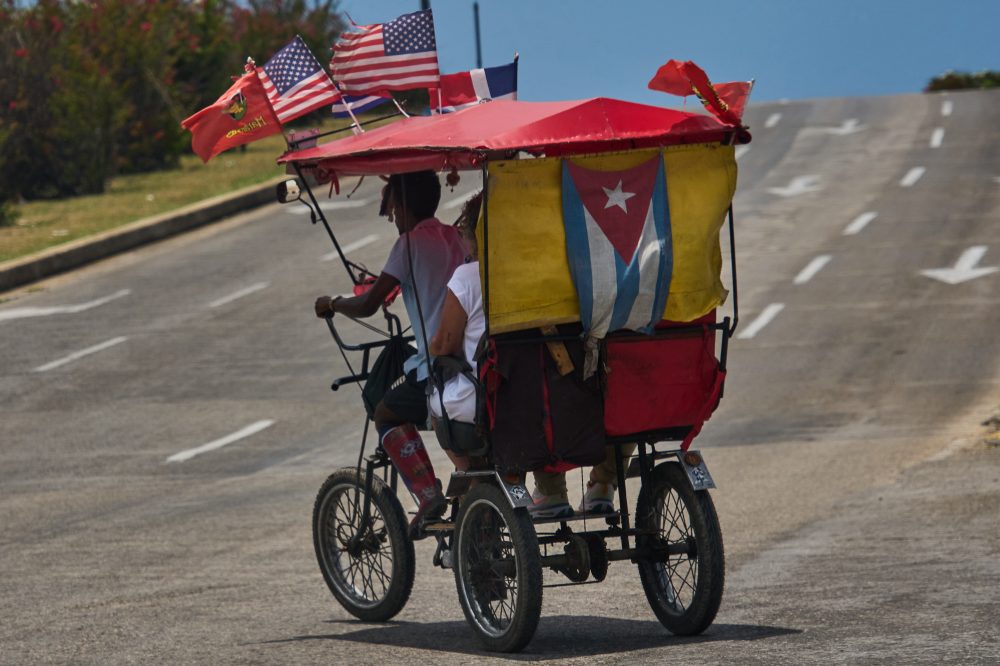

An uprising at a southeastern Cuban farm in October 1868, called “The Cry of Yara,” began the island’s long struggle for freedom from Spanish rule.
Independence finally came on May 20, 1902, but only after decades of conflict including the “Great War” lasting almost a decade, the “Little War” spanning more than a year, the Cuban War of Independence, and the Spanish-American War.
Despite achieving independence, Cuba’s current socialist leadership refuses to commemorate May 20, and their supporters across the island follow suit.
The 1902 independence came with strings attached through the Platt Agreement, crafted by a U.S. senator from Connecticut. This arrangement granted America authority to interfere in Cuban matters “for the preservation of Cuban independence” and permitted the U.S. to acquire or lease territory for military installations on the island.
Though former U.S. President Franklin D. Roosevelt later abolished the agreement, it created lasting resentment among many Cubans.
“There is only one thing to be grateful for on that day,” Cuban President Miguel Díaz-Canel posted Wednesday on X. “It instilled in Cubans of that time an anti-imperialist sentiment that each subsequent generation has felt deepen with new and constant threats to the independence and sovereignty of the nation.”
The president characterized May 20 as representing “intervention, interference, dispossession, frustration.”
However, Cubans and Cuban-Americans who oppose the revolution and current government do honor May 20.
“It is their 4th of July,” explained Jason Reding Quiñones, Miami’s top U.S. federal prosecutor and son of a Cuba political refugee.
Wednesday found him joining other officials to reveal charges against former Cuban President Raúl Castro, accused in the 1996 destruction of civilian aircraft piloted by Miami-based exiles over Cuban waters.
Reding stated that May 20 “reminds us that the pursuit of freedom, dignity and accountability spans generations and still lives alive and well in the heart of the Cuban community.”
The White House released an extensive presidential statement Wednesday honoring May 20. It praised and remembered those “who have sacrificed for a free Cuba,” while announcing fresh sanctions and cutting financial connections to the island.
“The regime in Havana today is the direct betrayal of the nation their founding patriots bled and died for,” the statement declared. “For nearly seven decades, the island’s communist government has violently dismantled political freedom, denied its people fair elections, viciously silenced dissent, and strangled the Cuban economy into a state of collapse.”
Cuban officials quickly responded to the criticism.
Cuban Foreign Affairs Minister Bruno Rodríguez denounced the statement as “superficial and ill-informed” in an X post, calling it an “insult” to Cuba’s citizens.
Cuban leadership also criticized U.S. Secretary of State Marco Rubio for releasing a Spanish-language video message on May 20, just hours before Castro’s indictment became public. Rubio claimed the Cuban government has stolen billions while leaving citizens without power, fuel, or food, rejecting claims that a U.S. energy embargo was responsible.
Instead, the Cuban government marks Jan. 1, 1959 as its authentic Independence Day, when revolutionary forces succeeded and forced dictator Fulgencio Batista into exile.
Rodríguez maintained that “the Revolution put an end to almost six decades of economic and political control by the United States, with three military interventions and the political and military support of two bloody dictatorships.”
The island also observes July 26, designated as National Rebellion Day, remembering an unsuccessful 1953 assault that preceded the revolution.
The foreign affairs minister emphasized that Cuba “has every right” to remain a free and independent nation controlling its own political and economic destiny: “Cuba will defend that right at any cost.”