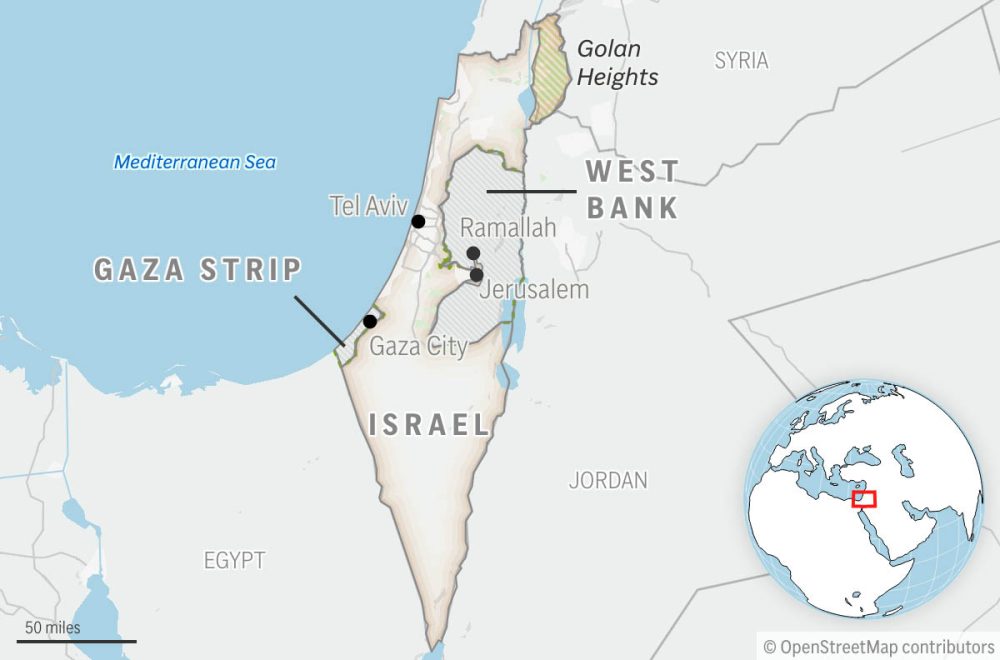
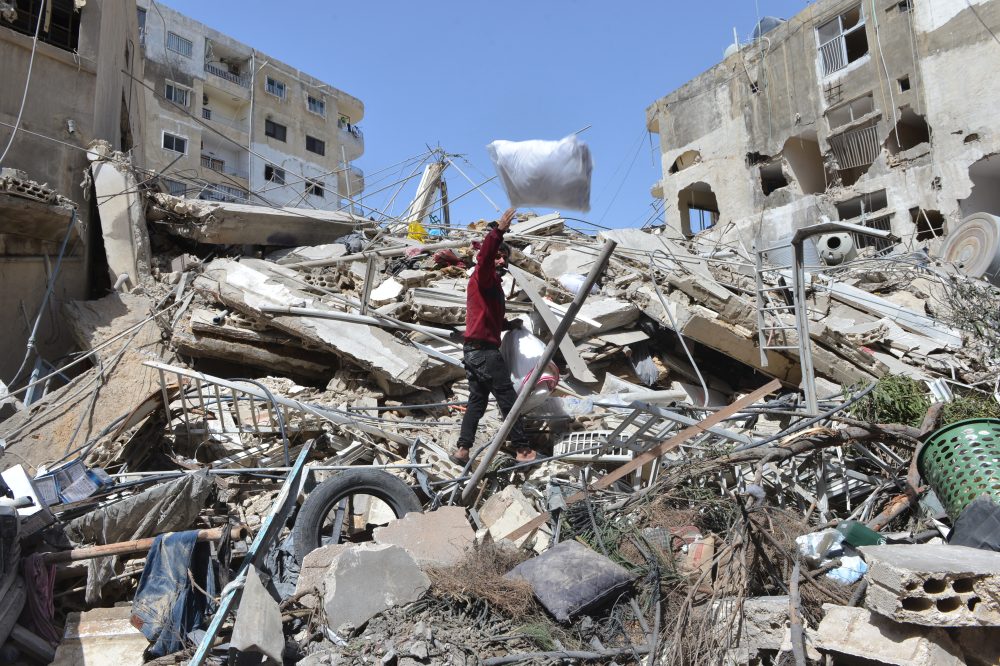
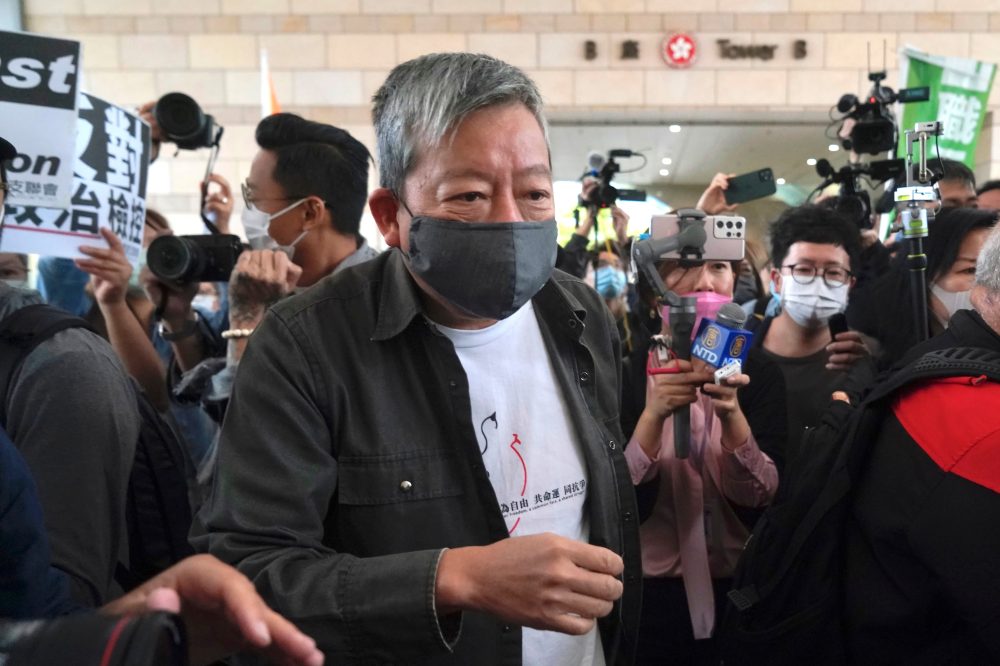
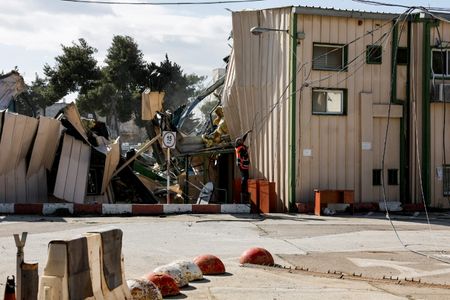
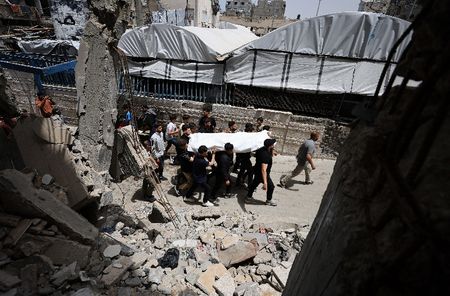
A Palestinian worker has died from injuries sustained when Israeli forces opened fire as he attempted to enter Israel in search of employment, according to Palestinian medical authorities who confirmed his death on Monday.
This represents the second fatal incident within a week involving a Palestinian worker being shot while attempting to cross the border for employment purposes.
Palestinian health officials in Ramallah named the victim as 32-year-old Mahmoud Al-Amleh. Medical authorities reported he sustained gunshot wounds on Sunday morning from Israeli forces in Beit Ula village, located in the southern territory close to Hebron. Emergency responders transported Al-Amleh to a Hebron medical facility where he underwent emergency surgery.
Speaking to The Associated Press, Hamdan Al-Amleh explained that his cousin had joined other workers attempting to enter Israel for employment.
Israeli military officials acknowledged opening fire on Palestinians and wounding an individual. Military representatives stated that soldiers discharged their weapons because the Palestinians were believed to be damaging border infrastructure during their crossing attempt. The military’s official statement indicated that firing at suspects represents standard protocol during detention operations.
This incident follows another Palestinian fatality under comparable circumstances less than seven days earlier.
Prior to the conflict between Israel and Hamas, Israeli authorities permitted tens of thousands of Palestinians to work within Israel’s borders. However, Israel revoked the majority of these work permits following the Hamas-led assault on southern Israel that occurred on Oct. 7, 2023. As the West Bank’s economy continues to deteriorate and joblessness increases, growing numbers of Palestinians from the occupied territory have tried to enter Israel without authorization to find basic employment opportunities.
Data from the U.N. Office for the Coordination of Humanitarian Affairs indicates that Israeli military personnel or settlers have fatally shot no fewer than 47 Palestinians in the West Bank during this year through May 11.
OCHA reports that 17 Palestinians have lost their lives and more than 290 others have sustained injuries while attempting to cross the barrier since Oct. 7, 2023.
Supporters of Bolivia’s former President Evo Morales joined massive demonstrations Monday as the South American nation grapples with its most severe economic crisis in decades.
The protests and highway blockades, which began more than two weeks ago, represent the most significant threat yet to President Rodrigo Paz, Bolivia’s first conservative president following almost 20 years of socialist leadership.
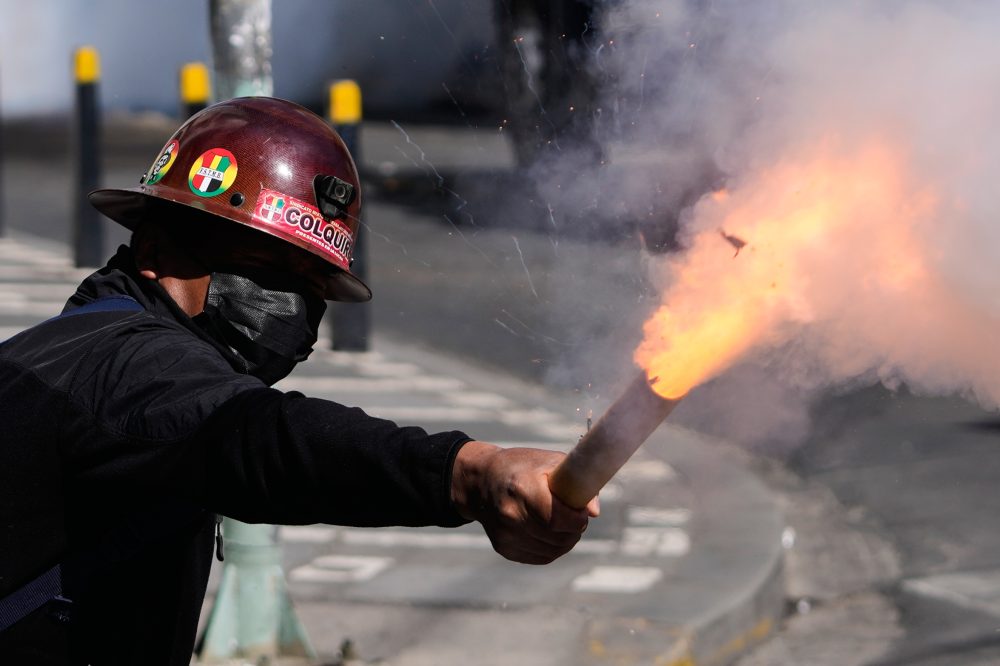
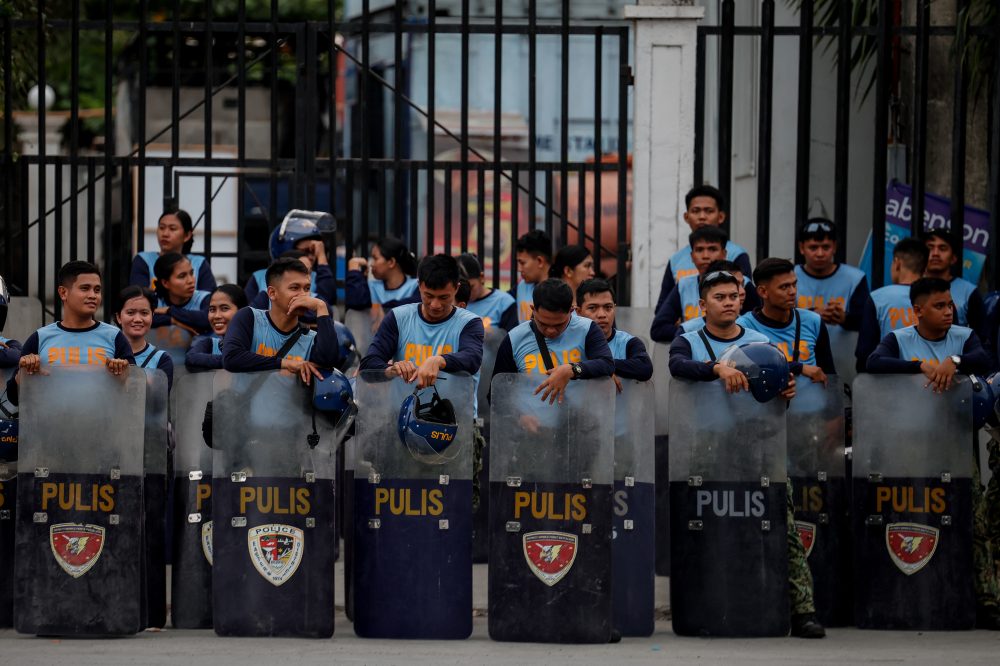
Following a six-day trek across the Andes mountains, thousands of Morales backers carrying dynamite sticks and slingshots arrived in the capital, where riot police awaited them. Explosions echoed through downtown La Paz as security forces responded with tear gas against demonstrators demanding the president step down just six months after taking office. “Homeland or death, we will win!” protesters shouted.
Paz assumed the presidency last year during a period when conservative leaders aligned with the Trump administration gained power across Latin America. Facing the country’s worst economic downturn in four decades, he has worked to address Bolivia’s fuel shortages, control its enormous budget deficit, and tackle the lack of U.S. dollars while managing powerful factions connected to Morales that threaten his administration.
Recently, his administration has negotiated agreements with protesting miners and educators who have agreed to halt their demonstrations.
Highway blockades have traditionally served as the primary tactic for social movements supporting Morales that say they speak for Bolivia’s predominantly rural Indigenous population. During the past 16 days, these roadblocks have trapped thousands of trucks on major routes, creating shortages of food, fuel and medical supplies in La Paz and other urban areas.
The administration sent police and military personnel throughout the nation over the weekend attempting to clear the blockades, resulting in an undetermined number of injuries and at least 90 arrests by Monday, the public prosecutor reported.
“They can march if it’s peaceful, but we will take action if they commit crimes,” Deputy Interior Minister Hernán Paredes stated Monday.
Paz claims Morales is directing the civil unrest to weaken his government.
Eight allied Latin American nations, spanning from Argentina to Panama, issued a collective statement last week condemning “any action aimed at destabilizing the democratic order.” The U.S. State Department joined the criticism Sunday, expressing support for Paz’s efforts “to restore order for the peace, security, and stability of the Bolivian people.”
Following Paz’s appeal, neighboring Argentina announced it would begin a week-long humanitarian airlift to help address shortages in the country.
Morales coordinated the recent march from his refuge in Bolivia’s isolated tropical region. He has remained hidden in the highlands for the past year and a half, avoiding an arrest warrant related to charges concerning his sexual relationship with a 15-year-old girl.
Morales maintains the allegations are politically motivated.
A controversial gold mining operation in Brazil’s Amazon rainforest faces a crucial legal decision Wednesday, as a court in the nation’s capital determines which level of government holds authority over the project’s environmental approval process.
The judicial panel in Brasilia must decide whether Brazil’s federal government or the northern state of Para holds jurisdiction to issue environmental permits for the mining venture operated by Canadian firm Belo Sun.
Since 2012, Belo Sun has worked to develop the Volta Grande gold extraction facility along the Xingu River in Para state. The proposed location sits approximately 20 kilometers (12.4 miles) from Belo Monte, ranked as the planet’s third-largest hydroelectric facility, whose operations have diminished river flow and significantly impacted nearby communities.
The Volta Grande operation would become the Brazilian Amazon’s largest gold mining facility.
Based on a 2015 feasibility analysis submitted by Belo Sun, the company plans to extract 3.52 million ounces of gold across 17 years, removing over 600 million tons of material. The mining site would span 24 square kilometers (9.2 square miles) and impact 125 hectares (309 acres) of Amazon rainforest.
A 2021 independent evaluation by researchers from the University of Sao Paulo and University of Amazonas determined the operation posed excessive risks and recommended rejection.
The assessment’s primary concern focused on the planned tailings dam, engineered to hold mining debris directly above a water channel near the Xingu River. Researchers warned that dam failure could rapidly release toxic materials into the river, endangering Indigenous and riverine populations along with the ecosystem.
The operation would also force relocation of 813 families, according to the Articulation of Indigenous Peoples of Brazil, or Apib. These communities, already severely impacted by droughts following the Belo Monte development, could experience additional hardship. The Belo Monte facility has decreased water flow in the Xingu River section where the Belo Sun operation is planned.
Using analysis from nonprofit Amazon Watch, prosecutors calculated the Volta Grande facility would generate approximately 3.7 million tons of carbon dioxide emissions, a greenhouse gas contributing to global warming. The calculation assumes one ton of carbon dioxide emissions per 28 grams of extracted gold.
The Volta Grande licensing process has encountered resistance from its inception.
In 2013, prosecutors moved to stop the process, pointing to inadequate consultation with affected Indigenous communities. In 2017, a complete federal court panel supported this position, mandating federal government approval and formal Indigenous community consultation before project advancement.
Nevertheless, in 2025, justices reversed that ruling and transferred licensing authority back to Para state. Prosecutors filed an appeal, contending the recent decision constituted a separate, new proceeding. The court will address the appeal Wednesday.
Last December, the Juruna and Arara Indigenous communities of the Xingu issued an open letter declaring they have never consented to the project, as mandated by the 2017 ruling. In a statement provided to The Associated Press, Belo Sun maintained it has conducted proper Indigenous consultation, following protocols established by affected communities and monitored by authorities.
Federal prosecutors contended that Brazil’s national government — rather than Para’s local government — should authorize the project given its nationwide implications. The operation would impact Indigenous territories, which falls under federal oversight, affect the Xingu River — a federal waterway — and further influence the Belo Monte hydropower facility, constructed by the federal government.
“From the start, as we did in Belo Monte, we have argued that the licensing falls under federal jurisdiction because it affects Indigenous lands and a federal river,” federal prosecutor Felício Pontes Jr., who is working on the case, said.
He noted that combined impacts with the hydroelectric facility represent a central concern. Brazilian courts have already established that Belo Monte’s effects exceeded initial projections.
In recent decisions, courts have mandated compensation for affected communities and required Norte Energia, the dam operating company, to supply clean water to families whose natural sources disappeared, as well as reassess water diversion from the Xingu River for turbine operations.
“This could create a major conflict if there isn’t a single authority licensing both projects, given the impacts one project has on the other,” the prosecutor said.
Should the court choose to transfer the case to federal oversight, the decision could nullify environmental permits issued in 2025 to Belo Sun by Para state. Regardless, parties may still pursue challenges. Additional lawsuits questioning the operation remain pending in courts.
Before the vote, Belo Sun announced initiation of new technical research for the Volta Grande operation. On May 12, the company reported hiring a mining consultancy to examine and update technical studies for the Installation License. The objective includes identifying enhancements, outlining updates to a definitive feasibility study and creating a phased project plan. Belo Sun anticipates completing this phase by the third quarter of 2026.
Belo Sun stated the Volta Grande facility remains subject to environmental licensing by appropriate regulatory and judicial authorities in Brazil.
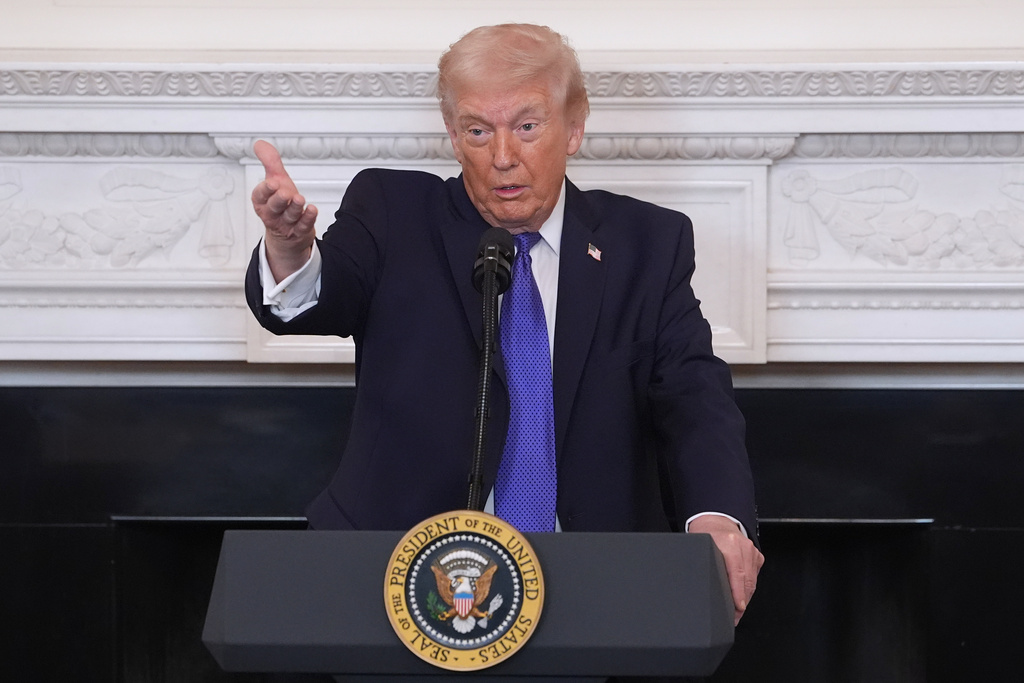
WASHINGTON — President Donald Trump announced Monday that he has postponed a military operation against Iran that was set to take place Tuesday, citing ongoing diplomatic efforts.
The president made the announcement through a social media post, explaining that serious negotiations are currently happening. This comes after Trump had warned that time was running out for Iran to reach an agreement or face renewed military action following a delicate ceasefire.
While Trump did not provide specifics about the military operation that was planned, he stated that he directed U.S. armed forces to remain ready for a comprehensive, major attack on Iran at any moment if diplomatic efforts fail to produce a satisfactory agreement.
For several weeks, Trump has warned that the ceasefire established in mid-April might collapse without a deal between the nations, though the requirements for such an agreement have varied over time.
MIAMI — A former business associate of Venezuelan leadership faced federal charges in Miami court Monday, accused of laundering money through an alleged bribery operation involving government officials.
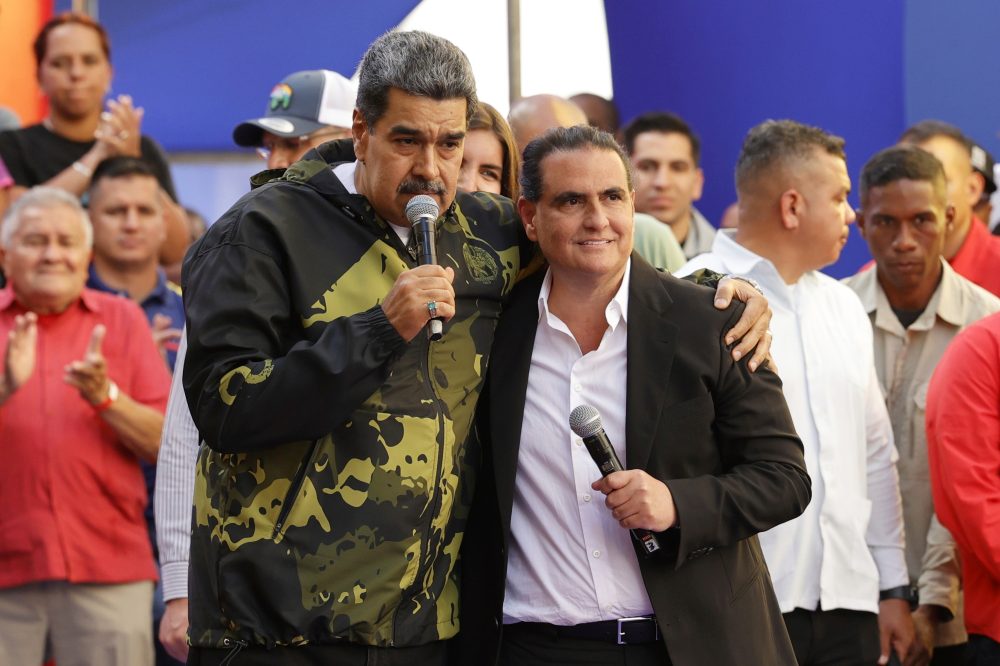
Alex Saab appeared before a federal judge following his weekend deportation by acting President Delcy Rodríguez, who has been removing insider businesspeople suspected of corrupt activities with the previous administration.
Wearing shackles and prison clothing, the defendant responded “Yes, ma’am,” in English when informed of the single money laundering charge connected to an undisclosed bribery operation. Court documents were unsealed during the proceeding but remain unavailable to the public.
The 54-year-old Saab faced previous federal charges in 2019 under the first Trump presidency and was detained in Cape Verde during a fuel stop while on what Venezuelan officials called an important humanitarian trip to Iran.
President Joe Biden granted him a pardon in 2023 as part of a prisoner exchange that freed multiple detained Americans in Venezuela and returned a fleeing foreign defense contractor. The agreement, which was part of an unsuccessful Biden administration attempt to encourage free elections, drew sharp criticism from Republicans and federal investigators, who continued pursuing Saab for additional alleged crimes outside the limited pardon scope.
Federal authorities have historically characterized Saab as the former leader’s “bag man” and may seek his testimony against his previous associate, who faces drug trafficking charges in Manhattan following his January capture during a U.S. military operation.
This latest prosecution unfolds as the Trump administration works to reshape Venezuelan relations.
Trump and top officials have praised Rodríguez, who has opened Venezuela’s petroleum sector to American investment during rising oil costs linked to Iranian conflict. In return, the White House has reduced election pressure, despite constitutional requirements for voting within 30 days of a president becoming “permanently unavailable.”
However, Rodríguez confronts significant internal opposition from the ruling socialist party’s more radical elements, including figures like Interior Minister Diosdado Cabello, who maintains substantial security force influence and faces his own U.S. criminal charges.
Mario Silva, who previously hosted pro-government programming on state television before his removal following the former president’s capture, challenged Saab’s deportation legality, citing constitutional extradition prohibitions.
“The imperialists don’t negotiate. They conquer, test and probe — until our country shatters,” Silva stated during a Sunday social media livestream. “Nobody is safe right now.”
Silva noted that Venezuela’s previous efforts to secure Saab’s freedom exceeded actions taken for the former president and former First Lady Cilia Flores.
Possibly expecting criticism, Venezuela’s immigration department Saturday described Saab only as a “Colombian citizen who is implicated in committing several crimes in the United States of America, a fact that is widely known, notorious, and heavily documented in the media.”
Rodríguez’s current silence contrasts sharply with her previous support during Venezuela’s international campaign for his release from U.S. custody. She previously called him an “innocent Venezuelan diplomat” who was illegally “kidnapped” during a humanitarian mission to Iran to bypass the “immoral, imperial blockade” imposed by the United States.
While consolidating power, Rodríguez has separated herself from Saab, removing him from her Cabinet and eliminating his position as primary liaison for foreign companies seeking Venezuelan investments.
Saab built wealth through Venezuelan government deals. His 2019 charges involved a low-income housing contract that was never completed.
The Associated Press previously reported his investigation connection to another Justice Department case against Saab’s business partner, Alvaro Pulido, regarding the CLAP program established to provide basic foods — rice, corn flour, cooking oil — to impoverished Venezuelans during severe hyperinflation and currency collapse.
The 2021 indictment identified Saab as “Co-Conspirator 1” and alleged he helped create shell companies to bribe a pro-government governor who granted the partners an overpriced Mexican food box import contract.
Saab previously met secretly with the Drug Enforcement Administration before his initial arrest and, during a private 2022 court session, his attorneys disclosed his years-long cooperation helping the DEA investigate corruption within the former administration’s inner circle. Through this cooperation, he surrendered over $12 million in illegal profits from corrupt business activities.
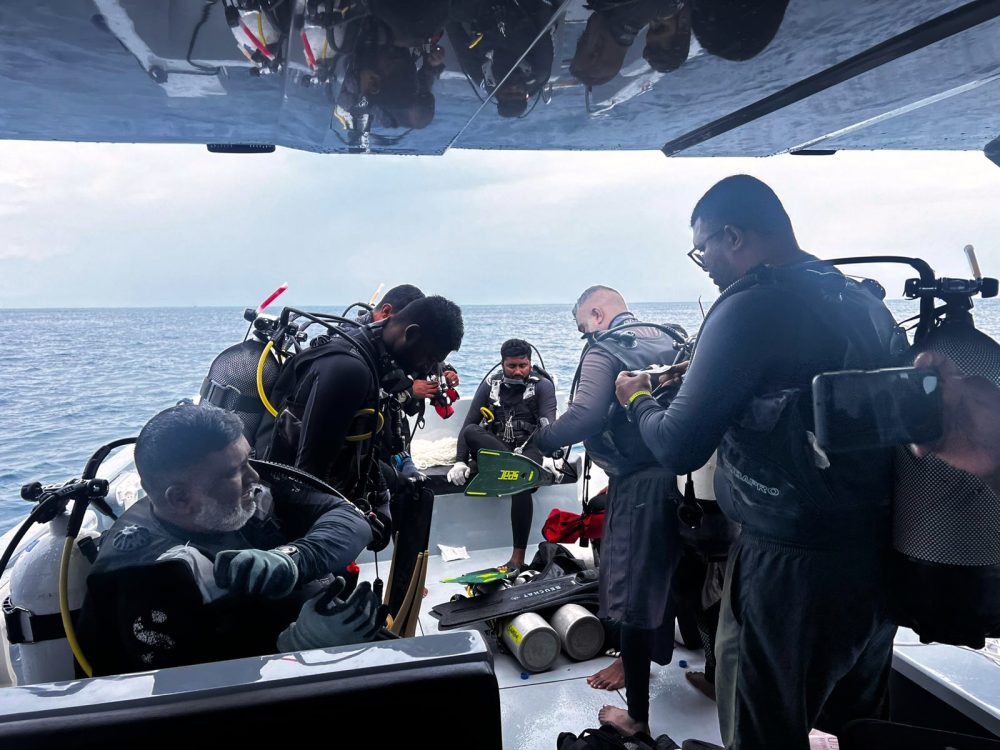
Officials in the Maldives are examining several potential causes behind the tragic deaths of five Italian researchers during a cave diving expedition last week, with authorities questioning whether the team went far deeper underwater than originally intended.
The diving team entered the underwater cave on Thursday under the leadership of Monica Montefalcone, a 51-year-old marine ecology professor from the University of Genoa who frequently conducted research dives in Maldivian waters. Among those who perished were her daughter and four other researchers, including a diving instructor whose remains were retrieved from 60 meters below the surface.
This incident represents the most fatal single diving accident in the nation’s recorded history.
Mohamed Hussain Shareef, the chief spokesperson for the Maldives president’s office, confirmed that officials had authorized the research team to study soft corals at the Devana Kandu location.
“What we didn’t know was that it was cave diving,” Shareef explained. “Because, as divers will tell you and appreciate, it’s a very different discipline with its own sets of challenges and risks involved, and particularly at that depth, there are any number of things that could have gone wrong.”
Carlo Sommacal, Montefalcone’s husband, defended his wife’s expertise in statements to Italian news outlets, emphasizing she would never have endangered her daughter or team members. He characterized her as “one of the best divers in the world” with approximately 5,000 dives to her credit, describing her as “always conscientious” and “never reckless.”
“I’m sorry, I wasn’t there and I’m no expert, and from what I’m seeing and reading, even the experts don’t have definite answers but are merely making hypotheses – lots of them,” he communicated to Reuters through WhatsApp.
Finnish diving specialists located the remaining four victims on Monday within the cave’s deepest third chamber, where they were found “pretty much together,” according to Shareef. Recovery operations are scheduled to retrieve two bodies on Tuesday and the remaining two on Wednesday.
The dangerous nature of these depths became tragically apparent when a Maldivian rescue diver also lost his life during body recovery attempts last week. The non-profit Divers Alert Network Europe, which is coordinating the recovery mission, reported that their expert divers required sophisticated technical equipment, including closed-circuit rebreathers that recycle exhaled air, to locate the victims on Monday.
Shafraz Naeem, a veteran Maldivian diver who has navigated the Devana Kandu cave system more than 30 times under deep-exploration permits and currently advises the nation’s defense forces and police, explained that the cave opening sits approximately 55 meters down, with sunlight penetrating only the initial chamber before complete darkness takes over.
Diving specialists explain that increasing depth creates higher pressure around divers, causing each breath to deliver greater oxygen quantities to the lungs and bloodstream, even when breathing standard air. When this oxygen exposure becomes excessive or prolonged, it can overstimulate the central nervous system and cause tissue damage.
“It is incredibly dangerous to conduct dives at these depths on compressed air,” Naeem warned. “Theoretically oxygen toxicity starts to occur on compressed air at about 55 meters. That is very risky and very dangerous. You never know when oxygen toxicity will hit you.”
However, Riccardo Gambacorta, who previously served as diving instructor for victim Muriel Oddenino, disputed the oxygen poisoning theory.
“My personal opinion is that an unexpected incident may have occurred underwater. They essentially did not anticipate a certain situation,” he stated.
The Italian research team that entered the caves Thursday consisted of Montefalcone’s daughter Giorgia Sommacal, biologist Federico Gualtieri, researcher Oddenino, and diving instructor Gianluca Benedetti, whose body was recovered that same evening. Benedetti had resided in the Maldives for seven years.
Shareef announced the suspension of the vessel used by the diving team “because the regulations here say that if you want to take divers on expeditions, you need a dive school permit, which they didn’t have, sadly.”
Abdul Muhsin Moosa, operator of the MV Duke of York, stated his vessel held authorization for recreational diving to depths of 30 meters maximum.
“We are sharing these details with the government, as well,” he noted, explaining that arriving divers received briefings about Maldivian recreational diving restrictions prohibiting descents beyond 30 meters.
For recreational dives within 30 meters, standard compressed air contains 21% oxygen and 79% nitrogen, but deeper expeditions require oxygen concentrations above 32%, according to diving experts. For depths approaching 50 meters, specialists recommend divers carry at least two cylinders of specialized breathing gas each.
Investigators have not yet determined whether strong underwater currents may have forced the divers below their intended depths.
Thousands of demonstrators backing Bolivia’s former leftist leader Evo Morales took to the streets of La Paz on Monday, escalating civil unrest that has paralyzed the nation for almost two weeks and created critical shortages of essential goods including food, fuel and medical supplies.
The widespread disruptions have left commercial vehicles stranded on major highways and prevented patients from accessing medical care, according to government officials. Bolivia has requested assistance from Argentina, which responded by dispatching a military transport plane loaded with food aid.
ORIGINS OF THE CIVIL UNREST
What started as labor strikes in early May has transformed into a countrywide movement encompassing trade unions, mining workers, transportation employees and agricultural communities. Demonstrators are demanding that President Rodrigo Paz’s administration reverse budget-cutting policies and tackle escalating costs of living, with some groups demanding his removal from office.
Political experts indicate the civil disorder has expanded beyond local complaints to encompass broader opposition to the government’s economic policies.
PRIMARY CONCERNS OF PROTESTERS
The demonstrations focus on mounting financial hardships. Educational workers are seeking increased salaries and additional funding, while transportation unions have initiated indefinite work stoppages due to fuel scarcities and supply chain issues. Native and farming communities are resisting land reform policies they claim benefit wealthy property owners.
Even after the administration withdrew a disputed land reform law earlier this month, demonstrations have persisted.
GOVERNMENT’S REACTION
Paz, who assumed the presidency in November and inherited a struggling economy, has justified budget reductions and cuts to fuel subsidies as essential for restoring fiscal stability.
He is developing a legislative reform proposal for Congress that involves progressively removing fuel price regulations and implementing strategies to increase domestic energy output and investment.
The administration has attempted to reduce tensions through dialogue and salary improvements while sending approximately 3,500 security personnel to remove highway blockades. Officials report that roughly 57 individuals have been detained.
Government representatives have accused opposition figures and Morales supporters of promoting the roadblocks, which they claim have led to at least three fatalities, including patients who could not reach medical facilities.
EVO MORALES’ INVOLVEMENT
Morales, who led Bolivia from 2006 to 2019, has endorsed the demonstrations, characterizing them as a reaction to economic difficulties and political targeting.
Thousands of his followers have gathered after a judge found him in contempt earlier this month for not appearing in court regarding a trafficking case. Morales maintains his innocence.
“As long as the structural demands such as fuel, food, and inflation are not addressed, the uprising will not be halted,” he wrote on X.
INVESTOR SENTIMENT
Market responses have remained subdued so far, partly because Bolivian government bonds typically see limited trading activity. The additional yield that investors require for holding Bolivian debt compared to similar U.S. Treasury securities decreased in May to its lowest level since at least 2020, according to LSEG data.
Nevertheless, analysts caution about increasing risks.
“Bolivia is in a period of social and political stress, as an escalating national strike converges with mass protests and widespread roadblocks,” JPMorgan said in a client note.
HISTORICAL CONTEXT FOR BOLIVIA
Highway blockades have traditionally been a standard strategy employed by protesters. During the tenure of former left-wing president Luis Arce, comparable disruptions organized by groups supporting Morales along with mining and agricultural communities sometimes brought major transportation corridors to a standstill and resulted in billions in economic damage.
Political analysts note that Paz confronts the difficult task of stabilizing the economy while forming new political and social partnerships in a deeply divided political landscape.
“There are no easy or quick solutions in sight,” said economist Gonzalo Chavez.
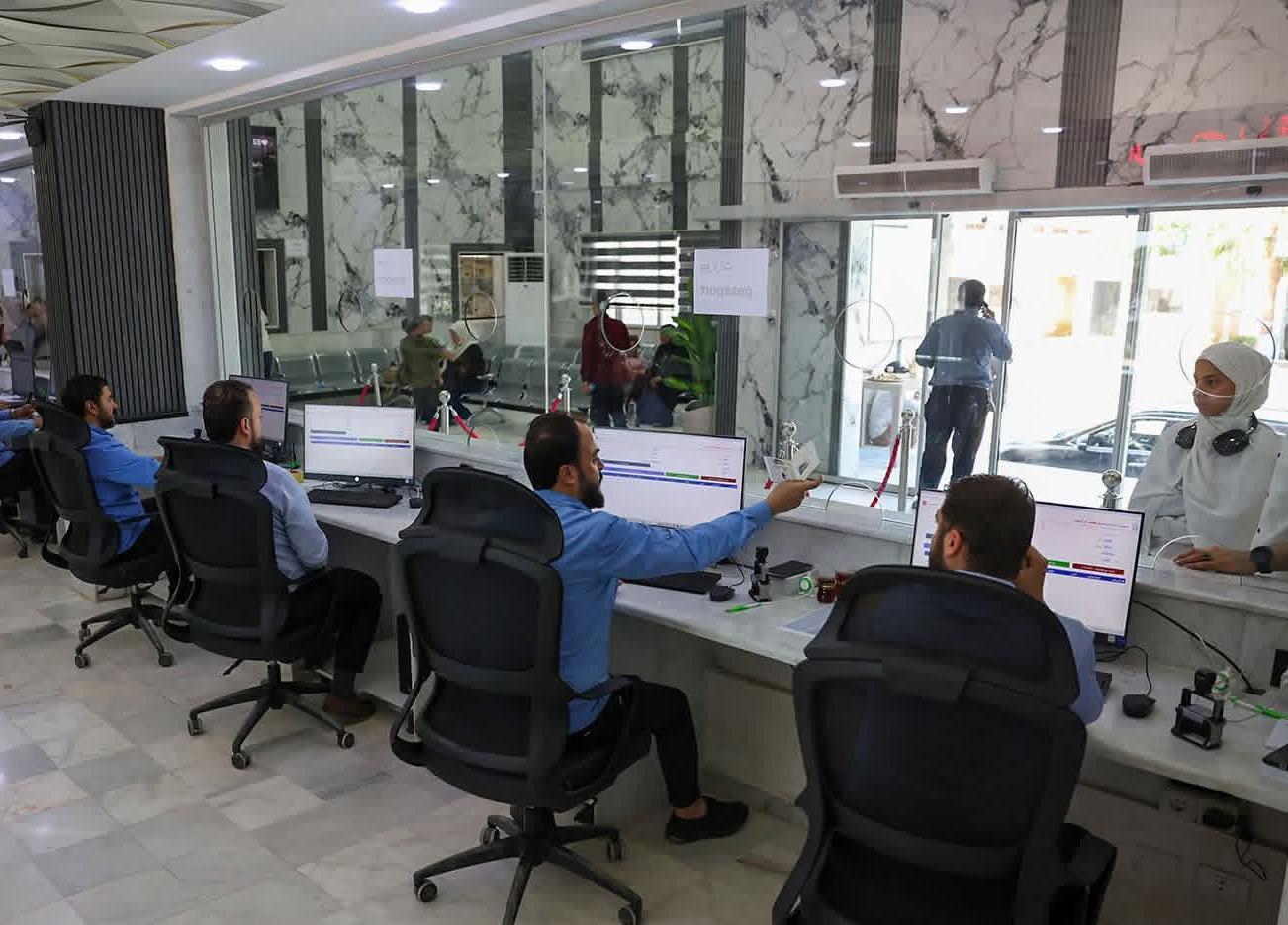
The European Union decided Monday to continue sanctions against people and organizations connected to former Syrian President Bashar al-Assad’s administration for an additional year, but simultaneously removed seven government bodies from its restricted list as part of broader policy changes toward Damascus.
The restrictive measures will now remain in effect until June 1, 2027, according to an announcement from the European Council following the organization’s yearly assessment of its Syria sanctions policy.
Individuals and entities still on the list face frozen assets and restrictions on travel, while European Union citizens and businesses cannot provide financial resources to them.
The European Union stated that removing the seven entities from sanctions was designed to help “the strengthening of the EU’s engagement with Syria” after Assad’s government fell in late 2024 and a new administration under President Ahmed al-Sharaa took power.
Syria’s foreign ministry responded with a statement saying the sanctions relief for the seven entities would aid the nation’s recovery and rebuilding work, bolster government institutions, and help maintain stability.
The ministry also expressed approval for continuing sanctions against former Assad government figures accused of participating in violations against Syrian citizens.
In May 2025, the European Union removed all economic restrictions on Syria while maintaining measures targeting former Assad administration members and security-related sanctions.
The organization explained that networks connected to the previous government still maintain power and could interfere with Syria’s democratic transition and peace-building processes.
Earlier this month, the European Union also reinstated its full cooperation agreement with Syria, stating that the circumstances that caused its suspension during Assad’s violent response to demonstrators in 2011 no longer existed.
A high-ranking Sudanese paramilitary officer who was jailed following international condemnation over footage showing him killing defenseless civilians has been freed from custody and sent back to active combat, according to nine sources who spoke with Reuters.
Two sources – including a Sudanese intelligence official and a commander from the paramilitary Rapid Support Forces – reported personally witnessing RSF Brigadier General al-Fateh Abdullah Idris, nicknamed Abu Lulu, fighting in Kordofan during March. A Chadian military officer informed Reuters that RSF officers had requested Abu Lulu’s return to combat to improve troop morale amid intense fighting.
Reuters interviewed 13 total sources claiming knowledge of Abu Lulu’s release, including three RSF commanders, one RSF officer, a family member of Abu Lulu, a Chadian military officer with RSF command connections, and seven additional sources with RSF leadership contacts or intelligence access regarding RSF field activities.
When questioned by Reuters, the RSF-led coalition government issued a Monday statement rejecting claims that Abu Lulu had been released. Ahmed Tugud Lisan, spokesman for the RSF-led Tasis government, said a special court would prosecute him and others charged with violations during the al-Fashir offensive.
“The talk about Abu Lulu being released is untrue, malicious, and completely false,” the statement said. “Abu Lulu and the others accused of violations during the liberation of al-Fashir have been in detention since their arrest and have never left prison.”
Reuters could not contact Abu Lulu directly.
SANCTIONS CITE WAR CRIMES
The RSF detained Abu Lulu in late October 2025, days following its violent capture of al-Fashir, a major North Darfur city. Several videos had emerged showing him killing defenseless individuals during the assault. His conduct led to the nickname “the butcher of al-Fashir,” which the U.N. Security Council referenced when imposing sanctions on him February 24 for human rights violations.
The three-year civil conflict between Sudan’s army and the RSF represents a vicious power battle for national control and financial resources. Aid organizations describe it as creating the world’s most severe humanitarian emergency. An independent U.N. investigation determined earlier this year that the mass murders in al-Fashir showed characteristics of genocide. Another U.N. investigation documented over 6,000 deaths by RSF fighters between October 25-27.
Four videos authenticated by Reuters demonstrate Abu Lulu shooting no fewer than 15 defenseless captives in al-Fashir on October 27, following the RSF’s city takeover. All victims wore civilian clothes. International law considers killing any unarmed, non-threatening person – including former combatants – a war crime.
Following international condemnation from U.N. officials, U.S. politicians and others, RSF leader Mohamed Hamdan Dagalo, called Hemedti, publicly admitted his fighters committed violations in al-Fashir and promised to establish an accountability committee for investigating abuses. On October 30, the RSF published video of Abu Lulu being transported to Shala prison in southwestern al-Fashir. The footage shows a handcuffed Abu Lulu being removed from a vehicle by armed personnel and placed in a cell. An unnamed RSF spokesperson at the prison states Abu Lulu “will be presented to a just trial in accordance with the law.”
In November, Al Jazeera reported Abu Lulu’s release, referencing unspecified online videos. However, on December 2, the leader of the RSF-appointed accountability committee informed Reuters they held Abu Lulu in custody while investigating him and other RSF soldiers for al-Fashir violations. Al Jazeera did not respond to Reuters’ questions about their November coverage.
Four sources informed Reuters that Abu Lulu was freed in December. Reuters could not verify his exact release date.
The family member stated that before Abu Lulu received authorization to resume Kordofan duties, he appeared before a November disciplinary panel of six senior officers. The hearing addressed videos featuring him that harmed the RSF’s image. Reuters could not confirm the hearing occurred or its results.
Abu Lulu belongs to the same clan as Hemedti, the RSF leader. Three sources – an RSF commander and RSF officer both connected to RSF leadership, plus a researcher with committee contacts investigating Abu Lulu – said Hemedti’s brother, Abdelrahim Dagalo, the RSF deputy commander, personally authorized Abu Lulu’s prison release.
The RSF officer explained that while the disciplinary committee had not formally released Abu Lulu, the deputy commander ordered his freedom through radio communication.
COMMAND RESPONSIBILITY
The Abu Lulu videos represent part of nearly 300 online videos from the offensive period analyzed by Reuters and the Sudan Witness project at the Centre for Information Resilience.
Abu Lulu was the sole commander Reuters identified in video footage shooting unarmed individuals. However, the Reuters-Sudan Witness investigation discovered three additional senior RSF commanders were present in the same location during the mass killings.
One Reuters-verified video shows Gedo Hamdan Abu Nashuk, the top RSF commander for North Darfur, walking beside Abu Lulu on October 27 morning. Reuters geolocated videos from this location and found Nashuk was recorded within 40 meters of two other videos showing Abu Lulu executing defenseless men. By analyzing shadows in the three videos, Reuters determined they were filmed within a two-hour timeframe.
Under international law, these leaders could face criminal liability for crimes their fighters committed during the conflict, according to Jehanne Henry, a human rights attorney and Sudan director at The Reckoning Project, a U.S. non-profit documenting war crimes.
The RSF did not address questions regarding specific commander actions during the al-Fashir offensive. On October 29, Hemedti stated that any soldier or officer committing crimes would face arrest and investigation, with results made public.
The RSF government has been delayed in prosecuting those accused of violations, spokesman Lisan explained, because it is “establishing state structures under difficult circumstances.”
“We are committed to achieving justice and holding all those who commit violations accountable,” Lisan said. “Any talk to the contrary is deliberate misinformation.”
WITNESS ACCOUNTS
Reuters interviewed six survivors in Chadian refugee camps who reported witnessing Abu Lulu killing civilians in al-Fashir before fleeing in October 2025.
Manazil Mousa, 25, identified Abu Lulu from videos a Reuters reporter showed her and said she encountered him while her family was escaping al-Fashir. She said he confiscated their phones and possessions, severely beat them, and shot and killed her brother, Mubarak.
“Abu Lulu is the one who abused us,” she said. “He was the one who killed Mubarak. He is the one who killed our families and killed our husbands.”
Madina Adam, 38, reported that Abu Lulu entered Al-Fashir University on October 27, where she was taking shelter with other civilians, and began killing women and children.
She recounted one incident where Abu Lulu asked a pregnant woman about her pregnancy stage, and when she answered “seven months,” he shot her seven times in the stomach. Two witnesses described the identical scene in a February U.N. report.
Adam said Abu Lulu then ordered 10 children to sit down and made them chant RSF slogans while recording. The children begged not to be killed, she said, but he shot all 10.
SECRECY ORDERED
An RSF commander reported that leadership instructed other officers to remain silent about Abu Lulu’s combat return. A different RSF commander and the relative said Abu Lulu was freed under conditions prohibiting him from filming or being filmed during battle. Reuters has found no images of him in action since his release.
“He has been free for about three or four months and is on the battlefield with his troops,” said one RSF commander, who declined to be named.
Abu Lulu’s relative explained the RSF required the commander’s expertise because its forces are encountering difficulties. After securing al-Fashir control, the RSF moved its offensive eastward into Kordofan region, between its territory and army-controlled areas. It has experienced fierce combat there.
“He is very popular with the troops and that’s good for their morale,” the relative said.
In multiple videos verified by Reuters and Sudan Witness, other RSF fighters celebrate Abu Lulu and his killings. In one filmed and posted online November 1, 2025, by Salah Abdeen Mohamed Azala, an RSF fighter, Azala states many fighters are prepared to replace Abu Lulu.
“If Abu Lulu disappeared, or you arrested him or tried him, we are all 1,000 Abu Lulus,” he says, speaking to the camera. “I too am Abu Lulu.”
Three months following joint military action by the United States and Israel against Iran, an escalating standoff has developed with neither Washington nor Tehran showing signs of backing down, creating mounting economic hardship and increasing the likelihood of renewed warfare.
Policy experts are expressing growing alarm not about the possibility of reaching an agreement, but rather how much longer this volatile situation can continue before a strategic error by either the United States or Iran sparks another round of conflict.
Voices within the U.S. and Israel are increasingly advocating for additional military action, with certain officials believing that heightened pressure might diminish Tehran’s bargaining position and compel Iran to return to diplomatic discussions.
“There is one major problem with this theory: We have already tested it, repeatedly, and Iran did not capitulate,” said Danny Citrinowicz, a senior researcher on Iran at Israel’s Institute for National Security Studies and former head of the Iran branch in Israeli Defense Intelligence.
“We’re in a war of attrition with the prospect of a new U.S.-Israeli attack growing by the day,” said one regional official.
Iranian officials told Reuters concessions on their missile programme, nuclear capabilities or control of the Strait are not policy tools but ideological pillars of the Islamic Republic’s survival — giving them up is not compromise, it is surrender.
This perspective, according to Citrinowicz, explains why extended military confrontation has been unable to force Tehran away from its fundamental positions, and why additional escalation is unlikely to achieve success.
Multiple rounds of indirect diplomatic discussions facilitated by Pakistan have failed to yield any significant progress. The differences between the two sides remain enormous.
The United States is demanding that Iran cease uranium enrichment activities for two decades and transfer its existing stockpiles to American custody.
Iran is seeking an end to military strikes, security assurances, compensation for war damages, and acknowledgment of its authority over the Strait of Hormuz — conditions that Washington has dismissed.
Iran’s foreign ministry did not reply to a request for comment. The U.S. State Department did not immediately respond to a request for comment on the issues raised in this article.
President Donald Trump has warned Tehran that the “clock is ticking,” saying they “better get moving, FAST, or there won’t be anything left of them.” He threatened that if Tehran fails to reach a deal with Washington, it will face “a very bad time.”
Ali Vaez of the International Crisis Group said neither side has shown willingness to make “the painful concessions” needed for a deal. “Both believe time is on their side and they have the upper hand, and that perception is precisely what is making a deal impossible.”
The outcome is a prolonged struggle focused on one of the globe’s most vital shipping routes. Prior to the conflict, the Strait handled approximately 25% of worldwide oil commerce and 20% of liquefied natural gas shipments. Currently, with the waterway nearly sealed off, economic consequences are expanding and disrupting supply chains.
Former State Department Iran official Alan Eyre, who took part in past U.S.-Iran talks, said an agreement may be out of reach. “These two sides will never reach a deal. Trump doesn’t want to just win, he wants to humiliate Iran and be seen as having crushed Iran.”
Tehran views its enriched uranium reserves and dominance over the Strait of Hormuz as fundamental strategic resources vital to its survival. “Iran is therefore determined to use these assets to guarantee its interests,” a senior Iranian official said, adding capitulation is not an option.
“We fight, we die, but we don’t accept humiliation. Surrender is fundamentally incompatible with Iran’s identity.”
A second Iranian official contended that Tehran has already achieved victory — not through military defeat of Washington, but by maintaining its resistance. Extended periods of U.S. and Israeli attacks have been unable to break Iran’s resolve, strengthening its belief that its nuclear reserves and Strait control remain central to its defensive strategy.
Giving up these advantages would destroy that equilibrium. “Trump wants to declare victory but Iran won’t give it to him. Can the world economy withstand the pressure? That’s the question Trump owes the world an answer to,” he added.
Additional strikes would not alter Iran’s strategic thinking, only speed up escalation, he stated, emphasizing that Iran will not abandon enrichment activities or yield to ultimatums without reciprocal concessions from Washington.
However, beneath the defiant public stance, Iranian sources close to the establishment describe a more conflicted reality: Tehran does not want a prolonged “no war, no peace” scenario as inflation rises, unemployment worsens and strikes on key industries bleed an already battered economy.
Instead, they said, Iran is seeking a preliminary deal to end the war — reopening the Strait of Hormuz under Iranian oversight in exchange for lifting the U.S. blockade, before tackling harder issues such as sanctions relief and nuclear restrictions. The U.S. says ending the war must be deferred to later talks.
Regarding nuclear matters, Iranian sources indicate Tehran might dilute its 440 kilogram stockpile of highly enriched uranium or transfer portions overseas, preferably to Russia, maintaining it could retrieve the material if Washington breaches any future agreement. Washington has declined this proposal.
Iran is also advocating for a shorter suspension of enrichment than Washington’s 20-year requirement and complete access to $30 billion in frozen funds, but Washington has only agreed to release a quarter of those assets under a timetable, the sources added.
Tehran is pursuing a new management structure for the Strait of Hormuz, refusing to return to pre-conflict conditions, while the U.S. demands unconditional reopening — no fees, no restrictions — a division that may prove more difficult to resolve than the nuclear dispute itself.
Aaron David Miller, a former U.S. official and Middle East negotiator, says control of the Strait of Hormuz will be the key measure of success or failure for Washington. How this ends could define Trump’s foreign policy, he added, with the U.S. leader acutely sensitive to the risk of being seen as having lost.
Reopening the waterway without a political settlement, Miller added, would require “a prolonged American occupation with ground forces of Iranian territory”.
There is no military solution to the Strait of Hormuz other than the costly one that Trump may be unwilling to undertake, argued Vaez, leaving negotiations as the only viable path.
Despite operational gains of the U.S.-Israeli campaign, the strikes have failed to deliver a strategic knockout, Citrinowicz said.
“We didn’t topple the regime — we have a more radicalised one. We didn’t end Iran’s missile capacity. And they still have the uranium.”
Citrinowicz said overestimating pressure and underestimating Tehran’s resilience carries its own danger.
“It raises the risk that Washington once again enters a confrontation expecting coercion to produce capitulation, and discovers, too late, that the regime was prepared to absorb far more pain than anticipated,” he said.
Kremlin leaders are finding it increasingly difficult to portray the ongoing Ukraine conflict — now entering its fifth year — as a far-off battle that doesn’t impact ordinary Russian citizens’ everyday lives.
Between frustrating online service outages and this month’s reduced Victory Day celebration, plus a major weekend drone strike in the Moscow area that left three dead, Russia’s comprehensive military campaign no longer appears to be a remote confrontation.
Ukrainian President Volodymyr Zelenskyy described the Moscow-area assault as rightful payback for the continuous and lethal Russian rocket and drone bombardments targeting Kyiv and other Ukrainian urban centers in recent days.
These escalating attacks occurred just days following statements from President Vladimir Putin and U.S. President Donald Trump indicating the Ukrainian conflict might be approaching its conclusion.
Russia’s Defense Ministry announced Sunday that its defensive systems intercepted 1,054 Ukrainian drones within a 24-hour period, marking one of the highest numbers the military has disclosed. Moscow Mayor Sergei Sobyanin stated that 81 drones were shot down by the capital’s defense systems between late Saturday and early Sunday morning.
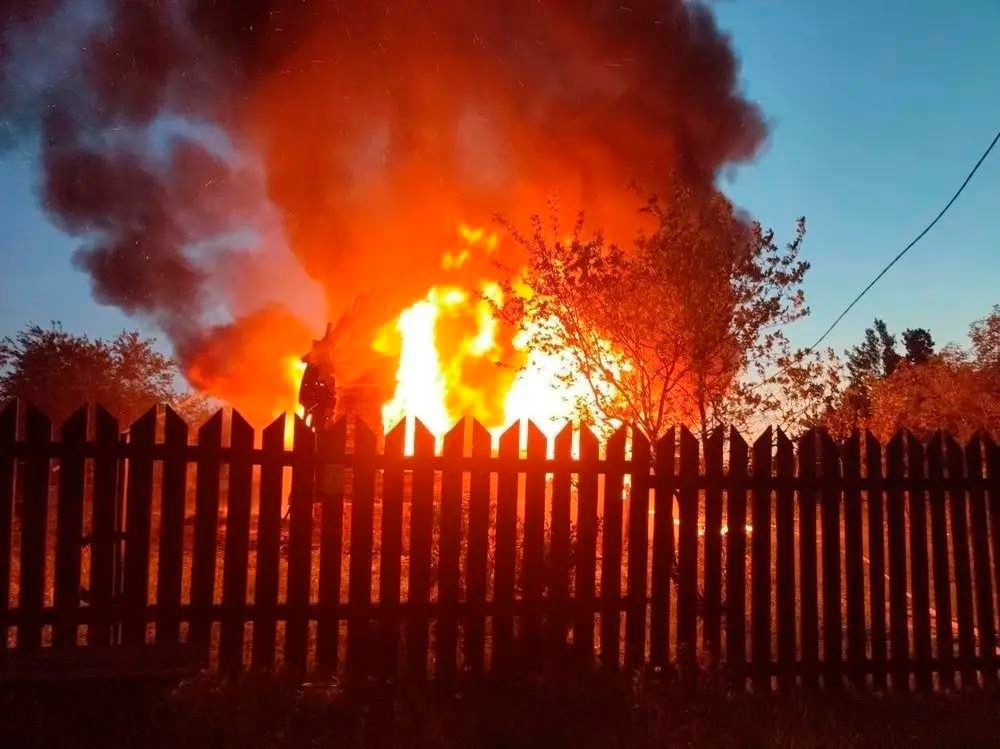
The bombardment resulted in three fatalities near Russia’s capital, wounded 12 additional people, caused damage to numerous residential buildings and completely destroyed several private residences.
One drone struck within a Moscow refinery’s boundaries but failed to halt operations, Sobyanin reported. A separate drone impacted an oil storage tank at a facility, sparking a fire that covered the surrounding area with dark smoke.
Multiple Moscow aviation hubs halted activities, causing dozens of flights to face delays or rerouting. One Ukrainian drone crashed within the capital’s Sheremetyevo airport property but caused no structural damage, officials reported.
Ukraine’s success in breaking through Moscow’s extensive air defense network demonstrated both the expansion of its drone fleet and improved operational strategies. Kyiv has consistently increased its drone operations, targeting power infrastructure and weapons manufacturing sites, though the capital has proven more challenging to reach.
“The Moscow region is the most heavily saturated with Russian air defense systems,” Zelenskyy stated during a national address, adding that “our long-range capabilities are significantly changing the situation — and, more broadly, the world’s perception of Russia’s war.”
The weekend Moscow strike represented a warranted reaction to “Russia’s prolongation of the war and attacks on our cities and communities,” Zelenskyy declared.
“We are clearly telling the Russians: Their state must end its war,” he stated in a social media message.
Last week’s most devastating attack in Ukraine claimed 24 lives when a Russian missile destroyed a nine-story residential building in Kyiv.
These strikes followed a short U.S.-mediated three-day truce that failed to stop the combat but created a break in long-distance attacks, permitting Moscow to conduct its yearly May 9 military demonstration honoring Nazi Germany’s World War II defeat.
Worries about Ukraine’s extended-range drone strikes prompted Russian officials to reduce the parade’s scale. Unlike previous years, no tanks, missiles or other military equipment rolled through Red Square.
Following the parade, Putin declared the Ukraine war was approaching its conclusion, though he provided no explanation or timeline. He has maintained his extensive conditions for ending the conflict, including Ukraine’s withdrawal from four regions Moscow has claimed but never completely controlled. Kyiv has refused this demand.
Trump also stated last week that the war’s end was “getting very close,” despite U.S. mediation efforts showing little meaningful advancement and being essentially paused since starting its conflict with Iran.
The Moscow attacks occur as tensions increase within Russia regarding the war’s mounting expenses and increasingly restrictive government measures that have reduced Putin’s historically strong approval ratings.
Certain military bloggers and social media personalities previously supportive of the Kremlin have begun openly challenging some governmental policies.
Government restrictions on mobile internet access and blocking widely-used messaging applications have created substantial business losses and daily disruptions for millions of Russians, generating public anger.
Officials justified these measures by citing the necessity to prevent Ukrainian drone attacks, some of which use mobile internet for navigation. Critics condemn the shutdowns as authorities’ latest effort to increase internet control.
Rising frustration over these limitations led citizens to submit petitions to presidential offices and attempt organizing demonstrations that were promptly prevented.
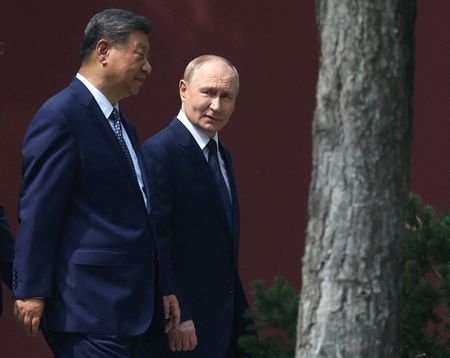
As tensions escalate, Putin begins a two-day China visit on Tuesday.
State television networks attempted to minimize the Moscow attacks, giving them only brief coverage on some broadcasts. They instead highlighted last week’s successful test of a new intercontinental ballistic missile designed as a crucial component of Russia’s nuclear arsenal.
Multiple war bloggers claimed the weekend attack revealed air defense weaknesses requiring immediate fixes. Some called for the Kremlin to intensify Ukrainian attacks and target its leadership.
“The time has come to hit the decision-making centers,” Alexander Kots of the daily Komsomolskaya Pravda wrote.
Pro-Kremlin political commentator Sergei Markov wrote about awakening to explosion sounds over the weekend as defense systems engaged the attacking drones. He accused Kyiv’s allies of assisting Ukraine’s drone production increase, claiming “it was Europe that tried to hit Moscow.”
“As long as Europe believes it’s safe, such attempts will continue,” Markov stated.
Russian hardliners have long pressed the Kremlin to retaliate against increasing Ukrainian attacks by targeting Kyiv’s European allies.
Last month, the Defense Ministry released a European factory list allegedly involved in producing drones and components for Ukraine. It cautioned that Russian attacks using European-manufactured drones carry “unpredictable consequences.”
When asked Sunday by a state TV commentator why Moscow accepts being “bitten” in this manner, Kremlin spokesman Dmitry Peskov replied that its nuclear deterrent aims to counter threats to Russia’s survival.
LONDON — British Prime Minister Keir Starmer worked to solidify his position in office Monday, declaring he was focused on governing after accepting responsibility for Labour Party’s poor showing in elections that have threatened his leadership role.
Speaking to staff at Labour Party headquarters rather than the general public, Starmer acknowledged their dedication despite the party’s disappointing performance in May 7 local and regional contests.
“The election results were not the ones that we wanted, they were really tough. But you worked your socks off,” Starmer told the workers. “It’s not been easy circumstances in the last 10 days.”
The past two weeks have proven challenging for Starmer, who guided Labour to an overwhelming win just two years earlier. Multiple party officials have demanded his resignation while previous supporters are organizing efforts to remove him from leadership.
Wes Streeting, a prominent Labour legislator, stepped down from his health secretary position last week and declared his intention to compete in any Labour leadership contest against Starmer.
Andy Burnham, Greater Manchester mayor and another potential challenger, has received approval to compete in an upcoming special parliamentary election anticipated in the coming weeks. Should Burnham succeed, he could enter the leadership competition and present a significant challenge to Starmer.
On Monday, Starmer promised his complete backing for “whoever” seeks the available Labour seat, while stating he would not step down if Burnham prevails.
The identity of Britain’s next prime minister could be determined by approximately 76,000 voters in a small northwestern England election.
Focus centers on Makerfield, located near Manchester, where Burnham is anticipated to campaign.
Before this week, the well-regarded mayor could not challenge Starmer due to his absence from the House of Commons.
This situation shifted when Josh Simons, the Labour representative for that district, resigned to create an opening for Burnham.
Burnham has confirmed his intention to seek the Makerfield parliamentary seat. He stated that winning would allow him to bring his advocacy for northern England voters to the national stage and improve Labour’s prospects.
“If I get to stand, a vote for me will be a vote to change Labour, because Labour needs to change if we are to regain people’s trust,” he declared Monday. “I know what my party has offered in the past has simply not been good enough.”
British news outlets indicate the Makerfield election may occur on June 18.
Candidate applications for Labour’s nomination end Monday, with the party leadership endorsing their choice Thursday.
Despite his popularity and extensive Labour experience, the 56-year-old Burnham faces uncertainty in securing the seat.
Though historically a reliable Labour district, Makerfield has witnessed increasing support for Reform UK party, which opposes immigration and European Union ties.
Numerous local voters supported Brexit in the referendum ten years ago. Recent local contests saw Reform capture all constituency areas with approximately half the total votes.
Burnham’s campaign became more difficult after Streeting, his main leadership rival, called Brexit a “catastrophic mistake” Saturday and suggested Britain should eventually return to EU membership.
Political observers interpreted Streeting’s remarks as a direct confrontation with Burnham, who has previously indicated support for eventual EU rejoining but must navigate carefully to succeed in Makerfield.
Reform UK will likely emphasize immigration during the special election, with party leader Nigel Farage, a prominent Brexit advocate, quickly criticizing Burnham. In Monday’s Daily Express, Farage claimed Burnham “wants to drag you closer to the EU.”
Burnham attempted to dismiss such criticism, stating: “The last thing we should do right now is rerun those arguments.”
Coverage of Starmer’s difficulties overshadowed problems facing his political opponents across the spectrum.
A parliamentary oversight body launched an investigation last week into whether Farage failed to disclose a 5 million pound ($6.7 million) contribution from a supporter.
Farage explained the funds from Thailand-based cryptocurrency investor Christopher Harborne preceded his parliamentary campaign, were unrelated to politics, and covered personal security costs. He subsequently told the Sun newspaper the donation supported Brexit advocacy.
Sky News revealed Farage purchased a 1.4 million pound ($1.9 million) residence after receiving the money. However, Farage claimed he bought the property using earnings from appearing on reality television show “I’m A Celebrity… Get Me Out Of Here!”
Additionally, the Green Party leader, whose organization has also drawn votes from Labour, acknowledged missing the recent local elections.
Zack Polanski was relocating during the voting period and failed to complete voter registration at his new residence, according to a party representative.
Polanski also faces questions regarding unpaid taxes on an east London houseboat where he previously resided.
He has acknowledged incorrectly claiming British Red Cross spokesperson status during his 2022 campaign for deputy party leadership.
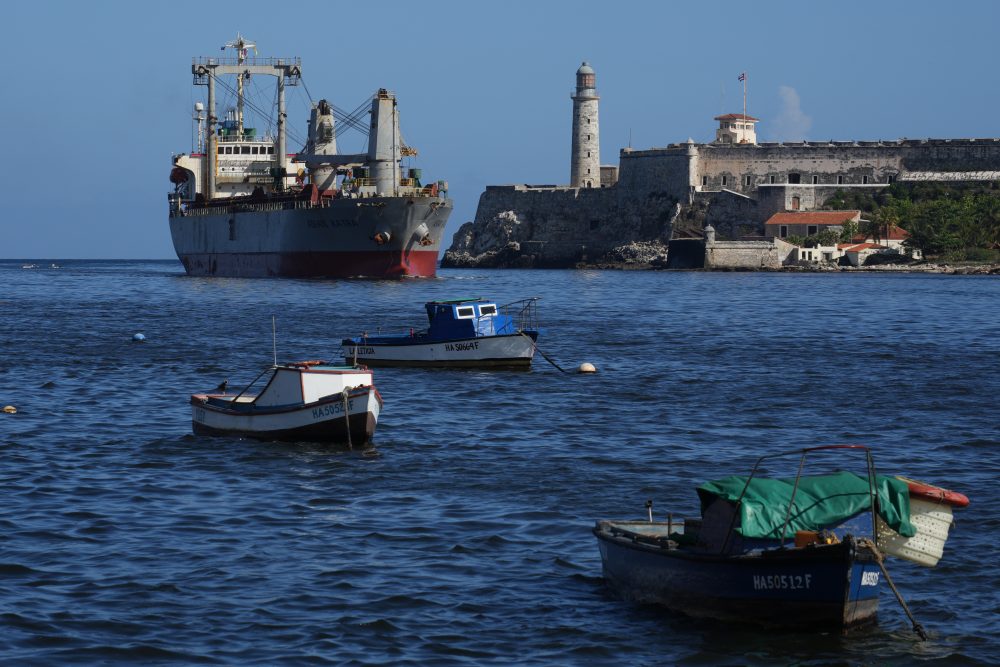
A vessel carrying emergency humanitarian supplies from the Mexican and Uruguayan governments reached Havana on Monday, bringing relief to Cuba as the island nation faces mounting economic difficulties.
The vessel, which set sail from Mexico, transported food supplies and personal hygiene products, officials announced.
Alberto López Díaz, Cuba’s food industry minister, noted the supplies come “at a time of great economic hardship, exacerbated by the tightening of the blockade imposed on our country by the United States government.”
In his statement, he explained the assistance would be handed out “with the utmost responsibility and respect,” with children, the elderly and vulnerable families receiving priority.
The island’s economic troubles and power grid failures have worsened throughout this year following the U.S. invasion of Venezuela in early January, which stopped vital oil deliveries from the South American nation.
Later in January, U.S. President Donald Trump warned he would impose tariffs on any nation that sells or supplies oil to the island.
An acute fuel shortage has continued, while power outages remain widespread throughout the island.
The opposition party in Cape Verde has successfully defeated the current ruling government in Sunday’s parliamentary elections, setting the stage for a return to power following a decade outside of government, according to preliminary vote tallies and party announcements released Monday.
The island nation in the Atlantic, consisting of 10 islands, has historically seen control shift back and forth between its two dominant political organizations: the Movement for Democracy (MpD), which has held power since 2016, and the African Party for the Independence of Cape Verde (PAICV).
Preliminary vote counts from the National Election Commission, covering 98.2% of voting locations, revealed PAICV captured 46.7% of votes, translating to 37 out of 72 parliamentary seats, while MpD secured 43.6%.
Francisco Carvalho, who leads PAICV, appears positioned to assume the role of prime minister following the current leader Ulisses Correia e Silva’s acknowledgment of electoral defeat in his initial post-election comments.
However, Correia e Silva noted uncertainty remained about whether PAICV had achieved a complete majority since ballot counting continued.
“The results, obviously, did not reach the level of our objectives, which were to win the elections, continue governing Cape Verde and move the country forward,” he said.
Carvalho celebrated the results as a mandate for transformation and stated voters had strongly endorsed his political agenda.
Carvalho, currently serving his second term as mayor of the capital, Praia, will now collaborate with President Jose Maria Neves, who also belongs to PAICV.
The nation functions under a combined presidential-parliamentary system, where the prime minister, chosen by the National Assembly, leads the government while the president maintains substantial authority including veto powers and serves as a mediator.
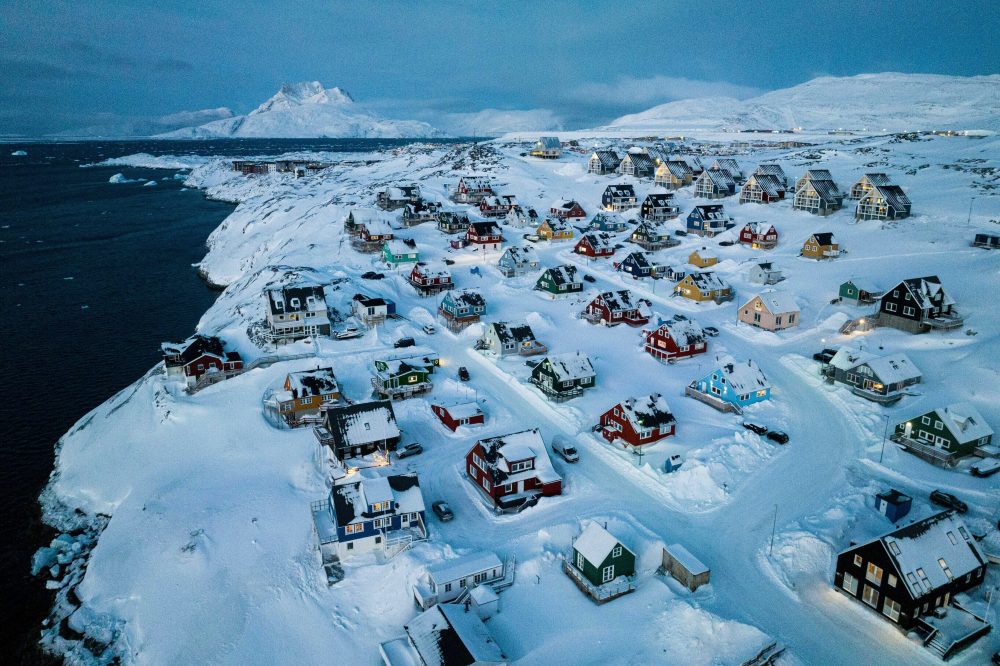
Officials in Greenland announced Monday that diplomatic discussions with the United States have shown positive developments, while firmly rejecting any possibility of selling the Arctic territory to America.
Jeff Landry, the U.S. special envoy designated by President Donald Trump last year to pursue American control of Greenland, touched down in Nuuk on Sunday and conducted meetings Monday with Prime Minister Jens-Frederik Nielsen and Foreign Minister Mute Egede.
“We believe there is progress, and from Greenland’s side we are focused on finding a solution that is good for us all, and most importantly that threats of annexation, takeover or a purchase of Greenland and the Greenlandic people does not occur,” Nielsen stated to the press following his session with Landry.
Landry did not issue an immediate response, though he had previously informed local news outlets on Sunday that his mission was to “listen and learn”.
President Donald Trump’s demands that America must obtain or control Greenland, which operates as a semi-autonomous Danish territory, have created diplomatic friction between Washington and Copenhagen, despite both nations being founding NATO allies, and have generated broader concerns throughout Europe.
“They asked for a meeting, and we’ve explained our situation and standpoint, and that we have some red lines — we will not sell Greenland, we will own Greenland for all time,” Egede declared.
In an effort to reduce diplomatic strain, Greenland, Denmark and the United States reached an agreement earlier this year to conduct high-level diplomatic negotiations aimed at resolving the dispute, though results from these continuing discussions have not yet been announced.
America seeks to expand its military footprint in Greenland and incorporate it into President Donald Trump’s proposed “Golden Dome” defensive network designed to protect against nuclear threats.
The United States maintains one operational base in Greenland currently, the Pituffik Space Base located in the northwest region, a significant reduction from approximately 17 installations in 1945 when thousands of American military personnel operated facilities across the island.
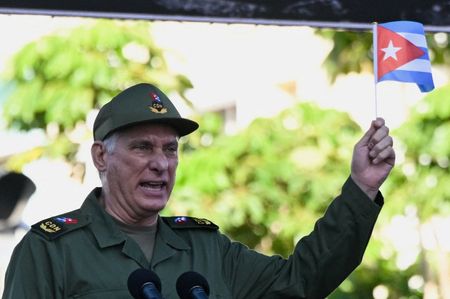
Cuban President Miguel Diaz-Canel issued a stark warning Monday, stating that any American military intervention against his nation would result in a “bloodbath” with devastating effects on regional peace and stability.
“Cuba does not represent a threat,” Diaz-Canel wrote in a message posted to X.
His remarks came in response to a Sunday Axios report that referenced classified intelligence sources. The report claimed Cuba has obtained more than 300 military drones and has considered using them against the U.S. naval base at Guantanamo Bay, American military ships, and Key West, Florida. Cuban officials dismissed the report as American fabrication designed to justify possible military intervention.
In Havana’s streets, residents expressed willingness to fight back against any attack, despite facing severe economic difficulties.
“I know Cuba is a strong country. Cubans are very brave and they are not going to find us unprepared,” said Sandra Roseaux, 57. “If they come, they will have to fight, because Cuba will respond. My country, hungry or however it may be, will respond. It is better that they do not come because there will be a fight.”
The communist nation, which has been at odds with Washington for decades, faces mounting pressure after the United States severed energy supplies following the arrest of the president of its former ally Venezuela in January. Recent weeks have brought fuel shortages and electricity blackouts lasting all but one or two hours daily.
Relations between the nations have deteriorated rapidly in recent days. Reuters previously reported that U.S. Department of Justice prosecutors are preparing to charge former Cuban leader Raul Castro in connection with Cuba’s 1996 downing of two aircraft operated by a humanitarian organization, according to a Justice Department source.
Foreign Minister Bruno Rodriguez posted on social media that Cuba, “like every nation in the world,” possesses the right to defend itself against external threats under the U.N. Charter and international law.
Havana resident Ulises Medina, 58, called for diplomatic solutions. “It would not be right for the United States to invade Cuba, nor for Cuba to invade the United States,” he said. “They must reach an agreement and talk and negotiate. Cuba, in any case, will defend itself because the country will not be surrendered.”
Charging Castro, 94 — the brother of late former leader Fidel Castro and a hero of the 1959 Cuban Revolution — would represent a significant escalation in pressure on Cuba by the Trump administration.
“The Cuban people do not let anyone interfere with their land,” said Jorge Villalobos, 87. “Cubans know how to defend themselves, even with sticks and stones.”
BEIRUT (AP) — Lebanon’s health ministry announced Monday that fatalities from the current conflict between Israel and the Iranian-backed Hezbollah have now exceeded 3,000 people.
Officials report the death count has reached 3,020, with casualties including 292 women and 211 children, as violence persists despite an unstable ceasefire agreement. The conflict initiated on March 2 when the Hezbollah militant organization launched attacks against Israel, occurring two days following joint U.S. and Israeli strikes on Iran.
Israeli forces have subsequently launched ground operations in southern Lebanon while conducting bombing campaigns in Beirut and surrounding regions, stating their objective is to prevent Hezbollah’s rearmament efforts. The organization, which holds significant political influence within Lebanon, has rejected demands from various sources, including Lebanon’s own government, to surrender its weapons.
The conflict has forced more than one million Lebanese citizens from their homes, with many seeking refuge in makeshift tent camps along roadways and coastal areas near Beirut. Israeli forces continue facing challenges from persistent Hezbollah drone strikes.
Historic face-to-face negotiations between Israeli and Lebanese representatives, with American mediation, resulted in a ceasefire that took effect April 17 and has been prolonged through June. The two nations have remained technically at war since Israel’s establishment in 1948.
Hezbollah, however, is not part of the talks.
Israeli representatives have emphasized dismantling Hezbollah’s military capabilities and view the current discussions as potentially leading to normalized diplomatic ties. Lebanese negotiators indicate they are pursuing a security arrangement or armistice that would fall short of full diplomatic normalization.
U.S. President Donald Trump has publicly called for a meeting between Lebanese President Joseph Aoun and Israeli Prime Minister Benjamin Netanyahu, while Aoun has declined to meet or speak directly with Netanyahu at this stage — a move that would likely generate blowback in Lebanon, where talks with Israel were met with protests.
Israeli casualties include twenty military personnel, two civilians within Israeli territory, and one defense contractor operating in southern Lebanon.
U.N. peacekeeping forces in southern Lebanon have also been caught in the crossfire and six have been killed.
A top German diplomat suggested Monday that Turkey holds substantial power to affect the ongoing conflicts involving Ukraine and Iran, calling for enhanced cooperation between Ankara and the European Union.
German Foreign Minister Johann Wadephul emphasized Turkey’s strategic importance during a Berlin press conference alongside his Turkish counterpart Hakan Fidan. “Turkey has the potential to exert considerable influence on these trouble spots, not only because of its geographical proximity, but also because of its enormous political and economic significance,” Wadephul stated.
The German minister expressed support for deepening strategic partnerships between Turkey and the EU, noting that Germany backs including Turkey in discussions about the European Union’s defense and industrial policy development.
Regarding Turkey’s aspirations for EU membership, Wadephul offered encouragement while noting requirements must be fulfilled. “If Turkey wishes to join the European Union, it will find a friendly and reliable partner in Germany,” he said, though he emphasized that Turkey would need to satisfy all membership requirements.
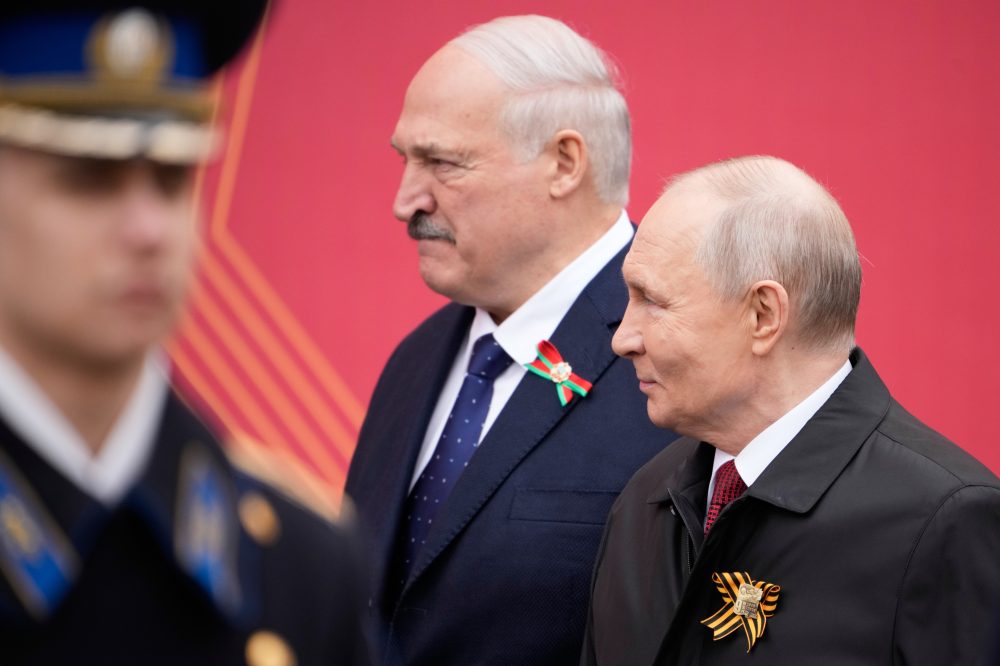
Belarus announced Monday that it has begun military exercises with Russia designed to rehearse nuclear weapon deployment and operational procedures using atomic weapons that Moscow has stationed within Belarusian territory.
The authoritarian leader Alexander Lukashenko has permitted Russia to position tactical nuclear weapons within his nation’s borders. Last December, Russia declared that its newest intermediate-range nuclear-capable Oreshnik missile system had been deployed to Belarus, a country that shares borders with Ukraine and the NATO nations of Poland, Latvia and Lithuania.
According to the Belarusian Defense Ministry, the military exercises will include missile forces and aircraft operations.
“During the exercise, in cooperation with the Russian side, it is planned to practice the delivery of nuclear weapons and preparations for their use,” the ministry said in a statement. The ministry noted that the exercises will concentrate on instructing military personnel in stealthy movement over extensive distances.
Officials stated that these military operations were scheduled beforehand and were not directed toward any specific third-party nations.
Lukashenko has maintained authoritarian control over the country of 9.5 million people for over thirty years. Western nations have imposed multiple sanctions on his administration due to human rights violations and for permitting Moscow to utilize Belarusian territory during the February 2022 invasion of Ukraine.
During 2024, the Kremlin unveiled an updated nuclear policy that brought Belarus within Russia’s nuclear protection framework. Russian President Vladimir Putin has stated that Moscow will maintain authority over its nuclear arsenal positioned in Belarus, while permitting its partner nation to choose targets during potential conflicts.
Russia has employed conventional versions of the Oreshnik weapon — named after the Russian term for hazelnut tree — against Ukrainian targets twice: once in November 2024 and again in January.
Putin has declared that Oreshnik’s multiple warheads descend at velocities reaching Mach 10 and cannot be stopped by defensive systems, claiming that multiple conventional strikes from such weapons could match the destruction of nuclear attacks.
Intermediate-range weapons have flight capabilities between 500 to 5,500 kilometers (310 to 3,400 miles). These weapon systems were prohibited under a Soviet-era agreement that both Washington and Moscow withdrew from in 2019.
Belarusian opposition leader Sviatlana Tsikhanouskaya condemned the military exercises, stating that Russian nuclear weapon placement has “turned Belarus into a target.”
“Lukashenko has turned Belarus into a platform for Russian threats, but Belarusians don’t need these weapons,” Tsikhanouskaya told The Associated Press. “Only a free Belarus will become a source of security, not nuclear blackmail, in Europe.”
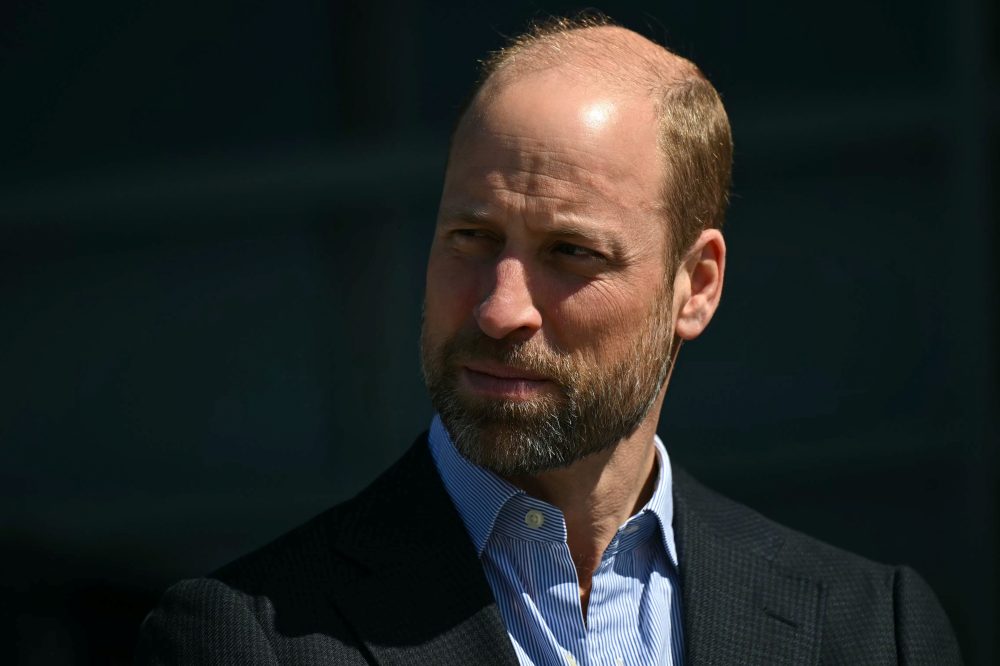
LONDON (AP) — The estate that generates income for Prince William’s family is preparing to divest approximately one-fifth of its property holdings, valued at 1 billion pounds ($1.3 billion), during the next ten years. The funds will support housing construction, renewable energy expansion, and wildlife conservation initiatives.
The chief executive of the duchy, Will Bax, outlined these plans during a conversation with the Times of London, which the publication released on Monday. The strategy aligns with the estate’s goal of streamlining its widespread property interests and channeling profits into environmental and community-focused initiatives, as detailed in their latest yearly financial report.
According to Bax’s comments to the Times, William believes the duchy “shouldn’t just exist to own land.” He added, “It should first and foremost exist to have a positive impact on the world.”
This development occurs amid growing demands for Britain’s royal family and the Duchy of Cornwall to operate with greater financial transparency and demonstrate their worth to taxpaying citizens.
Established during the 14th century to generate revenue for the Prince of Wales, the duchy controls 52,173 hectares (131,393 acres) spread across 19 English counties.
According to Bax, the estate will concentrate its efforts on five core regions: the Isles of Scilly, Cornwall, Dartmoor, the Bath vicinity in southwestern England, and London’s Kennington district.
Property sales will enable the duchy to channel approximately 500 million pounds toward housing, renewable energy, and environmental initiatives, Bax explained.
The estate’s earnings fund both official duties and personal expenses for the Prince and Princess of Wales and their three children. Financial records show a profit of 22.9 million pounds for the fiscal year concluded March 31, 2025.
Although the current Prince of Wales receives the duchy’s operational earnings, he lacks authority to sell properties for personal gain. A board of directors supervises the duchy’s operations with the responsibility of preserving assets for future heirs. Government approval is required for significant property transactions to safeguard the long-term worth of these holdings.
Greenland’s Prime Minister Jens-Frederik Nielsen announced Monday that he held a cordial and constructive discussion with President Donald Trump’s special Arctic representative, while firmly emphasizing that Greenlandic independence remains non-negotiable.
The Arctic territory operates as a semiautonomous region under NATO member Denmark, while Trump has repeatedly expressed desires for American control over the island citing security concerns, sparking resistance from both Greenlandic and Danish officials.
“The Greenlandic people are not for sale. Greenlandic self-determination is not something that can be negotiated,” Nielsen stated to Danish TV 2 following his discussion on the island with the special representative, Louisiana Gov. Jeff Landry.
Nielsen emphasized that Greenlandic residents “seek good cooperation” with America, describing his “courtesy meeting” with Landry as conducted with “mutual respect and in a positive atmosphere.”
Upon arriving in Greenland Sunday, Landry reportedly indicated that Trump instructed him to “go over there and make as many friends as we can get,” according to public Danish broadcaster DR.
Greenland’s Foreign Minister Múte B. Egede informed media Monday that a collaborative team including America, Greenland, and Denmark remains active in addressing ongoing American requests for territorial control. Trump has claimed Russia or China might attempt to seize Greenland, though regional specialists have rejected this possibility.
“We haven’t been the ones creating obstacles to cooperation between the United States and Greenland,” the Greenlandic foreign minister stated, having also joined the discussion with Landry and his team in Greenland’s capital Nuuk.
“So if we are to continue down this positive and constructive path, we must await the working group’s report,” he explained to TV 2, noting the group’s efforts seem “more promising” than previously.
U.S. Ambassador to Denmark Ken Howery, accompanying the American delegation in Greenland, will officially open the U.S. Consulate’s updated Nuuk facilities, with both he and Landry scheduled to participate in a commercial event Tuesday and Wednesday, local outlets reported.
Following President Trump’s return to Washington after his Beijing visit, focus has shifted to rising tensions with Iran and potential U.S. response options.
During a conversation with Axios, the president delivered a stern message to Tehran, stating that “the clock is ticking.” Trump further indicated that without Iran offering an improved deal proposal, “they are going to get hit much harder.”
According to insider sources, the president plans to convene with his senior national security team in the Situation Room on Tuesday to examine potential military responses. U.S. officials report this meeting comes after multiple high-level weekend consultations.
Trump held discussions Sunday with Israeli Prime Minister Benjamin Netanyahu regarding the Iranian situation. The previous day, he gathered with key advisors at his Virginia golf facility, including Vice President J.D. Vance, Secretary of State Marco Rubio, White House envoy Steve Witkoff, and CIA Director John Ratcliffe.
Diplomatic channels remain active as Pakistan’s interior minister made a weekend trip to Tehran for discussions with Iranian officials. Pakistan currently functions as the designated intermediary between Washington and Tehran.
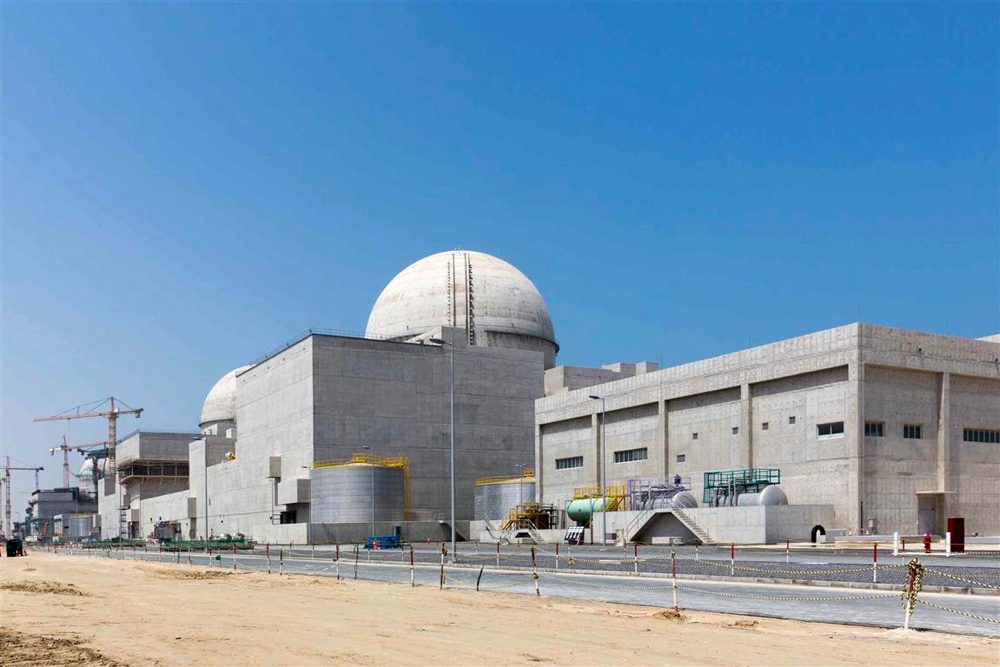
Separately, the United Arab Emirates’ sole nuclear facility suffered a drone attack. Officials report no significant damage or radiation release occurred, and no organization has claimed responsibility, though Iran remains under suspicion.
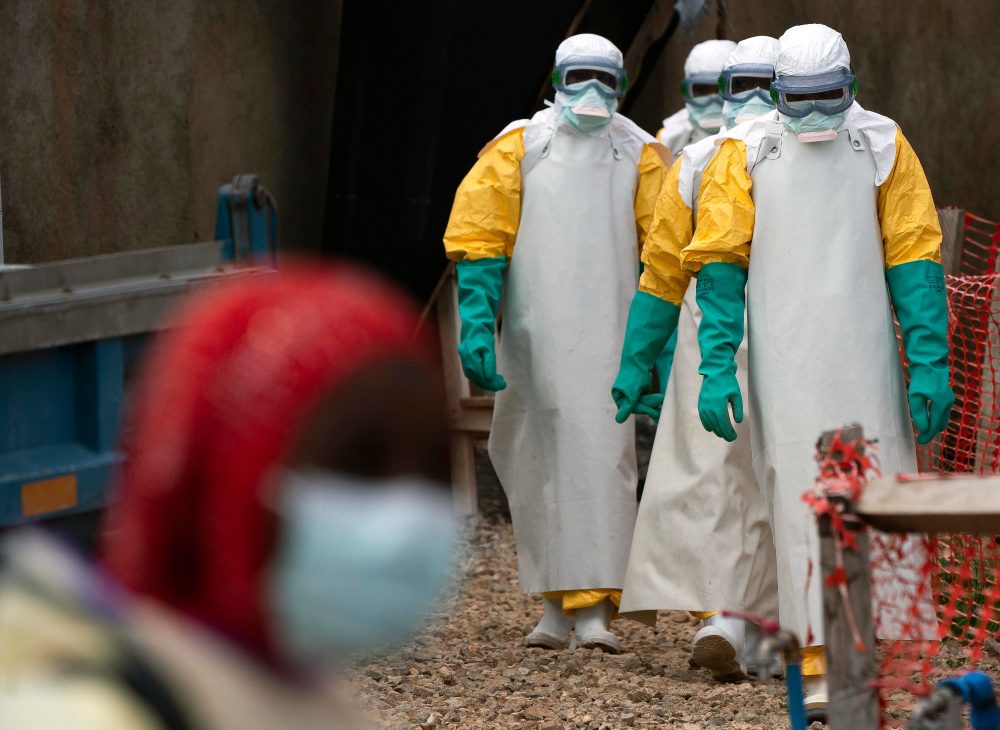
HARARE, Zimbabwe — Recent deadly disease outbreaks across Africa are spurring continental leaders to pursue greater independence from international health donors as global assistance has been cut in half during the past five years.
Declining aid exacerbated by policy changes is clashing with Africa’s rapidly expanding population exceeding 1.5 billion people. The latest Ebola outbreak involving a strain without approved treatments or vaccines follows closely after an unusual hantavirus outbreak aboard a cruise vessel that heightened continental health alerts.
Africa confronts “an equally dangerous threat” from funding shortfalls, according to Dr. Jean Kaseya, director-general of the Africa Centers for Disease Control and Prevention, who spoke while introducing an African health financing self-reliance program earlier this year.
“Every time we have an outbreak, many countries start to ask for partners because they don’t have in their budgets funding to respond, even to prepare for these outbreaks,” he stated during a briefing about the recent Ebola outbreak.
However, African nations recognize this dependency must end.
The Africa CDC describes the continent as currently experiencing “an unprecedented financing crisis.”
The organization reports that official development assistance has plummeted dramatically, declining from approximately $26 billion in 2021 to roughly $13 billion in 2025, as wealthy nations redirect focus toward broader geopolitical concerns like the Iran war and internal pressures.
For years, African leaders had promised to improve funding for their own healthcare systems, but these commitments stayed largely theoretical. A 2001 agreement called for countries to dedicate at least 15% of national budgets to health, yet among Africa’s 54 nations, only Rwanda, Botswana and Cape Verde remain on target.
“The conversation was somehow theoretical because the donor system was still functioning,” explained Dr. Alex Ajangba, a health financing expert and co-editor of the new African Journal of Health Economics, Systems and Policy. “But now that cushion is gone.”
He continued: “What we are seeing here is not a temporary dip of donor funding that we will recover from.”
Nations are speeding up efforts toward “health sovereignty,” with goals to fund and operate systems with significantly reduced dependence on external assistance.
Programs such as Ghana’s “Accra Reset” introduced in September, and the Africa Health Security and Sovereignty Agenda, endorsed by African leaders in February, seek to build long-term stability.
Health ministers are suggesting domestic approaches, including increased taxes on tobacco, alcohol and sugary beverages, combined procurement of medications to reduce expenses, expanding regional pharmaceutical and vaccine production and addressing system inefficiencies.
The urgency is clear. Africa purchases over 90% of its health supplies including vaccines and medications, while health crises — from mpox to cholera to Ebola — jumped from 153 outbreaks to 242 between 2022 and 2024, the Africa CDC reports. The organization aims for the continent to manufacture 60% of its vaccines by 2040.
“The word ‘health sovereignty’ has become a phrase that is used in almost every continental policy meeting right now,” Ajangba noted, cautioning it risks becoming merely a “slogan.”
Specialists say the continent possesses substantial wealth. Africa contains roughly 30% of global mineral reserves, including materials crucial to technology and renewable energy, yet much of this value disappears through unclear or weak agreements, illegal financial transfers, debt obligations and limited local mineral processing, with resources mainly exported unprocessed, Ajangba explained.
The continent loses approximately $40 billion yearly to illegal financial transfers in an extractive industry encompassing mining, gas and oil, the United Nations Economic Commission for Africa states.
Beyond addressing these challenges, another central element of African nations’ move away from aid dependence involves co-financing, demanding countries contribute more alongside donors.
Gavi, the global vaccine alliance, reports that lower-income countries provided a record $302 million toward vaccines in 2025, and roughly $1 billion during the past five years.
“This creates predictability,” Gavi chief executive Sania Nishtar told The Associated Press. “Reliance on aid for basic services does not.”
Yet the transition can generate controversy. The Trump administration has promoted co-financing as a central requirement of the “America First” health agreements it has established with nearly two dozen African nations. These arrangements reshape aid to Africa by demanding countries increase domestic spending within specified timeframes or risk losing support.
Some countries have refused the proposed agreements, angered by U.S. requests for health data sharing without guarantees that nations will gain any benefits from it. Others condemn suggested exchanges of health support for natural resources.
While most governments agree Africa needs to advance toward self-sufficiency, critics argue some of the U.S. conditions impose unrealistic demands on already stretched economies.
“They are being set up to fail,” said Asia Russell, executive director of Health GAP, an international advocacy group. “When an administration says, ‘If you don’t hit these numbers, you’re not going to get resources anymore,’ that is extremely serious.”
Many African countries face increasing debt pressures. Currently, about 40% spend more on debt than health.
“Many of these countries have huge debt service and other challenges,” said Jen Kates, a senior vice president at the nonprofit KFF, which focuses on health policy. “At the end of the day, it’s going to be people who live in those countries who will feel the effects.”
Africa’s debt has climbed to approximately $1.2 trillion, the African Export-Import Bank reports, creating harsh choices. Debt payments consume roughly 19% of government income in sub-Saharan African countries, United Nations data shows.
Israeli military forces report they have successfully eliminated a major Hamas figure responsible for planning the October seventh attacks. The Israel Defense Forces and Israel Security Agency announced that Izz al-Din al-Haddad was killed during a targeted operation in Gaza City on Friday.
Military officials say al-Haddad led Hamas’s armed forces and was among the primary architects of the October seventh offensive. He had assumed control of military activities after the elimination of senior Hamas commanders Yahya Sinwar and Mohammed Sinwar.
Israeli authorities indicate al-Haddad was instrumental in overseeing Hamas’s captive operations, frequently positioning himself near hostages to avoid being targeted. Officials characterized him as among the organization’s most experienced leaders, having been involved with Hamas command for many years.
Regional diplomatic initiatives continue to face challenges. A high-ranking international official informed The Wall Street Journal that Hamas’s unwillingness to surrender weapons and its authority over Gaza’s civilian areas are blocking advancement toward comprehensive peace negotiations. Hamas has rejected these claims.
In another operation, American officials announce the elimination of a senior global ISIS commander in Africa.
U.S. authorities verified that American military personnel, collaborating with Nigerian forces, conducted what they termed a precisely coordinated mission in northeastern Nigeria. The objective, Abu Bilal al-Minuki, was considered the second-highest ranking ISIS leader internationally.
President Trump released a statement describing the operation as “flawlessly executed,” noting that al-Minuki had been among the most active terrorist commanders worldwide, participating in attack planning and directing kidnapping operations.
U.S. Africa Command reports the operation also eliminated other significant ISIS targets and represents part of ongoing efforts to sustain pressure on remaining terrorist organizations.
Additionally, a suspected international terror coordinator is now facing federal charges in the United States.
The FBI reports that an Iraqi individual, Mohammad Baqer Saad Dawood al-Saadi, has been transported to New York to answer charges connected to approximately twenty planned attacks throughout Europe.
Law enforcement officials claim al-Saadi organized activities for a pro-Iranian extremist organization, focusing on Jewish educational institutions, synagogues, and charitable organizations, along with American and Israeli targets.
FBI Director Kash Patel described the apprehension as a significant international achievement, stating it demonstrates continued efforts to prosecute high-level terror suspects.
Israeli Prime Minister Benjamin Netanyahu convened security discussions on Sunday as a Turkish-led convoy of vessels carrying pro-Palestinian activists approaches Gaza waters, seeking to challenge Israel’s maritime blockade.
The convoy includes 53 ships transporting approximately 400 activists and is anticipated to reach Israeli territorial waters in under 48 hours. The fleet launched from Turkey as the second mission of the Global Sumud Flotilla’s efforts to breach the Gaza blockade.
Weather conditions forced the convoy to make a temporary stop at a Greek island before continuing its journey. According to the Jerusalem Post, Netanyahu convened Israel’s security cabinet in preparation for the flotilla’s expected arrival.
This mission represents the second attempt by the Global Sumud flotilla, following an earlier effort in April when Israeli naval forces intercepted 20 vessels.
Israeli authorities have expressed particular concern about the participation of the Turkish IHH organization, which describes itself as providing humanitarian aid but has been classified by Israel as a terrorist entity due to its connections with Hamas. Participants in the current flotilla have links to IHH and associated organizations.
The IHH organization previously helped coordinate the 2010 Mavi Marmara flotilla, during which pro-Palestinian demonstrators attempted to break through Gaza’s naval blockade. When Israeli naval forces boarded the vessel, Shayetet 13 special forces faced armed resistance, with Israeli personnel sustaining injuries from attacks involving metal bars, knives, and other weapons.
The flotilla’s arrival coincides with ongoing delays in implementing the October 2025 ceasefire agreement between Israel and Hamas, which has stalled before entering its second phase. The primary obstacle involves Hamas’s required disarmament under the agreement, which the organization has refused to accept.
The American-supported 20-point Gaza proposal outlined terms for an immediate ceasefire, the return of all Israeli hostages, expanded humanitarian assistance, and a gradual Israeli military withdrawal tied to security guarantees and Hamas disarmament.
The plan also established provisions for internationally monitored reconstruction and governance structures for Gaza, specifically excluding Hamas from future leadership roles and establishing long-term discussions focused on regional stability and eventual Palestinian self-rule.
The United Nations Security Council convened a recent meeting to examine developments in Syria, with UN representatives and member nations describing what they characterized as “real but fragile progress” while advocating for enhanced support regarding recovery, stability, and transitional justice initiatives. Meeting participants also issued warnings about the effects of decreasing humanitarian funding and continuing security concerns.
The gathering occurred while Syria experiences ongoing political and security transformations, attracting heightened international focus on initiatives to stabilize the nation, reconstruct government institutions, fight terrorism, tackle missing persons issues, and promote transitional justice programs.
Throughout the proceedings, UN representatives assessed the political, humanitarian, and security conditions in the country, highlighting that Syria is navigating a delicate period that demands continuous international backing, especially as indicators of relative progress appear in certain regions while major economic, humanitarian, and security obstacles remain.
Conversations also covered the homecoming of refugees and internally displaced individuals, methods to encourage early recovery, and the significance of maintaining international initiatives to prosecute violators, determine the status of missing individuals, enhance stability, and stop extremist groups from reemerging.
The US delegation to the United Nations presented an extensive statement containing distinct political and security messages about Washington’s strategy toward Syria’s current situation.
Tammy Bruce, deputy US representative to the United Nations, stated during comments made at the Security Council meeting in New York on May 15, 2026, that President Donald Trump and the United States “stand with the Syrian people in supporting genuine transitional justice and the rule of law in Syria.”
Bruce opened by expressing gratitude to the session chair, along with Deputy Special Envoy for Syria Najat Rochdi Cordone and Undersecretary-General Tom Fletcher for their presentations to the Council.
The US representative declared that recent detentions conducted by Syrian authorities targeting members of former President Bashar Assad’s administration, who faced accusations of crimes against Syrian citizens, constitute “a strong step away from impunity and toward accountability.”
She continued that the United States “stands in solidarity with the millions of survivors of Assad’s brutality,” encouraging the Syrian government to utilize resources and knowledge provided by international partners to advance transitional justice and accountability initiatives.
Bruce emphasized the significance of collaboration with the UN’s International, Impartial and Independent Mechanism, characterizing such organizations as fundamental to the justice process.
The US representative also discussed missing persons, observing that “hundreds of thousands of Syrian families, along with many American families, are still waiting for answers regarding their missing loved ones.”
She explained that Syria’s healing process demands advancement on this complicated humanitarian matter, noting that the Independent Institution on Missing Persons holds important knowledge that could assist these initiatives.
Bruce promoted close collaboration between the Syrian government and international partners to deliver answers for families of the disappeared, while encouraging UN member nations to maintain support for international organizations and the Syrian government in promoting transitional justice and accountability.
In a different portion of her speech, the US representative commended the initiative started by Syrian authorities targeting terrorist networks and criminal organizations.
She stated the Assad regime “allowed Hezbollah and Captagon trafficking networks to operate or turned a blind eye to them,” contributing to destruction across Syria and the wider region.
In contrast, she noted, the new Syrian government has dismantled Hezbollah-linked plots, seized drug shipments, and coordinated with Jordan and Lebanon to combat cross-border crime.
The United States also welcomed cooperation with Syria as a full member of the Global Coalition to Defeat ISIS [The Islamic State].
Bruce explained that the Syrian government is collaborating with the United Nations and other organizations to rehabilitate, repatriate, and reintegrate populations affiliated with ISIS from northeastern Syria into their original communities.
She urged countries whose nationals remain in those areas to engage with Syrian authorities regarding their citizens.
While welcoming recent developments, the US diplomat emphasized that “much remains to be done,” referencing the assassination of a Shiite cleric near Damascus on May 1.
She said the incident reflects the persistence of serious security challenges and called on member states to support Syrian law enforcement agencies through information-sharing and capacity-building.
Bruce also expressed Washington’s anticipation for an upcoming side event during the UN High-Level Week on Counter-Terrorism, organized by the UN Office of Counter-Terrorism in cooperation with the European Union and Syria, focusing on Damascus’ approach to confronting ISIS.
Wrapping up her comments, the US representative mentioned Cordone’s recent visit to Syria, commending what she termed the “constructive engagement” between his team and Syrian officials.
Washington also expressed support for relocating the office of the UN special envoy to Damascus “as soon as possible,” contending that the office’s presence in Syria would enable it to better support both the Syrian government and the Syrian people.
The viewpoints shared during the Security Council meeting reflected a growing international movement toward backing Syria’s journey to stability and recovery, amid rising acknowledgment that persistent economic and humanitarian decline could jeopardize any political or security achievements made in recent months.
The meeting also showed increased international attention on transitional justice, accountability, missing persons, and counterterrorism as vital elements of any lasting transition or stabilization effort.
Simultaneously, multiple participants emphasized that current advancement remains delicate and demands sustained international backing, coordination with UN organizations, and sufficient funding for humanitarian and early recovery programs.
The approach taken by the United States during the meeting seemed to indicate a significant change in Washington’s strategy toward Syria’s changing situation, especially through repeated mentions of the “new Syrian government” in favorable terms and the focus on security cooperation, transitional justice, and counterterrorism.
Similarly, requests to move the UN envoy’s office to Damascus and strengthen cooperation with Syrian institutions reflected a wider movement toward direct international involvement inside Syria in an attempt to strengthen stability and prevent extremist groups and chaos from returning.
With ongoing economic, security, and humanitarian difficulties, the upcoming period appears crucial for Syria’s future, as observers wait to see whether continuing international efforts can transform what UN officials termed “real progress” into a lasting pathway toward recovery and stability.
Following the collapse of the Assad government in December 2024, over 1.2 million Syrians have chosen to return home voluntarily from surrounding nations, data from Syria’s General Authority for Border Crossings and Customs shows. Yet for countless others still living in exile, the choice to go back involves weighing damaged infrastructure, unreliable services, limited employment opportunities, and established lives created during years away from their homeland.
Standing at a border checkpoint, Samer gripped his child’s hand as his wife observed their travel bags stacked near a waiting bus. His possessions were few: clothing, important papers, and cherished photos kept safe throughout years of displacement. The 35-year-old had chosen to leave Turkey after more than ten years to return to his northern Syrian hometown, understanding that his former home had changed and the life he once knew might be gone forever.
Speaking with The Media Line, he explained the choice wasn’t simple but followed years of feeling disconnected and emotionally unsettled. “Living in his homeland, even with hardship, seemed more bearable than remaining abroad indefinitely,” he said. However, he acknowledged concerns about Syria’s struggling economy, inadequate services, and challenges in providing for his children’s future.
Samer’s situation mirrors the complex decision confronting thousands of Syrians living in Turkey, Germany, Lebanon, the Netherlands, and other countries: determining whether returning home is truly feasible, or if years spent in exile have established lives that are either too secure or too intricate to abandon.
Mushir Al-Rimah, who leads the media department at Syria’s General Authority for Border Crossings and Customs, informed The Media Line that voluntary returns from nearby countries between the Assad regime’s fall in December 2024 and April 2026 totaled approximately 1.211 million individuals, with over 715,000 coming from Turkey.
Al-Rimah explained that the authority has streamlined border crossing processes by reducing bureaucratic hurdles at checkpoints, accelerating documentation procedures, and offering traveler assistance. Around 120,000 individuals have voluntarily returned from Lebanon to Syria since the start of this year, he noted.
“The services provided include buses inside border crossings, medical points, ambulances when needed, and arrangements for transporting furniture and luggage, along with full customs exemptions, as part of efforts to encourage voluntary return and ease the burden on returnees,” Al-Rimah stated.
The United Nations High Commissioner for Refugees (UNHCR) calculated that 1,630,874 Syrian refugees had returned to Syria since December 8, 2024, through April 30, 2026, with numbers climbing to 1,645,180 by May 14. UNHCR explains their figure comes from cross-referencing various data sources, accounting for differences with the Syrian border authority’s administrative records.
Despite this wave of homecomings, millions of Syrians remain outside their country. UNHCR’s regional refugee data indicates approximately 4.7 million registered Syrian refugees in the area, including 2.87 million Syrians registered by Turkey’s government and 1.79 million registered with UNHCR across Egypt, Iraq, Jordan, and Lebanon, plus over 43,000 registered in North Africa. Lebanon presents a unique situation: UNHCR records about 490,000 registered Syrian refugees there, while Lebanese officials estimate the country houses roughly 1.12 million displaced Syrians. Germany and other European nations also shelter large Syrian populations, many having secured protection status, citizenship, employment, housing, and school enrollment for their children, creating vastly different considerations than refugees in neighboring countries face.
While the statistics are substantial, they don’t reveal the complete picture. International assessments have cautioned that returning individuals encounter damaged infrastructure, unreliable basic services, limited employment, and massive reconstruction costs. International refugee policy guidelines mandate that returns must be voluntary, safe, and dignified.
For numerous Syrians, the decision varies dramatically based on their exile location. Those in Turkey and Lebanon often encounter different pressures and motivations compared to Syrians who established lives in Europe, where citizenship, property ownership, healthcare access, education, and children’s integration can strongly outweigh emotional connections to Syria.
Hikmat Al-Hassan, 32, shared with The Media Line that his asylum years in Germany gradually transformed into a stable, integrated existence. He mastered German, finished vocational training, joined the workforce, purchased a home, and gained citizenship. His children attended German schools. Returning now, he explained, would mean abandoning stability constructed over many years, particularly when Germany’s healthcare and educational systems are challenging to compare with Syria’s present circumstances.
Souma Taha, 37, a Syrian journalist residing in Germany, expressed a comparable struggle. She informed The Media Line that her family has become completely established after years of employment and education, securing citizenship, and homeownership. She views leaving that stability as a significant risk, especially since healthcare and educational needs cannot easily be assured at equivalent levels within Syria.
“She said that the decision to return remains a complex mixture of emotion and belonging on one hand, and logic and stability on the other,” she noted.
For Syrians in Turkey, the attraction of home may be more powerful, but practical obstacles remain substantial. Ibrahim Badanjki, 29, who resides in Turkey, explained to The Media Line that while the desire to return persists, it encounters one significant barrier: housing. Numerous Syrian homes are destroyed or require extensive renovation, while property costs have increased beyond what many expatriates earning limited incomes can afford. Returning without secured housing, he said, is practically unfeasible, despite the psychological strain of exile.
Sobhi Al-Bassas, 36, who lives in the Netherlands, informed The Media Line that return is presently impossible because his home has been destroyed. He also mentioned security challenges, lack of employment opportunities, and absence of a stable environment. For the time being, he said, staying abroad represents the most practical choice.
Abdul Hay Al-Ahmad expressed that he has long been prepared to return but is awaiting improvements in services and education, particularly for children, to prevent the shock of an abrupt transition. His perspective demonstrates how return involves not just individual decisions but family considerations.
Raghad Suleiman, a Syrian woman who gained Turkish citizenship and married a Turkish citizen, outlined another complicated aspect: social integration and education. She told The Media Line that children raised in Turkey or Europe encounter difficulties with Arabic and adjusting to different educational systems, along with limited job opportunities and hiring favoritism within Syria.
Medical requirements can also complicate return decisions. Abdullah Janniyat, a Syrian living in Turkey, highlighted declining free support for prosthetics and increasing reliance on private facilities, making treatment a significant financial burden for many affected Syrians.
Some returnees have made the opposite decision despite these challenges. Malath Assaf, a young Syrian woman who returned from Turkey to Syria, said that years of displacement strengthened rather than diminished her connection to Syria, despite recognizing the country’s economic and living hardships. She told The Media Line that hope for a dignified return continues to exist, regardless of time passed.
Yasser Al-Hammadi, a Syrian who returned to northern Syria from Turkey following the Assad regime’s fall, shared a similar perspective focused on personal connection. He said he returned to Syria without regret, describing the decision as deeply personal and dependent on each person’s circumstances and sense of stability.
Collectively, these accounts demonstrate that returning to Syria is no longer simply an emotional decision. It involves balancing housing, employment, education, healthcare, security, social identity, and the stability many refugees established abroad during over a decade of conflict.
The Assad regime’s fall opened a door many refugees believed was permanently closed, but walking through it requires more than governmental change. For some, Syria remains home regardless of life’s difficulties. For others, return remains a delayed plan, awaiting a roof, a school, employment, dependable electricity, medical care, or sufficient confidence that going back won’t mean starting over completely.
A delicate ceasefire between Israel and Hamas faces mounting pressure after Israeli forces eliminated Hamas’s chief military commander on Friday.
Both Hamas and Israeli security officials verified the death of Izz al-Din al-Haddad in the targeted operation.
Israeli authorities consider al-Haddad a key planner behind Hamas’s October 7, 2023, assault on Israel, which sparked a broader Middle Eastern conflict.
Ido Zelkovitz, who leads the Middle Eastern Studies program at Yezreel Valley College and serves as a research fellow at the University of Haifa, spoke to The Media Line about the significance of the operation. “This is a significant move,” Zelkovitz explained. “This is not only the elimination of the person in charge of Hamas’ military operations, but he also had the knowledge about Hamas’ deployment from the bottom up and was at the heart of Hamas’ organizational memory.”
Zelkovitz further noted the pressure on Hamas leadership: “What we are seeing is Hamas more and more preoccupied with its survival, alongside its natural efforts to keep and develop its strength. Israel is gradually eliminating all of its leadership, and they are busy running from one hiding place to another.”
Israeli defense minister Israel Katz stated that Israel viewed al-Haddad as blocking progress on the US-mediated agreement’s next phases.
A statement issued Friday night after confirming al-Haddad’s death declared: “He held our hostages captive under extreme cruelty, launched terrorist attacks against our forces, and refused to implement the agreement led by US President Trump to disarm Hamas and demilitarize the Gaza Strip.”
The assassination occurs during an impasse between the parties regarding the ceasefire’s continuation. The central dispute centers on Israel’s insistence that Hamas surrender its weapons, which the militant organization rejects while Israel maintains its non-negotiable stance. Israel pledged to oust Hamas from authority when launching its counteroffensive in October 2023.
The truce took hold two years afterward, in October 2025. Hamas freed all remaining Israeli captives, while Israeli troops pulled back from certain Gaza areas, maintaining positions along the “Yellow Line” – zones where Israeli forces may continue operating under the ceasefire terms.
Israeli Prime Minister Benjamin Netanyahu announced last week that Israel maintains authority over 60% of the Gaza Strip.
Speaking to an audience, he stated: “Today its 60%, tomorrow we shall see,” hinting at Israel’s future plans.
The existing arrangement, where Israel controls significant portions of Gaza while Hamas retains authority, creates conditions for inevitable future hostilities between the adversaries.
UN statistics indicate that humanitarian assistance entering Gaza has grown consistently since the ceasefire began. The region and its residents, who endured intensive Israeli military operations, sustained devastating damage, with recovery projected to require years.
Sharona Shir Zablodovsky, a public policy and national security specialist at the Dvorah Forum, told The Media Line: “The confrontation is inevitable. The humanitarian aid, which is aimed at helping the civilian population, is still being taken over by Hamas, which is trading with it, raising funds for its own rehabilitation.”
UN data reveals a substantial decrease in humanitarian supplies seized by Hamas or civilians before reaching designated recipients.
Gaza’s humanitarian conditions remain critical. Residents continue experiencing severe shortages of basic necessities, including food, potable water, and healthcare. Recent UN assessments indicate more than two million inhabitants require urgent aid, worsened by continuing hostilities and restrictions that impede relief distribution.
Although humanitarian supply flows have improved markedly since the ceasefire, delivery remains uneven, keeping many civilians reliant on international assistance. Ongoing military operations and political deadlock intensify the crisis, maintaining Gaza’s population in persistent vulnerability and uncertainty.
Each side blames the other for ceasefire violations, endangering President Trump’s comprehensive Gaza peace initiative. The plan faces obstacles from Hamas’s weapon retention and Israel’s continued military presence and attacks in Gaza.
The American strategy, developed by President Trump’s advisors Jared Kushner and Middle East special envoy Steve Witkoff, envisions Gaza’s demilitarization and replacement of Hamas with a technocratic administration. These phases should have commenced according to the timeline.
Zelkovitz observed the lack of progress: “In reality, we have not seen any steps taken in this direction. Hamas has not accepted the basic conditions, and what we are seeing is a gradual intensification of the fighting between the sides.”
Zablodovsky shared similar concerns about deteriorating conditions, contending that Gaza’s fundamental dynamics remain essentially unchanged, forecasting additional violence for both parties.
“We are reaching a boiling point; the question is when the confrontation will come and what the intensity will be,” Zablodovsky stated. “As long as Hamas controls territory, with popular support, we are back at square one, and things haven’t changed.”
She added: “Israel’s policy needs to be to use more force and further promote voluntary immigration of Palestinians from Gaza.”
Shortly after taking office last year, President Trump suggested Gaza’s complete population relocate to neighboring nations during reconstruction. The proposal generated widespread international condemnation and rejection, with critics arguing it constituted forced displacement violating Palestinians’ homeland rights. Advocates presented the concept as addressing Gaza’s destruction and humanitarian emergency. Netanyahu’s senior coalition members welcomed the idea, viewing it as advancing their Gaza reoccupation aspirations.
Limited numbers of Gazans have departed through evacuation, medical transfer, and emigration programs since hostilities began. Complete permanent resettlement data remains unavailable, but available figures suggest minimal trends.
Meanwhile, Israel continues expanding its territorial control in Gaza.
While Hamas and international observers consider this Israeli ceasefire violations, Israel frames it as punishment for Hamas violations – specifically weapon retention and blocking technocratic governance in Gaza.
Zelkovitz explained Israel’s position: “It is also an Israeli statement about its operational intentions, giving it more control over territory that is needed in order to guarantee the safety of its forces in Gaza. Hamas has shown no interest in changing the reality on the ground the way the US and Israel want it to change.”
Following the ceasefire, Israel has expanded its Gaza presence and continued targeting Hamas positions. The Hamas-controlled Gaza Health Ministry reports over 850 Palestinian deaths since the truce began last fall.
Hamas has issued multiple recent declarations refusing disarmament.
Currently, both Hamas and Israel appear managing confrontation levels without major armed conflict escalation.
“We could see a re-run of what we saw before the war,” Zablodovsky warned, referencing nearly two decades when Hamas strengthened while Israel overlooked the buildup.
The ceasefire’s instability may not immediately trigger confrontation, but could create conditions where Israeli forces remain in Gaza alongside Hamas control of territory sections. However, the combination of military actions, humanitarian requirements, and political maneuvering displays characteristics of an unstable situation that could rapidly deteriorate.
International nuclear safety officials are condemning a drone attack that sparked a fire near a nuclear power facility in the United Arab Emirates on Sunday morning.
The International Atomic Energy Agency announced on social media that UAE authorities reported radiation levels at the Barakah Nuclear Power Plant remained within normal ranges following the incident. No personnel were injured when the drone strike ignited a fire in an electrical generator positioned beyond the facility’s inner security boundary.
According to the agency’s statement: “The IAEA has been informed by the UAE that radiation levels at the Barakah Nuclear Power Plant ( NPP) remain normal and no injuries were reported after a drone strike this morning caused a fire in an electrical generator located outside the inner site perimeter of the NPP.”
Emergency backup diesel generators have taken over electrical supply for the plant’s third unit while officials assess the damage. The IAEA confirmed it maintains ongoing communication with UAE officials and stands ready to offer support if requested.
“Emergency diesel generators are currently providing power to the NPP’s unit 3. The IAEA is following the situation closely and is in constant contact with the UAE authorities, ready to provide assistance if needed,” the agency stated.
IAEA Director General Rafael Grossi voiced serious alarm about the attack, declaring that any military operations that endanger nuclear facilities are completely unacceptable. The director general renewed his appeal for armed forces to exercise extreme caution around nuclear installations to prevent potential atomic accidents.
This attack occurred following Iran’s massive assault on the United Arab Emirates involving thousands of ballistic missiles, cruise missiles, and drones during recent hostilities. The Iranian offensive targeted both the Al Dhafra Air Base and various civilian and energy facilities throughout the UAE.
Political developments are also unfolding as President Donald Trump reportedly weighs additional military responses against Iran after completing diplomatic talks with Chinese President Xi Jinping in Beijing. Trump was scheduled to hold discussions with Israeli Prime Minister Benjamin Netanyahu on Sunday.
Speaking Sunday morning, Netanyahu stated: “Our eyes are also open regarding Iran. I will speak today, as I do every few days, with our friend President Trump.”
“I will certainly hear impressions from his trip to China, and perhaps other matters as well. There are certainly many possibilities, and we are prepared for every scenario,” Netanyahu added.
Lebanon and Israel have reached an agreement to extend their current ceasefire for an additional 45 days after two days of negotiations mediated by the United States in Washington, officials announced Friday.
The talks aimed to move forward with discussions for a more comprehensive agreement, even as violence persists along the border between the two nations.
Tommy Pigott, a spokesperson for the US State Department, described Friday’s meetings between Israeli and Lebanese officials on Thursday and Friday as “highly-productive.”
“The April 16 cessation of hostilities will be extended by 45 days to enable further progress,” Pigott said.
According to Pigott, political talks are set to continue in Washington on June 2 and 3, with military representatives from both nations planning to meet separately at the Pentagon on May 29 for security-focused discussions.
The ceasefire extension occurs amid continued violence between Israel and the Iran-backed Hezbollah terrorist organization. Talks have moved forward even as Hezbollah has launched drone and rocket strikes against Israel Defense Forces (IDF) personnel in southern Lebanon and northern Israel.
On Saturday, the IDF reported that Capt. Maoz Israel Recanati, 24, a platoon commander in the Golani Brigade’s 12th Battalion from Itamar, died in southern Lebanon when an explosive drone hit troops in the region.
Recanati became the 20th Israeli soldier to die in Lebanon during Operation Roaring Lion and the seventh fatality since the ceasefire began.
His death came one day after Staff Sgt. Negev Dagan, 20, from Dekel, was killed in southern Lebanon by Hezbollah mortar attacks.
Israeli forces have maintained their military operations against what they identify as Hezbollah positions in Lebanon.
Despite ongoing US-mediated negotiations, Hezbollah has refused direct dialogue and remains opposed to any broad peace deal with Israel. The organization has called diplomatic efforts with Israel pointless and labeled the negotiations as a “grave sin” and a “gratuitous and humiliating concession.”
In contrast, the Lebanese government officially advocates for dismantling Hezbollah’s weapons and ensuring the state maintains exclusive control over arms within the country. The government in Beirut also supports strengthening the Lebanese Armed Forces’ authority and eliminating Hezbollah’s separate military operations.
Bulgaria celebrated its maiden Eurovision triumph Saturday evening as singer Dara’s performance of “Bangaranga” topped the international song contest, while Israel’s contestant Noam Bettan claimed second place with “Michelle” for the nation’s back-to-back runner-up finish.
Dara accumulated 516 total points to secure Bulgaria’s historic first Eurovision championship, combining 312 votes from television audiences with 204 points from professional juries. Bettan’s total reached 342 points through 220 public votes and 123 jury selections. Though Israel ranked third among television viewers and eighth with jury panels, Bettan’s combined score earned the overall second-place finish.
The Israeli contestant’s performance drew mixed reactions from the arena crowd, with both cheers and jeers from protesters who opposed Israel’s contest participation. Following his song, Bettan called out “Am Yisrael Chai!”
Yuval Tzafir, who leads the Israeli delegation and directed “Michelle,” spoke to Israeli media about the achievement. “We brought enormous pride to the country in a difficult time. Second place twice is a huge victory. I’m proud of Noam–a true prince,” Tzafir stated.
This marks Israel’s second consecutive runner-up result, following last year’s second-place showing by Yuval Raphael performing “A New Day Will Rise.” Tzafir characterized Bettan’s Eurovision appearance as among Israel’s most impressive contest performances.
In his post-competition interview with Ynet, Bettan expressed satisfaction with the outcome. “Thank God who blessed us with second place. I feel proud, I feel like we won,” he said.
When questioned about the negative audience reactions during vote announcements, Bettan responded: “I heard them, but like lions we raised the flag and shouted ‘Am Yisrael Chai.’ We’re not ashamed of who we are.”
Bettan also reflected on his Eurovision experience, saying: “I didn’t know what to expect. I came without expectations and without thinking about what tomorrow would bring. I truly enjoyed it – from beginning to end.”
The Young Greens of Austria addressed the controversy surrounding Israel’s contest participation through an Instagram video that condemned antisemitism and criticized negative treatment of the Israeli delegation.
“Boycotting Israel’s participation in Eurovision, booing and harassing the Israeli artists will not free Palestine,” the organization stated. “What it will do is contribute to a hateful environment against Jews that makes Jewish life in Europe more and more unsafe. Which is why we’re giving zero points to antisemitism!”
The Israeli team encountered multiple technical difficulties before the final performance. According to Ynet reports, specialists flew in from Israel to address malfunctions with diamond display equipment used in rehearsals, while a costume specialist arrived to modify outfits for the dance performers.
Additionally, lead dancer Lihi Freud sustained a head injury when struck by a camera operated by an Austrian production cameraman during practice sessions.
“I choose to believe it wasn’t intentional. These things happen in the dance world,” Freud commented, noting she felt “shocked” and “dazed” before medical personnel approved her participation in the final show.
International financial markets experienced widespread declines while crude oil prices surged Monday following President Trump’s stern message to Iran that time is running out on stalled peace talks. Stock futures in the United States dropped as Asian markets retreated from recent record highs.
Additionally, authorities reported that a drone attack ignited a blaze near the United Arab Emirates’ only nuclear facility on Sunday, describing it as an “unprovoked terrorist attack.” While no group claimed responsibility, the incident underscored growing tensions as both the United States and Iran indicated their readiness to resume hostilities.
President Trump announced Monday his decision to drop a $10 billion legal action against the Internal Revenue Service regarding leaked tax documents, following reports suggesting a settlement was imminent.
The announcement came through a court document filed in federal court in Florida, where the legal challenge originated.
ABC News reported last week that Trump was willing to abandon his legal case as part of an agreement establishing a $1.7 billion compensation fund for presidential allies who claim they faced wrongful investigation and prosecution.
The court paperwork did not specify details of any proposed settlement.
More than three weeks have passed since the White House Correspondents’ Association dinner descended into chaos when an armed individual entered the Washington Hilton lobby and began shooting in what prosecutors describe as an assassination attempt against President Donald Trump, yet no new date has been set.
The association “continues to weigh options for rescheduling the event,” stated its president, Weijia Jiang of CBS News, speaking from China last week while covering Trump — she had taken cover alongside him when gunfire erupted that evening.
“We will do this again,” Jiang declared at the time. Trump posted on social media that the dinner would be rescheduled within 30 days (though that decision isn’t his to make), which would place it later this month.
Such timing appears unlikely, particularly for an event designed to host nearly 3,000 attendees. WHCA board members are exploring smaller venues, according to someone familiar with the planning, recognizing that any rescheduled event would need significant downsizing — addressing both financial and security considerations.
South Carolina lawmakers will begin comprehensive discussions Monday about redrawing the state’s congressional boundaries, launching what could be a contentious debate over whether to satisfy Trump’s push for a U.S. House map that might deliver complete Republican control.
Similar heated discussions have already occurred in Tennessee, Alabama and Louisiana as Republicans aggressively pursue opportunities created by a recent U.S. Supreme Court decision that reduced Voting Rights Act protections for minority-majority districts. This ruling has enabled Republicans to reconfigure districts with significant Black populations that traditionally elect Democrats.
In South Carolina, this strategy targets the seat held by U.S. Rep. Jim Clyburn, the sole Democrat among the state’s seven House representatives.
Early voting begins May 26 for South Carolina’s statewide primaries scheduled for June 9. Beyond congressional redistricting, pending state House legislation would shift U.S. House primaries to August. After House passage, the measure would proceed to the Senate.
China has committed to increasing purchases of U.S. agricultural goods including beef and poultry, agreeing to buy at an annual rate of $17 billion starting in 2026 and maintaining that level through 2027 and 2028, the White House announced Sunday.
China will restore access for U.S. beef imports and resume poultry purchases from states that the U.S. Department of Agriculture certifies as bird flu-free, according to the White House. These agreements supplement China’s soybean purchase commitments from last year.
The deals provide some relief for American farmers hurt by trade disputes as they lost a crucial export market for soybeans and other crops. Farmers face additional challenges from Trump administration policies — the conflict launched by the U.S. and Israel against Iran has disrupted shipping through the Strait of Hormuz, a critical trade route that has limited global fertilizer supplies and driven prices higher.
A drone attack ignited a fire near the United Arab Emirates’ only nuclear power facility on Sunday in what officials termed an “unprovoked terrorist attack.” No organization was identified as responsible, but the incident highlighted escalating war risks as the United States and Iran demonstrated their willingness to resume fighting.
No injuries or radiation releases were reported. The UAE, which houses air defense systems and personnel from Israel, has recently blamed Iran for drone and missile strikes. Tensions have increased around the Strait of Hormuz, a crucial energy shipping lane controlled by Iran, which faces a U.S. naval blockade.
The current ceasefire remains fragile, with diplomatic efforts toward lasting peace having stalled. Fighting has intensified between Israel and the Iran-supported Hezbollah militant organization in Lebanon despite an official ceasefire agreement.
Global stock markets primarily declined while oil prices jumped Monday after Trump cautioned Tehran that the “clock is ticking” as U.S.-Iran peace negotiations stall.
U.S. futures dropped while Japanese and South Korean markets retreated from record levels. In early European trading, Britain’s FTSE 100 gained 0.1% to 10,205.31. France’s CAC 40 declined 0.9% to 7,883.42, and Germany’s DAX fell 0.1% to 23,925.82.
During Asian trading hours, Tokyo’s Nikkei 225 dropped 1% to 60,815.95, with technology stocks leading the decline. The index reached historic intraday peaks above 63,000 last week.
The 10-year Japanese government bond yield jumped to 2.8%, its highest point since the late 1990s. This reflects a broader trend toward higher yields as the Bank of Japan gradually increases interest rates and rising energy costs fuel inflation expectations. The yield stood around 2.55% just one week earlier.
Pakistan has delivered an updated Iranian peace proposal to the United States as diplomatic efforts to end the Middle East conflict remain deadlocked, according to a Pakistani source who spoke to Reuters on Monday.
“We don’t have much time,” the source warned when questioned about closing the negotiation gaps, noting that both nations “keep changing their goalposts”.
Iranian Foreign Ministry spokesperson Esmaeil Baghaei verified that Tehran’s position had been “conveyed to the American side through mediator Pakistan”.
U.S. President Donald Trump declared last week that a ceasefire agreement with Iran, established in early April, was “on life support” following Tehran’s response to an American proposal, which highlighted significant remaining disagreements between both parties on multiple matters.
Key obstacles blocking progress in negotiations include Iran’s nuclear ambitions and its control over the Strait of Hormuz, where Tehran has halted shipping operations that typically transport one-fifth of global oil and liquefied natural gas supplies.
Iran has demanded a complete end to warfare across all theaters, including Lebanon, where U.S. ally Israel is engaged in combat with Iran-backed Hezbollah militants. Tehran has refused to address its nuclear programme until achieving a “permanent end of hostilities”.
Tehran’s additional demands include war damage compensation, termination of the U.S. naval blockade, guarantees against future attacks, and the restoration of Iranian oil sales.
Baghaei stated Tehran was ready for any outcome.
“As for their threats, rest assured that we are fully aware of how to respond appropriately to even the smallest mistake from the opposing side,” Baghaei declared during a televised weekly press conference.
Pakistan has delivered an updated Iranian peace proposal to the United States in an effort to resolve the ongoing Middle East conflict, a Pakistani source revealed to Reuters on Monday. The source cautioned that negotiating parties “don’t have much time” to bridge their remaining disagreements.
The Iranian Foreign Ministry spokesperson Esmaeil Baghaei subsequently verified that Tehran’s position had been “conveyed to the American side through Pakistan,” though he declined to provide specific details about the proposal’s contents.
A tenuous ceasefire remains active following six weeks of conflict that erupted after U.S.-Israeli military strikes against Iran. However, Pakistan-mediated negotiations have reached an impasse, prompting U.S. President Donald Trump to describe the current truce as “on life support.”
The Pakistani source declined to elaborate on the specifics of the updated proposal. When questioned about the timeline for resolving outstanding issues, the source expressed frustration that the parties “keep changing their goalposts” and emphasized: “We don’t have much time.”
The United States has called on Tehran to dismantle its nuclear capabilities and end its effective blockade of the Strait of Hormuz, a critical waterway that typically handles one-fifth of global oil and liquefied natural gas shipments.
Iran has countered by demanding financial compensation for war-related damages, termination of U.S. blockades on Iranian ports, and cessation of hostilities across all theaters, including Lebanon where Israel continues fighting the Iran-supported Hezbollah militia.
In a weekend post on Truth Social, Trump warned that “the Clock is Ticking” for Iran, stating “they better get moving, FAST, or there won’t be anything left of them. TIME IS OF THE ESSENCE!”
According to an Axios report, Trump is scheduled to convene with senior national security advisers on Tuesday to evaluate options for potentially resuming military operations.
Nuclear ambitions remain another significant obstacle in the negotiations. The United States and other major powers seek assurances that Iran will not pursue nuclear weapons development.
Tehran maintains it has no intention of developing such weapons and continues to seek war damage compensation, guarantees against future attacks, and restoration of Iranian oil export operations.
Baghaei indicated Tehran was ready for any eventuality, telling a televised weekly press briefing: “As for their threats, rest assured that we are fully aware of how to respond appropriately to even the smallest mistake from the opposing side.”
While hostilities have diminished since the April ceasefire implementation, Iran has continued launching drone attacks toward Gulf nations that host U.S. military installations.
A drone strike ignited a fire at a nuclear facility in the United Arab Emirates, officials reported Sunday, while Saudi Arabia announced intercepting three incoming drones.
Iran escalated its UAE attacks this month following Trump’s announcement of a naval operation to reopen the Strait of Hormuz, which he called off after 48 hours.
Global financial markets declined Monday as the recent drone incidents drove up oil prices and bond yields, raising concerns about inflation.
Trump, facing November midterm elections that pose political challenges for his Republican Party, conducted discussions with Chinese President Xi Jinping last week but failed to secure Chinese assistance in resolving the crisis.
The shipping disruptions through the Strait of Hormuz have triggered the most severe oil supply shortage in recorded history, driving crude prices up by 50% or more.
Some White House officials express concern that Trump’s foreign policy approach and its impact on domestic gasoline costs could jeopardize Republican congressional control, particularly as war-weary Americans prioritize living expenses over international conflicts.
Transportation workers across Kenya launched a nationwide work stoppage Monday, bringing the capital city of Nairobi to a standstill as they demonstrated against soaring fuel costs.
The strike left travelers without options throughout various neighborhoods while downtown areas sat empty. Those with personal cars chose to remain at home as demonstrators set tire fires across main thoroughfares.
School officials from the Kenya Association of Private Schools recommended that member institutions evaluate student safety for travel to classes, leading most educational facilities to switch to remote learning for the day.
Fuel costs in Kenya reached unprecedented levels last Friday, with diesel jumping 23.5% and gasoline climbing 8%.
President William Ruto, currently traveling outside the country, has not yet addressed the new pricing. During the previous price adjustment in April, he linked increases to the Iran war while cutting taxes to limit price spikes at that time.
The Kenya National Chamber of Commerce and Industry warned Friday that the higher fuel costs would impact all goods and services throughout the nation.
“The April–May comparison shows that while global crude oil prices increased by about 10.7%, Kenya’s diesel price rose by 23.5% over the same period. This points to the continued role of domestic cost buildup,” the chamber of commerce said in a statement.
Former deputy president Rigathi Gachagua, who switched to the opposition following his impeachment in October 2024 over corruption, pointed to corrupt businesspeople seeking higher profit margins as the cause of the dramatic price surge.
He drew comparisons between Kenya’s fuel costs and those in nearby landlocked nations that depend on Kenyan ports for fuel imports, including Uganda, where prices remain lower.
Kenya functions as a critical transportation center for merchants bringing goods through Mombasa’s port for overland distribution.
Hungary and Ukraine announced plans Monday to start high-level discussions regarding the treatment of ethnic Hungarians living in Ukraine, signaling a possible improvement in the strained relationship between the two neighboring nations.
Relations between the countries had deteriorated over several years under Hungary’s previous pro-Russian administration led by former Prime Minister Viktor Orbán, which declined to offer financial or military support to help Ukraine defend against Russia’s full-scale invasion.
Orbán, who lost power in a decisive April election, had defended many of his administration’s anti-Ukraine positions by citing alleged limitations on language and educational opportunities for approximately 100,000 ethnic Hungarians residing in Ukraine’s Zakarpattia region.
Ukraine enacted legislation in 2017 requiring Ukrainian as the primary language of instruction beyond fifth grade, which was designed to counter Russian influence but also impacted other minority languages, creating frustration among Romanian, Bulgarian and Hungarian communities.
Hungary’s new Foreign Minister Anita Orbán announced on X Monday that “expert-level consultations aimed at resolving the rights of the Hungarian minority” would commence as early as this week.
These discussions will establish “an important foundation for the prompt and reassuring settlement of minority rights issues,” Orbán posted, noting she has no family connection to the former prime minister.
“I trust that the dialogue will be constructive and productive, and that the negotiations will soon bring tangible progress for the Hungarian community,” she added.
The initiative represents an early indication that bilateral relations, which had reached historic lows under Orbán’s leadership, might be improving. His nationalist-populist administration had obstructed vital European Union assistance to Ukraine, delayed sanctions against Moscow, and threatened to hinder Ukraine’s eventual EU membership aspirations.
Leading up to the April vote, Orbán’s administration conducted an intense anti-Ukraine campaign, portraying the neighboring nation as a fundamental danger to Hungary that could devastate its economy and force involvement in the conflict.
However, the victory of the center-right Tisza party and its leader, Prime Minister Péter Magyar, has raised expectations that Hungary’s new leadership would adopt a more collaborative stance.
Demonstrating the dramatic shift in Moscow relations following Magyar’s election, Hungary’s new foreign minister recently called in the Russian ambassador regarding a major drone attack in Zakarpattia — an action that would have been nearly impossible during Orbán’s 16-year rule.
Ukrainian President Volodymyr Zelenskyy described the diplomatic summons in Budapest as an “important message” and expressed gratitude to the new administration for its response.
Ukrainian Foreign Minister Andrii Sybiha posted on X Monday that his government stands “ready to open a new, mutually beneficial chapter in Ukrainian-Hungarian relations without delay,” seeking to “restore trust and good-neighborly relations between our countries.”
Sybiha noted that during a telephone conversation with Anita Orbán, he had expressed appreciation for “the Hungarian government’s principled and swift reaction to the latest Russian strikes against Ukraine.”
ROME (AP) — A violent incident involving a vehicle and knife attack in Modena has sparked a national conversation about immigration integration in Italy, according to the country’s interior minister who spoke publicly Monday.
Interior Minister Matteo Piantedosi stated that while terrorism has been ruled out, the weekend attack cannot be viewed as simply an isolated incident, emphasizing it reveals significant issues with social integration and community distress.
The violence occurred Saturday when a 31-year-old Italian citizen of Moroccan heritage drove his vehicle into pedestrians before crashing through a store window, injuring eight people with four in critical condition.
Law enforcement identified the suspect as Salim El Koudri, who officials say tried to escape on foot and used a knife to injure another person before being subdued by witnesses and arrested by police. He faces charges including massacre and aggravated injury, with a court decision on his detention expected Monday.
Speaking to Il Giornale newspaper, Piantedosi emphasized that investigators found no evidence of terrorist planning, instead pointing to what he called “a real and serious issue of social distress” combined with mental health problems.
“At this stage, there are no elements that correspond to the classic profile of a terrorist who plans violent actions,” Piantedosi said. “But all this cannot lead us to dismiss the attack as the act of an isolated madman.”
The minister characterized the civilian attack as “of absolute gravity,” stating it brings up “profound questions” regarding integration, identity and social marginalization, especially concerning some second-generation immigrants.
Local officials revealed that the suspect was born in Italy, attended university, had received a personality disorder diagnosis, and expressed dissatisfaction with his employment and social circumstances.
Piantedosi also referenced an email El Koudri had sent to his educational institution containing offensive remarks about Christians, though he later issued an apology, potentially indicating resentment connected to perceived unfair treatment.
“He may have been driven by resentment linked to a sense of having suffered discrimination,” Piantedosi said, while noting that investigators continue working to determine the complete motivation behind the violence.
The incident has intensified political discussions in Italy, where migration control and restrictions represent a central component of Premier Giorgia Meloni’s conservative political platform.
However, Piantedosi attempted to separate the Modena incident from the administration’s immigration policies, emphasizing the perpetrator’s citizenship status.
“We are working on repatriations of foreign nationals who commit crimes, but here we are talking about an Italian citizen,” he said in the interview. “This is something different.”
Nevertheless, the minister connected the event to wider integration difficulties, contending that legal documentation, citizenship or higher education do not automatically ensure successful community integration.
Piantedosi also cautioned against oversimplifying the situation by focusing exclusively on mental health aspects. Officials noted the man received treatment in 2022 for what they described as a schizoid disorder before discontinuing his care.
“It would be superficial to deny psychiatric discomfort, just as it would be to use it to avoid a broader reflection on social and cultural fragilities,” the minister said.
The violence prompted strong political responses throughout Italy. Deputy Premier Matteo Salvini, who leads the anti-immigration League party, called the suspect a “second-generation criminal” on social media, reiterating demands for tougher immigration policies.
Foreign Minister Antonio Tajani disputed that description, emphasizing that the man holds Italian citizenship rather than being a migrant. Tajani planned to visit Modena Monday to see the injured victims.
Opposition politicians also condemned efforts to use the attack for political gain, while local leaders rejected attempts to connect the violence with immigration issues.
The incident has also brought renewed attention to second-generation Italians — individuals born or raised in Italy to immigrant parents — who frequently become focal points in discussions about identity, citizenship and community integration.
Italy’s citizenship laws mean many such individuals do not receive automatic Italian recognition at birth and must pursue citizenship through application processes later. They often encounter integration-related pressures, including difficulties in education, job markets and social acceptance, despite being raised in Italy.
Modena Mayor Massimo Mezzetti dismissed broad generalizations about foreigners as “nonsense,” highlighting that two Egyptian migrants were among the people who helped restrain the attacker.
Thousands of community members assembled in Modena’s main Piazza Grande during the weekend to demonstrate support for the victims.
One woman continues to face life-threatening injuries from the crash, while other victims also suffered serious harm, according to officials.
A Nobel Peace Prize-winning human rights advocate from Iran has been released from hospital care following treatment for a suspected heart attack, according to a family-operated foundation that announced the news Monday.
Narges Mohammadi, age 54, received the prestigious Nobel Peace Prize in 2023 while serving time behind bars for her work promoting women’s rights and fighting against capital punishment in Iran.
The activist received an additional prison sentence earlier this year in February, the foundation reported, during the period leading up to military conflict between the U.S. and Israel against Iran.
Medical emergency struck Mohammadi in late March when she experienced what doctors believed was a heart attack. Hospital treatment began a month afterward, starting at a medical facility in the northwestern city of Zanjan. Following a temporary halt to her prison sentence with significant bail requirements, she was moved to Tehran’s Pars Hospital for continued care.
“Her recovery demands strict medical supervision outside prison walls. Returning her to detention is a death sentence,” Mohammadi’s daughter, Kiana Rahmani, stated according to the foundation.
Officials from the foreign ministry did not provide an immediate response when asked for comment, and state-controlled media outlets have not covered the situation.
Mohammadi’s repeated imprisonments have drawn international concern. Her most recent arrest occurred in December following her public criticism regarding the death of lawyer Khosrow Alikordi. Legal officials told media representatives that she had made inflammatory statements during Alikordi’s memorial service.
The Nobel committee responded to her detention by demanding Tehran release her without delay.
“Narges Mohammadi was initially hospitalized in the CCU of Mousavi Hospital in Zanjan from May 1st to May 10th,” the foundation reported.
“After 150 days since her brutal arrest in Mashhad… following a temporary suspension of her sentence, she was transferred by an ambulance to the CCU of Pars Hospital in Tehran from May 10th to May 17th,” the foundation continued.
DUBAI, United Arab Emirates (AP) — Nobel Peace Prize winner Narges Mohammadi of Iran has been discharged from a Tehran medical facility following more than two weeks of treatment, according to her supporters who announced the news Monday.
Supporters are urging that the 54-year-old Mohammadi remain at her residence for continued medical care and daily physical therapy sessions.
On May 1, Mohammadi required emergency transport from her prison facility to a medical center in northwestern Iran after losing consciousness. Nearly 10 days following that incident, she was granted bail and moved to the Tehran hospital facility where medical specialists conducted examinations.
The Nobel Prize was awarded to her in 2023 during her incarceration, and she has faced multiple imprisonments during her activism career. Her current detention period started in December following her arrest in Mashhad, a city in northeastern Iran.
According to her family members, her physical condition had been declining while incarcerated, partially due to severe physical assault during her arrest. She experienced cardiac arrest in March and has been dealing with a lung blood clot that predates her imprisonment, requiring blood-thinning medication and medical supervision.
A court in Spain has cleared the Colombian pop star of tax fraud charges and directed the Spanish government to refund more than 55 million euros ($64 million) in penalties and interest that were improperly assessed, according to court documents reviewed Monday by The Associated Press.
This verdict concludes several years of tax-related legal issues in Spain for the internationally known performer.
The court’s decision centers on a disagreement regarding Shakira’s tax obligations for 2011, where Spanish tax officials failed to establish that the entertainer maintained residency in Spain, according to the Madrid court’s ruling.
Under Spanish law, an individual must remain in the country for more than 183 days annually to qualify as a tax resident. Tax officials could only demonstrate that Shakira was present in Spain for 163 days during that particular year, the court determined.
Over approximately the last ten years, Spain’s tax collection agency has pursued high-profile soccer players including Lionel Messi and Cristiano Ronaldo for allegedly underpaying their tax obligations. While both athletes were convicted of tax evasion, they escaped imprisonment due to Spanish legal provisions that permit judges to suspend sentences of less than two years for individuals with no prior criminal record.
MOSCOW, May 18 – Moscow officials are expressing significant optimism about President Vladimir Putin’s upcoming visit to China this week, stating both nations will use the opportunity to strengthen their strategic alliance.
Putin’s visit is scheduled for Tuesday and Wednesday, occurring just days after U.S. President Donald Trump concluded his own talks with President Xi Jinping in China.
“We have very serious expectations for this visit,” said Kremlin spokesman Dmitry Peskov on Monday.
The relationship between China and Russia, which possesses the world’s largest natural resource reserves, has grown stronger following Western sanctions imposed on Russia over the Ukraine conflict. Officials have described their alliance as having “no limits.”
“We and our Chinese friends refer to it as a particularly privileged and strategic partnership,” Peskov explained.
According to Peskov, Putin’s delegation will feature several deputy prime ministers, cabinet officials, and business executives.
When questioned about potential discussions regarding the proposed Power of Siberia 2 gas pipeline – a project that could eventually transport an additional 50 billion cubic metres annually from Russia’s Arctic gas reserves through Mongolia to China – Peskov indicated broad economic topics would be covered.
“All issues that are on the economic agenda of our bilateral relations will naturally be addressed,” he stated.
Hungary’s President Tamas Sulyok is standing firm against demands from the country’s new Prime Minister Peter Magyar that he step down, according to an interview released Monday where Sulyok stated no valid grounds exist for his departure.
Magyar’s TISZA party scored a decisive victory over Viktor Orban’s longtime ruling Fidesz party in April elections, bringing an end to Orban’s 16-year grip on power. The new leadership has vowed to address rule of law concerns and implement other changes that have been central to ongoing tensions between Hungary’s capital and European Union officials.
Describing the April vote as a “vote for a change of regime,” Magyar has been intensifying demands that Sulyok, who was backed by Fidesz, along with other officials step down before May concludes.
“There is currently no legal reason or constitutional justification that could justify my resignation,” Sulyok stated to Index.hu.
“I remain faithful to my oath, and as long as the exercise of my office is not impossible, I intend to fulfil the mandate I have undertaken.”
While Hungary’s presidential position is primarily symbolic, Sulyok retains authority to send legislation back to lawmakers for review or submit laws to the Constitutional Court, actions that could obstruct Magyar’s planned reforms.
Magyar has demanded that Sulyok and other “puppets” installed during Orban’s tenure resign, noting that Orban’s policies frequently created conflicts with EU leadership and resulted in blocked funding from the European bloc.
During his Index.hu interview, Sulyok argued that the presidency should represent national unity and disputed characterizations of the election as a regime shift, describing it instead as simply a governmental transition.
Magyar has warned that should Sulyok refuse to resign, he plans to leverage his party’s strong electoral mandate to modify constitutional and other legal provisions to remove him from office.
Responding to Sulyok’s interview comments, Magyar posted on Facebook Monday that Hungary requires a president who remains independent of political factions and repeated his assertion that the president represents a “puppet of the failed system.”
“You must leave! And you will leave,” he declared.
A high-ranking Taiwanese official stated Monday that Taiwan would be open to direct communication between President Donald Trump and President Lai Ching-te, as the island nation works to address worries stemming from Trump’s comments after his recent meeting with Chinese leader Xi Jinping.
During their Beijing meeting last week, Trump and Xi had discussions about Taiwan, which China claims as its territory. Xi issued warnings about potential conflict if the Taiwan situation isn’t managed appropriately.
Following the summit, Trump offered various statements regarding Taiwan, including expressing uncertainty about future weapons sales, hinting at possible communication with Lai, and noting that the United States was “not looking to have somebody say, ‘Let’s go independent’”.
No direct communication has taken place between a serving U.S. president and Taiwan’s leader since Washington changed its diplomatic recognition from Taipei to Beijing in 1979.
Taiwan Deputy Foreign Minister Chen Ming-chi informed reporters that Trump’s statements had “caused some unnecessary concern” in Taiwan, though the government maintains that “nothing has changed.”
Chen explained that Taiwan would be receptive if Trump genuinely wishes to communicate with Lai.
“Of course, we would also ask: based on what you have said, does that mean you want to speak with our president? If he says yes, then should we make the relevant arrangements? We very much hope to have such an opportunity,” Chen added.
The United States serves as Taiwan’s primary international supporter and weapons provider.
Taiwan’s leadership disputes Beijing’s claims of sovereignty over the island, maintaining that only Taiwan’s citizens have the authority to determine their own future.
An 82-year-old Venezuelan woman has passed away just 10 days after learning her son died while in government custody, according to the NGO that represented his case.
Carmen Navas had spent almost a year looking for her detained son and became well-known throughout Venezuela as she publicly asked for details about her 50-year-old son, Victor Quero. Authorities disclosed 10 days ago that Quero had died from respiratory failure at the notorious Rodeo I prison facility last July.
According to Alfredo Romero, who leads Foro Penal, correctional facility staff had continuously informed Navas that they were unaware of her son’s whereabouts.
Venezuelan opposition leader Maria Corina Machado expressed condolences for Navas through social media, commending her for standing up to a “terror apparatus” in her quest to locate her son.
“Not just a mother died; a woman who turned pain into courage and despair into denunciation was extinguished,” Machado wrote, adding that Navas’ voice had become that of thousands of mothers seeking disappeared or imprisoned children.
Earlier this year, after the U.S. attacked Caracas and captured President Nicolas Maduro and his wife, Venezuela’s government passed an amnesty law intended to free hundreds of people rights groups consider political prisoners.
Venezuelan authorities have always denied holding political prisoners and said those detained committed legitimate crimes.
Syria will participate in private discussions with G7 finance ministers and central bank governors during a meeting in Paris on Monday, according to a source with knowledge of the arrangements, representing another milestone in the nation’s rising international profile following Bashar al-Assad’s departure from power less than two years ago.
Syrian Finance Minister Yisr Barnieh is anticipated to join the gathering, with conversations expected to center on Syria’s long-term economic recovery and efforts to reconnect with international financial networks, the source indicated.
The G7 finance leaders are holding a two-day conference addressing worldwide economic challenges, including trade disputes and consequences from ongoing conflicts in the Middle East and Ukraine.
Years of warfare and international isolation have left Syria’s economy severely weakened. Although many sanctions have been reduced or eliminated following former president Assad’s departure, economic rebuilding has progressed slowly as investors and financial institutions remain cautious about compliance concerns and the logistical challenges of reestablishing Syria’s connections to worldwide financial networks.
Both Syria and Ukraine are anticipated to participate in portions of the meetings, highlighting the G7’s focus on supporting stability in nations considered crucial for regional and international security.
The informed source noted that Syria’s involvement represents preparation for the G7 leaders’ summit scheduled for June and demonstrates efforts to draw President Ahmed al-Sharaa’s administration closer to major world economies.
For Damascus, taking part in G7 financial discussions represents another milestone in its campaign to rejoin the international community, secure reconstruction assistance, and demonstrate its emerging role as an important player in regional transformation.
Aid flotilla organizers announced Monday that Israeli military personnel had taken control of one of their humanitarian vessels bound for Gaza, while communication was severed with a second ship in the eastern Mediterranean waters.
Israel’s foreign ministry had declared earlier that day on X that the country “will not allow any breach of the lawful naval blockade on Gaza.”
The Global Sumud Flotilla vessels had launched their journey Thursday from southern Turkey’s coast, marking their third attempt to transport humanitarian supplies to Gaza following previous interceptions by Israeli forces in international waters.
Video footage captured military ships moving toward the aid vessels on Monday.
“Military vessels are currently intercepting our fleet and (Israeli) forces are boarding the first of our boats in broad daylight,” the Global Sumud Flotilla posted on X.
“We demand safe passage for our legal, non-violent humanitarian mission.”
Israeli officials also urged “all participants in this provocation to change course and turn back immediately” in their public statement.
A previous aid convoy had launched from Spain on April 12, but Israeli military forces intercepted those vessels as well, transporting over 100 pro-Palestinian activists to Crete while detaining two additional individuals in Israel.
Russian President Vladimir Putin confronts increasingly limited options in Ukraine as his military forces struggle to make meaningful progress while Western economic sanctions continue draining his country’s resources, according to Estonia’s intelligence leadership.
Kaupo Rosin, Estonia’s foreign intelligence chief and a senior intelligence official on NATO’s eastern border, informed Reuters that Russia is experiencing higher casualty rates than recruitment numbers in the fifth year of its comprehensive military campaign. He noted that implementing widespread military conscription would likely face strong public opposition and could threaten domestic stability.
“All these factors together are creating a situation where some people in Russia including in the higher levels understand that they have a big problem. Hard to say what Putin thinks about it, but I think all these factors are starting to float into his decision-making,” Rosin stated during an interview conducted in Tallinn.
Recent months have seen Russian military units achieving some of their most limited territorial gains in Ukraine since 2023, occurring one year following their comprehensive invasion of Ukraine. Russia’s $3 trillion economy experienced a 0.3% decline during the initial quarter.
Putin maintains that government initiatives aimed at strengthening the economy are starting to produce favorable outcomes, and he has consistently stated that Russian military forces will continue operations until achieving all their objectives.
Rosin indicated that the primary factor behind Russia’s deteriorating financial circumstances was sanctions targeting the financial sector that were “really, really hurting,” while punitive actions against Russia’s oil export industry were also restricting revenue streams.
“I think it’s very difficult choices for them now. It’s hard to predict what they will decide in this current situation,” he said.
Estonia, which maintains a direct land boundary with Russia, serves as a prominent Ukraine supporter within the NATO military alliance and European Union, consistently urging fellow members to intensify pressure against Moscow.
“So my message is let’s push forward with (sanctions). This is not the time to hesitate, just let’s keep going,” he emphasized.
A separate European intelligence leader, speaking under anonymity conditions, told Reuters in independent comments that while growing pressure indicators on Russia were evident, no signs suggested this was altering Moscow’s strategic approach to the conflict.
“It’s very difficult for me to see that they (Russia) would get rid of their objective to get the whole Donbas area… and Russia is in no hurry, basically,” the official explained.
Russia has maintained during U.S.-facilitated peace negotiations that Ukraine must retreat from the eastern Donbas territory as part of any agreement, a demand that Kyiv has dismissed.
The Donbas territory includes the Russian-controlled province of Luhansk and the Donetsk area, portions of which Ukraine has successfully defended against prolonged Russian military operations.
The intelligence official added that Russia appeared unlikely to moderate its war objectives or that any significant “big breakthrough” was approaching. The official characterized Russian society as demonstrating resilience.
“It is wishful thinking that now Russia’s leadership is in some way eroding, or Putin is somehow challenged (domestically)…” the official stated.
The Estonian intelligence leader forecasted that Russia would maintain its goal of controlling Ukraine while Putin continues in leadership, and would also position substantial military forces along Ukraine’s borders following the conflict’s conclusion.
Additionally, he predicted that after hostilities end, Moscow will attempt to build up its military presence along NATO borders and pursue “military dominance … from the Arctic until the Black Sea.”
“The military ambition is very, very big on the Russian side,” he stated, predicting Moscow would persist in conducting sabotage operations in Western nations despite risks to civilian populations.
Russia has repeatedly denied participation in sabotage planning or attacks, dismissing such claims as Western fear tactics.
“Russia sees this (such attacks) as something which doesn’t ignite a big war,” Rosin concluded.
JAKARTA, May 18 – Indonesian President Prabowo Subianto declared his nation will keep expanding its military strength in response to global uncertainties, speaking Monday during a ceremony where he formally delivered six Rafale fighter aircraft and additional defense equipment to the country’s Air Force.
The Southeast Asian nation had already taken delivery of three Rafale fighters in January, with three additional aircraft presented during Monday’s official handover event.
These six jets represent a portion of a larger procurement of 42 Rafale aircraft from Dassault Aviation, finalized through an $8.1 billion agreement in 2022.
“I believe this is a milestone in strengthening our capabilities. We must continue to enhance our defence capabilities as a deterrent. We have no interest other than safeguarding our own territory,” Prabowo stated at the ceremony.
Following Indonesian tradition, Prabowo blessed one of the Rafale aircraft by spraying its nose with flowered water, a customary practice symbolizing good fortune when receiving new items.
The former special forces commander also transferred four Dassault Falcon 8X aircraft, one Airbus A400M MRTT, a Thales’ GM403 GCI Radar system, Meteor BVR missiles and AASM Hammer smart weapons to the military.
These defense acquisitions were originally negotiated while Prabowo held the position of defense minister in the prior administration.
The Dassault Falcon aircraft will serve as official transport for the president, vice president, and visiting heads of state.
Monday’s delivery marked the second Airbus A400M received by Indonesia, following the first unit delivered in November of the previous year.
Prabowo has indicated plans to purchase four additional units of the large transport aircraft, which has the capacity to carry heavy cargo including excavators, food supplies, clothing and medical equipment.
American military officials announced Monday that U.S. forces launched fresh airstrikes targeting Islamic State militants in northeastern Nigeria over the weekend, working in partnership with Nigerian authorities.
The U.S. Africa Command reported that no American or Nigerian personnel were injured in Sunday’s military operations.
These latest strikes came just one day after a joint U.S.-Nigerian mission successfully eliminated Abu-Bilal al-Minuki, who served as the global second-in-command for the Islamic State organization, according to statements from U.S. President Donald Trump and Nigerian President Bola Ahmed Tinubu.
In describing the weekend operation, Tinubu praised the close collaboration between Nigerian and American military units, calling it “a daring joint operation that dealt a heavy blow to the ranks of the Islamic State.”
President Trump expressed gratitude to Nigeria’s leadership for their cooperation in the mission, despite having previously criticized the country for inadequate protection of Christian communities against militant Islamic groups.
The northeastern Nigerian region of Borno has been plagued by ongoing violence from Boko Haram militants and their offshoot organization, Islamic State West Africa Province, for the past 17 years. This prolonged conflict has resulted in thousands of deaths and forced approximately 2 million residents from their homes.
MANILA, Philippines — Philippine senators opened an impeachment trial Monday targeting Vice President Sara Duterte on criminal allegations, as the nation faces severe political turmoil that resulted in armed confrontation within the legislative building last week.
Last Monday, the House of Representatives voted by a large margin to impeach Duterte on accusations of unexplained wealth, improper use of government money, and making a public statement threatening the president’s assassination if political conflicts led to her own death.
The vice president, who has declared her intention to run for president in 2028, has rejected the accusations but declined to provide detailed responses to the specific allegations.
Her father, former President Rodrigo Duterte, remains in custody by the International Criminal Court facing crimes against humanity accusations. These charges relate to anti-drug operations he directed during his presidency that resulted in the deaths of thousands of primarily small-time suspects.
Before the impeachment proceedings began, 13 out of 24 senators, primarily supporters of the Duterte family, suddenly seized control of the Senate leadership last Monday, casting doubt on how the trial will conclude.
The vice president has accused President Ferdinand Marcos Jr., who was once her political partner and co-candidate in the 2022 election, of “kidnapping” her sick father, referencing his detention and transfer to the international court in The Hague last March.
The growing conflict between the nation’s top two officials demonstrates the profound political splits that have historically troubled this dynamic Asian democracy.
Senator Ronald dela Rosa, who worked as Rodrigo Duterte’s chief of national police and implemented his violent drug enforcement campaigns, is among the senators. The ICC has identified dela Rosa as a co-conspirator and issued an arrest warrant for him last Monday.
On that same day, Dela Rosa, who had been absent from the Senate for months while avoiding arrest, unexpectedly appeared in the chamber to help Sen. Alan Peter Cayetano, a major Duterte supporter, secure a narrow majority and claim the Senate leadership position.
Dela Rosa informed reporters he emerged from hiding and traveled to the Senate in Cayetano’s vehicle but nearly faced arrest by National Bureau of Investigation officers. He rushed into a stairwell and ran to the Senate floor, where Cayetano and other supporters placed him under the chamber’s “protective custody.”
A tense confrontation between Senate security staff and government agents stationed in a nearby government facility turned violent Wednesday night, with Senate personnel discharging what their supervisor, Mao Aplasca, described as warning shots. Marcos urged citizens to stay calm during a late-night television address.
Cayetano subsequently reported that dela Rosa had vanished from the Senate. Officials stated they were examining whether the gunfire incident may have been orchestrated to facilitate dela Rosa’s escape.
BEIJING, May 18 – Beijing’s foreign ministry expressed strong opposition Monday to nations offering venues for what it termed “Taiwan independence separatist” actions, following the arrival of Taiwan’s foreign minister in Switzerland for activities connected to a World Health Organization gathering.
Ministry spokesperson Guo Jiakun delivered harsh criticism during a routine press conference, stating: “The Taiwan authorities’ practice of sending people around the world to wedge into conferences to grab attention is nothing more than the behaviour of petty clowns; it will only bring humiliation on themselves and is doomed to fail.”
Beijing announced last week it would again block Taiwan from participating in the WHO’s annual World Health Assembly occurring this week, maintaining its position that Taiwan belongs to Chinese territory.
Belarus announced on Monday that it is conducting military training exercises involving nuclear weapons, according to the country’s defense ministry.
The defense ministry released a statement explaining the purpose of the exercises: “The aim of the exercise is to improve the personnel’s level of training, to test the Airborne Forces’ readiness to carry out their tasks, and to organise combat operations from unplanned areas.”
Officials emphasized that the military training exercises are not targeting any particular nation and do not create security risks for the surrounding region.
The nuclear weapons being used in these drills belong to Russia, which has deployed them in Belarus. Russian President Vladimir Putin has previously stated that Moscow maintains control over the nuclear weapons positioned in Belarus.
Spain’s conservative People’s Party claimed victory in Sunday’s regional election in Andalusia but will need to form a coalition with the far-right Vox party to maintain control after losing their outright majority.
The election in Spain’s most populated region served as a political preview for next year’s anticipated national contest, where the same conservative alliance aims to remove Socialist Prime Minister Pedro Sanchez after nearly a decade of left-wing leadership.
Campaign issues centered heavily around healthcare system failures, drug trafficking problems, and joblessness throughout the region.
The People’s Party secured 53 legislative seats, dropping from their previous 58 in 2022 and falling short of the 55-seat threshold needed for complete control in the 109-member regional assembly.
The Socialist Party lost two positions, ending with 28 seats in what represents their poorest performance ever in what was once considered their electoral fortress. Meanwhile, Vox gained one seat for a total of 15, improving from their previous 14.
The left-wing regional party Adelante Andalucia experienced significant growth, jumping from two seats four years ago to eight, while the leftist Por Andalucia coalition maintained their existing five seats.
“We said it would be complicated. We have fallen short,” regional leader Juanma Moreno of the PP stated, having campaigned on promises of moderate governance without Vox involvement.
The People’s Party has previously established coalition agreements with Vox in the Extremadura and Aragon regions and appears positioned to create a similar arrangement in Castile and Leon in the coming weeks.
Socialist candidate Maria Jesus Montero, who previously held positions as the nation’s Budget Minister and Sanchez’s first deputy, accepted responsibility for the disappointing outcome and promised her party would address its shortcomings.
Andalusia remained solidly Socialist territory until 2018, when anti-establishment sentiment fueled Vox’s rise. This marked the first occasion in Spain’s democratic era that the People’s Party struck a deal with far-right forces for support, though that arrangement dissolved in 2022 when the PP achieved absolute majority control.
PARIS, May 18 (Reuters) – Treasury Secretary Scott Bessent announced Monday his intention to urge fellow G7 finance ministers to implement a comprehensive sanctions framework designed to prevent financial resources from reaching what he characterized as Iran’s “war machine.”
The Treasury Secretary also characterized the recent diplomatic mission to China, which included a U.S. delegation headed by President Donald Trump, as “very successful.”
The White House announced Sunday that China has agreed to address American concerns regarding critical mineral shortages, following agreements reached during last week’s leadership summit. However, the announcement stops short of demanding the elimination of export restrictions that have caused significant disruptions to US aerospace and semiconductor production.
Beijing implemented these controls in April 2025 as a response to US President Donald Trump’s Liberation Day tariffs. The restrictions continue to severely limit exports of specific rare earth materials, despite an agreement reached at October’s Busan summit where the White House stated China had pledged to “effectively eliminate” all existing and planned critical mineral export controls.
Six months later, the White House’s most recent statement appears to quietly accept that China’s export control system will remain operational. The announcement also failed to address whether a temporary one-year suspension of broader Chinese rare earth restrictions, set to end in November, would be renewed.
According to Sunday’s fact sheet outlining major outcomes from the Beijing summit, China committed to addressing American concerns about shortages of essential minerals and rare earths, specifically yttrium, scandium and indium.
The document also indicated China would tackle US worries regarding export limitations on rare earth processing technology, which Beijing strictly protects to safeguard domestic manufacturers who handle nearly all global production.
In contrast to the White House announcement, China’s Ministry of Commerce did not reference rare earths in its own summary released Saturday.
“The gap in this case is not ideal, but fine,” stated Cory Combs, associate director at macro research firm Trivium China.
“What’s most important is that both sides have clearly, credibly indicated interest in stability and they are able to effectively market that message to their own domestic audiences.”
While export permits for rare earths are being processed for industries such as automotive and consumer electronics, companies operating in sensitive sectors where these materials have potential military uses continue facing significant delays.
Previous reporting revealed that persistent shortages of yttrium — a component in heat-resistant coatings for aircraft engines — and scandium utilized in semiconductor production have seriously affected American industry. Businesses have pressured Washington to negotiate with Beijing on their behalf.
Among the critical minerals the White House mentioned for the first time is indium, which serves an essential function in both upstream and downstream semiconductor supply chains and has appeared on China’s export control list since February 2025.
The compound indium phosphide is vital for producing advanced photonic chips that utilize light rather than electricity for data processing, along with high-speed optical lasers employed in fiber optic networks and 6G systems. Another compound, indium tin oxide, is necessary for manufacturing LED displays in consumer electronics.
Companies like Coherent are increasing production of photonic chips that are being rapidly incorporated into AI data center development worldwide.
Chinese indium exports have dropped substantially in the 14 months following February 2025 compared to the equivalent period previously, according to customs data. Global shipments have decreased by approximately two-thirds, with US shipments falling by 77%.
Coherent’s CEO joined the executive delegation that accompanied Trump during his visit, with all participating companies confronting regulatory or political challenges in China. Coherent controls a 40% global market share in indium phosphide optical components.
“If Chinese licensing remains slow or politically contingent, Coherent could face higher input costs, allocation problems, delayed capacity expansion, and difficulty meeting hyperscaler demand,” explained Paul Triolo, partner and China technology policy lead at DGA-Albright Stonebridge Group.
Ukraine’s Foreign Minister Andrii Sybiha announced Monday that he engaged in productive weekend discussions with Hungary’s Foreign Minister Anita Orban regarding minority rights concerns.
The officials have scheduled expert-level discussions between their nations for this week focused on addressing issues affecting the Hungarian minority population living in Ukraine’s Zakarpattia region, according to Sybiha’s announcement.
“We are prepared to work with the new Hungarian government on all issues of our bilateral agenda, including the national minority topic, with the aim of restoring trust and good-neighbourly relations between our countries,” Sybiha wrote on X.
The Ukrainian foreign minister characterized his weekend conversation with Orban as “constructive and substantive” and said the upcoming consultations would seek “practical and robust solutions for the Hungarian minority in the Zakarpattia region.”
A Hong Kong courtroom concluded closing arguments Monday in a national security case targeting two former leaders who organized large-scale memorial events for the 1989 Tiananmen Square protests.
For many years, Hong Kong remained the sole location within China where citizens could publicly gather to remember the 1989 crackdown. These memorial gatherings were prohibited starting in 2020, and the two former coordinators faced charges in 2021 for allegedly encouraging subversion under national security legislation imposed by Beijing that has effectively silenced the city’s democracy advocacy movement.
The defendants, Chow Hang-tung and Lee Cheuk-yan, previously led the Hong Kong Alliance in Support of Patriotic Democratic Movements of China and have entered not guilty pleas. A conviction could result in prison sentences of up to 10 years.
Legal experts view this prosecution as evidence of diminishing Western-style freedoms in the city, which Beijing had committed to preserving for five decades following Hong Kong’s 1997 transfer from British control. Both Beijing and Hong Kong officials maintain the security legislation is essential for maintaining civic order.
Throughout the proceedings, prosecutors emphasized the alliance’s central goal of “ending one-party rule,” claiming the defendants encouraged others to pursue illegal methods to topple China’s Communist Party leadership. The prosecution maintained the accused were not seeking constitutional reforms.
During Monday’s session, prosecutor Ned Lai stated that speech, assembly and association rights have limitations, claiming Lee and Chow were trying to obscure the case’s focus through human rights defenses.
“The freedoms of speech, association and assembly mentioned by D2 and D4 are not ‘trump cards’ that can override the law,” Lai stated, using the defendants’ court identification numbers.
In earlier court sessions, Lee rejected the notion that “ending one-party rule” meant dismantling Communist Party authority. He contended it represented progress toward democratic governance, allowing citizens to choose their leaders, and that the Communist Party should abandon “dictatorship.”
Chow, a legal professional representing herself, maintained her previous writings were not meant to provoke action or animosity but rather to help Hong Kong residents better understand mainland China, where many citizens also aspire to democratic reforms.
A third co-defendant, Albert Ho, admitted guilt when proceedings started in January. Guilty pleas often lead to reduced sentencing.
The proceedings, originally planned for 75 days, are anticipated to conclude ahead of schedule. However, the presiding judges have not announced when they will issue their decision.
Massive crowds participated in Hong Kong’s yearly Tiananmen memorial events until officials prohibited them in 2020 citing COVID-19 health concerns.
Following the lifting of pandemic restrictions, pro-Beijing organizations held a festival at the former vigil location. Individuals who attempted to honor the event near the site on June 4, the anniversary date, were arrested.
SYDNEY, May 18 – Australia’s center-left administration is confronting significant public opposition following the implementation of sweeping investment tax reforms in their recent budget, marking a departure from campaign commitments, two major polling surveys reveal.
The administration announced last week plans to restrict capital gains tax benefits and negative gearing policies on investment properties as part of efforts to tackle generational inequality in wealth distribution.
Critics have argued these policies have historically favored older, more affluent property investors in the housing market.
A Newspoll survey taken following the budget announcement showed 47% of respondents viewed the measures as harmful to economic growth.
Additionally, 60% of those polled described the housing policy changes as either a “step in the wrong direction” or said they would “make no difference.”
The budget received a negative 25-point net approval score, marking it as the least popular in recent decades according to the poll of 1,252 respondents.
Despite the budget’s poor reception, the Labor government’s primary support level held steady at 31%. Prime Minister Anthony Albanese maintained his position as voters’ preferred leader, though his approval rating remained at negative 17%.
Opposition leader Angus Taylor saw his approval rating climb one point to negative 12%, while support for the conservative-coalition opposition fell one point to 20%. The far-right One Nation party gained 3 points, reaching 27% support.
A second Resolve poll surveying 1,800 voters showed the budget had a negative impact on Labor’s primary support, which dropped 3 points to 29%.
One Nation benefited from this shift, gaining 2 points to reach 24%, while the coalition remained at 23%.
In the Resolve survey, Taylor emerged as voters’ preferred prime minister choice, leading Anthony Albanese 33% to 30%.
The budget proved particularly unpopular among older demographics, property investors, and homeowners, with roughly 40% in each group stating that Labor’s broken campaign pledges negatively affected their opinion of the party.
Younger Australian citizens and renters showed less opposition to the proposed changes, according to polling data.
Property investment tax reform represents a politically challenging issue in Australia. Labor had promised during their 2025 election campaign not to alter housing-related taxes before winning a decisive second term.
Beneath bright stage lighting, hundreds of transgender women prepared their traditional sarees, placed fresh flowers in their hair, and awaited their turn to appear before enthusiastic audiences at one of India’s most significant transgender community events.
Taking place annually in the village of Koovagam in Tamil Nadu, southern India, this festival combines religious devotion with celebration of beauty. During daytime hours, transgender women visit a temple to pay tribute to a Hindu god through ceremonies based in ancient stories and mourning. When evening arrives, they honor glamour, personal identity, and happiness while participating in a colorful beauty competition.
The event revolves around the Hindu story of Aravan, a fighter from the religious text Mahabharata who volunteered to die before combat but wanted to wed beforehand. The tale tells how the Hindu god Krishna changed into female form to marry Aravan. Numerous transgender women throughout India view this story as an uncommon holy acknowledgment of changing gender identity, and annually recreate this wedding during the festival.
This gathering, which attracted hundreds of transgender women last month, has evolved into both a religious journey and a strong statement of identity in a nation where many transgender individuals continue experiencing prejudice, attacks and rejection.
The event also occurred during a period of worry for the transgender community. Many participants came while growing increasingly concerned about a disputed national proposal that advocates fear might weaken previously secured rights for India’s transgender population by demanding medical committee permission for official gender recognition.
For numerous participants, the festival held deep spiritual meaning.
Shanshi, who uses only one name, has attended the festival for five years and called Aravan “God for all transgender people.”
“When we gather here, it is for one reason — to worship Lord Aravan by getting married to him,” she said, after a Hindu priest tied a sacred thread around her neck, symbolically marrying her to the deity.
Other attendees discussed violence and difficulties outside the festival location.
Nazariya Kutty, 28, said she was forced out of her family home as a teenager and later survived domestic abuse and sexual assault in a marriage she hoped would bring stability. She rebuilt her life through delivery jobs before reopening her travel business.
Now back at Koovagam with friends, she said the rituals give her strength.
“I am waiting to be the bride of Lord Aravan,” Kutty said. “I have faith he will restore whatever I have lost.”
Despite the festival’s spiritual intensity, the mood stayed festive. The village of Koovagam also became a lively beauty competition, where style and community became the main focus.
Behind the scenes at this year’s beauty contest, participants wearing sparkling sarees shared mirrors and cosmetics before walking onto the platform as music rang throughout the village.
For 24-year-old Surya Kutty, earning the Miss Koovagam title represented a life-changing moment after years of attending the festival with close companions.
“This win has given me the confidence to participate in national and international events,” she said.
Beyond the competition and ceremonies, many visitors called the event an unusual place of acceptance for a community that still encounters obstacles to employment, shelter and medical care throughout India.
Surya said the festival creates a rare sense of belonging.
“Here we meet other transgender people and feel loved and cared by everyone,” she said. “These are special days meant exclusively for us.”
MANILA, May 18 – The Philippine Senate was scheduled to assemble on Monday as an impeachment tribunal that may determine Vice President Sara Duterte’s political future, with an intense confrontation between competing political factions expected to dominate the proceedings.
The impeachment proceedings represent a crucial moment that could either destroy Duterte’s aspirations for the 2028 presidency or bolster her standing as the primary candidate to replace her political adversary, President Ferdinand Marcos Jr, who cannot seek reelection under constitutional restrictions.
The trial unfolds during a period of significant political upheaval, occurring just days following disorder and gunfire in the upper chamber and a potentially game-changing shift in Senate leadership, both connected to the return from concealment of a pro-Duterte senator sought by the International Criminal Court.
As legislators prepared to vote on Duterte’s impeachment in the lower chamber on May 11, politician Ronald “Bato” dela Rosa emerged from hiding to deliver a pivotal Senate vote installing Duterte supporter Alan Peter Cayetano as Senate president, making Cayetano the officer who will oversee the impeachment proceedings.
Duterte faces her most significant political challenge and could be prohibited from holding public office if found guilty in the trial, while her father, former President Rodrigo Duterte, awaits his own ICC trial regarding his lethal “war on drugs” campaign.
Sara Duterte, 47, stands accused of improperly using government funds, accumulating unexplained assets and making death threats against Marcos, the first lady and a former House speaker. She maintains her innocence.
The trial’s start date remains uncertain. Marcos has kept his distance from her impeachment proceedings, describing it as a matter for the legislature to handle.
Both Marcos and Duterte come from influential political dynasties and campaigned as allies in the 2022 election. However, their partnership quickly deteriorated, resulting in a bitter split and Marcos turning her father over to the ICC.
Political experts suggest the Senate leadership transformation sparked by dela Rosa’s comeback may have altered the power dynamics in a chamber that includes Duterte supporters and allied politicians among its 24 members, who will act as jurors.
A guilty verdict requires support from two-thirds of the Senate.
“Given that we now have a new majority, thanks to the efforts of Senator Bato, it would make prosecuting Vice President Sara in the impeachment court a little more difficult,” said Ederson Tapia, public administration professor at the University of Makati.
Dela Rosa’s emergence after six months underground generated dramatic events that captivated the Philippines, with the former police commander sheltering for days in the heavily protected Senate before warnings of his pending arrest caused chaos, shooting and his departure hours afterward.
As the primary enforcer of the former president’s anti-drug campaign, dela Rosa, 64, faces accusations of crimes against humanity. The Marcos government confirmed Friday it will pursue his arrest.
Dela Rosa, whose location remains unknown, rejects the charges and has requested a Supreme Court order to prevent his detention, claiming no legal foundation exists to execute a warrant from an international tribunal. The solicitor-general disputes this argument.
Ukrainian officials reported Monday that Russian forces conducted overnight drone and missile strikes on May 18, targeting the southern city of Odesa and the southeastern city of Dnipro, leaving 11 people wounded, including two children.
Drone strikes hit residential areas, a school and a kindergarten in Odesa, the major Black Sea export port, according to Serhiy Lysak, who heads the local military administration and posted the information on the Telegram messaging platform.
“An 11-year-old boy and a 59-year-old man were injured in the attack,” he added.
In a separate assault, Russian missiles struck the southeastern Ukrainian city of Dnipro, wounding nine individuals including a 10-year-old boy, regional governor Oleksandr Hanzha reported via Telegram.
Meanwhile, Russian officials said drones were intercepted overnight in the southern Rostov region, including strikes near the port city of Taganrog along the Sea of Azov, according to regional governor Yuri Slyusar’s Telegram post.
Previous reports from Sunday indicated that at least four people died, three in the Moscow region, following what officials described as Ukraine’s largest overnight drone assault on the Russian capital in over a year.
Reuters noted it could not independently confirm battlefield accounts. Both nations deny intentionally striking civilian targets.
Economic momentum in China weakened significantly during April, with manufacturing production and consumer spending figures falling well below analyst expectations, according to new government data released Monday.
The National Bureau of Statistics reported that manufacturing output increased by 4.1% compared to the same period last year, a notable decline from March’s 5.7% growth rate. This figure also missed the anticipated 5.9% growth that economists had predicted and represents the weakest performance since July 2023.
Consumer spending patterns showed even more concerning trends, with retail sales climbing only 0.2% in April, a sharp drop from the 1.7% increase recorded in March. This marked the smallest gain since December 2022 and fell significantly short of the 2% growth economists had forecasted.
The weakness in consumer behavior was particularly evident in the automotive sector, where domestic vehicle sales plummeted 21.6% year-over-year in April. This decline represents the seventh consecutive month of falling car sales, despite automakers increasing their focus on international markets to compensate for domestic weakness.
Investment activity also showed troubling signs, with fixed-asset investment declining 1.6% during the first four months of 2026, a reversal from the 1.7% growth seen in the January through March period.
Economic analysts attributed some of the investment slowdown to decreased activity in the construction sector, as measured by purchasing managers’ surveys, along with severe rainfall affecting southern regions of the country.
These April statistics suggest that the strong performance China demonstrated in the first quarter may already be losing momentum. The economy had grown 5.0% in the opening three months of the year, reaching the higher end of the government’s annual target range of 4.5% to 5.0%.
However, experts have cautioned that the recovery appears unbalanced, with industrial production continuing to outpace domestic consumer demand.
The ongoing decline in the real estate sector continues to weigh on overall economic growth, while conflicts in the Middle East have created additional external pressures at a time when domestic consumption remains weak.
Property investment showed further deterioration in April compared to the previous year, adding to economic headwinds.
While stronger-than-expected export performance and government controls on domestic fuel pricing have helped cushion the impact of energy market volatility, sustained higher input costs could pressure manufacturer profit margins and further dampen household spending if international conflicts continue.
Senior government officials have committed to bolstering the nation’s energy security, speeding up technological independence, and gaining greater supply chain control in response to external economic shocks.
The Politburo reaffirmed its “proactive” fiscal approach and “appropriately loose” monetary policy stance, using terminology consistent with previous official statements and indicating no immediate plans for additional economic stimulus measures.
A powerful 5.2 magnitude tremor struck China’s southwestern Guangxi region during the early morning hours on Monday, claiming two lives and prompting the evacuation of more than 7,000 residents from Liuzhou city as rescue teams continue their search operations.
According to reports from CCTV and state news agency Xinhua, authorities have confirmed two fatalities with one person still unaccounted for. Four individuals were transported to medical facilities, though officials report none sustained life-threatening injuries.
The seismic event caused significant structural damage, with state broadcaster CCTV confirming that thirteen buildings crumbled during the early morning quake.
Railway officials have issued warnings about potential transportation delays as crews conduct safety inspections of track infrastructure throughout the affected region.
Despite the destruction, state media indicates that essential services including communications, electrical power, water distribution, gas supply, and traffic flow continue to function normally in the earthquake zone.
MELBOURNE, Australia — Following her release from a three-year imprisonment in Beijing, Cheng Lei has dedicated herself to reconstructing her existence. The journalist has authored a book and theatrical work, experimented with comedic performance, and resumed her media profession.
Her experience has provided unusual insight into the brutal realities of China’s secretive detention facilities. Additionally, she has offered a deeply personal account of perseverance, demonstrating how purpose can emerge from adversity.
“I think when your life gets shattered and you lose so many things that used to define you, you do have a kind of freedom to reorganize your atoms and create a new you,” Cheng told The Associated Press during rehearsals for a play about her incarceration, “1154 Days.”
“For me, it’s a fuller appreciation of life and much more adventurousness and also a serene sort of quiet fearlessness,” she added.
Theatrical work represents one of several new pursuits that have characterized the China-born Australian’s existence since her deportation from Beijing in October 2023.
After immigrating from China at age 10 with her family, she obtained Australian citizenship. She characterized herself as an unfulfilled accountant when she departed Australia at 25 seeking opportunities in media.
Cheng had risen to become a presenter for the “Global Business” program on China state broadcaster CCTV English, following two decades of developing her bilingual journalism career across Asia. This chapter concluded suddenly in August 2020, when a Beijing State Security Bureau official informed her at CCTV headquarters that she faced investigation for providing state secrets to foreign organizations. She was blindfolded and taken to an undisclosed facility.
In October 2023, a Beijing court found her guilty of illegally providing state secrets abroad and imposed a sentence of two years and 11 months in prison. By the time of sentencing, she had nearly completed that duration in custody.
Her violation consisted of breaking by seven minutes an embargo in May 2020 on the then-Chinese Premier Li Keqiang’s annual report that revealed, unusually, no economic growth target would be set for China that year due to pandemic uncertainty, Cheng wrote in her memoir published last year. She said she hadn’t been aware of an embargo.
Cheng believes she was a victim of hostage diplomacy, punished as an Australian citizen because her government had demanded an investigation into the origins of COVID-19. On April 19, 2020, Australia’s then-Foreign Minister Marise Payne called for an inquiry into the pandemic. China’s Ministry of State Security began investigating Cheng four days later on “suspicion of endangering state security.”
“Why me? Why that time? All these questions I’m still asking,” Cheng said.
One month prior to Cheng’s detention, Australia cautioned its citizens they faced potential “arbitrary detention” in China. All Australian journalists employed by Australian media organizations subsequently departed. The final two, the Australian Financial Review’s Michael Smith and Australian Broadcasting Corp.’s Bill Birtles, left in September 2020, following diplomatic confrontations. They were individually questioned by police regarding Cheng before receiving permission to exit China.
COVID drove an already strained relationship between Australia and China to unprecedented lows. An enraged Beijing ceased accepting calls from Australian government ministers. Formal and informal restrictions were imposed on Australian exports including wine, coal, barley and lobsters.
The conservative Australian government that provoked China’s anger was succeeded by the current center-left Labor Party government in May 2022 elections, prior to the gradual removal of trade barriers.
Australian officials had addressed Cheng’s detention during high-level bilateral discussions, just as they continue to pressure Beijing to release another Australian, Yang Hengjun.
The Chinese-born democracy blogger received a suspended death sentence in 2024, after a Beijing court convicted him of espionage.
The 60-year-old has remained in custody since arriving in China on a flight from the United States in 2019. He is expected to learn within weeks whether his penalty will be changed to life in prison.
His supporters fear he wouldn’t survive a long prison sentence due to his deteriorating health.
Cheng expressed feeling obligated to those like Yang, who have become victims of the Chinese justice system, to speak out against it.
The most difficult phase of her imprisonment occurred initially: six months under Residential Surveillance at a Designated Location, or RSDL.
Cheng explained that authorities concentrate immediately on breaking prisoners to secure guilty pleas through isolation, continuous monitoring, enforced silence and severe limitations on physical movement. Despite enduring what she termed the “stultifying monotony,” Cheng received credit for only three of her six months in RSDL toward her sentence.
“I know people who are still going through RSDL, or unfair, unjust, arbitrary detention in China. Or being sentenced to ludicrous, harsh sentences for standing up for other people, for standing up for human rights,” Cheng said.
“They would want this story to be told because they don’t have a voice. And for the people who are too scared to talk because their families are hostages in China, this is for them too,” she added.
The theatrical production debuts May 28 in Melbourne, where Cheng, 50, currently resides with her daughter Ava, 17, and son Alex, 15. Both children had been visiting family in Melbourne when China closed its borders due to the pandemic in early 2020, months before Cheng’s arrest.
The play’s publicist says the work reveals how the mind adapts, resists and even creates under pressure.
“In isolation, she built television programs in her head, devised memory games and found unexpected ways to connect with herself, others and even with her captors,” a press release says.
Cheng describes it more directly: her work focuses on emotions.
“It’s about how it feels to have everything taken away from you. How it feels to be with three other people all the time in the same little cell for three years, how it feels to be watched every minute of the day and how it feels to finally regain your freedom.”
Cheng hopes audiences will see past China’s assertions of being a just and orderly society that follows the rule of law, as Beijing positions itself as a more dependable international partner than the United States under President Donald Trump.
Stand-up comedy represents another new venture in Cheng’s post-imprisonment life. She initially performed on a Melbourne stage in June 2024 — eight months following her release — alongside China-born Australian activist and writer Vicky Xu.
“If you can’t joke about incarceration, then you have no sense of humor,” Cheng told the Australian Financial Review at the time. “Humor got me through much of it and brightened the cell for me and my cellmates.”
Cheng delivered a five-minute performance at the Melbourne International Comedy Festival’s RAW Competition for newcomers in February and eagerly anticipates additional opportunities. She joked with her audience that she’d need a longer slot to cover her story of imprisonment in China for so-called espionage.
“Life is a tragic comedy and we should mine it,” Cheng quipped. “I just have a bit more material than others.”
Three white rats jumped from small containers into a large enclosure on Sunday while other rodents explored temporary tunnels and ate applesauce provided by their caretaker at an indoor venue in Buenos Aires, Argentina.
The scene was part of Ratapalooza, a yearly event in the Argentine capital that encourages people to adopt laboratory rodents that are no longer needed for research or have become excess inventory at animal facilities.
Team Ratas, which means rats in Spanish, hosts events like Ratapalooza to connect these animals with adoptive families. Argentine law permits keeping rats or mice as companions, provided they are not wild animals.
The event resembles a community fair, featuring booths that sell keychains, cups, stickers and hair accessories shaped like rats and mice. Proceeds support veterinary care and food costs for the rodents, which volunteers care for in their homes before finding permanent placements.
María Gabriela Aponte worked at one booth, holding Camamberto, one of three rats she has taken in, while selling plant-based food, mouse-shaped pins and stickers.
She explained that all the animals came from laboratories, specifically from vivariums where research animals live under carefully regulated conditions.
“People don’t really know, or they have a very specific perception of, what a pet is,” Aponte told The Associated Press. “Rats are very intelligent and sweet.”
Dominique Verdier, a Team Ratas representative, explains that potential adopters must have access to a veterinarian who specializes in exotic animals, provide a large cage with plenty of enrichment items, and commit to spending at least one hour daily with their new pets.
Team Ratas leads efforts in Argentina and Latin America to relocate laboratory rats and mice that would face euthanasia without foster placement.
The program began in 2016 when Verdier took in two rats after learning from a friend that the university where they had been used for studies no longer required them.
She established a rescue network with 90 foster families in Buenos Aires and surrounding communities, caring for hundreds of animals from 11 research facilities and laboratories. Over the past decade, she has saved more than 8,000 animals and successfully placed approximately 3,000 in homes.
Her organization has gained more than 60,000 Instagram followers.
Contact with rats and mice may raise health concerns given the current fatal hantavirus outbreak on the cruise ship MV Hondius after it docked in Argentina this month.
Hantavirus typically spreads through inhaling particles from infected wild rodent waste, with these animals commonly found in Patagonia in southern Argentina.
Verdier, who cares for most of the 37 rodents in her own home, emphasizes that laboratory rats pose no health risks.
“They do not transmit diseases because they have not had contact with the street nor are they inoculated with viruses and bacteria,” she said.
The laboratories that have worked with Team Ratas for years only provide animals that have never been exposed to viruses or bacteria.
“Several laboratories prefer to euthanize the animals, while others tell me, ‘Take them away, we don’t want to sacrifice them’,” she added.
Veterinarian Silvina Diaz from the University of Buenos Aires conducts research on rat and mouse nervous systems in an experimental laboratory.
She endorses finding new homes for the rodents after their research work concludes.
“It is great that they’re doing this work of rehoming animals in families that can give them a good life,” said Diaz, who serves as a contact between veterinary technicians and Team Ratas.
Verdier, who remains committed to placing these small animals in loving homes, says she has grown accustomed to social media criticism.
“If people see a dog shelter, they might admire it, but when I mention Ratapalooza they say, ‘What you’re doing is silly’,” she said. “And I say that I’ve been doing this for 10 years and it keeps growing.”
Finance ministers from the world’s leading economies are meeting in Paris this week to address mounting global economic tensions and work toward better coordination on essential raw material supplies, though political disagreements may challenge the group’s ability to reach consensus.
The gathering spans two days and comes on the heels of a recent summit between the U.S. President and Chinese President that produced limited economic progress, while underlying tensions over Taiwan and trade remained despite outward diplomatic politeness.
French Finance Minister Roland Lescure, who is hosting the discussions, has identified fundamental global economic imbalances as a central focus of the Paris meetings. These imbalances are creating trade disputes and could potentially lead to volatile unwinding in financial markets.
“The way the global economy has been developing for the past 10 years or so is clearly unsustainable,” he said, pointing to a pattern in which China under-consumes, the United States over-consumes and Europe under-invests.
Lescure emphasized that the G7 provides a venue for honest conversations among allies during a period of growing tensions with Washington.
“These discussions are not easy. I’m not going to tell you that we agree on everything, including, of course, first and foremost with our American friends,” he told journalists ahead of the meeting.
The finance ministers will seek updates on relations between the U.S. and China following the recent leadership summit, as well as the latest American initiatives to reopen the Strait of Hormuz, particularly after the administration ended a sanctions waiver on Russian seaborne oil over the weekend.
French officials involved in planning the meeting indicated that simply getting all parties to acknowledge their role in trade and capital flow imbalances would represent progress, though American representatives may resist such acknowledgment.
Philip Luck, director of the economics program at Washington’s Center for Strategic and International Studies, expressed skepticism about U.S. cooperation on this front.
“I’d be shocked if they’re going to sign on to the idea this is the U.S.’s fault in some way,” said Luck.
The agenda also includes examining economic consequences from the Middle East conflict and instability in global bond markets, which particularly concerns Japan.
Britain’s finance ministry announced that Rachel Reeves would “press for coordinated action to limit inflation and supply chain pressures, and restore freedom of navigation through the Strait of Hormuz” during the meetings, while also reinforcing the government’s goal to reduce trade barriers between Britain and the European Union.
Internal disagreements within the G7 are making it more difficult to present a united front as ministers prepare for a leaders summit scheduled for June 15-17 in the spa town of Evian.
A major secondary focus involves critical minerals and rare earth elements, where G7 governments are working to coordinate efforts aimed at reducing dependence on China, which controls supply chains essential for electric vehicles, renewable energy systems, and defense technologies.
Lescure stated the G7 would advocate for enhanced coordination to monitor markets, predict disruptions, and develop alternative supply sources through joint projects across allied nations. The objective is ensuring that “no country can ever again have a monopoly” over such materials, according to his remarks.
G7 nations are attempting to establish a shared set of tools to stabilize markets and promote domestic investment, potentially including price floors for producers, collective purchasing arrangements, and tariffs.
However, Luck, who previously worked on this issue in the Biden administration, cautioned that the initiative represents a long-term effort unlikely to produce immediate results from the finance ministers’ gathering.
“We are in the very early innings of figuring this out,” he said. “I don’t think there’s agreement on a strategy even within the U.S. government, let alone being able to articulate that in a convincing way to our partners in order to get them to sign on.”
Russian officials claim their forces shot down more than 3,100 Ukrainian drones during the previous seven days, according to state media reports citing military data.
The RIA news agency compiled figures showing the highest number of drone interceptions occurred on two specific dates – May 13 and May 17 – when Russian forces allegedly destroyed 572 and 1,054 aircraft respectively. Most of the reported shootdowns took place over areas within European Russia, according to the compiled information.
The claims follow Ukraine’s most significant nighttime drone assault on Moscow in more than 12 months, which resulted in the deaths of at least four individuals, local authorities reported Sunday. Three of those fatalities occurred in the Moscow region during the large-scale attack.
Crude oil markets saw significant increases Monday following a drone strike on a nuclear facility in the United Arab Emirates, while diplomatic efforts to resolve U.S.-Israeli tensions with Iran have reached an impasse.
By 2202 GMT, Brent crude futures had jumped $1.36 to reach $110.62 per barrel, marking a 1.24% increase. Meanwhile, U.S. West Texas Intermediate crude rose $1.84 to $107.26 per barrel, representing a 1.75% gain.
The price surge comes as U.S. President Donald Trump is anticipated to review potential military responses regarding Iran, adding to market uncertainty in the region.
North Korean leader Kim Jong Un has directed military officials to bolster border forces and other key military divisions as part of efforts to “more thoroughly deter war,” according to state media reports from Monday.
The North Korean leader delivered these instructions during a Sunday gathering with army division and brigade commanders, state media KCNA reported.
Kim urged military leaders to revamp training programs and increase hands-on exercises to address evolving modern combat tactics and North Korea’s advancing military capabilities, KCNA stated.
The leader also emphasized that upcoming initiatives should reshape operational strategies to align with the rapid advancement of military technology and equipment, implementing these changes in unit combat preparation.
According to KCNA, Kim highlighted the importance of ideological commitment and remaining alert against the “arch enemy,” language North Korea commonly uses when referring to South Korea.
Saudi Arabia’s military forces stopped three unmanned aircraft on Sunday after the drones crossed into the kingdom’s territory from Iraq, according to officials.
The country’s defense ministry stated it will implement appropriate operational responses to counter any efforts to breach the nation’s sovereignty and security.
Although tensions related to the Iran conflict have mostly decreased following a ceasefire that began in April, unmanned aircraft have continued to be sent from Iraq toward Gulf nations, including Saudi Arabia and Kuwait.
Moldovan government officials are strongly condemning Russian President Vladimir Putin’s recent decision to provide expedited citizenship pathways for residents living in the breakaway region of Transdniestria, viewing the action as a direct threat to their sovereignty.
The separatist territory split from Moldova back in 1990 while the country remained part of the Soviet Union, and following a short-lived armed conflict in 1992, both sides have coexisted in relative stability.
Approximately 1,500 Russian military personnel, whom Russia often characterizes as peacekeeping forces, maintain positions between the two territories, while the breakaway region continues to receive significant financial support from Moscow.
Moldova’s administration, which has set a goal of European Union membership by 2030, views both the separatist territory and the Russian military deployment as tools for Moscow to influence their domestic policies. Last month, military leaders from the Russian contingent were prohibited from entering Moldovan territory.
Putin’s Friday directive allows the 350,000 people living in Transdniestria to obtain Russian passports while bypassing standard residency and other typical requirements. Roughly half of the population already possesses Russian citizenship.
“Probably, they want more people to send to the war in Ukraine,” President Maia Sandu, a frequent critic of Russia’s invasion of its neighbour, told a conference in Estonia on Saturday.
“It’s probably one way to threaten us again, because Russia does not like the actions we have been taking on reintegration on the economic and financial (sectors). The people in the Transdniestria region have to think twice.”
She noted that numerous residents from the territory had already obtained Moldovan passports to “feel safer” following the start of the conflict.
Prime Minister Alexandru Munteanu stated Saturday evening that his administration was weighing concrete responses, noting that diplomatic protests to the Russian ambassador regarding Russian drone incursions into Moldovan airspace had failed to influence Moscow’s behavior.
Ukrainian President Volodymyr Zelenskiy characterized Putin’s citizenship offer as equivalent to “Russia designating the territory of Transdniestria as supposedly its own.” He announced that Ukraine and Moldova would develop “a joint assessment and joint action.”
Russia’s ambassador to Moldova, Oleg Ozerov, defended the policy to the state TASS news agency, claiming it was motivated by humanitarian concerns due to Moldova’s “increasing pressure on Transdniestria.”
He dismissed Moldovan objections to the decree as “hypocrisy,” pointing out that many Moldovans were securing passports from Romania, Moldova’s western neighbor.
Lithuanian officials announced Sunday that they discovered a crashed Ukrainian military drone within their borders, according to the country’s National Crisis Management Centre.
The unmanned aircraft went undetected as it crossed into Lithuanian territory and was not carrying any explosive devices, according to Vilmantas Vitkauskas, who leads the crisis management center.
Officials found the wreckage in the village of Samane, located approximately 40 kilometers from Latvia’s border and 55 kilometers from Belarus, the center reported.
Ukrainian officials have not yet responded to the incident.
In a related development, Latvia’s military issued a drone warning Sunday morning near its Russian border, prompting NATO fighter jets on Baltic Air Police duty to respond to the area.
According to the Latvian army, one drone briefly crossed into Latvian territory during the alert period.
Beginning in March, multiple Ukrainian drones have strayed into the airspace of NATO countries Latvia, Lithuania and Estonia, all of which share borders with Russia and its partner Belarus.
Ukrainian officials have repeatedly stated that these wayward drones were intended to target Russian military installations but became misdirected due to Russian electronic interference.
Several of these aircraft have crashed and detonated upon impact, including two drones that struck a Latvian oil storage facility on May 7, causing fires.
Following that incident, Latvian Prime Minister Evika Silina dismissed her defense minister, which ultimately resulted in her government’s collapse on May 14.
In April, the three Baltic nations declared they have never permitted their land or airspace to be used for drone strikes against Russian targets.
Jeff Landry, the United States special representative tasked by President Donald Trump with advancing American territorial interests in Greenland, touched down in the capital city of Nuuk on Sunday, according to local news outlets.
The Louisiana governor has supported Trump’s vision of bringing the expansive Arctic region under U.S. control. However, this objective faces firm resistance from leadership in both Greenland and Denmark, who have consistently stated the territory cannot be purchased.
Video footage broadcast by public media outlet DR captured Landry stepping off an aircraft in Nuuk.
His itinerary includes participation in the ‘Future Greenland’ business conference scheduled for May 19-20, where he will be joined by U.S. ambassador to Denmark Kenneth Howery.
While Business Greenland, which organized the conference, did not extend a direct invitation to Landry, officials noted the event maintains open registration for interested participants.
The U.S. embassy in Copenhagen announced earlier this week that Landry and Howery would “meet with a wide range of Greenlanders to listen and learn with a goal of expanding economic opportunities, building people-to-people ties, and increasing understanding between the United States and Greenland.”
In an effort to reduce diplomatic friction, Greenland, Denmark and the United States reached an agreement earlier this year to conduct high-level diplomatic discussions aimed at addressing the dispute, though results from these continuing conversations have not been disclosed.
Greenland Prime Minister Jens-Frederik Nielsen indicated earlier this week that expanding U.S. military presence remains a topic in current discussions with Washington.
No formal meetings between Landry and Greenlandic government officials have been announced for his current visit.
ABUJA, Nigeria — More than 80 students have been kidnapped from Nigerian schools during a series of militant raids over the past week, according to local authorities and human rights organizations who reported the incidents on Sunday. The attacks represent the most recent wave of school abductions plaguing the West African nation as officials continue fighting various extremist and armed factions.
Armed groups struck an elementary school located in Borno state, situated in Nigeria’s northeastern region, during the timeframe spanning Wednesday through Thursday. During this assault, militants seized 42 students from the Askira Uba and Chibok regions.
According to Amnesty International, this raid occurred in Mussa village, positioned near Sambisa Forest — a known base for Boko Haram militants and their breakaway faction, which operates as an Islamic State affiliate called the Islamic State West Africa Province.
In Nigeria’s southwestern territory, armed groups struck two high schools in Oyo state within hours of each other on Friday, resulting in the kidnapping of at least 40 students, Amnesty’s Nigeria division reported. These types of abductions occur infrequently in this specific region.
The human rights organization issued a warning Sunday that abduction fears are driving numerous children away from educational institutions, while families are removing young girls from schools and forcing them into marriages as a protective measure against these attacks.
Peter Wabba, a government representative from Mussa, stated Sunday that he received information indicating the “exact number” of children taken from Oyo was 48.
“The government is assuring us that they are doing their possible best to see that these children are rescued but up till now, we are still waiting,” he told The Associated Press.
Amnesty also stated that officials “never fulfill promises to investigate the incidents and bring the perpetrators to justice.”
“Victims and their families continue to be denied access to justice,” it said.
On Saturday, police spokesperson Ayanlade Olayinka informed the AP that authorities had detained three armed suspects related to the Oyo assault, which occurred in the Oriire region, approximately 220 kilometers (135 miles) from Lagos city.
Community members identified the suspects, leading to their arrests, Olayinka explained. Authorities did not indicate whether they were pursuing additional suspects.
Student kidnappings occur frequently throughout Nigeria, Africa’s most densely populated country, particularly in northern territories. During the previous year, two large-scale school abductions shocked the nation, with over 300 children taken from northern area institutions.
Educational facility kidnappings have become synonymous with Nigeria’s security crisis, and experts suggest this occurs because criminal organizations view schools as valuable targets they can use to generate greater public attention.
Crowds of enthusiastic supporters carrying Bulgarian flags gathered to celebrate Eurovision champion Dara as she touched down in her homeland Sunday.
Looking exhausted yet joyful, the 27-year-old performer stepped off the plane at Sofia’s Vasil Levski Airport holding her Eurovision trophy high. The country’s leading TV networks interrupted their scheduled programming to broadcast the airport celebration live.
“This award marks the beginning of my future international career,” Dara said.
The artist claimed Bulgaria’s historic first Eurovision victory Saturday night in Vienna with her upbeat dance track “Bangaranga,” marking a milestone for the southeastern European nation in the annual competition.
“We have done something great for Bulgarian music, and I hope this sends a message that Bulgaria’s performers and artists deserve stronger support,” Dara said.
She described Bulgaria as “an exceptionally talented nation that will continue to receive more and more attention.”
The performer, born Darina Yotova, triumphed over 24 rival acts in Saturday evening’s championship round of the continental music showcase. Her song’s catchy rhythms and precisely coordinated dance performance resonated with both professional judges from participating nations and television audiences worldwide, whose combined voting determines the champion.
Sofia Mayor Vassil Terziev joined other dignitaries welcoming the star at the airport. Terziev announced the capital stands prepared to stage the competition’s next installment in 2027, coinciding with Bulgaria’s 20th anniversary of European Union membership.
Government officials across the Balkan nation expressed collective national celebration.
Parliamentary speaker Mihaela Dotsova described Dara’s achievement as an “inspiration for the nation,” while President Iliana Yotova characterized it as a “triumph for Bulgaria” and Prime Minister Rumen Radev declared it “a victory with global resonance.”
MEXICO CITY, May 17 – A deadly assault in Mexico’s Puebla state has resulted in ten fatalities, including one minor, according to the state’s public security ministry. The attack occurred Sunday in the municipality of Tehuitzingo, where gunmen targeted the victims – six men, three women, and a child.
Authorities from both state and federal levels have initiated a collaborative investigation and operational response to track down those responsible for the violence.
The state’s public security ministry has committed to “zero impunity” regarding these killings and confirmed that intelligence operations are currently in progress to determine what motivated the deadly assault.
Taiwan’s leader emphasized on Sunday that military equipment acquired from America serves as “the most important deterrent” against regional tensions and unrest, responding to President Trump’s recent questioning of ongoing U.S. backing for Taiwan after his China visit.
Military sales from America to Taiwan and defense collaboration between both nations are legally mandated and serve as a foundation for regional peace and stability, President Lai Ching-te stated.
“We thank President Trump for his continued support for peace and stability across the Taiwan Strait since his first term, including the continuous increase in the scale and amount of arms sales to Taiwan,” he said.
These remarks followed Trump’s recent expressions of uncertainty about his commitment to ongoing weapons sales to Taiwan, the democratic island that China considers its own rebellious territory, potentially to be reclaimed through military action if needed.
America, similar to other nations maintaining official diplomatic relations with China, does not acknowledge Taiwan as an independent nation but remains the island’s primary supporter and weapons provider. U.S. law requires Washington to supply Taiwan with defensive capabilities and considers any threats against the island as seriously concerning.
Trump had already authorized a historic $11 billion military package for Taiwan in December, featuring missiles, drones, artillery equipment and defense software.
During a Fox News interview broadcast Friday, following Trump’s completion of a significant China visit, he revealed he has not yet approved a proposed $14 billion weapons package for Taiwan, stating it “depends on China.”
“It’s a very good negotiating chip for us frankly,” he said.
These remarks sparked worry on the island, which Taiwan’s administration has attempted to address by emphasizing that America’s official Taiwan policy remains unchanged.
“Taiwan will not provoke or escalate conflict, but it will also not relinquish its national sovereignty and dignity, or its democratic and free way of life, under pressure,” Lai declared, identifying China as “the root cause of undermining regional peace and stability and attempting to change the status quo.”
China has characterized Taiwan as “the most important issue in China-U.S. relations” during Chinese President Xi Jinping’s recent discussions with Trump.
In one of his most forceful declarations yet, Xi warned Trump on Thursday of “clashes and even conflicts” if Taiwan matters were mishandled.
China and Taiwan have operated under separate governments since 1949, when the Communist Party gained control in Beijing after a civil war. Defeated Nationalist Party members escaped to Taiwan, which eventually evolved from military rule to democratic governance.
Peru’s highest election authority announced Sunday it will address voting problems that caused a month-long delay in releasing April’s first-round presidential election results before the June 7 runoff.
The National Elections Board (JNE) formally declared right-wing candidate Keiko Fujimori and leftist Roberto Sanchez as the final two contenders for president. Officials also revealed plans to establish an expert committee with national and international members to provide supervision during the second voting round.
“We cannot deny that there were many difficulties and flaws in the logistical deployment by the organizing entity, ONPE,” JNE President Roberto Burneo told a press conference.
The April 12 voting faced significant problems including delayed polling station openings, forcing election officials to extend voting by an additional day, especially in the capital Lima. These issues led ultraconservative candidate Rafael Lopez Aliaga, who came in third by a narrow margin, to claim fraud had occurred.
Burneo explained that the new oversight committee will have five members, including scholars from Peru, Chile, Uruguay, and Puerto Rico who specialize in cybersecurity and election procedures.
“We have incorporated all the lessons learned from the first round and are strengthening oversight,” Burneo said.
After officials announced the final candidates, Lopez Aliaga’s party indicated it would seek to have the first-round outcomes invalidated. The JNE declared the results “final and unappealable.”
“The electoral fraud in Peru has just been consummated,” Lopez Aliaga said in a post on X. “We will not accept results that are the product of fraud and corruption.”
LIMA, Peru — Peru’s election officials have officially validated the results from April’s initial presidential voting round on Sunday, establishing a June 7 runoff between Keiko Fujimori and Roberto Sánchez.
While the complete vote tally was announced Friday, Peru’s National Elections Board needed to formally approve the outcome to establish the second voting round, as no candidate secured more than half of all valid ballots cast.
Fujimori, a 50-year-old congresswoman and daughter of late President Alberto Fujimori running for Fuerza Popular, secured 2.8 million ballots representing 17.19% of the total count. This marks her fourth time reaching a presidential runoff.
Sánchez, representing the Juntos por el Perú party and previously serving as foreign trade minister under former President Pedro Castillo, earned 2.015 million votes for 12.03% of the total.
The two candidates defeated 33 other contenders by pledging to address escalating crime rates, which ranks as the primary concern for Peruvians living in a nation whose mining-based economy has remained stable despite ongoing political turmoil.
Since more than 70% of voters selected neither Fujimori nor Sánchez during the initial voting, both candidates must build alliances with other parties to secure victory in the upcoming runoff.
The South American nation continues struggling through an extended political crisis that has witnessed eight presidents take office and leave within nearly ten years of conflicts between Parliament and executive leadership, plus demonstrations that resulted in 50 protester deaths from 2022 through 2023.
SEOUL, May 17 – The presidents of South Korea and the United States conducted a telephone conversation on Sunday to review the results from the recent U.S.-China summit, according to an announcement from South Korea’s Blue House presidential office.
During the call, South Korean President Lee Jae Myung and U.S. President Donald Trump also addressed the successful execution of a trade agreement between their nations that was finalized the previous year, the presidential office reported in their Sunday statement.
The conversation additionally covered matters related to maintaining peace across the Korean Peninsula, though the Blue House did not provide additional details about the specific topics discussed during the call.
Officials in Abu Dhabi confirmed Sunday that an unmanned aircraft attack triggered a blaze at a nuclear facility in the United Arab Emirates, occurring during a period when diplomatic efforts to resolve the U.S.-Israeli conflict with Iran have reached a standstill.
Authorities in the Emirates have not assigned responsibility for the assault, and no groups have stepped forward to claim involvement. Previously, the UAE has pointed fingers at Iran for targeting its energy infrastructure, describing such actions as an expansion of regional hostilities.
According to the Abu Dhabi Media Office, the unmanned aircraft struck an electrical generator positioned beyond the inner security boundary of the Barakah Nuclear Power Plant. Officials emphasized that radiation safety measures and facility operations remained uncompromised, with no personnel harmed in the incident.
The International Atomic Energy Agency announced it was monitoring the developments with close attention.
Since hostilities commenced with American and Israeli military actions against Iran on February 28, Iranian forces have consistently struck the UAE and additional Gulf nations that provide bases for U.S. military operations, targeting both civilian and energy-related facilities.
Iranian attacks on the UAE intensified earlier this month following President Donald Trump’s announcement of a naval operation aimed at reopening the Strait of Hormuz, which Trump called off after two days.
Despite more than five weeks passing since a fragile ceasefire became effective, American and Iranian positions remain significantly divided, even as diplomatic initiatives continue seeking to terminate the conflict and restore access to the strait, which serves as the globe’s most crucial shipping pathway for oil and gas.
The United States has insisted that Tehran abandon its nuclear program and release its grip on the strait. Iran has countered by demanding war reparations, termination of American port blockades, and cessation of combat across all theaters, including Lebanon, where Israeli forces are engaging Iran-supported Hezbollah.
Trump, who conducted discussions with Chinese President Xi Jinping this week without obtaining Chinese commitment to assist in conflict resolution, has warned of renewed military action should Iran reject a settlement.
Abolfazl Shekarchi, a senior spokesperson for the Iranian armed forces, declared Sunday that implementing Trump’s warnings would result in the U.S. facing “new, aggressive, and surprise scenarios, and sink into a self-made quagmire.”
Esmaeil Baqaei, Iranian foreign ministry spokesperson, accused the U.S. and Israel of attempting to transfer responsibility for energy market instability following their “unprovoked military aggression against Iran.”
The shipping disruptions through the Strait of Hormuz have created the most severe oil supply shortage in recorded history, driving up costs. America has established its own embargo of Iranian ports.
Ebrahim Azizi, who leads the Iranian parliament’s national security committee, announced Saturday that Tehran had developed a system for managing strait traffic along a specific corridor that would be revealed shortly.
The initial U.S. and Israeli airstrikes resulted in thousands of Iranian casualties. Additional thousands have perished in Lebanon during combat between Israeli forces and the Iran-backed organization Hezbollah.
On Friday, Israel and Lebanon reached agreement on a 45-day ceasefire extension, although the agreement has not prevented continued fighting.
According to a weekend report from Axios citing classified intelligence sources, Cuba has obtained more than 300 military drones and is now exploring plans to target American military installations, including the US base at Guantanamo Bay, American naval vessels, and potentially Key West, Florida, located 90 miles from Havana.
A senior US official explained to the publication that this intelligence demonstrates how the current administration views Cuba as an escalating security concern, particularly due to advances in unmanned aircraft technology and the presence of Iranian military advisers operating in Havana. The official noted that such intelligence could potentially justify US military intervention.
Reuters was unable to independently confirm the details of this report.
BANGKOK, May 17 (Reuters) — Authorities in Thailand have filed criminal charges against a train operator following a fatal collision that occurred Saturday in central Bangkok, where a freight train struck a public bus at a railway crossing, resulting in eight fatalities and 32 injuries.
“The train driver has been charged with negligence causing death, as evidence clearly indicates reckless conduct leading to fatalities,” Urumporn Koondejsumrit, head of the Makkasan Police Station, told Reuters.
According to police officials, the bus operator will face similar charges but remains hospitalized and unable to be questioned, delaying the filing of those charges.
Law enforcement officials indicated they are reviewing whether to pursue additional criminal charges in the case.
The Saturday incident occurred when the freight train collided with a bus that had stopped on the railway tracks during a red traffic signal, igniting a blaze that consumed the bus and pulled several other vehicles down the tracks.
Transportation officials have cleared the accident scene and resumed normal operations, while Deputy Transport Minister Siripong Angkasakulkiat announced in a statement that authorities plan to strengthen safety protocols and monitoring to avoid future incidents.
Local residents expressed concerns they had harbored for some time about the dangerous intersection, noting that motorists frequently ignored stop signals at the crossing.
“It should not have happened. I want all drivers to understand traffic laws properly,” said Thanphisit Nawatkonoangkoon, a 20-year-old train commuter.
The World Health Organization has identified Thailand’s transportation system as among the most dangerous globally, citing insufficient enforcement of safety regulations.
JERUSALEM, May 17 (Reuters) — Israeli leadership on Sunday gave approval for constructing a military facility where the demolished United Nations Relief and Works Agency building previously operated in East Jerusalem.
Earlier this year in January, Israeli forces tore down buildings within the U.N. Palestinian refugee agency’s East Jerusalem location after taking control of the property in the previous year, prompting the agency to denounce the action as breaking international law.
According to a combined announcement from the Defence Ministry and Jerusalem Municipality, the planned facility will feature a military museum, recruitment center, and an office for the defence minister.
Defence Minister Israel Katz described the move as representing “sovereignty, Zionism, and security.”
The refugee agency, which Israeli officials claim shows bias, had stopped using the facility at the beginning of last year following Israel’s directive to abandon all its locations and halt operations.
When asked about the Israeli proposal, a spokesperson for the refugee agency refused to provide comment.
The organization functions in East Jerusalem, an area that the United Nations and most nations view as Israeli-occupied territory following its capture from Jordan during the 1967 Middle East conflict. Israel maintains that all of Jerusalem represents its unified capital city.
The agency also provides services in Gaza, the West Bank and other Middle Eastern regions, delivering education, medical care, social programs and housing to millions of Palestinians.
Katz stated: “There is nothing more symbolic or justified than establishing the new IDF recruitment office and defence establishment institutions precisely on the ruins of the former UNRWA compound — an organization whose employees took part in the massacres, murders, and atrocities committed by Hamas terrorists on October 7.”
Israeli officials have claimed that certain agency personnel belonged to the Palestinian militant organization Hamas and participated in the October 7, 2023, assault on Israel that resulted in approximately 1,200 Israeli deaths and triggered Israel’s military campaign against Hamas, during which Gaza officials report over 71,000 Palestinian fatalities.
The agency has dismissed multiple employees but stated that Israel failed to supply proof for all accusations against its workers, with its former leader, Philippe Lazzarini, claiming Israel was running “a large-scale disinformation campaign” targeting the organization.
Global use of the death penalty surged to its highest point in more than four decades during 2025, new data from Amnesty International reveals.
The human rights organization’s latest report documents that state-sanctioned killings reached a 44-year peak last year, marking a dramatic increase in capital punishment worldwide.
KYIV, Ukraine — Ukrainian forces conducted one of their most extensive drone operations against Russia, resulting in at least four fatalities, including three deaths in the Moscow area, and injuring twelve others, according to Russian regional officials who reported the casualties Sunday. Aircraft debris scattered across Russia’s busiest airport but caused no structural harm.
Ukrainian President Volodymyr Zelenskyy acknowledged the aerial assault, declaring the operations “entirely justified.” Russia has consistently conducted comparable strikes against Ukraine’s capital and additional urban centers throughout the conflict, and a military analyst indicated the Ukrainian attacks seemed to be payback for recent Russian bombardments of Kyiv.
Russian aerial assaults on Ukraine during the night injured eight individuals, Ukrainian officials reported.
During Ukraine’s operations against Russia, a female civilian died when a drone struck her residence in Khimki, a Russian municipality located northwest of Moscow, while two males perished in Pogorelki village, situated 10 kilometers (6 miles) north of the capital, local Gov. Andrei Vorobyev confirmed.
Ukrainian aerial vehicles had also struck unspecified “infrastructure” and multiple residential towers, Vorobyev announced via social media platforms.
Another male fatality occurred when a drone impacted a truck in the Belgorod region, which shares a border with Ukraine, regional officials stated.
Within Moscow’s boundaries, no fewer than 12 individuals sustained injuries during the nocturnal assault, primarily around the entrance to the city’s petroleum refinery, mayor Sergei Sobyanin announced. Sobyanin confirmed that the refinery’s “technology” remained undamaged.
Russia’s busiest airport — Moscow’s Sheremetyevo — confirmed that aerial debris had landed within its perimeter without creating damage or disrupting flight operations.
Russian defensive systems intercepted 81 drones targeting Moscow during the overnight hours, state agency Tass reported, quoting Sobyanin, representing one of the most significant strikes against the city since Russia initiated a comprehensive invasion of Ukraine on Feb. 24, 2022.
Russian air defense forces eliminated 556 drones across Russia overnight, the nation’s defense ministry announced Sunday morning. Shortly past noon local time, officials reported that over 1,000 drones had been intercepted or disrupted within the preceding 24-hour period.
Zelenskyy stated that the drones had traveled more than 500 kilometers (310 miles) from Ukrainian soil, and that Ukraine was “overcoming” Russian air defense networks positioned in and surrounding the capital.
“Our responses to Russia’s prolongation of the war and attacks on our cities and communities are entirely justified. This time, Ukrainian long-distance sanctions have reached the Moscow region, and we are clearly telling the Russians: their state must end its war,” Zelenskyy said.
Nigel Gould Davies, senior fellow for Russia and Eurasia at the International Institute for Strategic Studies, a London-based think tank, stated that Ukraine’s massive strike seemed to be “the retaliation or revenge that President Zelenskyy promised after the fierce attacks that Russia carried out on Kyiv.”
Those bombardments occurred directly following the conclusion of a temporary ceasefire that permitted Russia to conduct its annual Victory Day parade on May 9 commemorating the Soviet victory over Nazi Germany during World War II.
“It brings home the fact Ukraine has the capacity to strike at very significant scale at or around the Russian capital,” bringing the conflict to Russians in a manner that would be “most unwelcome” to the Kremlin, Gould Davies told The Associated Press.
“There is no ongoing peace process to disrupt. What (the attack) is more likely to do is add to the darkening cloud of anxiety over Russia which has developed palpably over the last three or four months,” he said.
He referenced multiple contributing elements, including Russia’s recent battlefield setbacks, a worsening economic situation domestically, and the Kremlin’s escalating restrictions on the internet, including in Moscow and Russia’s second-largest city, St. Petersburg.
“The fact that Ukraine is reminding the Moscow population that it is vulnerable to these attacks is likely to intensify the mix of concerns now,” Gould Davies said. “I see no prospect though, in the shorter term, that even these factors together will induce Russia to consider the compromises that will be necessary for peace negotiations.”
Ukrainian aerial vehicles are also penetrating deeply into Russia to target petroleum facilities, creating smoke plumes visible from space and producing toxic precipitation at tourist locations along the Black Sea. The operations aim to reduce Moscow’s oil exports, a crucial funding source for Russia’s ongoing invasion of Ukraine.
Although their economic consequences remain uncertain — as rising oil prices from the Iran war, and related relaxation of U.S. sanctions, have helped refill the Kremlin’s treasury — the scope of the strikes and their environmental effects are bringing the conflict to ordinary Russians distant from the battle zones.
Russia launched strikes against Ukraine using 287 drones overnight into Sunday, with 279 intercepted or disrupted, the Ukrainian air force confirmed.
The bombardments injured 8 individuals in Ukraine’s central Dnipropetrovsk region: three in the regional capital of Dnipro, four in President Volodymyr Zelenskyy’s hometown of Kryvyi Rih, and one in the district of Synelkove, Ukraine’s state emergency service reported.
Housing structures sustained damage in all three areas, the service confirmed.
CAIRO, May 17 (Reuters) — Israeli military operations resulted in the deaths of at least four individuals in the Gaza Strip on Sunday, according to health authorities in the region.
Medical personnel reported that an Israeli strike resulted in the death of one Palestinian individual near a law enforcement facility in Khan Younes, located in the southern portion of the Palestinian territory.
The Israeli military stated it had eliminated a fighter who posed an immediate threat to its forces conducting operations in Gaza’s southern region.
A separate attack resulted in the deaths of at least three individuals at a communal food preparation facility near Al Aqsa hospital in Deir al Balah in the territory’s central area, according to Gaza medical personnel.
The Israeli military has not provided commentary regarding this second incident.
Indirect negotiations between Israel and Hamas following the ceasefire have reached an impasse, and Donald Trump’s proposal for rebuilding the Palestinian territory has struggled to gain momentum.
Israel has escalated its military operations in the Gaza Strip following the suspension in early April of its bombing campaign against Iran conducted alongside the United States.
On Saturday, Israel eliminated Izz al Din al Haddad, who led Hamas’s military wing in Gaza.
THE HAGUE, May 17 – The International Criminal Court has rejected claims published in Israeli media suggesting the court had issued fresh arrest warrants targeting five Israeli political and military officials over alleged crimes committed against Palestinians.
Court spokesperson Oriane Maillet released a statement to reporters refuting the accuracy of the story that appeared in Israel’s Haaretz newspaper. The court “denies the issuance of new arrest warrants in the situation in the state of Palestine,” Maillet stated.
Health officials in Gaza reported that four Palestinians died in separate Israeli military operations on Sunday, according to medical personnel in the region.
Medical sources confirmed that one Palestinian was killed during an Israeli operation near a police facility in Khan Younis, located in Gaza’s southern region. Israeli military officials stated they eliminated a militant who presented an immediate danger to their forces conducting operations in the southern part of the territory.
In a separate incident, Gaza medical personnel reported that an Israeli air operation resulted in the deaths of at least three individuals at a community food facility located near Al-Aqsa Hospital in Deir Al-Balah in central Gaza.
Israeli military representatives have not yet provided a statement regarding this second incident.
The violence continues as Israel and Hamas remain at an impasse in indirect negotiations aimed at advancing U.S. President Donald Trump’s post-conflict proposal for Gaza, which seeks to bring an end to more than two years of warfare.
Israeli military operations in Gaza have intensified in recent weeks following the cessation of joint military actions with the U.S. in Iran, with forces now concentrating efforts back on the devastated Palestinian region, where military officials say Hamas fighters are consolidating their control.
On Saturday, Israeli military representatives announced that Izz al-Din al-Haddad, who led Hamas’s military operations in the Gaza Strip, was eliminated in what they characterized as a targeted operation in Gaza City on Friday.
Hamas acknowledged Haddad’s death but did not issue threats of retaliation.
Israeli military operations in Gaza have continued regularly since the ceasefire began.
Approximately 870 Palestinians have died in Israeli operations since the October ceasefire, based on statistics that do not differentiate between military personnel and civilians. Four Israeli soldiers lost their lives to militant actions during this same timeframe.
Hamas does not release casualty numbers for its military personnel.
The businessman son of Palestinian President Mahmoud Abbas has secured a leadership position within his father’s political organization, according to a party official who spoke Sunday, raising questions about future control of the Palestinian Authority as succession discussions intensify.
Yasser Abbas obtained a position on Fatah’s Central Committee, which serves as the organization’s top decision-making entity, during elections held at the party’s first general conference in nearly a decade. The 90-year-old Mahmoud Abbas will continue serving as chairman, the conference determined.
The Palestinian Authority emerged as a temporary governing body through the 1990s Oslo agreements between Israel and the Palestine Liberation Organization, an umbrella organization that maintains international recognition as the voice of the Palestinian people. Fatah holds dominant influence over both the PA and the PLO.
The political entry of the president’s son has sparked discussion that Mahmoud Abbas might be working to establish Yasser, who is 64, as his eventual replacement to lead Fatah.
This development has prompted pushback from certain Fatah members, who argue that Yasser lacks the ability to bring Palestinians together or guide them toward a fresh political direction following years without nationwide elections or meaningful progress toward establishing a state.
During the more than twenty years since Mahmoud Abbas was chosen to follow Fatah founder Yasser Arafat, Palestinians have increasingly regarded the PA as both ineffective and corrupt, claims that Abbas disputes, though he has governed through executive orders since his term ended in 2009.
In 2007, Hamas militants defeated Abbas’ Fatah fighters in the Gaza Strip and took control of the territory, occurring one year after Hamas achieved victory in Palestinian parliamentary elections.
Diplomatic negotiations with Israel designed to establish a Palestinian state encompassing the West Bank, Gaza and East Jerusalem ended in 2014, with continued Israeli settlement expansion fragmenting territories designated for Palestinian sovereignty. The PA also faces significant financial difficulties.
Yasser Abbas, who has not previously served in any official capacity within Fatah or the PA, operates tobacco and construction companies in sections of the Israeli-occupied West Bank where the PA maintains limited governing authority. Critics have repeatedly claimed that he and his brother Tarek have utilized public resources to benefit their business interests, accusations both brothers deny.
Other individuals elected to Central Committee positions include Majed Faraj, who leads the General Intelligence Agency, and former militant group leader Zakaria Zubeidi, who gained freedom through a Hamas-Israel prisoner-hostage swap during a 2025 Gaza ceasefire agreement.
Bulgarian citizens erupted in celebration Sunday following their nation’s unexpected inaugural Eurovision Song Contest victory, as they awaited the homecoming of performer Dara, whose uplifting dance anthem “Bangaranga” captured the competition.
Prime Minister Rumen Radev posted congratulations to Dara on Facebook, with the artist scheduled to return to Bulgaria Sunday evening.
Radev noted that Bulgaria will welcome Europe and the world when Sofia hosts the 71st Eurovision Song Contest in the coming year.
Foreign Minister Velislava Petrova-Chamova wrote on X that the 27-year-old performer serves as Bulgaria’s finest young representative, with her win demonstrating that “talent, courage and hard work” can achieve any objective.
Eurovision enthusiasts in Sofia gathered Saturday evening to view the competition broadcast from Vienna, an event marked by boycotts from five nations due to the Gaza conflict.
“Bulgaria was excited last night and literally all night after her win,” finance specialist Petar Stefanov shared with Reuters.
“We are all extremely proud. She won for all of us, for the whole country.”
Amid global challenges including conflict, uncertainty and economic pressures, Dara described “Bangaranga” as “a quiet belief that everything’s going to be all right.”
“Nobody believed that we can win and that Bangaranga can win, and having this love from all the juries and all the audience tonight. It feels like a dream. I don’t know if I am sleeping or is it reality?” she shared during a press conference.
Bulgaria, a member of the European Union, has been recovering from extended political turmoil and reached another significant achievement earlier this year by joining the euro zone.
MALE, Maldives (AP) — Specialized diving experts from Finland reached the Maldives on Sunday to develop a new strategy for locating the remains of four Italian divers thought to be trapped deep within an underwater cave system. Recovery operations had been temporarily halted following the death of a local military diver during the dangerous rescue attempt.
According to Italy’s Foreign Ministry, the group of five Italian divers is thought to have perished while exploring an underwater cave approximately 50 meters (160 feet) below the surface in Vaavu Atoll on Thursday. This depth significantly exceeds the Maldives’ recreational diving restriction of 30 meters (98 feet).
Presidential spokesperson Mohamed Hussain Shareef announced that recovery efforts were paused after Mohamed Mahudhee, a member of the Maldivian National Defense Force, succumbed to underwater decompression sickness following his transfer to a hospital in the capital on Saturday.
On Sunday, Shareef confirmed that three Finnish specialists with expertise in deep water and cave diving operations had reached the island nation and met with Maldives coastguard officials to plan a revised search approach.
Mahudhee received a military funeral with full honors on Saturday evening, which President Mohamed Muizzu attended. The deceased diver had been among those who briefed Muizzu about the rescue strategy during his visit to the search location on Friday.
Challenging weather conditions have continuously interfered with recovery operations.
Saturday’s search activities included eight local divers working in rotation shifts to find the victims, according to the Italian Foreign Ministry. Earlier teams had already descended to locate and mark the cave system entrance where the Italians vanished. The circumstances leading to their deaths are still being investigated.
Italy’s Foreign Minister Antonio Tajani stated that every effort would be made to return the victims to their homeland. He expressed sympathy for the loss of the Maldivian diver who died during the rescue mission.
The Maldivian government has identified the victims as Monica Montefalcone, an associate professor of ecology at the University of Genoa; her daughter, Giorgia Sommacal; marine biologist Federico Gualtieri; researcher Muriel Oddenino; and diving instructor Gianluca Benedetti.
Benedetti’s remains were found on Thursday close to the cave opening. Officials believe the other four had ventured inside the cave structure.
The University of Genoa stated on Friday that Montefalcone and Oddenino had traveled to the Maldives for an official research mission to observe marine ecosystems and examine climate change impacts on tropical biodiversity. However, the university clarified that the diving activity that resulted in the fatal incident was not connected to their planned research and was conducted for personal reasons.
The university’s statement also noted that the two additional victims — student Sommacal and recent graduate Gualtieri — were not participating in the scientific expedition.
Carlo Sommacal, Montefalcone’s husband and Giorgia’s father, questioned the circumstances of the incident, stating that “something must have happened down there” considering his wife and daughter’s substantial diving experience.
In an interview with Italian television, he characterized Montefalcone as a cautious and highly disciplined diver who would never endanger her daughter or fellow divers.
The Italian tour company responsible for organizing the diving excursion denied giving permission for or having knowledge of the deep dive that broke local regulations, according to its attorney who spoke to Italian newspaper Corriere della Sera on Saturday.
Orietta Stella, representing Albatros Top Boat, stated the company “did not know” the group intended to dive below 30 meters. Such depths require special authorization from Maldivian maritime officials and the tour operator “would have never allowed it,” she explained.
The dive greatly surpassed what had been arranged for a scientific expedition focused on coral collection at normal depths, Stella noted. While the victims were skilled divers, the gear they used seemed to be standard recreational equipment rather than technical apparatus appropriate for deep cave diving, she observed.
Cave diving represents an extremely technical and hazardous pursuit requiring specialized instruction, equipment and rigorous safety measures. Dangers multiply dramatically in settings where divers cannot ascend directly to the surface, especially at significant depths during poor conditions. Specialists warn that becoming confused or lost inside caves is common, particularly when stirred sediment severely limits visibility.
Diving at 50 meters also surpasses the maximum depth suggested for recreational divers by most major established scuba certification organizations, with depths beyond 40 meters (131 feet) classified as technical diving requiring specialized instruction and equipment.
The Italian Foreign Ministry described the cave as containing three large chambers linked by narrow corridors. Recovery teams examined two of the three chambers on Friday, though the search was restricted due to oxygen supply and decompression concerns.
Italian authorities reported that approximately 20 other Italians on the same expedition aboard the vessel “Duke of York” remained safe. Italy’s embassy in Colombo was assisting those on board and had reached out to the Red Crescent, which offered to send volunteers to provide psychological support.
The Maldives Tourism Ministry announced it had suspended the “Duke of York’s” operating license while an investigation proceeds.
DUBAI, United Arab Emirates (AP) — An unmanned aircraft attack hit the United Arab Emirates’ Barakah nuclear facility on Sunday, igniting a blaze at an electrical generator located on the facility’s outer edge and adding fresh pressure to the fragile ceasefire in the Iran conflict.
Officials in Abu Dhabi, the UAE’s capital, reported that no group has stepped forward to take credit for the assault, which resulted in no radiation leakage or casualties. Iran quickly became the primary suspect, as the nation has grown more hostile toward the UAE in recent days while the country provided shelter to Israeli Iron Dome defense systems and military personnel during the conflict.
This incident occurs while Iran maintains its grip on the Strait of Hormuz, a crucial shipping route that carried one-fifth of global oil and natural gas before the war began, creating worldwide energy supply disruptions. The United States continues its blockade of Iranian ports in retaliation while efforts to strengthen the ceasefire have stalled.
U.S. President Donald Trump has indicated that fighting might restart, while Iranian state broadcasters have repeatedly shown news anchors wielding Kalashnikov-style weapons to mentally prepare citizens for potential warfare. Additionally, combat between Israel and Hezbollah in Lebanon has intensified recently, putting another ceasefire at risk.
The UAE constructed the $20 billion Barakah nuclear facility with South Korean assistance, bringing it online in 2020. This facility stands as the Arabian Peninsula’s first and sole nuclear power installation, capable of supplying one-fourth of the UAE’s total energy requirements across its seven emirates. It also represents the Arab world’s inaugural commercial nuclear power facility.
The UAE’s nuclear oversight body confirmed the blaze did not compromise plant security. “All units are operating as normal,” the organization posted on X.
The UAE’s official statement avoided assigning blame for the assault. The Vienna-headquartered International Atomic Energy Agency, serving as the United Nations’ nuclear oversight body, had not immediately provided comment when contacted.
Sunday’s attack represents the first occasion the four-unit Barakah facility has faced targeting during the Iran conflict. The installation is located in Abu Dhabi’s remote western desert region, close to the Saudi Arabian border. The UAE entered into a comprehensive agreement with the U.S. regarding the power facility, called a “123 agreement,” where it committed to abandoning domestic uranium processing and spent fuel handling to address proliferation concerns. The facility receives its uranium from international sources.
Nuclear facilities have increasingly become targets during recent conflicts, beginning with Russia’s comprehensive invasion of Ukraine in 2022. Throughout the Iran war, Tehran has repeatedly alleged attacks on its Bushehr nuclear installation, though no direct harm occurred to its Russian-operated reactor and no radiation escaped.
Multiple attacks have taken place around the Strait of Hormuz and Persian Gulf nations in recent weeks. Discussions between Iran and the U.S. have reached an impasse as the unstable ceasefire risks falling apart and returning the Middle East to active conflict, extending the global energy shortage caused by the fighting.
On Iranian state television, news anchors on no fewer than two networks appeared with weapons during live broadcasts.
During one show, Hossein Hosseini underwent basic weapon instruction from a Revolutionary Guard paramilitary member whose identity was concealed behind a mask. Following demonstrations on weapon preparation, Hosseini pretended to fire at the UAE’s flag.
On a different network, female anchor Mobina Nasiri explained that a weapon had been delivered to her from a rally in Tehran’s Vanak Square so she could broadcast while armed. She stated: “From this platform, I declare that I am ready to sacrifice my life for this country.”
Brazil’s President Luiz Inacio Lula da Silva believes his personal connection with U.S. President Donald Trump can bring economic benefits to his nation while helping avoid additional trade penalties and protecting Brazil’s democratic institutions.
In a recent interview with the Washington Post published Sunday, Lula acknowledged their policy differences but emphasized the importance of maintaining diplomatic relations.
“Trump knows I oppose war with Iran, disagree with his intervention in Venezuela and condemn the genocide that is happening in Palestine,” Lula stated during the interview.
“But my political disagreements with Trump do not interfere with my relationship with him as a head of state. What I want is for him to treat Brazil with respect, understanding that I am the democratically elected president here,” he added.
The Brazilian leader hopes this diplomatic approach will encourage American business investment in Brazil while preventing further economic sanctions between the two countries.
Emergency rescue teams were deployed to southwestern China’s rural Guangxi area on Sunday following a deadly vehicle accident in flood waters, according to state broadcaster CCTV.
A pickup truck transporting 15 people plunged into a swollen river Saturday evening, resulting in one confirmed fatality and leaving nine passengers still unaccounted for, CCTV reported earlier Sunday.
Weekend storms across southern China created dangerous flood conditions, prompting the ministry of emergency management to hold discussions with regional officials on Sunday regarding the elevated flooding risks.
Authorities from three nations collaborated in an unprecedented international effort that resulted in the detention of 276 individuals suspected of operating telecom scams from Dubai, according to a Sunday report from Chinese state broadcaster CCTV.
The collaborative effort between law enforcement from China, the United States, and the United Arab Emirates marked the first operation of this scale involving all three nations and “successfully destroyed nine fraud dens,” according to the broadcast. The criminal organizations targeted victims by deceiving them into fraudulent cryptocurrency investment schemes, the report stated.
According to China’s public security ministry, as cited in the report, “Chinese police will deepen pragmatic cooperation with more countries” in their efforts to combat wire fraud. The ministry noted that China has previously partnered with Myanmar to bring back large numbers of individuals connected to international cyber fraud operations over recent years.
Italy’s Prime Minister Giorgia Meloni has altered her schedule to visit Modena on Sunday following a vehicle attack that wounded multiple people in the northern Italian city, according to government sources. The prime minister scrapped a planned meeting with Cyprus’ president in Nicosia to make the trip.
Italy’s President Sergio Mattarella is also planning to visit the city, sources confirmed.
On Saturday, a 30-year-old Italian-born man of North African descent plowed his vehicle into pedestrians in Modena’s downtown area, leaving eight people wounded, with four sustaining severe injuries.
After the attack, the suspect tried to escape on foot and used a knife to wound one of three civilians who attempted to apprehend him. Police subsequently took him into custody.
On Sunday, prosecutors in Modena released a statement saying the suspect faces charges of massacre and personal injury, while investigators work to determine what motivated the attack.
Officials described how the man targeted walkers in the busy downtown district of the city, home to more than 180,000 people, “in an indiscriminate, random and deliberate manner.”
“The man had received treatment for mental health issues in 2022 due to schizoid personality disorder, after which he went off the radar,” Modena’s mayor, Massimo Mezzetti, told broadcaster RaiNews24 late on Saturday.
Prosecutors revealed that among the critically wounded victims, two suffered leg amputations, with one person fighting for their life.
Government attorneys in the Philippines have asked the nation’s highest court to deny a request from a fugitive senator seeking to avoid arrest on war crimes allegations connected to his involvement in a deadly anti-drug campaign.
The senator, Ronald dela Rosa, previously served as the country’s top police official and supervised former President Rodrigo Duterte’s drug enforcement operations. He petitioned the Supreme Court to prevent officials from detaining him and turning him over to the International Criminal Court.
Both dela Rosa and Duterte face identical accusations related to crimes against humanity, with Duterte expected to be the first former Asian leader to face trial in The Hague. Both men have rejected the allegations against them.
The senator’s legal argument centers on his claim that the ICC lost authority over the Philippines when the country left the Rome Statute in 2019.
However, the Office of the Solicitor General (OSG) contended that Philippine officials can execute the ICC warrant through domestic legislation, Republic Act 9851, which permits authorities to hand over individuals accused of serious international crimes to global courts for trial.
The office stated that dela Rosa cannot require a separate Philippine court determination of adequate grounds for his arrest since the ICC has already issued its warrant, emphasizing that the nation “will never become a sanctuary for impunity.”
According to the OSG, dela Rosa lacks standing for relief because his “actions show that he comes to court with unclean hands.”
“His flight, coupled with the fact that he had previously gone into hiding, is not merely incidental but is a deliberate act to avoid accountability. His conduct places him squarely within the definition of a fugitive from justice,” the OSG stated in documents submitted on Saturday and released to media on Sunday.
The senator avoided capture on Monday after receiving protection from the Senate, whose new leader he helped elect by emerging from months of absence to provide a crucial vote for Alan Peter Cayetano, a strong supporter of the Duterte family.
International court officials revealed an arrest warrant for dela Rosa on Monday that was originally dated in November. While the senator had been sheltering in the Senate building, he departed before sunrise on Thursday in what his spouse described as an “escape.” His present location remains unknown.
“To once more extend exceptional privileges to a petitioner who now seeks relief while evading lawful process sends a chilling message — not only to the victims of the drug war, but to all who look to the law for justice: that its protections are strongest for the powerful, and weakest for those who are now dead,” the OSG stated.
KUALA LUMPUR, May 17 – A pair of former cabinet officials in Malaysia declared Sunday that they plan to step down from their legislative positions and depart from their existing political organization, PKR, as they prepare to join a different party they have assumed control of.
Rafizi Ramli, who previously served as economy minister, along with Nik Nazmi Nik Ahmad, the former minister overseeing natural resources and environmental sustainability, stated they will give up their legislative positions on Monday and plan to send written notification to the House speaker regarding their departures.
Taiwan’s leader offered a detailed explanation Sunday of what his administration means when discussing the island’s independence from mainland China’s control.
President Lai Ching-te clarified that references to “Taiwan independence” indicate the island operates outside Beijing’s authority and that Taiwan’s residents alone should determine their political destiny. His remarks came during a speech in Taipei.
The president’s statements follow recent high-level discussions between President Donald Trump and Chinese leader Xi Jinping in Beijing, which sparked uncertainty in Taiwan about continued American support.
Following those talks, Trump commented to Fox News: “We’re not looking to have somebody say, ‘Let’s go independent because the United States is backing us’.”
Beijing considers Taiwan part of its territory and maintains it could use military action to enforce control, particularly if it believes the island is pursuing formal separation.
During his address, Lai referenced a 1999 resolution from his Democratic Progressive Party that remains current policy, declaring Taiwan already functions as an independent nation known as the Republic of China.
He emphasized that Taiwan’s self-governance cannot be compromised or taken away, and its political direction must be chosen by its citizens.
“Everyone can clearly understand that the meaning of the term ‘Taiwan independence’ actually refers to Taiwan not being part of the People’s Republic of China,” Lai stated at an event commemorating the DPP’s 40th anniversary.
“It refers to the Republic of China and the People’s Republic of China not being subordinate to each other,” he continued.
Beijing’s Taiwan Affairs Office had not issued a response to requests for comment.
The current Republic of China administration relocated to Taiwan in 1949 following defeat in a civil conflict against Mao Zedong’s communist forces, who established the People’s Republic.
Lai noted that Taiwan’s existence is essential to the Republic of China, whose boundaries encompass the Penghu islands in the Taiwan Strait plus Kinmen and Matsu islands near the Chinese mainland.
“So it is very clear: the Republic of China has been in Taiwan for 70 or 80 years and has already become integrated with Taiwan as one,” he explained.
“Whether we call it the Republic of China, the Republic of China, Taiwan, or Taiwan — basically, no matter what we are called internationally, it refers to us: the 23 million people of Taiwan, Penghu, Kinmen and Matsu.”
The president did not mention Trump during his remarks and declined to respond to reporters’ questions afterward.
Although the U.S. has historically served as Taiwan’s primary international supporter, Trump indicated during his return flight from Beijing that he hasn’t made decisions regarding additional weapons sales to Taiwan, which are mandated under the 1979 Taiwan Relations Act.