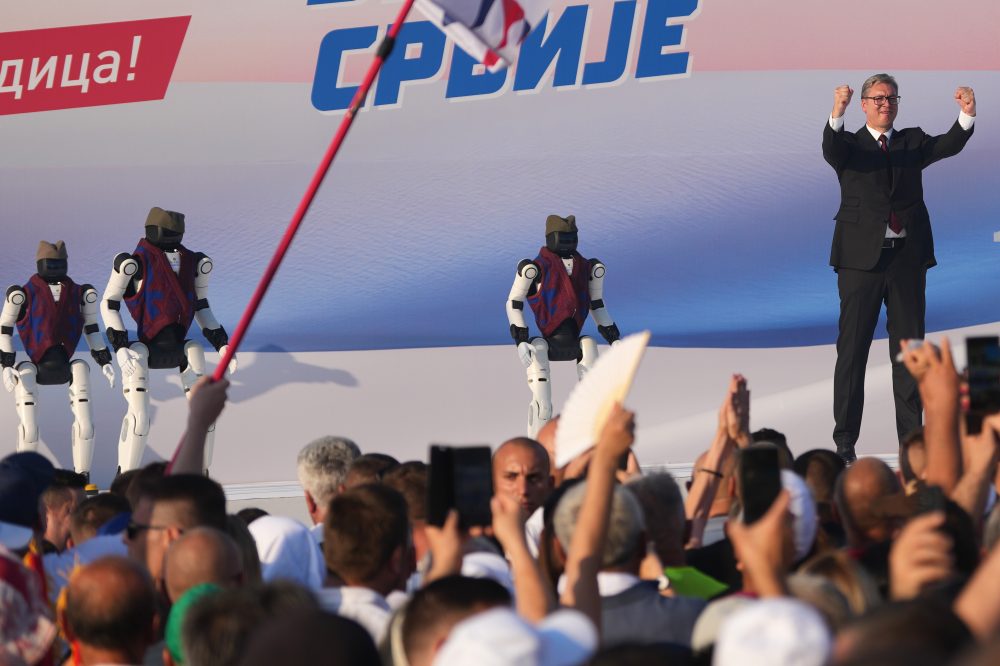

BELGRADE, Serbia — Serbian President Aleksandar Vucic announced Saturday that he intends to leave office within the coming weeks, opening the door to early elections after prolonged youth-driven demonstrations rattled his long-standing control over the country.
Vucic stopped short of naming a specific date for his departure or clarifying whether the upcoming vote would be for a new parliament, a new president, or both. He has previously hinted at the possibility of stepping down from the presidency, with speculation that he may attempt to shift into the role of prime minister — a position that carries more formal authority in Serbia.
Under Serbia’s election rules, Vucic is barred from seeking a third presidential term, as he is currently finishing his second. Both presidential and parliamentary elections are already scheduled for next year.
Speaking to thousands of his supporters gathered in the heart of Belgrade, Vucic declared, “I will be president for several weeks more and then I will submit my resignation.” He added that he plans to support his right-wing Serbian Progressive Party in the elections ahead, telling the crowd, “We will win more convincingly than ever before.” He acknowledged that the rally was likely the final time he would speak to supporters in his capacity as president.
University students have been at the forefront of more than a year of demonstrations against what they describe as Vucic’s increasingly authoritarian style of governing. Protesters have been pushing for early parliamentary elections for over a year, though Vucic had repeatedly avoided committing to a timeline.
Vucic and his populist party have steadily consolidated power over Serbia during the past 14 years. A deadly accident at a train station in northern Serbia in November 2024 — in which a collapsing concrete canopy killed 16 people — ignited months of large-scale public protests calling for accountability. Demonstrators have pointed to what they say is corruption-driven negligence in major government infrastructure projects as the root cause of the Novi Sad railway station tragedy.
Vucic has responded aggressively to the protest movement, and Serbia has also drawn criticism from the European Union over what officials describe as a retreat from democratic standards, including restrictions placed on the media. Hundreds of demonstrators have been taken into custody, and Serbia’s police force has faced accusations of using excessive force and making arbitrary arrests.