
ATHENS, Greece — Greek fishermen are now being paid by their government to pull a dangerous invasive fish out of the Mediterranean Sea, as warming ocean temperatures drive the species northward into unfamiliar waters.
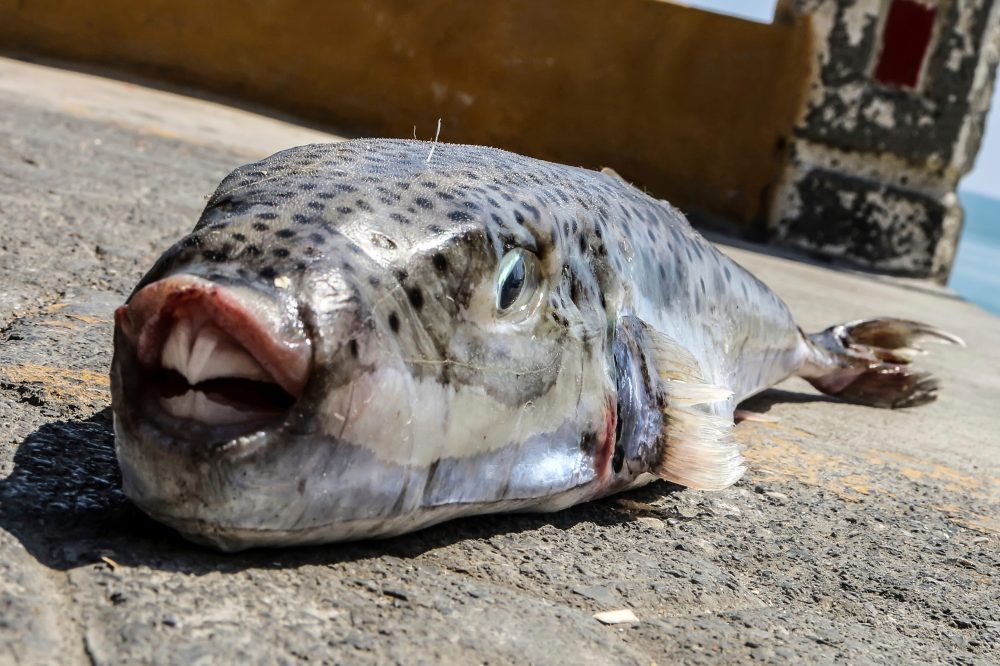
The silver-cheeked toadfish is a torpedo-shaped creature with distinctive teeth that closely resemble human teeth. Both its skin and internal organs carry a potent neurotoxin capable of triggering fatal heart failure if a person eats the fish.
Officials say the fish have not been spotted near swimming beaches at Greek island resorts. However, in recent weeks, the creatures have caused serious problems for fishermen working off the coast of Crete and several other Greek islands, tearing through their fishing nets.
Giorgos Kyriakakis, a member of a Cretan fishermen’s association, described the toll to Greek public broadcaster ERT on Friday. “It’s got to the point where we might go out fishing one day and then spend the next three days fixing our nets,” he said. “They eat our catch and damage our nets — that’s very costly.”
Scientists believe the fish made their way into the Mediterranean by traveling through the Suez Canal, drawn by the region’s increasingly warm waters. The problem prompted Cyprus to roll out a similar bounty program earlier this year.
Beginning Friday, the Greek government began offering fishermen 5.33 euros per kilogram — roughly $2.75 per pound — for every silver-cheeked toadfish they bring in. The species is typically found in tropical waters.
Agriculture Minister Margaritis Schinas, a former European Commission vice president, announced the initiative ahead of its launch. “It’s the first time that such a measure has been taken in Greece,” he said.
Schinas explained that the collected fish — a relative of the puffer fish — would be frozen and then incinerated at local government facilities. He also indicated the program would likely be extended beyond the currently impacted islands to cover all Greek waters.
Public alarm has grown in Greece following the spread of videos online, posted by Greek fishing crews, that show the fish biting down on soda cans and pieces of wood with their powerful jaws.
The Greek Red Cross has issued a public health advisory about the species, detailing first-aid steps for bite-related bleeding injuries and highlighting the lethal neurotoxin found in the fish’s organs.
Despite the concern, authorities and business groups on Crete urged residents and visitors not to panic. A joint statement released Friday by 16 medical and tourism associations on the island pushed back on the alarm. “The presence of these fish in the Mediterranean has been known for years,” the statement read. “There is, however, no ‘invisible’ or imminent danger to bathers. Marine predators do not threaten the safety of visitors and residents. Exaggeration is often a feature of public debate.”