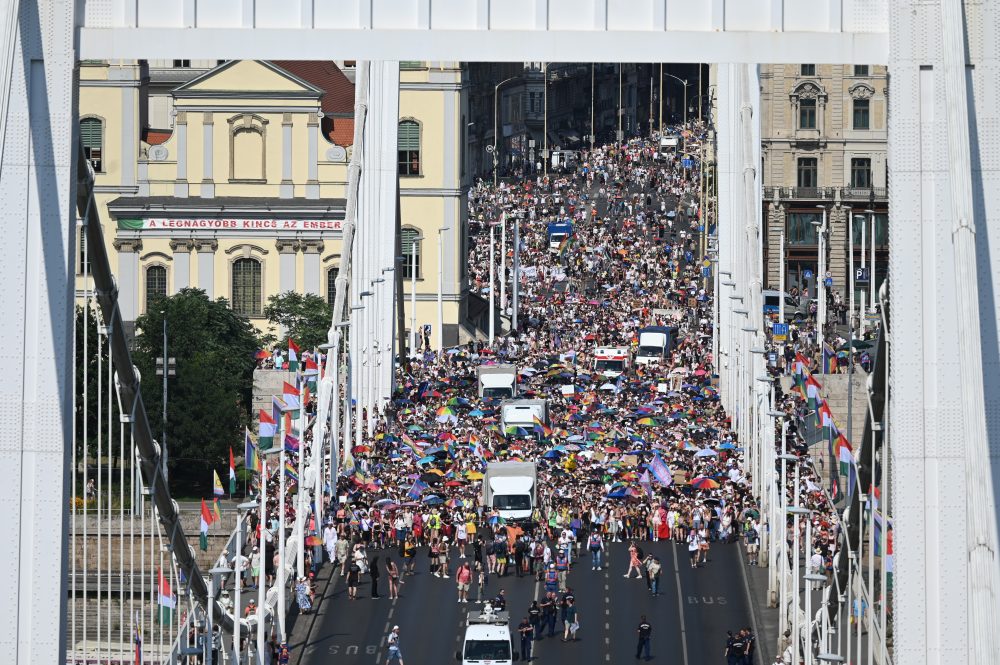

BUDAPEST, Hungary — Enormous crowds filled the streets of the Hungarian capital on Saturday to mark the 31st Budapest Pride celebration, a milestone event made especially significant by the recent political shift that removed former Prime Minister Viktor Orbán from power.
The march got underway Saturday afternoon under extreme heat, with temperatures climbing to at least 38 degrees Celsius — roughly 100 degrees Fahrenheit — as a record-setting heat wave continued to bake much of Europe. To help marchers cope with the conditions, organizers handed out water bottles, and the city’s public water utility opened fountains at points along the parade route.
The procession started at Budapest’s famous Opera house, moved through the heart of the city, and eventually crossed the Erzsébet Bridge spanning the Danube River. Members of Hungary’s LGBTQ+ community and a large number of allies danced to music and waved rainbow flags throughout the route.
Luca Új, attending her third Pride event, said the atmosphere felt noticeably different now that Orbán’s government — which spent 16 years enacting policies hostile to LGBTQ+ people — had been turned out of office.
“There used to be a lot of tension. But now I see people as being somehow happier, and there are more older people, too,” she said.
Saturday’s celebration came just over a year after Orbán’s nationalist-populist government passed a law and a constitutional amendment specifically designed to prohibit the event, moves that drew sharp condemnation from human rights organizations and elected officials throughout the European Union.
Despite that ban, last year’s Pride proceeded as scheduled and became the largest in Hungary’s history, with organizers putting attendance at more than 350,000 people. That massive showing — coming after months of government insistence that the march would not be allowed — was widely viewed as a serious blow to Orbán’s standing.
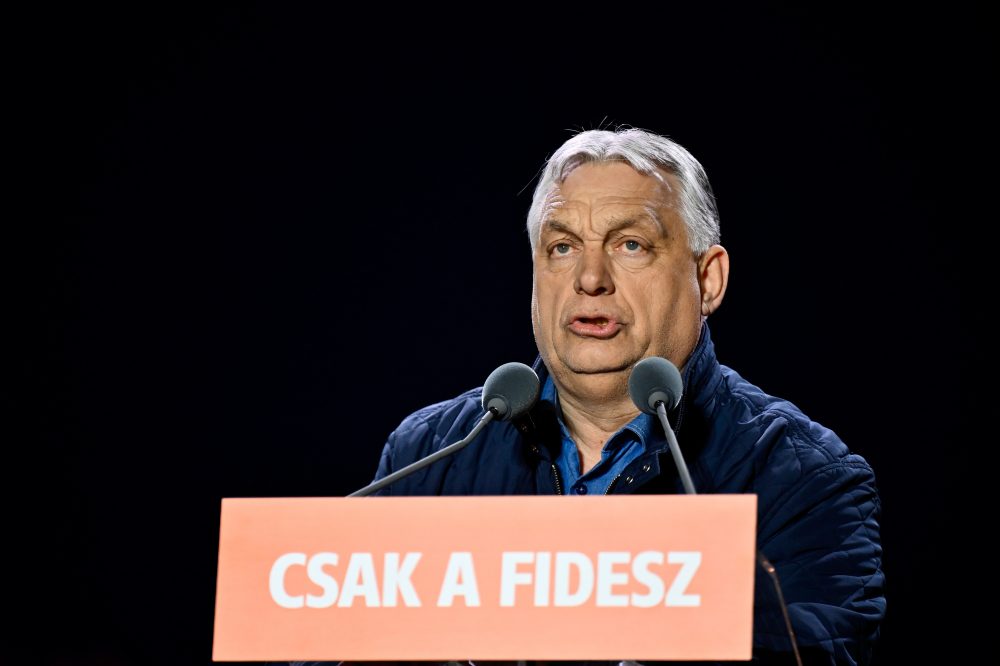
Orbán was decisively defeated in the April election by center-right challenger Prime Minister Péter Magyar and his Tisza party. While Hungary’s new government has not yet overturned the Orbán-era legislation banning Pride, police this year approved the event and stationed officers along the route to ensure security.
Kristóf Györgyi, who was attending Pride for the first time and had traveled to Budapest from the southern city of Szeged, said he is hopeful the new government will move to extend rights to LGBTQ+ people that are already standard in many other European nations.
“The fact that there’s already a debate in Parliament about whether an orphaned child is better off with a same-sex couple or in an orphanage is a positive sign,” he said, referencing the Orbán-era prohibitions on same-sex adoption and same-sex marriage.
“Obviously, the laws haven’t changed yet, but there are already many signs of hope for our community,” he added.
Hungary’s former government had long argued that Pride events violated children’s rights to moral and spiritual development — a claim widely rejected by rights organizations and experts.
In April, the European Union’s top court ruled that Orbán-era legislation from 2021 — which restricted LGBTQ+ content from being available to minors — violates EU law and conflicts with a foundational treaty that guarantees human rights and equality protections.