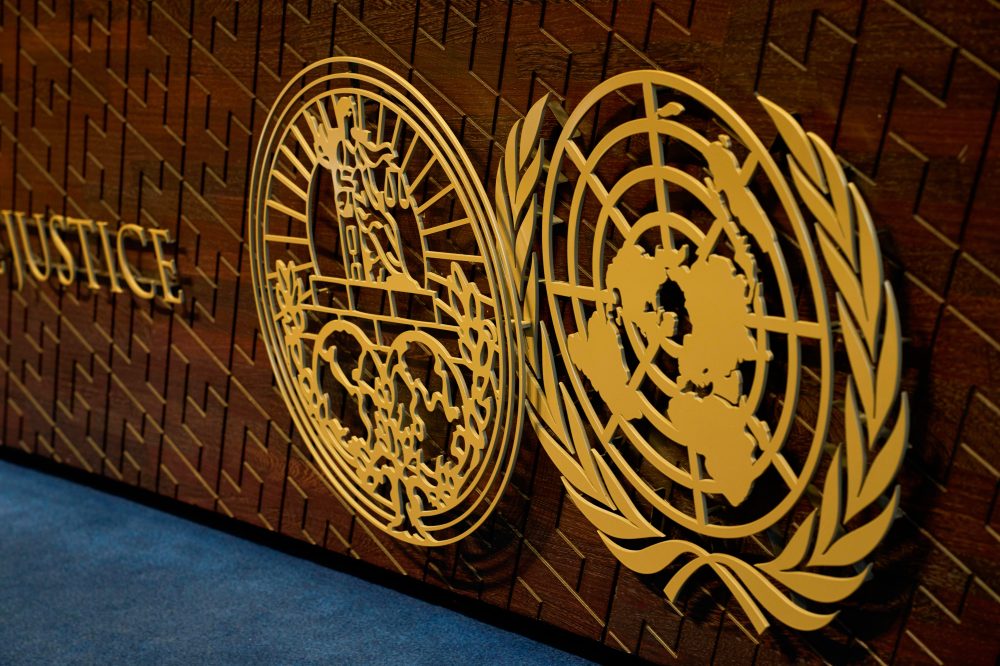

KINSHASA, Congo — Congo announced Friday that it has brought a formal legal case against Rwanda at the International Court of Justice, charging its neighbor with legal responsibility for more than three decades of brutal violence that has torn apart the eastern part of the country.
In the filing, Congo accused Rwanda of violating international agreements covering genocide, racial discrimination, discrimination against women, and torture. According to Congo, civilians in the eastern region have endured massacres, unlawful killings, torture, sexual violence, forced displacement, and ethnic and gender-based persecution dating back to the 1990s.
Eastern Congo, a region abundant in mineral resources, has been caught in a cycle of conflict for decades. Government forces and allied militias have been battling more than 100 armed groups, with the most powerful being the M23 rebel group, which has received backing from Rwanda. M23 fighters made significant territorial gains early last year, capturing the city of Goma and other important areas as they rapidly expanded their control.
The United Nations has described the situation in eastern Congo as “one of the most protracted, complex, serious humanitarian crises on Earth.”
The roots of the conflict stretch back to the 1994 Rwandan genocide, when Hutu fighters who carried out mass killings fled into eastern Congo. In the years that followed, Rwanda repeatedly sent soldiers or provided support to armed groups in the region, claiming it was working to neutralize those Hutu fighters and protect its own national security. Both Congo and the U.S. government have accused Rwanda of using those rebel groups as cover to gain access to the region’s vast mineral wealth.
Congo’s filing named several Rwandan-backed rebel groups it holds responsible for the violence over the years, including M23. Congo is asking the ICJ to declare Rwanda internationally responsible for the conflict, order it to stop its activities inside Congo, require guarantees that such actions will not happen again, and award financial reparations to both Congo and the civilian victims.
The court confirmed in a statement that Congo had submitted the application to open proceedings but did not indicate whether it had yet determined it holds jurisdiction to hear the case.
Rwanda’s government did not publicly respond to the filing. Rwanda has consistently denied that it supports armed groups in Congo, though United Nations experts have reported finding evidence that Rwandan troops have fought alongside and provided direction to M23 fighters.
This is the third time Congo has attempted to bring Rwanda before the ICJ. An earlier case was withdrawn by Congolese authorities in 2001, and a second case was thrown out in 2006 due to lack of jurisdiction — the court found Rwanda had not signed, or had placed reservations on, some of the treaties Congo referenced, or that other legal requirements had not been satisfied.
The new legal action comes as separate peace talks between Congo and Rwanda — mediated by the United States and Qatar — have so far failed to produce a lasting agreement.
Just one day before the ICJ filing, on Thursday, the U.S. imposed sanctions on a Rwanda-based gold refinery, describing it as part of “a network working in coordination” with M23 in eastern Congo. The U.S. said the sanctions against Gasabo Gold Refinery were intended to support ongoing American and Qatari peace efforts in the region.