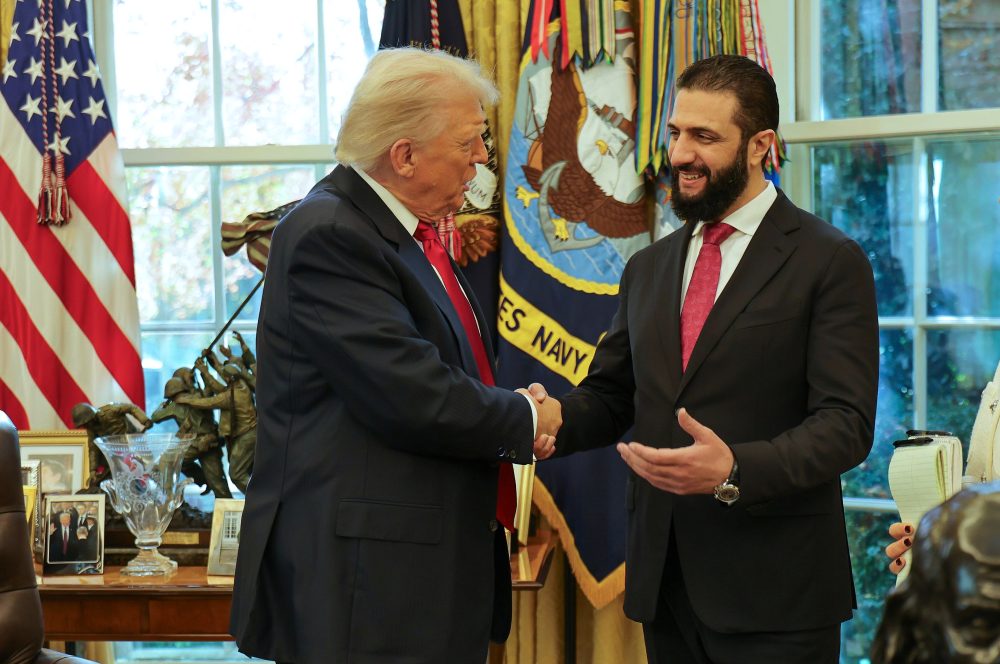

BEIRUT — A surprising proposal from President Donald Trump has sent shockwaves through the Middle East: rather than continuing to support Israel’s prolonged conflict with Hezbollah in Lebanon, Trump has suggested that Syria step in and handle the Iran-backed militant group instead.
Trump has indicated that the Islamist-led insurgents who toppled Syria’s longtime autocratic leader Bashar Assad roughly a year and a half ago — and who now lead a new Syrian government — would be more effective at eliminating Hezbollah than the Israeli military has been.
Syrian President Ahmad al-Sharaa has firmly rejected the notion, insisting that Trump’s comments were taken out of context. Trump, however, has continued to push the idea.
While it remains uncertain just how committed the White House is to the proposal, the mere suggestion of a Syrian military incursion has triggered serious alarm in Lebanon. It has also unsettled Israel, which views al-Sharaa’s Islamist-led government with deep suspicion and has already seized a portion of southern Syrian territory since al-Sharaa came to power.
The situation has also inflamed tensions between Israel and Turkey — a key supporter of al-Sharaa’s government — as both countries maneuver to limit each other’s foothold in Syria. Top Israeli security officials held a meeting specifically to address the issue on Wednesday, according to a source who requested anonymity because they were not permitted to speak publicly.
On the sidelines of the G7 summit earlier this month, Trump voiced frustration with the pace of Israel’s campaign against Hezbollah, complaining that it has gone on too long and that “too many people are being killed.”
Since Hezbollah joined the broader Iran conflict with a March 2 attack on Israel, more than 4,000 people have died in Israeli strikes on Lebanon, among them hundreds of women and children. Israel maintains that its strikes are directed at Hezbollah and that it takes steps to minimize civilian casualties.
Trump was blunt in his criticism of Israel’s approach: “You don’t have to knock down an apartment house every time you’re looking for somebody, because there are a lot of people in those apartment houses and they’re not all Hezbollah.”
He went further, saying: “I suggested to Israel to let Syria take care of Hezbollah. ‘Cause to be honest with you, I think they’d do a better job.”
Shortly after, on the opening day of U.S.-Iran talks held in Switzerland, Fox News correspondent Trey Yingst reported that Trump — during an interview — expressed frustration that Israel has been unable to “put Hezbollah away” and said he is “close to giving it to Syria,” believing al-Sharaa would handle it with more precision. The White House declined to elaborate and pointed back to Trump’s existing public statements.
Syrian officials moved quickly to contain the fallout. In a June 13 speech in Damascus, al-Sharaa stated clearly: “There are people spreading rumors that Syria will intervene in Lebanon. This is not true. We are calling for a permanent end to the war and the strengthening of institutions and for there to be economic ties and a calming of the situation in Lebanon.”
In a June 21 interview with the Emirati network Al Mashhad, al-Sharaa said Trump’s words had been misread. Trump “spoke about Syria’s role in finding a safe and peaceful solution, but the statement was misinterpreted as if Syria were going to invade Lebanon tomorrow morning,” al-Sharaa said. He added that Syria had “presented our vision for a solution to the United States, which is to stop the war and address the negative effects on Lebanon and Syria, and to find different economic, political and social solutions.”
The history between Syria and Hezbollah is deeply complicated. Hezbollah — alongside Iran — intervened in Syria’s 14-year civil war on behalf of Assad, while al-Sharaa led the insurgency trying to remove him. Despite that bitter past, Syria’s new leadership has said since taking power in December 2024 that it is focused on rebuilding the nation and has no desire to get drawn into regional conflicts or settle old scores.
When Israel and the U.S. launched their war against Iran — which set off a broader regional conflict — Syria deliberately stayed on the sidelines. In the early weeks of fighting, Syrian forces were sent to reinforce the border with Lebanon, officially to prevent weapons smuggling and stop the conflict from spilling over. In March, Syria accused Hezbollah of firing artillery shells across the border at Syrian army positions — a charge Hezbollah denied — but the standoff did not escalate further. Turkish Foreign Minister Hakan Fidan told The Associated Press in March that Turkey had stepped in to ease those tensions.
Al-Sharaa acknowledged in his Al Mashhad interview that Hezbollah’s decision to get involved in Syria’s civil war “was wrong,” but said he remained open to holding “dialogue” with the group and even to serving as a mediator among Lebanese factions debating the future of Hezbollah’s weapons arsenal.
Back in March, U.S. envoy to Syria Tom Barrack had denied reports that Washington was floating the idea of Syrian intervention against Hezbollah. Since then, Trump has begun making the suggestion openly and publicly.
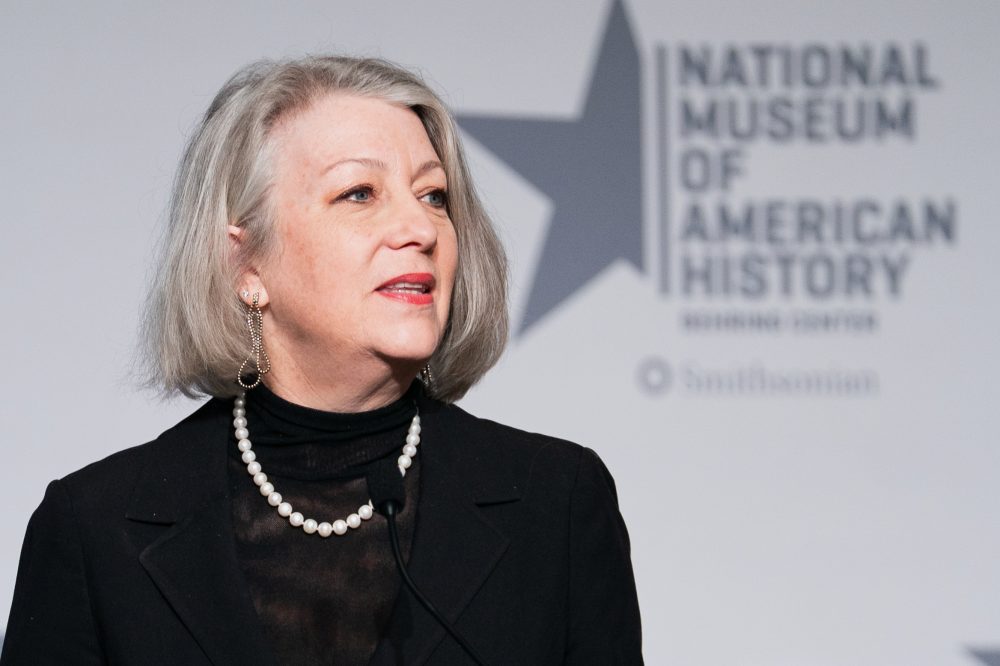
Randa Slim, director of the Middle East Program at the Washington-based Stimson Center, was sharply critical of the proposal, calling it, “at best, driven by a profound ignorance of the dynamics on the ground.”
“Syria needs to focus on a myriad of complex and daunting challenges — not least rebuilding a shattered country and repatriating millions of refugees,” she said. “Syrian forces are far from a coherent military institution; they include thousands of foreign jihadi fighters of uncertain loyalty and discipline.”
The months following Assad’s ouster were marked by repeated outbreaks of violence between factions loyal and opposed to al-Sharaa, some of which escalated into sectarian attacks in which Sunni Islamist fighters aligned with the new government struck Alawite and Druze civilians. Those events stoked fears of cross-border violence among Lebanon’s Shiite, Christian, and Druze communities.
Many in Lebanon also carry painful memories of Syria’s decades-long military occupation of their country — a presence that began during the Lebanese civil war with initial backing from Lebanese authorities and Arab states, and did not end until 2005.
The Israeli official who spoke anonymously said Israel is watching for signs that Syria might try to reclaim its old political role in Lebanon, but emphasized that Israel’s primary concern remains Hezbollah itself.