
LONDON (AP) — Britain appears ready for a change in leadership style, swapping out an unpopular and reserved Prime Minister Keir Starmer for the well-liked and personable Andy Burnham.
However, despite his charm and broad public appeal, Burnham may find it difficult — especially in the early days — to separate himself from the policies already put in place by the outgoing leader.
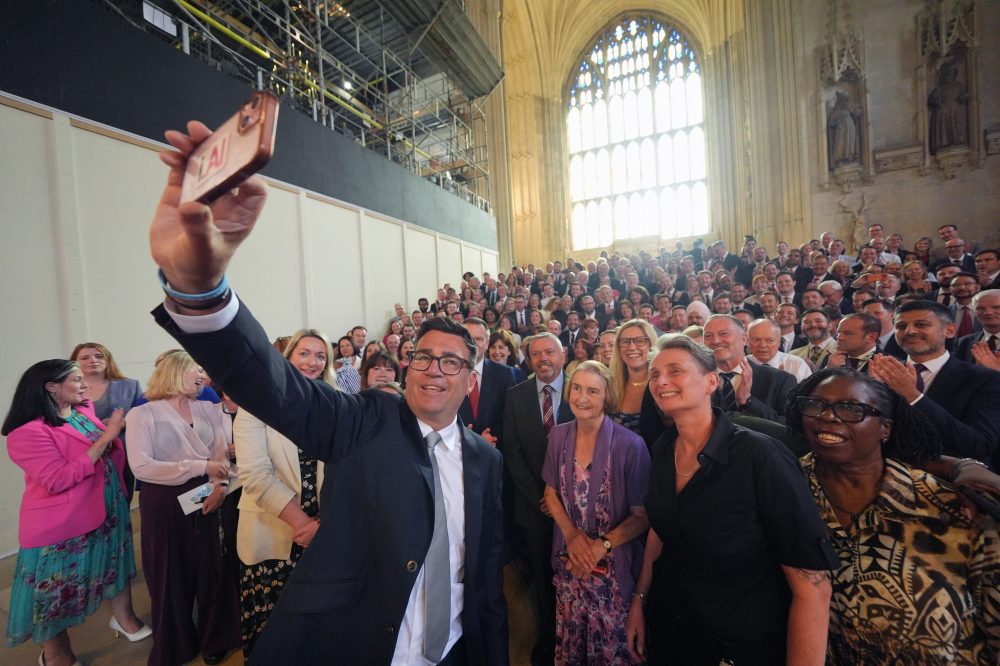
Burnham, who previously served as mayor of Greater Manchester, was sworn into Parliament just hours after Starmer announced Monday that he would be stepping down. He will be bound by the platform on which the center-left Labour Party won election in 2024, a victory that ended 14 years of Conservative Party governance. If he takes the top job, he would become the seventh prime minister in just ten years.
Exactly how he plans to work within those constraints while putting his own stamp on British politics remains to be seen. He is scheduled to deliver a speech next week laying out his economic priorities.
Matthew Flinders, a politics professor at the University of Sheffield, offered both praise and a word of caution. “At the moment, Andy Burnham is being almost hailed and held up as a folk hero that will save British politics,” Flinders said. “The tide is changing and the big issue for Andy Burnham is that when the world suddenly moves against him and he becomes a folk devil, will he sustain the pressure?”
As of now, Burnham is the only person in the running to lead the Labour Party and the country. If no other candidates enter the race, he is expected to officially take over on July 17. His return to the House of Commons follows roughly a decade at the helm of the region surrounding the U.K.’s third-largest city — the birthplace of the Industrial Revolution — which experienced an economic resurgence under his leadership.
His biggest task will be tackling what Starmer could not: delivering meaningful economic growth, restoring deteriorating public services, and bringing down the cost of living for ordinary Britons.
Burnham pointed to those concerns — along with housing and creating pathways for young people — in a social media post following Starmer’s announcement that he was leaving office.
“The country expects stability, seriousness and a continued focus on the issues that matter most and that is what it will get,” he wrote on X.
Burnham is generally considered to sit to the left of Starmer within the Labour Party. He has pledged to reinvigorate a sluggish economy while staying within the existing government’s spending and borrowing limits. That commitment has helped calm financial markets still rattled by the 2022 episode in which Prime Minister Liz Truss unveiled unfunded tax cuts, then reversed course — a crisis that contributed to her record-short 49-day tenure as Britain’s leader.
Mark Goodwin, a politics lecturer at Coventry University, said Burnham’s position on the left side of the party could invite market anxiety. “If you are a Labour prime minister from the soft left of the party, the markets don’t need that much invitation to panic,” Goodwin said. “They will start from a position of skepticism. So he’d have to be very, very careful.”
Goodwin added that Burnham faces the challenge “to convince people that this is something different, without the markets reading that as ‘This is too different.’”
Burnham is associated with a governing philosophy sometimes called “Manchesterism” — a business-friendly approach rooted in socialist values that emphasizes attracting private investment for large-scale projects and pushing decision-making power away from the national government and into local communities, particularly around housing, utilities, transportation, and education.
In what may be an early signal of that philosophy in action, he is reportedly considering relocating part of the prime minister’s operation closer to his home base — roughly 200 miles north of 10 Downing Street, the official London residence and office of the U.K.’s leader.
Burnham has said he will not raise taxes on workers, honoring a pledge made by Starmer. He has also floated the idea of reducing the tax load on businesses and potentially rolling back a rise in a payroll tax that employers pay to fund pensions, public health care, and welfare programs.
Jill Rutter, a senior fellow at the Institute for Government think tank, said the central question is how Burnham plans to pay for programs, whether he will eliminate existing priorities, and how he will respond to growing demands for increased defense spending.
Starmer’s government had committed to reaching a NATO target of spending 3.5% of the country’s GDP on defense by 2035. That commitment was thrown into question this month when the defense secretary resigned, citing frustration that Starmer was not moving quickly enough toward that goal.
On the international stage, Burnham’s limited experience could prove to be a liability — particularly when it comes to managing the relationship with the United States after President Donald Trump turned against Starmer.
Trump this week referred to Burnham as a “town” mayor and said he had heard Burnham was “extremely liberal” and likely would not push for expanded North Sea oil drilling — a recurring criticism Trump had of Starmer.
Starmer had worked to maintain a civil relationship with Trump despite their political differences, ultimately securing a U.S.-U.K. trade deal. But that effort came at a cost, alienating parts of Labour’s more liberal voter base. The relationship with Trump eventually deteriorated after Starmer criticized Trump’s ambitions regarding Greenland and chose not to participate in the Iran conflict.
Burnham himself has not always spoken favorably about Trump. Following the January 6, 2021 storming of the U.S. Capitol by Trump supporters, Burnham posted on X that “any politician who gave Trump the time of day should be ashamed right now.”
While Starmer earned recognition for his role on the world stage — particularly in rallying European backing for Ukraine — he was also criticized for spending too much time on foreign affairs, according to Rutter. She does not anticipate Burnham taking the same approach, and suggested he could delegate some of those responsibilities by appointing a seasoned diplomat as foreign secretary.
“I don’t think Andy Burnham will want to be ‘never-here Andy’ in succession to ‘never-here Keir,’” Rutter said, referencing the nickname Starmer earned for his frequent international travel.
Foreign Secretary Yvette Cooper said Wednesday that she had spoken with Burnham about policy matters and reported that “he’s 100% behind our unwavering support for Ukraine” and “is a fundamental believer in NATO and in our shared deterrence and in the multilateral partnerships that we have.”
Political analyst Flinders said one of Burnham’s most pressing early tasks will be developing a clear and compelling message about where he wants to lead the country — something Starmer consistently struggled to do.
That challenge plays directly to Burnham’s strengths as a communicator. He has built his public image as a relatable northern Englishman who favors casual clothing over formal attire, enjoys playing soccer, and is known for DJing music from the 1990s.
For now, Burnham appears to be managing expectations carefully and avoiding any grand promises. But if he can demonstrate solid leadership and retain public confidence through the roughly three years remaining before a general election must be called, he may have the opportunity to pursue a more ambitious agenda in his own right.
Burnham has spoken about broader political reforms, including replacing the House of Lords with an elected senate and shifting to a proportional voting system. He has also expressed a personal desire to see the U.K. rejoin the European Union during his lifetime — though he softened that stance while campaigning in a constituency that voted two-to-one in favor of Brexit.
“My sense is that he will take some time, sensibly, to build up his team, his narrative, his story and his connections in order to then try to secure a public mandate and the next general election to then approach the more radical phase that he wants to deliver, which is exactly what Margaret Thatcher did in the ’80s,” Flinders said.