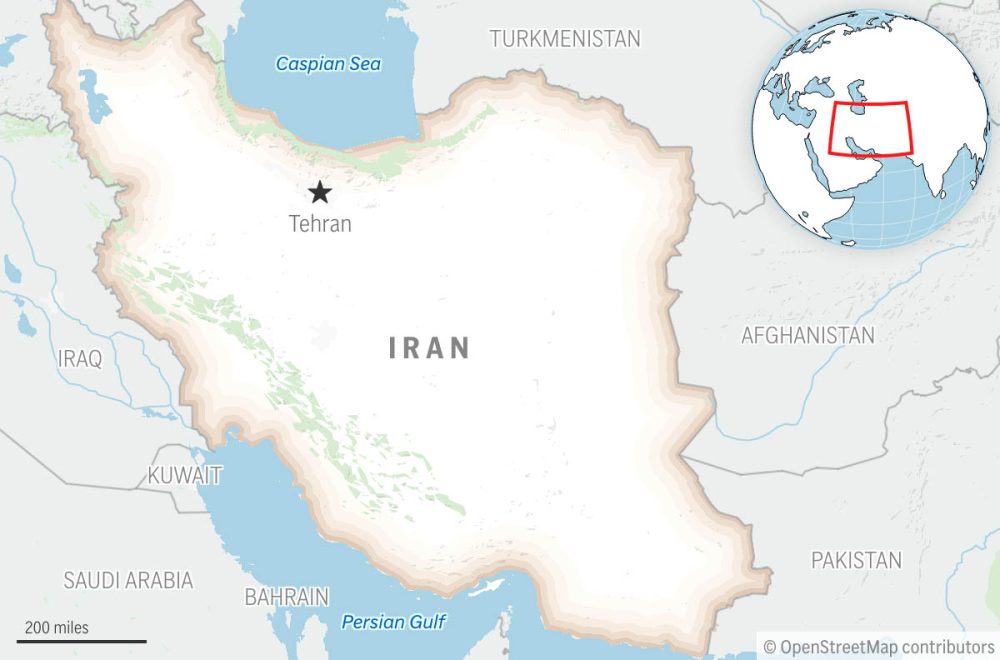

DUBAI, United Arab Emirates — American and Iranian forces exchanged blows against infrastructure and military targets on Saturday as their ongoing battle for control of the Strait of Hormuz grew more intense.
The region has been caught in a cycle of back-and-forth attacks in a conflict centered on the strait, a critical waterway that once carried one-fifth of the world’s crude oil. The breakdown of a temporary ceasefire has left no clear path toward ending the war, which the U.S. and Israel launched more than four months ago.
U.S. Central Command announced early Saturday that its seventh consecutive night of strikes had targeted “surveillance sites, military logistics infrastructure, underground weapons storage, and maritime capabilities.”
The most serious damage on Saturday came in Kuwait, where Iran struck a water desalination plant and an oil facility, according to Kuwaiti authorities and the Kuwait Petroleum Corporation. Neither organization disclosed the locations of the strikes.
The attack on the oil facility left several people injured, while the strike on the desalination plant triggered a fire and knocked multiple power generation units offline. This marked the second assault on a Kuwaiti desalination facility in two days — a particularly alarming development for the small desert nation, which relies on desalination for 90 percent of its drinking water.
The Kuwait Fire Force reported that several firefighters and a worker were also hurt while fighting two additional fires ignited by Iranian strikes.
Kuwait temporarily shut down its airspace Saturday morning in response to missile threats, and Kuwait Airways announced it was rescheduling the majority of its flights to and from the capital.
Elsewhere in the region, Iraq reported shooting down attack drones over the city of Irbil. Jordan’s state-run Petra news agency said the country’s air defense systems intercepted Iranian missiles, and air raid sirens sounded multiple times in Bahrain, according to that government.
Iranian officials have stated that recent U.S. strikes have killed dozens and wounded hundreds inside Iran. The U.S. military also confirmed that additional American service members had been injured.
Iran effectively shut the strait to shipping after the war began on Feb. 28, causing oil prices to spike and giving Tehran considerable leverage in negotiations. Oil prices climbed above $86 per barrel on Friday — near their highest point in a month — as vessel crossings through the strait dropped to a three-week low, according to an international shipping tracker.
In a Thursday evening address to the American public, Trump expressed confidence in the war’s progress. “We are likewise winning big in Iran, and you will see the fruits of that labor very, very shortly,” he said.
Before hostilities began, the U.S. had been engaged in diplomatic talks with Iran over its nuclear program. Trump now faces mounting political pressure to end the conflict and avoid the kind of drawn-out Middle East war he campaigned against.
U.S. airstrikes struck an electricity and desalination plant in Iran’s southern Hormozgan province, according to Iranian state television. The attacks hit Bonji, a coastal village on the Strait of Hormuz. Overnight strikes also damaged two tunnels and a bridge, disrupting a major highway leading toward Bandar Abbas — a city near the narrowest section of the strait — Iran’s state-run news agency reported. Iran additionally reported strikes on the strategically important Qeshm Island within the strait.
The day before, Iranian state media reported that U.S. forces had struck highways and railway bridges, in what appeared to be an effort to cut off Bandar Abbas, Iran’s main port, from roads connecting it to the country’s central region and ultimately to Tehran, the capital.
For the first time during the U.S. airstrike campaign, Iran’s Energy Ministry acknowledged “attacks on power infrastructure” on Friday, issuing a call for residents in southern provinces “experiencing extreme heat” to reduce their electricity consumption. The ministry did not identify which specific facilities had been hit.
Iranian authorities reported that at least 50 people have been killed and more than 500 wounded in U.S. strikes over the past three weeks, including eight people killed in a bridge strike on Friday.
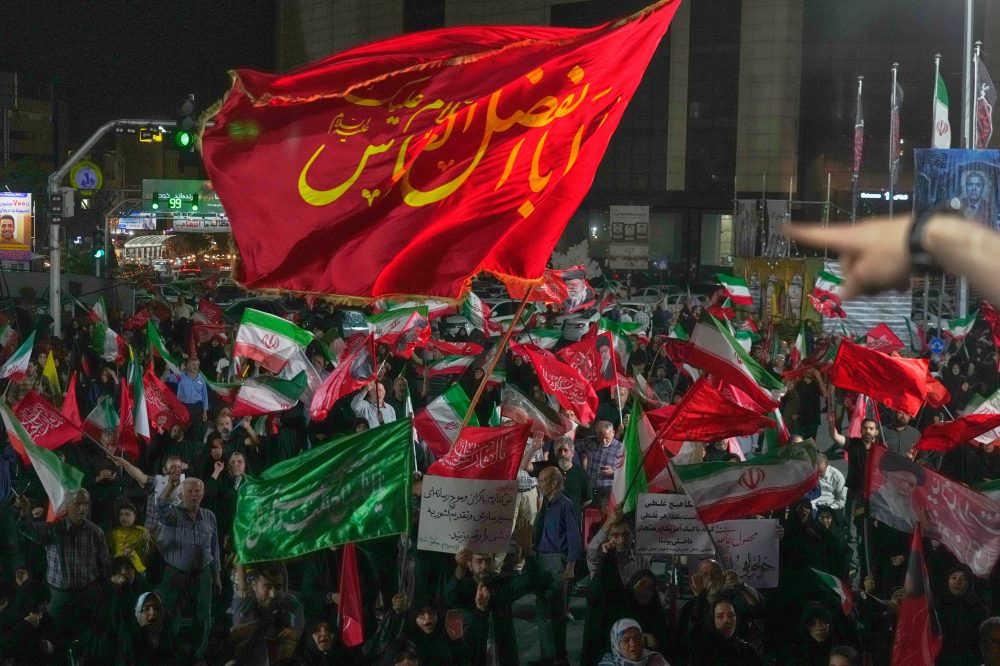
Iran’s Islamic Revolutionary Guard Corps escalated its warnings Saturday, stating that countries hosting U.S. forces should be “prepared to receive a corresponding response,” according to Iranian state TV. Pro-Iranian demonstrators continued their nightly protests in the capital for more than the 100th consecutive day.
U.S. officials confirmed that 13 additional service members — 10 Army soldiers and three Navy sailors — had been injured since Monday, though no further details were provided. Since the war’s start, 14 U.S. service members have been killed and 427 wounded.
Iran has asserted that the strait must fall under its exclusive control and that ships passing through should pay fees to Tehran — a position that conflicts with the international community’s longstanding recognition of the waterway as open to all nations.
Trump has renewed threats in recent days to target Iranian power stations and bridges in an effort to pressure Iran into relinquishing its grip on the strait, through which roughly one-fifth of all globally traded oil and natural gas once flowed during peacetime. The U.S. has also reinstated a naval blockade on Iranian ports to stop its crude oil exports.
According to MarineTraffic.com, only eight vessels crossed the strait on Thursday — a three-week low. While more regional energy is being routed through pipelines, the volume is far from enough to compensate for the dramatic decline in strait shipping.