KUALA LUMPUR — U.S. investor Balaji Srinivasan is questioning whether Malaysia remains a safe bet for global technology investment, following an immigration inspection at a “digital nomad” community he founded there that was triggered by unverified social media allegations.
The country’s Immigration Department confirmed Wednesday that its inspection of 266 foreign nationals at the Network School found that all of them possessed valid travel documents. The announcement came one day after authorities said they were looking into online claims that Israelis were present at the community in violation of Malaysian law.
Srinivasan, a former chief technology officer at Coinbase who established the Network School, took to social media late Thursday to raise a pointed question: “Should the global tech community continue investing in Malaysia?”
He noted that his experience would be relevant to “executives at Google, Amazon, Apple, and Microsoft, founders of tech unicorns like Coinbase and Solana, and investors at the world’s largest venture capital funds.”
Srinivasan stated that any additional investments he had planned for Malaysia are now on hold until he receives guarantees that a similar situation will not occur again. He also requested a meeting with the prime minister’s office. Reuters has reached out to that office for comment on his statements.
According to Srinivasan, an anonymous social media account made false accusations that the community was sheltering illegal immigrants. That post led to an official visit days later, during which he said authorities examined hundreds of passports — including those of dual-passport holders — and determined everything was in compliance.
Though he acknowledged that immigration officials conducted themselves in a courteous and professional manner, Srinivasan argued that “the process is the punishment.”
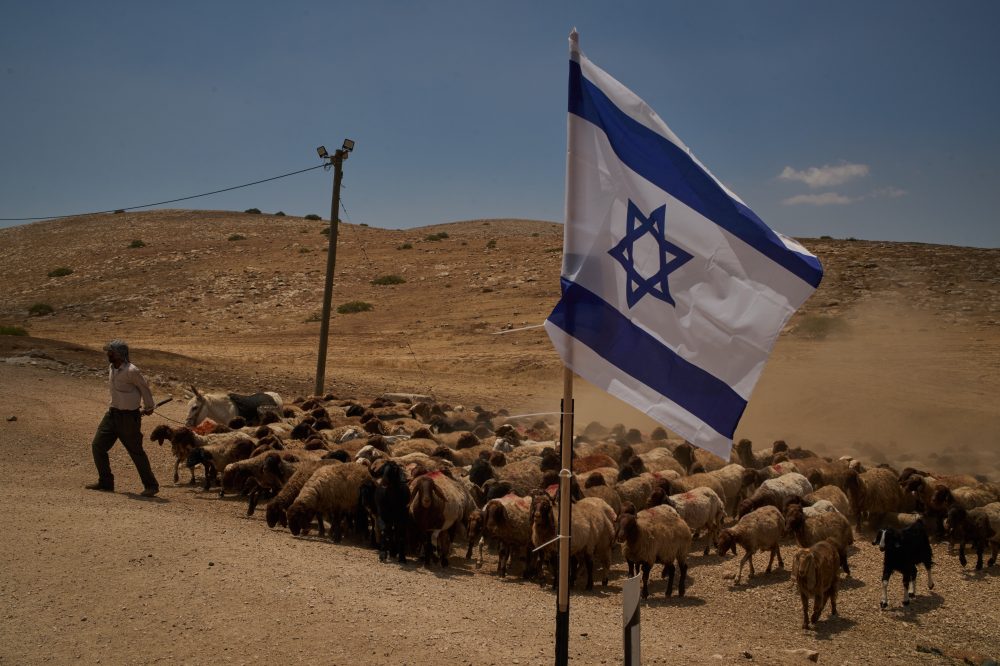
Malaysia, a Muslim-majority nation and firm supporter of the Palestinian cause, does not maintain diplomatic relations with Israel. However, the country has no specific legislation preventing Israelis from entering using passports from another country.
The timing of the controversy is notable. In 2024, Malaysia unveiled a roadmap aimed at transforming the country into a global hub for tech startups, featuring favorable visa programs for foreign investors and skilled workers, along with measures to simplify business formation and attract venture capital. That vision has gained further momentum through a surge in data center investment in Johor — the Malaysian state where the Network School operates — which has emerged as Southeast Asia’s fastest-growing data center hub.
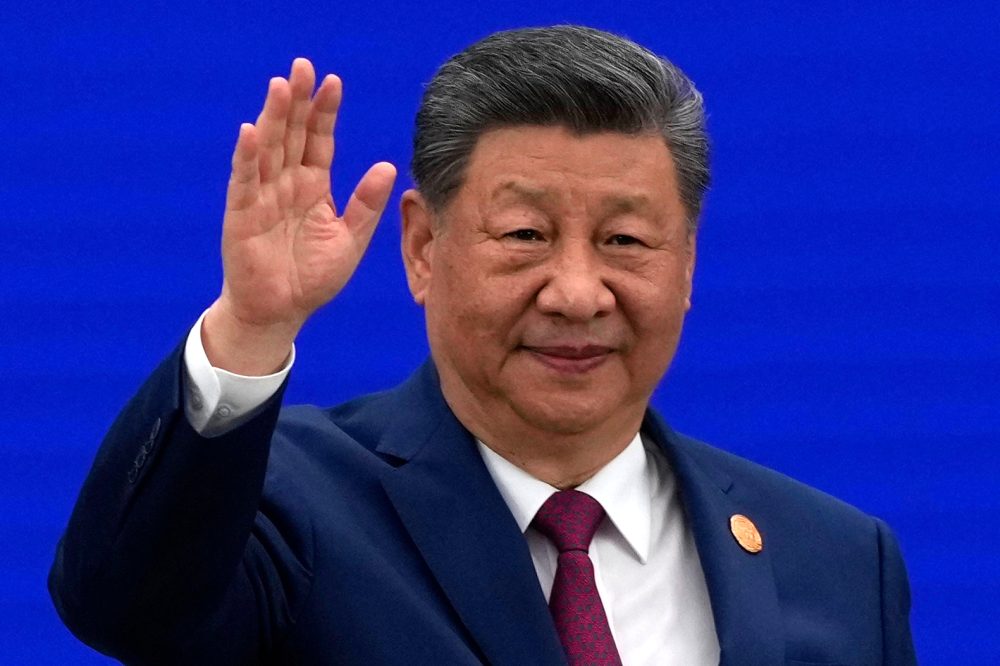
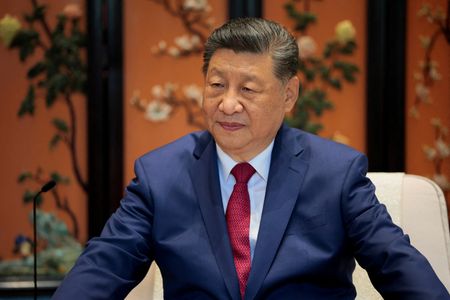
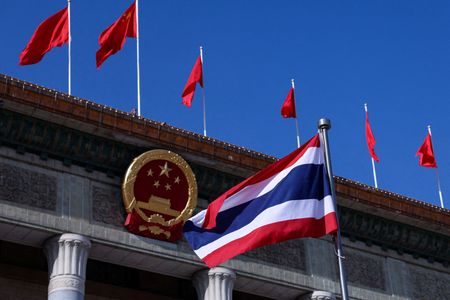
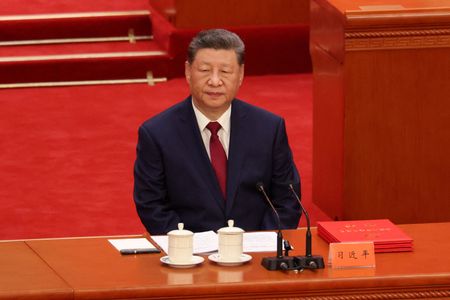
SHANGHAI — Chinese President Xi Jinping took the stage at a major artificial intelligence conference in Shanghai on Friday, calling for countries around the world to work together on AI development and pushing back against restrictions that have cut China off from some of the most cutting-edge technology available.
Xi made clear that no single nation should hold the reins on artificial intelligence. “The development of artificial intelligence should not be a solo performance by any single country but rather a symphony of global cooperation,” he told attendees at China’s annual World Artificial Intelligence Conference. Leaders from Kazakhstan, Cambodia, and Thailand were present, along with United Nations Secretary-General António Guterres.
Xi also repeated a complaint China has raised before, targeting what he described as nations stretching the definition of national security to justify blocking others from technology. “We should together oppose the practice of overstretching the concept of national security in the field of artificial intelligence, and of placing one’s own security above that of other countries,” he said.
The remarks come as restrictions led by the United States have blocked China from obtaining some of the world’s most advanced technologies, pushing China to develop its own capabilities and deepening the technology competition between the two largest economies on the planet.
Xi announced that over the next five years, China will offer 5,000 training opportunities related to artificial intelligence for developing nations. He also said China would expand AI cooperation with several major international organizations and blocs, including the Association of Southeast Asian Nations, the League of Arab States, the African Union, the Community of Latin American and Caribbean States, the Shanghai Cooperation Organization, and the BRICS countries. Additionally, he pledged to give 30 countries access to a Chinese-developed AI weather system capable of providing early warnings for dangerous conditions.
Just one day before Xi’s speech, 29 countries — among them Pakistan, Russia, and Kazakhstan — signed an agreement with China to create a World Artificial Intelligence Cooperation Organization. According to Chinese state media, the new body will be an intergovernmental organization based in Shanghai focused on promoting global AI governance.
This year’s conference drew more than 1,100 companies and 1,400 guests, state media reported. Tech giant Huawei is using the event to show off its powerful AI computing system, known as the Atlas 950 SuperPoD.
Some analysts who follow the technology sector now believe China has moved beyond simply trying to catch up with the United States and has become a genuine innovator in artificial intelligence. China’s five-year plan through 2030 places AI among its top priorities in science and technology advancement.
Chinese open-source AI models, such as DeepSeek, have gained attention globally as attractive and often more affordable alternatives to U.S. AI models, which are typically closed-source. They have found particular appeal in developing countries.
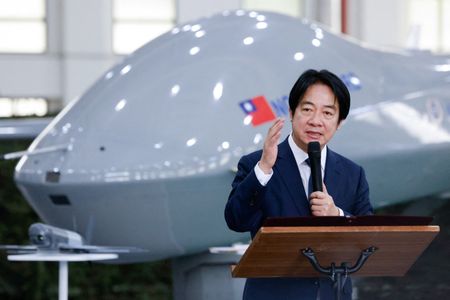
Taiwan’s president is urging the island’s parliament to get behind a new drone spending package, saying the country cannot ignore global calls to take on a greater share of collective defense responsibilities.
President Lai Ching-te made the appeal on Friday while visiting the National Chung-Shan Institute of Science and Technology, a government-affiliated arms contractor located in the central city of Taichung. He told reporters that pressure from China on Taiwan has been growing more intense.
“To demonstrate our determination to safeguard the nation, maintain stability across the Taiwan Strait, and uphold peace in the Indo-Pacific, we must respond to the international call to share the responsibility of collective defence,” Lai said.
The push comes after Taiwan’s opposition-controlled parliament voted in May to approve only two-thirds of the T$1.25 trillion — roughly $38.69 billion — in additional defense funding that Lai had originally requested. Lawmakers at the time set aside money only for purchasing U.S. weapons systems.
Now, the government has put forward a new T$210 billion spending proposal focused on surveillance drones, coastal attack drones, and small surface drones, with funding planned through the end of 2031. Opposition parties in parliament are also advancing their own drone spending proposals.
Lai pointed to the ongoing conflict between Russia and Ukraine, as well as fighting involving the United States and Iran, as evidence that drones have emerged as the “most important assets on the battlefield.”
He called on both ruling and opposition lawmakers to set aside their differences and work together on the issue. “I also call on both the ruling and opposition parties to jointly support national security and industrial development, in order to respond to the international community’s expectations regarding Taiwan’s determination to safeguard its security,” he said.
China considers Taiwan part of its territory and has never ruled out using military force to bring the island under its control. Lai and his administration reject Beijing’s claims of sovereignty over Taiwan.
The United States, which serves as Taiwan’s primary arms supplier and most significant international supporter, has expressed strong backing for Taiwan’s efforts to expand defense spending — particularly when it comes to drones. Earlier this month, the top U.S. diplomat stationed in Taiwan said the island needs a “hornet’s nest” of drones to deter potential conflict and bolster security.
The Trump administration has been pushing U.S. allies to increase their own military budgets, a call that Lai has publicly and enthusiastically embraced.
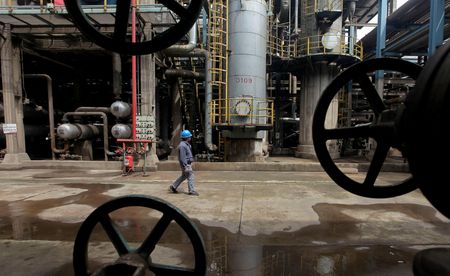
For the past five years, China consistently brought in an average of 11.5 million barrels of oil every single day. But since April, that figure has collapsed to just 8 million barrels per day — and the world’s energy markets are taking notice.
By June, Chinese oil shipments had fallen to roughly 40% of what they were before the Iran war began. That dramatic pullback has helped hold global oil prices in check and made more oil available to other nations.
But energy analysts are scratching their heads trying to figure out exactly how China managed such a steep reduction — and whether the drop is here to stay.
“It’s the million-dollar question,” said Michal Meidan, head of China Energy Research at the Oxford Institute for Energy Studies. “There’s a massive level of uncertainty because we don’t fully understand what has happened.”
Part of the difficulty in answering that question lies in China’s lack of transparency. The country’s strategic oil reserves are classified information, its state oil companies share little publicly, and official data is incomplete at best.
Some energy analysts now believe China’s oil imports could end up permanently lower by 1 million to 2 million barrels per day compared to pre-war levels — a significant shift for a country that has been one of the primary engines of global oil demand growth for decades.
TRANSPORTATION FUEL USE MAY HAVE CHANGED FOR GOOD
The war has exposed the fact that China’s transportation network can operate on considerably less fuel than previously believed. This matters greatly for crude oil imports, since roughly half of what China brings in gets refined into fuel for vehicles and transport.
What remains unclear is whether the conflict will significantly speed up the adoption of electric vehicles, particularly now that gasoline prices have retreated to pre-war levels after jumping by more than 25%.
Electric and hybrid vehicles reached a record high of 62% of all new car sales in China in June. However, overall car sales are down by hundreds of thousands this year due to a sluggish Chinese economy and the fact that 87% of vehicles on the road still run on gasoline.
One area where lasting change appears more certain is diesel. The Chinese government launched a plan in June to electrify its trucking industry, targeting 80% electrification on high-traffic short-haul routes by 2030.
Energy consultancy Rystad now projects Chinese gasoline and diesel consumption will fall by 6.6% and 6.9%, respectively — significantly steeper than its pre-war projections of 3.5% and 3%.
“The crisis has acted as a trigger,” said Ye Lin, an analyst at Rystad. “It helped consumers build more confidence in electric cars and trucks.”
ECONOMIC WEAKNESS ADDS ANOTHER LAYER OF UNCERTAINTY
Beyond transportation, the broader Chinese economy poses additional risks to oil demand, according to Meidan of the Oxford Institute for Energy Studies.
China’s ongoing property market crisis has hammered the construction sector and eroded diesel demand for several years, with property values still declining. A prolonged economic slowdown could also reduce demand for plastics and other petroleum-based products, putting pressure on refiners who are already facing competition from coal-derived alternatives.
“Something we’re not thinking enough about is the broader economic story,” Meidan said. “That is a really big question that will impact Chinese oil demand and industrial activity.”
THE ROLE OF STRATEGIC OIL RESERVES
Before the war, China had been aggressively building up its strategic petroleum reserves — a move that turned out to be well-timed when the Strait of Hormuz closed. That stockpiling activity inflated import numbers in the period leading up to the conflict.
That reserve-building campaign appears to have paused since the war began, but analysts say it’s difficult to predict when China might resume it or at what scale, given how little Beijing discloses about its reserve targets and current storage levels.
Reuters reported last year that China was constructing new oil storage facilities. In May, Premier Li Qiang called for even greater storage capacity during a visit to a reserve site.
“Although there is demand destruction, there will still be incremental crude oil imports that China will use to fill its strategic petroleum reserves,” said June Goh, a senior analyst at Sparta Commodities.
Goh noted that structural shifts like electrification could bring monthly crude imports down to between 8 million and 9 million barrels per day once conditions in the Gulf stabilize — but a new stockpiling push could push that figure back up to the 9.5 million to 11 million barrel range.
During China’s stockpiling effort last year, Brent crude was trading between $58 and $83 per barrel. The current price sits at around $85. Analysts suggest China could resume stockpiling if prices drop back below $70.
FUEL EXPORT POLICY ALSO SHAPES THE PICTURE
Reaching any new normal will also depend on the resumption of stable Gulf supplies and Beijing lifting its wartime restrictions on fuel exports, analysts say. Without the ability to export surplus gasoline, diesel, and jet fuel, Chinese refiners have little motivation to increase crude purchases and ramp up production.
Beijing did lift those export restrictions for July, but analysts warn they could be reinstated for August following a resumption of fighting in the Gulf.
Over the longer term, fuel exports will play a role in determining where China’s crude imports ultimately settle. If overseas markets absorb China’s excess refined fuel and petrochemicals, refineries may need to import more oil. China manages its fuel exports through a tightly controlled quota system.
Just before dawn on May 24, 2000, the final columns of Israeli tanks rolled back across the border from Lebanon into Israel, ending an 18-year occupation of the south. Then-Prime Minister Ehud Barak, who gave the order to pull out, described the return of Israeli troops as sending “shivers down his spine.”
By that point, much of the Israeli public had come to see the original invasion — which was launched to drive out Palestinian militants — as a costly strategic blunder, drawing comparisons to the American military’s experience in Vietnam.
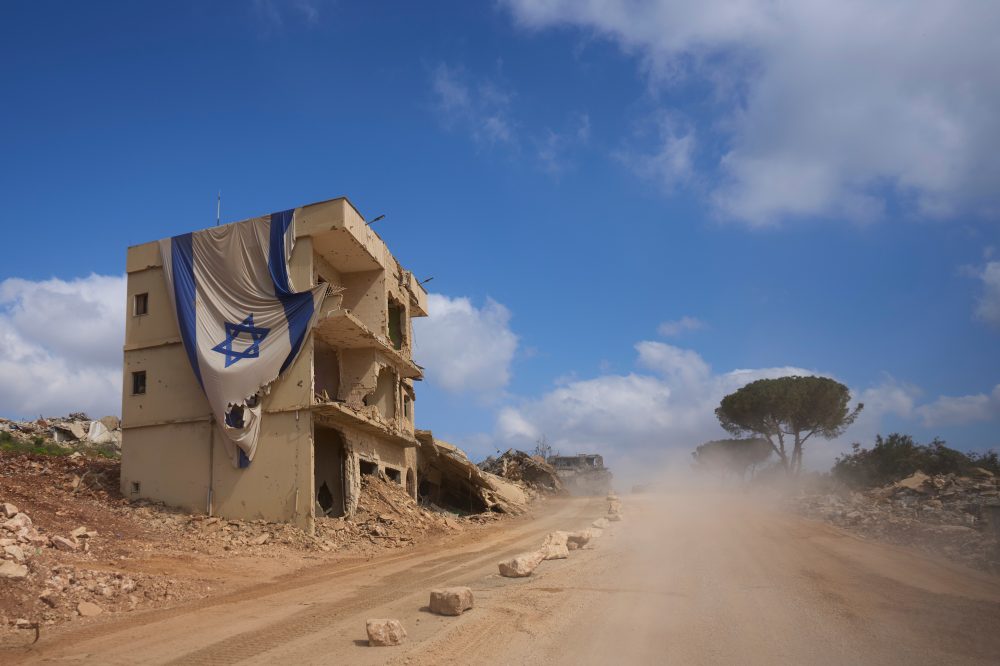
Now, 26 years later, Israel has once again taken control of a large portion of southern Lebanon. Polling shows that most Israelis currently back an extended military presence there, but voices like Barak’s — those who lived through the last occupation — are sounding alarms that Israel risks repeating the same mistakes.
“Our very presence will become the only goal,” Barak said in a recent interview, describing what he recalled thinking back in 1985, when he was serving as a general and Israel was shifting from active combat to a long-term deployment in Lebanon. “We will protect our fortresses, we will protect our convoys of supply, the logistics, the patrols, everything,” he said he warned at the time. “But we were not serving Israeli security, we were not serving the state. There was no logic to this in 1985, and there was no logic in 2000, when we pulled out.”
Israel launched a new invasion of Lebanon in March and now holds more than 600 square kilometers — roughly 230 square miles — of territory. The operation began after Hezbollah, the Iranian-backed Lebanese militant group, launched a series of drone and missile attacks in retaliation for the U.S.-Israeli war on Iran.
Last month, Israel reached a framework agreement with the Lebanese government to use at least two areas in southern Lebanon as “pilot zones” for dismantling Hezbollah weapons and infrastructure, with security then handed over to Lebanon’s military. Israeli forces would subsequently redeploy or leave those areas. Hezbollah was not included in the agreement and has pledged to fight it.
In the meantime, Israeli officials have said troops will remain inside a broader “security zone” in Lebanon for as long as Hezbollah holds onto its weapons. Following the October 7, 2023, Hamas attack that triggered the war in Gaza, Israel has also maintained smaller security zones in Gaza and Syria, citing the need to prevent future militant attacks.
“We didn’t ask anyone’s permission to enter Lebanon, and we don’t need anyone’s permission to stay in Lebanon,” Defense Minister Israel Katz said recently, describing it as Israel’s “right and our duty” to protect communities along the northern border.
Barak, who served as the military’s top commander before becoming prime minister, still regards the 2000 withdrawal as one of his greatest accomplishments. He recalls visiting soldiers stationed in Lebanon in the early 1980s, who told him, “We are fighting to remove the threat from Hezbollah so that our children will be safe and won’t have to serve here.” Yet when Barak finally ordered the pullout nearly two decades later, some of those same soldiers’ children were themselves serving in Lebanon.
Barak argued that Israel’s self-declared security zone inside Lebanon failed to deliver meaningful protection during the previous occupation, and he doubts the new zone will fare any better. Even in the 1990s, he noted, basic Katyusha rockets fired by Hezbollah could easily clear the zone and strike northern Israel.
“In order to destroy, totally destroy Hezbollah, you’d have to conquer the whole of Lebanon,” Barak said — a prospect most Israelis view as unrealistic. He also warned that Israel’s continued presence in the south, combined with widespread destruction of villages there, risks driving more Lebanese citizens toward Hezbollah. Israel says the group hides fighters and weapons in those border communities, but Israeli military operations since March have displaced approximately one million Lebanese people.
According to the Lebanese government, about 40% of those displaced have since returned to their homes. More than 4,300 people have been killed since fighting began on March 2. Close to 40 Israeli soldiers have also lost their lives, along with a defense contractor and two civilians in northern Israel.
Hezbollah was established in 1982 partly in response to the Israeli occupation, and waged a brutal guerrilla campaign that included suicide bombings, assassinations, roadside bombs, and ambushes. Israel responded with airstrikes and bombing campaigns, and also supported a local proxy militia — a mostly Christian force called the South Lebanon Army — that patrolled the region and served as a buffer between Israeli troops and Hezbollah. After the 2000 withdrawal, thousands of South Lebanon Army fighters and their families fled into Israel.
The nature of the conflict has shifted significantly since then. Israel is now operating without a local proxy force, instead relying on surveillance and strikes conducted from the air or from elevated positions along ridges and hilltops. Hezbollah, which once depended on guerrilla-style tactics, now deploys high-precision missiles and drones — including fiber-optic guided drones that are difficult to intercept and have inflicted Israeli casualties.
One significant difference from the situation in 2000 is the possibility of a diplomatic resolution, said Orna Mizrahi, a former deputy director of Israel’s National Security Council. She pointed to Lebanese President Joseph Aoun as a potential opening for Israel. Since his election last year, Aoun has publicly criticized Hezbollah and indicated a willingness to negotiate a lasting ceasefire with Israel.
“The military operation needs to complement a diplomatic process,” said Mizrahi, who now works as a senior researcher at the Institute for National Security Studies, an Israeli think tank.
While Hezbollah is unlikely to agree to disarm, Mizrahi said the group has been significantly weakened by its conflicts with Israel. She added that Hezbollah’s primary backer, Iran, is also occupied with withstanding U.S. strikes and fighting over control of the Strait of Hormuz. This has opened a window, she argued, for reshaping the balance of power inside Lebanon by building up the Lebanese government and military. Israel will never fully eliminate Hezbollah, she acknowledged, but while the group is struggling to regroup, Israel could work with international partners to help Lebanon take it on.
By the time Israel pulled out of Lebanon in 2000, the occupation had grown deeply unpopular — largely due to the deaths of more than 1,200 Israeli soldiers during the campaign. In 1997, four mothers of soldiers serving in Lebanon founded a grassroots movement pushing for withdrawal.
Brurya Sharon, now 84 years old and one of those founding members, remembers sending both of her sons to fight in Lebanon. At the time, she felt that the Israeli government and military were sustaining the occupation out of habit, without seriously examining whether it was actually working.
The group, known as the “Four Mothers” movement, has been widely credited as a major force behind Israel’s eventual withdrawal. They deliberately avoided partisan politics, Sharon said, keeping their focus on the lives of soldiers — a concern that crossed political lines.
Today, however, Sharon says the country is so fractured — particularly in the aftermath of the October 7 Hamas attack — that she sees no realistic path for a broad public movement to push for withdrawal from Lebanon. Israelis, still deeply shaken by that attack, are wary of leaving the country’s borders exposed. A recent poll by the Israel Democracy Institute found that more than seven in ten Israelis support a permanent security presence in southern Lebanon.
“I don’t see a sunbeam of hope, I don’t even see a speck of light,” Sharon said.
DHAKA, Bangladesh — For sewing machine operator Ruma Aktar, a single everyday item has changed the way she works and improved her quality of life: a pair of reading glasses.
Aktar’s job at a Bangladesh garment factory is intense, with workers expected to complete thousands of garments each day. Accuracy is critical — even minor errors can slow down an entire production line or lead to rejected pieces. Aktar says her new glasses have allowed her to thread needles much more quickly, while also eliminating the headaches and eye strain she once dealt with regularly.
“Before I got the glasses, it took me a long time to thread the needle. Now I can thread it in just a short time. I make far fewer alterations than before,” she said.
Bangladesh is home to the world’s second-largest garment industry, trailing only China. Some factory owners there are now actively working to get more glasses into the hands of their employees as a way to improve output. The nation’s garment sector accounts for roughly 11% of its gross domestic product and provides jobs for approximately 4 million people.
VisionSpring, a global nonprofit that works to make affordable eyewear available in lower-income countries, estimates that about one in three garment workers in Bangladesh need glasses but currently go without them.
The organization has been distributing pairs costing less than ten dollars each through a partnership with the Bangladesh Garment Manufacturers and Exporters Association, a group that represents factory owners across the country.
Ella Gudwin, chief executive of VisionSpring, said the impact was felt almost immediately. Workers were better equipped to hit quality and production targets, and better eyesight helped cut down on common mistakes like skipped stitches, uneven hems, and buttons sewn in the wrong place — reducing the need to redo work.
Fahima Akhter, a director at Bangladeshi garment company Masco Group, said factory managers initially had no idea how widespread the vision problems were, largely because workers rarely spoke up about them. She said Masco Group has now screened around 5,000 employees, with approximately 30% of them receiving glasses as a result.
Akhter added that the company intends to expand the screening program to cover its remaining workforce of more than 20,000 people.
“We don’t consider it a cost. It is an investment. If the workers are working with better vision, their productivity and workplace safety will improve, and eventually this will translate into better productivity and profit for the company,” she said.
A randomized controlled research trial conducted in India, which was co-authored by Gudwin, found that sewing machine operators who were given reading glasses boosted their productivity by 6% while also making fewer errors. The study, published in April in the British Journal of Ophthalmology, calculated that every dollar spent on vision screening and glasses generated $3.37 in productivity gains over a 12-week period.
The research also estimated that rolling out similar programs across the global garment and textile industry could produce the equivalent of $27 billion in additional output each year.
Gudwin noted that vision correction has historically been overlooked in workplace settings because glasses were viewed as a luxury rather than a necessary tool. She said many factory workers begin experiencing age-related vision decline in their late 30s and early 40s, but often put off getting help because they assume eyewear is too expensive.
Bringing eye screenings directly into the factory, Gudwin said, eliminates those obstacles entirely.
Masco Group’s Akhter said she believes vision screening should become a standard benefit across Bangladesh’s entire garment sector.
“Having a clear vision is not a luxury, it is a necessity now,” she said.
Iran’s Revolutionary Guards announced Friday that they carried out an attack on a U.S. special operations command center located at al-Tanf in Syria. The strike, according to Iranian state media, was described as retaliation for the killing of Iranian soldiers in the city of Iranshahr.
Reuters was unable to independently confirm the claim. As of the time of the report, neither the Syrian government nor the U.S. military had issued any statement in response.
It is worth noting that the U.S. military announced in February that it had finished withdrawing from the al-Tanf base, which sits at the point where the borders of Syria, Jordan, and Iraq meet.
Syria has been working to keep itself out of the broader regional conflict that has drawn in neighboring countries. Lebanon has seen fighting between Hezbollah and Israeli forces, while Iran-backed armed groups in Iraq have carried out drone and rocket attacks.
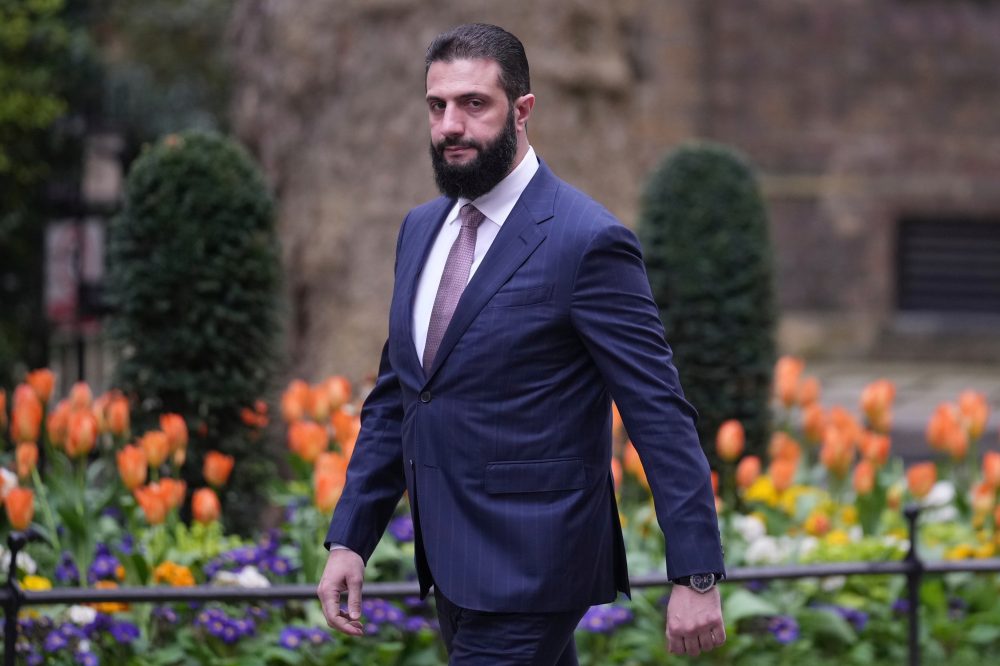
Syrian President Ahmed al-Sharaa stated in March that his country intended to remain neutral unless it was directly attacked. Speaking at an event hosted by the Chatham House think tank in London, Sharaa said: “Unless Syria is targeted by any party, Syria will remain outside any conflict.”
In addition to the strike claim, the Revolutionary Guards stated that Iran maintains full control over the Strait of Hormuz. They warned, according to state media, that no oil or gas would be allowed to pass through the waterway for as long as U.S. attacks continue.
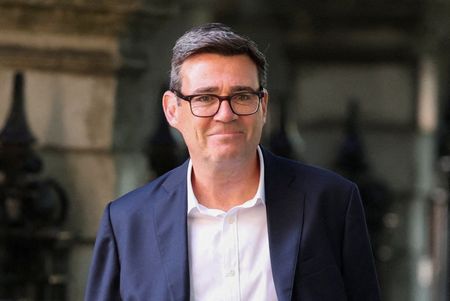
LONDON (AP) — Andy Burnham’s journey to the top of British politics has been defined by equal parts persistence and bold decision-making.
Ten years ago, Burnham walked away from a two-decade career climbing the Labour Party ranks in London to head north and seek the position of mayor of Greater Manchester. Just one month ago, he secured a seat in Parliament through a high-stakes special election. This Monday, he will be sworn in as Britain’s 59th prime minister.
The rapid collapse of Prime Minister Keir Starmer’s government after only two years in power has thrust the 56-year-old Burnham into the country’s highest office — without a national electoral mandate and with limited experience at that level. He will step through the door of No. 10 Downing Street carrying enormous public expectations and serious questions about whether he can meet them.
“A whole range of people across the Labour movement and in the country have projected onto Andy Burnham their hopes and their fantasies about how the country should be run and what Labour should stand for and what Andy Burnham stands for,” said Joshi Herrmann, founder of Manchester news site The Mill, who has reported on Burnham for years.
“He has got lots of people’s hopes up,” Herrmann added.
Though Burnham built his political reputation in Manchester, he was actually born in Liverpool and raised in a commuter village nestled between those two rival cities in northwest England.
His father worked as an engineer for British Telecom and his mother served as a receptionist. He grew up in a tight-knit Catholic household. Burnham has described himself as “not particularly religious,” but he has credited Catholic values and the center-left Labour Party with shaping his commitment to social justice.
Burnham and his brothers were the first in their family to attend university — and it was Cambridge, one of England’s oldest and most prestigious schools.
“He needed a lot of persuading to apply because he felt that as a working-class boy, going off to Cambridge wasn’t for him,” said Stephen Harrington, Burnham’s former English teacher at St. Aelred’s Catholic High School, in remarks to the BBC. “He didn’t believe in himself. But he did it, and the rest is history.”
Burnham has spoken openly about feeling like an outsider at Cambridge, where many of his fellow students came from wealthy backgrounds and elite private schools in southern England. He earned a degree in English and met his future wife, Dutch fellow student Marie-France Van Heel, now a marketing executive. The two wed in 2000 and have three children — a son and two daughters.
Following graduation, Burnham worked as a journalist at trade publications before transitioning into a role as a researcher and adviser to Labour politicians.
He won a seat in Parliament in 2001, representing the Manchester-area constituency of Leigh, and steadily moved up through government under Labour Prime Ministers Tony Blair and Gordon Brown. Between 2007 and 2010, he held three Cabinet positions under Brown: chief secretary to the Treasury, culture secretary, and health secretary.
A pivotal moment in his political life came in 2009, when he was heckled while attending a memorial for the 1989 Hillsborough Stadium disaster — a tragedy in which 97 Liverpool soccer fans were crushed to death. For years, bereaved families had fought to challenge a false police account that blamed unruly fans for the catastrophe.
Burnham became a fierce advocate for those families, helping push for a new inquest, a formal apology, and legislation requiring public officials to be truthful about disasters regardless of the reputational consequences.
After Labour fell from power in 2010, Burnham ran for the party’s leadership that year and again in 2015, falling short both times. In 2017, with Labour at a low point nationally, he left Parliament to pursue the Greater Manchester mayoral race.
The mayoral role suited him well. He demonstrated a talent for coalition-building, an eye for political opportunity, and a strong streak of practicality. His governing style earned the label “Manchesterism” — a form of business-friendly socialism that seeks to blend private and public investment in areas like transportation, housing, and infrastructure.
Manchester, once a cornerstone of Britain’s industrial era and widely considered the birthplace of the Industrial Revolution, had long suffered from the decline of British manufacturing. Under Burnham’s leadership, the city experienced a resurgence, with new high-rise developments rising on former industrial land. He was particularly praised for consolidating the region’s fragmented public transit system under public control and improving its performance.
He traded in formal suits for jeans and dark T-shirts, talked openly about his love of bands like Oasis, The Smiths, and New Order, and spent his free time playing soccer or competing in DJ battles spinning 1990s music.
During the COVID-19 pandemic, Burnham publicly clashed with Conservative Prime Minister Boris Johnson, accusing him of taking a “London-centric” approach that unfairly penalized cities in the north. That confrontation earned him the nickname King of the North — a nod to the television series “Game of Thrones” that reflected both his regional advocacy and his broader political ambitions.
Burnham has described his time in national government as “unfinished business,” and his opportunity came when Starmer was pressured to resign by Labour colleagues worried about the party’s declining popularity.
To re-enter Parliament, Burnham needed a seat. A sitting Labour lawmaker agreed to step down, triggering a special election in the Manchester-area district of Makerfield. Burnham won decisively against the candidate from the anti-immigration party Reform UK, reinforcing his image as an electable figure.
When the contest to choose a new Labour leader opened, Burnham ran unopposed.
He has pledged to deliver “a new politics based on unity and hope” and “an economy that works for everybody,” regardless of where people live. A central part of his agenda involves expanding the powers of regional leaders, and he has announced plans to establish a satellite prime minister’s office — a “No. 10 North” — in Manchester.
Herrmann said Burnham’s greatest assets include a gift for compelling storytelling and a sense of empathy that sets him apart from most politicians. He also credited the incoming prime minister with holding “a set of principles about trying to make the country fairer, trying to bring people out of poverty, that he really does believe in.”
Critics, however, argue that Burnham’s policy platform lacks specifics — particularly around how he intends to fund his promises. He will also inherit many of the same challenges that undermined Starmer, including a sluggish economy, strained public services, and a persistent cost-of-living crisis. His background offers little preparation for foreign policy matters, from the ongoing war in Ukraine to navigating relations with U.S. President Donald Trump.
And governing a nation of 70 million people is a vastly different undertaking than leading a region of 3 million.
Still, Sacha Lord, a Manchester music entrepreneur who served as Burnham’s adviser on the nighttime economy, pushed back on any notion that the new prime minister is too soft for the job.
“He’s not scared of locking horns with people,” Lord said. “Everybody thinks Andy’s this nice, cheeky-chappy guy. But trust me, when he wants something … he tends to get it.”
DUBAI, United Arab Emirates — American airstrikes carried out Friday appear to have caused the collapse of a tower at Iran’s Chabahar port, a facility located along the Gulf of Oman that serves as a critical trade gateway for Afghanistan.
U.S. Defense Secretary Pete Hegseth posted surveillance imagery appearing to show the tower coming down. The footage had already been circulating on social media through activist channels before Hegseth shared it publicly.
Chabahar port has been struck multiple times by U.S. forces. Iranian state media confirmed that a third wave of strikes had hit the location, though officials did not immediately address reports of the tower’s collapse.
Iranian authorities characterized the tower as a structure used to monitor commercial vessel traffic entering the port. However, Iran’s paramilitary Revolutionary Guard is also known to maintain a presence at ports throughout the country.
DUBAI — Iran announced Friday that it carried out new strikes against U.S. facilities in the Gulf, following a sixth consecutive night of American military operations targeting Iranian military infrastructure, marking the breakdown of a ceasefire agreement reached just last month.
The U.S. military confirmed it had completed another round of strikes aimed at weakening Iran’s military capabilities, with targets including areas on Qeshm Island and near Bandar Abbas — the location of Iran’s largest port and major navy and Revolutionary Guards installations.
“U.S. forces, including fighter jets, aerial drones, and warships, launched precision munitions that hit dozens of Iranian military targets such as coastal surveillance and air defense sites, military logistics infrastructure, and maritime capabilities,” U.S. Central Command said in an official statement.
Iran has responded by firing missiles and drones at American military bases in neighboring countries, including an air base in Jordan. In the early morning hours of Friday, Iran’s military announced it had struck U.S. facilities in Bahrain and Kuwait. In the Qatari capital of Doha, witnesses reported hearing multiple explosion-like blasts, and that country’s Ministry of the Interior confirmed a child was wounded by shrapnel.
Iranian state media reported that five bridges were struck in the latest wave of U.S. attacks, along with the train station in the coastal city of Bandar Khamir and Iranshahr Airport in southeastern Iran. Seven people were killed in the bridge strikes in Bandar Khamir, a port city in southern Iran, according to state news agency IRNA. Those reports could not be independently confirmed by Reuters.
SHIPPING THROUGH HORMUZ HALTED AGAIN
The ongoing military exchange has once again brought traffic through the Strait of Hormuz to a near standstill. The strait is considered the world’s most critical shipping corridor for oil and gas, and the disruption has pushed global energy prices higher. Tehran has reinstated its blockade of the strait, while Washington reimposed a blockade of Iranian ports beginning Wednesday.
Iran has also signaled it may encourage its Houthi allies in Yemen to shut down another major waterway — the Bab al-Mandeb at the entrance to the Red Sea — if the U.S. continues striking Iranian infrastructure, according to sources who spoke with Reuters.
Last week, Iran attacked ships traveling through a corridor in the strait. White House press secretary Karoline Leavitt told reporters Thursday that U.S. President Donald Trump would not “sit by and allow these active acts of terrorism to take place in the strait without ensuring Iran pays consequences for that.” She also noted, however, that the president was “always open to diplomacy at the very same time.”
Iranian sources told Reuters that Tehran’s goal is to assert control over the strait, though Iran does not want the situation to escalate to the point of collapsing June’s memorandum of understanding — an agreement it views as largely favorable to its interests.
Inside Iran, the renewed bombing campaign has left residents on edge. “Living with this fear that war could start again is very exhausting. You cannot live like this… Personally, I want diplomacy to prevail,” said Mahlegha, 46, a government employee speaking to Reuters from Tehran.
IRAN’S DEMANDS OVER THE STRAIT
Iran is demanding that all vessels passing through the Strait of Hormuz travel along a route close to its coastline, and plans to begin collecting passage fees once a 60-day negotiation window established in last month’s memorandum expires. The U.S. has urged ships to take an alternate southern route along the Omani coast instead.
American forces said their airstrikes along the Iranian coastline are intended to undermine Iran’s ability to dominate the strait. However, Iranian Army spokesperson Brigadier General Mohammad Akraminia pushed back Thursday, saying the effort would fail because Iran has the capability to strike the strait from anywhere within its territory.
President Trump has not ruled out deploying ground forces, including a potential move to seize Kharg Island, where Iran’s primary oil export terminal is located. He has also repeated threats to target Iranian power plants and bridges in the coming week if Tehran does not return to the negotiating table.
North Korea’s state-run media fired back at South Korea on Friday, labeling the country a “puppet” after its navy played a central role in a large-scale maritime exercise organized by the United States, warning that both Seoul and Washington would be held accountable for any “unpredictable escalation” that might follow.
The remarks from the North Korean state media outlet KCNA came in response to last week’s Rim of the Pacific Exercise, known as RIMPAC, held in Hawaii. It marked the first time South Korea’s naval forces took the lead role among participating maritime units in the exercise’s history.
RIMPAC is recognized as the largest international maritime exercise in the world and takes place every two years. This year’s event drew participation from roughly 30 nations, among them Japan, Canada, and Australia, according to the RIMPAC website.
KCNA stated that “the South Korean puppet forces took part as a main component” during a period when “military collusion is becoming increasingly overt,” a reference to the deepening military cooperation between South Korea and Japan, as well as Seoul’s growing relationship with NATO.
This is the first time in approximately one year and three months that North Korea has used the word “puppet” to describe South Korea. The last time was following an April 2025 incident in which a fuel tank and gun pods fell from a South Korean air force aircraft during a training exercise, landing in a mountainous area of Gangwon Province.
North Korea’s state outlet also argued that RIMPAC was far more than a “routine drill against a hypothetical adversary,” characterizing it instead as a show of military force by the U.S. and its allies directed at nations throughout the Indo-Pacific.
“All these facts point to which forces are truly shaking the foundation of world peace and security and they foreshadow the possibility of unwanted situations occurring on the Korean Peninsula and in the region if not anticipated,” KCNA stated.
The outlet went on to criticize a joint U.S.-South Korean Marine Corps exercise, saying the air drill simulated “deep infiltration into enemy rear areas” launched from the U.S. Navy vessel USS Essex.
The sharp rhetoric comes at a time when North Korea has been publicly showcasing its own efforts to strengthen its naval capabilities. Earlier this month, KCNA reported that leader Kim Jong Un watched the launch of a strategic cruise missile and observed weapons system tests aboard the newly built 5,000-ton destroyer Kang Kon.
SHANGHAI — Chinese President Xi Jinping took center stage at the opening of the World Artificial Intelligence Conference in Shanghai on Friday, calling for an approach to artificial intelligence that keeps people at its core.
In his keynote address at the conference, known as WAIC, Xi stressed the importance of a “people-centred” philosophy when it comes to developing AI technology.
Beyond domestic priorities, Xi also turned his attention to the global stage, highlighting China’s intention to ensure that developing nations are not left behind in the AI revolution. He warned that unequal access to AI resources could lead to what he described as “new historical injustices.”
To help prevent that outcome, Xi announced that China plans to work alongside a range of international organizations and partner nations — including those from Africa, Latin America, Asia, and BRICS member countries — to expand AI-related opportunities for developing economies.
The U.S. military confirmed late Thursday evening that it had wrapped up its most recent wave of attacks on Iran, carried out under orders from President Donald Trump — the sixth night in a row that American forces have struck the country.
U.S. Central Command released a statement detailing the operation: “U.S. forces, including fighter jets, aerial drones, and warships, launched precision munitions that hit dozens of Iranian military targets such as coastal surveillance and air defense sites, military logistics infrastructure, and maritime capabilities.”
Thursday’s strikes included hits on Qeshm Island and areas near Bandar Abbas — the location of Iran’s largest port and major navy and Revolutionary Guards installations — both situated along the Strait of Hormuz.
Iranian media outlets reported additional U.S. strikes Thursday night on three bridges and a train station in the coastal city of Bandar Khamir, as well as a missile strike on Iranshahr Airport in southeastern Iran. Reuters was not immediately able to confirm those reports independently.
Iran responded by launching missiles and drones at U.S. military bases in neighboring countries, including a recently expanded air base in Jordan. Iran claimed that base was used in a U.S. attack on an Iranian children’s cancer hospital on Wednesday night.
President Trump this week repeated his threats to target Iranian energy infrastructure and warned that bridges could be hit as early as next week. Those kinds of threats have drawn scrutiny from legal experts, who earlier this year said such attacks could potentially constitute war crimes under international law. The 1949 Geneva Conventions prohibit attacks on sites considered essential to civilian life.
Trump faced widespread international condemnation back in April after threatening to destroy Iran’s entire civilization, before eventually agreeing to a ceasefire with Tehran.
The current conflict traces back to February 28, when the U.S. and Israel launched attacks on Iran. Iran responded with strikes on Israel and Gulf states that host American military bases. Since then, U.S.-Israeli strikes on Iran and Israeli attacks on Lebanon have killed thousands of people and displaced millions more.
The ongoing war has also pushed oil prices higher and sent shockwaves through global financial markets.
Qatar’s defense ministry announced Friday that its armed forces successfully stopped an incoming missile attack, while the country’s interior ministry followed up by declaring the security threat over.
Witnesses in Doha, Qatar’s capital city, reported hearing several loud booms before a government security alert was pushed out to mobile phones across the country.
Neither ministry identified who was responsible for launching the attack.
The incident comes as Iran has escalated its attacks against Gulf nations in response to U.S. strikes on Iranian territory, with Iran targeting military installations in the region that are used by American forces.
Australia took a strong diplomatic step on Friday, summoning the Lao ambassador to Canberra to express its anger over how Laos is handling criminal charges related to the deaths of two young Australian travelers who were poisoned by contaminated alcohol.
Holly Bowles and Bianca Jones, both 19 years old, lost their lives in 2024 after drinking methanol-laced alcohol in Vang Vieng, a town in Laos that draws large numbers of international backpackers. The town is located roughly a two-hour drive north of the Lao capital, Vientiane.
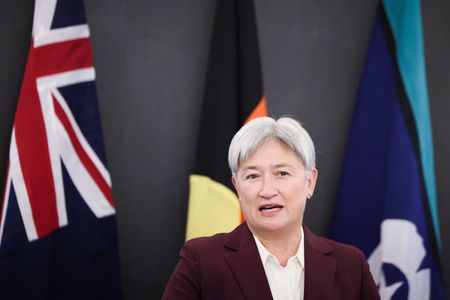
Australian Foreign Minister Penny Wong made clear that her government has not stayed silent on the matter. “We have consistently made clear our expectations that charges should reflect the gravity of the tragedy that claimed the lives of Holly and Bianca in November 2024,” she said in an official statement.
Wong also announced she plans to personally raise Australia’s concerns with her Lao counterpart at an upcoming meeting of the Association of Southeast Asian Nations foreign ministers in Manila next week.
The two Australians were not the only victims. Four additional tourists — two Danish nationals, one American, and one British citizen — also died after consuming the same contaminated alcohol.
According to the Australian Broadcasting Corp, which did not name its sources, Lao officials may be looking to charge those allegedly responsible under two offenses that together carry a maximum of one year in prison and a fine of up to A$1,600, which is roughly $1,120 in U.S. dollars. The families of the victims were described as “furious” over the potential charges and have called on the Australian government to step in.
Laos’ embassy in Canberra had not responded to a request for comment at the time of this report.
Methanol is a highly toxic substance used in industrial settings as a solvent, pesticide, and alternative fuel. It is not safe for human consumption and can be deadly even in small amounts.
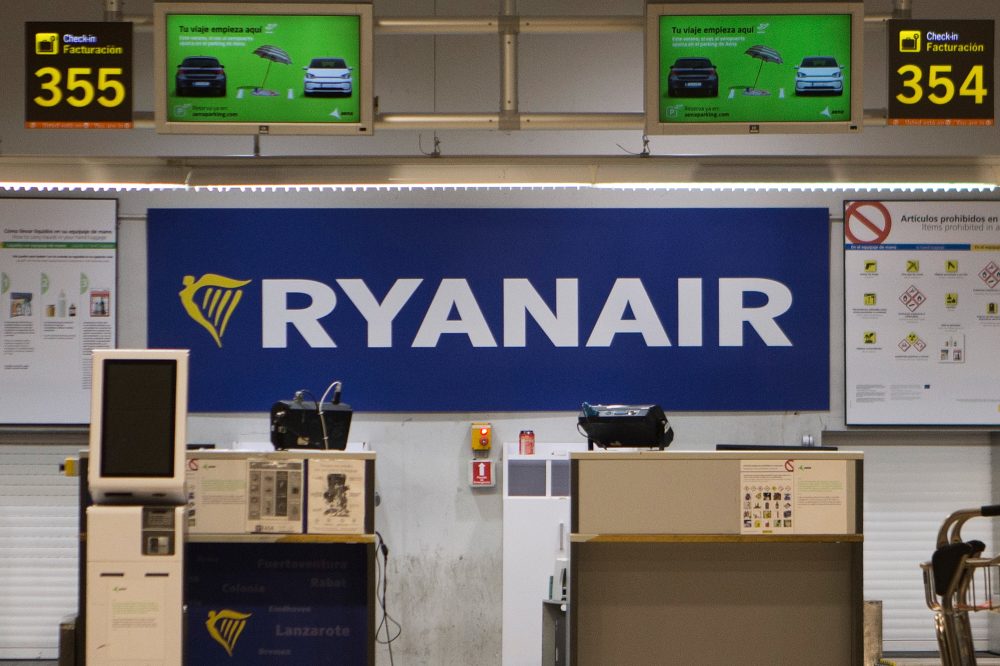
U.S. aviation safety officials announced Thursday that they are now heading the investigation into a frightening incident aboard a Ryanair flight departing Greece, during which a window broke loose and partially pulled a passenger out of the aircraft before others were able to bring him back inside.
The National Transportation Safety Board said that after reviewing the aircraft’s flight path more carefully, investigators concluded the event took place within Greek airspace — not over the Republic of North Macedonia as they had originally thought.
Under international aviation rules, Greece’s Hellenic Air and Rail Safety Investigation Authority was permitted to transfer control of the investigation to the NTSB. The U.S. federal agency confirmed it accepted the handover and is now directing the probe, with Greek authorities participating in a supporting role.
The alarming event unfolded on July 10 aboard a morning flight departing the northern Greek city of Thessaloniki and bound for Memmingen, near Munich. The flight was operated by Malta Air, a subsidiary of Ryanair, which is Europe’s largest budget airline.
The passenger involved, a 61-year-old man whose name was not released, sustained neck and shoulder injuries along with friction burns, according to a Greek hospital official. It was unclear as of Thursday whether he was still receiving hospital care.
The NTSB had previously stated it was informed the flight turned around due to “a right engine issue and cabin decompression.” Ryanair has not publicly commented on the engine issue. When contacted by email about the matter, the airline repeated its earlier statement, which only referenced the window coming loose as the reason the plane returned to Thessaloniki.
Passengers who spoke to Greek media described hearing a loud bang, followed by oxygen masks dropping from above and the plane beginning to lose altitude. Short videos recorded inside the cabin and shared by Radio Thessaloniki showed passengers with oxygen masks on after the cabin lost pressure. One clip appeared to show the blown-out window, with a nearby passenger wearing a mask. A third video, seemingly recorded after the plane had landed, showed emergency responders working in the aisle.
Shye Gilad, a former airline captain who now teaches at Georgetown University’s business school, explained that a window blowing out would trigger rapid decompression — a sudden drop in cabin pressure that can produce a brief but intense suction effect near the opening before conditions stabilize.
“The seat belt can help in those first few seconds. It’s a difference maker and people should keep their seat belts fastened at all times,” Gilad said. He added that incidents like this are “very rare” because “it takes a lot to breach a cabin.”
Flight data shows the aircraft — a Boeing 737-800 that was delivered new to Ryanair in 2008 — had been climbing through 15,000 feet (4,570 meters) approximately six minutes after takeoff before rapidly descending to around 6,000 feet (1,830 meters). Flight-tracking service Flightradar24 reported the plane held at the lower altitude for about 30 minutes to burn off fuel before returning to Thessaloniki roughly an hour after it had originally departed.
Ryanair stated in its public comments that one passenger requested and received medical attention after the plane landed, and that a replacement aircraft was later arranged to carry passengers on to Germany.
TOKYO (AP) — Japan’s parliament was poised to pass legislation Friday that could threaten the survival of its 1,500-year-old imperial institution by cementing a rule that only men may serve as emperor — a move drawing sharp criticism as the royal family continues to shrink and age.
Emperor Naruhito’s 24-year-old daughter, Princess Aiko, enjoys widespread public support and many Japanese citizens would like to see her succeed her father. However, because she is a woman, she is disqualified under the male-only succession rule. That rule directs the line of succession to the emperor’s younger brother and then to his 19-year-old nephew, Prince Hisahito. After Hisahito, the next in line is the emperor’s 90-year-old uncle.
Hisahito is the first male royal baby born in four decades — a reflection of just how male-scarce the imperial family has become. Of the 16 adults currently in the imperial family, with no children among them, only five are men.
Prime Minister Sanae Takaichi and fellow conservatives argue that the male bloodline is “the only source of the emperor’s authority and legitimacy,” a position that forms the foundation of the upcoming legislation.
Under the Imperial House Law, while an emperor’s mother may be a commoner — as is true with the current emperor — only boys born to men of royal blood can be heirs to the throne.
The legislation parliament was expected to approve Friday revises the long-standing law to reinforce that bloodline principle. It would allow the adoption of distant male relatives from former royal branches to father future heirs. The measures would also permit princesses to retain their royal status if they choose to marry commoners.
“It’s a declaration to prevent female monarchs … and to defend the male-lineage at all costs,” said Hideya Kawanishi, a monarchy expert at Nagoya University. “They cannot say it’s male chauvinism, so they call it tradition.”
Japan has had eight female monarchs throughout its history. The most recent was Empress Gosakuramachi, who reigned from 1762 to 1770.
The requirement for paternal male succession was first written into law in the 1890 Imperial House Law, during a period when Japan was promoting patriarchal social structures. That framework was largely preserved in the current 1947 version of the law.
The Friday proposal has sparked public protests from Japanese citizens who believe the government’s push is designed to block Princess Aiko from ever ruling and to entrench discrimination against women.
“It’s very ironic that the first female prime minister herself is the leading proponent of the obsession with male-succession,” wrote prominent feminist scholar Chizuko Ueno in a recent piece, referring to Takaichi.
Ueno also argued the new measures “treat male royals as stallions and put female royals under pressure as ‘childbearing machines’ to produce male offspring.”
After Aiko’s birth, her mother Empress Masako — a Harvard-educated former diplomat and commoner — developed a stress-induced mental health condition, reportedly stemming from criticism over her failure to produce a male heir.
Former Imperial Household Agency chief Shingo Haketa recently told Kyodo News that the monarchy’s future after Hisahito is “extremely unstable,” a consequence of the male-only succession rules and the tradition of dismissing princesses who marry commoners.
Historians note that the male-only system is no longer workable in modern Japan, which is already grappling with a rapidly aging and shrinking population. Historically, the system functioned because concubines produced roughly half of all emperors — a practice that continued until about a century ago, when it ended under Naruhito’s great-grandfather, Emperor Taisho.
A government proposal in 2005 would have allowed female monarchs, but it was abandoned after Prince Hisahito was born.
Naruhito’s two male heirs are his 60-year-old brother, Crown Prince Akishino, who is only six years younger than the emperor and has reportedly indicated he would be too old to serve, and Hisahito, Akishino’s 19-year-old son. Third in line is Naruhito’s uncle, Prince Hitachi, who is 90 years old.
The more contentious of the two proposed measures would allow unmarried male descendants — aged 15 or older — of distant imperial relatives to be adopted into the royal family, but only if they come from the paternal line.
Imperial Household Agency official Yoshimi Ogata told a recent parliamentary session that 51 members from 11 branch families gave up their royal status in 1947, largely to reduce the postwar financial burden on the monarchy. Ogata noted these individuals are at least 36 generations removed from Emperor Naruhito, having branched off from a shared male-line ancestor roughly 600 years ago.
Many see the government’s efforts as extreme. “Who wants the son of an adoptee who nobody knows to be emperor instead of Aiko?” asked Yoshinori Kobayashi, a cartoonist who has been campaigning for Aiko’s succession.
There are also practical concerns about whether former royals would even want to return to what is described as “an enclave without human rights” — a highly regimented lifestyle in which royals have no say over their careers or where they live.
“I wonder if anyone would raise a hand,” said 81-year-old Asahiro Kuni, whose family gave up its royal status when he was just 3 years old, in comments to TBS television. “I imagine many people, by age 15, have some idea about their future. It’s cruel to tell them … to change the course of their life.”
Kuni, who built a career as an engineer at a major Japanese company, said he would advise his own family to decline if the palace came calling. “You are asked to sacrifice your life for the happiness of the people. I can’t tell my family to choose such a difficult life.” He has also expressed support for female monarchs in other Japanese media interviews.
Princess Aiko, known for her warm smile, enthusiasm, and quick wit, remains a favorite with the public.
Five unmarried princesses — including Aiko and her popular 31-year-old cousin Kako — could be affected by the other key revision to the Imperial House Law. That change would allow them to keep their royal status and continue carrying out official duties after marrying commoners, though their spouses and children would not be recognized as royals.
Aiko’s older cousin Mako gave up her royal title and relocated to New York following her marriage to a college boyfriend — a commoner who now works as a lawyer. That decision was widely interpreted as her effort to escape the constraints of imperial life.
Scholar Ueno has called the system inhumane and is urging the remaining princesses to follow Mako’s lead and leave while they have the chance.
Kawanishi warned that Hisahito, any future adoptees, and their wives will face immense pressure to produce male heirs.
“The emperor is a symbolic figure, and I don’t see why women cannot serve in the role,” said 78-year-old Junichiro Tsujimaru, a sushi chain founder.
Also 78, Yoshio Iwase argued that Aiko, as the emperor’s own daughter, is the rightful successor. “I think it’s fine because there used to be female emperors in the past,” he said.
There is concern that the government’s actions could undermine the legacy of former Emperor Akihito, whose reign was marked by efforts to make amends for the suffering caused during World War II, which was fought in his father’s name. Akihito, who stepped down in 2019, also worked to make the historically distant monarchy more accessible to ordinary people — a path his son Naruhito and his family have continued to follow.
Akihito is reported to support Aiko’s succession. While he avoided directly addressing the 2005 government proposal, he commented that female royals play a vital role in the monarchy and that the institution exists to serve the happiness of the people — a statement widely interpreted as backing for female monarchs.
In June, Naruhito himself expressed hope that discussions about the measures would reach a conclusion that “will gain understanding of the people” — a carefully worded remark that palace observers interpreted as a subtle signal of his own reservations.
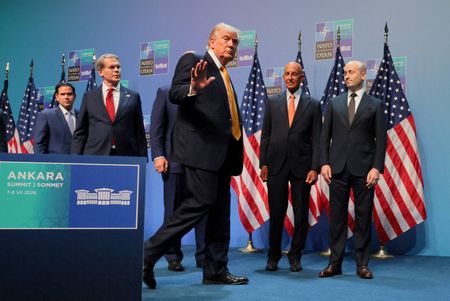
When Estonia’s Defence Minister Hanno Pevkur headed to this month’s NATO summit in Ankara, he disclosed to reporters at home that several hundred American troops who had been stationed in the Baltic nation since winter had been quietly withdrawn — and there was no clear timeline for their return.
At the Ankara summit, representatives from the Baltic states and Poland wore badges identifying themselves as members of the so-called “five percent club” — the only NATO nations to have already met the defense spending goal established at last year’s alliance meeting in The Hague. Those nations had believed that reaching that benchmark would guarantee continued U.S. military support.
Despite what observers described as some of the most assertive behavior yet from U.S. President Donald Trump at a major international gathering, NATO leaders — including Secretary General Mark Rutte — declared the summit a success. They pointed to new defense agreements, increased European spending commitments, and what they called an “ironclad” pledge of mutual defense.
However, many of those commitments — among them a nine-nation defense financing arrangement led by Canada and a long-range missile strike consortium involving a dozen countries valued at $50 billion — are expected to take years before they become operational.
Publicly, even leaders skeptical of Trump, such as Canadian Prime Minister Mark Carney, credited the U.S. president for pressuring NATO members to boost their defense budgets.
Yet on the ground this summer, the reality looks different. The U.S. has drawn back forces from some of the most exposed areas in Eastern Europe at a time when concern is growing that a Kremlin increasingly embarrassed by Ukraine’s long-range drone and missile strikes deep inside Russian territory could be tempted to strike back against NATO neighbors.
An analysis of European news coverage by AI monitoring and predictive analytics firm Omniforecaster estimates an 18% probability of a deadly clash between Russia and a NATO member nation before the end of 2026 — a level of risk significant enough to put governments on alert, especially as Washington quietly reduces its troop presence in the region.
At the annual Chatham House conference last week, former UK Armed Forces Minister Al Carns said the current strategic environment was the most dangerous since the Cuban missile crisis of 1962.
Even so, most analysts and government officials believe Russia is more likely to keep pressing its campaign of so-called “hybrid warfare” — covert disruption and sabotage — rather than launching direct military action.
The risk of unintended escalation, though, extends beyond Europe. The U.S. appears increasingly entangled in tensions in the Gulf region, with Trump suggesting in Ankara that he could order further strikes against Iran’s core infrastructure — a prospect that has alarmed U.S. allies in the Gulf who worry they could face the worst of Iran’s retaliation.
In the Middle East, the U.S. began pulling personnel from forward operating bases in mid-January as a precautionary move amid rising tensions with Iran. Most analysts doubt the U.S. will again station significant numbers of non-air defense troops or equipment in countries such as Qatar or Kuwait, following a complete withdrawal from Syria and a reduction in Iraq.
In some instances, operations have been relocated back to the United States — including most coordination work previously conducted by the Coalition Air Operations Centre at Qatar’s Al Udeid air base. In other cases, the U.S. has chosen to station aircraft and drones in locations it considers more secure, such as Jordan, Israel, Turkey, and parts of mainland Europe.
UNCERTAINTY AND NERVES
Foreign officials widely believe that decision-making in Washington has become so concentrated around Trump and his closest advisers that future moves of this nature could happen with little or no advance notice.
As recently as May, Estonia’s Pevkur had been telling local media that “U.S. forces are in Estonia and will remain there,” though he conceded that “nothing can be ruled out” given the unpredictability of recent U.S. policy decisions.
He has since acknowledged that the number of American troops in Estonia has fallen to fewer than 100 — roughly one-sixth of the level from last winter, when a contingent of U.S. tanks was stationed in the country’s southern region.
Senior U.S. military commanders in Europe told him that another detachment could arrive later in the summer — but Pevkur noted that even that possibility may be subject to an ongoing policy review.
According to Baltic, Polish, and U.S. defense officials, the Baltic troop reductions were a direct result of the Trump administration’s surprise decision last month to cancel a long-scheduled deployment of approximately 5,000 troops to Poland — a move that caught the Polish government off guard and left some soldiers literally about to board flights to Europe before being turned around.
That cancellation had a cascading effect on troop movements through the Baltic states. Around 1,000 U.S. troops reportedly departed Lithuania in June and were not replaced.
Defense Secretary Pete Hegseth and Pentagon policy chief Elbridge Colby have both repeatedly emphasized the need to focus U.S. military resources on countering a rising China, promoting what they call “NATO 3.0” — a vision in which European nations shoulder far more responsibility for their own defense.
But uncertainty is also spreading in the Pacific. Most traditional U.S. allies in the region — including Japan, Australia, South Korea, Taiwan, and the Philippines — are growing increasingly anxious that the long-term trajectory may point toward at least a partial American military withdrawal from that part of the world as well.
Some Ukrainian commentators have speculated that the U.S. pullback from the Baltic states may be intended to appease Russia. Certain pro-Kremlin voices, and occasionally Russian President Vladimir Putin himself, have called for U.S. and broader NATO troop withdrawals from Eastern Europe as part of any eventual peace settlement in Ukraine.
BASING QUESTIONS
But there is another possible explanation: that the U.S. is positioning itself so that, if conflict does break out in Eastern Europe and NATO territory comes under attack, fewer American troops will be directly in harm’s way.
That would represent a significant change in U.S. military strategy — and one that may not be clearly telegraphed ahead of time. In Washington, some voices — including the Defense Priorities think-tank, which has long advocated for reducing the U.S. military footprint abroad — have argued for years that American forces should avoid exposed positions overseas, pulling back not only from the Middle East and Europe but also from vulnerable Pacific locations.
Those include the Japanese island of Okinawa and U.S. installations on Guam, which some military strategists argue would be highly vulnerable to Chinese attack in the event of a conflict.
Advocates of this approach argue that where U.S. forces are deployed, they should be highly mobile units equipped with long-range missile systems such as ATACMS, capable of threatening both Chinese naval vessels and the Chinese mainland. Some of those systems were used for the first time in U.S.-led military exercises in Japan and the Philippines earlier this summer.
Concerns about the long-term reliability of U.S. commitments are already pushing allies in both Europe and the Pacific to deepen coordination among themselves — including on weapons procurement — though that effort has drawn pushback from some U.S. officials.
Pentagon policy chief Colby wrote this week that without U.S. involvement, such allied efforts would simply squander resources. “The simple fact of the matter is that no alternative country or countries can compete with the U.S. defence industrial base either in quantity or quality,” he wrote.
Last week, the head of the German air force, Holger Neumann, told Politico that Europe does need to buy more American weapons. “Developing our own capabilities takes time,” he said. “Right now, we do not have time.”
German officials believe the threat environment will peak in 2029, though some fear it could arrive sooner. Either way, those who had counted on the presence of U.S. troops as a deterrent “tripwire” may find themselves disappointed.
LONDON — Andy Burnham, widely known by his nickname the ‘King of the North,’ is poised to officially take the helm of Britain’s ruling Labour Party on Friday, placing him just days away from becoming the country’s next prime minister.
A specially convened party conference on Friday will serve as the formal occasion for Burnham’s election as Labour leader — a step widely regarded as a formality given the overwhelming backing he has already received from the party’s lawmakers. He is expected to replace Keir Starmer as Britain’s leader when Monday arrives, at which point attention will quickly turn to who he selects for his cabinet and what direction he plans to take the government.
Burnham, 56, earned his ‘King of the North’ reputation through years of fiercely advocating for the Greater Manchester region’s interests during his time as its mayor. He returned to parliament last month after winning a seat in Makerfield, kicking off the four-week process that will culminate in his installation as prime minister and the departure of Starmer, whose widespread unpopularity ultimately turned his own lawmakers against him.
A Major Shift of Power Away from London
Since returning to parliament, Burnham has laid out portions of his domestic vision, centering on what he describes as the ‘biggest rebalancing of power’ away from London and toward Britain’s various regions. He argues this approach will chip away at inequality and address the frustration felt by so-called ‘left-behind communities’ — areas that have increasingly thrown their support behind Reform UK.
It was precisely this strategy for countering Reform’s rise that persuaded Labour lawmakers to back him. Many feared losing their seats to the populist party led by veteran Brexit campaigner Nigel Farage, which has sat atop opinion polls for several months heading into the next national election, due no later than 2029.
Reform’s momentum has shown some signs of slowing in recent weeks, however, following Farage’s acceptance of money from wealthy donors — a development that could hand Burnham an opportunity to rebuild Labour’s standing with voters.
Still, time is not on his side. With a general election at most three years away, Burnham faces pressure to move quickly on his promises, many of which are built around longer-term thinking.
Nigel Wilcock, executive director at the Institute of Economic Development — an independent organization representing professionals in the economic development field — noted that Burnham has spent years championing a different model for economic growth. However, Wilcock cautioned: “The challenge is turning that vision into a reality.”
China can keep its economy stable this year by moving faster on already-approved national infrastructure investments, according to economists and one government adviser — a strategy that makes sweeping fiscal stimulus less likely.
Beijing is looking to offset an unexpected broad drop in investment, which figures released Wednesday showed has weighed on economic growth this year. At the same time, authorities are keeping a tight grip on how local governments spend money.
The investment decline stems in part from local officials now facing stricter oversight of how they spend capital. Central authorities have pointed to wasteful infrastructure projects, industrial overcapacity, and manufacturers engaging in price wars as consequences of looser spending in the past.
“The single biggest factor behind the current cooling of China’s economy was local governments,” said Li Daokui, an economics professor at Tsinghua University, speaking at an economic forum on Saturday. “They are now under pressure to repay debt,” he added.
Speeding up nationally directed infrastructure projects could help soften the impact of tighter local budgets. According to state media, Beijing plans to spend 7 trillion yuan — roughly $1 trillion — this year on improvements and new construction across water networks, logistics systems, underground pipelines, power grids, telecommunications, and computing infrastructure. Changjiang Securities estimates that such spending could reach 26.9 trillion yuan over a five-year span.
Economists caution, however, that this effort amounts to a fine-tuning of the same investment-driven growth model China has relied on for years — not the shift toward consumer spending that trading partners have long pushed for. The goal, they say, is to reduce waste and excess industrial capacity.
Policymakers are counting on centrally championed projects and investment in high-tech industries to create jobs and improve productivity, breaking a pattern over the past decade in which investment produced more debt than economic gains.
“China is now putting everything behind technology to raise productivity,” said Dan Wang, China director at Eurasia Group. “That is the only way out, and also the best way out.”
One government adviser expressed cautious optimism about investing in computing infrastructure, but raised concerns that expanding water networks into areas with shrinking populations could waste resources. “Frankly, I think this kind of large-scale investment makes little economic sense, and it’s bound to become another cycle of borrowing to repay old debts,” the adviser said, asking not to be identified given the sensitivity of the topic.
“Some policy advisers, including myself, think the money should be spent on people, rather than poured again into inefficient, or even useless, fixed-asset investment and infrastructure,” the adviser continued.
Data show China’s fixed-asset investment fell 5.7% compared to a year earlier in the first six months of 2026. Infrastructure investment dropped 2.4%, manufacturing declined 1.2%, and real estate — which has been in a serious slump since 2021 — plummeted 18%.
Local government spending has dropped from around 41% of GDP a few years ago to roughly 35%, with capital expenditure falling more sharply than payroll or other operating costs, according to estimates from Tsinghua’s Li.
Reuters calculations indicate local governments issued 2.07 trillion yuan in special bonds during the first half of the year — 47% of the quota set by Beijing, compared with 49% during the same period in 2025.
The adviser said a Politburo meeting expected at the end of July — a top decision-making body within the Communist Party — could push local governments to move faster on projects and allow them to “moderately frontload” their fourth-quarter debt allowance into the third quarter. Still, the adviser doubted that projects unable to cover their own financing costs would receive the green light.
Goldman Sachs economist Lisheng Wang said the Politburo might increase its language around easing policy, but that “significant, broad-based stimulus” appeared unlikely. Beijing would probably “draw on remaining fiscal buffers quickly to stabilise investment and growth,” he said.
A civil servant in a northwestern province of China said no new projects have been launched in the region this year, aside from some necessary renovations of older housing and routine utilities maintenance. “There are still some small-scale repair and maintenance projects, but large-scale development and construction projects have basically disappeared,” the official said.
Beyond raising standards for project approvals, Beijing has also issued a list of practices that local officials are prohibited from carrying out. That list has not been made public, but analysts believe it likely covers unauthorized tax and fee rebates, discounted land and electricity rates, and subsidies directed at individual companies rather than entire sectors.
These restrictions on local governments place greater responsibility on Beijing itself to fund the investment needed to hit annual growth targets. “The central government itself carries very little debt — less than 30% of GDP — and it holds a large amount of commercial assets that could be monetised,” said Tsinghua’s Li.
The U.S. National Transportation Safety Board announced Thursday that it will take the lead in investigating last week’s alarming mid-flight incident involving a Ryanair Boeing 737 over Greece, after Greek authorities handed the agency that responsibility.
The incident occurred on July 10, shortly after the aircraft departed from Thessaloniki, Greece, bound for Germany. A piece of the plane’s engine broke away and struck a window, shattering it. The resulting loss of cabin pressure forced the crew to make an emergency landing.
A passenger identified as Serbian national Ljubisa Karovic was partially pulled through the broken window during the incident. Other passengers grabbed hold of him and kept him from being fully ejected. Karovic was injured and taken to a hospital.
The episode drew comparisons to two earlier incidents involving Southwest Airlines Boeing 737 NG aircraft in 2016 and 2018. During the 2018 incident, a passenger died after being partially sucked out of a window that had been damaged by a broken fan blade.
However, FAA Administrator Bryan Bedford cautioned against drawing direct parallels. Speaking to Reuters, Bedford said: “I don’t think the early indications are that (the recent Ryanair problem) mimics what the Southwest incident was.”
Following the 2018 Southwest incident, the NTSB urged Boeing to redesign the fan cowl structure on its 737 NG aircraft. The FAA followed up with an airworthiness directive in 2023, setting a completion deadline of 2028. Southwest Airlines said Thursday it has already finished the required work on roughly 80% of its affected planes and is on pace to beat the July 2028 deadline.
Bedford said the new Ryanair investigation is prompting the FAA to take a fresh look at how it handled the fallout from the 2018 crash. “Did we miss something? Way too early to tell — but we can’t take it off the board yet,” he said.
Ryanair equips all of its Boeing 737 NG planes with CFM56 engines produced by CFM International. The 737 NG is the generation of the aircraft that came before the current MAX model.
The Philippine government has strongly condemned China Daily, a state-run Chinese media outlet, for publishing an AI-generated video that portrayed Filipinos as monkeys — calling the imagery “racist,” “offensive, distressing and unacceptable,” and drawing a firm line against what it described as dehumanizing propaganda.
Manila formally demanded the removal of the video, which was posted to China Daily’s Facebook account on July 10. The Chinese Embassy in Manila had not responded to requests for comment at the time of this report.
The video depicted a monkey dressed in Filipino clothing being directed by arms representing the United States and Japan, instructing it on what to sing. After being called “stupid,” the monkey pulled out lyrics referencing the “South China Sea arbitration award” before being thrown into the ocean and hit by a water cannon from a vessel.
Philippine Defense Secretary Gilberto Teodoro was swift and blunt in his response, calling the material “contemptible propaganda” and “a disgrace to any State that claims to exercise responsible regional leadership.” He argued the video revealed “the weakness of a government that resorts to racism, threats, and manufactured hatred because it has utterly failed to defend its ridiculous claims through reason, evidence, or law.”
Teodoro went further, saying: “This mockery of the lawful 2016 Arbitral Award and the video’s glorification of violence against the Filipino people and soldiers expose the moral and intellectual bankruptcy of China’s propaganda machine.”
The video’s release on July 10 was not coincidental — it came as the Philippines was holding events marking the 10th anniversary of a major international arbitration ruling that struck down China’s broad territorial claims in the South China Sea. Beijing has consistently refused to recognize that ruling.
“The recent spate of schizophrenic behaviour of the Chinese Communist Party is too clear to disregard or to ignore. This latest act of dehumanization further reveals them as neither a secure and confident actor nor a trustworthy neighbour,” Teodoro added in his statement.
The Philippine foreign ministry also weighed in, stating: “We draw a firm line at the depiction of Filipinos as monkeys in the 10 July 2026 video, which is deeply offensive, distressing, and unacceptable.”
This latest diplomatic flashpoint comes amid ongoing friction between the Philippines and China over the South China Sea, which has included repeated confrontations between vessels at sea, aggressive actions by Chinese ships, Beijing imposing sanctions on Secretary Teodoro, and a dispute over a floating barrier China installed at the entrance to the contested Scarborough Shoal — which was later removed following protests from the Philippines.
At least 13 people lost their lives on Thursday as both Russian and Ukrainian forces carried out strikes against civilian areas in towns and cities, many situated along the front lines of a war now in its fifth year, local officials reported.
In Ukraine’s southeastern city of Zaporizhzhia, a Russian guided bomb attack claimed three lives and left 15 others wounded, according to regional governor Ivan Fedorov, who posted the update on Telegram. Video footage from Reuters TV captured firefighters battling the aftermath of fires while rescue crews picked through the wreckage of destroyed buildings. The city has faced an uptick in attacks in recent weeks.
The Black Sea port city of Odesa, another location that has repeatedly drawn Russian strikes, was hit by Russian missiles that killed two people, injured six more, and caused damage to civilian infrastructure.
Near the city of Kharkiv, close to the Russian border, a Russian drone strike took one life, according to national emergency services. Earlier that same day, a separate drone attack near the city of Kupiansk, located farther to the east, killed three people.
In the Donetsk region — the central focus of much of the fighting along the approximately 1,200-kilometer (775-mile) front line — the regional governor reported that one person was killed and five were injured near Kramatorsk, one of what officials have described as “fortress towns” where Ukrainian defenses have been strengthened.
Across the border inside Russia, officials in Belgorod Region reported that one person died after Ukrainian forces shelled a settlement near the border.
Additionally, Denis Pushilin, the Moscow-appointed leader of the Russian-controlled portions of the Donetsk region, stated that one person was killed in territory held by Russian forces.
Reuters was not able to independently verify the accounts provided by either side.
Malaysian Prime Minister Anwar Ibrahim declared Wednesday that his government will immediately expel any Israeli citizens discovered within the country’s borders, as federal investigators look into allegations that Israelis holding dual passports have been living inside a technology-focused community in the Johor region.
Speaking directly to reporters, Anwar made his government’s position clear: “We will not allow it. If there are Israeli nationals, since we do not recognize Israel, they will be deported immediately.”
The controversy revolves around a group called Network School — a co-living community designed for startup founders and digital nomads. The project was created by former Coinbase executive Balaji Srinivasan and is situated within the China-backed Forest City development, a man-made island located across the Johor Strait from Singapore.
The community first attracted public attention after a promotional video began circulating widely online. In the video, residents describe their home as “a man-made island near Singapore,” while Srinivasan declares, “We’re building Silicon Valley outside Silicon Valley.”
The video also sparked sharp criticism on social media. One user summed up the reaction this way: “Sounds like a cult, definitely operates like a cult, recruits like a cult.”
Following the online backlash, the Johor state government formally requested a federal investigation into both the activities taking place at the community and the nationalities of those residing there.
Malaysia’s Immigration Department subsequently reported that agents had checked 266 foreign nationals from 40 different countries at the location. Officials said all individuals inspected were carrying valid travel documents, but emphasized that a broader investigation into the identities and activities of those involved is still underway.
Beyond the deportation order, Anwar directed authorities to scrutinize the project’s business operations, including its licensing, housing arrangements, and how the land is being used. He warned that any rule violations would be met with what he called “firm action without compromise.”
Malaysia has long maintained that Israeli passport holders are barred from entering the country without explicit government permission, as the two nations have no diplomatic ties. Officials acknowledged that individuals holding citizenship in more than one country could potentially enter Malaysia using a passport from a different nation, bypassing the restriction.
Anwar reaffirmed that his administration will not back down on either national security matters or its political stance regarding Israel. The prime minister has consistently supported the Palestinian cause and has maintained open communication with Hamas since the conflict in Gaza intensified.
Israeli authorities have taken senior members of the Health Work Committees, known as HWC, into custody. Israel classified the organization as a terrorist group in 2020, citing its alleged connections to the Popular Front for the Liberation of Palestine, or PFLP.
The detentions coincide with a report from Channel 12 on Thursday indicating that the Shin Bet, Israel’s internal security service, recently foiled several alleged plots aimed at the country’s political and security leadership. The broadcaster also reported that the agency dismantled a number of social media operations believed to have been run by foreign actors seeking to sway Israeli public opinion.
One of the networks identified in the operation was a Telegram channel called Bnei Eretz, which reportedly posed as an Israeli platform while actually being controlled by what Channel 12 called a “hostile foreign actor.” Israeli security officials, according to the report, anticipate these types of campaigns will grow more frequent as the country approaches its next legislative elections, with outside actors looking to exploit existing political divisions and social tensions.
The arrest of HWC officials drew a sharp response from NGO Monitor founder and president Prof. Gerald M. Steinberg, who said the detentions underscore what he characterized as the group’s deep-rooted ties to the PFLP.
Steinberg pointed out that despite Israel’s 2020 terrorist designation, HWC has continued to operate in the West Bank. He noted that multiple senior staff members — including the organization’s former general director, a former fundraiser, and at least three individuals who held financial roles — have been convicted on terror-related charges.
Steinberg also took aim at European governments that have continued providing financial support to HWC, specifically naming Belgium as a donor country even after Israel’s designation of the group.
“This is yet another example of how terror groups like the PFLP repeatedly exploit the NGO facade,” Steinberg said. “We call on donor states to immediately halt any remaining funding to HWC based on its leaders’ ongoing ties with the PFLP.”
Channel 12 did not reveal the identity of the foreign actor allegedly behind the influence campaigns, nor did it provide further details about the alleged terror plots or the specifics of the HWC arrests.
Despite renewed military conflict between the United States and Iran, the White House stated Thursday that Washington remains willing to pursue a diplomatic resolution, saying Tehran has signaled it still wants to strike a deal.
White House Press Secretary Karoline Leavitt addressed reporters on the matter, explaining that the administration is simultaneously maintaining diplomatic channels and responding to Iranian military provocations.
“The president will hold them accountable when they turn their back on the words that they state to the United States. But he is always open to diplomacy at the very same time,” Leavitt told reporters.
Leavitt further noted that Iran has directly communicated its interest in continuing negotiations with the Trump administration.
“They have expressed they still want to make a deal to the president. We’re talking to them, but again, the president is not going to allow them to fire on ships in the Strait without paying a consequence for that,” she said.
The White House comments come as armed conflict between the two nations has flared up again following the collapse of ceasefire talks. Those negotiations had centered on a memorandum of understanding aimed at ending the war, but ultimately reached a standstill.
Prior to ordering military strikes against Iran, President Trump announced on Truth Social that the ceasefire had ended. He has also issued warnings that the U.S. military campaign could be broadened to target Iranian power plants and bridges if Iran does not return to the negotiating table.
Leavitt’s briefing came the day after President Trump publicly thanked Iran for freeing a U.S. citizen who had been held in detention since December 2024. That release was widely seen as a potential diplomatic opening, even amid the escalating hostilities between the two countries.
The United States launched a new series of strikes against Iranian military targets, hitting sites in and around Tehran as well as Semnan province — a region that houses Iran’s ballistic missile manufacturing facilities and its space program.
In response, Iran claimed it fired missiles and drones at American military assets located in Jordan, Kuwait, and Bahrain, while also renewing threats directed at the Strait of Hormuz.
Early Thursday morning, US Central Command, known as CENTCOM, announced that American forces deployed precision weapons to strike a range of targets, including command centers, air defense systems, missile installations, drone facilities, and coastal surveillance sites in Bandar Abbas. The military stated the goal of the operation was to diminish Iran’s capacity to threaten commercial vessels passing through the Strait of Hormuz. Officials also noted that an earlier round of strikes — lasting roughly 90 minutes — had targeted coastal defense infrastructure and cruise missile sites on Tunb Island.
Iran’s Islamic Revolutionary Guards Corps, or IRGC, claimed responsibility for launching ballistic missiles at a US air base in Jordan, saying it was a direct response to what they characterized as an American strike near a children’s cancer hospital inside Iran. The IRGC also said it conducted drone attacks against US bases and facilities in both Kuwait and Bahrain. Iranian state television reported that the military struck radar systems, a Patriot air defense battery, and fuel storage areas at Ali Al Salem Air Base in Kuwait, as well as US military facilities at Isa Air Base in Bahrain. None of those claims have been independently confirmed. Jordan’s military, however, did confirm that it intercepted eight Iranian missiles that had been fired toward the country.
Separately, a spokesperson for Iran’s Khatam al-Anbiya military headquarters declared that Tehran considers any US interference in the Strait of Hormuz a “red line.” Responding to President Donald Trump’s warning that the US would consider striking civilian infrastructure if Iran refuses to agree to a ceasefire, the spokesperson stated, “If the recent threats he made are carried out, including attacking Iran’s infrastructure, all infrastructure in the region will be destroyed by the powerful attacks of Iranian forces.”
On Wednesday evening, President Donald Trump told attendees at a security conference in Pennsylvania that “The Iranians will be defeated soon.” He also blamed former President Barack Obama for the current conflict, accusing him of “turning his back on Israel and turning to Iran — that’s why we’re in this situation today.”
Fiji moved to deepen its relationship with Israel on Tuesday with the official launch of the 65th Israel Allies Caucus, as government leaders expressed hope that the move would inspire other nations across the Pacific to follow suit.
A diverse group of lawmakers, diplomats, government officials, faith leaders, and international representatives convened at Fiji’s parliament in Suva to formally create a new parliamentary body aimed at strengthening the bond between Fiji and Israel. The event was followed by a Jerusalem Summit dinner, co-hosted with the International Christian Embassy Jerusalem (ICEJ), where regional leaders explored the diplomatic, economic, and faith-driven dimensions of Fiji’s decision.
Deputy Prime Minister Viliame Gavoka chairs the newly established caucus, which is expected to advance pro-Israel legislation, work to combat antisemitism, and build greater cooperation between the two nations based on what organizers describe as shared democratic and biblical values.
Prime Minister Sitiveni Rabuka, whose remarks at the event were obtained by The Media Line, spoke passionately about the significance of the occasion. “The establishment of the Fiji Israel Allies Caucus is the most welcome development in the history of the Fiji-Israel relationship,” he said. Rabuka also noted that he was present not simply in his role as prime minister, but “as a member of the caucus,” underscoring his personal investment in the new alliance.
The gathering drew a notable lineup of attendees, including Israeli Ambassador Maya Yaron, Israel Allies Foundation (IAF) President Josh Reinstein, ICEJ Senior Vice President David Parsons, Australian Member of Parliament Andrew Wallace, and diplomatic representatives from Samoa, the Marshall Islands, Vanuatu, Micronesia, and Papua New Guinea.
The Jerusalem Summit portion of the evening highlighted Fiji’s decision to relocate its embassy to Jerusalem as a potential blueprint for other Pacific nations weighing similar steps. Organizers contended that recognizing Jerusalem as Israel’s capital carries both diplomatic advantages and reflects religious values that have historically connected many Pacific Island nations to Israel.
Reinstein called the caucus launch and the summit “a defining moment for the Pacific,” praising Fiji for showing “courageous leadership by standing with Israel and recognizing Jerusalem as its eternal capital.” He said the summit was meant not only to honor Fiji’s actions but also to highlight “the profound strategic, economic, and spiritual blessings that come from aligning with Israel.”
Reinstein further described the effort as “faith-based diplomacy in action,” bringing partners together around “truth, security, and shared values for a better future across the region.” He added that through its embassy relocation and the creation of the caucus, “Fiji has fulfilled its prophetic calling to lead a new wave of support for Israel from nations of the ends of the earth.”
David Parsons, Senior Vice President and spokesman for the ICEJ, also viewed the day’s events as both politically and spiritually meaningful. He called it “a momentous day for Fiji-Israel relations” and praised Fiji’s leaders for showing “wisdom and discernment in a time of moral confusion and compromise among so many other world leaders concerning Israel.”
Parsons framed the caucus as an expression of deeper spiritual conviction, stating, “The Lord is building Zion and Fiji is rightly aligning with His redemptive purposes in restoring Jerusalem and the Land of Israel to the Jewish people.”
The IAF operates a worldwide network of more than 1,600 legislators connected through parliamentary caucuses that champion faith-based diplomacy in support of Israel. With Fiji now becoming its 65th caucus globally, the organization is looking to Fiji’s example as a catalyst for broader engagement from Pacific Island nations.
The 9th OIC Ministerial Conference on Women came to a close Monday in Islamabad, with the Organization of Islamic Cooperation calling on its member nations to bolster women’s roles in politics, the economy, education, and broader society.
Among the most striking elements of the conference’s final document, known as the Islamabad Declaration, was a pointed reference to Afghanistan. The declaration expressed serious concern about ongoing restrictions on girls’ schooling and women’s ability to work, characterizing those restrictions as contrary to Islamic values. It called for the elimination of educational and professional barriers so that Afghan women and girls can participate fully and equally in public life.
The declaration also reaffirmed the OIC’s wider commitment to advancing women’s social, economic, and political standing across the Muslim world. It stated that “the empowerment of women and girls is essential to the progress, resilience and prosperity of OIC societies,” and described investments in women’s education, skills, leadership, protection, and economic participation as “an investment in the future of the Ummah.”
The conference, held under the theme “Socio-Economic and Political Empowerment of Women in the OIC Countries: Challenges and Way Forward,” drew more than 190 delegates and participants — among them ministers, senior government officials, and representatives from all 57 OIC member states. Discussions centered on women’s education, economic involvement, social inclusion, and empowerment within an Islamic framework.
OIC Assistant Secretary-General Tarig Ali Bakheet, delivering remarks on behalf of OIC Secretary-General Hissein Brahim Taha, stressed that lifting up women must be treated as a top priority requiring dedicated resources and genuine political will. He cautioned that passing conference resolutions is not enough, emphasizing that real change depends on sustained cooperation, adequate funding, and firm political commitment.
Pakistan’s federal minister for law, justice and human rights, Azam Nazeer Tarar, took on the chairmanship of the conference and reaffirmed his country’s dedication to advancing women’s empowerment across the Muslim world through joint action. He told attendees that women’s empowerment is “not only a social imperative but also an economic necessity, a governance priority and a cornerstone of sustainable development.”
Women’s Development Organization Executive Director Sarah Al-Shoura spoke about her organization’s work to build cooperation among member states and promote policies that expand women’s access to education, economic opportunity, and leadership positions.
One of the conference’s most notable moments was the attendance of a Syrian delegation led by Syria’s minister of social affairs and labour, Hind Kabawat. Her presence marked Syria’s first participation in the OIC Ministerial Conference on Women in 14 years, following a lengthy period of isolation. Kabawat described Syria’s involvement as an important step toward rebuilding the country’s international engagement. The Syrian Arab News Agency quoted her as saying that Syria’s participation offers a valuable opportunity for expanded cooperation and the sharing of expertise with other attending nations.
The gathering took place against a backdrop of ongoing concern over women’s rights in several Muslim-majority countries. Since the Taliban reclaimed power in Afghanistan in August 2021, women and girls there have faced sweeping restrictions — including bans on secondary and higher education, severe limits on employment, and travel rules requiring a male guardian.
Although Afghanistan received an invitation to attend the conference, no official Taliban government delegation showed up. A small number of Afghan women living in exile did attend, but only in their personal capacities rather than as official representatives.
When The Media Line reached out to Taliban chief spokesperson Zabihullah Mujahid for comment on Afghanistan’s decision to skip the conference and on the state of women’s rights in the country, he did not address those questions directly. Instead, Mujahid said, “Islam has made it obligatory to ensure women’s rights, including inheritance, marriage, protection from forced marriage, and dignity and honor in society.” He claimed that Afghan women had long been denied those rights and asserted that since returning to power, the Islamic Emirate had restored them, adding that it remained committed to upholding all rights prescribed for Muslim women under Islamic Sharia.
Pakistani officials kept the situation facing Afghan women front and center throughout the conference. Pakistan’s minister of state for law and justice, Aqeel Malik, called the circumstances confronting women and girls in Afghanistan “an alarming” test of the Muslim world’s collective conscience. In an interview with Saudi-based Arab News, Malik said, “You really need to see the plight of those girls in Afghanistan because they are banned from attending schools and classes. This is an alarming situation.” He argued that the OIC should leverage its collective diplomatic influence to push for meaningful change.
Tahmina Safi, a former judge of the Afghan Supreme Court, told The Media Line that Islam grants women and men equal fundamental rights — including dignity, education, property, inheritance, financial independence, and the right to consent in marriage, employment, and public participation. She noted that while the Taliban claim their policies are rooted in Sharia, many prominent Muslim scholars believe the group’s treatment of women runs counter to Islamic teachings and established principles of Islamic jurisprudence.
Safi further argued that the Taliban’s documented record of extrajudicial killings, arbitrary detentions, and systematic repression — as recorded by the United Nations — cannot be squared with Islamic principles. “Unfortunately,” she said, “the Taliban have no female officials capable of representing the rights, interests, and perspectives of Afghan women who believe in the equal rights granted to them by Islam at conferences dedicated to women’s rights in Islam.”
Safi also noted that OIC member states, including Pakistan, do not recognize the Taliban as Afghanistan’s legitimate rulers. “Inviting them to participate in such meetings indirectly signals the OIC’s support for the Taliban,” she added. She suggested that the OIC should instead engage directly with Afghan women scholars, judges, diplomats, and civil society leaders living in exile, and that a willing OIC member state could help establish a legitimate Afghan representative office in exile while supporting an inclusive Afghan-led political process.
Nazifa Jalali, a Norway-based Afghan Muslim scholar and director of Dialogue Hub for Common Ground, told The Media Line that “it is essential to distinguish between Islam and the policies of the Taliban.” She pointed out that throughout Islamic history, women have served as scholars, educators, business leaders, and active participants in public life. Under Taliban rule, she argued, women and girls have been systematically stripped of education, employment, freedom of movement, and other basic rights.
Jalali noted that UN experts, the European Union, and international human rights advocates have described the situation in Afghanistan as gender apartheid — a term reflecting systematic and institutionalized discrimination. She added that women who have peacefully demanded their rights have faced arbitrary detention, enforced disappearances, torture, intimidation, and violent crackdowns, with documented cases showing Taliban forces using lethal force against protesters and civilians.
Jalali emphasized that OIC member states, prominent Islamic scholars, and religious institutions have repeatedly urged the Taliban to restore girls’ education, women’s right to work, and their full participation in society — demonstrating, she said, that the Taliban’s interpretation is neither universally accepted nor representative of Islam. She concluded that the international community, including the OIC, has both a moral and political responsibility to continue standing up for Afghan women, and that doing so aligns with Islam’s core values of justice, human dignity, and the pursuit of knowledge.
Dure Shawar, a prominent female entrepreneur from Lahore who attended the OIC summit, described the Islamabad conference as a meaningful opportunity to deepen cooperation on women’s empowerment throughout the Muslim world. She argued that economic empowerment forms the foundation of genuine inclusion, saying that women with greater access to education, vocational training, financing, and business opportunities are better positioned to drive economic growth and social progress.
Shawar maintained that the Islamabad Declaration should be seen as the starting point of a long-term effort rather than a finished product, stressing that its real value would depend on whether member states turn their pledges into concrete reforms that remove barriers for women entrepreneurs, professionals, and future leaders. She added that stronger collaboration among OIC countries could open new doors for women-led businesses through investment partnerships, regional trade, and knowledge sharing, and that sustained political commitment could make the conference a landmark moment for women’s empowerment across the Muslim world.
Even as military strikes between the United States and Iran grow more intense over the Strait of Hormuz, the door to a diplomatic resolution has not fully closed.
Pakistan’s Foreign Ministry pushed back Thursday against reports that it had stepped away from its role as a mediator between Washington and Tehran. Pakistan had brokered an initial ceasefire agreement last month, but that deal has since broken down.
“Let me dispel the impression that Pakistan has done hands up, and this is not the case,” ministry spokesperson Tahir Andrabi told reporters at a news conference. He added that the two sides eventually “will have to come to the negotiating table to settle all outstanding issues.”
Senior officials from both countries have also signaled they haven’t abandoned the idea of talks. In a podcast interview with Joe Rogan that aired Wednesday, Vice President JD Vance said the Trump administration is “not going to bomb and bomb and bomb” and acknowledged that “you’ve got to actually be willing to talk and to try to figure out the problem.”
“We’re going to try to use our military force as one of the many tools that we have to solve the problem,” Vance said, calling diplomacy “another tool.”
Regional officials, speaking anonymously due to the sensitivity of the ongoing negotiations, said mediators from Pakistan, Qatar, and Egypt have been working to restart talks. Those officials noted that neither side has formally notified Pakistan that it is withdrawing from or terminating the initial ceasefire agreement.
Those behind-the-scenes efforts have been overshadowed by a sharp escalation in fighting. The U.S. military on Thursday launched strikes deeper inside Iran and fired on a vessel it accused of attempting to break through its naval blockade of Iranian ports. Iran responded by firing missiles and drones at American allies in the region and warned that future attacks could target “all the infrastructure in the region.”
Naysan Rafati, a senior Iran analyst at the Washington-based International Crisis Group, described the current moment as delicate and potentially pivotal, saying it “leaves open the possibility of moving up the escalation ladder.”
Andrabi, Pakistan’s foreign ministry spokesperson, acknowledged that mediating between the two countries has grown significantly harder, but maintained that peace efforts are still alive.
“It can be put on the backburner, but it stays,” he said, adding that “whenever the parties exhaust the logic of escalation, the formula for peace is there.”
Regional officials involved in the mediation said work to salvage a deal continued this week. They acknowledged that the 60-day negotiating window outlined in the interim agreement has stalled, but said mediators are pushing both sides to return to talks.
The central dispute involves control of the Strait of Hormuz, a critical energy shipping route that represents Tehran’s strongest bargaining chip. The language in the interim deal is ambiguous — Iran claims authority over how ships transit the strait, while the U.S. maintains the waterway should be open to free passage and has explored an alternate shipping route along Oman’s coastline.
In his interview with Rogan, Vance suggested diplomacy may ultimately be the only real path forward. “I’m very frustrated by the Americans and frankly by people in other countries who are like, ‘You cannot negotiate with the Iranians,’” he said. “Well, then what is your proposal to get people to stop shooting at ships in the Strait of Hormuz?”
The conflict reignited over Iran’s refusal to allow oil tankers and other commercial ships to pass freely through the strait — a route through which roughly 20% of the world’s oil normally flows. Iran has been attacking commercial vessels that ignored its rules, disrupting global energy markets and pushing up prices in a way that could create political headaches for Republicans ahead of November’s midterm elections.
When reporters have asked Trump in recent days whether he remains open to negotiations, he has repeated threats that Iran coming back to the table is the only way to prevent U.S. strikes on civilian infrastructure such as bridges and power plants. However, Trump said he would not set a specific deadline.
“I don’t like giving deadlines, but they pretty much know, they know the story,” Trump said Wednesday in Pennsylvania. “They better behave.”
Shortly before Trump’s remarks, Iran’s parliament speaker and lead negotiator, Mohammad Bagher Qalibaf, said Iran is not declaring the interim deal void. But he made clear that Iran’s commitment to the agreement depends on the United States following through on its obligations. If Washington fails to do so, he argued, Iran would have no reason to remain bound by it.
The original June 17 agreement called for a permanent end to hostilities, a reopening of the strait, and launched a 60-day negotiating clock aimed at reaching a final deal on Iran’s nuclear program and other unresolved issues.
Qalibaf also indicated that Iran does not intend to keep the Strait of Hormuz closed indefinitely. He said Tehran’s goal is to maintain what he called “Iranian arrangements” governing navigation through the waterway while allowing maximum safe passage of commercial shipping under those rules.
To counter Iran’s attacks on shipping, Trump has ramped up military strikes and reinstated a Navy blockade of Iranian ports to apply economic pressure.
However, Bradley Bowman, a former Army helicopter pilot and scholar at the Foundation for Defense of Democracies, a hawkish Washington think tank, said it would be unrealistic to expect the U.S. to wipe out Iran’s missile and drone capabilities anytime soon.
“Unfortunately, Iran only needs to hit a ship every now and then to create serious problems and dilemmas for insurers and ship captains and reduce the flow of traffic in the strait,” Bowman said. “That reduced flow exerts significant economic and political pressure on Washington, especially as midterm elections approach. Iran understands the leverage it now has — and so does Trump.”
Bowman and other experts also question whether more strikes and economic pressure will actually bring Iran back to the table. Mark Cancian, a retired Marine colonel and senior defense adviser with the Center for Strategic and International Studies, put it bluntly: “We’re doing things that have not affected Iranian behavior in the past. So why would it affect Iranian behavior now?”
Senior Brazilian ministers and government staff assembled at the presidential palace in Brasília on Thursday to map out the country’s response to the latest round of American tariffs — and sources say the reaction could be significant.
Three people who attended those meetings told Reuters that the options on the table include non-tariff measures targeting the audiovisual sector, as well as pharmaceutical and agricultural patents. These potential steps fall within Brazil’s reciprocity law, which President Luiz Inácio Lula da Silva had previously pledged to use after the Trump administration announced a 25% tariff on a broad range of Brazilian goods on Wednesday. Washington said the tariffs were a response to what it described as unfair trade practices by Brazil.
“How we proceed from here will depend on the instructions the president gives us, but it is highly unlikely there won’t be a tough response,” one meeting attendee told Reuters.
A second source indicated that Brazil is expected to revisit retaliatory measures that were examined last year under the reciprocity law. Those include placing limits on dividend and royalty payments sent abroad by U.S. audiovisual companies operating in Brazil.
The government is also weighing the possibility of suspending patent protections on pharmaceutical products and agricultural seeds.
Brazilian officials in Brasília consider these approaches more attractive than slapping tariffs on American imports, since they would be less likely to create shortages in Brazil’s supply chains or push up prices for consumers.
However, U.S. officials have signaled that Washington would “review its actions” if Brazil moves forward with retaliation — a warning that has rattled Brazilian exporters and prompted some to begin shifting away from the American market.
The pressure is already showing in trade data: Brazilian shipments to the United States dropped 13% during the first half of the year, even while the country’s total exports climbed 5.1% over the same period.
On a separate front, Brazil plans to revive a World Trade Organization dispute it initiated last year over customs duties on electronic transmissions, according to another source familiar with the situation. Restarting that case would allow Brazil to move faster toward establishing a formal dispute settlement panel. A favorable ruling would give Brazil stronger legal footing under international trade rules to pursue retaliatory actions.
KYIV, Ukraine — Ukraine’s parliament has confirmed a new prime minister, Serhii Koretskyi, a 48-year-old engineer with deep roots in the energy and business sectors rather than in politics or government bureaucracy.
Unlike many of his predecessors in senior Ukrainian government roles, Koretskyi did not rise through political parties, parliament, or the civil service. Instead, he spent more than two decades working in the fuel and food industries before being tapped to take over several of Ukraine’s most troubled state-owned energy companies.
He quickly built a reputation as a capable crisis manager, turning around struggling state enterprises and returning them to profitability. Now, he faces what may be his most formidable challenge yet — one that will demand far more than business skill alone. Running Ukraine’s financially strained wartime government will call for political savvy, diplomatic finesse, and strategic maneuvering.
President Volodymyr Zelenskyy has charged Koretskyi with guiding the country through what officials anticipate could be the toughest winter of the ongoing war, given continued Russian attacks on Ukrainian infrastructure. He is the country’s third prime minister since Russia launched its full-scale invasion.
His time in office is already off to a turbulent start. While lawmakers were casting their votes to confirm him, hundreds of demonstrators gathered in the city center, furious at Zelenskyy over the abrupt government reshuffle announced earlier this week. Many protesters were angry that popular Defense Minister Mykhailo Fedorov was pushed aside in the shake-up.
Speaking before parliament, Koretskyi outlined his top priorities: shoring up Ukraine’s damaged energy infrastructure, stabilizing the national economy, ensuring that international aid is used efficiently, and ramping up domestic weapons manufacturing.
Koretskyi’s path to this role runs through Ukraine’s state energy sector. In 2022, after the government seized oil producer Ukrnafta and refinery operator Ukrtatnafta from oligarch Ihor Kolomoiskyi, Koretskyi was appointed to lead both companies at the same time.
Within two years, Ukrnafta had posted record profits, paid off its tax debts, and grown its production output. The company became one of Ukraine’s top taxpayers and a significant contributor to the war effort, supplying fuel to the military and helping finance drone programs.
Last year, Koretskyi was chosen to head Naftogaz, the country’s massive state energy company, during a particularly difficult period. Gas reserves had dropped to record lows after the previous leadership failed to secure enough imports and Russia stepped up strikes against production facilities.
He ordered an audit that led to sweeping internal restructuring — cutting redundant functions and reducing staff — moves that generated pushback from within the organization. But under his watch, Naftogaz rebuilt its gas reserves to more than 13 billion cubic meters and raised nearly $1 billion in financing.
Zelenskyy has called Koretskyi “the most prepared candidate” for the prime minister role, pointing specifically to his focus on winter readiness as a key reason for the selection.
Ontario has formally asked the Canadian federal government for help evacuating people from remote northern communities being threatened by out-of-control wildfires, as smoke from the blazes pushed poor air quality into Toronto and across much of the northeastern United States on Thursday.
Canada is currently dealing with more active wildfires than it had at the same point in either of the past two years, and the total area burned so far this season is larger than it was in 2025. The majority of the fires are burning in remote parts of the central provinces of Manitoba, Saskatchewan, and Ontario.
Ontario’s minister of emergency preparedness, Jill Dunlop, announced the move on social media platform X. “In response to the significant threat of wildland fire activity in northern Ontario, the province has issued a formal Request for Assistance to the Government of Canada to be prepared to expedite the deployment of federal resources to support evacuations,” Dunlop wrote. She noted that the request includes potential deployment of the Canadian Armed Forces.
Prime Minister Mark Carney said in prepared remarks that the federal government is maintaining close contact with provincial and municipal leaders and stands ready to provide whatever additional support may be needed.
Indigenous communities in remote areas have been hit especially hard by wildfires in recent years. Indigenous Services Canada reported that as of July 15, approximately 1,600 people had already been evacuated from First Nations communities due to fires this season.
As of Thursday, roughly 859 fires were burning across Canada, with 113 classified as out of control, according to government figures. In total, approximately 2.384 million hectares — or about 5.89 million acres — have burned so far this season.
Speaking Wednesday evening, Prime Minister Carney described a rapidly worsening situation. “The wildfire situation has escalated significantly over the last three weeks across the country, and particularly in Northwestern Ontario,” he said. “Thousands of people have been forced to evacuate their communities, not knowing if their homes will survive.”
Canadian National Railway reported that its employees in the region, along with residents of the town of Armstrong, were evacuated Monday night after a video circulated widely on social media showing one of its trains engulfed in flames in the area. The company said it has halted rail operations near Armstrong — a community located more than 500 kilometers, or about 310 miles, north of Toronto — as a safety precaution.
Vancouver-based Fury Gold Mines announced Wednesday that it has temporarily halted exploration and drilling at its Eau Claire project in northern Quebec after evacuating all workers due to a nearby forest fire.
Australia-listed Green Technology Metals, a company focused on lithium exploration, also has a mining operation near Armstrong. The company did not respond to inquiries about whether its staff had been evacuated.
Most gold mining operations in northern Ontario are situated well away from the areas currently affected by the fires.
Nicaragua announced Thursday that it is severing diplomatic ties with Italy, escalating a dispute rooted in the decades-old assassination of a former Italian prime minister.
According to Nicaragua’s foreign ministry, the break was prompted by remarks made by Italian Foreign Minister Antonio Tajani, who publicly criticized Nicaragua for sheltering Alessio Casimirri — a former member of the far-left Red Brigades who was convicted in connection with the 1978 killing of former Prime Minister Aldo Moro.
Tajani had taken issue with Nicaragua’s decision to extend citizenship to Casimirri, effectively shielding him from extradition to Italy.
Moro, who had served as Italy’s prime minister and led the country’s Christian Democratic party, was abducted by the Red Brigades in March 1978. The militant group demanded the release of their jailed comrades in exchange for Moro’s life. That exchange never happened, and roughly two months after his kidnapping, Moro’s body was discovered in the trunk of a car.
Italy’s foreign ministry responded to Nicaragua’s move by standing firmly behind Tajani’s demand that Casimirri be handed over. Tajani made the country’s position clear: “We tell Nicaragua that granting immunity to a criminal is unacceptable.”
RIO DE JANEIRO — Brazil’s government is pushing back hard against a newly announced U.S. tariff, calling it unjustifiable and promising to hit American products with retaliatory measures of its own.
On Wednesday, the United States announced it would place a 25% tariff on a range of Brazilian imports, pointing to what it described as unfair trade practices by the world’s tenth-largest economy. The tariffs were first floated last month and are scheduled to kick in on July 22.
Not everything will be affected — the order carves out items that aren’t made in the U.S. or that could cause supply chain disruptions if taxed, such as coffee, beef, oranges, orange juice, and aircraft parts.
The office of Brazilian President Luiz Inácio Lula da Silva fired back late Wednesday, disputing the U.S. characterization of Brazil as an unfair trading partner. According to the statement, 76% of U.S. goods entering Brazil in 2025 did so without any tariff, and the average duty applied to American products was just 3.1%.
Brazil’s government said it has already begun the process of imposing matching tariffs and other trade countermeasures. “Brazil will immediately begin the procedures necessary to invoke the mechanisms provided for under the reciprocity law … and will also pursue the matter through the World Trade Organization’s dispute settlement mechanism,” the statement read.
The move is a notable one, given that Brazil is not the typical target of U.S. trade complaints. While the U.S. runs large trade deficits with many countries, it has consistently run trade surpluses with Brazil. Last year, American exports to Brazil outpaced imports by nearly $42 billion — a gap exceeded only by U.S. surpluses with the Netherlands and the United Kingdom.
Brazil’s National Confederation of Industry weighed in Thursday, warning that the new tariff puts pressure on exports and creates uncertainty for businesses in both countries.
This is not the first time the two nations have clashed over trade. Last July, the Trump administration imposed a 50% tariff on Brazilian imports, with the president citing what he called a “witch hunt” against former Brazilian President Jair Bolsonaro, who was then on trial for allegedly attempting a coup after losing the 2022 election to Lula. Bolsonaro was later convicted. Some of those earlier tariffs were eventually rolled back.
At that time, President Trump also accused Brazil of unfair trade practices and directed U.S. Trade Representative Jamieson Greer to launch an investigation under Section 301 of the Trade Act of 1974. That inquiry resulted in charges against Brazil in June, including allegations of lax anti-corruption enforcement and unfair tariff structures.
President Lula referenced that history on Wednesday, placing blame for the latest round of tariffs on the Bolsonaro family. His office also stated: “Brazil does not recognize the legitimacy of investigations that are not grounded in the multilateral rules governing international trade.”
U.S. Secretary of State Marco Rubio announced the tariff in a post on X, claiming the decision came because Lula put “his own ego ahead of making a deal” and failed to negotiate in good faith with the United States. Brazil’s government rejected that assertion, saying it had “never left the negotiating table.”
The timing adds political complexity, as Brazil heads toward a presidential election in October. President Lula is expected to face Sen. Flávio Bolsonaro, a son of former President Jair Bolsonaro, in that race.
Flávio Bolsonaro shared Rubio’s post on social media, adding his own commentary: “Lula is no longer fit to be the president of Brazil. We are on a plane without a pilot.” He also referred to Lula as “the Brazilian Biden,” saying he “is grumpy, reckless, and has become a danger to our nation.”
Both leading candidates for October’s election have already been sparring over how best to respond to the widely unpopular U.S. tariffs, signaling that trade policy is shaping up to be a major issue on the campaign trail.
France and Germany are sitting down this week for joint defense talks, with both nations hoping to prove they can still work as partners even as tensions over major weapons programs have put their relationship under pressure.
The French presidential office announced that the two countries will take up issues including nuclear deterrence, missile defense systems, long-range strike weapons, and space cooperation during a joint ministerial retreat. The goal is to show that Europe’s two biggest defense players remain capable of working together.
The timing is significant. Just weeks ago, industrial competition between the two nations forced them to abandon the Future Combat Air System, or FCAS — a landmark program intended to produce a next-generation fighter jet. That collapse came at a moment when the United States is actively pushing European nations to invest more in their own defense.
The problems don’t stop there. A joint Franco-German project to develop a next-generation tank has also experienced delays, a multinational drone program aimed at producing a European rival to the American Reaper drone has hit setbacks, and competition in the space sector has further strained the relationship.
The Franco-German Defense and Security Council, along with a broader joint ministerial session, is scheduled for Thursday and Friday near Cologne. Two joint declarations are expected to follow the meetings.
A French official was candid about the challenges, saying the discussions were “not a path where everything is necessarily aligned,” but emphasized that Franco-German defense industry cooperation extends well beyond the failed FCAS program.
A German official indicated that both sides are expected to reach an agreement on how parts of the FCAS project will continue moving forward. Both countries have committed to developing data-sharing links between warplanes and related software, commonly referred to as a “combat cloud.”
Also on the agenda is a proposal put forward by France’s leader in March for what he called “forward deterrence” — a plan that would allow European allies to participate in French nuclear deterrence exercises and temporarily station French nuclear assets on their soil. A German official said Berlin now expects to agree that German troops will take part in a French nuclear exercise this coming autumn.
At the heart of the Franco-German defense relationship lies a deeper disagreement: how much Europe should rely on American weapons technology, particularly at a time when the continent is questioning whether President Donald Trump can be counted on as a reliable security partner.
France has consistently pushed for Europe to rely more heavily on its own technologies, especially when it comes to missile defense. “On ballistic missile defense, we have always argued to Germany the importance of what is sovereign,” a French presidential office official said.
Space cooperation is also expected to come up, an area that has recently added friction to the bilateral relationship. Both countries are set to reaffirm their support for IRIS², the European Union’s planned secure satellite communications network, even as Germany simultaneously pursues its own separate military satellite project. France views IRIS² as a central pillar of Europe’s push to secure its own communications infrastructure and reduce reliance on foreign providers.
Nigeria’s foreign ministry announced Thursday that the country has successfully completed a voluntary evacuation effort, bringing home a total of 1,490 citizens who fled South Africa amid a string of xenophobic attacks against foreign nationals.
Foreign ministry spokesperson Kimiebi Ebienfa confirmed that a fifth evacuation flight touched down in Lagos on July 15, transporting 305 returnees along with two government officials who traveled from Johannesburg.
According to the government, the decision to carry out the evacuations came after Nigerian officials held discussions with South African authorities regarding growing security concerns tied to the xenophobic violence targeting foreign nationals living in the country, including Nigerians.
Nigeria has spoken out firmly against the attacks on its citizens, pointing to the deaths of at least two Nigerian nationals who were allegedly assaulted by security officials in South Africa.
Spokesperson Kimiebi emphasized that while Nigeria values its strong relationship with South Africa, the government’s stance is unwavering — xenophobia, racial intolerance, and violence directed at Nigerian citizens will not be tolerated under any circumstances.
THE HAGUE, Netherlands — Judges at the International Criminal Court have unanimously ruled that a Libyan suspect must face trial on 17 charges, including murder, rape, and the torture of prisoners held at a notorious detention facility — setting up what would be the court’s first-ever trial focused on Libya.
The decision targets Khaled Mohamed Ali El Hishri, following a May hearing in which prosecutors presented a summary of their evidence. Prosecutors allege that El Hishri abused detainees held at Mitiga prison over a span of six years, from 2014 to 2020.
In their written ruling, the judges stated that “there are substantial grounds to believe that Mr. El Hishri is responsible” for the crimes outlined in the charges.
Deputy Prosecutor Nazhat Shameem Khan called the ruling a landmark moment for the court, saying it “brings us a step closer to delivering justice for thousands of victims who were unlawfully arrested, detained and subjected to severe suffering in Mitiga Prison.”
Court documents describe El Hishri as a senior commander at the prison who oversaw the women’s section, where sexual violence was said to be rampant. Prosecutors allege his brutal conduct earned him the chilling nickname “Angel of Death.”
The suspect’s attorney, Yasser Hassan, had argued that charges should not be confirmed and challenged whether the court even had authority over the case. In a separate ruling issued this week, judges affirmed that the ICC does have jurisdiction.
No trial date has been announced yet. El Hishri was transferred to the Netherlands in December, after being arrested in Germany in July on a sealed ICC warrant.
Although Libya is not a member of the court, the U.N. Security Council directed the ICC in 2011 to open an investigation into the country as it spiraled into chaos following an uprising that ousted longtime ruler Moammar Gadhafi. The court had issued a warrant for Gadhafi himself, but he was killed by rebels before he could be taken into custody and brought to The Hague.
The ICC has drawn renewed international attention this week after U.S. Secretary of State Marco Rubio announced Monday that the United States was launching what he called a “sweeping campaign to dismantle the threat posed by the International Criminal Court to U.S. sovereignty.”
Rubio said he plans to pressure the court’s 125 member nations to leave the institution, sanction groups that cooperate with the court, and bar ICC staff from entering the United States. He added that countries that rely on U.S. security partnerships would be urged to reject the court’s authority over American citizens.
The Trump administration has already imposed sanctions on the court’s chief prosecutor, Karim Khan, along with more than a dozen other ICC employees. Those measures came in response to warrants the court issued against senior Israeli officials related to the war in Gaza, as well as investigations into U.S. personnel in Afghanistan.
The conflict between the United States and Iran has grown more intense in recent days, and a short-lived interim peace agreement has fallen apart before even reaching its one-month anniversary.
The Memorandum of Understanding was designed to bring an immediate halt to all military activity and reopen the Strait of Hormuz — a vital passage for the world’s oil and gas supply. The agreement also laid the groundwork for broader negotiations aimed at reaching a lasting peace deal and addressing Iran’s nuclear program, all within a 60-day window.
Below is a look at the key provisions of the agreement and how the situation has unfolded on the ground.
CEASEFIRE CLAUSE
The agreement stated that both the United States and the Islamic Republic of Iran, along with their allies, would immediately and permanently end all military operations across all fronts — including in Lebanon — and pledged not to initiate any future military action or use of force against one another, while also committing to uphold Lebanon’s territorial integrity and sovereignty.
WHERE THINGS STAND: The U.S. has carried out multiple days of airstrikes against Iran in response to Iranian attacks on commercial vessels in the Strait of Hormuz. Iran has retaliated by striking Arab nations where American troops are stationed. A separate ceasefire between Israel and Lebanon’s Iran-backed Hezbollah, reached shortly after the Iran agreement, has largely held despite renewed tensions elsewhere in the region.
STRAIT OF HORMUZ ACCESS
Under the deal, Iran agreed to use its best efforts to allow commercial ships to pass safely through the strait — from the Persian Gulf to the Sea of Oman and back — at no cost for the first 60 days. The agreement also called for Iran to work with the Sultanate of Oman and other Persian Gulf coastal nations to determine how the strait would be managed going forward, in line with international law.
WHERE THINGS STAND: This provision appears to be the central sticking point that unraveled the deal. Iran has interpreted the language as granting it the authority to manage and potentially charge fees for transit through the strait after the 60-day free period expires. The United States and other nations reject that interpretation, arguing the waterway should remain freely accessible to all, as it was before the conflict began. The U.S. established an alternative shipping route along Oman’s coast, outside of Iranian control. When Iran began attacking ships using that route, it reignited the broader conflict. Shipping traffic through the strait increased following the deal’s signing but never returned to prewar levels, and has dropped sharply again as the fighting has resumed.
NAVAL BLOCKADE
The agreement required the U.S. to begin lifting its naval blockade on Iran immediately after signing, with a full removal within 30 days. It also called for U.S. forces to withdraw from areas near Iran within 30 days of a final deal being reached.
WHERE THINGS STAND: The U.S. reinstated its blockade on Iranian ports this week, pointing to Iran’s attacks on commercial shipping in the Strait of Hormuz as justification. On Thursday, U.S. forces fired on a vessel they said was attempting to break through the blockade.
OIL EXPORT WAIVERS
The deal required the U.S. Treasury Department to issue waivers allowing Iranian crude oil, petroleum products, and related services — including banking and insurance — to flow freely, effective immediately upon signing and continuing until sanctions were formally lifted.
WHERE THINGS STAND: The U.S. did issue those waivers, but later revoked them following Iran’s renewed attacks on shipping.
TIMELINE FOR A FINAL DEAL
Both nations committed to negotiating and finalizing a comprehensive agreement within 60 days, with the possibility of extending that deadline by mutual agreement. Broader negotiations were set to begin once both sides started fulfilling their obligations under the interim agreement.
WHERE THINGS STAND: Talks appear to have been put on hold during last week’s funeral for Iran’s Supreme Leader Ayatollah Ali Khamenei, who was killed during the opening strikes carried out by the U.S. and Israel. It is not known whether negotiations have since resumed or whether any meaningful progress has been made. The 60-day timeline points to a deadline in mid-August.
NUCLEAR PROGRAM
Iran reaffirmed in the agreement that it would not pursue or develop nuclear weapons. Both sides agreed to work out a plan for dealing with Iran’s stockpile of enriched nuclear material, with the minimum approach being a process called downblending — reducing the enrichment level on-site under the supervision of the International Atomic Energy Agency. Further discussions on enrichment and related nuclear matters were to be addressed in the final deal.
WHERE THINGS STAND: It remains unclear whether any headway has been made toward the ambitious goal of resolving the nuclear issue within 60 days. Iran has not publicly offered any concessions and continues to maintain that its nuclear program is intended solely for peaceful purposes. The country has also refused to allow International Atomic Energy Agency inspectors access to nuclear sites that were bombed, where highly enriched uranium is believed to be buried.
The interim agreement also included a provision for a $300 billion reconstruction fund for Iran as part of any final deal, though the source of that funding has not been determined. The U.S. pledged to remove all sanctions under a final agreement, but American officials have consistently tied that commitment to measurable progress on the nuclear issue and other concerns.
BRASÍLIA — New tariffs imposed by the Trump administration on Brazilian goods this past Wednesday have injected Washington directly into Brazil’s October presidential contest, reigniting longstanding worries about U.S. involvement in Latin American elections.
The two frontrunners in Latin America’s largest nation — leftist President Luiz Inácio Lula da Silva and right-wing Senator Flavio Bolsonaro — spent Thursday exchanging accusations over who bears responsibility for the trade penalties. The dispute followed remarks from Secretary of State Marco Rubio, who argued the tariffs resulted from how Lula’s government handled months of trade negotiations that included dozens of meetings.
“President Lula and his government have not negotiated with the US in good faith,” Rubio wrote on X.
U.S. Trade Representative Jamieson Greer defended the new 25% tariffs on thousands of Brazilian products, citing what he described as unfair trade practices. Both Lula and Senator Bolsonaro — who is the son of Trump ally and former President Jair Bolsonaro — made separate visits to the Oval Office to argue against the tariffs directly with the U.S. president.
“The blame for the tariff hike is on Lula,” Senator Bolsonaro declared.
However, political analysts say it may be difficult for the younger Bolsonaro to shift how Brazilians view the situation. Trump himself previously tied tariffs on Brazilian products to what he called a “witch hunt” against the senator’s father, who is currently under house arrest following a conviction for attempting to undermine democracy. Additionally, the senator’s brother, former lawmaker Eduardo Bolsonaro, claimed last year that he pushed the White House to raise tariffs on Brazilian imports as retaliation for the criminal case against his father.
Lula fired back Thursday, saying the tariff outcome “is part of the plot built with the active collaboration of the Bolsonaro family,” and calling them “false patriots who orchestrated and publicly defended actions against our country, driven by electoral objectives.” The Bolsonaro family has denied those allegations.
The situation is part of a broader pattern of Trump weighing in on political races across Latin America. His recent “complete and total endorsement” of Colombia’s President-elect Abelardo De La Espriella came after he expressed support for leaders including Javier Milei in Argentina and José Antonio Kast in Chile.
Despite Senator Bolsonaro’s efforts to pin the tariffs on Lula, early polling indicates the trade dispute may actually be working in the president’s favor. A survey released Thursday by pollster Quaest — conducted earlier this week — found that 42% of respondents said the tariffs made them more likely to vote for Lula, compared to 27% who said the same for Senator Bolsonaro. A majority, 63%, said they believed the tariffs would negatively affect them or their family.
Lucas de Aragão, a partner at Brasilia-based consultancy Arko Advice, noted that foreign policy is among several factors that could prove decisive in what is expected to be a tight race.
“The swing voters on these polarizing issues are very important, and on this point, specifically on the tariffs, it seems to be a victory of Lula’s narrative over Flavio’s narrative,” Aragão said.
MILAN — Italy’s data privacy watchdog has slapped telecom operator WINDTRE with a €1.7 million fine — roughly $1.94 million — after finding serious flaws in the company’s data security that allowed hackers to access personal information belonging to more than 365,000 customers.
The investigation was launched after WINDTRE, which is owned by CK Hutchison, reported the two unauthorized breaches to authorities in February 2025.
According to the regulator, cybercriminals disguised themselves as technical support workers to trick employees at two retail locations into granting them access to the company’s internal systems.
The stolen data included personal and contact information for hundreds of thousands of customers. For 41,359 of those customers, the exposure was even more serious — their payment information was compromised, including bank account details, partially hidden credit card numbers, and card expiration dates.
Investigators determined that WINDTRE had failed to properly manage access credentials and digital security certificates. The regulator also found that the company’s own internal security reviews had missed vulnerabilities that more thorough testing would have caught.
As part of the penalty, WINDTRE has been directed to improve how it handles access credentials and digital certificates, adopt secure password management tools, and tighten its overall cybersecurity practices to prevent future incidents.
The British government announced Thursday it plans to increase oversight of its domestic spy agency after an official watchdog found that MI5 had deceived courts about its connection to a neo-Nazi informant who was accused of attacking his former partner.
Home Secretary Shabana Mahmood described the situation as requiring “urgent action” to strengthen accountability within the U.K.’s domestic security service. An independent tribunal determined that MI5 had repeatedly offered “a false account” of the events surrounding the case.
Earlier this year, MI5 issued an apology and paid a financial settlement to resolve a legal claim filed by a woman regarding her treatment at the hands of an allegedly abusive former partner — a man who turned out to be an MI5 informant referred to in court proceedings only as Agent X.
The agency had maintained under oath that it had neither confirmed nor denied Agent X’s status as an informant. However, it was later revealed that an MI5 officer had actually disclosed that information during a conversation with a BBC journalist who had been looking into Agent X.
The Investigatory Powers Tribunal, the body responsible for examining complaints against Britain’s intelligence community, concluded that MI5 had misled three separate courts. The tribunal said a false narrative had been “allowed to take hold and persist” and pointed to “systemic failures” that caused opportunities to correct the record to be overlooked.
“The findings of this report are stark. It details serious failings by individual MI5 officers, resulting in false evidence being provided to the courts, and criticism of MI5 as an organization,” Mahmood stated.
She added: “MI5 plays a critical role in keeping our country safe and we owe a debt of thanks to its staff. They have made significant progress over the last year in learning from these failures, but there is more to do to ensure the highest standards of integrity and accountability are upheld.”
MI5 Director-General Ken McCallum acknowledged that the agency “recognizes without hesitation the seriousness of our failings” and pledged that the organization was working “to ensure we never find ourselves in this position again.”
This is not the first time MI5 has faced scrutiny over its handling of informants. In a separate case last year, a report revealed that MI5 shielded a high-level spy who had been embedded within the Irish Republican Army, even after the agency knew he was being sought by police in connection with a murder. The report also found that MI5 continued to conceal the truth about that agent for decades following the end of Northern Ireland’s violent conflict.
ALGIERS, Algeria — Eleven children lost their lives and 19 others were hurt when a fire swept through an orphanage near the Algerian capital in the early morning hours Thursday, according to officials.
Algeria’s Civil Protection agency reported that the blaze ignited at approximately 3:30 a.m. at a two-story childcare institution located in Mohammedia, a community in the eastern outskirts of the capital city of Algiers.
Authorities have not released information about the ages of the children who died or were injured. No adult fatalities or injuries were reported.
Rescue crews successfully evacuated five children with limited mobility from the building. A number of the injured children were taken to a hospital that specializes in burn treatment, according to Lt. Col. Nassim Bernaoui, the head of communications for the Civil Protection agency.
Algerian President Abdelmadjid Tebboune, who was on an official state visit to Berlin at the time, offered his condolences following the tragedy.
“It is with a heart resigned to the will of Allah that I learned of the death of children and the injuries suffered by other children of Algeria following the fire that broke out in a childcare institution,” the president said.
The deadly fire happened to fall on Algeria’s National Children’s Day. It also occurred during an intense heat wave that has triggered close to 1,000 fires throughout the country over the past week, the Civil Protection agency said.
The U.S. government has officially added two more Mexican criminal organizations to its list of foreign terrorist organizations, according to a notice published Thursday in the Federal Register, the official U.S. government gazette.
The newly designated groups are the Juárez Cartel, which operates along the Texas border, and Los Viagras, a criminal organization based in the western Mexican state of Michoacán.
With these additions, eight Mexican criminal organizations now carry the foreign terrorist label in the eyes of the U.S. government. The others include the Sinaloa Cartel and the Jalisco New Generation Cartel. Criminal gangs from other Latin American nations — including Venezuela, Brazil, Ecuador, and El Salvador — have also received similar designations from the Trump administration.
President Donald Trump began applying the terrorist designation to Latin American cartels in February 2025, a move intended to give U.S. authorities greater ability to act against the groups and anyone the U.S. believes is supporting them.
Secretary of State Marco Rubio stated that both newly designated groups have either carried out terrorist acts or present a serious threat of doing so — endangering American citizens or threatening U.S. national security, foreign policy, or economic interests.
The designations add to the mounting pressure on Mexican President Claudia Sheinbaum’s government, which is already dealing with the indictment of 10 current and former officials from the state of Sinaloa on alleged cartel ties, along with ongoing disputes over U.S. operations inside Mexico.
The Juárez Cartel is one of Mexico’s oldest drug trafficking organizations. For decades, it has held control over a critical crossing point along the central Mexico-U.S. border — the city of Ciudad Juárez, which sits directly across from El Paso, Texas.
The cartel was founded by Amado Carrillo Fuentes, nicknamed “El Señor de los Cielos” — or “Lord of the Skies” — for his use of light aircraft to move enormous drug shipments in the 1990s. His brothers and sons carried on the operation after him, building a multimillion-dollar drug trafficking empire. Despite numerous arrests of its leadership over the years, the cartel and its allied groups have maintained an extensive smuggling network into the United States.
Mexican analyst David Saucedo noted that the designation is significant because it gives the U.S. more tools to act decisively along the border. The Gulf Cartel and the Northeast Cartel — both operating at the eastern end of the Texas border — had already been designated terrorist organizations back in February 2025.
Los Viagras is a regional cartel operating in Michoacán, a state that is already home to two other U.S.-designated terrorist organizations: Cárteles Unidos and La Nueva Familia Michoacana.
The group emerged in the wake of a 2013–2014 armed uprising by local farmers who successfully pushed out many of the established cartels, only to see new criminal organizations fill the void.
Los Viagras is led by Nicolás Sierra Santana, who faces a formal federal indictment in the District of Columbia on drug trafficking conspiracy charges filed in June 2025. The State Department is offering a $5 million reward for any information that leads to his arrest.
The organization has shifted alliances over time to strengthen its regional grip through extortion. It also manufactures synthetic drugs, which it sells to other cartels that then move them into the United States.
A cabinet minister from the eastern German state of Saxony is urging the European Union to consider steeper tariffs on Chinese-built automobiles, saying the added financial pressure could encourage Chinese carmakers to establish partnerships with European manufacturers — including Volkswagen, which operates a plant in the region.
Dirk Panter, who serves as Saxony’s economy minister, made the remarks in an interview published Thursday by the Bild newspaper. “We need to consider imposing higher tariffs on Chinese-made cars at the EU level,” Panter said.
The comments come in the wake of warnings from Volkswagen that it may be forced to shut down four of its German manufacturing facilities in the coming years — among them the all-electric vehicle plant in Zwickau, located within Saxony — unless alternative solutions can be identified.
Volkswagen’s chief executive has floated two possible paths forward: manufacturing models developed in China at European production sites, or forming partnerships with Chinese automakers.
Panter suggested that the threat of EU tariffs could serve as a powerful negotiating tool. “If a joint venture in Saxony could help avoid European tariffs, that would be a bargaining chip that would allow us to negotiate from a completely different position,” he told Bild.
Chinese automakers have been steadily expanding their foothold in European markets. Companies like BYD have gained ground in part through popular plug-in hybrid vehicles, which currently fall outside the scope of EU tariffs that apply specifically to all-electric cars.
Panter made clear he is not advocating for shutting Chinese manufacturers out of Europe entirely. “We will not keep Chinese manufacturers out of Europe,” he said. “Anyone who wants access to our market must also take responsibility for value creation and employment in Europe.”
Philippine police announced Thursday that four suspects are now in custody following the deadly home invasion that claimed the life of American marine biologist Kent Carpenter, 73, at his residence in the coastal town of Sibulan in Negros Oriental province.
According to authorities, three men forced their way into Carpenter’s home last Sunday in what investigators believe was a planned robbery. One of the intruders allegedly shot Carpenter in the head with a handgun while he was seated on a sofa. A second suspect assaulted Carpenter’s Filipino companion, forcing her into a room and raping her.
Before fleeing the scene, the men took a laptop, a backpack, and an undisclosed amount of cash, according to national police spokesperson Col. Allen Rae Co. A fourth individual, who served as a lookout outside the property, later surrendered to police and is said to have provided key information about how the crime unfolded. A fifth suspect connected to the break-in remains at large.
Co noted that one of the arrested men had previously been hired by Carpenter to perform carpentry work at the home, and that the alleged shooter is among those in custody.
“All indicators as of now point to the fact that the attack was not connected to (the American’s) work,” Co told reporters. “It was really a planned robbery. So, we are still verifying why they killed the American marine biologist.”
Numerous U.S. and Philippine universities and environmental organizations have expressed grief and disbelief over Carpenter’s death.
Carpenter had played a notable role in international legal proceedings, having testified on behalf of the Philippine government during its arbitration case against China over territorial disputes in the South China Sea. His expert testimony addressed the environmental consequences of China’s island construction and fishing operations in the contested region, according to former Philippine officials familiar with his involvement.
In July 2016, an international arbitration panel based in The Hague ruled against China’s broad territorial claims and highlighted the environmental harm caused by its island-building activities in the disputed waters. China rejected the panel’s authority, declined to take part in the proceedings, and dismissed the ruling entirely.
Carpenter had spent considerable time as a lecturer and researcher at Silliman University in Negros Oriental. He had also served as a biological sciences professor at Old Dominion University in Norfolk, Virginia, since 1996.
His research centered on the Philippines and the Coral Triangle — the biodiverse region between the Indian and Pacific oceans — and had a lasting influence on conservation efforts worldwide, according to Old Dominion University officials. They noted he was in the Philippines on an extended research assignment and had planned to retire in September.
“He dedicated his career to expanding our understanding of the world’s bodies of water and protecting some of its most vulnerable ecosystems,” Old Dominion President Brian Hemphill said in a statement.
Indonesian authorities confirmed Thursday that one person has died and 23 others remain unaccounted for after a passenger boat sank in the waters off an island destination in Indonesia.
The vessel, identified as KM Nurul Salsa, had departed from a port at Jampea Island on Wednesday morning with 70 passengers and crew members aboard. In addition to people, the boat was transporting copra, cattle, and motorcycles.
Officials received word Wednesday afternoon that the ship’s engine had given out and the vessel was going under, approximately 43 nautical miles — or about 79 kilometers — from its intended destination port in the Selayar Islands, located in South Sulawesi Province.
By Thursday, search teams had reached 46 survivors, but efforts to locate the remaining 23 missing individuals were being complicated by dangerous sea conditions. Muhammad Arif Anwar, who leads the Makassar Search and Rescue Office, described the obstacles crews are facing.
“The challenge is the weather, with waves 2 to 2.5 meters high at the search site. The winds are also strong. That’s the main challenge,” Anwar said.
The search operation involves members of the Indonesian National Armed Forces, the National Police, local fishermen, and area residents working together to find the missing.
Passenger boats serve as a vital mode of travel throughout Indonesia, a nation made up of more than 17,000 islands. However, loose safety regulations and overcrowding on these vessels have long been linked to repeated maritime accidents across the country.
DUBAI, United Arab Emirates — Three tiny islands sitting where the Persian Gulf meets the Strait of Hormuz have taken center stage in the growing U.S. military campaign against Iran.
The islands — Abu Musa, Greater Tunb, and Lesser Tunb — were taken by force from what would become the United Arab Emirates back in 1971 by Iran. Since then, they have served as a military stronghold for Tehran, giving the country considerable influence over the strait, which carries one-fifth of the world’s oil and natural gas during peacetime.
Recent American military strikes targeting two of those islands have sparked fresh debate about who ultimately controls these disputed rocky outposts.
Combined, the three islands cover only about 10 square miles — roughly 25 square kilometers — yet their military and strategic value far exceeds their physical size. They sit directly along the deep-water shipping lanes connecting the strait and the Gulf.
Abu Musa, the largest of the three, has a small village but functions mainly as a base for Iran’s paramilitary Revolutionary Guard. The Guard has positioned fast attack boats and missiles there — weapons that have previously been used to threaten ships in the strait — along with air defense systems. Greater Tunb Island serves a similar military function, while the much smaller Lesser Tunb hosts only a military presence.
The strategic value of these islands has made them a prize sought by regional powers for generations.
Iran, at the time governed by Shah Mohammad Reza Pahlavi, seized the islands on November 30, 1971 — just two days before the United Arab Emirates officially came into existence. Because the shah was America’s primary security partner in the region at the time, there was little international objection.
After Iran’s 1979 Islamic Revolution, the islands became a launching point during the so-called “Tanker War” of the 1980s, when the U.S. Navy escorted oil tankers through the region under threat of Iranian attack. Iran used the islands to monitor the strait and send out vessels to lay mines or directly strike ships.
American estimates indicate Iran attacked more than 160 vessels during that conflict. In the current war, the Joint Maritime Information Center — a coalition overseen by the U.S. Navy — has recorded more than 50 attacks on ships and oil rigs, including some instances of U.S. forces firing on vessels accused of attempting to break its blockade of Iran.
As part of the recent escalation, the U.S. military has carried out strikes on both Abu Musa and Greater Tunb. Some military analysts have raised the possibility of an American ground invasion of the islands.
Isabel Oakeshott, a columnist for The Telegraph who now lives in Dubai, described the islands’ combined effect in stark terms: “Together they act as a layered denial system to the most critical energy chokepoint in the world.” She compared Abu Musa to “a fixed aircraft carrier” for Iran.
While analysts say capturing the islands would likely be within U.S. military capability — given that American paratroopers and Marines are already stationed in the region — holding them would present serious dangers.
Brandon Carr, an analyst with the Washington-based Quincy Institute for Responsible Statecraft, which advocates for restraint in U.S. military operations overseas, issued a stark warning: “Without prepared, hardened fortifications to provide cover — even with air support from nearby naval assets — force protection would be an enormous challenge.”
Carr added: “The Marines would come under fire from Iranian ballistic missiles and drones, severely limiting their ability to project power into the strait.”
In recent years, the United Arab Emirates managed to persuade both China and Russia to include language in joint statements calling for the island ownership dispute to be resolved through negotiations or an international court. That diplomatic effort angered Tehran, though the broader international community largely paid little attention to the matter.
Emirati legal scholar Noora Mohamed Al Murry addressed the long-ignored dispute in April, writing: “What the world called a bilateral territorial dispute was, from the beginning, a strategic claim on a global chokepoint.” She added: “Managed ambiguity, in a waterway this consequential, is not a neutral position. It is a choice with a price, and the world is now holding the invoice.”
Columnist Oakeshott predicted that the UAE — which hosts American military forces and has itself come under Iranian fire during the conflict — would likely push to reclaim the islands once the fighting ends.
The current U.S. military campaign may finally force a resolution to a dispute that has simmered for more than five decades — ever since the late shah himself warned in 1971 that the strait could become a problem for the world. “It does not take a big boat to carry a bazooka and a few shells,” the shah told The Guardian newspaper that year. “But the trouble that it could cause is tremendous.”
DAMASCUS, Syria — Syrian authorities have intercepted a weapons-smuggling attempt at the country’s border with Iraq, with state media reporting Thursday that the shipment was allegedly headed for the Iranian-backed Hezbollah militant group in Lebanon.
According to Syria’s state-run SANA news agency, an unnamed Interior Ministry official confirmed that the seized truck was loaded with advanced weapons and rockets. A preliminary investigation determined that Hezbollah in Lebanon was the intended destination for the cargo. Hezbollah has been engaged in armed conflict with Israel since early March.
Syria’s current leadership, which came to power after ousting former President Bashar Assad in 2024, has made it a priority to crack down on weapons and drug smuggling across its borders — particularly along routes shared with Iraq and Lebanon. For decades, those corridors have been used to funnel supplies to Hezbollah and other Iran-backed groups.
U.S. President Donald Trump has pressed Syria to take direct military action against Hezbollah. Meanwhile, Syrian President Ahmad al-Sharaa has been working to keep his country from being drawn into a broader regional conflict.
Hezbollah issued no statement in response to the allegations.
Separately, Iraqi Prime Minister Ali al-Zaidi traveled to Washington earlier this week to meet with President Trump, who has been pushing Iraq’s government to disarm militias backed by Tehran.
BRUSSELS (AP) — The European Union announced two new regulations Thursday targeting Google, requiring the tech giant to share its search data and open its Android operating system to competing artificial intelligence companies.
The EU framed the new rules as a push to encourage innovation and fair competition, saying the measures will help ensure that rival AI services can access Android devices and search engines on equal footing with Google’s own products.
“Thanks to these measures, we hope to see emerging alternatives to Google Search and Google’s AI services, such as Gemini, and that users in the EU can enjoy greater choice of services,” said Henna Virkkunen, an executive vice president at the European Commission overseeing technology matters.
The move is part of a broader regulatory effort by Brussels to limit the dominance of major technology companies — referred to as “gatekeepers” — including firms based in China and the United States. The EU’s 27 member nations have increasingly positioned themselves as global leaders in holding powerful tech platforms accountable.
Recent actions from Brussels have included pushing Google to give rival AI companies access to its Gemini AI services, requiring Apple to make its devices compatible with non-Apple products, and demanding that Meta remove what regulators called “key addictive features” such as infinite scrolling.
Kent Walker, who serves as president of global affairs for both Google and its parent company Alphabet, warned that the new requirements could have unintended consequences. He argued the rules would remove protections Google had put in place, including the screening of third-party AI assistants.
“Europeans’ private searches would be exposed to unfamiliar companies, without adequate anonymization of the data and without user knowledge or consent. This would weaken citizens’ privacy, risk business trade secrets, and endanger national security,” Walker said in a written statement.
U.S. President Donald Trump has previously criticized EU regulations targeting American technology companies.
In announcing the two new rules, the European Commission said it determined that AI assistants not developed by Google were unable to operate on Android phones at the same capability level as Google’s own Gemini assistant.
Under the new requirements, Google must allow users to activate competing AI assistants using voice commands and permit those assistants to carry out background tasks — such as making restaurant reservations through third-party applications.
Additionally, Google faces a deadline of January 2027 to begin sharing anonymized search data with certain competitors. The commission said this step is necessary because Google holds an enormous amount of user data that no rival company can currently match, giving it an unfair competitive advantage.
Italy’s governing coalition is calling on the president to pardon a 72-year-old jeweler who was sentenced to more than 14 years behind bars after fatally shooting two men who robbed his store.
Mario Roggero shot and killed two robbers and injured a third in 2021 following a raid on his jewelry shop in Grinzane Cavour, a small community in northern Italy. Surveillance video captured Roggero pursuing the men into the street after the robbery had already ended.
Roggero’s wife and daughter were present inside the store during the incident. The robbers were armed with a toy gun and a knife.
Italy’s highest court rejected Roggero’s appeal on Wednesday, upholding the 14-year, 9-month sentence. The court determined that Roggero had exceeded the legal boundaries of self-defense because the threat from the robbers had already ended by the time he opened fire outside.
Despite that ruling, the coalition backing Prime Minister Giorgia Meloni has stood firmly behind Roggero, arguing he was acting to protect his life and his property. Matteo Salvini, who leads the coalition’s far-right League party, expressed his support publicly.
“After a lifetime of work, I don’t think it’s fair to spend years in prison at 72 after being assaulted and robbed,” Salvini said.
The ruling parties issued a joint statement announcing plans to gather signatures in favor of a formal pardon request. Under Italian law, the justice ministry must review such petitions before they are submitted to President Sergio Mattarella for consideration.
The case has sharply divided Italian public opinion. Those who believe Roggero is guilty argue that he clearly crossed the line of lawful self-defense when he chased the robbers and fired at them outside his shop.
Roggero maintained his innocence on social media, where he built a following of thousands of supporters and also sought financial contributions to help pay his legal costs. Italian media reported that he turned himself in Thursday at a jail located in the northern town of Fossano.
Following the finalization of his conviction, Roggero posted a video online thanking those who supported him and encouraging them to keep fighting for what he described as a justice system capable of addressing “increasingly rampant crime.”
European Union regulators announced Wednesday that Alphabet’s Google must grant access to its services for AI competitors like OpenAI, as well as rival search engines, as part of sweeping rules designed to rein in the influence of major technology companies.
The European Commission, which serves as the EU’s competition watchdog, issued the detailed requirements six months after launching what are known as specification proceedings to help the world’s most widely used internet search engine come into compliance with the Digital Markets Act.
Google wasted no time expressing its opposition to the mandated changes. Kent Walker, Google’s lawyer, stated in an email: “Today’s decisions risk undermining vital privacy and security guardrails for millions of Europeans.”
Walker went on to say, “We have repeatedly offered solutions to safeguard users while satisfying the DMA’s goals, but these rulings discount extensive evidence of user harm.”
Under the new rules, Google will be required to open up 11 features within its Android operating system, giving AI rivals the ability to tap into key functions and better compete against Google’s own Gemini AI service.
In practical terms, this means smartphone users will be able to activate a competing AI assistant using voice commands — much like saying “hey Google” — to do things like hail a cab or look up local information. Those changes are expected to take effect for users starting in July 2027 with the next version of Android.
The Commission noted that the measures include strong safeguards for user privacy and device security, and that Google will only be required to extend those 11 features to competitors that meet established security and privacy standards.
The ruling also directs Google to share data it gathers to improve its own search results with OpenAI and other AI-powered chatbots that include search capabilities. That data must be anonymized before being shared.
Google will have the opportunity to first evaluate whether competitors present cybersecurity or data protection concerns before granting access. This portion of the decision takes effect in January of next year and includes a set formula for determining how much rivals must pay for the shared data.
EU tech chief Henna Virkkunen expressed optimism about the outcome, saying in a statement: “Thanks to these measures we hope to see emerging alternatives to Google Search and Google’s AI services, such as Gemini, and that users in the EU can enjoy greater choice of services.”
BANGKOK — A fire that tore through a Bangkok music bar earlier this week has claimed at least 33 lives and left more than 70 people injured, reigniting a fierce debate about the safety regulations — and the legal gaps — that govern Thailand’s bustling nightlife scene.
Bangkok is internationally known for its lively bar and club culture, but critics say the country’s licensing framework has long allowed venues to sidestep the toughest safety requirements.
The fire broke out Sunday night at the Rong Beer Na Ladprao bar in northern Bangkok. As of Thursday, 27 people remained hospitalized, according to Erawan emergency services. Officials said most of the fatalities resulted from smoke inhalation, while a smaller number died from burn injuries.
The bar had advertised on social media that it could hold roughly 600 guests, though the number of people inside when the fire started remains unknown.
Investigators are still working to determine what triggered the rapid blaze and why the death toll was so high. Amorn Pimanmas, president of the Thailand Structural Engineers Association, pointed to possible factors such as overcrowding, flammable materials within the venue, and blocked exits — an assessment shared by other fire safety and engineering professionals.
Amorn stated the disaster could have been avoided “if proper engineering principles and all relevant laws and regulations had been strictly followed.”
Thailand’s main law covering nightlife establishments, the Entertainment Place Act, was originally passed in 1966. It was updated in 2012 — three years after a fire on New Year’s Eve 2009 at the Santika nightclub killed 67 people and injured more than 200.
The updated rules require entertainment venues to use fire-resistant or non-flammable interior materials and proper acoustic soundproofing. Venues must also install smoke ventilation systems, sprinklers, and fire exits large enough to handle their expected crowd size.
However, these requirements only apply to venues that are officially licensed and operating within designated entertainment zones — three of which exist in Bangkok. Opposition lawmaker Paramait Vithayaruksun of the People’s Party described the law as “outdated and unrealistic.”
Speaking to Parliament on Monday, Paramait explained that despite bars and clubs existing throughout Bangkok, venues outside the three designated zones are legally barred from obtaining proper entertainment licenses — even when owners are prepared to meet the safety standards.
As a result, many of these businesses register instead as restaurants with alcohol service and live music, a classification that carries far less stringent safety requirements, he said.
The bar where Sunday’s fire occurred sits outside Bangkok’s designated entertainment zones and was officially registered as a restaurant with live music, according to officials.
Thailand’s entertainment zone restrictions are in place across 55 provinces, while 22 other provinces offer no entertainment venue licenses at all, according to the Department of Provincial Administration.
Paramait said this structure has effectively allowed nightlife businesses to “evade strict safety standards and face much lighter legal penalties.” Restaurants, for example, are not required to use the same soundproofing materials — meaning operators can legally install cheaper foam insulation for live music events.
Thailand’s conservative, Buddhist-influenced values have also played a role in shaping these policies. Nightlife venues are prohibited from operating within 2 kilometers — about 1.2 miles — of a temple or school.
Prime Minister Anutin Charnvirakul acknowledged this week that the existing laws fall short and said they need to be revisited. “Times have changed. I’ve asked officials to study how we should adjust the rules,” he said. “We need to look at it from every angle — what society is like today, as well as our culture, customs and traditions.”
Wasawat Kitsiriteeraphak, former president of the Building Inspectors Association, argued that safety inspections should be based on how a building is actually being used, not simply on how it is classified on paper. “The risks to lives and assets of the people depends on the actual use of the building rather than how the business is called,” he said in a statement, calling on authorities to conduct a comprehensive review of similar venues across Thailand to prevent future tragedies.
Syrian officials announced Thursday that they had stopped an attempt to move advanced weapons and missiles across the country’s border with Iraq, according to the country’s state news agency SANA. An Interior Ministry source cited by SANA indicated the weapons shipment appeared to be intended for the militant organization Hezbollah.
Syria’s General Authority of Ports and Customs revealed that the cargo — which included rockets and drones — had been hidden inside what was described as “one of the oil tanker-trucks headed to the city of Baniyas.” Customs officers discovered the concealed weapons at the al-Tanf border crossing between Syria and Iraq after conducting a more thorough inspection of a suspicious vehicle during routine procedures.
Hezbollah had not issued any response to requests for comment as of the time of the report.
The route through Baniyas has grown into a significant corridor for fuel transportation between Iraq and Syria. Reuters reported last month that Iraq was moving forward with plans to expand exports through Syria to include crude oil and naphtha, building upon an existing arrangement in which fuel oil is transported overland to Baniyas for further export. Iraqi officials have described this initiative as part of a broader government strategy to open additional export routes beyond the Gulf region.
U.S. President Donald Trump stated in June that he had spoken with Syrian President Ahmed al-Sharaa on the subject of countering Hezbollah, which is currently engaged in fighting against Israel in Lebanon.
Syria’s current leadership, made up of former rebel fighters, spent years battling Hezbollah after the group sent fighters to back Syria’s then-president, Bashar al-Assad, during the country’s civil war.
Lebanese President Joseph Aoun’s office reported that Syrian President Sharaa had given assurances that Syria would not interfere in Lebanon’s internal matters.
Palestinian health officials say at least five people were killed across the Gaza Strip on Thursday as Israeli military strikes continued to escalate, with a conflict monitoring organization reporting attack levels not seen since a ceasefire went into effect last October.
According to medics, an Israeli airstrike claimed two lives near the Tuffah neighborhood in northern Gaza. A third person died from Israeli tank fire in the Zeitoun suburb, located in eastern Gaza City.
A separate airstrike struck a tent camp housing displaced civilians in western Gaza City, killing one person and wounding several others. In the southern city of Khan Younis, another individual was killed when a vehicle was targeted in an attack, medics reported.
Witnesses on the ground also described an airstrike hitting a residential building in Deir Al-Balah in central Gaza. The Israeli military did not offer any immediate response to questions about the incidents.
Thursday’s fatalities add to a growing death toll. Gazan health officials say more than 1,100 Palestinians — the majority of them civilians — have been killed by Israeli strikes since the October ceasefire between Israel and Hamas went into force. Hamas typically does not report its own casualties. During that same stretch, four Israeli soldiers have been killed by militants operating in Gaza.
While the truce halted large-scale combat operations, it has not stopped near-daily Israeli military strikes from occurring.
Conflict monitoring organization ACLED, which tracks Israeli military activity in Gaza, reported that airstrikes and drone strikes targeting Hamas and other armed groups climbed to more than 40 in June — the highest single-month figure recorded since the ceasefire began.
ACLED Middle East Assistant Research Manager Nasser Khdour offered context for the uptick, stating: “With polls showing the opposition in the lead, Israeli Prime Minister Benjamin Netanyahu is facing growing domestic pressure to take a tougher security position against Hamas” — a reference to Israel’s upcoming legislative election scheduled for October.
Israel maintains that its strikes are intended to prevent attacks by militants operating out of Gaza.
Nearly all of Gaza’s approximately 2 million residents are now crowded into a narrow coastal corridor, living primarily in improvised tent shelters or heavily damaged structures, under Hamas control.
The current conflict traces back to October 7, 2023, when Hamas-led fighters launched a cross-border assault into Israel, killing 1,200 people according to Israeli counts. Israel’s military response that followed has killed more than 73,000 Palestinians, according to Gaza’s health ministry.
WARSAW, Poland — Polish prosecutors have formally charged an 18-year-old Ukrainian man with sabotage and covert activities conducted on behalf of Russian intelligence services. Authorities allege he was paid to vandalize memorials dedicated to Polish victims of Ukrainian-perpetrated massacres during World War II, with the goal of stirring up hostility between the two neighboring nations.
Poland has long maintained that Russia is waging a campaign of so-called hybrid warfare designed to fracture the relationship between Warsaw and Kyiv. Poland has stood as one of Ukraine’s most steadfast allies since Russia launched its full-scale military invasion in 2022, though anti-Ukrainian sentiment within Poland has been on the rise.
Diplomatic relations between the two countries hit a particularly rough patch in late June, when Polish President Karol Nawrocki revoked Ukraine’s highest Polish state honor from Ukrainian leader Volodymyr Zelenskyy. The move came after Zelenskyy chose to name a military unit after the Ukrainian Insurgent Army, known as the UPA — a paramilitary group accused of carrying out massacres of Polish civilians during World War II.
The UPA fought for Ukrainian independence against both Nazi Germany and the Soviet Union, but the organization has also been accused of killing tens of thousands of Poles, primarily in Nazi-occupied areas of Volhynia and Eastern Galicia.
When announcing the charges, Poland’s Internal Security Agency stated the case had revealed “the mechanism of operation of Russian intelligence services, which pursued their own interests by inciting conflicts between the Polish and Ukrainian nations.”
Polish authorities say the suspect carried out 47 separate criminal offenses between November 2024 and August 2025. Beyond allegedly defacing memorial sites, he also faces charges related to planning a sabotage attack using a drone. Prosecutors allege he intended to fly the drone over the vehicle carrying the Polish president during a military parade in Warsaw on August 15, 2025. He was taken into custody before the parade took place.
Investigators say evidence points to the suspect being recruited through online channels and compensated using cryptocurrency.
This case comes after Poland’s Internal Security Agency disclosed in late June that it had uncovered a separate Russia-funded operation aimed at influencing Ukrainian refugees living in Poland — an effort allegedly designed to incite protests and heighten social unrest.
HONG KONG — Hong Kong’s top security official stepped before reporters Thursday to defend a sweeping police crackdown on independent bookstores, saying sellers bear the responsibility of making sure the materials they offer do not pose a threat to national security.
The statement came one day after authorities arrested five individuals connected to two separate bookshops, the third wave of arrests targeting independent booksellers within a four-month span. The move has drawn sharp criticism from those who say the boundary between legal and illegal content remains frustratingly vague.
Secretary for Security Chris Tang pushed back on those concerns, insisting the law is straightforward. Speaking at the legislative building, he compared book selling to food safety.
“If you are a bookseller, you have the responsibility to make sure the books you sell won’t endanger national security,” Tang said. “It’s equal to, for example, when you are selling food, you need to ensure the food won’t cause a stomach ache and is not either poison or illegal.”
When asked whether authorities planned to publish a list of prohibited books, Tang rejected the idea, saying such a list would hinder effective law enforcement against titles that “intend to harm the country.”
“We will not let criminals off the hook like this,” he added.
Wednesday’s police raids targeted Have A Nice Stay, a bookshop founded by a group of former journalists, and the long-established Greenfield Book Store. Authorities said the five people taken into custody were suspected of displaying and selling seditious materials. A police statement claimed the content in question was designed to stir up hatred toward the city’s government, court system, and law enforcement.
Have A Nice Stay had already announced plans to close its doors on August 30. In a social media post, the shop cited financial pressures and what it described as an elusive red line as contributing factors. The store said it is unable to review every book it carries and does not have the means to determine which titles might be considered “problematic.”
This latest action follows two earlier rounds of similar arrests. In March, police detained the owner and staff of the independent Book Punch store, reportedly on suspicion of selling seditious publications. Among the items flagged was a biography of former pro-democracy media figure Jimmy Lai, who was sentenced to 20 years in prison in a national security case. Then in June, two booksellers were arrested on suspicion of selling seditious publications and receiving money from foreign political organizations.
ATHENS — Four current members of the Greek parliament are among 22 people formally charged Thursday by the European Public Prosecutor’s Office in connection with an ongoing investigation into alleged agricultural subsidy fraud that has shaken the Greek government.
The case stems from accusations that dozens of Greek livestock farmers fabricated ownership of grazing land in order to collect millions of euros in European Union subsidies. Prosecutors allege those farmers received assistance from government workers and conservative politicians in carrying out the scheme.
The fallout from the scandal has already led to the resignations of several ministers and triggered parliamentary investigations that have so far produced no definitive conclusions.
The EU has also penalized Greece financially over the misuse of funds that occurred between 2016 and 2023 through the government agency OPEKEPE, which is responsible for managing subsidy payments.
According to a statement from the European Public Prosecutor’s Office, known as EPPO, the four sitting lawmakers face charges related to actions allegedly taken in 2021. Those charges include abuse of trust, unlawful management of EU funds, false attestation, and attempted computer fraud.
Prosecutors also announced they were dropping allegations against seven other lawmakers due to insufficient evidence.
Earlier this year in April, Greece’s parliament voted to strip 13 members of the ruling New Democracy party of their parliamentary immunity at the request of the European chief prosecutor, allowing investigators to move forward with their inquiries.
Following Thursday’s announcement, Greek government spokesperson Pavlos Marinakis stated that the four indicted lawmakers are presumed innocent until proven guilty, as the charges involve misdemeanors.
EPPO also announced that the former head of OPEKEPE faces five counts of abuse of trust, while additional political staffers have been accused of misdemeanor-level offenses. The office noted that further investigations into alleged wrongdoing during other time periods remain active.
EPPO launched operations in 2021 and serves as the European Union’s independent prosecutorial body, focused on investigating and prosecuting crimes that harm the EU’s financial interests.
The indictments come just weeks after Greek police on the island of Crete arrested 20 individuals following the dismantling of a criminal organization suspected of helping farmers submit fraudulent applications for EU agricultural funding based on false land declarations.
Italy’s lower house of parliament gave the green light Thursday to a deeply divisive government plan to reshape the nation’s electoral system — a move that opposition lawmakers blasted as a calculated effort to keep Prime Minister Giorgia Meloni in power when Italians head to the polls in 2027.
The proposal comes from Meloni’s ruling right-wing coalition, which includes her Brothers of Italy party along with the League and Forza Italia. Under the plan, Italy would move to a fully proportional voting system. Any political bloc that earns more than 42% of the vote would receive a bonus allocation of seats — 70 additional seats in the 400-member lower house and 35 extra seats in the 200-member Senate. To prevent any one group from dominating too heavily, total representation would be capped at 220 seats in the lower chamber and 113 in the Senate.
The road to passage was not without friction. On Tuesday, coalition lawmakers themselves helped sink a related proposal that would have allowed voters to express preferences for individual candidates on party lists, revealing cracks within the ruling alliance.
The legislation still requires Senate approval before it becomes law. The government is targeting the period after the summer recess to push it through that chamber.
Italy’s current voting system elects most lawmakers through proportional representation, but roughly one-third of seats are filled through first-past-the-post contests — a format that analysts say tends to benefit opposition parties. The reform would eliminate those first-past-the-post seats entirely, including in southern Italy where a centre-left alliance led by the Democratic Party and the 5-Star Movement has historically performed well.
Supporters of the reform argue it would produce more stable governing majorities following elections. Meloni is on track to become Italy’s longest-serving postwar prime minister in early September, having overseen an unusually steady period of governance.
Meanwhile, a new political force is complicating the picture for Meloni’s coalition. A far-right movement called Futuro Nazionale, headed by former army general Roberto Vannacci, has been drawing support away from the ruling bloc. The party is now polling at just above 6% and has surpassed the League in some surveys. Whether Vannacci would ultimately align with Meloni remains an open question.
Polling firm YouTrend ran simulations showing that a right-wing alliance that includes Futuro Nazionale could still achieve a parliamentary majority — but that the centre-left could come out on top if Vannacci’s party runs independently.
“The outcome of the next election will depend not only on the electoral law, but crucially on where Futuro Nazionale positions itself,” YouTrend said.
WARSAW — Polish authorities have filed charges against an 18-year-old Ukrainian national accused of desecrating memorials dedicated to Poles who were killed by Ukrainian nationalists during World War Two, the country’s Internal Security Agency, known as the ABW, announced Thursday.
The suspect, identified only as Illia K. under Polish privacy regulations, faces 47 separate criminal counts stemming from actions carried out between November 2024 and August 2025. Those alleged offenses include the desecration of memorial sites and preparations for sabotage activities involving a drone.
According to the ABW, the motive was clear: “The aim was to incite ethnic tensions between Poland and Ukraine.” The agency also revealed that investigators uncovered an online recruitment operation that compensated participants using cryptocurrency payments funneled through exchanges registered in Russia and China.
The memorials in question are tied to what are known as the Volhynia massacres, a deeply sensitive historical episode that has long strained relations between the two neighboring countries.
Warsaw has repeatedly accused Moscow of running espionage and influence campaigns on Polish soil — allegations that Russia, which launched a full-scale invasion of Ukraine in 2022, has consistently denied.
Relations between Poland and Ukraine have also been tested recently after Ukrainian President Volodymyr Zelenskiy chose to name a military unit after fighters from the Ukrainian Insurgent Army, known as the UPA — a group responsible for the mass killings of an estimated 100,000 Poles between 1943 and 1945. While some Ukrainians view the UPA as a symbol of resistance against both the Soviet Union and Nazi Germany, the organization’s role in those massacres remains a point of deep contention in Poland.
BARCELONA — Europe’s highest court delivered a significant ruling Thursday, finding that a Spanish law granting amnesty to participants in Catalonia’s push for independence does not conflict with European Union regulations — a decision welcomed by the Spanish government and its Catalan political partners.
The amnesty law, passed by Spain’s lower house of parliament in 2024, was the product of a deal struck between the ruling Socialist Party and Catalan separatist groups. That agreement allowed Prime Minister Pedro Sanchez to remain in power following the 2023 elections, though it drew fierce opposition from conservative political rivals who tried — and failed — to block the legislation.
Thursday’s ruling from the Court of Justice of the European Union clarified where member nations stand when it comes to passing amnesty laws under the broader framework of EU rules and regulations.
The court concluded that EU law does not stand in the way of Spain’s amnesty measure, since the decision to adopt and carry out such a law falls within each member country’s own authority.
A judge delivering the verdict explained the court’s reasoning, saying it “does not oppose a law which, in order to reduce institutional and political tensions and facilitate a process of reconciliation, provides for the extinction of criminal liability.”
Despite largely siding with the amnesty law, the court drew one clear boundary. It ruled that the law cannot force Spanish courts to lift accounting responsibilities or preliminary proceedings within a two-month window if those cases are still waiting on a decision from the EU court itself.
KYIV, Ukraine — Demonstrators flooded the center of Kyiv on Thursday after Ukrainian President Volodymyr Zelenskyy took steps to remove his defense minister from office, while parliament gathered to appoint a new prime minister as part of a sweeping government overhaul.
The restructuring could serve as a significant test of Zelenskyy’s political standing as Ukraine’s conflict with Russia approaches four and a half years of full-scale warfare.
Defense Minister Mykhailo Fedorov, 35, has been regarded as a forward-thinking modernizer whose background in technology is seen as a key factor behind notable improvements in Ukraine’s battlefield performance in recent months against a much larger Russian military force. He was expected to exit the government after only six months in the role.
Zelenskyy offered no public explanation for Fedorov’s anticipated removal. Unverified reports from Ukrainian media outlets suggested that Fedorov had a tense working relationship with Gen. Oleksandr Syrskyi, the commander of Ukraine’s armed forces.
Syrskyi, 60, is recognized for helping organize the defense of Kyiv in February 2022 and for engineering a successful counteroffensive in the Kharkiv region seven months later. He was born in 1965 in the Soviet Union and trained at the Moscow Higher Military Command School before serving in the Soviet Artillery Corps.
The crowd at Thursday’s protest — made up largely of younger demonstrators — chanted Fedorov’s name and directed sharp criticism at Syrskyi. Protesters were heard shouting, “Syrskyy go away!” and “A European army for a European country!”
Kyiv resident Bohdan Huryak, who attended the demonstration, described himself as “deeply outraged” over Fedorov’s departure.
“I’m not deeply invested in the internal political debates, but this is a person who shows results on the battlefield, we see results, we feel the fighting spirit and confidence in victory rising,” Huryak told The Associated Press. “And then, six months later, he is removed from office? Come on.”
Protests also erupted in other parts of Ukraine, including the city of Dnipro in the center of the country and the southern port city of Odesa.
This is not the first time street demonstrations have put pressure on Zelenskyy. Last July, he reversed course after widespread protests broke out over legislation that would have weakened the independence of Ukraine’s anti-corruption oversight bodies — the most serious challenge to his leadership since Russia launched its full-scale invasion on Feb. 24, 2022.
Before becoming defense minister last January, Fedorov had led Ukraine’s digital transformation efforts and was widely seen as an innovator. He gained public recognition by driving the rapid development and deployment of drone technology and launching several successful digital government platforms.
After taking office, he pledged major military reforms, noting that the armed forces had been dealing with roughly 200,000 desertions and approximately 2 million cases of draft evasion.
In social media posts, Fedorov highlighted what he described as significant accomplishments during his short time in the role. He said he made the calculated decision to redirect funds originally set aside for salaries into midrange strike capabilities, fiber-optic drones, reconnaissance technology, and other military systems.
He also pointed to expanded drone procurement efforts, Patriot missile defense agreements, successful ballistic missile tests, and broad reforms to the military’s procurement process.
At the same time, Fedorov acknowledged falling short in some areas, including completing the Defense Ministry’s organizational transformation “according to NATO standards and common sense,” shifting all procurement to competitive bidding, and building a culture of accountability within the ministry.
He also noted that while many officials had been let go during his tenure, “it was necessary to dismiss even more people who were hindering the changes.”
Zelenskyy never formally announced Fedorov’s removal. However, Fedorov himself confirmed his dismissal late Wednesday in social media posts, where he also outlined his record in office — this came after days of unverified Ukrainian media speculation about his impending exit.
Parliamentary Speaker Ruslan Stefanchuk announced via social media late Wednesday that Zelenskyy had nominated Naftogaz CEO Serhii Koretskyi to serve as the country’s new prime minister.
Zelenskyy stated Wednesday that Koretskyi was the most fitting choice given the government’s top priority of readying Ukraine for another challenging winter season, pointing to the Naftogaz chief’s extensive background in the energy sector.
Lawmakers in Ukraine’s parliament, the Verkhovna Rada, were debating the proposed Cabinet changes ahead of the summer recess, which begins Saturday.
President Donald Trump took to his Truth Social platform Wednesday to announce that an American woman who was “wrongfully detained” in Iran during 2024 has been allowed to leave the country.
“She is now safely outside of Iran, and in good condition. The United States of America appreciates this gesture of Goodwill by Iran,” Trump wrote in his post.
Human rights attorney Jared Genser identified the freed American as Dena Karari, a 53-year-old California resident. According to the New York Times, Karari had her passport taken away by Iranian authorities when she traveled to the southwestern city of Shiraz in December 2024 to visit family members. While she was never formally detained, she was questioned by authorities on multiple occasions, the newspaper reported, citing her attorney Genser.
Genser confirmed her freedom in a post on X, writing, “Dena is now safe and traveling back to the United States,” and thanking Trump for his efforts on her behalf.
Iran has not made any public statement acknowledging her release.
The news comes as fighting entered its fifth night across the Middle East. U.S. military strikes against Iran have been targeting the Strait of Hormuz, a critical shipping corridor, with the goal of reopening it. Three U.S. officials told Reuters that those strikes are also being used to weaken Iranian military capabilities ahead of potentially more complex operations.
Trump has issued escalating warnings that he could order attacks on Iranian power plants, bridges, and energy infrastructure. Iran, meanwhile, has claimed it struck U.S. military bases in Kuwait and Jordan in retaliation.
Europe’s highest court has sided with Italian regulators in a legal battle against Google, upholding a €750,000 fine — roughly $854,250 — tied to gambling advertisements that appeared on the YouTube platform.
The Court of Justice of the European Union, based in Luxembourg, issued the ruling on Thursday, finding that Google’s responsibility extends to videos posted by content creators who have commercial agreements with the company.
In its decision, the court stated: “Google may be held liable for the YouTube videos of a content creator with whom it has a commercial partnership.”
The fine was originally issued by Italy’s communications authority four years ago. The case is officially identified as C-421/24 AGCOM (Online gambling).
Eleven people lost their lives and 19 others were hurt when a fire broke out at an orphanage on the edge of Algeria’s capital in the early hours of Thursday morning, according to state media reports.
The blaze originated at the orphanage located in the Mohammadia district, situated in the eastern suburbs of Algiers.
Of those injured, ten sustained burns ranging in severity. Emergency responders also successfully evacuated five individuals with disabilities from the facility, the country’s civil protection agency reported.
Officials said firefighting efforts were still ongoing at the time of the report. No victims have been identified, their ages have not been released, and the cause of the fire has not yet been determined.
The fire comes as Algeria has been enduring a significant heatwave in recent days. According to state news agency APS, citing the General Directorate of Civil Protection, firefighting units across the country had already battled 913 separate fires nationwide between July 8 and Wednesday.
Ukrainian lawmakers are preparing to cast votes Thursday on a newly proposed wartime government, even as demonstrators take to the streets in Kyiv to express outrage over the removal of Defense Minister Mykhailo Fedorov at a pivotal moment in Ukraine’s ongoing conflict with Russia.
This marks President Volodymyr Zelenskiy’s second major cabinet overhaul within a year, and the decision to push out Fedorov — a 35-year-old technology expert who had been working to transform Ukraine’s outgunned military into a leaner, data-driven force — has become a lightning rod for public frustration with Zelenskiy’s wartime leadership.
According to lawmakers, the proposed new cabinet would be led by energy executive Sergii Koretskyi, with current Interior Minister Ihor Klymenko stepping in to take over the defense portfolio previously held by Fedorov.
Late Wednesday, Fedorov himself confirmed on X that his time in the role was coming to an end. Zelenskiy, however, had yet to publicly address the dismissal as of Thursday.
The situation on the battlefield is complex. Ukraine currently holds what analysts describe as its strongest military position since late 2022, carrying out drone and missile strikes against Russia’s oil infrastructure and supply lines. Yet Ukrainian ground forces continue to face relentless Russian pressure in the east, struggling with troop shortages and insufficient air defenses as Moscow increases its use of ballistic missiles.
The editorial reaction has been sharp. Vitalii Sych, chief editor of Ukrainian outlet NV, offered a blunt assessment: “In difficult moments, Zelensky behaves like a hero. But we should not forget that difficult moments are often caused by his idiotic decisions.”
Adding to the fallout, Pavlo Yelizarov — a deputy commander of Ukraine’s air force and a prominent figure in the country’s drone warfare efforts — announced his resignation Thursday, directly citing Fedorov’s removal. He called the decision “a great evil” for Ukraine’s defense capabilities.
Outside Zelenskiy’s office in Kyiv, more than a thousand protesters gathered, chanting “Shame!” and holding signs reading “The Russians are celebrating.” The demonstration drew comparisons to protests last July, when a similar wave of public pressure forced Zelenskiy to walk back a controversial move that had threatened the independence of anti-corruption agencies.
Fedorov had previously served as Ukraine’s first digital transformation minister and earned recognition for cutting red tape, advancing drone warfare capabilities, and pushing a data-focused approach to wearing down Russian forces. Supporters argue his efforts to clean up defense procurement made him enemies within the establishment. He has also faced criticism for not moving fast enough on reforming Ukraine’s military recruitment system.
Zelenskiy announced the cabinet shake-up on Sunday, catching many off guard. He framed the changes as necessary “renewal” for both the government and law enforcement. By Wednesday, he was telling reporters he expected the defense ministry and military leadership to operate with greater cohesion — remarks widely interpreted as an acknowledgment that tensions had been building between Fedorov and senior military commanders.
Whether Fedorov will be offered a different position within the government remains unclear.
The United Kingdom has taken the dramatic step of nationalizing British Steel after the company’s Chinese ownership group moved to close the plant’s blast furnaces, the government announced Thursday.
The Department for Business and Trade said the nationalization would protect thousands of jobs and serve the country’s national interest by guaranteeing a homegrown supply of steel for large-scale construction projects and the defense sector.
Business Secretary Peter Kyle issued a statement declaring: “British Steel now belongs to the British people, and our focus is on the future: stabilizing the business, backing the communities that rely on it and building a sustainable, competitive and decarbonized steel sector for the years ahead.”
An independent assessment will now be conducted to decide whether the plant’s previous owner, China’s Jingye Group, is entitled to any compensation following the takeover.
The government had already assumed operational control of British Steel the previous year after Jingye announced it was weighing the closure of the blast furnaces at its Scunthorpe facility in northern England. Those furnaces hold the distinction of being the only remaining ones in the United Kingdom capable of producing “virgin steel” directly from raw materials.
Steel production at Scunthorpe stretches back more than 130 years, rooted in steelmaking advances that emerged during Britain’s Industrial Revolution. The facility currently provides employment for approximately 2,700 workers.
Jingye acquired British Steel in 2020 and reports that it has poured more than 1.2 billion pounds — roughly $1.6 billion — into keeping the plant operational despite what it describes as “ongoing production instability.”
Iran issued a stark warning Thursday, declaring the Strait of Hormuz an inviolable “red line” and vowing to strike infrastructure throughout the Gulf region if U.S. President Donald Trump follows through on his threat to attack Iranian power plants and bridges.
The United States launched its fifth consecutive night of strikes Wednesday and reinstated a naval blockade of Iranian ports. Washington says the blockade is intended to reopen the Strait of Hormuz, which Iran closed last Saturday after a fragile ceasefire fell apart.
Following the first wave of strikes Wednesday night, Tehran’s chief negotiator Mohammad Baqer Qalibaf released a statement declaring: “We are in an essential and existential war with America.”
Iranian army spokesman Brigadier General Mohammad Akraminia told reporters Thursday that the Strait of Hormuz — which handled roughly one-fifth of the world’s oil and gas shipments before hostilities broke out — is firmly under Iranian control and will not be surrendered.
“The Americans thought that by attacking some of our bases on the southern coasts of the country, they could take control of this strategic strait,” Akraminia said. “However, the Islamic Republic of Iran has the ability to exert control over the Strait of Hormuz from every single point of its territory, and this matter is never dependent on coasts and islands.”
Three U.S. officials told Reuters that the American strikes aimed at forcing the strait open are also designed to degrade Iranian military capabilities in preparation for potentially more complex operations down the line.
Iran’s army made clear its intentions in an earlier statement: “We will undoubtedly resist until the end and will neutralize American interventions in the region.”
Iran’s military spokesperson added that the only path to reopening the strait would be for the U.S. to honor a 14-point memorandum of understanding signed by both sides in June, along with compliance with Iranian rules governing ship traffic through the waterway.
On Tuesday, Trump threatened to target Iranian power plants and bridges the following week if Tehran refused to return to the negotiating table. Akraminia responded Thursday, warning that if Trump acted on that threat, Iran’s armed forces would hit “all remaining infrastructure” across the region in a response that would be broader, more severe, and more destructive than anything seen so far.
Iran also announced Thursday that it had struck U.S. military bases in Kuwait and Jordan, cautioning neighboring countries that permitting American forces to use their territory to attack Iran would carry consequences. “Our neighbours should know that providing a base to the Americans and allowing them to fire on Iranian soil is unacceptable and will not go unanswered,” Iran’s army stated.
By early Thursday morning in the Middle East, air raid sirens were heard in Bahrain, and Kuwait reported it was dealing with “hostile drone threats.” Iran’s army said it fired ballistic missiles at the Al Azraq Air Base in Jordan, while Iran’s Revolutionary Guards claimed they destroyed a satellite communications center and early warning radar at the Ali Al Salem Air Base, as well as a U.S. military pier in Kuwait’s Al Shuaiba area. Bahrain’s Defense Ministry said its air defense systems successfully intercepted and destroyed several Iranian aerial attacks on the kingdom.
Analysts warn that Iran may also direct its Houthi allies in Yemen to blockade the Bab el-Mandeb strait, which connects to the Red Sea — potentially opening a second front and putting another of the world’s most critical energy shipping lanes at risk.
The ongoing conflict has claimed thousands of lives and forced millions from their homes, primarily in Iran and Lebanon, where fighting has resumed between Israel and the Iran-backed militant group Hezbollah.
A vast car park sitting in the middle of a former cotton-manufacturing town in northwestern England has become a symbol of what Britain’s incoming prime minister believes went wrong with decades of development policy — and what he intends to fix.
Andy Burnham, who served as mayor of Greater Manchester from 2017 until June of this year, is expected to be sworn in as Britain’s seventh prime minister in ten years on Monday, succeeding Keir Starmer. His approach to governing centers on directing public money into housing, transportation, and urban renewal in order to draw in the larger-scale private investment needed to breathe life back into struggling town centers.
Burnham has kept quiet about the specifics of his first 100-day plan or his broader governing agenda. However, Reuters spoke with at least 10 officials, former aides, and people who have worked alongside him, and they point to projects like the town center of Middleton as a blueprint for what he wants to do nationally.
Middleton, a post-industrial town near Manchester, has been described by locals as little more than a “drive through” — bisected by two major roads and dominated by a large car park. Its shopping center is filled with charity and discount stores, well-paying jobs are scarce, and residents feel left behind, according to Rose Marley, a mayoral adviser in Manchester who now serves as co-chair of the Middleton Mayoral Development Corporation, which launched last year.
The regeneration plan for Middleton is still in its early stages, but it envisions the construction of up to 1,200 new homes, new commercial spaces, and investment in green areas to restore a sense of pride to the community, Marley said.
The success or failure of projects like this one carries major political weight for the Labour Party. The populist Reform UK party, led by Nigel Farage, has been climbing in opinion polls and gaining traction in exactly these kinds of towns, feeding on widespread frustration with the mainstream parties’ inability to improve everyday living standards.
In his first speech after returning to parliament last month, Burnham, 56, said he hoped to foster a more cooperative style of politics — one that puts “place first, not party first.”
That philosophy was already put to the test in the nearby town of Stockport, where a £2 billion ($2.7 billion) renewal effort has transformed abandoned streets into one of the largest town-center redevelopment projects in the country. The historic Underbank area, which was dotted with shuttered storefronts a decade ago, is now thriving again. A new transit hub with a rooftop park is in the works and will link to Manchester’s tram network.
Earlier this month, the Institute for Government think tank held up Stockport — a town of 300,000 residents — as a successful model, noting that 1,500 new homes have been built since 2019, with 200 of those classified as affordable units. The town has set a goal of reaching 8,000 new homes by 2040.
“Collaborative politics is part of the secret sauce,” said Gavin Barwell, who once served as chief of staff to Conservative former prime minister Theresa May and now chairs the Stockport Mayoral Development Corporation. That body has attracted £600 million in private investment, and local authorities report a 40% year-on-year increase in visitors to the town’s shopping center.
In Middleton, Marley said Burnham encouraged her to build support across party lines — and that three local Reform councillors are now actively involved in the project. She hopes to release the findings of a community consultation soon as the team works to secure the private and cooperative funding needed for housing, public spaces, and transit improvements.
According to former advisers and Labour insiders, Burnham’s ambition is to take this model to the rest of the country. They describe the strategy as relying on quicker delivery, bringing in outside experts to sidestep the slower pace of the public sector, and working across party divides.
He faces real constraints, however. To ease concerns in financial markets about government overspending, Burnham has pledged to stick to fiscal rules requiring that day-to-day spending be matched by revenue, as well as Labour’s 2024 promise not to raise taxes on working people. That leaves him with limited room for new spending initiatives.
Burnham argues his approach is about attracting private capital by putting in public money first — rather than waiting for the market to “magically solve the challenges that were left behind in the aftermath of deindustrialisation,” as he has put it.
He points to a decision to publicly fund a residential building alongside Stockport’s new transit hub after the private market deemed it financially unworkable. “Were we going to let the market decide what Stockport could be, or were we going to do that? It has paid dividends already — that development is fully let,” Burnham said in November.
Mark Roberts, the Liberal Democrat leader of Stockport Council, describes the Stockport model as one that goes beyond building for profit. For Middleton, Burnham has said that companies looking to participate must be willing to offer apprenticeships to local young people.
Burnham frequently cites Greater Manchester’s economic track record as evidence that his strategy delivers results. The region’s economy expanded by 17.4% between 2017 and 2023, the fastest growth rate among 46 British sub-regions, well ahead of second-place West England at 13.4%, according to official figures.
Reproducing that growth on a national scale will be far more difficult, analysts say. Greater Manchester benefited from decades of concentrated investment and the gravitational pull of a major city economy, bolstered by universities with strong science and research programs — advantages that rural and coastal parts of Britain simply do not have.
With the next national election three years away, time pressure is also a factor. Starmer lost the support of his own Labour lawmakers in part because he failed to slow the rise of Reform UK, and he was seen as having gotten off to a slow start — losing the confidence of the very business community that Burnham will now need on his side.
The Confederation of British Industry welcomed Burnham’s emphasis on investment outside of London, but cautioned him against adding further to the cost of doing business, which it said was already at a “tipping point.”
“Economic benefits of devolution are unclear, but the costs are tangible,” said JPMorgan economist Allan Monks. “Some transitional costs in the near term appear likely, together with some loss in economies of scale. This could raise spending overall.”
Two international human rights organizations are pressing Thailand to stop the possible deportation of a Chinese journalist who uncovered corruption within China’s government, warning that sending him back would put his life and freedom at serious risk.
Reporters Without Borders and Safeguard Defenders, an Asia-based rights organization headquartered in Spain, issued a joint statement Wednesday saying that Bai Zhaodong is facing deportation pressure after Beijing pushed Bangkok over his reporting on the Chinese government.
According to the groups, Thai authorities have held Bai in custody since January, prevented him from leaving the country, and are currently keeping him at an immigration detention center in Bangkok.
Neither the Chinese nor Thai foreign ministries responded to requests for comment. Thailand’s Prime Minister Anutin Charnvirakul is currently visiting China through Monday and is expected to hold a meeting with President Xi Jinping.
The rights groups say Bai uncovered an extensive network of corruption and financial fraud involving local government officials as well as higher-level members of the Chinese Communist Party. That reporting triggered a campaign of retaliation against him, including increased surveillance, criminal charges, interrogations, and detentions, according to the organizations.
Bai left China in 2023. The following year, the Public Security Bureau in the Chinese city of Yulin issued an arrest warrant for him, the groups said.
Laura Harth, a director at Safeguard Defenders, called on Thai officials to stand firm. “Thai authorities must withstand the growing pressure from (China) to forcibly detain and return individuals sought for clear political persecution by the Chinese Communist Party and uphold its commitments under international and domestic torture prohibitions,” she said in the statement.
The statement described Bai as facing a “foreseeable, present, personal and real risk of political persecution, arbitrary detention, enforced disappearance, torture and other serious human rights violations” if he is deported to China.
Aleksandra Bielakowska, advocacy manager for the Asia-Pacific region at Reporters Without Borders, highlighted China’s record on press freedom. “In recent years, the Chinese regime have gained notoriety for the systematic persecution of journalists and remain the world’s leading jailer of reporters, with 120 individuals currently detained,” she said. “Should Bai be forcibly returned to China, he would face not only persecution but also grave risks to his personal safety.”
NEW DELHI — India has issued a directive telling shipowners, vessel managers, and maritime recruitment companies to halt the assignment of Indian sailors to ships traveling through the Strait of Hormuz, as fighting in the Middle East continues to intensify.
The country ranks as the world’s third-largest source of maritime workers, with more than 300,000 sailors currently employed across international shipping fleets, according to government figures.
India’s Directorate General of Shipping released the order late Wednesday, stating: “No deployment of Indian seafarers on vessels undertaking voyages involving passage through the Strait of Hormuz until further orders.”
The ban comes after two Indian sailors were killed in separate attacks on ships in the area within a three-day span, as regional tensions continue to rise.
The shipping authority noted that recent assaults on commercial vessels have “significantly” increased the dangers facing crew members and ships operating in the conflict zone.
The agency’s order further stated: “In view of the heightened security situation in the Persian Gulf region … the Directorate considers it necessary to adopt enhanced precautionary measures to safeguard the interests of Indian seafarers serving on board ships operating in the region.”
Ship captains were also instructed to remain highly alert to the security environment in the Persian Gulf, the Strait of Hormuz, and surrounding waters, and to keep a close watch on navigational safety warnings.
In addition, India formally registered a strong protest with Iran on Tuesday, summoning the country’s deputy ambassador in connection with one of the deaths.
SHUSHA, Azerbaijan — A top Azerbaijani official says his country and neighboring Armenia are experiencing what he calls “real peace” and are rebuilding economic ties after decades of conflict — but a formal peace treaty won’t be signed until Armenia makes changes to its constitution.
The two South Caucasus nations spent much of the time since the late 1980s in intermittent warfare, primarily over the mountainous Nagorno-Karabakh region. That conflict reached a turning point last August when a preliminary peace agreement, brokered by the United States, was reached between the two sides.
However, Azerbaijan continues to take issue with language in the preamble of Armenia’s constitution. That preamble references a Soviet-era document calling for the unification of Armenia with Nagorno-Karabakh, which was once an autonomous region within Soviet Azerbaijan. Azerbaijan seized full control of the territory in a swift military operation in 2023, prompting most of its roughly 100,000 residents — the majority of whom were ethnically Armenian — to flee into Armenia.
Hikmet Hajiyev, who serves as assistant to Azerbaijan’s president and heads the president’s foreign policy department, spoke with reporters this week on the sidelines of a forum held in the city of Shusha. He highlighted the progress both countries have made, pointing to growing direct contacts and increasing bilateral trade, including expanded Azerbaijani oil product shipments to Armenia.
“We are living in conditions of real peace. For Azerbaijan and Armenia, peace is not just something written on paper or contained in a declaration — it is a reality,” Hajiyev said.
Even so, he made clear that Baku’s position on Armenia’s constitution has not softened.
“The form of constitutional changes is Armenia’s internal matter,” Hajiyev said. “What is important for Azerbaijan is that the provisions we regard as territorial claims against our country are formally removed, whether through the adoption of a new constitution or another legal mechanism.”
“Once that issue is resolved, we believe there will be no obstacles to signing the final peace agreement,” he added.
Armenian Prime Minister Nikol Pashinyan has indicated he wants to put a new constitution to a public referendum and plans to release a draft of the updated document before the end of this year. However, his Civil Contract party does not hold the parliamentary supermajority required to call such a referendum, and it remains uncertain whether opposition groups — many of which are aligned with pro-Russian interests — will lend their support.
Hajiyev stated that simply publishing a draft constitution would not be enough to move forward with signing a peace deal.
On a separate but related matter, Hajiyev said Azerbaijan has received “serious and positive signals” from the United States suggesting that construction on a planned regional transport corridor could get underway this autumn. The proposed route, dubbed the “Trump Route for International Peace and Prosperity” or TRIPP, would span roughly 43 kilometers (about 27 miles) through Armenian territory, giving Azerbaijan a direct land connection to its exclave of Nakhchivan and to its close ally Turkey.
The corridor is seen as a way to better link Asia and Europe, particularly as Washington seeks to reduce reliance on Russian trade and energy routes in the wake of the war in Ukraine.
“Our position is that this should be implemented as soon as possible,” Hajiyev said of the TRIPP corridor.
He also noted that infrastructure work in Azerbaijan’s southwestern Zangilan region is expected to be largely finished by the end of 2026, after which it could be linked to planned construction in Armenia and Turkey.
A lasting peace between the two nations could reopen trade and transport routes across the South Caucasus, with broader implications for the regional influence of Russia, Turkey, and Iran.
Britain’s media regulator launched a formal investigation into TikTok on Thursday, examining whether the platform’s UK operation has failed — or is currently failing — to shield children from harmful online content.
The probe arrives just one month after the British government enacted a sweeping ban on social media access for users under the age of 16, while also placing new restrictions on gaming and live-streaming platforms.
Here is what you need to know about the investigation:
The regulator, known as Ofcom, will look into whether TikTok has adequate systems in place to identify when a user is a child and whether the platform has sufficient safeguards to stop minors from being exposed to harmful material.
Back in May, Ofcom had already flagged concerns, stating that TikTok had not outlined any meaningful actions to protect children in the United Kingdom from dangerous online content.
Ofcom was careful to note that opening an investigation does not indicate any conclusion has been reached about whether TikTok has actually violated its legal responsibilities.
As of the time of this report, TikTok had not responded to a request for comment on the matter.
Russia’s defense ministry announced Thursday that it carried out strikes against military and industrial facilities in the Ukrainian capital of Kyiv, as well as port infrastructure in Odesa and Pivdennyi, and hit at least one naval vessel.
The conflict has seen both sides increasingly targeting one another’s critical economic assets. Ukrainian forces have been striking Russian energy infrastructure, including oil tankers, while Russia has ramped up its assault on Black Sea port facilities over recent weeks.
Ukrainian officials reported that Russian ballistic missiles struck at least two districts within Kyiv in the early morning hours Thursday, setting off fires and resulting in the deaths of two people.
According to Russia’s defense ministry, the Kyiv strikes focused on Ukrainian military and industrial sites connected to the production and storage of medium- and long-range drone systems.
The ministry also stated that port facilities in Odesa and Pivdennyi were targeted because they are used to receive, store, and manage military cargo and fuel supplies.
Additionally, Russia’s defense ministry reported that a maritime vessel and a high-speed boat belonging to Ukraine’s armed forces were struck while traveling toward ports in the Odesa region.
MASAFER YATTA, West Bank (AP) — Israeli flags in blue and white wave from hilltops and stretch along roads throughout the occupied West Bank, marking the steady growth of Israeli settlements and newly constructed outposts on Palestinian land.
For shepherds living in the Jordan Valley and in Masafer Yatta — a collection of villages in the southern West Bank — those flags and expanding settlements have become an unavoidable part of everyday life, a constant reminder of how restricted their existence has become.
Brothers Thiab and Ayman Draghme guided their flock across the parched hills of the Jordan Valley, making their way back to their community after searching for somewhere to graze their animals. Every step of their route is deliberate. Certain pastures are now considered too dangerous due to a rise in settler attacks. Others can only be accessed when Israeli activists accompany the shepherds, recording any encounters with settlers or Israeli troops and offering what they describe as a protective presence.
The practice of shepherding has changed little across generations. The dangers surrounding it have changed dramatically.
“We are people of generosity and hospitality,” said Thiab, a father of eight. “We want to live in peace.”
He described how his children have grown up amid Israeli demolitions, forced displacement, and constant uncertainty. “What kind of future is that for a child?” he asked.
Nearby, Youssef Moussa Shinaran, 52, says he has been unable to harvest olives from his land since the conflict between Israel and Hamas in Gaza erupted in October 2023. “You’re not allowed to move around. The house has become a prison,” said Shinaran, who lives near Susya in the southern West Bank.
The United Nations humanitarian agency reports that settler attacks surged sharply in 2026. From January through April, the agency documented 761 incidents tied to Israeli settlers, with close to 2,000 people displaced due to violence and restrictions on movement. Whole communities have grown increasingly cut off as new outposts spread across the hills around them.
The strain goes far beyond direct clashes between settlers and Palestinians.
On one occasion, a dispute over a brush fire drew settlers, Palestinians, soldiers, and police to a hillside. After settlers blamed Palestinians for starting the fire, one Palestinian and one Israeli activist were taken into custody, though both were released later that same day.
The ongoing settlement expansion and associated violence have pushed many Palestinian families to change how they live. Like the Draghme brothers, some shepherds no longer take their animals to places they once frequented. Others have given up entirely, selling off their flocks after deciding the dangers had grown too severe.
Near the village of Taybeh, northeast of Ramallah, the family of Shoma Kaabneh sold all of their sheep after an Israeli outpost was established close to their home. Her husband has since turned to construction work, bringing in far less income than the family once earned selling dairy products.
In another community in the northern Jordan Valley, one Palestinian family has left in place an Israeli flag that settlers planted near their sheep pen. They say taking it down risks provoking retaliation from settlers or soldiers.
As darkness settled over the Masafer Yatta area, men gathered outdoors to pray near their homes. Not far away, settlers rode quad bikes before heading back to a nearby outpost just a few hundred meters away.
Residents have organized nighttime watch rotations, taking turns staying up to alert neighbors if settlers approach.
Each morning unfolds much like the one before: sheep are led up into the hills, children play between tents and homes, and families tend to their animals, mend fences, and cook meals — all beneath a skyline increasingly shaped by Israeli construction aimed at pushing them out.
This is a documentary photo story curated by AP photo editors.
KYIV, Ukraine (AP) — A brother and sister make their way through the rows of crosses at a military cemetery in Kyiv, clutching a bouquet of carnations. Every cross in one section carries the same inscription: “unknown defender of Ukraine,” followed by an ID number and a notice that the identification process continues.
One grave is different from the rest. A photograph has since been placed beneath the inscription — the face of Ihor Yalynych, a soldier last seen alive in the Kharkiv region in 2022. After four years of searching, his children, Stanislav and Oleksandra Yalynych, had finally located their father.
The task of identifying Ukraine’s war dead is a burden that will persist for years — one of the most enduring wounds left by Russia’s war. Some graves may never carry a name, leaving families in a state of indefinite waiting.
For much of the conflict, there was no dedicated place to lay the unidentified to rest. Bodies were kept in refrigerated storage while a national military cemetery was still under construction. Even before the facility was finished in January, the first group of unknown soldiers was buried there in August. More than 300 now rest under numbered crosses, and new graves continue to be prepared.
“I was a daddy’s girl, and I took the loss very hard,” said Oleksandra Yalynych, 21. “All these four years, all I wanted was to come and sit with him, to talk. … Now I’m glad we found him. Now I have somewhere to go.”
Ihor Yalynych died in April 2022 in eastern Ukraine. He had been serving in the military since 2015, the year after armed conflict erupted in eastern Ukraine and Russia illegally annexed Crimea.
When Russia launched its full-scale invasion in 2022, he was stationed with a brigade in eastern Ukraine. He came back safely from his first mission and shared photos with his son — but he never returned from the second.
After weeks passed with no word, Stanislav turned to social media to report his father missing. An acquaintance had come across a photo on a Russian Telegram channel showing nine soldiers in Ukrainian uniforms, shot and laid out in a row. The acquaintance recognized Ihor Yalynych in the image. When Stanislav saw it, he knew his father was among them.
Ukraine’s National Police in the Kharkiv region confirmed to AP that investigators are looking into the deaths of a group of Ukrainian servicemen whose bodies were discovered in the region in April 2022, as well as their identification.
Ihor’s body remained in Russian-occupied territory until the area was liberated in September 2022. The family then had to work through multiple layers of bureaucracy — including DNA testing — before they could reclaim his remains. The entire process took four years.
“It could have been faster if the police hadn’t lost the case,” Stanislav said. He explained that the file had been forwarded to police in the Mykolaiv region, where his father was originally from, and went unprocessed for more than two years.
When AP contacted Mykolaiv police in writing, they did not respond to the family’s account of the lost file or the delay. They stated only that no one had initiated criminal proceedings related to Ihor’s identification.
Because the file had gone missing, Stanislav was only allowed to submit a DNA sample for comparison about six months ago. A match came back two months after that.
At Ukrainian military funerals, the flag draped over a coffin is folded and presented to the family. When a soldier is unidentified, there is no family present to receive it. In those cases, the state steps in — accepting the flag and holding it until the soldier can be named, according to Veterans Affairs Minister Natalia Kalmykova.
“Honoring a person who gives their life for their country is, first of all, truly needed by those who remain,” she said. “So we understand the price being paid for independence — in our case, our country’s — for our right to choose our own path and democracy in this country.”
Kalmykova said three of the soldiers from the first group buried as unknown have since been identified.
Part of the reason so many remain unidentified goes back to the early days of the invasion, she said. Soldiers who enlisted in the first years were not required to provide DNA samples, so no database existed at the time. One was built later. About half of Ukraine’s troops have now submitted samples, according to a senior military official who was not authorized to speak publicly.
When no sample exists in the database, identification requires a close relative to come forward — and many cannot, because they live in occupied territory, are abroad, are estranged, have no knowledge of the situation, or are themselves gone.
Since the full-scale invasion began, more than 40,000 samples from unidentified bodies have been entered into the system, said Ruslan Abbasov, deputy director of the State Scientific Research Forensic Center of the Ministry of Internal Affairs. Most have now been cross-referenced against roughly 170,000 samples collected from relatives.
Abbasov noted that identification often extends beyond laboratory work, with investigators finding alternative ways to obtain DNA — such as searching a person’s apartment or personal belongings left behind.
When an unidentified body is buried, a number is placed inside the coffin, marked on the outside, and engraved on the grave’s cross. A registry tracks which number corresponds to which body, so that when a DNA match is made, the correct grave can be found.
Bodies arrive both directly from the battlefield and through exchanges with Russia. Since the invasion began, Ukraine has received back 24,805 bodies, according to the Coordination Headquarters for the Treatment of Prisoners of War.
Personal items like passports, military IDs, or driver’s licenses are sometimes found in pockets. Even so, DNA testing is still required, because documents found on a body may not actually belong to that individual.
Forensic medical examiner Maksym Paziura said that in some cases, the remains of multiple people are combined into a single bag, making even the process of collecting a DNA sample more complicated. The majority of bodies are in advanced stages of decomposition.
His branch in the Kyiv region handles 15 to 20 bodies each day, keeping them in refrigeration until they are identified or ready to be buried. The workload has grown to roughly five times what it was before the war, he said.
“Even if the war ends, we’ll still have a great deal of work,” Paziura said. “Identification is a hard, long process, and it won’t stop when the fighting does.”
For families, identification carries consequences beyond emotional closure. Until a death is officially confirmed, relatives are unable to settle an inheritance, remarry, or receive the financial compensation the government owes to families of fallen soldiers.
Abbasov pointed to the Western Balkans as a reference point, where bodies are still being identified long after the conflicts there concluded. Ukraine, he said, will face the same reality.
When Stanislav Yalynych saw his father’s photograph displayed on the grave, something inside him shifted.
“Now it won’t only be us who know our father lies there,” he said. Since the photo was placed on the grave, strangers have stopped to ask about the man in the picture. To Stanislav, that means his father’s sacrifice was not in vain — and that his memory will endure.
Families of the 43 victims killed when Genoa’s Morandi highway bridge came crashing down nearly eight years ago are expected to fill a courtroom Thursday as verdicts are handed down in the trial of 57 defendants charged in connection with one of Italy’s deadliest infrastructure disasters.
Among those facing judgment are former top executives from highway operator Autostrade per L’Italia, specialists from its engineering subsidiary SPEA, and former government officials from Italy’s Infrastructure Ministry.
The majority of defendants are charged with negligent disaster and multiple counts of manslaughter, stemming from allegations that the bridge was not properly maintained. The structure served as a critical link between northern Italy and the French Riviera.
On the morning of August 14, 2018, a 200-meter, or roughly 650-foot, section of the bridge gave way during a rainstorm. Dozens of vehicles plunged to the ground below. The collapse unfolded on one of Italy’s most heavily traveled days, as millions of people were heading out to celebrate the traditional August 15 Ferragosto holiday, the height of the summer vacation season.
Footage and images of the destroyed bridge circulated around the world, leaving Italians stunned by the scale of the catastrophe.
Prosecutors contend that years of neglected maintenance ultimately caused the collapse and have called for combined prison sentences totaling nearly 400 years across all defendants. The accused deny any wrongdoing, arguing instead that a construction flaw was to blame.
With Thursday’s verdicts and sentencing, the proceedings will officially conclude after spanning more than 280 court hearings over four years.
Attorney Raffaele Caruso, who represents families of victims, expressed what many in the courtroom are hoping to hear. “Our expectation is to feel our pain recognized … and to have it acknowledged that this did not happen by chance, but because of serious failures in maintenance,” he said.
When the Morandi Bridge opened in 1967, it was celebrated as an engineering achievement, featuring three A-shaped concrete pylons and stay cables encased in concrete. Caruso, who represents the families of three of those killed, said the trial revealed that warning signs about structural problems in the pylon that eventually gave way had existed for decades. He pointed to maintenance work carried out on the other two pylons beginning in 1993 that was never applied to the third.
“From 1993 onward, the problem was known. We had three identical pylons. Two had already shown the same defect, and no one seriously asked whether the third one had it as well,” Caruso said.
On Thursday, Autostrade’s current chief executive, Arrigo Giana, issued a public apology through an open letter printed in major Italian newspapers. Giana, who took over as CEO last year, wrote: “The actions and decisions of some people left indelible scars. Offering today the apology that was not made then is, for us, a moral imperative that goes beyond establishing legal responsibility and the course of justice toward the truth.”
Autostrade and its subsidiary previously reached a corporate liability settlement during the proceedings, agreeing to pay roughly 30 million euros, or approximately $34 million, in financial penalties. That agreement allowed the companies to avoid standing trial as corporate defendants and potentially facing far steeper consequences, including being barred from public contracts. The settlements came after the companies put new compliance measures in place and after victims received compensation.
A replacement bridge, designed by Genoa-born architect Renzo Piano, opened in 2020. It spans a memorial dedicated to those who lost their lives in the Morandi Bridge collapse.
International officials are warning that more than 500 people may have perished after two vessels carrying members of Myanmar’s Rohingya minority are believed to have gone down in the Bay of Bengal, according to a statement released Thursday.
Preliminary reports indicate both boats departed Myanmar’s western Rakhine state in late June. Passengers included Rohingya refugees, some of whom had traveled from refugee camps just across the border in Bangladesh. The information was released jointly by the International Organization for Migration and the United Nations High Commissioner for Refugees.
One of the vessels, thought to have had roughly 250 people aboard, went silent shortly after setting out. The second boat, reportedly carrying 280 passengers, is believed to have sunk near Myanmar’s Ayeyarwady coast on July 8.
The two agencies acknowledged that the full scope of the disaster has not yet been officially confirmed. “While the incidents and casualty figures have yet to be officially confirmed, UNHCR and IOM are gravely concerned by the potentially devastating loss of life,” they said in a joint statement.
The timing of the crossings is notable. Rohingya refugees typically avoid ocean travel during this period because monsoon season brings violent storms and treacherous sea conditions. The agencies pointed out that recent heavy rainfall and widespread flooding across the region would have made these particular journeys even more hazardous.
Approximately 1.2 million stateless Rohingya — most of them Muslim — remain confined to severely overcrowded refugee camps in Bangladesh, having fled repeated waves of violence carried out by Myanmar’s security forces. They have no safe path back to Myanmar, where the military remains in power. That same military was responsible for killing thousands of Rohingya in 2017, in what the United States has officially designated as genocide. Those Rohingya still living inside Myanmar face harsh restrictions and many are held in internment camps.
The situation in the camps has grown more dire in recent months. Cuts to foreign aid from the United States and other nations have forced reductions in food rations for camp residents. Meanwhile, ongoing fighting between Myanmar’s ruling military and an ethnic armed group in Rakhine has further destabilized the region.
As conditions worsen, growing numbers of Rohingya have been attempting the perilous sea voyage to Malaysia aboard overcrowded and unseaworthy boats. The death toll from these crossings has climbed into the thousands and has claimed the lives of infants, children, and pregnant women. Maritime authorities in the region have repeatedly failed to respond to distress calls, leaving refugees stranded at sea.
The IOM and UNHCR said Thursday’s reported tragedy once again exposes the absence of lasting solutions for the Rohingya people, and called on the global community to step up support for those stranded in Bangladesh’s camps.
“Stronger regional and international efforts are needed to prevent further loss of life along one of the world’s deadliest maritime routes, including through enhanced search and rescue efforts, access to asylum and protection, and actions against smuggling and trafficking networks,” the agencies stated.
So far in 2025, more than 6,500 Rohingya have attempted to flee by sea, with nearly 900 reported dead or missing — making it the deadliest year on record for Rohingya boat departures. The UNHCR noted that this route now carries the highest mortality rate of any major sea crossing used by refugees or migrants anywhere in the world.
A major international energy watchdog is sounding the alarm that China’s restrictions on rare earth exports could put $6.5 trillion worth of industrial production outside the country in jeopardy, according to a report released Thursday.
China, which leads the world in rare earth production, broadened its export controls back in October of last year to include additional materials and added new licensing requirements. The country later agreed to hold off on full enforcement for one year.
Rare earths are a collection of 17 metals that, while used in relatively small amounts, are critical components in a wide range of products — from automobiles and aircraft to consumer electronics and military weapons systems.
Should those export controls go fully into effect, roughly $6.5 trillion in production across the automotive, high-tech, defense, and energy industries could face serious supply disruptions, according to the International Energy Agency’s Global Critical Minerals Outlook report. The U.S. and Europe together would absorb close to half of that economic blow.
“Our latest analysis shows that vast amounts of economic value depend on relatively small volumes of critical minerals, whose supply chains remain highly concentrated and are therefore vulnerable,” said IEA Executive Director Fatih Birol.
The agency also raised concerns about China’s separate planned restrictions on graphite, a material essential for electric vehicle batteries. Those controls were announced alongside the rare earth measures and have also been postponed. If they take full effect, approximately $300 billion in production outside China could be at risk. China currently controls more than 90% of the world’s processed graphite supply.
Western governments have been working to establish alternative supply chains for critical minerals. The IEA noted that public financing commitments for new development projects more than quadrupled between 2023 and 2025, reaching $65 billion.
New rare earth refining facilities in the United States and Malaysia have already helped chip away at China’s dominance, reducing its share of the global market from 90% in 2023 to 85% last year. If additional planned projects move forward on schedule, China’s market share could drop further to around 70% by 2035.
BEIJING — Jack Chen has never missed a loan payment since he first started borrowing money during his internship years, but a growing pile of debt has now put a red mark on his credit record, and banks are turning down his new loan applications.
The 27-year-old telecommunications maintenance worker from Jiangsu province is now staring down roughly 140,000 yuan — about $20,685, or nearly a full year’s pay — in combined debt across credit cards, online loans, and a car loan. His troubles deepened after his employer cut his wages and eliminated a fuel reimbursement benefit this year.
Even after slashing his spending down to just food, rent, and gas, he said, “the debt just kept rolling over and getting bigger.”
Chen’s situation is far from unique in today’s China. A sluggish job market and a prolonged downturn in real estate have pushed consumer loan defaults to unprecedented levels, and analysts warn things could get worse — especially for lower-income borrowers who are sinking further into debt.
This is happening at a time when Beijing has been actively urging its citizens to borrow and spend more, as part of a multi-year effort to shift a struggling, uneven economic recovery toward domestic consumption. Official data released Wednesday showed the Chinese economy grew at its slowest rate in more than three years during the second quarter, as weak consumer activity offset strong manufacturing and export numbers.
China’s central bank, the People’s Bank of China, has repeatedly called on commercial banks to increase lending. But the banks have pushed back, instead raising their lending standards to shield themselves from further bad loans.
Data released Wednesday showed that short-term household loans fell 7% compared to the same period last year — the latest sign of a deeply sluggish credit market.
Neither the People’s Bank of China nor the National Financial Regulatory Administration responded to requests for comment.
The underlying problem, analysts say, is that the people most eager to borrow are often those least able to repay.
“More creditworthy customers are reducing credit card usage,” said Nicholas Zhu, a banking analyst at Moody’s. “Less creditworthy consumers remain active borrowers, leading to higher asset risks for lenders.”
According to research firm Gavekal Dragonomics, the total pool of non-performing household loans grew by more than 20% last year to a record 2.22 trillion yuan, or roughly $324.50 billion. That figure represents about 1.6% of China’s entire economy, and the firm estimates as many as one in ten Chinese adults fell behind on debt payments in 2025.
Banking insiders say the surge in bad loans stems largely from looser credit standards adopted last year to meet government targets for consumer spending.
A loan officer at a mid-sized Chinese bank said the institution revised its risk assessment model this year to place greater emphasis on a borrower’s salary income, after experiencing high default rates on loans that had relied more heavily on property ownership and fixed assets as indicators of creditworthiness.
Banks are also finding ways to manage rising defaults without formally classifying loans as non-performing. Sources say lenders are offering struggling borrowers options such as restructuring, payment extensions, or additional time to sell property.
“We communicate with customers first. If they can’t repay the principal, we ask if they can pay interest, or even partial interest. If so, the loan won’t be classified as non-performing,” said one employee at a joint-stock bank, adding, “Currently, the situation with overdue retail loans is very serious.”
All banking sources spoke on condition of anonymity, as they were not authorized to speak with the media.
Analysts say banks carrying large amounts of unsecured consumer loans face the greatest exposure as defaults continue to rise.
All five of China’s major state-owned banks reported increases in their personal loan default ratios last year. Bank of Communications saw the sharpest jump among them — a rise of 0.5 percentage point, bringing its ratio to 1.58%.
China Merchants Bank, considered the country’s top retail lender, reported a personal loan non-performing ratio of 1.14% in the first quarter of this year, up 0.13 percentage point from a year earlier. Its credit card delinquency rate reached 1.90% in the same period, an increase of 0.15 percentage point.
While those figures may appear relatively small, analysts generally believe actual default levels are higher than what banks officially report.
Despite all this, Beijing has continued to push incentives for borrowing. Earlier this year, authorities tripled the per-borrower subsidy cap to 3,000 yuan and expanded the program to cover credit card installment plans.
Yet not everyone is interested. Susan Wu, a 28-year-old office worker in Guangzhou, said she has repeatedly turned down phone calls from China Merchants Bank in recent weeks urging her to take advantage of the subsidies by converting her card payments to installments. She said she has never paid in installments before and doesn’t want the burden of tracking all her receipts.
TS Lombard economist Minxiong Liao argued that the real barrier to stronger consumer spending isn’t a lack of access to credit — it’s slow income growth, unequal income distribution, and the absence of a robust social safety net that would give people the confidence to spend rather than save.
“Pushing cheaper consumer credit at households whose incomes aren’t growing risks adding to the delinquency problem,” he said.
NEW DELHI (AP) — As dawn broke over a protest camp in New Delhi, student demonstrators rolled up their sleeping gear after yet another night outdoors. Inside a tent at the center of the camp, activist Sonam Wangchuk rested, his body visibly weakened after weeks of refusing food.
“If not fasting, what? Riots in the streets? That’s what we don’t want to do. So this is a peaceful way to take your voice to the government,” Wangchuk said one recent afternoon as concerned supporters stopped by to check on him.
At 59 years old, Wangchuk has emerged as an unexpected face of India’s Cockroach Janta Party — a youth-driven movement that exploded onto social media two months ago, fueled by outrage over alleged leaks in the nation’s highly competitive college entrance exams.
Now in its third week of the hunger strike, movement organizers are pushing hard to maintain pressure on Prime Minister Narendra Modi’s government, which they accuse of turning a deaf ear to their calls for the education minister to step down.
“There has been no kind of response from the government. They have left Sonam Wangchuk to die,” said Abhijeet Dipke, a Boston University student who founded the Cockroach Janta Party.
The movement traces its origins to May, when Supreme Court Chief Justice Surya Kant compared certain unemployed young people to “cockroaches” during an unrelated court hearing. Rather than taking offense, supporters adopted the label as a symbol of toughness, transforming it into a satirical political campaign that attracted more than 21 million Instagram followers within just a few days.
The group is demanding the resignation of education minister Dharmendra Pradhan over the alleged exam leaks, along with a complete overhaul of the examination system and financial compensation for families of students who died by suicide — whether connected to the leaks or broader exam pressures.
For countless young Indians, a single entrance exam can determine their entire future, deciding whether they land a government job or gain admission to medical school.
Dipke said the movement’s massive online following has begun translating into real-world action. Since a major demonstration in New Delhi in early June, he said thousands of supporters have shown up at universities and rallies across other Indian cities.
The involvement of Wangchuk, a prominent climate activist, signals that the protest has attracted professionals far outside the education sphere.
The movement is drawing increasingly high-profile attention, with opposition politicians from multiple parties and some Bollywood celebrities visiting the camp or publicly backing the cause in recent days.
Still, physical turnout in New Delhi has been modest compared to the movement’s enormous online presence. Most days, a few hundred people gather at Jantar Mantar for a sit-in, with numbers typically climbing to around 1,000 by evening. Many supporters have endured weeks of monsoon rain, sleeping in tents at the site.
Unlike traditional political parties, Dipke explained, the movement operates without any formal organizational structure. Supporters fund their own travel to New Delhi, where they camp at Jantar Mantar — a designated public protest area surrounded by police barricades. Authorities have made no effort to shut the protest down.
Ajay Zingade, a 33-year-old IT professional, said repeated exam paper leaks drove him to join the protest even though his own student days are long behind him.
“I am just exercising my fundamental right of dissent,” he said.
Organizers say the movement has evolved into a wider push for accountability and a restoration of public trust in institutions — including the judiciary, the political system, and the media — that students feel have let them down.
“The system needs a complete overhaul because the current system is no longer accountable or even taking basic responsibility,” Dipke said.
Despite the ongoing demonstrations, the government has neither entered into negotiations nor publicly responded to the movement’s demands. The education ministry did not reply to questions from the Associated Press.
Senior figures in Modi’s government have largely brushed off the movement. The education minister accused its members of working against the country’s interests, while other government officials argued that although students’ concerns merit attention, there is no obligation for the government to sit down and negotiate with them.
Protest organizers say the government’s continued silence has only strengthened their determination as Wangchuk’s hunger strike presses on.
“In a democracy the government is supposed to listen to the people, to have a dialogue with the people, and more importantly to be answerable to the people. I don’t know why the government isn’t doing that,” Dipke said.
For Wangchuk, the hunger strike is a way to channel public frustration into peaceful civil disobedience.
“It’s to demand accountability, which is important in any government,” he said.
Organizers say they are gearing up to escalate their campaign with a planned march to Parliament on Monday, which Wangchuk described as a way to bring their demands directly before lawmakers.
“We hope that government is sensible enough to reward peaceful ways rather than wait for not-so-peaceful ways,” he said.
Dipke made clear that the movement is prepared to keep up the pressure indefinitely.
“The government was thinking that maybe if they ignore us: These are kids, they will go back home. But I think we have proved that we are here for the long battle, and we are not going to go back home,” he said.
DUBAI, United Arab Emirates (AP) — American military forces stepped up their campaign against Iran in the early hours of Thursday, striking targets deeper into the country’s northern regions while also firing on a ship accused of attempting to break through a U.S. naval blockade. Iran answered with missile and drone strikes aimed at Bahrain, Jordan, and Kuwait before sunrise.
The ongoing exchange of strikes between the U.S. and Iran across the Middle East — combined with renewed threats to the Strait of Hormuz — has put the interim agreement meant to end the Iran war in serious jeopardy and threatens to push the entire region back into full-scale conflict. Iranian officials report that U.S. strikes have already killed more than 35 people and left over 300 others wounded. For the first time in this current round of fighting, strikes also reached areas surrounding Iran’s capital, Tehran.
When the U.S. and Israel launched the war against Iran on February 28, Tehran effectively shut down the strait to shipping, a move that sent oil, fertilizer, and other commodity prices surging well beyond the region and gave Iran significant leverage at the negotiating table.
Those climbing prices present a serious problem for U.S. President Donald Trump and his Republican Party, which is looking to hold onto its majority in Congress during November elections. Washington has struggled to force the waterway back open, which led Trump to reinstate the naval blockade on Wednesday.
Iran’s parliament speaker and chief negotiator, Mohammad Bagher Qalibaf, warned that Iran was ready for a more intense military confrontation if the U.S. fails to honor the terms of the interim agreement. Iran’s paramilitary Revolutionary Guard also threatened to cut off all energy exports from the Middle East in response to the blockade.
“The export of oil and gas from the region will be either for everyone or for no one,” the Guard declared.
Trump continued to maintain that Iran was willing to reach a peace agreement, though he offered no specifics. “They don’t like what we’re doing, and they do want to settle. We’ll find out whether or not we settle with them, or we just finish it off,” he said Wednesday while speaking at the U.S. Army War College in Pennsylvania.
Trump also posted on social media that Tehran had made a goodwill gesture by freeing an American citizen who had been wrongly held in Iran since 2024, though he provided no additional details. Human rights attorney Jared Genser issued a statement identifying the released detainee as his client Dena Karari, a U.S.-Iranian citizen who leads a nonprofit organization and had been charged with espionage.
Iran did not immediately confirm the release, and her case had not been publicly known — a situation that is not uncommon with detentions inside the Islamic Republic.
Iranian state media reported that Thursday’s early U.S. strikes hit areas around Tehran. State media also reported that American forces targeted Semnan province, which is home to Iran’s ballistic missile manufacturing and space program operations.
On Wednesday, U.S. forces resumed striking Iran during daylight hours, signaling a quickening pace of attacks. Central Command reported that a strike on Greater Tunb Island — a strategically important location in the Strait of Hormuz — hit Iranian defense and missile installations.
The U.S. military also announced that it opened fire on the Curacao-flagged oil tanker Belma as it sailed toward Kharg Island, Iran’s primary oil export terminal in the Persian Gulf. After the vessel “ignored multiple warnings,” a U.S. aircraft disabled the ship by firing a missile directly into its smokestack.
A separate American strike on Wednesday targeted barracks belonging to Iran’s 388th Mechanized Infantry Brigade — a unit that operates tanks and armored vehicles — located in Sistan and Baluchestan province, according to Iranian state television. The report indicated that at least 13 missiles were fired in the attack, killing seven people including both conscripts and career military personnel, with additional troops wounded.
Authorities in Bahrain, Jordan, and Kuwait — all countries hosting U.S. military forces — confirmed that Iran launched missile and drone attacks against them on Thursday. No immediate reports of damage or casualties were released.
The current phase of fighting is centered on the Strait of Hormuz, a critical waterway that has posed a challenge for U.S. efforts since Iran choked off shipping traffic in the war’s early days.
Under the interim agreement, some vessels had been moving through a passage near Oman that is monitored by the U.S. military and falls outside Tehran’s control. In recent days, Iran began attacking ships using that route, triggering another round of retaliatory strikes. The U.S. has threatened to force the strait open by military means, though experts warn that doing so would require a significantly larger naval force — or potentially tens of thousands of ground troops. The blockade is being used as an alternative form of pressure against Iran.
Meanwhile, oil prices continue to climb. Brent crude, the international benchmark, was trading above $85 per barrel on Thursday — more than 15% higher than pre-war prices, though still well below the nearly $120 per barrel reached at the peak of the conflict.
Chinese President Xi Jinping is set to lay out an ambitious vision for how China sees its role in shaping the future of global artificial intelligence at a major forum this Friday — and the event is shaping up to be far more than a technology trade show.
Xi’s first-ever appearance at the annual World Artificial Intelligence Conference, known as WAIC, signals just how seriously Beijing views AI — both as an engine for economic growth and as a key piece of its broader competition with the United States on the world stage.
The forum, running July 17 through 20 in Shanghai, will also serve as the launch pad for Huawei’s Atlas 950 SuperPoD, described as the company’s most advanced large-scale AI computing system to date. The system connects thousands of Huawei’s own Ascend AI processors through high-speed links, allowing them to function together as one massive computing cluster built for large-scale AI training and processing.
The launch is seen as one of the strongest demonstrations yet of China’s push to build AI infrastructure without relying on chips from U.S. company Nvidia. Additionally, DeepSeek’s newest V4 model has been adapted to run entirely on clusters powered by Huawei’s Ascend chips. Chinese media also reported that domestic chipmakers Biren and MetaX plan to unveil new “supernode” computing clusters at the event.
The timing of the conference carries significant diplomatic weight. Washington and Beijing are preparing for their first government-level AI discussions under the current U.S. administration, transforming WAIC into an early indicator of how China plans to compete for influence over the rules that will govern AI globally.
The two nations already staked out competing positions at a United Nations AI dialogue last week. The U.S. argued that heavy regulation could slow down technological innovation, while China framed its affordable, open-source AI models as a benefit to the world that could help close the gap between wealthy and developing nations in AI access.
George Chen, who chairs digital practice at the Asia Group, captured the moment this way: “Against this backdrop, WAIC has become more than a technology showcase; it is now a geopolitical stage where Beijing seeks to articulate its vision of AI as both a national priority and a diplomatic instrument.”
Xi has made his position on AI clear before. In a January speech, he compared the technology to an “epoch-making, major technological transformation following the steam engine,” and Beijing has openly committed to spreading AI throughout its economy while achieving independence in cutting-edge technologies.
China proposed the creation of a World AI Cooperation Organisation, or WAICO, at last year’s conference, though no countries have officially signed on as members. Progress on that initiative, along with steps toward implementing China’s Global AI Governance Initiative, are expected to be announced during a High-Level Meeting on Global AI Governance being held alongside the main conference in Shanghai.
Beijing is also expected to use the forum to promote its open-source AI models as a cheaper alternative to Western technology. A commentary published this week in the People’s Daily stated: “The development of AI must never move toward a technological monopoly that walls itself in, but should always be anchored to the fundamental goal of serving humanity.”
The conference will draw a notable international crowd, including UN Secretary-General Antonio Guterres, Kazakh President Kassym-Jomart Tokayev, and Thai Prime Minister Anutin Charnvirakul. Nine Turing Award and Nobel laureates are also expected to attend, among them deep learning pioneers Yoshua Bengio and Richard Sutton. However, major U.S. technology companies have little representation at the event.
An Asian diplomat, speaking to Reuters anonymously, noted that “China has been making inroads with Southeast Asian countries in terms of AI capacity-building, and portrays itself as speaking up for developing countries who are being left behind in the AI race.”
Other product announcements expected at the forum include AI-powered smartphones from Nubia, which is owned by ZTE, and AI startup StepFun, according to Chinese media reports.
WELLINGTON — New Zealand and Fiji have formalized a renewed five-year partnership, signing what is known as the Duavata Partnership during talks held in Auckland on Thursday. New Zealand Foreign Minister Winston Peters announced the agreement following his meeting with Fiji’s Foreign Minister Sakiasi Ditoka, with the pact outlining shared priorities spanning trade, security, democracy, social development, and climate resilience for the years 2026 through 2030.
The newly signed agreement builds upon an earlier framework that covered 2022 to 2025. Among its key goals, both nations reaffirmed their commitment to growing two-way trade to NZ$2 billion — roughly $1.17 billion U.S. — by the year 2030. The partnership also expands cooperation in areas such as renewable energy, disaster preparedness, and support for a vision of the Pacific as an “Ocean of Peace,” according to a joint statement from both governments.
On the security front, the agreement calls for deeper collaboration across community policing, immigration, customs, border protection, cybersecurity, intelligence sharing, maritime security, and humanitarian and disaster relief efforts.
Minister Peters noted that the two foreign ministers also held discussions regarding New Zealand’s interest in exploratory talks with Fiji and Australia concerning the Ocean of Peace Alliance.
Fiji’s Foreign Minister Ditoka is also expected to participate in a trade and investment ministerial meeting being hosted by New Zealand Trade Minister Todd McClay.
Hong Kong’s national security police have taken five booksellers into custody on suspicion of “doing an act with seditious intention,” according to a government statement released Wednesday evening.
The arrests are the latest blow to Hong Kong’s independent bookstore scene, which has shrunk significantly since Beijing enacted sweeping national security legislation over the city in 2020. These shops had long served as important gathering places for Hong Kong’s civil society, offering a wider variety of political and social books than mainstream retailers and hosting events like book talks and workshops.
According to police, the investigation was triggered by a tip from Hong Kong’s customs department, which reported intercepting “a batch of books with seditious intention” inside a shipment arriving in Hong Kong from overseas.
Officers conducted searches at two shops in Mong Kok, a busy area within the city’s Kowloon district. Two men, aged 37 and 57, and three women between the ages of 30 and 59 were taken into custody.
“Police investigations revealed that the five arrestees are suspected of displaying items with seditious intent and selling publications with seditious content inside the shops,” the official statement read. Authorities added that the materials in question were found to incite hatred toward Hong Kong’s government, its judiciary, and law enforcement. “A batch of books with seditious intention was seized from the shops,” the statement continued.
The South China Morning Post identified the two shops as ‘Have a Nice Stay’ and Greenfield Bookstore. ‘Have a Nice Stay’ had already announced the day before the raid that it planned to shut its doors on August 30, citing financial difficulties and what it described as an “elusive red line” regarding which books might be considered problematic.
Wednesday’s arrests follow a separate incident in June, when police arrested two owners of another bookshop on similar charges of displaying and selling publications deemed to have “seditious” content.
Taiwan President Lai Ching-te took to Facebook on Thursday to weigh in on the situation, writing that every independent bookstore represents a vital space for protecting freedom of thought.
“We wish to express our concern and respect to all bookstores and cultural workers who continue to stand their ground in difficult circumstances. Thought and writing should not be imprisoned because of political pressure,” Lai wrote.
Yalkun Uluyol, a China researcher at Human Rights Watch, responded to the arrests by calling on governments to act, stating that “democratic governments should press the Hong Kong authorities to free these booksellers.”
The U.S. military announced late Wednesday evening that it had wrapped up its latest series of strikes against Iran, conducted under orders from President Donald Trump. Among the locations hit was Bandar Abbas, Iran’s primary port city situated along the Strait of Hormuz.
According to a statement posted on X by U.S. Central Command, “U.S. forces struck Iranian command centers, air defense sites, missile and drone capabilities, and coastal surveillance facilities.”
The military confirmed that strikes were carried out across several locations, with Bandar Abbas — home to Iran’s largest port and critical navy and Revolutionary Guards installations — among the key targets along the Strait of Hormuz.
Central Command also noted that earlier in the day, “American forces struck coastal defense and cruise missile sites on Greater Tunb Island during a 90-minute wave.”
This week, Trump repeated his threats to strike Iranian energy infrastructure and warned that bridges could be targeted as soon as next week. Those threats have drawn scrutiny from international law experts, who previously stated that attacks on civilian-essential infrastructure may constitute war crimes under the 1949 Geneva Conventions, which prohibit strikes on sites critical to civilian populations.
Trump faced widespread condemnation back in April after threatening to destroy Iran’s entire civilization, a statement made before a ceasefire with Tehran was eventually reached.
The conflict between the U.S. and Iran began on February 28, when the U.S. and Israel launched coordinated attacks on Iran. Iran responded with strikes against Israel and Gulf states where U.S. military bases are located. Since then, U.S.-Israeli strikes on Iran, combined with Israeli military action in Lebanon, have resulted in thousands of deaths and the displacement of millions of people.
The war has also driven oil prices higher and caused significant instability across global financial markets.
SINGAPORE — Shipping data released Wednesday reveals a sharp decline in the number of vessels moving through the Strait of Hormuz, marking the first full day after the United States reinstated a naval blockade on Iranian ports as both nations continue to exchange strikes across the Gulf.
According to data from Kpler, only seven ships made the crossing on Wednesday, the majority traveling along the Iranian route. That figure represents nearly half the traffic recorded the day before, when 13 vessels passed through.
Tensions have been rising since Iran announced late Saturday that it had shut down the Strait of Hormuz. Ongoing military operations have effectively prevented most shipping from passing through the waterway, which was responsible for carrying approximately one-fifth of all global oil and natural gas shipments before hostilities broke out.
Kpler’s data indicates that on Wednesday, four vessels entered the Gulf traveling empty — among them three small oil tankers and a dry bulk carrier used for grain transport. Three ships that departed through the strait that day were carrying liquefied petroleum gas, coal, and fuel oil, respectively.
The previous day, a Suezmax tanker loaded with 1 million barrels of Saudi crude oil slipped out of the strait with its tracking transponder turned off, according to the same data.
No Very Large Crude Carriers or liquefied natural gas tankers were recorded passing through the strait on Wednesday.
SEOUL, South Korea — South Korea’s central bank took action Thursday to tighten the country’s money supply, raising its key interest rate for the first time in more than three years as officials work to bring down inflation and rein in surging household debt.
After a monetary policy meeting, the Bank of Korea bumped its benchmark rate up by a quarter of a percentage point, moving from 2.5% to 2.75%. It marks the first rate increase since January 2023.
In recent years, the bank had chosen to hold rates steady or reduce them, even as concerns mounted over skyrocketing household debt and climbing real estate prices. Officials had prioritized keeping the trade-dependent economy afloat amid global instability and sweeping tariff increases imposed by U.S. President Donald Trump.
Now, however, policymakers feel more comfortable tightening borrowing costs. The economy has outperformed expectations, largely due to strong semiconductor exports powered by a worldwide surge in artificial intelligence investment. On Tuesday, the government revised its 2026 growth forecast upward to 3%, which would represent the country’s fastest annual growth since 2021.
The rate increase came as little surprise. Bank of Korea Governor Shin Hyun Song had signaled at the bank’s May policy meeting that a rate hike should come at an “appropriate time.” Consumer prices rose more than 3% in both May and June — well above the bank’s 2% target. That inflation has been driven in part by rising energy costs tied to the war involving the U.S. and Israel against Iran, as well as a weakening of the Korean won.
Concerns about household debt remain a key issue as well. Higher property values in Seoul and surrounding areas, combined with a rally in technology stocks, have encouraged more borrowing across the country.
BANDA, India — The heat never lets up in Banda, not even after midnight. Power outages leave many families without even a basic ceiling fan, and residents are constantly searching for any form of cooling — whether that means being sprayed down with a garden hose or dragging a blanket outside to sleep under the open sky.
For the people who call this northern Indian town home, simply making it through each day has become a test of endurance. Banda has recorded some of the highest temperatures anywhere in the country, and the situation is getting worse.
Scientists attribute the worsening heat waves across India largely to global warming, driven by the burning of fossil fuels such as gas, oil, and coal. The state of Uttar Pradesh, where Banda is located, is considered especially vulnerable to extreme heat. In 2023, at least 119 people died over the course of several days during a severe heat wave that struck parts of the state.
This past May, Banda hit 48.2 degrees Celsius — that’s nearly 119 degrees Fahrenheit — one of several occasions this year when the town posted the single highest temperature recorded anywhere in India that day. According to climatologist and weather historian Maximiliano Herrera, who monitors weather extremes around the globe, Banda was also the hottest place on Earth on seven separate days this year, most of them in April. Temperatures have eased somewhat since then, but the heat remains oppressive, especially as seasonal rains bring added humidity.
An Associated Press team traveled to Banda in June to document how residents manage the heat from dawn to dusk and beyond.
At 4 in the morning, when most of the town is still asleep, 70-year-old Munni Devi and her four sons are already hard at work. The temperature has already climbed to 30 degrees Celsius — 86 degrees Fahrenheit — and workers at Banda’s vegetable market are unloading tomatoes, jackfruits, and other produce, transferring goods to smaller vehicles bound for neighborhood shops.
Devi says the heat has grown more punishing with each passing year, and this year has been the worst yet. The work is physically grueling under any conditions, but during a heat wave, it becomes brutal. Still, she says missing a day of work simply isn’t an option.
Authorities in China report that a bus tumbled into a river Wednesday evening after striking a road guardrail, claiming six lives and sending 11 others to the hospital in the southwestern province of Sichuan.
The crash took place at approximately 6 p.m. in Zhonggang village, located in the mountainous Baoxing county, according to a notice released by local officials on Thursday.
All 17 seats on the bus were occupied at the time of the accident, which was the vehicle’s maximum capacity. Among those injured, one person suffered serious injuries but has since been listed in stable condition.
Search and rescue teams completed their work in the early morning hours of Thursday. Officials have launched an investigation to determine what led to the deadly collision.
Oil prices climbed for the fourth day in a row on Thursday as a new round of American military strikes on Iranian military targets deepened concerns about a wider conflict and potential disruptions to global energy supplies.
The United States targeted Iran’s coastal defense systems and missile installations on Wednesday, following the reimposition of a naval blockade on Iranian ports. Iran responded by threatening to cut off additional regional energy exports, describing its standoff with America as an “existential war.”
Brent crude futures moved up 33 cents, or 0.4%, reaching $85.28 per barrel as of 0026 GMT. Meanwhile, U.S. West Texas Intermediate futures gained 42 cents, or 0.5%, reaching $80.02 per barrel. Both benchmarks had already risen roughly 0.3% on Wednesday and were trading near one-month highs set the previous day.
Hiroyuki Kikukawa, chief strategist of Nissan Securities Investment, offered his take on the market movement. “With tensions in the Middle East flaring up again, buying is taking the lead,” he said. He added that “while mediation efforts by neighbouring countries continue and the consensus view is that a full-scale war is unlikely, WTI could still rise to $85–$87 depending on how the conflict develops.”
The week’s price gains are largely tied to growing supply disruptions in the Strait of Hormuz, a critical waterway that handled roughly one-fifth of the world’s oil and liquefied natural gas trade before the current hostilities began.
The conflict between Iran and the United States reignited last week, unraveling a fragile truce that had been reached in June following several months of fighting.
Analysts note that Iran has signaled it may direct its Houthi allies in Yemen to block the Bab el-Mandeb passage into the Red Sea, potentially threatening two of the world’s most critical energy shipping routes at the same time.
Goldman Sachs projected that Brent crude could exceed $110 per barrel in the fourth quarter if the recovery of Gulf exports continues to stall. However, the bank also noted prices could drop into the $60s by year’s end if tensions subside and oil production rebounds more quickly than anticipated.
Separately, the U.S. Energy Information Administration reported that crude oil inventories dropped by 1.7 million barrels during the week ending July 10, falling short of analyst expectations for a 2.6 million-barrel decline.
Russian missiles hit at least two districts within the Ukrainian capital of Kyiv early Thursday morning, sparking fires in multiple locations before authorities declared the situation under control, officials reported.
Kyiv Mayor Vitali Klitschko took to Telegram to share details of the attack, stating that a storage facility in a western suburb of the city had been struck and that debris had come down on the opposite side of the Dnipro River. He confirmed that fires ignited in both affected areas.
Reporters from Reuters on the ground in Kyiv heard multiple explosions ring out across the city during the incident.
After approximately one hour, officials lifted the air alert, signaling that the immediate threat had passed.
WASHINGTON — For the first time in approximately 20 years of global opinion tracking, more people around the world view China favorably than the United States, according to a new survey from the Pew Research Center — a dramatic reversal that researchers say is closely tied to friction between the Trump administration and American allies.
Out of 36 countries and territories surveyed, people in 25 of them — including Canada and Mexico — now hold a more positive view of China than the U.S. Only six countries still view the United States more favorably than China. The poll was conducted between February and May, a period during which the United States and Israel launched a military campaign against Iran.
In 22 of the 36 countries and territories surveyed, people also view Chinese leader Xi Jinping more favorably than U.S. President Donald Trump. That includes Canada, Mexico, and major European nations such as France, Germany, and the United Kingdom — though researchers note that people in many of those countries have low confidence in both leaders.
Laura Silver, associate director of Pew’s Global Attitudes Research and one of the study’s authors, said this marks an unprecedented milestone. While global opinions of China and the U.S. have been close at various points in the past, China has never before come out significantly ahead — until now.
Silver said the shift is partly due to the COVID-19 pandemic fading from public consciousness, while at the same time global perceptions of the United States have deteriorated.
MOSCOW — The chief engineer at the Zaporizhzhia nuclear power plant, which is under Russian control, has been killed in what Russia says was a Ukrainian drone strike near the facility, the head of Russia’s state nuclear corporation Rosatom announced Wednesday.
Rosatom chief Alexei Likhachev said in an official statement that the drone hit a service vehicle traveling between the plant and the city of Enerhodar, killing the engineer, Alexander Yakovlev, along with the driver.
Russian forces took control of the plant — located in southeastern Ukraine and recognized as the largest nuclear facility in Europe, housing six reactors — during the opening weeks of Russia’s 2022 invasion of Ukraine.
In the time since, both sides have repeatedly blamed each other for military actions they say put nuclear safety at risk.
Enerhodar, the city where most of the plant’s workers reside, has been the site of repeated attacks throughout the conflict.
Likhachev criticized Western nations for failing to respond to the attacks, arguing that their silence “encourages escalation of terrorist acts by the Ukrainian government.” He added that strikes in the area have resulted in 13 deaths and 48 injuries over the past two and a half months.
Rafael Grossi, the director general of the International Atomic Energy Agency — the United Nations’ nuclear oversight body — condemned the attack without directly naming Ukraine or Russia. Grossi stated that the incident “represents an unacceptable attack on the plant and its management, seriously threatening nuclear safety.”
Russian Foreign Ministry spokeswoman Maria Zakharova took to Telegram to respond, writing: “This is a crime of the Kyiv regime that Grossi must finally see — we demand a clear statement condemning this killing from the relevant international bodies, first and foremost the IAEA.”
The Kremlin had already raised alarms last Friday, accusing Ukraine of stepping up what it described as “terror” operations against the power station. Kremlin spokesman Dmitry Peskov specifically accused Ukraine of striking civilian infrastructure as well as infrastructure tied directly to the nuclear plant.
As of Wednesday, Ukraine had not issued any response to the latest incident.
SAN SALVADOR, El Salvador — A sweeping three-month court proceeding against hundreds of alleged MS-13 gang members came to a close Wednesday in El Salvador, with prosecutors wrapping up their closing arguments and calling for the harshest possible sentences.
The trial involved 485 members of the international criminal organization known as Mara Salvatrucha, or MS-13. Charges against the defendants include homicide, extortion, drug trafficking, arms trafficking, and human trafficking. Human rights organizations have raised serious concerns about the proceedings, arguing that defendants’ rights are being violated under the country’s ongoing state of emergency.
That state of emergency, which took effect in March 2022, suspended certain constitutional protections. Since then, tens of thousands of Salvadorans have been taken into custody.
According to the Public Prosecutor’s Office, the accused gang members are collectively charged with involvement in 14,420 criminal acts — among them 444 killings — that allegedly took place between 2012 and 2022. Prosecutors are seeking the maximum penalty for each offense, which could mean life imprisonment for some defendants and a total of $9 million in civil damages.
Prosecutors also argued that MS-13 — which has been designated a foreign terrorist organization by the United States — used roughly 1,200 minors in its criminal operations, exploited 638 women, and operated through 32 separate groups, two of which functioned from outside El Salvador.
As part of the hearings, prosecutors presented audio recordings of phone calls attributed to gang leaders, in which the individuals allegedly issued orders for killings and other criminal acts.
The trial was held virtually, with defendants appearing on camera from the Terrorism Confinement Center, known as CECOT — a massive prison facility constructed under President Nayib Bukele’s government. The facility bans visits, recreational activities, and educational programs. It has also held hundreds of migrants who were deported from the United States.
No timeline has been given for when a verdict might be delivered.
El Salvador made large-scale group trials like this one possible through a criminal code reform enacted in July 2023, which allows individuals detained under the state of emergency to be grouped together based on gang affiliation or geographic territory.
Government officials report that more than 92,480 people accused of gang membership or gang ties have been imprisoned since the state of emergency began. Bukele has stated that 8,000 people who were wrongly detained have since been released. Human rights groups, however, say they have recorded more than 6,000 complaints of rights violations and unlawful detentions, and have documented at least 547 deaths among those held in custody.
Despite ongoing criticism, the state of emergency continues to enjoy broad public support in El Salvador, where many citizens have grown weary of years of gang violence and credit Bukele with making the country safer.
This marks El Salvador’s second mass gang trial. Last November, 45 members of the Barrio 18 gang were found guilty on charges including extortion and homicide, with one of the gang’s leaders receiving a sentence of 397 years in prison.
Among the MS-13 figures currently on trial are Dionisio Arístides Umanzor Osorio, known by the alias “El Sirra de Teclas,” along with Borromeo Henríquez Solórzano, also called “Diablito de Hollywood,” Carlos Tiberio Ramírez Valladares, known as “Snayder,” and César Antonio López Larios, whose alias is “Greñas.”
PORT-AU-PRINCE, Haiti — Former Haitian President Michel Martelly touched down in Haiti on Wednesday, making an uncommon return to the country he once led.
While Martelly has offered no public explanation for the trip, local media outlets in Haiti are reporting that he is expected to provide testimony as part of the continuing investigation into the assassination of former President Jovenel Moïse, who was killed in July 2021. Martelly has not been accused or charged in connection with that case, which was also the reason behind his last visit to Haiti approximately three years ago.
Dozens of supporters turned out to welcome him upon his arrival. Martelly served as Haiti’s president from 2011 to 2016 and currently resides in the United States. He did not stop to answer reporters’ questions as he moved through the crowd. Supporters blasted music, waved photos of him, and chanted phrases including “The father is back!” and “Long live Martelly!”
Martelly had handpicked Moïse as his political successor. Both men belong to the Tèt Kale Party, also known as PHTK, which has been a major force in Haitian politics. The party did not put forward a candidate for the upcoming general elections — elections that have not taken place in more than a decade.
Known by his stage name “Sweet Micky,” Martelly built a career as a musician before entering politics and has faced corruption allegations for years.
Canada imposed sanctions on Martelly in November 2022. The United States followed in August 2024, accusing him of facilitating drug trafficking and providing financial backing to multiple gangs. “It is unacceptable for Haitian political and economic elites to plunder Haiti’s future,” the U.S. Department of State declared at the time.
Then in December 2025, the Council of the European Union announced a travel ban and asset freeze targeting several Haitian politicians, Martelly among them. The EU accused him of arming and bankrolling gangs in order to advance his political goals, extend his territorial influence, and protect his personal and financial interests.
Haiti’s own Anti-Corruption Unit has also accused Martelly of misrepresenting his assets. He has not publicly responded to any of the allegations against him.
His return to Haiti comes at a particularly difficult moment for the country, which is grappling with worsening poverty and an escalating wave of gang violence.
PESHAWAR, Pakistan — A pair of militant attacks rocked northwest Pakistan on Wednesday, with officials reporting at least three police officers killed and 20 more wounded in what appears to be the latest surge of violence in the country’s troubled border region with Afghanistan.
The first strike took place in the Upper Dir district of Khyber Pakhtunkhwa province, where armed militants opened fire on a security convoy. Local police official Ibrahim Khan said three officers were killed and 15 others were hurt in the ambush. He added that security forces fought back and the gun battle was still underway at the time of his report. Khan did not immediately provide information on militant casualties.
Just hours after that attack, a suicide bomber drove an explosives-packed vehicle into a police station in the city of Bannu, also located in Khyber Pakhtunkhwa province. At least five more police officers were wounded in that blast, which caused significant damage to part of the station. No deaths were immediately reported from the Bannu attack.
No group has stepped forward to claim responsibility for either attack. However, suspicion is expected to focus on the Pakistani Taliban, a militant organization formally known as Tehrik-e-Taliban Pakistan, or TTP.
While the TTP is a separate organization from Afghanistan’s ruling Taliban movement, the two groups maintain close ties. Pakistani authorities have long accused the TTP of using bases inside Afghanistan to carry out attacks, a claim that both the TTP and the Taliban-led government in Kabul have denied.
A deteriorating Ebola crisis in the Democratic Republic of Congo is throwing major roadblocks in front of a U.S.-backed initiative to gain greater access to the country’s critical mineral deposits, according to three people with knowledge of the situation who spoke to Reuters.
The outbreak has made travel to and from Congo increasingly complicated, with quarantine rules and health worries pushing officials and investors to put off planned trips. A diplomat and two consultants advising on U.S. investments confirmed the delays.
Congo holds the distinction of being the world’s leading producer of cobalt and its second-largest supplier of copper. The country also has substantial deposits of germanium, lithium, and tantalum — all considered vital materials for the global shift to clean energy — making it a hotly contested prize in international competition.
Both the United States and China have independently pursued minerals agreements with the Congolese capital of Kinshasa in recent years, each seeking to lock in access to the country’s abundant resources.
The Ebola outbreak was officially declared in mid-May. Since then, government figures show it has sickened 2,011 people and claimed 754 lives.
On July 11, the U.S. Embassy in Kinshasa issued a stark warning, telling American citizens not to travel to Congo “for any reason” due to the Ebola situation. The embassy also cautioned that anyone exposed to the virus could be required to undergo up to 21 days of quarantine at their own cost.
A spokesperson for the U.S. State Department told Reuters that Washington “has no higher priority than the safety and security of Americans.”
In a written response, the State Department said the U.S. is simultaneously working to bring the outbreak under control while continuing to pursue its minerals partnership with Congo. Officials pointed to progress along the Lobito Corridor and Kinshasa’s stated commitment to welcoming U.S. investment.
A diplomatic source confirmed that the outbreak is causing delays in the minerals partnership, saying deal-related discussions have been pushed back, though the source declined to provide specifics.
That same source noted that a Washington meeting originally scheduled for last month — intended to gauge U.S. companies’ interest in Congolese mining projects — was postponed. Some discussions have continued in other locations, including London.
The sources asked not to be identified, as they were not authorized to speak publicly about the matter.
The Congolese government had not responded to requests for comment at the time of publication.
According to one consultant, some investors and officials have relocated meetings to Paris and Brussels. A planned July review of Congolese projects was also cancelled after key U.S.-based partners were unable to make the trip.
Three U.S. officials say the recent rounds of American airstrikes against Iran are serving a dual purpose: pushing to reopen the Strait of Hormuz while simultaneously weakening Iranian military capabilities that would need to be neutralized before any larger-scale operations could be carried out.
The officials, speaking under the condition of anonymity to discuss sensitive military matters, said the strikes are effectively expanding the military options available to President Donald Trump. Trump notified Congress last weekend of a formal resumption of hostilities with Iran, while continuing to keep the world uncertain about his next move.
Now entering its fifth month, the conflict with Iran has continued after a memorandum of understanding — intended to halt the fighting and lay the groundwork for a peace deal — fell apart. Despite suffering significant military losses since the U.S. and Israeli campaign began on February 28, Iran still holds considerable drone and missile capabilities and has continued attacking commercial tankers and neighboring Gulf states.
The U.S. military has confirmed its recent strikes have focused on Iranian air defense networks, coastal radar installations, missile and drone launch sites, small watercraft, and other naval assets.
One official described the ongoing strikes as “shaping operations” — a military term for actions that weaken an enemy’s defenses ahead of more intensive future operations.
“This is helping set the stage, if needed,” the official said.
The Pentagon did not respond to a request for comment.
Earlier reporting from March revealed that U.S. military planners had been developing options to deploy American troops to Iran’s coastline to help secure the Strait. At that time, officials also said the Trump administration had discussed sending ground forces to Kharg Island — the hub through which 90% of Iran’s oil exports flow. That option carries significant risk, as Iran could bombard the island with missiles and drones launched from the mainland.
On Tuesday, Trump said he had directed his military not to strike Iran’s oil infrastructure during previous operations near Kharg Island, but he left the door open to eventually seizing the island itself.
“If we degrade them far enough and deep enough back, I would do that,” Trump told Fox News.
Trump has also floated the possibility of striking a fortified underground facility linked to Iran’s nuclear program, known as Pickaxe Mountain, located near one of Tehran’s primary nuclear sites.
Mark Cancian, a retired U.S. Marine officer with the Center for Strategic and International Studies, said Trump’s willingness to openly discuss potential military moves like taking Kharg Island cuts both ways. While it may apply pressure on Iran and support diplomatic efforts, it also tips off adversaries.
It’s “bad for the military, because we’re saying where we might be going,” Cancian said.
Critics of the conflict — including some members of Congress — argue that while U.S. forces have achieved tactical wins by dismantling large portions of Iran’s conventional military and defense industrial capacity, the campaign has not produced meaningful strategic concessions from Tehran. Iran has responded by exerting an unprecedented grip on the Strait of Hormuz, a waterway critical to roughly one-fifth of the world’s oil supply. Even with its conventional navy largely destroyed, Iran has continued attacking commercial ships using drones and rockets.
That reality has sparked internal debate within the Trump administration over the best path forward. A fourth official said Defense Secretary Pete Hegseth has been pushing for a more aggressive military posture against Iran.
Imran Bayoumi, a former Pentagon official now affiliated with the Atlantic Council, suggested Trump’s sweeping public statements about Iran in recent days are likely aimed at keeping Tehran off balance during negotiations rather than signaling imminent action.
“I would separate the noise from the actions,” Bayoumi said. “I would expect the discussions between him and his national security team are looking a bit different than what he’s posting online.”