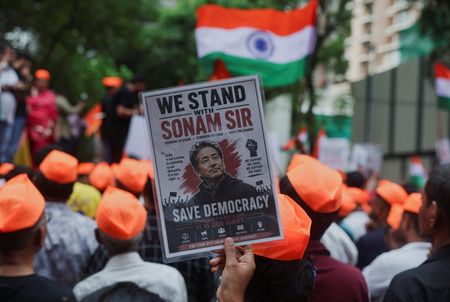

Authorities in India have blocked a planned march on the country’s parliament by followers of the youth-driven “Cockroach” movement, raising the prospect of a serious confrontation as pressure mounts for Prime Minister Narendra Modi’s education minister to resign over widespread exam paper leaks.
The movement gained renewed momentum after police forcibly transported hunger-striking activist Sonam Wangchuk to a hospital on Saturday. In the days that followed, hundreds of demonstrators gathered at a protest site in anticipation of a march timed to coincide with the opening of parliament’s monsoon session on Monday.
Though the movement first built its base largely through social media — drawing 22 million Instagram followers within days of its launch in May — it has since expanded well beyond the internet, becoming a significant political challenge for Modi’s government. The movement was originally sparked by exam paper leaks that disrupted the academic futures of millions of young people.
Wangchuk, who is 59 years old, shared his views through a message posted by his wife on the social platform X on Sunday. He described the planned march as “India’s 2nd FREEDOM MOVEMENT” and said it would stand for “freedom from injustice (like paper leaks)” and “freedom from fear (my illegal detention).”
Despite those calls to action, police announced that existing orders in the New Delhi district prohibit any gathering of five or more people, with the sole exception being a designated protest area at the Jantar Mantar observatory, where demonstrators have already been camped out for more than three weeks.
“As parliament session is commencing from 20 July, strict security arrangements are in place to ensure public safety, security of protectees, and the protection of vital government installations,” police stated on X.
The Cockroach Janta Party, however, made clear it had no intention of backing down. “The march is happening for sure. We are figuring out the rest,” said a spokesperson who declined to be identified while plans were still being finalized.
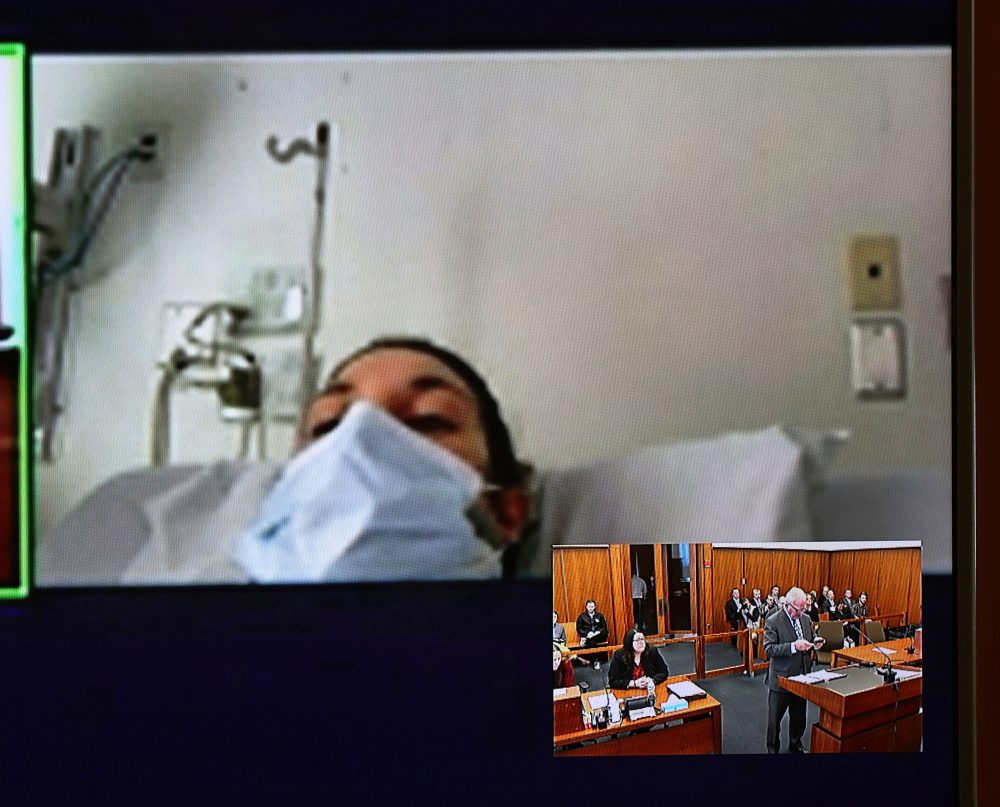
Earlier Monday, a Delhi court ruled that officials had acted within legal boundaries when they moved Wangchuk to a government-run medical facility, noting that he had not sought admission on his own despite his health declining.
Judge Mini Pushkarna stated that medical staff had provided only oral fluids and supplements with Wangchuk’s agreement, and concluded: “It cannot be said that any force is being used against Mr Sonam Wangchuk or that his bodily autonomy is being violated in any manner whatsoever.”
Wangchuk’s wife, Gitanjali Angmo, had asked the court for permission to have him transferred to the privately operated Medanta Hospital, with her legal team arguing that the family had the right to choose where he received care. The government pushed back, saying it needed to prioritize his medical wellbeing and noted that his wife and immediate family had been granted around-the-clock access to him.
Angmo took to X to express her frustration over the heavy police presence at the hospital, writing that “it is not medical care. It is illegal detention.”
Safdarjung Hospital reported that Wangchuk’s vital signs remained stable, though his blood test results were “marginally altered” and he required continuous monitoring.
The rapid rise of the Cockroach movement reflects deep frustration among India’s young population, driven by persistent high unemployment rates and repeated instances of exam papers being leaked before test day.