
WASHINGTON/CAIRO — The United States launched a new wave of airstrikes against Iran on Saturday after American military officials confirmed that two U.S. service members were killed in Jordan and a third went missing following an Iranian assault.
U.S. Central Command announced that the strikes began at 6 p.m. Eastern Time, carried out under orders from President Donald Trump.
“The strikes are designed to further degrade Iran’s ability to threaten commercial shipping in the Strait of Hormuz and swiftly punish Islamic Revolutionary Guard Corps forces who launched attacks against American service members in Jordan last night,” Central Command stated, offering no additional specifics.
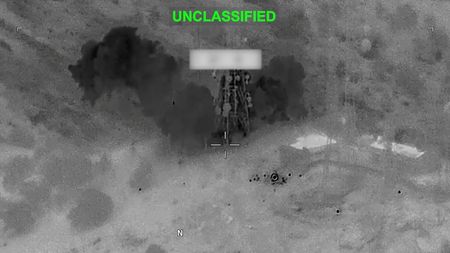
Iran’s Mehr news agency reported that a U.S. strike hit an area near Sirik in southern Iran, though it said no casualties or infrastructure damage had been reported there.
The two American deaths occurred on Friday, Central Command said. With those losses, the total number of U.S. service members killed since the conflict began has reached 16, with more than 420 others wounded.
Defense Secretary Pete Hegseth responded to the deaths on social media, writing: “Godspeed, heroes. Their sacrifice only stiffens our resolve.”
Before the latest U.S. strikes, Iran’s supreme leader issued a stark warning, saying Washington would pay for “seeking to escalate the conflict.” In a written statement distributed through official Iranian state media and his own accounts, Supreme Leader Ayatollah Mojtaba Khamenei said repeated U.S. violations of an interim ceasefire agreement had proven that President Trump’s word was “utterly worthless and devoid of credibility.”
“Now that the American enemy is seeking to escalate the conflict thereby incurring even heavier costs and further humiliation, it should know that the noble nation of Iran and the Resistance Front have unforgettable lessons in store for it,” the statement continued. The White House did not respond to a request for comment. Khamenei’s current location remains unknown.
The conflict originally broke out when the U.S. and Israel launched strikes against Iran at the end of February, aiming to neutralize its missile program and regional proxy forces. Since then, it has caused major disruptions to energy supplies worldwide and sparked an ongoing struggle for dominance over the Strait of Hormuz, through which roughly one-fifth of the world’s oil supply typically flows.
A temporary ceasefire reached about a month ago collapsed last week, and both sides have since ramped up their attacks, raising fears of a return to full-scale war.
On Saturday, Iran’s Islamic Revolutionary Guard Corps struck multiple targets across the region. Kuwait came under sustained assault, with Kuwaiti armed forces reporting that they intercepted Iranian ballistic missiles and drones. Some firefighters and oil sector workers were injured while responding to the attacks. Iran’s IRGC claimed it hit a U.S. military support center at Kuwait’s Camp Arifjan and destroyed a radar facility at Ali Al Salem Air Base. Kuwait Petroleum Corporation later confirmed that one of its oil facilities suffered significant damage and some injuries in what it described as “repeated Iranian attacks.”
Iran also targeted a site in Bahrain where U.S. combat aircraft were stationed at Sheikh Isa Air Base, as well as an intelligence data center, according to Iranian media. Additionally, Iranian state television reported that the IRGC destroyed at least two U.S. fighter aircraft and three other aircraft in a missile and drone strike on the U.S. base in Al Azraq, Jordan. Reuters was unable to independently verify those claims.
Early warning alerts went out in Saudi Arabia on Saturday morning, urging residents of Al-Kharj and Yanbu to take shelter. Al-Kharj, located east of Riyadh, hosts a military base with U.S. troops, while Yanbu on the Red Sea is home to a major oil export terminal. Two people with knowledge of the situation said an Iranian missile strike — the first on Saudi Arabia in more than three months — triggered the alerts. Saudi state media did not specify the cause, and the government did not respond to a request for comment. Iran’s IRGC made no mention of any attack on Saudi Arabia.
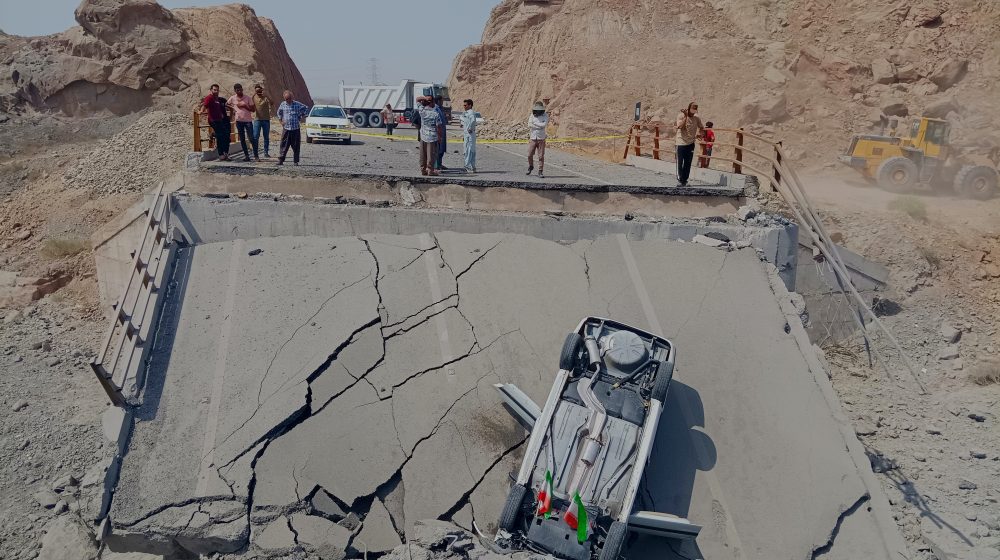
Earlier in the day, U.S. Central Command reported hitting Iranian surveillance sites, military logistics infrastructure, underground weapons storage facilities, and maritime capabilities. Airstrikes early Saturday in Iran’s southern Hormozgan province — which borders the Strait of Hormuz — killed three people and wounded eight others, while two bridges and a road tunnel were also damaged, according to Iranian state TV. Additional U.S. strikes in the same province were reported Saturday afternoon.
Iran’s Health Ministry said that over the past three weeks, U.S. strikes have killed 50 people and wounded more than 500 across the country.
Iran’s Foreign Ministry spokesperson Esmaeil Baghaei accused the United States of trying to seize control of the Strait of Hormuz. Both nations have been targeting shipping traffic in the waterway, with the U.S. describing its actions as enforcing a naval blockade and Iran saying it is targeting vessels that violate its navigation rules.
The European Union and Gulf states jointly called on Iran to immediately and unconditionally stop all attacks and interference with maritime traffic, and to keep the strait open without restrictions or fees, according to a joint statement reported by Saudi state TV.