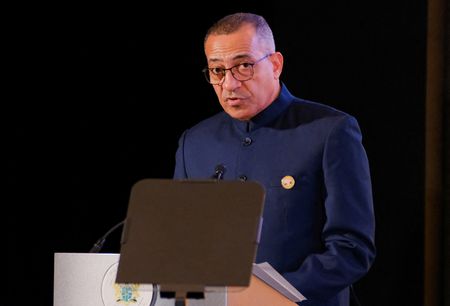

Voters in Sao Tome and Principe headed to the polls on Sunday as the tiny cocoa-producing island nation in Africa held its presidential election. Sitting president Carlos Vila Nova is hoping to secure another five-year term, though he now finds himself running without the support of the country’s most powerful political party.
Vila Nova, who previously served as a public works and infrastructure minister, first won the presidency in 2021 through a runoff election. At that time, he had the endorsement of the Independent Democratic Action party — known by its Portuguese initials, ADI — which controls a majority of seats in the National Assembly.
That alliance collapsed last year when Vila Nova removed Patrice Trovoada from the prime minister’s post. The move triggered a break with ADI, leaving Vila Nova to campaign as an independent this time around against three other candidates.
His primary opponent, Nito Abreu, has made youth employment and population retention a centerpiece of his campaign. Abreu has pledged to create more jobs for young people and address what he calls a growing trend of young residents leaving the country. Sao Tome and Principe consists of two main islands and is home to roughly 240,000 people.
The nation was once a Portuguese colony and sits off the western coast of Africa. Since adopting multiparty democracy in 1990, it has maintained a consistent record of free and peaceful elections.
That record faced a serious test in 2022 when the government announced it had foiled a coup attempt — the first in nearly 20 years. The plot reportedly involved at least one member of a South African apartheid-era militia called the Buffalo Battalion.
The Africa Center for Strategic Studies, which is affiliated with the U.S. Department of Defense, noted in a briefing that Sunday’s election represents an opportunity for the country to demonstrate that the attempted coup was, in its words, “an isolated aberration rather than an ongoing feature of national politics.”
According to the country’s election commission, there are 142,298 registered voters eligible to cast ballots. Polling locations opened at 7 a.m. local time and were set to close at 6 p.m. Early results are anticipated either late Sunday or by Monday. If no candidate receives more than 50 percent of the vote, a runoff election will follow. The country also has legislative elections scheduled for September.
Sao Tome and Principe had at one point been considered a potential oil-producing nation, but exploration efforts have not resulted in any significant discoveries.