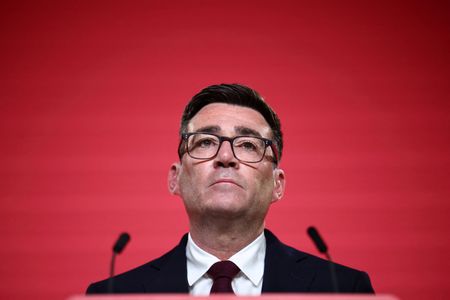

LONDON — Andy Burnham, widely known by the nickname ‘King of the North,’ was officially installed as Britain’s seventh prime minister in just ten years on Monday, pledging to fundamentally ‘rewire’ the country to address the issues that matter most to everyday citizens, including the ongoing cost-of-living crisis and struggling public services.
The transition of power began with outgoing Prime Minister Keir Starmer delivering his farewell address outside his Number 10 Downing Street office before formally submitting his resignation to King Charles. Burnham, who previously served as mayor of Greater Manchester, then met with the monarch to be formally appointed to the top job.
Now, the real work begins for the 56-year-old leader.
Burnham inherits a lengthy list of national challenges, ranging from sluggish economic growth to poorly functioning utility companies. His immediate task is revealing the makeup of his ministerial team — a decision that has already sparked considerable debate within the ruling Labour Party.
At a party address on Friday, Burnham described his rise to Labour leadership as ‘the most significant change moment in our politics for 40 years,’ and laid out an ambitious vision for transforming Britain’s political landscape to rapidly improve living standards.
‘The government I lead will confidently lay that path out starting next week,’ he told Labour lawmakers, adding that he intended to deliver the hope and change the country ‘was crying out for.’
‘It will take us to a country where life is more affordable and all people and places are lifted from where they are now,’ he continued.
Those remarks were aimed squarely at Labour members of parliament, who have increasingly viewed Burnham as one of the few figures capable of countering the rising influence of veteran Brexit campaigner Nigel Farage and his populist Reform UK party — a challenge they believed the unpopular Starmer was unable to meet.
Burnham’s most pressing early decision centers on cabinet appointments, especially the selection of a finance minister. Historically, a fractured relationship between a prime minister and their treasury chief has spelled trouble for British governments.
Energy security and net zero minister Ed Miliband had been considered a leading candidate for the finance role, but has recently faced a wave of negative behind-the-scenes briefings. Interior minister Shabana Mahmood has now emerged as the apparent frontrunner.
On Friday, Burnham urged members of his party to disregard the ‘speculation’ swirling around cabinet picks, saying he had not yet finalized his choices.
Policy moves are also drawing early attention. On Sunday, his team announced plans to abandon a proposed scheme that would have required all workers to carry a digital identity document — a measure aimed at curbing illegal migration that a cross-party parliamentary committee had labeled a ‘fiasco.’
Further scrutiny is expected over upcoming decisions on taxation, government spending, energy policy involving oil and gas, and the future of underperforming utility companies, which Burnham has indicated he wants brought under greater public oversight.
Also on Sunday, deputy Labour leader Lucy Powell — a close Burnham ally — suggested that Thames Water, a heavily indebted utility company, could be placed under ‘special measures,’ effectively putting it under government control.
‘He wants to refocus and reprioritise the government’s resources, the government’s attention onto his priorities of tackling the cost of living, really rewiring the way the country, the economy works,’ Powell told Sky News.