
Less than a month after the United States and Iran reached a preliminary agreement to end their conflict, the two nations are lurching back toward all-out war — and the fragile deal they signed appears to be in ruins.
The unraveling began on June 25, just one week after the agreement was signed, when an Iranian drone struck a cargo ship traveling through the Strait of Hormuz. No one was killed and the damage was limited, but the attack set off a cycle of strikes and counterstrikes that has steadily dismantled the foundations of the peace deal.
Red lines declared by both countries have now been crossed, and while some diplomatic efforts to salvage the agreement are still underway, the prospect of renewed full-scale war — one that could further destabilize the Middle East and shake the world economy — is growing more likely by the day.
Here is a look at how the situation deteriorated.
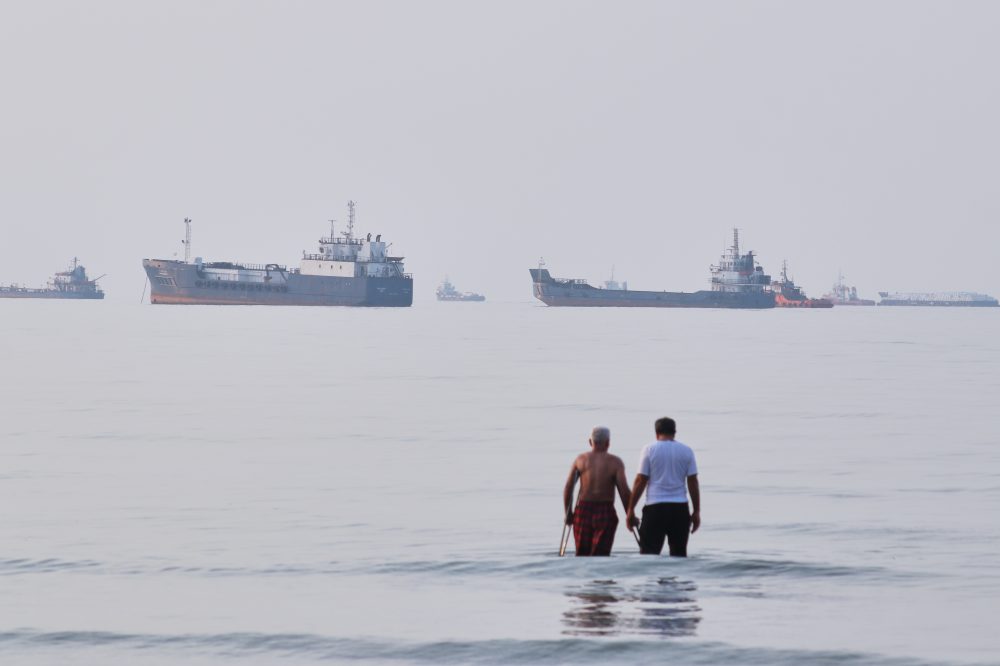
The drone attack on the cargo ship came after Iran had warned ships not to use an alternative passage through the Strait of Hormuz — a route overseen by the U.S. military and designed to operate outside of Iran’s authority.
Iran had largely closed off the strait — which in peacetime carries about one-fifth of the world’s traded oil and gas — following a surprise U.S.-Israeli attack on February 28 that triggered the war. Tehran has since treated control over the strait, and the enormous economic leverage it provides, as a critical tool in its standoff with Washington.
The preliminary deal had called for the strait to be fully reopened, but it also included language that suggested Iran could manage ship traffic and potentially collect fees going forward. Iran has latched onto that provision, arguing it has the legal right to govern the strait and that the alternative route violates the terms of the agreement.
The United States and other nations reject that interpretation, maintaining that the strait should remain open to all vessels without tolls, just as it was before the war began.
The day after the June 25 drone strike, the U.S. launched its own strikes on Iran, targeting what the military described as missile and drone storage sites and coastal radar installations.
Iran responded the next day by attacking a tanker using the alternative route. The U.S. struck back again, and Iran escalated further — this time hitting nearby Gulf states, launching attacks on Kuwait and Bahrain, both of which are home to American military personnel.
The following week, both sides stepped back from the brink and sent delegations to Qatar, which had played a central role in brokering the original agreement. However, the two sides did not hold direct talks.
Iran repeated its warnings against use of the alternative route as it prepared for the multi-day funeral of Supreme Leader Ayatollah Ali Khamenei, who had been killed in the opening U.S.-Israeli strikes of the war. The funeral began on July 4, drawing large crowds calling for revenge against U.S. President Donald Trump.
Days after the funeral, Iran struck three ships in the Strait of Hormuz.
The U.S. responded with a broad wave of strikes it said targeted Iranian air defense systems, radar installations, and more than 60 small watercraft operated by Iran’s paramilitary Revolutionary Guard — vessels that have been used to harass commercial ships in the strait.
Washington also revoked a waiver that had allowed Iran to sell its oil on international markets in U.S. dollars for the first time in years. That waiver had been a key component of the interim deal.
Iran condemned both the strikes and the reimposition of oil sanctions as violations of the agreement, while continuing to insist on its right to control the strait — which its military leadership has called an “unbreakable red line.” Iran also widened its retaliatory strikes to include Bahrain, Kuwait, and even Qatar, the country that had served as a mediator.
President Trump, speaking after departing a NATO summit, sent mixed signals. He warned that the U.S. strikes were a direct response to attacks on shipping and cautioned that “if it happens again, it will get much worse!” At the same time, he appeared to rule out a prolonged military campaign, saying “anything that happens is going to happen very fast.” He also hinted that the U.S. military might “just finish the job.”
The conflict has continued to intensify. On Wednesday, the U.S. reinstated its blockade on Iranian ports, which had been suspended under the interim agreement. In recent days, American strikes have expanded into northern Iran, hitting targets well beyond the strait region. On Friday, the U.S. struck bridges and power stations in southern Iran, including a communications tower it said was used by the Revolutionary Guard to monitor maritime activity at one of Iran’s main ports.
Iran reported Friday that U.S. strikes since the resumption of hostilities have killed at least 46 people and left more than 400 others wounded.
Trump has repeatedly threatened to go after civilian infrastructure in Iran — at one point earlier in the war vowing to destroy Iran’s “whole civilization” — though he had consistently pulled back from those threats when diplomatic progress appeared possible.
Iran’s leadership may now believe yet another boundary has been crossed. On Friday and again on Saturday, Iran attacked a water desalination plant in Kuwait, a country with an extremely dry climate that depends heavily on such facilities.
Trump has also floated the idea of seizing control of the strait by force, potentially by taking over one or more strategic islands currently held by Iran — a move that analysts say would require a significantly larger naval force and possibly tens of thousands of ground troops.