
CHERNOBYL, Ukraine (AP) — They came to tackle history’s most devastating nuclear disaster.
After the catastrophic explosion and blaze at the Chernobyl nuclear facility on April 26, 1986, military personnel, emergency responders, construction specialists, mining experts and healthcare workers were called from throughout the Soviet Union. These individuals became known as “liquidators” — a grim Soviet designation for personnel tasked with resolving critical emergencies.
Across a four-year period, 600,000 individuals participated in the hazardous remediation effort. Aircraft circled overhead the exposed radioactive reactor core, releasing sand and additional substances to extinguish the flames. Personnel removed radioactive particles from structures and streets, disposed of contaminated equipment, eliminated forests and even tracked wildlife to prevent radiation dispersal.
Most possessed minimal understanding of the hazards they encountered.
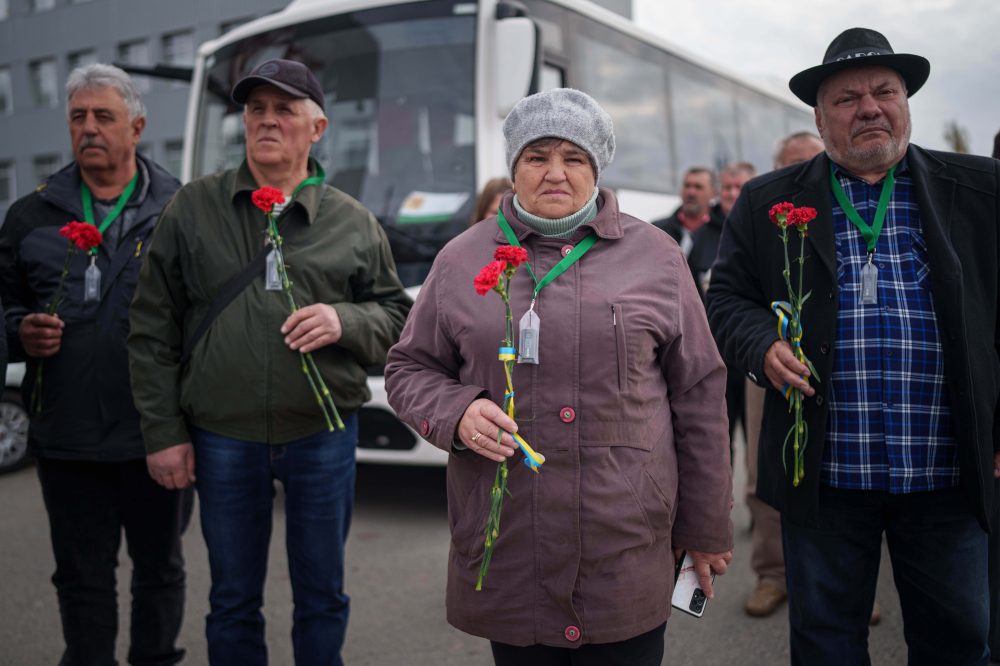
A delegation of these workers residing in Ukraine’s Poltava region made a journey before the disaster’s 40th commemoration for a single-day visit to Chernobyl, spelled “Chornobyl” in their native tongue.
They discussed their unwavering commitment to service, the losses they experienced, and a disaster that continues to affect Ukraine.
Prylipko arrived nine days following the explosion and operated a firefighting vehicle for one month, completing two-hour rotations to minimize radiation contact. He was initially unaware of the dangers but experienced a severe health emergency in 1990 and remained unable to work for twelve months.
Visiting for the first time since his assignment, he found the terrain confusing, with communities eliminated and the reactor encased in protective barriers.
“Back then, the whole place was packed: machinery, helicopters, they were everywhere,” he said. “The road to Kyiv was so crowded you couldn’t pass anyone.”
During summer 1986, Anatolii Krutik was assigned with an army unit to establish barriers around contaminated regions and create “exclusion zones.” He initially traveled to communities in present-day Belarus, which also experienced significant radioactive contamination, before proceeding to Chernobyl to sanitize areas surrounding operational reactors.
During that period, he explained, fear was largely absent.
“No one really thought about it. We didn’t know what it was — this invisible enemy,” he said, adding his comrades saw it simply as their duty after being mobilized.
However, safety measures were virtually nonexistent, Krutik explained, with personnel wearing their arrival clothing and departing in identical garments, without any decontamination protocols.
Vechirko was also dispatched to Chernobyl during summer 1986 to remove contaminated soil, sanitize structures and secure the remaining operational reactors at the location. He has experienced illness throughout much of his life, which he connects to his disaster site work, including persistent vertigo, fatigue and regular discomfort. Due to his declining health, he explained, he lost contact with former colleagues.
“Being back here now, the emotions are overwhelming,” he said. “It’s incredibly sad to compare what this place was to what it is now.”
Between May and September 1986, Harbyz, a medical professional and dental specialist, provided patient care while his unit conducted decontamination operations. He also served in Belarus, which exposed him to the human toll of the catastrophe.
Returning for the first time in decades, he remembered colleagues who have died and the connections established among survivors.
“This 40th anniversary represents both a deep tragedy and a vital chance to reunite with my brothers-in-arms,” he said. “So many of our colleagues have passed away over the years, but those of us remaining hold on. Being back here for the first time in 40 years is overwhelming. I feel a deep sense of pain, and it brings tears to my eyes. It is good that we can meet like this.”
Emergency responder Mykola Chudak worked for six months starting in November 1986, operating within 10 kilometers (6 miles) of the facility.
He emphasized not his personal contributions but the initial emergency personnel who responded immediately, stating they averted a much larger disaster, frequently sacrificing their lives. His assignment was prolonged due to insufficient replacements, and years afterward he was compelled into early retirement because of disability.
For him, Chernobyl holds both individual and patriotic importance.
“Ukraine must always be grateful to the heroes of Chernobyl,” he said. “Being back here, my first feeling is one of immense gratitude for the sacrifice made by my comrades. In many ways, the independence of Ukraine was born on April 26, 1986, in Chernobyl. Without their heroism, an independent Ukraine might not even exist today.”
Lebedynets worked in the armed forces from 1986 to 1991, constructing barriers in contaminated zones. He experienced chronic headaches for the remainder of his life. During his return visit, he paused at Pripyat, the adjacent city for Chernobyl’s employees that has remained vacant since the incident.
“It’s heartbreaking to see Pripyat now,” he said. “I remember those houses when they were full of life, and now everything is overgrown and in ruins. It was such a beautiful city.”
He made connections with Ukraine’s current Russian conflict. “Today’s war is different: You see bullets flying and shells exploding,” he said. “Back then, the enemy was invisible. It tore you up from the inside and shattered your health.”
Tolumnyi explained his firefighting experience from 1987 to 1988 influenced his life and remains fundamental to who he is. He participated in decontaminating structures and machinery in Pripyat. Upon his return, he described experiencing both anguish and appreciation.
For him, Chernobyl’s importance extends beyond the immediate context.
“Those who do not remember the past have no future. I am confident in our country — we have a future because people remember the past,” he said. “The memories are flooding back, but this is our history, and you can’t simply erase it. On the other hand, I also feel a sense of gratitude that I was able to see this place again in my lifetime.”
Buriak worked in a specialized Interior Ministry division in 1988, monitoring Pripyat and surrounding areas to prevent theft. His responsibilities included protecting vacant buildings.
He explained his return journey reconnected him with the sense of responsibility he experienced, while numerous liquidators continue seeking acknowledgment.
“Returning here after 40 years is a massive adrenaline rush for me. It brings back so many memories of my youth and what life was like during those times,” he said. “It was important for me to come back to remember those years and to show my son where I fulfilled my duty to my country.”
In 1989, Taranenko worked as a security specialist, protecting facilities and vacant residences. Assignments were brief due to radiation exposure, and commands were executed without questioning. He has visited multiple times since, despite the sorrow that comes with each trip.
“Back then, that was just how it was: If you were needed, you went,” he said.
He explained he continues receiving treatment for health issues at a veterans medical facility in Poltava and maintains his physical fitness.
“We are military people — once a soldier, always a soldier. That’s how I live my life. You have to hold yourself together,” he said. “You can’t just give up.”
Hluhovstov was deployed to Ukraine and Belarus, where extensive areas required barriers due to soil radiation and abandoned structures.
With grim humor, he laughs about his numerous health conditions. “As my wife says, I have a whole bouquet of ailments,” he says.
Following weeks of hospitalization this year, he recovered and expressed hope to witness Ukraine repel the Russian attack.
“The doctors didn’t know what to do with me, but thank God I survived,” he said. “Now I just hope to live long enough to see the end of this war — long enough to see victory.”