
KAMPALA, Uganda — Ugandan lawmakers are reviewing controversial legislation designed to prevent outside interference that has sparked fierce opposition from multiple sectors of society concerned about its sweeping scope and potential impact on civil liberties.
The proposed “Protection of Sovereignty” legislation could receive parliamentary approval within days, despite strong objections from financial institutions, business groups, opposition politicians, and nonprofit organizations that rely on international funding.
Opposition voices argue the measure is actually designed to suppress political rivals and advocacy organizations that typically receive international grants to support governance and human rights initiatives, representing what they view as escalating authoritarian control.
Political analyst Charles Onyango-Obbo described the proposed law’s provisions as having “unprecedented” scope and impact. “They redefine who is foreign,” he stated. “They extend control from politics into everyday economic and social life.”
Under the proposed legislation’s broad interpretation, a “foreigner” encompasses not only non-citizens but also “a Ugandan citizen residing outside Uganda,” along with various other individuals and entities not based within the East African nation. This classification would affect students, entrepreneurs, migrant workers, diplomatic personnel, and other expatriates.
Should the measure pass unchanged, Ugandans living overseas would need to register as foreign representatives to prevent banking transaction delays, with financial institutions facing penalties for non-compliance.
Government supporters defend the proposal as necessary for maintaining national unity and protecting against external actors seeking to meddle in Uganda’s domestic matters. Critics contend the law would directly or indirectly impact virtually every Ugandan citizen whether at home or abroad.
“It does not protect sovereignty,” declared Isaac Ssemakadde, president of the Uganda Law Society. “It destroys the sovereignty — the people’s right to self-determination — that belongs to Ugandans.”
The proposed law would prohibit foreign representatives from receiving grants or financial assistance from external sources exceeding 400 million Ugandan shillings — approximately $110,000 currently — during any 12-month period without interior ministry authorization.
The Uganda Bankers’ Association expressed concerns to the attorney general’s office about potential consequences for banking operations, including the introduction of additional regulatory bodies beyond the central bank, damage to foreign investment, and creation of uncertainty for commercial lenders.
Since most commercial banks have international shareholders and engage in offshore borrowing, “compliance and reputational risk rise overnight” when standard banking activities trigger foreign agent classifications, the association noted.
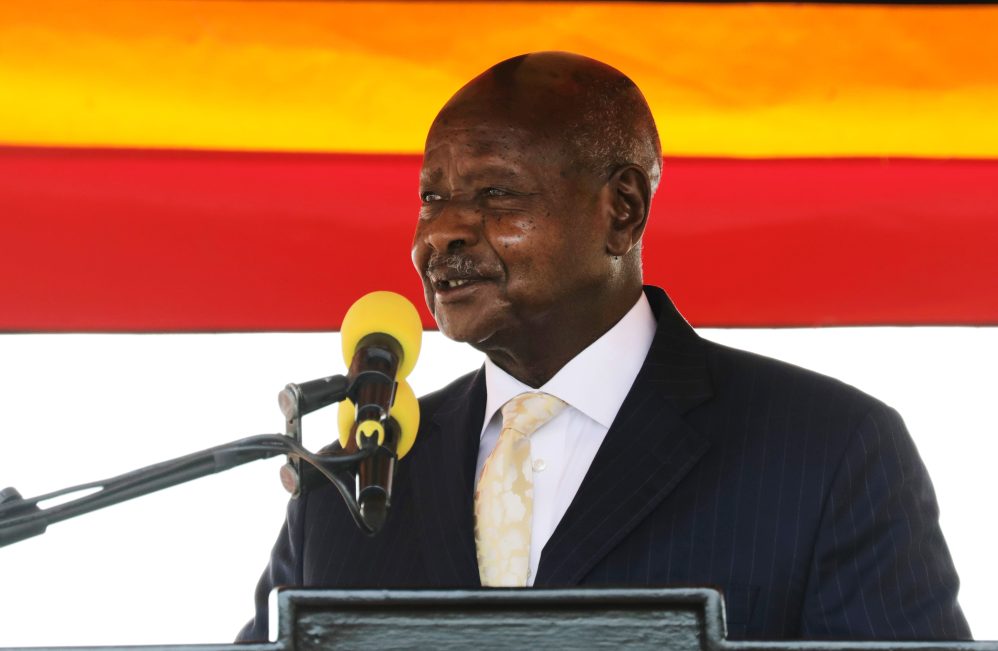
Civil society leaders have strongly criticized the legislation, which emerges months after President Yoweri Museveni secured his seventh electoral victory. Museveni has consistently accused his primary challenger, Bobi Wine, of being an unpatriotic foreign operative. The 81-year-old authoritarian leader has maintained power since 1986.
“If you want to regulate and close civil society, go in the NGO Act and put that,” Sarah Bireete, director of the Center for Constitutional Governance, told journalists. “If you want to deregister civil society in Uganda, go to the constitution, amend it and say there will be no civil society in Uganda. But to hide behind protection of sovereignty, that you want to control civil society, why don’t you go to the law managing civil society and amend it?”
Wine, who went underground following January’s election and is currently in temporary U.S. exile, rejects the accusations and maintains that Museveni should face consequences for abuses during his lengthy tenure. Wine, who enjoys substantial support among urban youth, officially received 24.7% of votes in results he dismissed as fraudulent.