
Russian President Vladimir Putin has directed the country’s primary intelligence training facility to restore the name of Felix Dzerzhinsky, the controversial figure who established the Soviet Union’s brutal secret police apparatus following the 1917 revolution.
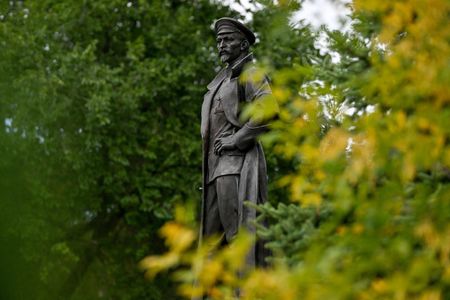
Known as “Iron Felix,” Dzerzhinsky was a Polish aristocrat who became a revolutionary and helped create the oppressive security system that would later be expanded under Josef Stalin. While Russian dissidents view him as a symbol of tyranny, current intelligence officials in Putin’s administration regard him as a heroic figure.
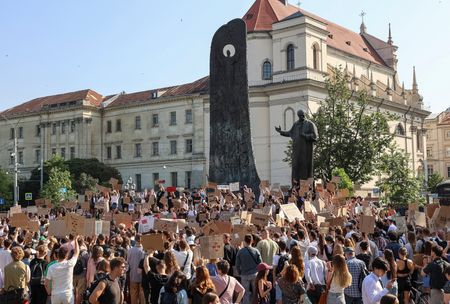
The fall of communist regimes brought symbolic rejections of Dzerzhinsky’s legacy. Celebrating crowds destroyed his statue in Warsaw, Poland in 1989 when the Berlin Wall came down. Two years later, as the Soviet Union collapsed, Moscow residents toppled his monument outside KGB headquarters at Lubyanka Square.
However, “Iron Felix” has now returned to the FSB training institution, following a similar restoration at the Foreign Intelligence Service nearly two years ago.
According to a Kremlin announcement released this week, Putin has mandated that the FSB Academy, formerly called the KGB Higher School, will now operate under the title “F.E. Dzerzhinsky Academy of the Federal Security Service.”
Putin, who served as a KGB lieutenant colonel before entering politics, justified the change by citing Dzerzhinsky’s “outstanding contribution to ensuring state security,” the official decree stated.
Historical records show the KGB Higher School previously carried Dzerzhinsky’s name from 1962 through 1993. Putin himself trained at the facility during 1979 and the early 1980s, according to his official biographical information.
Located in southern Moscow, the FSB academy operates departments covering foreign languages, information security, counterintelligence, operational support, applied mathematics, and specialized equipment.
**REVOLUTIONARY ENFORCER**
Many Russians interpret Dzerzhinsky’s return as evidence of increasing authoritarian control during wartime and Russia’s complete break from its post-Soviet efforts to align with Western nations.
Serving as one of Vladimir Lenin’s most devoted supporters, Dzerzhinsky helped consolidate revolutionary power through merciless Leninist methods: savage persecution of enemies and anyone merely suspected of opposition.
From 1917 until his death in 1926, Dzerzhinsky directed the secret police operations for both Lenin and Stalin, orchestrating the campaign of fear, arrests, violence and killings that became infamous as the “Red Terror.”
He created the All-Russian Extraordinary Commission, called the Cheka, which carried out widespread executions without trial during the Civil War period.
His influence remains so significant that contemporary Russian intelligence operatives still identify themselves as Chekists, referencing his security organization, and honor Dzerzhinsky as “Chekist no. 1.”
Some officials anticipate Dzerzhinsky may eventually return to the FSB’s main Lubyanka Square location.
“After the return of Dzerzhinsky to the FSB Academy, many really await the return of Felix Edmundovich (Dzerzhinsky’s) statue to its rightful place on Lubyanka,” said Igor Korotchenko, editor-in-chief of the National Defence magazine.