
HAVANA (AP) — These days, Eduvirgen Zamora keeps her hands concealed due to embarrassment.
Her fingernails are bitten down to the quick, with only her thumbs sporting inch-long extensions decorated with elaborate silver patterns.
As Cuba’s economic crisis continues, the 56-year-old cafeteria employee couldn’t afford fresh nail extensions and chose to invest in eyelash treatments instead – a more affordable option she hoped would redirect attention to her face.
Critical shortages of electricity, water, and financial resources, combined with U.S. energy sanctions, have worsened poverty and hunger throughout the nation while persistent blackouts continue. Even wealthier residents are now abandoning long-standing and cherished habits as they adjust to increasingly harsh circumstances.
“The Cuban woman likes to look beautiful — to do her hair, do her nails, do her feet — and wear perfume,” Zamora said. “I don’t look how I would like to look.”
Melina Colás understands that struggle.
The Havana-based nail technician recently got long braided hair for her birthday celebration but soon discovered the style was challenging to maintain due to persistent water shortages.
She previously kept her hair long and straightened but has chosen to cut it short and embrace its natural texture, despite believing it doesn’t complement what she described as her petite frame and round facial features.
“Before, you could do whatever you wanted,” she said of hairstyles when water was readily available. “Not now.”
Colás has also modified her salon procedures.
She has developed greater patience, understanding that clients arrive late due to limited public transit options.
She now uses a water-vinegar mixture in spray bottles to address water shortages – a solution she says also helps soften customers’ cuticles and prevents increasing fungal infections as intervals between manicure visits extend for many clients.
“Some cases are critical,” Colás said.
She also expressed concern about how the island’s financial crisis and reduced household budgets have caused customer numbers to decline, a pattern that 50-year-old hairstylist Betty Ramírez Aldana has also observed.
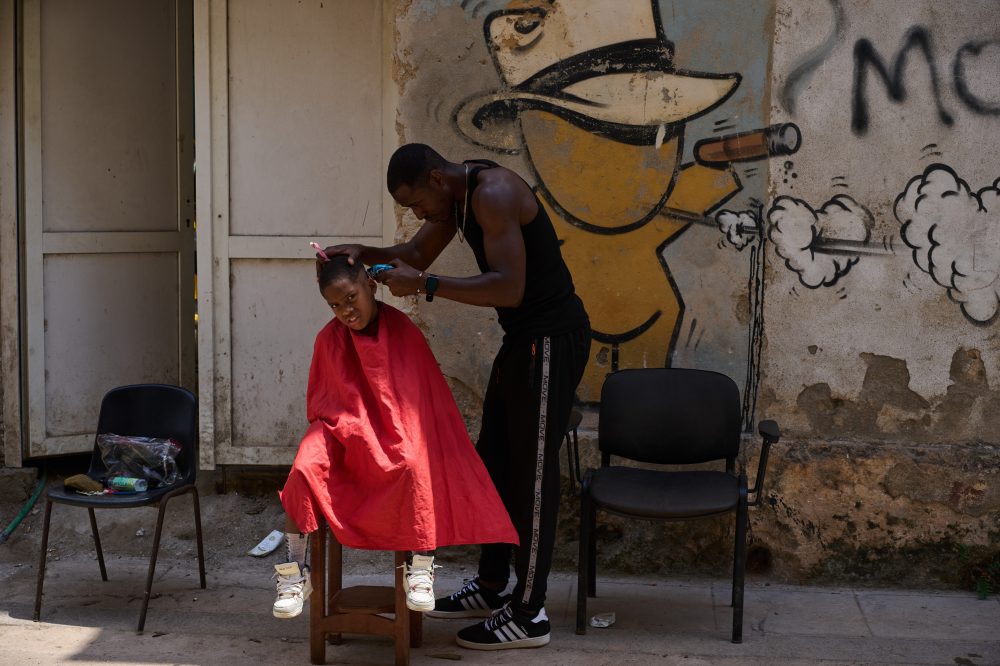
“It really came as a shock to me, because I’ve lost a lot of clients,” he said on a recent afternoon at a makeshift hair salon with bubblegum pink walls. “Normally by now I’d have five, six, eight clients. Look at the hour. And no one has showed up.”
His salon recently went three weeks without running water, since electrical power operates many pump stations across the island and severe outages are routine. He can no longer offer certain hair straightening services, so he provides clients with alternatives including flattering haircuts.
“A lot of them have opted to embrace their natural curly hair,” he said.
Growing numbers of women have also been compelled to let their hair color grow out due to gasoline shortages, inadequate public transportation, and shrinking household budgets, Ramírez explained.
Those with sufficient funds request house calls, where the original client is typically joined “by her aunt and the upstairs neighbor. I don’t serve one, I serve two or three,” he said.
Beyond appearance concerns, Cubans are also struggling with compromised basic hygiene: some report washing their hair only twice monthly, and clothing remains unwashed for extended periods.
Antonia Isalgués Barrién, 60, who operates boats for a government company traveling from eastern Havana to the city center, explained she air-dries her work clothes daily after boat shifts because she lacks water for washing.
“It’s very hot here in Cuba; you sweat a lot,” she said, recalling how she used to wash clothes nearly daily. “I’ve never been forced to hang clothes in the fresh air… and then put them on again.”
Isalgués noted increased passenger numbers as more gas stations close and only limited public buses continue operating.
Cuba endured three months without fuel deliveries until a Russian tanker arrived in late March carrying 730,000 barrels of oil. This supply is projected to last merely nine or 10 days.
Iván de los Ángeles Arias, a 44-year-old boat operator, frequently takes the five-minute ferry ride across Havana Bay, reserving his personal vehicle solely for emergencies.
“That’s the reality we’re forced to live,” he said. “You deal with it as best you can.”
U.S. diplomatic officials traveled to Cuba earlier this month for meetings with senior government representatives for the first time since 2016 while tensions between both nations remain elevated.
Cuban leadership identified removing the U.S. energy embargo as their delegation’s primary objective, characterizing it as an “act of economic coercion” and “unjustified punishment.”
In late January, shortly after U.S. intervention in Venezuela stopped crucial oil deliveries to Cuba, President Donald Trump threatened tariffs against any nation selling or supplying oil to Cuba, which domestically produces only 40% of its energy requirements.
The United States has demanded an end to political oppression, release of political detainees, and economic liberalization of the island’s failing economy as conditions for lifting Cuban sanctions.
Arias, the boat operator, expressed doubt that diplomatic discussions would improve his situation.
“I have no hope,” he said. “That means nothing if living conditions remain the same.”