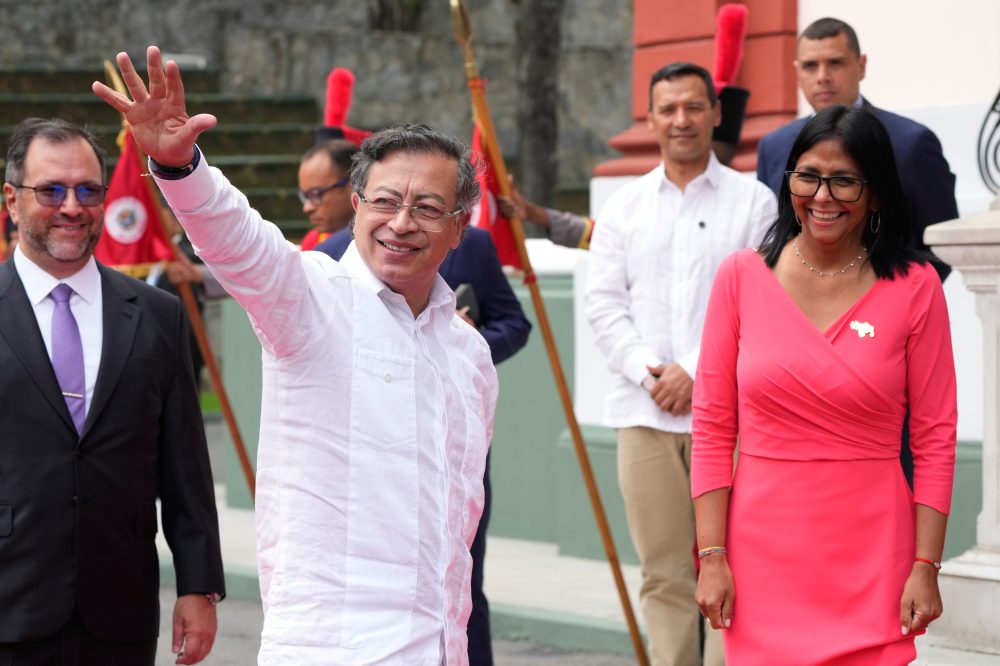

CARACAS, Venezuela — Colombian President Gustavo Petro arrived at Venezuela’s presidential palace Friday for crucial discussions with acting President Delcy Rodríguez, marking their first face-to-face meeting since the U.S. military detained former Venezuelan leader Nicolás Maduro and his spouse at their residence in January.
The diplomatic encounter at the Miraflores palace was designed to address a wide range of shared concerns between the neighboring nations, including cross-border migration issues, security cooperation, trade relationships, and industrial partnerships.
Originally scheduled for last month at the countries’ shared frontier, the high-level talks were suddenly postponed by both governments, who cited “force majeure” circumstances without providing additional details, stating only that the meeting would be rescheduled.
Prior to Friday’s discussions, Petro revealed that his team, featuring senior military and law enforcement commanders, would prioritize border security matters with Rodríguez during their talks.
Special attention was directed toward the volatile Catatumbo area, where competing armed factions battle for territorial dominance. Petro emphasized the critical need for “close collaboration on intelligence,” cautioning that without proper coordination, “bombs land in the wrong places … and end up killing civilians.”
Relations between the two South American neighbors have remained strained for years. Following Venezuela’s disputed July 2024 presidential election that sparked demonstrations and subsequent government crackdowns, Petro refused to acknowledge Maduro’s claimed victory. Despite this stance, Colombia continued maintaining diplomatic channels with Caracas.
Colombian officials stated that Friday’s Petro-Rodríguez summit was intended to “contribute to a resolution of Venezuela’s political crisis.”
The path forward, however, remains uncertain.
According to Ronal Rodríguez Durán, who studies Venezuelan affairs at Universidad del Rosario’s Venezuela Observatory, Petro’s ability to broker meaningful change appears constrained, particularly since his presidential term concludes in August. Colombia’s future relationship with Venezuela will likely depend significantly on whoever assumes Colombian leadership next.