
CASABLANCA, Morocco — A massive $700 million skyscraper has officially opened in Morocco’s capital region this week, representing the nation’s ambitious drive to strengthen its position on the world stage.
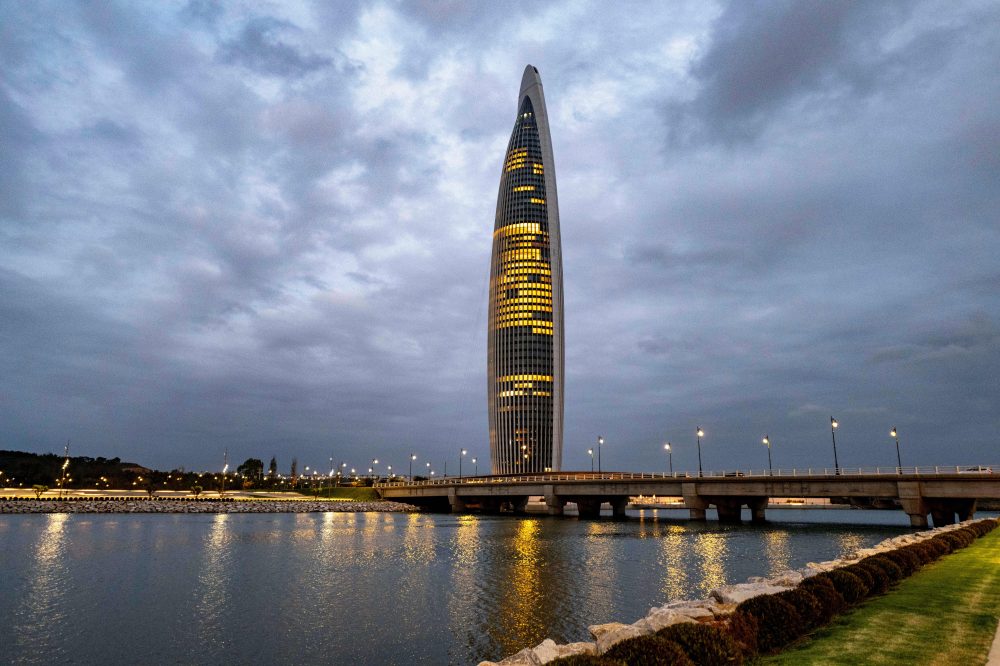
The 55-story Mohammed VI Tower, reaching 820 feet into the sky and designed to resemble a rocket preparing for launch, will house a high-end Waldorf Astoria hotel along with office spaces, retail establishments, dining venues, and premium residential units.
According to Leila Haddaoui, director of development company O Tower, the structure ranks among Africa’s tallest buildings and is projected to create 450 direct employment opportunities plus 3,500 additional indirect positions.
Located in Salé, which neighbors the capital city of Rabat, the construction project spanned eight years and employed more than 2,500 workers representing over a dozen nations. The building has gained such prominence that it now graces Morocco’s 200-dirham banknote, worth approximately $20.
The tower sits adjacent to the Grand Theatre of Rabat, a creation of the renowned late architect Zaha Hadid, and provides panoramic vistas of both the Atlantic coastline and the neighboring cities.
“Morocco is positioning Rabat and Salé — often overlooked by tourists — on the international stage, as part of a broader tourism push,” Haddaoui explained to reporters.
As the most visited nation in Africa, Morocco depends heavily on its tourism sector and continues seeking ways to draw more international visitors, particularly as regional tensions may drive travelers toward destinations perceived as more stable. This initiative gains additional significance as the country prepares for its role as co-host of the 2030 FIFA World Cup.
The tower’s creators view the newly inaugurated structure as an emblem of Morocco’s increasing influence throughout Africa and the Middle East, reflecting the nation’s goal to establish itself as a dominant regional force through major development initiatives designed to expand its reach.
However, some observers argue that such progress remains concentrated along Morocco’s Atlantic coastline while interior regions continue to lack adequate development. Youth-led demonstrations last year brought attention to concerns about widespread joblessness and inadequate public services.
The building, encompassing more than 102,800 square meters (approximately 1.1 million square feet), was the brainchild of 93-year-old billionaire Othmane Benjelloun, who controls Bank of Africa, a formerly government-owned Moroccan financial institution that now wields considerable influence throughout the continent.
Tower management reports that the businessman’s inspiration for the skyscraper originated from his 1969 invitation by NASA to participate in a spaceflight simulation conducted before the Apollo 12 lunar mission.