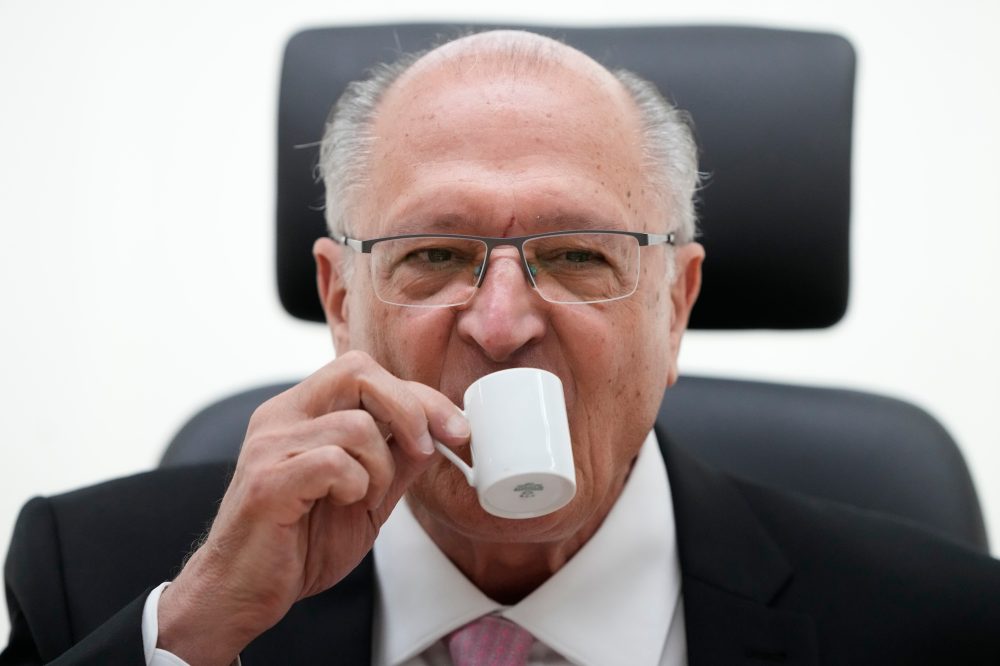

Brazil’s Vice President Geraldo Alckmin, who played a central role in negotiating the historic trade agreement between the Mercosur bloc and European Union, believes the pact provides much-needed stability during uncertain global times.
Speaking from the presidential palace in Brasilia on Wednesday, Alckmin told reporters including The Associated Press that the agreement sends an important signal about international cooperation.
“In a moment that the world much needed it, at a time of protectionism, a tough world, this gives a message that it is possible to open markets,” Alckmin stated. “It is the biggest deal between trade blocs in the world. A market of $22 trillion and 720 million people.”
The groundbreaking pact, which concludes 25 years of negotiations, is scheduled to take provisional effect on May 1, 2025. However, the path to implementation has faced significant hurdles from European agricultural interests and environmental activists who strongly opposed the December agreement.
Additional complications arose when European Union legislators referred the deal to the bloc’s court system. In response, EU leadership decided to move forward with provisional implementation, bypassing the European Parliament. Should the European Court of Justice ultimately reject the agreement, it would be suspended.
Alckmin emphasized that failing to complete negotiations with Europe would have left Mercosur countries at a disadvantage while competitors secured their own international agreements.
“It is a win-win. The societies of the Mercosur countries win, and so the 27 countries of the EU,” Alckmin explained, projecting that Brazilian exports to European markets could increase by approximately 13% annually.
The cross-Atlantic agreement received formal signatures on January 17. European Commission President Ursula von der Leyen has consistently praised Brazilian President Luiz Inácio Lula da Silva’s government for pushing the deal forward despite European resistance. Brazil represents the dominant economic force within Mercosur, with an estimated gross domestic product exceeding $2.3 trillion for 2025.
According to Alckmin, Brazil is also pursuing potential trade agreements with the United Arab Emirates and Canada.
The current partnership between Alckmin and Lula represents a dramatic political transformation. Twenty years ago, the two politicians stood on opposing sides of most policy debates, including the original EU-Mercosur negotiations. While Alckmin, then serving as governor of São Paulo state, supported European partnerships, Lula opposed such arrangements.
Their political alliance formed in 2022 when both leaders united to defeat then-President Jair Bolsonaro, whom they viewed as threatening Brazilian democracy. Both politicians moved toward centrist positions, and Lula appointed Alckmin as trade and industry minister, making him a primary government negotiator.
Although Lula’s 2022 electoral victory for a third non-consecutive presidency didn’t guarantee the Mercosur-EU deal’s success, discussions gained renewed urgency after President Donald Trump returned to office and implemented tariffs affecting multiple nations, including Brazil.
French President Emmanuel Macron, among the agreement’s critics, has insisted on protective measures to prevent major economic disruption within the EU, stricter regulations for Mercosur nations including pesticide limitations, and enhanced inspection procedures for imports entering European ports.
Alckmin dismissed claims from some EU agricultural groups that Mercosur countries show less commitment to environmental protection.
“If there’s one country that is a role model of environmental preservation, that is Brazil … Brazil reduced deforestation in 50%,” Alckmin declared.
“So no one is too scared in either side, if there’s an import boom any of the two (blocs) can ask for safeguards,” he continued.
Complete implementation of the trade deal may require up to 12 years, which Alckmin considers essential for allowing Mercosur businesses to enhance productivity and improve quality across thousands of products. He identified the fruit, beef, and sugar sectors as likely early beneficiaries, with additional industries gaining advantages over time.
“It is better to do it gradually than not do it at all,” Alckmin concluded. “This was a very well-built deal.”