
When residents of South Africa’s most populated province turn on their taps or step into the shower, six out of every ten drops likely originated in the mountainous kingdom of Lesotho, their tiny landlocked neighbor.
A massive new bridge that opened this week will strengthen this vital water partnership, allowing one of the world’s poorest nations to almost double its water sales to South Africa’s major industrial center. The increased revenue will provide crucial income for Lesotho, where half of all residents struggle below the poverty threshold.
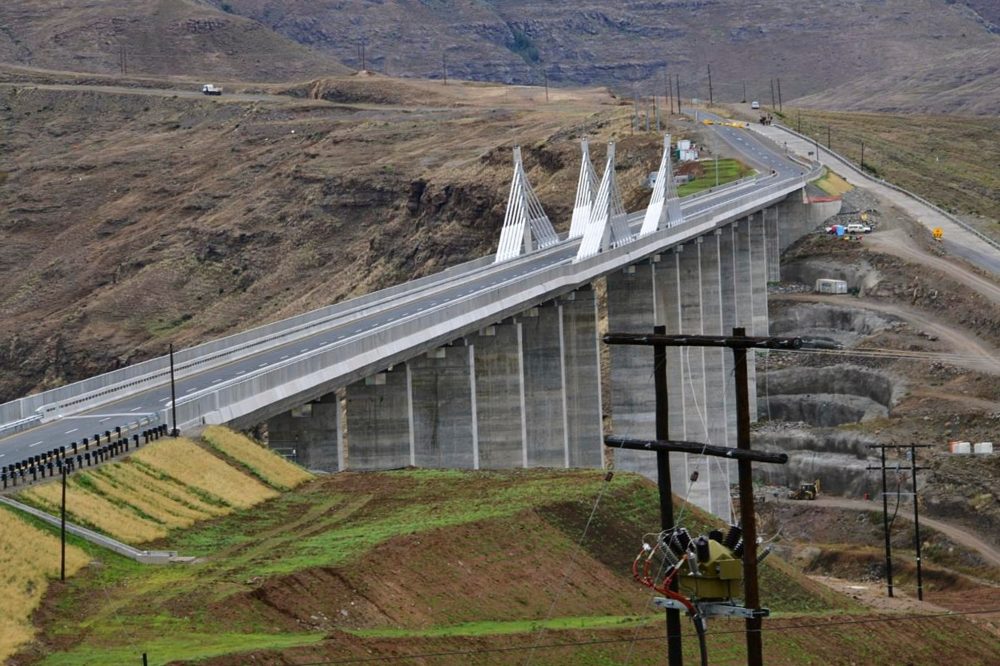
Stretching 825 meters long and towering 90 meters above the landscape, the Senqu Bridge represents a key component of the Lesotho Highlands Water Project. This infrastructure will boost annual water transfers from the current 780 million cubic meters to more than 1,270 billion cubic meters.
The bridge spans across the future reservoir of the still-under-construction Polihali Dam, guaranteeing uninterrupted transportation once water levels reach their planned height.
This transboundary water initiative ranks among the world’s largest such projects and represents South Africa’s biggest international investment ever. Beyond water transfers, the project enhances Lesotho’s hydroelectric capacity, strengthening energy independence and decreasing dependence on imported power.
Project expenses currently exceed 53 billion rands ($3.2 billion), featuring more than 120 kilometers of underground tunnels that direct water from Lesotho’s highland areas into South African waterways. Initial construction started in 1990 following a 1986 agreement between both nations, with the current second phase scheduled for completion between 2028 and 2029.
The 2.4 billion-rand ($144-million) bridge stands as the largest among three bridges supporting water infrastructure in the country’s northeastern region. Engineers celebrate it as a remarkable achievement, constructed at an elevation exceeding 2,500 meters above sea level.
“South Africa is a water-scarce country and the waters of Lesotho’s highlands are vital to our country’s development. We remain forever grateful to the great Basotho nation for making water resources available to us,” South Africa President Cyril Ramaphosa said during the launch of the bridge.
Bridge construction generated approximately 1,200 employment opportunities, primarily benefiting Lesotho citizens. Government officials declared an economic emergency last year as joblessness reached roughly 30%.
“The royalties and infrastructure that flow from this project are not incidental benefits. They are central to our development finance strategy,” said Lesotho Prime Minister Sam Matekane.
Outstanding construction work includes a 38-kilometer tunnel linking the Polihali and Katse water reserves.
“The project must deepen impact on the people, strengthen accountability in delivery and ensure that its benefits are not abstract but are felt in the daily lives of the people affected,” Matekane said.
Lesotho’s financial struggles have intensified due to U.S. trade penalties reaching 50% on the nation’s primary textile and mining exports. The country has also experienced significant reductions in American foreign assistance that previously supported most healthcare programs.