
WASHINGTON — Federal officials announced Friday they are implementing financial penalties against a large Chinese petroleum processing plant and approximately 40 maritime transport companies for their involvement in moving Iranian crude oil.
The action, first disclosed by The Associated Press, fulfills the Trump administration’s promise to target foreign businesses and nations conducting trade with Iran through secondary sanctions. This effort represents part of the Republican leadership’s intensified strategy to eliminate Iran’s primary income source through oil sales.
At the same time, the United States has established a physical maritime blockade this month at the Strait of Hormuz, the vital Persian Gulf shipping route essential for worldwide energy distribution.
The timing places these penalties just weeks ahead of a scheduled meeting between President Donald Trump and Chinese leader Xi Jinping in China.
Among the entities targeted Friday is the Hengli Petrochemical complex located in Dalian port, which can process approximately 400,000 barrels of crude daily, ranking it among China’s largest independent oil processing facilities.
According to Treasury Department officials, Hengli has accepted Iranian crude deliveries starting in 2023, creating revenue streams worth hundreds of millions of dollars for Iran’s armed forces.
The watchdog organization United Against Nuclear Iran identified Hengli in February 2025 as among numerous Chinese companies purchasing Iranian petroleum.
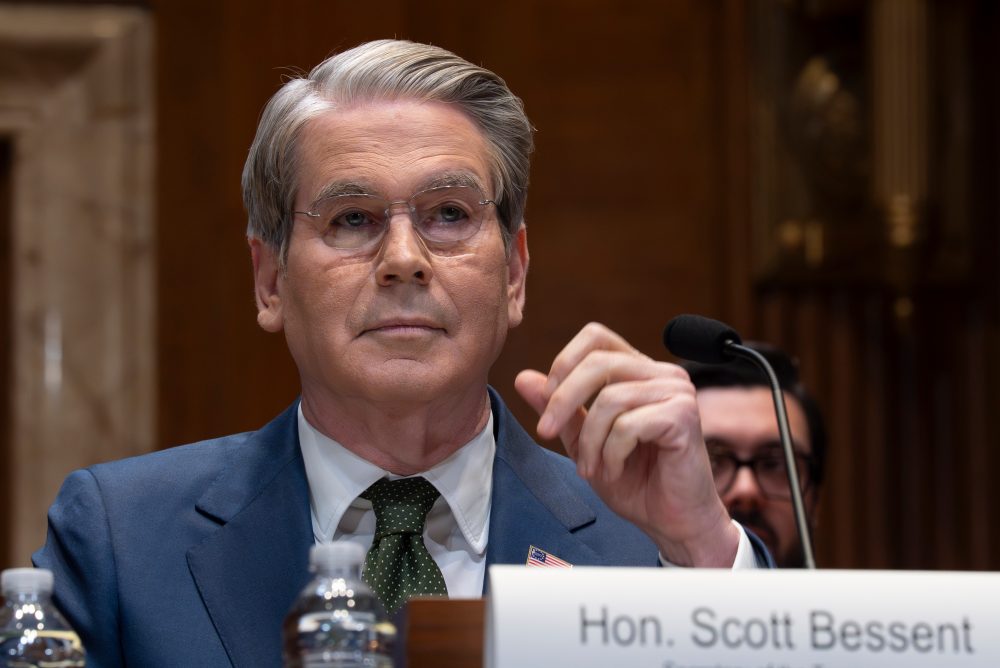
Treasury Secretary Scott Bessent stated Friday that his department “will continue to constrict the network of vessels, intermediaries and buyers Iran relies on to move its oil to global markets.”
Earlier this month, Bessent’s office delivered warnings to banking institutions across China, Hong Kong, the UAE and Oman, threatening secondary sanctions for Iranian business relationships and claiming these nations permit illicit Iranian financial activities through their banking systems.
During an April 15 White House media briefing, Bessent explained the administration has informed countries “that if you are buying Iranian oil, that if Iranian money is sitting in your banks, we are now willing to apply secondary sanctions, which is a very stern measure.”
These measures arrive amid widespread disruption in international energy markets as Persian Gulf conflicts restrict oil and natural gas shipments, driving prices sharply higher.
Treasury officials have attempted to moderate rising energy costs by issuing temporary exemptions for Russian petroleum and providing a one-time allowance for Iranian oil currently being transported.
The Associated Press sought responses from Chinese government representatives regarding the sanctions.
Following earlier U.S. penalties against another Chinese refinery for alleged Iranian oil purchases, Liu Pengyu, speaking for China’s Washington embassy, criticized the sanctions as actions that “undermine international trade order and rules, disrupt normal economic and trade exchanges, and infringe upon the legitimate rights and interests of Chinese companies and individuals.”