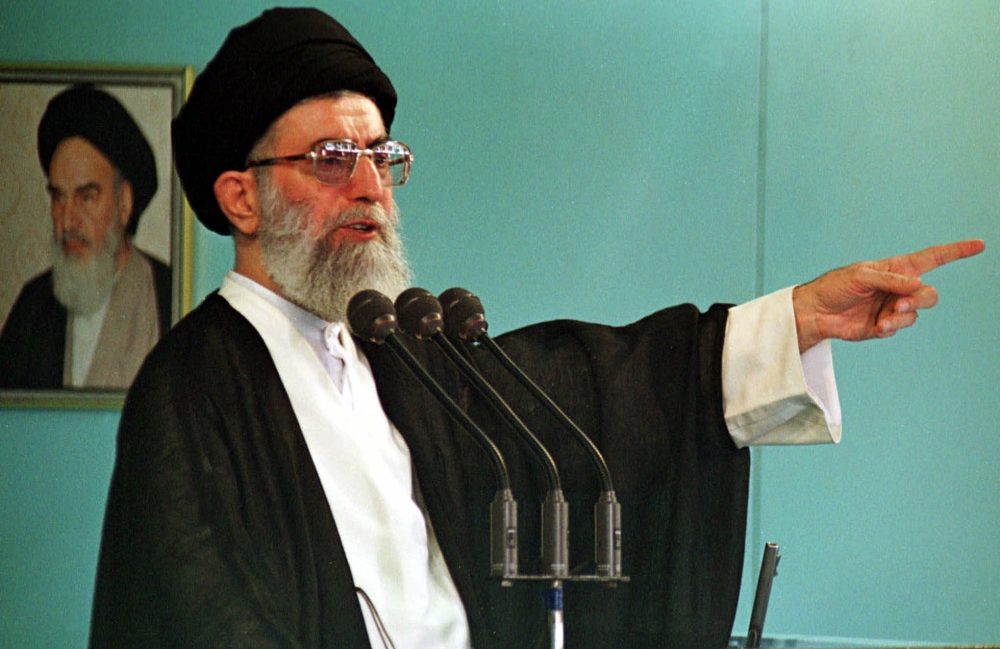

DUBAI, United Arab Emirates — For more than three decades, Ayatollah Ali Khamenei steered Iran with an iron grip, reshaping the nation into a formidable regional force while putting it on a collision course with Israel and the United States. Now, months after he was killed at the outset of the U.S.-Israeli war in Iran, his funeral is underway — a multi-day ceremony beginning Saturday.
Khamenei rose to power in 1989 following the death of Ayatollah Ruhollah Khomeini, the revolutionary cleric who had toppled the shah and established clerical rule in Iran. Where Khomeini was a firebrand ideologue, Khamenei was seen as a more rigid figure with less religious authority — yet it was his task to transform that revolutionary spirit into a functioning government.
Throughout his time in power, Khamenei threw his support behind numerous armed groups across the Middle East, pressed forward with Iran’s nuclear ambitions, and responded to multiple waves of domestic unrest with brutal crackdowns. His confrontations with the U.S. and Israel earned him support within Iran, but those same conflicts ultimately contributed to his death.
Following the Iran-Iraq war of the 1980s, Khamenei elevated the paramilitary Revolutionary Guard into the central pillar of his regime. The Guard evolved into both a military powerhouse and a massive business enterprise, becoming Iran’s most elite fighting force with deep roots in the country’s economy.
During his rule, Iran moved away from conventional military strategy, instead cultivating a network of proxy forces known as the “Axis of Resistance.” This included support for the Lebanese militant group Hezbollah, which forced Israel out of southern Lebanon in 2000 and has continued clashing with Israeli forces ever since.
Iran also backed Yemen’s Houthi rebels, who seized the country’s capital in 2014 and held it for over a decade in a grinding, unresolved conflict. The Palestinian militant group Hamas also received Iranian support in its fight against Israel in the Gaza Strip. Meanwhile, Iranian-backed militias carried out an insurgency against American forces in Iraq.
However, the chain of Middle East conflicts sparked by Hamas’ October 7, 2023, attack on Israel began to unravel the “Axis of Resistance,” leaving both Hamas and Hezbollah significantly weakened.
For years, Khamenei brushed aside United Nations sanctions and continued pushing Iran’s nuclear program forward. The U.S. and its allies have long maintained that Iran secretly pursued nuclear weapons development until 2003. Khamenei issued a verbal religious ruling — known as a fatwa — declaring nuclear weapons to be against Islamic principles, while insisting Iran would never abandon what he described as a peaceful nuclear energy program.
Under a 2015 nuclear agreement, Iran committed to sharply scaling back its uranium stockpile and enrichment activities in return for relief from sanctions. But after U.S. President Donald Trump pulled the United States out of that deal in 2018 — a move welcomed by Israel — Iran began amassing uranium enriched to levels close to weapons-grade. Both Israeli and some American officials have warned that Tehran could use that stockpile to pursue nuclear weapons if it decided to do so. The U.S.-Israeli military campaign in 2025 and the ongoing war have both included strikes on Iran’s nuclear facilities.
Political repression and a struggling economy repeatedly ignited waves of public protest throughout Khamenei’s rule. In 2009, demonstrators took to the streets after the reformist opposition alleged that hard-line President Mahmoud Ahmadinejad’s reelection was fraudulent. The government’s response left dozens dead and hundreds imprisoned.
Economic frustrations drove more protests in 2017, and in 2019, demonstrations escalated after the government raised gasoline prices. Activists say the crackdown that followed killed more than 300 people.
In 2022, the death of Mahsa Amini — a young woman who had been detained for allegedly wearing her headscarf incorrectly — ignited another round of nationwide protests. Security forces crushed the movement, killing more than 500 people and arresting tens of thousands.
Then in late 2025, economic grievances once again brought Iranians into the streets in what appeared to be the largest protest movement in the country’s history. Hundreds of thousands of people across Iran demanded an end to the Islamic Republic. Activists report that at least 7,000 people were killed in the crackdown that followed — a level of violence that shocked many Iranians.
Khamenei’s death has raised serious questions about Iran’s future. His son, Ayatollah Mojtaba Khamenei, has been selected as the next supreme leader, but reports suggest he was wounded in the strikes that killed his father and he has not appeared in public since.
As he launched the current war, President Trump urged Iranians to “take over your government.” So far, no such uprising has materialized — hard-liners have instead been gathering nightly in the streets of Tehran.
What comes next for Iran after the burial of its longtime supreme leader may hinge largely on institutions like the Revolutionary Guard, which has demonstrated time and again its willingness to use overwhelming force to hold onto power.