
NANTOU, Taiwan — Taiwan put more than 370 government and military officials through one of its most intense war preparedness exercises yet this week, simulating a terrifying cascade of crises: a Chinese naval blockade, a devastating earthquake exploited by Beijing, hijacked TV broadcasts, sabotaged power and infrastructure, a run on banks, civil unrest, and ultimately a full-scale military invasion.
The two-day drill took place in central Taiwan’s Nantou County, and Reuters was given rare, exclusive access to the closed-door exercise — the first of its kind testing whether local officials in that mountainous county, working alongside central government and military agencies, could keep the region functioning under wartime conditions.
The exercise is part of a broader effort by President Lai Ching-te to strengthen Taiwan’s readiness for conflict as Beijing’s military activity around the island continues to escalate.
Chi Lien-cheng, the minister without portfolio who oversaw the drill, spoke directly about the stakes involved. “Our adversary is right on our doorstep, just across the Taiwan Strait. That is very close,” he told Reuters.
“If you don’t defend your own country, who else will defend you? I think people are beginning to understand that,” Chi said, while also acknowledging that shortcomings remain and that real-world resources could fall short in an actual emergency. “But that’s all right. We are here to see how they carry out the exercise — whether they have the will to absorb these concepts and put them into practice.”
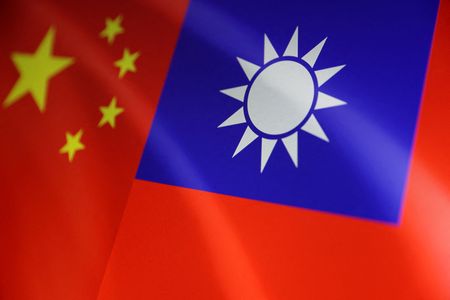
China has never ruled out using military force to bring Taiwan under its authority. Taiwan’s government maintains that only the island’s own people have the right to determine their future.
As the drill was wrapping up on Thursday, Taiwan’s military reported that China had conducted yet another “joint combat readiness patrol” around the island, deploying warships and at least 22 military aircraft, among them nuclear-capable H-6 bombers.
China’s Taiwan Affairs Office accused President Lai of deliberately stoking tensions. Spokesperson Zhu Fenglian stated Thursday: “This will only push Taiwan into the dangerous situation of war and conflict. He is, through and through, a destroyer of cross-strait peace, a creator of crises in the Taiwan Strait, and an instigator of war.”
The drill opened with a seven-hour tabletop planning session before shifting the following day to hands-on field exercises, which included simulating the shooting down of a Chinese drone near a power plant and setting up food distribution stations for civilians.
A simulated magnitude 6.8 earthquake — in which 12 people were killed in the scenario — added significant pressure, forcing officials to simultaneously manage disaster relief, damaged infrastructure, growing public unrest, and wartime operational planning.
Large screens in the drill’s command center displayed a U.S. military-developed tactical mapping and communications system showing real-time positions of simulated enemy targets. Two Taiwanese government platforms using interactive maps and icons helped visualize the unfolding crises, including the movement of ambulances and other emergency resources.
A key focus of this year’s exercise was deeper coordination between civilian and military operations. Lin Fei-fan, deputy secretary-general of Taiwan’s National Security Council and the official overseeing the resilience-building program, said military reserve commands worked directly alongside local governments throughout the drill.
“The message to our adversary is clear: when they know Taiwan’s society is prepared, they will have to think very carefully about whether to launch such a costly war against Taiwan — one that may not succeed,” Lin said.
Drawing on lessons learned from the conflicts in Ukraine and the Middle East, officials said they have worked to make these exercises more realistic. That has included moving hospital operations underground and bringing in professional hackers to attack and stress-test government computer networks and websites.
One scenario involved a Chinese drone strike on the command center itself, leaving the status of 75 officials uncertain and requiring authorities to activate a backup operations facility.
A military official who took part in the drill, speaking anonymously given the sensitivity of the exercise, reflected on its purpose: “We can’t actually put them through a real war, so we can only use scenarios to help them understand that war is extremely cruel — all situations will be severe and urgent. If you have not made these preparations in peacetime, you will not be able to respond.”
Nantou officials were assigned a specific strategic role: transforming Taiwan’s only landlocked county into a so-called “rear area” — a refuge for civilians evacuating other parts of the island and a fallback zone for military operations while frontline troops engaged Chinese forces.
Dozens of grassroots government units from across the country also joined the exercises via livestream, responding to unfolding scenarios and rapid questions from commanders in the response center.
Officials were questioned in precise detail about their readiness — from how many draft-age men a local government could mobilize overnight to how many cans of baby formula the county had in stock.
The exercise also tested how local authorities would handle information warfare. At one point in the simulation, local television broadcasts were hijacked and replaced with Beijing propaganda, while fake flyers spreading misinformation appeared on the streets — a scenario reminiscent of the 2025 Taiwanese television drama “Zero Day Attack.”
Officials practiced holding mock press conferences and were trained to identify and counter false information.
Lee I-yuan, a 75-year-old borough chief who led a community response team during the drill, said the exercise helped him learn how to tell fact from fiction in a crisis. “If the other side attacks, they will definitely use AI to spread false information,” he said.