
Russian President Vladimir Putin is brushing aside serious fuel shortages gripping his country, even as Ukraine continues targeting oil refineries and energy infrastructure deep inside Russian territory.
Putin has called the disruptions to Russia’s energy sector “not critical” and has pushed back against ceasefire efforts, making clear he intends to keep fighting until Russia’s objectives are fulfilled.
The Russian leader has framed Ukraine’s strikes on energy facilities as a tactic to draw attention away from Ukrainian battlefield losses — though outside analysts say Russian forces have largely stalled in their advance over recent months. Putin appears confident his government can contain the fuel crisis before it weakens his grip on power or public backing for a war he started more than four years ago.
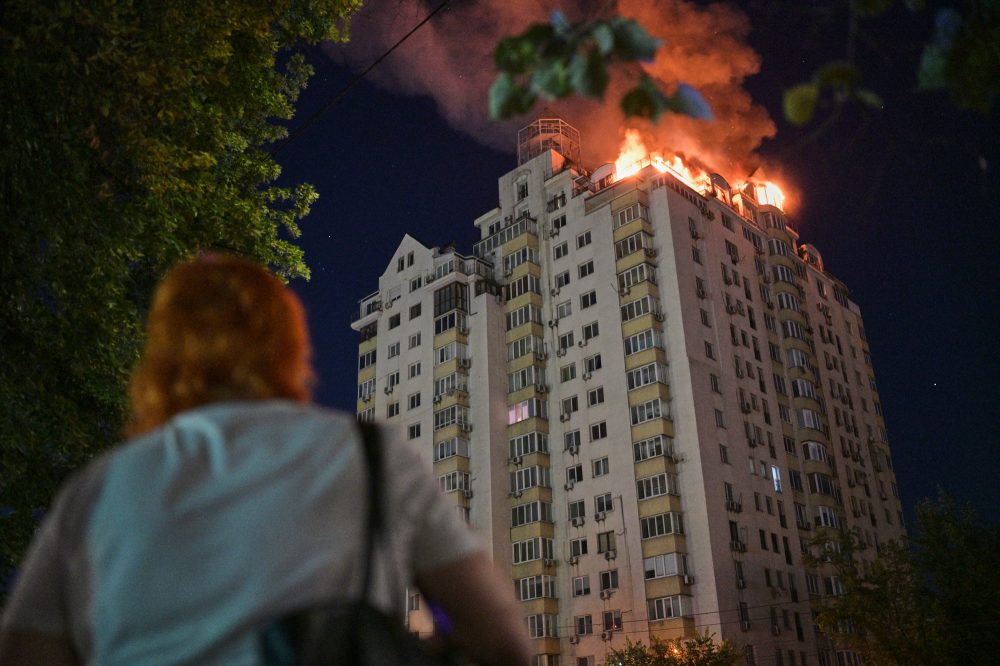
Overnight into Thursday morning, Russian forces launched a massive, 11-hour assault on the Ukrainian capital, killing at least 21 people. It stands as one of the most deadly attacks on Kyiv since Russia began its full-scale invasion.
Since March, Ukraine has carried out more than 50 reported strikes on oil refineries and other energy sites inside Russia and in occupied Crimea. Ukrainian officials have said the campaign is designed to pressure Moscow toward ending the war.
At minimum, the attacks have made the conflict feel far more real for millions of ordinary Russians, undermining Putin’s long-standing message that the war has little impact on daily life at home.
According to Chris Weafer, CEO of the consultancy Macro-Advisory, roughly one-third of Russia’s oil refining capacity has been knocked out. The damage is expected to be both lasting and expensive to fix.
Even a major refinery near Moscow — despite the capital’s heavy air defenses — has been struck twice. The second hit, on June 18, sparked a fire and damaged critical equipment that officials say may not be fully repaired until the end of this year.
Russian government figures show gasoline production has dropped by about 17%, falling to around 850,000 barrels per day. Fuel rationing has been put in place across numerous regions, and drivers have been forced to wait in long lines just to fill their tanks.
The hardest-hit area has been Crimea — the Ukrainian territory Russia illegally seized in 2014 — where gasoline sales to private individuals have been suspended entirely.
Last weekend, Putin convened a government meeting specifically to address the fuel situation. In televised remarks, he acknowledged the country was going through a “difficult period” and pledged to speed up repairs to damaged energy facilities. He also said Russia would look into importing gasoline to offset what he called “temporary” shortages, and announced that the country’s defense industry would ramp up production of air defense systems to counter future Ukrainian strikes.
Putin characterized Ukraine’s attacks as an effort to fracture Russian society, stop Moscow’s military push, and pressure the Kremlin into negotiations on terms favorable to Ukraine.
“We will not give them that chance,” he declared.
While Putin insisted Ukraine’s long-range strikes on Russian oil infrastructure “have absolutely no effect on the situation at the front,” Western military analysts say mid-range Ukrainian strikes have disrupted Russian supply lines and slowed the pace of their advance, creating a battlefield stalemate.
Putin maintains that Russian troops are still making progress along the roughly 1,000-kilometer (620-mile) front line. In a state television interview last weekend, he cited the names of specific small villages and even individual streets inside Ukraine as evidence of Russian gains.
Putin responded to Ukrainian President Volodymyr Zelenskyy’s offer to meet by suggesting Zelenskyy come to Moscow — a proposal Ukraine immediately ruled out.
Putin has also rejected a truce proposed by Kyiv and its Western allies, arguing it would simply allow Ukrainian forces to rest and rebuild their strength.
Any ceasefire, Putin has said, would require Ukraine to pull back from the portion of the Donetsk region it still holds — a demand Ukraine has flatly refused. He has also said a final peace agreement must require Ukraine to give up its pursuit of NATO membership, scale back its military, and guarantee protections for Russian language and culture.
In his Sunday interview, Putin claimed Ukraine had privately proposed limiting the fighting to the four regions Russia annexed but never fully captured: Donetsk, Luhansk, Kherson, and Zaporizhzhia. He said he turned it down, arguing it would allow Ukraine to shift forces from other areas and concentrate them against Russian advances in those four southeastern regions.
“Faced with a catastrophic shortage of personnel, the armed forces of Ukraine apparently believe this could be their salvation,” Putin said. “Saving the Kyiv regime is not part of our plans,” he added.
The Kremlin confirmed the proposal came through private diplomatic channels; Ukrainian officials have not publicly addressed it.
Putin also rejected a Ukrainian suggestion to mutually stop deep strikes into each other’s territory, saying Russian strikes reaching deep into Ukraine are “much more powerful, sensitive and, frankly speaking, destructive.”
Thursday’s deadly strike on Kyiv once again hit residential neighborhoods, even as Russia claimed it was going after military targets. Ukrainian strikes inside Russia, by contrast, have overwhelmingly focused on oil facilities, weapons factories, and other military-related infrastructure.
According to a United Nations count, more than 16,000 Ukrainian civilians have lost their lives since the war began.