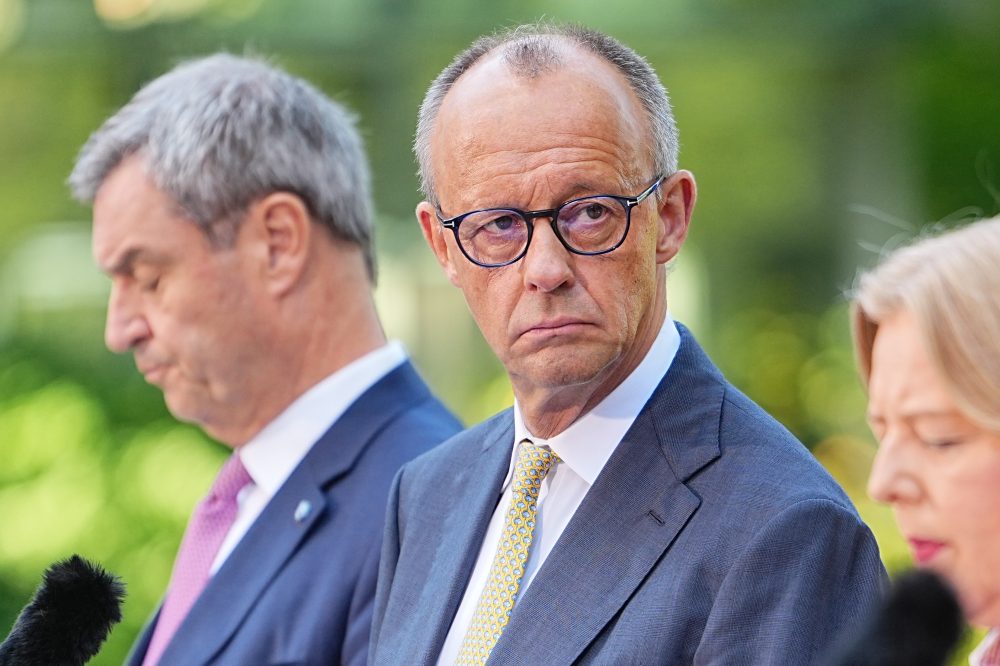

BERLIN (AP) — German Chancellor Friedrich Merz and his coalition government partners rolled out an ambitious 34-point reform plan Thursday, hoping to breathe new life into an economy that has been slow to grow.
The wide-ranging package covers income tax relief for low- and middle-income households, a restructuring of the country’s strained pension system, stricter requirements around employee sick leave, and significant reductions in bureaucratic red tape.
Speaking Thursday, Merz framed the reforms as a turning point for the nation. “These reforms all have one goal: We’re setting out into the future,” he said. “We’re strengthening ourselves so that we can live well in these new times.”
Merz’s coalition — made up of center-right and center-left parties — took power just over a year ago with promises to turn Germany’s economy around. Europe’s largest economy has seen the coalition grow increasingly unpopular, largely due to public perception that the government has been more focused on internal squabbling than on delivering results.
The chancellor made clear he intends to shake that image. “From the very beginning, we set an agenda with a single goal in mind: We want to get Germany back on track. It is now clear that this is possible,” he said.
Germany’s economy did manage modest growth last year after two consecutive years of contraction. However, the government is only projecting 0.5% growth for this year — a figure weighed down by the fallout from the war in Iran.
The country of 83.5 million people was already contending with stiff competition from Chinese businesses, soaring energy costs stemming from Russia’s full-scale invasion of Ukraine, and the economic pressure of U.S. President Donald Trump’s tariffs and trade threats. Deeper structural problems also persist, including high production costs, weak private investment, and increasingly expensive health and pension systems driven by an aging population.
Officials said Thursday that once fully in place by 2028, the tax cuts would deliver roughly 600 euros — about $64.40 — in annual savings for a household with two working parents, two children, and a combined taxable income of 60,000 euros (approximately $64,416). The overall tax relief across the reform package is estimated at around 10 billion euros, or about $11.4 billion, per year.
The pension overhaul would gradually raise the retirement age — currently set between 65 and 67 years depending on years of service — in step with rising life expectancy. Coalition leaders said they plan to adopt recommendations made last month by a government-appointed panel of experts and politicians to stabilize the pension system, with the goal of keeping pension levels steady and avoiding a large, long-term increase in the contributions workers pay into the system.
Under the new sick leave rules, employees would no longer be permitted to stay home for up to three days without a doctor’s note, or to request a week-long sick leave letter by phone without an in-person visit. Going forward, employers would have the right to require a doctor’s certificate beginning on the very first day an employee is absent. Merz has repeatedly pointed to Germany’s high rate of sick leave as a drag on the country’s productivity.
The government also announced plans to eliminate various reporting and documentation requirements, reduce data protection rules to the European Union’s minimum standard, and simplify the process of filing tax returns.
Not everyone welcomed the package. Alice Weidel, co-leader of the far-right Alternative for Germany party — which finished second in last year’s national elections — dismissed the reforms sharply. On the social media platform X, she called the measures “even more left-wing redistribution, and minimal compromises that don’t deserve to be called ‘reforms.’”
“The fact that this is being sold as a ‘breakthrough’ shows only one thing: this government’s complete inability to reform,” she wrote.
Despite the criticism, Merz appealed directly to the German public for support. Speaking at the chancellery’s garden in Berlin as the reforms were unveiled, he said, “We know that you, ladies and gentlemen — the citizens of our country — want decisions, and you don’t want conflict. And that is exactly what we have delivered.”
“Join us; support us in carrying out the reforms that are now necessary,” he added.