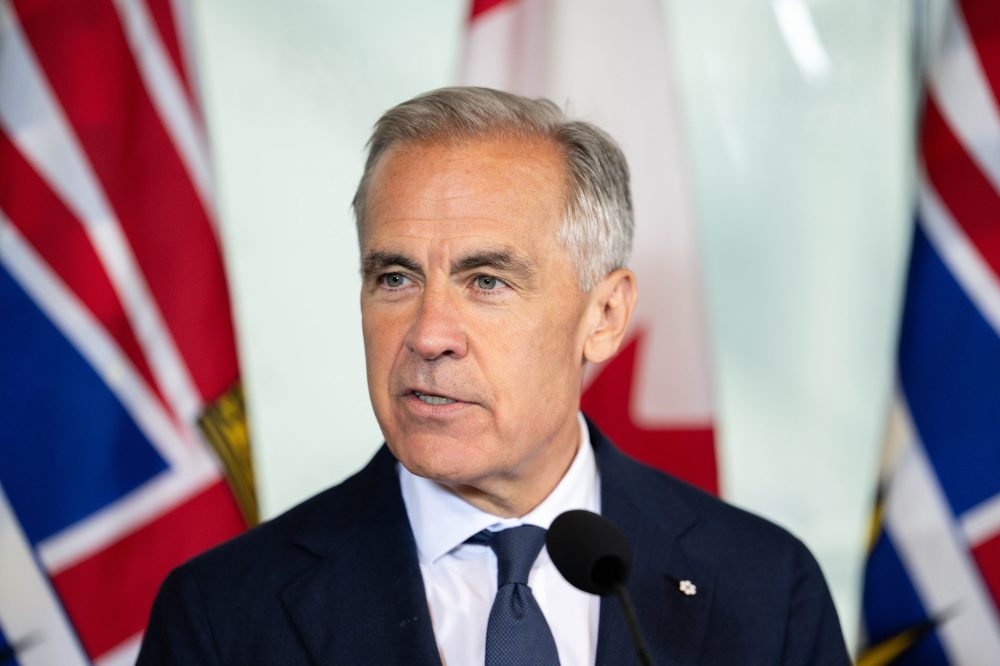

TORONTO (AP) — Canadian Prime Minister Mark Carney announced Thursday that a proposed pipeline designed to move Alberta oil to the Pacific Coast will not disturb the existing ban on oil tankers along northern British Columbia’s coastline. The statement came as his government works to address environmental concerns while also trying to calm growing separatist sentiment in the oil-rich province of Alberta.
Carney said Alberta Premier Danielle Smith would be announcing details about a potential pipeline route later Thursday at a joint news conference held in Calgary.
Expanding pipeline access to the Pacific has become a top priority for Carney’s government, which is looking to move Canadian oil exports beyond reliance on the U.S. market. The push also comes in response to longstanding grievances in Alberta, where many felt the previous federal government stood in the way of the province’s energy industry and stoked separatist feelings.
Alberta is scheduled to hold a public vote this fall on whether to pursue a referendum on separating from Canada. Progress on a pipeline could help reduce some of that separatist pressure.
Not everyone is on board, however. British Columbia and some First Nations communities have voiced opposition to routing a pipeline through northern British Columbia.
Carney was firm on one point: “The tanker ban will remain in place. We will be protecting the northern coast of British Columbia,” he said.
He also announced Thursday that British Columbia would receive compensation for environmental risks in the event a pipeline is constructed through the southern portion of the province.
An earlier agreement between Ottawa and Alberta had included language that could have adjusted the oil tanker ban along parts of the British Columbia coast. But British Columbia Premier David Eby said Thursday he had secured a firm commitment to keep the northern tanker ban intact, preserving the province’s unspoiled northern coastline.
“It ensures that the northern tanker ban remains in place, and it ensures that if a pipeline goes ahead, British Columbians are fairly compensated in the environmental risks,” Eby said.
Carney has set an ambitious goal of doubling Canada’s exports to countries other than the U.S. over the next ten years. He has also argued that a new pipeline could reduce the price gap that currently affects Canadian oil sold into U.S. markets.
Former Prime Minister Justin Trudeau’s Liberal government had also opposed any pipeline that would cross through northern British Columbia and the Great Bear Rainforest. Trudeau did approve one pipeline running from Alberta to British Columbia’s southern coast, but rejected the Northern Gateway project due to pushback from environmental groups and Indigenous communities.
Alberta holds one of the largest proven oil reserves anywhere in the world, and Canada is actively working to gain greater access to markets in Asia.