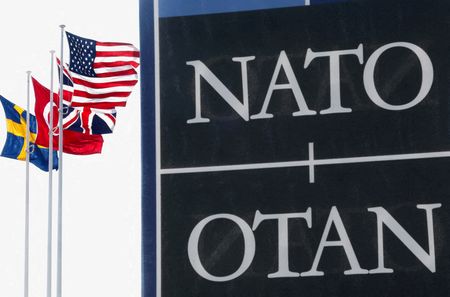

NATO leaders are heading to Ankara for a summit on July 7-8, where they will confront a series of significant challenges that could shape the future of the alliance for years to come. While some officials are concerned that the Iran war could steal attention from the gathering, they are hoping leaders stay focused on the core mission of defense and deterrence.
Keeping the U.S. on Board
One of the top priorities for NATO officials is preserving unity and ensuring the United States remains committed to Article 5 — the provision stating that an attack against one member nation is considered an attack against all. Two major flashpoints this year have strained the transatlantic relationship: U.S. President Donald Trump’s push for control over Greenland, an autonomous territory belonging to NATO-member Denmark, and his anger toward allies over their handling of the Iran war.
Trump went so far as to call the alliance a “paper tiger” and raised the possibility of pulling the U.S. out of NATO altogether. The alliance’s Secretary-General, Mark Rutte, has worked to ease the friction, combining diplomatic flattery with hard data to convince Trump that European members are living up to their commitments.
Shifting the Defense Burden
The Trump administration has been pushing European governments to assume primary responsibility for defending the continent, as Washington redirects its focus toward the Indo-Pacific region. Steps are already being taken: the U.S. has reduced the military capabilities it makes available to NATO during a crisis, and European members have stepped in to cover nearly all of those gaps.
U.S. Defense Secretary Pete Hegseth has launched a new review of American troop deployments across Europe and threatened to hold back some U.S. financial contributions to NATO if allies he considers “free-riders” fail to meet their defense spending obligations. European officials say they are working to do more, but some have pushed back, arguing that any meaningful transition takes time and expressing unease over the unpredictability of policy decisions coming from Washington.
The Push to Spend More
European NATO members and Canada are under heavy pressure to increase defense investment — both to strengthen deterrence against Russia and to show Trump they are serious about shouldering more of the burden. At last year’s summit in the Hague, NATO leaders agreed to Trump’s demand for higher spending, committing to direct 5% of GDP toward defense and defense-related measures within a decade. Of that total, 3.5% would go toward core defense items like troops and weapons, with the remaining 1.5% allocated to broader related measures.
Alliance data shows that European NATO members and Canada boosted defense spending by 20% in 2025 compared to the previous year in real terms. However, not all countries are on pace to hit the new targets, and several governments are beginning to face domestic political resistance to increased defense budgets.
Turning Money Into Military Capability
As defense investment climbs, a major hurdle for the alliance is converting that funding into actual military capabilities within a reasonable timeframe. In Ankara, NATO members are expected to announce tens of billions of dollars in new contracts. Still, some officials have expressed frustration that production has not ramped up as quickly as hoped, and that securing some orders still takes years. NATO’s leadership has urged defense industries to collaborate more, open new production lines, and speed up delivery timelines.
The Russia Threat
NATO leaders meeting in Ankara are expected to reaffirm that Russia represents a long-term danger to security across Europe and the Atlantic region. While alliance officials acknowledge that Russia is dealing with serious economic difficulties and that Ukraine has strengthened its military position, Secretary-General Rutte has warned that nearly half of Russia’s national budget is now devoted to defense spending — and that the alliance must not be complacent about Moscow’s intentions.
Continued Support for Ukraine
European NATO members have continued to fund assistance for Ukraine, more than four years after Russia launched its full-scale invasion. Aid flows through multiple channels, including direct bilateral support, a European Union loan program, and an initiative that allows European nations to pay for U.S. weapons to be supplied to Ukraine. While most European leaders say they remain committed to backing Kyiv, keeping that support at a high level is increasingly difficult given competing demands on national budgets and growing concern in some capitals that the financial contributions are not being shared equally among member nations.