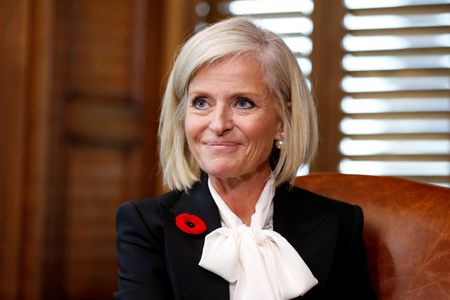

Canada is working toward a major announcement at next week’s NATO summit in Turkey, where it hopes to reveal around 10 founding nations for a newly proposed global defence financing institution, according to the country’s lead negotiator.
Canadian Prime Minister Mark Carney has been championing the Defence, Security and Resilience Bank, known as the DSRB, as a cornerstone of his broader push to unite what he describes as “middle powers” in response to what he views as the breakdown of the traditional U.S.-led international order.
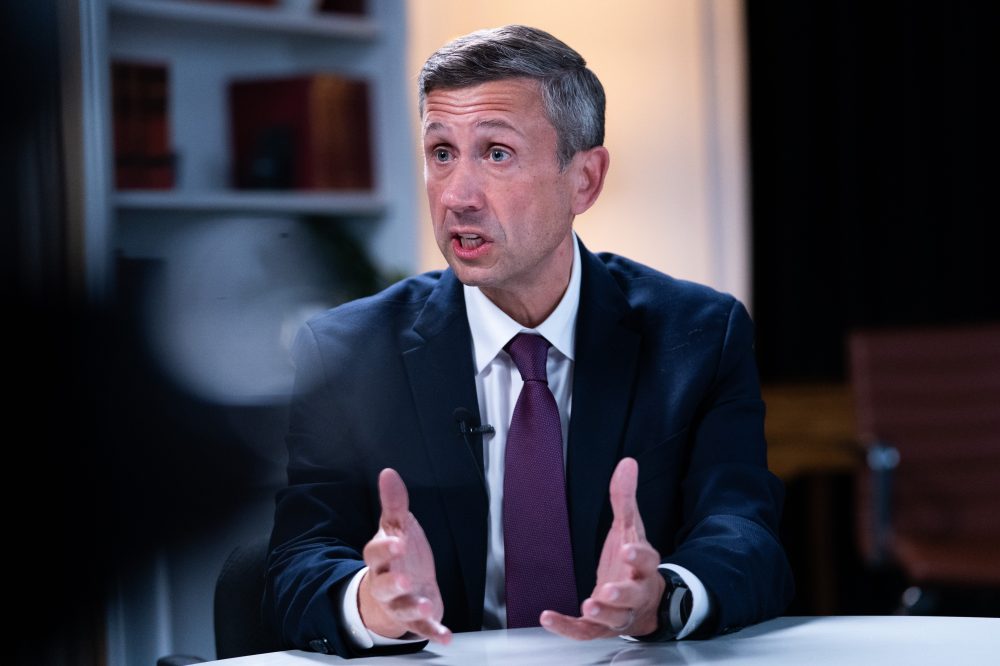
“We gave ourselves the NATO summit as a deadline … What we are aiming to announce is the list of founding members,” said Isabelle Hudon, Canada’s chief negotiator for the multilateral initiative and CEO of the Business Development Bank of Canada, in a recent interview.
The proposed bank would support the defense capabilities of allied nations by securing up to £100 billion — roughly $133 billion — in affordable financing.
Hudon indicated that the initial group of founding members would likely consist of Canada and several European nations, though she declined to identify them specifically. She also noted that the announcement was not a certainty, as final talks with potential allies — including discussions about how much capital each country would contribute — were still ongoing. Despite that uncertainty, she said the effort had gained significant momentum.
“My prime minister said we should not aim for perfection before launching this initiative, that we should rally the countries that are ready to be called founding members, and then the membership will stay open,” Hudon said.
The bank’s long-term viability still faces questions, particularly regarding whether it can attract the key national backers needed to achieve a triple-A credit rating.
Hudon noted that the DSRB has held encouraging discussions with South Korea, estimating roughly a 50-50 chance that the country could eventually join — though possibly at a later stage. She added that no other G7 nations appear close to signing on at this time. South Korea’s Finance Ministry has previously confirmed to Reuters that it was evaluating the proposal.
Canada’s Finance Ministry had not responded to a request for comment at the time of reporting.