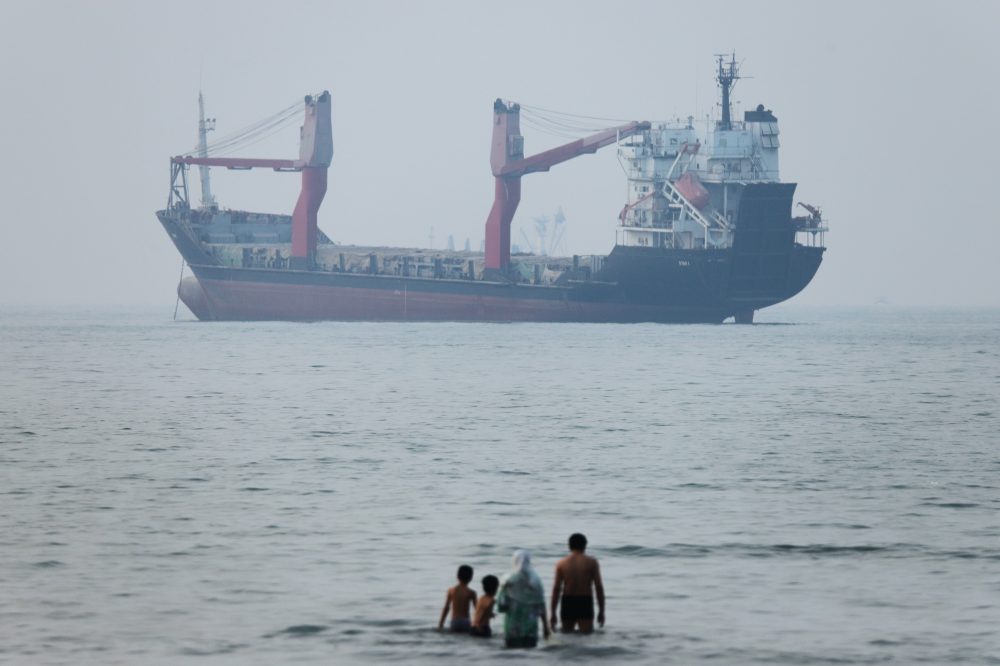

European authorities are escalating their efforts against a network of tankers that have been fraudulently flying Cameroon’s flag while secretly hauling Russian oil, with naval forces now boarding vessels at sea and Cameroon removing 39 ships from its official registry in response, according to officials and documents reviewed by Reuters.
On June 8, the European Union expanded the authority of Operation IRINI, its naval mission operating in the Mediterranean Sea, giving it the power to stop, board, detain, and inspect ships suspected of being part of Russia’s so-called “shadow fleet.” Russia publicly condemned the expanded mission.
These shadow fleet vessels are typically older ships that lack recognized Western insurance or safety certification. Russia has used them to dodge international sanctions by sailing under the flags of various countries, making it difficult to trace their true ownership, cargo, and routes.
According to two European military sources, three tankers recently boarded and inspected by Operation IRINI — the Nelsa, the Oneiroi, and the Sandhya — were found to be carrying fraudulent Cameroonian registration documents.
Beyond those three, nine additional ships have been seized by French, Belgian, British, and Swedish naval forces since the beginning of 2026, with five of those vessels having flown Cameroonian flags.
Cameroon had already raised alarms in recent months about the misuse of its flag registry by tankers moving Russian oil. In a letter dated June 16 sent to the United Nations shipping agency — a copy of which was obtained by Reuters — Cameroon’s government reported that an official investigation found multiple vessels were illegally operating under its flag, and that two fraudulent websites were being used to assign that flag to ships without authorization. The government said it had removed 39 vessels from its registry as a result.
The central African nation has become one of the largest sources of fraudulent shipping registrations in recent years. The situation became serious enough that the United Arab Emirates banned Cameroon-flagged ships from its ports in 2024 unless they could show top-level safety certification.
This week, Cameroon’s transport ministry issued a statement saying the country is “cooperating with international authorities and organisations to enforce maritime rules, protect the credibility of its naval registry, and fight against irregular registrations.” The ministry also noted that Cameroon cannot be held responsible for the actions of any vessel after it has been removed from the registry.
The most recent seizure involved a tanker called the Deliver, which was detained by the French navy on June 25 after being intercepted near Sicily. The vessel was still flying a Cameroonian flag even though it had already been removed from that country’s registry.
The EU is now preparing another round of sanctions expected in mid-July, with the shadow fleet among the primary targets. EU foreign policy chief Kaja Kallas explained the reasoning last month, saying, “The idea is to change the best practices, what different countries are doing with those ships, because it is really posing a danger, and of course also the idea is to curb Russia from the funding of this war.”
The upcoming sanctions package, which could be formally adopted in July, would add 30 more vessels to the shadow fleet sanctions list and broaden the criteria to include ships involved in refueling sanctioned vessels or offloading their cargo, according to European officials.
Officials have also highlighted the broader dangers these ships pose — including threats to the safety of crew members and to the environment if vessels are poorly maintained or fall apart at sea, as happened with two Russian coastal oil tankers in the Black Sea in late 2024.