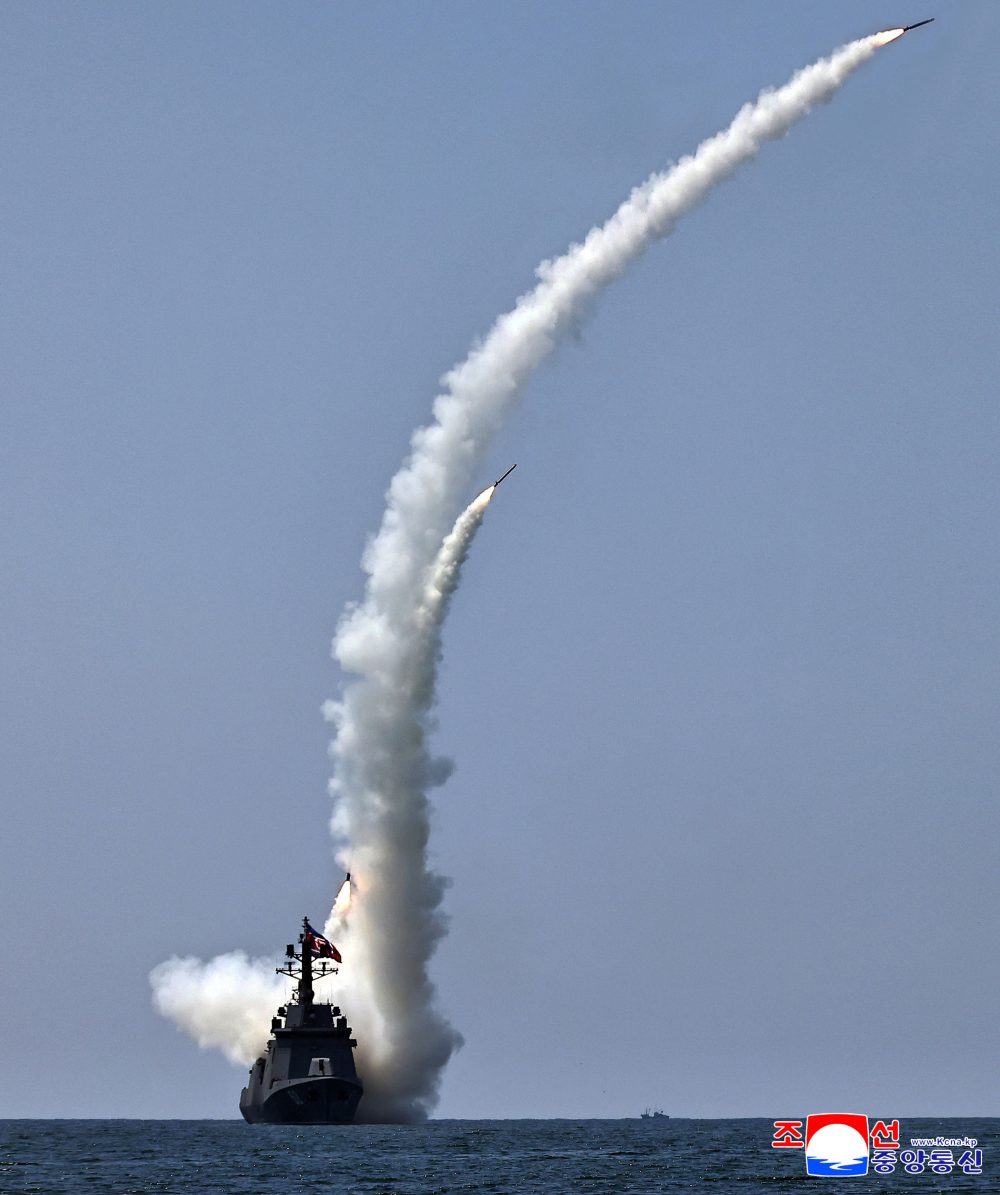
BEIJING — China’s military launched a missile from a nuclear submarine into the Pacific Ocean on Monday, according to the country’s state-run media, prompting concern and criticism from several nations in the region.
The People’s Liberation Army Navy fired the missile — fitted with a dummy warhead — into international Pacific waters at 12:01 p.m. local time (0401 GMT), the official Xinhua news agency reported. The missile came down in what Xinhua called “designated waters,” though no specific location was provided.
Xinhua characterized the launch as a “routine arrangement” tied to China’s yearly military training schedule, emphasizing that it was not directed at any particular country or target.
Australian Foreign Minister Penny Wong confirmed that China had given advance notice of the planned test, but she still labeled the launch as “destabilising” for the broader region.
“Australia has been clear that this proposed test is in the context of a rapid military buildup by China, which is lacking in the transparency and reassurance as to intent that the region expects,” Wong told reporters at a press conference in Suva, the capital of Fiji.
Japan’s government also said it had been notified ahead of the launch and called on China to reconsider. “We expressed our grave concern over the Chinese military’s increased activity,” Tokyo stated. Japanese authorities added that China had separately alerted Japan’s Coast Guard on Sunday about possible falling space debris that could land within Japan’s exclusive economic zone. Japan’s Kyodo news agency later reported, citing a government source, that the missile had landed outside that zone.
New Zealand Foreign Minister Winston Peters described his country as “deeply concerned” by the test, noting that New Zealand had been informed “within hours” of the launch.
“New Zealand considers this an unwelcome and concerning development. We, like our neighbours in other Pacific countries, have no interest in China using the South Pacific as a testing site for missile capability,” Peters said in a written statement.
China’s most recent intercontinental ballistic missile test before this one took place in 2024 — an uncommon launch that drew international attention to the country’s growing military strength.
BALLOUNEH, Lebanon — Long before she became one of the most celebrated food writers in the Middle East, Anissa Helou never imagined a career in cooking or writing. She stumbled into both worlds almost by chance when she was in her late 30s.
Now 74, Helou has built a devoted following across the region and around the globe, publishing close to a dozen books since the 1990s on the cuisines of the Middle East and beyond. Just last month, she was honored with Britain’s prestigious Guild of Food Writers Lifetime Achievement Award.
Born to a Lebanese mother and a Syrian father, Helou grew up in a Christian household where she spent countless hours watching her mother, grandmother, and paternal aunt work in the kitchen. Those early experiences gave her a deep appreciation for the culinary traditions of both Lebanon and Syria — two countries celebrated throughout the region for their rich and flavorful food.
“I was always fascinated by the kitchen, by their movements (and) by how they put things together, by the chopping,” Helou said of those early mentors. “I love being in the kitchen with them and of course I loved eating.”
Her newest book, “Lebanon: Cooking the Foods of My Homeland,” had its official launch in late June in Beirut at a ceremony held at Lebanon’s Tourism Ministry. The event drew a crowd that included food critics and restaurant owners.
The book arrives at a difficult moment for Lebanon, which has endured two wars in the past three years involving Israel and the Hezbollah militant group. One section of the book focuses specifically on food traditions in some of the southern Lebanese villages that have suffered the most severe destruction.
During multiple visits to the south — the most recent in October 2023 — Helou found that residents had developed their own distinct takes on traditional dishes. One example is mujadara, a dish built primarily around lentils. While it is commonly prepared with rice elsewhere, southern Lebanese cooks are more likely to use bulgur wheat.
“I discovered more, like, variations and added dishes, rather than something that was a complete revelation,” Helou said.
She has gathered walnuts from a tree growing beside the massive barrier that divides southern Lebanon from northern Israel, and she has spoken with residents who have lost their homes and livelihoods in the Hezbollah-Israel conflict.
One person who left a lasting impression on her was Moussa Ibrahim, from the southern village of Dibbine — an area that has seen intense fighting between Israeli troops and Hezbollah fighters. The violence in 2024 cost Ibrahim his business, which produced mouneh: a traditional Lebanese method of preserving vegetables, fruits, grains, and dairy through techniques such as sun-drying, salting, pickling, and submerging in olive oil.
A world traveler with a wide-ranging palate, Helou said she also has a deep love for Korean and Japanese food in addition to Middle Eastern cuisine.
“Lebanese, Iranian and Moroccan are among the greatest cuisines,” Helou said earlier this month from her late mother’s apartment in the Mount Lebanon town of Ballouneh.
“Lebanese cuisine is kind of a little bit more sophisticated, a lot fresher, more vibrant” than some other Middle Eastern food, she added, while preparing a traditional Lebanese lamb confit known as awarma.
When asked which city in the region produces the finest food, Helou didn’t hesitate — and her answer took her outside Lebanon entirely. She pointed to Aleppo, Syria’s largest city.
Aleppo is known for its centuries-old covered market — which sustained heavy damage during Syria’s civil war that began in March 2011 — and for a complex, layered cuisine shaped by Persian, North African, and Armenian influences.
“I think that Aleppo is undoubtedly the gastronomic capital of the Middle East, regardless of me being Syrian,” she said.
Helou’s work has also been shaped by global events. When the Islamic State group seized large portions of Syria and Iraq and declared a caliphate in 2014 — sparking a wave of deadly attacks and a surge in anti-Islamic sentiment worldwide — she responded by writing a book featuring roughly 300 recipes from Muslim countries.
“I was thinking, one way of presenting Islam and Muslim people positively could be through their foods,” she said.
Helou left Lebanon at 21 and now holds citizenship in Lebanon, Syria, and the United Kingdom. She has spent much of her adult life in Britain and Italy, though she continues to visit Lebanon regularly, cooking alongside locals and learning how they prepare specific dishes.
For years as a young woman, she refused to cook at all — even telling a partner at the time not to count on her for meals.
“I didn’t want to be domesticated. I was like a feminist and so I didn’t cook for a very long time,” she said.
Her attitude shifted after watching a friend cook a meal and seeing the joy it brought her partner. That moment nudged her toward the kitchen.
Her path to food writing began in 1992, when a conversation with a group of Lebanese expatriates sparked the idea of creating a cookbook filled with her mother’s recipes — filling a gap she noticed in Lebanese culinary literature. As luck would have it, a publisher was already searching for someone to write exactly that kind of book.
“That’s how I started, by sheer coincidence,” Helou said.
MALINDI, Kenya (AP) — The walls are concrete, the beams are wood, and the building isn’t finished yet. But 54-year-old Nuru Mohammed is already envisioning the future. As her daughter clears away the last traces of sand, Mohammed directs other women hanging fishing nets along the walls as decoration. Within days, a new beachside restaurant on Kenya’s Indian Ocean coast will welcome its first customers — another way to earn a living beyond the sea.
“For us women, this is hope,” says Mohammed, who spent most of her life as one of the rare fisherwomen in Malindi, a town located northeast of the port city of Mombasa. “It will help support many families that have depended on the ocean for decades.”
All along East Africa’s coastline, fishing communities are turning to tourism, ecosystem restoration, and conservation-based enterprises, reshaping their connection to the sea as climate change, overfishing, and deteriorating ocean health put their traditional ways of life at risk.
In Kenya, women are transforming restored mangrove forests into revenue streams through beekeeping and ecotourism. In Tanzania’s Zanzibar archipelago, fishing villages are safeguarding coral reefs through community-managed closures. In Mozambique, sea grass restoration is generating employment while breathing life back into marine habitats. Taken together, these initiatives are redefining what it means to be resilient — not by walking away from the ocean, but by healing it while building lasting livelihoods.
“Communities that depend on the ocean are also its best stewards,” said Andreane Martel, project director for a conservation initiative known as ReSea. “When local people, especially women, lead conservation, they protect biodiversity while creating more resilient and inclusive livelihoods.”
Mohammed said she has had boats stolen and now finds it nearly impossible to compete against large industrial trawlers. A nearby Chinese-owned fish processing facility stands as a stark symbol of how dramatically the industry has changed.
“I can’t compete with that kind of power or scale,” she says.
“It has been tough,” Mohammed says, her eyes on the water. “I fought to remain a fisherwoman. But I think it’s a fight I can no longer win.”
About ten kilometers — roughly six miles — away, where the Sabaki River flows into the Indian Ocean, Beatrice Mwanyiro manages a mangrove nursery and restaurant constructed by ReSea, a 30-member women’s cooperative supported by the Canadian government.
“We have to adapt to the changing times,” Mwanyiro says. “The number of fish coming into the shallow waters are falling every year. Without another source of income, we won’t be able to feed our families.”
Mangroves, coral reefs, sea grass meadows, and nearshore fisheries do far more than provide food. They shield coastlines from storms and lock away enormous quantities of carbon. But rising ocean temperatures, pollution, habitat destruction, and overfishing are putting all of those ecosystems in jeopardy.
Mohamed Somo, a fishing community leader in Lamu — a UNESCO heritage site — says boats that once returned with catches of up to 100 kilograms, or about 220 pounds, of fish now frequently bring back fewer than 30 kilograms, or around 66 pounds.
Kenyan law bars trawlers from operating within 5 nautical miles, or 9 kilometers, of shore, yet fishers say some vessels regularly venture much closer. The problem reaches far beyond Kenya’s waters. According to the U.N. Food and Agricultural Organization, illegal, unreported, and unregulated fishing drains an estimated $23 billion from the global economy each year, while endangering marine life and the food security of billions of people who rely on fish as their main source of protein.
“The trawlers fish offshore during the day, but at night they move into the shallow waters where artisanal fishers work,” Somo says. “By morning, there’s very little left for us.”
The mounting pressure on coastal communities has elevated ocean conservation as a political priority, as people fight both for survival and for the protection of the marine economies they depend on.
“Coastal communities are on the frontlines of climate change and declining ocean health, but they are also among the strongest drivers of resilience,” said Jerry Mang’ena, co-founder and executive director of Action for Ocean, a Tanzania-based organization focused on mangrove restoration along the country’s coastline.
“Supporting sustainable livelihoods, from aquaculture and eco-tourism to ecosystem restoration, helps families adapt while reducing pressure on the ocean. If we’re serious about protecting our seas, we must invest in the people who have cared for them for generations.”
At a recent gathering called the Our Ocean Conference in Mombasa, conservation organizations called on African governments to ratify the Biodiversity Beyond National Jurisdiction Agreement — also known as the BBNJ Agreement or “High Seas” treaty. The landmark United Nations pact establishes marine protected areas in international waters and provides for the fair sharing of marine resources. It took effect in January, and as of April had been signed by 145 countries and formally ratified by 81.
How negotiations over additional ratifications unfold could significantly affect the lives of fishers like Mohammed as they work to build futures less dependent on increasingly unpredictable catches.
“The BBNJ Agreement gives African governments a historic opportunity to protect the high seas and safeguard the future of our fisheries,” said Aliou Ba, oceans campaign lead at Greenpeace Africa.
“But protecting the ocean also means confronting illegal, unreported and unregulated fishing that is stripping African waters of marine life and robbing coastal communities of food and income,” he said. “Governments cannot afford to delay.”
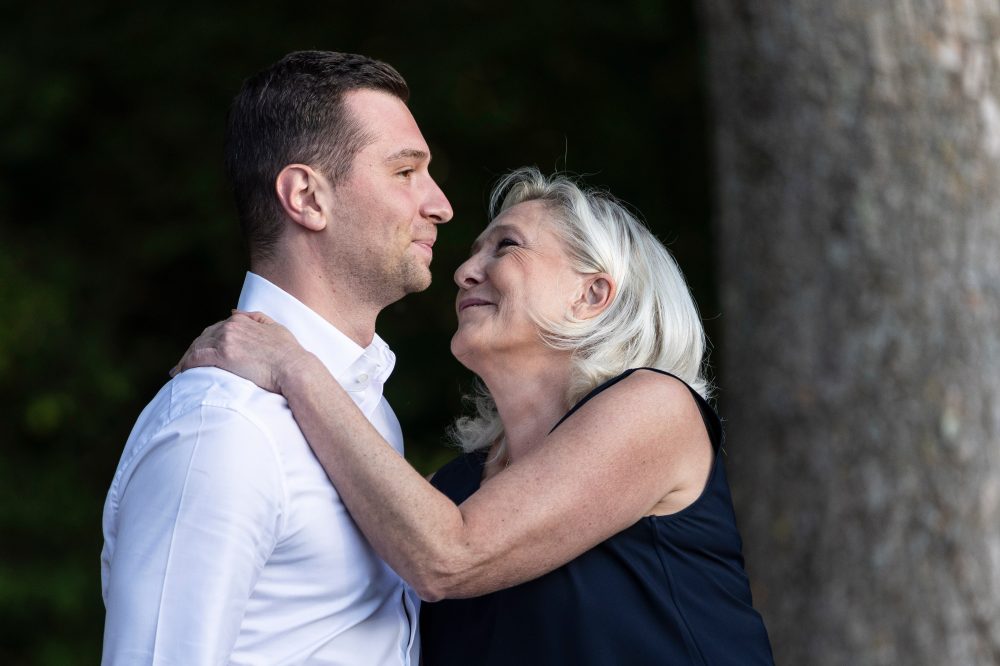
PARIS (AP) — A French appeals court is set to rule Tuesday on whether Marine Le Pen will be allowed to pursue what would be her fourth presidential campaign — and what many believe would be her best shot yet at leading the country. If the court blocks her, she has already been preparing a potential replacement.
That replacement is Jordan Bardella — but he is far from simply a younger version of Le Pen.
Perhaps the most significant difference between the two is one that cannot be changed: Bardella does not carry the Le Pen name. For a substantial portion of French voters, especially those on the political left, that surname carries deeply negative associations. Marine Le Pen inherited both the name and the party from her father, Jean-Marie Le Pen, who founded the organization and was widely despised for his far-right views and repeated legal violations, among them Holocaust denial.
If Tuesday’s court ruling bars Le Pen from next year’s election — the race to succeed two-term President Emmanuel Macron, who is constitutionally prohibited from seeking another term — or if it leads her to step aside in favor of Bardella, French voters will be weighing the two National Rally figures against one another.
Bardella currently serves as president of National Rally, the party Jean-Marie Le Pen originally founded in 1972 under the name National Front. Under Bardella’s leadership, the party has continued pushing its anti-immigration message. He has spoken of a France he describes as being overwhelmed by immigration, particularly from Africa, saying there are “many people who today no longer recognize the France that they loved.”
Where Bardella differs from Le Pen is in his approach to economic issues. He has worked to appeal to business owners and wealthier conservative voters with a more pro-business tone, while Le Pen has traditionally concentrated on cost-of-living concerns and government intervention — themes that tend to resonate with working-class supporters.
Le Pen handed the party’s leadership to Bardella in 2022, after years of working to make the organization more appealing to mainstream voters. That effort included distancing herself from her father — ultimately expelling him from the party — and walking back some of her more controversial policy positions, such as calls for France to exit the European Union and abandon the euro in favor of the old French franc.
The party has operated under the National Rally name since 2018 and became the largest single party in the National Assembly in 2024.
Luc Rouban, a senior researcher at Sciences Po, a Paris school of political sciences, who studies the party, says not carrying the Le Pen name could actually work in Bardella’s favor. “Symbolically, it would signal a break with the legacy of the old National Front, of Jean-Marie Le Pen,” he said.
That legacy has long been a liability for Marine Le Pen. Critics and historians have repeatedly tied her to her father’s associations with those who collaborated with Nazi occupiers during World War II, as well as his hate-speech convictions. Bardella, as the first party leader without the Le Pen name, may not face that same line of attack as effectively.
“Jean-Marie Le Pen’s legacy is a very heavy burden to carry,” Rouban said. “If you move beyond the Le Pen family, you’re entering different territory.”
Le Pen herself, who is 57, has spoken positively about Bardella’s age — he is 30. “We are complementary,” she said in a recent interview. “I have a certain experience, but Jordan has an absolutely incredible dynamism; he has the strength and energy of his youth.”
Bardella also has a stronger presence on social media. His Instagram following is nearly double Le Pen’s, and his 2.3 million TikTok followers surpass her 1.5 million. That digital reach could help him connect with younger voters — a group that has increasingly tuned out national elections. France’s national statistics agency found that only 17% of voters between the ages of 18 and 29 cast ballots consistently in 2022, when Macron defeated Le Pen in the presidential runoff for the second time. That figure is a sharp drop from 31% who voted consistently back in 2002.
Le Pen grew up surrounded by politics. Her father served in the legislature from 1956 to 1962, before she was born in 1968. She joined the National Front as a teenager and, after earning a law degree, first ran as a candidate at age 24 in the 1993 legislative elections.
Bardella, by contrast, has built his political career primarily in the European Parliament. Some analysts argue his comparatively limited experience could make it harder for him to connect with older voters, and that he might struggle under the intense pressure of a first presidential campaign.
However, Victor Mallet, the author of “Far-Right France: Le Pen, Bardella and the Future of Europe,” cautions against underestimating him. “A lot of people thought the same thing about Donald Trump,” Mallet said. “They thought, you know, this guy has no experience of government, his policies don’t make any sense, and he was elected twice.”
At least eight Rohingya Muslims — among them several children — were killed and a number of others wounded early Monday morning after intense monsoon rainfall triggered a series of landslides across refugee camps in southeastern Bangladesh, according to officials.
The camps, located in Cox’s Bazar, are home to more than 1.2 million Rohingya people and make up the largest refugee settlement on the planet. The vast majority of residents fled Myanmar in 2017 following a military crackdown in that neighboring Buddhist-majority nation, where Rohingya are considered outsiders.
Most families in the camps are sheltered in temporary structures built from bamboo and plastic sheeting, perched on steep, treeless hillsides that become extremely dangerous during the yearly monsoon season.
The slides struck four different areas within the camps, collapsing shelters and burying them in mud while residents were still asleep. In a separate but related incident, a Bangladeshi man was also killed and two of his family members were hurt when a section of hillside gave way and crashed into their home in Cox’s Bazar, police reported.
“Eight people have died in landslides caused by heavy rain,” said Tumpa Das, a police official based in Cox’s Bazar.
Das added that ongoing rainfall has raised the likelihood of additional slides, with thousands of refugees still occupying unstable terrain.
Mohammed Mizanur Rahman, the Bangladeshi official responsible for refugee relief and repatriation efforts, said authorities are acting quickly to protect lives. “We’re moving people out of high-risk areas as quickly as possible to prevent any more casualties,” he said.
The tragedy comes at a particularly tense time, as renewed violence in Myanmar’s Rakhine State is raising fears that a new wave of Rohingya refugees could attempt to cross into Bangladesh. Bangladeshi authorities have increased their presence along the border after reports emerged of people gathering nearby hoping to enter the country.
Bangladesh’s meteorological agency has predicted continued heavy rainfall in the days ahead, keeping officials on high alert for additional landslides and flash flooding.
Deadly landslides and floods are a recurring threat each monsoon season in the refugee camps, routinely claiming lives and destroying homes, roads, and essential services.
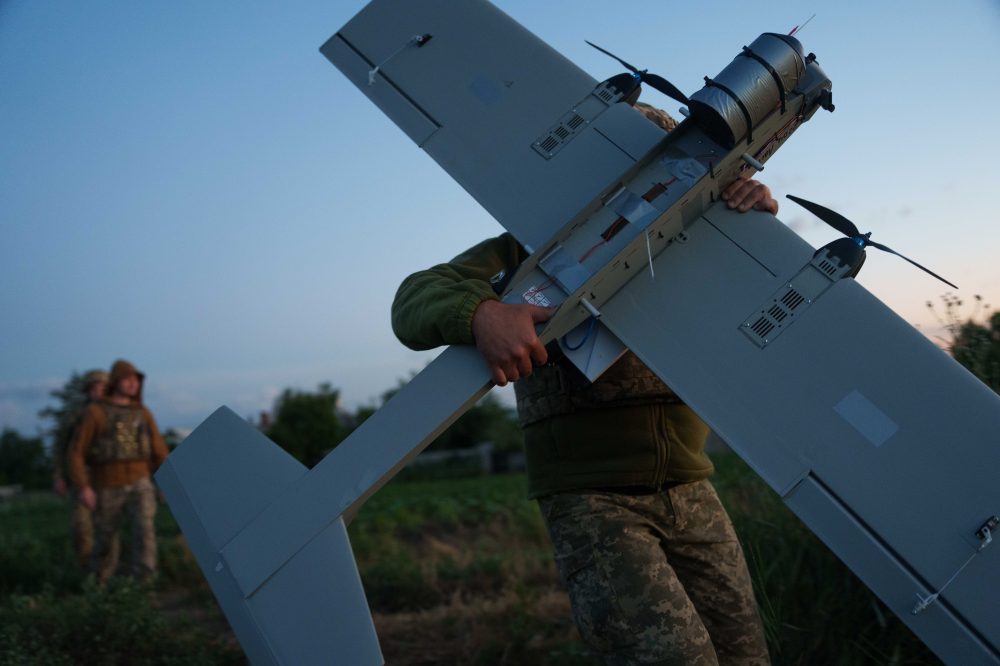
KHARKIV REGION, Ukraine (AP) — From a basement command post in Ukraine’s Kharkiv region, drone pilots stare at thermal camera feeds streamed from aircraft flying hundreds of kilometers away over Russian-held territory, patiently waiting for vehicles to appear on the roads that keep enemy forces alive and fighting.
When a target comes into view, the pilots guide their aircraft into a dive, striking deep behind Russian lines to disrupt the flow of fuel, food, ammunition and other critical supplies.
“Our mission is to cut logistics,” said Kat, commander of Ukraine’s K-2 brigade, which operates midrange drones. “Cut off their supply lines, and the infantry on the front line have no food, no ammunition, no night vision, no batteries. Nothing. That’s how we’re wearing them down in every sense.”
Soldiers who spoke with The Associated Press agreed to be identified only by their military call signs rather than their real names, as required by military regulations.
Ukrainian commanders say the sustained strikes on major highways carrying fuel, ammunition and reinforcements have made Russian logistics slower, more expensive and far less predictable. That pressure, they say, has helped slow Russian advances and supported Ukrainian counterattacks, including strikes into illegally annexed Crimea aimed at cutting the peninsula off from the mainland.
Until recently, much of that territory was out of Ukraine’s reach. Short-range front-line drones couldn’t cover the distance, while long-range drones were saved for high-value strategic targets far away. That left a corridor roughly 25 to 200 kilometers (15 to 125 miles) wide where Russian troops and supplies could move with little interference.
Fixed-wing midrange drones outfitted with Starlink satellite communications have begun filling that gap, effectively turning Russia’s logistical rear into a contested zone.
“They’re ensuring that the Russians are constantly pressured along their supply logistics lines and that they are unable to supply certain parts of the front so that the situation may be more controllable,” said Samuel Bendett, a researcher at the Center for Naval Analyses.
Bendett noted that Ukraine will need to keep up the pressure while Russia works to develop countermeasures. He expects Moscow to eventually adapt, but said Russia’s larger military allows it to absorb greater losses in the meantime.
“The question is whether Ukraine can keep this pressure up over the next few weeks and months,” he said.
The infrastructure behind Ukraine’s midrange drone campaign blends into the surrounding landscape. Ordinary offices double as command centers. A carpenter’s workshop serves as a drone assembly point. A modest village home becomes a launch site.
The headquarters of K-2, one of Ukraine’s most elite drone units, is housed in an unremarkable workspace littered with coffee mugs, energy drink cans and e-cigarettes. In May alone, the unit launched 800 midrange drones from that room, with 650 successfully hitting their intended targets.
The pilots work in civilian clothes under bright fluorescent lights, eyes locked on computer monitors — looking more like office workers than combatants. But the grids on their screens are target lists and satellite maps. After plotting each flight path, a separate team launches the drones more than 200 kilometers (125 miles) away. Control then shifts to the Kharkiv pilots, who fly the aircraft for up to four hours, reaching more than 100 kilometers (60 miles) behind Russian lines.
Some pilots were forced from their hometowns by Russia’s invasion and now find themselves peering down at familiar streets through a drone’s camera — passing old schools and childhood neighborhoods as they search for hidden Russian troops and weapons caches.
A whiteboard in the unit tracks an ongoing competition among its 10 drone crews. The current record stands at 17 consecutive successful strikes.
Missing a high-value target leaves a mark too. After one such miss, brigade commander Col. Kyrylo Veres got on the line with the crew and asked bluntly: “Are you drunk?”
Some days the camera reveals little more than a fuel truck or a single soldier on a motorcycle. Other days, operators spot more significant targets — a loaded multiple rocket launcher or a gathering of Russian troops.
Among the unit’s top pilots is Pharaon, 20, who says the work feels like a natural extension of the video games he grew up playing.
“When I was a kid, I used to go to computer clubs where we played Counter-Strike over a local network,” he said. “The competition here is pretty much the same. It’s about who can kill more enemy troops or take out the biggest target.”
A major turning point came earlier this year when SpaceX cut off Russian forces’ unauthorized use of Starlink satellite services, disrupting Russian drone operations and communications. That shift gave Ukraine a significant advantage, allowing its upgraded drones to better evade detection, resist jamming and strike with greater accuracy while Russia scrambled to respond.
“The blocking of Starlink for Russian forces was one of the most significant battlefield developments of the year,” said Rob Lee, a senior fellow in the Foreign Policy Research Institute’s Eurasia Program.
Pharaon said the impact on mission success has been dramatic. “What’s changed is that now eight out of every 10 sorties are successful,” he said, noting that just a few months ago the success rate was the reverse.
K-2 operates the Dart, one of the more affordable drones in Ukraine’s growing midrange fleet. Built from polystyrene, wood and 3D-printed components, the Dart is designed primarily to hit Russian logistics convoys. Larger models, such as the Hornet, carry heavier payloads and are used to strike bridges and other infrastructure.
Before each mission, crews inspect batteries, cameras, flight controllers and the Starlink terminal — the most critical piece of equipment keeping the drone connected during flight. The drones are then transported to hidden launch sites near the front, where a soldier with the call sign Buckwheat checks each Starlink connection before the aircraft are catapulted into the air.
“It’s gotten a little quieter now. You can tell the pressure from the enemy has eased,” Buckwheat said.
Russian forces were caught off guard when the campaign ramped up three months ago. Since then, they have begun deploying mobile fire groups and other countermeasures to intercept the drones. But Ukraine’s speed, scale and element of surprise have so far kept it ahead.
Bendett pointed to coordination problems within the Russian military as a key vulnerability. Even if one sector identifies the drone threat, that information may not reach neighboring units in time to intercept the aircraft.
Ukraine’s campaign targets the major highways connecting occupied Mariupol, Berdyansk, Melitopol and the Crimean Peninsula — the primary supply arteries for Russian forces fighting in southern and eastern Ukraine. Commanders say the sustained strikes have pushed Russia onto slower, less efficient resupply routes.
Ukrainian military intelligence says the drones have made portions of the land corridor linking Russia to Crimea too hazardous for normal operations, slowing the movement of fuel, ammunition and reinforcements.
In response, Russia is “significantly increasing the number of their mobile anti-aircraft units and fixed machine-gun positions, and are deploying more interceptor crews near major cities,” Pharaon said. Drone pilots now plan their routes around known enemy positions and can sometimes see the flashes of anti-aircraft fire through their cameras as their aircraft slips past.
Lee said Russia has been testing electronic warfare systems against Starlink since 2024 and has now begun deploying them more broadly. So far, their effectiveness has been limited.
“I think they have some success, but we’ll have to wait and see,” he said.
LONDON (AP) — Prince Harry is returning to the United Kingdom this week, and as usual, his arrival is generating plenty of attention from the British press.
The son of King Charles III is scheduled to attend several charity events beginning Tuesday. But for many royal observers, the bigger story is whether his wife, Meghan, and their two children — Prince Archie and Princess Lilibet — will be joining him, and whether the young royals will finally get some quality time with their grandfather, King Charles.
British tabloids and television news programs have spent the past 10 days buzzing with speculation about the family’s travel plans, but much remains uncertain as Harry works to secure protection for his family after a government committee declined to approve taxpayer-funded security.
“With just days to go until Harry’s first public engagement in the UK on Tuesday … very little is guaranteed at all,” the Times of London reported Saturday. The Telegraph put it more bluntly: “For Archie and Lilibet to meet the king, it’s now or never.”
Harry, who served in the British Army in Afghanistan, organized the trip partly to mark the one-year countdown to the Invictus Games — the Paralympic-style athletic competition he created to inspire and support military veterans recovering from injuries sustained in combat.
Also drawing attention this week is a Tuesday ruling at the High Court in London, where a judge is set to deliver a verdict in Harry’s privacy lawsuit against the publisher of the Daily Mail.
According to reports sourced from off-the-record briefings and unnamed individuals close to the royal family, the decision about whether to bring the children largely depends on whether the British government agrees to extend security coverage to Harry and his family. This has been a recurring issue every time the prince has returned to Britain since he and Meghan relocated to North America six years ago.
British authorities have maintained that Harry is not entitled to automatic protection because he is no longer an active working member of the royal family, and that his security needs will be evaluated on a case-by-case basis, as they would be for any high-profile celebrity. Harry, however, argues that his children cannot safely travel to Britain without protection, as their royal status continues to make them targets.
The decision on security rests with a government committee called Ravec, which determines who qualifies for state-funded protection.
The outcome could create headaches for the royal family, which has been trying to demonstrate its public value amid months of damaging headlines about the connections between the late financier and convicted sex offender Jeffrey Epstein and the former Prince Andrew, now known as Andrew Mountbatten-Windsor.
Royal commentator Tina Brown weighed in on the situation on X, writing: “In the paranoid atmosphere of waiting for more Andrew shoes to drop, Ravec and the royals themselves are terrified of public blowback if taxpayers are asked to fund protection for the House of Sussex. The issue is not a hill that either the king or the government wants to die on, and who can blame them?”
Early reports suggested that Archie, 7, and Lilibet, 5, would be making the trip, but those plans appeared to fall apart after the Daily Telegraph reported that Ravec had once again turned down Harry’s request for protection.
The Times of London reported that Harry was described as “distraught” following the decision and told friends he would not allow his children to be “chased by paparazzi” through the streets of London.
By Sunday, it had become apparent that Meghan and the children would not be with Harry when he arrives in London on Monday, though there remained some possibility they could join him at a later point during the visit.
Despite the security dispute, Harry has expressed a desire to repair his relationship with his 77-year-old father, who is currently receiving treatment for an undisclosed form of cancer. Harry has also said he wants his children — who first encountered the king during the late Queen Elizabeth II’s Platinum Jubilee celebrations in 2022 — to now spend meaningful time with their grandfather while they are old enough to form lasting memories of the experience.
Relations within the royal family have been strained since Harry and Meghan stepped back from royal duties and moved to California to pursue media opportunities outside the constraints of life as working royals.
Things deteriorated further after Harry released a tell-all memoir containing unflattering portrayals of royal family members and serious allegations about the damaging relationship between the monarchy and the British press.
Among the more explosive claims in his book, titled “Spare,” was the accusation that members of the royal family leaked information about one another to journalists in exchange for favorable coverage. Harry was particularly critical of Queen Camilla, alleging she shared private conversations with the media as part of an effort to improve her public image following her long-running affair with Charles while he was heir to the throne.
After losing a legal battle over the security issue last year, Harry expressed hope for a family reconciliation, while also suggesting that the royals had tried to block him from receiving police protection as punishment for stepping away from his royal role.
“I would love reconciliation with my family. There’s no point in continuing to fight anymore,” Harry told the BBC. “I don’t know how much longer my father has.”
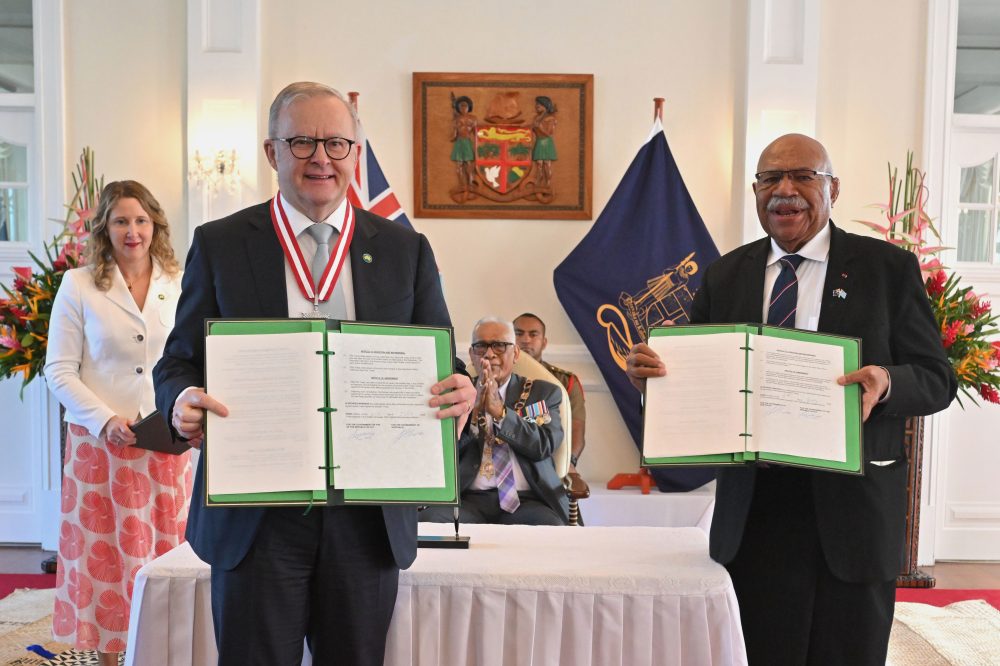
MELBOURNE, Australia — Australia and Fiji have officially signed a new bilateral defense agreement, marking the second major diplomatic achievement in less than a year for Australian Prime Minister Anthony Albanese in his effort to limit Chinese influence across the South Pacific.
Albanese and Fijian Prime Minister Sitiveni Rabuka put pen to paper on the Ocean of Peace Alliance in Fiji’s capital city of Suva. The two leaders also signed a separate economic agreement called the Vuvale Union, through which Australia has committed to investing more than 1 billion Australian dollars — roughly $693 million U.S. — in Fiji over the next ten years.
The Ocean of Peace Alliance is the first mutual defense treaty Fiji has ever entered into. For Australia, it is the fourth such agreement, coming after a 1951 treaty with the United States and New Zealand, and a bilateral defense pact signed with Papua New Guinea just last year.
Albanese described the weight of the new commitment, telling reporters: “The Ocean of Peace Alliance introduces a mutual defense obligation and there’s no higher obligation than to come to each other’s aid at a time of need.”
Rabuka expressed confidence that China would not react harshly to the newly signed agreements. “I do not expect China to have any severe pushback on either government. And I believe that they will welcome the understanding that is between Australia and Fiji,” he said. He added, “It does not threaten Fiji’s relationship with China nor Australia’s relationship with China.”
The Fijian prime minister described the agreements as being built on three core principles: deeper cooperation on security matters, stronger economic ties, and closer connections between the people of both nations.
“This is a clear affirmation of Australia’s sustained commitment to the stability, resilience and prosperity of the Blue Pacific region at a time of global uncertainty,” Rabuka said. He further noted, “These treaties reflect our shared understanding of the evolving and interconnected challenges that are facing our region.”
Australia has been working since 2022 to reinforce its position as the preferred security partner in the Pacific, following China’s signing of a secretive security agreement with the Solomon Islands that year. That deal sparked concerns about the potential construction of a Chinese naval base in the South Pacific.
Albanese is scheduled to travel to the Solomon Islands on Tuesday to meet with Prime Minister Matthew Wale after both nations agreed to pursue further talks on a security arrangement. Wale indicated during a visit to Australia last month that his new government plans to review the existing deal with Beijing.
On Wednesday, Albanese is set to host Papua New Guinea Prime Minister James Marape and Tongan Prime Minister Fatafehi Fakafānua in the Australian city of Brisbane. That same day, Australia’s defense treaty with Papua New Guinea — its closest neighbor — officially takes effect.
Just last week, Australia and Vanuatu signed a long-anticipated bilateral security and economic agreement known as the Nakamal Agreement. The deal, signed between Albanese and Vanuatu Prime Minister Jotham Napat in the Australian capital, explicitly blocks China from establishing a military base on the island nation. The agreement was finalized nine months after Vanuatu rejected an earlier version, citing concerns that it could restrict the country’s ability to draw in infrastructure investment. China voiced concern last week that the Nakamal Agreement may be aimed at Beijing.
MANILA, Philippines — A Philippine senator has been placed under arrest on large-scale plunder allegations, making him the second member of the country’s upper house to be detained in just over a month amid a sweeping corruption investigation.
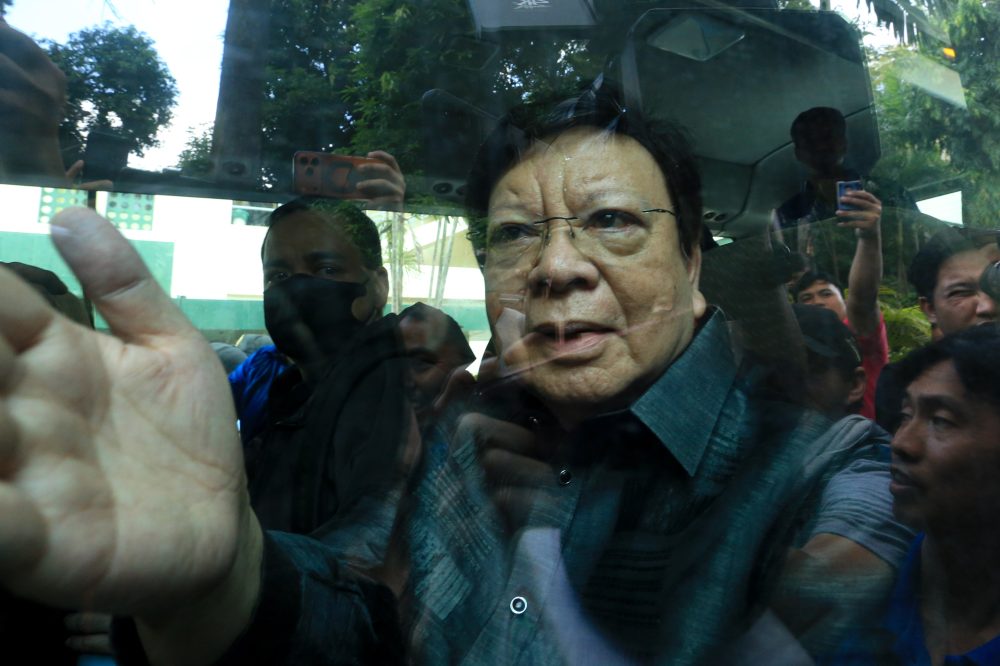
Sen. Rodante Marcoleta, 71, a lawyer by profession, was taken into custody Monday at the Sandiganbayan, a special court dedicated to anti-corruption cases located in suburban Quezon City. He had arrived at the court alongside his legal team to challenge the charges filed against him and to request a postponement of his arrest.
Speaking to reporters gathered outside the courtroom, Marcoleta addressed the court’s decision to order his detention based on a preliminary review of the case. “Let’s respect that,” he said. He was subsequently escorted away by police. Because plunder is the charge against him, he is not entitled to post bail.
Marcoleta is a member of Iglesia ni Cristo, also known as the Church of Christ. The religious organization staged a three-day demonstration involving more than 15,000 members at a democracy landmark along one of metropolitan Manila’s most heavily traveled roads, protesting both the charges against Marcoleta and his anticipated arrest. The mass gathering caused significant traffic disruptions throughout the area.
President Ferdinand Marcos Jr. called off two scheduled public engagements outside his office on Tuesday, citing concern over the large-scale protest mounted by the religious group, which has a well-established reputation for mobilizing massive demonstrations.
The Office of the Ombudsman, which serves as a specialized anti-corruption prosecutor, announced it filed the plunder charge against Marcoleta last week. According to the office, Marcoleta allegedly received 75 million pesos — equivalent to approximately $1.2 million — described as campaign contributions from three supporters, which he failed to report in his legally required financial disclosure statement.
Earlier last month, Sen. Jinggoy Estrada, a political ally of Marcoleta, was also arrested and held on a non-bailable plunder charge. Estrada, 63, is accused of collecting more than 570 million pesos — roughly $9.3 million — in kickback payments tied to a government flood-control project. He has firmly denied those accusations, which stem primarily from allegations made by a former government public works engineer.
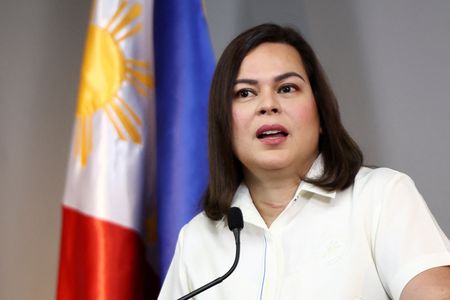
Both Marcoleta and Estrada were known supporters of former President Rodrigo Duterte and his daughter, Vice President Sara Duterte. On Monday, the 24-member Senate, sitting in its capacity as an impeachment court, was set to begin the trial of Sara Duterte, who was impeached by a sweeping vote in the House of Representatives back in May. She has denied the charges against her, which include accumulating undeclared wealth and publicly threatening to have the president killed.
A third senator with close ties to the Duterte family, Ronald dela Rosa, has gone into hiding following the issuance of an arrest warrant by the International Criminal Court. The ICC named him as a co-perpetrator alongside the former president in connection with the killings of mostly low-income drug suspects during a violent anti-narcotics campaign carried out under Duterte’s watch. Dela Rosa previously served as the national police chief who initially implemented those crackdowns.
Former President Duterte himself was arrested last year on the ICC’s orders and transported to the Netherlands, where he is scheduled to stand trial on November 30 on charges of crimes against humanity.
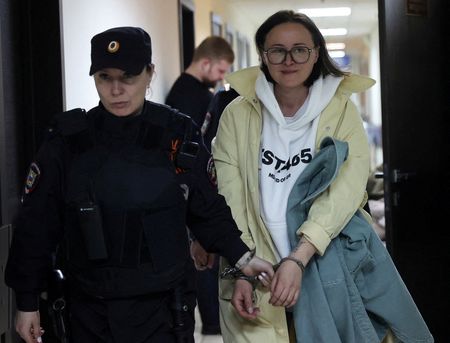
Two years ago, a bearded young Russian man sat quietly on a bench in the German city of Hamburg, drawing no particular attention from passersby. But Yury Shekhvatov was not simply enjoying the summer weather — he was bracing himself for news that would change his life.
More than 1,100 miles away in Moscow, a military court was behind closed doors delivering a verdict in the trial of his wife, playwright Svetlana Petriychuk, and theatre director Zhenya Berkovich.
“I took several phones with me, and I sat and waited,” Shekhvatov recalled.
The news arrived through online feeds and messages from friends, and it was exactly what he had feared. The two women, who had been arrested in 2023, each received six-year sentences in a penal colony. The charge: “justifying terrorism” through a play that Petriychuk had written and Berkovich had directed.
At trial, the women argued that their play — “Finist the Bright Falcon,” which portrays Russian women who wed Islamic State fighters — was meant to stand against terrorism, not encourage it. The court was not persuaded.
Human rights advocates described the convictions as a troubling new low in the Russian government’s crackdown on free expression during wartime. The Kremlin offered no response to the case.
On Wednesday, July 8 — the second anniversary of that sentencing — Shekhvatov says he plans to return to that same bench overlooking a canal, sit in silence, and look through old photographs of his wife.
When asked what infuriates him most about the ordeal, he pointed to what he described as the cold indifference of Russia’s judicial system.
“Once you’re caught up in this system, things just roll along on autopilot,” he told Reuters.
“They opened the case, and it just dragged on; the investigator shuffled some papers around, and then the judge sat there putting on an act, pretending to be a rather intelligent man who was well-versed in literature… He went through the motions of looking into everything, yet he knew all along that the verdict would simply be handed down to him.”
Russia’s constitution calls for an independent judiciary insulated from political influence, but human rights organizations say the reality — particularly in high-profile or politically sensitive cases — is very different, with acquittals being extremely rare.
Shekhvatov, who had served as Petriychuk’s theatrical agent, said many people in the arts community publicly rallied behind her, sometimes at considerable personal risk. But he was deeply hurt by others who had worked closely with her and never reached out — not even with a private message of support.
“To me, that is just monstrous — something I will never be able to understand,” he said.
Petriychuk, now 46, is currently held at a penal colony in the Moscow region, where she and other inmates spend six days a week working in a sewing workshop. Her sentence still has three years left to run.
Following her arrest in May 2023, Shekhvatov wrote lengthy letters to her every single day for the first two years. These days, they communicate mainly through brief messages on a prison service app and are permitted to speak by phone a few times each month.
Shekhvatov, 38, said he developed a deliberate approach to supporting his wife emotionally — meeting her wherever she was mentally rather than trying to steer her toward a different mindset.
“From the outside you could see that things would hardly turn out well, but when she had moments of hope I always supported her and said, ‘Yeah, yeah — we’ll fight, absolutely, we’ll do it.’
“And when she was sad, on the other hand, I didn’t try to shift her mindset — like ‘No, let’s be positive, let’s fight…’
“It’s hard to describe how a person feels when they’re in prison… What they really want is total support in the broadest sense — just to be understood and supported.”
He maintains a website, freesveta.org, dedicated to raising awareness about Petriychuk’s case and keeping her play in the public eye. “Finist the Bright Falcon” has now been performed more than 75 times across the globe in 13 different languages.
While working as a massage therapist and health coach to make ends meet, Shekhvatov is also building knowledge of the publishing world with the goal of one day becoming his wife’s literary agent.
“She has always dreamed of writing prose, not just plays… (After her release) it will all happen — global bestsellers,” he said. “I haven’t the slightest doubt, not for a second, that when she gets out and starts writing, it will sell all over the world, get translated and so on. And I’ll make sure it happens.”
PAMPLONA, Spain — Bill Hillmann has been gored by bulls three separate times during Spain’s famous running of the bulls, yet nothing could keep him away from this year’s San Fermin festival.
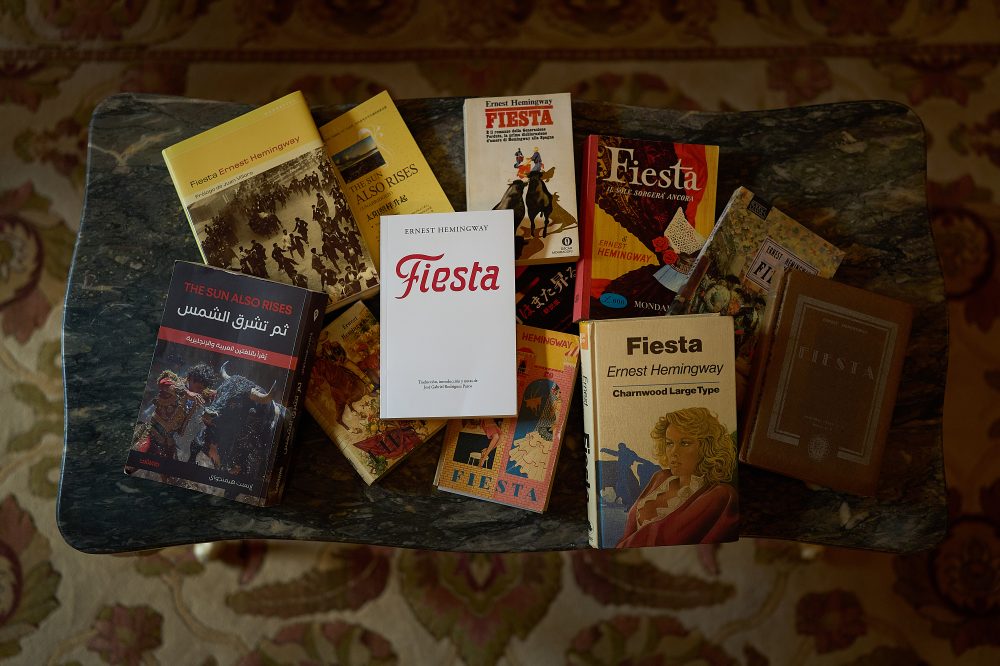
The reason for the extra buzz this year: it marks 100 years since Ernest Hemingway published the novel that launched him to literary stardom and put the city of Pamplona on the global map.
Hemingway’s 1926 work “The Sun Also Rises” has held readers spellbound for generations with its Jazz Age story of American and British bohemians seeking to fill an inner emptiness through exotic travel, heavy drinking, and the tortured pursuit of unattainable love.
The novel’s enormous success cemented its place as a pillar of American literature, standing alongside F. Scott Fitzgerald’s “The Great Gatsby.” It also brought widespread use of the phrase “lost generation” to describe the circle of early 20th-century writers living as expatriates in Paris. Hemingway’s stripped-down writing style permanently reshaped American literature.
Hillmann, who grew up in Chicago, was just 19 years old when Hemingway’s powerful portrayal of the bull-running tradition first grabbed his attention — particularly the scenes of ordinary Spaniards risking injury to sprint through the streets alongside the bulls, guiding them toward the bull ring. This year’s festival gets underway Monday with fireworks over a crowded plaza, and the first of eight bull runs takes place Tuesday.
“It was the first book I ever read,” Hillmann told the Associated Press while standing in Pamplona, looking out over the pen where bulls are held before being released onto the cobblestone route. “I sat there for about six hours, well past midnight, reading the book. And by the time I was done with that book, I was going to be a writer and I was going to be a bull runner.”
Since that night with the book, the now 44-year-old Hillmann has run alongside bulls in Spain hundreds of times — both in Pamplona and at dozens of other bull runs across the country. His passion for Hemingway and Pamplona has never faded, even after one goring nearly took his life.
That deep connection to the novel eventually led Hillmann to earn a doctorate in English. He now teaches “The Sun Also Rises” at East-West University in Chicago and writes about the bull-running tradition.
Hillmann is far from alone. Americans continue to be the largest group of foreign participants in the San Fermin bull runs. In 2022, 16% of all bull runners were American — the highest share among any foreign nationality and four times the number from neighboring France, according to figures from Pamplona’s City Hall.
A Dallas-based tour company called “Running Of The Bulls” has helped thousands of Americans make the trip to San Fermin over the years. Its operator, Bruce Anderson, says Hemingway’s novel turned the festival into a must-do experience for many people. This year, his company is bringing 1,400 attendees to Pamplona, with more than two-thirds coming from the United States.
“There’s a lot of energy, a lot of excitement around just remembering that book and the impact that it’s had,” said Anderson, who has been a Hemingway admirer his whole life. He spoke inside Pamplona’s art deco Café Iruña — a prominent drinking spot in the novel that today features a life-size statue of Hemingway leaning against the bar.
Anderson, who sports a thick white beard, even resembles Hemingway. Local Spaniards frequently call out to him using the writer’s famous nickname: “Papa!”
Hemingway’s presence is woven into the fabric of Pamplona. Hotels and bars display busts of him or post signs noting that he once visited. Outside the city’s bull ring — which also has a statue of the author — a large banner honoring the novel hangs with a quote showing how the festival left Hemingway at a loss for words: “At noon of Sunday, the 6th of July, the fiesta exploded. There is no other way to describe it.”
During his final visits to Pamplona, Hemingway regularly stayed at the Perla Hotel. His suite there still contains furniture from the 1950s, the era of his visits. The room, which looks out over the bull run route, also holds two glass bookcases filled with dozens of copies of “The Sun Also Rises.”
“Hemingway did a lot for Pamplona because he made it known around the world,” said Fernando Hualde, who spent four decades working as a receptionist at the hotel.
Still, Hemingway’s legacy in the city is complicated.
Beyond feminist criticism of his aggressively masculine public image, Hemingway has also faced pushback from animal rights advocates for his celebration of bullfighting. In “The Sun Also Rises,” he devotes far more attention to the courage of bullfighters than to the bull runs themselves.
Animal welfare activist Brook Spurling, speaking during a protest against the San Fermin bullfights, argued that “Hemingway wrote about many, many themes that today would not be accepted into society. He writes about hunting, about war, and we don’t want to be appreciating these themes today.”
Former hotel receptionist Hualde noted that some Pamplona residents resent Hemingway’s early promotion of the festival, blaming it for the overtourism now straining the once-quiet regional city.
Pamplona is home to 200,000 people but welcomes more than a million additional visitors during the festival. While most are Spanish, roughly 15% come from outside the country. Many visitors — especially younger ones — follow Hemingway’s lead when it comes to drinking heavily.
Some locals take quiet pride in places untouched by the Hemingway legend. Literature professor Gabriel Insausti of Pamplona’s University of Navarra recalled visiting a bar that displayed a sign reading, “Hemingway was not here.”
“In general, Hemingway has become a product of a franchise associated with San Fermin festival that has obscured his novel,” Insausti said. “People know who Hemingway is, but they haven’t read his novel.”
Hillmann warned that the large number of inexperienced foreign runners today makes the Pamplona bull runs more hazardous than ever. The last fatality occurred in 2009, but gorings and other injuries happen regularly. Beginners can easily panic and make a wrong move, triggering dangerous pileups or pushing someone into a bull’s path.
In 2014, Hillmann himself was seriously gored after he said a fellow runner’s poor decision left him exposed to a charging bull. Blood was pouring from his leg in such quantities that he believed he was dying.
After yet another goring in 2017, Hillmann spoke to the AP from his hospital bed in Pamplona and made clear he had no intention of stopping. “People think this is just crazy people running. There is real art. If you pay attention, you can see it,” he said at the time.
Hemingway’s granddaughter, actress Mariel Hemingway, remembers being treated “like royalty” when she attended San Fermin in years past. Mariel, who has written and spoken publicly about her grandfather’s mental illness and his suicide in 1961, believes his work will stand the test of time.
She sees his themes as timeless — including his preoccupation with death.
“Identity, love, purpose, and how to rebuild after profound loss … those themes haven’t ever changed. That’s what’s great about my grandfather,” Mariel Hemingway told the AP from her home in Idaho. “I think he captured something that will never go away.”
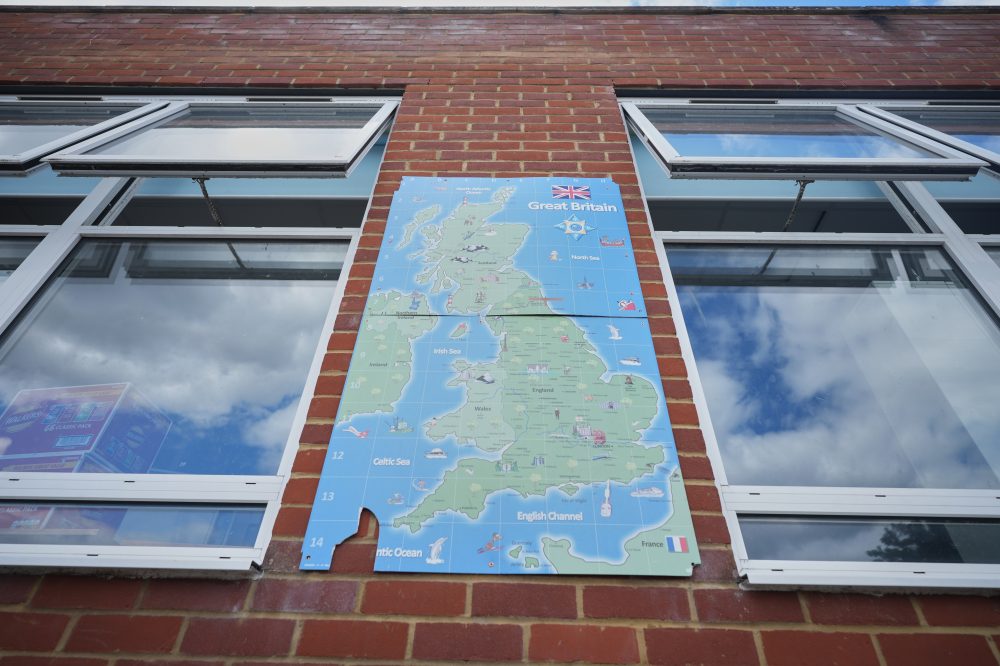
LONDON (AP) — When temperatures shattered records across Europe this past June, a Welsh school where teacher Mark Morris works was among hundreds across the United Kingdom forced to shut its doors.
With no air conditioning or fans available, and sunlight pouring through windows that barely open — some not at all — Morris said holding his design and technology classes was simply not possible when temperatures in Wales reached a record 35.9 degrees Celsius (96.6 degrees Fahrenheit).
“Even in a normal summer, the heat on those south-facing windows becomes unbearable,” said Morris, who teaches high school students subjects like woodworking and food preparation. “If there’s anything that you need to turn the oven on, you can forget about it. There’s no way anybody could carry on.”
Over 1,000 schools in the U.K. shut down for multiple days or released children early during the late June heat event, which toppled temperature records across the continent. The closures disrupted education and created economic ripple effects as parents with jobs scrambled to arrange childcare.
Experts say the widespread school closures have laid bare just how ill-equipped Britain is to handle what climate scientists now describe as a “new normal” — more frequent and more severe heat waves. Aging public buildings such as schools, hospitals, and care homes are among the hardest hit. Air conditioning is rarely found in these structures, and poor ventilation causes indoor temperatures to become dangerously stifling.
The British government’s own climate advisers noted in a recent report that these buildings were “built for a climate that no longer exists today” — designed to retain heat during cold winters, not to stay cool during extended stretches of extreme warmth.
At schools that remained open during the June heat wave, students and staff turned to low-tech workarounds: small handheld fans, water spray bottles, and cold popsicles replacing hot lunches. Blinds were pulled shut, and some people lay on the floor in the dim light — the coolest spot available. A few even soaked their bare feet in buckets of water.
Even so, with roughly 30 people packed into each classroom, conditions could quickly become a health risk.
“We’ve had members teaching in extremely hot conditions, to the extent that we’ve had reports of members passing out in classrooms while trying to teach,” said Wayne Bates, a health and safety spokesperson with the teachers’ union NASUWT.
Bates’ organization, along with other unions, has long pushed the British government to establish a maximum allowable workplace temperature. He noted that many school buildings constructed between the 1950s and 1970s have far outlived their intended lifespan, and that four out of five schools still have asbestos embedded in their structures — making it difficult to retrofit air conditioning systems.
Dave Woods, a head teacher at Beaconsfield Primary School in west London, pointed out that newer construction is not necessarily better. The newer section of his school, built just about a decade ago, actually performs worse in the heat than the original building constructed in 1908. He said the older structure benefits from high ceilings and thick brick walls that naturally keep it cooler.
“You would have thought in 2017, there would have been more thinking ahead because we already knew about changes to climate, changes to global temperatures,” said Woods, who also serves as vice president of the National Union of Headteachers.
Woods is exploring the possibility of adding air conditioning to portions of the campus, but tight finances are a major obstacle. He said U.K. schools have been chronically underfunded for more than a decade, with government funding slashed during austerity measures in the 2010s and never restored. His school now receives just 7,000 pounds (about $9,348) annually for repairs.
That falls well short of what’s needed, given that outfitting the school with air conditioning could run close to 20,000 pounds (roughly $26,700) — and pressing problems like leaking roofs also demand attention.
“We’re already looking at some longer-term things, like more tree planting to provide shade onto buildings, external screening onto windows or use of solar film to reflect some of the glare,” Woods said. “But nothing’s going to happen extremely quickly.”
The Climate Change Committee, an independent advisory body to the British government, warned in a May report that by 2050, with approximately 2 degrees Celsius of global warming, heat waves in southern England could routinely surpass 40 C (104 F). Without action, the number of days per year when indoor temperatures in thousands of English schools could reach 35 C is projected to rise by 70% compared to current levels, resulting in more lost school days and declining educational outcomes.
The committee recommended starting with low-cost “passive cooling” methods such as window blinds and external shading, but said that schools, care homes, and hospitals most at risk should have air conditioning installed within the next 25 years — ideally using low-carbon systems like heat pumps capable of both heating and cooling.
Richard Millar, the committee’s director of adaptation, stressed that investment must begin now.
“Our key message overall is that the effects being felt now, when we think about heat particularly, this isn’t something that we’ve historically thought about as one of the key hazards from weather or from climate change in the U.K.,” Millar said. “We increasingly need to think about heat as the evidence of the last few weeks shows us. And this is one of areas where we have a gap in terms of a proper plan for how this is led, particularly about the public services side of it.”
“It’s not just a future problem. Those impacts are here,” Millar added. “And we’re not prepared for today’s weather, let alone tomorrow’s.”
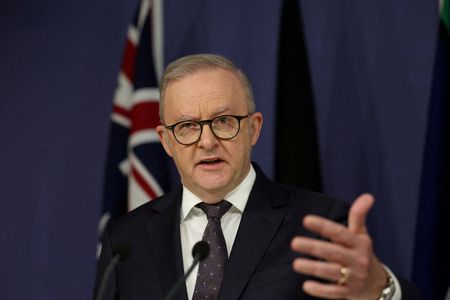
Australian Prime Minister Anthony Albanese found himself issuing a public apology Monday after a crude comment he made about pop icon Kylie Minogue during a comedy podcast sparked backlash from women’s rights groups and opposition lawmakers.
During the interview, host Nikki Osborne posed the question of which of three well-known Australian female celebrities Albanese would marry, date, or “shag” — a vulgar term in Australia used to refer to sexual intercourse.
At first, Albanese tried to sidestep the question, noting that he had recently gotten married. But Osborne pushed further, asking who he would pick if his marriage were to fall apart. Albanese responded, “Kylie, clearly.”
Osborne then followed up: “You’d marry Kylie, and shag her, and date her?” To which Albanese replied, “All of the above.”
The remarks quickly drew condemnation. Senator Sarah Henderson was among the opposition lawmakers who spoke out, calling the comments “disrespectful to women, embarrassing to Australians and demean the office of Prime Minister.”
Albanese wasted no time in releasing a formal apology. “I apologise unequivocally for the comments,” he said in a written statement issued Monday.
A representative for Minogue had not yet responded to media requests for comment at the time of the report.
Australia has a well-known informal political culture, where politicians are regularly asked about topics ranging from sports to pop culture during media appearances.
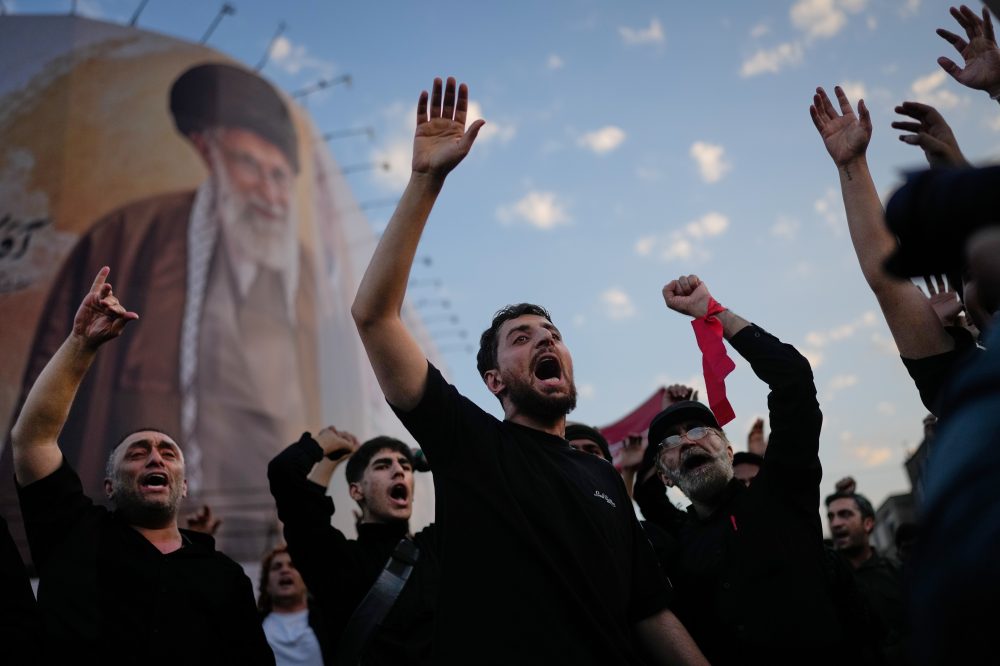
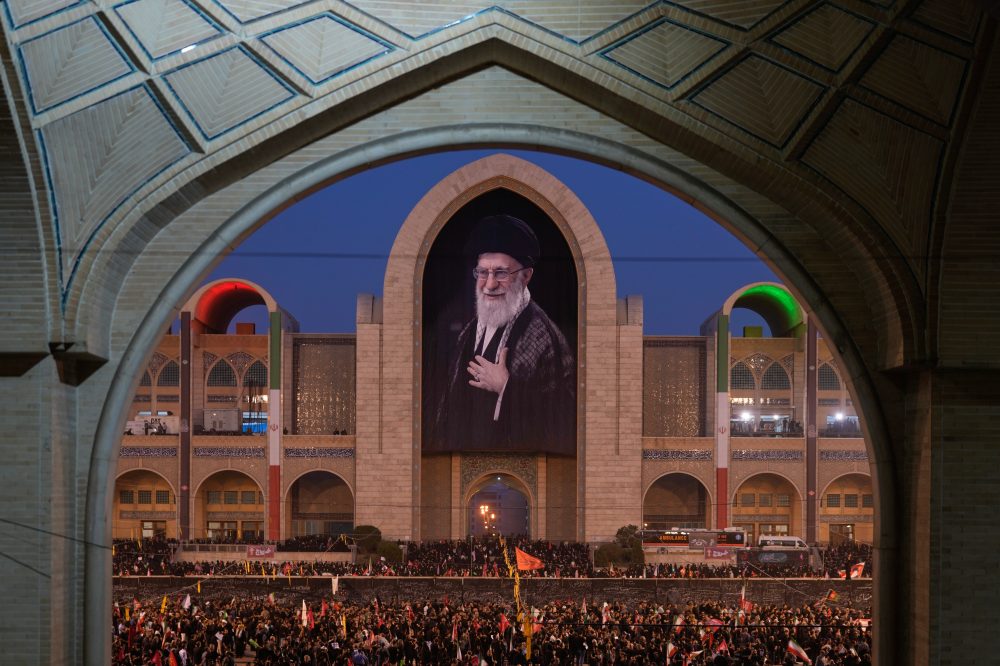
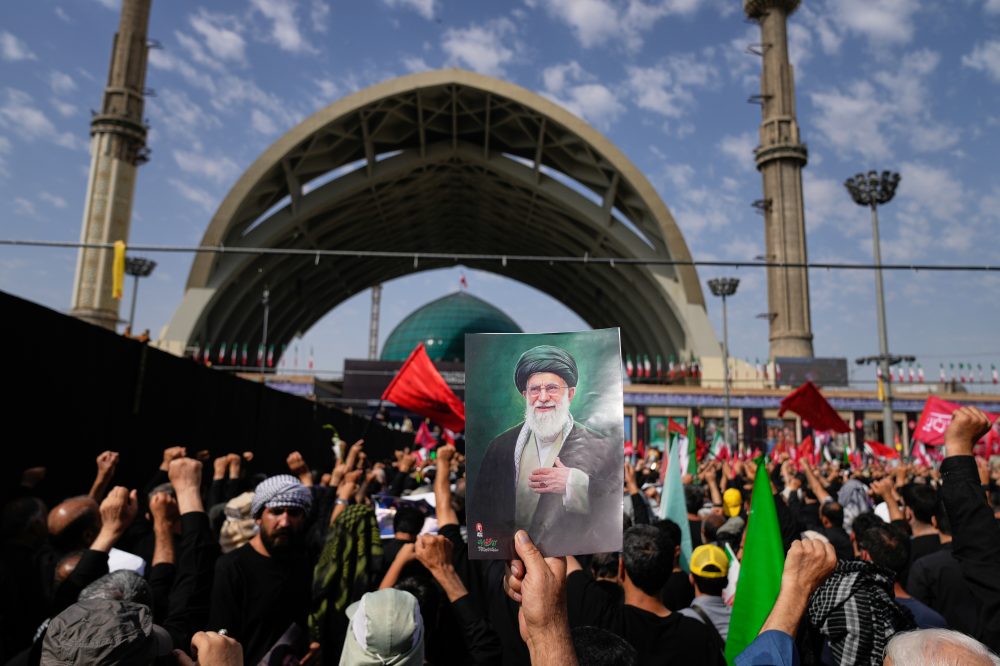
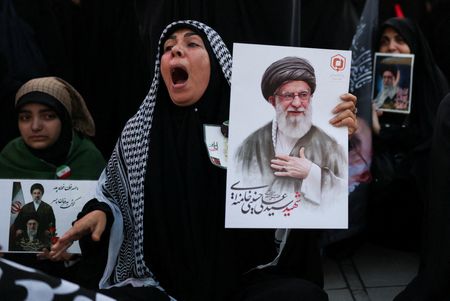
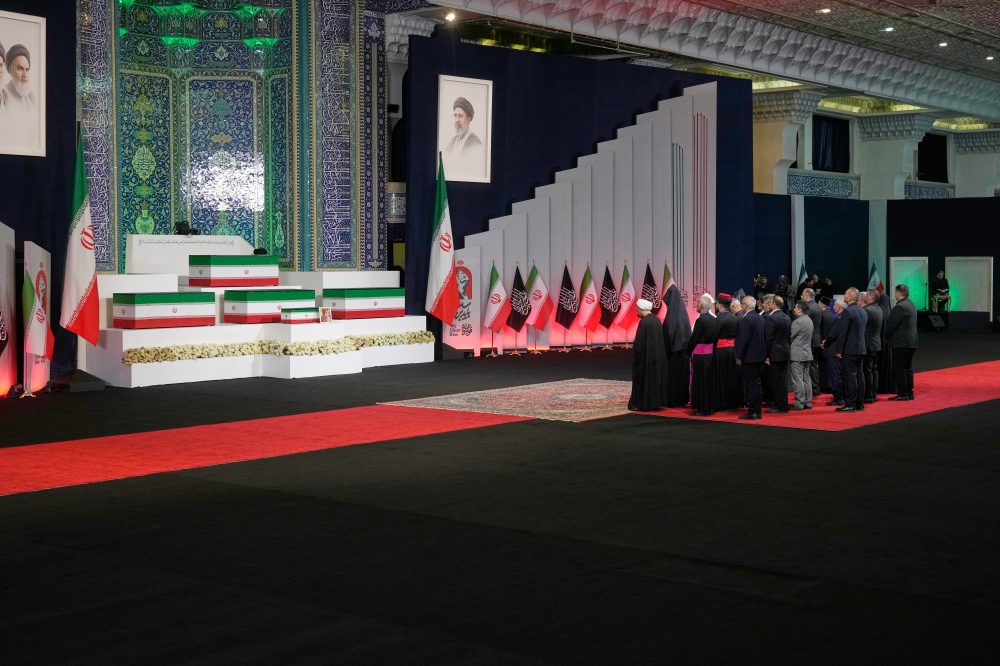
Iran kicked off a large funeral procession Monday through its capital city of Tehran to honor the late Supreme Leader Ayatollah Ali Khamenei.
Khamenei’s coffin, draped in a flag, along with the coffins of family members who died in an airstrike on February 28 — at the outset of the war launched by Israel and the United States — are being transported on a truck through Tehran’s streets.
The procession is making its way toward Mehrabad International Airport as part of the formal mourning ceremonies.
Iran’s theocratic government is expecting large crowds to turn out across the city, viewing the attendance as a public demonstration of support for the ruling regime.
Iranian state television confirmed the procession had officially gotten underway.
To accommodate the mourning period, authorities have closed off streets, restricted airspace, and brought much of daily life to a halt. The ceremonies are scheduled to wrap up Thursday, when the 86-year-old Khamenei will be laid to rest at the Imam Reza shrine in Mashhad, his birthplace.
Meanwhile, the United States continues to push forward with diplomatic negotiations with Iran. Those talks are focused on fully reopening the Strait of Hormuz, scaling back Iran’s disputed nuclear program, and achieving a lasting end to the ongoing war. However, negotiations appear to be paused until after the burial takes place.
MANILA — A Philippine anti-graft court moved to arrest a key ally of Vice President Sara Duterte on Monday, issuing a warrant for Senator Rodante Marcoleta on a plunder charge just hours before the Senate convened a high-profile impeachment trial that could shape Duterte’s political future.
Marcoleta had been set to serve as a senator-judge in the impeachment proceedings against Duterte. If two-thirds of the 24-member Senate votes to convict her, Duterte could be disqualified from running in the 2028 elections, in which she is currently considered the leading candidate to succeed President Ferdinand Marcos Jr.
Marcos and Duterte ran together on a joint ticket in 2022, but that partnership has since collapsed into an intense rivalry.
The anti-graft court issued the arrest warrant after the Ombudsman’s office accused Marcoleta of accepting 75 million pesos — roughly $1.2 million — from private donors during his 2025 Senate campaign, an alleged violation of anti-corruption laws. The court also issued a hold departure order, barring the senator from leaving the Philippines.
In a statement released last week, the Ombudsman declared, “A public servant owes no personal debt to any donor that supersedes what they owe the Filipino people.”
News of the impending arrest sparked protests last week, organized by a religious group with 2 million members. The demonstrations snarled traffic throughout the capital, Manila, and forced Marcos to cancel scheduled events outside the presidential palace.
Marcoleta’s office had not issued a response as of Monday. The senator told supporters last week that he was ready to face imprisonment.
The case is not the first of its kind in recent weeks. Last month, Senator Jose “Jinggoy” Estrada was taken into custody on plunder charges amid suspicions that he accepted kickbacks connected to infrastructure projects.
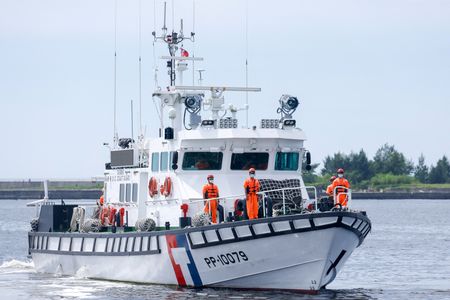
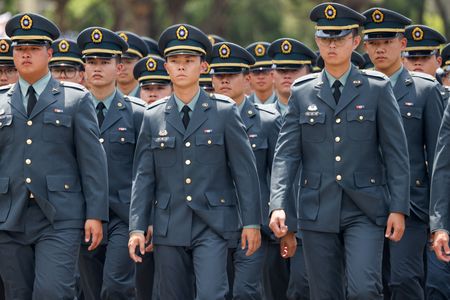
TAIPEI — Taiwan’s government says it is closely watching a growing number of Chinese naval movements as the military exercise season reaches its peak, including joint operations involving Russia, according to a senior Taiwanese security official who spoke Monday.
Taiwan, which operates as a self-governing democracy, is claimed by China as part of its territory. The island strongly rejects that claim and maintains that its own people have the sole right to determine their future. Taiwanese officials say the window of warning time before any potential military attack continues to narrow.
Taiwan National Security Bureau Director-General Tsai Ming-yen addressed reporters at parliament, noting that the period from July through September represents the height of Chinese military drill activity. He said officials are comparing current operations with previous ones to identify any emerging “new patterns.”
Tsai confirmed that four Chinese naval formations are currently active in the Western Pacific.
“Overall, during this seasonal peak for exercises, the mobilisation of Chinese Communist naval and maritime forces has indeed shown an upward trend,” Tsai stated.
China’s defense ministry had not responded to requests for comment at the time of this report.
On Sunday, both China’s defense ministry and Russian state media announced that the two countries’ naval forces would conduct joint exercises in the waters and airspace near the Chinese city of Qingdao this week. Tsai said Taiwanese officials became aware of those planned drills last week and held internal briefings ahead of time.
He also noted that the joint Chinese-Russian operations appear aimed at challenging the “denial and defence strategy” built by the United States and its allies along the First Island Chain — a stretch of territory running from Japan through Taiwan, the Philippines, and Borneo.
By Friday, Taiwan was tracking a record number of more than 110 Chinese military and Coast Guard vessels operating along the First Island Chain, according to a post on X by Joseph Wu, secretary-general of Taiwan’s National Security Council, published late Saturday.
This follows a 2023 incident in which Taiwan spotted two Russian warships off its eastern coastline.
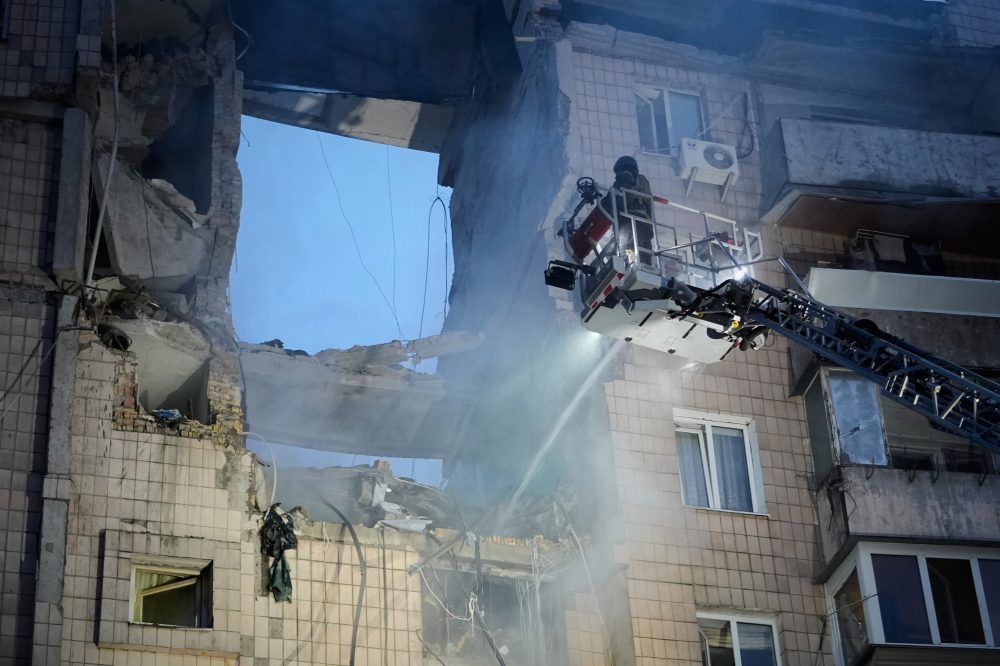
KYIV, Ukraine — Russia unleashed a barrage of missiles and drones on Ukraine’s capital overnight into Monday, leaving at least three people dead, according to authorities. The assault began just hours after Ukrainian President Volodymyr Zelenskyy had publicly warned that a major Russian strike was on the way.
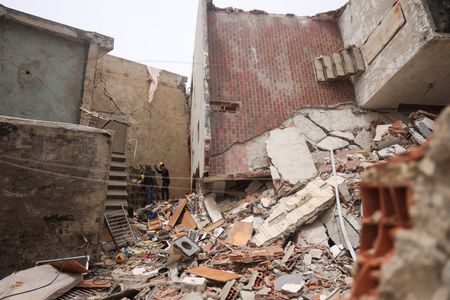
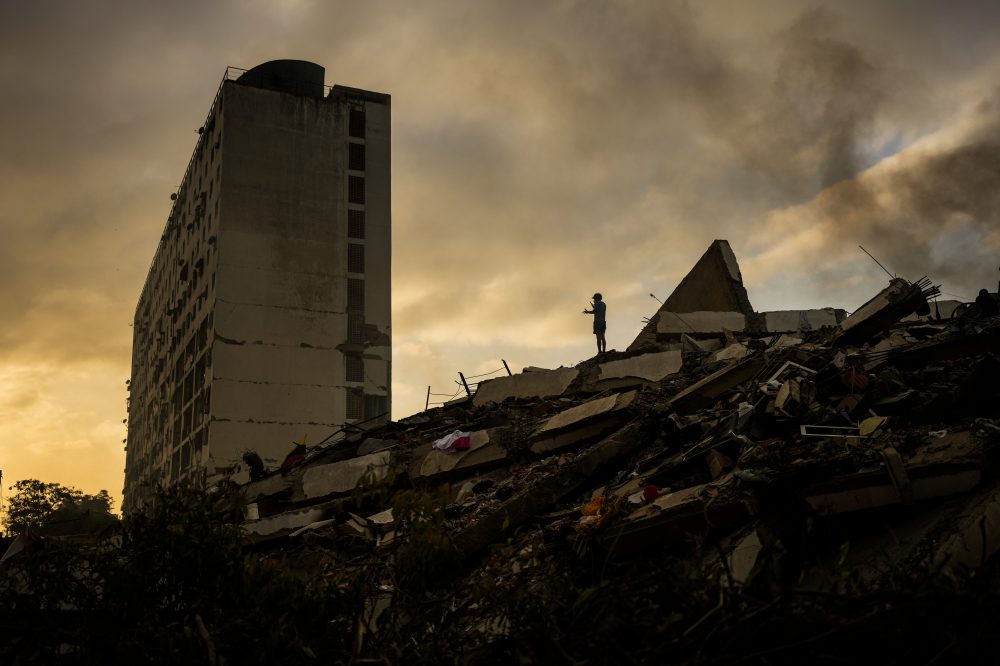
Tymur Tkachenko, the head of Kyiv’s City Military Administration, reported via Telegram that a residential building in the Podilskyi district partially collapsed during the attack. In the Darnytsia district, multiple high-rise buildings sustained damage, and rescuers believed people were trapped beneath the debris.
“These are residential buildings. Places where people slept and lived their ordinary lives,” Tkachenko wrote.
The strike, which was still ongoing in the early hours of Monday morning, involved multiple waves of ballistic missiles, cruise missiles, and drones. The sounds of explosions rang out across Kyiv as residents fled to underground metro stations seeking safety.
Monday’s attack follows a deadly combined Russian strike just days earlier that claimed the lives of at least 31 people in the capital. In a late Sunday Telegram post, Zelenskyy again urged Western allies to strengthen Ukraine’s air defense systems, specifically calling for more Patriot missiles. He argued that allowing those supplies to run low only encourages Russia to continue its four-year war against Ukraine.
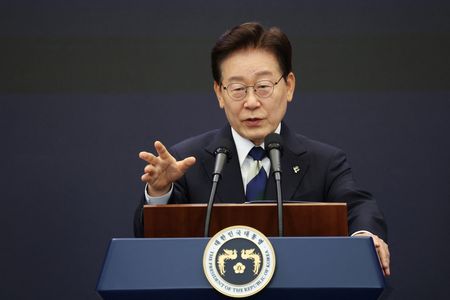
SEOUL — South Korea’s President Lee Jae Myung is calling on government officials to move without delay in getting major chip and artificial intelligence projects off the ground, following a sweeping investment announcement made last week.
Speaking at a government meeting on Monday, Lee stressed that the nation’s ability to lead in advanced industries depends on how quickly it can act. He cautioned that bottlenecks in permitting, land acquisition, and securing reliable power and water supplies could jeopardize South Korea’s position in the global race for technological dominance.
“In this situation, it appears the outcome will be decided by who moves faster and who secures the lead first,” Lee said. “Only speed matters.”
Lee pointed to the Yongin industrial complex as an example of how slow the process can be, noting it took six years from site selection to breaking ground — and that timeline was actually considered relatively quick. He called on officials to shorten environmental reviews and other approval steps wherever possible, and said processes that are typically handled one after another should instead be pursued simultaneously.
The president also directed officials to get ahead of power and water infrastructure needs rather than waiting until projects are underway. He highlighted electricity as a particularly critical concern for chip manufacturing facilities, noting that companies have already expressed worries about reliable baseload power supply despite growth in renewable energy. Lee ordered officials to proactively address those concerns.
Lee also said government representatives and corporate leaders should begin talking about specific locations for the planned facilities.
Last week, South Korea unveiled a plan involving more than $576 billion in investment targeting the chip and AI sectors, with a goal of establishing global leadership and spreading economic growth beyond the Seoul metropolitan area. Samsung Electronics and SK Hynix are each set to invest 400 trillion won — roughly $260 billion apiece — to construct new chip manufacturing sites in the country’s southwest. An additional 81 trillion won is expected to flow into a chip-packaging cluster in the Chungcheong region.
SYDNEY — Australia and Fiji have formalized a new mutual defence alliance, signing the agreement on Monday alongside a separate treaty designed to deepen economic and security cooperation between the two Pacific nations.
Fiji Prime Minister Sitiveni Rabuka described the newly signed agreements as a meaningful upgrade in the relationship between the two countries.
Canada is poised to make a major defense decision Monday, selecting either a German or South Korean firm to construct a fleet of 12 submarines in what would rank among the country’s largest-ever military contracts.
The two companies in the running are Germany’s ThyssenKrupp Marine Systems and South Korea’s Hanwha Ocean. The deal, worth tens of billions of dollars, would deliver 12 conventionally powered submarines to the Canadian navy.
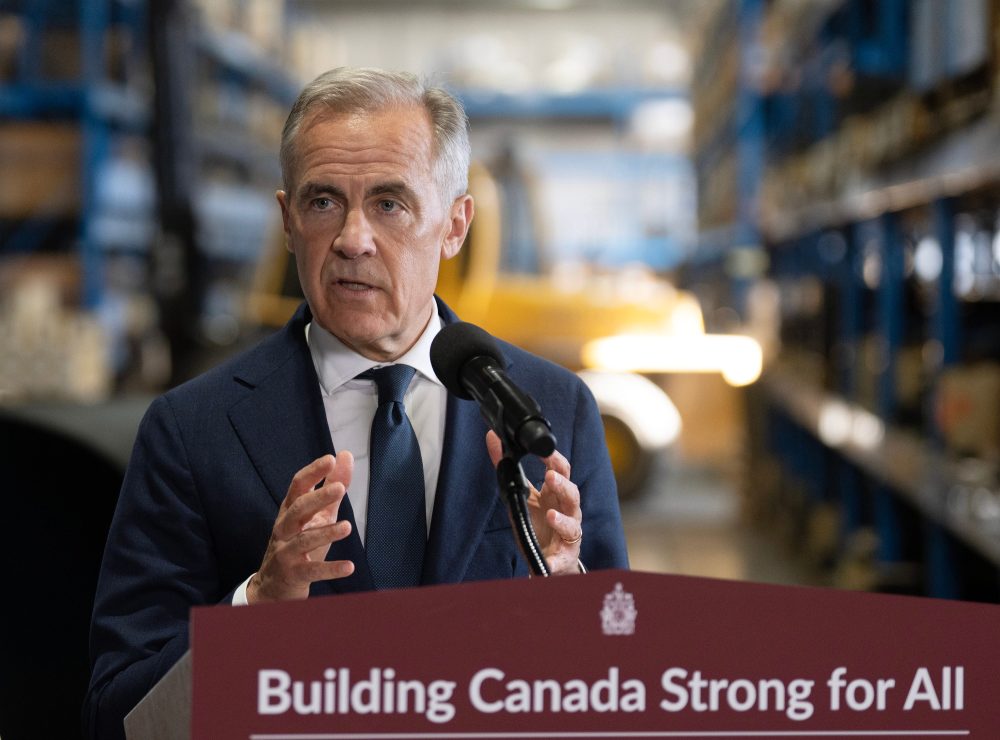
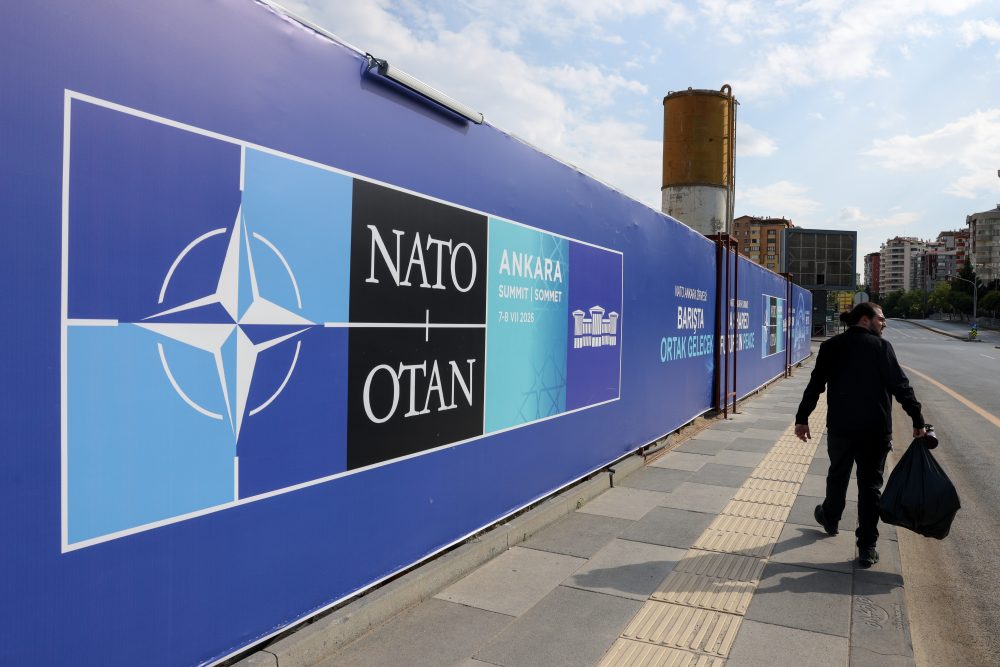
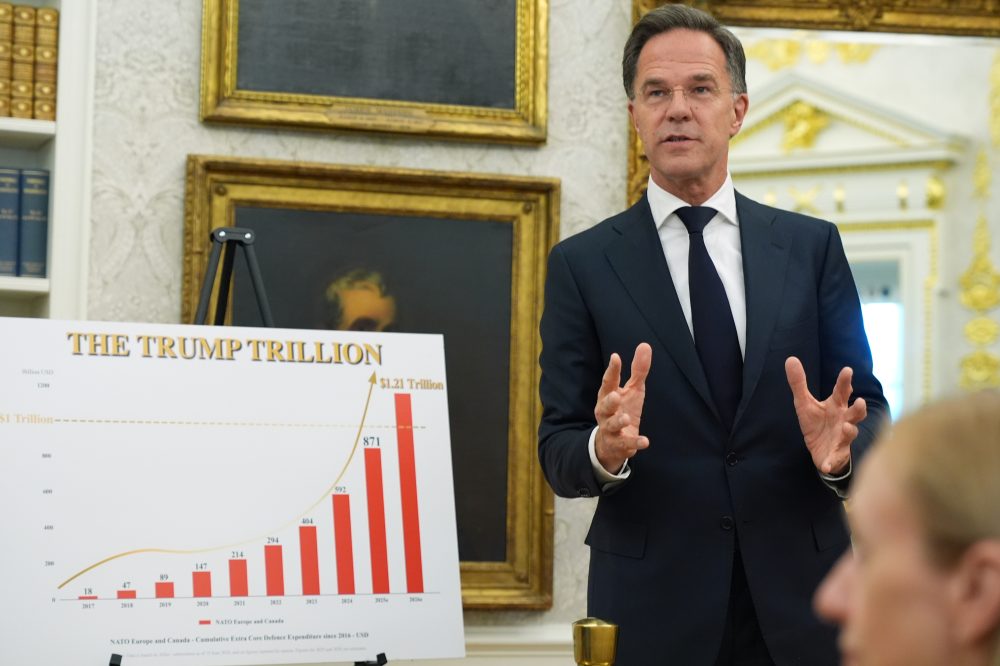
The decision is expected to come before Prime Minister Mark Carney travels to a NATO summit being held in Turkey, as member nations across the alliance continue ramping up their defense budgets.
On Monday, Carney is scheduled to visit a Canadian Armed Forces base in the Atlantic-coast province of Nova Scotia, where he plans to unveil “new measures to make Canada more secure, resilient, and prosperous.”
A spokesperson for the prime minister declined to confirm that the submarine contract announcement would specifically be part of that event. However, Carney stated back in May that a decision would be coming within a matter of weeks.
Canada’s existing submarine fleet — four Victoria class vessels — is barely operational at this point, making the new procurement a pressing priority.
The German-Norwegian consortium ThyssenKrupp Marine Systems has argued that its submarines would strengthen NATO as a whole, pointing out that it has already provided a large share of the alliance’s conventional submarine fleet.
Hanwha Ocean, meanwhile, has launched an aggressive advertising push and emphasized the economic advantages its proposal would bring to Canada. Last month, the South Korean company brought its KSS-III diesel-electric submarine to British Columbia following the vessel’s completion of the South Korean navy’s first-ever crossing of the Pacific Ocean.
Both bidders have stressed that their proposals would create jobs and drive investment within Canada.
Carney’s government has committed to meeting NATO’s elevated defense spending goals, pledging to dedicate 5% of Canada’s gross domestic product to defense by 2035. Canada reached the alliance’s previous benchmark of 2% of GDP this year.
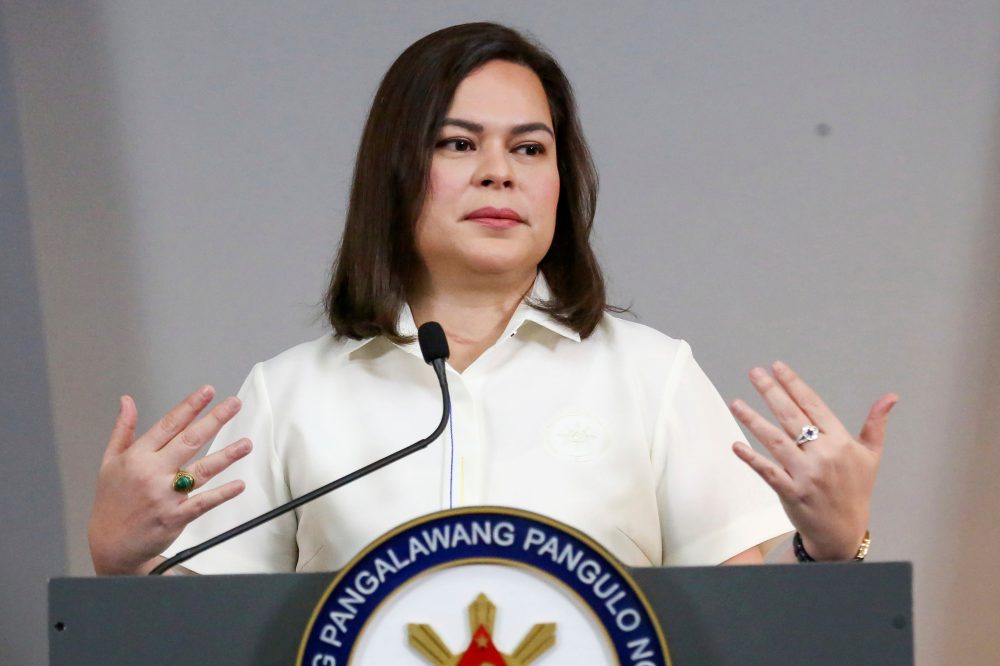
MANILA, Philippines — The Philippine Senate, sitting as an impeachment court, launched the trial of Vice President Sara Duterte on Monday in what is shaping up to be one of the most politically explosive legal proceedings the country has seen in years — unfolding amid a deep and bitter feud between Duterte and President Ferdinand Marcos Jr.
Authorities deployed more than 6,000 police officers, including anti-riot units, around the Senate building as both supporters and opponents of Duterte were expected to gather outside. According to a pretrial plan reviewed by The Associated Press, Duterte or her legal team may appear at the outset of the proceedings, which are scheduled to run for 92 days.
The charges against her include accumulating unexplained wealth, misusing confidential government funds, and publicly threatening to arrange the assassination of Marcos, his wife, and a former House speaker if she were killed as a result of their political conflict. Duterte has denied the allegations.
A guilty verdict could permanently disqualify her from ever holding public office again — a devastating outcome for someone who has publicly declared her intention to run for president in mid-2028, when Marcos is set to complete his six-year term. The two had been running mates in the 2022 elections, combining the political muscle of two of the Philippines’ most powerful dynasties, but their partnership quickly unraveled.
Sara Duterte is the daughter of former President Rodrigo Duterte, who preceded Marcos in office. The elder Duterte was arrested last year on orders from the International Criminal Court and transported to The Hague, where he remains in detention. He was scheduled to face trial on November 30 over alleged crimes against humanity.
Those charges are rooted in the violent anti-drug campaign Rodrigo Duterte oversaw during his presidency, which left thousands of mostly impoverished suspects dead and drew sharp criticism from Western governments and human rights organizations. While he has denied ordering extrajudicial killings, he repeatedly made public threats against drug suspects while in office.
The vice president has placed the blame for her father’s arrest and transfer to the ICC squarely on President Marcos.
The two political figures also hold starkly different views on foreign policy. Marcos has deepened military cooperation with the United States, the Philippines’ treaty ally, and has taken a firm stance against China’s increasingly aggressive behavior in the contested South China Sea. In contrast, Rodrigo Duterte cultivated warm relationships with Chinese President Xi Jinping and Russian President Vladimir Putin while threatening to distance the Philippines from Washington. Sara Duterte has drawn criticism for failing to speak out against China’s actions — including the use of powerful water cannons — against Filipino military personnel and fishermen in the disputed waters.
Last month, the House of Representatives, where Marcos’ political allies hold a commanding majority, voted by a wide margin to impeach the vice president. The articles of impeachment cited unexplained wealth, misappropriation of confidential government funds, and the public assassination threat.
While Duterte has broadly rejected the charges, she has declined to address them in detail publicly ahead of the trial. Her allies have characterized the impeachment as a politically motivated campaign orchestrated by Marcos and his inner circle to neutralize her and her Senate supporters.
To secure a conviction, at least 16 of the Senate’s 24 members — two-thirds of the chamber — must vote against her.
The trial comes as several senators aligned with the Duterte camp face serious legal troubles of their own. Sen. Jinggoy Estrada, who supports the Duterte family, was arrested last month on a nonbailable plunder charge tied to a flood-control project bribery scandal. He has denied any wrongdoing.
Another pro-Duterte senator, Rodante Marcoleta, is facing possible arrest on a nonbailable plunder charge stemming from allegations that he received large campaign contributions and failed to disclose them in his financial disclosures. Marcoleta has denied any irregularities.
A third senator, Ronald dela Rosa, has gone into hiding after the ICC issued an arrest warrant naming him as a co-perpetrator in the killings carried out during the Duterte administration. Dela Rosa previously served as Rodrigo Duterte’s national police chief and was the first to implement the then-president’s deadly crackdown on illegal drugs.
Ukraine’s capital city of Kyiv was struck by a Russian missile attack in the early morning hours of Monday, July 6, with local officials reporting that people were left trapped inside a severely damaged building not far from the city center.
Journalists from Reuters on the ground in Kyiv reported hearing multiple explosions both within the city and in surrounding areas. They also witnessed Ukrainian air defense systems working to intercept incoming Russian drones during the attack.
Kyiv’s mayor took to Telegram to inform residents that a residential building had been struck in the historic Podil neighborhood. “People are trapped on the seventh to ninth floors,” the mayor wrote.
The mayor also noted that debris from drones had come down on a second residential building within the same district, as well as in other parts of the city, which is home to approximately 3 million people.
Monday’s attack follows a deadly strike just last Thursday, when Russia unleashed hundreds of drones and dozens of missiles on Kyiv, killing at least 30 people.
LONDON — The United Kingdom took steps Monday to strengthen its rules around foreign political donations, aiming to prevent outside money from shaping British elections in what Housing Minister Steve Reed described as a fight against “dodgy funding.”
The push for reform began last year after the government launched a review into foreign financial meddling in politics, triggered by the jailing of a former Reform UK politician who accepted bribes in exchange for making pro-Russia speeches and statements.
That review concluded that Britain faces an ongoing threat from foreign nations — specifically naming Russia, China, and Iran — attempting to interfere with and weaken the country’s democratic processes. Those findings led directly to the new regulations now taking effect.
The timing is notable, as Reform UK leader Nigel Farage is currently under investigation by parliament’s standards watchdog. The inquiry centers on whether Farage should have disclosed a £5 million ($6.68 million) donation from a Thailand-based cryptocurrency billionaire — money that was given before Farage announced he would run for a seat in parliament.
Britain’s Ministry of Housing, Communities and Local Government announced Monday that going forward, political candidates must declare any donations exceeding £2,230 that were received before they officially became a candidate. They must also demonstrate that any pre-candidacy funding came from legitimate sources.
“By holding overseas donors to tougher standards and requiring candidates to prove where their funding comes from, we are taking world-leading action to protect the integrity of our elections and tackle the threats we face from abroad,” Reed said in a prepared statement.
Additional provisions in the updated rules require individuals who move to the UK from other countries to live there permanently for at least one year before they are permitted to make a political donation of £100,000 or more. Donations from companies will now also be evaluated based on past post-tax profits rather than revenue, a change designed to ensure that only businesses with genuine ties to the UK can contribute.
These latest measures expand on rules announced back in March, which placed a £100,000-per-year cap on donations from British citizens living abroad and banned contributions made in cryptocurrency until a proper regulatory framework is in place.
Reform UK, which has led national opinion polls for more than a year, has maintained that no rules were violated regarding the donation Farage received from crypto investor Christopher Harborne. According to data from the Electoral Commission, Harborne supplied roughly two-thirds of Reform’s total funding last year.
Farage faced additional scrutiny on Sunday when he was referred to parliament’s standards watchdog following a report alleging he failed to disclose certain other benefits.
Canadian Prime Minister Mark Carney is expected to reveal which company will be awarded a contract to construct 12 submarines for Canada’s navy when he makes an announcement on Monday, according to a report from the Globe and Mail published Sunday.
The timing of the announcement is significant — Carney is scheduled to travel to Turkey for a NATO leaders’ summit on Tuesday and Wednesday, and sources cited by the Globe and Mail indicate the submarine contract decision will come before his departure.
A request for comment sent to the Prime Minister’s Office had not received a response at the time of reporting.
Two companies are vying for the lucrative naval contract: Thyssenkrupp Marine Systems (TKMS), a joint German-Norwegian venture, and Hanwha Ocean, a shipbuilder based in South Korea.
Canada has been under pressure from the United States to boost its defense spending. The country has already met NATO’s military spending benchmark of 2% of gross domestic product ahead of its original schedule. NATO leaders have collectively agreed to raise defense and security-related spending to 5% of GDP by the year 2035.
In addition to the submarine announcement, Canada is working to gather approximately 10 founding nations for a proposed global defense bank, with plans to unveil that initiative at the upcoming NATO summit.
MANILA — The impeachment trial of Philippine Vice President Sara Duterte got underway Monday, a proceeding that analysts say will help define the country’s 2028 presidential race while deepening a bitter divide between two powerful political dynasties that has thrown the Senate into chaos.
The verdict will carry consequences far beyond Duterte’s political future — it will also serve as a test of public faith in the Philippines’ institutions. Experts warn that how the process is perceived matters just as much as the outcome itself.
“If it is seen as politically motivated or lacking credibility, questions may linger regardless of the outcome,” said Ederson Tapia, a public administration professor at the University of Makati.
How long the trial will take remains uncertain. Factors like procedural disputes, witness lists, and evidence presentations will all play a role in determining the pace. For reference, a 2012 impeachment trial involving a former chief justice stretched on for four months. To secure a conviction, at least 16 of the Senate’s 24 members must vote in favor. Opinion polls currently show Duterte as a top contender for the 2028 presidential race, though a guilty verdict could derail those ambitions.
“If the public perceives the process to have been fair, an acquittal could strengthen her position,” Tapia added.
This marks the first-ever impeachment trial of a Philippine vice president. The charges against Duterte include misappropriating government funds, accumulating wealth she cannot explain, and making threats against President Ferdinand Marcos Jr., the first lady, and a former House Speaker.
Duterte, whose father is former President Rodrigo Duterte, has denied all allegations and maintains the impeachment is a politically driven attack against her.
Congressman Robert “Ace” Barbers, who serves as spokesperson for the prosecution, dismissed her claims. “That is to be expected,” he said. “We will let the evidence speak for itself.”
Jean Encinas-Franco, a political science professor at the University of the Philippines, stressed that both sides need a full and fair opportunity to make their case. She pointed to the impeachment of then-President Joseph Estrada as a cautionary tale — a Senate vote to block key evidence sparked public fury, brought the trial to a halt, and fueled mass protests that ultimately led to Estrada’s removal from office in January 2001.
“They really have to make sure that both the prosecution and the defence are given enough time and voice … so the public does not perceive the trial as favouring one side,” she said.
Duterte’s attorney, Michael Poa, said the defense team is ready to demonstrate that the charges are “baseless.” He was unable to confirm whether Duterte herself would appear at Monday’s opening session, noting that the summons allowed her to be represented by her legal team.
FROM ALLIES TO ADVERSARIES
Marcos and Duterte — both heirs to two of the Philippines’ most influential political families — ran together on the same ticket in 2022. That partnership has since collapsed into an increasingly hostile feud, a rupture that intensified following Rodrigo Duterte’s arrest and transfer to the International Criminal Court in March of last year.
The fallout has spilled directly into the Senate, casting uncertainty over how the trial will play out.
In May, as the Senate was preparing to receive the impeachment complaint from the House of Representatives, Duterte ally Senator Ronald “Bato” dela Rosa suddenly reappeared in the chamber after being absent from public view since November. His vote proved decisive in installing Alan Peter Cayetano as Senate president.
Dela Rosa then remained inside the Senate building before quietly slipping out in the early hours of May 14 — just hours after gunfire and disorder broke out inside the parliament building. His current whereabouts are unknown.
Cayetano had previously served as the running mate of Duterte’s father in the 2016 election. Rodrigo Duterte is currently in The Hague awaiting trial on murder charges stemming from his administration’s “war on drugs.” Dela Rosa, who served as national police chief during much of that crackdown — in which thousands of suspects died — faces similar ICC charges. Both men deny any wrongdoing.
Roughly a month after the Senate leadership clash, a rival bloc of senators secured enough support to elect Senator Sherwin Gatchalian as Senate president.
While the internal power struggle has exposed the Senate’s deep divisions, analysts caution that the leadership battle should not be read as a reliable preview of how individual senators will vote in the actual trial.
“The impeachment process creates a different set of incentives and constitutional responsibilities than leadership contests or coalition politics,” Tapia said.
The trial’s outcome could also shape who becomes the leading presidential candidate from the Marcos camp in 2028, as Marcos himself is constitutionally prohibited from running for a second term.
The Venezuelan information ministry announced Sunday that the combined death toll from two major earthquakes has reached 3,342, with the latest numbers painting a grim picture of the ongoing humanitarian crisis.
Beyond the fatalities, officials report that 16,470 people sustained injuries in the disaster, while 17,345 individuals have been left without a place to live.
The updated figures came on the same day that interim President Delcy Rodriguez addressed the nation during ceremonies marking Venezuela’s 215th independence day. During her speech, Rodriguez pushed back against mounting criticism that the government’s response to the earthquakes was too slow and fell short of what was needed.
Rodriguez stated that she moved quickly to send security forces to the affected areas following the quakes. She also announced the establishment of a new military unit that will be dedicated to responding to emergencies and natural disasters going forward.
Turkish authorities detained more than 100 people Sunday during an anti-NATO protest march organized by the Communist Party of Turkey, known as the TKP, ahead of a major alliance summit scheduled for next week in Ankara.
Turkey is set to host leaders from all 32 NATO member nations, along with officials from partner countries, for a summit taking place Tuesday and Wednesday in the capital. In preparation for the high-profile gathering, authorities have significantly increased security throughout Ankara, prohibiting demonstrations, blocking off large sections of the city, and shutting down numerous roads.
The TKP released a statement saying it had organized a protest march at Kizilay square, located in central Ankara, and that more than 100 party members — including party administrators — had been taken into custody.
Video from the scene showed protesters waving flags and chanting phrases such as “Murderer NATO, get out of country” and “No passage to NATO” as riot police moved in, deploying tear gas to scatter the demonstrators.
In Istanbul, a separate TKP-organized march drew hundreds of participants who walked from Taksim Square to Dolmabahce. Two additional protests were held by leftist organizations in the city’s Kadikoy district. Despite a visible police presence, those Istanbul demonstrations remained peaceful with no confrontations reported.
“We have gathered today in many parts of Turkey to protest against NATO,” TKP Secretary General Kemal Okutan declared during the Istanbul demonstration.
“We said that we would not hand over Ankara to supporters of NATO, that we would not allow Ankara to remain silent. We have fulfilled that promise,” he added.
The Turkish government had not issued any response to the protests or the detentions as of Sunday.
Last month, authorities arrested 103 people during anti-terror raids in Ankara in which a total of 225 individuals were detained. On Sunday, media also reported that 39 additional people — among them journalists from independent news organizations, activists, and academics — were detained in anti-terror operations conducted across the country.
Tuncer Bakirhan, co-chair of Turkey’s pro-Kurdish DEM Party, and Kemal Kilicdaroglu, the court-appointed chairman of the main opposition Republican People’s Party, both condemned the detentions, calling them unacceptable actions that interfere with basic rights in the lead-up to the NATO summit.
“The country has been fully turned into a detention centre by using the NATO summit as an excuse,” Bakirhan wrote on X. “We are living through days of undeclared martial law.”
Turkish prosecutors have previously stated that the operations were aimed at uncovering militant group activities, making no reference to the upcoming summit in their explanations.
WASHINGTON — The White House has announced that President Donald Trump plans to sit down with Ukrainian President Volodymyr Zelenskyy and Syrian President Ahmad al-Sharaa on Wednesday as part of his attendance at the NATO summit being held in Turkey.
White House spokesperson Anna Kelly confirmed both meetings during a call with reporters, offering a preview of the upcoming summit in Ankara. Trump is also scheduled to meet with Turkey’s President Recep Tayyip Erdogan on Tuesday, and before heading back to the United States on Wednesday, he is expected to hold a news conference, according to Kelly.
The meeting with Zelenskyy is taking place against the backdrop of a war between Russia and Ukraine that is now in its fifth year. Both Zelenskyy and Russian President Vladimir Putin separately called Trump on Saturday to congratulate him on the July Fourth celebration marking the 250th anniversary of American independence.
Following his call with Trump, Zelenskyy posted a statement on X saying the two leaders discussed conditions on the front lines of the war, where analysts indicate Russian advances have largely stalled. Ukraine has also ramped up its own strikes, showing it can hit targets deeper inside Russian territory.
Zelenskyy expressed optimism, saying there is “a real prospect of ending this war,” and indicated that conversation would continue at the NATO gathering in Ankara.
On the Russian side, Kremlin foreign affairs adviser Yuri Ushakov said that during Putin’s phone call with Trump, the president reaffirmed his “readiness to help achieve a quick cessation of hostilities and search for peaceful solutions to settle the crisis” in Ukraine.
A senior U.S. official, speaking anonymously on Sunday to describe the administration’s thinking, said Trump feels a strong sense of urgency to bring the conflict to a close and intends to discuss that with Zelenskyy. The official also indicated Trump is expected to follow up with Putin after his Ankara meeting with the Ukrainian president.
As for the planned meeting with Syrian President al-Sharaa, U.S. officials offered no details about what the two leaders intend to discuss.
Trump has recently drawn attention for repeatedly suggesting that Syria take on Hezbollah in Lebanon — a notion that has surprised many in the region and complicated ongoing negotiations related to the conflict with Iran. Al-Sharaa, who previously led an Islamic insurgent group and whose rebel forces drove Bashar Assad from power in Syria, has said he has no desire to pursue that course. He has suggested Trump’s remarks were misunderstood, even as Trump has continued to make them.
President Donald Trump is preparing to attend this week’s NATO summit in Turkey, where he plans to hold a series of high-stakes meetings with world leaders in an effort to advance peace in Ukraine, according to a senior U.S. official.
Trump is expected to arrive at the summit on Tuesday. His first sit-down will be with Turkish President Tayyip Erdogan, the host of the summit. The White House also confirmed that Trump will meet with Syrian President Ahmed al-Sharaa and hold a press conference during the visit.
A senior U.S. official, speaking to reporters on the condition that their name not be used, confirmed that Trump will sit down with Ukrainian President Volodymyr Zelenskiy on Wednesday. The purpose of that meeting, the official said, is to discuss “how we can end the war.”
The official described the current state of the conflict in stark terms. “The battlefield has clearly frozen over the last couple of months and neither side is making a lot of progress,” the official said. “The president feels a real sense of urgency to try to bring this to a stop.”
In addition to the Ukraine discussions, Trump is also expected to press fellow NATO member nations to increase what they spend on their own national defense, the official added.
JERUSALEM — In an unprecedented move, members of Israel’s cabinet voted Sunday to openly reject a Supreme Court ruling concerning the nation’s broadcast regulatory authority, sparking fears of a full-blown constitutional crisis.
This marks the first time Prime Minister Benjamin Netanyahu’s government has directly defied a court ruling, though tensions with the judiciary are nothing new. Following the 2022 elections, the government attempted to curb the court’s powers — a move that drew widespread international criticism and triggered massive protests across Israel. Those judicial reform efforts were put on hold after the Hamas attacks of October 7, 2023, though some elements have since been revived.
At the heart of the dispute is a legal requirement that Israel’s Second Authority for Television and Radio maintain a minimum number of members in order to conduct official business. The government contends that because the council no longer meets that threshold, it lacks the authority to approve appointments or carry out other functions. Despite this, on June 17, the Supreme Court ordered the council to press forward regardless.
On Sunday, the cabinet voted unanimously to reject that court order. Communications Minister Shlomo Karhi and Justice Minister Yariv Levin announced the decision in a joint statement. Opposition figures were quick to denounce the move.
Opposition leader Yair Lapid declared that “the government had turned criminal.”
“This is the most serious constitutional crisis in Israel’s history. It’s the destruction of the foundations of our democracy,” Lapid said in a statement.
Karhi and Levin — with Levin being a leading advocate for reshaping Israel’s judicial system — proposed that the government refuse to recognize any decisions or actions taken by the council until the legal membership requirement is satisfied. The cabinet’s formal statement asserted that the court had overstepped its bounds and pledged to “act through all legal means at its disposal to nullify the decision.”
“A ruling that contradicts the law will not be recognised and decisions made under it are null and void,” the cabinet statement read.
Karhi went further, arguing that judges are not lawmakers, and warned that any future decisions made by the media regulator would be “worthless.” Levin added that when parliament passes a law, the court is bound to respect it.
Israeli President Isaac Herzog pushed back strongly, warning that defying Supreme Court rulings threatens national unity.
“I have already made it clear, and I will repeat it again and again — disobedience to a court ruling is a red line that must not be crossed under any circumstances,” Herzog said.
Cabinet Secretary Yossi Fuchs sought to soften the tone of the ministers’ remarks, insisting the cabinet was not calling for outright defiance but rather offering “sharp criticism” of a ruling it believes conflicts with existing law. “The government declared that it will use all legal tools at its disposal to overturn the decision in the future. How do legal tools become disobedience to a ruling?” Fuchs wrote on X.
Netanyahu himself has not made any public comment on the cabinet’s decision, but his political rivals have been vocal. Naftali Bennett, who served as prime minister from 2021 to 2022, warned that “not adhering to court rulings brings anarchy in the streets and the disintegration of our country.”
Gadi Eisenkot, who currently leads in polls as a potential successor to Netanyahu, accused the government of “raising a hand against Israeli democracy” and said Netanyahu was “dividing Israel.”
The cabinet’s defiance could have real-world consequences for Israeli media. It may delay or block the potential sale of Channel 13 — one of Israel’s major commercial television networks and a frequent critic of Netanyahu — to a group of high-tech entrepreneurs. Additionally, the dispute could determine whether the right-leaning, pro-Netanyahu Channel 14 retains its classification as a “small channel,” a designation that provides it with regulatory advantages and exemptions.
No official date has been set for new elections, though one is widely anticipated to take place in September or October.
DAMASCUS, Syria — French President Emmanuel Macron is preparing to make a historic trip to Syria, Syrian state media announced Sunday, which would make him the first leader from a Western nation to set foot in the country since former President Bashar Assad was removed from power in 2024.
The visit follows a meeting in Paris in May 2025, when Macron welcomed Syrian President Ahmad al-Sharaa — the former Islamist leader who took control of Damascus — and pledged to push both the European Union and the United States to ease the heavy economic sanctions that had long burdened Syria. Most of those sanctions have since been lifted.
The French presidential palace offered no comment on the reported Syria trip when contacted Sunday. Syria’s state-run SANA news agency, citing al-Sharaa’s office, confirmed the planned visit but stopped short of providing a specific date. Notably, Macron is scheduled to attend a NATO summit in Ankara, Turkey, on Tuesday and Wednesday.
According to SANA, Macron will not be traveling alone — he is expected to bring investors and representatives from French companies, signaling a potential economic dimension to the visit.
Syria continues to grapple with the aftermath of a 14-year conflict that claimed the lives of nearly half a million people and forced millions more to flee their homes. The country’s infrastructure has been left in ruins, and despite large investment commitments from various nations and businesses, Syria still requires hundreds of billions of dollars to rebuild and pull its population out of poverty.
CAIRO — At least two Palestinians lost their lives Sunday when an Israeli airstrike hit a crowd of people along Omar Al-Mokhtar road in the center of Gaza City, located in the northern part of the enclave, according to health officials on the ground.
Medical personnel reported that several additional individuals sustained injuries in the strike. The Israeli military had not issued any statement addressing the incident as of Sunday.
Israel has conducted repeated strikes in Gaza following a U.S.-brokered ceasefire agreement with Hamas that was reached in October of last year. Israeli officials have maintained that these strikes target militants who pose a threat to Israeli forces in Gaza or who were involved in the 2023 attack.
Hamas has charged Israel with breaking the terms of the ceasefire. Meanwhile, Nikolay Mladenov, the envoy to Gaza appointed by U.S. President Donald Trump through the Board of Peace, has stated that both sides have failed to uphold the agreement.
Negotiations between Israel and Hamas remain stalled over how to carry out the second phase of the ceasefire deal, which calls for Hamas to disarm and for Israeli forces to withdraw from the territory.
In the eight months since the ceasefire went into effect, more than 1,060 Palestinians — a large portion of them civilians — and four Israeli soldiers have been killed in Gaza, based on figures provided by each side. Hamas has not disclosed its own casualty numbers.
Russia’s Defense Ministry announced Sunday that Ukraine has declined to pause military operations around the eastern town of Kostiantynivka, blocking a proposed exchange of fallen Ukrainian soldiers’ remains.
The ministry said Russia put forward a six-hour ceasefire in and around Kostiantynivka on Monday to allow for the handover of Ukrainian servicemen’s bodies, giving Kyiv a deadline of 9:00 a.m. GMT Sunday to respond to the offer.
The announcement comes after Russian military commanders briefed President Vladimir Putin on Friday, telling him that Russian forces had seized control of Kostiantynivka. Ukraine pushed back on that claim, insisting its troops remain in control of the town.
Kostiantynivka has been a long-sought target for Russia as part of its ongoing military campaign in the Donetsk region of eastern Ukraine.
Ukraine’s defense ministry and general staff had not responded to requests for comment at the time of this report.
Hundreds of firefighters are working around the clock to battle wildfires in both Portugal and Greece, with neighboring countries stepping in to provide critical support as blazes continue to burn across southern Europe.
In central Portugal’s Vouzela region, more than 1,200 firefighters supported by nearly 400 vehicles and 15 aircraft have been working to extinguish a fire that ignited Thursday. By Sunday, the blaze had scorched roughly 12,000 hectares — equivalent to about 120 square kilometers or 46 square miles — according to data from the European Union’s Copernicus satellite mapping agency.
The EU’s Civil Protection and Humanitarian Aid agency reported that Spain dispatched 120 firefighters and 45 vehicles to assist Portugal on Friday, while firefighting aircraft from both Italy and Spain were also sent to the region to help combat the massive fire.
Meanwhile, in Greece, a fast-moving fire broke out Saturday evening at a recycling plant near the Oraiokastro suburb of Thessaloniki — the country’s second-largest city. The blaze prompted evacuation alerts for three surrounding suburbs and a facility that houses 157 people with special needs.
Strong winds fueled the fire overnight, requiring approximately 160 firefighters to battle the flames until water-dropping aircraft could be deployed at daybreak, according to the fire department.
On Sunday, authorities urged residents in parts of Thessaloniki to stay inside their homes and keep windows and doors closed because of toxic smoke coming from the burning recycling facility, which had been engulfed by the wildfire on the city’s outskirts.
Oraiokastro’s mayor, Pandelis Tsakiris, told Greece’s state broadcaster ERT that a number of homes and businesses sustained damage in the fire, though he noted that a full assessment would be needed before a complete picture of the destruction could be determined.
A 76-year-old man was taken into custody on suspicion of accidentally starting the fire. Authorities allege he caused sparks from his vehicle that ignited roadside vegetation. He was scheduled to appear before a prosecutor on Sunday.
The recycling plant fire came just days after a separate wildfire in a nearby area claimed the lives of a 12-year-old boy and his father.
Fire department spokesman Brigadier Ioannis Artopoios, speaking on ERT television Sunday, noted that the vast majority of wildfires in Greece stem from human carelessness — including sparks from farming equipment, tossed cigarettes, and outdoor grills. “This means most of them could have been avoided,” he said.
Greece has long struggled with devastating wildfires during its hot, dry summer months. A 2018 fire east of Athens killed more than 100 people, and a 2023 wildfire that swept through a remote nature reserve in northeastern Greece became the largest wildfire ever recorded within the European Union.
In response to the growing threat — worsened by climate change — Greece has been expanding its use of technology to detect and fight fires. The country is integrating a network of four satellites, launched into low orbit in May, designed to monitor for wildfire activity.
While much of western Europe has endured intense heatwaves this summer, Greece has so far avoided the worst of them. Still, dozens of fires have broken out across the country, affecting both the mainland and its islands.
TEL AVIV, Israel — The attorney representing a well-known Palestinian physician held by Israeli forces for the past 18 months is raising urgent alarms about his client’s deteriorating health and alleged mistreatment in custody, according to the human rights organization handling his case.
Hussam Abu Safiya, who served as the director of Kamal Adwan Hospital in northern Gaza, became a prominent symbol of healthcare workers struggling to care for patients throughout the ongoing conflict between Israel and Hamas.
Abu Safiya guided the hospital through an 85-day military siege, recording and releasing video messages pleading for international assistance before he was taken into custody in December 2024. He has not faced any formal charges.
The Israeli military has stated that Abu Safiya, who is 53 years old, is under investigation on suspicion of cooperating with or being affiliated with Hamas. Staff members and international aid organizations who worked alongside him have disputed those claims.
The human rights group Physicians for Human Rights Israel and Abu Safiya’s attorney, Nasser Odeh, reported that during a visit on July 2, Abu Safiya appeared severely weakened and was unable to sit up without difficulty. Odeh noted that his client had fresh injuries around his eyes, ears, and neck, and was having trouble breathing.
Both Odeh and Physicians for Human Rights Israel have filed petitions seeking to have Abu Safiya moved to a different detention facility.
Following an appearance before Israel’s Supreme Court last month — where his continued detention without charges was challenged — Odeh stated that Abu Safiya had endured both physical and psychological mistreatment and had been held in solitary confinement for extended stretches of time.
Abu Safiya appeared briefly via video link during that court hearing, visibly pale and thin, with marks resembling welts visible on both of his arms.
Israel’s Prison Service dismissed the claims as “false and entirely without factual basis.” While declining to address the specifics of the case due to privacy concerns, the agency stated that all individuals in its custody are held in compliance with the law and receive medical attention in line with Ministry of Health standards.
“The Israel Prison Service rejects allegations of abuse, torture, starvation, or denial of medical treatment,” the prison service said in a statement.
Israel has faced mounting international criticism over how Palestinian prisoners and detainees have been treated since the conflict with Hamas began in October 2023. Both human rights organizations and the United Nations have alleged that patterns of abuse have been widespread and systematic.
The number of Palestinians held in Israeli detention rose sharply after the war began, with thousands still remaining behind bars. Reporting has previously documented deeply troubling conditions within those facilities.
The conflict began on October 7, 2023, when the Gaza-based militant group carried out an attack on southern Israel, killing approximately 1,200 people and taking 251 individuals hostage. In the Israeli military campaign that followed, more than 73,000 Palestinians have been killed in Gaza, according to figures from the territory’s Health Ministry, which does not differentiate between civilian and combatant deaths.
French President Emmanuel Macron is set to travel to Syria in an effort to strengthen bilateral relations and address matters of shared concern, according to Syria’s presidential media directorate, which announced the visit on Sunday.
Macron will be accompanied by a delegation that includes investors and representatives from French companies. While in Syria, he is expected to participate in a roundtable discussion with President Ahmed al-Sharaa alongside Syrian delegations.
Syria’s presidential media directorate did not provide a specific date for when the visit will take place.
British military officials are reporting that a cargo ship came under attack Sunday in the Red Sea off the coast of Yemen, marking the latest in a series of maritime incidents near the conflict-riddled country.
The United Kingdom Maritime Trade Operations center said the attack occurred near the coastal city of Hodeida, an area currently under the control of Iranian-backed Houthi rebels.
According to the UKMTO, the vessel reported being “under attack by unknown armed assailants” approximately 30 nautical miles — or about 55 kilometers — southwest of Hodeida. Authorities said they are actively investigating the incident.
As of Sunday, no group had stepped forward to claim responsibility for the attack, and a Houthi spokesman did not immediately respond when contacted for comment.
The Houthis have previously threatened to resume attacking ships in the area, though they had not been actively carrying out such attacks in recent weeks. In the past, the rebel group launched drones and missiles at vessels passing near the narrow Bab al-Mandab Strait at the southern end of the Red Sea. Those earlier attacks during the Gaza war compelled many shipping companies to redirect their vessels around the southern tip of Africa rather than using the Suez Canal route at the Red Sea’s northern end.
Meanwhile, Somali pirates have also been increasingly active in the nearby Gulf of Aden. On July 1, suspected pirates struck a vessel 76 nautical miles — roughly 140 kilometers — south of the port town of Balhaf in southeastern Yemen. The UKMTO reported that four armed men aboard a small craft boarded the ship and caused minor damage to the vessel’s bridge.
Nigeria’s government announced Sunday that two of its citizens lost their lives last month in South Africa, amid a surge of violent anti-immigrant unrest targeting African workers in the country.
According to Nigeria’s Ministry of Foreign Affairs, the two men were killed on June 28 — just two days before an unofficial deadline that protesters had set, demanding that all foreigners depart the country. Officials say one of the victims was allegedly killed by police officers, while the other was killed by unknown attackers.
South African police had not responded to a request for comment from The Associated Press at the time of reporting.
The unrest traces back to protests that erupted in April and May, when demonstrators blamed foreign nationals for the country’s high unemployment rate, rising crime, and strain on public services. The violence and attacks on African migrants prompted Nigeria, Ghana, and Malawi to bring their citizens home and call in South African diplomats for formal discussions.
Nigerian Foreign Ministry spokesperson Kimiebi Imomotimi Ebienfa issued a pointed statement in response to the deaths: “These two killings come at a time when foreigners are being unduly targeted in South Africa. This raises questions about deliberate attempt by some elements to wrongfully generalise and tag well-meaning, hard-working, and respectable Nigerians as criminals.”
South Africa has a long and troubled history with anti-migrant violence. In 2008, more than 60 people were killed in attacks on foreigners that international human rights organizations described as xenophobic.
LONDON — A spokesperson for British politician Nigel Farage is rejecting claims that the Reform UK leader may have violated parliamentary disclosure rules, following a report that he failed to declare certain benefits he received.
The Sunday Times reported that in the twelve months before his election to parliament, Farage was provided with security services, social media assistance, and a place to stay by George Cottrell, a longtime political ally. Cottrell served prison time in the United States in 2017 after pleading guilty to wire fraud. The newspaper also noted that Cottrell had involvement in cryptocurrency.
Farage’s spokesperson fired back at the report, calling it “baseless and contrived.” The spokesperson added, “Contrary to the story’s tone, no parliamentary rules have been broken.”
This is not the first time Farage’s finances have come under scrutiny. Parliament’s standards watchdog is already looking into whether Farage should have disclosed a £5 million — roughly $6.7 million — donation he received from Christopher Harborne, a Thailand-based cryptocurrency investor, before Farage announced his 2024 parliamentary run.
Farage has maintained that the money from Harborne was an unconditional personal gift, which he says falls outside parliamentary disclosure requirements, and that it was intended to cover his personal security costs. That donation only became public knowledge after a newspaper reported it in April.
Britain’s health minister James Murray weighed in on the matter during a Sunday BBC appearance, saying, “I think quite a lot of questions come up in relation to his finances. He seems to have a bit of a flexible relationship with transparency.”
Under parliamentary rules, newly elected members of parliament are required to disclose financial interests and “registrable benefits” received in the prior twelve months, though personal gifts are excluded from that requirement.
Reform UK currently leads national opinion polls in Britain, a position that has elevated Farage as a potential future prime minister following a possible 2029 election — and has intensified public interest in his financial dealings.
Farage is still awaiting the result of the ongoing parliamentary investigation. Should investigators determine he committed a serious breach of disclosure rules, he could face suspension from the House of Commons. A suspension lasting ten days or longer could trigger a recall petition, which might force a special election in his constituency.
A Ukrainian strike on Russian-occupied Crimea left one person dead and two others wounded in the early morning hours of Sunday, according to officials installed by Moscow in the region. The attack occurred as both sides in the conflict were separately engaging U.S. President Donald Trump in talks about bringing the war to a close.
The Russia-appointed regional governor, Sergei Aksyonov, reported the casualties on Telegram, noting that one of the injured was in serious condition. He offered no further details about the nature of the attack.
Over recent weeks, Ukraine has intensified its strikes against key infrastructure targets in Crimea as part of a broader military strategy to cut off the Russian-held peninsula. The peninsula was forcibly seized and illegally annexed by Russia in 2014.
Western analysts and officials say Ukraine’s growing use of long-range strikes has demonstrated its capacity to inflict significant damage on Russia, putting increased pressure on Moscow at a time when Russian ground advances have largely stalled.
The overnight violence followed separate phone conversations that both Ukrainian President Volodymyr Zelenskyy and Russian President Vladimir Putin had with Trump on Saturday.
Zelenskyy posted on X that he reached out to Trump to mark the 250th anniversary of American independence, and that the two leaders talked about conditions along the front lines. “There is a real prospect of ending this war, and America’s determination will be crucial. We agreed to continue the conversation in person during the NATO summit in Ankara,” Zelenskyy wrote.
The Kremlin confirmed that Putin and Trump also spoke by phone Saturday in what it described as a “constructive” exchange lasting nearly an hour and a half — their fourth such conversation this year. Kremlin foreign affairs adviser Yuri Ushakov said Putin used the call to congratulate Trump and the American people on the Independence Day milestone.
Ushakov said Trump reaffirmed his willingness to help bring about a swift end to the fighting and pursue peaceful solutions. Trump’s envoys Steve Witkoff and Jared Kushner, he added, will continue their mediation efforts and remain prepared to travel to Moscow.
According to Ushakov, Putin reiterated Russia’s preference for a diplomatic resolution, provided that what he called Russia’s fundamental positions are taken into consideration. Putin also accused Ukraine and its European allies of pushing to extend and even escalate the conflict, claiming that the so-called European “party of war” is operating under a flawed understanding of the situation on the ground.
Putin also told Trump that Russian forces are making steady progress on the battlefield, specifically pointing to the capture of the Ukrainian stronghold of Kostyantynivka as a significant step toward what he described as the “liberation” of the entire Donetsk region. Ukrainian officials have disputed Russia’s claim that Kostyantynivka has fallen.
Qatar announced Sunday that all maritime activities are set to resume right away, according to a statement from the country’s Transport Ministry shared on X.
The announcement reverses a temporary advisory issued on June 29, which had called for the suspension of sailing and fishing vessels until further notice. Commercial shipping had been excluded from that earlier restriction.
In Sunday’s statement, the ministry called on all vessel operators and users to “abide by the maritime regulations and instructions in effect, to ensure the highest levels of safety and security for all trips.”
Qatar offered no explanation for why the original June 29 advisory was issued. However, it came just one day after the country announced that one of its citizens had been killed after suffering shrapnel injuries tied to what officials called “military operations in the region” — a death that followed the disappearance of the individual’s vessel.
BEIJING — The naval forces of China and Russia are preparing to conduct joint military exercises in the waters and airspace near the Chinese port city of Qingdao beginning next week, according to announcements from China’s defense ministry and Russian state media on Sunday.
China’s defense ministry noted in an official statement that once the drills conclude, participating forces from both countries will move on to conduct joint maritime patrols in relevant areas of the Pacific Ocean.
The exercises are held on a yearly basis and are described as being “aimed at jointly addressing security challenges and maintaining regional peace and stability,” according to the statement.
Russia’s state-run RIA news agency reported that vessels from Russia’s Pacific Fleet — including a cruiser, a corvette, a diesel-electric submarine, and a rescue ship — had already arrived in Qingdao ahead of the drills, which are scheduled to take place from July 6 through July 13.
TEHRAN — Three sons of Ayatollah Ali Khamenei, Iran’s slain supreme leader, gathered beside their father’s coffin during funeral ceremonies on Sunday, though his successor — another son — was nowhere to be seen.
Iranian state television broadcast footage of Mostafa, Meysam, and Masoud Khamenei standing in prayer behind a row of coffins arranged in the open courtyard of Tehran’s Imam Khomeini Grand Mosalla, a large religious complex in the capital.
Notably absent was Mojtaba Khamenei, who has assumed the role of supreme leader following his father’s death. No public images or appearances of Mojtaba have emerged since the February 28 attack in which Israel and the United States bombed Iranian targets at the start of the war, killing his father along with other family members.
Sources close to Mojtaba’s inner circle told Reuters that his face was disfigured in the attack and that he sustained a serious injury to one or both of his legs.
Also attending Sunday’s ceremonies were Iranian President Masoud Pezeshkian and Parliament Speaker Mohammad Baqer Qalibaf, both of whom prayed behind the coffins. Masoud Khamenei was visibly emotional, wiping away tears with a keffiyeh — the chequered scarf that carries symbolic meaning in Iran as a sign of revolutionary commitment and solidarity with Palestinians — while an imam led the funeral prayers.
Khamenei’s coffin was placed on public display outdoors under glass on Saturday, alongside the coffins of his daughter, son-in-law, daughter-in-law, and 14-month-old granddaughter, following a day of indoor viewing for senior Iranian officials and foreign dignitaries.
Massive crowds have gathered at the Mosalla, with many mourners weeping and some beating their chests in a traditional display of grief. The Iranian metro system reported recording 7 million trips from late Saturday through Sunday morning as people made their way to the site.
The Islamic Republic has organized an extensive week of funeral processions to honor Khamenei. Following a large procession planned for central Tehran on Monday, his remains will travel to the seminary city of Qom for ceremonies on Tuesday. From there, the body will be flown to Iraq for observances at the Shi’ite holy shrine cities of Najaf and Kerbala on Wednesday, before returning to Iran on Thursday for a final procession in Mashhad, where he will be buried near the tomb of a medieval Shi’ite imam.
Iranian authorities have pledged to provide transportation, food, and lodging to help bring millions of people out for the upcoming processions.
A ceasefire has halted the four-month conflict under a deal with Washington that Iranian authorities say will deliver significant economic gains — which they characterize as a victory over a superpower. U.S. President Donald Trump told the Axios news website that peace negotiations had been paused for one week in light of the funeral proceedings.
TAIPEI — Taiwan’s defense ministry announced Sunday that it has reinstated “anti-communist” patriotic instruction for military academy graduates, ending a roughly 25-year absence of the program and citing an escalating threat posed by China.
During the Cold War era, warnings about the dangers of China’s communist government — which considers Taiwan part of its own territory — were common throughout Taiwanese society. However, formal “anti-communist patriotic education” for military graduates was phased out in 2002, replaced simply by “patriotic education.”
Taiwan’s defense ministry said in an official statement that the classes were being restored because of growing military and infiltration risks from China. “It is necessary for them to clearly understand national security threats and recognise the military mission of ‘why we fight, and for whom we fight,’” the statement read.
Officials from several government bodies will deliver lectures to graduates under the revived program. Those agencies include the Mainland Affairs Council, which shapes Taiwan’s China policy, as well as the National Security Council, the Ministry of Justice, and the top government think tank Academia Sinica.
“The aim is to establish among graduates a clear awareness of friend and foe,” the defense ministry added.
China’s defense ministry did not respond to a request for comment. China has never formally abandoned the possibility of using military force to bring Taiwan under its authority.
The announcement came as Chinese military activity around Taiwan reached new levels. Joseph Wu, secretary-general of Taiwan’s National Security Council, posted on X late Saturday that as of Friday, Taiwan was monitoring a record of more than 110 Chinese military and coast guard ships operating along the first island chain.
“China’s massive maritime mobilization along the 1st Island Chain is a clear sign of its expansionism,” Wu wrote, referring to the stretch of territory running from Japan through Taiwan, the Philippines, and Borneo.
On Saturday, China’s coast guard launched a new patrol off Taiwan’s eastern coastline, drawing a strong rebuke from Taipei. Taiwan’s government maintains that Beijing has no authority over those waters and firmly rejects China’s sovereignty claims over the island.
ANKARA, Turkey — For nearly two years, NATO Secretary-General Mark Rutte has had one overriding mission: keep the United States from walking away from the world’s most powerful military alliance. His strategy has relied heavily on flattery and carefully staged presentations aimed at keeping U.S. President Donald Trump satisfied — but that task is getting harder as this week’s summit in Turkey approaches.
The challenge has evolved considerably since Rutte took the job. Early on, the main friction point was money. Trump had long complained that NATO member nations were not dedicating enough of their national budgets to defense. That issue appeared to be largely resolved at last year’s summit, when allied nations pledged to match American defense spending as a share of their gross domestic product.
But the alliance’s central problem has shifted. The real challenge now is converting those financial commitments into actual military strength — especially as European nations grow increasingly anxious about a potential Russian attack.
Rutte made another bold attempt to ease tensions during a White House visit last month. He brought along a chart boldly labeled “The Trump Trillion” in gold lettering, illustrating $1.2 trillion in combined defense spending by European allies and Canada since 2017. The presentation was loaded with American imagery and credited Trump as the driving force behind the spending surge.
Trump, however, did not appear impressed. He expressed frustration that some NATO allies had declined to join the United States and Israel in the war against Iran — a conflict launched without consulting alliance members.
“We don’t need their money — we don’t need anything,” Trump said. “I just want loyalty.”
Trump also suggested he might have skipped the upcoming summit altogether if it were not being hosted by Turkish President Recep Tayyip Erdogan — a leader Trump appears to hold in unusually high regard. Even so, both Erdogan and Rutte will face significant pressure to keep the gathering on track.
Traditionally, NATO’s top civilian official — always a European, never an American — works to build consensus among the alliance’s 32 member nations and speak on their collective behalf. But under Trump, both Rutte and his predecessor, Jens Stoltenberg, have had to spend enormous energy simply keeping the United States inside the alliance.
Trump has threatened to withdraw from NATO entirely, floated the idea of pulling American troops out of Europe, and declared his intention to acquire Greenland — a semi-autonomous territory belonging to alliance member Denmark. He has also cast doubt on whether the U.S. would defend allies that fall short on defense spending, shaking confidence across the alliance.
Rutte’s flattery has at times drawn criticism. He was widely mocked for comparing Trump to a father figure. But last month’s Oval Office presentation took things further, featuring props evoking the American flag and charts highlighting tens of thousands of U.S. jobs tied to European military orders — a backlog worth $300 billion. Rutte referred to Trump as “the leader of the free world” throughout the pitch.
He also gently pushed back on Trump’s Iran complaints, pointing out that up to 5,000 American aircraft departed from European bases before an April ceasefire took hold.
The alliance cannot function without American participation. Europe is being pressed to take greater responsibility for its own security at the very moment Russia — the original reason NATO was formed — presents a growing threat.
Last month, the Pentagon caught its NATO partners off guard by announcing it would reduce the troops, warships, aircraft, and drones it would contribute if a member nation came under attack. Trump has also sent contradictory signals about whether U.S. troop levels in Europe would go up or down.
Those cutbacks and mixed messages have weakened alliance unity at a particularly dangerous time. A study released Thursday found that Russia has been testing European defenses with drone flights near military installations across several countries.
Every NATO summit is designed to reaffirm the alliance’s core commitment to collective defense — the principle that an attack on one member is an attack on all, as spelled out in Article 5 of the NATO treaty. That provision has only been triggered once, when allies rallied behind the United States following the September 11, 2001 attacks.
Last year’s summit was held in The Hague, the hometown of Rutte, a former Dutch prime minister. The Dutch royal family hosted a dinner, and Trump spent the night at the king’s palace. Rutte managed to secure a major defense spending commitment from the allies, and Trump departed in good spirits, calling his NATO counterparts a “nice group of people.”
This year’s gathering is in the hands of Erdogan, a NATO member known for his independent approach to foreign policy. His close relationship with Trump may help hold the American president at the table, but analysts doubt it will be enough to heal the deeper divisions within the alliance.
Rutte has been working to persuade Trump that European nations are now spending enough on defense that the United States can shift its focus toward the security threat posed by China, while Europe manages the ongoing war in Ukraine.
But Trump’s latest demand — for loyalty — is not something that can be captured in a chart or a dollar figure, leaving Rutte with a far more difficult sell heading into the summit.
Rutte’s predecessor, Stoltenberg, offered a stark warning in his memoir about a 2018 summit that Trump nearly derailed. “If an American president says he no longer wishes to defend the other allies and leaves a NATO summit in protest, then the NATO treaty and its security guarantee aren’t worth very much,” Stoltenberg wrote.
DENYSHI, Ukraine — On a sheer granite cliff rising above a river roughly two hours west of Kyiv, hundreds of festival-goers set up camp on a sprawling outdoor grounds. During the day, attendees scaled the rock face, cooled off in a nearby reservoir, or tried their hand at stand-up paddleboarding. When the sun went down, live bands and DJs filled the forest with rock and electronic music.
The Stoned Climbers festival, held last week in Ukraine’s Zhytomyr region, stands as the country’s largest outdoor event combining rock climbing with live music. Like so many public gatherings in a nation at war, the weekend mixed everyday fun with unavoidable reminders of the conflict just beyond the treeline.
Throughout the weekend, attendees received repeated air raid alert notifications on their phones. Soldiers on leave quietly mingled with the crowd, and festival organizers directed all proceeds from this year’s event toward a fundraising effort supporting Ukraine’s Azov Brigade. One notable difference from the previous year: no Russian drones or missiles passed overhead on their way toward Kyiv.
The festival is entirely volunteer-run and was launched in 2023 by a group of roughly 15 friends who had spent more than a year climbing together after becoming captivated by the climbing culture surrounding Yosemite, the American national park long considered one of the birthplaces of modern rock climbing — a place where climbers forged a counterculture built around tent living, van life, and months spent on granite valley walls.
“We realized climbing could be much more than just a sport,” said festival co-founder Dmytro Isaienko, 39. “It’s about a specific way of life — in nature, camping, on the rocks.”
Isaienko and his circle of friends set out to break the idea that climbing was only for elite athletes. Their debut festival drew around 150 visitors. This summer, that number surpassed 500, with the majority being beginners or casual climbers.
Putting together the festival during wartime has given it a deeper meaning, Isaienko said. He believes that creating spaces where people can gather, pick up new skills, and spend time with one another has become an important tool for maintaining mental health through years of conflict.
“You need to get away from the war for a while,” he said. “Leave Kyiv and come spend some time here together, a little longer than usual.”
Down at the base of the cliffs, instructors guide complete newcomers through the basics — securing harnesses, chalking their hands, and locating their next grip on the granite surface. Each time a climber reaches the summit of the 25-meter (82-foot) cliff — often for the very first time — everyone nearby erupts in applause.
Among this year’s first-timers was 21-year-old Liliia Karpach, who made the trip from Ukraine’s western Lviv region for her first Stoned Climbers experience.
“I decided to come because it had been a very long time since I’d climbed on real rocks,” she said. “I also wanted to meet the community in person and get to know new people.”
Karpach described climbing as both a mental and physical challenge, and encouraged others to give it a chance.
“If you’re really nervous about coming on your own, invite some friends,” she said. “Even if neither of you knows how to climb, you’ll have a good time together.”
For 24-year-old instructor Andrii Lamei, watching first-time climbers find their confidence is the most fulfilling part of the festival. While guiding a young woman through her first ascent, he calmly talked her through the toughest stretch of the climb. As she moved higher, her steps grew steadier and more assured. When she reached the top, Lamei called up to her before she descended.
“Look around,” he shouted. “Enjoy the moment. You made it.”
“Climbing helps you work with stress,” Lamei said. “It helps you manage stressful situations in everyday life.”
Lamei dreams of climbing abroad someday, but like most Ukrainian men, wartime travel restrictions prevent him from leaving the country.
“I want to go across the border to visit Yosemite, to visit Norway’s mountains, but I can’t,” he said. “But maybe this is how I’m forced to enjoy what I have here.”
For Isaienko, that sentiment is exactly what makes events like Stoned Climbers so important. While many Ukrainians have pressed pause on parts of their lives since the war began, he hopes the community forming around these cliffs proves that new traditions can still take root.
“This is a festival for everyone,” he said. “Including people who have never tried climbing before.”
And with every first-time climber who reaches the top, the cheers rising from below suggest that community is steadily growing — one handhold at a time.
TEHRAN, Iran — During Sunday’s funeral ceremony for Iran’s late Supreme Leader Ayatollah Ali Khamenei, a performing poet stood before a crowd of hundreds of thousands in the capital city of Tehran and openly called for the death of U.S. President Donald Trump.
It marked the first time an emcee at the funeral directly made such a call, though the event had already featured posters and graffiti demanding the deaths of both Trump and Israeli Prime Minister Benjamin Netanyahu. These extreme sentiments have persisted even as Tehran continues negotiations with the United States aimed at permanently ending a war that has disrupted energy supplies around the world.
The poet, Mohammad Rasouli, stirred the crowd into chants of “Death to America!” and “Death to Israel!” as he addressed mourners through loudspeakers.
Rasouli directed a pointed question at the crowd about Trump, asking: “Why is the most bastard man in the world still alive?” The crowd responded with loud cheers, and again erupted when Rasouli declared that “the world is no longer a good place for” Trump.
Sunday’s gathering drew significantly more attendees than the previous day’s ceremony. Mourners clad in black made their way to the funeral site, carrying flags and banners honoring Khamenei while also displaying messages calling for Trump’s killing — all while Trump was delivering a speech in Washington to mark the 250th anniversary of the founding of the United States.
During that Washington address, Trump spoke about the American military, saying: “We’ve had tremendous success. You look at Venezuela, you look at Iran. We wiped it out, wiped out their military.”
U.S. federal authorities have been monitoring Iranian threats against Trump and other members of his administration for years. The tension traces back to Trump’s 2020 order to kill Gen. Qassem Soleimani, who commanded the Quds Force, the expeditionary arm of Iran’s paramilitary Revolutionary Guard. While Iran has repeatedly denied any plot to assassinate Trump, hard-line propaganda produced in Iran has long suggested the American president was a target.
Khamenei, who led Iran for decades, was killed at the age of 86 in an airstrike on February 28 at the start of the Iran war. His funeral could serve to strengthen Iran’s theocratic government and bolster the standing of his son, Ayatollah Mojtaba Khamenei, who has taken over as the country’s new supreme leader.
The political stakes are high as Iran attempts to use its strategic position along the Strait of Hormuz as leverage in ongoing peace negotiations with the United States, while also remaining on guard against the possibility of further Israeli military action.
The funeral had been postponed while the war continued, and diplomatic talks between the two nations are currently on hold pending the conclusion of the funeral proceedings.
North Korean leader Kim Jong Un personally watched a series of weapons tests conducted aboard a 5,000-ton warship called the Kang Kon, the country’s state media reported Sunday, as part of his ongoing effort to build a nuclear-armed naval force.
According to the official Korean Central News Agency, the tests took place on Friday and included the firing of a strategic cruise missile capable of carrying a nuclear warhead, along with the ship’s main gun and automatic cannons. The military also evaluated the destroyer’s electronic warfare systems and tested its ability to detect targets and process battlefield information.
Kim watched the exercises from shore before directing officials to finish all remaining trials and bring the Kang Kon into active service within the next two months, the state news agency reported.
The Kang Kon tests follow North Korea’s commissioning of its first 5,000-ton destroyer, the Choe Hyon, in late June — an event Kim celebrated with a high-profile ceremony where he declared his navy’s nuclear buildup was on track.
The Choe Hyon was first shown publicly in April 2025, with Kim describing it as a significant step toward giving his military a longer operational reach and the ability to strike first. State media has said the warship carries a variety of weapons systems, including anti-aircraft and anti-ship weapons, along with ballistic and cruise missiles capable of delivering nuclear payloads.
South Korean officials and outside analysts believe the vessel was likely constructed with help from Russia, reflecting the growing military relationship between the two countries. However, some experts have raised doubts about how capable the ship would actually be in real combat conditions.
The Kang Kon was introduced to the public one month after the Choe Hyon, in May 2025, but suffered damage during a failed launch ceremony at the northern port city of Chongjin. Kim responded with anger to the mishap. North Korea later announced the ship had been repaired and relaunched in June, though outside observers have questioned whether it is truly combat-ready.
Beyond these two vessels, Kim has set an ambitious shipbuilding agenda, calling for the production of two new 5,000-ton destroyers each year over the next five years, along with the development of a larger 10,000-ton warship. He has also expressed interest in building a nuclear-powered submarine and has called for intercontinental ballistic missiles that can be launched from underwater — goals he outlined at February’s Workers’ Party congress.
TIRANA, Albania — Tens of thousands of demonstrators took to the streets of Albania’s capital for the 35th consecutive night Saturday, keeping up their demand that Prime Minister Edi Rama step down, that his government be temporarily replaced, and that the country undergo constitutional reform and a crackdown on corruption.
Television footage showed enormous crowds moving along Tirana’s main boulevard toward Skanderbeg Square. The exact number of participants has not been independently confirmed.
The nightly protests were originally triggered by a luxury coastal resort development project in a protected natural area — a project connected to U.S. President Donald Trump’s son-in-law, Jared Kushner. Over time, the demonstrations have expanded into a broader movement against the government and corruption. Crowds were heard chanting “New Albania” and “Edi Rama, resign.”
Saturday’s march was rich in symbolic gestures. A large bust of Rama was constructed and then pulled down using a rope — a moment deliberately echoing the February 1991 collapse of a statue of longtime communist ruler Enver Hoxha, an event Albania marks on February 20th each year. Since Saturday also happened to fall on Rama’s 62nd birthday, some in the crowd brought “birthday cakes” fashioned from cement, a pointed jab at the construction projects at the center of the controversy. Protesters also sang a mocking version of “Happy Birthday” directed at the prime minister.
Some participants carried pink flamingo balloons, a nod to the birds said to be endangered by the resort construction. The ongoing protest movement has come to be known as “the pink flamingo revolution.”
After roughly two hours of marching, a large portion of the crowd headed to a nearby police station to demand the freedom of individuals who had been detained during protests near parliament on Thursday.
Some demonstrators smashed the windows of the police station, and officers responded by turning a water cannon on the crowd to push people back.
Large video screens line Mexico City’s Paseo de Reforma ahead of Sunday’s World Cup round-of-16 showdown between Mexico and England — but they share space with a sobering reminder of the nation’s ongoing crisis: posters representing more than 135,000 people who have gone missing, a number that has climbed sharply since 2006 when then-President Felipe Calderon launched a military campaign against the country’s drug cartels.
The famous thoroughfare has been shut down repeatedly in recent weeks — not only for post-match celebrations, but for protests as well.
Mexico has co-hosted the tournament alongside the United States and Canada, and the national team has impressed, reaching the knockout stage without allowing a single goal. Yet not everyone is caught up in the excitement. Many Mexicans are wrestling with how to feel genuine pride in their team while confronting economic struggles and civil unrest at home.
Podcaster and journalist Carlos Mendoza explained the dynamic to Reuters: “As long as Mexico wins, we all live with that national dopamine rush that allows us to avoid thinking about uncomfortable things, such as the United States’ accusations of alleged collusion between Morena (ruling party) politicians and drug trafficking.”
He added a warning: “But the world doesn’t stop: when the World Cup ends … reality is still there, waiting.”
On the economic front, while inflation showed signs of easing in early June, the country’s core inflation rate remains above the Bank of Mexico’s standing target of 3%. Adding to the frustration, ticket prices for World Cup matches — held across Mexico, the U.S., and Canada — have soared into the thousands of dollars, putting attendance out of reach for many ordinary fans.
“One of the biggest offences of this tournament — and not just in Mexico — is that fans can no longer go to the stadium to see their national team. Before, the limitation was getting tickets; now, the limitation is paying for them,” Mendoza said.
Mexico’s first knockout-stage victory in 40 years, a win over Ecuador in the round of 32, was celebrated widely — but the festivities near Reforma turned tragic when four people were killed during the post-match revelry.
Protests Persist Alongside the Party
Anti-World Cup graffiti still marks walls around the city and near the Azteca Stadium, remnants of demonstrations that broke out in the early days of the tournament. Members of teachers’ union group CNTE set up camp in the city center, their tents blocking major roads.
The union members are pushing the government to honor a campaign promise to repeal a 2007 law that restructured the pension and social security system for public-sector workers, and they are also seeking pay raises.
For many fans, it takes a conscious effort to separate their love of the national team from frustrations with the country’s leadership. Local politician Rodrigo Cordera captured that sentiment on social media: “You can get excited about 90 minutes of football. You can worry about the country, get angry at FIFA, and detest the politics and organisation of the Mexico City government. Life isn’t black and white.”
Mexican President Claudia Sheinbaum continues to enjoy solid public support. A poll released by newspaper El Financiero put her approval rating at 69%, recovering from a slight dip that started in March. Her administration has stated that locating missing persons is a top national priority.
Local resident Alejandra Gonzalez offered a grounded perspective on what the World Cup does — and doesn’t — accomplish for the country: “The tournament does not clear our troubles but places them in a lower priority among society, and the government leverages the euphoria to delay relevant and urgent decisions.”
She also expressed cautious hope, saying: “I hope so (the celebrations inspire a positive national moment), but besides the positive attitude, we also need to think in a critical way to keep pointing out the inequalities and inconsistencies from the government, industries, and ourselves as citizens.”
Win or lose on Sunday, it seems reality remains close at hand for millions of Mexicans watching their team play.
A top Kremlin aide revealed early Sunday that U.S. President Donald Trump reached out to Russian leader Vladimir Putin in a phone call lasting close to an hour and a half, during which Trump expressed his willingness to help bring the Ukraine conflict to an end.
Kremlin aide Yuri Ushakov said Trump made the offer in connection with his upcoming appearance at the NATO summit scheduled to take place in Turkey next week.
“The American president once again confirmed his readiness to work towards a rapid end to the fighting and find solutions to overcome the crisis,” Ushakov stated.
Ushakov added that Russia is seeking “a political-diplomatic resolution of the conflict, with due account of Russia’s fundamental approach.”
The Kremlin aide also leveled accusations at Ukraine and its European partners, claiming they were “counting on extending and even escalating the conflict, and on terrorism against civilians.” He was referring to Ukraine’s long-range strikes on targets inside Russia, most of which have been connected to the oil industry.
Ushakov said Trump indicated that Washington’s envoys, Steve Witkoff and Jared Kushner, would continue their efforts to negotiate a settlement and were ready to make another trip to Moscow.
According to Ushakov, Putin “depicted the real situation on the battlefield where the Russian armed forces are confidently advancing, liberating one locality after another.”
Russian military commanders informed Putin on Friday that troops had seized the strategically significant city of Kostiantynivka in eastern Ukraine. However, Ukrainian President Volodymyr Zelenskiy and Ukraine’s General Staff pushed back on that claim Saturday, insisting that their forces remained in control of the city.
A West African militant group affiliated with al Qaeda has claimed responsibility for carrying out multiple attacks against military positions in Mali, according to a statement released Saturday.
The group, known as Jama’at Nusrat al-Islam wal Muslimin, or JNIM, said it had taken over at least three of the targeted military sites following the attacks.
The claim was distributed through JNIM’s official communication channels, though Reuters reported it was unable to independently verify the group’s assertions.
Iranian security officials have prevented Supreme Leader Mojtaba Khamenei from attending the funeral of his father, former Supreme Leader Ali Khamenei, out of concern that a public appearance could make him a target for assassination, according to a report by the New York Times.
The Times, drawing on accounts from two members of the Revolutionary Guards and one person involved in planning the funeral, said Mojtaba Khamenei had wished to attend the services and personally lead the funeral prayer over his father’s body. Security officials denied that request, fearing that Israel could either target him directly or use the event to pinpoint his whereabouts.
Mojtaba Khamenei has not made any public appearance since Ali Khamenei and a number of family members died in an airstrike on February 28.
Iran has launched a series of funeral events for the former supreme leader. Iranian state media reported Friday that Ali Khamenei’s body was moved to the Imam Khomeini complex in Tehran, where his remains and those of several relatives are on public display ahead of ceremonies running from July 4 through July 9.
Officials anticipate the multi-city events will draw millions of mourners from across the country.
Iranian President Masoud Pezeshkian extended invitations to foreign leaders and official delegations to take part in the funeral and burial proceedings. According to the Times of India, invitations were sent to Russia, China, India, and Pakistan.
Iranian officials also put the United States and Israel on notice, warning against any military action during the funeral period. Ali Abdollahi, commander of Khatam al-Anbiya Central Headquarters, issued a statement through state media declaring: “We warn the enemies of Iran, especially the US and the Zionist regime (Israel), to avoid any miscalculation and to think about the harsh retaliation our armed forces would make to any threat and aggression against our country.”
A rapidly spreading wildfire erupted Saturday evening on the outskirts of Thessaloniki, Greece’s second-largest city, according to the country’s Fire Service. Residents in three small communities north of the city were ordered to leave their homes as the blaze grew.
The fire started in a ravine in a mountainous area at approximately 8:30 p.m. local time (1730 GMT) before quickly spreading into surrounding plains, burning through brush and vegetation. While no homes have been reported damaged, several businesses caught fire, officials said.
Evacuation orders were issued via text message to residents of the small communities of Anthoupoli, Filothei, and Galini.
A facility housing 157 individuals with special needs was also evacuated. Approximately 120 residents who were able to walk were moved to a nearby gym for shelter, while the remaining individuals were transferred to a psychiatric hospital, local authorities confirmed.
Shortly before midnight, the Fire Service announced that a 76-year-old man had been taken into custody on suspicion of setting the fire. Authorities noted that he “appeared not to be sober” at the time of his arrest.
From within Thessaloniki, residents could see the flames lighting up the sky and heard explosions caused by flammable materials igniting inside nearby businesses. A thick blanket of smoke settled over multiple suburbs and parts of the city’s western sections.
Roughly 115 firefighters and 38 fire engines were deployed to battle the blaze, along with an undisclosed number of volunteers, the Fire Service reported. Firefighting aircraft were briefly used but had to stand down after dark, as they are not equipped to operate at night.
As of late Saturday, there was no indication the fire was moving toward the city center, though crews remained on high alert and additional firefighters were expected to be called in. Gusty local winds continued to hamper containment efforts.
Greece regularly faces the threat of wildfires during its long, hot, dry, and often windy summer season. The country managed to avoid significant damage throughout June, but the first major wildfire of the season struck Wednesday in central Greece, claiming the lives of a father and his 12-year-old son and triggering evacuations in that region. Greece has also largely avoided the extreme heat wave that has gripped much of the rest of Europe.
Other fires were also burning in the Thessaloniki region Saturday, including one on the Halkidiki Peninsula — a popular tourist destination — and another near the city of Kilkis to the north.
SEOUL — North Korean leader Kim Jong Un personally watched the test launch of a strategic cruise missile and a series of weapons evaluations aboard the naval destroyer Kang Kon on Friday, according to the country’s state-run media outlet KCNA.
The tests were carried out as part of a formal assessment of the newly constructed warship’s combat readiness. Systems evaluated during the exercise included anti-ship, anti-submarine, and air defense capabilities, along with target-detection technology, information-processing systems, integrated firepower, naval guns, automatic cannons, and electronic warfare equipment, KCNA reported.
Before the live demonstrations, Kim received a briefing on the vessel’s weapons evaluation program, after which he witnessed the strategic cruise missile launch and additional tests firsthand.
According to the report, Kim praised recent progress in weapons development and called on officials to push further efforts to strengthen North Korea’s deterrence and battlefield capabilities.
Kim also issued a directive ordering that trials of the Kang Kon be finished and the destroyer be formally commissioned into the navy within the next two months, KCNA said.
Just last month, North Korea commissioned the 5,000-ton destroyer Choe Hyon and announced intentions to deploy the Kang Kon — a warship of the same class — as part of a wider push to modernize its naval forces.
Kim has previously called for the construction of two warships of that class annually over the next five years, and has also outlined ambitions for larger 10,000-ton vessels.
The Kang Kon itself has a troubled history — the ship underwent repairs last year after it partially capsized during its own launch ceremony.
North Korea has placed growing emphasis on naval expansion in recent years, with Kim describing the navy as the weakest branch of the country’s armed forces and pushing to change that.
As the United States marked its 250th birthday on Independence Day, heads of state and government leaders from across the Middle East and beyond extended their congratulations to President Donald Trump and the American people.
Israeli President Isaac Herzog made a personal gesture by traveling to the US Embassy in Jerusalem, where he hand-delivered a letter addressed to President Trump and the American people to US Ambassador to Israel Mike Huckabee. Speaking to the ambassador, Herzog called American independence “one of the greatest moments in history,” saying it “changed the fate of humanity.” He also noted that the embassy in Jerusalem came to be following President Trump’s decision to recognize Jerusalem as Israel’s capital.
In his written message, Herzog referred to the 250th anniversary as “a moment to honor the incredible triumph of the American spirit.” He called the United States “a beacon of liberty, and as the leader of the free world,” and thanked President Trump for his “steadfast commitment to Israel’s security.” Herzog also wrote that Israelis “will never forget your tireless efforts to bring our beloved hostages home.”
Receiving the Israeli president, Ambassador Huckabee remarked that Americans were “not the only ones celebrating America’s 250th birthday,” and told Herzog, “We’re honored to have you here and honored to call you a friend.”
Israeli Prime Minister Benjamin Netanyahu also released a congratulatory statement, calling the United States “the greatest force for freedom that the modern world has known.” Netanyahu said, “We may live on different continents, but there is a strong bond between us because we have one destiny.” He went on to say the alliance between the two countries is built on “shared values” as well as mutual interests, and argued those values are being threatened by “the tyrants we face” who chant, “Death to America, Death to Israel.”
In the Gulf region, UAE President Mohamed bin Zayed Al Nahyan sent his congratulations to President Trump and the American people, writing that “The journey of the United States’ founding is one of determination and resolve.” He said those same principles continue to shape the relationship between the two nations and pledged ongoing cooperation toward “lasting progress and prosperity.”
UAE Vice President, Prime Minister and Ruler of Dubai Mohammed bin Rashid Al Maktoum said his country remains dedicated to a relationship that advances “peace, stability and prosperity,” while Al Nahyan characterized US-UAE ties as a “robust strategic partnership.”
Saudi Arabia’s King Salman bin Abdulaziz and Crown Prince Mohammed bin Salman both sent messages to President Trump, according to the Saudi Foreign Ministry. King Salman highlighted “the bilateral relations between the two countries and the development they are witnessing in various fields” and extended wishes for the United States’ “continued progress and prosperity.”
Egyptian President Abdel Fattah el-Sisi offered his “warmest congratulations” to President Trump, his administration, and the American people, saying he looked forward to deepening cooperation between the two countries “in pursuit of our shared interests.”
Qatar also took part in the anniversary observances, with the Qatari Amiri Diwan announcing that HH Tamim bin Hamad Al Thani sent a cable to President Trump marking US Independence Day.
Pakistani Prime Minister Shehbaz Sharif described the occasion as a celebration of “the enduring values of freedom, resilience, and democracy.” He noted that Pakistan and the United States have maintained a partnership for more than seven decades and praised President Trump’s “vital contribution to peace in South Asia,” saying it helped save “hundreds of millions of lives.” Sharif also commended the president’s efforts on major international conflicts and reaffirmed his country’s commitment to stronger bilateral ties.
Moroccan King Mohammed VI marked the anniversary by calling it a celebration of “250 years of strong and stable relations between our two nations.” He pointed out that Morocco was “the first State to recognize the independence of the United States of America” and said the relationship between the two countries “have never been as rich and fruitful” as during President Trump’s two terms. The king also said that President Trump’s recognition of Morocco’s sovereignty over its Sahara “will remain etched in the memory of Moroccans from generation to generation.”
Jordan’s Royal Court announced that King Abdullah II sent President Trump a congratulatory message on behalf of the Jordanian government and people, highlighting the countries’ longstanding strategic partnership and expressing a desire to continue building on bilateral relations.
In Bahrain, the capital city of Manama lit up its skyline in the colors of the American flag to honor the anniversary. US Ambassador to Bahrain Stephanie Hallett hosted a reception celebrating the friendship and growing defense partnership between the two nations.
Kurdistan Region President Nechirvan Barzani congratulated President Trump and the American people, praising the United States’ commitment to democratic governance. “America’s enduring lesson is that liberty requires more than power. It requires a Constitution, institutions, federal balance, and the consent of free people,” Barzani said. He added that both the Kurdistan Region and Iraq are seeking closer ties with the United States and expressed appreciation for America’s “friendship and leadership.”
Kuwait’s Amir, Mishal Al-Ahmad Al-Jaber Al-Sabah, also sent a congratulatory cable to President Trump marking the 250th anniversary of the Declaration of Independence, praising the longstanding historical and strategic relationship between the two countries.
Oman’s Haitham Bin Tarik extended his congratulations to President Trump, wishing the American people prosperity, stability and progress while pledging to expand cooperation between the two nations. Separately, the US Embassy in Muscat held a reception at the Diplomatic Club attended by Omani ministers, senior officials and diplomats. The event featured a short film on US-Oman relations dating back to the countries’ first treaty in 1833, along with an exhibition tracing the history of their bilateral ties.
Azerbaijani President Ilham Aliyev called the Declaration of Independence “a symbol of the struggle for freedom, indomitable resolve, and democracy” in his message to President Trump. Aliyev welcomed the recent strengthening of US-Azerbaijan relations following the signing of a Charter on Strategic Partnership in February, and praised President Trump’s role in promoting peace in the South Caucasus while expressing appreciation for US support of regional infrastructure and economic development efforts.
Ukrainian President Volodymyr Zelenskiy announced Saturday that he connected with U.S. President Donald Trump by phone on the Fourth of July, urging the United States to show firm resolve in helping bring an end to the war with Russia — a conflict that has now stretched beyond four years.
Zelenskiy described the exchange in positive terms, saying the two leaders had a “very good” discussion focused on the current situation along the front lines of the war.
“There is a real prospect to end this war and American resolve will have a crucial meaning,” Zelenskiy stated following the call.
The Ukrainian president added that he and Trump reached an agreement to “continue our conversation” when they meet at next week’s NATO summit, which is scheduled to take place in Turkey.
CHISINAU — A Russian cultural center operating in Moldova for over 15 years has officially closed, following an order from the country’s pro-European government that determined the facility posed a potential threat to national security.
Moldova’s government, which has been a vocal opponent of Russia’s invasion of Ukraine, declared last year that the Russian Centre for Science and Culture could be used as a tool to spread harmful narratives within the country of 2.5 million people. The nation’s parliament backed that decision.
The Russian embassy released a statement acknowledging the closure, saying: “It is with deep regret that we are obliged to advise that, in connection with a Moldovan government decision, the Russian Centre of Science and Culture (‘Russia House’) is ending its activity.”
In its own farewell statement, the center said it had spent many years serving “as a meeting place, for dialogue and friendship,” adding: “We hope that interest in Russian language, literature, culture and education, will not cease.”
The Russian embassy noted that some responsibilities previously handled by the center would be absorbed by its cultural department going forward.
Tensions between Moldova and Russia have escalated significantly since Moscow launched its invasion of neighboring Ukraine. The government’s closure order also pointed to incidents in which Russian drones violated Moldovan airspace and landed on the country’s soil.
President Maia Sandu, who is leading Moldova’s push to become a member of the European Union before the decade is out, has charged that Russia is actively working to undermine her government. Russia, for its part, has accused Sandu of fueling anti-Russian sentiment in the country.
Moldova has a complex historical relationship with Russia, having been part of the Russian empire, the Soviet Union, and “Greater Romania” at various points in its past. While Russian remains widely spoken, younger generations have largely shifted to Romanian, which is the country’s official language.
Last month, officials in Transdniestria — a pro-Russian separatist region located in eastern Moldova — proposed establishing an alternative Russian cultural center “to act against destructive attempts to limit Russian presence.”
However, Deputy Prime Minister Valeriu Chiveri, a senior figure in the Moldovan government, stated that establishing any such center would not be possible without first reaching a new agreement with Russia.
The combined death toll from two powerful earthquakes that struck Venezuela has reached 2,954, the country’s information ministry announced on Saturday, July 4.
Jorge Rodriguez, who leads Venezuela’s National Assembly legislature, released updated figures showing that 16,592 people have been injured and 16,309 have been left homeless as a result of the twin disasters.
Rodriguez also reported that medical teams have provided care to 22,445 individuals since the quakes struck. To assist those affected, nearly 30,000 officials have been mobilized, joined by 3,281 rescue workers from other countries.
Search and rescue operations remain active as crews continue looking for any survivors still trapped, Rodriguez confirmed.
LONDON — U.S. Vice President JD Vance is weighing in on British politics, saying the United Kingdom has been “failed by its leadership for a long time” and expressing hope that the country’s next prime minister can bring about the kind of sweeping change citizens have been demanding.
Speaking to the Sunday Times newspaper, Vance said the rapid succession of British governments points to something fundamentally broken in the country’s political system. Prime Minister Keir Starmer announced last month that he would be stepping down after two years in office, setting the stage for Britain to welcome its seventh prime minister in just ten years.
Lawmaker Andy Burnham has emerged as the leading candidate to take over from Starmer and is widely expected to succeed him.
“What I see is six prime ministers in the last few years,” Vance told the paper. “What that says to me is that something is very broken about British politics and that people are really crying out for significant structural change.”
The vice president went on to say, “I hope that Andy Burnham — and if not Andy Burnham, somebody else — is able to deliver it,” adding that he hopes “whoever the prime minister is figures out how to get Britain back on track.”
Vance, whose wife Usha attended the University of Cambridge and who has often expressed fondness for the country, called Britain an “amazing place” with the “most amazing people in the world” outside the United States.
His remarks follow a relationship between Starmer and U.S. President Donald Trump that was at times tense but largely workable. The two leaders frequently emphasized the importance of the U.S.-UK “special relationship” even as they clashed on issues such as Iran, Gaza, and Ukraine, while also managing to reach trade and investment agreements.
When Starmer stepped down last month, Trump called him a “lovely man” and “a sort of friend of mine,” but criticized his handling of immigration and energy policy. Trump added, “I wish him well.”
Trump has since described Burnham as “extremely liberal” and suggested Britain’s likely next leader would probably not support expanded North Sea oil and gas drilling — something Trump had been pushing Starmer to pursue.
In the same Sunday Times interview, Vance acknowledged he doesn’t know much about Burnham personally, but stressed that Britain remains one of America’s closest partners. “Whoever is the prime minister, we’re going to work with them and work with them as successfully as we can,” he said.
PARIS (AP) — Swimming in the Seine River has become a new summertime tradition in Paris, as the city opened three supervised bathing locations for the second year running this past Saturday.
The three free swimming zones — situated near City Hall, the Eiffel Tower, and in the eastern part of the city — will stay open throughout the summer, weather and water quality permitting. Lifeguards are stationed at each site, and officials test the water every day to ensure it meets safety standards.
Those who took the plunge described the experience as something they won’t soon forget.
“It’s amazing to be swimming in the Seine while looking at the Eiffel Tower,” said Stewart Talbot, a tourist from Melbourne, Australia, who was spending a week in Paris. “Maybe it’s not as good as the sea in Australia, but it’s better than our rivers.”
Locals are also eager to check the activity off their bucket lists.
“It’s great because it’s such a mix of people,” said Hermine Jegou, 19. “I love that everyone can get into the water — grandmothers, children — it’s just really nice.”
Her sister, Joanne Jegou, 21, said she would gladly return. “It’s such a cool experience, especially being out in the sun and cooling off.”
The Seine served as a competition venue for swimming and triathlon events during the Paris 2024 Olympics. Those games helped speed up a massive, multibillion-euro river cleanup effort that included major sewer upgrades, new rainwater storage systems, and other pollution-reduction projects.
Despite the progress, last summer saw multiple swimming days scrapped after heavy rainfall pushed pollution levels higher upstream.
At the Grenelle site near the Eiffel Tower, staff were already preparing for large crowds expected to seek relief from upcoming hot temperatures.
“The maximum capacity here is 200 people,” said Clémence Donazzan, deputy manager of the Grenelle site. A queuing system will be in place at the entrance, and staff will track swimmer numbers in real time, she added, “so everyone will eventually have access, even if there’s a short wait.”
Swimming in the Seine had been off-limits for roughly a century before 2024 due to longstanding water quality concerns. A canal in northeastern Paris has offered public swimming during the summer months for several years.
A photograph circulating online shows a blindfolded Palestinian man from Gaza stripped down to his underwear, lying face down on a cot while in Israeli military custody. His hands are tied behind his back, his right foot is bound to the corner of the cot, and a wooden rod is fastened along the back of his body from his foot up to his neck. His face is largely hidden from view.
Israel has confirmed the image is authentic and stated that what it shows does not reflect the values of its military. However, authorities have not disclosed the identity of the man or where he is being held. An inquiry has been launched, and the military said those found responsible “will be dealt with in accordance with the findings.”
The photo — originally posted to Instagram by an account that has since been deleted — had the words “good morning” written in Hebrew across the image.
The uncertainty surrounding the man’s identity has intensified the suffering of two Palestinian mothers, Rana Abu Nassar and Joudeh Al-Ghoul, each of whom is certain the man in the photo is her own son.
Abu Nassar said she recognized the man immediately when she first saw the image two days ago. “I know the details of his body. He has swelling in his foot and scars on his leg — the same swelling on his left leg I saw in the picture,” she said. She believes the man is her son Osama, whom she has not seen or heard from since his arrest in March near Israel’s armistice line with Hamas militants.
Osama’s detention on March 19 drew international attention because his 1-year-old child was taken into custody alongside him. The baby was released the same day, and his family reported the child had cigarette burn marks on his legs. Israel’s military denied those allegations, saying the marks came from warning shots troops fired to stop Osama from approaching what is known as the “Yellow Line” — an area where Israeli forces regularly open fire on Palestinians approaching. Reuters was unable to independently confirm the details of his arrest.
Abu Nassar also noted that her son has mental health issues and said a “normal person would not take his son to that area.”
Al-Ghoul, the second mother, said her son Amin was detained in November 2023 while attempting to travel from southern Gaza to the northern part of the territory. She, too, said she knew the moment she saw the image that it was her child.
“It’s him — his hair and chin. He is my son. A mother’s heart can recognise her son. I hugged the mobile phone and started crying,” she said from a displaced persons camp in Gaza City. “He is my son, my soul, my life.”
Approximately 1,200 Palestinians from Gaza are currently held in Israel under the Internment of Unlawful Combatants Law, a measure that permits indefinite detention of individuals believed to have taken part directly or indirectly in hostile acts.
Amani Sarahneh of the Palestinian Prisoners Society said her organization has submitted both men’s names to the Israeli military since the photo emerged, in an effort to arrange legal visits. “Visits do take place, but with great difficulty. The coordination process takes a very long time,” Sarahneh said.
Armenia’s constitutional court has turned down a bid by the country’s pro-Russian opposition to nullify the results of a June parliamentary election, according to the state news agency Armenpress.
The court’s ruling on Saturday upheld the election outcome, dismissing a challenge brought by the Strong Armenia opposition bloc. That bloc captured 23.3% of the vote and had alleged that the election was marred by irregularities.
The governing Civil Contract party, led by pro-Western Prime Minister Nikol Pashinyan, claimed nearly 50% of the vote, securing its continued hold on power.
Prior to the election, opposition groups raised concerns about a wave of arrests that they said targeted their parliamentary candidates and supporters.
A team of international election observers acknowledged the allegations of vote-buying and other potential violations, but noted that voting proceeded without major incident at the vast majority of polling locations.
CAIRO (AP) — Egypt has announced two major archaeological discoveries, including the uncovering of a remarkably well-preserved residential city from the Byzantine era buried in the country’s western desert.
The Egyptian government revealed the findings at two separate sites — the Dakhla Oasis and the Marina el-Alamein archaeological site near Alexandria — hoping the discoveries will give a boost to the nation’s critical tourism industry, which depends significantly on visitors drawn to ancient sites.
Tourism, along with the Suez Canal, is one of Egypt’s primary sources of foreign currency, making such discoveries economically significant for the financially strained country.
According to the Tourism and Antiquities Ministry, the Dakhla Oasis discovery sheds light on everyday life, city planning, and commerce during the fourth century, when Egypt was under Byzantine rule.
Hisham el-Leithy, secretary general of the supreme council of antiquities, described the excavated city layout as featuring north-south main roads crossed by east-west streets, creating open plazas and communal spaces throughout the settlement.
Mahmoud Massoud, who leads the archaeological mission, said a basilica church dating to the middle of the fourth century sits at the top of the settlement, looking out over the main roads below. The remains of two watchtowers, built to protect the edges of the city, were also found.
The Dakhla Oasis is located in Egypt’s western province of New Valley and is currently on UNESCO’s Tentative List, placing it one step away from being designated a World Heritage Site.
Massoud also noted the discovery of a heavily fortified structure with thick walls, as well as numerous homes featuring reception areas and arched ceilings.
Among the most notable residential finds was the house of Tisous, identified as a church deacon. The structure dates to the second half of the fourth century and is believed by archaeologists to have functioned as a house of worship before the city’s main basilica was built.
Excavators also uncovered bread ovens, cooking areas, and stone tools used for grinding food. Well-preserved bronze coins were found bearing images of Byzantine emperors, Latin text, and Christian symbols. A collection of gold coins from the reign of Roman Emperor Constantius II — who ruled from 337 to 361 — was also recovered, according to the ministry.
Diaa Zahran, head of the Islamic, Coptic and Jewish Antiquities department, said archaeologists discovered roughly 200 pottery fragments that were once used as writing surfaces. These fragments, known as ostraca, contain inscriptions recording business dealings, personal correspondence, and glimpses of daily life.
In a separate announcement, archaeologists reported uncovering 18 ancient tombs at the Marina el-Alamein site, located approximately 100 kilometers — or about 62 miles — west of the Mediterranean city of Alexandria.
The newly found tombs include 11 carved directly into rock at an average depth of 8 meters, and seven others constructed above ground using limestone. With these additions, the total number of tombs discovered at the site now stands at 48, the ministry said.
Items found within the tombs included pottery vessels, amphorae, oil lamps, plates, altars, and limestone basins.
Mission chief Eman Abdel-Khaliq reported finding a granite sarcophagus measuring 2.5 meters in length containing skeletal remains that are currently being analyzed. Near the sarcophagus, researchers also found the remnants of a plaster sphinx statue.
Abdel-Khaliq added that four gold pieces were discovered placed inside the mouths of some of the deceased — a practice known as “the golden tongue,” which was tied to the funerary traditions of that period.
Marina el-Alamein, situated near the city of Alamein along Egypt’s Northern Coast, was first uncovered in 1986. Researchers believe it was once the ancient Greco-Roman port city of Leukaspis, a Mediterranean settlement built in the second century that flourished through the fourth century.
Egypt’s tourism sector has been on a steady path to recovery following years of political instability and unrest after the 2011 uprising, as well as the disruption caused by the coronavirus pandemic.
Official figures show that a record 19 million tourists visited Egypt last year, marking a 21% jump compared to 2024. The first four months of 2026 welcomed 6.1 million visitors, up from 5.7 million during the same stretch in 2025.
KYIV — Russia has been deliberately targeting Ukraine’s railway system, destroying or damaging more than 200 locomotives since the start of 2026, according to Ukraine’s Deputy Prime Minister for Restoration Oleksiy Kuleba.
Kuleba reported that Russian forces have struck Ukrainian railway infrastructure more than 1,000 times so far this year. Among the most recent incidents, two locomotives were damaged during a Friday evening attack in the eastern Dnipropetrovsk region.
The deputy prime minister noted that the scale of repair work needed is growing steadily and is demanding substantial financial resources to keep up with the ongoing destruction.
The attacks are particularly significant given the critical role Ukraine’s rail network plays in its economy. The state-owned railways operator Ukrzaliznytsia is responsible for handling more than 90% of all Ukrainian export shipments, making it a vital lifeline for the country’s trade and supply chains.
Atlanta is home to one of the largest Venezuelan communities in the entire United States, and those residents are now stepping up to help earthquake victims in need.
Members of that community have been gathering aid and supplies in response to the destruction caused by recent devastating earthquakes, organizing efforts to get relief to those who have been impacted.
BAMAKO, Mali — Mali’s military announced Saturday that a number of towns in the country’s north had come under attack from rebel forces, with Gao and Sévaré among the locations targeted.
The announcement coincided with a declaration from a separatist organization of a fresh offensive aimed at seizing a northern town. Mohamed Elmaouloud Ramadane, a spokesperson for the Azawad Liberation Front (FLA), posted on Facebook that separatist fighters were moving against the town of Anefis.
As of Saturday, no reports of casualties had emerged from the attacks.
Mali has long struggled with armed insurgencies, including from groups tied to al-Qaida and the Islamic State, as well as a long-running separatist movement in the north. The separatists have spent years fighting to carve out an independent state in that region.
The conflict extends beyond Mali’s borders — neighboring Niger and Burkina Faso are also engaged in ongoing battles against al-Qaida and Islamic State-linked factions.
After military coups toppled governments in all three countries, the new ruling juntas abandoned their Western partnerships and turned to Russia for assistance in fighting Islamic militants. Despite that shift, the security situation has continued to deteriorate, with militant attacks reaching record levels. Government forces in the region have also faced accusations of killing civilians believed to be working with militant groups.
The violence has been escalating in recent months. In late April, the FLA joined forces with JNIM, the regional al-Qaida affiliate, in a coordinated assault that killed the defense minister in his home and allowed the attackers to seize control of several key towns in northern Mali.
Ukrainian drones struck an oil terminal in Russia’s city of St. Petersburg on Saturday, according to Russian officials, as Ukraine continues its sustained campaign against Russia’s energy infrastructure.
Near-daily long-range strikes on Russian oil facilities have triggered a fuel crisis and increased political pressure on the Kremlin, as the full-scale invasion of Ukraine now enters its fifth year.
Gov. Alexander Beglov confirmed that the city’s Kirovsky district, located along the Baltic Sea, was struck. He also reported that air defense systems managed to intercept 72 Ukrainian drones over Russia’s second-largest city and the surrounding area.
Ukrainian President Volodymyr Zelenskyy characterized the assault as part of what he called Ukraine’s “long-range sanctions” against Russia, adding that Ukrainian forces also targeted a military site on Kronstadt island, just off the St. Petersburg coastline.
“The Ukrainian defense forces hit the port oil infrastructure, which earns money for the Russian war, and there were also hits on Kronstadt — an important military target,” Zelenskyy wrote in a Telegram post.
This is not the first time the Kirovsky district has been targeted — it was previously struck in June, just before Russia’s prominent St. Petersburg International Economic Forum.
The Crimean peninsula, annexed by Russia in 2014, has also been hit hard by Ukrainian strikes, prompting local officials to halt gasoline sales to civilians. A separate Ukrainian attack on Saturday in Crimea left one person dead and two others injured, including a 10-year-old child, according to the Moscow-appointed Gov. Sergei Aksyonov.
Russian President Vladimir Putin has downplayed the strikes on Russia’s energy facilities, calling them “not critical,” and has insisted the war will press forward until his objectives are achieved.
Putin has framed Ukraine’s attacks on Russian energy as an attempt to divert attention from battlefield setbacks, though analysts note that Russian forces have seen their advances slow considerably in recent months.
On Friday, Putin visited the Russian military command center overseeing the war in Ukraine, where he received a briefing on the fall of the city of Kostyantynivka following weeks of intense urban combat. He called the capture a critical step toward seizing the nearby cities of Sloviansk and Kramatorsk — the last major strongholds in the heavily fortified “forest belt” of cities in the Donetsk region still held by Ukraine.
Dressed in military fatigues, Putin stated in televised remarks that taking Kostyantynivka, a significant transportation and industrial hub, carries “major strategic importance.”
Ukrainian officials are pushing back on that claim. General Staff spokesperson Maj. Andriy Kovalev, speaking to the Ukrainian outlet Ukrainska Pravda, called Moscow’s assertions “outright disinformation” and said Russian forces had not succeeded in seizing the city.
Despite the fuel crisis, Putin appears confident his government can prevent it from undermining public support for the war he launched more than four years ago. At minimum, the ongoing strikes have made the conflict increasingly real for millions of Russians, chipping away at Putin’s portrayal of the war as something that doesn’t touch everyday life inside Russia.
The border city of Belgorod, which has also been a repeated target of Ukrainian drone strikes, was left nearly without electricity on Saturday following overnight attacks, according to local media reports.
Separately, eight people were wounded — including two children — when a Russian strike hit residential buildings in Ukraine’s southeastern Zaporizhzhia region, local officials confirmed Saturday.
BEIJING (AP) — China’s military has elevated two officers to the rank of general, a move that analysts believe may signal an upcoming reshuffling at the highest levels of military command following a sweeping anti-corruption campaign.
The ongoing crackdown is widely viewed as part of an effort to strengthen the military’s allegiance to China’s ruling Communist Party and its leader, Xi Jinping, who also serves as the head of the military.
At a ceremony held Friday, Xi personally presented promotion orders to Zhang Shuguang and air force commander Wang Gang, both of whom were elevated to the rank of general. In addition to his promotion, Zhang was appointed to lead the corruption investigation unit within the Central Military Commission — the military’s highest governing body.
The two newly promoted generals are now considered potential candidates to fill open seats on the seven-member Central Military Commission, which has been whittled down to just two active members as a result of the corruption investigations.
Xi chairs the commission, and Vice Chair Zhang Shengmin is currently its only other functioning member. Two former vice chairs — including the military’s highest-ranking general — have been removed or effectively pushed out amid the probe.
The commission’s current five-year term is set to conclude in the fall of next year, at which point a new commission is expected to be formally announced.
KYIV — Ukraine’s general staff issued a firm denial on Saturday, dismissing Russian claims that Moscow’s military had taken control of the key eastern city of Kostiantynivka.
“We deny this. These are more fake claims,” a general staff official stated.
According to the General Staff, Kostiantynivka has not fallen and remains firmly in Ukrainian hands.
“Military units and subunits of the 19th Army Corps of the Eastern Grouping continue to conduct defensive operations on designated lines within the town and on its approaches,” the statement read.
The dispute arose after Russia’s military informed President Vladimir Putin on Friday that its forces had successfully captured Kostiantynivka — a strategic objective Moscow has been pursuing as part of its broader push through the Donetsk region.
Kostiantynivka holds significant military importance as the southernmost of four key towns that together form a defensive line central to Ukraine’s effort to hold onto the heavily industrialized Donetsk region.
Military analysts note that if Russian forces were to take Kostiantynivka, it would provide them a launching point to drive northward along the defensive corridor, which has become the primary focus of their current campaign.
Russian forces have previously claimed to control portions of Kostiantynivka, one of several heavily fortified urban centers that make up what is known as Ukraine’s “fortress belt” in Donetsk.
LONDON — Departing British Prime Minister Keir Starmer is making clear that whoever takes his place will need to invest just as much energy in global diplomacy as he did — dismissing the notion that Britain’s next leader could shift focus primarily to issues at home.
Starmer, who announced last month that he will leave office after two years as prime minister, told the BBC on Friday that foreign and domestic policy are too intertwined to treat separately, especially as the world grows more unstable.
“There’s often this discussion — what’s the right balance between dealing with international affairs and dealing with domestic affairs? They’re one and the same thing,” he said.
When asked directly whether a future prime minister could scale back time spent on diplomacy, Starmer was blunt: “No, I don’t think it is possible.”
The outgoing prime minister has drawn criticism from some corners over how heavily his tenure leaned into foreign policy matters. Lawmaker Andy Burnham, who is widely expected to be his successor, has signaled a different set of priorities — promising to concentrate on living standards, housing, infrastructure, and shifting more governing authority to Britain’s regions.
On Saturday, Starmer posted a video on X titled “With Keir,” in which he defended his administration’s international emphasis, arguing that Britain had reclaimed its standing on the world stage. He highlighted his government’s backing of Ukraine and its involvement in international coalitions as standout accomplishments.
“The fact that now other countries look to us for that leadership is something I’m really proud of having delivered in the two years we’ve had in government,” he said.
Beyond foreign policy, Starmer also pointed to stabilizing the economy, cutting child poverty, and making improvements to the National Health Service as achievements he is proud of from his time in office.
BAMAKO — A Tuareg-led insurgent group claimed responsibility Saturday for attacking a northern Mali town where both government soldiers and Russian paramilitary forces are stationed, while residents in two additional locations across northern and central Mali reported hearing gunfire and explosions.
The violence represents the most recent challenge to Mali’s military-led government in the landlocked West African nation. Rebels had already carried out high-profile strikes in April, targeting the airport in the capital city of Bamako, killing the country’s defense minister, and seizing a series of army outposts in the north.
Mohamed Elmaouloud Ramadane, a spokesperson for the Azawad Liberation Front, known as the FLA, told Reuters that fighters from the organization attacked the town of Anefis in the northeastern Kidal region during the early morning hours Saturday. Government forces and Russian troops had moved into Anefis following the April offensive, during which the FLA and a regional al Qaeda-linked group took control of Kidal town.
Meanwhile, in the central city of Gao, a local official reported that gunfire and rockets had been directed at a military camp starting before sunrise Saturday. Authorities had not yet determined which armed group was behind that attack.
A government spokesperson had not responded to a request for comment as of the time of reporting.
TEHRAN, Iran — A multi-day funeral for Iran’s late Supreme Leader, Ayatollah Ali Khamenei, kicked off Saturday as the country paused to honor the man who ruled with an iron fist for decades while consistently standing in opposition to Western nations.
In the capital city of Tehran, authorities closed off streets, halted air travel, and brought everyday life to a standstill as mourners gathered to pay their respects.
Following ceremonies in Tehran, Khamenei’s body is scheduled to be transported to additional cities throughout Iran, as well as to neighboring Iraq.
This report is accompanied by a photo gallery assembled by Associated Press photo editors.
Thousands of demonstrators flooded the streets of Erfurt, Germany on Saturday in an effort to disrupt the national gathering of the far-right Alternative for Germany party, known as AfD. Tensions escalated outside the venue as some protesters came into direct conflict with police officers in riot gear.
The AfD convened in the eastern German city to hold its leadership elections, a process German political parties carry out every two years. The party is working to project a unified image as it moves to extend the leadership terms of Alice Weidel and Tino Chrupalla, who have jointly led the organization for the past four years.
The protests surrounding the convention highlight how deeply the AfD has polarized German society, even as the party holds the distinction of being the country’s largest opposition force at the national level.
The weekend event has stirred additional controversy because it falls near the 100th anniversary of a Nazi Party meeting held in the same area — a gathering that helped solidify Adolf Hitler’s control over the fascist movement. Historians and political rivals argue the timing carries significant symbolic weight, a charge the AfD flatly denies.
Weidel recently declared that “2026 is a year of destiny for AfD.” Established mainstream parties have maintained they will not partner with the AfD in governing coalitions, a position commonly referred to as a “firewall.”
Despite that opposition, the AfD has been capitalizing on widespread frustration with the current government’s efforts to revive a sluggish economy. The party has broadened its appeal well beyond its original focus on restricting immigration, which fueled its initial surge in the mid-2010s.
Looking ahead, the AfD is targeting 40% or more of the vote in a September 6 state election in the eastern region of Saxony-Anhalt. A result at that level could position the party for an outright majority or give it leverage to lure defectors from rival parties — potentially opening the door to its first-ever state governor.
BRATISLAVA, Slovakia — Citizens across Slovakia cast their ballots Saturday in a national referendum addressing two major questions: whether to eliminate lifelong monthly payments granted to Prime Minister Robert Fico and other senior officials after they leave their posts, and whether to bring back a special anti-corruption prosecutor’s office and related police unit that were shut down.
Under current law, Slovak prime ministers and parliament speakers who have served at least two terms are entitled to receive a monthly payment for life — equivalent to a lawmaker’s salary — once they leave office. The benefit was created as a security measure following a 2024 assassination attempt on Fico, in which he was shot and seriously wounded after a government meeting. The attack sent shockwaves through the small nation and drew widespread attention across Europe. Prior to 2024, only former presidents received such a benefit.
The referendum was triggered by a petition organized by the Democrats, a pro-Western opposition party that does not hold seats in parliament. More than 350,000 Slovaks signed the petition — the number required by law to force a national vote — in a country of 5.4 million people.
Despite the large number of signatures, polls ahead of Saturday’s vote indicated that turnout was unlikely to reach the 50% participation rate required for the referendum results to be binding. Slovakia has a difficult history with referendums — only one has ever succeeded, the 2003 vote on joining the European Union. All others failed because not enough voters showed up.
Earlier in 2024, Fico’s coalition government pushed through legislation dissolving the special prosecutor’s office, which had been responsible for investigating serious offenses including corruption, organized crime, and extremism. The government also disbanded the police unit that handled similar cases. The move drew fierce backlash both within Slovakia and internationally, with thousands of citizens taking to the streets in repeated protests. Several individuals connected to Fico’s political party had faced prosecution in corruption-related cases.
Fico has been a polarizing political figure since returning to power in 2023, with his pro-Russian stance and other policy positions sparking ongoing demonstrations. On the day of the referendum, Fico announced he would not be casting a vote.
Tens of thousands of mourners packed a sprawling prayer complex in Tehran on Saturday as Iran launched a week of funeral ceremonies for Supreme Leader Ayatollah Ali Khamenei. The proceedings opened with the national anthem, religious eulogies, and readings from the Koran.
The Iranian government is organizing large-scale funeral processions for Khamenei, whose 37-year leadership came to an end in February when he was killed in the first airstrike of the war initiated by the United States and Israel. The elaborate ceremonies are seen as a demonstration of loyalty to the Islamic Republic’s theocratic government and its revolutionary principles.
Video broadcast on television showed Khamenei’s flag-draped coffin, topped with his signature black turban, placed on a large black platform designed to resemble the Kaaba — the cube-shaped structure at the heart of Islam’s most sacred site in Mecca. Alongside his coffin were four additional coffins belonging to family members who also died in the strike.
The enormous courtyard of the Imam Khomeini Grand Mosalla was filled with mourners waving Iranian flags and holding up photographs of the slain leader. Iran’s state broadcaster, Seda va Sima, reported that chants of “Death to America” rang through the complex, describing the occasion as a farewell to what it called “Mr. Martyr.”
Other state media outlets shared video in which mourners could be heard chanting: “Our slogan is one word: Revenge, revenge,” and “We will kill, we will kill he who killed our Imam.”
With summer temperatures running high, water was sprayed from rooftops to help keep the crowds cool. Khamenei’s coffin is set to remain at the Mosalla through Sunday evening.
Following that, his remains are expected to be transported to Qom, then to Najaf and Kerbala — major centers of Shi’ite Islam in Iran and Iraq — before the final burial on Thursday in Mashhad, the location of Iran’s most revered pilgrimage shrine.
The coffin had been publicly unveiled late Thursday to a crowd of grieving supporters who swayed and struck their heads in mourning as flowers were tossed from the bier into the crowd. On Friday, the coffin was placed on display in the grand prayer hall built to honor Khamenei’s predecessor, Ayatollah Ruhollah Khomeini.
Iranian authorities are working to mobilize millions of participants for the processions in the days ahead, offering transportation, meals, and accommodations to encourage attendance.
Khamenei’s son Mojtaba Khamenei, who has been named as the new supreme leader, has not appeared in any newly released images since he was wounded in the same strike that killed his father.
ERFURT, Germany — Tens of thousands of people marched through the eastern German city of Erfurt on Saturday, working to block access to the venue hosting the far-right Alternative for Germany party’s annual conference, as the group prepares for regional elections that could hand it control of a state government for the very first time.
Demonstrators representing labor unions, civil society organizations, and left-leaning political parties joined the protest, while police — including officers brought in from other parts of the country — were deployed in large numbers to manage the crowds. Authorities estimated approximately 15,000 people participated in demonstrations in and around Erfurt.
Protesters sat down in rows across roads and highways leading to the convention center, with officers in riot gear watching on. Georg Becker, a spokesperson for the anti-AfD coalition group Widersetzen — which translates to “Resist” — explained the motivation behind the demonstrations. “We want to make it clear that we simply won’t tolerate this, that fascism is on the rise here in Germany,” he said.
The conference is expected to see the party’s co-leaders, Alice Weidel and Tino Chrupalla, re-elected to their positions. It comes just before elections in the eastern German states of Saxony-Anhalt and Mecklenburg-Vorpommern, contests the AfD hopes will help build momentum toward success at the national level.
The AfD, which was established more than ten years ago, has surged ahead of Chancellor Friedrich Merz’s conservative bloc in national opinion polls. The party has built its following through nationalist messaging, calls for stricter immigration controls, and by appealing to voters who feel let down by years of economic stagnation and a string of governments that failed to address their concerns.
Critics of the AfD charge that the party promotes racist policies and holds views that are at odds with Germany’s democratic principles, arguing it poses a danger to the country’s constitutional framework. Established political parties have agreed not to work with the AfD under what is known as a “firewall” policy — a coordinated effort to keep the party isolated and out of governing coalitions.
AfD officials reject the claim that they stand against Germany’s democratic foundations. Earlier this year, the party won a court ruling requiring the country’s domestic intelligence agency to pause its classification of the AfD as an “extremist” organization.
The latest polling shows AfD support at roughly 29%, compared to around 22% for Merz’s CDU/CSU conservative alliance. The party also posted strong results in two regional elections held in western Germany earlier this year.
The AfD’s most significant base of support lies in the former communist eastern regions of Germany, where voter frustration with the established party system runs highest. In Saxony-Anhalt, recent polling places the AfD at 41%, far ahead of the Christian Democrats at 23%, as the party pursues an outright victory. It is also hoping to emerge as the top party in Mecklenburg-Vorpommern.
Russian officials announced Saturday that a significant overnight Ukrainian drone assault targeted Russia’s second-largest city, St. Petersburg, and the surrounding Leningrad region, with reports of a strike on a Baltic Sea oil export port.
St. Petersburg Governor Alexander Beglov described the attack on the city of 6 million residents as “large-scale,” though he did not identify specific targets. Local media outlet Bumaga reported that a fire broke out at the city’s oil terminal following the attack.
Leningrad region Governor Alexander Drozdenko confirmed that drones struck the port of Vysotsk, located approximately 170 kilometers — about 105 miles — northwest of St. Petersburg along the Gulf of Finland. That port handles a variety of commodities, including oil, grain, coal, and liquefied natural gas. Drozdenko added that 72 drones were intercepted and shot down over the Leningrad region.
Ukraine has been stepping up attacks on Russian energy facilities throughout this year, a campaign that has led to fuel shortages in various parts of Russia.
St. Petersburg sits roughly 900 kilometers, or 560 miles, from Ukrainian-controlled territory, yet it has faced periodic drone strikes from Kyiv. Previous targets have included the city’s oil terminal and a docked warship, the latter struck during the St. Petersburg International Economic Forum held in June.
FRIA, Guinea — When Kazaliou Balde was a small child, his parents grew concerned after noticing he avoided making eye contact and struggled to communicate with those around him.
The family, living in the West African nation of Guinea, first sought help from a traditional healer who recommended protective amulets. But as the boy began dragging himself along the ground rather than walking, his family took him to a hospital in the capital city of Conakry, where doctors diagnosed him with autism — a condition the family had never encountered before.
Their neighbors hadn’t heard of it either. Some responded with cruelty toward the child.
“Some suggested that I take him to the bush and throw him away,” said his mother, Kadiatou Diallo, a 55-year-old trader.
Misunderstandings about autism are widespread in parts of Africa where reliable data, public awareness, and government support are largely absent. Some people incorrectly link autism to evil spirits. Experts warn that these misconceptions frequently delay diagnosis and heap stigma onto affected children and their families.
Autism — now formally referred to as autism spectrum disorder — is a complex developmental condition that affects individuals in a variety of ways. It can involve delays in language, learning, or social and emotional development. While some people experience profound autism, which may mean being nonverbal and having intellectual disabilities, the majority of those on the spectrum experience milder effects.
Guinea’s government does not track autism data. The World Health Organization estimates that approximately one in 127 people worldwide had autism in 2021, though it acknowledges that prevalence rates in many lower- and middle-income countries are still unknown.
Rather than give in to community pressure, Diallo chose to advocate for her son. She said that while she has four children, she has a special love for him “because I’ve suffered so much with him.”
In Guinea, a country of roughly 15 million people, only a handful of schools serve children with autism, and tuition can reach as much as $300 per month. That price tag is far beyond the reach of most families in a country where the minimum monthly wage is 550,000 Guinea francs — the equivalent of about $63 — and where 43.7% of the population lives below the poverty line, according to the World Bank.
“In Guinea, the care for autism is very poor,” said Dr. Alhassane Cherif, a psychologist and clinician based in Conakry. “Private organizations and nonprofits are the only ones addressing this disorder and training staff to try to identify children.”
Balde attended both private and public schools early on, but none were equipped to meet his needs. His teachers never taught him to read or write, according to his mother, who recalled being told that her son “has no provision for school.”
“I refused to consider these negative judgments. I refused to take him out of school,” Diallo said.
She also shared that her late husband had “gone to every corner of the country” in search of help for their son before losing his life in a road accident.
Help eventually came from within their own community.
In 2023, Balde enrolled in the newly established Salim Foundation for Children with Autism, an uncommon free school serving children with autism. School staff discovered Balde while conducting an outreach program and reached out to his family directly.
The school serves Balde and 14 other students in a large house staffed by three teachers. Colorful toys fill the rooms, and pictures of animals decorate the walls.
Although the school is registered with Guinea’s educational authorities, it receives no government funding. It was founded by Mariam Aisha Barry, a social worker and philanthropist who said her own daughter with autism inspired her to create it.
Students at the school learn foundational skills such as identifying objects and assembling toys, along with everyday tasks like using a TV remote control.
Last year, the school organized what it described as the country’s first international seminar focused on autism.
“Our mission is to break the stigma surrounding autism through awareness-raising, family training and advocacy for better care. These children deserve acceptance, understanding, education and unconditional love,” Barry said.
Despite his progress, Balde — now 15 years old — still faces exclusion outside of school. Many in the community continue to believe his condition is tied to some unknown evil force and push for him to be shunned.
“I categorically refused,” his mother said.
Research on autism has historically focused on high-income countries, leaving places like Guinea with little scientific attention. That imbalance makes it harder to pinpoint risk factors or develop effective treatment approaches, according to experts.
A 2023 study published in the Review Journal of Autism and Developmental Disorders described sub-Saharan Africa as “critically understudied” in autism research, noting that the region’s “rich genetic diversity” could contribute meaningfully to global understanding of the condition.
That research gap has discouraged many parents from seeking help for their children.
“We have 15 autistic children here, but there are several hundred in this city. Some parents hide them in their homes to avoid mockery and stigmatization,” said Hassanatou Diallo, advocacy officer at the Salim school.
Despite the enormous obstacles she has faced, Balde’s mother says she has no intention of giving up on her son’s future.
“My most ardent wish is that he knows how to read and write,” she said.
A horrific road accident in Pakistan left at least 40 people dead on Friday after an overcrowded passenger bus veered off a mountain road and plunged into a deep ravine in the southwestern Balochistan province — one of the deadliest crashes the country has seen in recent months.
The accident took place in Dhana Sar, a border area between Balochistan and Khyber Pakhtunkhwa, located within Sherani district.
Rescue official Usman Sadozai told The Media Line that the bus had been making its way from Quetta to Peshawar when it left the road and dropped into the ravine below. He added that at least eight passengers survived but sustained injuries, with several of them reported to be in critical condition.
Getting to the crash site proved to be a major obstacle for emergency responders, as the bus had fallen into a deep ravine surrounded by steep, rugged mountain terrain that made access extremely difficult.
Balochistan government spokesperson Shahid Rind told The Media Line that once authorities were notified of the crash, rescue teams were immediately sent out from Sherani, Zhob, and Dera Ismail Khan.
Rind noted that district administrations, rescue agencies, and other relevant departments across both provinces were coordinating efforts to help those affected and get medical care to the injured as quickly as possible. In response to the disaster, hospitals in Sherani and Zhob declared a state of emergency to prepare for incoming patients.
According to early information shared by Rind, the bus was carrying more passengers than it was meant to hold. Preliminary reports indicated the vehicle had picked up riders from a separate passenger coach that had broken down along the route, leaving the bus dangerously overcrowded at the time of the crash.
Dhana Sar sits within Balochistan’s Sherani district, roughly 250 miles northeast of Quetta. The route through Dhana Sar serves as part of the most direct highway connecting Quetta with Khyber Pakhtunkhwa and onward to Islamabad. The road winds through difficult mountain terrain, with steep ravines running alongside much of the highway, making it one of the most treacherous stretches for drivers in the entire region.
Ahead of the 50th anniversary of Operation Entebbe, Israel’s State Archives has unsealed thousands of pages of government documents chronicling the country’s handling of the 1976 Air France hijacking crisis.
The release, made through the Israel State Archives within the Prime Minister’s Office, includes complete transcripts of Cabinet and Security Cabinet meetings, records from a special security team formed under Prime Minister Yitzhak Rabin, and files being made available to the public for the very first time. Officials described the collection as a comprehensive record of how the government managed the crisis from start to finish.
The documents follow the government’s decision-making process from the moment contact was first lost with the Air France flight following its layover in Athens, all the way through the rescue operation carried out one week later.
Cabinet records reveal that Rabin interrupted an ongoing government meeting to inform ministers that the aircraft appeared to have been hijacked. At that point, officials had learned the plane had touched down in Benghazi, Libya, but still had no information about who the hijackers were, what they wanted, or where the plane was ultimately headed.
When Eli Mizrahi, Rabin’s chief of staff, suggested that ministers stay on call for further updates that day, Rabin pushed back. “There is no need whatsoever for that,” Rabin said. “My intention is to hold the government of France responsible for the fate of the Israelis flying on the Air France plane and not to absolve the government of France from this responsibility.”
The newly released materials also include, for the first time, audio recordings of 26 phone conversations between Mizrahi and Rabin, the Foreign Ministry director general, and other senior officials during the hostage standoff. Also included are transcripts of five conversations between Col. Baruch Bar-Lev and Ugandan ruler Idi Amin.
Other documents in the release cover diplomatic exchanges with France and other nations whose citizens were on the hijacked plane, records tied to United Nations Security Council discussions following the operation, hundreds of letters written to Rabin after the rescue, expired-copyright photographs, files related to films made about Operation Entebbe, and materials honoring Lt. Col. Yonatan Netanyahu, commander of the General Staff Reconnaissance Unit, who lost his life during the raid.
One particularly striking document among the newly public files is an interview with hostage Yitzhak David, who was injured during the rescue. David recalled that being separated from the non-Israeli hostages brought back painful memories from his time as a Holocaust survivor.
A bomb explosion at a cafe near the Palace of Justice in central Damascus claimed at least six lives and left 22 people injured on Thursday, according to Syrian authorities. The Interior Ministry said early findings point to an improvised explosive device that had been placed at the location, and no group has stepped forward to claim responsibility for the attack.
The blast struck close to one of the Syrian capital’s primary judicial buildings, a site that has drawn significant public attention in recent months due to landmark cases connected to Syria’s transition following the fall of the Assad regime. Authorities have not announced any evidence directly linking the bombing to those court proceedings, and the investigation remains active.
A source within the Ministry of Justice told The Media Line that all six people killed were lawyers. They were identified as Mohannad Khalaf, Mahmoud Shehab, Eid Mohammad, Fathi Al-Qabbani, Mohammad Shamali, and Hossam Al-Safadi. The source also noted that several of the injured were lawyers who had been working in the surrounding area.
The explosion is considered one of the most deadly security incidents to strike Damascus in recent months.
Damascus Governor Maher Marwan Edlbi told The Media Line that an investigation was launched immediately following the blast. He vowed that those responsible would be identified and held accountable in court, and made clear that such attacks would not succeed in destabilizing the capital or disrupting the functions of state institutions.
The Interior Ministry added that initial evidence does not point to a suicide bomber, and said security personnel are continuing to gather evidence and examine the scene in order to identify who carried out the attack.
Those who were wounded were transported to hospitals throughout Damascus. Nurse Amna Madour, working at Al-Mouwasat Hospital, told The Media Line that the majority of patients admitted to her facility had suffered shrapnel injuries. She said the nature of those wounds strongly indicated they were caused by an explosive device.
The Palace of Justice has recently served as the venue for criminal proceedings against Wassim al-Assad, a cousin of former President Bashar Assad. The court has also begun judicial proceedings against former Grand Mufti Ahmad Badreddin Hassoun on allegations related to incitement and his conduct during the Syrian conflict.
Additionally, prosecutors have opened cases against former security official Atef Najib, who is alleged to have been involved in the arrest and torture of schoolchildren in Daraa in 2011 — an event widely considered to have been the catalyst for the Syrian uprising.
Political activist Wael Al-Khalidi told The Media Line that the location of the bombing could not be viewed as coincidental, given the symbolic weight the Palace of Justice has taken on in recent months. While acknowledging that the investigation is still underway, he suggested it was possible the attackers were remnants of the former regime.
Al-Khalidi described the courthouse as a symbol of hope for many Syrians who are seeking accountability for individuals accused of serious human rights violations. He argued the bombing may have been intended to frighten the public and erode trust in Syria’s transitional justice process, while also sending a message that forces opposed to accountability are still capable of carrying out violent acts.
He went on to say that any effort to intimidate judges, lawyers, or ordinary citizens would ultimately fall short, noting that Syria has entered a new political and judicial era in which accountability and the rule of law are fundamental to the country’s path forward. He said this moment calls for reinforcing judicial institutions rather than allowing violence to undermine them.
For many Syrians, the deeper meaning of the attack goes beyond the lives lost — it struck at a place that has come to represent the nation’s pursuit of justice in the aftermath of the Assad regime’s collapse.
TEHRAN, Iran — A multi-day funeral got underway Saturday in Iran for the country’s late Supreme Leader, Ayatollah Ali Khamenei, who died at the age of 86 when an airstrike took his life at the outset of the war.
Officials placed Khamenei’s body in a glass-encased casket, which was put on display at the Grand Mosalla in Tehran, the nation’s capital. The sight drew tears from the large crowd of mourners who gathered to pay their respects.
Attendees carried banners and flags throughout the ceremony, while images of Khamenei appeared on billboards throughout the city. Groups of men performed the traditional Shiite mourning ritual of rhythmically striking their chests in grief.
“I am here to say goodbye to my beloved leader Ali Khamenei,” said Hananeh Mousavi, a 27-year-old who came to the funeral with her mother, tears streaming down her face. “I never expected to see such a day. I wish I had died before this tragedy.”
The outdoor stage constructed at the Grand Mosalla was designed to echo the stage where Khamenei once delivered speeches at a husseiniyah located at his compound in central Tehran — a site that was leveled in the Israeli airstrike that also claimed the lives of some of his family members on February 28, the day the Iran war began.
Iranian authorities are anticipating that millions of people will fill the capital’s streets, drawing comparisons to the massive crowds that turned out for the burial of former Supreme Leader Ayatollah Ruhollah Khomeini back in 1989.
“We attended the funeral to show that we are all committed to defend our country and religion,” said Ali Kazemi, who traveled from the northwestern city of Tabriz — roughly 530 kilometers, or about 330 miles, from Tehran — to be present.
A massive public turnout could strengthen the Iranian government’s hand as it navigates ceasefire negotiations with the United States, with Iran seeking to use its grip on the Strait of Hormuz as leverage. Concerns also remain that Israel could launch additional strikes.
Iran’s government chose July 4th — the 250th anniversary of American independence — to begin the funeral proceedings. While officials made no public acknowledgment of the date’s significance, crowds at the Tehran ceremony chanted “Death to America!” — a slogan that has echoed through Iran since the 1979 Islamic Revolution and the subsequent U.S. Embassy hostage crisis.
Speaking at the same time before Mount Rushmore in South Dakota, U.S. President Donald Trump addressed the situation directly. “We knocked the hell out of Iran,” Trump said. “They want to settle so badly. We gave them a week off for a funeral.”
Khamenei’s remains are set to be transported to multiple cities in both Iran and neighboring Iraq. Iranian authorities have closed streets, restricted airspace, and suspended normal daily activities in Tehran during the mourning period.
It is still unknown whether Iran’s new supreme leader, Ayatollah Mojtaba Khamenei — son of the late leader — will make a public appearance at the funeral. The elder Khamenei himself was seen weeping at Khomeini’s 1989 funeral, an event that marked the beginning of his decades-long iron-fisted rule over the country.
Israel has repeatedly threatened to kill Mojtaba Khamenei, prompting Iran’s joint military command to issue a warning Thursday urging both Israel and the United States “to avoid any miscalculation” in the days ahead.
Russia’s military declared on Friday that its troops have taken control of Kostiantynivka, a city in eastern Ukraine that Moscow has long considered a critical target in its ongoing push through the Donetsk region.
The announcement was delivered by General Valery Gerasimov, the head of Russia’s General Chief of Staff, while President Vladimir Putin was on-site at a command post monitoring Russian military operations in Ukraine.
During a briefing to Putin on the conflict — now entering its fifth year — Gerasimov stated that the southern group of Russian forces was actively working to take full control of the Donetsk region.
“The troops of the group have liberated the city of Kostiantynivka, one of the main defensive hubs of the enemy within the Sloviansk-Kramatorsk-Kostiantnynivka fortified area,” Gerasimov said.
Russia’s Defence Ministry shared footage on the Telegram messaging platform purporting to show scenes from inside the captured city, including images of Russian soldiers raising national flags amid heavily damaged buildings.
For some time, Russia’s military had been reporting that its troops held portions of Kostiantynivka, which is considered part of a network of heavily fortified positions central to Ukraine’s defense of the region.
As of Friday, Ukraine’s military had not issued any statement in response to Russia’s claims.
CARACAS — The number of people killed in Venezuela’s twin earthquakes last week has grown to 2,645, the country’s information ministry announced on Friday.
In addition to the thousands of lives lost, more than 12,000 people sustained injuries and approximately 15,000 others were displaced from their homes as a result of the devastating earthquakes, according to the ministry.
MEXICO CITY — Mexican authorities announced Friday that remains discovered at a location in the eastern state of Veracruz have been confirmed to belong to journalist Roxana Guzman, whose abduction and killing has once again cast a dark shadow over press freedom in Mexico.
Guzman served as director of the crime news outlet Pulso Informativo del Sureste. On June 2, armed and masked men broke down the front door of her home and took her away. Video footage of the incident spread widely across social media platforms.
Reports from local media indicated that after killing Guzman, those responsible attempted to dissolve her body in drums filled with fuel. Investigators later recovered skeletal remains at the location.
The Veracruz state prosecutor’s office released a statement confirming the findings: “Forensic tests concluded the identification process and scientifically confirmed that the remains recovered during the investigation belonged to the journalist.”
In total, eight individuals have been taken into custody in connection with Guzman’s kidnapping and death. Among those arrested are four municipal police officers from Ixhuatlan del Sureste, a small town located roughly 300 kilometers — about 186 miles — south of Veracruz city.
Prosecutors allege that the officers provided material resources, food, and logistical assistance to the criminal group behind the attack.
According to the press freedom organization Article 19, two other journalists have also been killed this year as a direct result of their reporting. The group notes that 10 journalists have lost their lives since President Claudia Sheinbaum assumed office in October 2024, further cementing Mexico’s grim reputation as one of the most perilous nations in the world for members of the press.
RIO DE JANEIRO — Brazilian President Luiz Inácio Lula da Silva and his chief political rival, Sen. Flávio Bolsonaro, found themselves in a sharp public dispute this week over the Trump administration’s proposal to slap 25% tariffs on Brazilian products — even as both men claim to be working against the measure.
The two leading contenders for October’s presidential election have been trading accusations over who is better positioned to push back against the proposed taxes, signaling that each believes the tariff issue could prove decisive with voters.
Sen. Bolsonaro, the son of former President Jair Bolsonaro, argued that the tariffs actually benefit Lula politically. Meanwhile, Lula’s government pushed back against the U.S. characterization of Brazil’s trade policies as unfair, discriminatory, or harmful to American commerce.
The Trump administration first announced a 50% tariff on Brazilian imports last July, citing what it called a “witch hunt” against Jair Bolsonaro, who was on trial at the time for allegedly attempting to overturn his 2022 election loss to Lula. He was later convicted.
In a letter, U.S. President Donald Trump accused Brazil of engaging in unfair trade practices and directed U.S. Trade Representative Jamieson Greer to launch a formal investigation. That probe resulted in charges against Brazil in June, including allegations of weak anti-corruption enforcement and unfair tariff structures. Notably, the U.S. has maintained a goods trade surplus with Brazil for several years.
Relations between the two countries had appeared to improve after Lula and Trump met last year, but the June tariff proposal reignited tensions. Lula publicly warned Trump against interfering in Brazil’s domestic electoral process.
The tariff threat prompted Lula to once again champion Brazilian sovereignty — a stance that generated a significant and unexpected surge in his popularity last year.
Flávio Bolsonaro addressed the political dimension directly in a formal submission he sent Wednesday to the office of the U.S. Trade Representative. He included polling data showing that Lula’s electoral standing had risen during periods of heightened U.S. tariff pressure.
“Brazilian public polling shows that the incumbent government’s electoral position has strengthened during precisely the periods when U.S. tariff pressure has been most salient,” Bolsonaro wrote, arguing that moving forward with tariffs would give Lula a “political victory.”
Bolsonaro also suggested in the document that the tariffs be postponed rather than dropped entirely, saying the findings of the trade investigation could be “reaffirmed in full even as implementation is suspended.”
Lula wasted no time firing back, calling the submission “yet another act of treason against the fatherland.”
It was also noted that Jair Bolsonaro’s other son, Eduardo, who resides in Texas, was convicted this year for illegally lobbying the U.S. government to pressure Brazilian officials into halting his father’s trial.
“It is unacceptable that the Bolsonaro family, with its sellout policies, seeks to submit Brazil to the interests of the United States,” Lula wrote Thursday on X. “There has never been, nor is there, any justification for a tariff hike now or later.”
Just three hours after Lula’s post, Flávio Bolsonaro responded on X, claiming that Lula is the only person who actually “wants the tariff hike against Brazilian products.” He also announced plans to travel to the U.S. the following week to continue pushing against the additional tariffs.
On the trade investigation itself, Lula’s government rejected several of the U.S. complaints, including the claim that Brazil’s PIX instant payment system unfairly undercuts competing electronic payment services. The government maintained that its policies are lawful, evenhanded, and supportive of market competition.
The two rivals have also clashed over a separate U.S. decision to designate two of Brazil’s major organized crime groups — First Command of the Capital, known as PCC, and Red Command — as terrorist organizations. Sen. Bolsonaro backed the designation, while some analysts viewed it as an attempt by the U.S. to influence Brazil’s election. Lula has argued the label is inappropriate because the groups are motivated by profit, not political ideology.
Earlier this week, the U.S. announced sanctions against companies and individuals connected to PCC, describing the organization as “the largest transnational criminal organization in the Western Hemisphere.”
LIMA, Peru — Conservative politician Keiko Fujimori was officially declared the winner of Peru’s presidential runoff election on Friday, with rising crime rates serving as the central issue that shaped the race.
At 51 years old, Fujimori is the daughter of a disgraced former Peruvian president and had been seeking the country’s highest office for the fourth time. She is set to become Peru’s ninth president in just ten years when she is inaugurated later this month.
The nation’s top election authority formally certified the results on Friday. Earlier in the week, election officials released final tallies showing that with every ballot counted, Fujimori received 9,223,000 votes — representing 50.135% of the total — while nationalist congressman Roberto Sánchez collected more than 9,173,000 votes, or 49.865%.
Both candidates advanced to the June 7 runoff after outlasting 33 other competitors in an April first-round vote.
The issue weighing most heavily on voters was a surge in criminal activity, particularly extortion carried out by violent organized crime groups. Fujimori campaigned on a tough-on-crime platform, promising to take an iron-fisted approach to combating the problem.
Fujimori is the daughter of the late Alberto Fujimori, who served as Peru’s president during the 1990s. His administration successfully dismantled the Shining Path extremist rebel movement, but his government also took an authoritarian direction. He was convicted in 2009 on human rights abuse charges stemming from the fight against the rebels, and later faced additional corruption convictions.
RIO DE JANEIRO — The FIFA World Cup has brought its usual wave of national pride to Brazil, with green and yellow decorations adorning restaurants, bars, and apartment buildings, and soccer dominating nearly every conversation. But alongside the celebration, a troubling issue has moved to the forefront: the flood of gambling advertisements tied to the games.
According to Brazilian fintech company Klavi, which analyzed data from a sample of 1.2 million people, the share of Brazilians placing sports bets has more than tripled since the tournament began — jumping from 11% in May, before the competition started, to roughly 35% by the end of June.
Brazil’s health ministry reports that the number of people seeking treatment for gambling addiction has more than doubled over the past five years. A 2025 study by the non-profit Institute of Studies for Health Policies estimates that betting and gambling cost Brazilian society 38.8 billion reais — approximately $7 billion — each year, while also contributing to rising rates of depression and suicide.
Sports betting was legalized in Brazil in 2018, but unchecked advertising and a lack of oversight created significant problems, leading the government to introduce new regulations in 2023. Earlier this week, Brazil’s Finance Minister Dario Durigan announced that additional regulatory measures were on the way. On Thursday, the Finance Ministry said it had contacted two media outlets and four betting companies, requesting explanations for content that may have violated existing laws. Authorities also ordered the immediate removal of any advertisements found to be breaking current rules.
Brazil has grown into the world’s third-largest sports betting market, trailing only the United States and the United Kingdom, according to a 2023 report from data analysis firm Comscore.
The issue has drawn attention from lawmakers across party lines. During a Senate hearing on Thursday, Sen. Eduardo Girão declared, “We are witnessing a humanitarian tragedy unfolding in Brazil.” The crisis has also prompted prominent musicians, including Gilberto Gil and Caetano Veloso, to join a campaign pushing for stricter gambling laws.
Advertisements that go beyond standard commercial breaks — with live on-air hosts personally endorsing betting platforms and promoting real-time odds during game coverage — have drawn particular criticism. Carolina Terra, a professor at the University of São Paulo’s communications and arts school, warned about the dangers of embedding betting content within broadcasts. “Betting is intended for people aged 18 and over. But when it is embedded in content (…) anyone can be exposed to it, including children, teenagers, and other vulnerable groups. The exposure becomes indiscriminate,” she said.
CazéTV, a streaming platform on YouTube and the only broadcaster in Brazil with rights to all 104 World Cup matches, has been at the center of the controversy. The platform not only ran traditional betting advertisements but also had its commentators promote gambling during live game coverage, blurring the line between endorsement and broadcast journalism.
Brazil’s National Consumer Secretariat, which operates under the Justice Ministry, launched a formal investigation into CazéTV’s World Cup broadcasts on June 24. Shortly after, the country’s advertising self-regulatory body opened three separate proceedings related to betting promotions delivered verbally by on-air personalities, and recommended suspending those ads. In response, CazéTV issued a statement saying it would take a more cautious and specific approach to betting partnerships and return to more traditional advertising formats, while maintaining that its advertising practices comply with Brazilian law.
For some viewers, the betting environment has personal consequences. Michael Marcos, a 22-year-old transport inspector from the northeastern Brazilian state of Alagoas, dealt with anxiety related to gambling last year and took a six-month break — before returning to betting when the World Cup started. “Watching Brazil play is already an emotional experience. But if I bet 1000 reais ($200) on them, the emotion will be even greater because there’s an accompanying tension to do with whether I’m going to win or lose money,” he said. To protect his mental health, Marcos said he is limiting his bets to teams he believes are highly likely to win, such as France, and plans to stop wagering once the tournament ends.
Gustavo Freitas, a 34-year-old advertising professional, said he has spent around $200 on bets since the World Cup began — ten times what he typically wagers in a normal month. He views it as entertainment rather than a money-making strategy. “No one believes they’re going to become rich playing videogames on weekends. It’s the same for betting,” he said. “The problem is thinking that you’re going to find the perfect formula and forgetting the old saying (…): the bank always wins.”
Russian military strikes killed six people across three different regions of Ukraine on Friday, according to regional officials.
In southeastern Dnipropetrovsk region, a wave of more than 50 attacks using drones, artillery, and aerial bombardments left three people dead, including two fatalities near the town of Nikopol. That town sits on the opposite bank of the Dnipro River from the Russian-controlled Zaporizhzhia nuclear power plant. Regional Governor Oleksandr Hanzha reported the deaths and noted that twelve additional people were injured, sharing the update on Telegram.
To the northeast, two more people lost their lives in a strike on the city of Zaporizhzhia, which has repeatedly been targeted in recent deadly attacks. Regional Governor Ivan Fedorov confirmed the deaths and said seventeen others were wounded in that assault.
In the city of Sumy, located near the Russian border, one person was killed after Russian forces launched glide bombs into the area. Regional Governor Oleh Hryhorov reported the fatality. Russian forces have long pursued efforts to establish a buffer zone in that region.
Separately, prosecutors revealed that an overnight Russian drone strike on a residential home in the northern part of Sumy region killed four people.
Reuters was unable to independently confirm the reports from regional officials.
Meanwhile, the Ukrainian capital of Kyiv was holding a day of mourning on Friday, one day after a Russian missile and drone attack killed at least 30 people — making it the deadliest single strike on the city so far this year.
LONDON — Two Romanian nationals received prison sentences Friday for the stabbing of a journalist who works for a Persian-language satellite news channel based in London, in an attack a judge determined was orchestrated on behalf of the Iranian government.
Pouria Zeraati, a well-known presenter at Iran International, was stabbed in the leg in March 2024 near his residence in the Wimbledon neighborhood of London.
Nandito Badea, 21, and George Stana, 25, were convicted by a jury last month on charges of wounding with intent to cause grievous bodily harm.
Presiding Judge Bobbie Cheema-Grubb stated that the “evidence overwhelmingly points” to the assault having been carried out under the direction of Iranian authorities.
“I am sure that this was an attack carried out for and for the benefit of a foreign power,” the judge declared during the sentencing proceedings at London’s Central Criminal Court.
British security officials have asserted that Iran is responsible for a growing number of operations on U.K. soil, using criminal intermediaries to go after opposition media organizations and the Jewish community.
Iran International has faced threats in the past because of its critical reporting on Iran’s theocratic leadership. Zeraati was a prominent figure at the channel, and prosecutors revealed that a billboard displaying his image had appeared in the Iranian capital bearing a “Wanted: Dead or Alive” message.
In 2023, the broadcaster temporarily relocated its operations to Washington, D.C., after describing an escalation of what it called “state-backed threats from Iran.” The channel later resumed broadcasting from a new location in London.
According to police, Badea — a former professional soccer player — and another individual carried out the stabbing before escaping in a getaway vehicle driven by Stana. The two then departed the country via Heathrow Airport. Both Badea and Stana were arrested in Romania in December 2024 and subsequently extradited to the United Kingdom. A third suspect, David Andrei, is facing separate criminal proceedings in Romania.
The judge noted that Stana should have understood the “targeted and serious” nature of the attack and its connection to Iran, sentencing him to 12 years in prison. Badea, who was involved in the plot for a shorter period, received an eight-year sentence.
Iran’s top diplomatic representative in the U.K. has rejected claims that Tehran had any involvement in the attack.
Zeraati recovered from his injuries and returned to his broadcasting role, but said in a victim impact statement that the ordeal left him “scared and anxious” and forced him to move abroad “for fear of any reprisals.”
Chief Superintendent Kris Wright of Counter Terrorism Policing London stated, “It was our case that this targeted and violent attack on a journalist was carried out on behalf of the Iranian regime, and the judge agreed with that assessment of the evidence.”
“Our message to anyone being asked to carry out activity by foreign states or even unknown entities online is to think again, because you will be caught and you will face justice,” he added.
The head of Britain’s MI5 domestic intelligence agency, Ken McCallum, said in October that more than 20 “potentially lethal Iran-backed plots” had been disrupted over the previous 12 months.
An Iranian proxy group has also claimed responsibility for a recent series of suspected antisemitic attacks, including stabbings and attempted fire bombings targeting synagogues.
LONDON — A court in Belfast has cleared three men of murder charges stemming from the 2019 shooting death of journalist Lyra McKee, who was fatally struck by a bullet while reporting on a riot in Northern Ireland.
Justice Patricia Smyth acknowledged Friday that her ruling would bring “little if any comfort or relief” to McKee’s loved ones. However, following a nonjury trial that took place intermittently over the last two years at Belfast Crown Court, she determined that the circumstantial evidence presented was not strong enough to support a conviction.
“Lyra McKee’s murder was an act of senseless violence,” Smyth stated. “The gunman has never been brought to the court and the evidence against those accused of assisting or encouraging has fallen short of that required for conviction.”
McKee, who was 29 years old, was standing near law enforcement officers watching an anti-police riot in Londonderry — also referred to as Derry — on April 18, 2019, when she was shot. Rioters had been throwing fire bombs at police and set a car ablaze before four shots were fired. A bullet from a masked gunman struck and killed McKee.
No one was ever charged with actually firing the weapon. However, three men — Paul McIntyre, 58, Peter Cavanagh, 37, and Jordan Gareth Devine, 25 — faced murder charges as alleged accomplices who encouraged or assisted the shooter. All three denied the charges and none took the stand to testify.
A small paramilitary organization called the New IRA, which stands against Northern Ireland’s peace process, claimed that one of its members accidentally shot the reporter while attempting to target police officers.
McKee had dedicated much of her journalism to documenting the lives of what she called “ceasefire babies” — the generation that came of age after the 1998 Good Friday Agreement brought an end to roughly three decades of sectarian conflict. She was emerging as a significant voice in chronicling the lasting impact of paramilitary violence carried out by Irish nationalists and those who supported Northern Ireland remaining part of the United Kingdom.
Her death drew widespread mourning. The prime ministers of both Britain and Ireland, along with political leaders from Northern Ireland’s Protestant and Catholic communities, were among the hundreds who gathered for her funeral. Her killing also played a role in prompting feuding politicians to revive Northern Ireland’s power-sharing government, which had collapsed in 2017.
Justice Smyth determined that McKee was murdered by a gunman who intended to kill or seriously injure police officers in order to “guarantee the oxygen of publicity” from the violent riot.
McKee’s sister spoke out after the verdict, saying the system had let her family down and pledging to keep fighting for justice. She condemned what she described as a culture of silence, pointing out that not one of the approximately 150 witnesses to the shooting had come forward.
“People are afraid to speak out, they are afraid to tell the truth, they are afraid to share information that they have,” said Nichola Corner. “That culture of silence needs to stop in Northern Ireland. It is unfair to victims and it completely allows people with blood on their hands to walk free.”
The National Union of Journalists, of which McKee was a member, along with the press freedom organization Reporters Without Borders, offered condolences to McKee’s family and voiced concern that those responsible for her death may escape accountability.
“The authorities must continue to pursue all legal avenues to establish accountability and ensure that those responsible for Lyra’s death are brought to justice,” said Felicity Garvey of Reporters Without Borders. “Journalists cannot work freely and safely if those who kill members of the press can do so with impunity.”
Six additional men were also on trial for charges tied to the riot, though not for involvement in the killing. Four of those men were acquitted of rioting charges. Christopher Gillen, 45, was found guilty of rioting and throwing fire bombs, while Kieran McCool, 57, was convicted of assaulting a community worker.
KYIV — Iryna Plekhova could barely keep her footing as she made her way through the charred remains of her Kyiv home, stepping over burned books, blackened religious icons, and what was left of a melted rosary — a gift, she said, from Pope Francis himself.
The 42-year-old cultural manager surveyed the devastation left behind after a Russian missile and drone attack struck the Ukrainian capital on Thursday. “We don’t have anything left,” she said. “Everything was totally burned.”
The assault was among the most destructive attacks on Kyiv since Russia launched its full-scale invasion in 2022, claiming 30 lives and causing damage throughout the city.
Plekhova and her husband, a film director, had spent decades building a collection of cultural artifacts in their apartment, which was located near Ukraine’s largest film archive — a building historically associated with the country’s filmmaking community. A previous Russian strike on June 15 had caused minor damage to the structure, but debris from Thursday’s attack ignited a fire that consumed much of the building.
The couple lost approximately 5,000 antique books, an icon that Plekhova’s grandmother had safeguarded through World War Two, and DVD recordings of archival footage they had intended to donate to the nearby film archive.
Wearing a disposable medical smock as she sifted through the wreckage, Plekhova’s expression briefly brightened when she spotted a lightly damaged plaque bearing Ukraine’s coat of arms resting on a shattered windowsill. “Oh my lord, look what’s left — I’ll take it,” she said, then gestured toward a corner of the room, adding: “And there was also a Ukrainian flag hanging here.”
Russian attacks have repeatedly targeted Ukrainian cultural landmarks throughout the war, striking museums, churches, and historic monuments. Just last month, the Dormition Cathedral at Kyiv’s Pechersk Lavra complex — considered one of the most sacred sites in the country — suffered severe damage in what Ukrainian officials described as a deliberate strike.
Plekhova and many other Ukrainians believe Russia’s actions are part of a deliberate effort to destroy their national identity and cultural heritage. The Russian government, for its part, maintains that its strikes target only military and war-related infrastructure.
MEXICO CITY — Mexican President Claudia Sheinbaum issued a public safety plea Friday, asking fans to limit their alcohol consumption and stay away from densely packed public areas if the national soccer team defeats England on Sunday in the World Cup round of 16.
Her appeal follows a deadly celebration in Mexico City after the team’s 2-0 victory over Ecuador in the prior round, which left at least four people dead near the central Paseo de la Reforma boulevard, where roughly one million fans had gathered.
“We must avoid alcohol abuse, because whenever there is excessive drinking at these kinds of celebrations, problems can arise, including more violence linked to alcohol,” Sheinbaum said during her regular morning press conference.
The president also stressed that both fans and authorities share the responsibility of keeping celebrations safe, encouraging supporters to avoid areas where large crowds are expected to converge.
Authorities confirmed that three of the victims in the capital — a 44-year-old man and two women, ages 19 and 48 — died from suffocation after being crushed within the massive crowd.
LONDON — A judge in Britain ruled Friday that a former Syrian air force colonel is mentally and physically unable to stand trial on three murder charges filed as crimes against humanity, stemming from attacks on civilians in 2011.
Not guilty pleas were formally entered on behalf of Salem al-Salem, 58, at the Central Criminal Court after prosecutors accepted medical evidence showing that his rare neurological condition has progressed too far for him to enter a plea or participate in a trial.
Judge Bobbie Cheema-Grubb announced that al-Salem will instead face a trial of facts next year covering the murder and torture allegations, though he will not be required to appear in court. That proceeding can determine whether he carried out the alleged acts, but it cannot lead to a criminal conviction due to his medical condition.
Al-Salem holds a historic distinction as the first individual in the United Kingdom to face murder charges classified as a crime against humanity under the International Criminal Court Act of 2001. British law permits prosecutors to pursue charges for certain international offenses — including crimes against humanity and torture — regardless of where those acts took place.
According to prosecutors, al-Salem was a member of a Syrian Air Force Intelligence unit that worked to crush demonstrations in the Damascus suburb of Jobar during the government’s violent crackdown on the Arab Spring uprising against former President Bashar Assad’s authoritarian rule.
At a prior hearing, prosecutor Emilie Pottle described al-Salem’s alleged role in detail. “He was tasked with quelling civilian protests against the regime and the defendant ordered officers under his command to shoot protesters and he himself shot protesters,” Pottle said. “The murders were part of a widespread and systemic attack against the civilian population.”
Al-Salem appeared in court via video link wearing an oxygen mask. Prosecutor Tom Little described al-Salem’s condition as a progressive and fatal motor neuron disease that has left him paralyzed in all four limbs, cognitively impaired, and barely able to communicate.
Reading from a doctor’s report, Little said: “The motor neuron disease is now advanced. In addition, there is associated depression, apathy and cognitive impairment as well as severely restricted speech. The defendant is monosyllabic and only really understandable to close family.”
Al-Salem faces murder charges in connection with the deaths of Omar Al-Homsi, Nizar Fayoumi-AlKhatib, and Talhat Dalal, who were killed in April and July of 2011. He also faces a charge of conduct ancillary to murder in the death of Mohammed Salim Zahrak Balik.
In addition to the murder charges, al-Salem is accused of torturing three other individuals in the course of his official duties. Prosecutors allege he was present and took part in interrogations during which detainees were beaten, subjected to electric shocks, and suspended from a ceiling by handcuffs.
ANKARA, Turkey — A Turkish court has ordered a comedian held behind bars while awaiting trial on charges that he insulted religious values and President Recep Tayyip Erdogan, stemming from a stand-up performance in which he referred to the president as a “dictator.”
Deniz Goktas, 32, was taken into custody Thursday at Istanbul’s primary airport when he landed after traveling abroad. The arrest came just days after prosecutors had opened a formal investigation into his comedy show, which had gained widespread attention online. Following questioning by prosecutors on Friday, he was officially placed under arrest, according to the state-run Anadolu Agency.
The performance, which was recorded in Istanbul last month, racked up roughly 9.5 million views after being posted to YouTube on June 24. The pro-government newspaper Sabah reported that dozens of viewers filed complaints over jokes targeting religion, which triggered the investigation.
While being questioned, Goktas maintained that he never intended to demean religious values or disrespect the president, explaining that his comedy was meant to be satirical in nature.
When prosecutors pressed him on a joke in which he described Erdogan as having gone from a “shy dictator” to one “confident in his identity,” Goktas responded that the comment reflected a subject that is openly discussed and debated within Turkey. Those details came from excerpts of his testimony published by Bianet, a news outlet focused on human rights issues.
Under Turkish law, insulting the president is considered a criminal offense and can result in a prison sentence of as many as four years.
Erdogan has held power for more than two decades, and critics argue that freedom of expression has been progressively restricted during that time. Journalists and those who speak out against the government regularly face legal investigations, detention, or prosecution.
Istanbul Mayor Ekrem Imamoglu, widely regarded as Erdogan’s primary political rival, has been imprisoned since March of last year and is currently standing trial on corruption charges. Hundreds of additional mayors and officials from the leading opposition party are also facing corruption-related prosecutions, and the party’s leader was removed from his position by court order — actions that critics contend are designed to weaken the opposition before the next round of elections.
Erdogan’s administration maintains that Turkey’s judicial system operates independently and free from political influence.
On Friday, dozens of supporters gathered outside the courthouse to show solidarity with the comedian, chanting slogans against the government, according to the opposition-leaning newspaper Cumhuriyet.
CARACAS, Venezuela — With public criticism growing over how Venezuela has handled its earthquake disaster, acting President Delcy Rodríguez stepped before cameras for the first time to defend her government’s response — all as her 180-day term as interim leader came to an end on Friday.
The two powerful earthquakes struck the northern state of La Guaira on June 24, claiming more than 2,295 lives according to the latest official figures. A separate, non-governmental digital database continues to show more than 38,000 individuals as unaccounted for.
Rodríguez, who previously served as deputy to former President Nicolás Maduro before his January capture by the Trump administration, waited more than an hour after the quakes hit before making any public statement. She then held her first formal news conference addressing the government’s response late Thursday — a full eight days after the disaster struck.
Rescue organizations generally race to find survivors within the first three days following a major natural disaster, as the chances of finding people alive drop sharply with each passing hour. Despite that, weary rescue workers were still digging through devastated neighborhoods in La Guaira on Friday, spurred on by a dramatic rescue the day before — a 43-year-old security guard pulled alive from the basement of a collapsed shopping mall after spending nearly eight days buried in the rubble.
Even as some international rescue teams began packing up and heading home, Rodríguez insisted Thursday night that the government had no plans to scale back its search efforts.
“We have not closed the search-and-rescue phase. We are still in that stage because, according to our overall assessment, there are still active sites where we believe there may be survivors, even if there is only one,” she told reporters during a combative press conference — her first public pushback against criticism of the state’s response since the earthquakes hit.
Rodríguez attributed the public anger over the government’s handling of the crisis to what she described as “narratives manufactured in propaganda laboratories.” She maintained that rescue crews were dispatched immediately with proper equipment — a claim that contradicts widespread accounts from residents who said they were left on their own to search for missing family members, without any official teams or heavy machinery, for the first 48 hours.
“Those propaganda operations, driven by partisan political interests, are despicable,” she said. “We did not wait one day, two days or three days. We activated immediately.”
She also announced that 11 international field hospitals had been set up in quake-affected areas, with medical personnel from 33 countries on the ground. Additionally, she said the government had approved the creation of a fund to collect donations for reconstruction efforts.
The United Nations Development Program has estimated that the earthquakes caused approximately $6.7 billion in physical damage across Venezuela — equivalent to roughly 6% of the country’s gross domestic product — and that figure does not include longer-term recovery and rebuilding costs.
Rodríguez became interim leader with the backing of the Trump administration following Maduro’s removal from power. Her comments appeared designed to project an image of a government firmly in control of the crisis. In recent months, she has pushed through business-friendly changes to Venezuela’s oil industry under U.S. pressure, though she has shown little movement toward restoring democratic governance.
Venezuela’s constitution allows the vice president to fill in during a leader’s temporary absence for up to 90 days. That period can then be extended by the national assembly for another 90 days — bringing the total to 180 days, which expired Friday.
As of Friday, no officials had commented on what steps, if any, would follow the expiration of Rodríguez’s mandate. The National Assembly, which is controlled by Rodríguez’s party, has the authority to call a snap election if lawmakers formally declare the presidency permanently vacant.
No timeline has been set for democratic elections in Venezuela. Before the earthquake, the Trump administration had indicated a vote would happen once the country and its economy were stabilized.
Maduro had claimed victory in a 2024 election from which opposition leader and Nobel Peace Prize winner María Corina Machado was barred from running. An independently verified vote tally conducted by the opposition concluded that Machado’s chosen candidate had actually won.
Machado has said she intends to return from exile to assist with earthquake recovery efforts. Earlier this week, she accused Rodríguez’s government of closing Venezuelan airspace ahead of her scheduled flight in order to prevent her from returning. The Trump administration has repeatedly praised Rodríguez’s earthquake response and has largely distanced itself from Machado.
BRUSSELS — The European Commission announced on Friday a proposal for five significant cross-border defence initiatives, paving the way for those projects to tap into European Union funding.
The initiatives, designated as European Defence Projects of Common Interest, span a wide range of security domains. Among them is a drone and counter-drone program that brings together 26 EU member nations along with Norway and Ukraine, as well as an Eastern Flank Watch initiative involving 13 EU members, Norway, and Ukraine.
The remaining three proposals cover integrated maritime and seabed defence, air and missile defence combined with early warning systems, and a space-based defence program.
To qualify for the European Defence Projects of Common Interest designation, a project must be structured to strengthen innovation and boost the competitiveness of Europe’s defence industrial base, while also working to reduce fragmentation across the market.
Through the EU’s European Defence Industry Programme, a total of 325 million euros — roughly $372 million — has been allocated for these designated projects, with the possibility of additional funding down the road.
The five proposals still require formal approval from the Council of the EU before moving forward.
MILAN (AP) — Venice’s new mayor is calling for an overhaul of the city’s three-year-old tourist access fee, proposing a surge-pricing model that could charge day visitors up to 50 euros — roughly $59 — on the city’s most crowded days.
Mayor Simone Venturini spoke with The Associated Press in an interview Friday, explaining that the existing 10-euro charge for last-minute reservations has fallen short of discouraging visitors during peak periods. Rather than simply raising the fee to a fixed higher amount, the city wants to implement a flexible pricing structure that rises along with demand.
Venturini said the approach would serve two purposes: reducing overcrowding and helping to fund the ongoing cost of keeping the city functioning.
“We spend 100 million euros a year just to maintain Venice physically, and nobody gives us that money. Not Europe. Not the Italian state. International critics don’t pay it either. It’s paid by the people of Venice, and in part through tourism taxes,” said Venturini, who was elected mayor last month. He had previously served as the city’s top tourism official when the day-tripper fee was first introduced in 2024.
The access fee has drawn steady criticism from activists, housing advocates, and opposition politicians who argue it hasn’t meaningfully reduced crowding and effectively turns Venice into a ticketed attraction. Critics also contend the city is too focused on managing tourist numbers rather than finding ways to bring more permanent residents back to the historic city center.
Venturini pushed back, saying the revenue is essential for basic upkeep. Implementing a surge-pricing structure would require an amendment to the special Italian law that governs Venice, and Venturini said he has already raised the idea with the country’s tourism minister.
“Day-trippers obviously generate waste — they eat, they drink, they throw things away. That comes at a huge cost,” he said, adding that expenses are driven up “because everything has to be done by hand, with brooms, boats and handcarts.”
Although the proposed 50-euro ceiling has drawn headlines and criticism — particularly over its potential impact on families and budget travelers — Venturini clarified that the figure represents an upper boundary, not a standard charge. The city is still working with researchers to identify the right pricing levels.
“If, for example, more than 40,000 people had already booked for a given day, those above that threshold might be asked to pay a little more — 20, 25 or 30 euros,” Venturini said. “We asked for a broad range, up to 50 euros, and then it would be up to the city to manage the system through further testing. It doesn’t mean everyone who comes to Venice would pay 50 euros.”
Opposition politicians have suggested capping the total number of visitors allowed into the city each day, but Venturini said existing Italian law does not permit that kind of hard limit.
According to the most recent figures tracked by the Ocio housing advocacy group from January, the number of residents living in Venice’s historic canal district has fallen below 48,000, while the number of available tourist beds has climbed above 51,500. Venturini argued that the residential population is likely undercounted, since many students and seasonal workers live in Venice for much of the year without officially registering as residents.
“That doesn’t mean we are satisfied. We need to do more,” he said.
During the program’s 2024 test phase, Venice collected 2.4 million euros from more than 485,000 day-trippers across 29 peak days. Last year, the city expanded the program to 54 days and doubled the last-minute fee to 10 euros, bringing in 5.4 million euros. This year, six additional days have been added to the schedule, though no data on visitor numbers or revenue has been released yet.
Venturini acknowledged that the funds collected so far cover “only a small part of the costs of managing tourism.”
“The goal is not to raise money or to turn Venice into a ticketed city,” he said. “The goal is to give both residents and visitors a better experience on days when the city would otherwise be too crowded.”