
GENEVA — The United Nations’ top human rights official issued a dire warning Friday, declaring a “red alert” over the threat of mass atrocity crimes in and around a key city in central Sudan, and calling on global leaders to step up efforts to end the country’s devastating ongoing conflict.
Volker Türk, the UN High Commissioner for Human Rights, addressed the Human Rights Council at the UN’s Geneva office, warning that signals coming out of the city of el-Obeid were “clear and unmistakable: Another human rights catastrophe is unfolding in Sudan.”
The council — the UN’s highest human rights authority — convened an urgent debate on the el-Obeid situation amid mounting alarm from diplomats, advocacy organizations, and others who fear a fresh wave of violence against civilians. The war in Sudan is now in its fourth year.
“This is not a drill. It is a red alert that needs to land on the desks of heads of state and government around the world,” Türk declared. “Their phones should be running hot in the coming days and weeks, with ideas on how to prevent atrocity crimes in el-Obeid and in other places in Kordofan.”
Türk described how civilians in the region have endured siege-like conditions for 18 months, subjected to what he called “relentless drone strikes” as Sudan’s national armed forces and the paramilitary Rapid Support Forces — known as the RSF — fight for dominance in areas surrounding the city.
The council’s 47 member nations were reviewing a draft resolution introduced by Britain, Germany, Ireland, the Netherlands, and Norway. The resolution condemns the RSF and its allies for escalating violence in and around el-Obeid, calls for increased financial and logistical support for countries sheltering Sudanese refugees, and denounces “all forms of external interference” in the conflict, among other provisions.
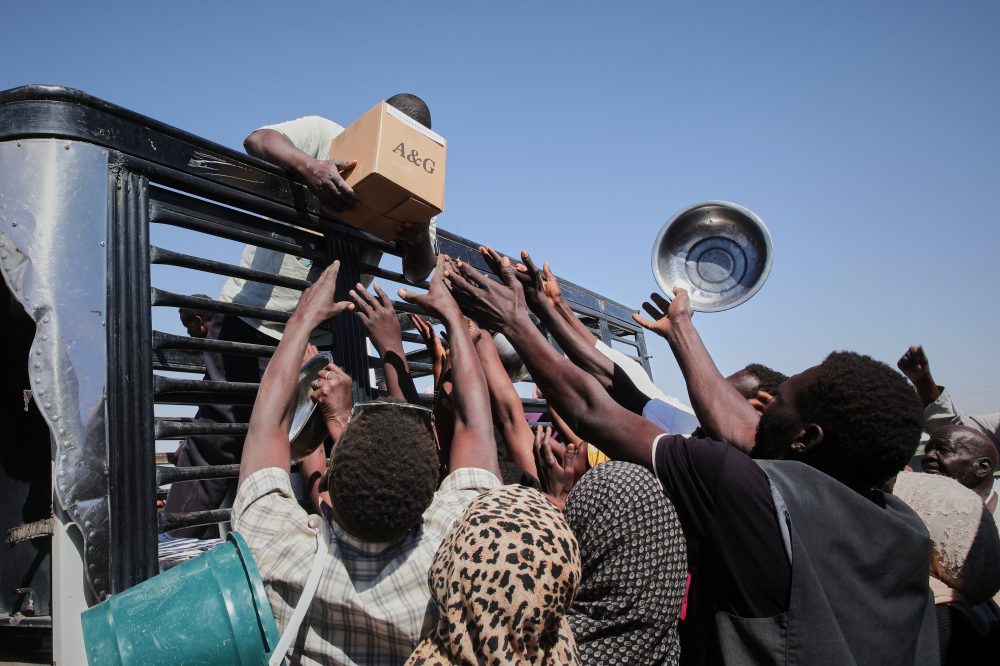
The war broke out in April 2023, fueled by long-standing tensions between Sudan’s army and the RSF. Since then, the conflict has claimed the lives of at least 59,000 people, forced approximately 13 million from their homes, and pushed large portions of the country into famine. More than 30 million people are currently in need of humanitarian aid.
In February 2025, Sudan’s military managed to lift a siege on el-Obeid that had been in place for over a year. However, the RSF has since launched several offensives in an effort to reimpose the blockade from multiple directions.
The UN and several nations have raised alarms over reports of RSF forces massing around el-Obeid, a city of half a million residents located in North Kordofan. Recent strikes on critical infrastructure have left civilians with severely limited access to food, fuel, water, medical care, and transportation, according to Türk’s office.