Maryland’s Board of Public Works has approved over $1.18 million in grant funding from the Maryland Department of Natural Resources to help local governments upgrade parks, sports facilities, and playgrounds across six counties.
Roughly $455,000 from the Program Open Space – Local initiative was set aside for projects in Dorchester and Frederick counties. Dorchester County will use its share to build a new restroom and storage building at School Street Park. In Frederick County, three municipalities will benefit: the Town of New Market will acquire 1.56 acres of land for a future soccer field complex, the Town of Myersville will add parking, benches, and picnic areas to Bullivant Park, and the Town of Mount Airy will install a paved accessible path at East West Park.
An additional $316,000 from the Local Parks and Playgrounds Infrastructure Program was approved for Calvert and Dorchester counties. Calvert County plans to tear out the existing basketball courts at Hallowing Point Park and replace them with brand-new ones. Dorchester County will add pickleball courts to its School Street Athletic Complex. That program received state funding in fiscal years 2022 and 2023 to direct grant money primarily to local governments for park and recreation improvements.
Western Maryland communities will see about $413,000 through the Community Parks and Playgrounds program. In Allegany County, the Parris N. Glendening Recreation Complex in Frostburg will get new lighting for its basketball and pickleball courts, while the Little League Ballfield in Lonaconing will be expanded to include pickleball courts. Garrett County’s Friendsville Elementary School and Washington County’s Sharpsburg Community Park will each build inclusive playgrounds designed to be accessible for all children.
The Community Parks and Playgrounds program is designed to help municipal governments both restore existing recreational spaces and create new ones throughout Maryland.
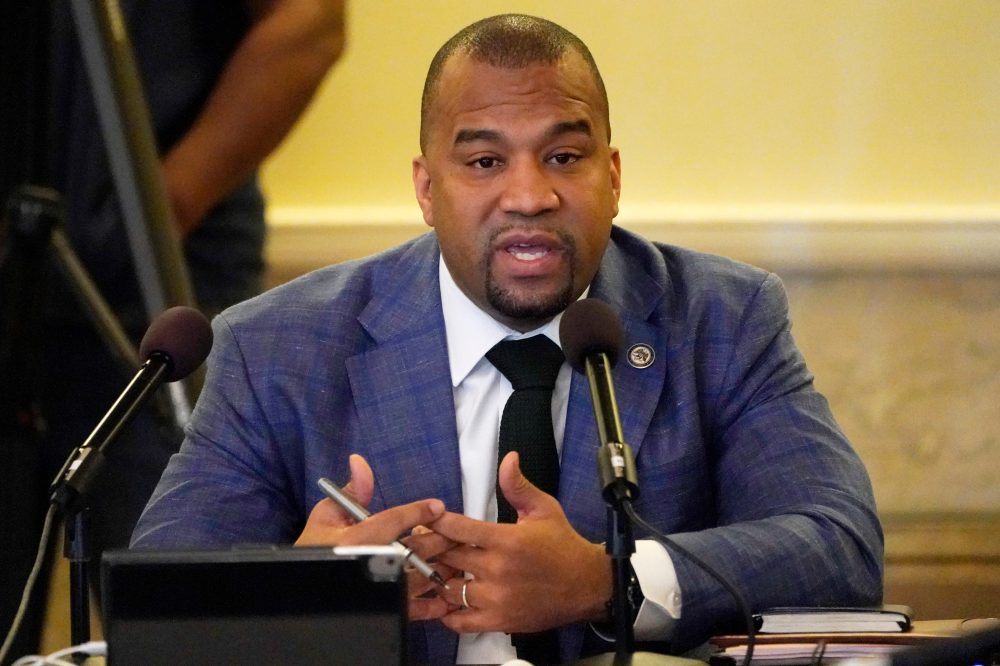
The three-member Board of Public Works includes Governor Wes Moore, who was represented at the meeting by Lt. Gov. Aruna Miller, along with Treasurer Dereck E. Davis and Comptroller Brooke E. Lierman.
The Program Open Space – Local initiative has been in operation since 1969 under the Department of Natural Resources. It provides annual funding to every county and Baltimore City for planning, acquiring, and developing recreational land and facilities. The program is financed through a property transfer tax and reflects Maryland’s long-standing commitment to preserving natural resources and expanding outdoor recreation access for residents.
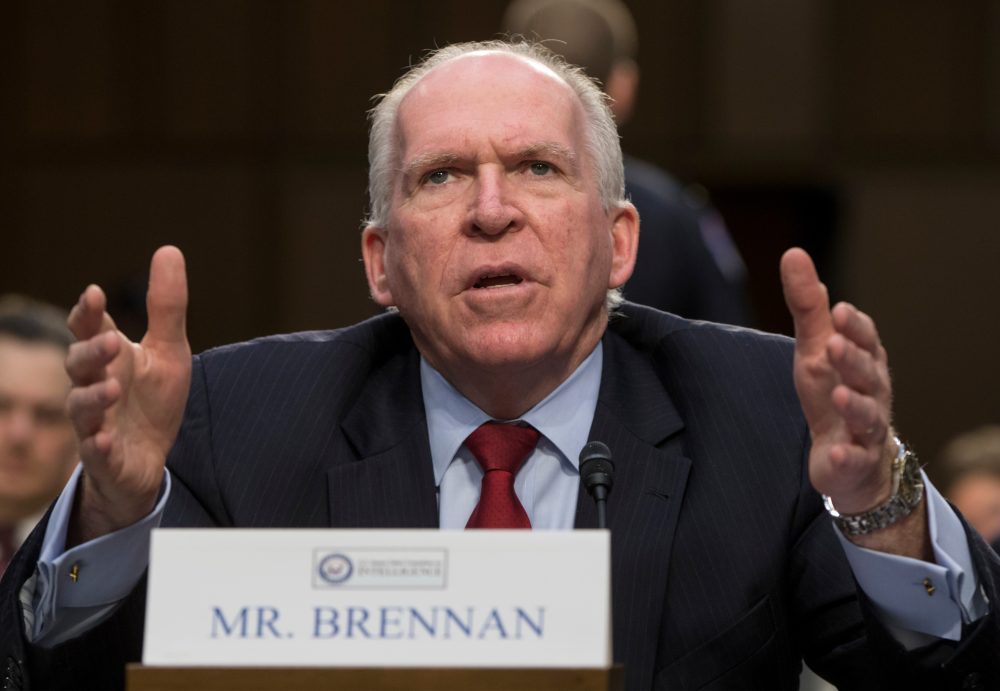
WASHINGTON — Former CIA Director John Brennan took legal action against the Trump administration on Wednesday, filing a lawsuit that asks a court to order officials to hold onto records connected to investigations aimed at him.
According to the lawsuit, Brennan contends that those records would be critical to mounting a defense against any future indictment. He also argues the documents could help him demonstrate that any prosecution brought against him by the Republican administration would amount to a vindictive, politically driven action.
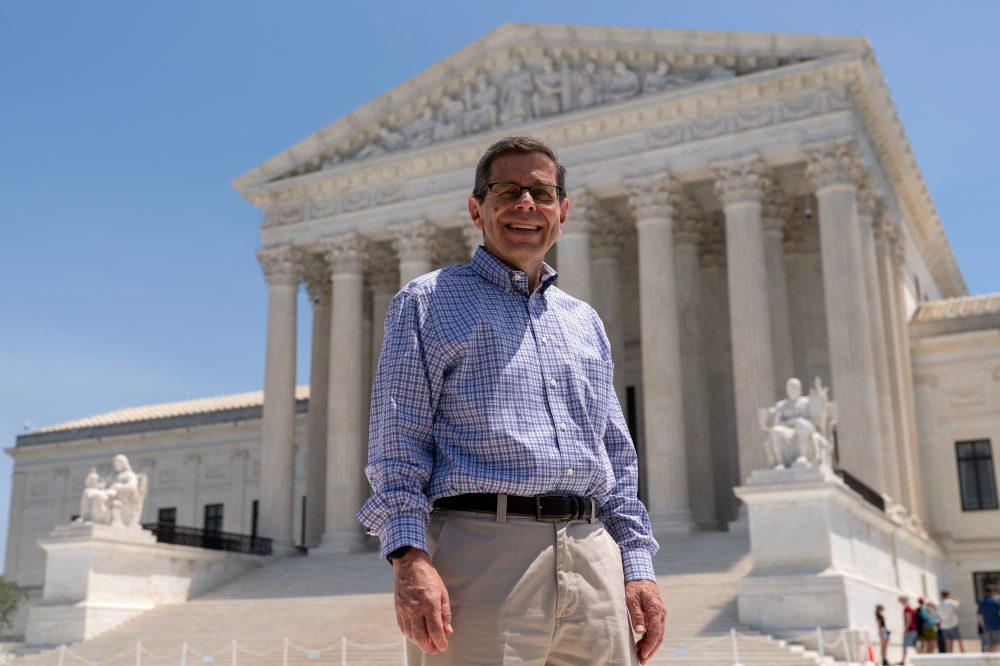
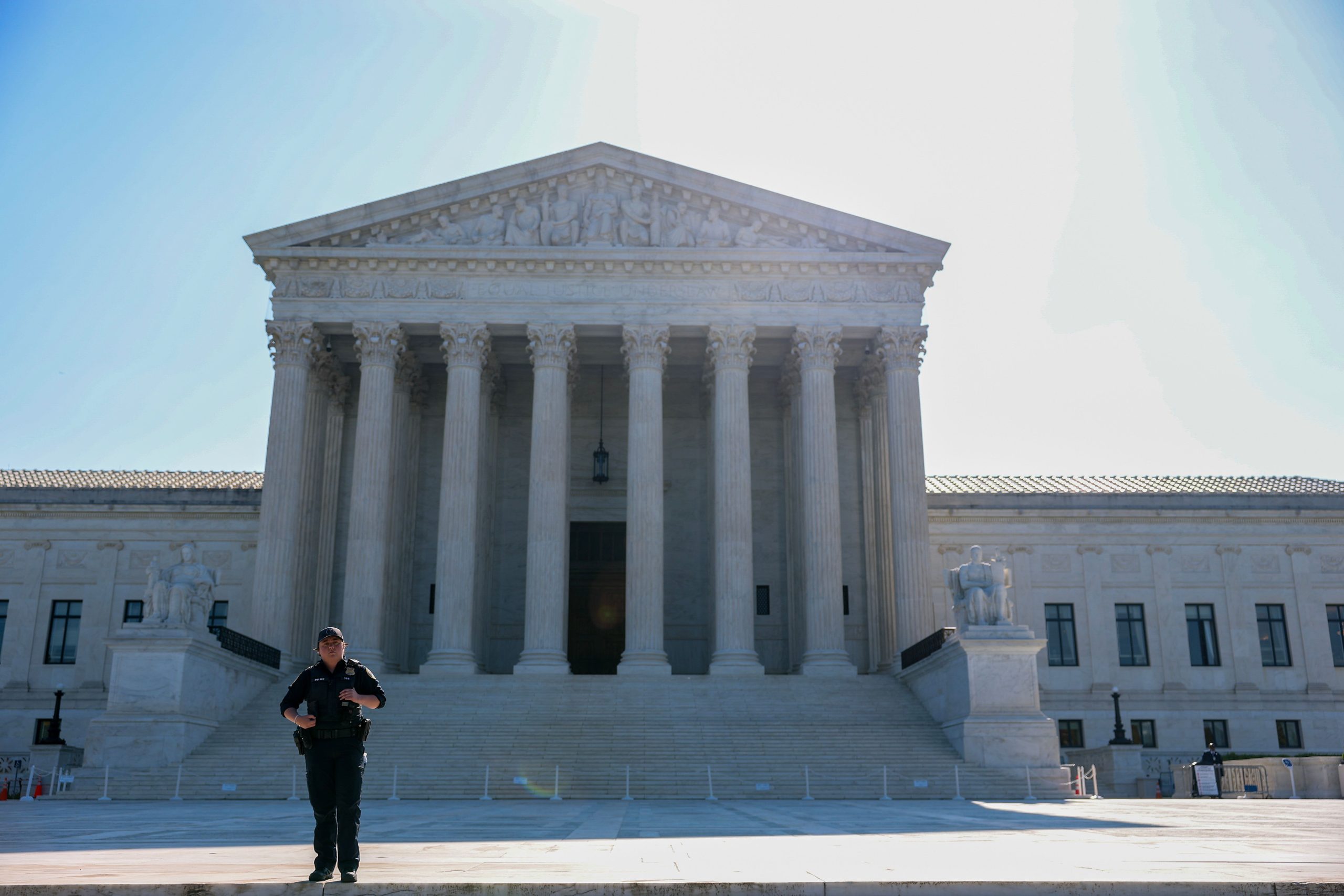
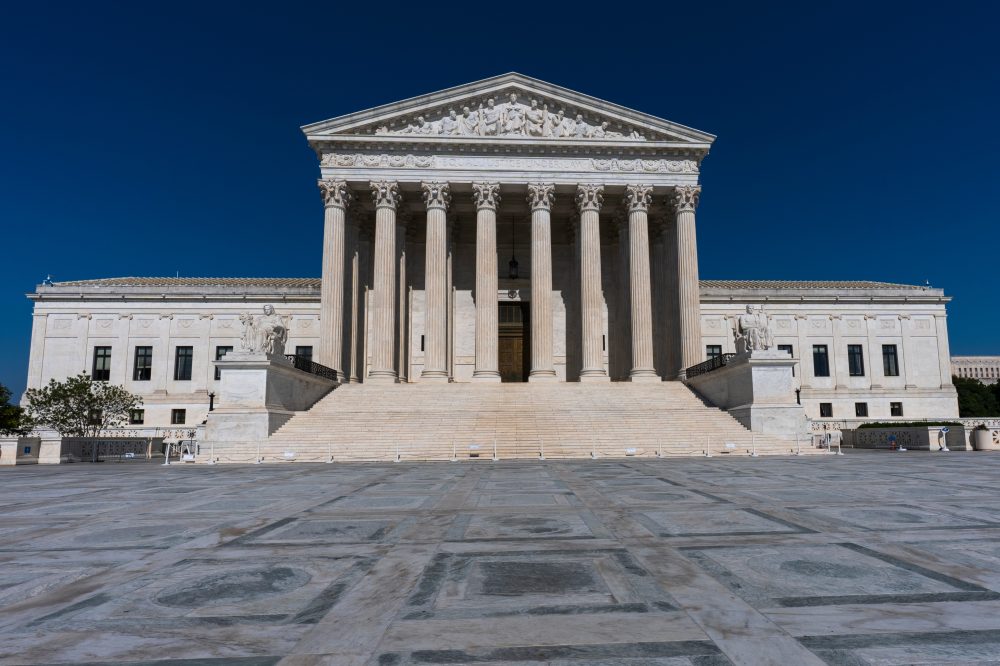
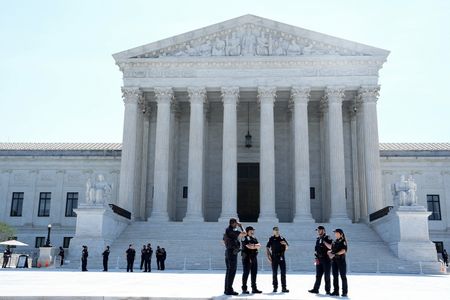
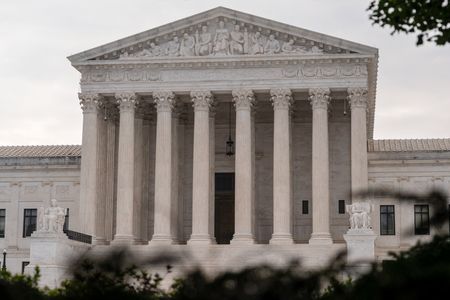
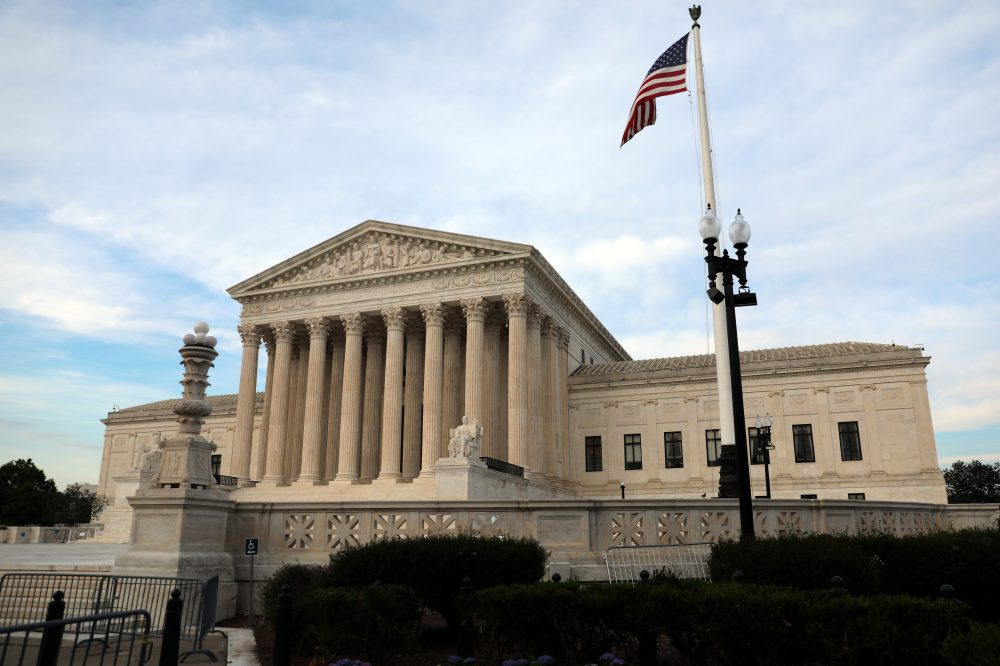
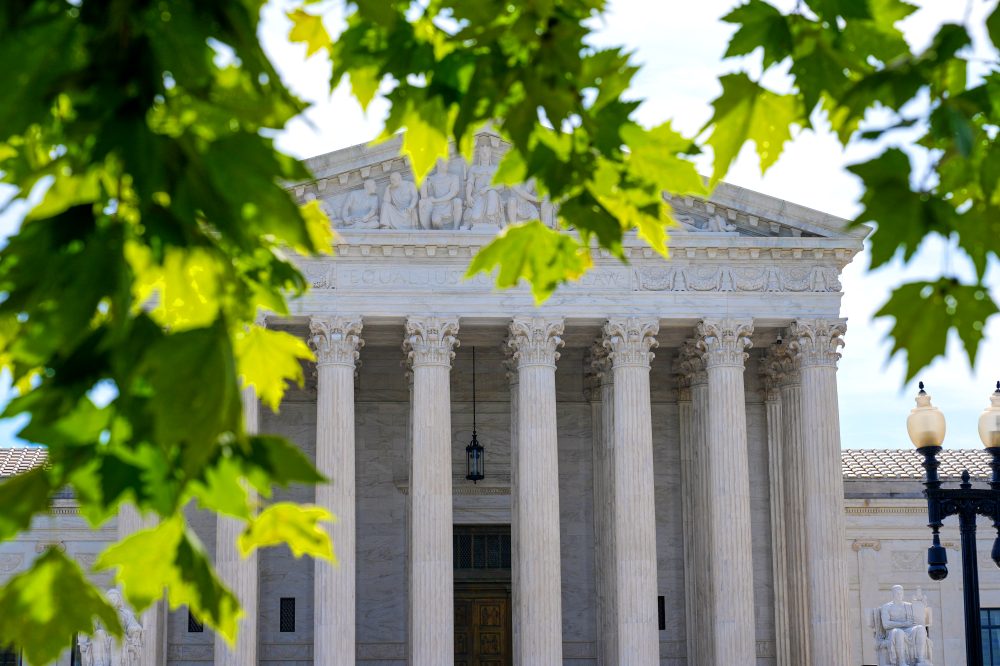
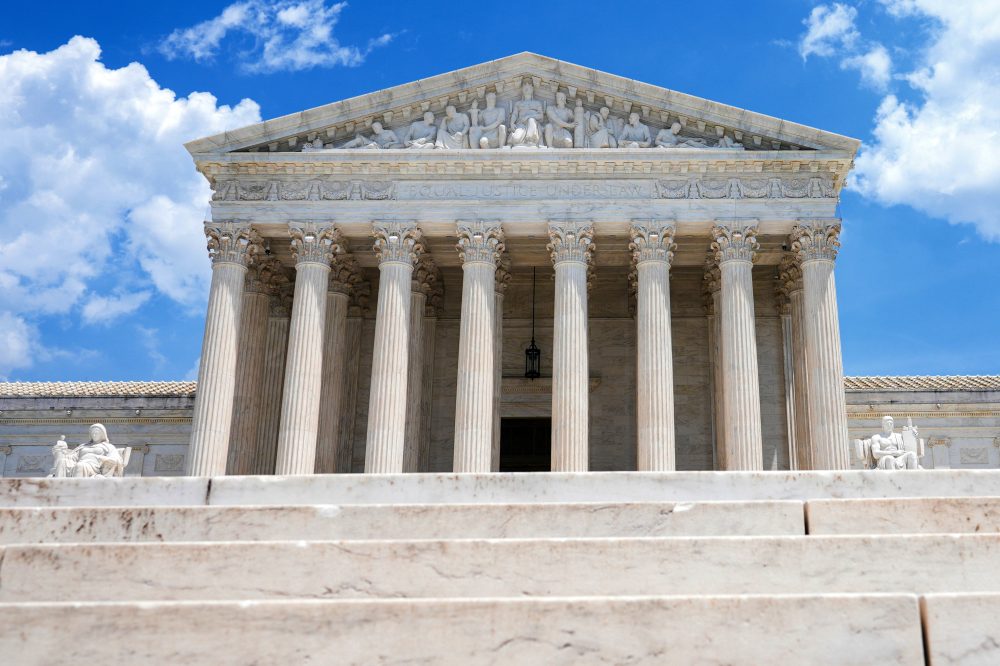
WASHINGTON — After spending two decades at the nation’s highest court, Associated Press Supreme Court reporter Mark Sherman stepped away from the beat on Tuesday — the final day of the court’s current term — offering a candid look back at the sweeping changes he witnessed firsthand.
Sherman’s first term on the job offered an early glimpse of what was to come. Justice Stephen Breyer broke away from his prepared remarks to deliver a pointed rebuke of his conservative colleagues from the bench.
“It is not often in the law that so few have so quickly changed so much,” Breyer said, dissenting in a school integration case.
For Sherman, it was a defining moment — both a window into the human side of the justices and a preview of the ideological battles that would play out over the next 20 years.
Over the course of his career, the court moved steadily to the right — a shift Sherman describes as driven by a combination of chance and deliberate political action. Unexpected vacancies, hardball political tactics, and the presidency of Donald Trump ultimately produced a conservative supermajority that reshaped American law.
When Sherman began covering the court in 2006, the ideological center had just nudged rightward, moving from Justice Sandra Day O’Connor to Justice Anthony Kennedy. Kennedy had joined O’Connor in preserving abortion rights in 1992 and was part of the five-justice majority that settled the 2000 presidential election in Bush v. Gore. He later authored landmark opinions expanding gay rights, including the ruling that established same-sex marriage as a constitutional right, as well as the Citizens United decision that opened the door to large-scale independent political spending.
The bigger transformation began in February 2016, when Justice Antonin Scalia died suddenly of a heart attack. Liberals anticipated a possible leftward turn for the court — one that might roll back gun rights and revisit campaign finance rulings. Justice Ruth Bader Ginsburg told Sherman that summer that abortion and affirmative action would be safe.
During a conversation in her court office — surrounded by modern art and personal mementos — Ginsburg expressed confidence that the next president would be Democrat Hillary Clinton. She suggested the next president, “whoever she may be,” could fill as many as three vacancies. When Sherman pressed her on what would happen if Clinton lost, Ginsburg replied: “I don’t want to think about that possibility, but if it should be, then everything is up for grabs.”
Ginsburg’s prediction proved partially correct. Clinton did lose — in part because conservative voters were focused on the future of the court. Senator Mitch McConnell, then the Senate Majority Leader, had blocked President Obama’s nominee, well-regarded federal appeals court judge Merrick Garland, from receiving a confirmation hearing, keeping the seat open until after the election. Garland had previously earned broad bipartisan support.
Donald Trump went on to appoint three justices, just as Ginsburg had anticipated. And as she warned, everything was on the table — including abortion and affirmative action.
Rather than covering the rise of a more liberal court, Sherman instead reported on the fulfillment of a long-running conservative legal agenda, to the satisfaction of Republicans who had spent decades working to reverse liberal precedents.
Timing retirements to ensure ideological continuity has become standard practice. Ginsburg chose to stay on the bench, and she died less than two months before the 2020 election. Her dying wish — that her seat remain vacant until after the election — was not honored. The two most recent justices to retire, Kennedy and Breyer, were each replaced by someone who had once served as their law clerk.
Sherman notes that is not a knock on Brett Kavanaugh or Ketanji Brown Jackson, both of whom have impressive legal credentials. Rather, it reflects how the prospect of a former clerk filling a vacancy may make a sitting justice more comfortable stepping down.
Chief Justice John Roberts once told Sherman — after Sherman asked whether he had any response to then-President Trump’s criticism of an “Obama judge” — that there are no Trump judges or Obama judges, only an independent judiciary. Sherman acknowledges there is truth in that. Judges do not mechanically side with the president who appointed them. Two Trump-appointed justices, for example, voted against the president’s sweeping global tariffs, drawing a sharp personal rebuke from Trump in response.
But Sherman also concedes Trump had a point. In the current era, presidents nominate justices precisely because their records suggest they can be relied upon. Since 2010, every conservative justice has been appointed by a Republican president, and every liberal justice by a Democrat.
The justices’ public profiles have grown in recent years. Seven of the nine have written or are in the process of writing books, going on promotional tours and collectively earning millions of dollars. That marks a notable change from an earlier era when justices moved around Washington largely unnoticed — Ginsburg spotted at movies and plays, Justice Clarence Thomas attending Mass most mornings, Justice Elena Kagan seen at a grocery store, and Justice Sonia Sotomayor encountered in line at a weekend farmers market on Capitol Hill.
Security has tightened considerably over the years. By the time Kavanaugh joined the court, federal agents were stationed outside his suburban Maryland home. In 2022, an armed man carrying a pistol, knife, and zip ties showed up at Kavanaugh’s residence late at night and later pleaded guilty to attempting to assassinate the justice.
The COVID-19 pandemic also changed how the court operates. For years, news organizations had requested live audio access to oral arguments and were consistently denied. When the pandemic forced the court to hold remote sessions, live public audio became a necessity. The experiment had its awkward moments — including an unexplained toilet flush that was broadcast to listeners — but it largely succeeded. When justices returned to the courtroom in 2021, the live audio stream stayed.
Sherman admits that change made his own role feel less essential. Anyone with interest can now listen to arguments directly and read decisions as soon as they are posted to the court’s website.
The rise of emergency appeals has also complicated the job. In years past, the court calendar made it easy to anticipate the busiest stretches. Now, emergency appeals — which came with notable frequency during Trump’s second term — can arrive and be decided at any hour, including well after midnight.
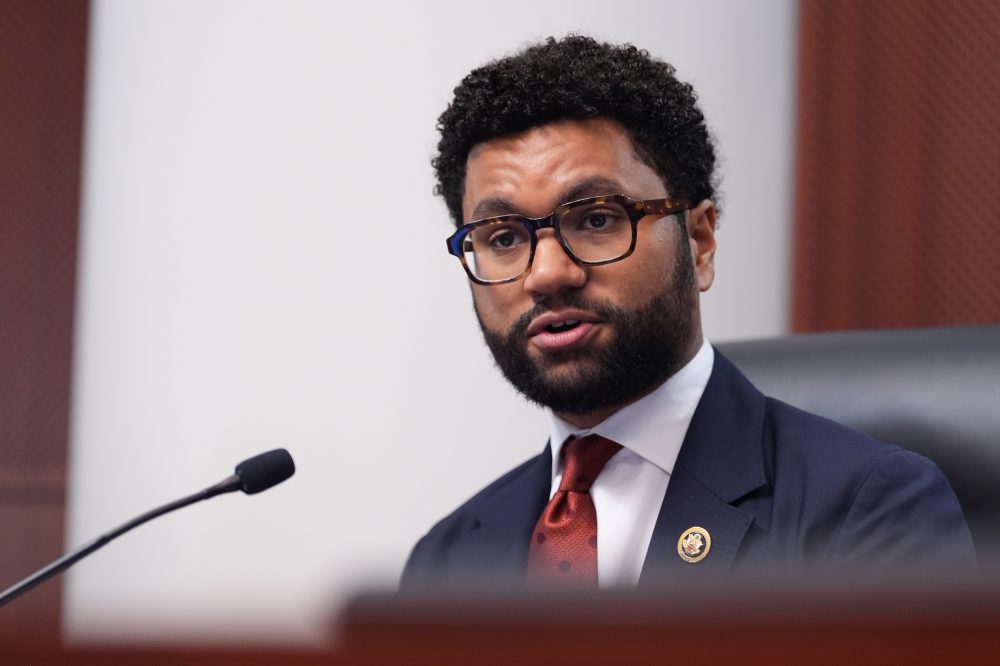
A Democratic member of Congress is pushing the federal government to take a closer look at the fast-growing “rent now, pay later” industry, warning that many Americans may not fully grasp the fees and costs associated with these financial products as they become more widely used.
Rep. Maxwell Frost, D-Florida, sent a formal letter to Consumer Financial Protection Bureau Acting Director Russell Vought, calling on the agency to investigate rent now, pay later companies and hold them responsible for any possible violations of federal consumer financial protection laws. In the letter, obtained by The Associated Press, Frost also asked the bureau to clarify what steps it is taking to protect renters and whether landlords are directing tenants toward rent-financing services.
Rent now, pay later services allow tenants to divide their monthly rent into smaller installments spread across the month. For example, someone with a $1,000 monthly rent payment could pay in four weekly installments of $250 or two payments of $500.
Frost, who was first elected to Congress in 2022 at age 25, said he personally used buy now, pay later services to furnish his first apartment in Washington and to cover his rent — a habit that left him deeply in debt. In an interview, he said it was only his congressional salary that allowed him to recently clear those debts, and he believes many young Americans face similar situations.
“Americans should know they have rights when using these buy now, pay later products,” Frost said. “This is why the CFPB was created in the first place.”
Companies such as Flex and Livble promote the idea that breaking rent into multiple payments helps renters better manage their finances. The buy now, pay later company Affirm has also conducted limited trials allowing customers to divide rent payments. However, some of these plans carry steep fees and finance charges. In February, the AP reported that some users of these services were paying up to $50 a month just to split their rent into smaller amounts.
These rent now, pay later companies are distinct from platforms like Bilt, which lets certain renters pay rent through a credit card and rewards program. Bilt reports having more than 5 million members who primarily use the service to earn rewards points on rent. Rent now, pay later companies, by contrast, are centered on helping customers finance large rent payments by spreading them out.
Frost is calling for greater transparency so consumers better understand what they are signing up for as these products gain popularity.
“While many of these companies market their loans as ‘innovative’ products that can help struggling cash-strapped renters, including by allegedly boosting their credit scores, many of these products more closely resemble repackaged payday loans,” Frost wrote in his letter.
A February report by Protect Borrowers and Toward Justice argued that certain rent now, pay later companies should be required to comply with Truth in Lending Act standards based on how their products are structured. The industry pushed back strongly against those findings at the time.
“In addition to structural reforms to drive down the cost of housing, lawmakers, policymakers, and law enforcement at every level of government need to wake up to the reality that a broad array of companies are cashing in, at working people’s expense, on the massive burden of rent in Americans’ lives,” the groups stated in their report.
The Consumer Financial Protection Bureau has dramatically reduced its activity since the start of the second Trump administration. Under Acting Director Vought, the bureau has reversed regulations and guidance, dropped enforcement actions, and moved to undo previous agency work. Other congressional requests for bureau investigations have largely received no response. The bureau did not immediately comment on Frost’s letter.
Vought is expected to leave his role at the CFPB this summer. President Trump has nominated Brian Johnson, a former executive at Capital One, to serve as the bureau’s next permanent director. Johnson previously held a senior position at the bureau during Trump’s first term.
Frost said that if the bureau fails to act, he plans to use the information gathered through this letter and other sources to introduce legislation next year — should Democrats regain control of Congress.
“I’m not holding my breath for the Trump administration to do the right thing, but this is the first step of many we can take to make sure these products are used correctly and Americans are protected,” he said.
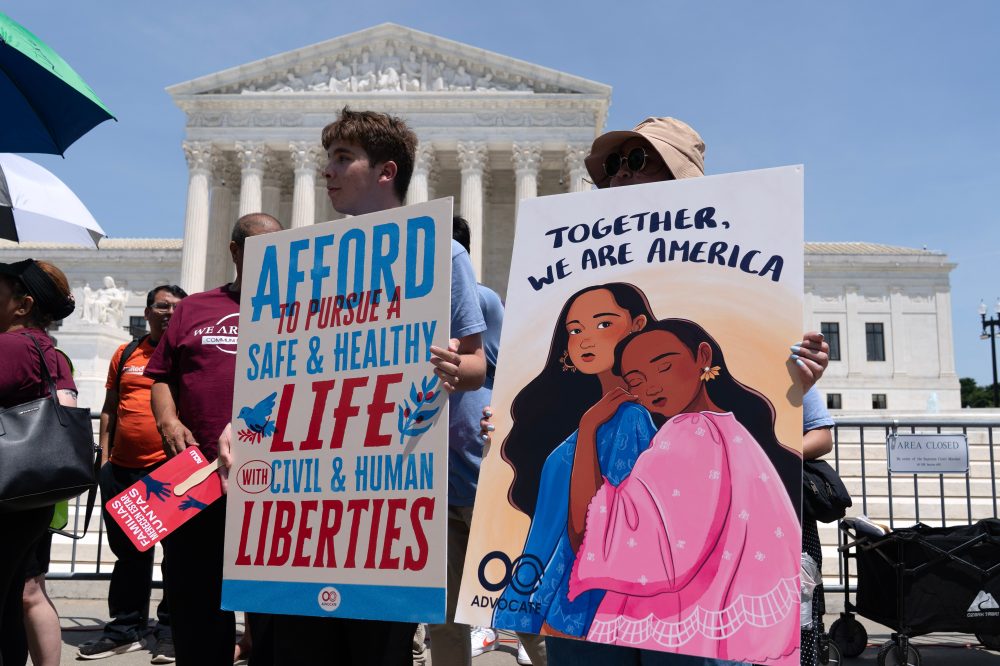
For over 27 years, a landmark U.S. Supreme Court decision known as Olmstead v. L.C. has stood as a cornerstone protection for people with disabilities, ensuring they have the right to live in their own communities rather than being unnecessarily placed in institutional settings.
Delaware officials are marking this milestone while also sounding the alarm about emerging threats to those hard-won civil rights protections.
The ruling has long been considered a defining victory for disability rights advocates, establishing that the unjustified segregation of individuals with disabilities in institutions is a form of discrimination under the Americans with Disabilities Act.
For more information, the public may contact Emmanuel Jenkins, Community Relations Officer, by phone at 302-739-7192 or by email at [email protected].
Worcester County is reminding residents that government offices will be shut down in recognition of the Independence Day holiday weekend.
County officials announced the closures ahead of the July 4th holiday, giving the public advance notice to plan accordingly for any services or business they may need to conduct with county offices.
Residents are encouraged to take care of any county-related needs before the holiday closure period begins. Additional details on specific office closures and resumption of normal business hours can be found through Worcester County’s official government channels.
WASHINGTON (AP) — President Donald Trump took to the skies Wednesday aboard a new version of Air Force One, making his inaugural flight on a retrofitted Boeing 747 donated by Qatar and valued at $400 million. The aircraft reflects the president’s personal style and marks a notable change to one of the most recognizable symbols of the American presidency.
The plane’s familiar light blue exterior — long associated with Air Force One — has been replaced with a color scheme more to Trump’s liking: a dark navy underside accented by red and gold stripes. Inside, the jet has been outfitted with high-end finishes including plush carpeting, lie-flat seating, wood panel accents, and a presidential seal embroidered on the seat belts, based on reported tours of the aircraft.
Trump spoke candidly to reporters about his pride in the new plane. “You can do two things: You can low-key it, or you can show it,” he said.
The president’s destination on this maiden voyage was North Dakota, where he visited the Theodore Roosevelt Presidential Library as its first official guest before the library opens to the public on the nation’s 250th anniversary.
While the gift from the Middle Eastern nation has drawn ethical questions, Trump has defended it as a practical solution, pointing to the age of the aircraft it replaces — planes that are roughly 35 years old. “This is a gift from a country that has treated us very well,” he said.
The Qatari jet is not intended to be a permanent fixture. Boeing is expected to deliver purpose-built Air Force One replacements in 2028, following significant delays. Trump has previously indicated the Qatar-gifted plane would eventually find a home in a presidential library.
The U.S. Air Force stated that it made minimal changes to the plane’s cabin layout and that security-related upgrades cost less than $400 million.
A federal judge has dealt another blow to the Trump administration’s efforts to limit press access at the Pentagon, ordering the Defense Department to temporarily stop requiring that New York Times journalists be escorted by an official at all times while inside the building.
U.S. District Judge Paul L. Friedman, based in Washington, determined that the escort policy runs afoul of the First Amendment. On Tuesday, he issued a preliminary ruling blocking the requirement while The New York Times pursues its ongoing legal challenge against the department’s press restrictions.
The ruling did not address whether journalists from news organizations other than the Times would receive the same relief from the escort requirement.
The Times filed its second lawsuit against the Defense Department in May — its second legal action in just five months. These court battles are part of a broader and growing conflict between the U.S. press and the Republican administration, playing out both in the courts and in public.
The newspaper welcomed the judge’s decision. Charlie Stadtlander, a spokesperson for the Times, said: “Today’s well-reasoned decision reaffirms the First Amendment rights of the press to cover the Pentagon without restrictions designed to prevent the public from knowing what the military is doing. The court recognized that the Pentagon’s hastily implemented new policy was a clear violation of the Constitution.”
Pentagon spokesman Sean Parnell pushed back on the ruling in a post on X late Tuesday, writing that the department “strongly disagrees” with Friedman’s decision. “This ruling strips away reasonable security measures and will make it easier for sensitive and classified information to reach our adversaries,” Parnell wrote.
The Times originally took the Defense Department to court in December, challenging media access rules put in place by Defense Secretary Pete Hegseth. The escort policy was then introduced in March, following an earlier ruling by Friedman that had struck down those initial restrictions — a ruling in which he found that Times reporter Julian E. Barnes and the newspaper had had their rights violated.
The following month, Friedman found that the new escort policy also violated his March order. However, the escort requirement stayed in effect after an appeals court put part of Friedman’s ruling on hold while the government pursued its appeal. That appeals process is still ongoing.
The Times and several other news outlets left the Pentagon back in October rather than accept Hegseth’s access restrictions. Those organizations continue to report on the U.S. military from outside the building, while a new press corps approved by the Defense Department now occupies the Pentagon press space.
A newly released federal disclosure report shows President Donald Trump pulled in nearly $1.2 billion through his cryptocurrency ventures last year — generating substantial personal profits even as many of his investors watched the value of their holdings drop sharply.
The businesses, which were just getting off the ground when Trump was inaugurated, have already generated more revenue than much of his sprawling real estate portfolio — assets he spent decades building. Their rapid growth was fueled by wealthy investors and by Trump’s own decision to roll back a federal crackdown on the crypto industry.
According to the required annual disclosure filed with the Office of Government Ethics, Trump’s World Liberty Financial operation brought in more than $500 million through the sale of new crypto products, including what are called “governance tokens.” A separate venture, CIC Digital LLC, generated more than $600 million from the sale of souvenir-style “meme” coins bearing Trump’s image. The value of both the tokens and the coins has fallen significantly since they were sold.
Beyond crypto, Trump also generated millions selling Trump-branded merchandise — including Bibles, sneakers, and watches. Sales of Trump-branded watches alone accounted for $4.7 million in revenue.
On Capitol Hill, House leadership made a surprise move Tuesday, scrapping scheduled votes and dismissing lawmakers early ahead of the holiday recess. Speaker Mike Johnson’s majority hit yet another wall, this time stalled by a rebellion within his own party. The dispute centers on the annual defense funding bill, which includes military pay raises. A faction of Republicans is demanding the legislation include the SAVE America Act — a strict voter ID measure backed by President Trump — before they will support it. The Senate similarly shut down last week following pressure from Trump.
The situation in Washington is being seen as a reflection of the shifting balance of power between a forceful executive branch and a Congress struggling to move its own agenda.
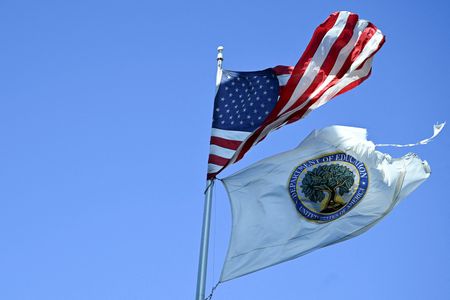
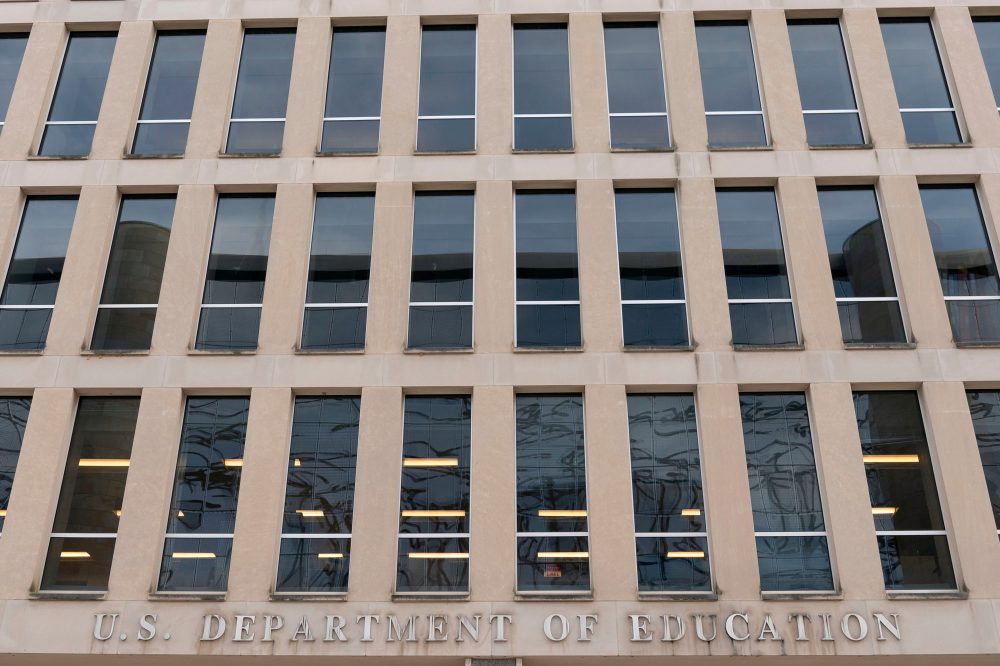
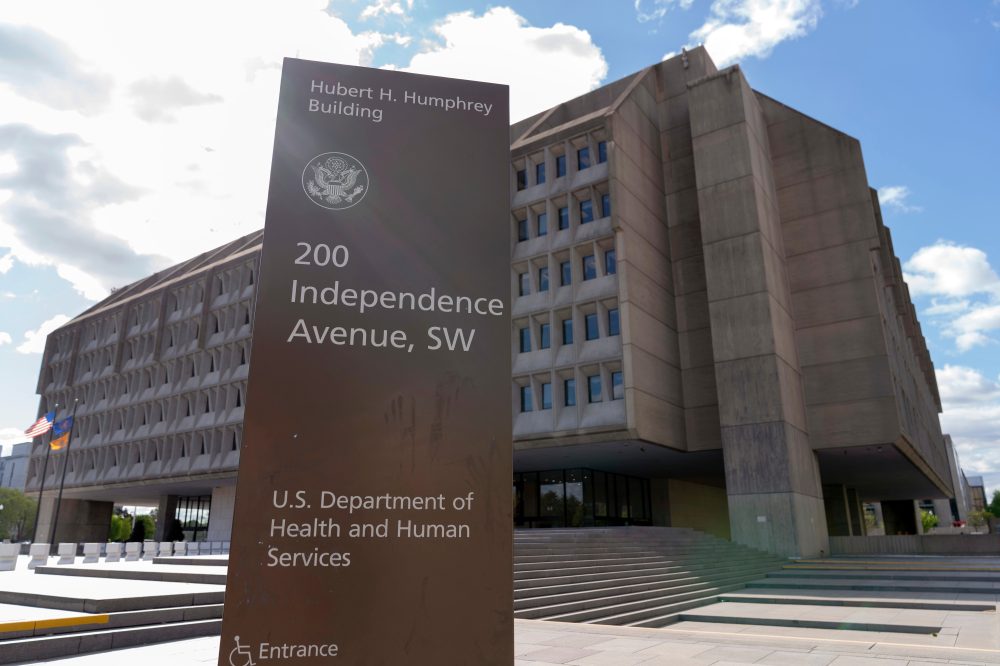
In other national developments, disability rights advocates are raising alarms over a series of recent federal actions they say threaten hard-won protections for Americans with disabilities. The Education Department announced it would transfer oversight of special education programs to the Department of Health and Human Services, led by Robert F. Kennedy Jr., whose past remarks about conditions like autism have drawn criticism from advocates and lawmakers alike.
Additionally, the Department of Justice issued new guidance that lowers the threshold for institutionalizing people with disabilities, a move that followed a White House push to address homelessness.
Selene Almazan, legal director for the Council of Parent Attorneys and Advocates, described the actions in stark terms: “It’s a direct, frontal assault on the rights of people with disabilities to live their lives the way that people who are nondisabled live their lives. I can’t imagine that as a country, that would be something that we would agree we should go back to.”
In a separate legal matter, advice columnist E. Jean Carroll asked a Manhattan federal judge Tuesday to compel President Trump to hand over $5 million stemming from a 2023 civil jury verdict. That jury found Trump had sexually abused Carroll in the 1990s and defamed her after she publicly described the incident in 2019. Carroll’s attorneys say the total amount, with interest, has grown to nearly $5.8 million. They argue Trump is improperly attempting to delay releasing the funds, even after the Supreme Court declined Monday to take up his appeal of the verdict. Carroll testified at trial — which Trump did not attend — that the assault occurred in spring 1996 in the dressing room of a luxury department store in midtown Manhattan.
President Trump is scheduled to travel to North Dakota on Wednesday to tour the Theodore Roosevelt Presidential Library, a 96,000-square-foot facility built at a cost of $450 million. The library, which officially opens on July 4th as part of the nation’s 250th anniversary celebrations, explores the life of the 26th president — including his time ranching and hunting in the region during the 1880s. Interior Secretary Doug Burgum championed the project during his time as governor of North Dakota. All living presidents were invited to the grand opening.
Finally, the White House has tapped a Harvard astronomer known for his unconventional theories about extraterrestrial life to head a new scientific advisory council examining national security risks posed by unidentified anomalous phenomena, commonly referred to as UAPs or UFOs. Avi Loeb, a cosmologist who previously led Harvard’s astronomy department until 2020, will lead the team, which reports to a new White House panel on the issue. Loeb has spent the past decade searching for signs of intelligent alien life, and gained widespread attention in 2017 when he suggested an interstellar object passing Earth could be a “light sail” from an alien spacecraft.
WASHINGTON — President Donald Trump’s administration turned to the nation’s highest court to advance its aggressive immigration agenda, and for the most part, the Supreme Court delivered — with one notable exception involving birthright citizenship.
Time and again, federal courts at lower levels had blocked the administration’s immigration moves. But the Supreme Court stepped in to allow the government to strip temporary legal protections from people who fled war zones and natural disasters, give border officers more authority over green card holders returning from overseas, and restrict how many people can seek asylum at the southern border.
Still, when it came to the question of who qualifies as an American citizen at birth, the court held its ground. Rather than enabling what would have been a historic redefinition of American citizenship, the justices upheld the principle that being born on U.S. soil — regardless of a parent’s immigration status — makes a person a citizen.
Each of these rulings carries significant implications for people trying to build lives in the United States, and may influence how the rest of the world views America as a destination for those seeking a better life.
The Trump administration had sought to deny automatic citizenship to children born in the U.S. to parents who are in the country illegally or on temporary visas. A closely divided court — five justices to four — rejected that effort, reaffirming the long-established reading of the 14th Amendment, which was ratified following the Civil War. Under that interpretation, nearly anyone born on American soil is automatically a citizen.
The ruling was a setback for one of Trump’s signature second-term priorities. He had signed an executive order attempting to limit birthright citizenship on his very first day back in office, though legal challenges kept it from ever taking effect.
Advocates celebrated the decision, while some Republican lawmakers called for alternative methods to curtail birthright citizenship.
Mark Krikorian, who leads the Center for Immigration Studies — an organization that supports reducing immigration levels — argued the ruling makes the administration’s push for mass deportations even more critical. He said the goal would be to remove people in the country illegally before they have children born on U.S. soil.
Krikorian also said work and student visa programs need to be “tightened up” to prevent people from coming to the U.S., having children, and thereby gaining a citizen family member. He even floated the idea of the State Department adding a pregnancy question to tourist and other visa applications.
“I think it’s going to have real policy impact,” Krikorian said.
In a separate 6-3 ruling announced June 25, the court allowed the administration to end Temporary Protected Status — a form of legal shelter — for migrants from Haiti and Syria who had fled violence and natural disasters. The decision potentially leaves hundreds of thousands of people unable to legally work in the U.S. and at risk of deportation by Immigration and Customs Enforcement.
Since returning to the White House in January 2025, the administration has moved to eliminate these protections for people from 13 countries, including some protections that had been in place for more than a decade.
Republican critics have long argued that what is supposed to be temporary protection ends up becoming permanent. Immigration attorneys, however, contend that places like Haiti and Syria remain too dangerous for people to return.
The court’s conservative majority concluded that federal law does not permit courts to second-guess the process immigration officials use when revoking these protections. The court had previously sided with the administration in a similar case involving people from Venezuela.
It remains uncertain how quickly the ruling will lead to ICE attempting to deport affected Haitians and Syrians, but fear of that possibility has already spread through Haitian communities across the country.
David Bier, who directs immigration studies at the Cato Institute, a libertarian think tank that favors more open immigration, said the impact of the ruling goes far beyond the roughly 350,000 Haitians and 6,000 Syrians directly covered by the case. He noted that approximately 1 million additional people hold Temporary Protected Status, and said the ruling effectively strips them of any meaningful ability to challenge the administration’s decisions.
“It just fully closed the door to any challenges,” Bier said.
Under existing U.S. law, any migrant who reaches American soil has the right to apply for asylum. While the number of migrants arriving at the southern border has dropped sharply under the Trump administration, asylum applications had surged dramatically in prior years.
A policy known as asylum-metering — which caps the number of people allowed to file asylum claims each day at the southern border — was originally launched during the Obama administration and later expanded during Trump’s first term. The Supreme Court’s ruling clears the path for the current administration to potentially bring that policy back, though it is not currently in use.
The administration maintained that asylum-metering was a necessary management tool, arguing that people turned away could simply return later. Critics countered that the policy previously created chaos and a humanitarian emergency in Mexico, where thousands of people waited for months in makeshift camps.
In yet another 6-3 ruling, the court gave immigration officers expanded authority over how they handle green card holders who return to the U.S. after traveling abroad.
The case centered on Muk Choi Lau, a lawful permanent resident who was placed on immigration parole and had his green card taken away in 2012 when he returned from a brief trip to China. He had been accused — though not convicted — of a counterfeiting offense. Lau argued the officer had exceeded their legal authority. He later pleaded guilty to selling counterfeit clothing in New Jersey, and that conviction gave the Department of Homeland Security — at the time under the Obama administration — a simpler avenue to pursue his removal from the country.
Justice Ketanji Brown Jackson, writing in dissent, expressed concern that the ruling handed the government a “massive blank check” when it comes to dealing with the millions of lawful permanent residents who travel internationally.
The American Immigration Council, an advocacy organization, noted in a post-ruling analysis that Congress had established special protections for green card holders who travel abroad, making it more difficult to detain or deport them. Those protections do have limits — including for individuals who have committed certain crimes in the U.S. — but the council said many questions remain about how broadly the ruling will be applied, and it expects the government to push for an expansive interpretation.
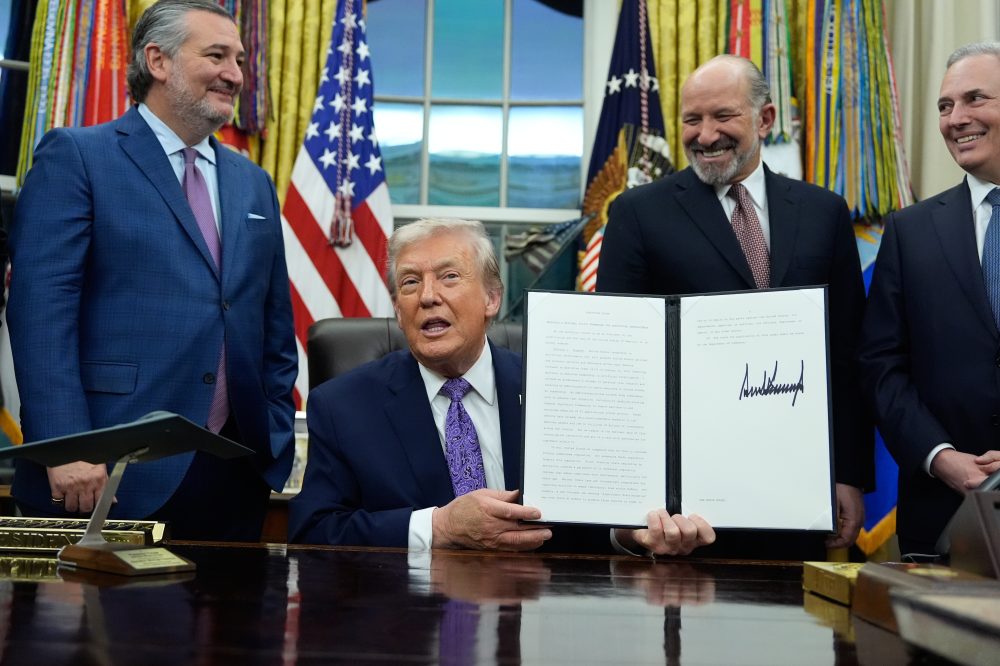
President Donald Trump obtained a loan of more than $50 million from Charles Schwab Bank, according to his annual financial disclosure submitted to the U.S. Office of Government Ethics for 2025, released on Tuesday.
The loan is structured as a pledged-asset line of credit — a financial arrangement that allows borrowers to use their investment holdings as collateral in exchange for cash. Notably, this credit line did not appear in Trump’s ethics disclosure for the previous year, 2024.
According to the 2025 filing, the credit line carries an interest rate of 3.9%. Neither the precise amount borrowed nor the specific purpose of the funds was made public in the disclosure.
According to information on Schwab’s website, this type of credit line can be applied toward a broad range of financial needs, including home purchases and tax obligations. It also comes with no minimum draw requirement and no set maturity date.
Beyond the loan details, the filing shed light on another significant financial development: Trump’s family cryptocurrency ventures generated more than $1.4 billion in income last year. That figure highlights how dramatically digital assets have reshaped the president’s overall financial picture.
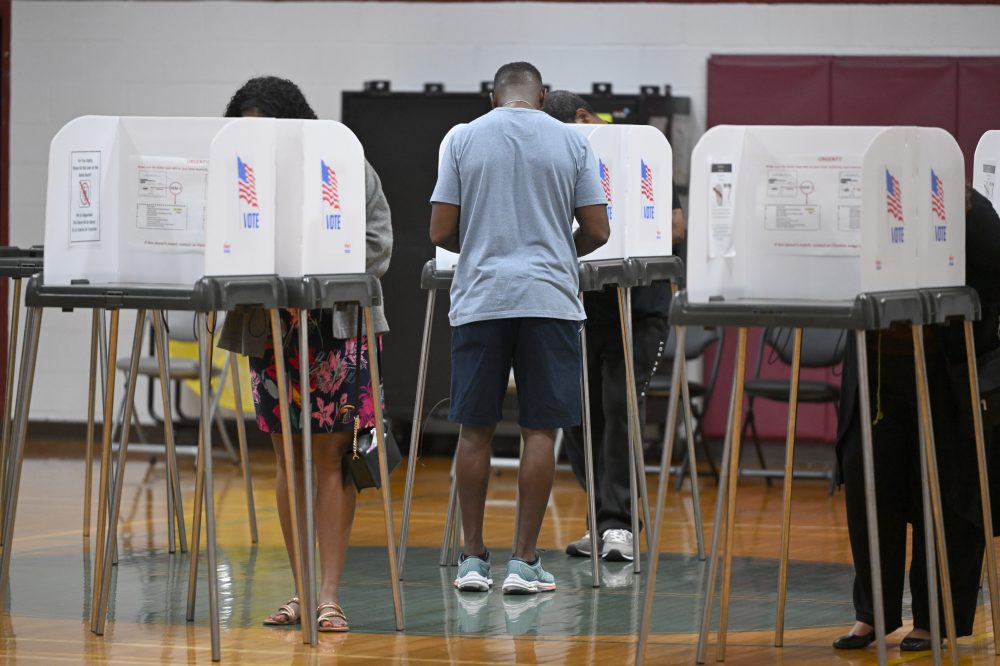
A federal law has long been in place to prevent most states from conducting large-scale voter roll cleanups in the final 90 days leading up to an election — a protection designed to ensure eligible voters aren’t removed from registration lists too close to Election Day.
Now, Republicans are taking that rule to court, pushing for a new legal interpretation of the longstanding voter protection measure.
The push could have significant implications for how states manage their voter rolls in the weeks and months before major elections.
President Donald Trump is making a trip to North Dakota on Wednesday to tour the brand-new Theodore Roosevelt Presidential Library, a massive structure dedicated to the life of the nation’s 26th president — built in the same wild, remote landscape where the young New Yorker forged his conservation beliefs while ranching and hunting during the 1880s.
The 96,000-square-foot facility is set to officially open its doors on July 4th, a fitting date given the nation’s celebrations of the 250th anniversary of the signing of the Declaration of Independence. Trump is arriving ahead of the opening weekend to preview the $450 million project, which was championed by Interior Secretary Doug Burgum during his time as governor of North Dakota. The visit also ties the country’s birthday festivities to a region deeply connected to America’s westward expansion.
All living presidents received invitations to the grand opening. The library joins more than a dozen similar institutions across the country that chronicle the lives and legacies of U.S. presidents — from Ronald Reagan’s in California, to Franklin D. Roosevelt’s in New York, to Herbert Hoover’s in Iowa. The Obama Presidential Center recently opened in Chicago, drawing four former presidents to that celebration.
Library Executive Director Robbie Lauf confirmed that Trump will be the facility’s first official visitor. The president is scheduled to speak at a nearby Western-themed amphitheater at an event organized by Freedom250, a group Trump created that is described as nonpartisan, which he has enlisted to coordinate the week’s festivities. Trump also plans to visit Mount Rushmore in South Dakota on Friday for Independence Day fireworks — a repeat of what he did back in 2020.
Trump has frequently expressed admiration for Roosevelt, and has at times drawn comparisons between himself and the former president. In 2020, he declared himself “the number one environmental president since Teddy Roosevelt.”
Early in his second term, Trump highlighted Roosevelt-era achievements such as the construction of the Panama Canal. He even floated the idea that the U.S. might look to reclaim the waterway from Panama to counter Chinese influence — though that notion was largely overshadowed by his suggestions that Washington could seek control of Greenland or that Canada might become the 51st state.
Ahead of staging a UFC fight on the White House lawn for his 80th birthday, Trump noted his awareness of Roosevelt having held informal boxing matches inside the White House — though he made no reference to the fact that Roosevelt detached the retina of his left eye during one of those sparring sessions.
The North Dakota visit also highlights the president’s high regard for Burgum, who has emerged as a prominent supporter and promoter of the president’s large-scale renovation efforts around Washington.
Roosevelt first traveled to Dakota Territory in 1883 to hunt bison. The following Valentine’s Day brought devastating personal tragedy when his mother and wife died just hours apart in the same home.
Grief-stricken, the New York native retreated to Dakota, where he spent time ranching cattle and hunting big game, primarily between 1884 and 1887. The experience transformed him profoundly — he chased down river boat thieves, stood his ground against a bully in a bar, and earned the respect of cowboys who had initially mocked him for wearing eyeglasses.
Roosevelt, who served as president from 1901 to 1909, later credited his time in North Dakota as essential to his path to the presidency, saying he never would have reached the White House without it.
The library sits near Theodore Roosevelt National Park, where visitors can hike trails and drive through the colorful, rugged Badlands terrain where bison and wild horses still roam freely.
Burgum first pushed the library project to North Dakota’s Republican-led legislature back in 2019 while still serving as governor, making the case for its tourism potential. Lawmakers approved a $50 million operations endowment, on the condition that library organizers raise $100 million in private donations — a target they hit in 2020. Total donations have reached approximately $354 million as of early 2026.
Among the notable donors are oil executive Harold Hamm, the Walton family of Walmart, Citadel founder and CEO Kenneth Griffin, and Burgum himself.
Burgum has also been advocating for Roosevelt’s induction into the Pro Football Hall of Fame. At a recent preview event for the library, he told attendees to “keep your fingers crossed.”
That nod to football history stems from Roosevelt’s concern over the growing number of injuries and deaths among college football players. In 1905, he convened a White House meeting with the presidents of Harvard, Yale, and Princeton to push for safety reforms in the sport. Those conversations eventually helped spark the founding of the NCAA, the governing body of college athletics.
Visitors to the library will explore Roosevelt’s conservation legacy and his leadership of the Rough Riders regiment during the Spanish-American War. But the library won’t shy away from the darker parts of his record. Lauf noted that the facility will also address Roosevelt’s “horrific comments” about Native Americans and other views “that have obviously aged poorly.”
The library houses a wide range of artifacts, many of which have been out of public sight for decades. Among the items on display: Roosevelt’s Rough Riders uniform, his 1884 diary written in the wake of his devastating personal losses, and the eyeglasses case, speech, and bullet-pierced shirt from the 1912 assassination attempt against him.
Organizers are hoping the library will attract families, school groups from across the region, and travelers passing through on their way to Yellowstone National Park and the Black Hills.
“It’s a feature, not a bug, that we are in a county of 1,000 people and a town of 120,” Lauf said. “TR came here for that purpose.”
On Tuesday, the Dakota Resource Council hosted a group of conservation leaders who criticized both Burgum and Trump for policies they argue run counter to Roosevelt’s environmental principles — specifically pointing to staff and budget reductions and the prioritization of energy development on public lands.
Last year, Burgum signed an order aimed at keeping parks open and accessible to the public amid workforce cuts. He has also compared America’s public lands and natural resources to “assets” that should be developed responsibly in pursuit of what he calls “energy dominance.”
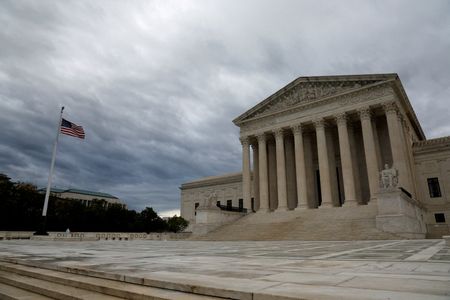
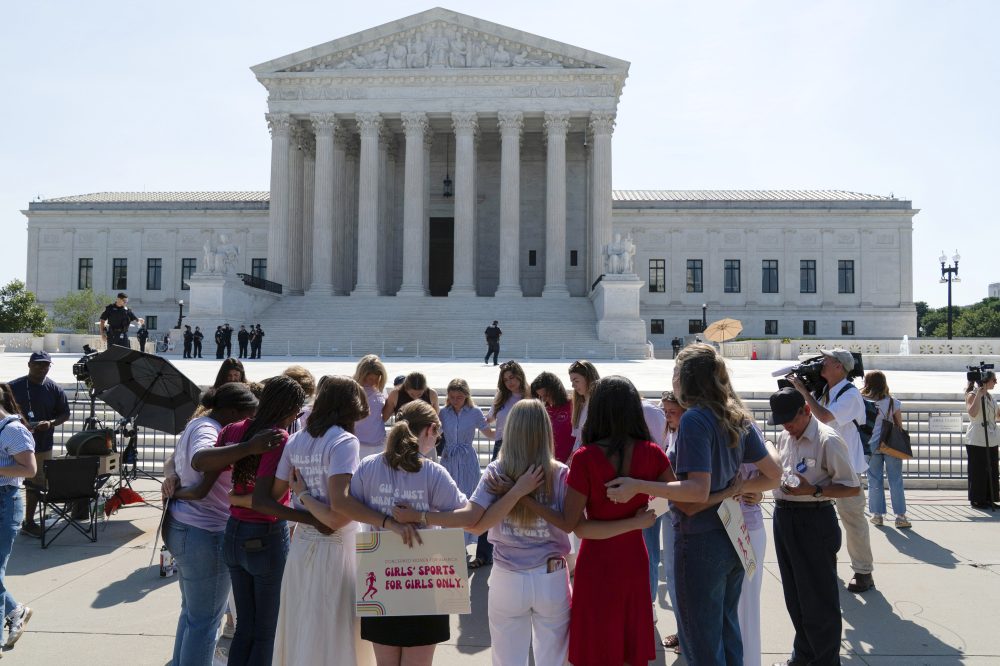
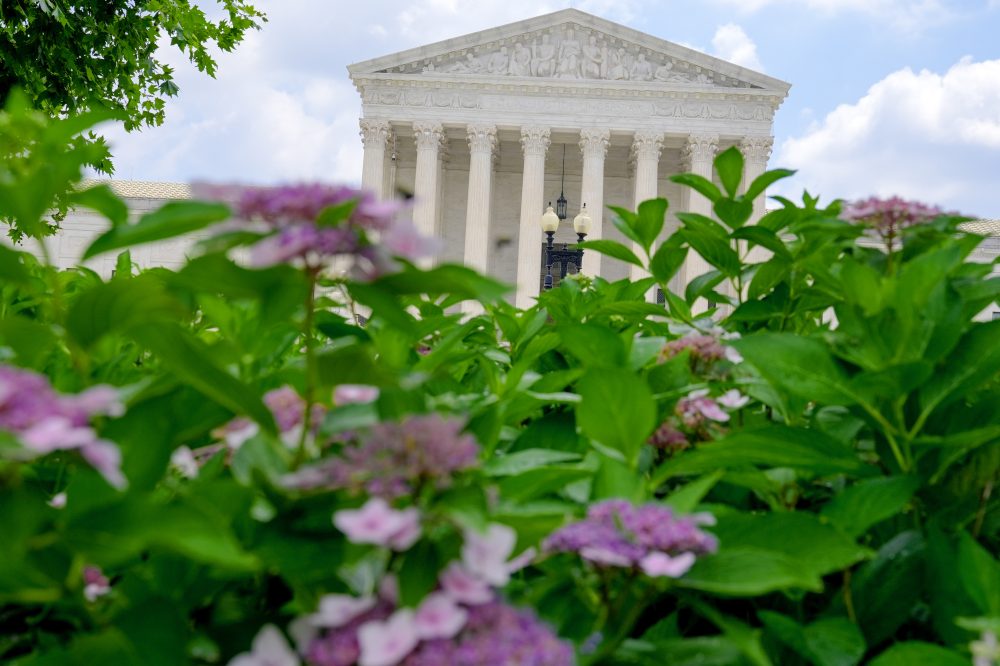
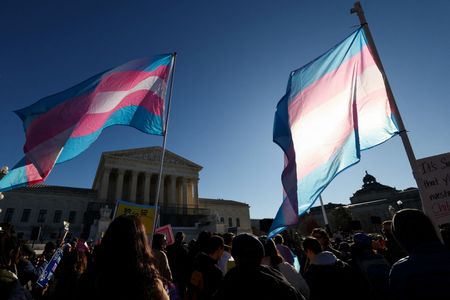
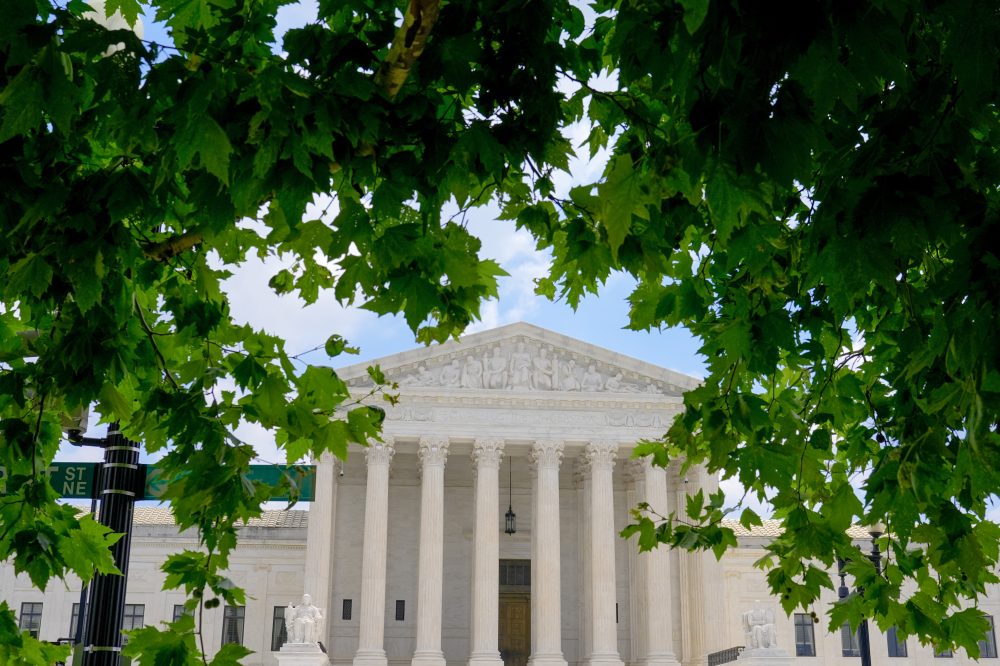
The United States Supreme Court issued a ruling Tuesday giving states the green light to ban transgender girls and women from competing on female school sports teams.
At the same time, the high court made clear that the decision is not a nationwide mandate — states that wish to allow transgender athletes to participate in women’s and girls’ sports are still free to do so.
The ruling effectively places the authority on this issue in the hands of individual states, allowing each to set its own policy on transgender participation in school athletics.
The U.S. Supreme Court closed out its term by delivering a significant blow to President Trump’s effort to restrict birthright citizenship, ruling that his executive order on the matter could not stand.
Despite rejecting the administration on that high-profile issue, the court ruled in the White House’s favor in a number of other cases as the term came to an end.
A recent U.S. Supreme Court ruling is drawing attention from campaign finance experts across the country, as it opens the door to increased spending coordination between political campaigns and their affiliated party committees.
To break down what the decision means, NPR’s Michel Martin sat down with Trevor Potter, the founder of the Campaign Legal Center, to discuss the ruling’s potential impact on how elections are funded and managed.
Potter weighed in on the broader consequences the decision could have on the relationship between candidates and political parties, particularly when it comes to how they work together financially during election cycles.
The Supreme Court’s ruling is seen as a significant shift in campaign finance law, potentially reshaping the way party organizations and individual campaigns are permitted to collaborate on spending strategies going forward.
NEW YORK — Advice columnist E. Jean Carroll went before a Manhattan federal court Tuesday, asking a judge to force President Donald Trump to hand over $5 million from a civil jury verdict that determined Trump sexually abused her in the 1990s and later defamed her when she came forward publicly in 2019.
Carroll’s legal team submitted court documents stating that Trump has been improperly dragging his feet on releasing the money, particularly after the U.S. Supreme Court declined Monday to take up his appeal of the 2023 civil jury verdict.
With accumulated interest, the total amount owed has grown to nearly $5.8 million, and Carroll’s attorneys are urging the court to order the payment released without further delay. They noted that Trump’s legal team had already begun exploring whether to ask the high court to reconsider its decision — a move Carroll’s side views as yet another stalling tactic.
The original jury reached its verdict following a trial that Trump did not attend. Carroll testified that Trump sexually assaulted her in the spring of 1996 inside the dressing room of a high-end department store in midtown Manhattan, after what began as a casual and friendly chance meeting turned violent.
Carroll, 82, first spoke publicly about the incident in 2019 while Trump was serving as president. Trump repeatedly denied ever knowing Carroll and accused her of fabricating the story to sell books and advance a political agenda.
Following the Supreme Court’s rejection of his appeal, Trump took to social media Monday to vow he would continue fighting what he described as a “Weaponization and Lawfare Case.”
According to Carroll’s legal team, Trump’s attorneys reached out to them within minutes of Trump’s social media post, requesting that the payment be postponed while a petition for reconsideration was being considered.
Carroll’s attorneys — Roberta Kaplan, D. Brandon Trice, and Maximilian T. Crema — pushed back firmly in their court filing, arguing there was no valid reason to hold up the payment, especially given that the Supreme Court showed no division in its decision to pass on the case.
“To date, Carroll has agreed to each of Defendant’s many requests to delay the payment he owes her. Given the extraordinary lengths he has taken to avoid such payments and that each of those efforts has been denied in full, that cooperation ends today. It is time for him to pay Carroll,” the attorneys wrote.
Trump’s legal representatives did not respond to a request for comment.
Separately, Trump is also appealing an $83 million defamation award granted to Carroll by a different Manhattan jury following a January 2024 trial, during which Trump briefly took the stand. In that proceeding, Judge Lewis A. Kaplan — who has no relation to Carroll’s attorney — instructed the jury to accept the findings of the first jury and focus solely on determining the dollar amount Trump owed Carroll for statements he made about her while serving as president.
WASHINGTON — People with disabilities have spent decades fighting for the right to attend school alongside their peers and live within their communities — and some advocates now fear those hard-won rights are being eroded under the current administration.
Last month, the Education Department announced it would transfer oversight of special education to the Department of Health and Human Services, which is led by Robert F. Kennedy Jr. Kennedy’s past statements questioning the nature of disabilities like autism have drawn strong criticism from advocates and lawmakers alike.
At the same time, following a White House effort to crack down on homelessness, the Department of Justice issued guidance that made it easier to institutionalize people with disabilities. Together, advocates say, these moves point toward a disturbing rollback of protections that have taken generations to build.
“It’s a direct, frontal assault on the rights of people with disabilities to live their lives the way that people who are nondisabled live their lives,” said Selene Almazan, legal director for the Council of Parent Attorneys and Advocates. “I can’t imagine that as a country, that would be something that we would agree we should go back to.”
Starting in the 1960s, a combination of legislation and court rulings steadily expanded protections for disabled people, giving them the right to attend school with non-disabled peers and to live and work within their communities. Prior to those changes, individuals with mental illnesses or developmental and intellectual disabilities were largely confined to institutions.
Disability advocates have long pushed back against what is called the “medical model,” which treats a person’s disability as a flaw in need of a cure. They favor a “social model” instead, in which differences are accommodated and supported, allowing people with and without disabilities to learn and work side by side.
Families and advocates say transferring special education to a health department represents a return to that rejected medical model. They have also expressed anger over Kennedy’s efforts to connect vaccines to autism — a claim contradicted by decades of scientific research — and his characterization of autism as a severely debilitating condition.
Kennedy made remarks last year suggesting that children with autism would never write a poem, hold a job, or pay taxes. He later clarified he was referring specifically to people with “severe autism” or those who are nonverbal. But the comments raised serious questions about his ability to oversee an agency designed to help students with disabilities build exactly those kinds of skills.
“Many of the things he said autistic people will never do, (special education) is in charge of making sure students with disabilities have the opportunity to do,” said Zoe Gross, director of advocacy at the Autistic Self Advocacy Network. “Will he execute that faithfully, or does he consider disabled students a lost cause until we find some medical cure?”
A landmark 1999 Supreme Court ruling — known as the Olmstead v. L.C. decision — determined that keeping disabled people in segregated settings when they could otherwise live in their communities with proper support was a form of discrimination. The ruling led to requirements that government agencies deliver disability services in the most integrated environment possible, including mainstream schools, homes, and workplaces.
However, a memo issued in June by the Justice Department’s Office of Legal Counsel reversed that guidance. The memo argued that neither the Americans with Disabilities Act nor Section 504 — two foundational disability rights laws — actually requires states to deliver services in mainstream settings. While the memo does not alter the law itself, it signals how federal agencies may choose to interpret and enforce civil rights protections, and it could encourage states or school districts to pull back support for disabled individuals in mainstream environments.
The White House has already acted on a similar philosophy. President Donald Trump signed an executive order on homelessness that endorsed civil commitment — a process by which courts can order individuals into involuntary hospitalization or treatment. Trump directed the Department of Health and Human Services to lower the barriers to institutionalizing people with mental illnesses.
In its own memo, the Justice Department acknowledged that its reading of the Olmstead decision is “out of step” with the commonly accepted interpretation. The DOJ noted that legal challenges would likely follow if a state began shifting services into institutional settings.
“It’s dark, and it’s awful,” said Claudia Center, legal director at Disability Rights Education and Defense Fund. “And I think it’s contrary to the majority view in our country. … It’s out of touch with where our society is.”
For families raising children with disabilities, the uncertainty has been deeply unsettling. Lindsey Althaus, a disability rights advocate in northwest Ohio, says community-based services have been essential for her family. Her 12-year-old son, Whitman, has autism and a neurological disorder called apraxia, a condition in which the brain has difficulty directing muscles to form words or perform motor tasks. With proper support, Whitman was able to spend much of his school day in a classroom that included students without disabilities.
Through a Medicaid waiver program, Althaus pays her mother to care for Whitman when she is unavailable. This arrangement allows him to spend time in the community with his grandmother while Althaus and her husband are working or away with their daughter.
Under the Justice Department’s new reading of Olmstead, states would have fewer obligations to fund and support those types of programs. Kennedy, in testimony before lawmakers earlier this year, also criticized similar programs as being prone to fraud.
“We want to be able to have him in the community,” Althaus said. “It’s just starting to feel like Whitman’s not going to be welcome anymore. We’re going back to this: You’re either perfect, or you’re not in the light.”
For many students with disabilities, school is where they receive most of their support services and where they are integrated with their peers. Magda Nakassis, whose 8-year-old son is autistic and nonverbal, said that before he entered public school in Maryland, his preschool years had largely been defined by being excluded from programs and activities.
Once in school, Nakassis said she found teachers and staff who understood her son’s needs and encouraged her to stop apologizing for them. A program at his school called Fantastic Friends teaches mainstream fifth graders about autism, and those students spend recess time with children in the autism program. Every year, Nakassis said, there is a waitlist of students who want to participate.
Nakassis said it has been painful to watch autism become a political issue. Every child in this country has a right to a public education, she said, and special education exists because some children simply need additional support. Her son’s right to learn is not a medical question, she argued — it is a matter of fairness and access in a society that too often pushes disabled people aside.
“There are lots of kids like him out there, and I sometimes wonder, ‘what did we use to do?’” Nakassis said. “I can’t believe it was better.”
Vice President JD Vance went on record Tuesday saying he takes issue with the Vatican’s stance on immigration, calling it “troubling” — a response to a series of sharp criticisms from Pope Leo directed at President Donald Trump’s immigration enforcement efforts.
Pope Leo, who holds the distinction of being the first American-born pope, has been outspoken in his disapproval of how migrants are being treated under the Trump administration. He has called for a “deep reflection” within the United States on the matter, described the administration’s approach as “extremely disrespectful” toward immigrants, and condemned what he referred to as “their inhuman” treatment of migrants.
Vance, who is Catholic himself, addressed the disagreement during an appearance on Fox News’ “The Ingraham Angle.” “I do think that some of the things that have come out of the Vatican on the immigration question in particular have been troubling, and ultimately I disagree with it,” he said.
He also offered a message to Catholic leaders who have pushed back on the administration’s immigration approach. “What I tell the Catholic leadership I talk to who disagree with our immigration policies, you know, I’m not hostile about it. I invite them to have the conversation but I also encourage them to remember that mass migration has victims,” Vance added.
The Trump administration has carried out an aggressive immigration crackdown and deportation campaign. Rights organizations have argued the effort has infringed on free speech and due process protections and has created an atmosphere of fear, especially among ethnic minorities who have raised concerns about racial profiling. President Trump has defended the push, saying it is aimed at strengthening domestic security and reducing illegal immigration.
Trump has also been openly critical of Pope Leo, who has weighed in on several other administration policies beyond immigration. The Vatican has declined to participate in Trump’s so-called “Board of Peace” initiative related to Gaza. Pope Leo has also spoken out against the Iran war, which began on February 28 when the United States and Israel launched military strikes against Iran, and he recently praised an interim agreement between Washington and Tehran, expressing hope that it will bring the conflict to an end.
Colorado State Representative Manny Rutinel claimed the Democratic nomination Tuesday, positioning himself to face off against Republican U.S. Representative Gabe Evans in a competitive congressional district that Democrats have identified as one of their best chances for a pickup, according to projections from U.S. media outlets.
Rutinel, who ran as a progressive, edged out moderate former state Representative Shannon Bird in a primary race where immigration dominated the conversation. The district, which covers Denver’s northern suburbs and surrounding rural communities, has a population that is close to 40% Latino.
House control is very much in play heading into November’s midterm elections, with Democrats needing a net gain of three seats to take the majority. That effort has been complicated on the national level by redistricting battles, particularly after President Donald Trump pushed Texas Republicans to redraw their state’s congressional boundaries in a move aimed at helping his party maintain its hold on the House.
Evans won his seat by a slim margin in 2024 and currently holds a substantial financial edge over Rutinel. Campaign finance reports show Evans with $3.4 million in cash on hand, compared to roughly $910,000 for Rutinel.
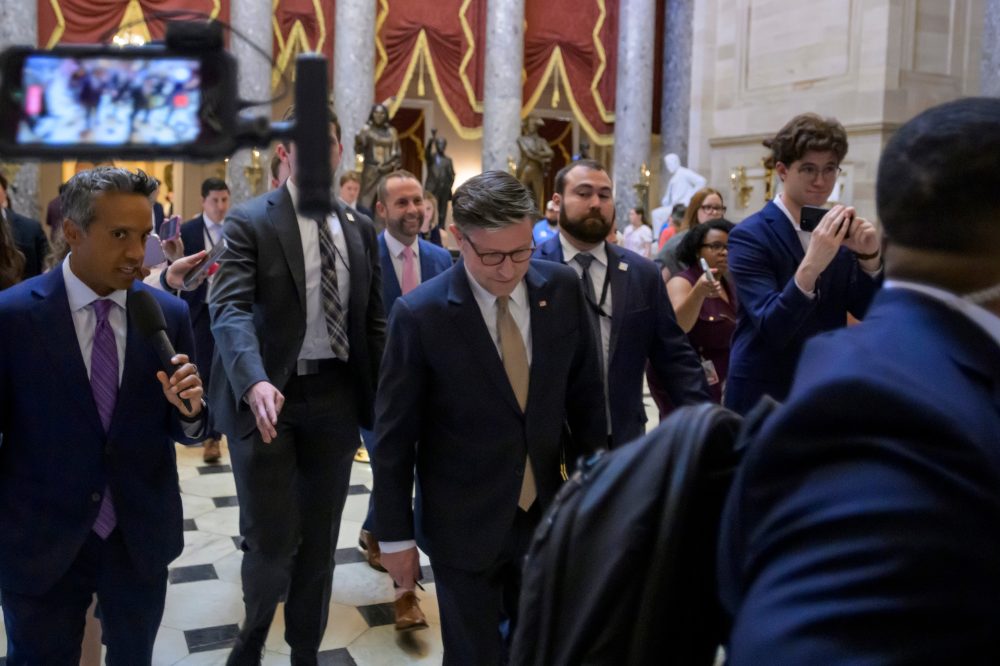
WASHINGTON — As the country marks its 250th birthday, the U.S. House of Representatives has temporarily shut down its work.
House leadership abruptly called off scheduled votes Tuesday and sent members home early for the holiday break, as Speaker Mike Johnson’s slim Republican majority once again found itself paralyzed by a rebellion within his own party.
At the center of the standoff is the annual defense spending bill — a measure that includes military pay raises and other critical provisions — which has been stalled by a group of Republican holdouts demanding that President Donald Trump’s top priority, the SAVE America Act, be attached to it. The SAVE America Act is a strict voter identification bill. Last week, the Senate similarly ground to a halt under pressure from Trump’s demands.
The scene at the emptied Capitol offers a telling picture of the current power dynamic in Washington, where a forceful executive branch is increasingly overshadowing a Congress that appears to be losing its footing.
This marks the second time in as many weeks that the House has simply walked away from its work.
“It’s a relatively bad time in Congress,” said Republican Rep. Dusty Johnson of South Dakota. “A lot of my colleagues have forgotten how to govern.”
The situation stands in stark contrast to one year ago this weekend, when Trump gathered Republican lawmakers outside the White House for a festive July Fourth event to sign what they called the “One, Big, Beautiful Bill” — a sweeping package of tax cuts and spending reductions.
That was a high point for Trump and the Republican majority, and for Speaker Johnson, who had faced doubts about whether he could push the bill through over Democratic opposition. Democrats had characterized the legislation as a tax giveaway funded by deep cuts to health care and food assistance programs.
Johnson leaned so heavily on Trump’s influence to get the bill passed that he presented the president with a speaker’s gavel — a gesture that Democrats and others viewed as a troubling symbol of power shifting from the legislative branch to the executive.
“We’re not dealing with Speaker Mike Johnson,” said Democratic Rep. Pete Aguilar of California, the caucus chairman, in a recent interview. “Unfortunately, Speaker Donald Trump does not want us in this week.”
As Johnson works to stay in Trump’s good graces, the president’s demands have continued to escalate beyond what the speaker can consistently deliver.
Trump’s push for the SAVE America Act — a bill that lacks enough Senate support to pass on its own — has effectively frozen most other congressional business. The president has also refused to sign a widely supported bipartisan housing bill that passed both chambers, holding it hostage until the voter ID legislation moves forward. Trump has dismissed the housing bill as a “yawn.”
Johnson said he spent four hours at the White House last week and another two hours with the president this week trying to chart a path forward.
“I told him, ‘Mr. President, I don’t have any tattoos, but if I did, it’d say SAVE America on my shoulder,’ OK?” Johnson said over the weekend on Fox News. “We passed it three times in the House already. We’re going to pass it again.”
Despite that pledge, a House vote to advance the legislation collapsed Tuesday. Republicans led by Rep. Anna Paulina Luna of Florida argued that Johnson’s approach — attaching the voter ID bill to the defense legislation — was a losing strategy that the Senate would ultimately reject.
“That’s disappointing,” admitted Republican Majority Leader Steve Scalise of Louisiana, though he insisted the party would push forward. “We’re going to keep trying because we have to. We’re not done doing big things.”
The dysfunction is particularly notable given that the founders placed Congress first in the Constitution, ahead of the executive and judicial branches, as a reflection of its central role in American democracy.
As the legislative calendar shrinks, lawmakers will face questions from voters this fall about what Congress has actually accomplished.
House Democratic Leader Hakeem Jeffries placed the blame squarely on Republicans rather than Congress as a whole.
“Donald Trump is fighting with Senate Republicans, Senate Republicans are fighting with House Republicans, and House Republicans are fighting with each other,” said Jeffries, who stands to become House speaker if Democrats regain control in the fall. “It’s not the Congress that’s struggling. It’s House Republicans who are struggling.”
Jeffries said Democrats remain focused on fighting “to make life more affordable for the American people.”
Departing lawmakers expressed frustration as they headed home for an extended recess.
Rep. Kevin Kiley, who left the Republican Party earlier this year to become an independent, described the situation as “frustrating.”
“It’s just like déjà vu where many times now we run into some sort of obstacle,” he said, “then the solution is just to go home.”
On the final day of its current term, the U.S. Supreme Court issued a landmark ruling upholding birthright citizenship — the long-standing principle that any child born on American soil is automatically a United States citizen.
The decision amounts to a major legal setback for President Trump, whose administration had pushed hard to limit this form of citizenship as part of a broader effort to restrict immigration into the country.
The court’s ruling rejected what was described as the most aggressive attempt by the Trump administration to curtail immigration, drawing a firm legal line around a constitutional protection that has been in place for generations.
The federal government announced Tuesday that it intends to take enforcement action against the Kansas City Public School District in Kansas, citing concerns over the district’s policies related to transgender students.
According to a statement from the Education Department, the school district’s policy of not informing parents about a student’s transgender status is a violation of the Family Educational Rights and Privacy Act.
Both the Education Department and the Justice Department said they would jointly pursue action, stating they will “take appropriate enforcement measures, including applicable judicial proceedings and potential loss of federal funding.”
The school district, which educates more than 21,000 students according to federal data, had not responded to requests for comment as of Tuesday. The Kansas City urban area spans both Kansas and Missouri.
At the center of the dispute is a district policy stating that school staff “should not disclose information that may reveal a student’s transgender status or gender nonconforming presentation to others, including parents.”
President Donald Trump has made efforts to withhold federal funding from schools over transgender-related policies and other matters, drawing criticism from civil rights advocates.
Trump has also signed multiple executive orders aimed at restricting transgender participation in sports. On Tuesday, the U.S. Supreme Court cleared the path for states to enforce limits on transgender student athletes in competitive sports.
This is not the first time Kansas schools have faced federal scrutiny. Earlier this year, the Education Department identified four Kansas school districts — including Kansas City — as potentially violating federal law because of their transgender-related policies.
The great-grandson of the Chinese American man whose landmark Supreme Court case established birthright citizenship in the United States called Tuesday’s high court ruling a win for every American, saying it reaffirmed a constitutional guarantee that has stood for over a century.
“I don’t consider this stuff a personal victory,” Norman Wong told The Associated Press. “It’s an obligation and a duty for every American to care about this because ultimately we’re not fighting for the rights of Chinese or Japanese or whatever. We’re fighting for rights for all Americans because these are fundamental rights.”
Wong, 76, has emerged as an unlikely public advocate for birthright citizenship. He began speaking out and giving interviews in January 2025, shortly after President Donald Trump signed an executive order declaring that children born in the United States to parents who are in the country illegally or on a temporary basis would not be considered American citizens.
In a 6-3 decision, a divided Supreme Court upheld a broad interpretation of birthright citizenship, rejecting Trump’s arguments.
Chief Justice John Roberts authored the majority opinion, which held that the long-established understanding of the Fourteenth Amendment — ratified following the Civil War — grants citizenship to anyone born on U.S. soil, with only very narrow exceptions.
Three justices dissented: Samuel Alito, Neil Gorsuch, and Clarence Thomas. Thomas wrote that the Fourteenth Amendment “was designed and understood to secure equal rights for the freed blacks but has instead been repurposed for political projects that the Reconstruction Congress did not support.”
Trump responded to the ruling by calling it “too bad for our Country” and incorrectly suggested that Congress could “easily” fix the matter through legislation. However, the majority’s ruling is grounded in constitutional interpretation, meaning it would require a constitutional amendment — not just a law — to override the decision.
Wong described the executive order Trump signed on the first day of his second term as an unconstitutional “decree.”
“If it didn’t fly in the face of the Constitution, the Supreme Court would have ruled differently today,” Wong said. “That’s unfortunate that we have a leader that wants the United States to be in his image, but that’s not what we’re supposed to be. He’s supposed to conform to what we the people believe in.”
The legal foundation for birthright citizenship for children of immigrants was expanded in the late 1800s. Wong Kim Ark was born in San Francisco in 1873. While returning by steamship from China in 1895, he was denied reentry into the United States. He took his case to court, and in 1898 the Supreme Court ruled in his favor, establishing that under the Fourteenth Amendment, citizenship is determined by place of birth — not the citizenship status of one’s parents.
Norman Wong has long been involved in social justice causes. As a student at the University of California, Berkeley in the 1970s, he joined the multiracial student-led Third World Liberation Front and witnessed firsthand how the term “Asian American” helped unite various student groups under a common cause.
It wasn’t until he was in his 50s that Wong learned Wong Kim Ark was his great-grandfather. His father had rarely spoken about family history, but journalists from Chinese-language newspapers reached out after spotting the family name in old court records.
Wong never anticipated becoming an advocate for a civil rights movement in his 70s. But last year, the Chinese Consolidated Benevolent Association — the same organization that financed Wong Kim Ark’s original legal battle — invited him to speak at a press conference. Since then, Wong, who lives in the San Francisco Bay Area, has given speeches and interviews and even traveled to Washington in April to attend the Supreme Court oral arguments in person.
“I consider myself lucky enough to actually have a meaningful role,” Wong said. “All that citizenship grants is the stuff that was the promise of America, which is life, liberty and the pursuit of happiness.”
The Justice Department issued a statement saying it is “committed to tackling illegal birth tourism schemes by working diligently with U.S. Attorneys across the country to uphold the law.” In a post on the social platform X, the department added: “Actors seeking to exploit loopholes to obtain automatic citizenship for their children pose a national security threat and will be brought to justice.”
Cecillia Wang, the national director of the American Civil Liberties Union, argued in favor of birthright citizenship before the Supreme Court. In a statement following the ruling, she said the court “reaffirms a fundamental American promise — if you are born here, you are a citizen.”
“A president cannot change the Constitution by executive fiat,” Wang said. “Our brave clients and our legal team stand with millions of people around our country who spoke up for one of our most cherished rights.”
Wang was born in the United States to parents who legally immigrated from Taiwan as graduate students. The fact that she was the attorney who argued the case — nearly 130 years after Wong Kim Ark won his — made the outcome even more meaningful, Norman Wong said.
“It’s kind of sweet because — especially for Chinese Americans — they were at the forefront of all this anti-Asian hate,” Wong said. “There are certain aspects of my life where I think what happened actually prepared me for what’s happening now.”
A newly released federal filing shows that President Donald Trump’s cryptocurrency businesses generated nearly $1.2 billion in revenue last year — a remarkable figure for ventures that were just getting off the ground when he took office.
Those fledgling operations have already outpaced much of his extensive real estate holdings in terms of income, despite his property empire taking decades to build. Two major factors drove that rapid growth: a pair of billionaire investors and Trump’s own decision to pull back on federal enforcement actions targeting the crypto industry.
According to the required annual disclosure report, Trump’s World Liberty Financial business brought in more than $500 million through the sale of new cryptocurrency products, including so-called “governance tokens.” A separate crypto venture, CIC Digital LLC, generated more than $600 million from selling souvenir-style “meme” coins bearing Trump’s likeness.
However, both the tokens and the meme coins have lost significant value since those sales took place.
The explosive growth of Trump’s crypto holdings is made even more striking by the fact that his traditional real estate business also expanded considerably last year. That side of his business reached new heights by striking licensing deals in multiple countries — its most ambitious international expansion to date. Notably, many of those same countries were engaged in negotiations with the United States over tariffs, military assistance, and other significant issues.
WASHINGTON — A federal judge on Tuesday overturned the Trump administration’s revamp of a student loan forgiveness program for public service workers, siding with advocates who argued the changes could be used as a political weapon against certain organizations.
U.S. District Judge Myong Joun, based in Massachusetts, threw out the U.S. Education Department’s revised rules, finding that the agency had exceeded its legal authority and that the changes posed a threat to First Amendment free speech protections. His decision landed just one day before the new regulations were scheduled to take effect.
The ruling stemmed from two separate lawsuits brought by more than 20 states, along with a coalition of nonprofit organizations and cities. The Education Department did not offer a response when asked for comment.
Congress established the Public Service Loan Forgiveness program back in 2007 as a way to draw college graduates into government and nonprofit careers. The program promises to wipe out federal student loan debt for those who spend 10 years working in public service positions.
Last year, the Trump administration moved to tighten eligibility requirements, seeking to cut off the benefit for employees working at organizations deemed to have a “substantial illegal purpose.”
The proposed changes took aim at nonprofits and government entities that support causes the Trump administration views as contrary to its own priorities.
Under the overhaul, the education secretary would have gained the authority to remove organizations from the program if they were found to be involved in child trafficking, the “chemical castration” of children, illegal immigration, or support for terrorist groups. Notably, the administration’s definition of “chemical castration” extended to the use of hormone therapy or puberty-blocking medications.
Judge Joun concluded that the new rules amounted to the administration trying to impose its own policy beliefs on employers. He also criticized the department for failing to tie its definitions of illegal activity to actual criminal statutes.
“The Department cannot create new criminal prohibitions through rulemaking,” Joun wrote in his decision.
The judge also raised doubts about the department’s justification for the rule changes, pointing to the agency’s own projections that fewer than 10 employers per year would actually be disqualified under the new standards.
“The Department offers no explanation for why a Final Rule with such sweeping consequences is necessary to address the possibility that, at most, ten employers each year may be engaging in illegal activity,” Joun wrote.
The changes would have significantly altered a program that has already erased student loan debt for more than one million Americans. Nonprofit and government organizations argued the overhaul undermined a key incentive that helps draw college graduates to public service careers, which typically offer lower pay than the private sector.
Joun also noted in his ruling that more than 100 supporting legal briefs were submitted on behalf of the groups challenging the new rules — while not a single brief was filed in support of the Trump administration’s position.
President Donald Trump has unveiled plans for an unprecedented Republican gathering focused on the upcoming midterm elections, marking the first time the party has ever held a national convention outside of a presidential campaign year.
The event is scheduled to take place in Dallas on September 9 and 10, bringing together Republicans to rally support ahead of critical House and Senate contests.
Traditionally, major national conventions are reserved for presidential election years, but Trump has been floating the idea of a midterm-focused gathering for some time. In a social media post, he described the event as an opportunity “to show the great things we have done since the Presidential Election of 2024.”
The stakes are significant. If Democrats manage to flip control of either chamber of Congress, they would have the power to block Trump’s policy agenda and open investigations into his administration during the final two years of his presidency.
Republicans currently hold only narrow majorities in Congress, and historically, the party in the White House tends to lose seats during midterm elections. Without Trump’s name on the ballot, GOP leaders are worried about keeping their base motivated to turn out and vote.
Holding the convention in Texas also draws attention to that state’s Senate race, where Democratic nominee James Talarico faces off against Republican nominee Ken Paxton. Paxton, the state’s attorney general, defeated longtime Sen. John Cornyn in a primary earlier this year with Trump’s support. However, Republican Senate leaders have expressed concern that Paxton’s troubled past — which includes an extramarital affair, an impeachment, and a securities fraud case that did not result in a conviction — could hurt his chances and strain party resources in what should be a winnable race.
The convention also shines a light on Trump’s mid-decade redistricting effort, which began in Texas and was aimed at securing additional Republican seats in this fall’s elections.
The groundwork for the event was laid earlier this year when the Republican National Committee voted at its January winter meeting to amend its procedures — which had previously centered solely on presidential nominating conventions — to allow for this type of midterm gathering.
Democrats explored holding a similar event ahead of the midterms but ultimately decided against it. The Democratic Party did hold comparable conferences back in the 1970s and 1980s.
The U.S. Supreme Court has issued a decision rejecting President Trump’s executive order on birthright citizenship, and legal experts are now weighing in on what the ruling means for the country.
A University of Virginia law professor named Amanda Frost spoke with NPR about the decision, offering her analysis of the court’s reasoning and the broader implications of the ruling.
The conversation examined what the Supreme Court’s decision tells us about the legal boundaries of presidential power when it comes to citizenship policy, and what people should take away from this significant ruling.
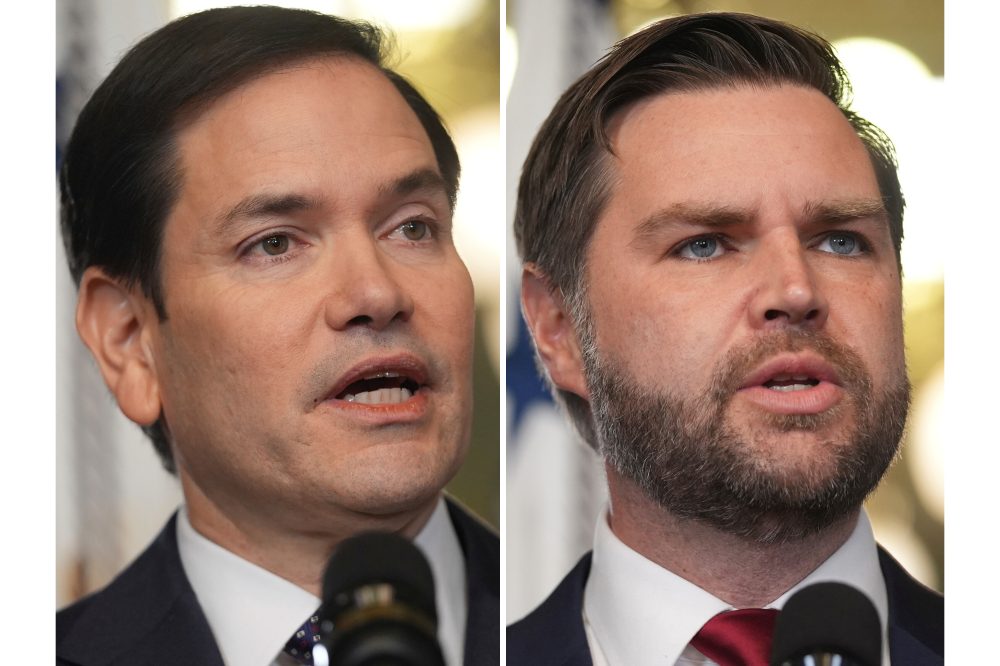
WASHINGTON — Vice President JD Vance and Secretary of State Marco Rubio appear to be charting separate courses when it comes to President Donald Trump’s national security agenda, even as both men publicly insist they are on the same page — and speculation grows about a potential rivalry heading into 2028.
The two men bring very different backgrounds to their roles. Rubio is the son of Cuban immigrants with extensive Senate experience and a deep focus on Latin America. Vance, a Midwest native and Marine Corps veteran, served only two years in the Senate before being chosen as Trump’s running mate in 2024, largely on a platform of opposing foreign military entanglements.
Their most visible difference has emerged over the Middle East. Vance has on multiple occasions voiced criticism of Israel and its military actions in Lebanon, stating that Trump has grown frustrated with Israeli strikes against the Iranian-backed militant group Hezbollah — moves that, in Vance’s telling, have complicated efforts to reach a deal with Tehran.
Rubio, by contrast, has either backed Israel or stayed quiet on the Lebanon situation — a portfolio he has personally taken the lead on — and that effort produced a preliminary framework agreement last week.
Foreign policy observers say the differences are real. “The talk about differences is not idle speculation,” said Dan Fried, a former assistant secretary of state and ambassador to Poland who now works with the Atlantic Council, a Washington think tank. “There is definitely something to it.”
The White House pushed back hard against any suggestion of a divide. “Why is the legacy media obsessed with driving a wedge between Vice President Vance and Secretary Rubio that does not exist? There is one camp — President Trump’s camp — and the entire administration is fully behind the president’s efforts to ensure Iran can never possess a nuclear weapon,” said White House spokeswoman Anna Kelly.
State Department spokesman Tommy Pigott echoed that sentiment, saying “Rubio and the entire administration is 100% in lockstep behind President Trump.”
Behind the scenes, however, the picture is more complicated. According to Trump administration officials familiar with the situation, Rubio was skeptical enough about reaching a workable deal with Iran that he passed on leading the U.S. delegation to the first ceasefire talks held in April in Islamabad, Pakistan.
Vance, seeing the episode as a chance to build his foreign policy résumé, reportedly asked Trump twice for the assignment before the president agreed, according to those officials, who requested anonymity to speak about internal deliberations.
Vance went on to lead the U.S. team at those inconclusive Pakistan talks and again this month at negotiations in Switzerland, which followed the signing of a memorandum of understanding between the U.S. and Iran. That agreement remains fragile, with both sides exchanging fire in recent days.
“It’s rather unusual for the VP to be given the lead role in a negotiation, but it’s quite possible that Rubio is happy to let him. It’s a pig in a poke. It’s a loser job,” said Ian Kelly, a retired career diplomat and ambassador during the first Trump administration.
Ian Kelly also noted that both men appear to harbor ambitions to succeed Trump, and that the president’s recent semi-joking suggestion that he would blame Vance if the Iran talks collapse may indicate Vance is being “set up for failure.”
Vance has expressed cautious optimism about the Iran negotiations, while Rubio has publicly supported the effort but repeatedly struck a more noncommittal tone — all while rejecting any talk of division.
“We’re all focused on the jobs in front of us. I think the president loves to stir the pot a little bit and loves the entertainment of it,” Vance said. He also spoke warmly of his relationship with Rubio: “I love Marco. I think he’s a great secretary of state. He’s become a very, very dear friend. I think both of us are very much focused on accomplishing the American people’s business right now.”
Rubio likewise dismissed the notion of any conflict. “When it comes to foreign policy and national security, we have no drama. We have no games,” he told reporters last week during a stop in Bahrain, the final leg of a three-nation tour of Arab Gulf countries most directly impacted by the Iran conflict.
“We have a group of people that work very well together and closely to execute on the president’s directives, which is why I think we’ve had good outcomes and good achievements, and we’re going to continue to have good outcomes and good achievements,” Rubio said. “Everyone has an important role to play, and everyone is playing that role and doing it in a collaborative process.”
Trump, meanwhile, has not shied away from stoking the rivalry, repeatedly asking supporters at rallies which of the two men they would prefer to see succeed him, and even floating at one point that the pair could form an unbeatable ticket.
Foreign policy analysts say the two men genuinely see the world differently. “Rubio speaks within the rubric of the Ronald Reagan construct of the free world and its importance,” Fried said. “Vance is not interested in the free-world construct. He speaks in the language of not wanting to fight what he believes are abstractions.”
Fried cautioned that the current direction on Iran concerns him. “We’re headed toward a bad place in Iran, which is giving up any support for Iranian civil society and not being terribly good at containing Iran,” he said. “Instead, we seem to be allowing ourselves to be backed into a ‘sphere of influence’ situation where Iran is weaker but ends up better off than before. I can’t imagine Rubio agreeing to that.”
Aides to Rubio have noted that he has repeatedly said he would step aside for Vance if the vice president decides to seek the 2028 Republican nomination. At the same time, Rubio has used his dual role as the nation’s top diplomat and national security adviser to reshape the National Security Council, placing several close allies in senior White House positions in recent weeks. Those include his former State Department counselor, Mike Needham, now serving as deputy national security adviser; Jeremy Lewin, who oversaw the dismantling of the U.S. Agency for International Development and is set to join the NSC as a deputy for the Western Hemisphere; and Dylan Johnson, who heads NSC communications while also serving as assistant secretary of state for public affairs.
WASHINGTON — A fractured U.S. Supreme Court ruled Tuesday that children born in the United States are entitled to citizenship under the Fourteenth Amendment, regardless of whether their parents are in the country illegally or on a temporary basis — and the decision laid bare striking divisions among the justices.
The ruling overturns an executive order President Donald Trump signed at the start of his second term, which declared that children born to parents who are in the U.S. unlawfully or temporarily would not be considered American citizens.
The court’s two Black justices found themselves on opposite sides of the debate, particularly when it came to interpreting the role of the post-Civil War Reconstruction era in defining American citizenship.
The majority opinion was authored by Chief Justice Roberts and joined by Justices Sonia Sotomayor, Elena Kagan, Amy Coney Barrett, and Ketanji Brown Jackson. Together, they concluded that being born on U.S. soil and being subject to U.S. law is sufficient to grant citizenship.
Writing for the majority, Chief Justice John Roberts grounded much of his opinion in the history of English common law, concluding that birthright citizenship has always been tied primarily to the place of birth — not to the immigration status or residence of a child’s parents.
“Citizenship, then and now, was the right to have rights — to freely participate in our political community. The Framers of the Fourteenth Amendment extended that promise to ‘every free-born person in this land,’” Roberts wrote, citing congressional debates over the amendment. “We keep that promise today.”
As he read the opinion from the bench, Roberts added: “We break no new ground today.”
Justice Clarence Thomas authored the primary dissent, arguing that American-born children are not automatically citizens. He contended that the majority overlooked historical evidence from the Reconstruction debates suggesting that citizenship required a deeper connection to the country — not simply being born within its borders.
“The Citizenship Clause was enacted for people who were born in this country and called it home. It was enacted for freed slaves such as Dred Scott, who had ‘a domicile’ here and therefore were entitled to sue as citizens,” Thomas wrote, framing Reconstruction as a targeted response meant to restore citizenship to a wrongfully excluded group — formerly enslaved Black Americans.
Thomas also wrote that in his view, Trump’s executive order does not violate the Constitution on its face. “The Order is consistent with the original meaning of the Citizenship Clause, at least insofar as it applies to children born to parents, here lawfully or unlawfully, who are not domiciled in the United States,” he wrote.
Justice Ketanji Brown Jackson agreed with the majority opinion but wrote separately to challenge Thomas’s dissent directly, arguing that he fundamentally misreads what the Reconstruction Amendments — the Thirteenth, Fourteenth, and Fifteenth Amendments — were designed to achieve.
“Despite his longstanding endorsement of a ‘colorblind’ Constitution, Justice Thomas now surprisingly suggests that the Citizenship Clause was a race-conscious remedial measure, relating only to ‘freed slaves such as Dred Scott’ — but that narrow vision of the Fourteenth Amendment bears little relationship to the history of its ratification,” Jackson wrote.
She went on to argue that “the Reconstruction Amendments were an anti-caste, anti-subordination reset for the Nation, not a mere spot treatment for the dark stain of slavery.”
Jackson also took aim at what she described as competing misunderstandings of the Constitution’s history: “The Court’s conception of a color-blind Constitution and the Government’s (and principal dissent’s) cramped, group-specific reading of the Citizenship Clause are two sides of the same coin, stemming from a basic misunderstanding of the relevant history.”
Justice Samuel Alito joined Thomas among the dissenters, with both arguing that birthplace alone is not sufficient for citizenship and that a child’s parents must have a deeper political allegiance or meaningful relationship to the United States.
WASHINGTON — President Donald Trump came away from this Supreme Court term without some of the rulings he was pushing for — including on tariffs, birthright citizenship, and his attempt to remove Federal Reserve governor Lisa Cook from her post. Yet when all was said and done, Trump’s overall authority as president grew considerably.
His aggressive immigration enforcement was mostly backed by the court, partisan redistricting efforts got the green light, and the justices dramatically expanded the president’s grip over federal regulatory agencies by striking down a precedent that had stood for 90 years. The court’s conservative majority also showed a pattern of giving Trump the benefit of the doubt — even when he used racially charged language or pushed the limits of executive authority.
In a ruling handed down Monday, the court gave the president effective control over independent regulatory agencies by allowing him to dismiss their leaders whenever he chooses. For decades, federal law — some of it more than a century old — had required presidents to show cause, such as negligence, before removing agency heads. The court declared those protections unconstitutional restrictions on presidential power.
The decision opens the door for the president to reshape agencies that Congress designed to function independently of the White House. It could also eventually threaten civil service protections for lower-level federal workers if future rulings extend the president’s firing power further down the chain.
One notable exception: the Federal Reserve. The court ruled Monday that the Fed’s leadership cannot be dismissed at will, even though many legal experts say there is no clear legal distinction between the Fed and other agencies. The ruling means Cook can keep her position while she fights efforts to remove her over mortgage fraud allegations, which she denies.
The Voting Rights Act of 1965 was a landmark achievement of the Civil Rights Movement, finally giving Black Americans and other minorities meaningful access to the ballot and paving the way for thousands of Black elected officials nationwide. Since 2013, however, the Supreme Court has steadily weakened minority voters’ ability to use that law to challenge election changes, concluding that such protections were no longer as necessary.
This past April, the court raised the bar even higher, making it significantly more difficult for minority voters to challenge electoral maps that limit their ability to elect candidates of their choice — unless they can essentially prove that racial discrimination was intentional.
That ruling aligned with Trump’s push for Republicans to redraw as many congressional districts as possible to protect their narrow House majority. In the aftermath, Alabama, Louisiana, and Tennessee each eliminated majority-Black districts, including one in Alabama that had only been drawn three years earlier following a previous Supreme Court order.
On immigration, the Trump administration racked up a string of victories this term. The justices permitted the Department of Homeland Security to end deportation protections for hundreds of thousands of Venezuelans and Haitians, and to cap the number of asylum seekers allowed to cross the southern border each day. The court also gave border officers greater flexibility in handling cases involving green-card holders accused of crimes — a legal question that originated during the Obama administration.
On birthright citizenship, Trump pursued a restriction no president had attempted before, and tried to do it through an executive order rather than going through Congress. In the end, six justices concluded he had overstepped. Still, four justices sided with the administration’s interpretation of the 14th Amendment, suggesting it would allow the government to deny citizenship to children born in the U.S. to parents who are here illegally or on temporary visas.
Throughout the term, conservative justices repeatedly gave Trump favorable readings of his own statements and actions — a practice critics have labeled “sanewashing.” The pattern was on clear display last week when the court stripped protections from Haitian migrants. Justices Samuel Alito and Elena Kagan clashed sharply over whether race played a role in Trump’s remarks, which included describing Haitians as “poisoning our blood” and amplifying false stories about them eating pets in Springfield, Ohio.
“None of the cited statements by either the President or the Secretary was overtly racial,” Alito wrote, arguing the comments could have innocent explanations.
Kagan pushed back forcefully: “The statements fairly shout, in their racial undertones and overtones alike, that race entered into the President’s resolve to remove Haitians from this country.”
The dynamic echoed the 2018 travel ban case, when Chief Justice John Roberts said Trump’s comments about Muslims were irrelevant to the court’s review of a “Presidential directive, neutral on its face, addressing a matter within the core of executive responsibility.” Justice Sonia Sotomayor disagreed at the time, writing that “the full record paints a far more harrowing picture, from which a reasonable observer would readily conclude that the Proclamation was motivated by hostility and animus toward the Muslim faith.”
The court similarly set aside the broader context in the 2024 ruling that helped Trump sidestep prosecution. Two of his own appointees, Justices Neil Gorsuch and Brett Kavanaugh, showed little interest in examining Trump’s efforts to reverse the 2020 election results or the January 6, 2021 Capitol riot. “We’re writing a rule for the ages,” Gorsuch said during arguments. Kavanaugh later added: “I’m not focused on the here and now of this case. I’m very concerned about the future.”
Trump did suffer a clear defeat on tariffs. In February, a six-justice majority — three liberals and three conservatives — ruled that an emergency powers law does not give the president authority to bypass Congress on tariffs. No president had ever tried to use the law that way before. Trump responded angrily, publicly criticizing the justices who ruled against him and calling those he had nominated an “embarrassment to their families.” He has since continued pursuing tariffs under other legal authorities, and new tariffs he announced following the ruling remain in effect even as they face fresh legal challenges.
The court also issued two rulings expanding Second Amendment rights. In one case, the justices found that people who regularly use marijuana cannot be automatically barred from owning firearms, recognizing that cannabis is now used by millions of Americans and cannot be presumed to make someone dangerous. In another, the court struck down a Hawaii law requiring individuals to obtain permission before carrying firearms into stores and hotels. Several other states have similar laws, some of which have already been blocked by lower courts.
Both decisions build on the court’s landmark 2022 ruling that significantly broadened Second Amendment protections. And a major new gun rights battle is on the horizon: the court announced Tuesday it will take up the question of whether state and local bans on semiautomatic rifles commonly referred to as assault weapons violate the Second Amendment.
WASHINGTON — The U.S. Justice Department issued a directive Tuesday telling federal prosecutors to make investigations into so-called birth tourism schemes a top priority.
The move came in the wake of a Supreme Court decision that rejected President Donald Trump’s bid to place restrictions on birthright citizenship in the United States.
A federal judge in Boston has put a stop to a Trump administration rule that would have blocked some public service employees from qualifying for federal student loan forgiveness.
U.S. District Judge Myong Joun sided with a coalition of Democratic-led states, cities, and nonprofit organizations that challenged the U.S. Department of Education’s new regulation. Those groups argued the rule was crafted to target organizations that advocate for immigration rights, transgender healthcare, and other causes the Trump administration opposes, effectively pushing them out of the Public Service Loan Forgiveness Program.
That program allows borrowers who work for government agencies or nonprofit employers to have their federal student loans wiped out after 10 years of qualifying employment. Since Congress created the program in 2007, more than one million borrowers have had their debt erased through it.
In a March 2025 executive order, President Trump stated that the program had “misdirected tax dollars into activist organizations that not only fail to serve the public interest, but actually harm our national security and American values.” He directed the Education Department to rewrite the rules governing who qualifies, specifically to exclude employers with what he called a “substantial illegal purpose.”
The Education Department followed through, publishing a final rule in October that defined “substantial illegal purpose” to include activities such as aiding illegal immigration, supporting terrorism, engaging in illegal discrimination, and participating in what it described as the “chemical and surgical castration or mutilation of children.”
Plaintiffs filed their lawsuit in November, seeking to prevent the rule from taking effect on July 1. They argued the regulation was clearly designed to penalize organizations the administration disagrees with, including groups that work on behalf of immigrants, transgender individuals, diversity programs, and political protest movements.
Their legal challenge also contended that the law establishing the forgiveness program never gave the Education Department the authority to carve out exceptions to eligibility, and that the agency had no reasonable justification for the policy.
Monday’s court decision represents the second time in less than a week that a judge has blocked the Trump administration’s attempts to overhaul the federal student loan system. Earlier last week, a separate judge in Washington, D.C., prevented the Education Department from enforcing a different rule that would have lowered federal student loan limits for graduate students pursuing degrees in nursing and other healthcare fields.
Delaware Governor Matt Meyer put his signature on the state’s Fiscal Year 2027 operating budget, giving final approval to a spending plan designed to strengthen public education, expand access to affordable housing, improve healthcare, and support state employees.
The newly signed budget reflects the administration’s core goals, which include investing in children, making everyday life more affordable for residents, and broadening housing opportunities across the state.
In addition to those priorities, the budget is intended to lower costs and open up greater opportunities for families throughout Delaware.
The United States Supreme Court has sided with restrictions that bar transgender athletes from participating in women’s and girls’ sports competitions, according to a recent analysis of the high court’s decision.
Brooke Migdon, a reporter with The 19th, joined NPR’s Juana Summers to help explain the ruling and walk through what it means for transgender student-athletes across the country.
The decision marks a significant moment in the ongoing national debate over transgender participation in sports, particularly at the scholastic level, where policies have varied widely from state to state.
Americans are still hungry for behind-the-scenes details about President Donald Trump, and a newly released book is proving it.
“Regime Change: Inside the Imperial Presidency of Donald Trump,” co-written by political journalists Maggie Haberman and Jonathan Swan, has moved more than 300,000 copies in its first week on shelves, according to publisher Simon & Schuster. The pair are both reporters for the New York Times.
Those kinds of opening-week numbers were common for Trump-related titles during his first term in office, but had become increasingly rare during his second. Many in the publishing industry had assumed readers had grown tired of books about Trump and felt there wasn’t much new ground to cover.
The 300,000-copy figure includes preorders, print sales, ebooks, e-audiobooks, and orders that haven’t yet been fulfilled due to high demand, the publisher noted. Simon & Schuster said the book has already gone into its third print run, with 200,000 additional copies on order after it sold out rapidly in bookstores and on Amazon. It currently holds the record for the best first-week performance of any hardcover nonfiction book in 2026.
The book spans the first 14 months of Trump’s second presidency, taking readers inside the West Wing, the White House residence, Trump’s Mar-a-Lago estate, and aboard Air Force One during foreign travel.
Trump, who has a long history with Haberman dating back to her coverage of him as a New York City business and society figure, has dismissed the book as “mostly made up.”
The manuscript digs into specifics of Trump’s military decisions, how he has used the Justice Department against political rivals, his private conversations with other influential figures, and the considerable effort he has put into reshaping the look and structure of the White House.
One of the book’s central arguments is one Trump himself apparently believes: that losing the 2020 election ultimately made him more powerful in his second term — giving him the confidence to push past traditional norms, dismantle long-standing institutions, and test the outer limits of presidential authority.
Haberman and Swan have made the rounds on news talk programs promoting the book and sharing reporting highlights, including a conversation with Trump in which he reportedly boasted about being compared to some of history’s most notorious villains.
Sean Manning, vice president and publisher at Simon & Schuster, said the book “has entered the national conversation” and predicted it will stand as “a work of historic importance.”
NEW YORK (AP) — The Trump administration announced Tuesday that it is halting federal dollars flowing to New York’s Medicaid Fraud Control Unit, a state agency tasked with rooting out and prosecuting wrongdoing in the government’s safety-net healthcare program.
U.S. Department of Health and Human Services Inspector General Thomas March Bell sent a letter to New York officials accusing the state of failing to obtain enough criminal indictments. As a result, millions of dollars in funding will be frozen through at least September 30.
This marks the second time this year the Republican Trump administration has cut off funding to a state Medicaid fraud unit. The move is part of a broader push the administration has aggressively championed in the healthcare sector, which has included launching a new anti-fraud task force, conducting targeted investigations, withholding funding, and requiring healthcare providers to revalidate their credentials — actions that have touched all states but have been concentrated largely on those led by Democrats.
The funding suspension also follows an embarrassing admission by the administration that it had made a significant error in data it used to justify an earlier fraud investigation into New York’s Medicaid program — a mistake that critics said illustrated a pattern of acting before verifying the facts.
New York Attorney General Letitia James, a Democrat, quickly pledged to challenge Tuesday’s funding freeze.
“During my time as Attorney General, my office has recovered over $627 million for Medicaid and was recognized by this very administration for leading the nation in anti-fraud efforts,” she wrote. “We are considering all legal options to stop this outrageous action.”
Bell’s letter, addressed to James and New York Medicaid Fraud Control Unit Director Amy Held, argues that the unit is handling cases too slowly and producing too few indictments and convictions. The letter points out that compared to four other similarly sized units in different states, New York recorded the fewest criminal fraud convictions between 2023 and 2025.
The letter does acknowledge that New York deliberately chose to pursue “high impact, complex fraud cases” rather than smaller individual ones — but Bell argued that approach has not produced adequate results.
“Enough is enough,” Bell wrote. “The New York MFCU has failed to comply with the terms and conditions of its MFCU grant award.”
Bell indicated the freeze could be lifted before September 30 if New York demonstrates it has addressed the concerns that led to the suspension. If the state fails to do so, the funding cutoff will remain in place.
The attorney general’s office pushed back, saying in a statement that it has “long been recognized as a national leader in effectively investigating and prosecuting Medicaid fraud schemes” — including by the HHS inspector general’s own office. A 2025 report from that office noted New York was among four states accounting for half of all civil recoveries that year.
A spokesperson for the attorney general’s office noted that most of the unit’s criminal convictions involve company owners, executives, and corporations whose cases result in large recoveries for Medicaid.
“This administration’s unprecedented attack on New York is another political distraction,” James said.
The New York freeze follows a similar action taken against Hawaii. In early June, Bell informed Hawaii officials that Medicaid fraud funding would be cut off there as well, citing a three-year period without a single Medicaid fraud indictment or conviction in that state.
Joan Alker, executive director and co-founder of Georgetown University’s Center for Children and Families, said there is a deep irony in the federal government stripping money meant to fight fraud when fighting fraud is supposedly the administration’s goal.
“If you want to fight fraud, don’t take away money from states’ fraud control units,” she said. “I chalk this up to more political theater to distract voters from historic Medicaid cuts before the midterms.”
For months, the Trump administration has argued that states — particularly those led by Democrats — have been too slow to address fraud in social safety-net programs like Medicaid. It has demanded at least five states, four of them with Democratic governors, provide information on how they detect, prevent, and respond to Medicaid fraud.
The federal government has also withheld some Medicaid funding from Minnesota and California over fraud concerns. Minnesota Gov. Tim Walz, a Democrat and Kamala Harris’ 2024 running mate, accused the Trump administration of making cuts as political retribution.
The administration’s anti-fraud efforts have also extended to Medicare. Dr. Mehmet Oz, who heads the federal Centers for Medicare and Medicaid Services, announced a six-month pause on new enrollments for hospice and home care providers nationwide.
The U.S. Supreme Court closed out its nine-month term delivering substantial wins for conservatives across several major areas of law, while also drawing firm lines against some of President Donald Trump’s most ambitious policy goals.
The court, which holds a 6-3 conservative majority, took steps to strengthen executive authority over federal regulatory agencies — a long-sought Republican objective — but also moved to restrict presidential influence over monetary policy and trade.
Presidential Power
Trump brought three major cases before the court seeking to dramatically expand the reach of the presidency. He prevailed in one and lost two.
In one defeat, the court rejected Trump’s use of the International Emergency Economic Powers Act to establish a sweeping global tariff system. The justices ruled in February that the law — which does not use the word “tariff” — did not grant the president broad authority to impose import taxes, though they left open other possible legal avenues for tariffs.
The second loss came this week in a dispute involving the Federal Reserve. Trump had sought to remove Fed Governor Lisa Cook from her position after the board declined to lower interest rates at the pace he wanted. Administration officials accused Cook of mortgage fraud, though they offered little supporting evidence, in an attempt to justify firing her under the “for-cause” legal standard. The justices ruled that Cook could keep her job.
On the same day, however, the court handed conservatives a major victory by expanding presidential removal power over other regulatory agencies. The ruling overturned a 1935 precedent that had allowed Congress to shield certain agency leaders from being fired by the president at will. The case centered on Trump’s dismissal of Federal Trade Commissioner Rebecca Slaughter, a Democrat. The court ruled against her, invalidating tenure protections for agency heads and allowing the president to remove such appointees without cause.
Immigration
In three separate rulings decided along ideological lines, the court cleared a path for Trump to fulfill his campaign promise of stricter immigration enforcement and large-scale deportations.
The conservative majority allowed the administration to strip hundreds of thousands of Haitian and Syrian immigrants of a protected status that had shielded them from deportation while conditions in their home countries remained dangerous. The court also backed the government’s authority to physically block asylum seekers at the U.S.-Mexico border and made it easier to bar lawful immigrants accused of crimes from re-entering the country after traveling abroad.
However, the court dealt Trump a significant blow by rejecting his effort to end birthright citizenship — the longstanding principle that anyone born on U.S. soil is automatically a citizen. Trump had signed an executive order on his first day back in office that would have denied citizenship to hundreds of thousands of babies born each year to non-citizen parents on American soil.
In a 6-3 decision, Chief Justice John Roberts, appointed by Republican President George W. Bush, wrote that there was “scant evidence” supporting the Trump administration’s “dramatically revisionist view” of this foundational legal principle.
Voting and Elections
With Republicans fighting to hold onto control of Congress in November’s midterm elections, the court delivered major wins for the party on voting rights, along with mixed outcomes on election administration matters.
In April, the court rolled back large portions of the landmark 1965 Voting Rights Act, allowing states to redraw congressional district boundaries. Many Southern and Republican-controlled states have since moved to eliminate majority-minority districts — changes that election experts say could cost several Black members of Congress their seats.
The court also struck down limits on how much money political party committees can spend in coordination with individual candidates, overturning a 25-year-old precedent. Vice President JD Vance had challenged those restrictions during his 2022 Senate campaign, arguing they violated parties’ free speech rights. The justices agreed, handing Republicans another campaign finance victory.
On mail-in voting, Trump and Republicans came up short. The court ruled that states may count mailed ballots that were postmarked before Election Day even if they arrive after polls close. Trump has repeatedly and without evidence questioned the integrity of mail-in voting and has attempted to prevent mostly Democratic-controlled states from sending out mail ballots.
Social Issues
The court sided with conservative positions on LGBTQ rights and gun ownership in nearly every major case this term, occasionally drawing support from the court’s liberal justices.
On Tuesday, the conservative majority upheld laws in Idaho and West Virginia that prohibit transgender athletes from competing on girls’ sports teams at public schools. All three liberal justices joined the conservatives in finding that the state laws did not violate a civil rights statute prohibiting sex-based discrimination in education. The three liberals did, however, dissent from the majority’s conclusion that the laws also pass muster under the Constitution’s 14th Amendment equal protection guarantee.
In an 8-1 ruling in March, two of the court’s liberals joined conservatives in striking down a Colorado law that had barred psychotherapists from using conversion therapy intended to alter an LGBTQ minor’s sexual orientation or gender identity. The justices found the law violated free speech protections under the First Amendment.
Last week, the court struck down a Hawaii law that restricted carrying handguns in private businesses, ruling along ideological lines. Earlier in June, the court unanimously ruled that a ban on gun ownership by Americans who use marijuana went too far — a decision that brought together gun rights advocates on the right and civil libertarians on the left.
A federal judge has dismissed a Justice Department lawsuit that sought to force New Hampshire to hand over its detailed voter registration records, delivering yet another courtroom setback to the Trump administration’s push to collect comprehensive voter data from states across the country.
U.S. District Judge Joseph LaPlante issued the ruling Monday, finding that the Justice Department’s request failed to satisfy a provision of the Civil Rights Act of 1960 that governs federal election records. The judge also determined that the department did not adequately allege any violation of the Help America Vote Act of 2002, the law that sets standards for state voting systems and voter registration databases.
The ruling blocked what LaPlante described as “allowing the Attorney General unrestricted access to New Hampshire’s (voter list) to conduct a line-by-line audit to assess a ‘possible’ violation of a federal statute.” LaPlante was appointed to the bench by former President George W. Bush.
New Hampshire Secretary of State David Scanlan, a Republican, praised the decision. “I am committed to protecting the private information of New Hampshire voters to the fullest extent required by law,” Scanlan said in a written statement.
With this dismissal, New Hampshire becomes the tenth state in which the Justice Department has failed in court on similar efforts. The department has pursued lawsuits to obtain detailed voter data — which includes birth dates, home addresses, driver’s license numbers, and partial Social Security numbers — from 30 states and the District of Columbia.
Beyond New Hampshire, courts have also rejected the department’s attempts in Arizona, California, Maine, Massachusetts, Maryland, Michigan, Oregon, Rhode Island, and Wisconsin. In Georgia, a judge dismissed a Justice Department lawsuit on the grounds that it was filed in the wrong city, leading the government to refile the case in a different location.
Federal officials have argued that access to the voter records is necessary to verify that states are following federal laws regarding the upkeep of voter registration lists — even though states already maintain their own detailed procedures for doing so. In the Rhode Island case, a Justice Department attorney acknowledged that the department wanted unredacted voter roll data so it could be shared with the Department of Homeland Security to verify citizenship status.
Officials from both the Democratic and Republican parties have raised objections to the Justice Department’s demands, arguing that the requests violate both state and federal privacy protections.
According to the Brennan Center for Justice and Associated Press reporting, at least 13 states have already provided or agreed to provide their voter registration lists to the department: Alaska, Arkansas, Indiana, Louisiana, Mississippi, Nebraska, Ohio, Oklahoma, South Carolina, South Dakota, Tennessee, Texas, and Wyoming.
Cryptocurrency companies have poured $189 million into influencing the 2026 U.S. midterm elections so far, already exceeding what the industry spent during the last election cycle, according to a newly released report from Public Citizen, a consumer advocacy group.
The crypto sector now accounts for more than one-third of all corporate money donated to this year’s November elections and the primary contests leading up to them — making it the single largest corporate political spender in the country, the group found.
The industry was also the top corporate donor during the 2024 election cycle, when it contributed $170 million and helped elect numerous congressional candidates who backed crypto-friendly positions.
Artificial intelligence companies, major tech firms, and online betting businesses have also opened their wallets in a big way. Together with crypto, those industries have collectively spent $294 million on the 2026 elections to date. This November, every seat in the House of Representatives will be on the ballot, along with roughly one-third of Senate seats.
“The big takeaway is that corporate money is playing a bigger role than ever in our elections, and it’s only expanding,” said Rick Claypool, a research director at Public Citizen who authored the report.
Public Citizen tracked contributions made through political action committees, known as PACs, which collect donations from multiple sources and funnel them toward candidates or political causes.
According to the report, venture capital firm Andreessen Horowitz, Ripple Labs, Foris DAX — which is affiliated with Crypto.com — and Coinbase ranked as the four largest contributors to PACs focused on advancing business-friendly policies.
The crypto industry’s heavy investment in the 2024 elections paid significant dividends, helping bring in a Congress more willing to champion legislation favorable to digital assets. Much of that spending flowed through super PACs, which face no limits on how much money they can raise or spend — a pattern that appears to be continuing in 2026.
Fairshake, a major super PAC dedicated to backing pro-crypto candidates, has already pulled in $82 million in donations during this election cycle, according to Public Citizen.
The industry’s 2024 spending helped produce a concrete policy win last year when Congress approved a law establishing a federal framework for stablecoins — dollar-backed digital tokens — which supporters say will encourage wider adoption of cryptocurrency. That legislation passed with backing from both parties in both chambers.
Now the industry is pushing for additional measures, including a bill called the Clarity Act, which would create a broader regulatory structure for cryptocurrencies. Crypto companies argue the legislation is essential to the future of U.S. digital assets and would resolve fundamental legal problems facing the sector.
That bill has hit a wall in the Senate, and it remains uncertain whether it will clear that chamber before the November elections, when Democrats are projected to retake control of the House. If the Senate does not act this year, analysts say the bill is unlikely to become law anytime soon. Many Democrats have opposed it, arguing it does not do enough to stop politicians — including President Donald Trump — from personally profiting off crypto ventures.
Trump actively courted crypto industry support during his campaign, and his family has benefited financially from its own digital token. During his second term, crypto policy reform has been a stated priority, and the White House has been actively lobbying for the bill’s passage, according to Reuters.
WASHINGTON (AP) — The U.S. Supreme Court, which has been steadily expanding gun rights in recent years, has agreed to examine whether bans on semiautomatic rifles — commonly referred to as assault weapons — are in conflict with the Second Amendment.
The justices announced Tuesday that they will hear appeals seeking to overturn restrictions on the AR-15 and comparable semiautomatic firearms that are currently in effect in the Chicago area and the state of Connecticut.
Roughly a dozen states across the country have enacted similar restrictions, including major metropolitan areas such as New York, Los Angeles, and Washington, D.C. A federal assault weapons ban that had been in place nationally was allowed to expire in 2004 by Congress. Since then, Democratic lawmakers have pushed to reinstate it following a string of mass shootings, while individual states have continued to enact their own versions of the law.
These cases represent the latest in a series of high-stakes gun rights battles to reach the nation’s highest court, following a major 2022 ruling in which the court’s conservative majority significantly broadened Second Amendment protections — a decision that has since triggered legal challenges to firearm regulations across the country.
Arguments in the case are anticipated to take place this fall.
A Mississippi district attorney has stepped down from his position after changing his plea to guilty in a federal bribery conspiracy case — a scandal that has swept up several officials in the state’s capital city, including Jackson’s former mayor.
Hinds County District Attorney Jody Owens was indicted back in November 2024 after two undercover FBI agents, pretending to be real estate developers, offered bribes to him and other city officials in exchange for approving a development project.
According to the indictment, Owens solicited and accepted no less than $115,000 in cash and helped funnel more than $80,000 in payments to others allegedly involved in the scheme. That included $50,000 directed toward the reelection campaign of Jackson Mayor Chokwe Antar Lumumba. Lumumba, who characterized the charges against him as a politically motivated prosecution, went on to lose his reelection bid last year.
Owens now faces a potential prison sentence of up to five years.
In a social media post announcing his departure, Owens reflected on the weight of his decision. “This was one of the most difficult decisions I have ever made,” he wrote. “While it hurts beyond measure to step away from a position I love, I believe this decision is what is best for me, my family, and the District Attorney’s Office.”
Meanwhile, Lumumba and former Jackson City Council member Aaron B. Banks have each pleaded not guilty and are set to face trial beginning in mid-July.
Two others connected to the case — Jackson City Council member Angelique Lee and Sherik Marve Smith, a relative of Owens — both entered guilty pleas to federal bribery charges in 2024.
WASHINGTON — The final day of the U.S. Supreme Court’s term delivered a significant blow to President Donald Trump on Tuesday, as the nation’s highest court struck down his attempt to limit birthright citizenship — while also handing him and other conservatives several wins on transgender sports and campaign finance rules.
The court’s nine-month term was filled with landmark decisions touching on presidential authority, immigration, voting rights, and gun rights. Tuesday’s rulings capped what has been one of the most consequential Supreme Court terms in recent memory.
The Supreme Court currently holds a 6-3 conservative majority, which includes three justices appointed by Trump.
Restricting birthright citizenship had been among the highest priorities of Trump’s immigration agenda. He signed an executive order on the issue on his very first day back in the White House. That order directed federal agencies to stop recognizing the citizenship of children born on U.S. soil if neither of their parents is an American citizen or a legal permanent resident — commonly known as a green card holder.
But on Tuesday, the court rejected that directive in a 6-3 decision authored by Chief Justice John Roberts, a conservative. Roberts wrote that the order ran afoul of the 14th Amendment to the U.S. Constitution, which guarantees citizenship to virtually all people born on American soil, with only a narrow set of exceptions.
“Citizenship, then and now, was the right to have rights — to freely participate in our political community,” Roberts wrote, noting that the framers of the 14th Amendment extended that guarantee to every free-born person in the country.
“We keep that promise today,” Roberts added.
The 14th Amendment was ratified in 1868 following the Civil War, which ended slavery in the United States. It grants citizenship to those born in the U.S. who are “subject to the jurisdiction thereof.” Limited exceptions exist, such as for children of foreign diplomats or members of an enemy occupying force. Critics had accused Trump of racial and religious discrimination in his overall approach to immigration policy.
Prior to the ruling, some legal experts had estimated that Trump’s directive could have affected the citizenship status of as many as 250,000 babies born in the United States each year, and could have forced the families of millions more newborns to prove their citizenship standing.
TRANSGENDER ATHLETES IN SPORTS
The court also handed down a ruling Tuesday on the heated issue of transgender athletes competing in school sports — a topic that has become deeply intertwined in the nation’s ongoing culture wars.
Laws in West Virginia and Idaho require that sports teams at public schools, including universities, be organized according to “biological sex,” and prohibit “students of the male sex” from participating on female teams. Supporters of those laws argue they protect fair and safe competition for women and girls. Another 25 states have enacted similar legislation.
Opponents have characterized these measures as part of a wider effort by Trump and various state governments to roll back the rights of transgender Americans.
The Supreme Court reversed lower court rulings that had sided with transgender students challenging the bans in both states. Those students had argued the laws violated the Constitution and a federal anti-discrimination statute.
The court ruled unanimously, 9-0, that the state laws do not violate Title IX — the federal civil rights law that prohibits discrimination in education based on sex. On the question of whether the laws also violate the 14th Amendment’s equal protection guarantee, the justices split along ideological lines, with the six conservative justices in the majority ruling that they do not.
“Consistent with Title IX and the Equal Protection Clause, we hold that the states may maintain women’s and girls’ sports for biological females. They may determine eligibility for women’s and girls’ sports based on biological sex. The Constitution and Title IX do not require an overhaul of women’s and girls’ sports throughout America,” wrote conservative Justice Brett Kavanaugh in the majority opinion.
This marks the court’s second major ruling against transgender plaintiffs within a year. In a separate case from Tennessee decided in June 2025, the court allowed states to prohibit gender-affirming medical treatments for transgender minors.
CAMPAIGN SPENDING LIMITS STRUCK DOWN
In a third major ruling Tuesday, the court continued its trend of dismantling campaign finance restrictions — a direction it has been moving in since 2010. The justices sided with Republican challengers, including Vice President JD Vance, who had contested federal limits on coordinated spending between political parties and their candidates.
The 6-3 decision, again driven by the court’s conservative bloc, came as major Republican party committees hold a significant financial edge over their Democratic counterparts heading into the November midterm elections. The court determined that the existing cap on how much parties can spend on campaigns in coordination with candidates amounted to an unconstitutional restriction on free speech under the First Amendment.
A TERM FULL OF LANDMARK RULINGS
Tuesday’s decisions were just the latest in a string of major rulings from the court this term.
Back in February, the court blocked Trump’s sweeping global tariffs, which had been pursued under a law intended for national emergencies.
On Monday, the court backed Trump’s firing of a Federal Trade Commission member, a decision that expanded presidential authority over the executive branch and overturned a 1935 legal precedent limiting a president’s ability to dismiss officials at independent agencies. However, in a separate case, the court refused to allow Trump to immediately remove Lisa Cook, a member of the Federal Reserve Board of Governors.
In April, the court significantly weakened a key provision of the Voting Rights Act, a victory for Republicans. Earlier this month, it allowed the Trump administration to end a humanitarian protection that had shielded hundreds of thousands of Haitian and Syrian immigrants from deportation, and ruled in the administration’s favor on asylum seeker cases.
In March, the court struck down a Colorado law that had barred psychotherapists from practicing “conversion” therapy — talk therapy aimed at changing the sexual orientation or gender identity of LGBT minors.
The court also expanded gun rights this month, striking down a Hawaii law that restricted the carrying of handguns on private property open to the public — such as most businesses — without the property owner’s permission. It additionally narrowed the reach of a federal law that prohibits certain drug users from possessing firearms.
The United States Supreme Court has issued a ruling upholding birthright citizenship, one of the final major decisions handed down as the court’s current term came to a close.
NPR hosts Steve Inskeep and Michel Martin sat down with justice correspondents Carrie Johnson and Nina Totenberg to break down the ruling and other significant decisions the court issued at the end of its term.
Delaware Attorney General Kathy Jennings is declaring a major legal win after the United States Supreme Court ruled in favor of her and a group of fellow attorneys general in a battle against the Trump Administration over birthright citizenship.
Jennings released a statement responding to the high court’s decision, describing the fight as one that began almost immediately after President Trump returned to the White House.
“When President Trump took office in 2025, he immediately issued a flood of flagrantly unconstitutional and illegal executive orders,” Jennings said. “In a matter of days, I and my fellow Attorneys General began filing lawsuits to stop him. We have [continued that fight.]”
The attorney general framed the Supreme Court’s ruling as a vindication of those early legal efforts, which she said were aimed at blocking executive actions she believed crossed constitutional boundaries.
A prominent constitutional law scholar from the University of Virginia is offering her analysis of a major Supreme Court ruling on birthright citizenship.
Amanda Frost, a professor of constitutional law at the University of Virginia, sat down with NPR’s Steve Inskeep to discuss the high court’s decision and what it could mean going forward.
The conversation focused on the legal significance of the Supreme Court’s ruling on birthright citizenship, a topic that has drawn widespread attention across the country.
WASHINGTON — In a closely divided ruling, the U.S. Supreme Court on Tuesday preserved the long-standing principle of birthright citizenship, striking down President Donald Trump’s executive order that aimed to deny citizenship to children born in the United States to parents who are here illegally or on temporary visas.
The majority grounded its decision in the 14th Amendment — ratified following the Civil War — and more recent federal statutes, reaffirming that virtually anyone born on American soil is a citizen.
“Citizenship, then and now, was the right to have rights — to freely participate in our political community. The Framers of the Fourteenth Amendment extended that promise to ‘every free-born person in this land,’” Chief Justice John Roberts wrote on behalf of the court, drawing from congressional debate surrounding the amendment. “We keep that promise today.”
Three conservative justices disagreed and said the restrictions should have been permitted to take effect. Justice Clarence Thomas authored a 91-page dissent — more than three times the length of Roberts’ majority opinion — arguing the court was overstepping.
“The Court today takes the extraordinary step of holding facially unconstitutional the President’s Order excluding from citizenship the children of foreign temporary visitors and illegal aliens,” Thomas wrote. “In doing so, the Court adds to the sad history of the Fourteenth Amendment, which was designed and understood to secure equal rights for the freed blacks but has instead been repurposed for political projects that the Reconstruction Congress did not support.”
Trump’s order had already been blocked by multiple lower courts and had never gone into effect anywhere in the country. The Supreme Court’s ruling came as an appeal of a lower court decision out of New Hampshire that had struck down the citizenship restrictions.
During oral arguments held in April, justices from both ends of the ideological spectrum raised doubts about the order’s legality. The case drew additional attention when Trump made an unprecedented personal appearance in the courtroom during arguments.
The birthright citizenship order was the first immigration-related policy from the Trump administration to receive a final ruling from the high court. Earlier, the justices had also struck down sweeping global tariffs Trump had imposed using an emergency powers law that had never previously been applied in that manner. Trump reacted with sharp anger to that February tariffs decision, publicly saying he was ashamed of the justices who ruled against him and labeling them unpatriotic.
Ahead of Tuesday’s ruling, Trump appeared to anticipate an unfavorable outcome, taking to his Truth Social platform to criticize what he called “dumb judges and justices” and pointing to wealthy pregnant women from China and other countries who travel to the U.S. specifically to give birth so their newborns will obtain American citizenship.
Trump signed the birthright citizenship order on the first day of his second term as part of a sweeping immigration enforcement agenda. His administration contended that children born to noncitizens are not “subject to the jurisdiction” of the United States and therefore fall outside the citizenship guarantee of the 14th Amendment.
The 14th Amendment’s Citizenship Clause states: “All persons born or naturalized in the United States, and subject to the jurisdiction thereof, are citizens of the United States and of the State wherein they reside.” The amendment was originally crafted to guarantee citizenship to Black Americans, including formerly enslaved people, though its language extends more broadly.
Lower courts that struck down the executive order repeatedly pointed to the Supreme Court’s 1898 decision in Wong Kim Ark, which established that a child born in the U.S. to Chinese nationals was entitled to citizenship.
Researchers at the Migration Policy Institute and Pennsylvania State University’s Population Research Institute estimated that more than 250,000 babies born in the U.S. each year would have been affected had Trump’s order taken effect. Notably, the restrictions would have applied not only to children of undocumented immigrants but also to those born to people legally present in the country, such as international students and those in the process of applying for permanent residency.
WASHINGTON — The U.S. Supreme Court has eliminated long-standing federal restrictions on how much money political parties can spend in coordination with their candidates for Congress and the White House, overturning a campaign finance law that dates back more than half a century.
The ruling came as a result of a lawsuit led by Republicans, including Vice President JD Vance, and once again saw the court’s conservative justices form the deciding majority in a case involving campaign money rules. The court’s landmark 2010 Citizens United ruling had previously opened the door to unlimited independent spending in federal elections.
The now-struck-down spending limits were originally put in place to stop large donors from bypassing caps on individual campaign contributions. The concern was that wealthy donors could funnel unlimited money through political parties with the expectation it would be used to benefit a specific candidate.
Notably, the Supreme Court had previously ruled in favor of keeping these same limits back in 2001.
The Republican campaign committees for both House and Senate candidates launched the legal challenge in Ohio in 2022. At the time, Vance was serving as an Ohio senator, and then-Representative Steve Chabot also joined the lawsuit.
Once President Donald Trump began his second term in office, the Federal Election Commission reversed course, dropping its defense of the law and siding with Republicans in calling for it to be overturned.
Democrats had urged the court to preserve the spending caps, even as many observers across the political spectrum acknowledge that the limits had weakened political parties at a time when outside organizations face no such restrictions on their spending.
To put the old limits in perspective, coordinated party spending for Senate races last year ranged from $127,200 in smaller states to nearly $4 million in California. For House races, the cap stood at $127,200 in states with a single congressional district and $63,600 in all other districts.
The deep ideological divide among the justices over campaign finance rules was evident when the court heard oral arguments in December. Justice Sonia Sotomayor, who dissented in Citizens United and similar rulings, warned: “Every time we interfere with the congressional design, we make matters worse.”
Justice Samuel Alito, who was part of the Citizens United majority, pushed back on criticism of that earlier ruling, calling it “much maligned, I think unfairly maligned.” He argued the decision served to “level the playing field” by extending to all citizens the same freedom to spend that had previously been reserved for media companies.
Supreme Court Justice Samuel Alito has retired, stepping down from the nation’s highest court on Friday.
While Alito may not have been a household name to many Americans outside of legal and political circles, his influence on the direction of the Supreme Court was substantial. He was a driving force behind the court’s conservative majority on numerous high-profile issues.
Alito is perhaps best known for writing the majority opinion that overturned Roe v. Wade, the long-standing precedent that had established a constitutional right to abortion. That decision sent shockwaves across the country and reignited intense national debate over reproductive rights.
Beyond abortion, Alito consistently led the charge on a broad spectrum of conservative legal positions throughout his tenure on the bench.
The United States Supreme Court has issued a ruling upholding birthright citizenship, dealing a significant blow to an executive order President Trump signed when he returned to the White House.
The high court’s decision was grounded in constitutional principles and firmly rejected the executive order that Trump had put in place on the very first day of his second term in office.
The ruling settles a major legal question surrounding whether the president had the authority to limit birthright citizenship through executive action — a practice that has long been understood as a constitutional right for those born on U.S. soil.
The United States Supreme Court has ruled against limits on the amount of money individuals are allowed to contribute to political parties, overturning a law that has been on the books since the post-Watergate era.
At the heart of the case was a law Congress enacted in the aftermath of the Watergate scandal, which was designed to cap how much money a single person could give to a political party.
The high court’s decision marks a major development in the ongoing legal debate over campaign finance regulations in the United States.
It has now been 123 days since the United States and Israel launched the Iran war, and the world is once again watching as another round of diplomatic talks takes shape. President Donald Trump and Iranian officials remain at odds over the terms and even the format of any communication going forward.
Trump’s special Mideast envoy Steve Witkoff and son-in-law Jared Kushner are scheduled to meet with Qatari mediators to discuss putting an initial deal into effect to end the war in Iran — this following additional military exchanges in the Persian Gulf. Rather than sitting down directly with Iranian diplomats, the American side will rely on go-betweens. Majed al-Ansari, a spokesman for Qatar’s Foreign Ministry, confirmed that arrangement.
Iran is also sending a delegation to Qatar but has made clear it has no intention of meeting with the American side at any level. Iran’s Foreign Ministry spokesman Esmail Baghaei made that statement, though it left open the possibility that messages could be relayed through Qatari channels.
Meanwhile, a new survey from The Associated Press-NORC Center for Public Affairs Research — conducted ahead of the nation’s 250th birthday — paints a divided picture of how Americans feel about the flag. About 7 in 10 Republicans and roughly 6 in 10 Americans aged 60 and older say they fly the flag at least during holidays. In contrast, about 6 in 10 Democrats and independents say they never display it — a figure that climbs to 75% among Democrats under the age of 45.
Racial differences are also stark. Only about 3 in 10 Black adults say they ever display the American flag, compared to approximately half of white and Hispanic adults. Whether people view the flag as a unifying or divisive symbol appears to reflect broader differences in how Americans view their country’s history and achievements. The survey included 2,596 adults and was conducted April 16 through 20.
On the legal front, the Supreme Court ruled Monday that the Federal Reserve holds a unique level of independence from the presidency — unlike other federal agencies. In a 5-4 decision, the court determined that the president cannot remove members of the Fed’s board of governors without sufficient cause. The ruling came amid an ongoing clash between the Fed and President Trump, who has repeatedly called on the central bank to cut its key interest rate to reduce borrowing costs for homeowners, businesses, and the government. Trump had sought to remove Fed governor Lisa Cook last August, accusing her of mortgage fraud — a charge she denies. While the court preserved the Fed’s independent structure, it has allowed the president to fire leaders of other agencies, such as the Federal Trade Commission, at will.
Also Monday, Trump announced he will nominate Keith Sonderling to serve as secretary of labor. Sonderling has been serving as the agency’s acting director for two months, following the resignation of Lori Chavez-DeRemer amid abuse-of-power allegations. Sonderling previously served as deputy labor secretary and as a Republican member of the Equal Employment Opportunity Commission. In a Truth Social post, Trump wrote: “Throughout his career, Keith has proven his dedication to delivering strong results for the Hardworking People of our Country, and I know he will do an incredible job in his new role.” The nomination still requires Senate confirmation. During Trump’s second term, Sonderling has also served as acting director of the U.S. Office of Government Ethics and the Institute of Museum and Library Services, one of several agencies Trump targeted for closure through an executive order.
The Supreme Court is also expected to rule this week on several other major cases, including the constitutionality of Trump’s executive order restricting birthright citizenship for children born to parents who are in the country illegally or on a temporary basis. Also pending are cases involving transgender girls and women playing on public school and college sports teams in West Virginia and Idaho, two election-related cases involving mailed ballot deadlines and limits on political party spending, and a dispute over so-called geofence warrants that use cellphone location data to identify individuals near crime scenes.
The United States Supreme Court has issued a ruling upholding bans that bar transgender athletes from taking part in women’s and girls’ sports competitions.
Justice Brett Kavanaugh, who has a longstanding personal involvement in coaching girls’ basketball teams — including teams on which his own daughters have played — authored the majority opinion for the court.
The Worcester County Board of Electrical Examiners has announced that its upcoming meeting, originally scheduled for July 14, 2026, will not take place.
The session had been planned for 3:00 p.m. at the Worcester County Government Center, Meeting Room 1102, located at 1 West Market Street in Snow Hill, Maryland.
An agenda for the July 14 date had been made available through the county. Residents seeking additional information can visit the Worcester County events calendar online.
The Supreme Court is set to issue its ruling Tuesday on President Donald Trump’s executive order that would strip citizenship from children born in the United States to parents who are in the country illegally or on a temporary basis.
The decision arrives on the last day of a Supreme Court term that has largely revolved around Trump’s sweeping assertions of presidential power — and the court has mostly ruled in his favor throughout.
Just a day earlier, on Monday, the court handed the president a significant victory by ruling he has the authority to dismiss the heads of independent federal agencies without cause. The one exception was Federal Reserve governor Lisa Cook, who will keep her position while she legally contests Trump’s attempt to remove her over allegations of mortgage fraud.
To understand the legal backdrop of the birthright citizenship debate, it helps to look at how other nations handle citizenship. Outside the Americas, most countries operate under the principle of jus sanguinis — Latin for “right of blood” — meaning a child inherits citizenship from their parents regardless of where they are born. No European Union member state, for instance, grants automatic and unconditional citizenship to children born to foreign nationals.
American law, however, has deep roots in English common law, which traditionally granted citizenship based on where a child was born — a concept known as jus soli, or “right of soil.” The United Kingdom itself moved away from that approach with the British Nationality Act of 1981, which now requires that at least one parent be a British citizen or hold “settled status” for a child born in the UK to receive citizenship.
When the justices take their seats at 10 a.m. ET Tuesday, they are expected to move directly into delivering the remaining opinions of the term. Opinions are typically announced starting with the most junior justice and working up in seniority, meaning Chief Justice John Roberts — who may be the author of the birthright citizenship ruling — would speak last.
On the question of firing agency heads, the court ruled that presidents may remove those officials freely, regardless of federal laws requiring cause for dismissal and a 91-year-old precedent that had constrained executive power in that area. The Federal Reserve was carved out as a special exception given its unique role in setting interest rates.
The six conservative justices formed the majority in overturning the court’s previous unanimous ruling known as Humphrey’s Executor, which had been designed in part to insulate agency decision-making from political pressure.
“We hold that such protection from removal is contrary to the separation of powers enshrined in the Constitution,” Chief Justice John Roberts wrote on behalf of the majority.
In addition to the birthright citizenship case, the court is also expected to rule on whether states may bar transgender athletes from competing on girls’ and women’s public school and college teams, and whether a federal law more than 50 years old that limits how much political parties can spend in coordination with congressional and presidential candidates should remain in place.
The oral arguments over birthright citizenship stretched more than two hours in a packed courtroom that included Trump himself — making him the first sitting president ever to attend Supreme Court arguments — along with actor Robert De Niro, who was seated in the section reserved for justices’ guests.
During those arguments, the administration’s top Supreme Court attorney, Solicitor General D. John Sauer, faced a steady stream of skeptical questions from the justices, who probed both the legal foundation of the order and its real-world implications.
Justice Ketanji Brown Jackson pressed on the practicalities of enforcement, asking, “Is this happening in the delivery room?” as she questioned how the government would actually determine who qualifies for citizenship at birth.
Chief Justice John Roberts suggested Sauer was leaning on narrow, unusual exceptions to citizenship law to build a sweeping argument about undocumented immigrants. “I’m not quite sure how you can get to that big group from such tiny and sort of idiosyncratic examples,” Roberts said.
Among all nine justices, Clarence Thomas appeared most likely to support the administration’s position.
For the first time since the Supreme Court struck down Roe v. Wade, the National Abortion Federation has staked out a bold policy position — and it goes further than many expected.
The NAF is urging Congress to make abortion legal all the way up to the moment of birth, with absolutely no restrictions in place.
NAF President Brittany Fonteno made the organization’s stance clear, stating: “We must resist the political compromise of viability and arbitrary gestational limits. People deserve abortion access throughout pregnancy, without government interference.”
WASHINGTON — The U.S. Supreme Court is preparing to hand down a decision Tuesday on whether laws in West Virginia and Idaho that prohibit transgender student athletes from competing on female sports teams at public schools and universities are legally valid. The ruling comes on the final day of the court’s current term, which got underway back in October.
Both states passed laws that classify athletic teams at public schools, including colleges and universities, based on what they call “biological sex,” and prohibit “students of the male sex” from joining female teams. Twenty-five additional states have enacted similar legislation.
Federal courts at the lower level had ruled in favor of the transgender students who filed lawsuits against the bans, finding the laws violated both the U.S. Constitution and a federal civil rights statute.
Republican President Donald Trump’s administration, which has pursued a series of restrictions on transgender rights, has taken the side of the states in this legal battle.
Supporters of the laws argue they are necessary to ensure fair and safe athletic competition for women and girls. Opponents, however, view the measures as part of a wider effort to strip transgender Americans of their rights.
The students who brought the legal challenges argued the bans amount to discrimination based on sex or transgender status, running afoul of the 14th Amendment’s equal protection guarantee as well as Title IX — the federal civil rights law that prohibits sex-based discrimination in educational settings.
This ruling follows another significant Supreme Court decision on transgender rights from last year, in which the justices allowed states to prohibit medical interventions such as puberty blockers and hormones for minors experiencing gender dysphoria — a clinical term describing the distress that can arise when a person’s gender identity does not align with their sex at birth.
The Supreme Court, which currently holds a 6-3 conservative majority, has consistently supported other transgender-related restrictions in recent rulings, including allowing a ban on transgender individuals serving in the military and blocking passport applicants from selecting a sex marker that reflects their gender identity.
In 2020, the court issued a landmark decision that extended workplace discrimination protections to transgender individuals under Title VII of the Civil Rights Act of 1964 — a law with language closely mirroring that of Title IX.
President Trump, since returning to office in January 2025, has taken an aggressive stance on transgender policy, signing multiple executive orders limiting transgender rights, including one specifically targeting sports participation. He has publicly rejected the gender identities of transgender people.
The West Virginia case centers on Becky Pepper-Jackson and her mother Heather Jackson. Pepper-Jackson is a high school student in Bridgeport, West Virginia, who competes in shot put and discus.
The Idaho case was brought by Lindsay Hecox, a transgender student who had previously taken part in soccer and running clubs at Boise State University. Hecox ultimately chose to stop participating in sports and sought to have the case dismissed, citing fears of harassment and what she described as growing intolerance toward transgender people. Her legal team argued that her withdrawal from sports made the case moot.
The court heard oral arguments in January. During those proceedings, the court’s conservative justices expressed reservations about imposing a nationwide standard, pointing to ongoing debate and scientific uncertainty about whether medications such as puberty blockers or gender-affirming hormones fully eliminate physiological advantages that may stem from male puberty.
WASHINGTON — As the nation prepares to mark the 250th anniversary of American independence, President Donald Trump’s six so-called “Freedom Trucks” have fanned out across the country, from Washington State on the West Coast to North Carolina on the East Coast. Inside each truck, an AI-generated version of George Washington greets visitors with the words, “Thy rights are a gift from God,” under a ceiling bearing the phrase, “In God We Trust.”
The convoy of mobile museum trucks, deployed on the eve of the July 4th holiday commemorating the 1776 Declaration of Independence, is billed as a yearlong patriotic tribute to the American Revolution. Freedom 250 spokesperson Rachel Reisner described the effort as “sparking a unifying movement across all 50 states that celebrates the American spirit and showcases our nation at its best.”
However, the trucks have not been without controversy. In Massachusetts last month, local media reported that residents in one community objected to a scheduled Freedom Truck stop, prompting its cancellation. Detractors argue the exhibits present an overly religious interpretation of American history while sidestepping difficult chapters such as slavery and racial injustice.
Questions about funding have also emerged. The Institute of Museum and Library Services, an independent federal agency, provided a $14 million grant for the six trucks, which was paired with $10 million from Freedom 250. On March 3, a group of U.S. Senate Democrats sent a letter to Interior Secretary Doug Burgum questioning why government money was directed to what they called “a private entity that is unaccountable to the American people,” and whether those funds were being mixed with private donations “potentially raised from foreign sources.” According to Senate aides, no response has been received.
At the same time, House Democrats have been looking into whether congressional funds designated for “America 250” events have been redirected toward the White House’s Freedom 250 celebration.
At a House hearing, Democratic Representative Jared Huffman of California criticized the initiative, saying, “The soaring achievement of our secular enlightenment-based founding is obscured by a gauzy Christian nationalist fiction.”
Republicans pushed back on that characterization. Republican Bruce Westerman of Arkansas pointed to the Declaration of Independence’s preamble, which reads: “We hold these truths to be self-evident, that all men are created equal, that they are endowed by their Creator with certain unalienable Rights.”
In May, the group Public Employees for Environmental Responsibility filed a lawsuit against the U.S. Interior Department after the agency declined to respond to a Freedom of Information Act request seeking documents about Freedom 250’s funding and operations. Among the concerns raised were reports that federal employees were being used to promote a private organization, that funds were being directed toward a partisan agenda, and that access to Trump was being sold.
PEER senior counsel Aaron Lloyd told Reuters, “All these decisions on what events, what money to spend, the money comes in, where it goes out, it’s all in a black box. I want the government documents that explain what money went where.”
The White House did not directly address questions about the religious content in the truck exhibits. Spokesman Davis Ingle said in an emailed statement that “2026 will feature a renewal of patriotism and national pride.”
On May 17, one of the Freedom Trucks — its exterior painted with a depiction of the iconic “Washington Crossing the Delaware” painting — was parked near the U.S. Capitol as part of a daylong event called “Rededicate 250: A National Jubilee of Prayer, Praise & Thanksgiving.” A White House website also promotes a Freedom 250 “America Prays” page, encouraging visitors to set aside an hour each week to pray for the country, with pray.com listed as a participating organization.
The content inside the Freedom Trucks was developed by Hillsdale College, a private conservative Christian liberal arts institution, and PragerU, which is not an accredited university but rather a producer of what it calls “edu-tainment” content promoting Judeo-Christian values. PragerU has released videos including one examining how elections can be stolen, pointing to mail-in ballots — echoing claims that have been widely debunked — as well as a video questioning LGBTQ Pride Month celebrations. PragerU did not respond to requests for comment about its financial arrangements with Freedom 250.
Some historians have raised doubts about the religious framing of the anniversary events. Kate Carte, a history professor at Southern Methodist University who specializes in early American history, noted that both Protestant British loyalists and American “patriots” during the Revolution believed they were acting in accordance with their faith. But she stressed in a telephone interview that “the conflict between Britain and the colonies really had nothing to do with religion.” She also noted that America’s Founding Fathers “were very aware that religion could be really divisive” and chose not to establish a national religion as a result.
According to a 2023-2024 Pew Research Center study, 62% of U.S. adults identify as Christians, with evangelical Protestants making up 23% — the largest single group. About 29% of American adults have no religious affiliation, including atheists, agnostics, and 19% who describe themselves as “nothing in particular.”
Religion is not the only flashpoint surrounding the country’s semiquincentennial. The Trump administration has also faced legal challenges over its moves to remove interpretive exhibits from national parks, including material related to slavery and climate change.
Those who remember the U.S. bicentennial in 1976 describe it as a far less divisive event. Alan Spears, senior director of cultural resources at the National Parks Conservation Association, said that 50 years ago, public conversations about the contributions of Indigenous people, African Americans, and women were far less prominent. “The 1980s changed that,” Spears said, noting that the country moved away from presenting history as mainly “guys on horseback with swords.”
White House officials awarded a no-bid contract valued at up to $500 million for the construction of a ballroom in the East Wing, the Washington Post reported Tuesday, citing a copy of the contract agreement.
According to the report, the contract was issued through the Executive Residence, an office that operates outside the federal rules that typically require agencies to seek competitive bids and make contract details available to the public.
The Washington Post also reported that President Donald Trump was personally involved in negotiating certain costs associated with the ballroom project.
The contract was given to Clark Construction, a Virginia-based firm, which agreed to a 3% profit margin on its initial work on the East Wing, the newspaper reported.
Reuters, which first distributed the report, said it was unable to independently confirm the details. Neither the White House nor Clark Construction responded to requests for comment.
The ballroom project is one piece of a larger effort by Trump to reshape the look of Washington. Other elements of that plan include a 250-foot arch, a renovation of the National Mall reflecting pool, and a new promenade at the Lincoln Memorial.
Trump had previously stated that he and private donors would cover the cost of the ballroom, but he later turned to Congress seeking $1 billion in taxpayer funds for security-related upgrades. Senate Republicans, with November midterm elections in mind, rejected that request.
A landmark U.S. Supreme Court decision handed down Monday backing President Donald Trump’s removal of a Democratic member of the Federal Trade Commission is expected to have wide-reaching consequences for a number of other legal battles involving officials Trump dismissed from federal agencies.
CONSUMER PRODUCT SAFETY COMMISSION
Trump previously dismissed three Democratic commissioners from the nation’s top federal product safety watchdog agency. Those commissioners are protected under law from being removed unless there is evidence of “neglect of duty or malfeasance in office.” A federal judge had ruled Trump broke that law and ordered the commissioners returned to their posts, but the Supreme Court put that ruling on hold while an appeal moves forward.
The legal language protecting those commissioners is nearly the same as the wording at issue in the FTC case. The court’s conservative majority ruled Monday that requiring cause — such as “inefficiency, neglect of duty, or malfeasance in office” — to remove an FTC commissioner was unconstitutional, overturning a 1935 precedent. The Trump administration’s appeal in the consumer safety case remains pending, and the commission currently has only one member — a Republican — leaving it largely unable to carry out its normal functions.
LABOR BOARDS
Legal experts say the Supreme Court’s reasoning in the FTC case likely applies equally to members of federal boards that oversee labor relations in both the public and private sectors.
The laws protecting members of the Merit Systems Protection Board and the National Labor Relations Board from being fired without cause use the same or nearly identical language to the FTC law struck down Monday. A federal appeals court in Washington, D.C. ruled in December that those protections were invalid, and the dismissed board members have since taken their cases to the Supreme Court.
Monday’s ruling emphasized that officials who carry out federal laws must answer to the president. The former labor board officials have contended they function more like judges — deciding individual cases — rather than policy architects. They may still press that argument if the Supreme Court agrees to hear their cases, though Monday’s decision appeared to cast doubt on whether officials with so-called “quasi-judicial” roles are protected from being fired at will.
EQUAL EMPLOYMENT OPPORTUNITY COMMISSION
In another unprecedented move, Trump removed two commissioners from the EEOC, the agency responsible for enforcing workplace discrimination laws. One of those commissioners filed a lawsuit, which was put on hold while the Supreme Court considered the FTC case.
The firings left the five-member panel without the minimum three members needed to conduct official business for much of last year, until the U.S. Senate confirmed a Trump nominee in October.
Unlike many other agency members, EEOC commissioners have no explicit legal protection against removal. The commissioner who sued argued those protections are implied because the agency was designed to operate independently from the White House. But experts say that argument faces steep challenges in light of Monday’s ruling, which declared that “subordinates who exercise the President’s power are subject to removal by him.”
PRIVACY AND CIVIL LIBERTIES OVERSIGHT BOARD
Trump also targeted a lesser-known five-member panel responsible for reviewing U.S. surveillance programs for potential privacy and civil rights concerns. He removed all three Democratic members, leaving a lone Republican whose term ended in January of this year.
Like the EEOC, this surveillance board’s governing law includes no explicit removal protections for its members. Attorneys for the fired members could argue that the board’s national security role — including its regular access to classified documents — sets it apart from other agencies and warrants special protections.
In a separate ruling issued Monday, the Supreme Court upheld removal protections for members of the Federal Reserve’s governing board, pointing to the central bank’s unique constitutional and historical standing. Legal experts said that any effort to carve out exceptions to the FTC ruling will likely lean on that Fed decision as a model.
The Trump administration is quietly putting together a plan to ban imports of foreign inverters — the devices that connect solar panels and battery systems to the power grid — amid growing fears that China could exploit them to disrupt electricity supplies across the country. Five people with knowledge of the effort confirmed the move to Reuters.
The rule under development by the U.S. Federal Communications Commission would cover new foreign models of inverters and could be made public before the year is out, according to the sources, who requested anonymity because the matter has not been officially announced.
Part of what pushed the Trump administration to revisit the idea was a decision made in May by the European Commission to prohibit Chinese-manufactured inverters from publicly funded energy projects, according to the same five sources. However, they noted the U.S. proposal could still be changed or dropped entirely.
The FCC and the White House both declined to offer any comment on the draft measure. The Chinese Embassy in Washington pushed back, saying it “firmly opposes the overstretching of the concept of national security and its unjustified suppression of Chinese companies,” and called on the U.S. to provide “a fair, just and non-discriminatory environment” for Chinese businesses.
This latest move reflects Washington’s renewed and more cautious approach to addressing technology-related threats from China — a shift that follows a period last year when President Donald Trump was pursuing a period of reduced tensions with Beijing.
During that stretch, the Trump administration took a notably softer line on China, in part because Beijing had aggressively wielded export controls over rare earth minerals.
China is the world’s top producer of inverters, with Sungrow Power Supply and Huawei among its leading manufacturers. Chinese companies have been expanding their foothold in Western markets by undercutting competitors on price.
Reuters previously reported that U.S. experts who examine grid-connected equipment for security vulnerabilities discovered unauthorized communication devices — not listed in product documentation — hidden inside some Chinese solar inverters.
Uri Sadot, CEO of energy security firm SolarDefend, described the stakes plainly: “Europe and America are waking up to the risk of losing sovereign control over their power systems through inverters.”
Huawei has already faced extensive U.S. sanctions in other sectors due to national security concerns and allegations of intellectual property theft.
Heather Conley, a Europe expert at the American Enterprise Institute, a conservative think tank based in Washington, said the measures could point to greater alignment between the U.S. and Europe on China policy. She noted that Group of Seven leaders agreed this month to work together to reduce dependence on China for critical minerals.
The U.S. Department of Defense is already prohibited from purchasing solar photovoltaic cells, modules, or inverters made by a foreign entity of concern — a category that includes Chinese companies — under the National Defense Authorization Act for fiscal year 2026.
The Trump administration had previously explored banning Chinese inverters, according to nine people familiar with the situation. Last summer, the White House’s National Energy Dominance Council directed the Commerce Department to fast-track such a ban, but that effort lost momentum, three of the sources said.
Efforts to ease tensions with Beijing led the Commerce Department to set aside a range of punitive actions targeting Chinese technology, Reuters has reported, including measures aimed at Chinese-made drones and routers.
The Commerce Department did not respond to requests for comment.
The FCC later moved forward on its own, issuing bans on new foreign models of drones and routers in December and March, respectively. Those bans allow companies to seek waivers to sell new equipment in the U.S. market, though none have been approved for Chinese firms so far.
The FCC told Reuters in a statement that those bans were “entirely country neutral and did not target any country in particular.”
In Europe, officials are weighing additional steps to strengthen security around inverters, including the possibility of designating certain suppliers as high-risk. If adopted as part of an updated Cybersecurity Act, some Chinese inverter suppliers could face being blacklisted. A European Commission spokesperson stressed that the act does not single out any specific country, but rather establishes a framework to identify nations that raise cybersecurity concerns.
OFF THE COAST OF NORTH CAROLINA — A voice with a distinct Southern drawl crackled over the radio: “Warship! Get out of our waters!”
Norwegian Lieutenant Thomas Johannsen and his crew were in the middle of a simulated boarding operation — a routine mission for their NATO maritime unit. With multiple war games underway in the same waters, the sailors were inadvertently picking up radio traffic from a nearby vessel unrelated to their exercise.
Johannsen switched to a clear channel and turned his attention to the cargo ship he was targeting. “Please stop your vessel and accept my boarding team,” he ordered.
Reuters was granted exclusive access to the NATO exercise last Friday, one of several U.S.-hosted military drills centered on defending the American homeland. The exercises were scheduled to align with the nation’s 250th anniversary celebration.
The timing came at a difficult moment for the alliance. The Trump administration has been openly questioning the worth of the 77-year-old NATO partnership, reassessing its military presence in Europe, and clashing with longtime allies.
During an Oval Office meeting last week with NATO Secretary General Mark Rutte, President Donald Trump publicly criticized Britain, Spain, Germany, and France for not providing enough support during the U.S. conflict with Iran. “We’re disappointed with most of them,” the president said.
David Cattler, who previously served as NATO’s intelligence chief during Trump’s first term, said the exercises carry a meaningful message about European nations’ capacity and commitment to defending both sides of the Atlantic. However, he expressed doubt that the drills would shift thinking inside the Pentagon. “It’s hard for me to see,” Cattler said.
AN UNEASY ALLIANCE
Trump has long argued that the United States bears a disproportionate share of the burden for European security — a position that has disrupted decades of bipartisan backing for NATO in Washington.
Speaking at NATO headquarters in mid-June, Defense Secretary Pete Hegseth announced a six-month Pentagon review that could result in a reduction of U.S. troops stationed in Europe. He criticized what he called “free riding” by alliance members and insisted the partnership must benefit both sides equally.
Tensions have been further strained by the conflict in Iran. An internal Pentagon email, reported by Reuters in April, raised the possibility of suspending Spain from the alliance after the country refused to allow U.S. military basing and overflight rights during operations against Tehran.
Despite that friction, Spanish Marines participated in the FLEETEX 250 exercises, conducting ship-to-shore amphibious operations. French Marines also took part in training drills, including exercises on heavy machine guns, at U.S. Marine Corps Base Camp Lejeune in North Carolina.
Defense analysts say the continued cooperation at the military working level shows that operational bonds between the U.S. and its allies remain intact, even as political tensions simmer above them. Exercises like these are planned months or even years in advance as part of standard military readiness.
“Absent any intervention that would tell them to stop, they’re gonna continue to do it,” said Mark Cancian, a retired U.S. Marine officer with the Center for Strategic and International Studies. “This is just NATO being NATO,” he added.
ALWAYS AT SEA
Reuters spent the day aboard Standing NATO Maritime Group One, led by British Commodore Maryla Ingham. The group includes frigates from Norway, Germany, Belgium, Denmark, the Netherlands, and Turkey. Journalists traveled to the area by helicopter, flown by the Canadian air force, landing on the ship’s flight deck roughly 40 nautical miles from the North Carolina shore.
Ingham noted that while her unit is accustomed to extended time at sea, they more typically operate in the frigid northern waters near the Arctic and the Baltic region, where they keep watch for Russian military activity. “This area doesn’t require as much patrolling because there isn’t as much threat here,” she said.
For Norwegian commanding officer Stian Buunk of the frigate Fridtjof Nansen, this marked his first time operating in American waters. Though his vessel is smaller than U.S. destroyers, it is well-armed — carrying air defense and anti-ship missiles, submarine-hunting torpedoes, and a 76mm deck gun.
The proximity to the U.S. Navy’s 2nd Fleet headquarters in Norfolk, Virginia, brought additional American military assets into the mix. “We had anti-air warfare exercises two days ago with F-18s. We had drones coming in,” Buunk said. “And that makes it very realistic.”
Anti-submarine warfare is one of Norway’s key contributions to NATO. One exercise involved deploying search-and-attack units to locate, track, and drive off a U.S. submarine. When asked how his ship fared, Buunk answered with measured confidence: “This ship is built for anti-submarine warfare. So, yah.”
Ingham highlighted that many European nations bring unique skills to NATO’s maritime operations. Belgium, for example, is recognized for its expertise in detecting and clearing underwater mines. “We are demonstrating both the flexibility in the reach of our unit, but also our ability to seamlessly operate alongside the Americans,” she said.
‘NO MORE GOAT’
The boarding exercise was built around a fictional scenario involving suspected smuggling aboard a cargo ship from a made-up country called Pyropia. The actual vessel used was a U.S. Navy training support ship.
Before boarding, Norwegian forces cleared their weapons to prevent any accidental discharge. Lieutenant Johannsen then radioed the vessel to ask whether anyone on board was carrying weapons or had any animals. The response from the U.S. ship was memorable: “We had a goat. But we eat goat. So now, no more goat.”
Lieutenant Erik Aasen, a navigation officer who led the boarding team, reported that the search turned up rifles, four bags of narcotics, and currency issued by the “National Bank of Garnet” — yet another fictional nation created for the exercise.
It was Aasen’s first boarding operation conducted outside Norwegian waters, and he called it a success. The highlight for him was the opportunity to work alongside American counterparts. U.S. forces “have a lot of other experiences,” he said.
Looking ahead, experts warned that if the Pentagon moves forward with plans to reduce NATO’s dependence on American troops, joint exercises like these could become less frequent. Still, Cancian expressed cautious optimism that Congress would help curb the impact, pointing to Republican resistance earlier this year when the Pentagon paused the deployment of thousands of rotational forces to Poland and the Baltic states. “The president can do it, but you know there’s clearly a political price,” he said.
The U.S. Supreme Court handed the Federal Reserve a victory Monday, but legal scholars are warning that the win may come with a significant cost — leaving the central bank as the last remaining agency shielded from the president’s power to fire its officials at will.
The court issued two separate rulings that together reshaped the landscape of federal agency independence. In one decision, the justices blocked President Donald Trump’s attempt to remove Federal Reserve Governor Lisa Cook, citing unproven allegations of mortgage fraud that she denied. In the other, the court sided with Trump’s firing of Federal Trade Commission member Rebecca Slaughter — overturning a 1935 legal precedent that had long protected leaders of independent regulatory agencies from presidential removal.
Columbia Law School professor Kathryn Judge, who focuses on the Fed and regulatory matters, said the outcome leaves the central bank in a precarious position. “Fed independence lives on but the foundation is much weaker than it has been over the past 90 years,” she said.
“In a very close, 5-4 opinion, the court says the Fed is different” from other agencies whose officials can now be dismissed at the president’s discretion, Judge said. “The Fed is now going to be forced to stand alone.”
She added: “It’s possible for the Fed to maintain its independence as the other independent agencies disappear. But it puts far more pressure on the Fed to justify its independence in the eyes of the public.”
The ruling in Cook’s favor also removes a potential threat hanging over new Fed Chairman Kevin Warsh, a Trump appointee who recently took the helm of the central bank. Trump has so far expressed confidence in Warsh, saying he trusts him to make the decisions he sees fit — a noticeably different tone from the president’s repeated criticism of former Fed Chair Jerome Powell, whom Trump nominated to the position in 2017.
Had the court ruled against Cook, Warsh and his fellow Fed policymakers could have faced immediate vulnerability if Trump’s supportive stance shifted. The ruling now sets a high bar for any future attempt to remove a Fed governor, requiring proof of serious misconduct with a direct connection — or “nexus” — to the person’s duties at the Fed.
Conservative Chief Justice John Roberts, who authored the ruling, wrote that without such guardrails, “any perceived or alleged misstep (past or present) could provide a ready pretext for a governor’s removal. Nothing could be more corrosive of the independence that Congress sought to preserve.”
However, in the Slaughter ruling, Roberts also wrote: “Subordinates who exercise the president’s power are subject to removal by him.”
When Congress created the Federal Reserve in 1913 through the Federal Reserve Act, it included language designed to protect the institution from political interference. The law requires that Fed governors only be removed “for cause,” though it did not spell out what that means or lay out any formal removal process.
Legal experts say the court’s decision to carve out an exception for the Fed while dismantling protections for other independent agencies raises a fundamental question about fairness and consistency. Former Fed vice chair for regulation Randal Quarles anticipated this tension in remarks made in April, warning that placing the Fed on its own island “will not be sustainable.”
“The Supreme Court says, ‘Look, here’s how the system is supposed to operate, the president has to be able to dismiss entities that execute executive power.’ But the Fed — we just say it’s magically different,” Quarles said. “At some point that is an unstable solution,” he added, predicting further legal challenges down the road.
The court justified its special treatment of the Fed in part by pointing to the warnings of Alexander Hamilton, one of the nation’s 18th-century founders, about the “calamities” of allowing politicians to influence monetary policy. The justices also cited the Fed’s unique hybrid structure — its Washington-based Board of Governors is appointed by the president with Senate confirmation, while the heads of its 12 regional reserve banks are selected by local boards of directors at what are essentially private regional institutions. The Fed also operates independently of congressional funding, earning its own revenue to cover expenses.
Despite Monday’s ruling, Cook’s situation is not entirely resolved. The court did not weigh in on the underlying substance of Trump’s mortgage fraud allegations against her — it only ruled that she may remain in her position while a court proceeding on the firing moves forward. Trump said Monday he plans to keep pushing the matter.
Cook released a statement after the decision, saying: “This was never about mortgage documents signed years before I became a Federal Reserve governor. It was an attempt to remove me on a manufactured pretext because I refused to bow to political pressure and continued to set interest rates based only on what would best serve the American people. Today’s ruling affirms a principle that has underpinned sound economic stewardship for generations.”
The Supreme Court is taking up a major legal question today: whether the Trump administration can move forward with its effort to end birthright citizenship in the United States.
While that case plays out before the nation’s highest court, the White House has also been pursuing a broad range of other actions aimed at reducing both illegal and legal immigration into the country.
A new report examines the full scope of what the administration has done as part of what appears to be a coordinated strategy to fundamentally change how the United States handles immigration at every level.
The effort spans multiple fronts and represents one of the most aggressive pushes to reshape American immigration policy in recent history.
WASHINGTON — In a landmark ruling that legal scholars are calling a historic shift in American governance, the U.S. Supreme Court on Monday handed President Donald Trump sweeping authority to remove the heads of federal regulatory agencies, capping what experts describe as a decades-long conservative effort to tighten presidential control over the executive branch.
The 6-3 decision, driven by the court’s conservative majority, established that a president has the authority to remove agency officials who exercise executive power. Among those affected was Democratic Federal Trade Commission member Rebecca Slaughter, whose termination was upheld by the court even though federal law had provided her with protections against removal.
The court did draw one notable line, signaling that its ruling should not be interpreted as threatening the independence of the Federal Reserve. The justices described the nation’s central bank as having a unique historical standing, and in a separate case decided the same day, refused to allow Trump to remove Federal Reserve Governor Lisa Cook.
Legal experts said the FTC ruling delivered a devastating blow to what is commonly called the “administrative state” — the vast web of federal agencies that oversee critical areas of American life, including financial markets, air travel safety, and labor relations, which had until now largely operated free from direct presidential control.
The ruling is also being viewed as the high point of the “unitary executive” theory — a conservative legal doctrine that gained traction during the presidency of Republican Ronald Reagan in the 1980s. That theory holds that the president has sole authority over the entire executive branch of the federal government, including the power to hire and fire agency leaders at will.
University of North Carolina School of Law professor Michael Gerhardt described Monday’s FTC ruling as “the most significant decision expanding presidential power in decades.”
“This is definitely the biggest win yet for the unitary theory of the executive,” Gerhardt said, calling it “the culmination of years of planning by conservative groups.”
“The administrative state,” Gerhardt added, “just shrank to nearly a nullity.”
John Yoo, a professor at the University of California, Berkeley School of Law, noted that the ruling gives the president control over an administrative structure that was largely built and expanded by Democratic former Presidents Franklin Roosevelt, Lyndon Johnson, and Barack Obama.
“The presidency just gained the most constitutional power, at any one time, in Slaughter than in any other single case in Supreme Court history,” Yoo said, referring to the case by its name, Trump v. Slaughter. “There is no more independent administrative state.”
Slaughter, who was appointed by Democratic former President Joe Biden, was one of two Democratic FTC commissioners Trump moved to dismiss in March 2025 from the consumer protection and antitrust agency. Her term had been set to run through 2029.
In her legal challenge, Slaughter pointed to a 1914 law that only permitted a president to remove FTC commissioners for specific reasons — such as inefficiency, neglect of duty, or misconduct — not simply over policy disagreements. Comparable protections had shielded officials at more than two dozen other independent agencies, including the National Labor Relations Board and the Merit Systems Protection Board.
Lower courts had sided with Slaughter, upholding those job protections under a 1935 Supreme Court ruling in a case known as Humphrey’s Executor v. United States. That earlier decision had recognized Congress’s authority to shield leaders of certain regulatory agencies from being removed by the president at will.
In the Humphrey’s Executor ruling, the court had blocked President Roosevelt’s attempt to fire an FTC member over policy differences, reasoning that the FTC performed functions more similar to legislative and judicial work than purely executive duties. The Trump administration argued, however, that the modern FTC had grown far more powerful in the decades since that 1935 ruling, effectively making it obsolete.
The Supreme Court agreed Monday, overturning Humphrey’s Executor. The court’s three liberal justices dissented.
Christine Chabot, a professor at Marquette University Law School in Wisconsin, said, “The court’s decision to overrule Humphrey’s Executor is the biggest win to date for the ‘unitary executive’ theory.”
Erwin Chemerinsky, dean of the University of California, Berkeley Law School, predicted the ruling will lead to greater politicization of federal regulatory agencies that Congress had intended to be run by nonpartisan experts.
“I think agency independence is now gone,” Chemerinsky said. “Agencies, like cabinet departments, will need to do what the president wants.”
Analysts say the practical result may be wider swings in regulatory policy each time a presidential administration from one party replaces the other.
University of Illinois Chicago law professor Steve Schwinn, who was critical of the decision, said he expects it will produce the “hyper-politicization of previously independent federal agencies.”
“I fear that we as a people won’t fully appreciate the impacts for years or decades,” Schwinn said.
TRENTON, N.J. — New Jersey Republican Congressman Tom Kean Jr. is expected to return to public life after nearly four months away, ending months of speculation surrounding an unspecified medical condition that kept him from Washington.
Kean, 57, is a second-term lawmaker from a prominent New Jersey political family. He represents a competitive district that includes President Donald Trump’s Bedminster golf club. Since his last House vote on March 5, he has missed more than 100 congressional votes and has not been spotted publicly — either in Washington or back home in his district — even after winning the Republican nomination for another term.
A spokesman for Kean confirmed the congressman would be back at work Tuesday and would be open about what led to his extended absence. Last week, a reporter from the New York Times knocked on his door at home, and Kean answered but declined to speak, saying only that he would talk at a later time.
In April, a post on his social media account acknowledged he had been dealing with a personal medical issue, adding that his doctors expected him to make a full recovery.
The prolonged absence has raised political concerns, given the closely contested nature of his district and the Republican Party’s extremely narrow hold on the House — currently 218-212. Speaker Mike Johnson and other GOP leaders told reporters they had been in contact with Kean but said it was up to him to explain the situation publicly.
Kean is still in the running for reelection and will face Democratic nominee Rebecca Bennett, a former Navy helicopter pilot, in what is considered New Jersey’s most closely watched race this November. Democrats have identified the district as a top opportunity to flip a seat, as it has changed party hands in each of the last two midterm elections. Kean won the seat in 2022 by defeating Democrat Tom Malinowski, who had previously taken it from Republican Leonard Lance in 2018.
President Trump has thrown his support behind Kean’s reelection bid, though he has not addressed the congressman’s absence.
Kean comes from a family with deep roots in public service stretching back roughly 250 years to the nation’s founding, when an ancestor became New Jersey’s first leader following independence. His great-grandfather served as a U.S. senator, his grandfather was a congressman, and his father, Tom Kean Sr., served two terms as governor of New Jersey.
Colorado Democrats are casting ballots Tuesday in a series of primary elections that could reveal whether the party’s voters are ready to embrace a new, more progressive generation of leaders — or whether they prefer to stick with experienced incumbents who’ve held power for years.
Nowhere is that tension more visible than in the race for Colorado’s 1st Congressional District, where incumbent Rep. Diana DeGette — who has held her seat for nearly three decades — is facing a challenge from 29-year-old democratic socialist Melat Kiros, a first-time candidate who has been alive for exactly as long as DeGette has served in Congress. A similar generational gap defines the U.S. Senate contest, where Sen. John Hickenlooper, a former governor and more centrist Democrat, is being challenged by state Sen. Julie Gonzales, who describes herself as an “insurgent progressive” and has spent roughly a third as many years in public office as Hickenlooper.
A comparable, though somewhat less dramatic, divide is playing out in Colorado’s lone competitive congressional district — a seat considered critical to determining which party controls the House during the final two years of President Donald Trump’s time in office.
The Democratic primary for governor is a different story. Colorado Attorney General Phil Weiser and U.S. Sen. Michael Bennet have found it difficult to draw meaningful policy distinctions between themselves. Instead, the two have traded accusations over who has been tougher in standing up to Trump.
DeGette had comfortably held her Denver-based House seat for close to 30 years — until Kiros came along. At a Democratic assembly in March, a process used to determine which candidates qualify for the primary ballot, DeGette barely made the cut while Kiros, running for office for the first time, received more than double her vote total.
Though the assembly outcome doesn’t necessarily predict who wins Tuesday, it sent a shockwave through the Democratic establishment and rattled DeGette, who has long considered herself a progressive voice in Congress.
The momentum behind insurgent candidates got another boost last week in New York, where two democratic socialists and a progressive defeated establishment-backed candidates — including two incumbents — in Democratic House primaries, energizing a movement that is beginning to gain real political traction.
Much like those New York races, Kiros has the backing of Sen. Bernie Sanders, while DeGette has the support of Colorado’s established Democratic House delegation.
A Kiros win, while not certain, would add momentum to the growing wave of democratic socialist candidates — a trend that has left some Democratic leaders uneasy. DeGette has argued that congressional experience is essential right now to push back against Trump, while Kiros, a former attorney, has accused DeGette of being ineffective. A third candidate, University of Colorado Regent Wanda James, is also in the race and could draw votes away from DeGette’s critics.
Gonzales is making similar arguments in the Senate race, labeling Hickenlooper an “incrementalist” and pushing for a more aggressive approach. She has acknowledged previously joining the Democratic Socialists of America in 2018, though she says her membership has since lapsed. Hickenlooper is considered the frontrunner in that statewide contest.
Colorado’s 8th Congressional District, created in 2021, runs from the northern suburbs of Denver through agricultural areas of the state. The district has already flipped from Democratic to Republican control and is currently held by Republican Rep. Gabe Evans. With Democrats eager to reclaim the House majority and slow Trump’s legislative agenda, the race is drawing significant attention.
Party leaders had largely backed state Rep. Shannon Bird as the moderate best suited to challenge Evans. But state Rep. Manny Rutinel, who is Latino, has made a case that his personal background and more assertive economic platform will resonate more strongly in a district that is heavily Hispanic and less affluent than much of the rest of Colorado.
In the governor’s race, Weiser and Bennet have been trading sharp criticisms after failing to carve out distinct policy differences. Weiser has hit Bennet for voting to confirm Trump nominees, while Bennet has criticized Weiser for not joining state lawsuits against the first Trump administration.
“The attorney general says he’s really tough but was completely missing in action in Donald Trump’s first term,” Bennet said during a recent debate.
Weiser fired back, questioning Bennet’s record of challenging the president — while also suggesting Bennet should stay in the Senate rather than run for governor. “You’ve made some mistakes; you didn’t stand up the way you should. I know you can shape up, use your seniority,” Weiser told Bennet at a debate. “With all that experience, to throw it away, would be such a waste for Colorado.”
Because Colorado leans Democratic, the winner of Tuesday’s Democratic gubernatorial primary will be considered the favorite in the general election to succeed term-limited Gov. Jared Polis.
On the Republican side, three main candidates are competing for the gubernatorial nomination: state Rep. Scott Bottoms, described as a further-right lawmaker; state Sen. Barbara Kirkmeyer, seen as the more traditional Republican choice; and Victor Marx, considered a wild card with an unconventional background.
In another race drawing attention, a candidate named Abby Silzell is challenging incumbent Bobbie Gross for a county clerk position previously held by a clerk who was convicted in a scheme to copy the county’s election computer system — a plan rooted in debunked claims of mass fraud in the 2020 election. Both Silzell and Gross are Republicans. Silzell told CPR News that she views the former clerk’s conviction as a “miscarriage of justice” and believes there was enough fraud in the 2020 election to “affect the outcome.”
ATLANTA (AP) — President Donald Trump has pursued an ambitious campaign to tighten federal control over U.S. elections, using executive orders, proposed legislation, and agency actions to push his agenda. But Monday’s Supreme Court decision backing states that allow late-arriving mail ballots underscored just how far his reach actually extends.
The ruling came on the heels of two back-to-back court decisions last week that struck down his sweeping executive orders aimed at changing national election rules. Federal courts have also blocked his Department of Justice from obtaining detailed voter information from states. Meanwhile, his push to get the Senate to pass the SAVE Act has stalled. That legislation would eliminate most absentee voting, require voters to show citizenship documents when registering, and mandate photo ID nationwide — all ahead of the upcoming midterm elections.
“It’s been a mixed bag for Republicans,” said University of Notre Dame law professor Derek Muller, who added that the president “has come up mostly empty-handed.”
Still, Trump’s efforts haven’t been entirely without results. Republican-controlled states have redrawn congressional district lines at his urging, a process aided by the Supreme Court’s earlier decision to strike down a key section of the Voting Rights Act. He has also directed the Department of Justice to investigate voting and election operations — a move Democrats worry could be a preview of federal involvement in November’s elections.
The relentless focus on election rules stems from Trump’s longstanding and false assertion that his 2020 presidential loss was the result of a rigged election. His frustration over the Senate’s failure to pass the SAVE Act has even led him to refuse to sign a bipartisan housing bill.
Following Monday’s Supreme Court mail ballot ruling, Trump took to social media to say he is working to “save America from crooked elections.” Voting rights advocates and Democrats, however, say he is misusing presidential power and attempting to suppress legally cast votes to gain a political edge in the midterms, when control of Congress will be decided.
Muller pointed out that Trump faces real constitutional boundaries. The authority over elections rests with the states and Congress — not the president.
“That’s how federalism works,” Muller said.
Here is a closer look at Trump’s attempts to change election rules and what avenues may remain open to him before November.
Trump has repeatedly claimed U.S. elections are plagued by fraud, particularly from noncitizens voting illegally. However, research consistently shows such cases are extremely rare, representing only a tiny fraction of documented fraud. Criminal convictions for this type of offense number in the hundreds across elections where tens of millions of ballots are cast.
Acting on those beliefs, Trump launched a multi-agency push to gather national voter data and use federal resources to help states remove voters from registration rolls. The Department of Justice sought detailed voter files — including birth dates and partial Social Security numbers — from multiple states. Democratic and some Republican secretaries of state refused to comply, and lawsuits followed. The administration has lost every court case so far.
Trump’s Department of Homeland Security, with assistance from the DOGE effort led by Elon Musk, overhauled a government program called SAVE — Systematic Alien Verification for Entitlements. The tool became central to efforts to identify and remove potentially ineligible voters from state rolls. Last week, a federal judge blocked its use as a broad citizenship verification tool.
According to the administration’s own announcements, the revamped system had allowed local election administrators to search voter records by the thousands using a wider range of data points rather than DHS-issued identification numbers. At least 67 million voter registrations — mostly in Republican-controlled states — were reviewed. Tens of thousands were flagged as possible noncitizens or deceased individuals, but some eligible voters were incorrectly marked as ineligible.
U.S. District Court Judge Sparkle L. Sooknanan ruled that Trump’s modifications had compiled Americans’ sensitive personal information in a way that put voters at risk of being wrongly removed from the rolls.
“All in all, the federal government has knowingly trampled on the privacy rights of American citizens in a manner that threatens the sacred right to vote,” Sooknanan wrote in her order.
When Congress declined to act on his policy preferences, Trump turned to executive orders — a tool used by presidents before him.
His first order mirrored the SAVE Act’s approach, requiring prospective voters to prove their citizenship in order to register. U.S. District Court Judge Denise Casper initially placed a temporary hold on it and last week made that block permanent. The Constitution, Casper wrote, “does not grant the President any specific powers over elections.”
Trump issued a second executive order in March, as the SAVE Act’s prospects in Congress dimmed. That order called for creating a national voter list drawing on data from U.S. Citizenship and Immigration Services and the Social Security Administration. It also would have given the U.S. Postal Service the power to decide who receives an absentee ballot and threatened local elections officials with criminal prosecution.
Absentee voting is a widely used and accepted part of American elections, though Trump has repeatedly and incorrectly described it as a vehicle for fraud — even though he has voted by mail himself. A 2025 report by the Brookings Institution found that mail ballot fraud occurred in just 0.000043% of all mail ballots cast.
Democratic secretaries of state filed a lawsuit, and U.S. District Court Judge Indira Talwani reached the same conclusion as Casper. The executive order’s provisions, she wrote last week, “unconstitutionally violate the separation of powers.” The White House has signaled it will appeal.
On Monday, Trump called the Senate gridlock over the SAVE Act “crazy” and singled out Republican Alaska Sen. Lisa Murkowski, calling her “Trump-deranged.” He has demanded Republicans eliminate the filibuster, which requires 60 votes in the 100-member Senate to advance most major legislation. But that likely wouldn’t solve the problem here — four of the Senate’s 53 Republicans have declared outright opposition to the bill: Murkowski, Susan Collins of Maine, Mitch McConnell of Kentucky, and Thom Tillis of North Carolina.
Trump acknowledged Monday that the SAVE Act is “probably not going to happen.”
Both major political parties have national operations in place to monitor elections, including legal teams prepared to file challenges. Despite the Republican National Committee’s loss in the mail ballot case, RNC Chairman Joe Gruters signaled the fight isn’t over.
“We are not going to be deterred by this decision, and the RNC will keep fighting to have elections end on Election Day,” Gruters said Monday.
Meanwhile, Trump appears to be laying the groundwork for more aggressive federal involvement in elections. His U.S. attorney in Los Angeles announced in June the opening of multiple election fraud investigations and dispatched a prosecutor to the county’s vote-tabulation center following California’s June primary. Six months earlier, FBI agents executed a search warrant and seized ballots and other records from the 2020 election in Georgia’s Fulton County, which encompasses Atlanta.
Muller said local elections officials “already are having conversations about chain of custody disputes” for ballots as they are cast, collected, counted, and stored. He and UCLA law professor Rick Hasen noted that judicial warrants are required for the type of action that took place in Fulton County. Muller predicted “the bar would be even higher” for any warrant the administration might seek during an active election.
Hasen said he is working to educate judges nationwide about the importance of maintaining proper ballot chain of custody.
“Republicans believe him when he says the election is rigged. And then when Republicans try to change voting rules to tighten things up, that causes Democrats to also think that the election system is being rigged,” Hasen said. “So, if what he’s trying to achieve is undermine voters’ confidence in the election process, he seems to have succeeded spectacularly.”
California’s Democratic Gov. Gavin Newsom put his signature on a nearly $352 billion state spending plan Monday — his final budget before leaving office in January — as he continues to weigh a run for the presidency.
The budget avoids sweeping cuts or major new spending, instead taking a more measured approach. Newsom used the occasion to look back on his nearly eight years as governor, releasing a video that highlighted state policies such as free school meals, expanded internet access, increased renewable energy production, and higher minimum wages for fast food and healthcare workers.
He also pointed to the budget’s increased contributions to state reserve funds as evidence that California manages taxpayer money responsibly — pushing back against critics who say the state spends without restraint.
Taking aim at Republican-led states and the federal administration, Newsom issued a challenge: “To every other state across our country — to Washington, D.C. — to anyone who’s been told that responsibility and ambition can’t share the same balance sheet: Come to California.”
The spending plan seeks to raise additional state revenue through a reformed tax on healthcare providers, a sales tax applied to certain software products, and limits on tax breaks for large corporations. While Newsom has generally resisted broad tax increases during his tenure, he has backed more targeted measures. He opposes a one-time tax on billionaires — pushed by a healthcare union — that will appear on the November ballot.
Newsom and Democratic legislative leaders say the plan carries no deficit for the coming fiscal year and positions the state to respond to federal cuts to healthcare programs for low-income residents.
“We have done a lot of work to mitigate harm, to protect vulnerable communities,” said Assembly Budget Committee Chair Jesse Gabriel, though he acknowledged the state was not “in a position to fully backfill those federal cuts.”
Republicans were not convinced. “The governor can claim he has a ‘balanced’ budget on his way out the door, but really, he’s just leaving us with his tab,” said Republican Sen. Roger Niello in a statement, arguing the plan delays spending problems rather than solving them.
California has struggled in recent years with tens of billions of dollars in budget deficits, leading to painful decisions — including scaling back a commitment to provide free healthcare to low-income immigrants without legal status. Nonpartisan budget analysts had projected shortfalls of more than $20 billion annually over the next several years, though their estimates sometimes differ from Newsom’s projections.
Higher-than-expected tax revenues — driven largely by a surging stock market fueled by excitement over the artificial intelligence industry — helped lawmakers avoid some of last year’s planned cuts. Those included reductions to dental benefits for low-income immigrants without legal status and premium increases for adults enrolled in the state’s Medicaid program, known as Medi-Cal. Lawmakers had previously agreed to charge those recipients $30 per month starting next year. Newsom had proposed raising that to $50, but the final budget leaves that decision to whoever succeeds him.
Expanding childcare access has been a consistent priority for Newsom, and the new budget funds nearly 23,000 additional childcare spots for the upcoming fiscal year.
With November’s election approaching, the budget directs $29 million to the Secretary of State’s office to help accelerate the state’s lengthy vote-counting process through added staffing and technology upgrades. Another $10 million is set aside to educate voters about the election process — split between counties and the state. The budget also includes close to $1 million to combat misinformation about state elections, a response to repeated — and unsubstantiated — claims by President Donald Trump and other Republicans that California’s slow vote count enables widespread fraud.
November’s election is expected to draw significant attention, as California has several U.S. House seats that could help determine which party controls the chamber, along with more than a dozen ballot measures and the race to choose Newsom’s successor. Democrat Xavier Becerra, a former state attorney general, and Republican Steve Hilton, a former Fox News host and adviser to conservative British politicians, are vying to replace him.
Some major spending decisions were deliberately left for the next governor. Among them is how the state will handle revenue from its cap-and-trade program, which requires large polluters to reduce emissions, purchase allowances, or fund offsetting projects. State air regulators recently approved changes that could cut in half the pot of money California receives from allowance sales for climate, transportation, and other programs.
Lawmakers also indicated they want to explore penalizing large companies whose employees rely on Medi-Cal rather than employer-provided health coverage. The Department of Finance has been directed to bring options to the Legislature — though any such penalties would not be approved until next year at the earliest, disappointing some Democrats.
“This is a budget that bought time: Medi-Cal delayed, not resolved, not restored,” said Democratic state Sen. María Elena Durazo at a budget hearing Monday.
The budget deal would also shift oversight of the state’s Department of Education to the governor’s office, a move Newsom says is aimed at improving student outcomes.
The U.S. Education Department announced Monday that it has finalized a new set of rules that would link schools’ ability to offer federal student loans directly to how much money their graduates go on to earn.
Under the new policy, called the Student Tuition and Transparency System, or STATS, along with an Earnings Accountability rule, undergraduate programs must show that their graduates bring home more income than a typical person who only completed high school. Graduate-level programs face a similar bar — their graduates must out-earn the average person holding only a bachelor’s degree.
The Education Department spelled out the consequences for programs that fall short: “If a program fails to show at least this modest financial return on investment for its graduates in two out of three consecutive award years, it will lose eligibility to participate in the federal Direct Loan program.”
The final rule is set to be published on July 1, with 2027 being the first year schools will actually be held to those earnings benchmarks.
The stakes could go even higher for repeat offenders. According to the department, “After three years of consistently failing the earnings premium measure, the Department could also terminate eligibility for Title IV of the Higher Education Act, including Pell Grant eligibility, for all of an institution’s low-earning outcome programs.”
The Wall Street Journal first reported the finalization of these lending requirements.
The new rules are part of a wider effort by President Donald Trump to apply pressure on colleges and universities. His administration has moved to freeze federal funding for higher education institutions over a range of disputes, including pro-Palestinian campus protests, transgender policies, climate initiatives, and diversity programs.
Trump has specifically claimed that pro-Palestinian demonstrations at universities were antisemitic and provided cover for extremist organizations. However, protesters — including some Jewish advocacy groups — argue the administration is incorrectly treating criticism of Israel’s military actions in Gaza and support for Palestinian rights as forms of antisemitism or extremism.
Civil liberties advocates have raised alarms about the impact on free speech, academic freedom, and due process, pointing to cases where colleges have scaled back programs, restricted protesters, and laid off employees. Federal judges have, in some instances, ordered the administration to unfreeze funds that had been withheld from universities.
The Trump administration has also dramatically reduced the Education Department’s workforce and shifted many of its responsibilities to other federal agencies.
President Donald Trump is stepping up his push to pass the “SAVE America Act,” going so far as to call for removing the Senate parliamentarian as the bill remains his top legislative goal.
The renewed effort comes on the heels of a Supreme Court ruling handed down Monday in the case Watson v. Republican National Committee. In that decision, the court ruled that mail-in ballots arriving after Election Day can still be counted, provided they carry a postmark dated on or before Election Day.
Speaking from the Oval Office, Trump described the ruling to Townhall as “a little bit surprising” and argued it makes getting the SAVE Act passed even more critical.
“The SAVE Act is even more important,” Trump said. “It’s the right — you have to be a citizen of our country.”
The president is also considering several strategies to get the legislation through the Senate. Among the options he raised are eliminating the filibuster entirely or attaching the bill to a reconciliation measure — either approach would allow it to clear the chamber with just a simple majority rather than the 60 votes typically required.
“It’s held up in the Senate,” Trump told reporters. “If you terminated the filibuster, you just need 50 votes — and you have 53, plus Vice President JD Vance. Or, through reconciliation, you could also do it with 50 votes.”
Despite the president’s push, the SAVE America Act still faces an unclear and difficult path forward in the Senate.
President Donald Trump took to Truth Social on Monday to issue a sharp warning to gasoline retailers across the country, demanding they bring prices down without delay.
“Gasoline Retailers must get their Prices down, IMMEDIATELY,” Trump posted on the platform.
The president went further, warning of consequences for those who fail to comply. “There will be no gauging, which is totally illegal. If Retailers don’t do this, big problems lie ahead! Start targeting around the $2.50 a Gallon number,” he wrote.
The post follows a move Trump made last week, when he said he directed the Department of Justice to investigate oil companies for failing to lower pump prices in step with declining crude oil costs. He accused those companies of “gouging” American consumers.
Fuel prices surged earlier this year after the United States and Israel launched military strikes against Iran in late February. Iran responded with its own attacks targeting Israel and Gulf states that host U.S. military bases. The escalating conflict drove energy costs higher for American drivers.
More recently, diplomatic efforts between Washington and Tehran have helped ease some of the pressure at the pump. A ceasefire took effect in April and has been extended, though both the U.S. and Iran have accused each other of violating its terms. The U.S.-Israeli military actions in Iran and Lebanon have resulted in thousands of deaths and displaced millions of people.
The issue carries political weight as well. Consumers have voiced frustration over elevated gas prices, and the president and fellow Republicans are working to maintain narrow majorities in Congress heading into the November midterm elections.
WASHINGTON — President Donald Trump announced Monday that he intends to nominate Keith Sonderling to permanently lead the Department of Labor, moving him up from his current role as the agency’s acting head. The announcement comes roughly two months after Sonderling’s predecessor stepped down under a cloud of misconduct allegations.
Sonderling brings a legal background and an extensive history of serving in various acting and leadership capacities within the Trump administration. Before taking on the acting secretary role, he served as the deputy labor secretary and previously sat as a Republican appointee on the Equal Employment Opportunity Commission.
Trump shared the news on Truth Social, praising Sonderling’s track record. “Throughout his career, Keith has proven his dedication to delivering strong results for the Hardworking People of our Country, and I know he will do an incredible job in his new role,” the president wrote.
Before Sonderling can officially take the job, his nomination must be approved by the U.S. Senate.
The vacancy was created when Lori Chavez-DeRemer left her post in April following a wave of reports that she was the subject of multiple investigations. According to a report from The New York Times, the Labor Department’s internal watchdog had been reviewing evidence suggesting that Chavez-DeRemer, along with her senior aides and family members, regularly sent personal messages and made personal requests of younger staff members.
She also faced separate claims that she consumed alcohol while on duty and used government aides to organize official travel that was primarily intended to serve personal purposes. Chavez-DeRemer has denied any wrongdoing.
Michigan’s governor is drawing a firm line when it comes to how her state’s National Guard troops are used in the nation’s capital — warning that she will pull them out if they are directed to support a task force connected to President Trump.
The governor is one of four Democrats who sent National Guard soldiers from their respective states to Washington, D.C. in recent weeks, ahead of the America 250 celebrations marking the country’s semiquincentennial.
However, her willingness to keep those troops in place comes with conditions. If the soldiers are reassigned or used in connection with President Trump’s ongoing — and widely debated — military deployment in the city, she has made clear she will order them home.
President Trump’s use of military forces in Washington, D.C. has been a source of significant controversy, and the governor’s threat adds a new layer of tension between some Democratic-led states and the federal administration over how National Guard resources are being deployed.
In a major ruling with far-reaching consequences, the U.S. Supreme Court has torn down most of the protections that had been built up over time to keep federal regulatory agencies operating independently.
Those safeguards had been established by both Congress and the courts, and they formed a foundational part of how much of the federal government functions on a day-to-day basis.
With this decision, the high court has effectively removed the legal barriers that previously insulated regulatory bodies from outside control, a move that critics say fundamentally reshapes the balance of power within the federal government.
Alaska’s Supreme Court issued a ruling Monday ordering state elections officials to place a man who shares the exact name and party affiliation of Republican U.S. Sen. Dan Sullivan on the August primary ballot.
The high court’s decision came just hours after oral arguments and only days after state court Judge Thomas Matthews determined that the Division of Elections had “abused its discretion” when it removed the challenger from the ballot. The Supreme Court affirmed Matthews’ ruling in a brief order, though it sent the question of how the challenger should appear on the ballot back to the division, directing it to work “within the confines of existing Alaska ballot design law.” A full written opinion explaining the court’s reasoning is expected to be released at a later date.
The division’s director, Carol Beecher, had issued a decision on June 15 concluding that the challenger’s candidacy was not filed in good faith and was instead intended to confuse voters. However, Judge Matthews found that Beecher’s determination was not grounded in the constitutional requirements for U.S. Senate candidates — which cover age, citizenship, and residency — nor was it based on any applicable state laws or regulations.
The situation began roughly a month ago when the challenger filed his candidacy, setting off a chain of events that has shaken up one of the most competitive Senate races in the nation. Alaska’s contest is among approximately a half dozen Senate races this election cycle considered close enough to potentially shift control of the chamber during President Donald Trump’s final two years in office.
The filing drew sharp criticism from the incumbent senator and his political allies, including the National Republican Senatorial Committee, who accused the challenger of being a sham candidate trying to create chaos. Those accusations led Republican Lt. Gov. Nancy Dahlstrom, who oversees the state’s elections, to launch an investigation into the challenger’s candidacy.
WASHINGTON — President Donald Trump is throwing cold water on a bipartisan housing affordability bill, suggesting the legislation is far less important to him than a separate push to tighten voting requirements across the country.
Speaking from the Oval Office on Monday, Trump said he had not yet made up his mind about signing the 21st Century ROAD to Housing Act — a measure designed to increase the housing supply by speeding up environmental reviews, offering new grants, and relaxing regulations on prefabricated homes. While he stopped short of threatening a veto, his tone was far from enthusiastic.
“I think it’s so unimportant compared to the Save America Act,” Trump said of the housing bill. “To me, compared to the Save America Act, just about everything is a big yawn.”
The president abruptly called off a signing ceremony for the housing bill last week, using it as leverage to push Republicans in Congress to first pass the SAVE America Act. That bill would mandate proof of citizenship to register to vote and establish a national voter database built from state registration records. Trump has repeatedly and falsely claimed that widespread fraud has occurred in U.S. elections.
The situation puts the White House in a difficult position, balancing its election reform ambitions against growing public concern over the cost of living — both central issues for Trump and the Republican Party heading into the November midterm elections.
Trump’s ability to connect with voters on affordability was already under strain before a four-month-old war with Iran began. Iran’s closure of the Strait of Hormuz — a critical shipping lane for energy — has driven up fuel and industrial costs.
Adding to the challenge, the Consumer Price Index climbed to 4.2% in May, its highest level since April 2023, according to the Bureau of Labor Statistics. Trump returned to the White House in January 2025 after four years out of office.
Some of the president’s recent statements on the economy have raised eyebrows and could complicate things for Republicans in the upcoming elections. Trump has called affordability concerns “a hoax,” stated “I don’t think about Americans’ financial situation” when discussing decisions tied to the Iran conflict, and said “I love the inflation” when pressed about rising prices.
House Speaker Mike Johnson, a Louisiana Republican, announced Sunday that he would send the housing bill to the White House on Monday. Once received, Trump has 10 days — not counting Sundays — to either sign the bill or return it to Congress. If he takes no action after that window closes, the bill becomes law without his signature.
Trump’s comments also reveal a rift with Senate Republican Leader John Thune of South Dakota. For months, Trump has urged Thune to eliminate the Senate’s 60-vote filibuster threshold or remove the chamber’s parliamentarian — moves that would make it easier to pass legislation with a simple majority. Thune has refused both requests, and neither option has garnered broad support among Senate Republicans, who currently hold the majority in that chamber.
Colorado voters will not have the opportunity this November to decide whether the state’s congressional boundaries should be redrawn in a way that could have given Democrats an advantage in future elections.
On Monday, the state Supreme Court struck down several proposed ballot measures that would have bypassed Colorado’s independent redistricting commission and established new U.S. House district maps for the 2028 and 2030 elections. The court determined that the measures each dealt with more than one subject, which is prohibited under the state constitution.
The decisions represent a fresh blow to Democrats in a redistricting fight unfolding across the nation — one that could ultimately determine which party controls Congress. Earlier this year, courts also threw out Democratic-led redistricting attempts in Virginia and New York that targeted the upcoming midterm elections, though Democrats may have another opportunity to pursue changes before the 2028 elections. At the same time, the U.S. Supreme Court has weakened federal Voting Rights Act protections for communities of color, clearing the way for Republicans in several Southern states to redraw majority-Black districts that had previously sent Democrats to Congress.
Normally, congressional district lines are redrawn following a census at the beginning of each decade.
The current mid-decade redistricting battle was set off by President Donald Trump, who last year urged Republicans in Texas to redraw their congressional maps in an effort to capture additional seats in the midterms and maintain control of the narrowly divided House. A number of other Republican-controlled states followed suit, prompting several Democratic-led states to attempt their own counter-moves. Republicans have come out ahead in more states, with new maps that they hope could deliver as many as 10 additional seats come November.
Currently, Colorado’s U.S. House delegation is equally divided, with four Democrats and four Republicans serving under a map created by the state’s independent redistricting commission following the 2020 census. Changing those districts before the next census would require a constitutional amendment.
A Democratic-supported amendment would have allowed mid-decade redistricting and introduced new district boundaries that supporters said could help Democrats pick up as many as three seats. Two options were put forward: one combining both proposals into a single amendment, and another that separated the redistricting authorization from the new map, with the map only taking effect if both measures passed. The Colorado Supreme Court ruled that both versions ran afoul of the state’s prohibition on multi-subject ballot measures.
Using the same legal reasoning, the court also invalidated a set of Republican-backed ballot initiatives that had been submitted in response to the Democratic proposals.
RICHMOND, Va. — Five years after making history as the first Southern state to legalize marijuana possession, Virginia has now created a legal pathway for selling cannabis to recreational users at retail stores.
Budget legislation signed into law Monday will permit as many as 350 cannabis retail locations to open throughout the state beginning July 1, 2027. The development represents another step in the growing trend of states establishing legal marijuana markets, even as the drug remains prohibited under federal law.
State Sen. Lashrecse Aird, a Democrat who has been a key figure in pushing the issue forward, issued a statement earlier this month explaining the need for the change. “Virginia legalized adult possession years ago, but without a regulated retail market, we left the illicit market to fill the gap,” she said. “This compromise gives us a smarter and safer path forward — one that protects consumers, keeps products tested and accurately labeled, and creates a legal marketplace that is affordable and accessible enough to actually compete.”
Virginia already operates a medical marijuana program through licensed dispensaries. Under the new law, state regulators will begin accepting applications for recreational retail licenses on February 1 — well ahead of the July 1, 2027 launch date for adult sales to those 21 and older.
The legislation also raises the legal possession limit from 1 ounce to 2 ounces and continues to allow residents to grow a limited number of plants at home for personal use.
In terms of revenue, the state will collect both an excise tax and a sales tax on cannabis purchases. Budget documents from the legislature project that combination will bring in approximately $51 million in state revenue during the program’s first year.
Democrats have largely driven Virginia’s legalization efforts, framing the issue as one of racial equity after state data revealed that Black Virginians were stopped, policed, and convicted at disproportionate rates for marijuana-related offenses. Republican lawmakers have mostly opposed legalization, with many citing concerns about public health and safety.
While legalization advocates broadly welcomed the new law, some raised objections to a provision that raises the civil penalty for consuming marijuana in public, warning it could lead to unequal enforcement along racial lines.
Chelsea Higgs Wise, a grassroots organizer whose organization Marijuana Justice was among the groups urging Democratic Gov. Abigail Spanberger to reconsider that increased fine, nonetheless called the overall legislation a positive milestone after years of uncertainty. She noted that for the past five years, “Adults that want to reasonably consume have been confused, rightfully so.”
Across the country, marijuana is now legal in most states for either medical or recreational purposes, with roughly half of all states permitting recreational use, according to the Marijuana Policy Project, an advocacy and policy tracking organization. Virginia continues to stand out in the South for its more permissive approach to cannabis.
At the federal level, however, marijuana remains illegal. In a notable shift, the Trump administration announced in April that it was reclassifying state-licensed medical marijuana as a less dangerous substance and speeding up the process for a wider reclassification.
Virginia’s path to this point has been a long one. Throughout the 2010s, the state gradually expanded medical marijuana access. In 2021, it became the first Southern state to legalize possession and home cultivation for adults 21 and over. However, lawmakers never completed a framework for recreational retail sales beyond the existing medical program.
A change in partisan control of state government following the November 2021 elections stalled progress for years. In 2024, then-Republican Gov. Glenn Youngkin vetoed legislation that would have established a recreational retail market.
Gov. Spanberger, who took office in January 2026 after campaigning on a promise to set up a legal retail market, initially vetoed a Democratic bill that came out of this year’s legislative session. She later negotiated a compromise with lawmakers, and those agreed-upon provisions were folded into the state budget bill that received final passage Monday. The measure became law after lawmakers approved all of Spanberger’s amendments, according to the governor’s office.
A major ruling from the U.S. Supreme Court has handed the Trump administration a significant legal victory, giving it the authority to remove Temporary Protected Status — commonly known as TPS — from hundreds of thousands of people currently living in the United States under that protection.
The court’s decision clears the way for the administration to strip TPS from individuals from the small number of countries that still have active designations under the program.
The ruling is being viewed by many as a move that could effectively bring the TPS program to an end, as the administration now has the legal standing to wind down protections for the remaining eligible populations.
Among those most directly affected are hundreds of thousands of Haitians and Syrians, who had been shielded from deportation under the program. The Supreme Court ruled in favor of the administration’s push to end those protections.
TPS has historically offered a temporary safe harbor for people from countries experiencing ongoing armed conflict, environmental disasters, or other extraordinary conditions that make it unsafe to return.
WASHINGTON — The U.S. Supreme Court ruled Monday that the Federal Reserve holds a special kind of independence from presidential control — a distinction shared by no other federal agency. However, the court stopped short of spelling out exactly how far that independence extends.
The ruling marks the latest chapter in an extraordinary standoff between the Fed and President Donald Trump. The outcome carries significant weight for global financial markets, which track the central bank’s interest rate decisions closely.
Trump has made no secret of his desire for the Fed to slash its key interest rate, which would reduce borrowing costs for homeowners, businesses, and the federal government. Last August, Trump moved to oust Fed Governor Lisa Cook, accusing her of mortgage fraud — an allegation she flatly denies. Cook was appointed by former President Joe Biden, and removing her would have allowed Trump to install a more favorable replacement.
In a 5-4 decision, the justices determined that the president does not have the authority to dismiss any of the seven members of the Fed’s board of governors without demonstrating a legitimate reason. This ruling stands in contrast to a separate 6-3 decision issued the same day, in which the court ruled that the president can fire the heads of other previously independent agencies — such as the Federal Trade Commission — at will.
Scott Alvarez, who previously served as the Fed’s top attorney, described the ruling’s significance plainly. “That’s a big deal,” he said. “That’s one of the things that makes the Fed independent.”
Despite offering some protection to the Fed, the ruling does not fully shield Cook from additional removal efforts. Trump posted on his Truth Social platform that “we will take appropriate action immediately” to remove her. For the time being, however, Cook retains her position while the legal fight continues in lower courts.
Chief Justice John Roberts wrote that the Fed carries a “unique historical status and role,” drawing a comparison to the First and Second Banks of the United States from the early 1800s, which were designed to operate “at a deliberate remove from the ordinary political process.” Roberts argued that allowing a president to fire a Fed governor for any reason would compromise that official’s ability to make independent decisions.
“Nothing could be more corrosive of the independence that Congress sought to preserve,” Roberts wrote in the court’s opinion.
Still, not everyone sees the ruling as a clear victory. Kathryn Judge, a law professor at Columbia University, pointed out that by stripping independence protections from other agencies while preserving them only for the Fed, the court has actually weakened the broader principle of nonpolitical governance.
“Fed independence lives on for another day, but is not as robust as it was prior to these decisions,” she said.
The court also declined to fully close the door on Trump’s bid to remove Cook. While Trump’s legal team acknowledged that any firing would need to be “for cause,” they argued the White House should be the one defining that standard — beyond judicial review. The Supreme Court pushed back on that position, suggesting “for cause” likely means serious misconduct unrelated to official duties, though without offering much elaboration.
Notably, the court also rejected the higher protection standard that Cook’s legal team had argued for — one that would have limited removal to cases of inefficiency, neglect of duty, or job-related misconduct. Since the alleged mortgage fraud reportedly took place before Cook joined the Fed, that standard would likely have ended the case in her favor.
The court additionally ruled that Cook must receive formal notice of any firing and an opportunity to respond — something that did not happen when Trump announced her dismissal via Truth Social last August. Roberts even included a footnote in his opinion noting that nothing prevents Trump from “trying again” to remove her, as long as proper procedures are followed.
Legal experts suggest Trump could attempt a streamlined process to fire Cook again and strengthen his position in the lower courts.
“That’s an area of vulnerability still for the Federal Reserve and for Lisa Cook,” Alvarez said.
The ongoing legal battle is expected to further clarify the limits of Federal Reserve independence going forward.
The stakes are high. The Fed holds enormous influence over the U.S. economy, using its control over short-term interest rates to either stimulate growth or cool inflation. When rates fall, borrowing becomes cheaper and economic activity tends to pick up. When rates rise, spending slows and inflation is brought under control — but jobs can be lost in the process.
Economists have long argued that central banks function better when insulated from political pressure, particularly when it comes to making unpopular decisions like raising interest rates. The lesson was reinforced during the inflation crisis of the 1970s and early 1980s, when former Fed Chair Arthur Burns was widely criticized for bowing to pressure from President Richard Nixon to keep rates low ahead of the 1972 election. Nixon feared higher rates would cost him votes; he won in a landslide, but inflation spiraled out of control.
Former Fed Chair Paul Volcker, appointed in 1979 by President Jimmy Carter, ultimately took the opposite approach — pushing the short-term rate to nearly 20%, compared to its current level of 3.6%. The resulting recession drove unemployment close to 11% and triggered widespread protests. But Volcker held firm, and by the mid-1980s inflation had returned to the low single digits. His resolve is now widely regarded as a defining example of why an independent central bank matters.
For investors, a politically independent Fed is also more predictable. A Fed subject to political whims would be harder to anticipate, potentially driving investors to demand higher returns on Treasury bonds — which would raise borrowing costs across the entire economy.
States that allow mail-in ballots to be tallied after Election Day breathed a collective sigh of relief Monday following a U.S. Supreme Court decision that rejected a Republican push to eliminate that practice.
The ruling sided with the state of Mississippi over the Republican National Committee, providing immediate protection to 14 states that have grace periods allowing regular mail ballots to be counted after Election Day. The decision also prevented what many expected would be a last-minute rush to overhaul voting procedures just months before the upcoming midterm elections.
At least one state, Ohio, had already changed its law ahead of time in anticipation of the court ruling differently. An additional 15 states maintain similar grace periods specifically for military and overseas voters.
Washington’s Secretary of State Steve Hobbs welcomed the outcome, saying the ruling ensures “the thousands of voters whose ballots are postmarked on time but received after Election Day still have their voices heard.”
Mail ballots — also referred to as absentee ballots — have long been a target of conspiracy theories pushed by President Donald Trump, who has repeatedly and without evidence blamed them for his defeat in the 2020 presidential election. The RNC and the Libertarian Party brought the lawsuit seeking to strike down a Mississippi law that allows mail ballots postmarked by Election Day to be counted if they arrive within five days after the election, arguing the law violated federal statute.
Justice Amy Coney Barrett, who was appointed by Trump, authored the majority opinion declaring the practice lawful.
“Nothing in the federal election-day statutes requires ballots to be received by Election Day,” she wrote, noting that the court deliberately confined itself to that narrow question and did not make broader pronouncements about absentee voting or the division of authority between Congress and the states over election rules.
In Illinois, where mail-in ballots made up as much as a quarter of the vote in this year’s primary, the state elections board had set aside $300,000 for a television and radio advertising campaign to alert voters about potential changes to the mail ballot deadline. Spokesman Matt Dietrich confirmed that campaign will now be scrapped following the court’s ruling. Illinois permits mail ballots to be counted if postmarked by Election Day and received within 14 days.
“Anytime you have a change in the administration of elections that affects voters, it is a big challenge to us to make sure that voters understand what that change is,” Dietrich said.
California, which has a seven-day grace period, has frequently been singled out by Trump and other Republicans who criticize the state’s extended ballot-counting timeline and have used it to fuel claims of voter fraud.
California’s Secretary of State Shirley Weber described Monday’s ruling as “a win for voters, for the rule of law, and for the future of our democracy.”
Beyond California, Illinois, and Mississippi, the other states that count regular mail ballots arriving after Election Day include Alaska, Maryland, Massachusetts, Nevada, New Jersey, New York, Oregon, Texas, Virginia, Washington, and West Virginia.
Research shows that mail voting is a widely used option among both Republican and Democratic voters across all 50 states.
While the RNC — not the Trump administration directly — was the party to the lawsuit, the national committee of a sitting president’s party typically works in alignment with the president’s political agenda. Trump has also effectively assumed control of the RNC, the Republican Party’s primary fundraising and political arm.
Trump called Monday’s ruling “a tremendous loss” and used it as an opportunity to press for passage of his sweeping election legislation, which has stalled in Congress despite Republicans holding majorities in both chambers.
In a post on Truth Social, the president declared it “more important than ever to pass THE SAVE AMERICA ACT” — his name for a bill that would require voters nationwide to prove U.S. citizenship when registering, present specific photo identification at the polls, and restrict who is eligible to vote by mail. RNC Chairman Joe Gruters issued a statement echoing Trump’s position, saying the ruling made passing the congressional proposal even more necessary.
Lower federal courts have already blocked several Trump administration attempts to impose new restrictions on mail voting and establish a national voter registration list, among other proposed changes. Judges in those cases have consistently ruled that the Constitution places authority over election rules with Congress and the states, not the executive branch.
Although Barrett’s majority opinion was deliberately narrow, focusing only on the mail ballot deadline question, some Democrats expressed hope that the ruling signals the high court may be skeptical of broader presidential claims of power over elections if such cases come before it.
Massachusetts Secretary of State Bill Galvin said he was relieved and saw the decision as a possible signal that other cases could favor Democrats. However, he accused the president and the RNC of attempting to suppress voter participation and expressed concern over the close 5-4 vote in the case.
“What’s troubling was that so many of the other justices were willing to sacrifice the rights of voters,” said Galvin, a Democrat.
Perhaps no state had more riding on the outcome than Alaska, where Native and rural communities spread across a vast and remote landscape depend on the state’s grace period to ensure their ballots are counted. In many areas, aircraft are the only practical means of transporting ballots from polling locations to counting facilities.
Jacqueline De León, a senior staff attorney with the Native American Rights Fund, was among the legal team that submitted a brief to the Supreme Court on behalf of Alaska Native and Native American groups. The brief outlined the particular difficulties faced by these communities, many of which can only be reached by air or water and depend entirely on air mail service.
“For many Native communities, voting by mail is shaped by long distances to election offices, no home mail delivery, unreliable postal service, lack of access to transportation, and the realities of living in rural and remote areas,” she said. “Ballots cast by election deadlines should not be discarded simply because substandard service or weather delays cause them to arrive after Election Day.”
Newly released financial disclosure forms from the U.S. Supreme Court are giving the public a closer look at how the justices spend their time away from the bench — and how much money they earn doing it.
Justice Sonia Sotomayor received gifted concert tickets last August during a personal visit to Puerto Rico, according to her disclosure form. While the paperwork does not name the performer, Puerto Rican music star Bad Bunny is known to have performed multiple shows on the island that month. The $4,333 gift was provided by Rimas Entertainment, which is Bad Bunny’s record label. Sotomayor attended with unidentified guests.
The financial activities of Supreme Court justices have faced growing public scrutiny in recent years, driven in part by news coverage — including reporting by The Associated Press — that has spotlighted lucrative book arrangements, gifts received, and travel taken by members of the court. Investigations by ProPublica previously revealed that Justice Clarence Thomas had failed to disclose luxury travel funded by Republican megadonor Harlan Crow.
The newly filed forms make clear that writing books continues to be a significant income source for several justices. Justice Ketanji Brown Jackson, whose memoir “Lovely One” was published in 2024, disclosed nearly $1.2 million in book advances. Justice Amy Coney Barrett reported more than $849,000 in royalties, and Justice Neil Gorsuch disclosed $300,000 in royalty payments. Both Jackson and Barrett reported attending more than a dozen book-related events where food, travel, or lodging was provided.
A number of justices also reported income from teaching. Chief Justice John Roberts earned $25,000 for leading a brief course at New England Law School. Justice Brett Kavanaugh received $33,285 for teaching at Notre Dame.
Kavanaugh also gave a speech last September at McLennan Community College in Waco, Texas, with his meals, transportation, and lodging covered. The AP previously reported that the same institution had invited Justice Thomas to headline an event there in 2017.
The court made disclosure forms available for eight of its nine current justices. Justice Samuel Alito, consistent with past practice, submitted a request for a 90-day filing extension, the court confirmed.
Governor Matt Meyer is asking Delaware’s utility watchdog agency to halt a proposed rate increase from Delmarva Power while regulators take a closer look at the request.
In a letter addressed to the Delaware Public Service Commission, Meyer urged the body to exercise its authority under state law — specifically 26 Del. C. § 310 — to freeze Delmarva Power’s distribution rates at their current level during the review process.
The governor’s request comes as the utility has submitted a new application seeking higher rates from customers. Meyer is asking the Commission to prevent any rate changes from taking effect until a full review is completed.
Washington, D.C. has agreed to pay $50,000 to resolve a lawsuit brought by a local resident who says police unlawfully detained him after he followed an Ohio National Guard patrol while blasting Darth Vader’s theme from “Star Wars” on his phone — an act he described as political protest.
The plaintiff, Sam O’Hara, took legal action against the district, four Metropolitan Police Department officers, and an Ohio National Guard member, saying his detention was retaliation for exercising his right to protest President Donald Trump’s expanded federal law enforcement presence in the nation’s capital.
A court document filed Thursday revealed that a settlement had been reached, though it did not include a dollar amount. The D.C. Attorney General Brian L. Schwalb’s office later provided The Associated Press with a copy of the full settlement agreement, which confirmed the $50,000 figure — covering both the payout and attorney’s fees and costs.
O’Hara is represented by the American Civil Liberties Union of the District of Columbia. An ACLU spokesperson said in an email Friday that the financial terms represent “a significant amount” that O’Hara “is pleased with,” while declining to publicly state the dollar figure, citing privacy concerns.
O’Hara, who works in the hospitality industry and is also an artist, agreed to drop his claims against the district and the MPD officers within three business days of receiving payment. The agreement makes clear the settlement is not an acknowledgment of any wrongdoing on the part of the district.
However, the deal does not resolve O’Hara’s ongoing claims against Ohio National Guard Sgt. Devon Beck, who has separately requested that a judge throw out the case against him.
O’Hara originally filed his lawsuit in October, alleging that police officers infringed on his First Amendment right to free expression and his Fourth Amendment protection against unreasonable detention and excessive force.
The incident took place on September 11, 2025, when O’Hara walked behind a group of National Guard soldiers along a public street while playing “The Imperial March” — the iconic villain theme from the “Star Wars” franchise — from his cellphone. One of the soldiers called police, who stopped O’Hara and kept him in handcuffs for between 15 and 20 minutes before letting him go without filing any charges, according to the lawsuit.
The Guard’s presence in Washington stems from an executive order President Trump signed last August declaring a crime emergency in the capital. The deployment has stirred significant tension among residents of the heavily Democratic district. Hundreds of Guard members are still stationed there nearly a year later, with no clear timeline for their withdrawal.
WASHINGTON — A conservative law professor with a reputation for championing broad presidential authority — and for writing controversial memos decades ago that were used to justify harsh interrogation of terror suspects after the September 11, 2001 attacks — has confirmed he will serve as an adviser on a federal investigation into whether former law enforcement and intelligence officials engaged in a criminal conspiracy against President Donald Trump.
John Yoo told The Associated Press in an email Monday that he would be working alongside Joe diGenova, a former Justice Department prosecutor who was tapped in April to lead an inquiry into whether officials who scrutinized Trump over the past decade participated in a coordinated criminal effort against the Republican president.
DiGenova briefly addressed Yoo’s involvement in a phone interview, saying simply, “He’s a lawyer. He’s going to be helping us,” without providing any further details.
Yoo holds a faculty position at the University of California, Berkeley. During the George W. Bush administration, he was a senior official at the Justice Department and played a central role in drafting what became known as the “torture memos” — documents that government officials relied on to justify so-called “enhanced interrogation” techniques against suspected terrorists. The Justice Department eventually withdrew those memos.
In the years following that controversy, Yoo has continued to be a vocal advocate for expansive executive power. In a 2020 interview with the AP, he said he had advised Trump administration officials on multiple occasions that a Supreme Court decision blocking Trump’s attempt to dismantle the Deferred Action for Childhood Arrivals program, known as DACA, had actually created significant new opportunities for presidential authority.
The ongoing conspiracy investigation is taking place in Florida, though its full scope has not been made public, and it is not yet known whether prosecutors will seek any criminal charges.
At least a portion of the probe focuses on the now-completed investigation into Russian meddling in the 2016 U.S. presidential election. Prosecutors have issued a wide range of subpoenas seeking records and have conducted interviews tied to the development of an intelligence community assessment — made public in January 2017 — which concluded that Russia carried out extensive election interference aimed at helping Trump defeat his Democratic rival Hillary Clinton.
A 2019 report from special counsel Robert Mueller confirmed that Russia acted to benefit Trump’s campaign and that Trump campaign members repeatedly welcomed that help, but the report did not find enough evidence to establish a criminal conspiracy between the Trump campaign and Moscow.
Multiple subsequent reviews of the Russia investigation identified various procedural errors in how the probe was handled, and a former FBI attorney pleaded guilty in 2020 to altering an email during the investigation. However, none of those reviews found criminal wrongdoing on the part of any senior law enforcement or intelligence leaders involved in the case.
Trump has continued to push for accountability, seeking consequences for top officials from that era at the FBI and CIA.
When asked during a Fox News Channel interview in May what steps the Justice Department was taking to address allegations of a long-running effort to undermine Trump, acting Attorney General Todd Blanche responded, “That’s exactly what we’re investigating right now.”
Yoo’s role in the investigation was first reported by Politico and CNN.
WASHINGTON — In a landmark ruling Monday, the U.S. Supreme Court dramatically broadened presidential authority, siding with President Donald Trump’s ability to dismiss the leaders of independent federal agencies — with one notable exception involving the Federal Reserve.
The court’s six conservative justices formed the majority in a decision that effectively dismantles a 91-year-old ruling known as Humphrey’s Executor, which had long shielded agency board members from removal without cause. That precedent was designed to help keep agency decision-making free from political interference.
“We hold that such protection from removal is contrary to the separation of powers enshrined in the Constitution,” Chief Justice John Roberts wrote on behalf of the court.
The case centered on former Federal Trade Commission member Rebecca Slaughter, who was dismissed by Trump despite a federal law requiring that such firings be based on specific cause. The ruling’s reach extends beyond the FTC, applying to agencies such as the National Labor Relations Board, the Merit Systems Protection Board, and the Consumer Product Safety Commission — all of which have also seen Trump remove board members.
Trump celebrated the outcome in a post on Truth Social. “It is such an Honor to be the sitting President who won this Historic and Unprecedented Ruling, one of the most important ever given with respect to Presidential Powers,” he wrote.
Prior to Monday’s ruling, the court had already signaled its direction by allowing Slaughter and other removed board members to be kept out of their positions while their legal fights continued — a move the court’s liberal justices opposed.
No previous president had attempted to seize control of the wide range of agencies that oversee areas including nuclear energy, product safety, and labor relations. During oral arguments in Slaughter’s case last December, the six conservative justices — three of whom were appointed by Trump — appeared more focused on crafting a lasting legal standard than on simply delivering a win for the current administration.
Justice Sonia Sotomayor read her dissent aloud from the bench, warning that the ruling could result in “submission, instability, and even oppression.”
“The president, to be sure, emerges with more power than ever before. That power was given to him by six justices on this court, not the people or the Constitution,” Sotomayor said.
The one area where the court drew a line was the Federal Reserve. In a 5-4 vote, the justices blocked Trump’s attempt to immediately remove Fed Governor Lisa Cook. Roberts joined Justice Brett Kavanaugh and the three liberal justices in that majority.
Allowing Cook’s ouster at this stage, Roberts wrote, “would allow the President to remove a member of the Federal Reserve at any time, for any reason, without any notice before, and without any judicial check after. That would turn for-cause protection into little more than at-will employment.”
Roberts did note in a footnote, however, that nothing prevents Trump from making another attempt to remove Cook, as long as she is given proper notice and an opportunity to respond.
Trump indicated he intends to do exactly that, posting on Truth Social that “we will take appropriate action immediately to make sure that someone who has committed wrongdoing will not be making vital decisions concerning the Welfare of the United States of America!”
Cook, who was nominated to the Fed’s Board of Governors by former President Joe Biden, may remain in her role at least while her lawsuit challenging the firing continues. The Trump administration is currently appealing a lower-court decision that ruled in her favor.
Cook is the first Black woman to serve as a Federal Reserve governor. Trump’s critics argue that his real motivation for trying to remove her is a desire to gain influence over U.S. interest rate policy. If successful, Trump could replace Cook with his own pick and secure a majority on the Fed’s board — a prospect that has drawn close attention from Wall Street and raised concerns about potential ripple effects throughout financial markets and the broader economy.
Cook addressed the situation in a public statement: “It was an attempt to remove me on a manufactured pretext because I refused to bow to political pressure and continued to set interest rates based only on what would best serve the American people. That is the most fundamental obligation of a Federal Reserve governor.”
She also said her case was “never about mortgage documents signed years before I became a Federal Reserve governor.”
The allegations against Cook stem from claims that she listed two properties — one in Michigan and one in Georgia — as “primary residences” on mortgage applications filed in June and July 2021, before she joined the Fed. Declaring a property as a primary residence can result in a lower mortgage rate and a smaller required down payment compared to designating it as a rental or second home.
Solicitor General D. John Sauer argued in January that those applications represent “gross negligence at best” and provide sufficient grounds for her dismissal. He also contended that courts should not be second-guessing the president’s decision and that Cook has no right to a hearing. Cook has denied any wrongdoing and has not been charged with any crime.
Trump has pushed for significant interest rate cuts, arguing they would allow the government to borrow at lower costs and help Americans afford major purchases like homes and cars. He has downplayed concerns that cutting rates too fast could fuel inflation.
Meanwhile, the Federal Reserve has held its benchmark rate steady so far this year. A growing number of policymakers have begun expressing concern about persistent inflation, with some suggesting rates could be raised or left unchanged through the end of the year.
While Cook’s case was being reviewed by the Supreme Court, tensions between the Trump administration and the Fed escalated sharply. The Justice Department launched a criminal investigation into former Fed Chairman Jerome Powell and issued subpoenas to the central bank. That investigation was closed in late April, clearing the way for the confirmation of Kevin Warsh as Powell’s successor as chairman. Powell has remained on the board as a governor.
The U.S. Supreme Court has turned back a challenge brought by the Trump administration, deciding that states have the right to count mail-in ballots that show up after Election Day.
In a 5-4 ruling, the justices sided with Mississippi, determining that late-arriving ballots can be counted as long as they carry a postmark from Election Day or earlier and are received within five business days of the election.
The decision struck down a Republican-led legal effort targeting laws in more than half of all states and the District of Columbia. Those laws allow mailed ballots to be accepted and counted for a set number of days after the election, so long as voters postmarked them by Election Day. The ruling also means election officials will not have to scramble to rewrite ballot rules just months before the 2026 midterm congressional elections.
It is worth noting that in slightly more than half of the affected states, the more lenient arrival deadlines only apply to ballots submitted by military personnel and voters living overseas.
The court took up arguments in March in the Mississippi case, which placed the state in direct opposition to the Trump administration, along with the Republican and Libertarian parties. The central question was whether a single federal Election Day means ballots must be both cast by voters and received by election officials on that same day.
A federal appeals court based in New Orleans had previously struck down the Mississippi law that allowed ballots arriving within five business days of the election — provided they were postmarked by Election Day — to be counted.
Federal Reserve Governor Lisa Cook is responding after the U.S. Supreme Court on Monday blocked President Donald Trump’s attempt to have her fired, with Cook saying the ruling stands up for the independence of the nation’s central bank.
In a written statement, Cook said: “The Supreme Court’s decision to leave the lower court’s order in place and affirm the need for real process and real cause recognizes that Federal Reserve independence is essential to fulfilling the congressional mandate of price stability and maximum employment.”
She went on to say: “I am grateful for this decision, not for my own sake, but for the sake of the American people, whose economic well-being depends on a central bank that answers to its mission, not political intimidation.”
The Supreme Court’s action upheld an earlier lower court ruling that had already blocked the attempted removal, reinforcing the principle that Federal Reserve officials cannot be dismissed without legitimate cause and proper procedure.
WASHINGTON — The U.S. Supreme Court handed President Donald Trump a significant legal defeat Monday, refusing to allow him to remove Federal Reserve Governor Lisa Cook from her position and reaffirming the central bank’s long-standing independence from political influence.
In a 5-4 decision, the justices blocked what would have been the first removal of a Fed official since Congress established the central bank back in 1913. Conservative Chief Justice John Roberts and fellow conservative Justice Brett Kavanaugh sided with the court’s three liberal justices to form the majority. Justices Clarence Thomas, Samuel Alito, Neil Gorsuch, and Amy Coney Barrett dissented.
Roberts, who wrote the majority opinion, said Trump “failed to afford Cook the procedural protections to which she was entitled by statute. Without such protections, she could not properly dispute the charges the president laid against her.”
Roberts further noted that Federal Reserve governors “do not serve at the president’s pleasure — they instead serve staggered 14 year terms, and may be removed only ‘for cause.’”
Cook, the first Black woman to serve as a Federal Reserve governor, responded to the ruling with a statement welcoming the decision and saying it confirms the Fed’s duty to operate free from political meddling.
“This was never about mortgage documents signed years before I became a Federal Reserve governor. It was an attempt to remove me on a manufactured pretext because I refused to bow to political pressure and continued to set interest rates based only on what would best serve the American people,” Cook said.
Trump had sought to fire Cook on August 25, 2025, posting a termination letter on social media. The letter cited mortgage fraud allegations brought forward by Federal Housing Finance Agency Director Bill Pulte, a Trump appointee, involving properties Cook owned in Ann Arbor, Michigan, and Atlanta. Cook denied those allegations. Pulte posted on social media Monday, “As I have repeatedly said, I believe Lisa Cook will be indicted for mortgage fraud.”
The justices denied a request from Trump’s Justice Department to lift a lower court order preventing Cook’s immediate removal while her legal challenge continues. U.S. District Judge Jia Cobb had ruled in September that Trump’s attempt to remove Cook without notice or a hearing likely violated her constitutional right to due process under the Fifth Amendment. The judge also determined the allegations likely did not meet the legal standard for removal under the Federal Reserve Act, since they involved conduct that occurred before Cook took the position. The U.S. Court of Appeals for the District of Columbia Circuit had also declined to put that order on hold.
Roberts addressed the standard for what could constitute sufficient “cause” to remove a Fed governor, saying the central bank’s history and independence point to a “substantial threshold.” He wrote that without such constraints, “any perceived or alleged misstep (past or present) could provide a ready pretext for a governor’s removal — a fact that he would surely know, and that would surely weigh on him as he decided what to say and how to vote. Nothing could be more corrosive of the independence that Congress sought to preserve.”
Roberts also clarified that while only the president — short of impeachment — can decide whether to remove a Fed board member, “that does not mean that he may make that decision for any reason, or no reason.” He noted that Congress could have given the president unrestricted removal power or shielded such decisions from court review, but has done neither.
The Federal Reserve Act, passed in 1913, includes provisions designed to protect the central bank from political pressure. It requires that governors only be removed “for cause,” though the law does not define that term or spell out removal procedures.
Cook’s term was set to run until 2038. She was appointed by Democratic former President Joe Biden in 2022. As a Fed governor, she participates in setting U.S. monetary policy alongside the rest of the central bank’s seven-member board and the heads of the 12 regional Fed banks.
Monday’s ruling came in the same session as a separate Supreme Court decision that went in Trump’s favor — the court backed his firing of Rebecca Slaughter, a Democratic member of the Federal Trade Commission, overturning a 1935 precedent that had protected leaders of certain regulatory agencies from being dismissed at will by the president.
The Fed has been a frequent target of Trump since he returned to the presidency in January 2025. He has repeatedly pressured the central bank to cut interest rates more aggressively and has publicly attacked former Fed Chair Jerome Powell, calling him a “numbskull,” a “major loser,” and “very incompetent.” The administration also launched a separate criminal investigation in January into Powell involving cost overruns during a renovation project at the Fed’s Washington headquarters — an inquiry Powell characterized as a pretext to gain influence over monetary policy. A judge blocked subpoenas in that investigation on March 13, and the probe was dropped on April 24.
May 15 marked the end of Powell’s eight-year term as Fed chair, though he remains on the Board of Governors. The U.S. Senate confirmed Trump’s nominee Kevin Warsh as Powell’s successor on May 13, and Warsh was sworn in on May 22. Justice Clarence Thomas administered the oath, with Justice Brett Kavanaugh in attendance. Warsh previously served on the Fed’s Board of Governors, and his father-in-law is wealthy Trump supporter Ron Lauder. The Justice Department dropped the Powell investigation after Republican Senator Thom Tillis called it a frivolous attack on the Fed’s independence and threatened to block Warsh’s confirmation until it ended.
Monday’s ruling follows a February 20 Supreme Court decision striking down most of Trump’s sweeping global tariffs — a ruling that prompted the president to call some justices “fools” and “lapdogs” for Democrats, saying he was “absolutely ashamed” of them.
The court signaled last year that it may treat the Federal Reserve differently from other independent agencies, noting in a May 2025 ruling that allowed Trump to remove two Democratic members of federal labor boards that the Fed has a unique structure and historical tradition.
Reuters previously reported that Pulte’s father and stepmother had claimed the same property tax status on two homes in two different states — the same practice Pulte accused Cook of — and that the property tax authority in Ann Arbor told Reuters that Cook had not violated rules for tax breaks on her home.
The U.S. Supreme Court handed down a sweeping ruling that dramatically expands the president’s authority over federal agencies that were historically designed to function free from direct White House control.
The court voted 6-3 to overturn a 91-year-old legal precedent that had long protected members of independent federal agencies from being removed by the president. That longstanding precedent had served as a check on executive power for nearly a century.
The decision represents one of the most significant shifts in the relationship between the presidency and the federal regulatory structure in modern history, effectively giving the president new authority to remove officials at agencies that were specifically created to operate at arm’s length from political influence.
The United States Supreme Court has ruled in favor of a Mississippi law that gives election officials the ability to count mail-in ballots even after Election Day has passed.
Under the Mississippi law, absentee ballots that carry a postmark dated on or before Election Day can still be accepted and counted if they arrive within five days following the election.
The high court’s decision came as a blow to Republican challengers who had sought to overturn the grace period provision. The justices sided against the GOP in upholding the state’s mail-in ballot policy.
WASHINGTON — The U.S. Supreme Court issued a ruling Monday allowing states to accept and count mailed ballots that arrive after Election Day, dealing a blow to a challenge championed by President Donald Trump.
The decision turned back a Republican-driven legal effort aimed at laws in more than half the country’s states and the District of Columbia. Those laws allow mailed ballots to be counted even if they arrive a certain number of days after the election, so long as they were postmarked by Election Day. By upholding those laws, the court spares election officials from having to rewrite their rules just months before the 2026 midterm congressional elections.
It’s worth noting that in just over half of the states with these extended deadlines, the more lenient rules apply only to ballots submitted by military personnel and voters living overseas.
The legal fight is one piece of Trump’s larger campaign against mail-in voting, which he has repeatedly claimed is ripe for fraud — a position that runs counter to substantial evidence and the track record of many states that have used mail voting for years. Trump has also continued to insist his 2020 defeat to Joe Biden was the result of widespread fraud, despite more than 60 court rulings and a finding by his own attorney general that those claims had no legal basis.
The Supreme Court took up the case after hearing oral arguments in March. The dispute originated in Mississippi and placed the state in opposition to Trump’s Republican administration, as well as the Republican and Libertarian parties. The central legal question was whether federal law — by establishing a single Election Day — requires that ballots be both cast by voters and physically received by election officials on that same day.
Prior to the Supreme Court’s ruling, a federal appeals court based in New Orleans had struck down a Mississippi law that allowed ballots to be counted if they arrived within five business days after the election, provided they carried an Election Day postmark.
The U.S. Supreme Court on Monday turned away a $300 million defamation lawsuit that prominent attorney Alan Dershowitz had filed against CNN over how the network covered statements he made while defending President Donald Trump during his 2020 impeachment proceedings.
The court’s majority chose not to hear the case, issuing a short order without explanation. However, Justices Neil Gorsuch and Clarence Thomas disagreed with that decision, arguing the court should take a fresh look at the legal standards that apply when public figures bring defamation claims.
Dershowitz argued that CNN aired only a fragment of a comment he made during Trump’s impeachment defense, which he said twisted his meaning and made him appear as though he had “lost his mind,” according to court documents.
CNN pushed back, arguing that several other news organizations had interpreted his remarks in a similar fashion, and that Dershowitz was unable to demonstrate the network intentionally misrepresented what he said.
As part of his appeal, Dershowitz asked the high court to reconsider the landmark First Amendment ruling known as New York Times Co. v. Sullivan — a foundational case that set a high bar for public figures seeking to win libel cases by requiring them to prove an outlet knowingly published false information or acted with reckless disregard for the truth.
Dershowitz, a retired Harvard Law School professor and legal commentator, served on Trump’s defense team during the Senate impeachment trial, which centered on allegations that Trump sought political favors from Ukraine in exchange for U.S. military assistance. Trump was ultimately acquitted by the Senate.
At one point during the proceedings, Dershowitz responded to a question by stating, “the only thing that would make a quid pro quo unlawful is if the quo were somehow illegal.” He added that providing arms to Ukraine does not constitute an illegal act.
He claimed CNN only broadcast a separate portion of his remarks, made moments later, in which he said: “Every public official that I know believes that his election is in the public interest and, mostly, they are right, your election is in the public interest, and if the president does something which he believes will help him get elected in the public interest, that cannot be the kind of quid pro quo that results in impeachment.”
Dershowitz contended that by airing only that segment, CNN made it appear he was arguing a president could sidestep impeachment for unlawful actions as long as reelection was the motivation — a notion his original lawsuit described as “preposterous and foolish on its face.”
CNN denied the characterization, saying it did broadcast his complete remarks during live coverage and gave him two additional opportunities to clarify his position on air.
Lower courts had already dismissed the lawsuit, ruling that Dershowitz failed to demonstrate CNN acted with “actual malice” — the standard established under New York Times Co. v. Sullivan that public figures must meet in order to prevail in defamation cases.
WASHINGTON — The United States Supreme Court announced Monday that it will take up a legal fight over Arizona voting restrictions that Republicans in the state pushed through after the 2020 presidential election.
The nation’s highest court has previously allowed similar measures to go into effect on a temporary basis, including an Arizona rule requiring proof of citizenship for state and local elections and a Virginia voter roll removal effort the state said was intended to prevent noncitizens from casting ballots.
President Donald Trump’s Republican administration entered the case on appeal after federal courts at lower levels determined the Arizona measures ran afoul of federal voting statutes.
The Supreme Court is anticipated to hear oral arguments this fall and issue a final ruling following the midterm elections.
Arizona’s Republican-controlled legislature enacted the laws in 2022. They were part of a broader national movement following Trump’s false claims that rampant voter fraud had cost him his narrow loss in Arizona to Democrat Joe Biden. Trump went on to win the state in 2024, which helped him return to the White House.
The dispute first reached the Supreme Court’s emergency docket in 2024. At that time, the justices gave Republicans a partial win — permitting Arizona to demand proof of citizenship when registering for state and local elections, but not for federal races.
That same year, the high court also allowed Virginia to proceed with removing voters from its rolls in the weeks leading up to the election.
While U.S. citizenship is required to vote nationwide, and registrants must swear under penalty of perjury that they are citizens, Arizona is among only a small number of states that go further by requiring tangible proof such as a driver’s license or passport. Available data suggests that voting by noncitizens occurs very rarely.
Arizona previously attempted to require proof of citizenship for federal elections back in 2013, but the Supreme Court struck down that law. Currently, residents can register as “federal only” voters without submitting proof of citizenship, though Arizona requires additional documentation to participate in state and local elections.
WASHINGTON — The U.S. Supreme Court has turned away President Donald Trump’s effort to overturn a jury verdict finding that he sexually abused writer E. Jean Carroll at a New York City department store in the mid-1990s and subsequently defamed her.
The court issued a short, unexplained order — which is standard practice when declining to hear a case — and no justices publicly noted a dissent.
Trump’s legal team had argued that the $5 million verdict was tainted by what they called “highly inflammatory” rulings on evidence, particularly the judge’s decision to allow two additional women to testify that Trump had sexually abused them decades ago. Trump has denied the allegations made by all three women.
His attorneys contended that the judge violated federal evidence rules and framed the ongoing legal battle as an unnecessary burden on a sitting president — even though the verdict was reached before Trump returned to the White House.
“This mistreatment of a President cannot be allowed to stand,” attorney Justin D. Smith wrote in court filings. Trump has since nominated Smith to serve as a federal appeals court judge.
The ruling comes as the Supreme Court is issuing decisions in several major cases this term, many of which are closely tied to Trump’s policy agenda. Trump has previously and publicly expressed frustration over court losses, including unusually personal criticism of the majority after it struck down his sweeping tariffs imposed under an emergency powers law.
Carroll’s attorneys had asked the justices to leave the case alone, arguing that the testimony from the other women was relevant given the similar nature of the accusations and that the trial judge’s rulings were consistent with legal standards applied in courts across the country. “This question is not worthy of review,” wrote attorney Roberta Kaplan, who is not related to the trial judge, Lewis Kaplan.
Carroll, who worked for years as an advice columnist and previously hosted a television talk show, testified during a 2023 trial that Trump transformed a chance friendly meeting in the spring of 1996 into a violent sexual assault inside a dressing room at Bergdorf Goodman, a high-end retailer located across from Trump Tower in Manhattan. The jury also found Trump liable for defaming Carroll when he publicly denied her account in 2022.
The Associated Press has a policy of not identifying individuals who report sexual assault unless they have chosen to speak publicly — as Carroll has done.
In a separate legal proceeding, a jury awarded Carroll an additional $83.3 million following a second defamation trial. Trump is appealing that ruling as well, though it has not yet reached the Supreme Court.
Trump has managed to escape some other major court judgments, including a New York civil fraud penalty exceeding $500 million that was thrown out by a state appeals court. The Supreme Court also granted him broad immunity from criminal prosecution in 2024, though it later narrowly rejected his attempt to block sentencing in his New York hush money case.
President Trump took to social media Monday claiming that Iran had requested a meeting with U.S. officials, set to take place Tuesday in Doha, Qatar. Iranian officials, however, pushed back, saying no such meeting was on the calendar.
The conflicting statements come at a critical moment, as Trump works to hold together an increasingly fragile interim deal with Iran while tensions have been building in the Strait of Hormuz. Rising hostilities in the waterway could push oil prices higher, potentially undermining Trump’s argument to American voters that inflation is under control.
On Monday, Trump celebrated the fact that U.S. oil futures were trading at around $69 a barrel, attributing the drop to the interim agreement with Iran. He also claimed that $69 a barrel represents a price lower than before the conflict began — a claim that is false. Oil futures were actually trading in the $65 to $66 range before the war started in late February.
Iran’s president, Masoud Pezeshkian, said Monday that Qatar would release $6 billion in frozen Iranian assets. The announcement appeared designed to help sell the Iranian public on the interim deal, even as Iran’s hold on the Strait of Hormuz has been challenged by efforts to open Oman’s territorial waters to commercial traffic. Iran’s actions had previously blocked cargo ships and tankers from moving through the strait, through which roughly one-fifth of the world’s traded oil and natural gas passed during peacetime, sparking a global energy crisis. Iran also launched drone and missile attacks targeting Bahrain and Kuwait on Sunday.
On a separate front, Trump has stirred controversy by suggesting that Syria — rather than Israel — should take on the Iran-backed militant group Hezbollah in Lebanon. Trump has proposed that the Islamist-led forces who overthrew Syria’s former autocratic leader and now govern the country would be more effective at rooting out Hezbollah than the Israeli military. Syrian President Ahmad al-Sharaa has flatly rejected the idea, saying he has no interest in such a conflict and that Trump’s remarks were misunderstood. Trump has continued to push the proposal despite the pushback. The suggestion has raised serious concerns in Lebanon and in Israel, which views al-Sharaa’s government with deep suspicion and has taken control of a portion of southern Syria since he came to power.
The Supreme Court is also in the spotlight this week as it prepares to wrap up a term heavily shaped by Trump’s broad assertions of presidential authority. Among the remaining cases are disputes over Trump’s efforts to restrict birthright citizenship, his push to fire the heads of independent federal agencies, and his attempt to remove a sitting Federal Reserve governor. The court is also weighing laws in roughly half the states that bar transgender girls and women from competing in public school and college sports. Two election-related cases and a dispute over cellphone location tracking by law enforcement are also pending decisions.
Elsewhere, a new poll from AP-NORC finds that Americans have grown less proud of their country’s history and democratic processes over the past decade. Pride in the U.S. military and its global political influence has declined since 2017. Much of the drop is driven by Democrats, who have become increasingly disillusioned since Trump’s first term in office. The poll also found that Republicans are far more likely than Democrats or independents to say being American is a central part of their personal identity, while younger adults are less likely than older Americans to feel that way.
In other news, the former House Speaker is partnering with the University of California, Berkeley, to launch a new nonpartisan academic institute aimed at strengthening democracy. The Democrat, who is leaving Congress after nearly 40 years representing San Francisco, said she wants to “strengthen our democratic institutions and forge a future that serves the public good.” The Nancy Pelosi Institute for Representative Democracy is set to launch in January and has already secured more than $35 million in philanthropic commitments. She plans to co-teach a course on Congress through the institute.
Also making news, tech journalist Kara Swisher — known for her candid interviews with major figures like Mark Zuckerberg and Elon Musk — is expanding her reach into political media. Her podcasts, including “On with Kara Swisher” and “Pivot,” are drawing growing audiences as political platforms. Swisher told The Associated Press from her Washington home that presidential candidates have been reaching out to her, and she plans to interview all of them.
Finally, Trump on Sunday toured several of his construction projects near the nation’s capital, later suggesting that his redevelopment of the East Potomac Golf Links could one day host major tournaments. “When completed, this Course will have the ability to host Major Golf Tournaments, including The U.S. Open, The Ryder Cup, The PGA Championship, and other top PGA Tour events,” Trump wrote on social media. He toured the course alongside Interior Secretary Doug Burgum, various aides, and golf course architect Tom Fazio and his son, Gavin Fazio. The redevelopment project is currently the subject of a federal lawsuit. Tournament locations are typically chosen years in advance — U.S. Open venues are already booked through 2051, with some openings in 2043, 2046, and 2048, while the PGA Championship is scheduled through 2035.
Colorado voters head to the polls Tuesday for a state primary that carries significant consequences — not just for the governor’s race, but potentially for the balance of power in the U.S. Senate.
On the Democratic side, U.S. Sen. Michael Bennet and state Attorney General Phil Weiser are squaring off for the party’s gubernatorial nomination. The winner would seek to succeed term-limited Democratic Gov. Jared Polis. Weiser has described the current political climate as a “revenge campaign” by President Donald Trump against Colorado and its outgoing governor.
The race carries an added layer of political intrigue: if Bennet wins the nomination and the general election, he would have to give up his U.S. Senate seat. Under that scenario, the sitting governor would appoint a replacement to serve until the next general election in 2028. Bennet has stated he intends to hold onto his seat until taking office as governor, at which point he would name his own successor rather than leaving that choice to Polis.
During a June 4 debate, Bennet said any replacement he appoints would be under 50 years old. Three of the four Democrats currently in Colorado’s congressional delegation meet that threshold: Jason Crow, Joe Neguse, and Brittany Pettersen — all of whom have endorsed Bennet.
Bennet has also made clear that Polis would not be under consideration, citing the governor’s decision to commute the sentence of Tina Peters — a former Mesa County Clerk who was convicted in connection with a security breach of county election equipment following the 2020 election. Peters became a prominent figure in election conspiracy circles supported by Trump and his allies.
If Weiser prevails, Bennet would remain in the Senate for the two years left on his term. Some Weiser backers have leaned into that outcome, sporting bumper stickers reading “Weiser for governor! Bennet for Senate.”
This marks the second time Bennet has pursued another office while serving in the Senate. He briefly sought the Democratic presidential nomination in 2019. He is currently one of four sitting U.S. senators running for governor this cycle — the most in recent memory.
On the Republican side, the Democratic nominee will face one of three candidates: state Rep. Scott Bottoms, state Sen. Barb Kirkmeyer, or pastor and Marine Corps veteran Victor Marx. Marx leads the GOP field in fundraising, having brought in roughly $2.8 million in contributions with about $200,000 remaining on hand heading into the final 20 days of the campaign. His totals more than doubled the combined figures for both Kirkmeyer and Bottoms.
Colorado Secretary of State records show that outside groups have directed more than $400,000 in television and digital advertising toward supporting Marx. He has also been the target of a several-hundred-thousand-dollar ad effort opposing him and backing Kirkmeyer. A separate group has spent a smaller amount on social media and email ads opposing Marx while supporting Bottoms.
In the Democratic race, Weiser has raised approximately $6.5 million compared to Bennet’s $4.8 million. Both campaigns have also benefited from outside group spending in the millions — both in support of their own candidate and against the other.
Democrats have dominated Colorado’s gubernatorial contests in recent years, winning nine of the last 11 races and holding the office continuously since 2007.
At the top of the ballot, first-term Democratic U.S. Sen. John Hickenlooper is facing a primary challenge from state Sen. Julie Gonzales. The winner will go on to face Republican state Sen. Mark Baisley, who is running unopposed in his primary.
A closely watched U.S. House contest is shaping up in the 8th Congressional District in the northern Denver suburbs, where Republican U.S. Rep. Gabe Evans is seeking a second term. His Democratic challenger will be either former state Rep. Shannon Bird or state Rep. Manny Rutinel. Control of the House could hinge on that seat come November.
The state’s most populous jurisdictions include El Paso County and the city and county of Denver. The counties of Arapahoe, Jefferson, Adams, and Douglas — which ring Denver — also have large voter populations, as do Larimer, Weld, Boulder, Pueblo, and Mesa counties.
Together, those 11 counties account for roughly 87% of Colorado’s total registered voters and will be the primary sources of primary votes for both parties. Republican-leaning El Paso and Douglas counties tend to carry more weight in GOP primaries, while heavily Democratic Denver and Boulder counties play a larger role on the Democratic side.
Polls close at 7 p.m. Mountain Time, which is 9 p.m. Eastern Time.
As of June 1, Colorado had approximately 4.4 million registered voters — including about 1.1 million registered Democrats, roughly 997,000 registered Republicans, and approximately 2.3 million voters with no party affiliation. Unaffiliated voters may participate in the Democratic, Republican, or Unity Party primaries, though registered party members may only vote in their own party’s contest.
By Thursday, roughly 327,000 Democratic primary ballots and about 228,000 Republican primary ballots had already been submitted, reflecting Colorado’s predominantly mail-based election system.
In the 2022 state primary, results first came in at 9:04 p.m. ET — four minutes after polls closed. By midnight ET, about 79% of votes had been tallied, with the final update of the night arriving at 4:05 a.m. ET when roughly 90% of ballots had been counted.
Under Colorado law, an automatic recount is triggered if the margin between the top two finishers is 0.5% or less of the leading candidate’s vote total. As of Tuesday, 126 days remain until the 2026 midterm elections.
Former House Speaker Nancy Pelosi has big plans for her retirement, announcing a partnership with the University of California, Berkeley to launch a new nonpartisan academic institute dedicated to bolstering democracy.
Pelosi, a Democrat who has represented San Francisco for close to four decades and is not running for reelection, will take an active role in the institute’s academic life — including co-teaching a course focused on Congress. The Nancy Pelosi Institute for Representative Democracy is set to open in January.
“I am honored to partner with this exceptional community of scholars and students so we can equip the next generation with the tools they need to strengthen our democratic institutions and forge a future that serves the public good,” Pelosi said.
According to the university, the institute will be built around four core areas: reinforcing America’s democratic institutions, tackling challenges facing society, the economy, and the environment, advancing human and civil rights, and cultivating political leadership that reflects a wide range of backgrounds and viewpoints.
Among the topics researchers plan to explore are strategies for combating climate change, addressing wealth inequality, and identifying electoral reforms that could help reduce political polarization among voters.
The institute has already secured more than $35 million in philanthropic pledges. UC Berkeley Chancellor Rich Lyons said the initiative fits squarely with the university’s mission to encourage civil dialogue and prepare students for leadership roles on the world stage. The institute will be housed within the university’s political science department.
“We intend to do more than simply study democracy,” Lyons said. “We are building this institute to strengthen it.”
The institute will also feature an exhibit documenting Pelosi’s long career, which included two separate terms as House speaker. She first took the gavel while Republican George W. Bush was finishing his presidency, becoming the first woman ever to hold the speakership. She continued in that role during Democrat Barack Obama’s first two years in the White House, playing a central part in pushing the Affordable Care Act into law.
Her second stint as speaker came during President Donald Trump’s time in office, a period marked by the House impeaching Trump twice — though he was acquitted by the Senate on both occasions.
One of the most iconic moments of Pelosi’s career came when she tore up her copy of Trump’s 2020 State of the Union address. She held up the remnants toward her family seated in the gallery and later told reporters that “it was a manifesto of mistruths.” The move drew sharp criticism from Republicans.
Trump, who was no admirer of Pelosi, responded to news of her retirement last year by telling reporters he was pleased she would be leaving Congress.
Now 86, Pelosi continues to wield considerable influence within Democratic politics, especially in her home state of California. Since stepping back from leadership in 2023, she has served as a rank-and-file House member unlike most, operating as a speaker emerita who stays engaged in the day-to-day work of legislating while offering guidance to the next wave of Democratic leaders.
WASHINGTON — House Speaker Mike Johnson is hoping for a more productive week on Capitol Hill, aided by a social media push from President Donald Trump, as he tries to smooth over deep divisions within his Republican conference and advance key legislative goals ahead of this fall’s elections.
Last week, Johnson sent members home early after internal turmoil within the GOP blocked votes on two spending bills and a measure related to veterans’ benefits. On top of that, the legislative workload grew when Trump requested $87.6 billion in new federal spending, largely to cover costs tied to the war with Iran.
How this week unfolds could reveal whether Johnson is capable of turning a brief summer session into a stretch of meaningful lawmaking that resonates with voters come November.
“We have got a lot more to do. We have got to keep it going,” Johnson said during an appearance on Fox News Channel’s “Sunday Morning Futures.”
After the House wrapped up its shortened workweek, Johnson traveled to the White House and came back with something valuable — a Trump social media post calling on Republicans to stop voting down the procedural rules that are needed to bring bills to a final vote.
“No more grandstanding, please!” Trump wrote.
Before that message went out, both Republican and Democratic lawmakers were openly questioning whether the House would even bother returning this week or simply follow the Senate’s example and take an early break ahead of the July Fourth holiday.
“I got to have everybody working here on all cylinders, and I’m excited to bring them back,” Johnson said on Fox.
The week did begin on a positive note, with the House passing bipartisan legislation aimed at reducing housing costs — a win that directly addresses voters’ concerns about affordability and represented years of effort from members on both sides of the aisle.
However, Trump unexpectedly canceled the bill-signing ceremony, stating he would not sign the housing legislation until Congress passed a separate bill requiring proof of citizenship for voter registration. Johnson said he plans to send the housing bill to Trump on Monday, expressing hope that the president signs it with the “biggest, boldest marker that he has.”
Conservative hard-liners in the House have rallied behind Trump’s demand for the elections bill. More than two dozen of them have signed a letter vowing to vote against any Senate legislation unless the elections measure is attached to it. Rep. Anna Paulina Luna, R-Fla., spearheaded the blockade that forced Johnson to dismiss lawmakers early last week.
Democrats wasted no time pointing out the Republican dysfunction.
“This is the incredibly pathetic Congress,” said Rep. Jim McGovern, D-Mass. “The fact they can’t get their act together, can’t establish discipline to keep this place running, is stunning. I’ve never seen such incompetence.”
Republicans themselves expressed frustration as well.
“I just think it’s a very self-defeating position for anyone to take, that they’re going to shut everything down over one issue,” said Rep. Brian Fitzpatrick, R-Pa.
Meanwhile, Rep. Andy Harris, R-Md., warned that gridlock will continue unless legislation including the elections bill is sent to Trump. The House has already passed a version of the measure, but it has stalled in the Senate.
“Yeah, I think everything is going to be held up until we come to an agreement on voter ID and especially confirming the citizenship of Americans before they register to vote,” Harris said.
When asked whether Americans want Congress to focus on other matters beyond the voting bill — known as the SAVE America Act — Harris replied: “I think they truly believe that this is a very important bill. I’m not sure they believe that a lot of the other things we’re doing here in Washington are very important.”
Trump’s call for Republicans to stop blocking procedural votes will face its first real test this week, as House leadership is expected to bring up a vote on the annual defense policy bill — must-pass legislation that includes some of the increased Pentagon spending Trump has been seeking.
Luna, a Trump ally, was not making any commitments to stand down, even in the wake of the president’s social media message. She has floated the idea of attaching the elections legislation directly to the defense bill. With the Republican majority so narrow, it takes only a handful of GOP “no” votes to prevent a bill from moving forward.
“If they want my vote, they should entertain it, debate it, and if they block it, then we’ll see. But that’s how you get my vote,” Luna told reporters.
The House is scheduled to be in session for roughly 28 days before the midterm elections, with members away for nearly all of August and October to campaign in their home districts.
Within that limited window, lawmakers must pass legislation to fund the government past the September 30 end of the budget year. Republicans are also hoping to pass a party-line bill that would boost defense spending, offset in part by cuts to other programs — an effort they have framed as targeting waste and fraud.
That bill would follow up on last year’s major tax and spending cut legislation, which extended tax cuts from Trump’s first term and added new breaks for income earned through tips and overtime. That earlier measure also prioritized immigration enforcement, funded partly through reductions to Medicaid and nutrition assistance programs.
Johnson has spoken optimistically about passing such a bill before the August recess and met with House Budget Committee members last week to map out a path forward. But Republican senators are skeptical it will happen on that timeline, and doubters exist in the House as well, given the procedural complexity required to bypass a Senate filibuster.
“I’m just not seeing a path forward on it,” said Rep. David Valadao, a Republican who represents a competitive district in California’s farm belt.
Budget Committee Chairman Jodey Arrington, R-Texas, offered a more optimistic view, saying members are close to reaching a framework agreement. He predicted political rewards await if Republicans can deliver on election integrity and spending cuts.
“We have to energize our base, and we have to address the enthusiasm gap,” Arrington said.