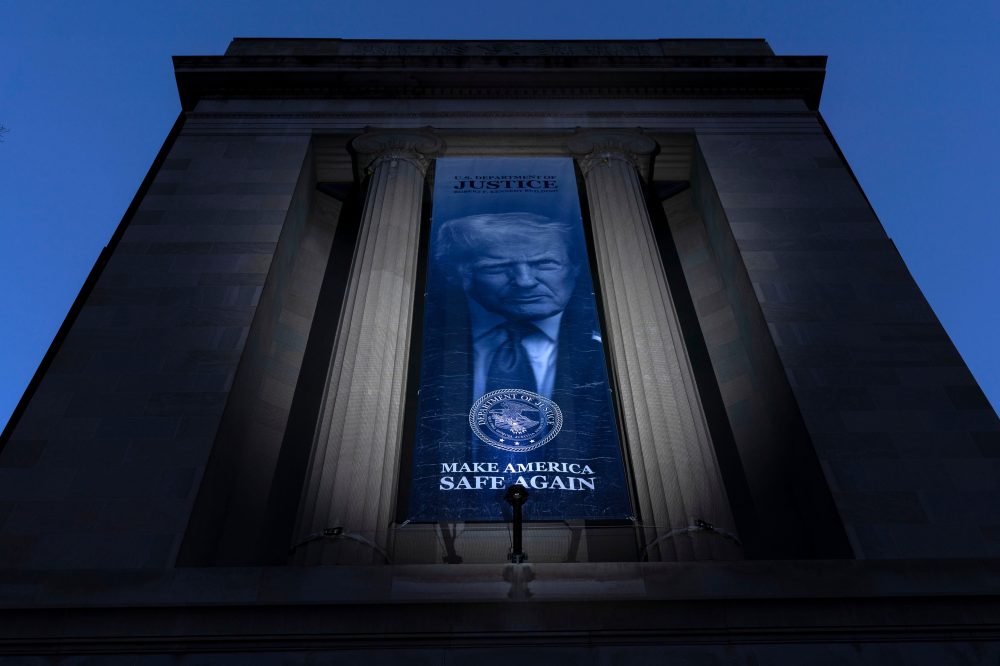
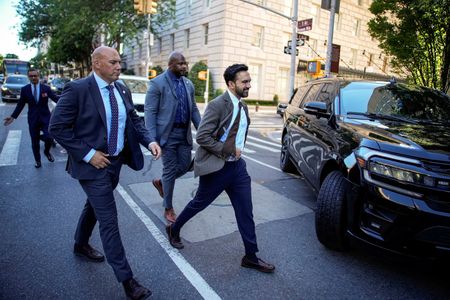
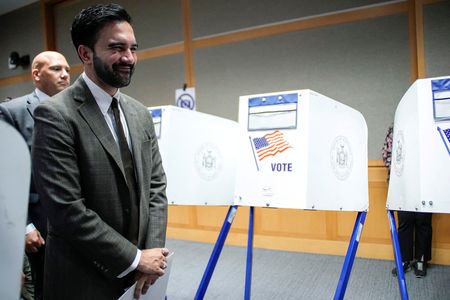
Federal civil rights investigators are now looking into a Brooklyn coffee shop after it went public with claims that it turned away a pro-Israel congressman, a move that could run afoul of laws protecting people from discrimination at public businesses.
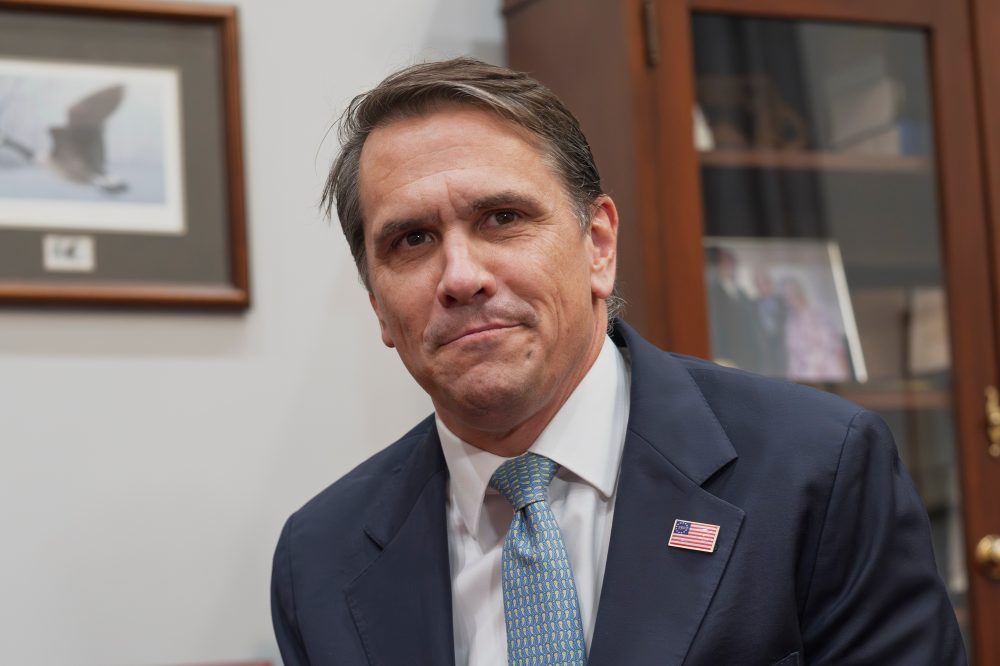
The Justice Department’s Civil Rights Division confirmed the probe after Poetica, a cafe located in the Williamsburg neighborhood, posted — and then removed — a message on social media directed at Rep. Dan Goldman following his visit to the shop during a Democratic primary campaign stop.
Assistant Attorney General Harmeet Dhillon announced the inquiry Monday on X, writing: “The Civil Rights Division has opened an investigation and will bring an enforcement action if warranted.”
Dhillon went on to note that “Federal law prohibits public accommodations such as coffee shops from discriminating against patrons based on their race, religion, or national origin.”
In the now-deleted social media post, the cafe addressed Goldman directly, writing: “Hey Congressman Dan Goldman, we see that you stopped by our shop today for a coffee. Do you see how it doesn’t taste like genocide juice? Or are you still having a hard time telling the difference?”
The shop also stated it had returned Goldman’s payment without him requesting it, adding: “We don’t need your money (it’s probably coming from AIPAC anyways,” a reference to the American Israel Public Affairs Committee.
Goldman later appeared on CNN with anchor Laura Coates, where he described his actual experience inside the cafe as friendly and uneventful. He explained that he stopped in because his seven-year-old daughter needed to use the restroom. After a barista accommodated her, Goldman said he purchased a coffee and left a generous tip.
“I had such a nice interaction with the barista in the coffee shop,” Goldman said.
He continued: “She was wearing a hijab, I didn’t know her, but she couldn’t have been nicer and allowed my daughter to go use the bathroom, and I honestly was so grateful for her kindness that I felt like I should buy a coffee, and so I did, and I gave her a large tip.”
Goldman said the incident pointed to a deeper problem in today’s political climate, stating: “It’s a reflection, I think, of a sad state of affairs that without knowing me, we could have had such a nice interaction.”
The incident came to light on the eve of Goldman’s Democratic primary contest against former New York City Comptroller Brad Lander, who had made Goldman’s previous support from AIPAC a central theme of his campaign.
The U.S. Department of Justice has launched a civil rights investigation into a Brooklyn coffee shop after the business publicly announced it had turned away Rep. Dan Goldman due to his stance on Israel — a move that federal officials say may have broken the law.
Assistant Attorney General Harmeet Dhillon announced the probe Monday on the social media platform X, stating: “The Civil Rights Division has opened an investigation and will bring an enforcement action if warranted.”
Dhillon further noted that “Federal law prohibits public accommodations such as coffee shops from discriminating against patrons based on their race, religion, or national origin.”
The controversy centers on Poetica, a cafe located in the Williamsburg neighborhood of Brooklyn, which published and then removed a social media post following Goldman’s visit to the shop during a Democratic primary campaign stop.
In the now-deleted message, the cafe wrote: “Hey Congressman Dan Goldman, we see that you stopped by our shop today for a coffee. Do you see how it doesn’t taste like genocide juice? Or are you still having a hard time telling the difference?”
The business also stated it had issued Goldman a refund without him requesting one, adding: “We don’t need your money (it’s probably coming from AIPAC anyways,” — a reference to the American Israel Public Affairs Committee.
Goldman spoke about the incident during an interview on CNN with anchor Laura Coates, describing the in-person experience at the cafe as entirely pleasant. He explained that he had originally entered the shop because his seven-year-old daughter needed to use the restroom. After a barista accommodated his daughter, Goldman said he purchased a coffee and left a generous tip.
“I had such a nice interaction with the barista in the coffee shop,” Goldman said. “She was wearing a hijab, I didn’t know her, but she couldn’t have been nicer and allowed my daughter to go use the bathroom, and I honestly was so grateful for her kindness that I felt like I should buy a coffee, and so I did, and I gave her a large tip.”
Goldman said the situation pointed to a deeper divide in the country. “It’s a reflection, I think, of a sad state of affairs that without knowing me, we could have had such a nice interaction,” he said.
The episode unfolded just before Goldman’s Democratic primary race against former New York City Comptroller Brad Lander, who has made Goldman’s previous support from AIPAC a central issue in the campaign.
Candidates endorsed by New York City Mayor Zohran Mamdani and the Democratic Socialists of America pulled off a string of wins in Democratic congressional primaries Tuesday, knocking out several establishment incumbents and pushing forward a group of candidates who placed criticism of Israel at the heart of their campaigns.
One of the notable victors was Brad Lander, a Jewish progressive and vocal critic of Israel, who unseated incumbent Rep. Dan Goldman. Lander has vowed to fight against U.S. military assistance to what he called the “apartheid state” of Israel.
Lander’s campaign received unexpected attention when a Brooklyn café refused service to his opponent, incumbent Rep. Dan Goldman, due to Goldman’s stance on Israel. Goldman was at the café with his 7-year-old daughter when he was handed an unsolicited refund. The café then posted on social media, writing: “Do you see how it doesn’t taste like genocide juice? Or are you still having a hard time telling the difference?”
Following that incident, the Justice Department launched an investigation into the Poetica coffee shop for alleged illegal discrimination after the establishment publicly boasted about turning Goldman away.
In another closely watched race, Darializa Chevalier — a doctoral student at Columbia University and anti-Israel activist — was leading veteran Rep. Adriano Espaillat 49% to 46% in New York’s 13th Congressional District, which covers upper Manhattan and portions of the Bronx, with most ballots counted. Chevalier previously organized a pro-Palestinian protest encampment at Columbia University, attended a rally the day after the October 7, 2023, terrorist attack on Israel that appeared to celebrate the assault, has written online that “Israel doesn’t exist,” and has voiced support for Palestinian activist Rasmea Odeh.
Mamdani also threw his support behind Claire Valdez, who defeated Reynoso by a wide margin of 56% to 36%. Throughout the campaign, Valdez criticized her opponent for not labeling Israel’s military campaign a “genocide” quickly enough. She began accusing Israel’s military of war crimes in October 2023, shortly after the Hamas attack that killed 1,200 people and took 251 captives. Israel launched its ground operation on October 27, 2023, just weeks after the massacre. Valdez also alleged that Reynoso had accepted money from AIPAC, a claim that was later found to be false.
The results further cemented Mamdani’s growing clout within New York Democratic politics and broadened the footprint of candidates aligned with the Democratic Socialists of America. All three winning candidates are considered strong favorites in their heavily Democratic districts come November.
In other New York political news, State Comptroller Thomas DiNapoli held onto his seat despite pressure from activists pushing for divestment from Israel-linked investments. In upstate New York, President Donald Trump secured a Republican primary win with the nomination of businessman Anthony Constantino.
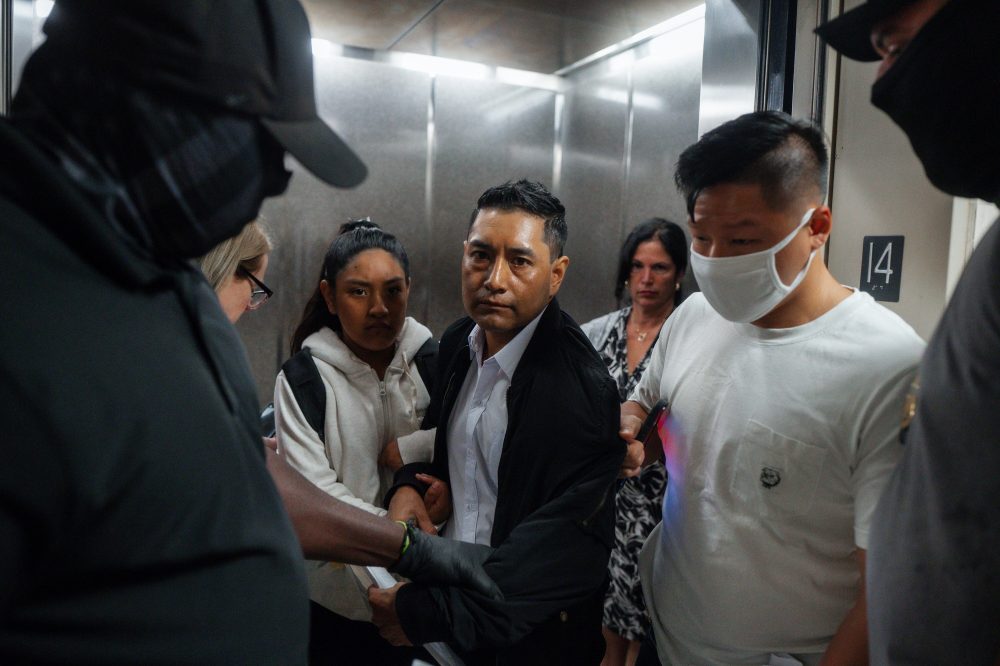
NEW YORK — The former chief of staff to ex-New York City Mayor Eric Adams is now in federal custody, arrested alongside his brother and two additional individuals as part of an alleged bribery scheme connected to a city contract, according to a source familiar with the investigation.
That source identified Frank Carone as one of four people taken into custody. The source spoke under the condition of anonymity, noting they were not authorized to publicly discuss the matter.
Few additional details were made available right away, though formal indictments were anticipated to be unsealed later on Wednesday.
Carone’s defense attorney, Arthur Aidala, wasted no time firing back at the charges, describing the indictment as “weak” and “based on purely circumstantial evidence that’s not worth the paper upon which it is printed.”
Aidala issued a pointed statement, saying: “Today’s indictment is a sad day for our criminal justice system. It epitomizes the government first finding a target and then spending three years and enormous taxpayer resources to find a crime.”
A spokesperson for Adams, Todd Shapiro, also released a statement, describing Carone as someone who “dedicated decades of his life to public service, the legal profession, and helping countless individuals, businesses, and charitable organizations throughout New York.”
“This is an ongoing legal matter and my prayers are with his family,” Shapiro’s statement concluded.
NEW YORK (AP) — When Brooklyn resident Varun Venkatesh stepped into the voting booth during this week’s New York primary, he had one key question on his mind: where do the candidates stand on the Palestinian cause? For the 27-year-old, it served as what he called “a good litmus test for me as a voter.”
Venkatesh threw his support behind Claire Valdez, who had the backing of Mayor Zohran Mamdani, rather than Antonio Reynoso — another progressive who carried the endorsement of the Democratic establishment — because Valdez had “a clear and more consistent stance” on the issue.
Valdez went on to win her congressional primary. Two other insurgent candidates also endorsed by Mamdani claimed victory, and Israel’s war in Gaza played a central role in all three contests. The results have left Democratic leaders wrestling with a pressing question: just how many voters share Venkatesh’s priorities as the party looks ahead to the November midterms and the next presidential race?
The Gaza conflict, which erupted during Joe Biden’s presidency and hurt Kamala Harris’ presidential campaign, continues to divide the party. How Democrats choose to address it will play a significant role in shaping their future direction — and every move risks pushing away some segment of an already fragile coalition at a moment when unity is essential to recapturing Congress.
“The Israel question has become defining,” said Matt Bennett, who heads the centrist Democratic organization Third Way and has frequently warned that progressives risk alienating independent voters. He said some in Mamdani’s circle have embraced “a new level of extremism,” cautioning that “Republicans are very good at weaponizing crazy ideas on the fringe against mainstream candidates.”
Mamdani is unconcerned by those warnings. Governing from the mayor’s office of the nation’s largest city, he has been working to pull the Democratic Party in a new direction. He leveled sharp criticism at the American Israel Public Affairs Committee for what he described as defending “a status quo of immorality” in Gaza. Supporters who gathered to celebrate his slate’s Tuesday victories chanted “Free Palestine.”
The mayor is also making a broader argument: that New York should serve as a model for how Democrats define themselves nationally in the years ahead.
“When does the race for 2028 begin?” Mamdani asked last week while sharing a stage with his endorsed candidates. “It starts now.”
Even by the standards of a party long accustomed to fierce internal battles between its progressive and moderate wings, the argument over Israel has been unusually raw. The U.S.-Israel alliance once enjoyed broad bipartisan support, but the rise of Israel’s right wing under Prime Minister Benjamin Netanyahu gradually eroded that consensus — and the war in Gaza has fractured it further.
Biden faced chants of “Genocide Joe” from pro-Palestinian activists, who then redirected their frustration toward Harris after she took over as the Democratic presidential nominee two years ago.
“She was trying to do the right thing,” said Jamie Harrison, who served as chair of the Democratic National Committee at the time. “It was a hard and awkward place to be in.”
Harrison believes the Gaza war contributed to Harris losing Michigan, a state with a substantial Arab American community. Still, he questions whether it was a decisive national issue then or now.
“It’s one thing to be in New York. But I can tell you that most places, including where I am in South Carolina, it’s not what people are talking about,” he said. “They are concerned about affording gas and groceries and housing.”
Harrison anticipates that Democrats will seek a middle path going forward — one that involves “still supporting Israel’s sovereignty” while also “reducing U.S. aid to Israel and changing the nature of the relationship.”
How difficult that middle ground is to find was on full display in the race for New York’s 10th congressional district.
Brad Lander, the former city comptroller who had Mamdani’s endorsement, defeated incumbent U.S. Rep. Dan Goldman in that contest.
Both men are Jewish, and both have spoken critically of the Israeli government. The key distinction: Lander characterizes the war in Gaza as a genocide, while Goldman does not.
“Our party needs to admit that Joe Biden’s ‘hug Bibi’ strategy was a catastrophic mistake,” Lander declared in his victory speech. “We cannot keep paying for Netanyahu’s wars with our tax dollars. Democratic voters are saying this, loud and clear.”
District voter Ari Rassouli said the incumbent’s position on Israel was “one of the many reasons that I didn’t like Dan Goldman.” Describing the conflict as a genocide, she argued that “a candidate that is in support of that has no place in our democracy at all.”
Speaking with reporters Tuesday, Lander acknowledged that Israel ranked among the top concerns for voters alongside affordability and immigration.
“I like talking to Jewish voters who feel anxiety about the times we live in and say, ‘I have these values, I want to treat everyone like they’re equal and with dignity and created in God’s image. How do we navigate the times we’re in?’” he said.
He added with a smile, “Those are probably the longest conversations at the polls.”
WASHINGTON — President Donald Trump is scheduled to sit down with weapons manufacturers at the White House on Wednesday as his administration works to ramp up military production following operations in Iran and other conflicts that have drawn down U.S. weapons stockpiles.
The United States has sent significant quantities of arms to allied nations while also expending munitions in its own military operations. That combination has raised alarms about dwindling supplies of critical air-defense and precision-guided weapons, putting mounting pressure on defense contractors to accelerate production.
Wednesday’s gathering would be the second time the White House has convened top defense company executives specifically to address weapons production increases. A similar meeting held in March brought together the CEOs and other leaders from BAE Systems, Lockheed Martin, Northrop Grumman, RTX Corp, Boeing, Honeywell Aerospace, and L3Harris Technologies, along with Defense Secretary Pete Hegseth.
The latest meeting comes as Pentagon negotiators push contractors to move at a much faster pace, with preliminary production agreements reached earlier this year serving as a centerpiece of those efforts.
Among those agreements is a deal with Lockheed Martin to triple production of Patriot interceptors and quadruple output of THAAD interceptors — weapons designed to destroy incoming ballistic missiles. Separate multi-year agreements with RTX are aimed at boosting production of Tomahawk cruise missiles and AMRAAM air-to-air missiles. While these have been announced as “framework agreements,” they have not yet been converted into formal contracts.
Five defense industry executives, who agreed to speak only on the condition that their names not be used, said they welcome the agreements but noted that Congressional appropriations must come first before companies can commit to larger investments in parts and production capacity. They warned that spending money ahead of government payments could strain cash flow and potentially hurt earnings in the second half of the year.
The Trump administration has been steadily turning up the heat on defense contractors, pushing them to focus on production rather than shareholder dividends. In January, Trump signed an executive order directing officials to identify contractors considered to be falling short on government work while still paying out profits to investors.
GM Defense, the defense arm of the automaker, and Lockheed Martin have both said the U.S. Department of Defense helped broker a partnership between the two companies in response to growing demand for expanded production capacity.
The Senate Armed Services Committee approved its version of the National Defense Authorization Act this month, endorsing total defense spending of $1.15 trillion and granting multi-year purchasing authority for several categories of weapons and munitions. The bill is not expected to be signed into law until fall, though separate appropriations or supplemental funding could potentially arrive sooner.
Demand for air defense systems has climbed sharply among the United States and its allies as geopolitical tensions have risen and the conflict in Iran has continued.
A federal appeals court has put a California law on hold that prohibited public school employees from notifying parents when their child was presenting as the opposite sex while at school.
A three-judge panel from the 9th Circuit Court of Appeals granted a preliminary injunction against the law, pausing its enforcement while a legal challenge works its way through the courts. The city of Huntington Beach brought the lawsuit and had asked the court to block the law in the meantime.
In issuing the injunction, the judges stated that in their view, the California ban “likely deprive the parents of their constitutional rights.”
For more than a decade, clergymen and evangelical leaders have been sounding the alarm about the United States’ growing acceptance of gambling — and it appears some elected officials are finally paying attention.
Lawmakers in a growing number of states are now taking a serious look at whether betting on elections should be prohibited. The concern driving these discussions is significant: could allowing people to wager on election results actually end up influencing those outcomes?
The worry is timely. Trading platforms such as Kalshi and Polymarket currently allow users to place bets on how elections will go, and with the midterm elections now roughly four months away, the pressure to act is mounting.
New York’s recent primary election has put a spotlight on a growing internal debate within the Democratic Party — just how progressive should the party become?
The results painted a nuanced picture: in districts considered safe for Democrats, progressive candidates came out on top. However, in more competitive races where the general election outcome is less certain, moderate candidates proved more successful.
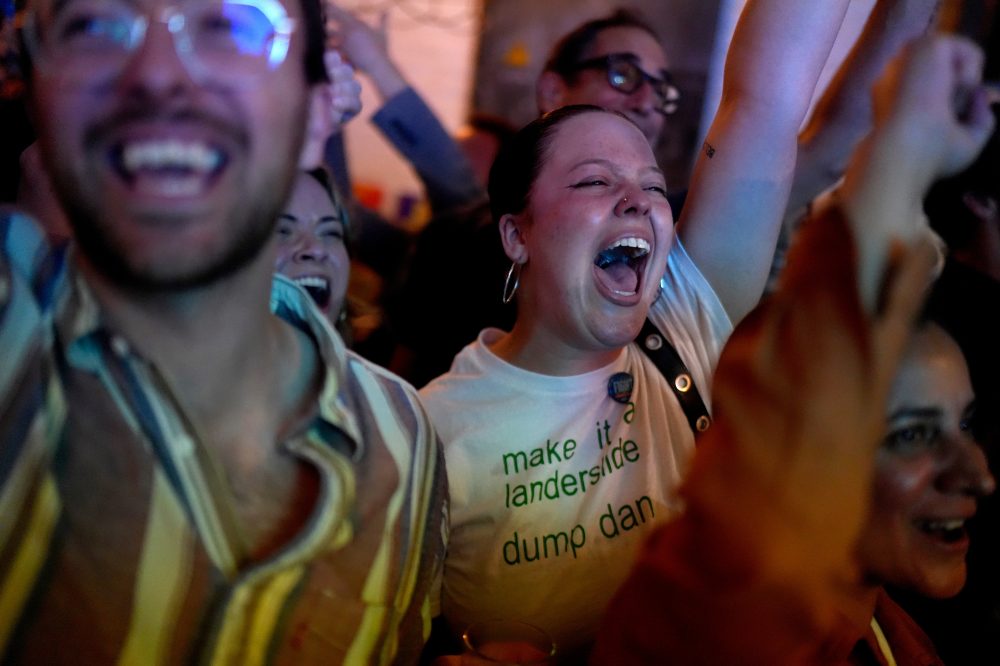
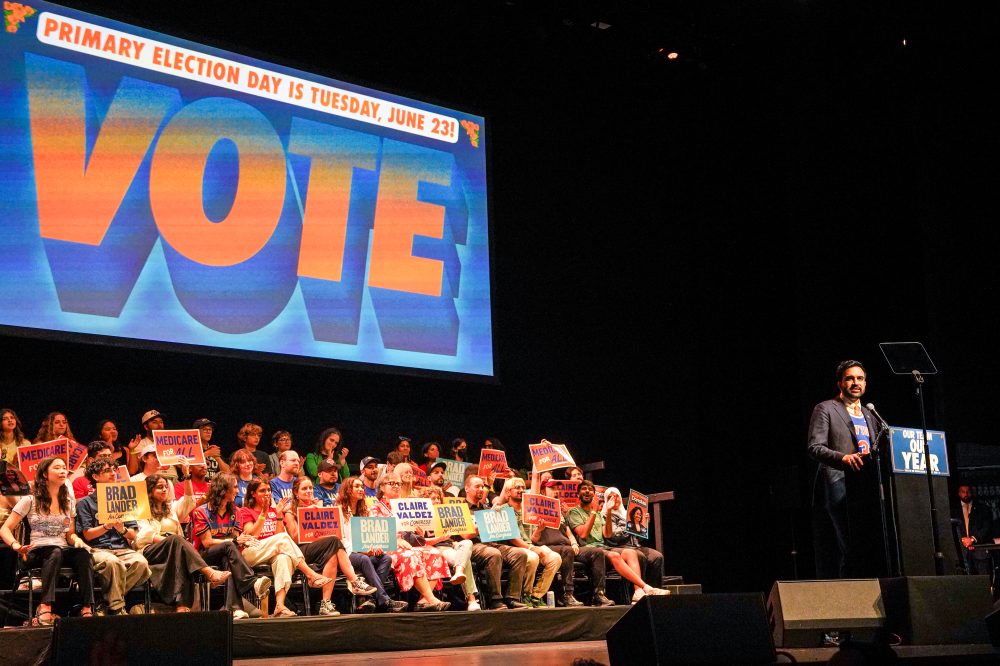
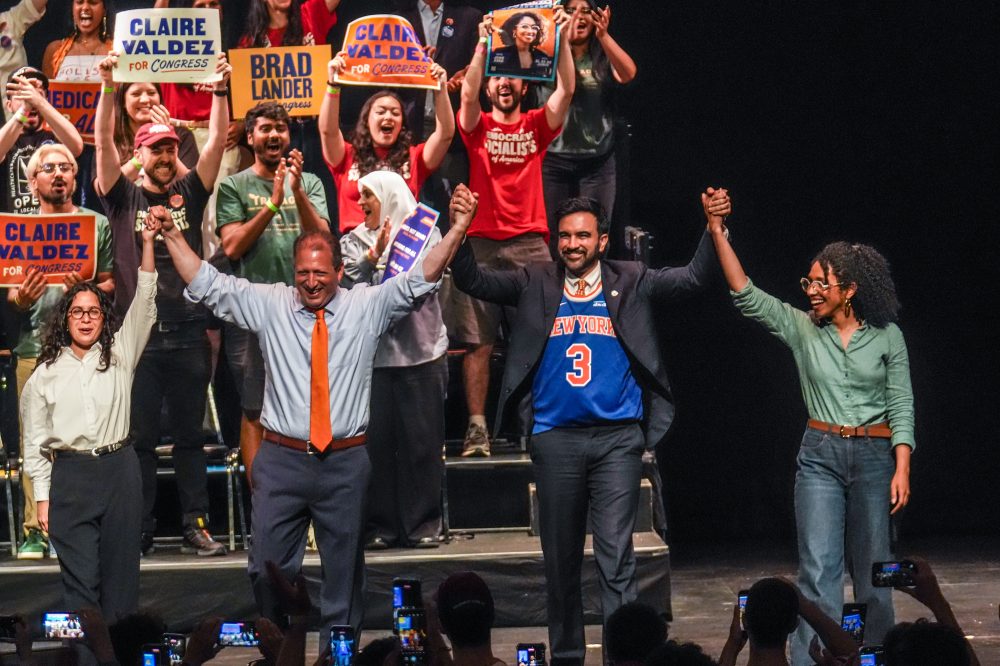
New York Mayor Zohran Mamdani emerged as a notable figure in the primary results. All three congressional candidates he endorsed went on to win their respective primaries, including candidate Claire Valdez, who claimed victory in her race. The wins were celebrated at a primary night watch party held on June 23 in the Brooklyn borough of New York City.
Political observers are watching these results closely, as they may offer clues about the direction the Democratic Party will take heading into future elections. The tension between the progressive and moderate wings of the party has been a defining feature of recent Democratic politics, and New York’s primary appears to have reinforced rather than resolved that divide.
A dispute over a long-awaited bridge connecting Michigan and Canada has become a major issue in one of the country’s most competitive Senate races, with Democratic candidate Mallory McMorrow launching what is believed to be the first significant effort to use the controversy against President Donald Trump and the Republican Party.
McMorrow’s latest campaign ad, first shared with The Associated Press, charges that Trump is preventing the Gordie Howe International Bridge from opening — and that he’s doing it to benefit a wealthy political donor. The accusation fits squarely into an anti-corruption theme she has been building her campaign around.
The bridge crosses the Detroit River, linking Detroit with Windsor, Ontario. A ribbon-cutting ceremony had been scheduled for June 12, but it was suddenly called off after officials announced that the U.S. and Canada were still working through what they described as “outstanding issues.”
For Democrats, the situation presents a rare opening to connect Trump directly to a project with real economic consequences in a battleground state. For McMorrow specifically, it’s also a way to stand out in a three-way Democratic primary against U.S. Rep. Haley Stevens and Abdul El-Sayed.
The eventual Democratic nominee is expected to face Republican Mike Rogers, who lost to now-Sen. Elissa Slotkin in 2024. Rogers has also weighed in on the bridge issue, pledging that if elected he will push to get it open.
Filmed while standing in front of the bridge, McMorrow states in the ad that the structure is ready to be used but remains shut down because “Donald Trump won’t open it.”
“I’m Mallory McMorrow and I have one message for the president: open this damn bridge,” she says in the spot.
McMorrow further argues that Trump is holding up the bridge because “the billionaire family that owns the other bridge gave him a million bucks.”
That charge points to the Moroun family, who privately own the Ambassador Bridge, which also runs between Detroit and Windsor. Federal campaign finance records confirm that Matthew Moroun contributed $1 million to Trump’s super PAC earlier this year.
Back in February, Trump posted on social media demanding that Canada give the U.S. government at least half ownership of the bridge, along with other unspecified concessions — part of his ongoing disputes with Canada over trade policy.
Canada paid for the bridge’s construction. The project was originally negotiated by the former Republican governor of Michigan, Rick Snyder, with construction beginning in 2018 at a total cost of nearly $4.4 billion.
The bridge is named after the late Canadian hockey legend Gordie Howe, who spent 25 seasons as the face of the Detroit Red Wings. Once open, it is expected to serve as a critical economic link between the two countries.
McMorrow is working to make a stronger impression in a race that many observers increasingly view as a two-candidate contest. In a conversation with the AP, she acknowledged she entered the race as a “dark horse.” A state senator who gained national attention for a viral speech in 2022, she is competing against the well-funded Stevens and El-Sayed, who ran unsuccessfully for governor in 2018 and has secured the backing of Sen. Bernie Sanders.
The Gordie Howe bridge ad is the second in a series, with an initial advertising buy of more than $400,000 across TV and digital platforms in the Detroit area. The first ad, a 30-second television spot, was released Tuesday.
“Right now in this primary, my two opponents are trying to present a false binary choice,” McMorrow said.
Outside money is also flowing into the contest. A PAC affiliated with the American Israel Public Affairs Committee has invested nearly $8 million this month in support of Stevens, while a super PAC backing McMorrow called Yes Michigan Action Committee has reserved close to $6 million in ad spending, according to AdImpact.
El-Sayed became the first Democratic candidate in the race to directly purchase advertising, doing so last week.
“We have six weeks. I mean, anything can happen,” McMorrow said. “There are so many people who are just starting to tune into this race.”
WASHINGTON — President Trump is using America’s 250th birthday celebrations as an opportunity to put himself front and center, hosting a large-scale rally Wednesday on the National Mall in the nation’s capital.
The event was announced to include a military flyover featuring stealth bombers, performances by military bands, country singer Lee Greenwood — known for “God Bless the USA” — and a speech by the president himself.
The rally arrives at a politically significant moment, as Trump works to reassure Americans ahead of November midterm elections that the unpopular Iran war is winding down. Oil prices have begun to ease as the Strait of Hormuz has started to reopen following an interim agreement to end hostilities with Tehran.
Wednesday’s event is intended to kick off weeks of festivities celebrating America’s founding in 1776, as part of “The Great American State Fair” — a series of events planned along the National Mall, the stretch of national parkland running from the U.S. Capitol to the Lincoln Memorial.
Trump’s decision to take the stage himself came only after a string of musicians — including Young MC, Martina McBride, and the Commodores — withdrew from the event, citing concerns that it had become too politically charged. The president stepped in to fill the gap, promoting his own ability to draw a crowd.
“I am thinking about bringing the Number One Attraction anywhere in the World, the man who gets much larger audiences than Elvis in his prime, and he does so without a guitar, the man who loves our Country more than anyone else, and the man who some say is the Greatest President in History,” Trump wrote on social media, referring to himself.
In a video posted Monday evening, Trump described the event as “the biggest rally we’ve ever had” and added: “It’s our music, our playlist. We don’t have a lot of people boring you with songs you don’t want to hear. We have the hottest people.”
On Tuesday afternoon, country singer Alexis Wilkins — the longtime girlfriend of FBI Director Kash Patel — announced on social media that she would be performing at the event.
The rally comes as Trump’s presidency has faced considerable public skepticism. His approval rating currently sits at just 37%, according to the most recent Associated Press-NORC Center for Public Affairs Research polling. Only 33% of U.S. adults approve of his handling of the economy, while his favorability stands at 40% on immigration and 34% on Iran.
Democrats have criticized Trump’s handling of renovations to the Lincoln Memorial reflecting pool, pointing to a resulting algae outbreak as evidence that the president is directing taxpayer funds toward personal vanity projects rather than preserving national landmarks.
Rep. Jared Huffman, D-Calif., raised additional concerns at a congressional hearing earlier this year, presenting documents he said showed the Trump-affiliated group organizing the 250th anniversary celebration was selling access to special interests and reshaping the story of America’s founding to suit the president’s preferences.
“It should be about bringing us together,” Huffman said. “He’s trying to make this 250th celebration all about him.”
Economists note that inflation remains higher than the level Trump inherited when he took office and continues to outpace wage growth. The federal budget deficit is still climbing, keeping interest rates elevated. While investment in artificial intelligence is driving some economic growth, it has also sparked fears of job losses among middle-class workers, and the construction of data centers required for the tech economy has become a point of political controversy.
Daniel Treisman, a politics professor at the University of California, Los Angeles, offered an explanation for the president’s low numbers. “It’s clear that Trump’s preoccupations in his second term — from Iran to the Washington reflecting pool — are not those of most members of his base, let alone other Americans,” Treisman said. “That explains his unusually low approval ratings.”
Research conducted by James Snyder, a professor at Harvard University, has shown that Trump rallies have historically helped drive short-term voter turnout among his supporters. However, Snyder noted that Wednesday’s event comes more than four months before the November midterms, making any direct political benefit for Republicans unlikely.
“I would not expect that the rally would have any clear effect on the 2026 midterm elections,” Snyder said.
WASHINGTON — President Trump is set to open a 16-day run of events celebrating the United States’ 250th anniversary with a political rally on the National Mall Wednesday, kicking off a stretch of festivities that has already been shadowed by controversy.
Trump plans to use the occasion to highlight what he describes as his efforts to restore American greatness, positioning the event ahead of the July 4th Independence Day milestone. Critics, however, say the president has blurred the line between official national commemoration and campaign-style politics by centering the celebration around a rally format closely associated with his presidency.
The road to the celebration has been rocky. Several musical acts originally slated to perform withdrew from the lineup, citing concerns about participating in what they viewed as a partisan event. Among those who pulled out were Poison frontman Bret Michaels, Young MC, and the Commodores. The revised entertainment lineup now features Lee Greenwood and Christopher Macchio — two artists closely associated with Trump — along with military bands.
The anniversary events have also been shaped by Trump’s personal involvement in reshaping parts of Washington, including the installation of statues and a $16 million repair project on the Lincoln Memorial Reflecting Pool near the celebration site. On Tuesday, Trump announced that six people had been arrested in connection with damage to the reflecting pool.
Last week, Trump also hosted mixed martial arts fights on the White House South Lawn — a spectacle that drew millions of television viewers but which most Americans said they found distasteful.
The celebration arrives at a politically challenging time for the president. A nearly four-month-old war with Iran has driven consumer prices to a three-year high and rattled many voters. A Reuters/Ipsos poll found that only one in four Americans believes the U.S.-Israeli war with Iran has been worth its costs, and just 34% approve of Trump’s overall job performance 17 months into his second term. The White House is also working to push back against the perception that the term-limited president is becoming a lame-duck leader.
Trump’s approach to the anniversary stands in contrast to how many of his predecessors handled similar milestone celebrations. While past presidents also faced difficult political climates during anniversary years — including a financial crisis during John Quincy Adams’ presidency in 1826 and public frustration over inflation, unemployment, the fall of Saigon, and the pardon of former President Richard Nixon in 1976 — many of those leaders leaned into unifying themes for the occasion.
Gerald Ford’s top political adviser instructed speechwriters to steer clear of any “partisan insinuations” when preparing for the nation’s 200th anniversary celebration. Ulysses Grant, marking the 100th anniversary in 1876, criticized what he called “errors of judgment” by Southern rebels during the Civil War while still extending an olive branch, acknowledging their courage in their convictions.
Trump has frequently taken a different tack, delivering sharply political speeches before audiences that have traditionally expected more ceremonial remarks — including service members, college graduates, and sports teams — and at times using those platforms to criticize his Democratic predecessors.
When Angelica Garcia went to renew her food stamp benefits this past spring, she figured the process would be familiar. The Tucson single mother of three filled out her application, made repeated phone calls to Arizona’s Department of Economic Security — often sitting on hold until the line disconnected — and spent hours waiting at an understaffed DES office to speak with a caseworker.
By the time she was finally approved again in June, two months had passed without benefits. During that stretch, her family survived on donations from food pantries and low-cost basics like beans, rice, and tortillas.
“There’s hoops to jump through — always,” said Garcia, who has relied on food stamps in Arizona for three years. But now, she says, the government is “adding more hoops.”
Since President Donald Trump’s tax and spending legislation took effect last July, more than 4.7 million people across the United States have lost access to Supplemental Nutrition Assistance Program benefits — commonly called food stamps — according to U.S. Department of Agriculture figures through March. That represents roughly 11% of all program participants.
No state has felt the impact more sharply than Arizona. SNAP enrollment there has dropped by approximately half, the largest decline anywhere in the country. According to DES data through the end of May, that translates to lost benefits for more than 457,000 Arizonans, including close to 196,000 children.
The new law cuts SNAP funding by $187 billion — about 17% — over the next decade. It does so in part by broadening work requirements and blocking certain immigrants from receiving benefits. States that fail to meet specific performance benchmarks starting in October of next year will face financial penalties, and states will also be required to shoulder a larger share of administrative costs.
SNAP experts and DES spokesperson Brett Bezio pointed to Arizona’s decision to implement the federal changes faster than most other states as a key reason enrollment has dropped so dramatically there.
“Arizona has no choice but to meet these requirements,” said Liliana Soto, press secretary for Democratic Arizona Governor Katie Hobbs, in an emailed statement. “If we don’t comply, we will be fined hundreds of millions of dollars and more vulnerable Arizonans will lose their food assistance.”
White House spokesperson Anna Kelly defended the changes, saying the SNAP overhaul “prioritizes American citizens, and implements reasonable cost-sharing measures with states to crack down on waste, fraud, and abuse,” though she provided no specific examples. The USDA’s Food and Nutrition Administration said the drop in enrollment is partly due to the expanded work requirements.
Food Banks Overwhelmed
The cuts have sent a record number of people to food banks in Arizona, according to the Arizona Food Bank Network, a statewide organization that coordinates with local pantries. About 843,000 Arizonans visited a food pantry in April — an 8% jump from the 779,000 who did so in April 2025 — and that number actually exceeded the total number of people receiving SNAP benefits. Food bank visits dipped slightly to around 790,000 in May.
Still, food pantries are struggling to close “a massive gap,” according to Terri Shoemaker, executive vice president of the Arizona Food Bank Network. DES and the USDA did not respond to questions about the surge in food bank usage.
Myriam Flores, a Phoenix mother of seven, said in a May interview that she lost $1,100 per month in SNAP benefits in January after being unable to complete her renewal. Like Garcia, she described spending hours on hold with DES only for calls to drop before she could speak with anyone. At the time of her interview, she said she was visiting the St. Vincent de Paul pantry in Phoenix nearly every day to feed her children.
“There are nights of crying, nights of not sleeping, when I lose sleep at 2 a.m. doing the math, deciding what to pay for and what to put off,” she said. Reuters was unable to confirm whether Flores has since resumed efforts to obtain benefits or whether she currently qualifies.
‘Falling Through the Cracks’
Katie Bergh, a senior policy analyst at the Center on Budget and Policy Priorities, said the longer wait times stem partly from tougher vetting procedures Arizona’s agency put in place to meet the new performance standards and sidestep financial penalties.
“They can’t get through on the overloaded phone line, or they’re being asked for more and more paperwork that they can’t provide, or they do provide it but the state doesn’t have capacity to process it,” she said.
Those performance standards are tied to Arizona’s SNAP error rate — a measurement of benefit overpayments and underpayments. Arizona’s 2024 error rate was 8.84%, below the national average of 10.9%, but above the 6% threshold that would require states to cover up to 15% of SNAP benefit costs under the new law. Historically, the federal government has paid the full cost of benefits. That potential liability could cost Arizona roughly $201.5 million next year, according to the DES 2027 budget request.
To head off those penalties, DES has tightened its application requirements, now asking for documentation such as pay stubs or lease agreements, Bezio said.
Cindy Bernardo, a program manager at the St. Vincent de Paul pantry, said many of the organization’s clients have experienced delays or lost benefits entirely as Arizona rolls out the federal changes. “So many of them have lost their benefits,” she said. “And they have reapplied, and most of them can’t even get an answer to their questions.”
The law also extended work requirements to areas that previously had exemptions due to high unemployment or a shortage of available jobs. Joseph Palomino, director of the Arizona Center for Economic Progress, noted that 14 of Arizona’s 15 counties are now subject to work requirements, compared to just one last year. Combined with the new documentation demands, he said people are “falling through the cracks.”
DES said it is working to address the problem by hiring additional staff and contracting with a third-party call center to reduce wait times.
Declines Spreading Across the Country
Arizona is not alone. USDA data show SNAP enrollment has also dropped significantly in other states: 17.4% in Louisiana, 13.7% in Virginia, and 11.6% in Wyoming.
The USDA’s Food and Nutrition Administration said states are responsible for correctly carrying out the federal changes and that it has issued guidance to help them comply. The Louisiana Department of Health did not respond to a request for comment. Wyoming’s Department of Family Services acknowledged that “a large portion” of its decline was tied to the federal law changes.
In Virginia, enrollment fell 12% in the year ending in March, according to the state’s Department of Social Services. Spokesperson Michael Pulley put it plainly: “The primary impact of this law on the Commonwealth is that now more families are going hungry when nobody should have to go hungry.”
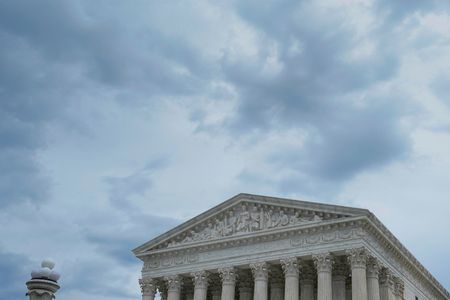
WASHINGTON — The U.S. Supreme Court is heading into the final stretch of its current term, with several landmark decisions still pending that will put Donald Trump’s aggressive push to expand presidential power to the test.
The court handed down five decisions on Tuesday, with additional rulings expected Thursday. The court’s annual terms typically run from early October through late June, occasionally extending into July. Justices have not yet announced an end date for this term or the start of their summer break.
As is customary, the court has saved many of its most significant decisions for the final days of the term. What stands out this year, however, is the sheer number of major unresolved cases — most of them centering on the boundaries of presidential authority and Trump’s particularly sweeping use of it.
Among the cases still awaiting rulings are Trump’s attempts to curtail birthright citizenship, remove Federal Reserve Governor Lisa Cook from her position, push out Democratic members of independent federal agencies, and end a humanitarian immigration program that shields hundreds of thousands of Syrian and Haitian immigrants from deportation.
University of Michigan constitutional law professor Sam Erman, a Supreme Court expert, noted the historic nature of the moment. “It’s totally normal for the most important cases of the term to come out in the last few days. What is unusual is that there are so many blockbuster cases,” he said.
Erman added that Trump’s unconventional use of executive power has generated a wave of significant legal questions. “We’ve seen a lot of novel uses of presidential power since Trump took office, and that’s produced some big questions about the nature of government and how presidential power works. So that’s produced a very active Supreme Court term, and a big bang at the end,” he said.
Since beginning his second term, Trump has aggressively tested the limits of presidential authority across domestic and foreign policy, sparking hundreds of legal challenges on multiple fronts.
The Supreme Court’s 6-3 conservative majority — which includes three justices Trump appointed during his first term — has largely been receptive to his positions, granting several emergency requests to allow his policies to move forward while lower court challenges work their way through the system.
Over time, the court’s conservative bloc has increasingly embraced the “unitary executive” theory, which holds that control over the entire executive branch of the federal government rests exclusively with the president.
That support, however, may not be unconditional. Legal observers who have followed the arguments predict Trump is more likely to prevail on his efforts to remove independent federal commission members than on his birthright citizenship order or the Cook firing.
“They have a view of a strong executive, but it’s not an unlimited executive,” Erman said of the conservative justices. “So when he is essentially advancing their project, he’s pretty likely to win.”
On birthright citizenship specifically, Erman suggested the court is unlikely to side with Trump. The president’s executive order — a central element of his hardline immigration agenda — would overturn a long-held interpretation of the 14th Amendment to the Constitution, which grants citizenship to anyone born on U.S. soil.
The court has already dealt Trump one notable setback, striking down in February the sweeping global tariffs he had imposed under a law intended for national emergencies. That decision drew a sharp public response from Trump, who criticized the court and personally attacked the justices who voted against him.
Beyond the Trump-related cases, the court also has several other significant decisions outstanding. These include cases touching on election rules, transgender rights, and state gun laws.
In one election-related case, Republicans in Mississippi are challenging a state law that permits mail-in ballots arriving up to five days after Election Day to be counted — a ruling that could have nationwide implications for voting procedures.
The court is also poised to rule on a Republican-backed effort, connected to a case involving Vice President JD Vance, to strike down federal limits on how much political parties can spend in coordination with their candidates, on free speech grounds.
Earlier this term, in April, the court’s conservative majority significantly weakened a key provision of the Voting Rights Act — a landmark 1965 civil rights law designed to prevent racial discrimination in elections. That decision triggered rapid redistricting efforts across Southern states to eliminate U.S. House districts where Black voters hold a majority or near-majority, as Republican-led legislatures moved quickly to capitalize on the ruling ahead of November’s midterm elections. Black voters have historically favored Democratic candidates.
The court is also considering cases from West Virginia and Idaho on whether state laws banning transgender athletes from competing on female sports teams should stand, as restrictions on transgender rights continue to intensify across the country.
On firearms, the justices are set to rule on a challenge — supported by Trump’s administration — to a Hawaii law that bars people from carrying handguns on privately owned properties open to the public, such as most businesses, without the property owner’s consent.
Just last week, the court unanimously rejected a stance taken by Trump’s administration that would have threatened the Second Amendment gun rights of millions of Americans who both use marijuana and own firearms.
President Trump is heading to the U.S. Senate on Wednesday to personally push his fellow Republicans to pass a voting restrictions package that has repeatedly stalled — and exposed growing tensions within his own party.
Trump plans to attend a private lunch with Senate Republicans at the Capitol, where he intends to make his case for the SAVE America Act, which he has called his top legislative priority.
The measure would require voters to show a photo ID when casting ballots in federal elections and provide proof of U.S. citizenship when registering to vote. It would also require states to hand over their voter registration data to the federal government.
“We have to pass it, so we’re going to have a talk about that, and many other things,” Trump told reporters during a visit to Pennsylvania on Tuesday.
But the numbers remain a problem. Even though Republicans hold the Senate majority, they have already made five unsuccessful attempts to move the bill forward. The legislation has repeatedly fallen short of the chamber’s 60-vote requirement to advance, and attempts to work around that threshold have also failed to gain majority backing.
Republican senators have been blunt about where things stand.
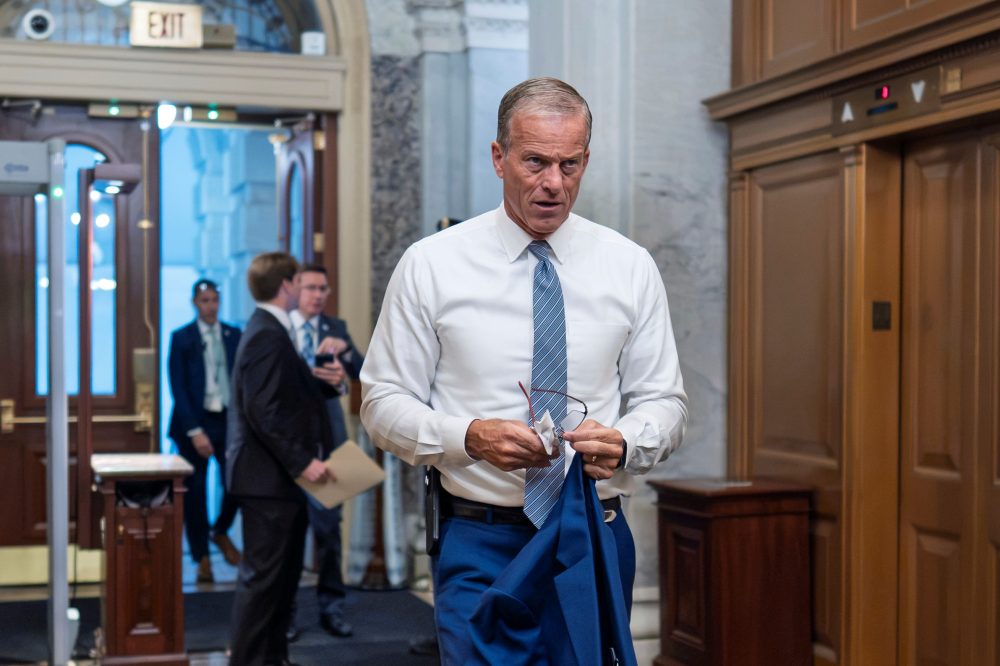
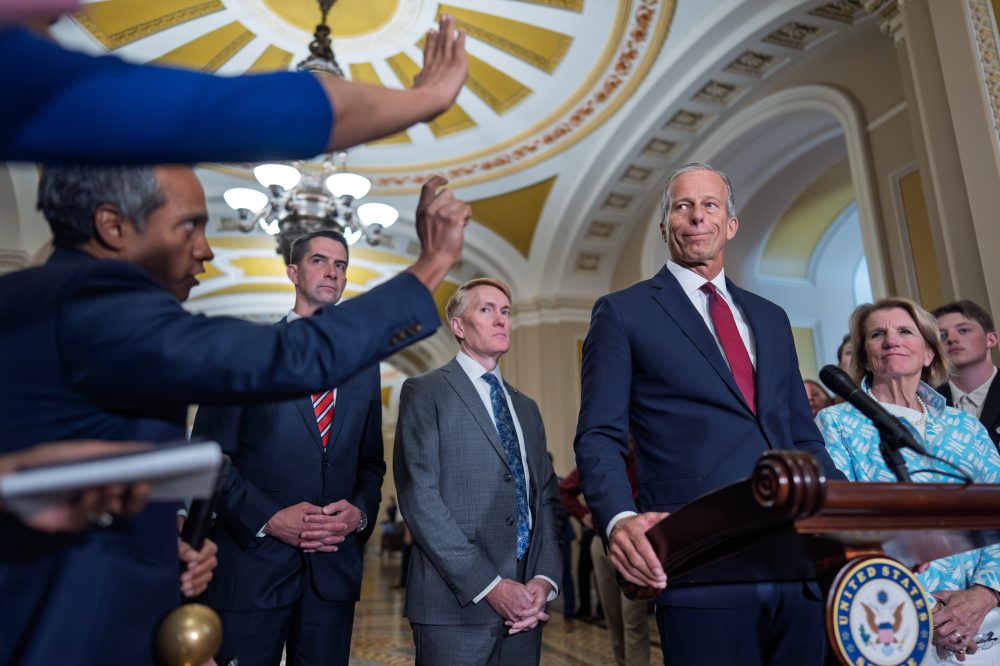
“Those are just hard realities. And I think people at some point have to come to grips with that,” Senate Majority Leader John Thune said to reporters, in what may signal what GOP senators plan to tell Trump directly.
Presidential visits to Congress don’t happen often, and Wednesday’s meeting arrives at a particularly tense moment between Trump and Senate Republicans. With a November midterm election less than five months away — one that could cost Republicans their majority — senators have begun pushing back against the president on multiple fronts.
They forced him to drop a $1.8 billion “anti-weaponization” fund, voiced sharp criticism over his selection of a political ally with no intelligence background to lead the nation’s top intelligence agency, and backed legislation that would limit military action against Iran.
Senate Republicans have also refused Trump’s calls to use aggressive procedural tactics to advance the SAVE America Act — such as attaching it to must-pass spending bills or removing a Senate official who blocked it from a recent spending package. Trump has pushed unsuccessfully for Republicans to do away with longstanding Senate rules requiring 60 votes to move most legislation forward.
Supporters of the bill argue the effort shouldn’t be abandoned.
“For every bill up here, when it starts, there’s not enough votes,” said Republican Senator Rick Scott of Florida, a bill supporter who invited Trump to Wednesday’s meeting. “We’re going to have a nice conversation to see if we can figure out how to get this across the finish line.”
Democrats and other critics of the legislation argue that the bill is aimed at solving a problem — non-citizens voting — that barely exists, while risking the disenfranchisement of American citizens who don’t have easy access to documents like passports or birth certificates.
Some Republicans say the time spent on the bill could be better used elsewhere.
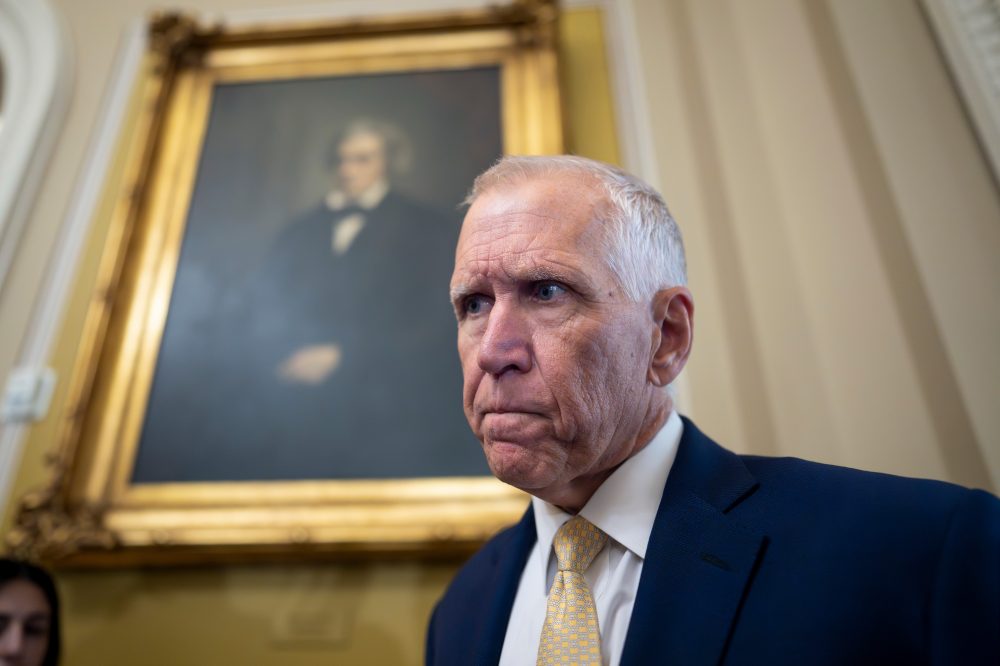
“Every minute we spend on it, we’re not spending on something that can get my colleagues reelected,” said Senator Thom Tillis, a Republican from North Carolina.
Just a few blocks from the towering wall dividing the United States and Mexico in Tijuana stands a brightly painted Haitian restaurant called Lakou Lakay — a Haitian Creole phrase meaning “home.” For its owner, Vivianne Petit Frere, the name reflects something real: her family has put down roots in Mexico, and her granddaughter was born there two years ago, automatically becoming a Mexican citizen.
That automatic citizenship — known as birthright citizenship — is something Mexico and the United States actually share. Yet President Donald Trump has repeatedly claimed the U.S. stands alone in offering it.
Trump signed an executive order on January 20, 2025, his first day back in office for his second term, aimed at ending birthright citizenship for children born in the U.S. to parents who are in the country illegally or on temporary legal status. The U.S. Supreme Court is expected to rule soon on whether that order is constitutional.
In April, Trump posted on Truth Social: “We are the only Country in the World STUPID enough to allow ‘Birthright’ Citizenship!”
That claim, however, is false. Approximately three dozen countries — the majority of them in the Americas — automatically grant citizenship to children born within their borders. That list includes Canada, Honduras, Brazil, Argentina, Venezuela, and Mexico.
Petit Frere originally fled Haiti in 2019, traveling through Brazil and trekking through the Panamanian jungle with the goal of reaching the United States and joining relatives in Florida. That dream faded, but Mexico welcomed her. In just over five years in Tijuana, she has built a thriving restaurant business, become fluent in Spanish, and is pursuing a degree in social work.
Her restaurant is more than a place to eat. Signs on the walls — written in Spanish, English, and Creole — speak to a deeper mission. “Every dish tells a story, every detail connects cultures,” reads one. “We aim to promote an authentic cultural exchange between two peoples with similar historical roots yet where Haitian identity proudly blossoms on Mexican soil.”
The menu features traditional Haitian dishes such as fish with plantains and rice and beans.
Her granddaughter, Alexca, described as a bubbly, giggling toddler, is now a first-generation Mexican in the family. Petit Frere said she is grateful Alexca was born in Mexico rather than Haiti, where gang violence has left more than one in ten people without homes. She also noted that a Mexican passport will open far more doors for Alexca — Haitian passport holders face significant travel restrictions and are allowed visa-free entry to very few countries.
“As a Mexican citizen, she will have more opportunities,” Petit Frere said.
She also pointed out that three of her nieces, born in Brazil, automatically became Brazilian citizens — further illustrating how widespread birthright citizenship is across the Americas.
Petit Frere and her daughter had already obtained permanent residency in Mexico before Alexca was born. But she noted that many other Haitian parents in Tijuana did not have legal status when their children were born there — and Mexico’s policy allows parents of birthright citizens to apply for permanent residency.
“There are a lot of children in Tijuana who are 6, 7, 8 years old now who are Mexican and their parents who are Haitian did not have legal status but now have become permanent residents because their children were born here,” she said.
Petit Frere has begun the process of applying for Mexican citizenship herself, which she said would make it easier to grow her business. She is also a community organizer with the Haitian Bridge Alliance, advocating on behalf of Haitian migrants, and hopes to pursue additional studies in international migration, potentially through a U.S. university.
On Trump’s push to restrict birthright citizenship, she offered a pointed take: “The children of immigrants are proving to be the most outstanding in the world.” His efforts to limit that right, she suggested, “could just be out of jealousy.”
In the United States, birthright citizenship was established after the Civil War through the 14th Amendment to the Constitution, partly to ensure that formerly enslaved people would be recognized as citizens. The right was later extended to the children of immigrants in the late 1800s, when the Supreme Court ruled that nearly anyone born on U.S. soil — regardless of their parents’ legal standing — is entitled to citizenship.
Legal historians trace the roots of birthright citizenship back to the 1600s and 1700s, when European rulers encouraged settlers to migrate to the expanding American colonies.
“You’re a citizen as long as you’re born within the domain of the king, of the monarch,” said César Cuauhtémoc García Hernández, a law professor at Ohio State University. “But the legal tie between the home country in Europe and the settlers remained strong through the promise of birthright citizenship.”
Not every country has maintained such policies. In 2007, the Dominican Electoral Council officially moved to deny citizenship to children born to parents without legal status. A Dominican court later applied that decision retroactively to 1929. More than a decade after a 2014 law was passed to address the ruling — following widespread international criticism — as many as 130,000 people remained stateless, according to the Center for Migration Studies of New York. The policy now affects the next generation, leaving many vulnerable to deportation.
Petit Frere herself was born in French Saint Martin, a Caribbean island that does not offer automatic birthright citizenship. She and her Haitian mother were deported to Haiti when she was just six years old.
She later left Haiti in search of a better life. When her teenage daughter arrived in Tijuana to reunite with her three years later, Petit Frere was dismayed to learn her daughter was nearly five months pregnant. Having been a teen mother herself, she had hoped for a different path for her child. But little Alexca has, as she put it, conquered her heart.
There are no official statistics on how many children born to non-citizens have received Mexican birthright citizenship. Tens of thousands of Haitians are currently living in Mexico. In 2021, when Haitian migration into Mexico rose significantly, at least ten percent of arriving Haitian women were pregnant, according to the United Nations’ International Organization for Migration.
A federal appeals court issued a ruling on Tuesday giving the Trump administration the green light to carry out rapid deportations of undocumented migrants anywhere in the United States — not just in areas close to the border.
The decision allows federal authorities to move forward with what are known as expedited removals on a nationwide scale, significantly broadening the reach of the administration’s immigration enforcement efforts.
BOWIE, Md. (AP) — Two of the most powerful Democrats on Capitol Hill, U.S. Reps. Steny Hoyer and Jerrold Nadler, are set to leave Congress when their terms end in January. But before they go, both managed to leave their mark on who comes next.
On Tuesday night, former staffers to each of the retiring lawmakers claimed victory in Democratic primaries to take over their seats. Since both congressional districts lean heavily Democratic, the winners are widely expected to cruise to victory in November and eventually be sworn in to fill the roles once held by their former employers.
Hoyer and Nadler join a growing list of long-serving lawmakers who have successfully guided their chosen successors toward Capitol Hill. Of the 68 House and Senate members not seeking reelection this cycle, at least five have thrown their support behind former staff members, while more than a dozen others have taken steps — to varying degrees — to ease the way for their preferred candidates.
The practice isn’t without controversy, especially when a lawmaker times their retirement announcement in a way that gives an insider candidate a strategic advantage.
Still, even as Congress continues to suffer from low public approval, voters often remain willing to trust the recommendation of the representative they’ve known for years.
That dynamic played out in Maryland’s Democratic primary Tuesday. Natasha Greensword, 45, said she supported Adrian Boafo partly because he had the blessing of Hoyer, who has held the district’s seat since 1981.
A federal judge on Tuesday issued a nationwide order prohibiting immigration arrests inside U.S. courthouses, putting a stop to a practice that began shortly after President Donald Trump returned to the White House.
U.S. District Judge Casey Pitts of San Francisco ruled that the Trump administration’s decision to reverse decades of policy banning courthouse arrests came not from poor reasoning, but from a total absence of reasoning altogether. In his written opinion, Pitts noted that federal authorities never adequately considered the “chilling effect” such arrests could have on whether individuals choose to show up for their scheduled court hearings.
Pitts pointed to the Administrative Procedure Act, a 1946 federal law requiring government agencies to explain and justify their actions. “For 80 years, Congress has commanded federal agencies to think before they act,” he wrote. He added that while the law doesn’t require agencies to make the choice a court would prefer, “it demands that an agency at least provide sound reasons for following its chosen course.”
This marks the second time courthouse immigration arrests have been blocked by a judge. Back in May, a federal judge in New York issued a similar order, though that ruling only covered New York. Tuesday’s decision applies across the entire country.
James Percival, the general counsel for the U.S. Department of Homeland Security, pushed back sharply against the ruling, calling it an example of judicial overreach. “When a judge sentences a defendant, the defendant is taken into custody. If an alien is ordered removed by an immigration judge, the same should happen. A district judge ordering otherwise is naked judicial activism in service of an anti-American, open borders agenda,” Percival wrote in an online post.
Following Trump’s return to office, immigration hearings around the country frequently ended with the government dismissing cases, which officials then used as an opportunity to have plainclothes agents arrest individuals in courthouse hallways — often working in coordination with attorneys from the Department of Homeland Security.
Judge Pitts, who was nominated to the bench by President Joe Biden, also criticized the administration for detaining individuals in nearby holding cells beyond the legally allowed 12-hour limit.
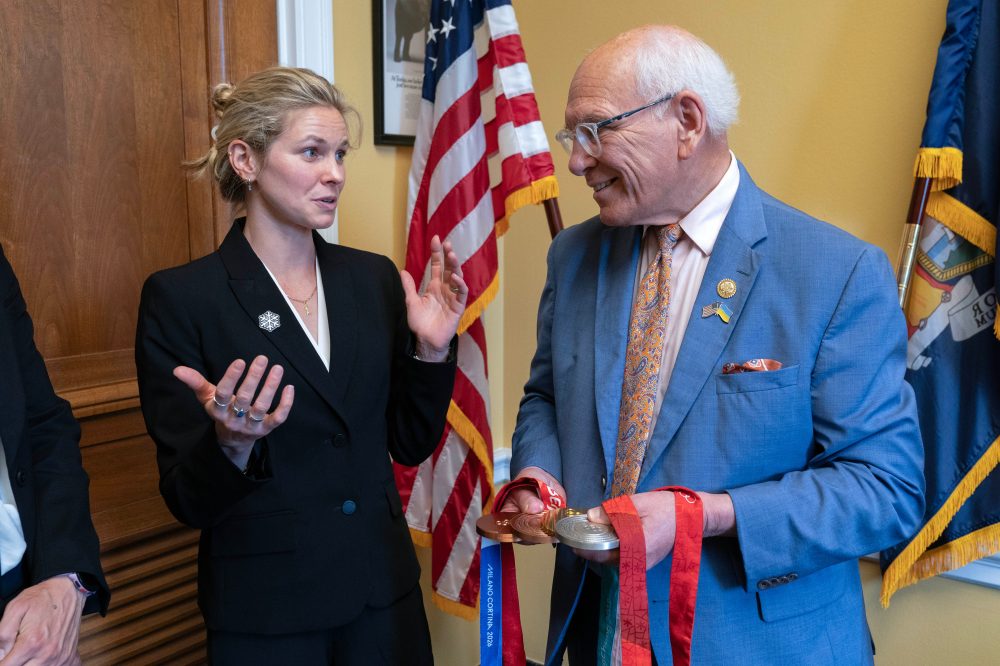
Olympic gold medalist Jessie Diggins carried her four medals into the halls of Congress this week, using her athletic platform to call for stronger environmental protections and climate action.
Diggins, the most decorated cross-country skier in American history, is part of an athlete-driven environmental advocacy group called Protect Our Winters. The organization sent a delegation to Washington on Tuesday and Wednesday to meet with lawmakers and raise concerns about recent changes at the Environmental Protection Agency since President Donald Trump returned to office.
“I don’t want to stick my head in the sand and ignore the world burning,” Diggins said. “I feel like I have a responsibility to use my voice to advocate for change. And so that’s why it’s so important to me, because I want my great-grandkids to be able to build a snowman and try cross-country skiing someday, and be able go hiking and fishing and camping in the summer, and breathe clean air. I want that for them very badly.”
Diggins stepped away from professional ski racing this year following a bronze medal finish in the women’s 10-kilometer interval start at the 2026 Milan Cortina Winter Olympics. Throughout those Games, many skiers voiced alarm about climate change and the rapid melting of glaciers around the world — a trend that threatens the very future of winter sports.
She described bringing her medals to Washington as a “beautiful, full circle moment.” Diggins said she would view the trip as a success if it helps open the door to bipartisan conversations that could eventually strengthen the EPA. Republicans who currently control Congress have largely backed the Trump administration’s approach to the agency.
“We’re trying to advocate for solutions that are going to protect us long term, and training and racing through four Olympics, that was a very long-term thing, you know? It’s not quick, immediate gratification, you work and you work and you work,” Diggins said. “I think it’s a nice reminder of like, it’s OK that we are looking for solutions for the future.”
The coalition is far from a typical lobbying group. Professional ski mountaineer Brody Leven said he only owns a suit for his trips to Washington with Protect Our Winters. Still, he believes athletes are uniquely positioned to bring people together around climate policy.
“We’re good at looking at adversity in the face and still moving forward,” Leven said. “And we’re good at knowing something is going to be hard and trying to do it anyways.”
The group planned meetings with members of both parties in the House and Senate. Olympians Jaelin Kauf, Gus Schumacher, Bea Kim, Julia Kern, and Olivia Giaccio were also part of the effort, according to Protect Our Winters.
Under the current administration, the EPA has revoked a key scientific determination that had been central to climate change policy, moved to roll back restrictions on toxic wastewater from coal-fired power plants, and announced additional cuts to federal air and water pollution standards while promoting fossil fuel use. Critics say these moves conflict with the agency’s core mission of protecting public health and the environment.
EPA Administrator Lee Zeldin has described the agency’s direction as “driving a dagger through the heart of climate-change religion and ushering in America’s Golden Age.” He has argued that reducing regulatory burdens will save trillions of dollars, lower the cost of living, and help revive American manufacturing.
Environmental advocates counter that the EPA under Zeldin has walked away from its duty to shield the public from harmful greenhouse gas pollution at a moment when climate change is fueling more frequent and severe weather events, including stronger hurricanes, deadlier floods, and more destructive wildfires. States, cities, and public health organizations have filed legal challenges against a range of the agency’s recent rule changes.
Ben Gubits, vice president of campaigns and advocacy for Protect Our Winters, said the group expects the federal government to safeguard the health of both Americans and the planet. The organization has lobbied Congress for roughly a decade, including visits in 2021 and 2022 when it pushed for passage of a major climate bill. President Joe Biden signed that legislation — known as the Inflation Reduction Act — in 2022.
“We are really thinking about a long-term and positive vision for the future, and how do we rebuild these critical institutions beyond the Trump years,” Gubits said.
Also part of the coalition is Stuart Nissenbaum, who began working at the EPA early in the Biden administration and departed about a year ago. Nissenbaum said having Olympians alongside him in Washington helps amplify the message. These athletes are the best in the world at what they do, and they competed while wearing the American flag — a combination he believes will resonate with members of Congress.
Nissenbaum said his message to legislators is straightforward: clean air and clean water are not partisan issues, and policies protecting the environment should be rooted in science.
“Clean air and clean water isn’t something that we should take for granted,” he said. “It affects every single person.”
WASHINGTON (AP) — President Donald Trump made his way to Capitol Hill on Wednesday to sit down with Republican senators who have become increasingly fed up with his push to redirect their legislative priorities.
It marked Trump’s first appearance at a closed-door Senate GOP luncheon in over a year. For months, he has pressured senators to prioritize his proof-of-citizenship voting legislation — despite the fact that it lacks the votes needed to pass. At the same time, he has prevented them from confirming one of his own nominees, asked them to help pay for renovations to a White House ballroom even though many oppose it, and put them in the position of defending his Iran war while they privately question where it’s headed.
Trump has also chipped away at his own Senate support by backing primary challengers against two previously loyal Republican incumbents — Texas Sen. John Cornyn and Louisiana Sen. Bill Cassidy. Both lost their primaries and have since become more openly critical of the president.
Even so, senators said before the meeting that they wanted to focus on finding common ground rather than airing grievances.
“If we’re going to win the midterm elections, we need to get on the same page,” Cornyn said Tuesday. “We’re not on the same page now, and that I think is dangerous.”
It remained unclear whether Trump’s visit could iron out the differences — or whether senators who have been speaking out more frequently would raise their concerns face to face.
Republican Sen. Thom Tillis of North Carolina said he has already made many of his complaints known to the administration, and said he was hoping Wednesday’s meeting would be “conciliatory.”
“That would be a big win for us tomorrow,” Tillis said Tuesday.
Adding another layer of friction is the increasingly strained relationship between Trump and Senate Majority Leader John Thune of South Dakota. While Thune remains well-regarded within his conference and maintains a civil relationship with the president, he has frequently been the one delivering unwelcome news to Trump.
Thune said Tuesday that while Trump and some senators want to see the voting bill move forward, “it’s just not realistic.”
Trump has been pushing the Senate to get rid of the filibuster — a procedural rule that requires 60 votes to advance most legislation — and pass the bill known as the SAVE America Act. The measure would impose strict new requirements for voters to prove citizenship and present voter ID at the polls. Trump has also called on senators to add a ban on mail-in ballots, along with unrelated provisions addressing sex reassignment surgeries on certain minors and barring people born as men from competing in women’s sports.
“John is a leader and hopefully he can get the votes,” Trump said Tuesday during a trip to Pennsylvania, putting fresh pressure on Thune.
Thune has spent weeks bringing the voting bill to the Senate floor and says he supports it. But he has consistently maintained that there are not enough votes to eliminate the filibuster in a chamber where Republicans hold a 53-47 majority — and where Democrats are unanimously opposed to the bill.
“Those are just hard realities,” Thune said. “And I think people at some point have to come to grips with that.”
Thune said he hopes the gathering serves as a chance for Republicans to “sit down as a family” and map out their priorities before the next election.
He also revealed that he only learned Trump was attending the luncheon after Florida Sen. Rick Scott extended the invitation without informing him first — an unusual move that some see as a sign of internal tension. Scott, a close Trump ally, hosts the Wednesday Senate Republican lunch each week.
Scott, who ran against Thune for the leadership position two years ago, said Trump agreed to come “on the spot” when invited.
“He’s going to be very positive,” Scott said. “There’s a lot that we can brag about that we’ve accomplished, and he wants to figure out how we can win November and continue to fulfill his agenda.”
On Monday, Scott sent a letter to his Republican colleagues urging the Senate to hold weekly votes on the SAVE America Act and other GOP priorities that Democrats oppose.
“We need to show voters that we are listening to them and will fight for their priorities whether any Democrats vote with us or not,” Scott wrote.
Utah Sen. Mike Lee has also been pressing Thune on the issue, posting daily on the social media platform X about why Republicans should eliminate the filibuster and pass the bill. Several Republican senators, including Cornyn, confronted Lee at a private lunch last week, saying his posts are splitting the party and setting expectations that can’t be met.
Lee has also repeated Trump’s assertion that Republicans cannot win elections without the bill passing — even though the party achieved broad victories in 2024. Trump has continued to falsely claim that the 2020 election, which he lost, was stolen.
“The push to pass the SAVE America Act is not a ‘fantasy,’” Lee posted over the weekend. “It’s a plan to avoid a nightmare — one that’s coming soon unless we act.”
Thune said Tuesday that Lee is free to post on social media, but added, “at the end of the day, I have a different reality. And sometimes the alternative universe that is X doesn’t reflect the facts on the ground.”
Trump may also face questions about his decision last week to delay the nomination of Jay Clayton to serve as national intelligence director. Republican leaders had hoped to move quickly to confirm Clayton and sidestep Trump’s controversial interim pick, Bill Pulte, who has no publicly known background in intelligence.
In that same social media post, Trump said he would refuse to sign a renewal of a key surveillance law unless Senate Republicans attach the SAVE America Act to it. That stance has found some support in the House, where 25 Republicans have pledged to vote against all legislation until the voting bill advances.
Senators may also use the meeting to press Trump on the war with Iran and the agreement reached to end it — details that most lawmakers have still not been briefed on.
Sen. Mike Rounds of South Dakota said there are many unanswered questions about the Iran deal, but acknowledged that Trump may not be able to speak openly about ongoing negotiations.
“We’re there to listen” and to help make sure the rest of Trump’s term is a success, Rounds said — but that requires “a united team.”
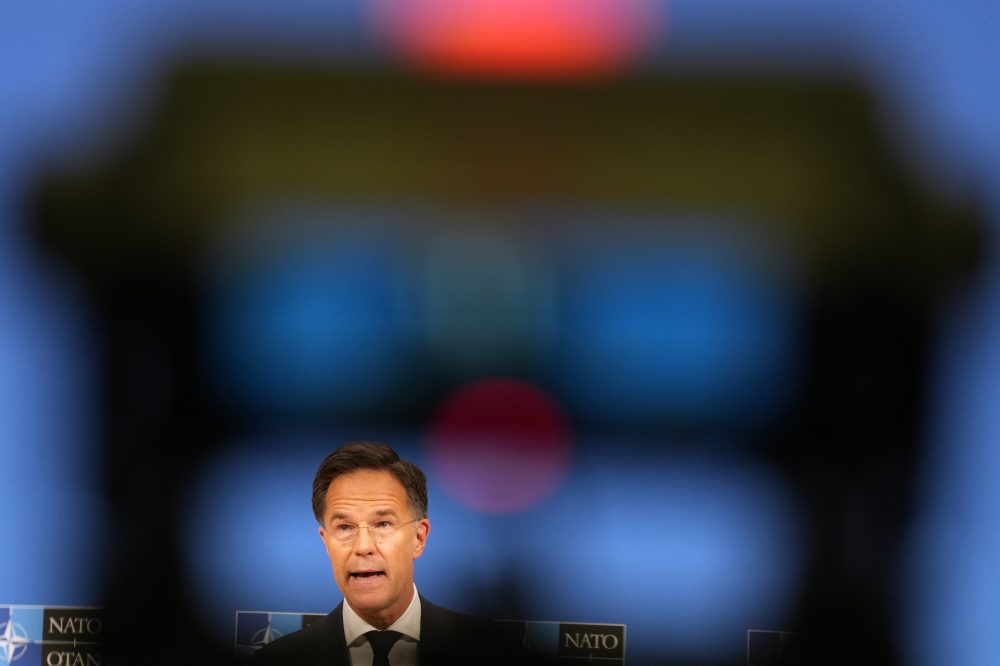
WASHINGTON — NATO Secretary-General Mark Rutte is sitting down face-to-face with President Donald Trump at the White House on Wednesday, arriving just two weeks before the military alliance’s annual summit in Turkey at a critical moment when the Pentagon is weighing cuts to the American military presence in Europe.
Trump has long taken issue with NATO, insisting that the United States shoulders too large a portion of the alliance’s military spending. Those complaints have grown louder in the wake of the Iran war, with Trump expressing anger that some member nations ignored his call to help reopen oil trade through the closed Strait of Hormuz.
The president has once again raised the possibility of pulling the U.S. out of the 77-year-old alliance, heightening the pressure heading into next month’s NATO leaders’ summit in Turkey. Rutte, who has earned a reputation as a skilled handler of Trump’s moods, is expected to use Wednesday’s meeting to calm the president’s frustrations.
The White House visit follows a contentious appearance last week by U.S. Defense Secretary Pete Hegseth at NATO headquarters in Brussels, where he sharply criticized allied nations and announced a six-month review of American forces stationed in Europe.
Hegseth echoed Trump’s complaints, faulting European allies for refusing to allow the U.S. to use European bases to carry out strikes against Iran. NATO allies were not brought into discussions before the U.S. and Israel launched the war on February 28, and several member countries have openly questioned Trump’s approach.
Trump has accused NATO allies of abandoning the United States and floated the idea of leaving the alliance, which was established in 1949 to defend European security against Soviet threats during the Cold War. The foundation of the NATO treaty is a mutual defense clause stating that an attack on one member is treated as an attack on all. That clause has only been triggered once — following the September 11, 2001 attacks on New York and Washington, when allies rallied behind the United States.
The Pentagon’s signal that it may scale back its European military footprint to redirect attention to other global threats is the latest disruption for the 32-member alliance since Trump returned to the White House.
European allies were caught off guard last year when Trump threatened to annex Greenland, a semiautonomous island belonging to fellow NATO member Denmark.
A central part of Rutte’s role has become keeping the United States inside NATO, and he has shown a knack for defusing Trump’s anger.
Rutte regularly heaps praise on the president, giving him credit for pushing NATO members to boost their defense budgets. Trump pressured alliance leaders last year to commit to spending 5% of their gross domestic product on defense annually by 2035.
On Tuesday evening, Rutte sat for an interview on Fox News Channel, a network Trump is known to watch closely.
During the interview, Rutte lavished praise on Trump, describing him as the driving force behind the NATO alliance and expressing full support for his Iran policy, saying:
Army veteran and national security expert Cait Conley has claimed the Democratic nomination in New York’s 17th Congressional District, setting up a high-stakes November showdown against Republican incumbent Mike Lawler, a two-term congressman widely regarded as one of the most at-risk House members in the upcoming midterm elections, according to projections from U.S. media outlets.
Lawler’s district covers New York City’s northern suburbs in Westchester County and extends into the Lower Hudson Valley. Democratic presidential nominee Kamala Harris carried the district by a slim margin in 2024, putting it squarely on Democrats’ target list as the party works to flip the three seats needed to regain control of the House of Representatives for the final two years of Donald Trump’s presidency.
Conley beat out Rockland County Legislator Beth Davidson and three additional Democratic challengers in Tuesday’s primary. She held a significant financial advantage heading in, outraising Davidson by over $1 million, reporting twice as much cash available, and leading in two recent polls.
Although the national political climate poses challenges for Republicans, Lawler has proven himself a capable competitor in difficult races. In 2022, he unseated Representative Sean Patrick Maloney, who led House Democrats’ campaign efforts, and in 2024 he turned back former Representative Mondaire Jones by more than six percentage points — even as Harris carried his district by 0.6 percentage points that same year.
Lawler had explored a run for governor this cycle before announcing last July that he would seek another congressional term instead, saying on Fox News that holding the House was a critical priority for Republicans.
On the fundraising front, Lawler holds a substantial edge. The incumbent has brought in $7.4 million — more than double Conley’s $3.3 million — and as of June 3 had $4.4 million cash on hand compared to Conley’s $941,000.
Conley’s biography includes graduation from West Point and combat deployments to both Iraq and Afghanistan. After her military service, she went on to serve as the counterterrorism director on the White House National Security Council and contributed to election security efforts at the Cybersecurity and Infrastructure Security Agency.
She is part of a group of female military veterans seeking congressional seats who call themselves the “Hell Cats.” One member of the group, Navy veteran Rebecca Bennett, won her Democratic primary for a competitive New Jersey seat on June 2. The remaining two members are running in states where primaries have not yet taken place.
Meanwhile, New York Democrats are also working to protect as many as three of their own seats that could become competitive this fall. Representatives Tom Suozzi, Laura Gillen, and Josh Riley each hold battleground districts. Riley will face state Senator Peter Oberacker, Gillen will run against either Hempstead Town Tax Receiver Jeanine Driscoll or retired Air Force veteran Marvin Williams, and Suozzi’s opponent will be either former Assemblyman Mike LiPetri or personal injury attorney Gregory Hach.
New York City Mayor Zohran Mamdani demonstrated his growing political influence Tuesday as every candidate he endorsed walked away with a primary victory — including two challengers who defeated Democratic incumbents currently holding their seats.
All three of the mayor’s endorsed candidates won their respective primaries in districts considered safe seats, meaning their paths to victory in the November general election are all but secured.
The sweep is being viewed as a significant display of Mamdani’s clout within progressive political circles, showing his ability to move voters and reshape the Democratic landscape in New York.
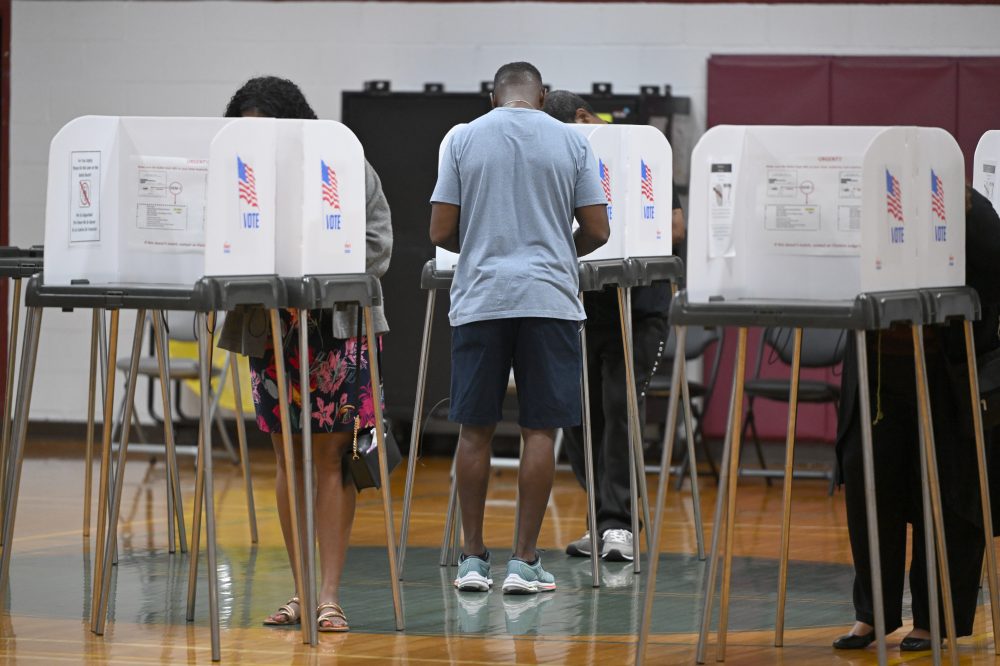
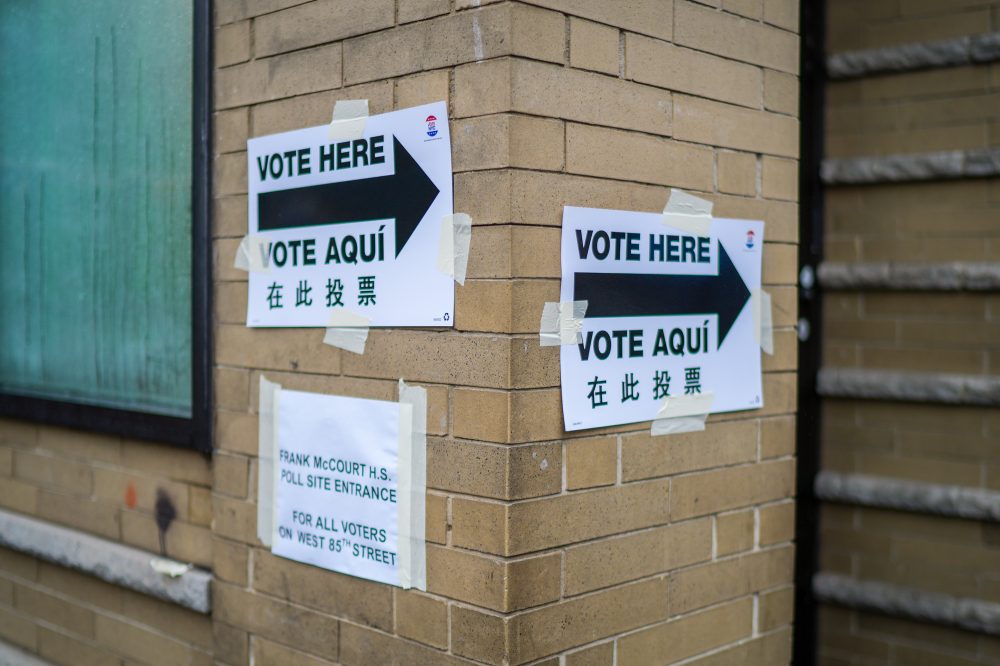
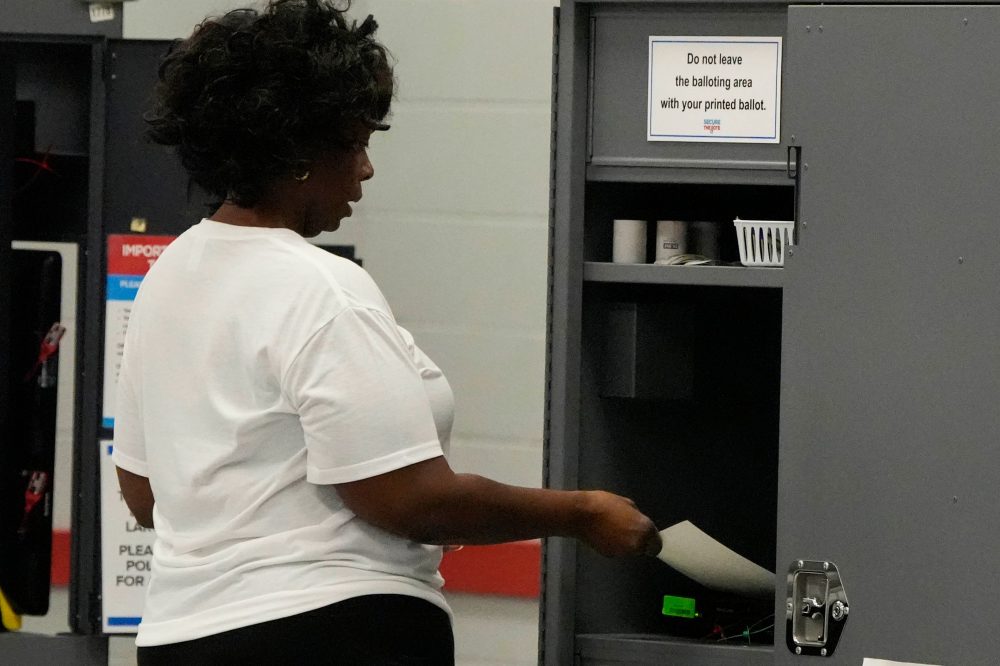
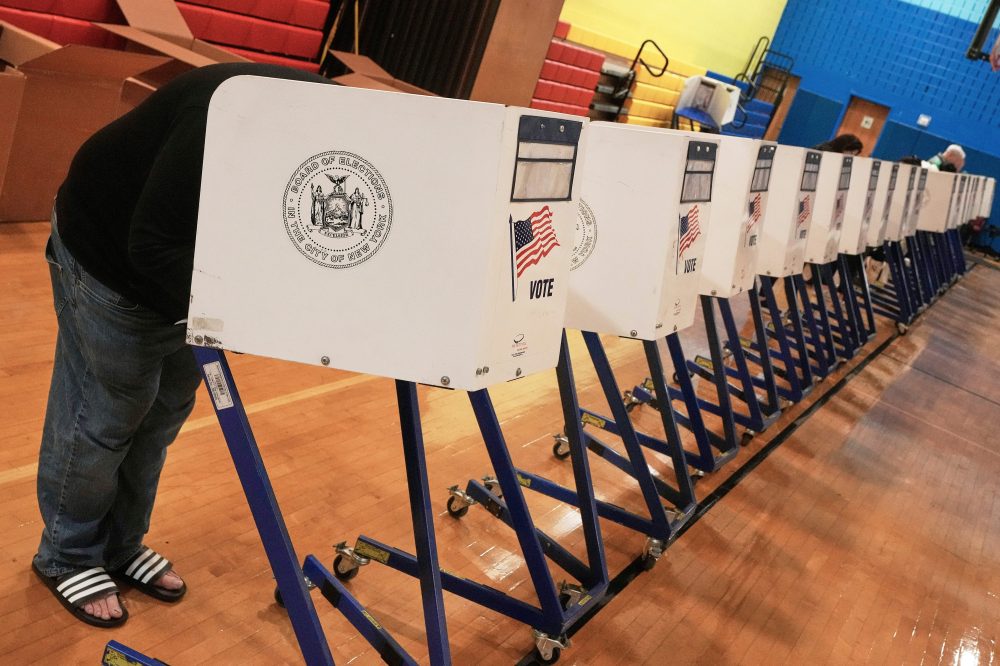
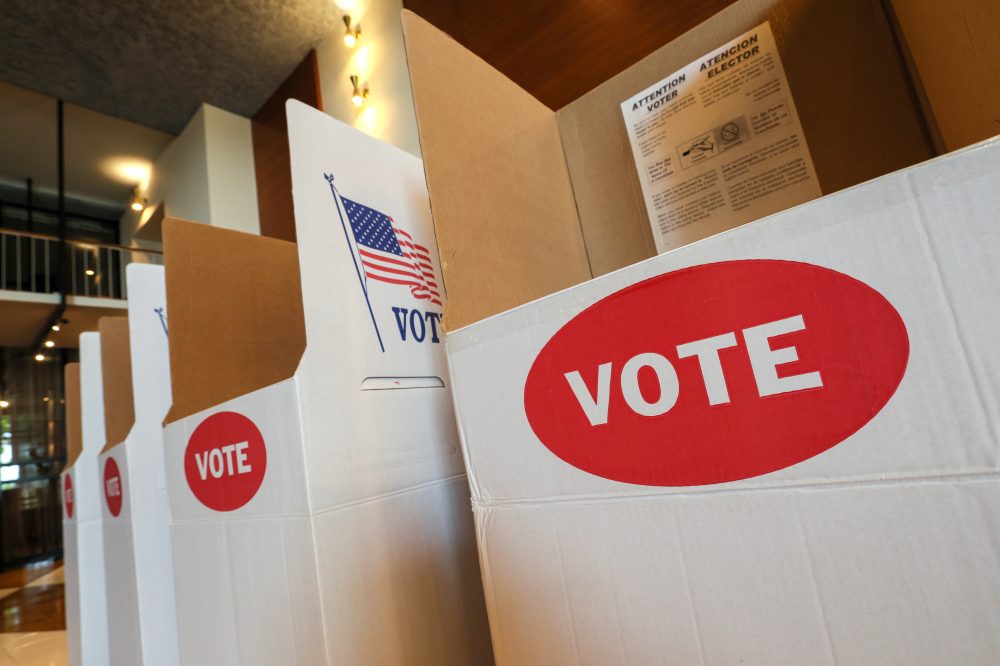
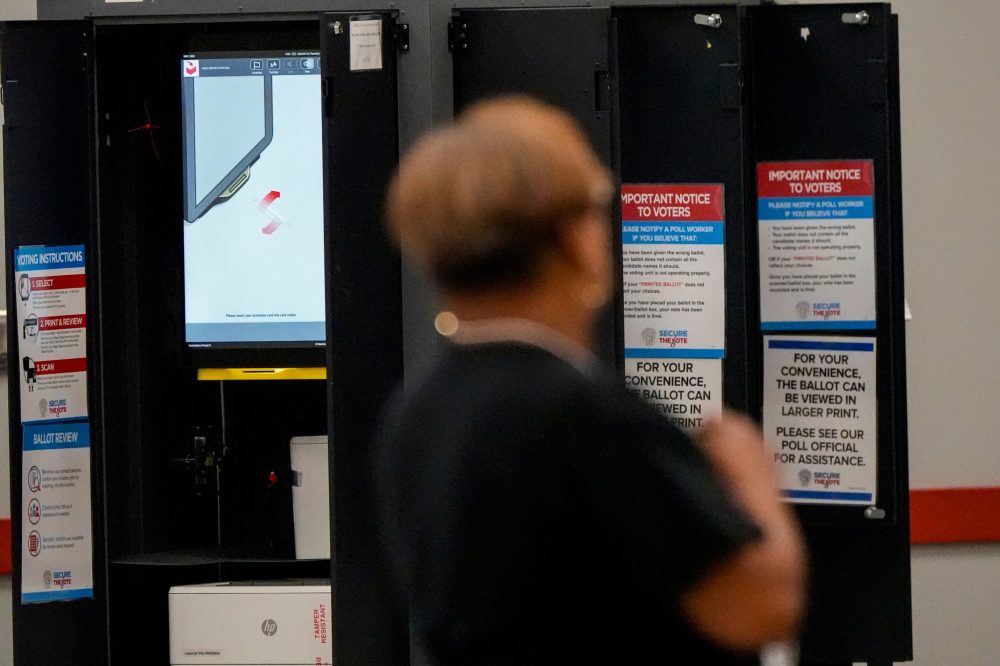
Tuesday’s primary elections unfolded across four states, with New York drawing the most scrutiny as congressional races put the political clout of New York City Mayor Zohran Mamdani under the microscope.
While New York’s contests commanded national attention, voters in Maryland, South Carolina, and Utah also made their way to the polls to weigh in on their own competitive races.
The day’s events were documented in a photo gallery assembled by AP photo editors.
Voting wrapped up Tuesday in a high-profile Democratic primary in Manhattan, where Jack Schlossberg — the grandson of the late President John F. Kennedy and a first-time political candidate — squared off against a field of contenders that included two state legislators and a well-known former Republican, all competing for an open seat in Congress.
The winner of this competitive primary enters the November general election as a strong favorite to replace longtime Democratic Rep. Jerry Nadler, who is stepping down. Democrats account for roughly two-thirds of registered voters in the district.
The race drew considerable buzz, driven in part by Schlossberg’s celebrity status as a Kennedy family member with a knack for social media, and in part by the enormous amounts of money that poured in as artificial intelligence companies turned the contest into a proxy battle over tech regulation.
Schlossberg leaned into his family legacy while also pushing his own platform, describing his message as “progressive and aggressive” through social media posts that were widely shared — and sometimes unconventional.
“Supporters don’t just like me because I’m a Kennedy,” Schlossberg told The Associated Press earlier this year. “They like me because of my experience, my ideas, and they trust me because they see what’s going on with their very own eyes.”
Still, questions followed Schlossberg throughout the campaign about his thin professional background. The 33-year-old holds a combined law and business degree and had a brief stint at the State Department’s environmental office, along with writing political opinion pieces for Vogue. He maintained that his family’s wealth gave him freedom from the pressures of political fundraising.
The AI industry’s money flowed heavily into the race, largely in opposition to candidate Alex Bores, a state Assembly member and former tech engineer who had authored legislation that many in the tech sector found objectionable. However, some AI companies more open to regulation pushed back by backing Bores.
Voters in the district were flooded with campaign mailers and advertisements, particularly targeting Bores and fellow Assembly member Micah Lasher, a former aide to Rep. Nadler. Lasher ran on his deep experience in government, while Bores presented himself as a newer voice willing to take on powerful special interests.
“The battle lines, in this race in particular, are whether we can regulate AI at all,” Bores said during a CNN interview Tuesday evening.
Beyond the AI money fight, the race also featured dueling endorsements from Nadler and fellow Congress member Carolyn Maloney — whom Nadler had defeated in a 2022 primary after their neighboring districts were merged through redistricting. This time around, Maloney threw her support behind Bores, while Nadler backed Lasher.
Another notable contender was George Conway, a veteran attorney and former Republican who co-founded the anti-Trump group known as The Lincoln Project. Conway was previously married to Kellyanne Conway, who served as an adviser to Republican President Donald Trump, though George Conway has since distanced himself from both her and the former president.
A number of additional candidates also competed in the primary.
WASHINGTON — In a rare display of bipartisan cooperation, the U.S. House of Representatives voted overwhelmingly Tuesday to pass a sweeping housing bill designed to bring down the cost of buying and renting a home across the country.
The 358-32 vote sends the measure to President Donald Trump, who is expected to put his signature on it Wednesday at the Capitol. The Senate had already approved the bill 85-5 on Monday.
The legislation takes aim at the nation’s housing affordability crisis on multiple fronts — cutting federal red tape, speeding up environmental reviews, accelerating construction timelines, and reining in corporate landlords by restricting their ability to buy single-family homes. Lawmakers from both parties described it as one of the most far-reaching attempts in decades to grow the housing supply and ease costs for everyday Americans.
Democratic Rep. Maxine Waters of California, one of the bill’s key negotiators, pointed to troubling statistics driving the push for action. She noted that the median age of a first-time homebuyer has climbed to 40, and that rents have jumped roughly 47% since the COVID-19 pandemic began.
“Our country must do better and today we will,” she said.
The final package was assembled from dozens of separate bills following months of negotiations — a striking contrast to the partisan gridlock that has defined much of the current congressional session.
House Financial Services Chairman French Hill, an Arkansas Republican who collaborated with Waters and Senate colleagues to craft the bill, called it the first time in years that Congress has united to make “measurable, accountable changes” to the country’s housing laws.
He said the bill will “help build more homes to meet that growing demand and keep the American dream within reach.”
Among its many provisions, the legislation would broaden access to financing, promote the development of non-traditional housing options such as modular homes, establish new protections for renters, and strengthen programs focused on reducing homelessness.
The bill would also direct funding to local governments that exceed the median rate of homebuilding, including through Community Development Block Grant dollars. It sets aside money to help communities convert abandoned infrastructure into housing and provides a framework for reforming outdated zoning rules that have long blocked larger housing developments.
Additionally, the legislation raises caps on the number of public housing units eligible for renovation financing and formally establishes a recovery program to help get funds to communities rebuilding after natural disasters.
One provision that did not make the final cut was a Senate measure that would have required investors to sell newly built homes within seven years of purchase.
Both parties have rallied around the bill as evidence they are tackling the affordability crisis head-on. The U.S. housing market has struggled since 2022, when mortgage rates began rising sharply from their pandemic-era lows. Sales of previously owned homes have been hovering near a 4-million annual pace since 2023 — well below the historical norm of 5.2 million per year. Sales hit a 30-year low last year and have remained weak in early 2025, falling in both January and February compared to the same period a year ago.
A report released by the Economic Report of the President in April identified a shortage of 10 million homes nationwide. Separately, a recent report from the Joint Center for Housing Studies at Harvard University found existing home sales at three-decade lows and rising inventory due to steep buying costs. “Cost burdens for both renters and owners continue to climb, while assistance remains profoundly underfunded,” that report stated.
Although the median U.S. monthly rent has been edging lower for nearly three years, it was still 17.2% above pre-pandemic levels as of May, according to data from Realtor.com.
The bill earned broad support across the housing industry, drawing backing from groups representing landlords and large property owners as well as organizations that advocate for tenants and low-income renters.
Rep. Jim Himes, D-Conn., summed up the mood on the House floor ahead of the vote: “In this polarized and angry Congress, we are actually getting something done.”
WASHINGTON — Congress has given final approval to a sweeping bipartisan bill designed to tackle the nation’s ongoing affordable housing shortage, with the measure now on its way to President Donald Trump to be signed into law.
The U.S. House of Representatives voted 358-32 in favor of the legislation on Tuesday, one day after the Senate approved it by an overwhelming 85-5 margin.
House Financial Services Committee Chairman French Hill of Arkansas, a Republican, spoke in favor of the bill during floor debate, stating that “America is facing a housing supply shortage that’s been years in the making.”
Hill added that the bill would “cut unnecessary barriers to new home construction” and update what he described as outdated banking regulations, making it easier for lower-income Americans to qualify for home loans.
Democratic Representative Jim Himes of Connecticut praised the rare show of cooperation across party lines, calling the bill’s passage “a remarkable thing” given how seldom major legislation clears the deeply divided Congress.
A new survey released Tuesday found that, for the first time since 2023, a majority of American consumers said they would rather purchase a home than rent or move in with family members — a sign of the pent-up demand facing the housing market.
Housing industry groups estimate there is a shortage of millions of affordable homes nationwide. That crunch has been driven by a combination of elevated mortgage rates, climbing home prices, and supply chain disruptions that have persisted over recent years.
The bill has gone through multiple rounds of revisions by House and Senate negotiators over the past year. Its passage gives both Republicans and Democrats a legislative win to highlight as they head into November congressional elections.
Concerns about the high cost of living rank among the top issues for voters in public opinion polls, with inflation rising noticeably during Trump’s second term in office.
Beyond easing construction barriers, the bill includes provisions to waive or accelerate environmental reviews for new home building projects. It would also place a limit on how many existing single-family homes large Wall Street investment firms are permitted to own.
WASHINGTON — The U.S. Senate cast a historic vote Tuesday, backing legislation that would order President Donald Trump to bring American military action against Iran to a stop — the latest sign that some members of his own party are growing increasingly uncomfortable with his leadership.
Senators approved the war powers resolution by a 50-48 margin. The measure had already cleared the House of Representatives earlier this month, driven by rising unease — even within Trump’s own Republican Party — over a conflict that began on February 28 and has grown deeply unpopular.
This marks the first occasion in American history that both chambers of Congress have simultaneously passed a resolution ordering a president to pull U.S. forces out of an active conflict since the War Powers Resolution — more widely known as the War Powers Act — became law back in 1973.
Though the resolution is widely expected to be largely symbolic in its effect, it still represents a notable blow to Trump, who had until recently enjoyed nearly unanimous backing from Republican lawmakers on Capitol Hill.
The vote also comes at a particularly sensitive moment, as the administration is expected to soon ask Congress to approve tens of billions of dollars in funding to cover the costs of the war.
Republicans currently hold narrow majorities in both the Senate and the House, but a handful have begun breaking ranks with the president on select issues as November’s mid-term elections approach — elections that will decide whether the GOP keeps control of Congress.
Some Republicans have already pushed back on other Trump priorities, including his $1.8 billion “antiweaponization” fund intended to compensate political allies he claims were targeted by federal authorities, and they have also stalled a $70 billion bill aimed at funding his immigration enforcement efforts.
A Reuters/Ipsos poll released the same day as the Senate vote found that only one in four Americans feel the war with Iran has been worth the price, and that most Americans are skeptical a ceasefire with Tehran will hold over time.
The Senate tally broke largely along party lines. Four Republicans crossed the aisle to vote with Democrats in favor of the resolution, while all but one Democrat voted yes. Two Republican senators were absent and did not cast votes.
Legal Questions Remain Unresolved
The Trump administration is currently engaged in efforts to negotiate a peace agreement with Iran. Congressional support for the resolution is expected to increase pressure on Trump not to restart military operations — something he has hinted he may do if peace talks break down.
Under the terms of the 1973 War Powers Act, a concurrent resolution passed by both chambers does not require the president’s signature. Congress designed such resolutions as a tool to end military engagements without needing White House approval.
However, legal experts caution that the matter is far from settled. No war powers resolution had ever previously passed both chambers, and a Supreme Court ruling from 1983 stated that such a measure must be sent to the president for signature or veto in order to carry legal weight.
The White House has taken the position that the War Powers Act itself is unconstitutional and therefore not binding on the executive branch.
A White House official said Tuesday that the Senate vote carries no real significance, arguing that because the resolution does not go to the president, it has no force of law — and pointing out that the measure only passed because two Republican senators were not present to vote.
The official also argued that the resolution is moot because U.S. forces were already removed from hostilities when a ceasefire took effect on April 7.
Experts believe the constitutional questions surrounding the War Powers Act will ultimately need to be resolved by the courts.
Scott Anderson, a senior fellow at the Brookings Institution and senior editor of the legal publication Lawfare, offered this assessment: “The executive branch will likely ignore it on constitutional grounds, and it’s not clear who might have standing to sue to enforce it.”
Representative Gregory Meeks of New York, who introduced the resolution in the House, said he considers the measure legally binding and pledged to pursue every available legal avenue to compel the administration to comply with it.
Democrats also pointed to the U.S. Constitution’s language giving Congress — not the president — the authority to take the nation to war. “Congress has to own this responsibility,” said Democratic Senator Tim Kaine of Virginia in remarks on the Senate floor urging his colleagues to support the measure.
A Small But Meaningful Coalition
The resolution had also cleared the House with limited Republican support, passing 215-208 with four Republicans and all Democrats voting in favor.
The four Republican senators who voted for the measure were Susan Collins of Maine, Rand Paul of Kentucky, Bill Cassidy of Louisiana, and Lisa Murkowski of Alaska. Democratic Senator John Fetterman of Pennsylvania was the lone Democrat to vote against it.
Republicans Mitch McConnell of Kentucky and David McCormick of Pennsylvania were absent and did not vote.
Democratic lawmakers have pledged to bring additional war powers measures to the floor, saying they intend to keep forcing Republicans to take public positions on the conflict.
Separately, under a 2015 law passed when then-President Barack Obama was negotiating a nuclear deal with Iran and other world powers, Congress retains the right to review and vote on any peace agreement with Tehran that touches on Iran’s nuclear program.
Senate Republican Majority Leader John Thune of South Dakota said Tuesday that he anticipates Congress will indeed review and vote on whatever peace deal is eventually reached with Iran.
California is preparing to take the Trump administration to court over its move to buy out and cancel an offshore wind energy project planned along the state’s central coast.
State officials announced Tuesday that they have sent a formal notice of intent to sue to the Department of the Interior. The legal challenge centers on the administration’s decision to purchase back the lease for Golden State Wind, a floating offshore wind project off California’s central coast.
Offshore wind is a cornerstone of California’s clean energy strategy. The state has set a goal of developing 25 gigawatts of offshore wind power by 2045 — enough electricity to serve roughly 25 million homes and account for about 13% of the state’s total energy supply.
California Energy Commission Chair David Hochschild said those energy and climate goals are now under threat, and the state intends to fight back hard. He described the administration’s approach of repurchasing offshore wind leases as “a strategic mistake of colossal proportions,” calling it particularly alarming at a time when fossil fuel prices have been climbing due to the Iran war.
“Countries that thrive around the world are those that lean into innovation, into the energy sources of the future,” Hochschild said in a Tuesday interview. “And so to turn away from this, and turn back the clock, and really engage in what I consider to be a war on innovation, is really ill-considered. And I think it’s a decision that’s not just bad for California, it’s bad for the nation.”
President Donald Trump has championed increased fossil fuel production as a way to deliver affordable and reliable energy to Americans, and he has repeatedly expressed his opposition to wind power. After federal courts blocked his attempts to halt offshore wind development through executive orders, the Interior Department shifted to a new approach: buying back the leases directly.
In these buyback arrangements, companies receive reimbursements for their lease fees in exchange for redirecting that money into fossil fuel and geothermal energy projects. Interior Secretary Doug Burgum said last week that “under President Trump, companies are shifting investment back toward dependable, secure energy infrastructure that can power our economy and lower utility costs.”
California currently has five federal offshore wind leases along its coastline. Two of those are being terminated through agreements with the Interior Department: Golden State Wind and a separate floating wind project developed by Chicago-based Invenergy. On Tuesday, the state also issued an administrative investigative subpoena to Invenergy, which last week accepted a $765 million agreement to walk away from its offshore wind leases.
California Attorney General Rob Bonta issued a statement saying the state will not sit back while the Trump administration “illegally strikes deals to kill offshore wind projects and replace them with more windfalls for his fossil fuel friends.”
The total cost of all these lease buyback agreements has reached nearly $2.6 billion. The first deal, announced in March, involves French company TotalEnergies receiving close to $1 billion — essentially a full refund on two offshore wind leases off the coasts of North Carolina and New York — on the condition that the money be reinvested in fossil fuels. New York is leading a legal challenge to that agreement, and congressional Democrats are investigating it.
Golden State Wind and Bluepoint Wind both agreed in April to terminate their leases. Bluepoint Wind had been in the early stages of developing an offshore wind farm off the coasts of New Jersey and New York.
Golden State Wind is a joint venture between Ocean Winds and the Canada Pension Plan Investment Board. Under the terms of its agreement, Golden State Wind can recoup approximately $120 million in lease fees, provided the same amount is invested in oil and gas assets, infrastructure, or projects along the Gulf Coast, according to the Interior Department. Michael Brown, CEO of Ocean Winds North America, said in April that the deal offered “clarity” for the company and its investors.
Hochschild and Bonta contend that the Interior Department illegally used federal taxpayer funds to pay Golden State Wind to abandon its offshore wind lease and invest an equivalent sum in out-of-state fossil fuel projects — moves they say provide no benefit to California’s energy economy.
The two officials also noted that California has invested more than $100 million over the past decade preparing its ports, transmission systems, and industries to support offshore wind development. They warned those investments could be wasted if the Trump administration successfully shuts down offshore wind in the state.
If the matter is not resolved, California intends to file its lawsuit within 60 days.
WASHINGTON (AP) — Republican senators who have found themselves at odds with President Donald Trump lately will get a chance to speak with him directly when he joins them for a party luncheon at the Capitol on Wednesday.
Ahead of that gathering, senators said Tuesday they are hoping the private meeting will be focused on bringing the party together rather than airing grievances. But the timing is complicated — Trump appears to have stepped back from much of the Senate’s legislative agenda as the November midterm elections approach, instead pushing a proof-of-citizenship voting bill that currently lacks the support needed to pass.
Earlier Tuesday, the President traveled to a Mack Trucks facility in Macungie, located in the suburbs of Allentown, Pennsylvania. The visit marked his first significant public appearance outside the nation’s capital since he signed an interim agreement bringing the Iran war to a close.
The Pennsylvania stop was seen as an effort to redirect the national conversation toward the U.S. economy, as Trump looks to move past the conflict and the spike in gasoline prices it triggered — all with the midterm elections drawing nearer.
Trump took a private tour of the facility before delivering remarks that observers noted carried the energy of a reelection rally from two years ago, while also highlighting what he described as accomplishments during his second term in office.
U.S. Immigration and Customs Enforcement is stepping back from a sweeping plan to convert large warehouses into mass immigrant detention centers, abandoning a central piece of a $38-billion initiative that former Homeland Security Secretary Kristi Noem championed to dramatically grow detention capacity this year.
The federal government, which faced a lawsuit from Michigan and a Detroit-area suburb, told a judge Monday that a warehouse it purchased in Romulus, Michigan, will be put up for sale. Similar plans are also falling apart in Social Circle, Georgia, and Socorro, a suburb of El Paso, Texas, according to local officials in those communities.
Those three cities are part of a group of 11 locations where the federal government collectively spent $1.074 billion purchasing warehouse properties.
The New York Times reported last week, citing internal documents it obtained, that federal immigration officials now intend to unload seven of those 11 warehouses — either by transferring them to other federal agencies or selling them on the open market.
The Department of Homeland Security did not directly confirm those reports, but released a statement saying the agency is “moving swiftly to utilize EXISTING detention space with our state and county partners.”
Claire Trickler-McNulty, a former ICE official who served under the Obama, Trump, and Biden administrations, had sharp words for the warehouse conversion idea, calling it “wildly foolhardy.”
Part of the backlash stemmed from how the purchases were handled. Noem’s team largely carried out the acquisitions away from public scrutiny, blindsiding many communities. In some cases, local leaders only found out about ICE’s intentions after the agency had already bought or leased space in their area.
After Noem was removed from her position, her successor, Markwayne Mullin, quickly put the brakes on any additional warehouse purchases.
Opposition came from multiple directions — some residents and officials objected on moral grounds to having an ICE detention facility in their neighborhoods, while others raised practical concerns about whether the facilities would strain local infrastructure like water and sewer systems.
Seven federal lawsuits were filed against the plans, and regulatory obstacles created additional headaches in other locations.
Financial questions also arose about how much the government paid. In one case, the agency paid double what a New Jersey warehouse was valued at in tax records. For the Social Circle, Georgia, property, the government paid nearly five times its assessed value. Those discrepancies triggered an internal audit.
Trickler-McNulty noted that while ICE does own a handful of facilities it inherited from its predecessor agency, the Immigration and Naturalization Service, the agency has historically contracted out its detention needs rather than owning and operating large facilities itself.
“Facilities over 2,000 people just break down. It’s very hard to run a very big facility, to keep it staffed, to keep all of it moving,” she said.
Mullin, who took over and expanded his family’s plumbing business before serving Oklahoma in both the U.S. House and Senate, acknowledged during his confirmation hearing that there had been problems with the warehouse plan. He pointed out that most municipalities simply don’t have the water and sewer infrastructure to support facilities housing thousands of people.
Water supply challenges proved particularly severe at the Salt Lake City warehouse — the most expensive of the bunch at $145.4 million. A federal lawsuit over that property revealed that ICE officials told the city’s mayor that trucking water and sewage to and from the facility might be needed as a temporary fix.
According to the New York Times report, the Salt Lake City warehouse is among those slated to be handed off or sold. Others on the list include the Romulus facility, one in New Jersey, two in Georgia, and two in Pennsylvania.
Michigan Attorney General Dana Nessel, a Democrat, said it would have been an “abomination” if the 249,000-square-foot Romulus warehouse had been converted into an immigrant detention center as originally planned when it was purchased for $34.7 million.
“The ICE warehouse proposal was every bit as ill-conceived as it was cruel and unnecessary, and I am relieved that this chapter is coming to a close,” Nessel said.
Social Circle, Georgia, announced last week that it received word from U.S. Rep. Mike Collins, a Republican, that the Department of Homeland Security has dropped its plans to build an ICE detention facility there.
In the El Paso region, acting ICE Director David Venturella visited the area earlier this month and informed local officials that the agency has revised its plans for three warehouses it purchased in nearby Socorro for $122 million, according to U.S. Rep. Veronica Escobar, who was present during the visit.
Escobar, a Democrat representing El Paso, said at a news conference that ICE is no longer planning to detain up to 8,500 immigrants at those facilities as originally envisioned. Instead, the property will be converted into an ICE campus that includes offices and training space, along with a smaller — though unspecified — number of detainees.
Despite some progress, many communities remain frustrated by a lack of communication from federal officials about what happens next.
In Pennsylvania, state and local officials said Tuesday they had not received any updated information from DHS regarding two warehouses purchased earlier this year. Both projects have been held up after the state denied permits, citing concerns that drinking water and sewer capacity would be insufficient for thousands of residents.
U.S. Rep. Dan Meuser, whose district covers both Pennsylvania warehouses, said he met with DHS personnel on Friday but that the agency had not yet decided whether to use the properties as detention centers or sell them.
In Oakwood, Georgia, the city manager said Tuesday he is reaching out to his congressional delegation trying to confirm rumors that a warehouse in his city will be sold. “I have not heard anything yet,” said B.R. White.
In Maryland, a judge has extended a halt on converting a large warehouse into an immigrant processing facility, while ICE continues to gather public comments about the environmental impact of the project. An announcement earlier this month provided additional details about the planned facility, including six secure outdoor recreation areas.
Patrick Dattilio, founder of Hagerstown Rapid Response — a group formed specifically to oppose housing ICE detainees in that warehouse — said there has been little communication beyond what has come out through the lawsuit. He said his group remains committed to preventing the facility from ever opening.
“It’s a big warehouse,” Dattilio said. “It’s not meant for people.”
WASHINGTON (AP) — President Trump and Vice President Vance are billing their interim agreement to end hostilities with Iran as a major windfall for American agriculture — but Iranian officials are pushing back hard on that claim, and sanctions experts say they’re left scratching their heads over the specifics.
A preliminary agreement reached last week would reopen the Strait of Hormuz, a critical waterway through which roughly one-fifth of the world’s oil and natural gas once flowed. The deal would allow Iran to resume selling its oil freely during a 60-day window while the two nations continue negotiating unresolved issues. The memorandum of understanding also included provisions to unfreeze Iranian assets.
The agreement has drawn criticism for not directly addressing the issues Trump cited when the U.S. went to war with Iran on Feb. 28 — including reining in Iran’s nuclear program, its missile capabilities, and its backing of militant organizations like Hezbollah in Lebanon and Hamas in Gaza.
Firing back at his critics Tuesday on Truth Social, Trump insisted American farmers would benefit directly. He wrote that the U.S. Treasury Department would move Iranian assets “into escrow, controlled by the U.S.A., and will be used for the purchase of food and medical supplies, exclusively from the United States, including Corn, Wheat, and Soybeans from our great American farmers. These are things that are desperately needed by Iran.”
Vance, who discussed the proposal following high-level negotiations held in Switzerland, echoed Trump’s position that any frozen funds held outside Iran would go toward purchasing American crops.
Iran’s Foreign Ministry spokesperson, Esmail Baghaei, rejected that framing entirely, saying any agricultural purchases would be driven by “prices and quality” — not conditions set by Washington. “It is interesting that the philosophy and goal of the war, which was the destruction of the Iranian civilization and the collapse of Iran, has become enriching American farmers,” Baghaei said.
Iran’s ambassador in Geneva, Ali Bahreini, also pushed back against Vance’s suggestion that the U.S. and Qatar would have a say in how Iran spends its unfrozen money. “Iran is the only country who decides what to do with those assets,” he told reporters.
Joseph Glauber, a research fellow emeritus at the International Food Policy Research Institute, said it’s unlikely Iran would walk away from its existing food trade partners just because Washington demands it. He noted that Iran’s main agricultural suppliers include Brazil, India, Turkey, the European Union, Canada, Australia, and Argentina. Forcing Iran to buy exclusively from the U.S. would “create some hard feelings with some of our competitors,” he said.
Under previous sanctions frameworks, money that foreign nations paid Iran for imports — such as South Korean oil purchases or Iraqi payments for Iranian electricity — was typically locked in escrow accounts and only released with Treasury approval, and only for “non-sanctionable” goods like food and medicine.
On Monday, the U.S. Treasury approved the sale of Iranian oil, petrochemicals, and petroleum products through Aug. 21. The announcement made no mention of escrow accounts.
Richard Goldberg of the Foundation for Defense of Democracies, who worked to build diplomatic pressure on Iran during the first Trump administration, posted on X that he would welcome “a clarification that Iran is actually restricted to only buying U.S. agricultural products.”
Richard Nephew, a senior research scholar at Columbia University’s Center on Global Energy Policy, said the agreement’s actual implications for releasing restricted Iranian assets remain unclear. Nephew, who helped construct Iran sanctions during the Obama and Biden administrations, said via email that the U.S. could attempt to direct the funds: “Well, we can try! All you really need to do is to tell a foreign bank that they can move the money but only to a U.S. bank to buy soybeans or whatever.”
He noted, however, that foreign banks aren’t required to comply — and if they refuse, the U.S. could respond with additional sanctions. Still, Nephew said such an approach is unusual, “in part because we don’t usually like to give the impression that we treat national security issues as a cash grab.”
A group of 17 states, led by Nebraska, along with a national trade association representing wholesalers and distributors, have filed a federal lawsuit seeking to block California from enforcing a tough new law aimed at reducing plastic packaging waste.
The suit was filed Monday in federal court and targets California’s recently finalized rules, which would gradually require businesses to cut back on single-use plastics and ensure that all packaging is either recyclable or compostable. The plaintiffs described the regulations as “onerous mandates” that would lead to significant price hikes on everyday necessities — costs they say would ultimately be passed along to consumers.
Nebraska Attorney General Mike Hilgers, who spearheaded the coalition, criticized California’s reach in a news release. “Once again, California is trying to enact a policy that negatively impacts the rest of the country. If California goes unchecked, consumers will be forced to pay more for basic necessities,” he said.
The law at the center of the dispute — the Plastic Pollution Prevention and Packaging Producer Responsibility Act — was signed into law in 2022. According to the lawsuit, it has an extraordinarily broad reach: “Virtually every product packaged or shipped in plastic containers, as well as a significant number of other types of packaging materials that merely incorporate plastics, fall into the Act’s remarkable sweep.”
The National Association of Wholesaler-Distributors, which represents businesses that import and distribute goods in California, is also a plaintiff in the case. The group’s president and CEO, Eric Hoplin, argued that California is overstepping its authority. “California is not entitled to pronounce nationwide policies,” Hoplin said. “Because the Act extends California’s regulatory reach far beyond its borders and brings within its sweep conduct wholly unconnected to California, the Act violates principles of federalism, the horizontal separation of powers, and due process.”
The lawsuit contends the law runs afoul of both the U.S. Constitution and California’s own constitution. The plaintiffs are asking the court to declare the law invalid and unenforceable and to stop it from being put into effect.
Named as defendants in the suit are Zoe Heller, the director of California’s recycling agency CalRecycle, and the Circular Action Alliance, a nonprofit organization involved in carrying out the law.
A CalRecycle spokesperson, Melanie Turner, said in an emailed statement that the agency does not comment on active litigation and that it remains focused on moving forward with the law’s implementation.
The Circular Action Alliance said it is aware of the lawsuit and is keeping a close watch on how things develop, while continuing its work to achieve the law’s “ambitious goals.”
California officials have defended the law, saying it shifts the responsibility for managing single-use plastic and packaging waste away from taxpayers and local governments and onto the companies that produce it. Environmental Protection Secretary Yana Garcia said in a statement issued in May: “California is shifting the responsibility of managing single-use plastic and packaging onto the producers. New packaging reforms lower waste costs for communities and decrease garbage and pollution across the state. This approach pushes producers to innovate and design packaging that truly supports a circular economy.”
Joining Nebraska in the lawsuit are 16 other states whose attorneys general are Republican: Alabama, Florida, Georgia, Idaho, Indiana, Iowa, Louisiana, Missouri, Montana, North Dakota, Oklahoma, South Carolina, South Dakota, Texas, Utah, and West Virginia.
Notably, environmental advocates have also taken legal action over the same law, but from the opposite direction. A coalition that included the Natural Resources Defense Council recently filed its own complaint, arguing that the final regulations were “weakened” versions of what the “landmark” law was intended to achieve.
Governor Matt Meyer announced today a significant step forward in Delaware’s push to make energy more affordable and secure for residents across the state.
Four community solar projects have been accepted into the JobsFirst Permitting Accelerator, a program designed to speed up the approval process for energy initiatives. The announcement was described as a major milestone in efforts to expand affordable energy access, lower electricity bills, and strengthen Delaware’s ability to meet its own energy needs over the long term.
The four projects were developed by ECA Power and are located in Sussex and New Castle Counties.
WASHINGTON — Republican senators who have found themselves at odds with President Donald Trump in recent weeks will get the opportunity to address those tensions directly when he joins them for a party luncheon at the Capitol on Wednesday.
Ahead of the meeting, senators expressed hope Tuesday that the closed-door gathering would emphasize party unity rather than highlight divisions. The timing is notable, however, as Trump appears to have shifted his focus away from much of the Senate’s agenda with midterm elections approaching — instead championing his proof-of-citizenship voting bill, which currently does not have enough votes to clear the chamber.
Over the past month, tensions have mounted on multiple fronts. Trump abruptly blocked Senate Republicans from confirming one of his own nominees, asked them to help fund portions of a White House ballroom renovation project despite widespread opposition, and put them in the position of defending his Iran military action while many quietly questioned its strategy and ultimate goal.
Trump also contributed to erosion of his own Senate support by endorsing primary challengers against two Republican incumbents who had previously been reliable backers of his agenda — Texas Sen. John Cornyn and Louisiana Sen. Bill Cassidy. Both lost their primary races and have since become more openly critical of the president.
A federal appeals court ruled Tuesday that the Trump administration can move forward with its expanded program of rapid deportations of undocumented immigrants anywhere in the United States — not just in border areas.
A split three-judge panel of the U.S. Court of Appeals for the District of Columbia Circuit struck down a lower court order that had temporarily halted President Donald Trump’s broader use of expedited removal. The decision marks a significant win for the Republican administration, which considers the expanded deportation tool central to its mass removal strategy.
Expedited removal is a process that allows the government to deport migrants quickly, without giving them the opportunity to appear before an immigration judge. Historically, it had only been used against migrants arriving by sea or those apprehended at or close to the border shortly after entering the country.
In January, Trump signed an order extending expedited removal to undocumented immigrants living anywhere across the U.S. Following that change, immigration agents began detaining migrants at courthouses where they had shown up for immigration proceedings, then removing them from the country within just a few days.
Civil liberties groups pushed back hard against the ruling. “The Trump administration’s push for fast-track deportations will subject people to an unfair and error-prone system,” said Anand Balakrishnan, a senior staff attorney with the ACLU’s Immigrants’ Rights Project. Balakrishnan, who argued on behalf of the plaintiffs before the appellate panel, added that the decision “undermines the fundamental principle that people receive due process when the government seeks to deport them.”
DC Circuit Judge Justin R. Walker, writing for the majority, concluded that the plaintiffs had failed to demonstrate that the expanded program violated due process rights. In his opinion, Walker noted that immigrants were given notice of removal proceedings and had an opportunity to respond.
Walker and fellow majority judge Neomi Rao were both appointed to the bench by Trump. The third judge on the panel was appointed by President Barack Obama, a Democrat.
Walker also addressed whether immigration officers were required to inform migrants that they could challenge expedited removal by proving they had lived in the United States for more than two years. He said no such requirement exists. “The constitutional requirement is notice of the action the government is taking and the grounds for it, plus an opportunity to respond,” Walker wrote, adding that the plaintiffs’ “contrary reasoning would require immigration officers to provide what amounts to legal advice.”
The two-judge majority vacated an earlier ruling by U.S. District Judge Jia Cobb, who had placed the expanded deportation program on hold. Cobb, appointed by President Joe Biden, a Democrat, had ruled in August that the administration failed to put in place adequate safeguards to prevent migrants from being wrongly deported under the expedited process.
Cobb had found that the plaintiffs presented “substantial evidence” that the expedited removal process carried a high risk of mistakes when applied on a broader scale. Her ruling referenced cases of individuals who had lived in the U.S. for well beyond two years but were still subjected to expedited removal orders.
Walker acknowledged in his opinion that such errors had occurred, but attributed them to “individual officers’ failure to follow the law — not defects in the written directives under review or the procedures they incorporate.”
The Trump administration has maintained that its expanded expedited removal program includes built-in protections against arbitrary deportations. In an October court filing, Justice Department attorneys described Cobb’s ruling as an “egregious error” that was stripping the administration of an “essential tool to combat the unprecedented surge of illegal immigration over the past few years” and its ability to efficiently deport potentially millions of people.
WASHINGTON — In a notable break from party leadership, the Republican-majority U.S. Senate voted Tuesday to pass legislation aimed at halting American military operations against Iran. However, the practical impact of the measure remains uncertain as President Donald Trump’s administration continues working toward a peace deal with the Islamic republic.
Senators approved the concurrent resolution by a 50-48 margin. The measure had already cleared the House of Representatives earlier this month, and the vote reflects mounting unease — even among some of Trump’s fellow Republicans — over a conflict that has grown increasingly unpopular since it began on February 28.
The vote fell mostly along party lines. Four Republicans crossed the aisle to vote in favor, joining nearly all Democrats in support. One Democrat voted against the resolution, and two Republicans were absent from the vote entirely.
The resolution instructs President Trump to withdraw U.S. armed forces from hostilities involving Iran. Despite its passage, the measure is widely expected to be little more than a symbolic gesture.
Under the terms of the 1973 War Powers Act, this type of concurrent resolution does not go to the White House for the president’s signature. The White House has already declared the legislation unconstitutional and, therefore, not binding on the administration.
Legal scholars say the question of whether the measure has any real teeth is far from settled and will likely end up before the courts. Scott Anderson, a senior fellow at the Brookings Institution and senior editor of the legal publication Lawfare, explained the challenge ahead: “The executive branch will likely ignore it on constitutional grounds, and it’s not clear who might have standing to sue to enforce it.”
The Trump administration’s efforts to obtain detailed voter data from states have hit another legal wall, this time in Maryland.
U.S. District Court Judge Stephanie Gallagher last week threw out a Justice Department lawsuit that had sought access to Maryland’s voter registration records. Gallagher, who was appointed to the bench by President Donald Trump during his first term, wrote that she “joins every court to have addressed this issue” in concluding that the unredacted voter registration file “is not a record or paper that a state must produce to the United States.”
Thursday’s dismissal in Maryland makes nine states where the Justice Department has now lost similar legal battles. The department has filed lawsuits seeking detailed voter data — which includes dates of birth, home addresses, driver’s license numbers, and partial Social Security numbers — in 30 states and the District of Columbia.
Beyond Maryland, courts have also rejected the Justice Department’s attempts in Arizona, California, Maine, Massachusetts, Michigan, Oregon, Rhode Island, and Wisconsin. In Georgia, a judge dismissed a similar lawsuit because it was filed in the wrong city, leading the government to refile the case in a different location.
In the Maryland case, the Justice Department argued that an opinion from its own legal counsel’s office gave it the right to access the voter records under federal civil rights law. Judge Gallagher was not convinced, writing: “The Court will not interpret the (Civil Rights Act) contrary to its text simply because an office of the party advancing that interpretation has adopted it.”
Federal officials have argued they need the voter data to verify that states are following federal laws governing voter registration list maintenance, even though states already have their own detailed procedures in place. In the Rhode Island case, a Justice Department attorney acknowledged the department wanted the unredacted voter roll information so it could be shared with the Department of Homeland Security to verify citizenship status.
Earlier this week, a separate federal judge ruled that the Homeland Security program used to check citizenship — known as SAVE — violated federal privacy laws and was incorrectly flagging eligible voters as noncitizens. That judge ordered the program to stop being used.
Both Democratic and some Republican officials have pushed back against the Justice Department’s demands for detailed voter information, arguing the requests run afoul of state and federal privacy protections.
However, at least 13 states have either already turned over or committed to turning over their voter registration lists to the department, according to the Brennan Center for Justice and Associated Press reporting. Those states are Alaska, Arkansas, Indiana, Louisiana, Mississippi, Nebraska, Ohio, Oklahoma, South Carolina, South Dakota, Tennessee, Texas, and Wyoming.
Tuesday marked the latest round of primary elections across four states — Maryland, New York, South Carolina, and Utah — as voters began selecting the nominees who will compete in November’s midterm elections.
The November midterms will decide which party controls both chambers of Congress, along with dozens of governorships and other state and local offices. Primary elections are being held throughout the spring and summer in all 50 states to determine who will appear on the general election ballot.
In Maryland, all eight congressional districts are holding contested primaries. The state typically leans left — only one of its districts is currently represented by a Republican — meaning primary winners often go on to win the general election. Gov. Wes Moore is seeking the Democratic nomination for a second term.
In New York, Mayor Zohran Mamdani has been working to shape the city’s congressional delegation through a series of endorsements, including in Districts 7, 10, and 13. In District 12, several Democrats are competing for the party’s nomination, among them Trump critic George Conway and Kennedy family member Jack Schlossberg.
In South Carolina, Lt. Gov. Pamela Evette and state Attorney General Alan Wilson are squaring off in a Republican runoff for the gubernatorial nomination. President Donald Trump, who had initially endorsed Evette earlier this month, said Friday that either candidate would make a good choice.
In Utah, voters are selecting congressional nominees under a newly drawn district map that created a more Democratic-friendly seat centered in Salt Lake City.
Here is the latest from Tuesday’s elections:
The newly redrawn Salt Lake City district — the result of a lengthy court battle over previous congressional boundaries — could prove critical for Democrats, who need to pick up only a handful of U.S. House seats in November to flip control of the narrowly divided chamber.
In the Democratic primary for that seat, former U.S. Rep. Ben McAdams, considered a moderate, is running against three candidates who are positioned further to his left. Progressive voters could divide their support among those challengers, potentially clearing the way for McAdams to return to Washington — or they could unite behind state Sen. Nate Blouin, Liban Mohamed, or Michael Farrell.
McAdams’ path to Congress has evolved since his first run in 2018, when he successfully convinced voters he was a sensible moderate capable of representing a swing district, defeating the Republican incumbent by a narrow margin. This time around, running in a heavily Democratic district, McAdams has pledged support for abortion rights and describes himself as only “moderate in tone” — a shift from his earlier self-described anti-abortion stance. His progressive opponents argue he is too conservative for the new district, a claim McAdams disputes, pointing to his record.
Republican U.S. Rep. Celeste Maloy is seeking reelection in a district that looks very different from the one that first sent her to Congress three years ago. She faces former state lawmaker Phil Lyman, who is running to her political right, in a redrawn district covering most of southern and eastern Utah. Maloy was first elected in a 2023 special election and won a full term in 2024. Lyman, who promoted false claims of fraud following the 2020 presidential election, is best known for organizing an illegal ATV ride to protest a federal land decision. A jury convicted him on misdemeanor charges, but Trump pardoned him in December 2020.
In New York, Mayor Mamdani made an appearance Tuesday morning outside a polling location on the Lower East Side alongside congressional candidate Brad Lander, a fellow Democrat. Mamdani described candidacies like Lander’s as “a referendum on whether the kind of leadership we have is the one that is serving the people of this city.”
“It’s not just a question of electing more Democrats. It’s a question of electing better Democrats,” the mayor said. He stressed the importance of putting “working people back at the heart of our politics” and championing freedom from fear and freedom of worship. “It’s time to bring some of those notions back so that working people can look at this party and see themselves, see their struggles, see their focuses,” Mamdani added.
The polling site appeared lightly attended, with voters trickling out every few minutes. One man leaving the building grumbled that the election had forced the cancellation of a lunch program for senior citizens. After the mayor departed, Lander recorded a video urging people to vote and reach out to friends. “We’re going to be calling people, knocking on doors, texting people all day long,” he said.
In New York’s 10th District, Rep. Dan Goldman — a former federal prosecutor who served as lead counsel during Trump’s first impeachment — is running for a third term in the heavily Democratic district covering parts of Manhattan and Brooklyn. He faces former New York City Comptroller Brad Lander, who has the backing of both Mayor Mamdani and Sen. Bernie Sanders. Lander was acquitted earlier this month on charges stemming from a protest inside a building that houses an immigration court and has vowed to push back against the Trump administration, promising to “fight, not fold.”
A separate development involving Goldman emerged Monday when the Justice Department’s Civil Rights Division announced an investigation into a Brooklyn coffee shop that said it would refuse service to the congressman over his support for Israel. In a since-deleted Instagram post, Poetica Coffee shared an image of Goldman in their Williamsburg location and wrote, in part: “We don’t serve racists, fascists, homophobes, genocide enablers or anyone in between. Too bad we didn’t recognize you right away, or we would have turned you away.” Goldman responded that he had purchased coffee from a barista who allowed his daughter to use the restroom and “could not have been nicer.” The top civil rights prosecutor at the Justice Department said on X that the coffee shop could face an enforcement action for discrimination. Goldman told CNN he was saddened by the post but did not believe it warranted a federal investigation. The coffee shop did not respond to requests for comment.
In New York’s 12th District, eight Democrats are running to replace retiring Rep. Jerry Nadler in one of Manhattan’s wealthiest House districts. Four candidates have dominated the race. Jack Schlossberg, a 33-year-old Kennedy family heir, and George Conway, a former Republican lawyer turned prominent Trump critic, represent a newer social media-driven style of campaigning. The two front-runners are Assemblymember Micah Lasher — a childhood magician turned political insider endorsed by Nadler himself — and Assemblymember Alex Bores, a former computer engineer whose artificial intelligence regulation bill made him the target of more than $7 million in ads from AI industry supporters. Bores has turned the spending against him into a rallying point, attracting other donors to counter the effort and positioning himself as a national symbol of resistance to big money in politics.
Further north in New York, Anthony Constantino — a Trump-backed “Make America Great Again” supporter and head of the custom sticker company Sticker Mule — is facing off against conservative state lawmaker Robert Smullen in a Republican primary. Constantino is known for his public overtures to the president, including placing a large “Vote for Trump” sign on top of one of his company’s buildings. Smullen, a former U.S. Marine Corps colonel and current state Assembly member, has broad support from state Republicans and presents himself as a steady, experienced choice for the House.
Back in Maryland, Republican voters are choosing a candidate they hope can unseat first-term Democratic Gov. Wes Moore, who has emerged as a rising figure in the Democratic Party. The GOP field ranges from ultra-moderate to staunchly conservative. Among the most closely watched contenders is Dan Cox, an attorney and former state delegate who ran unsuccessfully for governor four years ago. Cox has a photo of himself with Trump on his law firm’s website and has pledged to cut taxes and expand housing affordability programs if elected.
At one Maryland polling location at Bowie High School’s 9th Grade Center, turnout was light under overcast skies. Rodrick Greensword, 58, and his wife Natasha Greensword, 45, both voted for incumbent Gov. Moore in the Democratic gubernatorial primary and for Maryland State Delegate Adrian Boafo to be the Democratic nominee to fill the seat being vacated by Rep. Steny Hoyer. “We know the governor is governed by the pillars on which his culture is built,” Natasha said, adding that he will work for the people and make moral and humane choices. She said Boafo appeared to share the same values as Moore and Hoyer, and that Hoyer’s endorsement of Boafo also carried weight with her.
In Maryland’s most crowded primary, 24 candidates are on the Democratic ballot to succeed Rep. Hoyer. Among them is Harry Dunn, a former police officer who defended the U.S. Capitol during the January 6, 2021 riot. Dunn became an advocate for democratic institutions in the aftermath of that day. His campaign platform includes protecting democracy and holding Trump and his allies accountable for what he describes as misinformation and violence.
In South Carolina, Alan Wilson has served as state attorney general since 2011, building relationships with law enforcement officials across the state over more than a decade. Many of those officials endorsed his gubernatorial campaign. Since advancing to the runoff, Wilson has also received endorsements from three fellow Republicans who did not make it to the final round: state Sen. Josh Kimbrell and U.S. Reps. Ralph Norman and Nancy Mace. U.S. Sen. Ted Cruz of Texas also endorsed Wilson, calling him “a proven conservative fighter who has spent years defending the Constitution.” Cruz traveled to South Carolina on Monday to appear at three campaign events with Wilson.
The South Carolina primary season was marked by months of sharp attacks between candidates competing for a rare open governor’s seat. Wilson acknowledged the tension but said the candidates’ relationship improved the more they encountered each other in person. “It’s easy to say things about people on social media, but when you start talking to them backstage, at forums and debates and things like that, you have conversations, you start to see a human being, not an avatar on a social media app,” he said. Wilson noted that he regularly checked in on Rep. Mace after her father died in April. After finishing last in the June 9 primary, Mace quickly endorsed Wilson, and Wilson said the two had “buried the hatchet.”
When the runoff was set, Lt. Gov. Evette wasted no time going on offense, calling Wilson a “career politician … who won’t take a stand and who does the political thing and not the right thing.” The crowd responded to Wilson’s name with boos. Wilson, for his part, did not mention Evette by name in his remarks and instead said he welcomed support from voters who had backed other candidates in the earlier primary.
After voting in Lexington on Tuesday, Wilson said it might take “a couple of weeks” for candidates on both sides to shake off the tension from a grueling year-long primary season. But he expressed confidence that “the Republican party’s going to coalesce around the candidate” ultimately nominated.
On the Democratic side in South Carolina, state Rep. Jermaine Johnson won his party’s gubernatorial nomination outright, defeating two other candidates. Charleston physician Annie Andrews also secured the Democratic nomination to challenge the incumbent U.S. senator. Democrats face a steep climb in the state — in the last governor’s race, the Republican incumbent won by nearly 18 percentage points, and Democrats have not won a gubernatorial race in South Carolina since 1998. No Democrat has won a U.S. Senate seat in the state in decades either.
ATLANTA — Georgia will continue using its controversial QR code vote-counting system during this fall’s midterm elections after state lawmakers approved legislation Tuesday that delays any changes to the system until 2028.
Both chambers of the Georgia Legislature voted on the measure, which also scaled back an earlier proposal that would have required hand recounts of ballots in certain contests. Leaders in the Republican-controlled Legislature said the plan to postpone changes to the voting equipment had the backing of Republican Governor Brian Kemp.
Kemp had called a special legislative session partly to deal with a July 1 deadline that had been set to eliminate the use of QR codes in the official vote-counting process. Lawmakers had previously passed a law establishing that deadline two years ago, but never managed to identify a replacement vote-tabulation method.
Some voting rights advocates had actually encouraged lawmakers to hold off on any changes to the QR code system, arguing there was not enough time before the midterms to roll out something new without risking confusion at polling locations. Georgia is considered a key political battleground state, with major statewide races for U.S. Senate and governor on the ballot this fall.
Last week, legislators appeared to have struck a deal on a bill to extend the QR code deadline, but Senate Republicans added an amendment over the weekend calling for a complete hand recount of the top two races on every ballot. That addition sparked strong pushback from Democrats.
The version of the bill that ultimately passed Tuesday narrowed the hand recount requirement to eight statewide offices, including governor, lieutenant governor, attorney general, and secretary of state. However, those hand counts would only be triggered when the winning margin is within half a percentage point, and only for races appearing as the first or second contest on a ballot. Races for U.S. Senate and U.S. House seats would not fall under the hand recount rules.
Democrats opposed including any hand recount provision in the bill. Studies have indicated that counting ballots by hand is more error-prone, more expensive, and tends to slow down the release of results. Still, the idea has gained momentum among Republican lawmakers in several states as former President Donald Trump continues to make unsubstantiated claims that the 2020 election was stolen.
Democratic state Rep. Debra Bazemore noted that Georgia already has election procedures in place that include audits and recount provisions in applicable situations.
WASHINGTON — The U.S. Senate is gearing up for its tenth attempt to pass a war powers resolution that would put the brakes on American military involvement in Iran, as lawmakers keep a close eye on President Donald Trump’s push to wrap up a conflict his administration started without congressional approval — and now needs Congress to pay for.
Tuesday’s vote is not expected to produce a dramatically different result from the nine that came before it, all of which fell short. Still, a growing number of Republican members in both chambers have begun speaking out against both the war itself and the deal Trump reached with Iran to bring the fighting to a close. Democrats are pushing Republicans to join them in challenging the administration’s actions.
“Why is this vote different?” asked Sen. Tim Kaine, the Virginia Democrat who has spearheaded his party’s efforts on the issue.
Kaine argued that the current pause in hostilities — while Trump’s team works to solidify a fragile ceasefire — is exactly the right moment for Congress to step back and consider “what should the next chapter be.”
The vote is also happening as the Pentagon is asking Congress for roughly $80 billion, primarily to restock weapons and supplies used during the Iran conflict.
President Trump is expected to head to Capitol Hill this week to meet with Republican senators, while Vice President JD Vance has been traveling abroad to negotiate with Iran over its nuclear program — one of the key reasons the administration cited for going to war in the first place.
According to one Republican senator who was granted anonymity to speak about internal discussions, Trump is not happy with GOP members who have criticized the deal he made with Iran.
The specifics of the Iran agreement are laid out in a Memorandum of Understanding that Trump signed last week, which kicks off a 60-day window for both sides to hammer out a broader deal aimed at ending Iran’s nuclear program.
A major sticking point for Republicans has been a $300 billion fund included in the agreement to help Iran rebuild — a figure far larger than the $1.7 billion that then-President Barack Obama returned to Iran as part of his administration’s 2015 nuclear deal.
“I believe President Trump is getting very poor advice on Iran,” Sen. Ted Cruz, R-Texas, said last week on his podcast after the deal became public.
Senate Democrats have been pushing for these votes almost continuously since the United States and Israel launched missile strikes against Iran on Feb. 28. Nearly every week Congress has been in session, Senate Democrats have brought forward war powers resolutions, but they have repeatedly come up short of the majority needed to pass in the closely divided chamber, where Republicans hold the majority.
Earlier this month, the House passed its own version of the resolution, with four Republicans crossing the aisle to vote alongside all Democrats — despite opposition from House Speaker Mike Johnson and the broader GOP leadership.
It is that House-passed resolution the Senate will take up Tuesday. While war powers resolutions don’t go to the president for his signature and don’t carry the weight of law, a successful vote would send a strong symbolic message from Congress and serve as a rebuke of the administration’s military decisions.
In previous votes, as many as four Republican senators have supported the war powers resolutions — Lisa Murkowski of Alaska, Susan Collins of Maine, Rand Paul of Kentucky, and Bill Cassidy of Louisiana. One Democrat, Sen. John Fetterman of Pennsylvania, has typically voted against the resolutions.
Defense Secretary Pete Hegseth is also on Capitol Hill this week, requesting approximately $80 billion in supplemental funding to replenish military stockpiles following the Iran war — a request drawing scrutiny at a time when many Americans are struggling with high gas prices and rising costs of living.
Early Pentagon estimates put the cost of the war at $11.3 billion in just its first week, while outside experts have placed the total price tag at close to $100 billion.
The Defense Department’s funding request is part of a larger military spending push the White House is pursuing this year. The Trump administration is seeking $1.5 trillion in defense funding — a 50% increase — including $350 billion it wants included in a budget reconciliation package. Johnson and GOP leaders are working to pass that package without Democratic support, similar to how they pushed through Trump’s major tax cuts bill last year.
That 2025 tax cuts package also included a significant boost of around $175 billion for the military.
A new nationwide poll reveals that most Americans are skeptical about the value of President Donald Trump’s war with Iran, and a majority doubt that the recently signed peace agreement will bring lasting stability.
The Reuters/Ipsos poll, which wrapped up on Monday after five days of data collection, found that only 24% of Americans believe the conflict with Iran was worth what it cost the country. Half of those surveyed said it was not worth it, and the remaining respondents said they were unsure.
The war also appears to be dragging down Trump’s standing with the public. His approval rating has dipped to 34%, tying the lowest point of his current term, which was previously recorded in an April survey.
When it comes to America’s global standing, just 23% of respondents — including only half of Republicans — believe the United States is now in a stronger position relative to Iran than it was before the fighting began. About 35% said the U.S. is actually in a weaker position, while the rest either weren’t sure or felt the situation was roughly unchanged.
Trump and Iranian President Masoud Pezeshkian put their names to a preliminary agreement on June 17. The deal is designed to reopen oil and gas shipping routes that were frozen during the conflict and to ease U.S.-led economic pressure on Iran.
While the agreement has helped push global crude oil prices down, most Americans are still paying significantly more at the gas pump than they were before February 28, when U.S.-Israeli strikes launched the war. Iran struck back against those initial attacks, temporarily shutting down roughly one-fifth of the world’s oil trade and causing damage to energy infrastructure belonging to U.S. allies in the region.
Doubts about the durability of the peace deal are widespread. Some 63% of Americans said they consider it unlikely that the agreement will lead to a lasting peace between the two nations. That skepticism cuts across party lines — about half of Republicans and eight in ten Democrats said they don’t expect the deal to hold. Only 18% of Americans overall — including 34% of Republicans and just 10% of Democrats — believe lasting peace is a realistic outcome.
Trump entered his second term having campaigned on promises to bring down inflation and steer the country away from expensive foreign conflicts. He has long built his public image around his history as a businessman and television personality known for making deals.
His approval rating on economic issues, specifically the cost of living, stands at just 22% — near the lowest of his presidency and below the rating his Democratic predecessor held at the close of his time in office.
Trump began this term with a 47% approval rating, but his numbers have eroded amid persistent inflation and controversy surrounding his immigration enforcement efforts, which have included deadly clashes involving pro-immigration activists.
The decline in his popularity could create headaches for his Republican allies as they work to hold onto their congressional majorities in the November 3 midterm elections.
On immigration specifically, just 37% of Americans said they approve of how Trump has handled the issue — the lowest mark of his term and a drop from 40% in the previous Reuters/Ipsos survey.
The poll surveyed 1,262 adults across the United States and carries a margin of error of plus or minus 3 percentage points.
WASHINGTON — President Donald Trump announced Tuesday that six people have been taken into custody for allegedly damaging the Lincoln Memorial Reflecting Pool, a site that has become the center of growing controversy surrounding his administration’s costly and troubled renovation project.
In a post on social media, Trump claimed — without providing supporting evidence — that a “350 foot gash” had been made in the pool’s paint. The announcement comes as the administration faces a self-imposed deadline to address the failed renovation before the country’s 250th birthday celebration scheduled for next week.
Trump also said seven additional individuals were cited for causing damage to the pool. “It was purposefully and criminally done, and somebody had to work very hard, probably in the dark of night, to create such a condition,” Trump wrote in his post.
Neither the Park Police nor the Interior Department responded to media requests for comment on Trump’s claims.
The Associated Press independently confirmed only one arrest — a man who touched the already-deteriorating paint while federal crews work to address an algae problem in the water. The liner was installed as part of the more than $14 million project to restore the century-old pool, which included applying a new bottom coating in a color Trump personally chose and has called “American flag blue.”
Trump indicated that “some of the water” would be drained from the pool “either immediately before or after the Fourth of July, to do the permanent repair.” His post did not clarify the extent, timeline, or cost of that permanent fix.
National Guard troops and U.S. Park Police have been stationed around the pool’s perimeter after Trump insisted that vandals were to blame for the liner damage.
Trump originally promoted the renovation as an effort to clean up, beautify, and strengthen an iconic American landmark that he said had been allowed to fall into neglect and disrepair by previous administrations. He promised that the newly applied “American flag blue” coating — which he personally selected — would transform the pool into a sparkling centerpiece along the National Mall.
However, within weeks of Trump declaring the project complete ahead of Independence Day, the pool was overtaken by a bright green algae bloom that obscured the new coating. A section of liner measuring roughly 4 square feet was spotted partially floating in the pool last Friday. The Associated Press then observed additional pieces of liner in the water the following Monday.
WASHINGTON — The Justice Department sent subpoenas to reporters at The Washington Post and The Wall Street Journal demanding they appear before a grand jury — then pulled those subpoenas back, according to people with knowledge of the situation.
The Washington Post confirmed that one of its reporters was served a subpoena by the Trump administration as part of a wide-reaching crackdown on media leaks. That crackdown had already made headlines in January when FBI agents searched the home of a Washington Post reporter and took her electronic devices — an extraordinary and rarely used tactic. Reporters at The Wall Street Journal also received grand jury subpoenas, sources said, a move critics described as a direct threat to press freedom.
The reason the government chose to pull the subpoenas remains unclear, as does the specific news coverage the subpoenas were tied to. The withdrawal was first reported by The Washington Post on Tuesday and later confirmed by people familiar with the matter who asked not to be named because the law enforcement action was not public.
Washington Post executive editor Matt Murray sent a staff email, obtained by The Associated Press, revealing that the subpoena had targeted Ellen Nakashima, a well-known national security reporter who has covered topics including the Iran war and deadly U.S. military boat strikes in the Caribbean Sea.
A newspaper spokesperson responded with a firm statement: “The unwarranted subpoena of our reporter Ellen Nakashima – a clear violation of constitutionally guaranteed press freedom – was another sign of the government seeking to compel journalists to become instruments of its investigations. We will continue to stand fully behind the journalism of The Washington Post and fight all efforts by any administration that violate our First Amendment rights.”
A spokesperson for The Wall Street Journal did not reply to a request for comment sent Tuesday. The Justice Department also did not immediately respond to an email seeking a statement.
Mark Schoeff Jr., a reporter at CQ Roll Call and president of the National Press Club, described the effort to force reporters into grand jury testimony as “one of the most aggressive actions against a free and independent press in recent memory.”
“Reporters were one step away from being forced to participate in a criminal investigation because they were doing their jobs. That should alarm every American who values a free press,” Schoeff said in a written statement.
The Justice Department has long maintained internal guidelines on how it handles news media leaks, revising those policies over time. While the department has occasionally obtained phone records from individual journalists across different administrations to identify sources for national security stories, compelling a reporter to personally testify before a grand jury is extremely uncommon.
In April, then-Attorney General Pam Bondi reversed a policy from the previous Democratic administration that had shielded journalists from having their phone records secretly obtained during leak investigations — a practice long opposed by news organizations and press freedom advocates.
The reversal restored prosecutors’ ability to use subpoenas, court orders, and search warrants to pursue government employees who make unauthorized disclosures to the press. A memo issued alongside the reversal stated that members of the media are “presumptively entitled to advance notice” of such investigative steps, that subpoenas must be “narrowly drawn,” and that search warrants must include safeguards limiting intrusion into materials related to newsgathering.
WASHINGTON — The United States Supreme Court ruled in favor of the Trump administration Tuesday in a significant immigration case examining how much power the federal government holds over lawful permanent residents — commonly known as green card holders — who are accused of criminal activity.
At the heart of the 6-3 decision is a 2012 action by an immigration officer who placed Muk Choi Lau on immigration parole when he arrived back in the country following a brief visit to China. The officer took that step because Lau had faced accusations of a counterfeiting-related offense.
Lau challenged the move, arguing the officer had exceeded his legal authority. He also contended that placing him on parole improperly allowed the Department of Homeland Security to quickly launch deportation proceedings against him — this after he pleaded guilty to selling counterfeit clothing in New Jersey.
The nation’s highest court rejected that argument. In the majority opinion, Justice Clarence Thomas wrote that “border officers did not have the burden to establish by clear and convincing evidence that Lau had committed a crime involving moral turpitude.”
Justice Ketanji Brown Jackson took a sharply different view in her dissent, arguing that placing Lau on immigration parole before any criminal conviction essentially trapped him in what she called “immigration limbo.” She warned that the ruling goes too far in empowering the government. “I worry that the Court has now handed the Government a massive blank check,” she wrote. Her dissent was joined by her two fellow liberal justices.
The ruling arrives as the Supreme Court is actively weighing a number of immigration-related disputes connected to President Donald Trump’s broad immigration enforcement efforts — though this particular case predates his current time in office.
The Trump administration had argued that mere suspicion of criminal activity is sufficient grounds to place a green card holder on immigration parole. Federal attorneys pushed the court to interpret executive authority over immigration matters broadly.
Among the other immigration issues currently before the court are challenges to Trump’s effort to eliminate birthright citizenship, a potential revival of a restrictive asylum policy, and a bid to end temporary legal protections for migrants who fled war and natural disasters in their home countries.
The Pentagon has informed U.S. senators that it requires approximately $80 billion in new funding — the bulk of it to pay for the American war against Iran — a request that would pile on top of an already enormous military spending increase sought by President Donald Trump.
While the White House Office of Management and Budget has not yet submitted a formal request to Congress, Defense Secretary Pete Hegseth has been making visits to Capitol Hill, including on Monday evening. A senior deputy defense secretary briefed senators on the Iran-related funding request last week, according to two individuals familiar with the matter who were not authorized to speak publicly. The Wall Street Journal was first to report on the situation.
The request arrives at a politically sensitive time. Many lawmakers remain skeptical of the deal Trump reached with Iran to bring the war to a close and are uncertain about what comes next. The White House has already put forward a staggering $1.5 trillion Pentagon budget — an increase of nearly 50% over the current fiscal year.
Meanwhile, discrepancies have surfaced over what exactly was agreed to during high-level peace talks in Switzerland, where Vice President JD Vance led negotiations Monday alongside Iran’s parliamentary speaker, Mohammad Bagher Qalibaf. Technical teams have since been working to nail down the specifics of a deal.
One point of contention involves nuclear inspections. Vance had said the Switzerland talks produced an agreement allowing International Atomic Energy Agency inspectors to visit Iranian nuclear sites bombed by the United States last year. But Iran’s Foreign Ministry spokesperson Esmail Baghaei told reporters Tuesday that no such visits had been scheduled.
Trump has also framed the potential unfreezing of Iranian financial assets as a boon for American agriculture, saying the money would be tied to Iran purchasing U.S.-grown corn, soybeans, and wheat. “These are things that are desperately needed by Iran,” Trump posted on social media. “This is a humanitarian crisis, and I feel it is necessary to help.”
Vance echoed that position, saying unfrozen Iranian funds “would actually go to buy American soy, American corn and American wheat for the benefit of the Iranian people.”
However, Iran pushed back on that framing. Baghaei said Tehran’s import decisions are based on “prices and quality,” adding: “It is interesting that the philosophy and goal of the war, which was the destruction of the Iranian civilization and the collapse of Iran, has become enriching American farmers.”
Iran’s ambassador in Geneva, Ali Bahreini, also disputed Vance’s claim that the U.S. and Qatar would have a say in how Iran spends any unfrozen assets. “Iran is the only country who decides what to do with those assets,” he told reporters.
Experts say a major surge in U.S. agricultural exports to Iran is unlikely. “I don’t expect that trade would be very large in the short run,” said Joseph Glauber, a research fellow emeritus at the International Food Policy Research Institute. Glauber noted that Iran already has established food suppliers including Brazil, India, Turkey, the European Union, Canada, Australia, and Argentina, and that pressuring Iran to buy American could “create some hard feelings with some of our competitors.”
On the domestic front, Trump is scheduled to visit a Mack Truck facility in the Allentown area of Pennsylvania on Tuesday — his first significant public appearance outside Washington since signing the interim agreement to end the Iran war. The trip is seen as an effort to shift focus toward the U.S. economy as November midterm elections approach. It marks Trump’s fifth second-term visit to Pennsylvania. The Macungie facility sits in the 7th Congressional District, where Republican Rep. Ryan Mackenzie faces Democratic challenger Bob Brooks this fall.
The visit comes as economic concerns grow. About one-third of U.S. adults approved of Trump’s handling of the economy, according to a June Associated Press-NORC Center for Public Affairs Research poll — consistent with the previous month’s numbers.
In other developments, two more individuals have been arrested in connection with an alleged plot targeting Trump’s UFC cage-fighting event at the White House earlier this month. Law enforcement disrupted the plan several days before the June 14 event. William Lee Spartacus Falkner of Belfair, Washington, was arrested Friday and charged with conspiracy to commit murder in the Western District of Washington. Jordan W. Rincker, 28, was arrested Sunday on the same charge in the Western District of Missouri. Neither has yet entered a plea.
Separately, a federal judge on Monday blocked a recently updated version of a federal database program called Systematic Alien Verification for Entitlements, or SAVE, which was central to the Trump administration’s push to remove noncitizens from state voter rolls. U.S. District Court Judge Sparkle L. Sooknanan sided with advocacy groups who argued the upgraded system improperly consolidated Americans’ sensitive personal data in ways that could lead to eligible voters being wrongly removed. She said Congress had explicitly banned the centralization of such data and that the agencies behind the program “knew that the database violates those statutory protections.”
Also, National Guard troops and U.S. Park Police continued patrolling the area around the Lincoln Memorial Reflecting Pool as the Trump administration races against a self-imposed deadline to repair a troubled renovation before the nation’s 250th anniversary celebration. The $14 million-plus project has been plagued by a peeling liner and an algae bloom. Trump has said the pool will likely need to be drained again for repairs and has alleged, without offering evidence, that vandals dumped fertilizer in the water and cut the liner with a box cutter. Contractors and federal workers have been using chemicals and ozone nanobubbles to address the algae problem, though a clear repair timeline had not been established as of Monday.
WASHINGTON — President Donald Trump took to social media Tuesday to assert that Iran has agreed to permit nuclear inspections well into the future, even as Iranian officials contradict that claim.
“Iran has fully and completely agreed to highest level Nuclear inspections long into the future (Infinity!!!)” Trump wrote in an online post. “This will insure ‘Nuclear Honesty.’ If they did not agree to this, there would be no further negotiations!”
Iran, however, has rejected that characterization, stating that it has not entered into any discussions about its nuclear program and has not agreed to allow International Atomic Energy Agency inspectors to return to the country.
Trump also addressed the U.S. military presence in the Strait of Hormuz, saying American ships will remain stationed there in the event a blockade of Iranian ports needs to be reinstated — though he described that scenario as “at this point, highly unlikely.” He noted that 19 million barrels of oil moved through the Hormuz Strait on Monday.
Starting Monday, the United States granted Iran a 60-day sanctions waiver following the first round of talks under an emerging peace agreement between the two nations.
Trump further explained that funds being released by the U.S. Treasury will be held in escrow under American oversight and used solely to purchase food and medical supplies from the United States — specifically naming corn, wheat, and soybeans among the goods.
“These are things that are desperately needed by Iran. This is a humanitarian crisis, and I feel it is necessary to help, NOW, before it is too late,” Trump wrote.
New York City Mayor Zohran Mamdani isn’t on any ballot Tuesday, but he’s one of the most important figures in the day’s elections. The mayor has thrown his support behind three far-left candidates connected to the Democratic Socialists of America, who are challenging two established Democratic incumbents — Representative Adriano Espaillat in the Bronx and Representative Dan Goldman in Brooklyn and Lower Manhattan — while a third candidate backed by Mamdani is competing for an open seat in Queens.
Both Espaillat and Goldman supported other candidates during the mayoral race, and Mamdani views them as not being tough enough in their stance toward Israel during its ongoing conflict with Hamas. Prominent democratic socialists in national politics include Senator Bernie Sanders of Vermont and Representative Alexandria Ocasio-Cortez, whose congressional district covers parts of the Bronx and Queens.
Mamdani’s involvement puts him in direct conflict with House Democratic Minority Leader Hakeem Jeffries, another powerful New York political figure. Jeffries, who would become third in line to the presidency if Democrats recapture the House in November, has a vested interest in protecting Democratic incumbents.
New York, Maryland, and Utah are all holding primaries Tuesday, while South Carolina is hosting runoffs the same day.
Mamdani’s Challengers
The three candidates Mamdani is championing are Darializa Avila Chevalier, Brad Lander, and Assembly Member Claire Valdez. Avila Chevalier, who is both an activist and a doctoral student, is running against Espaillat — a five-term congressman who leads the Congressional Hispanic Caucus — in a district that stretches across northern Manhattan and into the Bronx.
Lander, a former New York City comptroller who also ran for mayor, is challenging Goldman in Lower Manhattan. Goldman, a former federal prosecutor, became well known for leading House Democrats’ investigation into the first impeachment of President Donald Trump.
Valdez is competing in a crowded race for the seat being vacated by retiring Representative Nydia Velazquez, whose district covers portions of Brooklyn and Queens. Her opponents include Brooklyn Borough President Antonio Reynoso and New York City Council Member Julie Won.
The results in these three races won’t change Democrats’ chances of winning the House majority, but they will serve as a measure of Mamdani’s political reach and the broader strength of the democratic socialist movement.
A Vulnerable Republican Learns His Opponent
Republican U.S. Representative Mike Lawler, who holds a district that Kamala Harris carried in 2024, will discover his Democratic general election challenger on Tuesday. The leading Democratic contenders include Cait Conley, a combat veteran and national security expert who is part of a group of female veterans called the “Hell Cats” running for office, and Rockland County Legislator Beth Davidson.
Lawler’s lower Hudson Valley district is one of just three Republican-held seats in areas Harris won, making it a prime target for Democrats hoping to flip the House in November. Harris won the district by only 0.6 percentage points, though Lawler himself won reelection by 6 percentage points. Despite a favorable national political climate for Democrats, Lawler is expected to start the general election with a cash advantage of between $3 million and $4 million over whoever wins the Democratic primary.
A Kennedy, a Conway, and Two Lawmakers Battle for Manhattan Seat
A packed Democratic field is competing to replace retiring Representative Jerry Nadler in his Manhattan district. The contenders include two state Assembly members, an attorney whose former wife was a top adviser to President Trump, and a grandson of President John F. Kennedy.
A recent Emerson College poll showed Assembly Members Micah Lasher — a former aide to Nadler — and Alex Bores essentially tied. Both were well ahead of attorney George Conway, whose ex-wife Kellyanne Conway served as a Trump adviser during his first term, and Kennedy family member Jack Schlossberg. Conway and Schlossberg were polling in the low double digits, but nearly one in three likely primary voters remained undecided, leaving the door open for a surprise outcome.
Stand for New York PAC, a super PAC funded by former New York Mayor Michael Bloomberg, has poured more than $10 million into supporting Lasher. A pro-artificial intelligence super PAC called Think Big has spent close to $8 million in opposition to Bores, who has the backing of three other super PACs.
Schlossberg, 33, is the wild card in the race. Despite a limited professional background, he has built a significant social media following, with more than 850,000 followers on TikTok — a profile that echoes Mamdani’s own digital popularity. Whoever wins this primary will be heavily favored to win the congressional seat in November.
Trump Backs Both Candidates in South Carolina Governor’s Runoff
South Carolina voters are deciding their likely next governor in a runoff between Lieutenant Governor Pamela Evette and Attorney General Alan Wilson. Trump had initially endorsed Evette, but late last week he signaled to South Carolina Republicans that either candidate would be acceptable.
“These were the two that I was hoping would get into a Runoff, and they did,” Trump wrote on Truth Social. “I can’t hurt one of them by only Endorsing the other, so, therefore, I am going to Endorse, for Governor of South Carolina, both Pam Evette and Alan Wilson!”
Trump’s endorsement record has been mixed recently. While he successfully pushed out Republican Senators John Cornyn and Bill Cassidy and Representatives Thomas Massie and Nancy Mace, two of his gubernatorial picks have fallen short. Earlier this month, Iowa voters rejected Trump-backed Representative Randy Feenstra in favor of businessman and farmer Zach Lahn. Last week, Georgia voters chose billionaire healthcare executive Rick Jackson over Trump-endorsed Lieutenant Governor Burt Jones.
The winner of the South Carolina runoff will face Democratic state Representative Jermaine Johnson in the general election, though the Republican is expected to prevail in a state Trump won by 18 percentage points in 2024.
New York City Mayor Zohran Mamdani is putting his political influence to the test Tuesday, as he throws his support behind a group of democratic socialist candidates challenging longtime Democratic incumbents in New York’s primary elections. While the outcomes could shift the internal balance of the Democratic Party, analysts say the results are unlikely to serve as a winning model for Democrats hoping to reclaim Congress in November or the White House in 2028.
Mamdani, whose 2025 election victory stunned the political establishment, is championing a slate of candidates aligned with his democratic socialist vision. Among the most closely watched races is a challenge against a senior Latino member of the U.S. House of Representatives.
The push comes on the heels of democratic socialist candidates winning primary contests in Washington, D.C., and Los Angeles mayor races, and follows a democratic socialist victory in Seattle’s mayor’s race last year.
The movement has roots stretching back roughly a decade, gaining significant momentum from Senator Bernie Sanders’ unexpectedly strong 2016 presidential campaign and his continued efforts to cultivate a new wave of democratic socialist leaders.
The surge is also being driven by frustration among progressive Democratic voters — anger at President Donald Trump’s agenda and governing approach, as well as dissatisfaction with the Biden administration’s support of Israel’s military campaign in Gaza following a Hamas attack. That conflict has resulted in more than 73,000 Palestinian deaths.
“Energy on the far right ignites energy on the far left. Politics is reactive,” said Steve Israel, a former U.S. House member from New York who spent part of his congressional career working to elect more Democrats.
Tensions Within the Democratic Party
For months following Mamdani’s 2025 primary win, House Democratic Leader Hakeem Jeffries faced repeated questions from reporters about whether he would endorse his fellow New Yorker. Jeffries ultimately did offer his endorsement — but waited until just 11 days before the general election to do so. Senate Democratic Leader Chuck Schumer of New York, meanwhile, stayed silent on Mamdani throughout the entire campaign.
The stakes are high for Jeffries, who is positioned to become U.S. House Speaker — and second in line for the presidency — if Democrats win control of the House in November’s midterm elections.
Winning that majority, however, depends not on solidly Democratic “blue” districts, but on flipping competitive “purple” swing districts currently held by Republicans.
One of the most consequential races Tuesday involves democratic socialist Darializa Avila Chevalier, who is backed by Mamdani and is running against five-term Democratic Representative Adriano Espaillat in New York City’s 13th congressional district, which covers northern Manhattan and the Bronx.
“If a DSA member could knock off the chair of the Congressional Hispanic Caucus, that could matter,” said Matt Bennett, co-founder of Third Way, a centrist Democratic consultancy.
Bennett also pointed to controversial statements Avila Chevalier made in past social media posts — including calls to abolish police and border controls, and questions about Israel’s right to exist — as potential ammunition for Republicans. “This is precisely the kind of person that they love to use to weaponize against other Democrats” running in competitive races, he said.
Steve Israel echoed that concern: “I do worry that the strength of democratic socialists in places like New York and California will be misread as the center of gravity for Democrats across the country” heading into November or the 2028 presidential race.
Avila Chevalier has since removed those social media posts and apologized for some of her language. However, in a June 17 interview with a group of editors, she stated: “I think that we just should not have a system that allows deportation to happen at all,” describing such a system as “rooted in deeply racist ideology.”
Espaillat fired back in a June 16 post on X: “We can’t just sweep things under the rug. Darializa has taken very extreme positions as reflected in her comments on social media not too long ago.” He added, “She is unfit for office and voters are smart enough to see that.”
More Socialist Challenges Across New York
Elsewhere in New York City, a democratic socialist is also challenging incumbent Democratic Representative Dan Goldman in the 10th congressional district, while another is competing for the 7th district seat being vacated by retiring Democratic Representative Nydia Velazquez.
Alex Jacquez, a progressive strategist and former senior adviser to Sanders’ 2020 presidential campaign, said focus groups and polling show Democratic voters are deeply dissatisfied with their party’s leadership. “That is really where you are seeing the fault lines. Are you willing to take on the wealthy and take on corporations and take on the status quo to deliver results. Or are you not,” he said, describing the core populist message democratic socialists are running on.
Outside of heavily Democratic districts in New York, California, and similar strongholds, the party is pursuing a different strategy — recruiting women with strong military backgrounds to run in states like Florida and Colorado.
“Most of the competitive districts for Democrats are red and pink districts that you can only win as a Democrat in … where more moderate stances resonate in races against incumbent Republicans,” Israel said. He noted that presidential victories aren’t decided in reliably blue states. “It’s won in seven moderate battleground states.”
President Donald Trump is hitting the campaign trail again for the first time in two weeks, heading to politically contested Pennsylvania on Tuesday to make the case for American manufacturing and economic revival to voters who are feeling the pressure of rising prices.
Trump is scheduled to tour a Mack Trucks assembly facility in Macungie, Pennsylvania. There, he plans to step away from the ongoing foreign policy focus on Iran and instead spotlight his agenda centered on job creation and bringing industry back to the United States — a message that has long resonated with factory workers who make up the backbone of his political movement.
Trump’s Republican Party is fighting to keep its majority in Congress heading into November’s midterm elections. That effort has been complicated by a nearly four-month military conflict involving the U.S. and Israel against Iran, which has driven consumer costs to their steepest rise in three years. Negotiations toward a possible peace agreement in that conflict are currently underway.
Despite those headwinds, Trump is expected to highlight the brighter side of the economic picture, including steady growth, a strong job market, and the potential for prices to come down if the war reaches a resolution.
White House spokeswoman Liz Huston offered a preview of that message, stating: “Under the President’s leadership, key domestic industries are being revitalized, historic investments are pouring back into communities like Macungie, and families across the country are securing new, high-paying jobs.”
The stop is no accident geographically. Pennsylvania’s 7th congressional district, which covers the Lehigh Valley region of the state, is considered a competitive toss-up. The area includes Allentown — the city immortalized in a Billy Joel song about blue-collar struggle — and still maintains a significant manufacturing economy. Pennsylvania is also expected to be a major battleground in the 2028 presidential race.
The district is currently represented by first-term Republican Congressman Ryan Mackenzie. Voters there chose former President Joe Biden over Trump in 2020, but then swung to support Trump over Democrat Kamala Harris in 2024.
State Democratic Party chair Eugene DePasquale pushed back in an emailed statement, connecting local Republican candidates — including Mackenzie — to what he described as a “costly war of choice that caused gas prices to skyrocket” and “cruel healthcare cuts” championed by Trump.
When the 2028 presidential election arrives, President Trump will not be among the candidates — and that reality is already forcing the Republican Party to take a hard look at what it stands for and where it goes from here.
Utah, a state that has long had a complex and at times uneasy relationship with Trump, is drawing attention as a possible blueprint for how the GOP might reshape itself in a post-Trump political landscape.
The question of who and what defines the Republican Party without Trump at the top of the ticket is one that party members and political strategists are beginning to wrestle with in earnest. Utah’s unique political culture and its history of both supporting and pushing back against Trump’s brand of politics make it a particularly interesting case study.
As Republicans nationwide begin the process of determining the party’s next chapter, all eyes are turning to states like Utah to see whether a different kind of conservatism — one that may look somewhat different from the America First movement that has dominated the party in recent years — can find a foothold and chart a course forward.
A detailed review of over a thousand endorsements made by President Trump in races for the House, Senate, and governor’s offices spanning the last ten years points to a notable change in how he wields his political influence.
According to the analysis, Trump is now throwing his support behind candidates at an earlier stage in the campaign process than he has in the past. In addition, he appears to be favoring contests where victory is more certain, rather than using his endorsement to tip the balance in highly competitive races.
The findings suggest that Trump’s so-called “complete and total endorsement” has become one of the most powerful forces shaping the direction of the Republican Party, influencing not just who wins primaries, but how and when candidates seek his backing.
The shift in timing and targeting reflects a broader transformation within the GOP, as candidates and party strategists increasingly factor in the possibility of a Trump endorsement when planning their campaigns.
A federal judge has put a stop to the Trump Administration’s push to legally compel Minnesota officials to hand over records after those officials publicly criticized the federal government’s immigration enforcement operations.
In blocking the subpoenas, the judge made a pointed statement, saying there was “no doubt the subpoenas were issued to harass President Donald Trump’s political opponents.”
The ruling represents a significant legal setback for the administration’s efforts to use the subpoena process against state and local leaders who have voiced opposition to federal immigration policies.
President Donald Trump is turning his attention to the U.S. economy with a Tuesday visit to a Mack Truck facility in the Allentown area of Pennsylvania — his first major public appearance outside Washington since signing an interim agreement to bring the Iran war to a close.
The stop at the Macungie, Pennsylvania, plant is part of an effort by Trump to move past the conflict and the higher gas prices it triggered, with November midterm elections approaching. Pennsylvania has been a frequent destination for the president, and this marks his fifth second-term trip to the state — a critical swing state whose electoral votes helped carry him to the White House in both 2016 and 2024.
The facility sits within Pennsylvania’s 7th Congressional District, where Republican Rep. Ryan Mackenzie — a freshman lawmaker — is defending his seat against Democratic challenger Bob Brooks in November. Brooks, who serves as president of the state firefighters’ union, has earned the backing of Democratic Gov. Josh Shapiro, who is also on the ballot for reelection this year. Republicans hold a narrow majority in the House, and districts like this one are considered essential to keeping that control intact.
The visit takes place against a backdrop of economic uncertainty. A June poll from the Associated Press-NORC Center for Public Affairs Research found that roughly one-third of American adults approved of Trump’s handling of the economy — consistent with numbers from the prior month.
The Iran conflict has also proven to be a political challenge. That same June AP-NORC poll, conducted as Trump announced a tentative deal with Iran and completed just before the interim agreement was formally signed, found that approximately 65% of U.S. adults disapprove of how Trump has managed the situation — a figure unchanged from May. While most Democrats and independents hold a negative view of his actions, only about 3 in 10 Republicans share that dissatisfaction.
Trump’s predecessor, Democrat Joe Biden, also visited the same Mack Truck facility, using it as a backdrop to promote policies aimed at boosting manufacturing employment. Manufacturing jobs in the U.S. peaked in 1979 at nearly 19.6 million, declined following the 2001 recession and again during the 2007-09 Great Recession, and currently stand at 12.6 million as of May, according to the Bureau of Labor Statistics.
Tuesday’s trip is the latest in a series of Pennsylvania visits that highlight the state’s importance as a political battleground. Trump traveled to Mount Pocono in December to test messaging around affordability, visited Pittsburgh in July 2025 to highlight major energy and technology investments, went to West Mifflin in June 2025 to announce a doubling of tariffs on imported steel, and attended the NCAA wrestling championship in Philadelphia in March 2025.
COLUMBIA, S.C. — South Carolina Republicans are casting ballots Tuesday in a heated runoff election to settle who will carry the party’s banner in the governor’s race — and the contest has turned into an all-out political brawl between two of the state’s most prominent figures.
President Donald Trump originally threw his support behind Lt. Gov. Pamela Evette over state Attorney General Alan Wilson ahead of the June 9 primary, but neither candidate managed to secure the outright majority required to clinch the nomination. Then, as Wilson appeared to gain traction heading into the runoff, Trump announced Friday that he was endorsing both candidates — leaving voters who had been looking to the president for direction without a clear signal.
Trump’s endorsements have proven decisive in many primary contests this year, though not always in gubernatorial races. His picks in Iowa and Georgia both came up short earlier this month.
For months, South Carolina voters have been bombarded with television commercials, direct mail pieces, and billboards as the race got underway more than a year ago. The contest attracted significant attention as the state’s first truly open governor’s race in over a decade. With Trump remaining a popular figure in South Carolina — despite some national softening on issues such as the economy — candidates across the Republican field made their closeness to the president a central part of their campaigns.
Just one week before the runoff, the two finalists squared off in their only scheduled debate. The event quickly spiraled into chaos.
Because the debate format allowed each candidate to respond any time their name was mentioned, the opening thirty minutes became a rapid-fire back-and-forth of accusations involving mudslinging and taxpayer-funded pay raises. The crowd responded with loud jeers and shouts throughout.
Reporters covering the debate at Coastal Carolina University observed audience members walking out as the noise level continued to rise — at times completely drowning out what the candidates were saying — with moderators and organizers doing nothing to restore order.
Wilson attacked Evette for skipping earlier debates and accused her of falsely claiming credit for signing legislation that Gov. Henry McMaster had actually signed. Evette fired back by labeling the longtime prosecutor a “career politician” and reminding the audience that Trump had endorsed her — not Wilson — going into the primary.
Throughout the campaign, in advertisements and mailers alike, Evette has consistently highlighted the fact that Trump singled her out from the Republican field as his preferred candidate for governor. She has also received the backing of McMaster, who selected her as his running mate in both the 2018 and 2022 governor’s races.
After Trump’s Friday announcement that he was supporting both candidates, Wilson wasted no time claiming the endorsement as his own. Shortly after Trump posted about the race on social media, Sen. Tim Scott announced his support for Wilson. A person familiar with Scott’s thinking, who was not authorized to speak publicly, said the South Carolina Republican had been making phone calls on Wilson’s behalf, helping with fundraising, and working to persuade Trump to back him.
Wilson has also picked up support from several candidates who didn’t make the runoff, including U.S. Reps. Ralph Norman and Nancy Mace, along with state Sen. Josh Kimbrell, who dropped out just before the primary. On Monday, Sen. Ted Cruz traveled to South Carolina to campaign for Wilson.
The competition to win Trump’s favor has overshadowed nearly every other aspect of the primary campaign.
Even before Evette received Trump’s endorsement ahead of the primary, she regularly used photos and videos of herself alongside the president in her campaign materials. Mace and Norman also leaned heavily into their support for Trump’s policies and legislative agenda.
Wilson, who has served as South Carolina’s top law enforcement officer since 2011, has frequently pointed to the legal briefs he has filed in support of the Trump administration. He also made a trip to New York City to show support for Trump during his criminal trial over hush money payments, which ended in a conviction.
SALT LAKE CITY — Deeply red Utah has become an unexpected battleground for the ongoing tug-of-war inside the Democratic Party between its progressive and moderate wings, with a key primary election taking place Tuesday.
A court-mandated redrawing of Utah’s U.S. House districts has produced a new, strongly Democratic-leaning seat in the Salt Lake City area — and the competition to claim it has been fierce.
Former U.S. Rep. Ben McAdams, who by one political analysis was ranked the most conservative House Democrat during his single term in office, is facing three opponents who all position themselves further to the left. McAdams has been working to distance himself from his moderate label, while his rivals have been pressuring one another to step aside and unite behind a single progressive candidate.
The remaining three of Utah’s four congressional seats are expected to stay firmly in Republican hands, including the 3rd District, where Tuesday’s GOP primary pits a conservative challenger against a sitting Republican congresswoman.
Utah is an unusual case among Republican-dominated states — it’s one where the GOP is projected to actually lose a U.S. House seat following a prolonged legal dispute over the previous district boundaries.
That newly drawn 1st District seat, along with several in California, represents one of the few places where Democrats are expected to flip a seat — part of the fallout from a nationwide redistricting effort that President Donald Trump launched last year in an attempt to preserve the Republican majority in the House. Democrats need only a small net gain in November to take control of the chamber.
Contenders in the new Salt Lake City-area district have been competing to prove who is the most progressive — a sharp contrast to the traditional Democratic approach of appealing to Utah’s largely conservative voter base.
Given how the 1st District lines were drawn, whoever wins the Democratic primary will be a heavy favorite in November against Republican Riley Owen, a Navy Reserve intelligence officer who secured the GOP nomination at the state party’s spring convention.
Utah Democrats are running an open primary, which means any registered voter in the district — regardless of party — can participate. That format may work in McAdams’ favor, given his wider appeal across party lines.
When McAdams ran in 2018 — successfully ousting a Republican incumbent during the first midterm elections of Trump’s first term — he described himself as pro-life and campaigned as a moderate. Now, running in a far more Democratic district, he has pledged support for abortion rights and says he is only “moderate in tone.”
One of his main challengers is state Sen. Nate Blouin, a progressive voice in Utah’s Republican-controlled state legislature who is trying to recover from a social media controversy. In April, Blouin apologized for posts he made on internet forums between 2009 and 2015 that disparaged women and members of The Church of Jesus Christ of Latter-day Saints, the Utah-based faith commonly known as the Mormon church.
Blouin has been working to energize voters he says have grown too comfortable with candidates who will “play nice” with Republicans. He has earned endorsements from some of the nation’s most prominent progressive figures, including independent Sen. Bernie Sanders and Democratic U.S. Reps. Pramila Jayapal, Greg Casar, and Maxwell Frost.
Two political newcomers are also in the race: Liban Mohamed and Michael Farrell. Mohamed, a former employee of Meta and TikTok, made a splash at the state Democratic convention earlier this year, winning the party’s official endorsement after five rounds of ranked-choice voting — beating out McAdams in the process. His opponents still qualified for the primary ballot by collecting voter signatures. Mohamed has the backing of U.S. Reps. Ilhan Omar and Ayanna Pressley.
On the Republican side, the newly redrawn map has also created a challenge for U.S. Rep. Celeste Maloy, who is facing a primary threat from someone positioned even further to the right.
Maloy, who carries Trump’s endorsement, is being challenged in the redrawn 3rd District — which covers most of southern and eastern Utah — by former state lawmaker Phil Lyman. Lyman has promoted false claims of fraud from the 2020 presidential election and has long been a favorite among the state’s most conservative voters.
Lyman is perhaps best known for organizing an illegal ATV ride in 2014 to protest a federal decision to close a canyon in southeastern Utah to motorized vehicles. That closure was put in place to protect Native American cliff dwellings, artifacts, and burial sites. Lyman argued the move was federal government overreach.
A jury found him guilty of misdemeanor illegal ATV use and conspiracy, and a judge sentenced him in 2015 to 10 days in jail and three years of probation. Trump pardoned him in December 2020.
Maloy was first elected to Congress through a special election in 2023 and won a full term in 2024. She previously worked as a soil conservationist and an attorney specializing in public lands and water policy.
The winner of Tuesday’s Republican primary will face Democratic nominee Kent Udell, an engineer, in the November general election. The Republican candidate is heavily favored to win in the reliably conservative 3rd District.
NEW YORK (AP) — Democratic incumbents are fighting off energetic primary challenges Tuesday in at least two of New York’s congressional races, marking the latest battleground between the progressive left and the party’s establishment wing.
U.S. Rep. Dan Goldman and U.S. Rep. Adriano Espaillat are both working to hold onto their seats against candidates endorsed by Mayor Zohran Mamdani, the young democratic socialist who hopes the momentum from his election last year will help him transform the city’s congressional delegation.
Goldman is being challenged by former city Comptroller Brad Lander, while Espaillat is facing another Mamdani-backed contender — Darializa Avila Chevalier, a democratic socialist who previously helped organize pro-Palestinian demonstrations at Columbia University.
In a separate race drawing considerable attention, Democrat Jack Schlossberg — the 33-year-old grandson of former President John F. Kennedy — is hoping to add his own page to the family’s storied political legacy. He’s running in a crowded contest for the seat being left open by retiring U.S. Rep. Jerry Nadler. Mamdani has not weighed in on that particular race.
Schlossberg is competing in one of the nation’s most affluent congressional districts, which covers a large portion of central Manhattan. However, he has faced scrutiny over his limited professional background compared to more experienced rivals.
Others in that field include state Assembly members Micah Lasher, a veteran government figure with backing from Democratic party leaders, and Alex Bores, whose push to regulate artificial intelligence has drawn pushback from the tech sector. Also running is George Conway, a former attorney who co-founded the anti-Trump organization The Lincoln Project and has built his campaign around the goal of impeaching the president.
Only a few months into leading the city, Mamdani drew some surprise by actively endorsing candidates who are going up against Democrats favored by the party’s leadership.
Should his endorsed candidates win, Mamdani — who is a registered Democrat — could establish himself as a democratic socialist power broker with new allies in Congress. However, the strategy also carries the risk of deepening divisions within the Democratic Party and damaging his ties to party leadership.
Last month, the mayor threw his support behind Avila Chevalier, 32, in her contest against Espaillat, 71, who made history as the first Dominican American elected to Congress and currently represents a district spanning upper Manhattan and the Bronx. Espaillat had supported former Gov. Andrew Cuomo during last year’s mayoral race but later backed Mamdani after Mamdani secured the Democratic primary.
Avila Chevalier has no prior political office experience and presents herself as a political outsider free from corporate and real estate influence.
She has also attacked the incumbent over his past support from the American Israel Public Affairs Committee. Espaillat’s allies have pushed back, pointing to a record of inflammatory and profane social media posts Avila Chevalier made when she was in her 20s as evidence she is not qualified for the position.
Lander, a well-known figure among the city’s progressive Democrats, secured the mayor’s endorsement in his race against Goldman, a progressive former federal prosecutor who served as lead counsel during Trump’s first impeachment proceedings.
The ongoing war in Gaza has emerged as a key dividing line between the two candidates, both of whom are Jewish. Lander has criticized Goldman for not taking a harder stance against Israel’s military campaign against Palestinians. Goldman has regularly condemned Israel’s government and denounced settler violence, but has declined to label the conflict a genocide — a term Lander has used.
Despite his position, Goldman has been pushed to sharpen his criticism of Israel’s conduct in the war in response to Lander’s attacks and evolving voter attitudes, even as he tries to keep his campaign centered on the rising cost of living and opposition to Trump’s agenda.
Mamdani and Lander were rivals during last year’s mayoral primary but later joined forces to block Cuomo’s attempted political comeback. Lander’s endorsement of Mamdani also helped calm some concerns among Jewish voters about Mamdani’s critical stance toward Israel.
Mamdani has additionally endorsed democratic socialist ally and state Assembly Member Claire Valdez over Brooklyn Borough President Antonio Reynoso in the race to fill the seat being vacated by retiring U.S. Rep. Nydia Velazquez, which covers portions of Brooklyn and Queens. Velazquez has endorsed Reynoso.
In northern New York state, the Republican primary for a seat soon to be vacated by U.S. Rep. Elise Stefanik features a Trump-endorsed political newcomer going up against a conservative state lawmaker.
Anthony Constantino, who heads the custom sticker company Sticker Mule, has made his enthusiasm for the president abundantly clear — placing a massive “Vote For Trump” sign on one of his company’s buildings, releasing a hip-hop album called “Thank You President Trump,” and commissioning a statue of Trump that he presented to the president in Florida. Trump has given Constantino his endorsement.
Constantino’s opponent, conservative state Assembly Member Robert Smullen, has strong backing from local Republicans. Smullen has argued that Constantino’s behavior — including frequent attacks on the state Republican Party — disqualifies him from serving in the House.
The U.S. Justice Department announced Monday that it has launched a civil rights investigation into a small New York City coffee shop chain after the business declared online that it would have refused service to a pro-Israel congressman if it had recognized him during his visit over the weekend.
Assistant Attorney General Harmeet Dhillon announced the probe on X, stating, “The Civil Rights Division has opened an investigation and will bring an enforcement action if warranted.”
Dhillon added, “Federal law prohibits public accommodations such as coffee shops from discriminating against patrons based on their race, religion, or national origin.”
According to The New York Times, Democratic Representative Dan Goldman stopped into Poetica Coffee in the Williamsburg neighborhood of Brooklyn on Sunday, visiting outside his own district alongside his 7-year-old daughter. Goldman said the stop was made so his daughter could use the restroom, and that he purchased a coffee as a gesture of appreciation to the staff for accommodating her.
The coffee shop responded to Goldman’s visit with an Instagram post directed at him. “We see that you stopped by our shop today for a coffee,” the post read. “We don’t serve racists, fascists, homophobes, genocide enablers or anyone in between. Too bad we didn’t recognize you right away, or we would have turned you away.”
The shop also stated it had issued Goldman a refund and closed its message with, “Don’t ever come to Poetica.”
By Monday, the Instagram post was no longer visible, and the account itself appeared to have been deactivated.
Goldman is currently endorsed by New York Governor Kathy Hochul and is heading into a June 23 primary election against Brad Lander, the former New York City comptroller who is backed by Mayor Zohran Mamdani. Both Goldman and Lander are Jewish.
The incident comes amid ongoing debate over the conflict in Gaza. Israel’s military campaign there, which has stretched beyond two years, has resulted in tens of thousands of deaths, widespread hunger, and the displacement of Gaza’s entire population. Multiple human rights experts, scholars, and a United Nations inquiry have described the situation as a genocide. Israel maintains its actions are acts of self-defense, citing a Hamas-led attack in October 2023 that killed approximately 1,200 people and resulted in more than 250 individuals being taken hostage.
A federal court in California has thrown out a lawsuit brought by the Trump administration against the city of Los Angeles over its local immigration enforcement policy.
U.S. District Judge Fernando Olguin ruled against the administration’s claim that the city’s ordinance was unconstitutional, though he did allow the administration the opportunity to submit a revised complaint.
The White House had not responded to requests for comment by Monday.
Los Angeles city attorney Hydee Feldstein Soto issued a statement Monday saying the decision “reinforces the well-established principle that local governments have the authority to decide how to use their personnel and resources.”
The administration originally filed the lawsuit last June, arguing that Los Angeles broke federal law by adopting policies that prevent city employees and resources from being used to assist federal immigration enforcement or to gather information about individuals’ citizenship status. The legal action came just weeks after President Trump sent troops to Los Angeles to suppress protests against deportation operations.
In his Saturday ruling, Judge Olguin found that rather than interfering with the federal government, the city’s ordinance simply “controls the actions of the City’s own agents and agencies” — directly contradicting the administration’s core argument.
This dismissal is part of a broader pattern. The Trump administration has pursued multiple lawsuits against cities with similar immigration policies, most of which are led by Democrats. Federal courts have also dismissed administration lawsuits against Boston and Chicago over comparable policies.
WASHINGTON — The Pentagon is asking Congress for around $80 billion, with the bulk of that money intended to pay for the ongoing U.S. war against Iran. The request adds to an already massive military spending push being sought by President Donald Trump.
While the White House Office of Management and Budget has not yet formally submitted the request to Congress, Defense Secretary Pete Hegseth has been meeting with lawmakers on Capitol Hill, including on Monday evening. A senior deputy defense secretary briefed senators on the Iran funding request last week, according to two individuals who were familiar with the matter but not authorized to speak publicly about it.
The Wall Street Journal was first to report on the developments.
The push for this level of war funding is unfolding at a politically sensitive time. Many lawmakers are skeptical of the deal Trump reached with Iran to end the conflict, and uncertain about what comes next. The White House has also put forward a sweeping $1.5 trillion Pentagon budget request — nearly 50% more than what is currently being spent in this fiscal year.
Senate Majority Leader John Thune said he anticipates a supplemental spending request from the administration related to the war, and when it comes, “we’ll work through it and see where the votes are.”
“We need to make sure we’re doing everything we can to replenish, resupply a lot our munitions that have been depleted — not only just with what’s happening with Iran, but prior to that,” said Thune, R-S.D.
Deputy Defense Secretary Stephen Feinberg spoke with multiple senators about the proposal through phone calls last week and notified congressional committees that the $80 billion request had been forwarded to the Office of Management and Budget. The Pentagon did not respond to requests for comment.
The funding package is expected to face significant resistance from lawmakers who opposed Trump’s decision to go to war in the first place and are reluctant to increase Pentagon spending while Americans continue to struggle with a high cost of living.
“You’re spending families’ hard-earned tax dollars on a war that many strongly oppose,” Democratic Sen. Patty Murray told Hegseth during a Senate hearing last month.
Beyond the Iran-related funding, Republicans are hoping to secure roughly $1.1 trillion through the standard appropriations process — which typically requires bipartisan support — and an additional $350 billion through a mostly party-line vote later this summer.
The $80 billion figure is significantly higher than the $29 billion war cost estimate Hegseth provided to Congress during his testimony last month. That earlier figure mostly covered replacing munitions and repairing equipment, along with operational costs for deployed forces, but did not account for repairing or rebuilding U.S. military facilities damaged in the region.
The figure is also well below the $200 billion the Pentagon initially floated as a cost estimate when the war began. An early projection put the price of just the first week of fighting at $11.3 billion.
Sen. Brian Schatz of Hawaii, a member of Democratic party leadership, said he believes the final price tag could end up being far greater than $80 billion. Schatz said he hasn’t polled fellow Democrats on whether there is appetite for an Iran-focused spending bill, “but I haven’t found anyone who wants to do this.”
Republican Sen. Jim Banks of Indiana took a different view, saying, “To me it’s less about the war, it’s more about the stockpiles.” Banks added, “I would sell it to my state as an investment in our defense industrial base, reshoring defense production to Indiana.”
Sen. Jack Reed, the leading Democrat on the Senate Armed Services Committee, argued that any Iran war supplemental funding cannot be handled on its own. He said it needs to come after lawmakers from both parties agree on an overall spending level for both defense and non-defense programs — “then the rest of this would follow pretty quickly,” Reed said.
Sen. John Hoeven of North Dakota, who serves on the Appropriations subcommittee on Defense, said he has been working with the administration to expand the spending package to include disaster relief funds for California, Hawaii, and other states hit hard by wildfires and severe weather, as well as agricultural assistance for farmers. “I think that’s the kind of combination that could pass,” Hoeven said.
Hegseth declined to answer questions from reporters late Monday as he walked through the Capitol. However, during a Senate hearing last month, he responded to questions about war costs by asking rhetorically, “What is the cost of Iran obtaining a nuclear weapon?” He acknowledged the president’s choice to confront the threat of a nuclear Iran “comes with cost — and we recognize that.”
Veteran conservative media personality Tucker Carlson declared on a recent podcast appearance that he wants nothing to do with the Republican Party going into the November midterm elections — a dramatic break from a political affiliation he championed for decades, including during his long run as one of Fox News Channel’s top-rated hosts.
Speaking late last week on the podcast “Can’t Be Censored,” Carlson was equally clear that he has no interest in switching sides. “Not gonna support the Democratic Party,” he said. “I don’t know what I’m going to do.”
Since being let go by Fox News in 2023, Carlson has built a substantial audience through his own independent podcast. His break from the Republican Party has grown sharper in recent months, largely fueled by his opposition to President Donald Trump’s decision to launch military action against Iran in February.
Carlson had backed Trump during the 2024 presidential race, but after the war got underway, he publicly apologized for that support, saying he had been “misleading people” — though he insisted it was not intentional.
He has continued to hammer the party over what he sees as a failure to put American interests first, repeatedly arguing that the conflict with Iran serves Israel’s agenda rather than that of everyday Americans.
“They are making decisions on the basis of other criteria, what’s best for this company, what’s best for Israel, what’s best for our donors,” Carlson said. “That’s not just, like, they are off in the wrong direction, like, that is unacceptable, that’s treasonous, it’s immoral, it can’t continue.”
Carlson framed his departure as the end of a long and loyal relationship with the party. “I’ve been a consistent defender for 35 years of the Republican Party, I mean very consistent defender, but there’s no defending this,” he said. “So no, I’m out. And if I’m out, then I think a lot of other people are out.”
WASHINGTON — The U.S. Senate gave its approval Monday to a bipartisan affordable housing bill, with congressional leaders pushing to wrap up the process by the end of this week so President Donald Trump can sign it into law.
The bill — officially titled the 21st Century ROAD to Housing Act — is aimed at increasing the number of affordable single-family homes available to buyers at a time when high prices remain the top concern for voters heading into November’s midterm elections. The legislation now moves to the House of Representatives for a final vote.
Addressing a Long-Standing Housing Shortage
The United States has faced a shortage of affordable housing for years, driven by outdated building regulations and the lingering effects of the 2008 financial crisis — particularly in southeastern states, the industrial Midwest, and parts of the Southwest. Estimates of how many new homes are needed vary widely, ranging from 1.5 million to as many as 7.3 million.
Limiting Wall Street’s Role in the Housing Market
One of the bill’s key provisions would cap the number of single-family homes that large Wall Street investment firms can hold at 350 per company. An earlier Senate version of the bill would have required those firms to sell off their holdings within seven years, but that provision was removed from the final legislation. Supporters of the cap say big institutional investors drive up home prices by outbidding everyday buyers.
Cutting Through Red Tape on Construction
The bill would waive or speed up environmental reviews tied to construction projects and would free up additional funding through federal block grants to states. A U.S. Department of Agriculture rural housing program would also be overhauled under the measure. In total, the legislation combines 36 housing proposals passed by the Senate in March with 11 approved by the House in May.
Political Stakes Heading Into Midterms
Republicans, including President Trump, made tackling inflation a central promise of their 2024 campaign — but prices have continued to climb. The annual inflation rate stood at 4.2% for the 12 months ending in May, the highest level in more than three years, largely driven by rising energy costs connected to the U.S. conflict with Iran. Even if a peace agreement is reached, analysts warn it could take time for energy prices to fall. Meanwhile, the average 30-year fixed-rate mortgage has risen to 6.47%, up from 6.11% in mid-March. With midterm campaigns intensifying, both Republicans and Democrats are eager to show voters they are taking concrete steps to address the housing crisis.
Helping First-Time and Younger Buyers
The average first-time homebuyer is now 40 years old, according to supporters of the bill. The legislation includes a pilot program designed to expand access to small-dollar mortgages — those with principal balances of $100,000 or less — in an effort to bring younger buyers into the market.
Senate Banking Committee Chairman Tim Scott, a Republican from South Carolina, said the bill would “lower costs, expand housing supply, cut red tape.” U.S. Senator Elizabeth Warren of Massachusetts, the committee’s senior Democrat, described it as “the biggest housing bill in more than 30 years.”
A federal judge has determined that a voter data verification system used by the Trump administration is unlawful, delivering a significant legal blow to the effort.
The tool in question is a revamped version of the SAVE system, which the administration had been using to run checks on voter information. According to reports, the data of tens of millions of voters had already been processed through the system before the ruling came down.
The judge found that the use of the system in this manner does not comply with the law, though the full details of the ruling were not elaborated upon in initial reports.
The decision adds to ongoing legal battles surrounding the Trump administration’s efforts to verify voter eligibility using federal data systems.
WASHINGTON — The U.S. Senate is on track to pass a bipartisan housing bill Monday that seeks to lower costs and increase the number of available homes — marking one of the most significant efforts in recent memory to reduce federal regulations and shift more control to local governments.
The legislation has been the subject of intense back-and-forth negotiations between the House and Senate in recent weeks, as lawmakers from both parties look to tackle housing affordability heading into an election year. The final version of the bill prohibits corporate investors from purchasing single-family homes, though it dropped an earlier Senate provision that would have required those investors to sell newly built homes within seven years.
Senate Banking Committee Chairman Tim Scott, a Republican from South Carolina, worked alongside Democrats to advance the measure. He described it as the product of years of effort to “lower costs, expand housing supply, cut red tape, protect taxpayers, and help more Americans achieve the dream of homeownership.”
Massachusetts Sen. Elizabeth Warren, the top Democrat on the Banking Committee, told the Associated Press the bill carries real weight “because it acknowledges that the federal government has a role to play in lowering housing prices and because for the first time ever, private equity will be blocked from buying up single family homes and trying to turn housing into one more Wall Street investment.”
Senate approval of the bill would stand as a rare moment of bipartisan cooperation at a time when much of the Republican legislative agenda has hit roadblocks. The House is expected to give the bill its final stamp of approval later this week, after which it heads to President Donald Trump, who has signaled his backing.
Democratic Rep. Maxine Waters of California, who played a role in negotiating the bill, called it a “huge step toward finally addressing the affordable housing and homelessness crises in this country.”
Both parties have rallied behind the legislation as evidence they are taking the nation’s affordability problem seriously. Rising home prices, driven largely by a shortage of affordable housing, have weighed on American families. The housing market has been struggling since 2022, when mortgage rates began climbing from the historically low levels seen during the pandemic.
Sales of previously owned homes have hovered near a 4-million-unit annual pace since 2023 — well below the historical norm of around 5.2 million per year. Sales hit a 30-year low last year and have remained sluggish into this year, falling in both January and February compared to the same period a year ago.
The Economic Report of the President released in April identified a shortage of 10 million homes nationwide. A separate report this month from the Joint Center for Housing Studies at Harvard University found existing home sales at three-decade lows and rising inventories due to high buying costs. That report noted that “cost burdens for both renters and owners continue to climb, while assistance remains profoundly underfunded.”
While the median monthly rent across the country has been trending downward for nearly three years, it was still 17.2% higher in May than it was before the pandemic, according to data from Realtor.com.
To help grow the housing supply, the bill would simplify environmental review processes and speed up construction timelines. It would direct funding to local governments that are building more housing, including Community Development Block Grant dollars for communities that exceed the median rate of homebuilding. It would also set aside money to convert abandoned infrastructure into housing and provide a framework for communities looking to overhaul outdated zoning rules that often limit larger housing developments.
The legislation would also allow banks to put more money into affordable housing, raise caps on the number of public housing units eligible for private financing through Section 8 to help rehabilitate properties, and remove outdated restrictions to expand federal financing options for manufactured homes.
Warren highlighted the importance of manufactured housing, saying: “Manufactured housing produces some of the most cost-effective housing in America, but access to financing has been tightly restricted. This creates the opportunity for more manufactured housing and, at the same time, creates a structure for people living in manufactured housing communities to organize and protect their investment in their homes.”
One sticking point between the two chambers involved a federal disaster recovery program. An earlier Senate version had permanently authorized block grant recovery funds — a change designed to eliminate the need for new funding requests after every disaster. House members pushed back over concerns about how the program had been managed, and the two sides ultimately agreed on a three-year authorization instead.
The bill has drawn broad support from across the housing sector, including organizations that represent landlords and large property owners as well as advocacy groups for tenants and low-income renters.
David Dworkin, chief executive of the National Housing Conference — described as the nation’s oldest housing coalition — offered measured praise for the legislation. “There is no magic wand that will fix this crisis overnight, and no single piece of legislation is perfect,” he said. “Compromise demands that. But this bill is a significant down payment on a long-term effort to make housing more affordable for all Americans.”
A man who shares the same name and political party as Alaska Republican U.S. Sen. Dan Sullivan filed a legal challenge Monday, contesting a state elections official’s decision to pull him from the August primary ballot.
Attorneys for the challenger Sullivan argue in the court filing that the ruling by Division of Elections Director Carol Beecher violates both state and federal law. They are asking that their client be restored to the ballot. The challenger has insisted all along that he is a legitimate candidate and that elections officials had no legal grounds to remove him.
His entry into the race — filed just days before the June 1 deadline — sparked sharp criticism from Sen. Sullivan and the National Republican Senatorial Committee. Both called him a sham candidate and accused him of working in concert with Democrats to improve the chances of Democratic former U.S. Rep. Mary Peltola. Peltola’s campaign, state Democrats, and the challenger himself all denied those accusations.
Sen. Sullivan and Peltola rank as the highest-profile candidates in a crowded field of more than a dozen contenders. The race is considered one of the most significant U.S. Senate contests in this year’s midterm elections, with both parties viewing it as critical to controlling the chamber.
On June 15 — one week after Republican Lt. Gov. Nancy Dahlstrom announced an investigation into the challenger’s candidacy — Beecher issued her disqualification ruling. She determined that his declaration of candidacy “was not filed in order to declare an actual good-faith candidacy for the office of United States Senator, but was instead filed with a purpose to confuse or mislead and to thereby compromise the ballot’s fairness or neutrality.”
When Dahlstrom launched the investigation, she pointed to what she described as “credible allegations” that the challenger filed his candidacy “in coordination with another candidate and campaign” with the goal of confusing and “manipulating” voters. However, when Beecher ultimately removed him from the ballot, she did not cite any evidence of coordination with Peltola or Democratic officials. The challenger himself, when asked directly whether he had been in contact with Peltola’s campaign, said “zero, none, zilch.”
Beecher said her decision rested on other grounds, including the fact that the challenger was registered to vote under the name Daniel J. Sullivan Jr. and changed his party affiliation to Republican only when he entered the race. She also pointed to similarities between his campaign website and the senator’s, as well as his use of a political consultant who has worked with Democratic clients.
Congressional candidates in Alaska fill out a form indicating how they want their name to appear on the ballot and their preferred party affiliation.
Beecher said she acted under a regulation stating that a candidate’s name cannot appear on a ballot “in a manner that is confusing or misleading to voters or compromises the fairness or neutrality of the ballot,” including restrictions on academic or professional titles.
Legislative attorney Andrew Dunmire, responding to questions from Democratic state Rep. Andrew Gray, said the regulation Beecher cited does not actually prohibit placing the challenger’s name on the ballot. He suggested the elections division could instead design the ballot in a way that helps voters tell the two Sullivans apart.
Initially, the challenger had been certified and listed on the state candidate roster as Dan J. Sullivan, while the sitting senator appeared as Dan S. Sullivan with an incumbent designation.
Dunmire further stated his view that the division can only disqualify a congressional candidate if they fail to meet one of the three constitutional requirements for the office — those being age, residency, and citizenship.
Alaska uses an open primary system in which the top four finishers, regardless of party, move on to a ranked choice general election.
WASHINGTON — A federal judge has ruled that a recently overhauled government tool at the center of the Trump administration’s election integrity push is unlawful and cannot continue to be used.
U.S. District Court Judge Sparkle L. Sooknanan sided with advocacy groups who argued that recent upgrades to the program — known as Systematic Alien Verification for Entitlements, or SAVE — combined Americans’ sensitive personal data in a way that could lead to eligible voters being improperly removed from voter rolls.
“All in all, the federal government has knowingly trampled on the privacy rights of American citizens in a manner that threatens the sacred right to vote,” Sooknanan wrote in her order. “This Court cannot stand idly by while that happens.”
The judge stated that Congress had explicitly forbidden the government from centralizing Americans’ personal identifying information, and that the federal agencies behind the SAVE program “knew that the database violates those statutory protections.”
The ruling represents a significant legal blow to President Donald Trump’s efforts to use federal agencies to push states to remove noncitizens from voter rolls. The updated SAVE system — which critics had called an unlawful centralized federal voter database — had been a cornerstone of the second election-related executive order Trump signed this year. The court’s decision leaves the program’s future in doubt.
James Percival, general counsel at the Department of Homeland Security, responded to the ruling on social media, writing: “It’s amazing how hard the Left will fight to stop us from solving problems they insist do not exist.” The department pointed to his post as its official comment on the ruling. The Department of Justice did not respond to a request for comment.
The SAVE program was originally established under an immigration law requiring the Department of Homeland Security to assist federal, state, and local agencies in preventing government benefits from reaching noncitizens. After the Trump administration significantly expanded the program’s capabilities in April 2025, at least 25 states began using it to review their voter rolls. Since then, more than 67 million voter registrations have been run through the system. Critics have raised concerns that the program could end up stripping legitimate voters of their registration.
The plaintiffs in the case — which included the League of Women Voters, the Electronic Privacy Information Center, and five unnamed U.S. citizens — alleged that the updated SAVE program violated both privacy and voting rights. They also claimed the Trump administration broke federal privacy laws by failing to meet transparency requirements when making changes to the system.
In her written ruling, the judge noted that the agencies involved were “scrambling to comply with an Executive Order aimed at reshaping federal elections,” adding that “they haphazardly combined and repurposed the private information of millions of Americans, including citizenship data that they knew to be unreliable.”
During an October court hearing, plaintiffs attorney Nikhel Sus argued that naturalized citizens face a heightened risk of being wrongly removed from voter rolls. “They are uniquely vulnerable to errors in the database,” said Sus, who represents Citizens for Responsibility and Ethics in Washington.
Following Monday’s ruling, Sus called the decision an “across the board victory” and said the plaintiffs were pleased that the judge reinforced the argument that the federal government does not have implied authority to freely share sensitive personal data between agencies.
ATLANTA — A bill meant to preserve Georgia’s current ballot-counting system through the upcoming midterm elections is running into fierce opposition from state Democrats, following a weekend move by Republican state senators to add a hand recount requirement to the legislation.
Georgia’s governor, Republican Brian Kemp, called lawmakers into a special session partly to deal with a July 1 deadline that would have banned the QR codes currently used to tally official vote totals. Legislators had set that deadline two years ago but never settled on an alternative vote-counting method.
Some voting rights advocates had already raised concerns that making changes this close to the midterms could cause confusion at the polls. Georgia is considered a political battleground state, with major races for both U.S. Senate and governor on the November ballot.
Last week, state lawmakers appeared close to agreeing on a bill that would push the July 1 deadline back to 2028. However, over the weekend, Republican senators passed an amendment requiring a complete hand recount of the top two races on the ballot — which in November would be the governor’s race and the U.S. Senate contest.
The amended bill cleared the Senate along party lines, but the House did not move to schedule a vote on it Monday.
Georgia Democrats argue that conducting a hand recount in November would create widespread disorder and fuel doubts about the legitimacy of the results. Studies have found that hand-counting ballots is more likely to produce errors, costs more money, and tends to slow down the reporting of results. Despite this, hand counting has gained support among Republican lawmakers in several states, driven in part by President Donald Trump’s repeated and unsubstantiated claims that the 2020 presidential election was stolen.
“What we are experiencing is a Republican Senate who’s acting extraordinarily irresponsibly with Georgia’s elections and people’s votes,” said state Rep. Saira Draper, a Democrat, on Monday.
Republican state Sen. Max Burns stood behind the Senate’s version of the bill, arguing that manual and machine counts are compatible. “This amendment to a good bill is to strengthen it so that the voters have confidence in election security,” he said, adding that hand counts and machine counts can “coexist and confirm each other’s ultimate results.”
Georgia’s existing election setup prints QR codes on ballots, which machines then scan to record votes. The system has been a target of criticism from Trump, who alleged without evidence that voting machines in Georgia manipulated or erased votes during the 2020 election — a race he narrowly lost to Democrat Joe Biden.
Georgia’s voting machines have also been at the center of various conspiracy theories, which manufacturer Dominion Voting Systems has contested in court. At the same time, some election integrity advocates have raised separate concerns, arguing that the machines could be vulnerable to hacking and that voters have no way to verify their choices since QR codes are not human-readable.
If passed, the Senate bill would extend the current deadline to January 1, 2028, and establish a committee tasked with recommending standards for a new voting system. That committee would have until January 31, 2027, to deliver its findings, with state lawmakers responsible for funding, purchasing, and putting the new system in place in time for the 2028 election cycle.
The special session had also been intended to redraw Georgia’s congressional and legislative district maps ahead of 2028, but those plans were set aside by state lawmakers.
WASHINGTON — Armed with a self-imposed deadline and a troubled renovation project, the Trump administration deployed National Guard service members and U.S. Park Police to patrol the deck surrounding the Lincoln Memorial Reflecting Pool on Monday. The move comes as officials work to address the fallout from a botched cleaning and renovation effort ahead of the country’s 250th anniversary celebration.
The increased security presence followed the president’s claim, made two days earlier, that authorities had made “multiple arrests” of individuals he blamed for damage to the pool’s peeling coating. The coating was installed as part of a $14 million-plus renovation project. An algae bloom has since overtaken the water, clouding the newly applied liner.
Trump has acknowledged that the pool will likely need to be drained again for liner repairs and promised the situation would be resolved quickly. However, no clear timeline was available Monday, and the administration did not answer questions about plans for a new round of repair work. In recent days, contractors and federal workers have been deploying chemicals and ozone nanobubbles in an effort to beat back the algae.
The president originally promoted the renovation project as a way to clean up and restore a landmark he claimed had been neglected and left in poor condition by previous administrations. He personally selected the “American flag blue” color for the new pool coating, envisioning a gleaming centerpiece along the National Mall. Algae has been a persistent problem at the pool for roughly a century.
Within weeks of Trump declaring the project complete in time for Independence Day, a vivid green algae bloom clouded the water. Last Friday, an approximately four-foot-square section of the liner was observed partially floating in the pool. The Associated Press reported seeing additional loose pieces in the water on Monday.
On social media, the president has pointed the finger at what he called “SICK, DERANGED PEOPLE!” In a Monday post on Truth Social, Trump claimed the damage includes a “300 foot long gash” and alleged that “chemicals have been illegally placed in the water.” The day before, he posted that work to fix the “seriously vandalized Reflecting Pool” would begin right away.
Trump has not provided evidence to back up those claims. Experts note that even if someone deliberately peeled portions of the liner, that would not account for the algae bloom, which appeared more severe than what the pool experienced before the renovation took place.
Images of the struggling project spread rapidly across social media last week, drawing curious crowds to the site. An unknown number of visitors were detained by federal authorities. Among those arrested was David Hearn, 67, of Bethesda, Maryland — a former Olympic canoe racer.
Hearn told the Associated Press that he reached into the pool to get a closer look at the peeling coating. He said he briefly touched a piece that was still connected to the pool’s side, then pulled back shortly after a park worker told him to stop. Despite that, he said he was held by National Guard troops and Park Police for five hours before being released Friday night.
“I’m a curious citizen,” Hearn said in a phone interview. “I reached down to see what it felt like. It was very rubbery.”
The Park Police did not respond Monday to questions from the AP about the total number of arrests or whether any formal charges had been filed. Washington’s Metropolitan Police Department confirmed Monday that it has no involvement in the matter.
It remains unclear what specific criminal or civil law someone would be breaking by reaching into the pool. In one of his Truth Social posts, Trump threatened prison time for those he blamed, citing laws that prohibit defacing federal monuments.
The Trump administration rolled out a set of proposed rule changes on Monday that would significantly loosen requirements for oil and gas companies operating on federal lands, including a sharp reduction in the financial guarantees drillers must set aside for abandoned wells.
The proposals align with President Donald Trump’s broader push to scale back business regulations and boost domestic fossil fuel production.
Interior Secretary Doug Burgum defended the changes in an official statement, saying, “These targeted updates cut through the red tape that has historically deterred investment, ensuring our public lands remain a reliable engine for economic growth and innovation.”
One of the most significant changes involves statewide bonding requirements — financial guarantees used to cover the cost of sealing off abandoned oil and gas wells if a company goes under. The Department of the Interior is proposing to drop that bond amount from $500,000, a figure set during the Biden administration, down to just $25,000 per state.
To put that in perspective, a 2021 analysis by the non-profit organization Resources for the Future estimated that plugging a single abandoned well costs roughly $20,000.
The agency is also proposing to dramatically shorten the public comment period for oil and gas drilling permits — cutting it from 90 days down to just 10 days.
Additionally, the Interior Department wants to walk back certain regulations designed to limit methane leaks from drilling sites and pipelines. Methane is a powerful greenhouse gas that commonly escapes from those locations. The agency says rolling back those rules would reduce compliance costs for the industry by nearly $17 million annually.
A federal judge has put a stop to the Trump administration’s push to subpoena Minnesota Gov. Tim Walz and several other state officials, determining that the Justice Department was abusing its investigative authority to punish those who refused to help crack down on illegal immigration.
In a ruling made public Monday, U.S. District Judge Patrick Schiltz concluded that the primary purpose of the subpoenas was to pressure Minnesota officials into helping enforce federal immigration law and to punish them for declining to do so. The judge found the connection between the information being sought and any actual criminal activity to be “extremely weak to nonexistent.”
Tensions between the Trump administration and Minnesota’s Democratic leadership had been building since January, when federal immigration officers clashed with protesters in the Minneapolis-St. Paul area — particularly following the fatal shootings of Renee Good and Alex Pretti by federal officers.
President Donald Trump had threatened to invoke the Insurrection Act to suppress the protests and accused Walz — who served as Democratic presidential nominee Kamala Harris’ running mate in 2024 — along with other officials, of encouraging demonstrators to interfere with Immigration and Customs Enforcement operations.
The subpoenas, issued in January, were part of a probe into whether Walz and other officials had obstructed or interfered with law enforcement. They were directed at the offices of Walz, Attorney General Keith Ellison, Minneapolis Mayor Jacob Frey, St. Paul Mayor Kaohly Her, and officials in Ramsey and Hennepin counties.
Judge Schiltz wrote that the materials sought in the subpoenas “largely if not entirely relate to constitutionally protected conduct,” and noted that Minnesota has every legal right to decline using its resources to enforce federal immigration law. He concluded that the Justice Department “is not conducting a criminal investigation” but is instead misusing the grand jury process for unlawful purposes.
The judge added that the evidence pointing to an unlawful motive was overwhelming, saying the Justice Department “has struggled — without success — to identify a single plausible investigatory justification” for the subpoenas. The Justice Department did not respond to a request for comment.
In a statement following the ruling, Walz called it “a victory for the rule of law and our democracy.” He went on to say, “The U.S. Justice Department is pursuing criminal investigations into the President’s political opponents. This case was just one example of that, but we are seeing daily reminders of this administration’s lawlessness — in Minnesota and around the country. We all must continue to seek justice and uphold the rule of law.”
Attorney General Ellison said “it should disturb every American that Donald Trump is weaponizing the criminal justice system against people he disagrees with.”
Mayor Her described the subpoenas as “a politically motivated retaliation against our city for lawfully standing up to ICE and fighting for our residents.”
Mayor Frey said the investigation was “never about justice, law, and order, but the absence of it,” adding that “subpoenaing political opponents because they spoke on behalf of their constituents violates the core tenets of our democracy and human decency.” He also pointed out that criticizing government action is not a crime, saying, “One of the defining strengths of our democracy is the ability to challenge those in power without fear of retribution. Elected officials have both the right and the responsibility to speak honestly about how government decisions affect the people they serve.”
This ruling is part of a broader pattern of federal courts pushing back against the Justice Department’s efforts to aggressively advance the Trump administration’s agenda. Over the past year, judges have dismissed indictments against two high-profile Trump critics — former FBI Director James Comey and New York Attorney General Letitia James — and grand juries have repeatedly declined to return indictments the Justice Department sought.
Critics argue these developments reflect growing concerns that the Justice Department, which is supposed to operate independently of the White House, has been politicized under the current administration.
Separately, Vice President JD Vance has called on the Justice Department to investigate Walz and Ellison over allegations that they failed to prevent widespread social services fraud. The department has not indicated whether it will open such an investigation. Both Walz and Ellison have dismissed those allegations as politically motivated and defended their anti-fraud efforts in Minnesota.
Legal battles connected to the immigration surge continue on other fronts as well. The federal government has argued that Minnesota prosecutors lack jurisdiction to investigate federal officers. Hennepin County Attorney Mary Moriarty filed a lawsuit in March seeking access to evidence in the Good and Pretti killings, accusing the administration of withholding materials from state investigators. Moriarty has also pursued criminal charges against ICE officers in two other incidents, including the nonfatal shooting of a Venezuelan man, and has indicated her office is looking into several additional cases.
The Lincoln Memorial Reflecting Pool on Washington’s National Mall is being prepared to be drained once more — just weeks after a $14.7 million renovation project was completed — as President Donald Trump issues stern warnings to those accused of vandalizing the historic landmark.
According to Washington-based WTOP Radio, the DC Water authority has issued a permit to drain the 2,000-foot-long rectangular pool. The company that performed the renovation work says it will address the needed repairs under its warranty obligations.
Neither the National Park Service nor DC Water responded to requests for comment.
Peeling paint and algae growth became noticeable in the pool shortly after President Trump announced the renovation complete on June 6. Questions have been raised about the no-bid contract used to recoat the pool ahead of the nation’s 250th anniversary celebrations scheduled for next month, along with concerns about the ducks that inhabit the water.
Trump has attributed the pool’s deteriorating condition to vandals, though he has not offered evidence to support that claim. On Monday, he reinforced a weekend threat made by U.S. Attorney Jeanine Pirro to pursue criminal charges against those accused of attempting to damage the pool.
“Please remember that there is a 10-year prison sentence for the destruction, or even the attempted destruction, of such things — Which will be fully enforced!” Trump stated in a social media post.
Trump indicated that multiple arrests have already taken place. Media reports citing an administration official say at least five individuals have been arrested — including a former Olympian who has publicly denied the accusations — while five others received citations. The U.S. Park Police did not immediately respond to a request for comment.
Virginia-based Atlantic Industrial Coatings, the firm responsible for the renovation, released a statement Sunday saying the sections requiring repair represent “a very small part of the massive 7-acre project, and do not indicate a failure of the liner.”
A federal judge in Washington, D.C. has put a stop to the Trump administration’s plan to use a redesigned immigration database to check the accuracy of voter registration records across the country, delivering a setback to President Donald Trump’s push to expand federal involvement in elections before the November midterms.
The Department of Homeland Security had reworked one of its systems — known as SAVE — last year following a Trump executive order directing state and local governments to be able to verify the immigration and citizenship status of voters. The overhaul allowed users to conduct bulk searches of records, a significant change from how the system previously operated.
U.S. District Judge Sparkle Sooknanan issued a 75-page ruling Monday, ruling in favor of voting rights and privacy groups who contended that the changes to SAVE made it less reliable and put eligible voters at risk of being wrongly removed from the rolls. Judge Sooknanan was appointed by Democratic President Joe Biden.
The ruling arrives at a politically charged moment, with Trump’s Republican Party fighting hard to hold onto control of both chambers of Congress in the November 3 midterm elections.
Trump and his supporters have repeatedly claimed that states are failing to stop voter fraud — a claim that state-level audits and academic research have consistently found to be unsupported, given how rarely fraud actually occurs. Trump has also continued to falsely claim that fraudulent activity cost him the 2020 presidential election.
Opponents of the voter roll verification push argue that the effort is less about protecting election integrity and more about political strategy — specifically, reducing the number of voters in ways that could disadvantage Democratic-leaning citizens.
California has taken the U.S. Environmental Protection Agency to court, filing a lawsuit Monday after the federal agency sent several of the state’s landmark vehicle emissions waivers to the Republican-controlled Congress earlier this month, opening the door to their potential repeal.
The EPA argued that California’s environmental regulation waivers — approved under previous Democratic administrations through the Clean Air Act — were required to be submitted to lawmakers under the Congressional Review Act. California pushed back hard, calling the move unlawful and asking the U.S. District Court for the District of Columbia to put a stop to it.
State officials said the EPA was essentially trying to redefine what a waiver is, accusing the agency of attempting to “wave a magic wand” and reclassify the waiver as a rule subject to congressional action.
California Attorney General Rob Bonta condemned the EPA’s decision in strong terms. “These latest illegal actions would mean more pollution, poorer air quality, more market uncertainty, and greater health risks for communities already overburdened by emissions,” Bonta said. He noted that California has received more than 75 such waivers for various environmental measures over the years.
The EPA had not offered any comment in response to the lawsuit as of Monday.
The current administration has pursued multiple strategies to strip California of its authority to mandate cleaner vehicles and push for greater electric vehicle adoption. The EPA has also moved to make it easier for automakers to sell more gasoline-powered vehicles while increasing the financial burden on consumers purchasing electric vehicles.
The four waivers now under congressional scrutiny gave California the power to set its own emissions standards for passenger vehicles, trucks, and lawn and garden equipment. Those standards have pushed manufacturers to develop cleaner, electric alternatives in order to reduce overall emissions.
California’s current vehicle emissions framework was approved in 2022 during the Biden administration. The standards require automakers to progressively increase the share of electric vehicles they sell while meeting tighter restrictions on tailpipe pollution — rules that are considerably more stringent than current federal standards.
The current administration has signaled plans to roll back federal fuel economy requirements. Legislation signed last year overturned California’s goal of phasing out the sale of new gasoline-powered cars by 2035. California maintains that the long-term fuel savings for consumers under its rules far outweigh the higher upfront cost of electric vehicles.
Congress moved to cancel California’s authority to ban new gas-powered vehicles after 2035 following lobbying efforts by major automakers including Toyota and GM, who sought relief from the state’s strict emissions rules. That action came after the EPA had already submitted that particular waiver to Congress for review. Many Democratic lawmakers have argued that such waivers are not eligible for review under the Congressional Review Act, and California has separately challenged that waiver submission as well.
A federal judge in Washington has turned down a request to remove senior Justice Department officials from the case against a man charged with attempting to kill President Donald Trump at the White House Correspondents’ Association dinner.
Cole Tomas Allen had argued that having Acting Attorney General Todd Blanche and District of Columbia U.S. Attorney Jeanine Pirro involved in his prosecution posed a conflict of interest, since both were among the administration officials attending the April dinner. Allen’s legal team also pointed to the close personal friendship between Pirro, a former Fox News commentator, and the president as a reason for concern.
U.S. District Judge Trevor McFadden rejected those arguments, ruling that neither the officials’ presence at the dinner nor Pirro’s relationship with the president was sufficient grounds to remove them from the case. McFadden pointed out that Allen is not accused of targeting Blanche or Pirro specifically, and there is no indication he even knew they would be at the event.
“They are unlikely to be trial witnesses, nor do they meet the legal definition of victims,” McFadden wrote in his ruling. McFadden himself was nominated to the federal bench by Trump.
Allen faces a range of serious charges, including assaulting a federal official with a deadly weapon and attempted assassination of the president. He has entered a not guilty plea. If convicted on the attempted assassination charge alone, he could face a maximum sentence of life in prison.
Prosecutors also allege that Allen fired a shotgun at a Secret Service agent during the incident, which brought an abrupt and early end to one of Washington’s most prominent annual gatherings. A Secret Service officer who was struck once in a bullet-resistant vest returned fire five times but did not hit anyone. Allen, who is from Torrance, California, was injured during the confrontation but was not shot.
A federal judge has struck down the Trump administration’s attempt to compel several Minnesota officials — including the state’s Democratic governor — to turn over information tied to a Justice Department immigration investigation, according to a court order released publicly on Monday.
U.S. District Judge Patrick Schiltz, based in Minnesota, issued the ruling, dealing a significant blow to a federal probe that was launched in January at the peak of the Trump administration’s immigration enforcement operation in Minneapolis.
The Justice Department had issued subpoenas to various state and local government offices in an effort to determine whether Democratic officials had broken the law by publicly opposing and resisting the administration’s large-scale immigration enforcement effort, which involved deploying thousands of agents to detain migrants accused of being in the country illegally.
The investigation centered on whether that public opposition crossed a legal line and amounted to criminal interference with federal immigration enforcement activities.
Disney-owned ABC announced Monday that it is rolling out an on-air campaign asking viewers to stand with the network as it navigates two separate disputes with the U.S. government.
The Federal Communications Commission moved in April to require ABC to undergo an early review of the broadcast licenses for its eight company-owned television stations. That action came after President Donald Trump pushed the regulatory agency to act against the network.
In a separate matter, the FCC has also opened an investigation into ABC’s daytime talk program “The View,” after determining that the show falls under federal equal time rules that apply to political candidates.
The U.S. Supreme Court has decided to leave in place a lower court ruling that strikes down a significant enforcement tool under the Voting Rights Act — one that had been used to protect voters with disabilities or those who are unable to read or write.
The decision affects seven states and removes a mechanism that had long been relied upon to uphold voting protections for minority voters who face literacy or disability-related barriers at the polls.
By allowing the lower court’s ruling to stand, the Supreme Court has effectively ended the use of this particular legal tool in those states, marking a notable shift in how federal voting rights protections can be enforced.
Vice President JD Vance announced Monday that peace negotiations with Iran have laid what he called a “good foundation for a successful final deal” to bring an end to the war that erupted at the close of February.
Vance made the remarks after he and Iran’s parliamentary speaker Mohammad Bagher Qalibaf concluded an extensive opening round of discussions in Switzerland, with the goal of reaching a permanent end to hostilities between the two nations.
“The final deal is the house,” Vance told reporters. “We set the foundation. We haven’t built the house, but we’ve laid a successful foundation to get to a good place for the American people.”
The vice president outlined four areas where the two sides had made headway during the initial Switzerland talks: establishing a system to keep the Strait of Hormuz open, coordinating a ceasefire between Israel and Hezbollah in Lebanon, reaching an agreement on International Atomic Energy Agency inspections, and setting up a framework for the technical negotiations still ahead.
Vance also pushed back on the idea that the United States was forcing a deal on the region, even though the negotiations touch on the conflict between Israel and Hezbollah — without representatives from Israel or Lebanon at the table.
“This is a deal that the region has desperately asked the United States to put in place,” Vance said. “This region has been a basket case for a very long time.”
The vice president said he was heading back to Washington, but noted that American and Iranian “technical teams” would carry the talks forward. He said proper political oversight would be maintained from Washington as negotiators tackled complex issues, including how to monitor and handle nuclear material inside Iran.
“As much as this place is very beautiful, I can’t stay here for the next 60 days,” Vance told reporters.
Vance touted that Iran had agreed to welcome International Atomic Energy Agency inspectors back into the country. However, Iran did not confirm that claim, and it was not immediately clear how significant a development it would be. Since the 12-day war between Israel and Iran in 2025, inspectors have visited the country, but Tehran has denied them access to the enrichment sites that were bombed by the U.S. — locations where highly enriched uranium is believed to remain buried.
Vance acknowledged that Iranian negotiators “did threaten to walk out” at one point during the talks, a reaction he linked to social media posts by President Donald Trump that had offended Iranian officials. Vance defended the president’s online remarks.
“What we told the Iranians yesterday is when you guys engage in what us millennials might call ‘trash talk,’ you can’t expect the president of the United States not to respond and not to correct the record,” Vance said.
He noted that Iran’s delegation ultimately stayed at the table, with their technical experts remaining in Switzerland.
“So, yes, there was a little bit of threatening, there was a little bit of whining,” Vance said. “But at the end of the day, the talks continued and we made great progress.”
Vance also said that Jared Kushner, Trump’s son-in-law and one of the lead U.S. negotiators, developed a proposal with Qatari officials under which Qatar would oversee a process where Iranian funds freed up through sanctions relief “would actually go to buy American soy, American corn and American wheat for the benefit of the Iranian people.” Iran has not confirmed this arrangement and does not currently have demand for U.S. agricultural products.
Vance added that U.S. negotiators had remained in constant communication with Israeli Prime Minister Netanyahu and other regional leaders throughout the Switzerland talks. Some hardline members of Israel’s government have criticized Netanyahu for being left on the sidelines of the negotiations.
Separately, President Trump on Saturday escalated a public dispute with Italian Prime Minister Giorgia Meloni, claiming she asked “over and over” for a photo with him at the recent Group of Seven summit and accusing Italy of failing to cooperate during the Iran war. The comments deepened a clash that began earlier in the week when Trump claimed in an interview with an Italian broadcaster that Meloni had “begged” for the photo at the G7 meeting in France — a claim Meloni called “completely fabricated.” The fallout led Italy’s foreign minister to cancel a planned visit to the United States.
“Italian Prime Minister Gigiorgia Meloni asked, over and over, for a picture with me during the G-7 meeting in France,” Trump wrote on his social media platform from Camp David, misspelling her first name in his initial post before later correcting it.
Meloni fired back, stating that “these constant, unprovoked attacks are senseless.”
Meanwhile, the Switzerland-based mediation effort, which also included officials from Qatar and Pakistan, got off to a rocky start Sunday before producing some agreements. Mediators from Qatar and Pakistan described the outcome as “encouraging progress,” pointing to the creation of a “de-confliction cell” to address the fighting in Lebanon and steps to keep the Strait of Hormuz — a critical route for global energy supplies — open and secure.
A newly released Gallup poll is shedding light on just how differently Republicans and Democrats view morality in America — and the results show a striking divide between the two parties.
When it comes to abortion, 73% of Democrats consider it morally acceptable, while only 18% of Republicans feel the same way. That’s a gap of 55 percentage points between the two parties on that single issue alone.
The divide is similarly wide when Americans were asked about sex outside of marriage. A large majority of Democrats — 83% — said they see nothing wrong with it morally. Among Republicans, that number drops to just 46%.
Perhaps the widest gap emerged on the topic of transgenderism. Six in ten Democrats, or 60%, said they view it as morally acceptable. On the Republican side, only 5% said the same — a difference of 55 percentage points.
The Gallup survey underscores just how far apart the two major political parties have drifted when it comes to social and moral values across a range of issues.
ANNAPOLIS, Md. — Maryland Gov. Wes Moore is seeking the Democratic nomination for a second term as voters across the state cast ballots Tuesday in a primary covering federal, state and local offices. The election also features two closely watched Democratic congressional primaries that have drawn significant attention heading into the 2026 midterms.
The midterm contests are playing out with an eye already on 2028. Moore is running for reelection while speculation swirls about a potential presidential run. At the same time, competitive primaries across all eight of Maryland’s congressional districts could be among the last conducted under the current district boundaries, as state lawmakers weigh entering the national mid-decade redistricting debate with a new map that could eliminate Maryland’s only Republican congressional seat before the 2028 elections.
At the top of the ticket, Moore and Lt. Gov. Aruna Miller face a primary challenge from Eric Felber, a physician running alongside his running mate LaTrece Hawkins Lytes. In Maryland, gubernatorial and lieutenant gubernatorial candidates run together on a joint ticket. Felber previously made an unsuccessful run against Democratic U.S. Rep. Jamie Raskin in the 8th Congressional District primary in 2024.
Whichever Democratic ticket prevails will go on to face the winner of a nine-candidate Republican primary that includes former state Del. Dan Cox and his running mate, Rob Krop. Cox lost to Moore in the 2022 general election and made another unsuccessful bid in 2024 for the Republican nomination in the 6th Congressional District.
One of the most crowded races on the ballot is in the 5th Congressional District, where 24 Democrats are competing for the nomination to succeed former House Majority Leader Steny Hoyer, who is stepping down after 23 terms in Congress. Notable candidates in the race include former Prince George’s County Executive Rushern Baker, health care business executive Quincy Bareebe, Prince George’s County state Del. Adrian Boafo, Prince George’s County Councilwoman Wala Blegay, and former U.S. Capitol Police officer Harry Dunn.
Bareebe led all candidates in fundraising as of early June, with Dunn coming in second. Boafo has secured endorsements from Hoyer, Moore, and Democratic Sen. Angela Alsobrooks.
Dunn was on duty at the U.S. Capitol on January 6, 2021, when supporters of President Donald Trump stormed the building in an effort to prevent certification of his 2020 presidential election loss. Dunn previously ran in the 3rd Congressional District in 2024, finishing second in a 22-candidate Democratic primary field.
The 5th District encompasses all of Calvert, Charles and St. Mary’s counties in southern Maryland, though the majority of its voters are drawn from portions of Anne Arundel County and the heavily Democratic Prince George’s County.
In the 6th Congressional District, U.S. Rep. April McClain Delaney is seeking a second term but faces a formidable primary challenge from the man whose seat she now holds — former U.S. Rep. David Trone. Trone has loaned his own campaign $25 million. He gave up the 6th District seat to run in the 2024 U.S. Senate primary, where he spent $63 million of his personal funds and finished second behind Alsobrooks, who ultimately won the Senate seat.
Most voters in the 6th District live in Democratic-leaning Frederick County and heavily Democratic Montgomery County, though the district also takes in all of Garrett, Allegany and Washington counties in the strongly Republican western part of the state.
Moore and legislative allies had pushed to redraw Maryland’s congressional map in response to new Trump-backed redistricting efforts in several Republican-controlled states. That effort was blocked in mid-April by Democratic state Senate President Bill Ferguson, who argued the plan put existing Democratic-held seats in jeopardy.
However, following a U.S. Supreme Court decision in April that led some Republican-controlled southern states to eliminate majority-Black congressional districts held by Democrats, Ferguson issued a statement saying “Maryland must respond as the ground shifts under us.” Lawmakers may revisit the redistricting question before the 2028 elections through a state constitutional amendment that could go before voters as early as November.
Here are key facts about Tuesday’s election: Polls close at 8 p.m. ET. The Associated Press will report vote totals and call winners in contested primaries for governor, U.S. House, state Senate, state House, and local offices in Anne Arundel, Baltimore, Frederick, Harford, Howard, Montgomery and Prince George’s counties.
Only voters registered with a political party may participate in that party’s primary. Democrats cannot vote in the Republican primary and vice versa. Voters registered as independent or unaffiliated are not eligible to participate in either primary.
As of May 31, Maryland had approximately 4.6 million registered voters. That total includes roughly 2.2 million active registered Democrats, about 1 million active registered Republicans, and approximately 1 million active voters with no party affiliation. An additional 250,000 inactive registered voters are on the rolls, though the state does not break that group down by party.
During the 2022 gubernatorial primaries, about 671,000 registered Democrats and roughly 295,000 registered Republicans cast ballots — representing approximately 16% and 7% of registered voters at that time, respectively. Roughly 60% of Democratic primary votes and about 37% of Republican primary votes in 2022 were cast either early in person or by mail.
As of Wednesday, approximately 228,000 Democratic primary ballots and around 67,000 Republican primary ballots had already been submitted ahead of Tuesday’s election.
Early voting and mail ballots typically make up the first wave of results reported on election night. In the 2022 primary, the AP released its first results at 8:42 p.m. ET — 42 minutes after polls closed — and the final update of the night came at 4:15 a.m. ET with about 56% of total votes counted.
In Montgomery and Prince George’s counties, the state’s two most populous, initial results in 2022 came in at 9:05 p.m. ET. Montgomery County’s last election night update came at 2:25 a.m. ET with roughly half the votes tallied, while Prince George’s County’s final update was at 3:05 p.m. ET with about 59% counted.
The AP does not make projections and will only declare a winner once it has determined that no remaining uncounted votes could allow a trailing candidate to close the gap. If a race remains uncalled, the AP will continue to report on any significant developments, including candidate concessions or victory declarations, while making clear that no winner has been officially declared.
Maryland does not conduct automatic recounts. A losing candidate may request and pay for a recount if the margin between the top two finishers is 5% or less of the combined votes cast for those two candidates. The AP may still call a winner in a race subject to a potential recount if the lead is determined to be too large to be overcome.
As of Tuesday, 133 days remain until the 2026 midterm elections.
Utah voters are heading to the polls Tuesday to select their party nominees for Congress, doing so for the first time under a newly redrawn district map that carved out a Salt Lake City-based district favorable to Democrats — and threw a wrench into the reelection strategies of the state’s entirely Republican congressional delegation.
The revised congressional boundaries have the potential to produce an additional Democratic seat in the U.S. House, where Republicans currently hold a narrow majority. That majority is already at risk in the 2026 midterm elections, when the party holding the White House historically tends to lose congressional seats.
Utah adopted the new map despite opposition from the Republican-controlled state Legislature. A state court had struck down the lawmakers’ 2021 redistricting plan, which had split Salt Lake City — a Democratic stronghold — among four Republican-leaning congressional districts. The court found that the GOP-drawn map violated a 2018 voter-approved measure aimed at limiting partisan influence in the redistricting process. The Utah Supreme Court upheld that ruling in February, and a Republican-backed effort supported by President Donald Trump to repeal the 2018 anti-gerrymandering law fell short of making the November ballot. The Utah shake-up comes even as Republicans are positioned to gain seats through mid-decade redistricting efforts in other states, also at Trump’s urging.
In the newly created Salt Lake City-based 1st Congressional District, former Salt Lake City mayor and former Democratic U.S. Rep. Ben McAdams is attempting a political comeback in a district far more favorable to Democrats than the one he held for a single term at the end of the last decade. McAdams faces state Sen. Nate Blouin, tax attorney Michael Farrell, and former American Heart Association lobbyist and former TikTok and Meta policy analyst Liban Mohamed in the Democratic primary. As of early June, McAdams had raised nearly three times as much as Blouin overall and far outpaced the rest of the field in cash on hand. On the Republican side, Riley Owen is running without opposition. Had this district existed during the 2024 presidential election, former Vice President Kamala Harris would have won it with 60% of the vote.
The new 2nd Congressional District in northwest Utah is the least altered of the four districts, closely mirroring the current 1st Congressional District. Republican U.S. Rep. Blake Moore, who currently represents the 1st District, is seeking a fourth term but faces a strong primary challenge from state Rep. Karianne Lisonbee. At the April state party convention, Lisonbee beat Moore by nearly a two-to-one margin among delegates, though Moore secured a place on the primary ballot through a signature petition drive. Lisonbee has taken aim at Moore for co-chairing the “Better Boundaries” committee that helped pass the 2018 redistricting law, which many Utah Republicans blame for costing their party a congressional seat.
In the sprawling new 3rd Congressional District, which covers southern and eastern Utah, Republican U.S. Rep. Celeste Maloy is fighting off a primary challenge from former state Rep. Phil Lyman as she seeks her second full term. Maloy currently represents the 2nd Congressional District, which overlaps with the new 3rd District in southwestern Utah, but much of the new district along the Colorado border is unfamiliar political territory for her. Maloy narrowly edged out Lyman at the April state convention after two rounds of voting, but the margin wasn’t wide enough to keep him off the primary ballot.
In the new 4th Congressional District, Republican U.S. Rep. Mike Kennedy faces no opposition for renomination. The district largely overlaps with the western portion of Maloy’s current 2nd District — not the eastern half he has represented since 2025. Republican U.S. Rep. Burgess Owens, who currently represents the 4th District in central Utah, chose not to run for reelection. President Trump has endorsed all three Republican incumbents seeking to return to Congress.
Roughly half of Utah’s 29 state Senate seats and all 75 state House seats are also on the ballot in 2026. Republicans hold commanding supermajorities in both chambers.
Polls close at 8 p.m. Mountain Time, or 10 p.m. Eastern Time. The Associated Press will provide results and declare winners in contested primaries for U.S. House, state Senate, state House, and state Board of Education races.
Any registered voter in Utah may participate in the Democratic primary regardless of party affiliation. Only registered Republicans may vote in the Republican primary. Eligible voters may register in person at the polls during early voting or on Election Day. Voters with no party affiliation may register as Republicans at the polls on Election Day to participate in the Republican primary.
As of June 16, Utah had approximately 2.1 million registered voters, including roughly 1 million registered Republicans, about 297,000 registered Democrats, and around 622,000 voters with no party affiliation. In the 2024 Republican state primary, about 427,000 votes were cast. Democratic primary turnout has ranged from roughly 68,000 in the 2024 presidential primary to about 221,000 in the 2020 presidential primary.
Elections in Utah are conducted primarily by mail. As of last Thursday, approximately 163,000 ballots had already been returned, including about 127,000 from Republicans, 32,000 from Democrats, and roughly 2,900 from unaffiliated voters.
Most counties are expected to release a substantial portion of early and mail-in results in the first vote update of the evening. However, in about two-thirds of counties, advance voting results are released alongside Election Day in-person results. In the 2024 state primary, the AP reported its first results at 10:03 p.m. ET — three minutes after polls closed. The final update that night came at 2:07 a.m. ET, with about 74% of votes tallied. The count surpassed 90% two days after Election Day.
The AP will declare a winner only when it determines there is no remaining path for a trailing candidate to overcome the gap. Recounts in Utah are automatic only in the case of a tied vote. A losing candidate may request a recount if the margin is 0.25% of the total vote or less. Tuesday marks 133 days until the 2026 midterm elections.
South Carolina voters are heading to the polls Tuesday for a primary runoff election that will settle several key nominations, most notably the Republican race for governor.
The two candidates facing off in the GOP gubernatorial runoff are two-term Lt. Gov. Pamela Evette and state Attorney General Alan Wilson, who is the son of Republican U.S. Rep. Joe Wilson. In a surprise move, President Donald Trump announced Friday that he is endorsing both candidates ahead of the runoff contest.
“I can’t hurt one of them by only Endorsing the other,” Trump wrote in a Friday evening social media post. Trump had previously backed Evette during the June 9 primary, when she and Wilson were among six candidates competing for the nomination.
Trump’s endorsements have generally translated into strong performances at the polls in 2026, though recent results suggest his backing no longer guarantees a win. His picks for governor in Iowa and Georgia both lost their nomination races, and his choice for Oklahoma governor was pushed into a runoff after finishing second in the June 16 primary.
Evette entered the runoff with a narrow lead after receiving 28.9% of the primary vote, compared to 26.1% for Wilson. U.S. Rep. Ralph Norman finished third with 17.1%.
Evette performed best in the Pee Dee region in the northeastern part of the state, near the North Carolina border and the Atlantic coast — an area that strongly backed Trump in 2024 and represented roughly 15% of the primary vote. Wilson’s strongest support came from the central part of the state, which includes Richland County, home to the state capital of Columbia, and extends southwest to the Georgia border, encompassing several majority Black counties. That region accounted for about 19% of the primary vote and was more evenly split between Trump and Democrat Kamala Harris in 2024.
The Upcountry region — which includes some of the state’s most populated counties such as Greenville, Spartanburg, and Anderson — is expected to be a major battleground in the runoff. Evette led in that area during the primary, though her margin over third-place finisher Norman was less than 2 percentage points.
Whoever wins the Republican nomination will go on to face Democratic state Rep. Jermaine Johnson in November. Johnson secured the Democratic nomination outright in the primary. Democrats have not won the South Carolina governorship since 1998.
The next governor will take over from term-limited Republican Gov. Henry McMaster, who has endorsed Evette. The new governor is also expected to play a significant role in the early stages of the 2028 presidential race, as South Carolina is anticipated to again hold first-in-the-South presidential primaries.
Also on the ballot Tuesday are runoff races in the 1st Congressional District, the seat previously held by U.S. Rep. Nancy Mace. Mace, a former Trump ally who drew the president’s ire after calling for the release of the Jeffrey Epstein files, finished a distant fifth in the gubernatorial primary. Both the Republican and Democratic primaries to fill her former seat resulted in runoffs.
In the Republican runoff for that seat, Charleston County Councilwoman Jenny Costa Honeycutt faces state Rep. Mark Smith. Honeycutt led Smith by 4 percentage points in the primary. On the Democratic side, former Hilton Head Island general counsel and U.S. Coast Guard veteran Mac Deford faces retired Navy Vice Admiral and former Navy Reserve Chief Nancy Lacore. Lacore outpaced Deford by nearly 8 points in the primary. Trump carried the 1st Congressional District in 2024 with about 56% of the vote, compared to roughly 43% for Harris.
Polls in South Carolina close at 7 p.m. ET. Results are expected to begin coming in around 7:20 p.m., based on the timeline from the June 9 primary, when nearly all vote totals were counted by 12:19 a.m.
As of Saturday, South Carolina had approximately 3.4 million registered voters. Voters in the state do not register by party. About 473,000 people cast ballots in the June 9 Republican gubernatorial primary.
Voters who participated in a partisan primary on June 9 are only eligible to vote in the runoff of the same party. Registered voters who sat out the June 9 primary may vote in either party’s runoff on Tuesday.
Turnout in runoff elections typically drops compared to the original primary. In the last Republican gubernatorial runoff in 2018, turnout fell about 7% from the primary. The drop-off was roughly 14% in the 2010 Republican gubernatorial runoff. Statewide runoffs in 2022 saw even steeper declines, with Republican runoff turnout for state school superintendent falling 47% and Democratic U.S. Senate runoff turnout dropping 74%.
About 37,000 ballots had already been cast as of Wednesday, the midpoint of the state’s two-day early voting period. Nearly all of South Carolina’s 46 counties report early in-person and mail ballot results in the first vote update of the night, typically before releasing Election Day totals.
If the margin between the top two finishers is 1% or less of total votes cast, a recount is automatically triggered under South Carolina law. Tuesday’s runoff falls 133 days before the 2026 midterm elections.
NEW YORK — Tuesday’s New York state primary is putting Democratic nomination fights for U.S. House seats front and center, even as most of the state’s top elected officials won’t appear on the ballot.
New York City Mayor Zohran Mamdani — himself not on the ballot — has become a central figure in the races by endorsing several candidates, including challengers taking on two sitting Democratic members of Congress.
Control of the U.S. House could hinge on New York’s congressional seats come November.
In New York City, hotly contested primaries in districts that have long leaned Democratic could help define what the party stands for, both in New York and nationally.
In the 10th Congressional District, covering Lower Manhattan and portions of Brooklyn, two-term incumbent Rep. Dan Golden is facing a serious challenge from former New York City Comptroller Brad Lander. Lander has secured endorsements from Mayor Mamdani and Vermont U.S. Sen. Bernie Sanders. Mamdani and Lander previously competed against each other in the mayoral race.
In the 13th Congressional District, which spans Upper Manhattan and parts of the Bronx, five-term incumbent Rep. Adriano Espaillat is being challenged by three candidates. Among them is doctoral student and political organizer Darializa Avila Chevalier, who also carries Mamdani’s endorsement.
In the 7th Congressional District, which straddles Brooklyn and Queens, longtime Rep. Nydia Velázquez is stepping down after 17 terms. She has thrown her support behind Brooklyn Borough President Antonio Reynoso, but he faces a difficult contest against state Assemblywoman Claire Valdez, who has the backing of both Mamdani and Sanders.
Eight Democrats are vying in Manhattan’s 12th Congressional District to fill the seat being vacated by retiring Rep. Jerry Nadler. The leading contenders are state Assemblymen Alex Bores and Micah Lasher, attorney and former Republican George Conway — a vocal Trump critic — and Kennedy family member Jack Schlossberg. Conway has raised the most money, but Lasher has endorsements from Nadler, Democratic Gov. Kathy Hochul, and former New York City Mayor Michael Bloomberg.
Just north of New York City in the 17th Congressional District, five Democrats are competing for the chance to challenge two-term Republican Rep. Mike Lawler, who faces no opposition for his party’s nomination. The Democratic field includes former White House counterterrorism official and Army combat veteran Cait Conley, Rockland County Legislator Beth Davidson, and Tarrytown Village Trustee Effie Phillips-Staley. As of early June, Conley leads in both fundraising and cash on hand, followed by Davidson, with Phillips-Staley a distant third.
This suburban swing district is one of Democrats’ top targets for a pickup. Democrat Kamala Harris narrowly won the district in 2024, performing best in Westchester County — the district’s largest and most city-adjacent county. Donald Trump carried Rockland, Putnam, and Dutchess counties by double-digit margins.
On Long Island, Democratic freshmen Reps. Tom Suozzi and Laura Gillen are defending their seats in the 3rd and 4th Congressional Districts, respectively, and both face primary opposition.
In the sprawling 21st Congressional District in upstate New York, Republican Rep. Elise Stefanik is not running for a seventh term after her bid for governor fell apart and her nomination for United Nations Ambassador was withdrawn. State Assemblyman Robert Smullen has the support of local party leaders to take her place, while business owner Anthony Constantino has received an endorsement from Trump.
The only statewide Democratic contest on Tuesday’s ballot is the primary for state comptroller, where five-term incumbent Tom DiNapoli is facing his first primary challenge in nearly 20 years in office.
Gov. Hochul and state Attorney General Letitia James are both running for reelection but are unopposed for their party’s nominations, meaning they won’t appear on primary ballots. The same applies to their Republican opponents, Bruce Blakeman and Saritha Komatireddy. Under New York state law, primaries are not held when only one candidate is seeking a party’s nomination.
Voters will also weigh in on contested primaries for state Senate and state Assembly seats. All 63 state Senate seats and all 150 state Assembly seats are on the line in 2026. Democrats currently hold roughly a two-to-one advantage over Republicans in both chambers.
Here are key facts and figures to know about Tuesday’s election:
Polls close at 9 p.m. ET.
The Associated Press will report vote totals and declare winners in contested primaries for U.S. House, state comptroller, state Senate, and state Assembly races.
Only voters registered with a political party may participate in that party’s primary. Democrats cannot vote in the Republican primary, and Republicans cannot vote in the Democratic primary. Voters registered as independent or unaffiliated are not eligible to participate in either primary.
As of February 20, New York had approximately 13.4 million registered voters. That includes around 6.4 million registered Democrats, about 3 million registered Republicans, and roughly 3.4 million voters with no party affiliation.
In the 2022 primaries for governor, approximately 899,000 Democratic primary votes and 451,000 Republican primary votes were cast.
About 20% of the 2022 primary vote came through early in-person voting or mail ballots. That figure climbed to roughly 39% during the 2024 presidential primaries.
As of last Wednesday, approximately 107,000 ballots had already been submitted ahead of Tuesday’s election.
New York counties and New York City typically release nearly all results from early and mail voting in the first batch of returns for the night, often before any Election Day in-person votes are reported.
In the 2022 primary, the AP first reported results at 9:04 p.m. ET — just four minutes after polls closed. The final vote update that night came at 3:11 a.m. ET, with about 95% of ballots counted.
The AP does not make projections. A winner will only be declared when it is mathematically impossible for a trailing candidate to catch up. If a race remains uncalled, the AP will continue reporting on significant developments — such as a candidate conceding or claiming victory — while making clear that no winner has been officially declared.
In New York, an automatic recount kicks in for races where more than 1 million votes are cast if the winning margin is fewer than 5,000 votes. In smaller races, a recount is triggered if the margin is 20 votes or fewer, or 0.5% or less of total votes cast. The AP may still call a winner in a recount-eligible race if the lead is large enough that neither a recount nor a legal challenge could change the result.
As of Tuesday, there are 133 days remaining until the 2026 midterm elections.
President Trump is calling for the Reflecting Pool on the National Mall to be drained again, citing what he says was vandalism that damaged the landmark following a recent costly renovation and repainting effort.
The president made the claim without offering any supporting evidence to back up the allegation of vandal-related damage.
Monday marked the final full day of campaigning ahead of New York’s congressional primary, where a rising progressive movement is squaring off against the Democratic establishment in several high-profile races.
The contests have emerged as a measure of Mayor Zohran Mamdani’s political reach — a test of whether the young democratic socialist can channel the momentum from his mayoral campaign into reshaping the city’s representation in Congress.
Mamdani has thrown his weight behind three House candidates, appearing in campaign videos and co-hosting a rally last week alongside U.S. Sen. Bernie Sanders to energize support for his endorsed picks ahead of the vote.
“The party of the past will not be what leads us into the future. We need a Democratic Party with backbone,” Mamdani declared on the campaign trail.
In a separate race drawing considerable attention, Jack Schlossberg — the 33-year-old grandson of former President John F. Kennedy — is banking on his famous family name and a large social media following to win a congressional seat representing part of Manhattan.
Schlossberg faces a competitive field, however. Among his opponents are Alex Bores, a state Assembly member who has become a flashpoint in a big-money battle involving Silicon Valley over his push to regulate artificial intelligence, and Micah Lasher, also a state Assembly member, who brings extensive New York government experience and the backing of many of the state’s top Democratic leaders. Attorney George Conway, once married to a prominent Trump adviser before becoming a vocal critic of the former president, is also running in the contest.
In the campaign’s closing days, Schlossberg appeared at a rally with David Letterman, the former longtime host of “The Late Show with David Letterman,” while his mother, Caroline Kennedy, recorded a campaign advertisement on his behalf. Lasher took to the streets to connect with voters directly, and Bores released an ad highlighting the risks of artificial intelligence while drawing attention to the millions of dollars tech industry giants are pouring in to stop his campaign.
Mamdani has stayed out of that particular race, choosing instead to focus his energy on three other congressional contests — two of which involve sitting members of Congress facing serious challenges.
Darializa Avila Chevalier, a democratic socialist whose campaign has gained momentum with the mayor’s endorsement, is taking on U.S. Rep. Adriano Espaillat. Espaillat made history as the first Dominican American elected to Congress and represents a district covering northern Manhattan and a portion of the Bronx.
Espaillat has attempted to paint Avila Chevalier as unfit for office by highlighting inflammatory social media posts she made in her 20s. During a recent debate, Avila Chevalier acknowledged the posts and expressed regret, offering an apology specifically for one offensive comment she made about former Vice President Kamala Harris.
Former city Comptroller Brad Lander has also earned Mamdani’s backing as he seeks to unseat fellow Democrat U.S. Rep. Dan Goldman. Lander was spotted in the crowd at Thursday’s City Hall celebration honoring the Knicks’ NBA championship and has leaned into his relationship with the mayor throughout the campaign. Goldman, who chose not to endorse Mamdani during the mayoral race, has focused instead on touting his record of accomplishments in Congress.
Rounding out Mamdani’s endorsed slate is Claire Valdez, a former state Assembly colleague and democratic socialist ally. Valdez is competing against Brooklyn Borough President Antonio Reynoso for the seat being vacated by retiring U.S. Rep. Nydia Velazquez. Both Valdez and Reynoso hold progressive views and share much common ground on policy, though Valdez has positioned herself as a potential partner for Mamdani once in Washington.
U.S. Attorney Jeanine Pirro declared Sunday that those responsible for vandalizing the Lincoln Memorial Reflecting Pool on Washington’s National Mall will face the full weight of the criminal justice system.
The announcement comes amid ongoing problems with the iconic 2,000-foot-long rectangular pool, which sits on the National Mall. President Donald Trump declared the pool’s $14.7 million renovation complete on June 6, but within less than two weeks, the new blue paint began visibly peeling off the surface.
Pirro confirmed that vandalism citations have already been issued, and she emphasized that even minor offenses must be addressed to maintain safety in the nation’s capital. “Anyone who is in a position of vandalizing or attempting to vandalize will face the criminal justice system in D.C.,” she told Fox News’ ‘Sunday Briefing’ program.
On Saturday, Trump alleged — without offering supporting evidence — that vandals had dumped corrosive chemicals into the pool. The pool has also developed an algae bloom, turning the water a greenish color. Pirro warned that individuals found to have introduced algae-promoting substances into the pool could face more serious criminal charges.
Earlier this week, National Park Service workers treated the algae problem by adding hydrogen peroxide to the water.
Trump first raised the vandalism allegations on Friday in a social media post, where he also stated that 75% of the algae had been eliminated. In that same post, he accused ABC News journalist Jonathan Karl of “trying to rip the rubber off of the surface” of the pool. ABC News did not immediately provide a response when asked for comment.
President Trump has alleged that the Lincoln Memorial Reflecting Pool in Washington, D.C. was deliberately sabotaged by vandals, and he says the iconic landmark will be drained once again as a result.
In a post on his Truth Social platform, the president claimed that individuals slashed the pool’s lining and poured chemicals into the water. He also stated that arrests have been made in connection with the alleged vandalism.
However, the president offered no evidence to support either claim.
The announcement came as National Park Service employees were spotted at the site on Saturday, June 20, 2026, using vacuum equipment to clean the Reflecting Pool, drawing attention from visitors gathered at the memorial.
Veteran journalist Don Gonyea found himself reflecting on decades of presidential history this week as he reported on the opening of the Barack Obama Presidential Center in Chicago.
The launch of the center prompted Gonyea to look back on the various presidential library openings he has had the opportunity to cover throughout his long career in journalism.
From one presidential milestone to the next, Gonyea has built a career defined by a close-up view of American political history — and the Obama Presidential Center opening in Chicago added yet another chapter to that storied record.
A memo from the U.S. Department of Justice is sending shockwaves through the disability rights community, with advocates warning it could undermine decades of civil rights protections for Americans with disabilities.
The Justice Department’s legal opinion takes aim at protections that have historically treated placing disabled individuals in institutions as an option of last resort. Those protections have long been considered a cornerstone of disability rights law in the United States.
Disability advocates say the memo signals a troubling shift in how the federal government views the rights of people with disabilities to live in their communities rather than in institutional settings. Many fear that if the opinion is acted upon, it could open the door to a return to widespread institutionalization — a practice that civil rights efforts over many years have worked to move away from.
The Justice Department building in Washington, D.C. is where the opinion originated, and the move has drawn swift attention from advocacy groups nationwide who say the stakes could not be higher for vulnerable Americans who depend on community-based support and services.
President Donald Trump took to Truth Social on Saturday to clarify the status of shipping tolls through the Strait of Hormuz, a critical international waterway, amid an ongoing 60-day ceasefire agreement with Iran.
According to Trump, no fees will be charged to vessels passing through the strait during the ceasefire window — and that policy would continue beyond the 60-day period, with one significant condition attached.
“There will be NO TOLLS in the Hormuz Strait for 60 days during the Cease Fire Period, and there will be NO TOLLS after the 60 day period has expired, unless they are imposed by and for the United States of America, should the deal not be completed, for services rendered as the Guardian Angel to the countries of the Middle East for purposes of both past, present, and future reimbursement of costs,” Trump wrote in the post.
In other words, if peace negotiations ultimately collapse and no final agreement is reached, the U.S. could choose to impose its own tolls on the waterway as a form of compensation for what Trump described as America’s protective role in the region.
WASHINGTON — Washington’s Reflecting Pool is showing serious signs of wear following a renovation ordered by President Trump, and now the president is suggesting the damage was done on purpose — though he has provided nothing to back that up.
Late Friday night, Trump took to his social media platform to raise the alarm. “We’ve had some real problems with Vandalism at the beautiful Reflecting Pool,” he wrote. “Just like three days ago, they destroyed the grass outside of the Pool, they’ve also done everything possible to hurt the inside surface that was just installed.” No supporting details accompanied the post.
The agencies responsible for maintaining and policing the National Mall — the U.S. Park Police, National Park Service, and Interior Department — had not responded to media requests for comment as of the time of this report.
According to a report from The Washington Post, Park Police did arrest an individual on Friday who was allegedly peeling paint from the pool. However, that single incident does not account for the widespread algae growth turning the water green or the large sections of blue paint that have separated from the pool’s floor.
Trump pressed further on Truth Social, drawing a comparison to another recent incident at the National Mall. “No different than the chemicals that were used on the National Mall, they used something similar in the Reflecting Pool to try to destroy and demean our beautiful work,” he posted.
That comment referred to a discovery made the previous week, when large numbers — “86 47” — were found etched into discolored grass on the National Mall. Authorities said the markings may have been intended as a threat toward Trump, who serves as the 47th president. The number 86 is commonly used as slang for eliminating or getting rid of something. An investigation into that incident is ongoing.
Trump’s remarks came after days of public criticism over the pool’s condition. He had made the renovation a priority, spending more than $14 million to spruce up the landmark ahead of the America 250 celebrations. Shortly after the project wrapped up, an algae bloom turned the water back to a murky green — the very color Trump had tried to eliminate by having the pool’s bottom painted what he called “American flag blue.”
Workers then treated the water with chemicals to combat the algae. The result: large chunks of that blue paint have now fallen away, leaving the pool’s rocky bottom exposed for all to see.
WASHINGTON (AP) — President Donald Trump escalated his public clash with Italian Prime Minister Giorgia Meloni on Saturday, asserting that she sought a photo with him “over and over” at the recent Group of Seven summit and criticizing what he described as Italy’s lack of cooperation during the Iran war.
The conflict began earlier this week when Trump, in an interview with an Italian television network, claimed that Meloni “begged” for the photo during the G7 gathering held in France. Meloni responded sharply, calling that account “completely fabricated.” The fallout from the dispute prompted Italy’s foreign minister to call off a scheduled trip to the United States, with Meloni’s government rallying to her defense.
“Italian Prime Minister Gigiorgia Meloni asked, over and over, for a picture with me during the G-7 meeting in France,” Trump wrote on his social media platform from Camp David, where he was spending the weekend. He initially misspelled her first name in the post, though he later issued a correction.
Trump went further, writing: “She is doing poorly in Italy with her level of popularity, possibly because she turned down the United States of America, a Country that truly loves and protects Italy, when it came to denying Iran from obtaining or developing a Nuclear Weapon (But so did NATO, for that matter!).”
Trump’s original comments were broadcast Friday on the La7 network. A reporter had asked him about Ukraine, but Trump shifted the conversation to Meloni and brought up the photo claim on his own. According to La7, Trump said he was not required to take the picture but felt sorry for her and agreed to it. The network posted a dubbed version of the exchange online, though the original English audio was not made available.
In his social media post, Trump also took aim at Meloni for not permitting the U.S. to use Italian airstrips or runways during the Iran war, despite the U.S. being among the top defense spenders within NATO. This is a recurring grievance Trump has raised about the military alliance — one he also brought up during his White House meeting Wednesday with NATO Secretary-General Mark Rutte, ahead of next month’s NATO summit in Turkey.
Italy, which serves as a critical logistics base for the United States, declined in March to allow American bombers bound for the Middle East to use a base in Sicily without first obtaining parliamentary approval. Trump voiced frustration over that decision and on Saturday suggested that Meloni “wants to be friends again” following the initial agreement between the U.S. and Iran to bring the war to a close.
WASHINGTON — A pointed question is echoing through the halls of the U.S. Capitol in the aftermath of the conflict with Iran: Was it worth it?
Congress, which neither formally authorized the war nor mounted a successful effort to stop it, is now confronting the aftermath of President Donald Trump’s nearly four-month military campaign — the human toll, the enormous financial cost, and the shifting security landscape across the Middle East.
When asked about the agreement Trump reached to bring the fighting to a close, senators didn’t mince words.
Delaware Senator Chris Coons, a Democrat who sits on the Senate Foreign Relations Committee, offered a blunt assessment: “Pathetic. Failure. Inevitable conclusion of a combination of never making the case to the American people, flawed strategic vision, lack of grasp of the regional dynamics.” He added, “How many ways, can I say, bad, bad, bad?”
But not everyone on Capitol Hill shares that view. Republican Senator Ron Johnson of Wisconsin, a former chairman of the Senate Homeland Security and Governmental Affairs Committee, argued that the president’s actions have made the country more secure. “We are safer today,” Johnson said, acknowledging that critics exist but pushing back: “You can criticize — Oh, he didn’t totally win. Well, that was always going to be very difficult.”
With Trump now turning his attention to what comes next, Congress is left to handle the fallout — explaining the conflict to voters, replenishing a military arsenal depleted by months of bombing campaigns, and working to ensure a fragile ceasefire remains intact as the U.S. pursues an end to Iran’s nuclear ambitions.
Defense Secretary Pete Hegseth visited Capitol Hill this past week as lawmakers debate Pentagon funding as part of a larger Republican budget proposal. The White House has requested a staggering $1.5 trillion for the Defense Department this year, layered on top of additional military funding included in the Trump administration’s tax cuts package from last year.
Republicans are weighing a substantial increase of more than $350 billion for Hegseth — an amount in line with the White House’s budget request — which the GOP could potentially pass through the reconciliation process, bypassing Democratic opposition.
Meanwhile, senators are pushing for oversight measures, including a provision that would withhold a portion of Hegseth’s travel budget until the Pentagon submits a series of required reports. Among those reports is one addressing an investigation into a U.S. airstrike on an elementary school in Iran that killed more than 165 people — a deeply controversial moment at the war’s outset. Officials have acknowledged that the U.S. was likely responsible for the strike and that it was carried out based on flawed intelligence.
Lawmakers are still absorbing the rapid sequence of events that followed Trump signing a memorandum of understanding with Iran and launching a 60-day window for negotiations aimed at dismantling Tehran’s nuclear program.
“I understand the president’s trying to find a peaceful solution to this,” said Senator Mike Rounds, a Republican from South Dakota who serves on the Senate Armed Services and Intelligence committees. “I commend him for that. But we’ve got a lot of questions.”
One aspect of the tentative agreement drawing particular scrutiny is a provision that would establish a potential $300 billion fund for the “reconstruction and economic development” of Iran. For many skeptical Republicans, that figure draws uncomfortable comparisons to the Obama-era Iran nuclear deal, which involved a far smaller sum — roughly $1.7 billion total — that Trump has long mischaracterized in exaggerated terms on the campaign trail and beyond.
“The only concerns I have are the money and the conditions,” said Senator Thom Tillis, a Republican from North Carolina. “If we send a trainload, a shipload, it’s gonna age as well as that,” he added.
Throughout the conflict, Congress repeatedly attempted and failed to invoke the War Powers Act to halt U.S. military operations. The House eventually passed a war powers resolution — with a small number of Republicans crossing party lines to support it — seeking to force an end to the fighting. The Senate voted nine times on similar measures, including as recently as this past week, but never secured the majority required to succeed. At the same time, lawmakers never passed a formal authorization for the use of military force, as has been done in prior conflicts including the Iraq War.
Senator Jeanne Shaheen of New Hampshire, the top Democrat on the Senate Foreign Relations Committee, said in a statement that while she is relieved the conflict has ended, the country must face some hard truths. “I’m glad that the conflict has finally ended and hope the ceasefire holds,” she said. Shaheen argued that none of the president’s stated objectives were met and that Iran walked away with meaningful concessions. “The American people are paying the price with higher costs in every aspect of life and tens of billions in tax dollars spent,” she said.
Republican Senator Lisa Murkowski of Alaska said she struggles to identify what strategic advantage the U.S. gained through the war. “You want to be able to give the benefit of the doubt,” she said, but added: “I think we’re in a place where there is a deal that has been signed, but it doesn’t appear to me that it puts us in that much of a different position than prior to the beginning of the war.”
WASHINGTON — Even as the Kennedy Center explores alternatives to a full two-year shutdown that a federal judge stopped last month, its management is not committing to scheduling new performances or rebuilding its staff.
In a court filing submitted Friday, attorneys for the Kennedy Center stated that the institution intends to “maintain an operational model” following July 5 — the date originally set for the venue to close for renovations. Under that arrangement, the public areas of the building would remain open, but the performance stages could go largely unused.
“The Court’s order did not affirmatively require the Board to reschedule programming that had previously been cancelled or to seek new programming,” the attorneys wrote in the filing.
The Kennedy Center was pushed to reconsider its plans after a May ruling by U.S. District Judge Christopher Cooper struck down several significant changes made by a board dominated by allies of President Donald Trump. Cooper ruled that Trump’s name had been illegally added to the building and ordered its removal. He also blocked the closure and gave the institution’s leadership — along with Rep. Joyce Beatty, D-Ohio, an ex-officio board member who brought the lawsuit — until Friday to submit a status update.
The venue indicated that management would present the board with multiple renovation scenarios to vote on. Those options include a complete closure, a partial closure allowing “some continued public access and limited programming in spaces unaffected” by construction work, or a third approach that would “consider a highly limited series of phased closures to address only the Center’s most serious infrastructure needs while scheduling and maintaining a full slate of programming.”
Attorneys for the Kennedy Center noted that the final recommendations have not yet been determined and that a board vote is expected sometime in mid-July.
Attorneys representing Beatty pushed back, arguing the Kennedy Center has not fully followed through on Judge Cooper’s order. While Trump’s name has been taken off the building, they raised concerns about a tarp that was placed over the areas where the lettering had been installed — with no apparent plans to remove it anytime soon.
Beatty’s legal team also contended that without taking steps to restore some level of programming, the Kennedy Center is essentially carrying out its planned shutdown in defiance of the court’s ruling.
“Having gutted staff and programming, Defendants believe they can sit back and allow their pre-planned shutdown to commence,” Beatty’s attorneys wrote in the filing.
A federal appeals court stepped in Friday to halt the Trump administration’s newest attempt to sharply reduce the workforce at the U.S. Consumer Financial Protection Bureau, dealing another blow to the White House’s ongoing push to shrink the agency.
The ruling came from the U.S. Court of Appeals for the District of Columbia Circuit, which was examining the administration’s challenge to a March 2025 injunction issued by a federal district court judge. That injunction had temporarily blocked the mass layoffs from moving forward.
The latest plan, submitted by the Justice Department in late March, called for cutting roughly two-thirds of the agency’s employees. This followed earlier proposals that sought to eliminate up to 90% of the bureau’s staff — plans that had already been turned back in court multiple times.
The Justice Department had urged the appeals court to allow the new round of cuts to proceed right away. It also asked that the case be returned to the district court judge with a 45-day window to revisit the original injunction.
The appeals court agreed to send the case back to the district court, but refused to allow the staff reductions to resume in the meantime and declined to impose any deadline on the lower court judge.
The CFPB was established by Congress in the wake of the 2008 financial crisis to serve as a watchdog over consumer financial products and services.
President Trump and other top administration officials have pushed to abolish the agency entirely, arguing it places an unnecessary and politically motivated burden on businesses. Supporters of the bureau, including Democrats and consumer advocates, counter that undermining it would benefit financial industry players at the cost of everyday consumers.
With the most aggressive moves blocked by the courts, the administration has pursued other avenues to weaken the agency. In May, the CFPB announced it would require all employees to relocate to its Washington headquarters — a step widely seen as a way to encourage resignations. Earlier this month, Trump put forward a prominent critic of the bureau to serve as its next director.
COLUMBIA, S.C. — President Donald Trump reversed course Friday ahead of next week’s South Carolina Republican governor runoff, declaring that both candidates in the race — not solely Lt. Gov. Pamela Evette, who received his endorsement before the June 9th primary — would make a solid pick.
Taking to his Truth Social platform, Trump offered praise for both Evette and state Attorney General Alan Wilson, writing: “Both have had amazing careers, and have been with me from the beginning. They are MAGA and America First all the way!”
The shift signals a strategic hedge by Trump during a primary season in which several of his handpicked candidates have come up short — a pattern of rare losses that has raised questions about his political influence as he moves into the latter half of his second term.
Trump had previously given Evette his “Complete and Total Endorsement.” He had also highlighted what he called a “BIG added plus” for her campaign — the possibility that Henry McMaster Jr., son of the current governor and a close Trump ally, might serve as her running mate. However, the 38-year-old attorney later announced he would not be seeking the position.
Evette responded to Friday’s development on social media, posting: “I was proud to come in first as President @realDonaldTrump’s endorsed candidate for Governor on June 9th. Looking forward to doing it again on June 23rd.”
Wilson also took to social media, writing: “I am honored to have the endorsement of President Donald J. Trump.” Shortly after, his campaign issued a news release listing the legal briefs he has filed in support of Trump’s policy positions, including on restricting birthright citizenship — an issue the U.S. Supreme Court has yet to rule on.
Almost immediately following Trump’s dual-endorsement post, South Carolina Sen. Tim Scott announced on social media that he was throwing his support behind Wilson, predicting the attorney general “will lead with humility, courage, and an optimistic vision for our state.”
A source familiar with Scott’s thinking, who was not authorized to speak on the record, told The Associated Press that the senator had been making calls on Wilson’s behalf, helping with fundraising efforts, and encouraging Trump to endorse Wilson’s candidacy.
Evette has described Trump’s backing as a “golden ticket” for Republicans running in South Carolina, though the results across other states have been uneven. Trump’s picks in both Iowa and Georgia lost their races this month.
This isn’t the first time Trump has taken a broad approach to endorsements. Just before a 2022 U.S. Senate primary in Missouri featuring former Gov. Eric Greitens and Attorney General Eric Schmitt, Trump simply endorsed “ERIC” — leaving both candidates to claim the nod. Schmitt ultimately won both the nomination and the Senate seat.
Arizona’s primary is still a month away, but Trump has been weighing in on that governor’s race for two years. In late 2024, he endorsed housing developer Karrin Taylor Robson, a move that upset several key allies in the state who distrust her deep ties to the party’s business wing. Then in April 2025, Trump added U.S. Rep. Andy Biggs to his list of endorsements — alongside Robson.
Trump’s 2026 primary endorsements have produced a mixed record overall. Biotech entrepreneur Vivek Ramaswamy in Ohio and U.S. Sen. Tommy Tuberville in Alabama both received early Trump backing and went on to dominate their primaries. Similarly, former state Sen. Mike Mazzei, Trump’s pick in Oklahoma’s crowded governor race, advanced to an Aug. 25 runoff.
On the other hand, Trump’s preferred candidates have stumbled in several contests. In Georgia, billionaire healthcare executive Rick Jackson — backed by more than $100 million, much of it from his own personal wealth — defeated Trump’s endorsed candidate, Lt. Gov. Burt Jones, to claim the Republican nomination.
In Iowa, U.S. Rep. Randy Feenstra, whom Trump endorsed on the same day as Evette, lost his governor’s race to businessman Zach Lahn.
A lavish Boeing 747 jet, donated to President Trump by the nation of Qatar, made its arrival at Joint Base Andrews on Friday — coming in ahead of the expected timeline.
The aircraft, which carries an initial estimated value of $400 million, has stirred considerable debate since news of the gift became public. Critics have called it one of the most substantial foreign gifts the United States government has ever received.
The plane’s arrival marks a significant moment in what has been an ongoing controversy surrounding the appropriateness and legality of accepting such a high-value gift from a foreign government.
A popular NPR podcast is diving into a complex and long-debated question: when the government harms people, who actually gets compensated?
NPR’s Code Switch is examining the issue of government-caused harm and the financial remedies — or lack thereof — that follow. The episode touches on the long-stalled effort to pass legislation that would study reparations for slavery, a bill that has failed to move forward in Congress for many years.
At the same time, the program points out a notable connection: the Trump administration’s so-called ‘anti-weaponization fund’ could potentially have drawn from a financial source that itself exists because of other reparations-related efforts — raising questions about how the government decides who deserves to be made whole after suffering at its hands.
The episode invites listeners to consider the broader principles at play when it comes to government accountability and who ultimately benefits from compensation programs rooted in past wrongs.