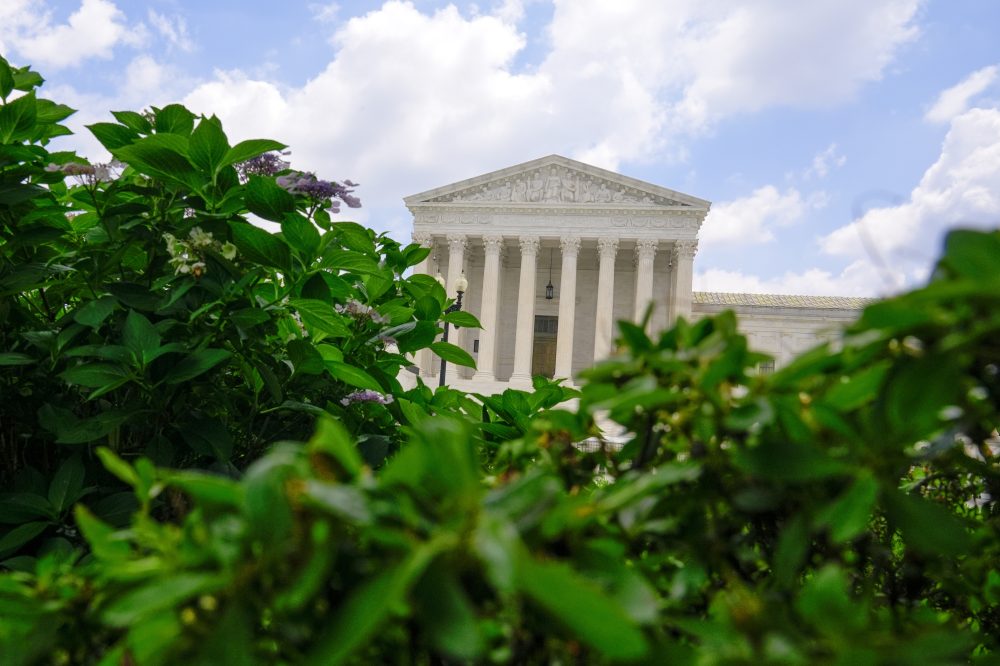

WASHINGTON — The U.S. Supreme Court has eliminated long-standing federal restrictions on how much money political parties can spend in coordination with their candidates for Congress and the White House, overturning a campaign finance law that dates back more than half a century.
The ruling came as a result of a lawsuit led by Republicans, including Vice President JD Vance, and once again saw the court’s conservative justices form the deciding majority in a case involving campaign money rules. The court’s landmark 2010 Citizens United ruling had previously opened the door to unlimited independent spending in federal elections.
The now-struck-down spending limits were originally put in place to stop large donors from bypassing caps on individual campaign contributions. The concern was that wealthy donors could funnel unlimited money through political parties with the expectation it would be used to benefit a specific candidate.
Notably, the Supreme Court had previously ruled in favor of keeping these same limits back in 2001.
The Republican campaign committees for both House and Senate candidates launched the legal challenge in Ohio in 2022. At the time, Vance was serving as an Ohio senator, and then-Representative Steve Chabot also joined the lawsuit.
Once President Donald Trump began his second term in office, the Federal Election Commission reversed course, dropping its defense of the law and siding with Republicans in calling for it to be overturned.
Democrats had urged the court to preserve the spending caps, even as many observers across the political spectrum acknowledge that the limits had weakened political parties at a time when outside organizations face no such restrictions on their spending.
To put the old limits in perspective, coordinated party spending for Senate races last year ranged from $127,200 in smaller states to nearly $4 million in California. For House races, the cap stood at $127,200 in states with a single congressional district and $63,600 in all other districts.
The deep ideological divide among the justices over campaign finance rules was evident when the court heard oral arguments in December. Justice Sonia Sotomayor, who dissented in Citizens United and similar rulings, warned: “Every time we interfere with the congressional design, we make matters worse.”
Justice Samuel Alito, who was part of the Citizens United majority, pushed back on criticism of that earlier ruling, calling it “much maligned, I think unfairly maligned.” He argued the decision served to “level the playing field” by extending to all citizens the same freedom to spend that had previously been reserved for media companies.