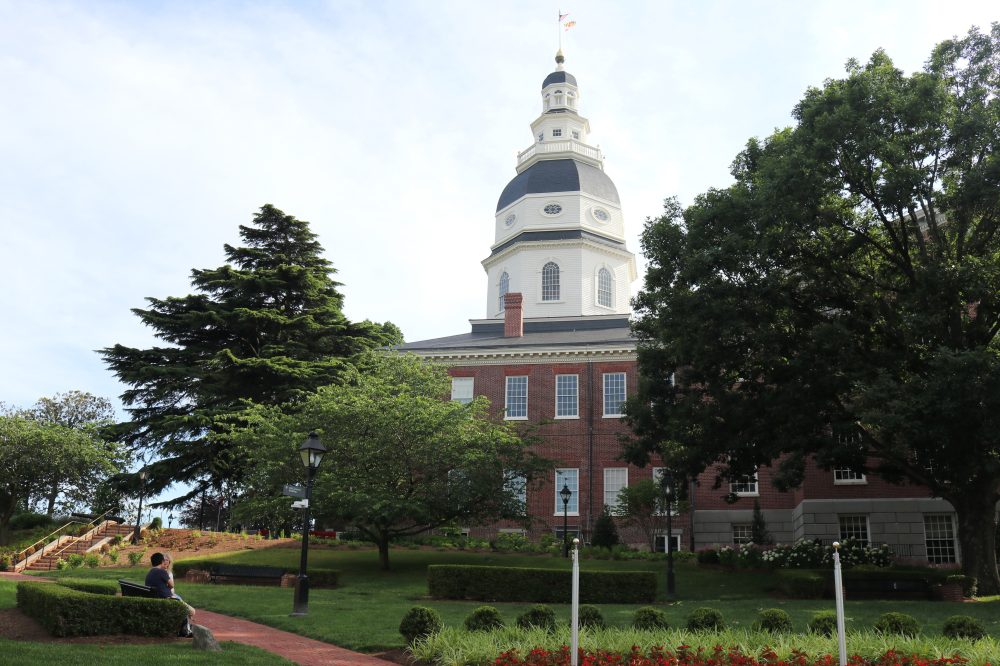
Maryland’s legislative leaders announced Tuesday that state lawmakers will gather for a special session next month to take up a proposed constitutional amendment aimed at shaping how congressional districts are drawn in the future — the latest move in a nationwide fight over partisan redistricting.
The Democratic-controlled Maryland General Assembly is set to convene on August 3, according to legislative leaders. The goal is to consider placing a constitutional amendment before voters this coming November — one that could eventually clear the path for a congressional map giving Democrats all eight of the state’s U.S. House seats. Currently, Democrats hold seven of those seats, with Rep. Andy Harris serving as the lone Republican in the delegation.
Legislative leaders did not release the specific wording of the proposed amendment in their announcement, but said it would “clarify” the state constitution in light of a 2022 court ruling. That ruling previously struck down a redistricting map that also would have made Harris’s district more competitive for a Democratic challenger.
For the amendment to reach voters, it must first pass both legislative chambers by a three-fifths margin. If voters then approve it in the November 3 general election, lawmakers could later revisit the congressional district maps under the revised constitutional guidelines.
House Speaker Joseline Peña-Melnyk issued a statement supporting the session, saying: “Maryland needs a durable, transparent constitutional framework for congressional redistricting that reflects the evolving legal landscape. This special session gives the General Assembly the opportunity to respond thoughtfully to recent court decisions while ensuring that Maryland voters have the final say on any proposed constitutional changes.”
Maryland Republicans fired back, calling the special session a blatant attempt to consolidate political power. Senate Minority Whip Justin Ready said in a statement: “One Republican Congressman represents hundreds of thousands of Marylanders who deserve a voice in Washington. This special session is designed to erase that voice and hand national Democrats another seat in the U.S. House.”
Congressional district boundaries are normally redrawn every ten years following a census to reflect population shifts. However, Trump pushed Republicans last year to redraw maps mid-decade in an effort to limit midterm losses, prompting Democrats to pursue their own redistricting strategies in response.
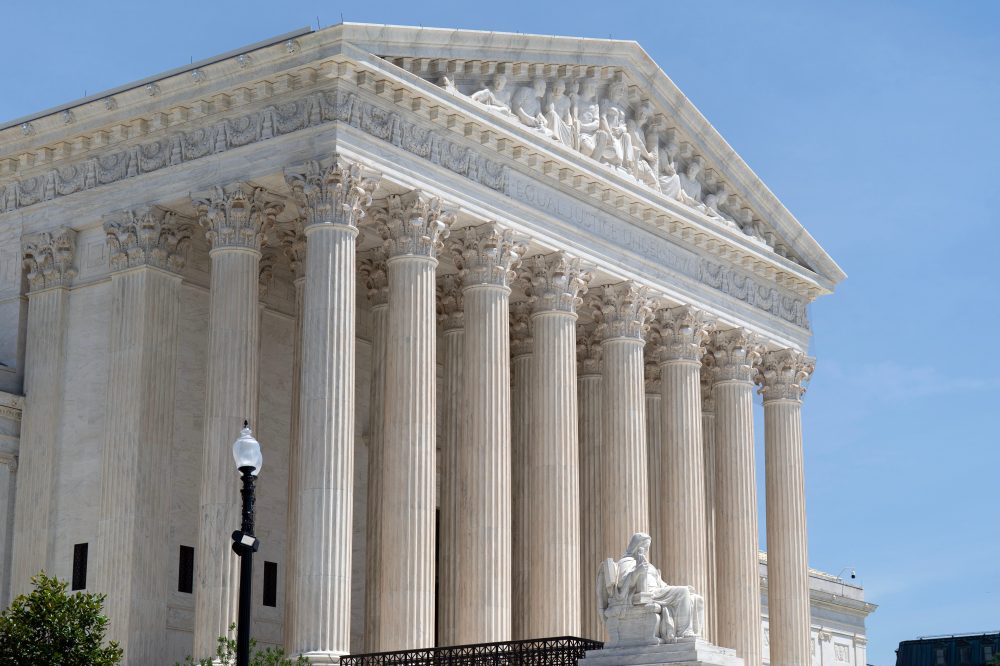
A U.S. Supreme Court ruling in late April further complicated the landscape by weakening the Voting Rights Act, giving Republicans new legal footing to reshape districts in Southern states with large minority populations that have historically supported Democrats. Republicans believe the new maps could yield as many as 10 additional House seats for their party this year.
Maryland had already attempted to address redistricting earlier this year. The state House passed a new map that would have made Democratic victories across all eight congressional seats more likely. However, the plan stalled in the state Senate, where Senate President Bill Ferguson expressed concern that the effort could be overturned in court.
Democratic Gov. Wes Moore voiced his backing for the renewed push, saying Tuesday in a statement that he was grateful for lawmakers’ “agreement to come back to finish the work.”
A lawsuit filed Tuesday in federal court accuses the Trump administration of secretly handing over confidential immigration records belonging to Iranian asylum seekers directly to the Iranian government — a charge the administration is calling completely false.
Attorneys from the left-leaning Public Citizen Litigation Group brought the case on behalf of the Iranian American Legal Defense Fund, filing it in the U.S. District Court for the District of Columbia.
According to the lawsuit, the Trump administration began a policy last year of supplying Iran with “confidential information from the immigration files of Iranians seeking asylum in the United States.”
The filing described many of those asylum seekers as vulnerable individuals, stating: “Many of the asylum seekers are pro-democracy protestors, members of religious minorities such as Evangelical Christians, or members of the LGBTQ community who seek refuge in the United States because of the grave dangers they face in Iran.”
The lawsuit further alleged that this practice continued even after last year’s U.S. military strikes against Iran during the Israel-Iran war, Iran’s crackdown on protesters, and the U.S.-Israeli war on Iran that began on February 28.
The Department of Homeland Security, which oversees Immigration and Customs Enforcement, pushed back hard against the accusations. “These allegations that ICE shared asylum application records with the Iranian government are FALSE,” the agency said in a statement, adding: “ICE is committed to ensuring that illegal aliens are informed of their right to communicate with their consular representatives.”
The lawsuit alleged that Iranian detainees who met with an “Iranian Interest Section official” reported that the official appeared to already know the details of their individual immigration cases, including the specifics of their asylum applications. Because Iran does not maintain a consulate in the United States, the lawsuit noted that consular functions for Iran “were handled by the Iranian Interest Section housed within the Embassy of Pakistan.”
ICE has been at the center of the Trump administration’s aggressive immigration enforcement and deportation efforts. Human rights organizations have widely criticized those efforts as violations of free speech and due process, and have raised concerns about racial profiling, particularly affecting ethnic minorities. The Trump administration has defended the policies as necessary to curb illegal immigration and strengthen national security.
The lawsuit is asking the court to appoint an independent monitor to prevent any further disclosures to Iran and to stop the alleged information sharing with the Iranian government.
The explosive growth of data centers is leaving state and local officials scrambling to put guardrails in place before the industry expands even further.
Lawmakers are rushing to draft and pass new regulations as mounting concerns over water usage, energy demands, and noise pollution tied to data center operations continue to grow. The rapid pace at which these facilities are being built has outstripped the ability of governments to respond with meaningful oversight.
Both state and local legislators are now putting forward a range of proposals aimed at bringing the data center industry under greater regulatory control and addressing the impact these facilities have on surrounding communities.
Delaware Governor Matt Meyer made a significant budget decision Tuesday, using his constitutional line-item veto authority to cut a $35 million appropriation tied to a proposed expansion of Legislative Hall.
The governor removed the funding from House Bill 500, the state’s fiscal year budget bill, pointing to affordability concerns as the driving force behind his decision.
The announcement was made public on July 7, 2026, through a press release from the governor’s office, with media contact listed as Jonah Anderson.
The proposed project would have funded an expansion of Legislative Hall, the historic building in Dover that serves as home to Delaware’s General Assembly. By exercising the line-item veto, Governor Meyer was able to target and remove that specific spending item without rejecting the broader budget legislation.
WASHINGTON — The Democratic Socialists of America, a left-leaning political organization, has moved from the margins of American politics to a position of growing influence within the Democratic Party. But what exactly does the group believe, and can it sustain a foothold in mainstream politics?
Here is a look at the organization, based on information from its national website.
A GROWING FORCE IN DEMOCRATIC POLITICS
The DSA was formed in 1982 through the merger of two separate organizations, but it remained largely unknown for decades. That changed in 2016, when independent Senator Bernie Sanders mounted an unsuccessful campaign for the Democratic presidential nomination. His run brought widespread attention to frustrations with the party’s mainstream direction and helped energize its left wing.
Sanders describes himself as a democratic socialist but has no formal ties to the DSA.
The organization gained significant momentum in 2018 when DSA member Alexandria Ocasio-Cortez pulled off a major upset in a Democratic House primary in New York. She has since become a prominent figure in the party and is considered a potential 2028 presidential contender.
DSA members have continued to rack up notable victories, including New York Mayor Zohran Mamdani. This year, DSA-backed candidates have won Democratic House primaries in New York City and Colorado. DSA member Nithya Raman advanced to the final two candidates in the Los Angeles mayoral race, and DSA member Janeese Lewis George won the Democratic primary for mayor of Washington, D.C., with a full-term election expected in November.
The organization now describes itself as the largest socialist group in American history, claiming a membership of more than 100,000 people. So far this year, DSA or its local chapters have backed 150 candidates across various levels of government, recording 38 wins and 38 losses.
WHAT SEPARATES SOCIALISTS, DEMOCRATIC SOCIALISTS, AND COMMUNISTS?
President Donald Trump has labeled Mamdani and other DSA-supported candidates as “communist,” attempting to draw comparisons to adversaries of the United States such as the former Soviet Union.
Communism, by definition, seeks to eliminate private property and create a society without class distinctions — goals that real-world communist governments have largely failed to achieve.
In Europe, parties that call themselves democratic socialist have used electoral politics to build strong social safety nets and establish public oversight of major industries, while still permitting private property and free markets.
The DSA says it wants to go further than the European model but without adopting the authoritarian tactics associated with communist regimes. The group advocates for government control of major industries and wants to replace capitalism with a system where, in their words, “ordinary people have a voice.”
WHERE DSA STANDS ON ISRAEL
The DSA has pushed to move the Democratic Party away from its historically strong support for Israel, and the issue has become a flashpoint in this year’s primary contests.
The organization characterizes Israel as an apartheid state carrying out a genocide in Gaza and accuses it of having “fascist” ambitions. DSA calls for an end to all U.S. military and economic assistance and weapons sales to Israel, and it supports student campaigns urging universities to pull their investments from the country.
The group has also called for a full Israeli withdrawal from Arab territories, a “right of return” for displaced Palestinians, and a “right to resist” Israeli occupation — though it stops short of explicitly endorsing militant organizations like Hamas. Following the October 7, 2023 Hamas attack that killed 1,200 Israelis, DSA described the assault as “not unprovoked” and said it was “a direct result of Israel’s apartheid regime.”
OTHER POLICY POSITIONS
The DSA’s national website outlines the organization’s stances on a wide range of issues, including the following:
• Expanding Medicare to cover all Americans, a proposal commonly known as “Medicare for All”
• Free college and early childhood education
• Nationwide rent control and a major expansion of public housing
• Higher taxes on wealthy individuals, corporations, large inheritances, and private universities
• A 32-hour workweek with no cuts to pay or benefits, along with stronger protections for labor unions
• Large-scale infrastructure and jobs programs, along with a “Green New Deal” to boost investment in renewable energy and phase out fossil fuels
• Public ownership of major transportation networks, energy systems, and natural resources
• A significantly more open immigration system that would allow workers to move freely between countries and eliminate deportation
• Lifting sanctions on Cuba, Venezuela, Iran, and other nations described as acting “independently of the United States”
• Deep cuts to the U.S. military budget and the closure of all American military bases abroad
• Abolishing the Electoral College in favor of a national popular vote for president
• Adding seats to the U.S. House of Representatives and eliminating supermajority requirements in the Senate
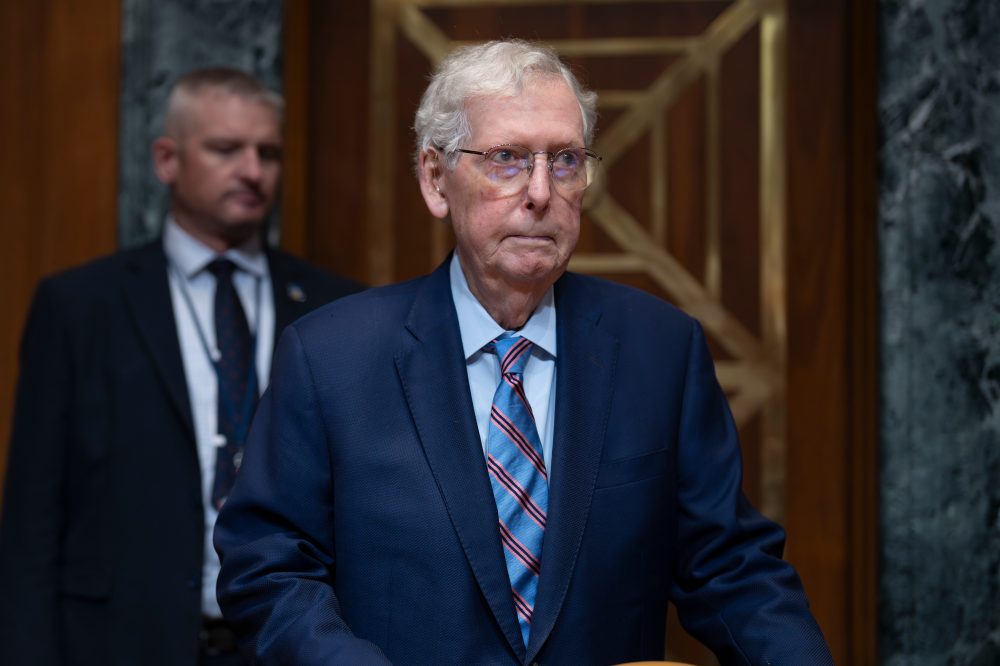
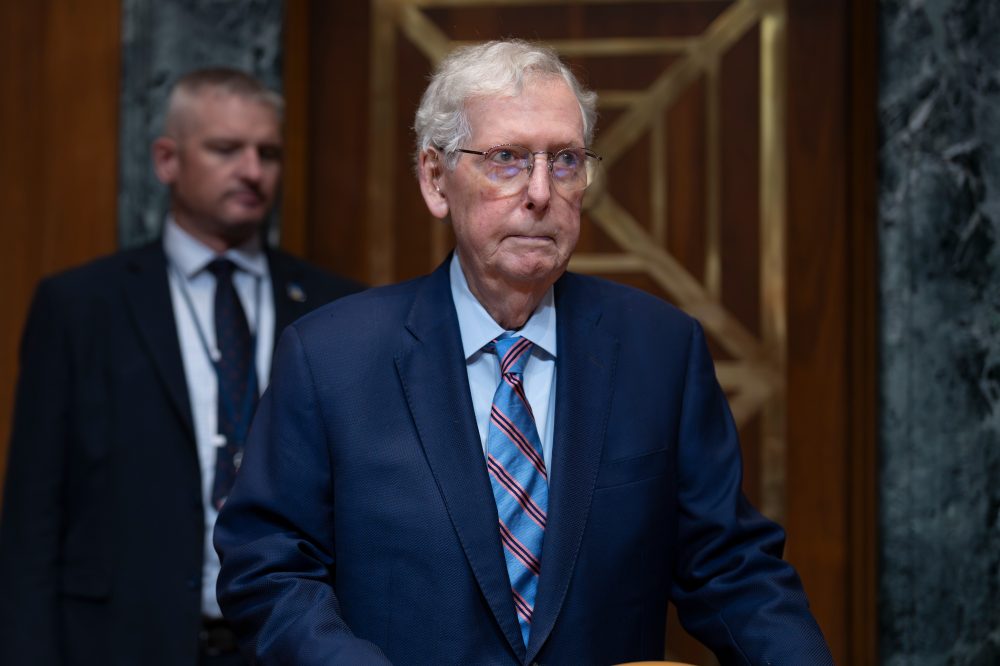
WASHINGTON — Kentucky Sen. Mitch McConnell continues to recover in a hospital more than three weeks after being admitted for health issues that his staff has declined to identify, even as the Senate’s top two Republicans have each spoken with him individually by phone, according to aides.
The lack of any detailed information from McConnell’s team has fueled growing speculation about his condition and whether the 84-year-old senator will be well enough to return to Capitol Hill when the Senate comes back from a two-week recess next week. McConnell is set to retire at the end of his current term in January.
A spokesperson for Senate Majority Leader John Thune, R-S.D., confirmed that Thune spoke with McConnell by phone on Monday. The two had what was described as a “lengthy and substantive conversation that covered a variety of topics, including national security.” As majority leader, Thune regularly tracks the health and availability of members of his conference as he manages vote counts within his narrow 53-47 majority.
Wyoming Sen. John Barrasso, who holds the No. 2 position among Senate Republicans, also had a conversation with McConnell on Tuesday that lasted approximately 20 minutes, according to a spokeswoman. Their discussion touched on upcoming Senate races ahead of the midterm elections, the Supreme Court, and other subjects.
Barrasso spokeswoman Kate Noyes said, “Senator McConnell was fully engaged and is eager to get back to the Senate.”
Republican strategist Scott Jennings, a McConnell ally, also shared on X that he spoke with McConnell for about 20 minutes on Tuesday, writing that “he’s still recovering in the hospital.” Jennings said the conversation ranged from politics and foreign policy to “even a little bit of Senate history.”
McConnell’s office confirmed he was admitted to the hospital on June 14, stating only that he was “receiving excellent care.” A follow-up statement about a week later indicated he would not be casting votes that week. A more recent statement said McConnell “appreciates the outpouring of support he’s receiving while he continues his recovery in the hospital.”
“The Senator continues to improve, and is working closely with his staff on Kentucky and Senate matters while the Senate is out of session,” that statement read. A spokesman repeated the same statement again on Tuesday, offering no new details.
This latest hospitalization is not McConnell’s first in recent years. In March 2023, while still serving as Republican leader, he suffered a concussion after falling at a Washington hotel and was away from work for several weeks. After returning, he twice appeared to freeze during news conferences, staring blankly ahead before colleagues and staff — including Barrasso, who is a physician — stepped in to help him.
The following year, McConnell fell and sprained his wrist while leaving a Republican luncheon. He also fell at his Kentucky home in 2019 and required surgery for a fractured shoulder.
McConnell has had physical challenges dating back to childhood, when he contracted polio. He has long acknowledged difficulty walking and climbing stairs as an adult. In recent months, he has frequently used a wheelchair to get around the Capitol.
First elected to the Senate in 1984, McConnell served as Republican leader from 2007 until last year, holding both the majority and minority leader roles during that span. He has continued showing up for Senate sessions as a rank-and-file member since stepping down from leadership.
WASHINGTON — The number of National Guard troops stationed in Washington, D.C. has grown significantly in recent weeks, swelling as part of security preparations for the nation’s 250th birthday celebrations. Part of that increase has come from states led by Democratic governors — and that involvement is now generating serious criticism.
Critics argue that troops sent by Democratic-led states for the anniversary festivities are being folded into a much broader, ongoing Guard deployment that the Trump administration launched in August 2025. That deployment began after President Donald Trump issued an emergency order, citing what he described as rampant crime in the nation’s capital.
On Tuesday, a coalition of think tanks along with civic, labor, and civil rights organizations sent a letter to Michigan Gov. Gretchen Whitmer, urging her to pull the state’s National Guard forces out of D.C., arguing they have been misused.
“Previous presidents have requested assistance from out-of-state Guard forces during major events in D.C., and such requests would normally give little cause for concern,” the groups wrote. “But there is nothing normal about the way President (Donald) Trump has used National Guard forces in the nation’s capital.”
The original August 2025 deployment involved the local National Guard, hundreds of federal law enforcement personnel, and Guard members from states with Republican governors. Over time, those troops have responded to medical emergencies, helped with arrests, assisted police in enforcing a juvenile curfew, carried out beautification work, and even helped clear snow during a major January storm.
The deployment had held steady between roughly 2,300 and 2,600 troops for months. In recent weeks, however, that number climbed to around 5,000 to support the Great American State Fair, July 4th fireworks, and other large public events tied to the 250th anniversary. Michigan contributed approximately 160 troops, while Minnesota sent just over 100. Both states have also joined other Democratic-led states in a legal challenge to the ongoing deployment.
Minnesota announced it will withdraw its Guard members this Saturday — ahead of the originally scheduled July 23 return date. Air Force Maj. Nathan Wallin, deputy state public affairs officer for the Minnesota National Guard, said the early departure was due to “the successful conclusion of festivities” and made no reference to the concerns raised by advocacy groups.
In Kentucky, one Guard member was brought home before the main events even began after being redirected to a law enforcement task force “without the knowledge or consent” of the state’s governor or its Guard command, according to Scottie Ellis, communications director for Democratic Gov. Andy Beshear.
Keya Chatterjee, executive director of Free DC — an organization working toward statehood for the District of Columbia and one of the groups behind Tuesday’s letter — said Michigan Guard members have been spotted near metro stations and in neighborhoods “far from the Mall,” even as Whitmer had threatened to withdraw them. Free DC has built a network of volunteers tracking Guard activities across the city and held a protest last week at an event hosted by Defense Secretary Pete Hegseth to honor the troops.
At that event, acting Attorney General Todd Blanche and senior White House adviser Stephen Miller both addressed the troops, speaking about crime in the city and the 250th anniversary security efforts. “It’s a righteous and beautiful mission,” Hegseth said.
The Pentagon directed questions to the Joint Task Force-District of Columbia, which did not respond to inquiries about the deployments.
Chatterjee told the Associated Press that Democratic governors who sent troops were “pretending they don’t know” their Guard members could be assigned to the Safe and Beautiful Task Force, created by a presidential executive order and focused on crime reduction in the city.
Michigan’s deployment is currently scheduled to run through August 31. Whitmer has threatened to end it early if additional reports surface of Michigan Guard members being used in the broader law enforcement mission. In a letter last week to the commanding general of the state’s National Guard, she requested that their duties be confined to the anniversary celebrations.
“I have not deployed — and will not deploy — the Michigan National Guard to support the D.C. Safe and Beautiful Mission,” she wrote.
Elizabeth Goitein, senior director of Liberty and National Security at the Brennan Center for Justice at New York University School of Law, also signed the letter to Whitmer. She said Democratic governors were essentially trusting the administration to keep their Guard forces in a limited role — a trust she believes is misplaced.
“They are trying to make a distinction here between what their Guard forces are doing in D.C.,” she said. “The problem is the administration is not making that distinction — and cannot be trusted.”
ATLANTA — A federal judge has blocked the U.S. Department of Justice from obtaining the names and personal contact information of every individual who worked during the 2020 presidential election in Georgia’s Fulton County, issuing his ruling on Tuesday.
The Justice Department had secured a grand jury subpoena back in April seeking identifying details for county employees as well as volunteer poll workers. President Donald Trump has repeatedly alleged, without providing evidence, that widespread voter fraud took place in Fulton County — Georgia’s most heavily populated county and a Democratic stronghold — and that it cost him the state in the 2020 election.
Fulton County pushed back against the subpoena in court, arguing the request was designed to “target, harass and punish the President’s perceived political opponents” and that it was “grossly over broad and untethered to any reasonable need.”
U.S. District Judge William Ray sided with the county, writing in his decision that “given the low need for the subpoenaed information and the highly burdensome nature of the disclosure of the same, the Subpoena is unreasonable and must be quashed.” He described the reach of the request as “staggering.”
Requests for comment sent to both the Justice Department and Fulton County were not immediately answered.
Judge Ray acknowledged that grand juries frequently assist federal prosecutors in criminal investigations, but stressed that “does not give the DOJ the right to use the Grand Jury to do whatever the DOJ wants.”
The judge further noted that even if the records could help identify county workers who believe the 2020 election was unfair, that information still could not be used to file charges against anyone. “That is because the statute of limitations for any possible crime arising from the 2020 Election has long expired,” he wrote.
This subpoena followed a January action in which the FBI executed a search warrant at the Fulton County election hub, seizing hundreds of boxes of ballots and other documents tied to the 2020 election. A separate federal judge in May turned down the county’s request to have those ballots returned.
In court filings, the Justice Department had characterized the subpoena as the “next step in the normal investigative process” and argued it was seeking “records identifying persons with relevant knowledge.”
Kamal Ghali, an attorney representing Fulton County, warned that the subpoena “will chill participation by election workers” and echoed the argument that any applicable statute of limitations had already run out.
Justice Department attorney William McComb countered that the statute of limitations question is not relevant at the investigative stage, explaining that the investigation’s purpose is to determine what charges, if any, can be pursued. “My point is, as we sit here now, we are not sure what charges can be brought. That’s the whole point of the investigation,” he said.
McComb described the contact information request as something that “would simply be a pathway to determine and speak with and interview certain individuals who worked at the polls who may have seen, heard or done something in and of themselves.”
Judge Ray acknowledged that the Justice Department had raised concerns about possible criminal conduct in the years following the election, including an alleged failure by the county to preserve electronic ballot images. However, he pointed out that the subpoena itself focuses on what occurred during the 2020 election and its immediate aftermath.
In his ruling, Ray addressed the politically charged nature of the case directly: “In these hyper-political times in which we currently live, there are sure to be some who disagree with this decision because they believe the allegations of fraud in the 2020 Election and believe that ‘light’ should be brought to those claims.”
He made clear that nothing in his ruling stops others — including Congress or even the Justice Department itself — from continuing to investigate those allegations. But he said the grand jury’s power, “which exists to investigate potential crimes and to bring viable indictments,” cannot be used for that purpose. To allow otherwise, he wrote, would let anyone in power use the grand jury process to subpoena private citizen information “with no legitimate law enforcement purpose.”
“Thus, everyone, whether you support the President or you do not, or whether you believe the 2020 Election was fair or believe that it was not, should be concerned about the DOJ’s ability to utilize the power of the Grand Jury to appropriate your private information without a legitimate purpose,” Ray wrote.
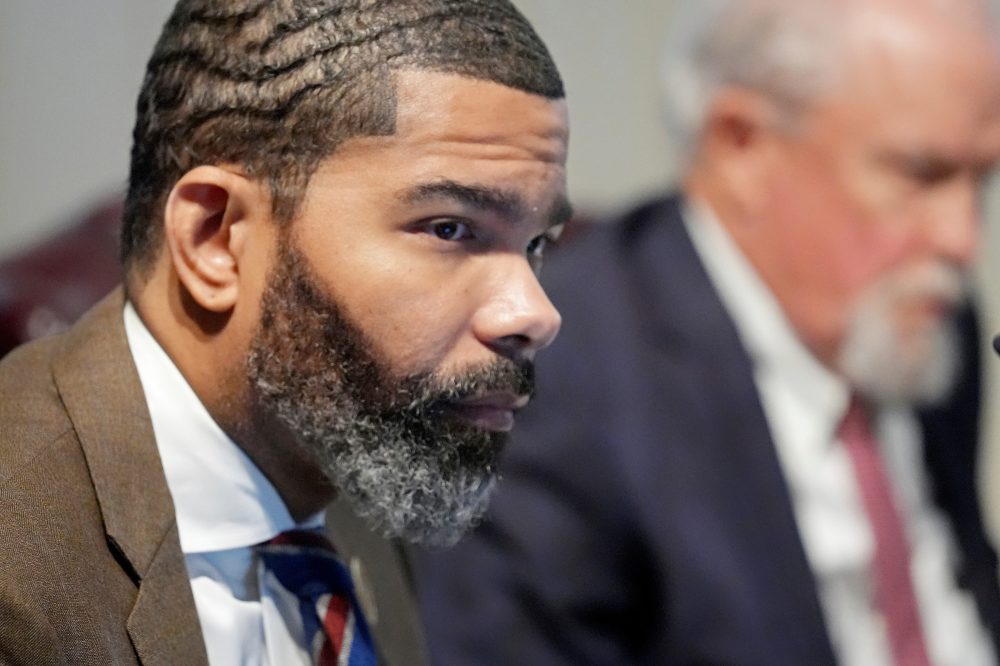
JACKSON, Miss. — Just one week before they were scheduled to stand trial, the former mayor of Mississippi’s capital city and the former city council president both entered guilty pleas in a bribery conspiracy case.
Former Jackson Mayor Chokwe Antar Lumumba and former Jackson City Council President Aaron Banks each pleaded guilty Monday to a single count of conspiracy. Their pleas followed those of Hinds County District Attorney Jody Owens, who pleaded guilty the previous week and subsequently resigned from office. All three individuals are Democrats.
Two additional defendants — Angelique Lee, the former Democratic vice president of the Jackson City Council, and Sherik Marve Smith, a businessman and relative of Owens — had already entered guilty pleas on bribery charges prior to Monday’s proceedings.
According to a November 2024 indictment, Owens accepted a minimum of $115,000 from two FBI agents who were undercover and posing as real estate developers. The indictment further alleged that Owens facilitated more than $80,000 in bribe payments to Banks, Lumumba, and Lee in return for their assistance in approving a development project.
Lumumba, Banks, and Owens each face a maximum sentence of five years in prison. All three are scheduled to be sentenced on October 15.
Lumumba, who had previously described the charges against him as a politically motivated prosecution, was defeated in his reelection campaign last year. His legal team did not respond to requests for comment.
The National Conference of Black Lawyers, which has stood by Lumumba throughout the legal proceedings, has questioned whether federal investigators and prosecutors unfairly targeted Black elected officials in this case.
Mawuli Davis, an attorney with the organization, expressed that skepticism directly: “Our history tells us that it is necessary for us to have a very healthy skepticism about who, how and why certain people, certain geographical areas are focused upon. We’ve never not been targeted.”
Davis added that the organization plans to be present at Lumumba’s sentencing hearing and will urge the judge to take into account the contributions Lumumba has made to his community. An attorney for Banks declined to offer any comment on the matter.
A bill moving through the Delaware General Assembly would completely overhaul the state’s rules governing money transmission services and introduce a brand-new regulatory structure for virtual currency businesses.
The legislation, if passed, would scrap the current Chapter 23 of Title 5 of the Delaware Code and replace it with what would be called the “Delaware Money Transmission and Virtual Currency Modernization Act.”
One of the key changes would allow the State Bank Commissioner to work alongside other states in licensing and overseeing money transmitters through the NMLS system — a shared, multi-state licensing platform. The bill also introduces updated financial safety standards, including a tiered net worth requirement based on total assets, and revises surety bond requirements tied to a licensee’s average daily money transmission activity.
On the consumer protection side, the bill would standardize receipt requirements for both traditional currency and virtual currency transactions, give customers a 10-day window to request refunds on certain transfers, and set clear disclosure rules for businesses that handle payroll processing.
For the first time, Delaware would have a dedicated regulatory framework specifically for virtual currency business activity. The bill defines what qualifies as virtual currency and what counts as virtual currency business activity. It also requires businesses to inform customers about the risks associated with virtual currency. Notably, any virtual currency held by a licensed business would be considered a proportional property interest belonging to customers — meaning it could not be claimed by the business’s creditors.
The State Bank Commissioner would be granted authority to create rules and regulations for carrying out the new law. Businesses would have six months to come into general compliance, while a one-year window would be provided for meeting the new net worth and investment standards.
The law would take effect either one year after it is signed or when the State Banking Commissioner announces that final regulations are in place — whichever comes first.
Because the bill touches on general corporation law, it requires more than a simple majority to pass — specifically, a two-thirds vote of all elected members in each chamber of the General Assembly, as required by the Delaware Constitution.
Delaware’s General Assembly is considering updated legislation that would create a comprehensive regulatory framework for digital payment stablecoins — a type of cryptocurrency designed to maintain a stable value.
The measure, known as Senate Substitute No. 2 for Senate Bill No. 19, makes several changes from the original bill. Among the key updates, the legislation reorganizes the proposed “Delaware Payment Stablecoins Act” to fall under Chapter 35 of Title 5 of the Delaware Code, rather than Chapter 40 as the original bill proposed.
The revised bill also introduces new provisions not found in the earlier version. One section would prohibit non-financial public companies from issuing payment stablecoins. Another creates a voluntary registration pathway for digital asset service providers, replacing a licensing process that was part of the original proposal. A third new section lays out procedures to follow if a payment stablecoin issuer becomes insolvent.
Additional changes include a new definition of “control” tailored to fit the bill’s framework, and an expanded definition of “registered public accounting firm” that now includes certified public accounting firms meeting standards set by the Delaware Board of Accountancy.
The legislation draws its definitions from the federal Guiding and Establishing National Innovation for U.S. Stablecoins Act — known as the GENIUS Act — as well as from a proposed rule by the Office of the Comptroller of the Currency, where those definitions don’t overlap with existing Delaware law.
The bill would establish reserve requirements, mandatory redemption timing standards, capital standards, anti-money laundering obligations, data privacy protections, and safeguards related to custody of assets. It also includes procedures for when a company wants to change control and a pathway for converting from a federal to a state charter.
The State Bank Commissioner would be required to issue implementing regulations within set timeframes to keep Delaware’s rules in line with changing federal standards.
Because the bill amends Delaware’s general incorporation law, it requires more than a simple majority to pass — specifically, a two-thirds vote from members of each chamber of the General Assembly, as required by the state constitution.
Delaware’s banking laws could soon get their most significant overhaul in years under legislation known as the “Delaware Banking Modernization Act of 2026,” which aims to update and modernize numerous provisions of the Delaware Banking Code.
The bill, a substitute for an earlier version, differs from the original in two key ways: it requires a greater-than-majority vote for passage, and it sets a timeline for one of its sections to take effect — either one year after the law is enacted or when the State Banking Commissioner announces that final regulations have been published, whichever comes first.
One of the most notable changes in the legislation is its treatment of digital assets. The bill formally defines “Digital Asset” as any digital representation of value recorded on a cryptographically secured distributed ledger or similar technology, including virtual currency. It also defines “Virtual Currency” as a digital representation of value used as a medium of exchange, a unit of account, or a store of value — but not actual money. The definitions exclude loyalty or rewards program credits that cannot be converted to money or bank credit, as well as digital representations issued by publishers for use solely within online games or gaming platforms.
Under the legislation, Delaware-chartered banks with fiduciary powers would be explicitly permitted to hold and manage digital assets on behalf of customers. The same authority would be extended to savings banks.
The bill also expands the powers of the State Bank Commissioner in several ways. The Commissioner would be authorized to hire outside consultants, legal professionals, and technical experts as needed. The Commissioner would also gain new authority to approve the creation of banks and trust companies with limited powers, and could adopt different application requirements depending on the risk level of the proposed activities.
On the corporate governance side, the legislation updates address requirements in bank and savings bank organizational documents, replacing outdated language referencing “residence and post-office address” with “business, post office or mailing address.” It also adds flexibility in how banks and savings banks can set the size of their boards of directors — allowing the articles of association to specify a method for determining the number of directors, rather than requiring a fixed number, while still maintaining a minimum of five directors.
The bill streamlines what happens to fiduciary appointments — such as trustee, executor, administrator, custodian, and guardian positions — when banks merge or when national banks or federal savings associations convert into state banks. Under the new provisions, those appointments would automatically transfer to the resulting institution without requiring a court order, though interested parties could still seek a judicial review.
The legislation also makes it easier for out-of-state banks and trust companies to relocate to Delaware or merge with Delaware institutions. New definitions are established for various types of trust companies, and the State Bank Commissioner would be given authority to approve Delaware state trust companies opening offices in other states as part of interstate merger or conversion transactions.
Additionally, the bill extends fiduciary authority in Delaware to banks and trust companies organized under the laws of other states — but only if those states grant the same reciprocal powers to Delaware-chartered institutions.
A provision removing a restriction on limited purpose trust companies is also included. Previously, such entities were required to operate in a way that would not attract customers from the general public to the substantial detriment of existing Delaware banks or trust companies. The bill eliminates that requirement, with the stated goal of removing what lawmakers describe as a potentially anti-competitive barrier.
Most sections of the bill would take effect immediately upon enactment. Because the legislation touches on Delaware’s general corporation law, it requires the affirmative vote of two-thirds of the members elected to each chamber of the General Assembly under the Delaware Constitution.
A piece of legislation moving through Delaware’s General Assembly would redraw the boundaries of the Town of Cheswold by removing specific parcels of land located within the Nobles Pond development from the town’s official limits.
The bill targets real property currently inside Cheswold’s territorial boundaries and would effectively detach those parcels from the municipality.
Because the legislation involves changing a municipal charter, it faces a higher bar for approval than a typical bill. Under Article IX, Section 1 of the Delaware Constitution, any amendment to a municipal charter — whether it applies directly to a specific town or through a broader general law — must receive the affirmative vote of two-thirds of the elected members in each house of the General Assembly to become law.
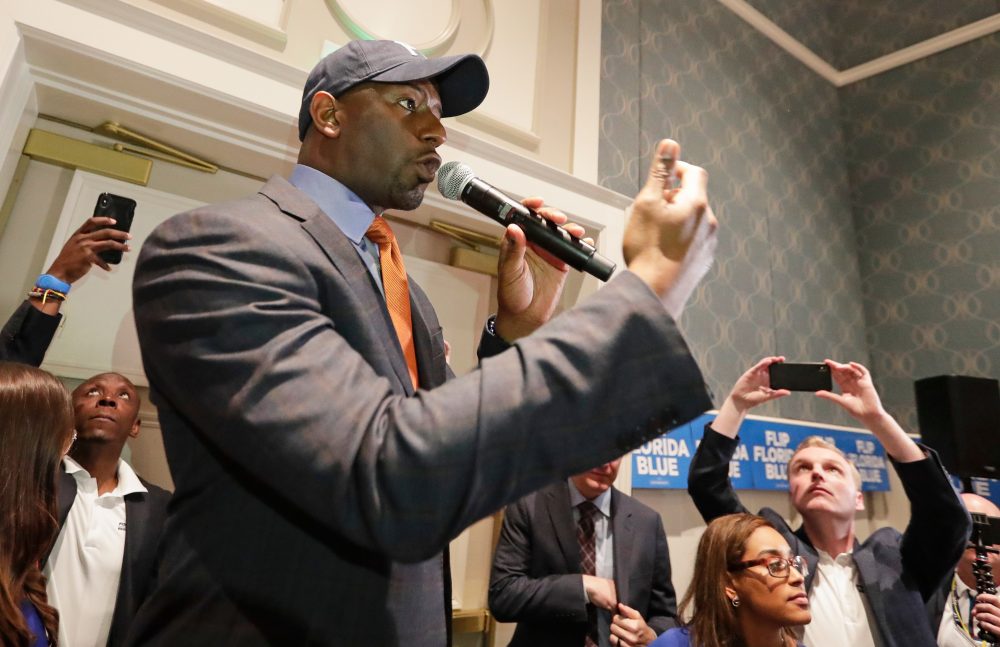
Andrew Gillum, the former Florida gubernatorial candidate who came close to making history as the state’s first Black governor, is facing new legal trouble after being arrested on drug possession charges in Alabama.
Gillum, 46, was taken into custody on July 2 in Daphne — a city located about 11 miles east of Mobile along Alabama’s Gulf Coast. The Daphne Police Department says officers pulled him over for erratic driving and, after spotting a glass pipe on the center console, conducted a probable cause search of his vehicle.
During that search, police say they found several rolled marijuana cigarettes along with three packages of a substance that tested positive for methamphetamine. Gillum now faces charges of marijuana possession and unlawful possession of a controlled substance. Jail records indicate he was released the following day, July 3.
Court records in the case were not yet available, according to the Baldwin County Clerk of Court’s office. Information on legal representation for Gillum was also not immediately available, and a message seeking comment was left with the local district attorney’s office.
The arrest occurred around 10:45 p.m., according to a Daphne Police Department news release.
Gillum currently co-hosts the politically focused Native Land Pod, which earned the NAACP Image Award for Outstanding News and Information Podcast in 2025. A message seeking comment was left with the podcast’s production company.
Gillum served as mayor of Florida’s capital city from 2014 to 2018 before launching his gubernatorial campaign. In the 2018 election, he fell short of defeating Republican Ron DeSantis by fewer than 34,000 votes — a margin of less than one percentage point.
This is not the first time Gillum has faced public scrutiny over personal conduct. In 2020, he was discovered in a Miami Beach hotel room alongside a man who had apparently overdosed on drugs. At the time, police said Gillum was too intoxicated to speak about what had happened. The man survived, and no criminal charges were filed related to the overdose.
Following that incident, Gillum stepped away from public life for several months while undergoing treatment for alcohol abuse and depression. He later opened up about his struggles in a television interview.
“So much of my recovery has been about trying to get over shame,” Gillum said during an appearance on the Tamron Hall talk show in September 2020.
In 2022, Gillum was indicted on federal conspiracy and wire fraud charges. Prosecutors alleged he funneled tens of thousands of dollars in campaign contributions through outside parties back to himself for personal expenses. A trial held in 2023 ended with a hung jury on those charges. He was acquitted on separate charges that he had lied to undercover FBI agents who were posing as real estate developers and had paid for a 2016 trip he took with his brother to New York — covering hotel stays, meals, a boat tour, and a ticket to the Broadway production of “Hamilton.”
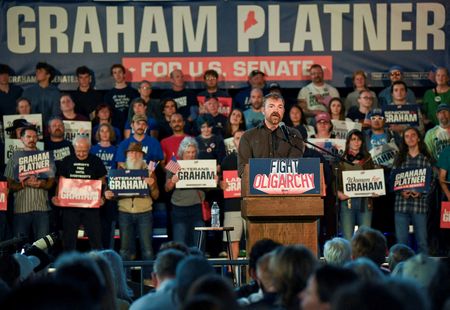
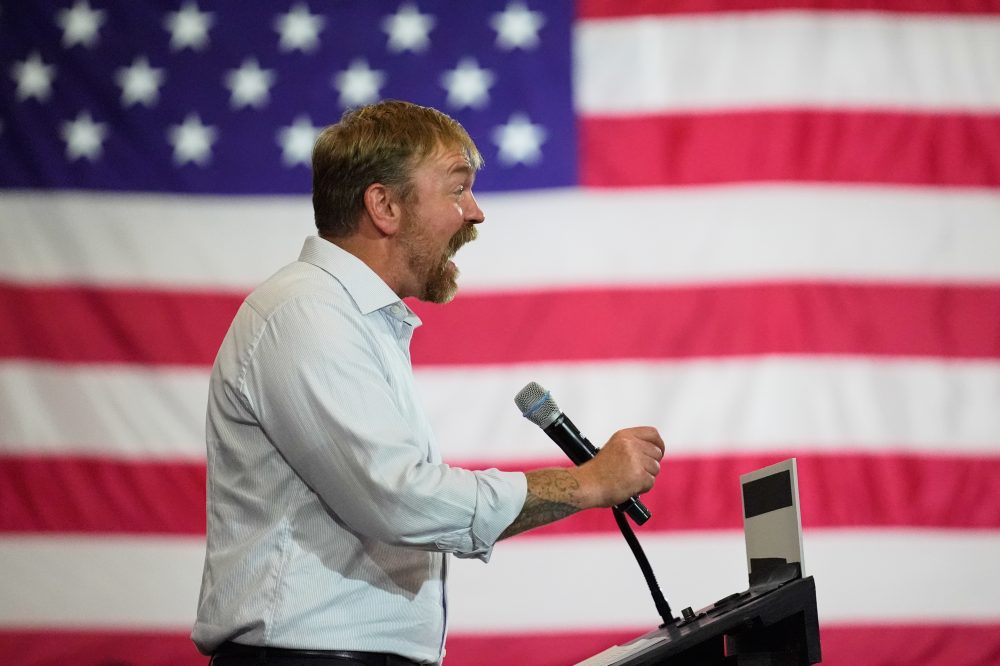
A sexual assault allegation against Democratic Senate candidate Graham Platner has upended the race in Maine and raised serious new questions about whether Democrats can win enough seats to take control of the U.S. Senate.
Republicans currently hold a 53-47 edge in the chamber, and Democrats need to pick up at least four seats to flip the majority. Maine has been considered an essential piece of that puzzle — but the Platner allegation has thrown that calculation into doubt.
Platner, who has denied the accusation, now faces pressure from within his own party over whether he should stay in the race. If he withdraws before July 13, Maine Democrats would have the opportunity to place a replacement candidate on the ballot. If he stays in without national party backing, he would face a very difficult road against five-term Republican Sen. Susan Collins.
Should Platner step aside, his replacement would face a challenge similar to what presidential candidate Kamala Harris encountered in 2024 — entering a general election campaign late, without the benefit of a competitive primary to build name recognition and appeal to a broad electorate.
Collins, for her part, has won elections for 30 consecutive years, even as no Republican presidential nominee — including President Donald Trump — has carried Maine since 1988.
Here is a breakdown of the key Senate races Democrats are watching closely:
ALASKA: Former Democratic Rep. Mary Peltola is running against Republican incumbent Sen. Dan Sullivan, and her candidacy has given her party a boost. Peltola was the first Alaska Native to serve in Congress, having won both a special election and a regular election in 2022 for the state’s sole House seat — making her one of a small number of Democrats to win in a Republican-leaning state.
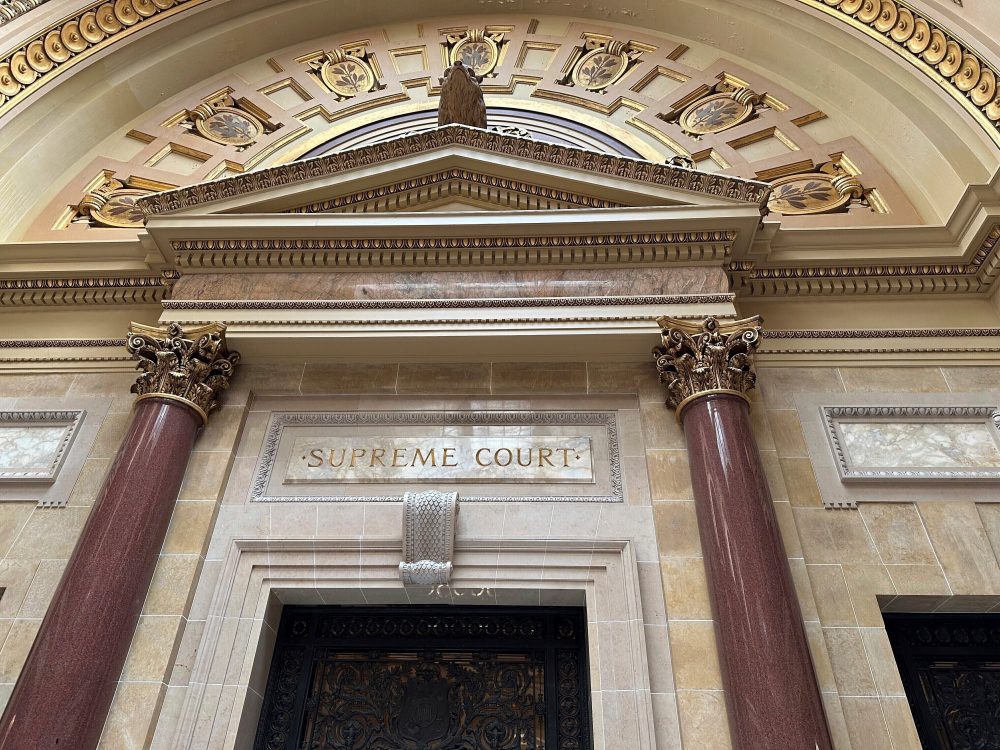
The state’s Aug. 18 primary has been complicated by a separate candidate who shares the same name and party affiliation as Sullivan. Alaska’s supreme court has ruled that this challenger is eligible to appear on the ballot. Peltola’s campaign and state Democrats have rejected Sullivan’s claim that they are coordinating with the challenger to create voter confusion.
MAINE: Platner secured the Democratic nomination despite earlier controversies. Senate Democratic Leader Chuck Schumer had initially supported sitting Gov. Janet Mills but ultimately lined up behind Platner — until Monday’s bombshell allegation changed the picture entirely. Schumer and a growing number of Democrats are now calling on Platner to step down.
NORTH CAROLINA: Democrats scored a major recruit in former Gov. Roy Cooper, who has never lost a statewide race across four terms as attorney general and two terms as governor. Republicans countered with Michael Whatley, Trump’s personally chosen candidate, who previously led both the state Republican Party and the Republican National Committee.
Whatley was seen as a strong fundraiser and a natural advocate for Trump in a state the president has won three times. History also favors Republicans — the party has won all but two U.S. Senate contests in North Carolina over the past 30 years, along with all but one presidential race.
Still, Cooper won governor’s races during two of Trump’s three presidential election cycles and is leaning into his moderate image at a moment when independent voters have grown skeptical of Trump. That puts Whatley in the difficult position of energizing Trump’s core base while also appealing to voters who have repeatedly supported Cooper.
OHIO: Democrats are relying on former Sen. Sherrod Brown to knock off Republican incumbent Jon Husted in what is shaping up to be yet another costly Ohio Senate battle — the third in four years. The Senate Leadership Fund, a GOP super PAC, has committed $79 million to protect Husted’s seat.
Brown served three terms in the Senate before losing a tough reelection fight in 2024. While Ohio has been shifting increasingly Republican, Brown built his career as a champion of unions and working-class voters, and Democrats believe he can win over some of the same voters who have backed Trump three times. Husted, a former lieutenant governor, was appointed to fill the seat after JD Vance became vice president.
IOWA: With two-term Republican Sen. Joni Ernst retiring, Democrats see a chance to flip a seat in a state Trump has won three times. Democratic state Rep. Josh Turek faces Republican U.S. Rep. Ashley Hinson, who carries Trump’s endorsement.
Turek is relatively new to elected office but has pointed to his success in a Trump-leaning state House district as evidence he can attract independent and moderate Republican voters statewide. Hinson, a three-term House incumbent from northeastern Iowa, has argued that Trump needs someone who will “always have his back.”
TEXAS: State Rep. James Talarico, a 37-year-old seminarian, has emerged as a national fundraising standout. He faces Republican nominee Ken Paxton, the state’s attorney general, who has survived an impeachment attempt by members of his own party, a lengthy corruption investigation, and the very public airing of his personal troubles — yet has continued winning elections.
Democrats were encouraged when their primary drew roughly 2.3 million voters, edging out Republicans’ 2.2 million — something that has not happened since Texas shifted to Republican dominance in the 1990s. The challenge for Talarico is converting that energy into a broad, diverse coalition come November.
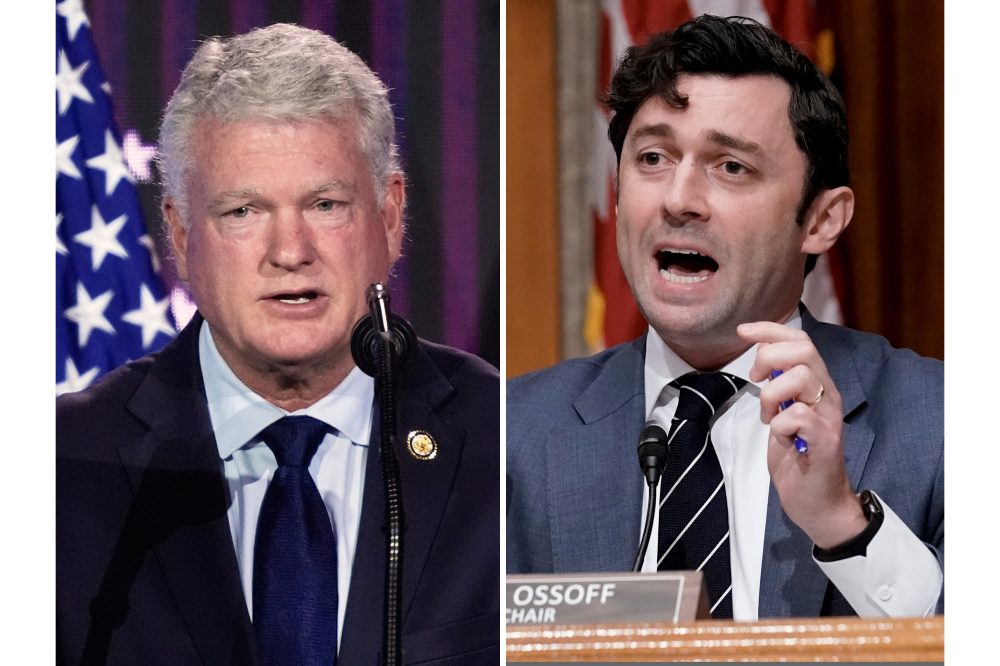
GEORGIA: Sen. Jon Ossoff is the only Democratic senator seeking reelection this cycle in a state Trump carried in 2024. He ran unopposed in the primary and entered the general election with more than $30 million in cash on hand. Ossoff has drawn national attention for his pointed and direct criticism of Trump.
His Republican opponent, Rep. Mike Collins, is playing catch-up after a hard-fought primary runoff. Collins must win over skeptical Republicans who view him as too conservative or too controversial for a competitive state. He has repeated Trump’s false claims that the 2020 election was stolen, and he is also dealing with a House ethics inquiry into allegations that he misused taxpayer funds to pay the girlfriend of a former senior aide.
Collins’ most potent line of attack against Ossoff centers on immigration. Collins sponsored the Laken Riley Act — named after a Georgia nursing student killed by a Venezuelan man in the country illegally — which requires immigrants accused of certain crimes to be held without bond. Ossoff initially voted against the measure before switching his vote after Trump returned to the White House.
MICHIGAN: The retirement of Democratic Sen. Gary Peters opens up a seat the party must hold in a state that has been closely contested — Trump won it twice, while former President Joe Biden carried it in 2020.
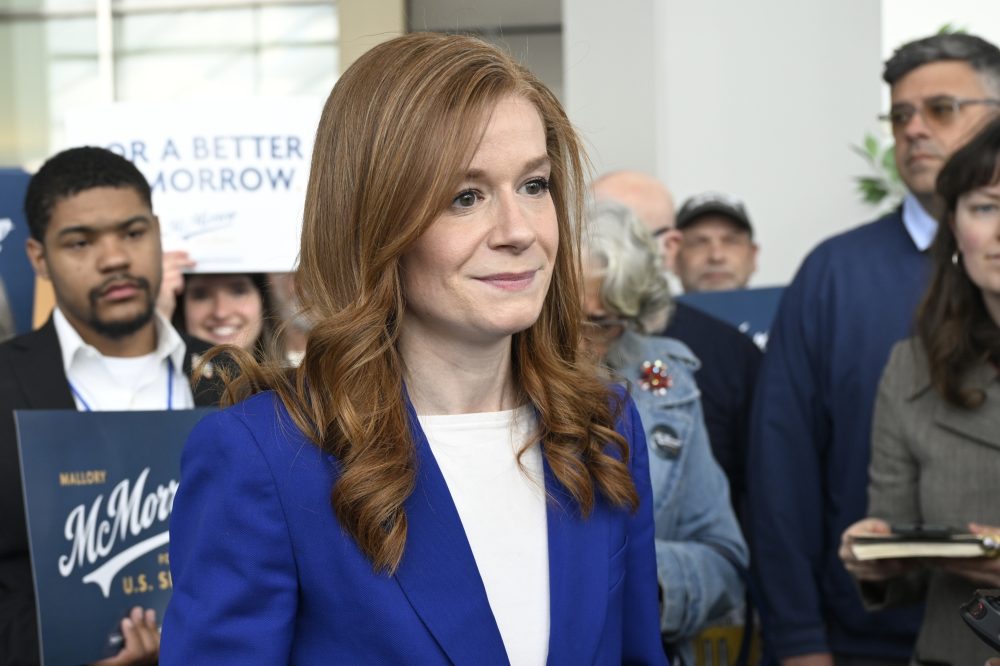
The Aug. 4 Democratic primary is now a two-person contest between moderate Haley Stevens and progressive Abdul El-Sayed, after a third candidate, Mallory McMorrow, suspended her campaign. Stevens has the backing of Minority Leader Chuck Schumer, while El-Sayed has the support of Sen. Bernie Sanders and other progressives. Stevens has also benefited from significant outside spending, including nearly $8 million from a super PAC connected to the American Israel Public Affairs Committee.
El-Sayed, a former Wayne County health director, has campaigned on issues including Medicare for All and stopping all U.S. weapons transfers to Israel. He has appeared alongside online streamer Hasan Piker, who has millions of followers but has made controversial statements, including that “America deserved 9/11.”
The Democratic nominee is expected to face Republican Mike Rogers, who lost to now-Sen. Elissa Slotkin, a Democrat, in 2024.
WASHINGTON — Vermont Senator Bernie Sanders on Tuesday called on Maine Democratic Senate nominee Graham Platner to withdraw from the race, one day after a woman accused Platner of forcibly having sex with her nearly five years ago — an allegation he has denied.
Sanders, one of Platner’s most prominent national supporters and a key progressive backer of his campaign, issued a statement saying he had spoken directly with the candidate. “I have spoken with Graham Platner about the best path forward for Maine,” Sanders said. “In light of these very serious allegations, I have recommended that he step aside.”
Sanders, a Vermont independent who aligns with Senate Democrats, is among a growing number of Democratic figures turning away from Platner. Senate Democratic leadership and their affiliated super PAC have both announced they will not put money into Maine — a competitive battleground state that Democrat Kamala Harris carried in 2024 — as long as Platner remains the nominee.
The stakes for Democrats are significant. Republicans currently hold a 53-47 Senate majority, meaning Democrats would need to gain a net of four seats to take control. Losing Maine would make that task considerably more difficult, forcing the party to hold on in Georgia and Michigan — both won by President Donald Trump in 2024 — while also flipping four Republican-held seats in states such as North Carolina, Ohio, Alaska, Iowa, and Texas.
While Trump’s margin in North Carolina was relatively narrow at 3 percentage points, he won the remaining states by double digits, highlighting the steep climb Democrats face.
Platner has largely gone quiet since posting a social media video Monday in which he said he was taking time “to reflect on the best path forward.”
Under Maine election rules, Platner can be replaced on the ballot if he withdraws by July 13. The Maine Democratic Party would then have until July 27 to choose a new nominee.
Potential candidates wasted no time positioning themselves Tuesday. Former state Senate President Troy Jackson filed federal paperwork to establish an exploratory committee, allowing him to begin raising money, according to the Bangor Daily News.
Nirav Shah, the former director of the Maine Center for Disease Control and Prevention, also weighed in, calling for an open and transparent selection process. “Anyone running for this nomination should agree to at least one televised debate and hold multiple public town halls across every corner of the state,” Shah wrote on X, pointedly describing himself as “not an establishment politician” or “an insider.”
PORTLAND, Maine — Democratic leaders across the country are in crisis mode after Maine Senate nominee Graham Platner was hit with a sexual assault allegation, leaving the party scrambling Tuesday to figure out how to salvage a critical race against Republican Sen. Susan Collins.
Platner, who is contesting the allegation, has so far refused to step down despite a mounting chorus of calls from fellow Democrats to exit the race. On Monday, he released a video saying he is weighing his options while pulling back from scheduled town hall appearances.
The video came after reports emerged that a woman who had previously been in a relationship with Platner claimed he forced her to have sex while intoxicated in 2021, despite her telling him to stop.
Jenny Racicot, who lives in Maine, spoke to Politico and CNN about the alleged 2021 incident. She said she had been in an on-and-off relationship with Platner at the time, but cut off all contact with him following that night and made clear to him that what happened was not consensual. In a CNN interview Monday evening, Racicot explained that she chose not to physically resist because she feared Platner — a former Marine — might become more violent.
The allegation is just the latest in a series of controversies that Platner, an oyster farmer and Marine veteran, has faced since entering the race. However, the gravity of this latest claim has put the entire Maine Senate contest — and Democrats’ broader effort to take control of the Senate — in serious jeopardy, with even some of his most dedicated backers now questioning whether he should continue.
Joanie Monteith, a devoted Platner supporter from the southern Maine community of York who organized a trivia event about him back in March, said Tuesday that she was left emotionally devastated by the news.
A lawsuit filed Tuesday in U.S. District Court in Washington, D.C., accuses the Trump administration’s immigration agencies of illegally turning over confidential details about Iranian asylum seekers to the Iranian government — a move the plaintiffs say violates federal law and puts lives in serious danger.
The complaint, brought by the Iranian American Legal Defense Fund and the Public Citizen Litigation Group, describes a coordinated effort between U.S. and Iranian officials to identify Iranians held in Immigration and Customs Enforcement custody and pressure them to return to Iran. Legal observers note this represents a dramatic break from the decades of diplomatic hostility between the two nations, especially given an ongoing war between them.
Public records obtained by the National Iranian American Council show that roughly 600 Iranians were placed in immigration detention last year. In June, one Iranian woman was among approximately two dozen migrants the U.S. sent to the Central African Republic — a sharp departure from a longstanding American tradition of welcoming Iranian dissidents, exiles, and refugees that dates back to the 1979 Islamic Revolution.
While U.S. law does permit the government to coordinate with foreign officials on deportation logistics, federal regulations enacted in the late 1990s specifically bar the government from sharing any information that could reveal whether a person being deported had applied for asylum.
“Congress made these confidentiality protections mandatory precisely because lives depend on them, and no agency and no administration, of either party, may set them aside,” said Ali Rahnama, the interim executive director of the Iranian American Legal Defense Fund.
According to the lawsuit, beginning in March 2025, the U.S. State Department arranged monthly meetings with Iranian officials through the Pakistani embassy, which served as an intermediary. During those meetings, U.S. officials reportedly handed over detailed, sensitive information about detained Iranian immigrants they were seeking to deport.
The shared information reportedly included details from asylum applications filed by individuals who said they had been persecuted for converting to Christianity, for their sexual orientation, or for participating in the Women, Life, Freedom protests against the Iranian government in 2022. The lawsuit states that ICE compelled Iranian asylum applicants held at various detention facilities — primarily in southern states — to meet face-to-face with an Iranian government official who already had extensive, specific knowledge of their applications. The complaint notes this continued even after joint U.S.-Israeli strikes on Iran triggered the Iran war in February 2026.
“Despite the U.S.’s ongoing war with Iran, the administration seems more committed to mass deportation than protecting human lives,” said Michael Kirkpatrick, an attorney at the Public Citizen Litigation Group.
The lawsuit names the Department of Homeland Security, Secretary of State Marco Rubio, Secretary of Homeland Security Markwayne Mullin, and the Department of State as defendants. Neither the Department of Homeland Security nor the State Department responded to requests for comment by Tuesday morning.
The filing comes as the Trump administration has pursued an aggressive immigration enforcement campaign that, according to a DHS announcement, resulted in more than 600,000 deportations and prompted roughly 1.9 million immigrants to voluntarily leave the country in 2025 alone.
Iranian officials acknowledged in September 2025 that as many as 400 Iranians could be returned to Iran under an agreement with the Trump administration. That same month, the first of three deportation flights carried dozens of Iranians back to the country. A second flight followed in December 2025, and a third departed at the end of January 2026 — about a month before the war with Iran began and just weeks after the Iranian government killed thousands of its own citizens during a violent crackdown on protests. The New York Times reported at the time that some of those deported on those flights were asylum seekers.
The lawsuit is asking the court to halt any further sharing of asylum seekers’ information with the Iranian government and to appoint an independent monitor to ensure the practice does not continue.
Missouri’s Republican governor has put his signature on a new law that prevents state prison inmates from receiving sex-change operations paid for by taxpayers.
Alliance Defending Freedom, a Christian legal advocacy group, voiced strong support for the new legislation. The organization stated, “Growing medical evidence demonstrates that these procedures are neither safe nor effective in treating gender dysphoria. And no amount of drugs or surgeries can change a person’s sex.”
The new law marks Missouri’s latest policy action on transgender-related issues within its state correctional system.
The Department of Health and Human Services has notified Planned Parenthood and more than a dozen other organizations that they will no longer qualify for federal grant funding. The reason cited: these groups have been distributing sexually explicit materials to teenagers — content that promotes promiscuity rather than encouraging abstinence.
The funding cut is projected to save taxpayers more than 60 million dollars. Notably, concerns about these explicit materials being handed to teens are not new — complaints date back to the Obama administration.
MADISON, Wis. — Wisconsin’s highest court has shut down a conservative activist’s effort to gain access to guardianship records that he claimed could reveal ineligible voters on the state’s registration rolls.
The case has been moving through the court system for several years and traces its origins to efforts by conservatives to challenge President Joe Biden’s 2020 victory over President Donald Trump in Wisconsin.
The dispute centered on a fundamental tension between protecting individuals’ privacy rights and ensuring that people who are legally ineligible to vote are not casting ballots.
Former travel executive Ron Heuer and his organization, the Wisconsin Voter Alliance, filed the lawsuit in 2022. They alleged that the number of voters who should be disqualified does not line up with Wisconsin’s official voter registration list. The lawsuit does not identify how many voters could potentially be affected.
Heuer asked the state’s Supreme Court to require counties to hand over records created when a judge rules that a person lacks the mental capacity to vote. He wanted those records compared against the voter registration list.
His attorney, Erick Kaardal, argued that privacy concerns and public records access could both be honored by blacking out sensitive personal details on the documents before releasing them.
However, the attorney representing Walworth County — which was fighting to keep the records sealed — pushed back on that argument. Attorney Sam Hall said at oral arguments that the whole point of obtaining the records was to match names against the voter rolls, which would require releasing the individuals’ names and addresses. Neither Hall nor Kaardal responded to requests for comment following the ruling.
Under Wisconsin law, a guardianship order is a court-issued arrangement that grants one person legal authority over another who has been found incapable of making decisions for themselves. A judge can strip someone under such an order of their right to vote if they are deemed unable to understand what an election is meant to accomplish.
In a 5-2 decision handed down Tuesday, the court’s liberal majority — joined by conservative Justice Brian Hagedorn — determined that the records in question are not available to the public, rejecting Heuer’s argument.
The case reached the Supreme Court after two lower appeals courts reached opposite conclusions. An appeals court in Madison had denied access to the records, while a separate appeals court in Waukesha ruled in 2023 that the records should be released — with birth dates and case numbers removed. The Supreme Court reversed that Waukesha ruling.
The legal battle was part of a broader campaign by those who disputed the 2020 presidential race results to raise questions about election integrity in the swing state. Heuer and the Wisconsin Voter Alliance filed similar lawsuits in 13 Wisconsin counties in 2022 seeking the same type of records.
Heuer and the organization have promoted conspiracy theories about the 2020 election in unsuccessful attempts to undo Biden’s Wisconsin win. Heuer was also hired as an investigator in a since-discredited election review led by former Wisconsin Supreme Court Justice Michael Gableman. That investigation found no evidence of fraud or misconduct that would have changed the election outcome.
The Wisconsin Voter Alliance also filed two separate lawsuits attempting to overturn Biden’s Wisconsin victory, both of which failed.
Biden beat Trump by nearly 21,000 votes in Wisconsin in 2020 — a margin that survived independent and partisan audits, multiple reviews, legal challenges, and recounts requested by Trump. In the 2024 election, Trump carried Wisconsin by roughly 29,000 votes.
No lawsuits are currently pending to challenge the 2024 Wisconsin election results, and no calls for an investigation into that outcome have been made.
A public comment period is currently underway for a set of proposed regulations, giving members of the public an opportunity to weigh in before any final decisions are made.
Residents interested in reviewing the proposed changes and submitting their comments are encouraged to do so before the comment period closes. Public input plays an important role in the regulatory process, and officials are inviting feedback from those who may be affected by the proposed rules.
Further details regarding the specific regulations under consideration, as well as instructions on how to submit comments, can be found through the agency overseeing the proposal.
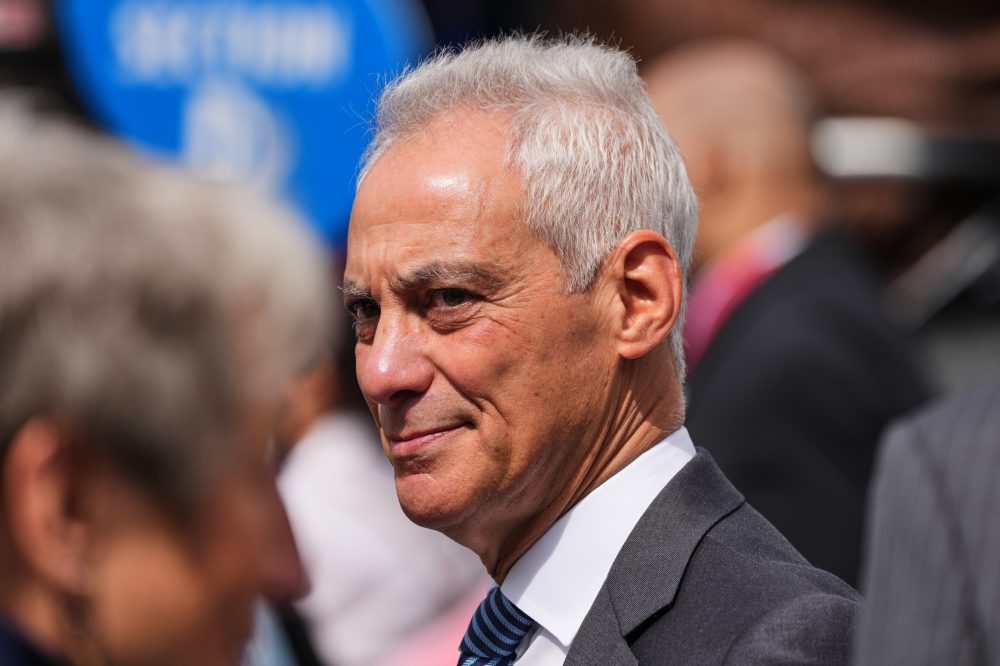
WASHINGTON (AP) — Rahm Emanuel, a longtime Israel supporter who is weighing a run for the Democratic presidential nomination, is preparing to deliver a pointed condemnation of Israeli Prime Minister Benjamin Netanyahu during a speech in Tel Aviv this week — warning that the bond between the United States and Israel stands at a critical turning point.
“It cannot stand or survive as it has been,” Emanuel is set to say at Tel Aviv University on Wednesday, according to remarks obtained by The Associated Press. “To maintain the strength of our ties, we need significant changes and a new direction.”
The address, coming from a prominent figure in the centrist wing of the Democratic Party, underscores just how dramatically the party has moved away from its historically strong backing of Israel.
A new survey from The Associated Press-NORC Center for Public Affairs Research found that roughly 58% of Democrats now believe the United States is “too supportive” of Israel — a notable jump from 45% in January 2024. About half of Democrats also believe Israel has committed genocide against Palestinians during the Gaza conflict, a charge that some human rights groups have made but that Israel and the U.S. government have firmly rejected.
Among Emanuel’s planned proposals: imposing sanctions on Israelis who target Palestinian civilians and property, as well as on companies and financial institutions that support settlements that most of the international community considers illegal. He also intends to push for ending U.S. subsidies to Israel’s defense budget, arguing that Israel “should be able to buy American arms under the same financial terms, the same restrictions, and the same requirements as every other trusted ally that abides by our laws.”
Emanuel will also lay blame squarely on Netanyahu for steering Israel toward what he calls a “dead end,” a situation he says was made worse by poor choices from American leaders over the years.
“For too long, American policy toward Israel operated under the assumption that the best thing Washington could do for Jerusalem was to blindly and silently stand behind your government, without conditions, without demands, and without consequences when we disagreed,” he plans to say. “That has been our mistake. Unconditional support has produced a prime minister who has presumed that his strategic interests would incur no cost if he ignored America’s concerns.”
It is highly unusual for an American with presidential aspirations to travel abroad — especially to a country as politically charged as Israel — to deliver such a direct attack on its leadership. Centrist Democrats like Emanuel have historically been more cautious than the party’s progressive wing when it comes to questioning U.S. support for Israel.
Netanyahu, who once referred to Emanuel — who had aspirations to become the first Jewish speaker of the U.S. House — as a “self-hating Jew,” could respond forcefully to the remarks. With Netanyahu facing his own reelection battle in October, he may attempt to use the confrontation to his political advantage by casting himself as standing firm against outside pressure.
For Democrats who may enter the 2028 presidential race, the speech signals an aggressive approach to addressing the fallout from Israel’s war in Gaza and Netanyahu’s perceived alignment with the Republican Party under President Donald Trump. The conflict has reshaped political alliances within both major U.S. parties, with younger voters in particular pushing American leaders to take a harder line. The issue has already stirred tension in some Democratic congressional primaries this year and could remain a flashpoint heading into the 2028 nomination fight.
Taking Netanyahu to task for doing little to advance diplomatic efforts to end the war, Emanuel will observe that “support for Israel is plummeting around the world.”
“You’ve lost Europe,” he plans to say. “Your scientists face exclusion from international research networks. Your artists and academics are shut out of exhibits and conferences.”
While Netanyahu has cultivated close ties with Trump and the Republican Party, Israel’s standing among Democrats has steadily eroded. Interestingly, Emanuel’s portrayal of Israel as increasingly isolated echoes recent comments from Vice President JD Vance, illustrating how criticism of Israel is gaining traction across party lines. Speaking from the White House briefing room as the U.S. worked toward a deal to end the conflict with Iran, Vance said Trump was “the only head of state in the entire world who is sympathetic to the nation of Israel at this moment in time.”
Despite his harsh words, Emanuel — who is Jewish and whose father was born in Jerusalem — will also express empathy. He acknowledged the devastating impact of the October 7, 2023 attacks, in which Hamas-led militants carried out air and ground assaults on Israel, killing nearly 1,200 people and taking more than 250 hostages. He also noted the frustrations stemming from past rounds of failed peace negotiations with Palestinian leaders.
“But even while acknowledging that history, the path forward cannot be held hostage to a past defined exclusively by recriminations,” he will say.
Rather than endorsing the traditional two-state solution, which he will call “discredited,” Emanuel plans to advocate for what he terms a “23-state solution” — one that brings together Israel, the Palestinians, and the 21 other members of the Arab League in a comprehensive peace agreement.
“The 21 Arab nations that have exploited Palestinian rights as a slogan for decades now need to roll up their sleeves and stand up a governing authority capable of accepting the historic Jewish connection to this land,” he will say.
While no major Democrat has officially launched a 2028 presidential campaign, that could change following the November midterm elections, with a potentially large field expected to form. Emanuel, a former White House chief of staff, U.S. congressman, Chicago mayor, and U.S. ambassador, has been among the most transparent about his ambitions. Without a current public office, he has kept his name in the conversation by releasing a series of policy proposals, cycling through the early-voting state of New Hampshire, appearing on podcasts, and building his social media presence.
NEW YORK (AP) — For decades, backing Israel was something both major political parties could agree on. But a new poll from the AP-NORC Center for Public Affairs Research shows that consensus is crumbling, with opposition rising sharply among Democrats and cracks appearing even within the Republican Party.
The survey comes as Israel’s conduct in its ongoing war with Hamas in Gaza — now approaching its third year — has turned what was once a broadly shared foreign policy position into a deeply divisive issue, splitting Americans along both party and generational lines.
Roughly one-third of American adults — including about half of all Democrats — now believe Israel has committed genocide against Palestinians during the Gaza conflict. That accusation has been made by certain human rights organizations but is firmly rejected by both Israel and the U.S. government. About 2 in 10 Americans say genocide has not occurred, while the remaining half say they don’t have enough information to form an opinion.
Among Jewish adults specifically, about 30% believe Israel has committed genocide, while nearly half — 49% — say it has not.
Harold Kalmus, a 69-year-old Democrat from Arden, Delaware, who identifies as Jewish by birth, said his feelings toward Israel have changed dramatically over the years. He remembers feeling pride in the country when he was young — but that’s no longer the case.
“I realize that there is a threat from Hamas. And I realize they’re in a very difficult situation, but what they have done is just an unspeakable horror,” he said, referring to Israel’s military campaign against Palestinians. “They’re trying to wipe out a civilization as far as I’m concerned.”
The poll reflects a steep decline in how Americans view Israel in the nearly three years since Hamas launched its attack on October 7, 2023 — an assault that killed approximately 1,200 people in Israel, mostly civilians, and resulted in 251 people being taken as hostages to Gaza. According to the Hamas-run Gaza Health Ministry, more than 73,000 Palestinians have died in Gaza since then, a figure that does not separate civilian from militant casualties. That total includes more than 1,000 deaths since the most recent ceasefire began. Polling data suggests American sympathies had been gradually shifting toward Palestinians since around 2020, but that trend accelerated dramatically after the latest war began.
Around 4 in 10 Americans say they don’t feel informed enough to judge whether Israel’s military response — either its initial retaliation or its continued operations — was justified. Among those who did weigh in, most said the early military response was appropriate. However, a majority of that same group believes Israel’s current ongoing military actions are not justified.
Among Jewish adults, about three-quarters said Israel’s initial response was justified, but that support dropped to roughly 4 in 10 when asked about its continuing operations.
Only about one-third of Americans consider Israel to be an “extremely” or “very” important personal issue. Still, the U.S.-Israel relationship has become a flashpoint in American politics, with high-stakes midterm elections just four months away — elections that will determine which party controls Congress during the final two years of President Donald Trump’s time in office. Vice President JD Vance recently took aim at Israeli leaders who have voiced frustration with Trump, while candidates who have been vocal critics of Israel recently beat establishment-backed Democrats in primary races in New York and Colorado.
The poll shows a clear and decisive shift happening within the Democratic Party. About 58% of Democrats now say the U.S. is “too supportive” of Israel — up from 45% in a January 2024 AP-NORC poll conducted while former President Joe Biden was still in office. That includes 51% of Jewish Democrats in the current survey.
Around 62% of Democrats say the U.S. is “not supportive enough” of Palestinians, compared to 49% two years ago. While younger Democrats — those 45 and under — remain more likely than their older counterparts to hold that view, the gap is narrowing. About 57% of older Democrats now say the U.S. should do more to support Palestinians, up from just 39% two years ago.
Joy Jennik, a 73-year-old Democrat from Brookfield, Wisconsin, said she didn’t have particularly strong feelings about the U.S.-Israel relationship before Hamas’ October 7 attack. Now, she believes Israel is guilty of genocide.
“The Gaza Strip, there’s not a lot left of it. Those poor people are barely living,” said Jennik, a retired home economics teacher.
On the Republican side, only 13% describe Israel’s actions as genocide, though a generational divide is visible there too. About 2 in 10 Republicans under 45 use that term, compared to roughly 1 in 10 Republicans aged 45 and older.
Overall, 60% of Republicans say U.S. support for Israel is “about right,” and only about 2 in 10 say the country is “too supportive” — though younger Republicans are more likely to hold that view. While the share of Republicans saying the U.S. is “too supportive” hasn’t changed significantly since 2024, the share saying it’s “not supportive enough” has fallen from 39% to just 15%.
Mike Cardona, a 70-year-old Republican from suburban Phoenix, said he supports the current level of U.S. backing for Israel and rejects the genocide characterization.
“I wish they’d gone in harder and better,” said Cardona, a retired industrial supply salesperson, referring to Israel’s military campaign in Gaza. “Unfortunately, some innocents will be hurt, but Hamas and Hezbollah never took that into consideration when they were killing children and women in Israel.”
Several people interviewed for the poll said their criticism was aimed specifically at Israel’s leadership — particularly Prime Minister Benjamin Netanyahu, who is widely seen as closely aligned with Trump following repeated conflicts with Democratic presidents.
Nationally, only 20% of American adults have a favorable view of the Israeli prime minister, while about twice that number — 38% — view him unfavorably. About 41% say they don’t know enough to form an opinion.
Netanyahu’s approval is especially low among Jewish adults: roughly 6 in 10 view him unfavorably, while about one-third see him in a positive light.
Younger Americans across both parties are more likely to say they don’t have an opinion about Netanyahu. Among older Republicans, views of Netanyahu lean positive, but younger Republicans’ opinions tilt in the opposite direction.
New York City Mayor Zohran Mamdani, a 34-year-old democratic socialist who has been an outspoken critic of Israel, is viewed favorably by 27% of U.S. adults. Another 28% view him unfavorably, and 44% say they don’t know enough to have an opinion.
Jewish adults — who identify as Democrats at high rates — actually view Mamdani more positively than Netanyahu, with 44% holding a favorable opinion of the New York City mayor, 39% viewing him negatively, and 17% saying they’re unsure.
About half of Democrats overall view Mamdani favorably, with only about 1 in 10 holding an unfavorable view and roughly 39% saying they don’t have an opinion.
Despite all of this, the U.S.-Israel issue is far from the top concern for many Americans heading into the midterm elections.
Michael Ripka, a 34-year-old stage hand from Casper, Wyoming who typically votes Republican, said the economy is what matters most to him right now.
“Everything is mad expensive,” he said, adding that Middle East conflicts are “100% a very big distraction.”
The AP-NORC poll surveyed 3,040 adults between June 11 and June 17, using a sample drawn from NORC’s probability-based AmeriSpeak Panel, which is designed to reflect the broader U.S. population. The poll also included interviews with 1,022 Jewish adults. The margin of sampling error is plus or minus 2.8 percentage points for the general adult sample, and plus or minus 5.0 percentage points for the Jewish adult sample.
A limited-edition U.S. passport bearing the likeness of President Trump is causing a stir nationwide, with enthusiastic supporters forming long lines to obtain one and vocal opponents expressing sharp disapproval.
The commemorative passport has become the latest flashpoint in the ongoing cultural debate surrounding the president, drawing passionate responses from both sides of the political divide.
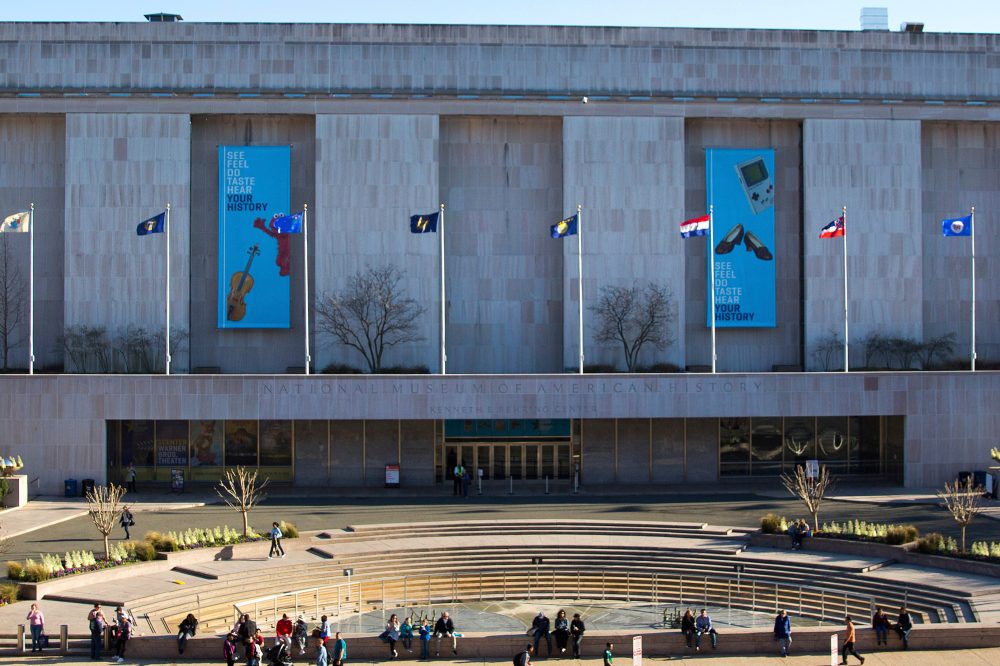
The Trump administration has issued a report taking aim at a Smithsonian museum, alleging that the institution has crossed into what officials are calling “extreme political activism.”
The accusation has drawn attention from historians and cultural observers across the country. Sarah Weicksel of the American Historical Association spoke about the administration’s report and what it could mean for the museum and the broader historical community.
The controversy raises questions about where the line falls between educational programming and political advocacy within publicly funded cultural institutions.
NEW YORK — A former Democratic commissioner of one of the nation’s leading civil rights enforcement agencies has abandoned her legal fight against President Trump over her removal from the position, pointing to a recent Supreme Court decision that significantly expanded presidential authority over independent federal agencies.
Trump’s removal of Jocelyn Samuels and a fellow Democrat from the Equal Employment Opportunity Commission opened the door to a major restructuring of how civil rights are enforced in the workplace. The administration has since shifted the agency’s focus toward eliminating diversity and inclusion programs, rolling back protections for transgender employees, and pursuing discrimination claims on behalf of white workers and U.S.-born workers.
The EEOC took steps to advance that agenda on Monday by releasing a new regulatory plan that would end the agency’s longstanding annual collection of workplace demographic data and eliminate guidance warning employers that English-only workplace rules may constitute national origin discrimination, among other proposed changes.
Among Trump’s earliest moves as president was eliminating the Democratic majority on the typically five-member EEOC. His decision to remove Samuels and Charlotte Burrows before their five-year terms were completed was without precedent in the history of the agency, which Congress established through the Civil Rights Act of 1964.
The commission currently has two Republican members and one Democrat, with two seats remaining unfilled. Trump has not yet put forward nominees for those vacancies.
In her original lawsuit, Samuels contended that Congress designed the commissioner positions — filled through presidential appointment and Senate confirmation — with staggered terms specifically to provide what she called “continuity, stability and insulation from political pressure.”
However, in a statement issued Monday, Samuels explained she was dropping the case because the Supreme Court’s decision in a separate matter “leaves me without a viable path forward to continue contesting my termination.”
The Supreme Court ruled last week in favor of Trump’s authority to remove the heads of independent agencies, with the Federal Reserve as the sole exception. In doing so, the court discarded a 91-year-old precedent that had restricted when a president could dismiss board members of such agencies.
EEOC Chair Andrea Lucas praised that ruling in a LinkedIn post last week, writing that it confirmed the “EEOC is an executive branch agency.”
In a statement tied to Monday’s regulatory announcement, an EEOC spokesperson said the agency is “committed to implementing President Trump’s landmark civil rights agenda, dedicated to evenhanded enforcement of federal civil rights laws.”
The EEOC’s only remaining Democratic commissioner, Kalpana Kotagal, voted against the new regulatory agenda, stating that “the proposed changes weaken civil rights protections for workers and undermine the agency’s investigative and enforcement efforts.”
Among the agenda items is a proposal to eliminate a four-decade-old requirement that companies with 100 or more employees — or federal contractors with at least 50 workers — submit workforce demographic information to the EEOC. Lucas has previously cautioned companies against using such data to support what she characterizes as potentially discriminatory diversity-building practices. The EEOC’s proposal argues that these reporting requirements place “significant financial and administrative burdens on the nation’s employers.” While the commission is widely expected to approve the rescission, it will still go through a public comment period before taking final effect.
Critics on the right have argued that collecting demographic data encourages the agency to assume discrimination is the cause of any gender or racial imbalance in a company’s workforce. Defenders of the practice say the annual surveys have helped the agency identify discriminatory patterns, set enforcement priorities, and monitor how women and minorities have progressed since the Civil Rights Act was enacted.
“The EEOC has collected this data from employers for six decades. It’s difficult to understand why the agency would kneecap its ability to investigate discrimination, particularly at a time when the EEOC is chronically understaffed and underfunded,” Kotagal said.
The agency also announced plans to rescind 1980 guidelines on national origin discrimination, which had warned that requiring workers to speak only English could “create an atmosphere of inferiority, isolation and intimidation based on national origin which could result in a discriminatory working environment.” The EEOC contends those guidelines are outdated and wrongly established a “presumption that English-only rules violate Title VII in some circumstances.”
Last week, the EEOC also voted to eliminate longstanding guidance on what kinds of voluntary affirmative action employers could take to improve job opportunities for women and minorities without violating Title VII of the Civil Rights Act of 1964, which bars employment decisions based on race, color, national origin, sex, or religion. The agency reversed its previous position that certain programs — such as targeted training for women and minorities or expanded recruitment efforts — could be pursued without running afoul of that law.
Also included in the regulatory agenda is a proposal to revise rules implementing the Pregnant Workers Fairness Act, which grants women the right to request workplace accommodations related to pregnancy and associated medical conditions. Lucas had previously opposed Biden-era regulations that included abortion as a qualifying circumstance for accommodations such as time off for medical appointments.
WASHINGTON — President Trump stepped forward Monday to claim responsibility for recent price reductions at Walmart, but the retail giant’s own statement on the matter made no reference to the administration having any involvement in the decision.
Trump has been under growing public pressure over rising prices during his time in office. Costs initially surged following the rollout of his tariffs, and inflation climbed further after the Iran war began in late February. Trump dismissed a recent bipartisan effort to address housing costs as “a yawn” and pointed the finger at Democrats for the continued rise in inflation.
With November midterm elections approaching and control of Congress on the line, Trump has made a habit of attacking Democrats as government overreaches into private business. Yet in his own social media post about Walmart, he claimed the company had lowered its prices specifically because his administration asked them to.
“I have just been informed that one of the biggest, best, and smartest Retailers in America, Walmart, will be lowering prices, by a lot, at my Administration’s request to celebrate our great Country’s 250th birthday,” Trump wrote. “Walmart will, in particular, be dropping the price for a pound of ground beef by almost 15%, among many other products.”
Ironically, Walmart has actually seen business grow under the elevated inflation of the Trump era, as shoppers have flocked to its stores and website looking for deals. That trend was reflected in the company’s quarterly earnings released in May.
After Trump’s post went live, Walmart released its own statement Monday saying its price rollbacks at Walmart and Sam’s Club “are designed to help customers and members make the most” of the summer season. The company made no mention of any White House communication and did not address Trump’s claims directly. The statement highlighted price cuts on ground beef, corn, red cherries, ice cream, potato chips, and Coca-Cola and Pepsi products.
According to the Bureau of Labor Statistics, consumer prices have risen 4.2% over the past 12 months — notably higher than the 3% inflation rate Trump inherited when he took office. Some relief may be on the horizon, as a temporary ceasefire deal with Iran has helped bring oil prices down by allowing more tankers to pass through the Strait of Hormuz.
Trump’s relationship with Walmart has been complicated. Just over a year ago, he publicly pressured the company to absorb the cost of his own tariffs rather than pass them along to shoppers.
“Walmart should STOP trying to blame Tariffs as the reason for raising prices throughout the chain,” Trump posted at the time. “Walmart made BILLIONS OF DOLLARS last year, far more than expected. Between Walmart and China they should, as is said, ‘EAT THE TARIFFS,’ and not charge valued customers ANYTHING. I’ll be watching, and so will your customers!!!”
WASHINGTON — A federal judge has ruled that President Donald Trump’s sweeping pardons for those involved in the January 6, 2021, Capitol attack cannot be applied to a Virginia man accused of placing pipe bombs outside the national headquarters of both major political parties the night before the riot.
U.S. District Judge Amir Ali denied a motion to throw out the case against Brian J. Cole Jr. on Monday, determining that Trump’s blanket clemency for January 6 participants explicitly covered only individuals who had already been convicted of crimes tied to that day’s events. Ali pointed out in his three-page ruling that Cole had not even been charged at the time Trump issued the pardons, let alone convicted of anything.
On the opening day of his second term, Trump wiped out what had been the largest criminal investigation in Justice Department history, pardoning, commuting sentences, and ordering the dismissal of charges for more than 1,500 people who had been charged in connection with the Capitol attack.
Cole was taken into custody nearly a year after that broad act of clemency. He stands accused of leaving two pipe bombs outside the Republican National Committee and Democratic National Committee headquarters in Washington, D.C., on the evening of January 5, 2021. Law enforcement officers found the devices on January 6 before they could detonate.
According to prosecutors, Cole admitted to the crimes after his arrest, telling FBI agents he had felt “bewildered” by conspiracy theories surrounding the 2020 presidential election and that “something just snapped.” Investigators also used phone records and other evidence to build their case against him.
Cole’s defense attorneys argued their client should be covered by the pardon because his alleged actions are “inextricably and demonstrably tethered” to what happened near the Capitol on January 6. “By the government’s own telling, this is exactly the kind of case that President Trump’s January 20, 2025 Presidential Pardon was invoked to reach,” the defense team wrote in court filings.
Prosecutors pushed back, arguing Trump’s pardons have no relevance to Cole’s situation since the presidential proclamation only applies to those who were either convicted of or facing a pending indictment for Capitol riot-related offenses. They also argued that even if the proclamation could somehow apply, the Justice Department’s interpretation of the order should be given deference as the agency responsible for administering it.
Judge Ali was appointed to the federal bench by President Joe Biden, a Democrat. Trump, a Republican, had promoted unfounded claims that Democrats had stolen the 2020 presidential election. Supporters who attended Trump’s “Stop the Steal” rally near the White House on January 6 later joined the mob that stormed the Capitol, interrupting Congress’s certification of Biden’s electoral victory.
Cole is scheduled to appear in court Wednesday for a status hearing. No trial date has been set in his case.
Maine’s Democratic Party is demanding that its own U.S. Senate nominee exit the race after a woman accused him of sexual assault, the party announced Monday.
In an official statement, the party said that several women have recently made serious accusations against Graham Platner, and that the latest allegations go even further than those previously reported.
“Over the past several weeks, multiple women have made serious, credible allegations against Graham Platner. Today’s statements take those allegations even further,” the party stated.
Party leadership made its position clear: “Maine Democratic Party leadership is calling on Graham Platner to withdraw as the Democratic nominee for U.S. Senate.”
A woman who once had a romantic relationship with Maine Democratic Senate candidate Graham Platner is accusing him of sexually assaulting her while he was intoxicated, despite her telling him to stop, according to a report published Monday by Politico.
Platner pushed back against the allegation and indicated he is evaluating what comes next for his campaign. In a video posted to social media, he said, “Regardless of the inaccuracy of the reporting but mindful of the political reality it will inflict, we’re taking the time to reflect on the best path forward.”
The woman making the accusation, Jenny Racicot of Maine, told Politico that Platner came into her home drunk in 2021 and assaulted her. Racicot said the two had been in an on-and-off relationship at the time, but she ended all contact with him after that night and made clear to him that what happened was not consensual.
The Associated Press attempted to reach Platner’s campaign for comment via email and phone on Monday. In his social media video, Platner stated, “Any accusation of non-consensual behavior is categorically false.”
By Monday, Platner had called off several campaign town hall events that had been scheduled across Maine.
Platner won the Democratic nomination for Maine’s U.S. Senate seat last month. However, state law does allow the party to swap in a different candidate before the general election. Under that provision, party officials could choose a replacement if Platner withdraws by 5 p.m. on July 13, with any replacement candidate needing to be named no later than July 27.
WASHINGTON (AP) — Aides for Kentucky Sen. Mitch McConnell confirmed last week that the senator remains hospitalized and is “continuing his recovery,” but they have offered virtually no details about what is keeping him there. With the Senate currently on a break, questions are mounting about whether McConnell will be back at the Capitol when lawmakers return next week.
McConnell was first admitted to the hospital on June 14. His office issued a brief statement at that time saying only that he was “receiving excellent care.” About a week later, a follow-up statement noted he would not be casting any votes that week. Then, on Thursday, his office released another update saying he “continues to improve” and “appreciates the outpouring of support he’s receiving while he continues his recovery in the hospital.”
No further updates have been issued since that Thursday statement. A spokeswoman for the senator did not respond to a request for comment made on Monday.
This latest hospitalization is not McConnell’s first. The 84-year-old senator has dealt with several health-related setbacks in recent years. He was hospitalized with a concussion in March 2023 after taking a fall at a Washington hotel, causing him to miss multiple weeks of work. When he returned to the Senate that summer, he twice appeared to freeze during news conferences, staring blankly ahead before colleagues and staff stepped in to help him. The following year, he fell and sprained his wrist while leaving a Republican luncheon.
McConnell’s health challenges go back even further. He contracted polio as a young child and has long acknowledged that walking and climbing stairs can be difficult for him as an adult. In 2019, he fell at his home in Kentucky and required surgery to repair a fractured shoulder.
The senator’s current health situation is unfolding at a sensitive time for Senate Republicans, who are managing a narrow majority in the chamber during the final stretch before the midterm elections. McConnell, who is serving out his final Senate term set to expire in January, was the longest-serving Senate leader in American history before stepping down from that role last year. He was first elected to the Senate in 1984 and led Senate Republicans from 2007 until last year, holding both the majority and minority leader positions during that span. Even after leaving leadership, he has continued showing up for Senate sessions, frequently relying on a wheelchair to get around the Capitol.
WASHINGTON — President Trump announced Monday that a granite helipad is being constructed on the White House South Lawn, saying the new landing surface is necessary to support a modern and more powerful fleet of presidential helicopters.
Construction crews were already on the job when Trump confirmed the project, working on the same South Lawn where UFC had recently set up a temporary arena for a cage fight marking the president’s 80th birthday. Trump said the project would be privately funded, putting its price tag at as much as $6 million.
“It’s got the seal of the White House on it in granite, in carved granite,” Trump told reporters during an Oval Office appearance. “It’s really a beautiful thing.”
The president offered no specifics on how long construction would take. The helipad is the latest in a series of major renovation efforts Trump has undertaken to put his personal stamp on the White House.
While some of Trump’s previous White House construction projects have drawn on public funds despite early suggestions they would not, Trump said Sikorsky Aircraft — a subsidiary of defense contracting giant Lockheed Martin — would be covering the cost of the helipad.
When asked about the cost and timeline, Lockheed Martin issued a statement saying in part: “This specific contribution was made to the Trust for the National Mall, the National Park Service’s non-profit organization” and was “conducted in full accordance with all applicable laws and regulations.”
In 2024, Sikorsky finished delivering a new fleet of helicopters for presidential transport. President Joe Biden became the first to fly aboard one of the modern VH-92A helicopters, using it to travel to the Democratic National Convention in Chicago — the same day the military announced Sikorsky had delivered the final aircraft in the 23-helicopter order.
However, Trump explained that the new choppers are far more powerful than the Vietnam War-era helicopters that have long served as Marine One, and that their power makes them too intense to land on the White House lawn without causing damage.
“It’s not that the grass gets discolored — it gets ripped out,” the president said.
The new aircraft have indeed seen limited use at the White House because their exhaust vents direct heat downward, scorching the South Lawn. The Marines and Sikorsky have spent years searching for a fix, meaning the new helicopters have largely sat unused at the executive mansion. A 2026 Marine Corps aviation plan noted that the older VH-3D helicopters will remain in service through the end of this year.
Trump recalled telling a group of military generals that building a helipad would resolve the problem. He said Sikorsky agreed to build and fully fund the pad because the company “felt a little bit guilty” that its new helicopter fleet was too powerful to land at the White House.
Trump also said he directed builders to “do a beauty” and pushed for granite rather than plain painted concrete. “You’re landing on granite, which is the strongest stone,” he said, adding that the finished pad could double as a venue for outdoor White House events such as news conferences. He also said the helipad would allow officials to “finally retire 45-year-old helicopters” that had been pressed into service as Marine One.
The helipad is just one of several changes Trump has made to the White House. Other projects include tearing up part of the Rose Garden to create a patio reminiscent of his Mar-a-Lago estate in Florida, adding partisan plaques along the colonnade wall for a Presidential Walk of Fame, renovating the bathroom off the Lincoln Bedroom, redoing the Palm Room, installing new flagpoles on both the north and south lawns, and demolishing the entire East Wing to make room for a large ballroom.
While “Marine One” is a designation applied to any helicopter carrying the president, the most iconic version has been the specially modified VH-3D Sea King, which entered service in 1978. Efforts to replace it date back to the early 2000s, when President George W. Bush launched a modernization program that was eventually scrapped due to cost overruns during President Barack Obama’s administration. Obama restarted the effort, but technical problems delayed progress until May 2014, when the military finally awarded Sikorsky a contract to build the VH-92A Patriot — the helicopters that were ultimately delivered in 2024.
Later Monday, Trump spoke at a lunch held in the Rose Garden patio and revealed yet another renovation project: a restoration of the columns on the building’s north side. Scaffolding has already gone up, and Trump noted, “We’ve taken about 150 years of paint off of the columns,” adding that “if you don’t strip the paint off, it gets worse and worse and worse.”
“A lot of love is being put into the White House,” Trump said. “Because, frankly, it was treated very badly by a lot of presidents.”
The president did not say who would be paying for the column restoration work.
A New York man is taking the Department of Homeland Security to court after federal agents showed up at his home and tracked his movements — all because he sent an email criticizing the former director of Immigration and Customs Enforcement.
David Streever, who lives in Rochester, N.Y., says agents attempted to locate him at both his residence and a hotel, and left behind a written notice warning him that the email he sent to the former ICE chief could potentially be considered illegal.
Doorbell camera footage captured two federal agents wearing blue jackets standing on Streever’s porch on June 23, 2026, documenting the visit to his home.
Streever has now filed a lawsuit in response to what he describes as government overreach and an attempt to intimidate him for exercising his right to free speech.
The case has drawn attention from civil liberties advocates who say it raises troubling questions about whether the federal government is using its surveillance and law enforcement resources to silence critics.
WASHINGTON — President Donald Trump announced Monday that more than 500,000 children across the United States have had $1,000 deposited into their Trump Accounts, representing the opening wave of a new federally backed savings program.
Trump said the government has completed the first round of seed funding, with each eligible child receiving the initial one-thousand-dollar investment into their designated account.
President Donald Trump is set to hold meetings with Ukrainian President Volodymyr Zelenskyy and Syrian President Ahmad al-Sharaa on Wednesday during the NATO summit taking place in Turkey, according to the White House. Ukraine is working to draw Trump’s focus back to its ongoing conflict with Russia, while Trump has openly speculated about Syria’s place in the broader Middle East landscape.
White House spokesperson Anna Kelly confirmed the planned meetings during a call with reporters ahead of the summit in Ankara. Trump is also expected to sit down with Turkey’s President Recep Tayyip Erdogan on Tuesday. Before heading back to the United States on Wednesday, the president is scheduled to hold a press conference, Kelly said.
The meeting with Zelenskyy comes as Russia’s war against Ukraine stretches into its fifth year. Both Zelenskyy and Russian President Vladimir Putin spoke with Trump by phone on Saturday, offering congratulations on the July Fourth celebration marking 250 years of American independence.
Trump departs Monday evening for the summit. In the days leading up to the trip, he has repeatedly voiced frustration over the gap between what the U.S. spends on defense versus other alliance members. NATO Secretary-General Mark Rutte attempted to smooth things over with Trump during an Oval Office visit last month. The rapid push by most NATO countries to commit to spending 5% of their annual gross domestic product on defense over the next decade reflects just how much Trump has reshaped the alliance’s priorities.
On a separate front, Interior Secretary Doug Burgum said Sunday that the Trump administration has no plans to seek new contractor bids for repairs to the Lincoln Memorial Reflecting Pool. Burgum, like Trump, stated he is completely certain that vandals were responsible for the damage to the historic pool on the National Mall. Trump has described a 350-foot gash cut into the pool’s liner during recent renovation work, while Burgum characterized it as several cuts totaling that length. Burgum added that the pool will need to be at least partially drained in the coming week to complete the work.
“We’ll use the same company, because they did a fantastic job,” Burgum told CNN’s “State of the Union.” “Thankfully, the vandalism was small. It was bad. I mean, it could cost tens of thousands of dollars to repair, so then it could fall into a felony … just like damaging any other government property could. But the job that was done to fix the Reflecting Pool was done extremely well.”
Meanwhile, controversy erupted after Trump stepped in on behalf of U.S. men’s national team forward Folarin Balogun, who had been handed an automatic one-game suspension following a red card in a World Cup round of 32 victory over Bosnia-Herzegovina. Balogun, who leads the American squad with three goals in the tournament, received the card after stepping awkwardly on the right ankle of Tarik Muharemović during the 2-0 win on Wednesday.
FIFA announced Sunday that the suspension was lifted, clearing Balogun to play in Monday’s round of 16 match against Belgium. The decision appeared to be the first time since 1962 that a red card issued during a World Cup did not lead to a suspension. Trump praised the outcome, while Belgium’s team expressed outrage. According to a person familiar with the matter who spoke anonymously because they were not authorized to discuss it publicly, Trump called FIFA president Gianni Infantino after the game to request a review of the red card. Norway’s coach summed up the reaction from many in Europe, calling the decision “bad, bad, bad, bad, bad.”
Also drawing attention, Trump on Sunday shared a doctored image on social media depicting former President Barack Obama and former first lady Michelle Obama waving as they boarded an Air Force One plane covered in spray-painted graffiti. The image included the phrase “Yes We Can,” the word “Obama,” “BLM” standing for Black Lives Matter, and Arabic text reading “alhamdulillah,” meaning “praise be to God.” The post follows a previous racist image Trump shared showing the couple as primates, which was removed after significant bipartisan backlash. Trump has a long history of personal attacks against the Obamas, including promoting the false claim that Barack Obama was not born in the United States.
Separately, Trump may be moving to install new leadership at the Smithsonian Institution after a White House report labeled current leadership — particularly at the National Museum of American History — as radical activists who could not be trusted. Trump had already signed an executive order targeting Smithsonian funding for programs he described as promoting “divisive narratives” and “improper ideology.” Current Smithsonian Secretary Lonnie Bunch, the first African American to lead the institution, addressed the broader topic of history in an unrelated interview that aired Sunday on NBC’s “Meet the Press,” saying, “America’s greatest strength, it’s not running away from its history, but it’s understanding how that history shaped us and continues to shape us.”
WAUSAU, Wis. — Michael Alfonso, a 26-year-old with no political experience, is making a bid for the congressional seat once held by his father-in-law, U.S. Transportation Secretary Sean Duffy — and the race is creating a rift among Republicans who normally stand united behind President Donald Trump.
When critics question whether he has what it takes to serve in Congress as its youngest member, Alfonso has a ready response: he points to America’s founding fathers.
“They were 26 when they were first elected to public office,” said Alfonso, a Republican.
Duffy has thrown his full weight behind his son-in-law’s campaign, repeatedly flying back to the Wisconsin 7th Congressional District to stump for Alfonso and help raise money. He also directed $1 million from his former congressional campaign account toward supporting Alfonso’s run.
Alfonso has also landed the endorsement of President Trump, who dubbed him a “MAGA warrior.” Yet even that high-profile backing hasn’t silenced critics within the district — including prominent Republicans — who argue Alfonso simply isn’t ready for the role.
“I think it’s insulting to people in the 7th that someone who lacks qualifications and any life experiences and any kind of demonstrable leadership skills or experience is even being touted as a candidate,” said Meg Ellefson, a 20-year resident of the district who voted for Trump three times and now opposes him. “It’s super aggravating to me.”
The August 11 Republican primary will determine whether Trump’s endorsement, Duffy’s name recognition in the district, and Alfonso’s fundraising edge are enough to carry the political newcomer to victory.
Taking a cue from his father-in-law’s own brush with reality television — Duffy appeared on MTV’s “Real World” in 1997 — Alfonso participated in a YouTube video series called “Great American Road Trip,” which Duffy launched in June alongside his wife and 11 children.
Duffy first won the 7th District seat in 2010, flipping a district that Democrats had held for 41 years. He served nearly nine years before stepping away from politics, then returned to public life last year when Trump appointed him transportation secretary.
Alfonso has made no apologies for his youth or his lack of a political track record.
“I’m a young man with the energy of a young man, but I have the values of someone who’s in their 60s,” Alfonso said, noting that he married Duffy’s daughter Evita Duffy at age 22 and became a father in May.
Alfonso graduated from the University of Wisconsin-Madison in 2022 and later relocated to Florida, where he spent about a year working on a podcast hosted by Trump supporter Dan Bongino. Before that, he held construction jobs while attending college.
Alfonso has said that conservative activist Charlie Kirk’s assassination inspired him to enter the race, describing it as part of a “spiritual battle for the soul of our nation.” Kirk’s Turning Point Action organization has endorsed him.
Alfonso’s main Republican rival, Kevin Hermening, brings a very different resume to the table. Hermening is a former Marine who was among 66 Americans taken hostage by Iran for 444 days beginning in 1979. Photos of a then-20-year-old Hermening meeting with former Presidents Ronald Reagan and Jimmy Carter are displayed on his office wall.
Over the decades since, Hermening has built a career as a financial planner spanning nearly 40 years, served 16 years on a local school board, and chaired the Marathon County Republican Party for 24 years — helping Duffy and dozens of other Republicans win races at every level across the district.
Hermening also ran for Congress once before — in 1986, when he was the same age Alfonso is today, 26. He lost by 25 percentage points to Democratic incumbent Rep. David Obey.
“The voters told me that I wasn’t ready or prepared yet,” Hermening, now 66, said during an interview at his Wausau office. “I was ill prepared to have actually done the job, and I’m not saying that because Mr. Alfonso’s in the race. It’s a fact.”
Other candidates in the primary include Ashley Furniture executive Jessi Ebben, who has the support of major Republican megadonors; Niina Baum, a dog musher; and Don Raihala, an accountant and real estate broker.
While Alfonso has secured endorsements from House Speaker Mike Johnson and four of Wisconsin’s six Republican members of Congress, local party officials in the district have publicly pushed back on his candidacy.
Republican leaders in at least three counties have voiced concerns about Alfonso’s lack of experience and raised questions about Duffy’s outsized influence in the race.
Iron County Republican Party Chair Tanner Hiller accused Duffy of leveraging his connections to boost his son-in-law’s chances.
“I think what they’re doing is wrong morally,” Hiller told Wisconsin Public Radio in May. “There’s a lot of people that have better credentials, that know this district, that will represent this district better than Michael Alfonso.”
Alfonso’s campaign has also drawn scrutiny after he received tens of thousands of dollars in contributions from transportation-related interests — a notable detail given that Duffy oversees the federal agency responsible for the nation’s transportation system. When asked whether those donations would create obligations, Alfonso was direct.
“That’s it,” Alfonso said, indicating he answers only to God and the voters.
Hermening, however, suggested the donors will expect something in return. “I would think that the people would want to get paid back,” he said.
Duffy’s Transportation Department spokesperson Nathaniel Sizemore, when asked about the donations, said Duffy remains focused solely on carrying out the president’s agenda despite his ongoing involvement in the campaign.
A super PAC backing Alfonso has received $1 million from Duffy’s old congressional account and an additional $1 million from Republican megadonor Richard Uihlein, whose shipping and packaging company Uline is headquartered in Wisconsin. Meanwhile, Uihlein’s wife, Elizabeth Uihlein, donated $1 million to a separate PAC backing Ebben. Ebben also has the support of Club for Growth and Wisconsin billionaire builder and GOP megadonor Diane Hendricks.
Alfonso is leaning hard on Trump’s endorsement while also insisting that hard work — not the president’s blessing — will ultimately decide the outcome. His campaign signs read: “Endorsed by President Donald Trump.”
Jack Hoogendyk, who chairs the Republican Party in Marathon County — home to the district’s largest city of Wausau — called Trump’s endorsement “solid gold” in a district where Trump won by 22 percentage points two years ago.
But Ellefson, who hosted a conservative talk radio program in Wausau for five years, isn’t convinced the endorsement carries the same weight it once did.
“I personally would like to believe that voters in the 7th are intelligent enough and critical thinkers and won’t be swayed by a Trump endorsement,” she said. “I’m going to give the voters credit for not being that foolish.”
President Donald Trump on Monday rang the opening bells for both the New York Stock Exchange and the Nasdaq — doing so from the Oval Office — in a symbolic gesture that underscores how closely he has aligned his presidency with the performance of financial markets.
Faced with high inflation that has been dragging down his popularity, Trump has been pushing Americans to pay attention to their 401(k) retirement accounts, arguing that his policies deserve credit for any market gains — especially as the November midterm elections approach.
“It’s all going well — the stock market is setting records virtually every day,” Trump told reporters last week before boarding Air Force One. “Thank you, President Trump.”
Despite that optimism, only 33% of U.S. adults say they approve of Trump’s handling of the economy, according to a June poll conducted by The Associated Press-NORC Center for Public Affairs Research.
Monday’s Oval Office ceremony was designed to spotlight the rollout of Trump Accounts — a new program that allows children to invest in stock indexes, established as part of the Republicans’ sweeping 2025 tax and spending cuts legislation. Treasury Secretary Scott Bessent has been a leading voice for the accounts, pointing out that a large portion of Americans have no direct stake in the stock market.
That reality means millions of households — particularly lower-income ones — are not seeing the benefits of recent market gains, which tend to flow to wealthier Americans or show up only in retirement accounts that won’t be touched for decades.
“Today, 38% of American adults do not own stocks,” Bessent said last December. “But with Trump Accounts, over time, we can get that number down to zero.”
The S&P 500 posted a gain of 17.9% in 2025, though that followed even stronger returns of 25% in 2024 and 26.3% in 2023 — both years when Democrat Joe Biden was in the White House. So far this year, the benchmark index is up roughly 10%.
Still, just as inflation eroded public support for Biden, Trump is now facing a similar political challenge. He won the 2024 election on a promise to lower costs for everyday Americans, but his tariff policies and the onset of the war in Iran have introduced new upward pressure on prices. The consumer price index has risen 4.2% over the last 12 months, compared to 3% when Trump began his second term in January 2025.
For decades, being married to a U.S. citizen gave foreign nationals a uniquely favorable position when it came to pursuing American citizenship. That long-standing tradition in immigration law appears to be shifting.
According to the current administration and immigration lawyers, spouses of U.S. citizens can no longer count on the same smooth road to citizenship that once existed for them.
Where marriage to an American citizen once served as a relatively straightforward route toward legal status and eventual naturalization, there are now more obstacles standing in the way.
Officials in Saginaw, Michigan are pushing to do away with a cap on property tax revenues that has been in effect for close to five decades.
The move would mark a major change in how the city manages its property tax collections, as local leaders seek to remove the longstanding restriction that has limited revenue for nearly 50 years.
Officials in Saginaw, Michigan are pushing to do away with a restriction on property tax revenues that has been in effect for close to half a century.
The nearly 50-year-old cap on property tax revenues has become a target for local government leaders who are seeking changes to the way the city manages its tax income.
WASHINGTON — President Donald Trump secured major concessions from NATO allies at last year’s summit, with most member nations agreeing to his push for significantly higher defense spending. Now, heading into this week’s gathering in Ankara, Turkey, his focus shifts to making sure those promises are kept.
The rapid pace at which most NATO countries have moved toward meeting Trump’s demand — that members spend 5% of their annual gross domestic product on defense over the coming decade — illustrates just how much the U.S. president has transformed the alliance to reflect his priorities. That’s true even as he continues to clash with allies over the conflict involving Iran, his repeated suggestions about acquiring Greenland, and a string of personal disputes with foreign leaders.
“President Trump fully expects that all allies will step up immediately and get on the path to 5% and do it with urgency,” said Matt Whitaker, the U.S. ambassador to NATO, speaking with reporters ahead of the summit in Ankara.
Trump departed Monday evening for the summit. In the days before leaving, he repeatedly voiced frustration over how much the United States contributes to defense compared to other alliance members. That came despite a recent Oval Office visit from the alliance’s secretary-general, Mark Rutte, who brought large charts displayed on easels to illustrate what he called “The Trump Trillion” — the total increase in allied spending commitments since 2017.
Luke Coffey, a senior fellow at the Hudson Institute, a conservative think tank based in Washington, described the Ankara summit as the “first report card” following last year’s meeting in The Hague.
“If NATO members play their cards right — if the leaders show up demonstrating a commitment and a reasonable plan to meet these spending targets — then it’ll allow President Trump to take a victory lap,” Coffey said.
Trump returned from last month’s G7 summit in France in good spirits, having received backing from other world leaders for his interim agreement to wind down the conflict with Iran. He spoke positively about the unity among those leaders, who also worked to get Trump on board with increasing security support for Ukraine in its ongoing fight against Russia.
That conflict, now entering its fifth year, is expected to be a central topic at the Ankara summit. The White House confirmed that Trump is scheduled to meet with Ukrainian President Volodymyr Zelenskyy on Wednesday. Trump also spoke separately with both Zelenskyy and Russian President Vladimir Putin on July 4th.
On the sidelines of the summit, Trump also plans to sit down with Syrian President Ahmad al-Sharaa. The White House has not outlined specific objectives for that meeting, though it comes as Trump has publicly floated the idea of Syria taking a more active role in countering Hezbollah in Lebanon. Al-Sharaa, who led an Islamic insurgent group whose forces drove out former Syrian President Bashar Assad, has publicly stated he has no desire to do so.
Trump also has a separate bilateral meeting scheduled with Turkish President Recep Tayyip Erdogan, the summit’s host and someone Trump considers a close ally. However, no other one-on-one meetings with foreign leaders are on his schedule.
Despite the relatively upbeat atmosphere at the G7, Trump quickly reignited disputes after returning home. He predicted that British Prime Minister Keir Starmer would step down before Starmer made the announcement himself, saying Starmer had “failed badly” on immigration and energy policy. Trump also claimed that Italian Prime Minister Giorgia Meloni had asked him for a photo opportunity — a claim she forcefully denied, and which led Italy to cancel a planned U.S. visit by its foreign minister.
Trump escalated the situation further on Sunday by posting a photo on social media showing Meloni smiling in his direction, captioning it with the words “RESTRAINING ORDER NEEDED.”
Relations with Canadian Prime Minister Mark Carney have also remained strained. And while French President Emmanuel Macron hosted Trump at an elaborate dinner at the Palace of Versailles last month, the relationship between the two leaders has not always been without friction.
With those tensions in mind, a bipartisan group of U.S. senators is once again traveling to the NATO summit, aiming to demonstrate that congressional support for the alliance remains strong and to serve as a counterbalance to Trump’s frequently critical stance toward NATO.
“They are our best allies, they are our best trading partners, they are critical to our national security, to our economic success, and we need to encourage those relationships,” said Sen. Jeanne Shaheen, D-N.H., who is leading the congressional delegation to Ankara. “That’s part of what Congress understands that the administration doesn’t seem to.”
The summit also arrives as the Trump administration promotes a vision it calls “NATO 3.0,” a framework that envisions European nations shouldering more of their own security responsibilities, freeing the U.S. to redirect its attention to other priorities.
That concept was laid out earlier this year by Elbridge Colby, a U.S. undersecretary of defense, at a meeting of NATO defense ministers. Defense Secretary Pete Hegseth added to the pressure last month with a pointed speech to those same ministers, announcing a six-month review of American troop deployments in Europe — a move that caught many allies off guard, as they had expected to be consulted during any such transition.
Trump himself created confusion earlier this year by appearing to send contradictory signals, announcing plans to send 5,000 troops to Poland just weeks after ordering the same number of forces to be pulled from the continent.
Sen. Shaheen said the NATO 3.0 vision “fails to understand — as this administration has consistently failed to understand — the threat that Putin and Russia are to Europe and subsequently to the United States.”
The 5% GDP spending target agreed upon at last year’s summit in The Hague breaks down as 3.5% for core military spending, with the remainder covering related costs such as infrastructure. Spain indicated at the time that it could not reach those levels, and other members have also raised concerns about the ambition of the goal.
Even with the increased spending pledges, experts caution that much of Europe still depends heavily on the United States for its actual defense capabilities if attacked. The foundational principle of NATO holds that an armed attack against one member is considered an attack against all.
“This is the reality for most Europeans,” said Liana Fix, senior fellow for Europe at the Council on Foreign Relations, noting that most member nations remain far from being able to defend themselves without U.S. support, “even if they’re starting to develop all that.”
Beyond the spending issue, NATO has made other moves to accommodate Trump’s priorities. Earlier this year, the alliance launched “Arctic Sentry,” a NATO-led military exercise designed to counter Russian and Chinese activity in the Arctic region. The exercise is also seen as a response to Trump’s repeated suggestions that the U.S. should acquire Greenland, the semiautonomous Danish territory he has argued is essential for American strategic security.
WASHINGTON (AP) — President Donald Trump took to social media Sunday to share a doctored photograph depicting former President Barack Obama and former first lady Michelle Obama smiling and waving as they prepared to board a version of Air Force One that had been digitally altered to appear covered in spray-painted graffiti.
The manipulated image is the latest in a series of inflammatory posts targeting the Obamas. Just months ago, Trump shared another post — widely condemned as racist — that depicted the couple as primates in a jungle setting. That image was taken down after drawing sharp criticism from both parties.
In the newest image, the Obamas are shown at the top of a staircase beside a baby blue and white presidential aircraft that has been defaced with graffiti. The painted messages include Obama’s campaign slogan “Yes We Can,” the word “Obama,” and “BLM,” a reference to Black Lives Matter. Arabic text reading “alhamdulillah” — meaning “praise be to God” or “thank God” — also appears on the plane in the image.
Experts and critics have noted that the use of graffiti imagery carries a coded message, historically linked to associations with crime and urban blight and used in racist messaging targeting Black communities.
Trump has a long history of making pointed and personal attacks against the Obamas, as well as using inflammatory and at times racially charged language. This has included promoting the debunked claim that Obama was not born in the United States, making broad generalizations about majority-Black nations, and sharing posts on his Truth Social platform that have repeatedly sparked public outrage.
The earlier primate post appeared in February, during the opening week of Black History Month, and was removed after civil rights leaders and Republican senators condemned it. Trump declined to apologize, and a staffer was later blamed for the post.
The timing of Sunday’s Air Force One image is also notable. Trump made his first flight last week aboard a newly retrofitted Boeing 747-800 — a $400 million aircraft gifted by Qatar — which replaced the traditional light blue presidential plane with a color scheme featuring a navy-blue body with red and gold stripes.
On Saturday night, Trump delivered a speech on the National Mall in Washington to commemorate Independence Day and the 250th anniversary of the signing of the Declaration of Independence. He had no public events scheduled for Sunday and spent the day at his golf club in Virginia. He is expected to depart Monday for Turkey to participate in a NATO summit.
The White House did not immediately respond to a request for comment. A spokesperson for the Obamas also did not respond.
Sunday’s post was not the first time Trump has shared a manipulated image involving Obama. Last month, he posted a doctored photo of Obama’s upcoming presidential library in Chicago, altered to show a large bag of garbage on top of the building surrounded by a wasteland. Trump wrote at the time: “The Obama Library ten years from now will be a ‘Mecca’ for those who hate America! President DJT.” He posted that image twice on his social media platform and has repeatedly criticized the library in public remarks.
The Air Force One image was among several posts Trump made Sunday on Truth Social. Another included a photo appearing to show Italian Prime Minister Giorgia Meloni looking up at Trump with a grin, accompanied by the words “RESTRAINING ORDER NEEDED.”
That post could add fresh tension to this week’s NATO meetings in Turkey. Trump had previously claimed that Meloni repeatedly asked for a photo with him at the recent Group of Seven summit, implying she had begged for the opportunity. Meloni pushed back, calling Trump’s account “completely fabricated” and stating, “Italy and I never beg.” Italian Foreign Minister Antonio Tajani separately canceled a planned trip to Washington following Trump’s remarks.
Michigan State Senator Mallory McMorrow announced Sunday that she is suspending her Democratic campaign for the U.S. Senate, transforming what had been a three-person primary contest in a crucial battleground state into a direct face-off between two very different candidates.
With McMorrow out of the race, centrist U.S. Representative Haley Stevens and progressive public health advocate Abdul El-Sayed are now the only two Democrats remaining in the fight for the nomination. The winner will go on to challenge Republican former U.S. Representative Mike Rogers in the general election.
McMorrow shared the news in a three-minute video posted to X, saying she would give her “full support” to whichever candidate wins the August 4 primary.
Her departure comes as recent polling had placed her in a distant third position, with El-Sayed holding the lead over Stevens.
El-Sayed responded to the news by welcoming McMorrow’s supporters, while sounding a cautionary note. He warned that Michiganders “cannot allow the establishment to decide our nominee for us.”
Stevens, meanwhile, offered kind words for her former rival, calling McMorrow an “important voice,” while making clear her own case for the nomination. “I’m the strongest Democrat to defeat Mike Rogers this November,” Stevens said.
The outcome of the Michigan Senate race carries significant weight for Democrats nationally. Losing the seat would make it considerably more difficult — though not impossible — for the party to flip control of the Senate in November. Republicans currently hold a 53-47 majority in the chamber. In the 2024 presidential race, Republican President Donald Trump carried Michigan by 1.4 percentage points.
U.S. Interior Secretary Doug Burgum said Sunday that federal authorities had no grounds to intervene when a white supremacist organization staged a march through Washington on the Fourth of July, pointing to constitutional free speech protections.
Hundreds of masked members of Patriot Front marched through the nation’s capital on Independence Day without violating any laws, Burgum stated during an appearance on CNN’s “State of the Union” program. While he made clear that the group’s white supremacist and anti-immigrant views are “nothing that I could possibly agree with,” Burgum maintained that such ideology is still protected speech, even if it “makes democracy messy.”
Burgum drew a parallel to anti-Trump demonstrators on Washington’s National Mall, saying those protesters also exercise the same rights — “yet they’re allowed to go on because of free speech in our country.”
The group itself has publicly rejected democratic ideals. A manifesto posted on Patriot Front’s website declares that “Democracy has failed this once great nation” and calls for a “hard reset” to “return to the traditions and virtues of our forefathers” — whom the group identifies as European settlers.
During their march, Patriot Front members moved to the beat of drummers near the U.S. Capitol and the Union Station transit center before boarding Metro trains to a suburb of the District of Columbia.
When asked whether he personally condemned Patriot Front or would urge President Donald Trump to do the same, Burgum declined to answer directly. He instead minimized the march’s significance, framing it as an isolated incident amid the broader celebrations marking the country’s 250th anniversary.
Burgum also addressed the Trump administration’s efforts to improve Washington’s landmarks. Speaking on ABC’s “This Week,” he said the administration has already restored dozens of monuments and fountains throughout the city.
“When we look in context, President Trump set out to make D.C. safe and beautiful,” Burgum said. “He’s done that.”
Among the most talked-about projects is a $14.7 million renovation of the Reflecting Pool at the Lincoln Memorial — a project that drew scrutiny after algae growth, peeling surfaces, and visible decay appeared just weeks after the work was finished.
Burgum repeated President Trump’s unverified assertion that vandals used box cutters to slash the pool’s new liner, creating gashes hundreds of feet in length. He also defended the decision to bring back the same company that handled the original renovation — awarded through a no-bid contract — to carry out the repairs, saying the firm did “a fantastic job” on the initial project.
Michigan Democrat Mallory McMorrow has stepped away from her U.S. Senate campaign, dropping a bombshell announcement on social media just one month before the August 4th primary.
McMorrow gave no reason for the surprise move, but she had been facing growing pressure from within her own party to exit the race — a move that would set up a cleaner head-to-head contest between U.S. Rep. Haley Stevens and progressive candidate Abdul El-Sayed.
In her statement, McMorrow wrote: “Today, I’m announcing that I am suspending my campaign for United States Senate.”
She continued: “And I’m doing it with a deep, deep sense of gratitude. For our thousands of volunteers, for everyone who donated what you could — building a campaign with zero corporate PAC dollars. For my staff, who built this team up from nothing. I thank you.”
The Senate seat up for grabs is being left open by retiring Democratic Sen. Gary Peters. For Democrats, holding onto this seat is critical — they cannot afford losses as they fight to reclaim the Senate majority during the final stretch of Donald Trump’s presidency.
The race has become a flashpoint for ideological divisions within the Democratic Party. Senate Democratic leader Chuck Schumer has thrown his weight behind Stevens, while El-Sayed has earned the backing of Vermont Sen. Bernie Sanders and allies including Rep. Alexandria Ocasio-Cortez of New York. El-Sayed, however, describes himself as a progressive rather than a democratic socialist.
Some establishment Democrats have expressed concern that El-Sayed’s far-left platform could hurt the party’s chances in the general election this fall. With McMorrow now out of the picture, party insiders believe El-Sayed will be a more manageable opponent for Stevens.
Whoever wins the Democratic primary is expected to face Republican Mike Rogers in the fall. Rogers previously lost a 2024 Senate race to now-Sen. Elissa Slotkin.
A scathing report from the White House Domestic Policy Council, released on the Fourth of July, declares that the leadership of the Smithsonian Institution — and the National Museum of American History in particular — cannot be trusted to present American history in an honest or uplifting way. The report suggests that President Donald Trump may be laying the groundwork to install his own leadership team at the institution.
The release comes as Trump continues an aggressive push to reshape some of Washington’s most prominent cultural and historical institutions. Back in March, Trump signed an executive order targeting Smithsonian programs that he said promoted “divisive narratives” and “improper ideology,” part of his wider effort to push back against what he views as overly liberal cultural influence.
The council’s report — led by a former top Trump speechwriter — states: “The Smithsonian Institution, and the National Museum of American History in particular, under its current leadership and current interpretive ideology, cannot be trusted to tell America’s story honestly and in a way that is inspiring, unifying, and worthy of our great republic.”
The report goes further, claiming: “As this report shows, confirmed in the words of Museum leadership, this ideological capture has moved the Museum’s mission away from straightforward historical education and scholarship toward an extreme political activism that seeks to transform our country.”
The Smithsonian did not respond to requests for comment on Sunday.
Historian Lonnie Bunch, who currently serves as the Smithsonian’s secretary, is the first African American to hold that position. In a separate interview that aired Sunday on NBC’s “Meet the Press,” Bunch spoke about his guiding philosophy. “The notion of being a more perfect union, not the perfect union, is really what motivates me,” he said.
Bunch continued: “I think what I want people to understand is that there is a responsibility to continue to make those aspirations available, accessible, meaningful to a whole range of people. And that, in essence, America’s greatest strength, it’s not running away from its history, but it’s understanding how that history shaped us and continues to shape us.”
Historian Anthea M. Hartig holds the distinction of being the first woman to serve as director of the National Museum of American History.
Trump’s push to overhaul the Smithsonian is the latest chapter in his broader effort to bring cultural institutions — including universities and the arts — in line with conservative values. He had himself named chairman of the John F. Kennedy Center for the Performing Arts and worked to overhaul its programming. His hand-selected board voted to add his name to the building, though a federal judge later ordered that signage to be taken down.
The administration also pressured Columbia University into making a series of policy changes by threatening to pull several hundred million dollars in federal funding from the Ivy League school.
Beyond Washington, the Trump administration has also moved to alter how history is presented at sites around the country. In Philadelphia, the administration won a court ruling last week allowing it to reinstall interpretive panels at the site of President George Washington’s home — panels that critics say downplay the history of slavery at that location. Scholars, advocates, and officials have expressed concern that the administration’s version of the exhibit softens the painful parts of history in favor of a more celebratory narrative.
Pennsylvania Gov. Josh Shapiro, a Democrat and potential presidential contender, pushed back sharply on the effort, accusing Trump and his allies of attempting to “rewrite history.”
“There’s not one individual narrative that a president gets about our history,” Shapiro said in an interview that aired Sunday on CNN’s “State of the Union.” “And any president should want to make sure that that full history is shared, that the American people are able to draw their own conclusions.”
He added: “If we understand where we came from, we’re going to have a better path forward.”
The White House Domestic Policy Council’s report took a different view, saying the National Museum of American History “confronts visitors with materials intended to undermine faith in American institutions and the longstanding shared ideals of the American people.” The report declared: “We must be committed to restoring truth and sanity in how American history is presented and taught.”
The review, carried out in connection with Trump’s executive order titled “Restoring Truth and Sanity to American History,” concluded that the museum “by the intention and at the direction of current Museum and Smithsonian leadership, has become subject to institutional capture by a radical, activist ideology that is fundamentally opposed to telling the noble, honest story of the great country we know and love.”
Interior Secretary Doug Burgum announced Sunday that the Trump administration will not open up new bids to repair the Lincoln Memorial Reflecting Pool, as he fielded fresh questions about the troubled renovation project and how taxpayer money has been spent.
Both Burgum and President Donald Trump have expressed complete certainty that vandals are responsible for damage to the century-old pool on the National Mall. Trump has described a 350-foot gash cut into the pool’s liner during recent renovation work, while Burgum characterized it as several cuts that total that length. Burgum also indicated the pool would need to be at least partially drained within the coming week to complete the repair work.
The administration has no plans to bring in a different contractor for the job.
“We’ll use the same company, because they did a fantastic job,” Burgum said on CNN’s ‘State of the Union.’ “Thankfully, the vandalism was small. It was bad. I mean, it could cost tens of thousands of dollars to repair, so then it could fall into a felony … just like damaging any other government property could. But the job that was done to fix the Reflecting Pool was done extremely well.”
Earlier this spring, Trump pledged to have the Reflecting Pool looking its best before the country’s 250th birthday celebration on July Fourth. The pool was drained and Trump directed crews to paint the bottom a shade he referred to as “American flag blue.” However, once the site was refilled, an algae bloom overtook the water for more than a week, and sections of the newly applied coating began showing signs of peeling.
The pool was not accessible during the Independence Day festivities, though Burgum attributed that closure to a safety concern related to fireworks rather than the ongoing repair issues.
The ongoing controversy surrounding the Reflecting Pool has added fuel to a larger debate over Trump’s aggressive efforts to renovate Washington landmarks, including the White House, as he approaches the two-year mark of his final term.
Law enforcement has arrested more than a half dozen individuals in connection with damage to the pool. Among them is former Olympian David Hearn, who was indicted last week on a felony property destruction charge.
U.S. Attorney Jeanine Pirro, the top federal prosecutor in the District of Columbia, said Hearn deliberately tore up recently installed sealant on the pool, causing more than $1,000 in damage. She described him as “forcefully and violently” pulling up the bottom liner “with both hands” and acting belligerently toward a worker who intervened.
Hearn’s legal team — Democracy Defenders Fund co-founder Norm Eisen and attorney Mary Dohrmann — called the charges “outrageous and should be alarming to every American.” They characterized the case as an example of “the misuse of government power against an ordinary citizen based on a concocted narrative.”
When asked whether photographic evidence exists of vandals cutting the pool’s liner, Burgum did not give a direct answer. He was also pressed on whether Hearn should face the maximum penalty of 10 years in prison for his charge.
“Just because you were a former something doesn’t exclude you from the law today,” Burgum said on CNN. “The courts will decide.”
Scrutiny continues to surround the no-bid contracts awarded for the project, both of which went to vendors with previous connections to Trump. An Ohio-based company known as Green Water Solutions, also referred to as Greenwater Services, received a $1.7 million contract to install a water-purification system in the pool. A Virginia-based firm, Atlantic Industrial Coatings, was awarded $14.7 million to repaint and waterproof the pool’s concrete floor.
Roughly 10 Democratic senators and House members have launched an investigation into the pool project. A letter signed last month by six senators stated: “Taxpayers deserve a full explanation of how these failures occurred and who will be held accountable for correcting them.”
Burgum also made an appearance on ABC’s ‘This Week’ on Sunday.
WASHINGTON — The U.S. Supreme Court is gearing up for a consequential new term beginning in October, with a lineup of major cases already taking shape on topics ranging from gun regulations and voting rights to LGBT protections and immigration detention.
The court’s upcoming docket also includes several significant corporate legal battles. Among them: an effort by ExxonMobil and Suncor Energy to derail a climate-related lawsuit filed by officials in Boulder, Colorado; a dispute stemming from an antitrust case brought by the maker of the popular video game “Fortnite,” Epic Games, against Apple; and a trademark dispute involving PepsiCo.
The justices wrapped up their most recent term — one heavily shaped by cases tied to President Donald Trump and his administration — last Monday and Tuesday. Additional Trump-related cases currently working their way through lower courts are expected to reach the high court during the coming term as well.
GUNS AND THE SECOND AMENDMENT
The court, which holds a 6-3 conservative majority, has consistently moved U.S. law in a more conservative direction this decade, including taking a broad interpretation of Second Amendment gun rights. Just last month, the justices handed down two more rulings expanding those rights.
The gun case arriving next term gives the court a chance to strike down state-level bans on assault-style rifles, including the AR-15. The justices agreed to take up two separate appeals after lower courts upheld such bans in Connecticut and in Cook County, Illinois — which encompasses Chicago.
Gun rights advocates argue that Supreme Court precedent protects these weapons because they are in what they call “common use.” On the other side, officials in Connecticut and Cook County have characterized them as weapons of war and the preferred firearms of criminals and terrorists.
In 2022, the court fundamentally changed how gun regulations are evaluated, ruling that modern restrictions must align with what it called “this nation’s historical tradition of firearm regulation” to pass constitutional muster. Since that ruling, four federal appeals courts have upheld state bans on assault-style weapons.
Vanderbilt University law professor Brian Fitzpatrick noted the challenge ahead for the justices. “I think it’s going to be hard for them to kind of sort out what the original understanding is for these kinds of new types of weapons,” he said.
Fitzpatrick added that the court must wrestle not only with whether the bans fit within historical U.S. firearm regulation, but also with a more basic question: whether these weapons even qualify as “arms” under the Second Amendment at all. Some appeals courts have concluded they do not, reasoning that semiautomatic rifles are poorly suited for self-defense and are primarily useful in military settings.
VOTING RIGHTS
A major voting rights case is also on the court’s upcoming agenda. The justices will consider a Republican-backed effort, supported by the Trump administration, to reinstate Arizona voter restrictions that would tighten proof-of-citizenship requirements for people registering to vote and allow the removal of suspected non-U.S. citizens from state voter rolls.
A lower court had blocked portions of Arizona’s law after a lawsuit filed by Mi Familia Vota, a Latino-focused voting advocacy group, arguing the restrictions violated federal voter registration law.
Democrats have accused Republicans of pushing voter suppression measures designed to reduce turnout among groups that traditionally support Democratic candidates. Republicans counter that such measures are necessary to safeguard election integrity.
Hector Sanchez Barba, the head of Mi Familia Vota, released a statement criticizing the administration’s position: “Much like with its mass-deportation agenda, the Department of Justice is asking for something unprecedented: the power to remove voters from the rolls based solely on suspicion that they are not citizens.”
IMMIGRANT DETENTION
While the Supreme Court has sided with Trump on several immigration enforcement matters, it did rule against his administration’s effort to limit birthright citizenship. In the coming term, the justices will take up his administration’s appeal in a case questioning the legality of holding certain convicted immigrants in lengthy detention — without bond hearings — while their deportation cases are pending.
A lower court had ruled that the constitutional guarantee of due process prohibits “unreasonably prolonged” detention without a hearing for non-U.S. citizens facing deportation after criminal convictions.
LGBT RIGHTS
The court will also revisit LGBT rights issues in its next term. In March, the justices struck down a Colorado law that had prohibited psychotherapists from using so-called “conversion” therapy — talk therapy aimed at changing an LGBT minor’s sexual orientation or gender identity — ruling it violated free speech protections.
Now, the Archdiocese of Denver and other Catholic organizations are asking the court to exempt them from a nondiscrimination requirement tied to a Colorado preschool funding program. A lower court found that the program did not infringe on the Catholic plaintiffs’ constitutional religious rights. The case represents the court’s latest confrontation between religious liberty claims and LGBT protections.
President Trump kicked off the nation’s 250th birthday celebration with a speech at Mount Rushmore that broke sharply from the tradition of nonpartisan, unifying remarks that past presidents have delivered on Independence Day.
Rather than sticking to the kind of broadly patriotic themes typically associated with such milestone occasions, Trump’s address mixed messages of American exceptionalism with stark warnings about the threat of communism.
The speech drew attention for how dramatically it differed in tone and content from the apolitical Independence Day addresses that have been a hallmark of previous administrations.
WASHINGTON — The U.S. Justice Department filed a formal request Saturday to have all charges against Indian billionaire Gautam Adani thrown out, arguing the case involves foreign conduct, carries little likelihood of winning at trial, and does not align with the agency’s current priorities.
U.S. District Judge Nicholas Garaufis had directed prosecutors last month to explain why they wanted to walk away from the case. In response, the Justice Department submitted a 10-page court filing Saturday laying out its reasoning for seeking to dismiss all charges with prejudice against Adani and the other defendants named in the case.
The new filing characterizes the case — brought during the Biden administration — as having been built on shaky legal ground from the start. “The indictment was unsealed in the final days of the prior Administration, apparently as a ‘name and shame’ designed to levy accusations without any realistic prospect of a trial ever occurring,” the filing states.
The Justice Department further argued that U.S. attorneys should not be pursuing a “foreign case” involving conduct with no ties to criminal organizations, no U.S. companies, and no national security concerns. “The alleged ‘payments’ in this case were made by Indian nationals, working for Indian companies, to the Indian government, with no U.S. interests implicated in any way,” the filing reads.
Adani was originally charged in 2024 with allegedly agreeing to pay bribes to Indian government officials in order for a subsidiary of his Adani Group to receive approval to develop a solar energy facility. He was also accused of misleading American investors by providing false assurances about his company’s anti-corruption standards.
Adani Group has repeatedly denied any wrongdoing, and Adani himself has never appeared before a U.S. court to answer the charges.
This effort to end the Adani prosecution is part of a broader pattern seen during President Donald Trump’s second term, in which the Justice Department has moved to close out several notable white-collar criminal cases.
Legal experts note that judges have very limited authority to force prosecutors to continue pursuing cases they no longer want to bring. However, the charges against Adani will remain officially active until Judge Garaufis formally orders their dismissal.
WASHINGTON — The just-completed U.S. Supreme Court term made one thing abundantly clear: when President Donald Trump and Chief Justice John Roberts want the same outcome, they tend to get it. But when their priorities diverge, Trump loses — and Roberts is often the one writing the ruling against him.
Despite their starkly different personalities — Roberts is known as a reserved Midwestern institutionalist while Trump is an outspoken billionaire real estate developer from New York — the two found common ground in several landmark cases during the court’s nine-month term, which wrapped up Tuesday.
One of the most significant victories for Trump came in a ruling written by Roberts that granted the president sweeping authority to dismiss the heads of federal regulatory agencies. The decision fulfilled a long-standing conservative goal of giving the executive branch greater control over key government functions.
Throughout his second term, Trump has repeatedly pushed the boundaries of presidential authority in both domestic policy and foreign affairs, generating a wave of legal challenges. On the whole, the court has ruled in his favor more often than not.
However, three major cases exposed the fault lines between Roberts and Trump. In each instance, Roberts authored the majority opinion ruling against the president — on the legality of sweeping global tariffs, on birthright citizenship, and on Trump’s attempt to remove a member of the Federal Reserve Board of Governors. Those rulings drew support from a varying lineup of justices but were backed in every case by the court’s three liberal members.
John Yoo, a law professor at the University of California, Berkeley School of Law, said the defeats should silence critics who claim the high court functions as a rubber stamp for the Trump administration. “This term shows that Trump wins at the court only when his agenda coincides with Roberts’ agenda,” said Yoo, who previously served as a Justice Department attorney under Republican President George W. Bush.
SHIFTING TO THE RIGHT
Roberts has led the Supreme Court for two decades, serving under four presidents — two from each party. For much of that period, the court held a narrow 5-4 conservative majority, with former Justice Anthony Kennedy frequently serving as the deciding vote.
That balance shifted significantly when Trump, during his first term, appointed three justices: Neil Gorsuch in 2017, Brett Kavanaugh in 2018, and Amy Coney Barrett in 2020. The resulting 6-3 conservative supermajority has moved American law sharply rightward, producing decisions that rolled back abortion rights and affirmative action, expanded gun and religious freedoms, and curtailed the power of federal regulatory agencies.
That trajectory continued in the most recent term. In April, the court struck down a key provision of the Voting Rights Act, and on Tuesday it invalidated a campaign finance restriction — both outcomes consistent with the court’s conservative direction.
Syracuse University College of Law professor Jenny Breen described the continued weakening of the Voting Rights Act as “a decades-long project for Chief Justice Roberts.”
The 6-3 Voting Rights Act ruling, written by Justice Samuel Alito, made it more difficult for minority voters to challenge electoral district maps as racially discriminatory under the landmark 1965 civil rights law. The decision could allow Republican-led Southern states to redraw majority-Black and majority-Latino congressional districts ahead of November’s midterm elections. Black and Latino voters have historically leaned toward Democratic candidates, and Trump’s Republican Party is working to hold onto its congressional majority in November.
On the same final day of the term, the court also struck down federal limits on coordinated campaign spending between political parties and their candidates, citing free speech protections — a ruling that benefits Republicans heading into the midterms with a significant financial edge over Democrats.
PRESIDENTIAL POWER
Among the rulings drawing the most praise from conservative legal scholars and Trump supporters was a 6-3 decision in a case called Trump v. Slaughter. Written by Roberts, the Monday ruling overturned a 1935 precedent that had allowed Congress to shield leaders of independent regulatory agencies from being fired by the president without cause.
The case arose from Trump’s removal of Federal Trade Commission member Rebecca Slaughter. By siding with the president, the court dramatically expanded executive authority over the federal bureaucracy.
“His best work has come when the limits of the executive branch have been tested by Trump’s adversaries,” said Robert Luther III, a George Mason University law professor who worked in the White House Counsel’s Office during Trump’s first term, referring to Roberts.
The Slaughter ruling is widely viewed as the strongest affirmation yet of the “unitary executive” theory — a conservative legal doctrine that gained prominence during Republican President Ronald Reagan’s administration in the 1980s. The theory holds that the president has complete authority over the executive branch, including the unrestricted power to hire and fire agency heads.
American University Washington College of Law professor Elizabeth Beske called the ruling’s outcome “part of a decades-long John Roberts project.” She noted that “Roberts has always been a unitary executive guy, since his days in the White House Counsel’s office” during the Reagan years. “There have been a lot of scholarly headwinds in the past few years against the moves taken in Slaughter,” Beske added, “but I think he set out to do it long ago and could not be stopped.”
ECONOMIC SETBACKS
Two of Trump’s most painful defeats this term struck directly at his economic agenda.
In February, Roberts authored a 6-3 ruling throwing out Trump’s sweeping global tariffs, which the president had imposed under a law designed for national emergencies. Then on Monday, Roberts wrote another opinion blocking Trump’s effort to remove Federal Reserve Board member Lisa Cook — a decision aimed at preserving the independence of the central bank.
“Both of those decisions reflect the Supreme Court’s discomfort with changes that they fear might disrupt the market or economy more broadly,” said Breen. “Those decisions, in other words, are entirely consistent with the conservative economic orientation of the court.”
On the final day of the term, Roberts also wrote the majority opinion finding that Trump’s executive order seeking to deny birthright citizenship to children of certain immigrants violated the 14th Amendment to the U.S. Constitution, which grants citizenship to anyone born on American soil who is “subject to the jurisdiction thereof.”
Yoo pointed out that Trump’s push to end birthright citizenship conflicted with “an uninterrupted history of following that rule,” as well as a Supreme Court precedent set in an 1898 case known as United States v. Wong Kim Ark.
“Where Trump seeks outcomes because of their political salience, but he comes into conflict with these long-held Roberts Court principles, he has lost,” Yoo said.
As Americans across the country celebrate the nation’s 250th birthday with fireworks and parades, President Donald Trump is placing himself front and center at the festivities in Washington with a campaign-style rally on the National Mall.
Trump has described his evening appearance among the capital’s famous monuments as “the most spectacular TRUMP RALLY of them all,” promising military aircraft flyovers and an extra-large fireworks display to mark the occasion.
Cities around the country are hosting their own celebrations. Philadelphia — where the Declaration of Independence was signed 250 years ago on July 4, 1776 — is offering free cupcakes and a six-hour pop music concert. New York is welcoming tall ships from nations around the globe.
In Washington, the National Mall’s annual July 4 gathering typically attracts hundreds of thousands of visitors. This year, attendees must navigate heightened security measures, the potential for thunderstorms, and temperatures that could climb above 100 degrees Fahrenheit (38 degrees Celsius).
While past presidents have traditionally stayed out of the July 4 spotlight, Trump has blended official national commemoration with the feel of a political campaign event. A nonpartisan organization created in 2016 specifically to oversee the 250th anniversary has largely been pushed aside by the Trump administration’s Freedom 250 group.
That group has fenced off much of the 1.5-mile National Mall for what it calls a “Great American State Fair,” which includes attractions like a Ferris wheel alongside exhibits from conservative organizations and defense contractors. Several states led by Democratic governors declined to send delegations, and a number of performers who had been booked for the events withdrew, citing worries about the partisan direction of the celebration.
The events have sometimes struggled to draw large crowds, though thousands did attend Trump’s kickoff rally on June 24.
Other Freedom 250-branded activities include a faith rally featuring predominantly conservative Christian speakers, a mixed martial arts fight card held on the White House grounds tied to Trump’s 80th birthday, and an IndyCar race scheduled for Washington in August.
The Freedom 250 organization also sponsored what it called “Freedom Trucks,” which critics argue present an overly religious portrayal of American history while glossing over topics such as slavery and racial injustice.
A Reuters/Ipsos poll found that a majority of Americans think the 250th anniversary events have become too political — a view shared by three-quarters of Democrats and half of Republicans.
Trump also pushed for a broad makeover of Washington ahead of the anniversary, with uneven outcomes. While many fountains and statues have been restored, a heavily promoted $15 million renovation of the Lincoln Memorial’s Reflecting Pool has run into trouble, with security cameras and soldiers now standing guard over peeling paint and algae-covered water.
President Donald Trump stated in a wide-ranging CNBC interview that Iran has come around to accepting nearly all of what the United States has demanded in peace negotiations, while characterizing Tehran as a dramatically weakened power.
Despite the optimistic tone, Trump offered no specifics about what concessions Iran had actually made. The talks are still in their early stages, with both sides still at odds over the Strait of Hormuz — the critical shipping lane that Iran shut down at the outset of the conflict, sending shockwaves through the global economy.
“We’re negotiating, and we’ll see,” Trump said during the interview.
Trump pushed back on characterizing the ongoing conflict as a traditional war, stating, “This is not a war per se. This is the denuking of Iran.”
He argued firmly that Iran must not be allowed to develop nuclear weapons, calling the country “a spoiled child” and labeling it “the bully of the Middle East.”
“You’ve had your way for many years with your parents, and all of a sudden they come down hard on you, it takes you a little while to get used to it,” Trump said. “They’ve had their way for 47 years.”
Throughout the interview, Trump painted a picture of Iran’s military as having been gutted. “They have no navy, they have no air force, they have no radar, their leaders are all dead,” he said. “Their strength is gone, their bravado is gone.”
He also pointed to a U.S. naval blockade as a driver of severe economic pain inside Iran, saying, “They have 300% inflation, they’re making no money.”
Trump defended the targeted killings of Iranian leadership figures, arguing the strikes had brought more level-headed individuals to power and amounted to a form of regime change.
“We’re on the third set of leaders, and we actually get along with them,” he said, referring to those who came to power following the strikes. “I think they’re much more rational. By the way, I think that’s regime change, but I’m not looking for regime change. I’m looking for something very simple. They cannot have a nuclear weapon.”
The president also repeated a claim he has made before — that under any future peace deal, Iran would buy agricultural goods from the United States.
“They’re making no money, so we’re going to take some of the money, and we’re going to buy them. They need food. They need corn and wheat and soybeans, and we’re going to have exclusively our American farmers provide,” Trump said.
However, Iran’s central bank governor, Abdolnaser Hemmati, told the Iranian news outlet Tasnim last month that “there is no obligation to buy agricultural inputs from the US,” pushing back on that assertion.
WASHINGTON — President Trump on Friday granted pardons to 11 people, among them nine individuals who faced federal charges for tampering with vehicle emissions systems, a former associate of convicted Washington lobbyist Jack Abramoff, and a ranch owner with a post-conviction record the White House described as exemplary.
Earlier in the day, Trump previewed some of the pardons on his Truth Social platform, though he did not name any of the individuals at that time.
“It is my Great Honor to have just signed Pardons for six people who were persecuted by the Biden Administration, and were in, or being sent to, prison, for ‘fixing their car,’” Trump wrote on Truth Social.
“I AM SETTING THEM ALL FREE, RIGHT NOW!” he added.
When the White House released the full list Friday evening, it confirmed pardons for nine people tied to violations of the Clean Air Act — specifically for disabling emissions monitoring equipment on vehicles or selling devices that allow emissions systems to be circumvented.
The pardons follow an action Trump took earlier in the week, signing a memo directing the Environmental Protection Agency to allow Americans to modify their own vehicles as they choose. During that signing, Trump referenced a diesel mechanic he had pardoned the previous year for disabling emissions monitoring systems. The memo also dealt with aftermarket auto parts and would override the authority of the California Air Resources Board to assess parts that impact vehicle emissions.
The White House said Trump had “relieved consumers from these regulatory burdens” through the pardons.
Also among those pardoned Friday was Adam Kidan, who had been a business partner of lobbyist Jack Abramoff. Kidan entered a guilty plea in 2005 on charges of fraud and conspiracy connected to the acquisition of a fleet of gambling boats. He was sentenced the following year to nearly six years behind bars.
That case was part of a sweeping investigation into a lobbying scandal from the early 2000s that touched Abramoff, Capitol Hill, the Interior Department, and officials within President George W. Bush’s administration.
After his release from prison in 2009, Kidan moved into the staffing industry, eventually founding a company called Chartwell Staffing Solutions. He currently serves as president of Empire Workforce Solutions, according to the White House.
Newsday reported in March that Kidan was one of the organizers of a fundraiser held at Trump’s Mar-a-Lago resort on behalf of a Long Island Republican running for Congress.
A request for comment sent to Kidan’s business had not received a response by Friday evening.
Trump also pardoned a ranch owner named Jack Harvard, pointing to his strong record since his conviction and noting that Harvard allows U.S. military and NATO troops to conduct training exercises on his property at no cost. The White House did not provide further details about Harvard’s original conviction.
Friday’s pardons are consistent with a broader trend during Trump’s second term of using the executive power of clemency to benefit political allies, public figures, and others seen as ideologically aligned with his administration.
President Donald Trump signed pardons for 11 people on Friday, according to a White House official. Nine of those pardoned had been convicted of violating the Clean Air Act by altering or disabling the emissions control systems on trucks.
Trump took to his Truth Social platform to highlight six of the men, characterizing their prosecutions — which took place during President Joe Biden’s administration — as punishment for simply “fixing their car.”
The move comes as Trump’s administration has already taken significant steps to roll back environmental regulations. Earlier this year, in February, the administration reversed a scientific determination that greenhouse gas emissions pose a danger to human health, and it also did away with federal emissions standards governing tailpipe pollution from cars and trucks.
Among the others receiving pardons on Friday was Adam Kinan, who serves as vice chairman of the Staffing Advisory Group. Kinan had been sentenced to prison back in 2006 alongside his business partner, Washington lobbyist Jack Abramoff, after both were convicted of wire fraud.
Maryland Governor Wes Moore spoke with NPR host Juana Summers about the meaning behind Martyrs Day, which falls on July 5th each year.
The day serves as a time to honor and remember individuals who gave their lives in the pursuit of equality and civil rights — a cause that continues to resonate across the country.
Governor Moore reflected on the importance of recognizing those sacrifices and the legacy they leave behind for future generations.
Justice Amy Coney Barrett has cemented her reputation during the U.S. Supreme Court’s most recent term as one of the few members of the court’s 6-3 conservative majority willing to occasionally break ranks — sometimes voting alongside the court’s liberal justices and against the president who put her on the bench, Donald Trump.
Barrett’s 2020 appointment to a lifetime seat on the nation’s highest court during Trump’s first term gave conservatives their current supermajority. She has been a key player as conservative justices have pushed American law sharply to the right this decade, joining decisions that rolled back abortion rights and affirmative action, expanded gun and religious rights, and supported Republican-led redistricting efforts.
But Barrett, 54, became a lightning rod for criticism from Trump and others on the American right this year after voting against some of the president’s biggest priorities. Those included a ruling she authored on Monday that upheld the ability of states to count mail-in ballots that arrive after Election Day, as well as decisions rejecting Trump’s sweeping global tariffs and his executive order limiting birthright citizenship.
Vice President JD Vance weighed in Wednesday on Barrett’s vote in Tuesday’s birthright citizenship ruling, saying, “Do I think she made a mistake in the ruling? I do.”
Conservative commentator Megyn Kelly did not hold back on her SiriusXM show after the mail-in ballot ruling. “Amy Coney Barrett is a turncoat,” Kelly said. “She’s constantly siding with the left.”
Fellow right-wing commentator Matt Walsh called her a “terrible pick” and a “DEI hire” — a reference to diversity, equity and inclusion policies that conservatives strongly oppose.
Mike Davis, a Trump ally who leads the conservative Article III Project, went even further during an appearance on a right-wing political commentator’s show Tuesday. “I think it was the biggest mistake imaginable supporting Amy Coney Barrett,” Davis said. “She is a disaster for the Supreme Court.” He added, “She should resign. She is not up to the job.”
Legal experts, however, push back on the notion that Barrett isn’t a reliably conservative justice. They argue her votes simply reflect the reality that Trump cannot win every case and cannot count on his appointees to back him on every issue — especially during a second term in which he has continued to push the boundaries of presidential authority and reshape the federal government.
“To expect any justice to always vote the way that we wish things were, it’s just complete fantasy, and it misunderstands the entire enterprise,” said Brian Fitzpatrick, a law professor at Vanderbilt University who previously clerked for the late conservative Supreme Court Justice Antonin Scalia.
The court closed out its latest nine-month term with three decisions on Tuesday. Looking at 13 major rulings involving Trump and Republican or conservative interests argued during the term, Barrett sided with those positions 10 times and against them three times.
Among her supportive votes, Barrett backed Trump’s efforts to remove Federal Reserve Governor Lisa Cook and Federal Trade Commission member Rebecca Slaughter. She also sided with Republicans including Vance who challenged campaign finance rules, supported weakening a key Voting Rights Act provision, and backed Trump on ending protections for hundreds of thousands of Haitian and Syrian immigrants and allowing a stricter approach to asylum seekers.
Barrett also voted to uphold state laws in West Virginia and Idaho banning transgender student athletes from competing on female teams at public schools and universities, and to strike down a Colorado law prohibiting psychotherapists from using “conversion” talk therapy aimed at changing an LGBT minor’s sexual orientation or gender identity.
She was also part of the majority in two cases that expanded Second Amendment gun rights — one striking down a Hawaii law that restricted carrying handguns on private property open to the public without the owner’s permission, and another limiting a federal law that bars certain drug users from owning firearms.
The three cases where she broke from Trump and Republican positions were the tariffs ruling, the birthright citizenship decision, and the mail-in ballot case. The mail-in ballot ruling Barrett wrote passed 5-4, with fellow conservative Chief Justice John Roberts and liberal Justices Sonia Sotomayor, Elena Kagan, and Ketanji Brown Jackson joining her.
In her opinion, Barrett wrote that federal law only requires voters to cast their ballot by Election Day. “The election-day statutes say nothing about ballot receipt, and we cannot add to the words Congress chose,” she wrote.
The ruling allows Mississippi to continue counting mail-in ballots postmarked on or before Election Day but received up to five business days after a federal election. Limiting mail-in ballots would generally benefit Republicans, as Democratic voters have historically been more likely to use them.
Trump made three appointments to the Supreme Court during his first term — Neil Gorsuch in 2017, Brett Kavanaugh in 2018, and Barrett two years after that. Trump had previously appointed Barrett to a federal appeals court, and she also served as a law professor at the University of Notre Dame.
Trump selected Barrett, praising her as “one of our nation’s most brilliant and gifted legal minds,” to fill the seat left vacant by the death of liberal Justice Ruth Bader Ginsburg. She was confirmed by a Republican-led Senate over unified Democratic opposition.
At a White House ceremony following her confirmation, Barrett pledged her independence from political influence. “The oath that I have solemnly taken tonight means at its core I will do the job without fear or favor and do it independently of the political branches and of my own preferences,” she said, with Trump standing behind her.
Barrett and Justice Gorsuch joined Roberts and the liberal justices in February to strike down Trump’s tariffs — a signature policy he pursued under a law designed for national emergencies. Trump responded by saying their decision was an “embarrassment to their families.”
On Monday, Trump called the mail-in ballot ruling a “tremendous loss” for his administration.
In the birthright citizenship case, Trump’s directive sought to deny U.S. citizenship to babies born on American soil to certain immigrants. Barrett and the three liberal justices joined a ruling written by Roberts concluding that Trump’s executive order violated the 14th Amendment’s clause granting citizenship to those born in the U.S. who are “subject to the jurisdiction thereof.”
Top White House aide Stephen Miller appeared on Fox News Tuesday and said, “Let’s just call it like it is: Justice Roberts and Justice Barrett decided to cave to the radical left.”
Barrett and Roberts were part of the 6-3 conservative majority in the Slaughter case, which gave Trump one of his biggest wins of the year — expanding presidential power over the federal government and overturning a 1935 precedent that had limited Trump’s ability to remove officials at independent regulatory agencies.
In the Cook case, however, Barrett disagreed with Roberts’ decision to treat the U.S. central bank differently from other federal agencies, writing that the ruling was in “serious tension” with the court’s Slaughter decision.
University of Oklahoma law professor Michael Smith offered a word of caution to American liberals who might be celebrating Barrett’s occasional dissents. “I have been banging the drum, and I will continue: Do not put your hope in Justice Barrett,” Smith said. “She is very much on board with the program of the conservative justices. There is very little reason to hold out hope that she will make much of a difference for liberal goals.”
A federal appeals court ruled Friday that President Donald Trump’s administration is permitted to put up new interpretive panels at the historic Philadelphia site where President George Washington once lived.
The location holds deep significance — it sits in the same area where the Declaration of Independence was adopted on July 4, 1776. A spokesperson for the National Park Service had not responded to questions about when the new panels would actually be installed.
The new displays are intended to replace a set of panels installed in 2010. Those original panels told the story of nine enslaved individuals who lived at the home alongside George and Martha Washington during the 1790s, a period when Philadelphia briefly served as the nation’s capital.
The push to remove those panels stems from a 2025 executive order signed by President Trump directing that federally owned or controlled historic sites should not contain information that would “disparage Americans past or living,” and should instead highlight the “greatness of the achievements and progress of the American people.”
Friday’s ruling came from a three-judge panel of the U.S. 3rd Circuit of Appeals — a court located just across an intersection from the President’s House site itself. The ruling was largely procedural, allowing a decision made last month to move forward.
That earlier ruling, issued by the same three judges — each nominated by a different president, including Trump, former President George W. Bush, and former President Barack Obama — found that a lower court had been wrong to order the federal government to remove its newly installed panels. The administration has maintained in court documents that its replacement panels also address the topic of slavery.
On Thursday, the government formally requested permission to proceed with reinstalling the panels, stating they were ready to go up and should be installed “without further delay.”
However, the City of Philadelphia, which originally filed a lawsuit over the removal of the earlier panels, is working to slow down the process. On Friday, the city asked the appeals court to pull back its earlier order — at least temporarily — so Philadelphia could have time to respond to the administration’s Thursday request.
In its court filing, the city argued it would suffer harm if the new panels go up, stating: “The President’s House is a site of exceptional importance to Philadelphia and the Nation, developed through years of federal-local collaboration to tell a historically significant and long-suppressed story.”
It’s worth noting that roughly half of the original panels had already been put back up earlier this year before a court stepped in and halted that effort.
Imagine a gold ring the size of a watch, covered in hundreds of precious stones — two giant letter “T” shapes spelled out in diamonds, the numbers 45 and 47 styled after Superman’s logo, a diamond-winged eagle clutching emerald olive branches, and the words “250 YEARS USA” engraved in 18-karat gold. That’s the gift Belgium’s diamond industry just sent to President Donald Trump.
In total, the ring contains 321 diamonds, 56 sapphires, 13 emeralds, and six rubies. It was handed this week to Bill White, the U.S. ambassador to Belgium, at an event in Brussels celebrating America’s upcoming 250th birthday, with instructions to deliver it to the president.
Trump responded with a prerecorded video message played at the event. “A very special thank you to my friends from Antwerp for the magnificent Freedom 250 ring,” he said.
The ring was presented by Isidore Mörsel, president of the Antwerp World Diamond Center, known as AWDC, on behalf of the historic diamond trade community in the Belgian port city. That community found itself under serious financial strain last year as Trump’s broad tariff policies hit global trade.
“May this ring serve as a lasting reminder that true partnership like the finest natural diamonds are formed under pressure, endure the test of time, and shine brightest when built on trust,” Mörsel said at the presentation. The inside of the ring is engraved with the words “Crafted in Antwerp for Donald John Trump.”
The gift arrives just months after the Belgian diamond industry landed a major trade victory. In September, the AWDC announced it had “succeeded in securing a zero percent import tariff” on more than $2 billion worth of polished diamonds that Antwerp exports to the United States each year. A spokesperson for the group said Thursday that the AWDC provided “input” to the European Commission during broader tariff negotiations with the Trump administration in 2025, but stopped short of saying it directly lobbied the White House.
While the ring is certainly flashy, it doesn’t come close to the value of other recent gifts to Trump — most notably the $400 million aircraft donated by Qatar, which Trump ordered converted into a new Air Force One. Still, ethics watchdogs say the ring is part of a broader pattern. Four U.S. ethics experts told the Associated Press that Trump has broken with decades of White House tradition by accepting lavish gifts from those who may have interests before his administration.
A White House official, speaking anonymously to discuss the matter, confirmed Thursday that the ring has not yet been given to Trump directly.
Under U.S. law, presidents have wide latitude to accept gifts and can decide whether a gift was intended for them personally or for the nation. Gifts from foreign governments, however, are restricted by the Constitution’s foreign emoluments clause, which requires congressional approval — though a president can keep such a gift by reimbursing the Treasury its full value from personal funds.
Trump’s 2025 financial disclosure, released this week, listed other notable gifts, including a $250,000 sculpture depicting his reaction after surviving a 2024 assassination attempt at a campaign rally in Butler, Pennsylvania, and tickets to 10 sporting events — among them 10 tickets to the upcoming World Cup final in New Jersey from FIFA’s Gianni Infantino, collectively valued at $15,000.
The ring itself was crafted by David Gotlib, an Antwerp-based luxury jeweler whose cufflinks alone can fetch more than 15,000 euros, or roughly $17,000. Neither the AWDC nor Gotlib disclosed the ring’s value, but two independent jewelers estimated it at between $25,000 and $35,000. Paris- and London-based jewelry consultant Alexander Levinson put the figure at $25,928, while David Saad, a third-generation luxury jeweler in Canada, estimated it between $33,000 and $35,000. Both said the cost was split roughly evenly between materials and craftsmanship.
The Brussels event where the ring was unveiled drew more than 8,000 attendees who sipped Budweiser and bourbon from Tennessee and Kentucky. Musician Alexis Wilkins, the girlfriend of FBI Director Kash Patel, performed the U.S. national anthem on stage.
Ambassador White said he raised more than $5.5 million for the 250th anniversary celebration from corporate sponsors, including defense contractors Lockheed Martin and Northrop Grumman, technology companies like Intel, Google, and Meta, and European chocolate brands Leonidas and Ferrero. The AWDC also contributed financially to the event.
When asked why the event needed to be so large, White had a simple answer: “Because we are the United States of America!”
As for the ring’s current whereabouts, that remains unclear. On Wednesday, White posted a photo of himself wearing the ring and giving a thumbs-up — but that post has since been deleted.
WASHINGTON (AP) — President Donald Trump sat down with second lady Usha Vance for her children’s podcast, but what started as a simple storytime quickly turned into a wide-ranging commentary on former presidents, Trump’s own physique, and what he does with his time in the White House.
The episode of Vance’s podcast, “Storytime with the Second Lady,” was posted online Friday. In it, Trump read aloud from “Presidents Play!” — a children’s picture book from the White House Historical Association showing past presidents enjoying sports and leisure activities on the White House grounds.
The appearance was pre-taped in mid-June inside the Oval Office, which Trump has decorated with extensive gold accents. For the occasion, the setting was dressed up further with a stuffed bald eagle, tables stacked with oversized books, and a globe constructed from Legos.
When Vance asked the president whether he gets time to read for pleasure, Trump said he mostly ends up reading the news. “I usually read stories about myself,” he said.
As he flipped through the pages, Trump offered his take on a string of former commanders-in-chief. He called Lyndon Johnson a “tough cookie,” described Ronald Reagan as a “high-quality person” and said he was “like your father was president.” John F. Kennedy, he said, was “the second-most good-looking president” — leaving it to viewers to guess who he considered the top spot.
On Richard Nixon, who resigned the presidency following the Watergate scandal, Trump said he “got himself into trouble, I guess.” A page showing Herbert Hoover — who led the country during the Great Depression — playing a game he invented called “Hoover Ball” drew a quip from Trump: “That worked out better for him than the economy.”
When Trump came to a page featuring Barack Obama playing basketball, he referred to him by his full name, “Barack Hussein Obama,” and expressed doubt that Obama was actually skilled at the sport. Trump then claimed Obama’s real favorite activity is golf, but added, “He won’t be in the Master’s anytime soon.”
A drawing of Bill Clinton jogging on the track the former president had installed at the White House prompted Trump to say, “I don’t think I’ll ever do that” — though he added that he likes Clinton “a lot.”
A page depicting Abraham Lincoln on horseback got Trump thinking. “That’s great. I’d like to ride horses, too,” he said. “In fact, it gives me an idea, but when you fall off a horse… I’ve seen too many things happen. Falling off horses is not good.” His proposed solution: “A nice old horse that’s extremely slow, lazy” that he would “maybe ride.”
When the book showed John Quincy Adams swimming in what was once the Tiber Creek near the White House’s south lawn, Trump used the moment to mention a construction project. “I think we’re building a beautiful ballroom on top of it,” he said, referencing the large ballroom he is having built on the White House grounds.
Several pages prompted Trump to reflect on his own body. Seeing Gerald Ford swimming, he remarked, “I don’t know if I look good in a bathing suit. I haven’t had a bathing suit in a long time.”
A depiction of William Howard Taft — historically noted for his size — gave Trump pause. “I have to be careful because I don’t want to supersede his record,” Trump said. “And a thing like that would be possible if I allowed it to happen. For all of you out there watching, keep yourself in good shape.”
Wrapping up the episode, Vance asked Trump what message he would give children about celebrating the country on July 4th. His answer was mixed in tone: “We have a great country. We have a country that, it’s on a little bit of a ledge right now. It can go one way or another, you understand that. But we’re going to make it go the other. And we’re going to make America greater than ever before.”
Louisiana’s Supreme Court stepped in Friday to freeze the criminal case against state Attorney General Liz Murrill, acting just one day after she was indicted by a New Orleans grand jury on accusations that she threatened the jobs of city officials.
The state’s highest court determined that the local court and the special prosecutor handling the case failed to follow proper legal procedures during the indictment process. Among the concerns raised were multiple local media reports indicating that a journalist was handcuffed and locked out of the courthouse while attempting to cover the grand jury proceedings.
Friday’s court order puts the case on hold for the time being. Murrill, a Republican and the state’s first female attorney general, announced she plans to seek a full dismissal of the charges. The situation has laid bare a significant divide between Republican state officials and the Democrats who lead Louisiana’s largest city.
In a statement released Friday, Murrill said, “I hope this political witch hunt is not a harbinger of things to come, but I fear that it is.”
The 16-count indictment handed down Thursday charged Murrill with intimidation and malfeasance in office.
The Supreme Court was sharply critical of the charges, writing in a filing signed by Justice Jay McCallum, a Republican: “This indictment appears to turn the law on its head and flows from what appear to be extraordinary procedural defects and improprieties.”
The court also pointed to what it described as likely conflicts of interest involving Laurie White, the special prosecutor and former state judge who brought the charges. Among those conflicts: White is currently being defended by the attorney general’s office in a sexual harassment lawsuit.
Justice McCallum’s written explanation further noted that the law cited in the intimidation charge requires that any threats be “unlawful or include a threat of bodily harm or death.” The court concluded that Murrill would likely succeed in getting the case thrown out and that allowing it to proceed would cause her irreparable harm.
The indictment stems from a broader political conflict playing out in Louisiana. Earlier this year, the state eliminated the position of New Orleans criminal court clerk, merging it with another clerk role. That move came months after Calvin Duncan — a man who spent decades behind bars before his murder conviction was overturned — won election to the criminal clerk position.
Murrill and other Republican officials have declined to recognize Duncan’s innocence, despite his listing on the National Registry of Exonerations.
The Supreme Court also noted that White had previously represented Duncan, flagging that as “a likely conflict of interest.”
The controversy escalated after Murrill sent a letter to New Orleans city council members and Mayor Helena Moreno following the council’s decision to schedule a special election that could have allowed Duncan to compete for the combined clerk position. In that letter, Murrill warned officials they could lose their positions for violating state laws that prohibit support for an unauthorized officeholder. Murrill has maintained she was simply carrying out her duties.
Following Thursday’s indictment, Louisiana Gov. Jeff Landry, a Republican, announced he would pardon Murrill. The governor also took to social media to say he was directing state police to look into “the alleged improprieties of this grand jury and those who ran it.”
As the United States prepared to mark its 250th birthday, House Minority Leader Hakeem Jeffries of New York took time to speak with NPR’s Michel Martin about the state of the Democratic Party and what lies ahead for the midterm elections.
Jeffries acknowledged that divisions exist within the Democratic Party but pushed back on the idea that internal disagreements are the defining story. In his view, the actions and policies of former President Trump represent a far more significant concern for the American public.
The interview covered the Democrats’ strategy as they look toward the midterms, with Jeffries outlining how he believes the party can move forward despite the tensions that have drawn attention in recent months.
The conversation took place against the backdrop of the nation’s semiquincentennial celebration, adding weight to the discussion about the direction of American politics and the role of the opposition party in shaping the country’s future.
President Donald Trump is making his way to Mount Rushmore in South Dakota on Friday, where the faces of four former American presidents are etched into the granite mountainside, as the nation marks 250 years since its founding.
The South Dakota stop serves as a warm-up to the main celebration scheduled for Saturday evening in Washington, where Trump will speak to a large crowd gathered on the National Mall before a spectacular fireworks display lights up the sky.
Earlier in the week, on Wednesday, Trump was in Medora, North Dakota, where he dedicated the presidential museum honoring Theodore Roosevelt — an occasion that included comparisons between Trump and one of the country’s most energetic historical leaders.
At Mount Rushmore — a site Trump also visited back in 2020 — he will deliver a keynote address and take in another fireworks show. Officials have noted some concern about fire risks in the region due to dry drought conditions currently affecting the area.
Trump has long floated the idea of having his own likeness added to the mountain alongside the carved portraits of George Washington, Thomas Jefferson, Theodore Roosevelt, and Abraham Lincoln. Back in 2020, during his first term, he posted on social media that the idea sounded appealing, writing: “Sounds like a good idea to me.”
No concrete steps have been taken toward making that happen during his second term, however. Instead, Trump has focused on leaving his mark on the nation’s capital through several high-profile projects, including constructing a new ballroom adjacent to the White House, designing a large ceremonial arch, and overseeing renovations to some of Washington’s most recognized landmarks and public areas.
Interior Secretary Doug Burgum, who previously served as governor of North Dakota, is expected to accompany Trump on the trip. The president will make the journey aboard the Qatari jumbo jet that was donated to him for use as Air Force One for the remainder of his time in office — his second flight on the aircraft.
The anniversary festivities are unfolding at a politically complicated moment for Trump, who is navigating rising gas prices tied to the U.S.-Israeli military conflict with Iran, along with growing anxiety among Republican lawmakers worried the conflict could cost the party control of one or more chambers of Congress in November’s midterm elections.
WASHINGTON — President Trump made his mark on this year’s U.S. Senate races by pushing aside certain Republican incumbents and elevating his preferred candidates in their place. But a major question now looms: will he use his enormous political fund to back them up?
With November’s elections just four months away, there’s still no clear answer on how much MAGA Inc. — the nation’s largest political action committee, sitting on $382 million as of last month — intends to invest in critical Senate contests. That uncertainty has continued even as Senate Republican leaders have pressed Trump’s inner circle, both behind closed doors and in public statements, to help pay for the consequences of the president’s choices.
The most glaring example is Texas, where Trump threw his support behind outspoken conservative Ken Paxton over incumbent Sen. John Cornyn. Some Republicans are frustrated, arguing that what should have been a safe Republican seat has now become a competitive race that will pull money away from other important battlegrounds. Democratic nominee James Talarico, a state lawmaker, has made Paxton’s lengthy record of corruption allegations a cornerstone of his campaign.
Cornyn didn’t mince words about who should be writing the checks. “The president picked Paxton, and he’s got $350 million dollars,” Cornyn recently told Semafor. “I think he can spend his money.”
A second headache has surfaced in North Carolina, where Sen. Thom Tillis chose not to seek reelection following a falling-out with Trump last year over healthcare spending. Trump then endorsed Michael Whatley — his own handpicked former chair of the Republican National Committee — to run for the seat. Democrats are now eyeing the race as a pickup opportunity, with former Gov. Roy Cooper as their candidate.
Some Republican campaign strategists are counting on MAGA Inc. to contribute to Whatley’s effort in North Carolina, where advertising across the state’s multiple major metro areas doesn’t come cheap.
Republicans are also expecting to benefit from party committees following a U.S. Supreme Court ruling earlier this week that allows official party organizations to make unlimited direct donations to candidates’ campaigns. Still, even that potential windfall falls short of what Trump has accumulated in MAGA Inc. Despite being constitutionally prevented from seeking a third term, Trump began fundraising almost immediately after winning reelection, regularly hosting events at his resort properties where admission has run as high as $1 million per person.
James Blair, the former White House political director who stepped down from his government role to oversee the president’s midterm strategy, gave little away when pressed on the topic during an interview with former Republican spokesman Sean Spicer on his podcast.
“The president is going to expend substantial resources to win the midterms,” Blair said. “He cares deeply about the party winning.”
As a super PAC, MAGA Inc. is permitted to raise unlimited amounts from individuals and corporations. However, it cannot legally coordinate with individual campaigns or national Republican committees — a restriction that has added to the uncertainty about what the group actually plans to do.
More than two months have passed since Blair, along with White House Chief of Staff Susie Wiles, pollster Tony Fabrizio, and political adviser Chris LaCivita gathered at Washington’s Waldorf Astoria hotel to map out MAGA Inc.’s approach. That meeting was centered on lining up vendors — including advertising firms, door-knocking operations, and digital media companies — that had worked with the Trump team in past elections and would be deployed once a strategy was finalized.
Throughout much of this year, Trump has focused on settling scores with Republicans he felt had wronged him. He viewed Cornyn as insufficiently loyal, harbored resentment toward Sen. Bill Cassidy of Louisiana for voting to convict him during an impeachment trial, and publicly called Rep. Thomas Massie of Kentucky the “worst Republican Congressman in history.” Each of those lawmakers went on to lose their primaries to Trump-endorsed opponents.
Cornyn’s defeat has left Senate Republicans uneasy, with some estimating that Paxton’s nomination could force the party to spend an additional $100 million just to hold onto the Texas seat.
The Senate Leadership Fund, the main super PAC aligned with Senate Majority Leader John Thune, is still expected to run ads in Texas but is unlikely to make it a top priority given its commitments in other states.
Democrats need a net gain of four seats to reclaim the Senate majority, and they view Alaska, Maine, North Carolina, and Ohio as their strongest opportunities. The Senate Leadership Fund has already pledged $342 million across those four states, as well as Iowa, Georgia, Michigan, and New Hampshire.
When Paxton traveled to Washington following his primary victory on May 26, he held what was described as a friendly meeting with Thune, with both sides focused on moving ahead together, according to people familiar with the conversation who were not authorized to speak on the record.
Later that same day, Thune made clear he believed Trump should be contributing financially to a candidate that Senate Republicans hadn’t sought out in the first place.
“We will do what we need to do to make sure the state stays red,” Thune told reporters. “But I’m certainly hopeful the president and the resources he can bring to bear will be engaged.”
Nine Democratic governors sent a formal letter Thursday urging the U.S. Postal Service to withdraw a proposed regulation tied to an executive order signed by President Donald Trump — one that would create a federal list of eligible voters and potentially restrict who receives ballots through the mail.
Trump signed the executive order back in March. It directed U.S. Citizenship and Immigration Services and the Social Security Administration to build a so-called “citizenship list” for each state, with the Postal Service then limiting mail-in ballots only to individuals appearing on those lists.
The Postal Service moved to implement the order by filing a proposed rule in late May. However, a federal judge has since stepped in, blocking the executive order entirely and prohibiting agencies from carrying it out. The judge determined the order was unconstitutional, reasoning that only states and Congress — not the president — hold the authority to establish election rules.
The letter was organized by Illinois Gov. JB Pritzker and co-signed by eight other Democratic governors representing California, Connecticut, Minnesota, New York, Pennsylvania, Rhode Island, Washington, and Wisconsin. The governors pointed to the court’s ruling and called on the Postal Service to rescind the proposed rule it had put forward in response to Trump’s directive.
“Far from ensuring integrity in federal elections,” the governors wrote in their six-page letter, “the Proposed Rule would undermine trust in elections, needlessly complicate voting processes, arbitrarily disenfranchise millions of eligible voters, and undermine states’ constitutional role in ensuring free and fair elections.”
The governors also argued the rule would hand the federal government “unilateral power to refuse to deliver their ballots if a state refuses to collaborate with President Trump’s unlawful directives.”
The Postal Service had not responded to requests for comment as of Thursday. The agency had filed the proposed rule in the Federal Register after a judge in a separate lawsuit declined to block the executive order at that time, since the administration had not yet taken steps to carry it out. The groups behind that lawsuit — Democratic and civil rights organizations — have since filed an appeal.
Postal workers themselves have also pushed back on the order. Jonathan Smith, president of the American Postal Workers union, previously stated that their role was not to “verify voter eligibility” but rather to “move mail from one destination to the next.”
This marks the second executive order on election oversight that Trump has issued since returning to office. His first order — also blocked by the courts — centered on requiring documented proof of citizenship to register to vote.
Both orders stem from Trump’s focus on voting by noncitizens, a practice that studies and investigations by state and local authorities have found to be extremely rare. Trump has also repeatedly raised concerns about mail-in voting as a source of fraud, despite using it himself.
Experts and researchers have found no evidence of widespread problems with mail voting, a method that has grown in popularity among voters of both parties. A 2025 report from the Brookings Institution found mail ballot fraud to be extraordinarily uncommon — roughly four cases for every 10 million ballots cast by mail.
WASHINGTON — The U.S. Air Force announced Thursday that it is launching an investigation into an active-duty officer who stood on the steps of the Capitol in uniform and publicly demanded the impeachment of President Donald Trump and Vice President JD Vance.
The officer, identified as Major Jason Watson, made his remarks Wednesday during a protest event. According to video footage of the demonstration posted online, Watson criticized both Trump and Vance over several issues, including what he described as going to war with Iran without authorization from Congress.
Video from the event also shows U.S. Capitol Police detaining Watson at one point. He was holding a sign at the protest calling for the impeachment, conviction, and removal of both Trump and Vance.
The office of Air Force Secretary Troy Meink released a statement addressing the situation without specifically naming Watson. The statement acknowledged reports of an Air Force officer protesting at the Capitol and confirmed that an investigation “will proceed unimpeded.”
“The Department takes allegations of misconduct seriously, including any that might undermine the nonpartisan nature of our military,” the office stated in a post on X.
Federal law places significant limits on what active-duty military personnel can do when it comes to political activities, especially while wearing their uniform. Additionally, Article 88 of the Uniform Code of Military Justice specifically forbids officers from using “contemptuous words against the President, the Vice President, Congress” or other U.S. officials.
Watson appeared to acknowledge the potential consequences of his actions during his remarks at the protest. “What matters far more than who I am is what I have to say and the price I’m willing to pay to say it,” he said.
Attempts to reach Watson for comment were unsuccessful.
A split federal appeals court has placed new limits on the Trump administration’s power to keep immigrants locked up while their deportation cases move through the courts, ruling Wednesday that migrants cannot remain in custody beyond 90 days without being given the chance to appear before an immigration judge to request release on bond.
The decision came from a 2-1 panel of the 5th U.S. Circuit Court of Appeals, based in New Orleans, and could have significant consequences for thousands of people currently held by U.S. Immigration and Customs Enforcement in states that fall under that court’s jurisdiction, including Texas and Louisiana.
The case centers on a legal interpretation the U.S. Department of Homeland Security adopted last year, which took the position that non-citizens already living inside the United States — not just those arriving at the border — qualify as “applicants for admission” under federal immigration law. That classification subjects them to mandatory detention with no opportunity for a bond hearing while their cases are pending.
The Board of Immigration Appeals, which operates under the Justice Department, issued a ruling in September endorsing that interpretation. Following that decision, immigration judges across the country began ordering mandatory detention under the new standard.
A different panel of the same 5th Circuit had previously been the first appeals court in the country to back the Trump administration’s reading of the law. However, that earlier February ruling left open the question of whether the Constitution’s Fifth Amendment due process protections still require those detained migrants to receive a bond hearing.
Thursday’s majority opinion, written by U.S. Circuit Judge Leslie Southwick, addressed that constitutional question directly. Southwick pointed to a 2001 U.S. Supreme Court decision making clear that due process protections apply to everyone within the country’s borders — including the two Mexican nationals and one Honduran citizen whose cases were before the court.
“It is part of the historic majesty of this long-ago founding charter that it makes no exceptions in providing basic rights to those within our boundaries, including a right to be heard when personal liberty is taken,” Southwick wrote. Southwick was appointed to the bench by Republican President George W. Bush.
U.S. Circuit Judge Cory Wilson, who was appointed by President Trump, wrote a dissenting opinion, arguing that “the majority marginalizes the Constitution’s express grant of plenary authority over immigration matters to Congress.”
An attorney representing the migrants through the American Immigration Council, Rebecca Cassler, said in a statement that they “are delighted that the panel recognized the core constitutional principle that the due process clause does not allow the government to lock them away indefinitely.”
A spokesperson for the Department of Homeland Security, which oversees ICE, pushed back on the ruling, stating the agency disagrees with the decision “and is confident in its legal position regarding mandatory detention.” The spokesperson also noted that the administration had asked the U.S. Supreme Court just last week to take up a similar ruling issued by another federal appeals court.
Federal appeals courts remain divided on whether the administration’s interpretation of immigration law is legally sound, setting the stage for the Supreme Court to potentially settle the dispute.
A federal judge on Thursday pushed back against the Trump administration, demanding stronger assurances that it would hold off on renovating a historic Washington, D.C., golf course while legal proceedings are still underway.
U.S. District Judge Ana Reyes said she grew concerned after President Donald Trump posted on social media that sweeping renovations to the East Potomac Golf Links would kick off on September 1. She also pointed to detailed course redesign plans that were on display when Trump visited the site on Sunday, saying they suggested the project was further along than officials had let on publicly.
Despite her concerns, Reyes stopped short of issuing any formal ruling Thursday. After speaking with the government’s attorney, she said the administration appeared to be operating within the proper legal framework — for now.
“I’m just not there yet,” she said, explaining her decision not to act. “I’m not going to assume the agency is going to act in bad faith.”
Reyes gave both sides two weeks to agree on legal language that would assure her and the plaintiffs that they would not suddenly find out in the “middle of the night” that bulldozers had arrived at the course “chopping down cherry trees.”
The hearing came after the plaintiffs suing to block the administration’s plans requested urgent court intervention. Their filing cited Trump’s recent visits to several Washington landmarks he has been altering or renovating as the reason for their renewed concern.
Trump, who is known for his passion for golf, shared his vision for the course online, writing: “When completed, this Course will have the ability to host Major Golf Tournaments, including The U.S. Open, The Ryder Cup, The PGA Championship, and other top PGA Tour events.” However, major tournament locations are typically selected years in advance, making it unclear when or whether the course could actually host such events.
During Trump’s visit to the course, renowned golf course designer Tom Fazio was present and brought along extensive design plans. Judge Reyes said it was difficult to believe someone who earns “millions” designing golf courses would have created a full proposal and personally accompanied Trump simply “out of the goodness of his heart.”
Michael Robertson, the Justice Department attorney representing the government, pushed back on that characterization. He said Fazio had not been officially hired or designated by the Interior Department and that the process remained open to proposals from other designers. Robertson described the plans that had been seen as merely “conceptual.”
Robertson also repeatedly reminded Reyes that the project still faces a lengthy approval process involving multiple oversight bodies, including the National Capital Planning Commission and the U.S. Commission of Fine Arts. Reyes noted, however, that the Planning Commission is largely made up of Trump allies who have already signed off on several of his projects, including a White House ballroom and renovations to the Lincoln Memorial Reflecting Pool.
The golf course renovation is just one piece of a larger controversy surrounding the site. The course has also been used as a disposal area for debris from the demolition of the East Wing of the White House, which Trump ordered torn down to make way for a new ballroom.
Reyes said she would need the plaintiffs to provide evidence that the debris poses a genuine threat to people and the environment before she would consider ordering its removal.
This lawsuit is the latest in a string of legal challenges aimed at pushing back on the administration’s aggressive efforts to reshape public spaces across the nation’s capital. Reyes referenced those other projects repeatedly, saying she wanted to prevent the administration from completing work before the courts could weigh in. “I don’t want a destroyed East Wing, a destroyed reflecting pool” before knowing whether the work had been properly approved, she said.
The East Potomac Golf Links is 106 years old and has been at the center of this lawsuit since February. The complaint, filed against the Department of the Interior, argues that the administration’s plans to overhaul East Potomac Park — which includes the golf course — would break the law established by Congress when it created the park in 1897.
The DC Preservation League, which brought the lawsuit, first sought an emergency halt to the project in May, citing fears that construction was about to begin immediately.
President Donald Trump has been sounding alarms in recent days, warning that communism could threaten the United States if Democrats win control in the upcoming midterm elections.
During a visit to the newly opened Theodore Roosevelt Presidential Library in North Dakota on Wednesday, Trump pivoted from the event’s purpose to deliver a political warning. “It’s the biggest threat to our country, including World War I, World War II, Pearl Harbor, September 11th,” he declared.
The week before, speaking at the Faith & Freedom Coalition’s 2026 policy conference, Trump referred to Democrats as “hard core, godless Communists.”
These latest attacks have come on the heels of primary victories by democratic socialist candidates and echo similar rhetoric Trump has used throughout his time in politics. Vice President J.D. Vance and other Republican leaders have repeated similar talking points — but political experts say the characterizations simply don’t hold up.
Here’s what the facts actually show.
TRUMP’S CLAIM: “It’s becoming a communist party. These are not social Dumocrats, these are hardcore, godless Communists.”
WHAT EXPERTS SAY: According to political scholars, no candidate who openly belongs to the U.S. Communist Party has ever been elected to state or federal office. While there are segments within the Democratic Party that have expressed some sympathy for communist ideas, experts emphasize that even those members still support a market-based economy. Painting the entire party as communist, they say, is simply not accurate. Trump has recently taken to spelling “Democrats” as “Dumocrats” as a form of mockery.
Marc Selverstone, who directs presidential studies at the University of Virginia’s Miller Center for Public Affairs, put it plainly: “The reality is that none of these major political figures in the Democratic Party, even those further out on the left, are identifying as communists.” He added that the label serves as a way to portray Democrats as extreme and outside the mainstream.
Selverstone, who has written a book on international communism, noted that Democrats who lean toward socialism or democratic socialism are still nowhere near embracing core communist principles — such as eliminating private property or placing the entire economy under central government control.
Democratic socialists, by contrast, support expanding the social safety net while operating within a democratic system. Their priorities typically include universal healthcare, higher taxes on wealthy individuals, and tighter regulation of corporations.
Some democratic socialists are affiliated with the Democratic Socialists of America, which is a political and activist organization — not a political party.
Trump himself has spoken openly about the political usefulness of such labels. In August 2024, while speaking with reporters at his New Jersey golf club, he described his strategy for defeating his then-Democratic opponent, former Vice President Kamala Harris — whom he called “comrade Kamala” — by saying: “All we have to do is define our opponent as being a communist or a socialist or somebody who is going to destroy our country.”
When asked to respond to Trump’s communist accusations against Democratic candidates, Kendall Witmer, the Democratic National Committee’s rapid response director, said the president is “grasping at straws” as the midterms approach.
On the other side, Olivia Wales, a White House spokeswoman, defended Trump’s position, saying that “the Democrats’ embrace of socialism and communism is an existential threat to our country” and that Trump will “keep calling out their radicalism.”
The Communist Party USA itself has a limited presence in American politics. Co-chair Joe Sims said the organization has brought in roughly 20,000 members over the past several years and is still working to determine how many remain active. Even Sims acknowledged that recent Democratic candidates can’t accurately be described as members of his party. “I don’t know of any of those candidates who are members of the Communist Party or who subscribe to Marxism in the tradition that our party comes from,” he said. “Not that it would be a crime if there are such forces, but at this stage, I really don’t see it.”
Two Democratic candidates have drawn particular attention. Darializa Avila Chevalier, a declared democratic socialist who defeated a five-term New York City congressman in the Democratic primary, has faced questions about deleted social media posts that expressed sympathy toward communism. She said in a statement that she is “proud to be a democratic socialist,” and her campaign confirmed she does not identify as a communist.
Graham Platner, who won the Maine Democratic primary for U.S. Senate and will face longtime Republican incumbent Sen. Susan Collins in November, has also faced criticism over old online comments — including one in which he referred to himself as a communist. But in an interview with CNN last October, he said: “I’m not a communist. I’m not a socialist.”
Harvey Klehr, a professor emeritus at Emory University and a recognized expert on American communism, said it is unlikely that Democrats who flirt with communist-adjacent ideas actually consider themselves members of the Communist Party.
While a small number of communist candidates have won local offices across the country, experts agree that no openly Communist Party member has ever secured a state or federal seat.
Historians also note that accusing political opponents of being communists or Marxists without evidence has deep roots in American politics. The most notorious example is Sen. Joseph McCarthy, who led efforts in the 1950s to blacklist people suspected of communist ties. McCarthy’s chief counsel during those televised hearings was Roy Cohn — who later became a mentor and close associate to Trump as he built his real estate career in New York.
Maurice Isserman, a professor of American history at Hamilton College and an expert in American communism, offered this perspective: “I think it’s part of the arsenal of the right, which today means the Republican Party, largely, to pull out these accusations of communism, of godless communism.”
The FBI has called on field offices across the United States to send more than 200 personnel to support its ongoing investigation into the 2020 presidential election in Georgia’s Fulton County.
An internal memo obtained Thursday by The Associated Press instructs the bureau to “surge” a total of 260 investigative analysts and staff operations specialists to the effort. The memo characterizes the probe as a “priority investigation.”
According to the memo, each assigned staffer is expected to review an estimated 708 records by July 17. While the document itself does not spell out the nature of the investigation, individuals familiar with the matter — who requested anonymity to speak about internal decisions — confirmed the request is tied to the Georgia 2020 election probe.
Earlier this year, FBI agents seized hundreds of boxes of ballots and other election-related documents from Fulton County, Georgia’s most populous county. The county is heavily Democratic and encompasses most of the city of Atlanta. A Fulton County spokesperson declined to comment, citing the pending investigation. The memo’s contents were first reported by MS NOW.
President Donald Trump and his allies have repeatedly and falsely claimed that widespread voter fraud denied him victory in the 2020 election. Georgia’s presidential vote was tallied three separate times — including one full hand recount — and every count confirmed Democrat Joe Biden’s victory in the state.
The Justice Department has previously stated that it is examining “irregularities that occurred during the 2020 presidential election in the County.”
Louisiana’s Republican attorney general was hit with criminal charges Thursday after a New Orleans grand jury handed down an indictment, alleging she tried to intimidate local officials who stood against a new law restructuring the city’s court system.
Attorney General Liz Murrill had warned eight New Orleans officials — among them Mayor Helena Moreno and District Attorney Jason Williams — that they risked being removed from their positions for opposing the legislation. That law wiped out the Orleans Parish criminal court clerk position, a post that had just been won by Calvin Duncan, a man who had spent decades behind bars due to a wrongful conviction. Duncan had secured the job with 68% of the vote.
Republican Governor Jeff Landry had pushed legislators to pass the law, and they did so just days before Duncan was scheduled to begin serving in May. Many of Duncan’s supporters viewed the move as an effort by a majority white conservative Legislature to override the will of voters in a predominantly Black Democratic city within a deeply red state.
Governor Landry fired back at the indictment on social media Thursday, pledging to pardon Murrill “as fast as the law allows.” In a post on X, he called the Orleans criminal justice system “a circus at its finest” and labeled it a “Kangaroo court.”
The Republican Attorneys General Association also condemned the indictment, calling it “as outrageous as it is dangerous.” The organization argued that Murrill had simply been “issuing a legal opinion and warning public officials about the law” as part of her official role. Critics of Murrill, however, viewed her communications as an effort to pressure officials into compliance with the law.
Before the legislation was finalized, local officials had held a swearing-in ceremony for Duncan on the steps of the Orleans Parish Criminal District Court — two weeks ahead of when he was set to take office — while lawmakers were still debating the bill that would eliminate his position.
Mayor Moreno, a Democrat, issued a statement saying the indictment is “a matter for the courts” but stopped short of directly commenting on the accusations against Murrill. “My focus, as always, remains on fulfilling the responsibilities the people of New Orleans elected me to carry out,” Moreno said.
Assistant Attorney General Laurie White, who is handling the prosecution, spoke to reporters following the indictment. “We’re very interested in elected officials in New Orleans not being intimidated or threatened by letter or any other way,” White said. She added that she expects the case to be “very simple” and “very open and shut.”
When asked about Governor Landry’s pledge to pardon Murrill, White responded bluntly: “Let’s get her convicted, and then he can pardon her.”
House Democrats have released a sharply worded report claiming that President Trump is using the United States’ upcoming 250th anniversary celebrations as an opportunity for personal benefit rather than national commemoration.
The 55-page document takes direct aim at Freedom 250, a group backed by the White House that has been organizing events tied to the nation’s birthday milestone. According to the report, the organization has employed questionable fundraising tactics while capitalizing on the historic occasion.
The accusations from House Democrats paint a picture of a celebration that has been steered away from its patriotic purpose and toward private financial interests. The report alleges the group has essentially been “hijacking” what should be a unifying national event.
Watchdog organizations had already expressed concerns about Freedom 250’s operations before the Democratic report was published, suggesting that scrutiny of the group’s activities had been building for some time.
Trump was recently seen speaking at a rally that served as a kickoff for the Great American State Fair, one of the anniversary events organized under the Freedom 250 umbrella.
WASHINGTON — Immigration and Customs Enforcement made 10,000 arrests over just five days at the end of June, signaling a dramatic escalation in the Trump administration’s push to carry out mass deportations across the country.
The figures came from a source with knowledge of the data who spoke on condition of anonymity because the information has not been officially released to the public. The five-day window ran from Friday through Tuesday, averaging approximately 2,000 arrests each day. It was not disclosed where the arrests occurred.
The New York Times was first to report on the arrest spike.
The Department of Homeland Security responded with a statement: “Since Day One, DHS law enforcement has been delivering on President Trump’s promise to the American people to arrest and deport criminal illegal aliens including murderers, rapists, pedophiles, gang members, and terrorists. Our message is clear: if you come to our country illegally, we will find you, we will arrest you, and we will deport you.”
The surge in arrests is accompanied by a rise in detention numbers. The population held in ICE facilities climbed to around 39,000 in June, up from roughly 30,000 per month since February, according to information obtained by The Associated Press.
Because ICE does not make its arrest data publicly available, direct comparisons across time periods are difficult. However, data provided to UC Berkeley’s Deportation Data Project and reviewed by the AP shows that 2,000 arrests per day would represent a significant jump. December saw the highest daily arrest average since Trump took office, at 1,283 per day. In January, during a major enforcement operation in Minneapolis and surrounding areas, the national daily average was about 1,212 arrests.
The Minneapolis operation proved to be a turning point. Two American citizens were killed by immigration officers while protesting the crackdown there, prompting Border Czar Tom Homan to begin reducing the number of officers deployed in Minnesota. The administration also began stepping back from the type of high-visibility enforcement operations that had been a hallmark of then-Homeland Security Secretary Kristi Noem’s tenure.
Under Noem, operations led by former Border Patrol Chief Gregory Bovino were frequently marked by confrontations between immigration officers and protesters — scenes that were often shared prominently on the department’s social media pages.
Arrests dropped to an average of 1,057 per day in February, according to the Deportation Data Project, which obtained the ICE data through a Freedom of Information Act lawsuit. That data only extends through February.
After Noem was removed from her post, her replacement as Homeland Security Secretary, Markwayne Mullin, indicated he would pursue a lower-profile style of enforcement and expressed a desire to keep the department out of the news cycle. Still, Mullin was expected to continue advancing President Trump’s immigration priorities.
WASHINGTON — A new report released Thursday by House Democrats accuses consultants with ties to President Donald Trump of potentially committing financial fraud by steering donations away from the official bipartisan organizer of America’s 250th anniversary celebration and into a rival group created by his administration.
The report is based in part on interviews conducted by Democratic staff members of the House Committee on Natural Resources. Those interviews indicate that donors who wanted to help celebrate the nation’s milestone were caught in what could be described as a bait-and-switch scheme — one that, if accurate, may have broken several criminal laws.
According to the report, donors who believed they were sending money to America250 — a bipartisan committee established by Congress — were instead handed banking and routing numbers belonging to a separate but similarly named organization called Freedom 250.
The critical distinction, Democrats say, is that Freedom 250 was created under the Trump administration as what the report describes as “a vehicle for a Christian nationalist, partisan, and Trump-centered vision of American identity.”
Freedom 250 has pushed back against the report’s findings. Spokesperson Danielle Alvarez, who previously worked as a spokesperson for the Trump campaign and the Republican National Committee, called the report “categorically false” and a “partisan smear from politicians who would rather manufacture division” than honor a national milestone.
“Freedom 250 remains fully committed to uniting Americans at this historic moment and giving all Americans a spectacular birthday they can be proud of — and we won’t be distracted by those rooting for it to fail,” Alvarez said.
The group has been behind a series of high-profile events, including a UFC cage fight at the White House on Trump’s 80th birthday, a Great American State Fair on the National Mall, and an upcoming July 4 celebration featuring a Trump speech and what the president has described as the “show of a lifetime.”
Democrats argue the situation reflects a larger pattern in which Trump took over the nation’s 250th birthday festivities, funneling tens of millions of dollars in taxpayer funds and private donations toward efforts that boosted “the President’s ego, political ideology and pet projects.” A significant portion of that spending allegedly went to companies with connections to Trump’s political operation, including event planners tied to the rally that took place just before the January 6, 2021, Capitol riot.
Rep. Jared Huffman, the ranking Democrat on the Natural Resources Committee, expressed strong criticism of the situation. “The American people are the big losers in this,” he said. “I’m old enough to remember the bicentennial in 1976. No one cared about party labels or political agendas, religious agendas or anything else. Donald Trump stole that. He took this unifying America250 moment, and he made it all about himself.”
The White House did not respond to a request for comment.
The Democratic report details how the Trump administration moved to take control of America250, the nonprofit arm of the U.S. Semiquincentennial Commission, which Congress established in 2016 to coordinate celebrations marking the anniversary of the signing of the Declaration of Independence.
After facing resistance, the administration created Freedom 250 last fall as a limited liability corporation operating as a wholly owned subsidiary of the National Park Foundation, the fundraising arm of the National Park Service.
Freedom 250 appears to have only one employee: CEO Keith Krach, a wealthy Trump supporter who held a position in the State Department during the president’s first term.
Democrats contend this organizational structure allows Freedom 250 to function as a “financial black box,” avoiding the competitive bidding, accounting, and transparency requirements that would normally apply to a federally connected entity receiving tens of millions in public and private funds.
Under a major tax and spending legislation passed by Congress, $150 million in federal money was set aside for the Interior Department to fund 250th anniversary events. America250 had anticipated receiving $100 million of that total but has so far only received $25 million, according to the Democratic report.
Huffman noted that even in his capacity as a member of a congressional oversight committee, he cannot determine exactly how much taxpayer money has been redirected to Freedom 250.
The report also alleges that Krach traveled to the World Economic Forum in Davos, Switzerland, in January to personally solicit foreign government officials and business executives for financial contributions to the birthday celebrations. Trump appointees at the State Department, including some ambassadors, are also said to have hosted fundraising events abroad and sent written requests for foreign donations to Freedom 250. Alvarez denied that the group accepts foreign donations, and Krach did not respond to a request for comment.
Among Freedom 250’s publicly identified sponsors are defense contractors, oil companies, and major technology firms — many of which hold federal contracts, have matters pending before federal agencies, or are companies in which Trump has personally invested. Democrats warned this creates the appearance of a pay-to-play arrangement in which donors to Trump’s favored projects might receive preferential treatment from his administration.
No public accounting of the total corporate donations has been released. Freedom 250 also permits donors to remain anonymous, and contributions are tax deductible.
The potential criminal wrongdoing alleged in the report centers on fundraising activities by Meredith O’Rourke, who served as national finance director for Trump’s 2024 presidential campaign and as a board member for the parent company of his Truth Social media platform.
O’Rourke’s firm, Forward Strategies, originally worked as a contractor for America250, which partnered with the White House to organize last year’s military parade in Washington timed to Trump’s 79th birthday. O’Rourke has also been a leading fundraiser for other Trump-backed initiatives, including the construction of a White House ballroom, a planned renovation of the Kennedy Center, and the Garden of American Heroes project.
After Freedom 250 was established last year, the report claims corporate donors were pressured to pull their financial commitments from America250 and redirect their support to the new Trump-backed entity.
Democrats say they interviewed donors who were misled by fundraisers — including O’Rourke — into thinking they were giving to America250, but were provided wire transfer instructions that sent their funds to a bank account controlled by Freedom 250. The report suggests this conduct could constitute wire fraud. O’Rourke did not respond to a request for comment.
A federal appeals court in Boston ruled Thursday that the Trump administration does not have to immediately restore dozens of exhibits that were pulled from national parks across the country.
A three-judge panel of the 1st U.S. Circuit Court of Appeals placed a hold on an earlier ruling that had ordered the National Park Service to put the displays back in place. The exhibits had been removed following a Trump administration directive aimed at eliminating content that it said “inappropriately disparage Americans past or living.”
The removed exhibits addressed subjects including slavery and climate change.
A former White House ethics lawyer is sounding the alarm over President Trump’s involvement in cryptocurrency, saying it amounts to a “clear conflict of interest” at the highest level of the federal government.
Richard Painter, who previously served as an ethics attorney in the White House, stated that Trump “stands alone” when it comes to having significant financial conflicts of interest in the executive branch.
Painter went further, saying that “for every other executive branch official, it would be a violation” — suggesting that Trump’s crypto holdings represent a standard that no other government official would be permitted to maintain.
The concerns come as Trump has been connected to cryptocurrency ventures, including a dinner he held at his golf club in Virginia for top investors in his $TRUMP cryptocurrency.
Delaware’s Auditor of Accounts, Lydia E. York, has launched a new online resource designed to give residents a closer look at how state money is being spent.
The Delaware State Budget Tracker, now available on the State Auditor’s official website, is an interactive visual tool that allows Delawareans to explore general fund budget appropriations for state agencies and divisions spanning from fiscal year 2015 all the way through fiscal year 2027.
The tool is intended to make budget information more accessible and transparent to the public, giving everyday residents the ability to track funding trends across various parts of state government over more than a decade of spending data.
Delaware Attorney General Jennings announced a pair of major legal wins after a federal court ruled against two Trump administration executive orders targeting elections.
The U.S. District Court for the District of Massachusetts issued summary judgment and permanent injunctions against both Executive Order 14248 and Executive Order 14399, effectively blocking them from taking effect.
Attorney General Kathy Jennings celebrated the rulings, emphasizing that the Constitution places election administration firmly in the hands of individual states.
“The Constitution is crystal clear: it is the authority of the states – not the federal government, and certainly not an out-of-control President – to administer elections,” Jennings said.
WASHINGTON — The U.S. Supreme Court has concluded a term marked by deeply divisive rulings on race and discrimination, with decisions that legal experts say could leave a lasting mark on American politics and society.
The justices found themselves at odds — sometimes sharply critical of one another — in a series of cases that stripped away key parts of a major voting rights law, permitted the government to end certain immigration protections, and took on the long-standing legal principle of birthright citizenship for children born in the United States to immigrant parents.
These rulings arrive at a time when national conversations about race, identity, immigration, and the fairness of anti-discrimination policies are intensifying across the country.
Kristen Clarke, general counsel for the NAACP and the former head of the Justice Department’s civil rights division during the Biden administration, told the Associated Press that the court has been moving aggressively. “This term, we saw a Supreme Court that is moving quickly to eradicate legal protections in ways that will leave vulnerable communities exposed to the harsh winds of discrimination and hatred that we continue to see across the country today,” she said.
Here is a closer look at the major decisions and what they could mean going forward:
Deportation Protections for Haitians and Syrians
The court gave the green light for the government to end deportation protections for Haitian and Syrian nationals who had come to the United States fleeing violence and natural disasters. President Donald Trump’s administration had revoked that temporary protected status last year.
Attorneys representing affected migrants argued that the cancellation of those protections was driven, at least in part, by racial bias. They pointed to Trump’s long record of making disparaging remarks about immigrants from Africa, Asia, Latin America, and the Middle East as evidence. Geoffrey Pipoly, a lawyer for the Haitian nationals in the case — known as Mullin v. Doe — made the argument directly during oral arguments in April. “The true reason for the termination is the president’s racial animus towards non-white immigrants and bare dislike of Haitians in particular,” Pipoly said. Attorneys also noted that Trump, during his second presidential campaign, claimed immigrants were “poisoning the blood of our country” and suggested in another instance that migrants have “bad genes.”
Federal officials denied that racial prejudice played any role, arguing that the temporary protected status program was always meant to be short-term but had stretched on for more than a decade in some instances.
Writing for the 6-3 conservative majority, Justice Samuel Alito concluded that none of the statements cited by the plaintiffs was “overtly racial,” reasoning that Trump’s actions could have been taken without racial motivation and characterizing the anti-immigrant remarks as “political discourse.”
The court’s liberal minority saw it very differently. In her dissent, Justice Elena Kagan wrote: “The references — of filth, disease, and primitiveness — are shot through with racial stereotypes and tropes. It is hard to imagine the statements being made today of any White community.”
Birthright Citizenship Upheld
In one of the most closely watched cases of the term, the court reaffirmed that the 14th Amendment guarantees citizenship to all people born on U.S. soil.
On his first day back in office last year, Trump signed an executive order attempting to limit birthright citizenship to the children of U.S. citizens. Civil rights organizations challenged the order as both unconstitutional and racially motivated.
Chief Justice John Roberts, writing for the majority, traced the history of birthright citizenship from its roots in English common law through its formal inclusion in the 14th Amendment. Roberts acknowledged that race and citizenship had been fiercely contested throughout American history — in courtrooms, in Congress, in public debate, and on battlefields — largely because of Black Americans’ struggle to be freed from slavery.
Freed Black Americans did not receive citizenship as a “reward,” Roberts wrote, but because “the Amendment recognized their rightful claim to birthright citizenship simply and solely by virtue of their having been born on American soil.”
The 6-3 ruling was a setback for the Trump administration, which has made restricting immigration a central priority. U.S. Solicitor General John Sauer had argued before the court in April that “the clause does not extend citizenship to the children of temporary visa holders or illegal aliens.”
Justice Clarence Thomas agreed with that position and wrote in his dissent that African descendants of enslaved people occupy a unique legal category separate from children born to tourists or those in the country without legal status. “Blacks were entitled to citizenship because they were Americans. They had no other homeland, owed no allegiance to any foreign power, and were subject to no other authority,” Thomas wrote.
In an unusual move, liberal Justices Ketanji Brown Jackson and Sonia Sotomayor jointly pushed back on Thomas’s reasoning. “The Reconstruction Amendments were an anticaste, antisubordination reset for the Nation, not a mere spot treatment for the dark stain of slavery,” they wrote together.
Voting Rights Act Weakened
In a ruling handed down in April, the court significantly weakened a key section of the Voting Rights Act — the law designed to protect minority voters from disenfranchisement. Among the tools that law had provided was the ability to require the creation of majority-minority congressional districts.
Justice Alito, writing for the majority, concluded that because race and partisan voting patterns are so closely linked, it would be unfair to automatically label a partisan redrawing of congressional maps as racially discriminatory, since other motivations could be at play.
Alito wrote that in states where both political parties have significant support and where race often tracks with party preference, partisan players can “easily exploit” laws designed to protect minority political participation for dishonest purposes.
The liberal justices rejected that logic and accused the conservative majority of undermining minority representation. Justice Kagan warned in her dissent that the consequences would be severe. “Today’s decision renders Section 2 all but a dead letter. In the states where that law continues to matter — the states still marked by residential segregation and racially polarized voting — minority voters can now be cracked out of the electoral process,” she wrote, adding that “the consequences are likely to be far-reaching and grave.”
The ruling has already had a significant impact, with nearly a dozen Southern states moving quickly to redraw their congressional maps and eliminate majority-Black districts.
LOS ANGELES (AP) — California is approaching the finish line on counting ballots from its June 2 primary election, a drawn-out process that stems largely from a series of reforms introduced over the years to make voting more accessible and increase participation.
However, state data and researchers who study voting behavior indicate those reforms have not produced any meaningful boost in turnout. Meanwhile, the state’s slow counting has drawn sharp criticism from President Donald Trump and become a focal point for those pushing baseless claims about election fraud.
Preliminary figures from the secretary of state’s office show turnout reached 40.8% in the June primary, with counties required to finish their counting by Thursday. While that figure was higher than the two previous primary elections, it fell short of participation levels seen in several primaries going back to 2000 — and was far below the 1970s, when primary turnout sometimes exceeded 70%.
According to the Center for Inclusive Democracy, a nonpartisan research organization, significant gaps in participation persist among younger voters and voters of color. The most reliable California voters continue to be older, white, wealthier homeowners.
Mindy Romero, director of the center, said the state has seen only modest progress from its election changes over the past decade or more.
“We haven’t seen significant jumps in turnout,” she said. “We still have very significant disparity in turnout with race and ethnicity. The numbers don’t lie.”
Over time, heavily Democratic California has introduced a range of measures aimed at increasing voter participation — but those changes have often come at a cost, adding to the time needed to tally ballots.
Every registered voter now receives a mail-in ballot, which can be accepted up to seven days after Election Day as long as it carries an Election Day postmark. Residents who missed the registration deadline or need to update their registration can also sign up on Election Day itself, with those ballots counted once their registration is confirmed.
Each mail ballot envelope must have a signature that matches the one on file — a time-consuming process. If signatures don’t match, election officials must give voters the opportunity to come in and verify their identity before their ballot can be counted, adding further delays.
In that way, California’s unusually lengthy counting timeline is largely self-created. A report released last month by the nonpartisan California Voter Foundation found that the share of California ballots counted within two days of Election Day has generally dropped over time — from 81% in 2004 to 66% in 2024.
That shift closely mirrors the steady growth of mail voting in the state. In a special statewide election held last year, nearly nine out of every ten voters cast their ballots by mail.
States like Florida and Texas finish their vote counting quickly. California lags far behind the rest of the nation, with close races sometimes remaining undecided for weeks.
While election officials maintain their focus is on getting the count right, the extended process has given losing candidates an opening to imply wrongdoing. Following the June primary, Trump used California’s reputation as the nation’s slowest vote-counter to revisit his longstanding attacks on the state’s elections, while his administration’s Department of Justice launched an investigation into Los Angeles County’s election operations.
Even Democratic Gov. Gavin Newsom’s office has expressed frustration with the pace of counting. The state’s newly approved budget sets aside $29 million to help accelerate the process.
“We wish the votes were counted faster, too,” Newsom’s press office posted on the social platform X last month.
One of the most significant reforms came in 2016 with the passage of what was known as the Voter’s Choice Act. The law was designed to make voting more convenient and increase participation, particularly among younger voters of color.
It set California on a path toward universal vote-by-mail and, in some counties, replaced traditional neighborhood polling places with community voting centers and ballot drop boxes — giving voters more flexibility in when and where they cast their ballots.
The law does not appear to have achieved what it set out to do.
A comparison of elections two decades apart tells the story clearly: Turnout in California’s 2024 presidential election was 71%, five percentage points lower than in the 2004 presidential race. The 2022 midterm turnout was 51%, identical to the midterm rate 20 years earlier.
A 2025 study by the nonpartisan Public Policy Institute of California concluded that “turnout did not consistently improve or worsen for any racial or ethnic group.”
“The effects of the (act) have generally fallen short of the reform’s original goal of a larger and more representative electorate,” the study stated.
Separate 2025 research from the same institute found that white residents make up 36% of California’s adult population but account for 50% of likely voters. Latinos represent 38% of adults but only 29% of likely voters. Black residents make up 5% of adults and 4% of likely voters.
“You can’t definitely, clearly say the (act) had an overall, positive impact on turnout,” said Romero, adding that more research is still needed.
A growing consensus is emerging that more must be done to reach and energize infrequent voters — many of them people of color who are often ignored by political campaigns.
U.S. Sen. Alex Padilla, a Democrat who served as the state’s top elections official when the Voter’s Choice Act was signed into law by Democratic Gov. Jerry Brown, said in a statement that while California leads on voting access, “candidates and political parties must do more to motivate voters to get out and vote.”
Kim Alexander, president of the California Voter Foundation, said part of California’s challenge is simply the enormous scale of its electorate. The state has more than 23 million registered voters — more than any other state — a number that has grown steadily over two decades even as turnout has not kept pace.
The state has made real progress in registering voters — nearly 85% of eligible residents are now registered, up from 70% two decades ago. But that also means more ballots to count, adding to the challenge of delivering timely results. California has roughly 7.5 million more registered voters than it did in 2006.
Alexander noted that a voter’s decision to actually submit a ballot involves many factors. Primary elections are often seen as optional, with the general election still months away. She also pointed to California’s notoriously long and complicated ballots — packed with dozens of races and ballot measures — as a potential deterrent that can overwhelm some voters.
Despite all the reforms California has enacted, experts say the method of voting may matter far less than the reasons people choose to vote in the first place.
“The public’s level of trust in government and institutions, who and what’s on the ballot and how well-financed their get-out-the-vote campaigns are, have a much greater impact on voter participation than the election model used,” said Bob Page, Orange County’s registrar of voters.
It has been one year since President Trump put his signature on the Working Families Tax Cuts legislation on July 4, 2025, and Republicans are wasting no time celebrating what they describe as a major victory for everyday Americans — while setting the stage for a political battle heading into the midterm elections.
The tax package, which passed through a Republican-controlled Congress without any Democratic support, has been credited by the GOP with delivering meaningful financial relief to millions of families and small business owners across the country. Republicans say average tax refunds climbed 11 percent this year, reaching more than $3,400.
Among the law’s key provisions are eliminations of federal taxes on overtime wages, tips, and Social Security benefits. According to Republicans, roughly 25 million taxpayers saw relief through the overtime provision, around six million benefited from the tip tax exemption, and approximately 27 million Americans gained from the Social Security tax break.
Small business owners also saw savings under the law, with average reductions of about $7,000 reported. Families with newborn children became eligible for government-funded accounts — called Trump Accounts — intended to help build long-term financial stability for those children.
To mark the one-year milestone, the National Republican Congressional Committee launched a fresh advertising campaign promoting the tax cuts as evidence that Republican economic policy is working. The group is also drawing attention to the fact that every House Democrat cast a vote against the legislation.
On the other side of the aisle, Democrats have pushed back against the law, with some calling for it to be repealed outright. Republicans counter that any repeal would drive up taxes and raise costs for households. With control of the House up for grabs, the GOP is banking on voters keeping their tax savings top of mind when they go to cast their ballots.
WASHINGTON (AP) — President Donald Trump and Republican leaders are ramping up a political attack against Democrats as midterm elections approach, labeling members of the party’s growing left wing as communists.
Over the past week alone, Trump has warned that rising figures within the Democratic Party are communists intent on trying to “completely destroy the traditional American way of life” and even carry out assassinations. Vice President JD Vance described communism as a political drift that is “something we haven’t seen in the U.S.” Meanwhile, House Speaker Mike Johnson condemned what he called “radical candidates” who are “self-described, self-identifying Marxists.”
The Republican strategy blurs the line between democratic socialism — a political philosophy generally focused on universal healthcare, higher taxes on the wealthy, and tighter regulations on corporations — and communism, which calls for the elimination of private ownership. This line of attack has been gaining steam since Zohran Mamdani, a democratic socialist, captured the Democratic nomination for New York City mayor last year.
The effort shifted into a higher gear after democratic socialists claimed several New York City congressional primary wins last week. A Tuesday primary victory by democratic socialist Melat Kiros for a Denver congressional seat signaled the trend may be spreading beyond New York City politics.
“The Democrats are making this easy for us,” said Rep. Richard Hudson, the North Carolina Republican who heads the House GOP’s strategy and fundraising operation. “They’re nominating extreme liberals, leftists who are out of touch even with mainstream Democrats.”
Republicans are pushing this message as they fight to maintain slim congressional majorities in November. The strategy, however, carries some risk — it could ignore growing public dissatisfaction, especially among younger voters, with unchecked capitalism at a time when income inequality is widening and everyday costs keep climbing.
At the same time, the approach gives Republicans a chance to steer the political conversation back to ground they find more favorable. The party has spent much of the year on the defensive following the fallout from Trump’s decision to launch a war against Iran, which contributed to widespread price increases.
Ralph Reed, a veteran conservative activist who welcomed Trump at a Faith and Freedom Coalition conference last week, admitted Republicans are facing strong headwinds this election cycle. Even so, he said the recent string of democratic socialist primary wins gives Republicans the ability to draw a contrast between “common sense and crazy.”
The renewed messaging could also expose fault lines within the Democratic Party. While Democrats are broadly united in their opposition to Trump, they are split over the party’s future direction. This year’s primaries are shaping up as a battle between centrists who want to pull back from what they see as progressive overreach earlier this decade and a left flank pushing for even bolder change.
“A lot of this anger has been boiling under the surface,” said Joseph Geevarghese, executive director of Our Revolution, the organization founded by U.S. Sen. Bernie Sanders, a Vermont independent who aligns with Democrats. “It’s coming to the fore in this moment in a very powerful way.”
Rep. Josh Gottheimer, a centrist Democrat from New Jersey, pushed back, characterizing the socialist victories in Colorado and New York as “aberrations.”
Trump returned to the theme on Wednesday during a visit to the newly constructed Theodore Roosevelt Presidential Library in North Dakota, where he praised the former president as a “ferocious opponent of a thing called communism.”
“It’s the biggest threat to our country, including World War I, World War II, Pearl Harbor, September 11,” Trump said. “It’s a bigger threat, potentially a bigger threat than that, because it’s like a cancer that spreads, and you better stop it fast.”
Former CIA Director John Brennan took legal action against the Trump administration Wednesday, filing a lawsuit that demands a court order compelling officials to preserve records tied to investigations he says are going after him for what he calls “phantom criminal conduct.”
According to the lawsuit, those records would help reveal why government officials are investigating Brennan and would serve as the foundation for any future legal defense aimed at getting a potential indictment thrown out on the grounds that the prosecution is being pursued out of spite.
Brennan’s attorneys argued that such a defense would be backed by more than 100 statements — both spoken and written — that President Donald Trump has made since 2017 attacking Brennan, as well as the president’s reported directives to his Justice Department to launch investigations of Brennan “without regard to factual or legal justification.”
The lawsuit further warns that if no court order is issued, those records face the real possibility of being lost or intentionally erased.
In other news from Washington, Trump’s most recent mandatory financial disclosure report revealed he brought in roughly $1.2 billion last year from various cryptocurrency holdings — a figure that dwarfs the income from the real estate empire that made him famous. The more than 900-page report showed the bulk of that crypto wealth was accumulated in just over a year, raising questions about whether the president is financially benefiting from his position in office.
The report also showed Trump collected tens of millions of dollars from new property holdings in foreign nations and from lawsuits against media companies. He also pulled in millions by licensing his name to products including Bibles, guitars, and watches — with watches alone generating $4.7 million.
Meanwhile, Trump traveled to North Dakota on Wednesday to visit the newly completed Theodore Roosevelt Presidential Library, a sprawling 96,000-square-foot facility dedicated to the life of America’s 26th president. The library sits in the rugged landscape where Roosevelt developed his well-known conservation values during the 1880s.
During a tour of the facility and a speech that followed, Trump praised Roosevelt and drew comparisons between himself and the former president, describing Roosevelt as the embodiment of the American spirit and applauding his toughness both as a leader and outdoorsman.
“He had a freakin’ wild life,” Trump told the crowd gathered at a Western-themed amphitheater. “He didn’t want to be quiet. He wanted to be great.”
The library’s official opening is scheduled for Saturday, timed to coincide with July 4th festivities marking the 250th anniversary of the signing of the Declaration of Independence.
On the southern border, the Trump administration is rapidly constructing what it has branded a “smart wall” — a combination of 30-foot steel fencing paired with advanced surveillance tools including sensors, cameras, and monitoring towers. The effort follows a significant infusion of funding from Congress.
The project has drawn criticism given that border crossings are currently at some of their lowest levels in decades. Opponents argue the U.S. is effectively militarizing the border region and that the technology is having a harmful effect on nearby communities.
“We are seeing a massive expansion of surveillance and surveillance technology across the borderlands,” said Ricky Garza, border policy counsel at the Southern Border Communities Coalition. “The wall in all its forms is harmful to communities.”
Federal officials have defended the approach, saying the technology works alongside the physical barrier and allows Border Patrol agents to focus on other duties. “It’s a smart wall. It’s not just a barrier,” Customs and Border Protection Commissioner Rodney Scott said during recent congressional testimony.
PHOENIX (AP) — For many years, little more than barbed wire stood between the United States and Mexico along much of their shared border.
That landscape is changing dramatically. Armed with a massive congressional funding boost, President Donald Trump’s administration is rapidly constructing what it calls a “smart wall” — a combination of 30-foot-tall steel fencing paired with an extensive array of high-tech tools including sensors, cameras, and surveillance towers that give Border Patrol broad visibility over the surrounding terrain.
The project is drawing significant criticism given that the tens of billions of dollars being spent come at a time when illegal border crossings have dropped to their lowest levels in decades. Opponents argue the effort amounts to a militarization of the border, with advanced surveillance systems increasingly affecting everyday life for people living in nearby communities.
“We are seeing a massive expansion of surveillance and surveillance technology across the borderlands,” said Ricky Garza, border policy counsel at the Southern Border Communities Coalition, an advocacy group. “The wall in all its forms is harmful to communities.”
Federal officials counter that the technology works hand-in-hand with the physical barrier, allowing agents to be deployed more effectively rather than stationed in front of monitors.
“It’s a smart wall. It’s not just a barrier,” Customs and Border Protection Commissioner Rodney Scott said during recent congressional testimony. “It maximizes the use of our most valuable resource, which is our agents.”
Completing the border wall has been a central goal for Trump since his first presidential campaign. During the administration of President Joe Biden, border crossings surged into the thousands daily, becoming a major political flashpoint. The numbers began declining shortly before Trump returned to the White House and have since slowed considerably, with his aggressive immigration enforcement acting as a deterrent for many would-be migrants.
With $46 billion now available following the congressional funding package for immigration enforcement, Customs and Border Protection is signing tens of billions of dollars in contracts to advance the president’s signature initiative.
Homeland Security Secretary Markwayne Mullin recently indicated that an initial phase of the wall would be completed “this time next year.” Commissioner Scott said his agency is currently installing 6 miles of fencing per week.
Hundreds of miles of wall were already standing before Trump’s return to office. As of mid-June 2026, CBP has added another 74 miles and is aiming to build hundreds more. Approximately 535 miles of the roughly 2,000-mile border will not receive a physical wall, as the rugged natural landscape already acts as a deterrent. Ground sensors and surveillance towers will cover those stretches instead.
CBP is also revisiting previously built sections of the wall to upgrade them with additional technology, lighting, and roads. Along the lengthy river stretches in Texas that form the border with Mexico, the agency is placing cylinder-shaped buoys — ranging from 12 to 15 feet in length — in the water to prevent migrants or smugglers from crossing.
Technology is taking on an ever-larger role in the administration’s border enforcement strategy. Critics warn this represents a concerning shift, arguing that surveillance tools can drive migrants toward more hazardous routes to avoid detection.
Garza also cautioned that the surveillance systems infringe on the privacy of border-area residents, noting that ground sensors meant to detect smuggler or migrant movement have been found placed on private property without the landowners’ knowledge or permission.
Nayda Alvarez, who owns land along the Rio Grande roughly 125 miles inland from the Gulf of Mexico with her relatives, said she has discovered cameras on her family’s property. Just last week, she spotted a surveillance tower about a quarter of a mile from her home.
“Are we expecting a war or something?” she said. “It doesn’t make me feel safer.”
Dave Maass, director of investigations for the Electronic Frontier Foundation — a nonprofit focused on civil liberties in the digital age — said the technology has turned the border region into “a hostile environment” for both local residents and migrants attempting to cross.
The foundation has released a guide to help border-area residents identify the various types of surveillance towers being used. These range from fixed structures equipped with video, infrared, and radar capabilities — with a range of about 8 miles — to portable systems mounted on trucks that can be relocated to different sections of the border. Some towers also feature cameras and spotlights.
Increasingly, these towers operate autonomously, using artificial intelligence to scan their surroundings, assess what they detect, and alert Border Patrol agents to suspicious activity. While supporters say this keeps agents in the field rather than behind screens, experts have raised concerns about AI-driven decision-making and its potential for bias or errors.
A major spending bill passed by Congress last summer requires CBP to purchase only autonomous towers going forward, and the agency is in the process of deploying an additional 95 of them.
Beneath the ground, buried fiber-optic cables can sense movement and feed that data to AI systems for analysis.
“We follow the contour of the land. We go through trees. We go down into the river banks. We can go absolutely everywhere,” said Magnus McEwen-King, CEO of Sintela, a company with a contract to install the cables for CBP. He made the remarks at a recent border security expo in Phoenix where some of the technology was showcased.
CBP also continues to rely on ground sensors and trail cameras to identify smuggling routes.
The nonpartisan watchdog group Taxpayers for Common Sense has raised questions about the enormous sums being spent and whether the public is receiving adequate value in return. The group pointed to a cautionary precedent: in 2011, under President Barack Obama, Homeland Security Secretary Janet Napolitano shut down a “virtual wall” project involving integrated radar, sensors, and cameras after it ran over budget, experienced technical failures, and fell behind schedule.
Josh Sewell, director of research and policy at Taxpayers for Common Sense, said his organization wants to see more thorough evaluation of the technologies being deployed to avoid repeating past mistakes. He also criticized the Trump administration for what he described as insufficient oversight of spending — a charge CBP has disputed, saying it has oversight mechanisms in place.
In the Big Bend area of southern Texas, plans to build a full 30-foot bollard wall generated strong bipartisan opposition, particularly in environmentally sensitive areas running through a state park, a national park, and a wildlife area. CBP has since announced it will not build that type of wall in those locations, opting instead for patrol roads, vehicle barriers, and detection technology.
Clara Benson, one of the founders of the No Big Bend Wall coalition, expressed concern that bright lights intended to illuminate the border could harm the area’s famously dark skies, which draw visitors from around the country for stargazing. Even without the towering steel wall, she said, anxiety remains high.
“There’s still a lot of fear and dread that the plan is still going to be quite damaging,” she said.
WASHINGTON (AP) — With midterm elections on the horizon, President Donald Trump and Republican allies are dusting off a familiar political weapon: labeling Democrats as communists.
Over the past week alone, Trump has issued stark warnings that the growing left wing of the Democratic Party is made up of communists who seek to “completely destroy the traditional American way of life” and even carry out assassinations. Vice President JD Vance has labeled the ideological drift toward communism as “something we haven’t seen in the U.S.,” while House Speaker Mike Johnson has condemned “radical candidates” who are “self-described, self-identifying Marxists.”
The Republican Party’s ideological offensive has been building since democratic socialist Zohran Mamdani captured the Democratic nomination for New York City mayor last year. It has since accelerated after democratic socialists claimed several New York City congressional primary victories last week. Adding fuel to the fire, democratic socialist Melat Kiros won a Denver congressional primary on Tuesday, signaling the movement may not be confined to Manhattan.
“The Democrats are making this easy for us,” said Rep. Richard Hudson, the North Carolina Republican who oversees the House GOP’s strategy and fundraising efforts. “They’re nominating extreme liberals, leftists who are out of touch even with mainstream Democrats.”
The messaging campaign comes as Republicans fight to preserve narrow congressional majorities heading into November. The attacks blur the distinction between democratic socialism — which typically centers on universal healthcare, higher taxes on the wealthy, and tighter corporate oversight — and communism, a system in which private ownership is largely abolished.
The strategy also carries risks. Growing frustration with unchecked capitalism, especially among younger voters dealing with rising costs and widening income inequality, could make the attacks less effective than Republicans hope.
Still, the approach offers Republicans a chance to steer the political conversation away from uncomfortable ground. The party has spent much of the year on defense following fallout from Trump’s decision to launch a war against Iran, a move that contributed to broad price increases.
Ralph Reed, a longtime conservative activist who welcomed Trump at a Faith and Freedom Coalition conference last week, acknowledged Republicans face tough headwinds this year. But he said the recent wave of democratic socialist primary wins hands Republicans a clear contrast — one between “common sense and crazy.”
The renewed offensive could also deepen divisions within the Democratic Party. While Democrats are broadly unified in their opposition to Trump, they remain split over the party’s future direction. This year’s primaries are shaping up as a battle between centrists eager to pull back from what they view as progressive overreach earlier in the decade and a left flank pushing for more dramatic change.
“A lot of this anger has been boiling under the surface,” said Joseph Geevarghese, executive director of Our Revolution, which was founded by U.S. Sen. Bernie Sanders, a Vermont independent who caucuses with Democrats. “It’s coming to the fore in this moment in a very powerful way.”
Not everyone in the party sees the socialist surge as a defining shift. Rep. Josh Gottheimer, a centrist New Jersey Democrat, dismissed the wins in Colorado and New York as “aberrations.”
“We’ve got to fight like hell to keep our party from being hijacked by socialists,” he said. “Most of them are bomb throwers, not problem solvers.”
Nevada Attorney General Aaron Ford, who defeated a more progressive opponent earlier this year in his Democratic bid for governor, argued that candidates like those who triumphed in New York don’t speak for the broader party. He said the Democratic Socialists of America “is not the face of our party.”
Rep. Susan DelBene, a Washington Democrat who chairs the House Democratic campaign committee, said in a statement that Republicans were “resorting to desperate attacks that aren’t actually about the pocketbook issues.”
Public opinion data suggests the communist line may not land as hard as Republicans hope. According to an August Gallup poll, about 54% of U.S. adults view capitalism favorably — a drop from 61% in 2010. Among Democrats, only 42% hold a positive view of capitalism, while 66% view socialism favorably. Younger Democrats in particular have grown less enthusiastic about capitalism, though older Democrats showed little meaningful shift.
“Young voters, who I would argue are driving a lot of the electoral energy that we’re seeing, came of age politically in a post-Soviet world,” Geevarghese said. “The attacks don’t land in the same way when Donald Trump was politically of age.”
Hudson conceded the communist messaging may not connect equally with all voters, especially younger ones, and said Republicans need to tailor their pitch district by district. “I’ve never run cookie-cutter campaigns where we just say one thing over and over everywhere,” he said.
The issue was clearly still on Trump’s mind Wednesday when he visited the newly built Theodore Roosevelt Presidential Library in North Dakota, where he praised the former president as a “ferocious opponent of a thing called communism.”
“It’s the biggest threat to our country, including World War I, World War II, Pearl Harbor, September 11,” Trump said. “It’s a bigger threat, potentially a bigger threat than that, because it’s like a cancer that spreads, and you better stop it fast.”
Beverly Gage, a history professor at Yale University who has written about the rise and fall of Sen. Joe McCarthy, noted that earlier waves of anti-communism politics were fueled by a large, active Communist Party in the U.S. and the Soviet Union’s role as America’s chief adversary. She said Trump’s focus on the issue is particularly notable given his connections to Roy Cohn, a former Trump confidant who earlier worked alongside McCarthy.
“It’s not very many steps to get from McCarthy to Roy Cohn to Donald Trump,” she said.
California Gov. Gavin Newsom, a potential Democratic presidential candidate, dismissed Trump’s communist framing as “bunk.” He said the internal tensions playing out in the party are nothing new to him after decades in California politics.
“I governed in an environment where the DSA was otherwise known as progressives,” Newsom said. “This dialectic is so deeply familiar to me, and I don’t over read any of it.”
A recent U.S. Supreme Court ruling shielding the Federal Reserve from political interference did more than block President Donald Trump from removing one of the central bank’s governors — it also put a spotlight on a growing rift among the justices over their use of the court’s emergency docket.
Three of the four conservative justices who voted against Monday’s ruling involving the Fed’s Lisa Cook also took aim at the five-justice majority for handling such a weighty legal matter through emergency procedures — a process that bypasses lower courts and their deliberations.
That criticism drew a direct response from Chief Justice John Roberts, who authored the 5-4 ruling alongside fellow conservative Justice Brett Kavanaugh and the court’s three liberal members. Roberts defended the approach as a matter of “prudence” on which reasonable people can disagree.
For years, critics have voiced concern about the court’s growing readiness to settle major legal questions through what’s known as the “shadow docket” or “interim docket.” The criticism centers on the lack of transparency, the speed at which decisions are made, and the limited explanation typically provided to the public.
Unlike the court’s standard process — which involves detailed written arguments, oral hearings, months of deliberation, and thorough written opinions — the emergency docket allows justices to rule quickly, often without any explanation at all, and before lower courts have had a chance to weigh in.
Now a new worry is taking shape: as emergency rulings increasingly reshape the law and even overturn the court’s own past decisions, the justices appear to be at odds over just how much power this process should carry.
The justices wrapped up their latest nine-month term on Tuesday and have begun their summer break, with the next term set to open in October.
Bradley University law professor Taraleigh Davis, who specializes in the emergency docket, said Roberts’ decision to address the criticism head-on was itself significant.
“What I find really telling is that Roberts felt he had to respond to it. He didn’t have to. The opinion could have just decided the case,” Davis said. “He felt the pressure of the complaint enough to put a principle on paper for the first time. And the principle he lands on, that it’s a matter of prudence, is, honestly, pretty honest about the fact that there is no rule. There is no formula.”
Once a rarely used tool, the emergency docket has grown into a major force in American legal and political life, particularly since Trump returned to the White House in January 2025. The court’s 6-3 conservative majority has repeatedly sided with Trump through emergency orders, allowing him to push forward with contested policies while legal challenges continued in lower courts.
Through these emergency rulings, Trump was permitted to dismiss federal workers, take control of independent agencies, bar transgender individuals from military service, carry out aggressive immigration enforcement, and deport migrants to countries where they have no prior ties, among other actions.
Among the emergency decisions from the most recent term that legal observers say changed existing law: the court allowed states to redraw U.S. House district boundaries in ways that could benefit Republicans, and it weighed in on the rights of parents of transgender children.
The court also used the emergency docket last September to strengthen Trump’s ability to remove independent federal regulators, permitting him to oust Democratic Federal Trade Commission member Rebecca Slaughter. Similar actions involving other agency officials were allowed during the prior term as well.
Liberal Justice Elena Kagan dissented in several of those cases, arguing that a 1935 court precedent protecting federal regulators from being fired at will by a president should have prevented Trump’s moves. Kagan contended that the emergency docket should not be a vehicle for overturning precedent or rewriting existing law.
On Monday, the court formally struck down that 1935 precedent in a 6-3 ruling, expanding presidential authority and affirming the legality of Trump’s firing of Slaughter.
The same day, the court ruled on the Cook case involving the Federal Reserve. The justices turned down Trump’s emergency request to block lower court rulings that had prevented him from removing Cook, who faces unproven mortgage fraud allegations she denies. However, the court left open the possibility that Trump could still succeed in removing her once those allegations are examined more thoroughly.
No president since the Federal Reserve was established in 1913 had ever attempted to remove one of its officials. Trump’s effort raised alarms about the central bank’s long-standing independence.
Justice Samuel Alito, joined by Justice Neil Gorsuch, wrote in dissent that the court should not have issued such a sweeping ruling in the Cook case, given that the litigation was still in its early stages and involved unsettled legal questions. Alito pointed out that the case reached the Supreme Court on the emergency docket just 21 days after it was first filed.
Those circumstances “counseled in favor of a light touch by this court,” Alito wrote.
Justice Amy Coney Barrett echoed that concern in her own dissent: “While a modest approach would have been appropriate, the court chooses to go big. Its opinion sets precedent on a series of important issues, with implications that extend well beyond this case.”
Roberts fired back, writing: “How much to say on our interim docket … is not reducible to any mechanical formula; it is ultimately a matter of prudence, upon which reasonable minds can (and often do) disagree.”
Liberal Justice Ketanji Brown Jackson noted that unlike many other high-stakes emergency docket cases, this one received more deliberation and even included the rare step of oral arguments.
Similar complaints surfaced in another emergency docket case from March, known as Mirabelli v. Bonta. In that case, the court blocked a set of California laws that restricted schools from sharing information about a student’s gender identity with parents without the child’s consent, ruling in favor of Christian parents who challenged the protections.
The ruling expanded parental rights under the 14th Amendment’s due process clause, recognizing the right of parents to receive such information. “These policies likely violate parents’ rights to direct the upbringing and education of their children,” the ruling stated.
Kagan, joined by Jackson, criticized what she called a “terse, tonally dismissive ruling designed to conclusively resolve the dispute.” She wrote that the decision would be interpreted as a final judgment on the legal merits rather than a temporary order, producing a sweeping change in American law on a deeply contested issue.
“Today’s decision shows, not for the first time, how our emergency docket can malfunction,” Kagan wrote.
Yale Law School professor Douglas NeJaime said the Mirabelli case illustrates wider problems with the court’s approach. “Parties are denied the opportunity to fully brief and argue a case, lower courts are denied the opportunity to fully consider the merits in the first instance, and the law changes in ways that are not always clear and that leave state actors, lower courts, and ordinary Americans with an insufficient basis on which to move forward,” NeJaime said.
Barrett, who was part of the majority in Mirabelli, defended the decision to offer legal reasoning, writing: “Interim applications routinely require the court to balance the lock-in risk of saying too much against the transparency cost of saying too little.”
George Mason University law professor Ilya Somin said the disagreements among the justices are understandable. “It’s not surprising there are internal disagreements on this, as it’s a hard issue. It can be problematic to both say too much or to say too little,” Somin said.
He added that there is no easy fix. “I would lean towards giving more explanation for decisions rather than less, and only using the shadow docket in cases where there is a very compelling reason,” Somin said. “Of course, what counts as a compelling reason is likely to divide people with different ideologies and judicial philosophies.”
As Democrats prepare for November’s midterm elections, they carry some potential advantages — including widespread voter frustration with President Donald Trump and Republican handling of high prices. But a wave of left-wing primary wins is making it harder for party leaders to keep the campaign centered on kitchen-table economic issues.
Republicans are already using those progressive victories to paint Democrats as radical, hoping to steer voter attention away from dissatisfaction with Trump’s economic record.
LEFT-WING WINS SPREAD BEYOND MAJOR CITIES
Last week in New York City and Tuesday in Colorado, four progressive candidates — including three democratic socialists — won competitive Democratic primaries. But the trend isn’t limited to traditionally liberal areas. Progressive candidates have also claimed victories in Kentucky, New Jersey, Ohio, Pennsylvania, and Texas.
Many of these candidates argue that solving the affordability crisis requires taxing the wealthy, reducing military spending, ending U.S. funding for Israel, expanding government programs including universal healthcare, and abolishing U.S. Immigration and Customs Enforcement — with ICE funding redirected to domestic welfare programs.
Adam Hamawy, a New Jersey Democrat who won his U.S. House primary last month on a progressive platform, said the movement is about offering real solutions. “It’s about the choices we are making to offer solutions on affordability,” he said. Hamawy, a former U.S. Army combat surgeon, added: “It’s about where to spend on programs that are going to help our communities, not help the military industrial complex and drop bombs and cause misery overseas.”
While those positions resonate with portions of the Democratic base, polling shows most voters remain focused on the price of food, housing, and healthcare. A June Reuters/Ipsos survey found that the cost of living is the top concern for nearly half of all registered voters.
Republicans are betting the progressive surge gives them an opening to shift the debate to topics like socialism, immigration enforcement, and the war in Gaza — ground they consider more favorable.
In a recent speech, Trump previewed what has become a core Republican attack line, falsely labeling the winning left-wing candidates as communists and calling them “the greatest threat to our country since its founding.”
For context: socialism supports public control of major industries while permitting some private ownership and markets. Democratic socialism seeks socialist goals through democratic processes. Communism goes further, aiming to eliminate private property and establish a classless society.
‘BOOGEYMAN ATTACKS’
Mike Marinella, press secretary for the National Republican Congressional Committee, told reporters his organization is “making clear that the same socialist agenda taking hold in New York is spreading to battleground districts across the country.”
That effort is already underway. Denise Powell, the Democratic nominee in Nebraska’s 2nd Congressional District, is considered a mainstream candidate — yet a May digital advertisement from the NRCC portrayed her as “a political operative for the far-left dark money machine, trying to transplant her radical left policies here.”
Powell’s campaign manager, Ryan Longenecker, pushed back: “Nebraskans won’t be fooled – they know Denise is a working mom and bipartisan leader.”
Aidan Johnson, a spokesperson for the Democratic Congressional Campaign Committee, said Republicans were “resorting to ineffective boogeyman attacks” because they had failed to bring prices down.
This playbook isn’t new. Republicans successfully used the “defund the police” slogan in both the 2020 and 2022 elections to put Democrats on the defensive, even though many Democratic leaders had rejected that position.
Justice Democrats, a progressive organization, has endorsed 15 Democratic primary challengers this cycle — compared to none in the previous midterm. Eight of those have already won their primaries. More than 20 progressive challengers backed by Track AIPAC, a group critical of U.S. funding for Israel, have also won primaries.
Those victories still represent a small share of all Democratic contests nationwide. But they have given Republicans enough material to argue that the Democratic Party is drifting further left.
Most of the progressive wins have come in heavily urban, reliably Democratic districts. However, there are notable exceptions, including a Senate race in Maine and competitive House contests in Maine, Colorado, and California.
Exit polling from recent races shows the winning progressive candidates are drawing strong enthusiasm from the party’s core supporters, particularly younger voters.
A KEY TEST IN MICHIGAN
Michigan’s Democratic U.S. Senate primary on August 4 will serve as a significant test of whether the party’s left flank can expand its appeal beyond safe Democratic territory into battleground states that will determine control of Congress.
Abdul El-Sayed, a public health advocate, has made opposition to U.S. support for Israel a cornerstone of his campaign, calling Israel’s military campaign in Gaza a genocide — a conclusion also reached by a United Nations inquiry, several human rights organizations, and a scholars’ association. Israel rejects that characterization, stating its military targets Hamas and works to minimize civilian casualties.
El-Sayed holds a slight lead in polls over his closest competitor, U.S. Representative Haley Stevens, a more moderate Democrat who has received an endorsement from Chuck Schumer, the top Senate Democrat. Stevens supports Israel’s right to defend itself and has not called for cutting off U.S. military aid.
El-Sayed rejected the idea that his focus on Israel and progressive causes distracts from economic concerns. “Affordability is about actually tackling systems that make your life unaffordable,” he said. “Every dollar we send abroad to drop a bomb on somebody else is the dollar we’re not spending on your kid’s school, on your infrastructure.”
OLD SOCIAL MEDIA POSTS RESURFACE
Republicans have also zeroed in on Darializa Avila Chevalier, 32, a democratic socialist who defeated five-term U.S. Representative Adriano Espaillat, 71, in a New York Democratic primary last week. During her campaign, old social media posts came to light in which she had called for abolishing the police, borders, and prisons. Avila Chevalier said she regrets those posts and called the Republican attacks “the politics of distraction.”
For Republicans, the resurfaced posts represent exactly the kind of controversy they hope will redirect voter attention away from inflation and economic frustrations.
Centrist Democrats warn that such material could allow Republicans to define the entire party by its most left-leaning candidates — even in races where Democratic nominees are focused on affordability.
Matt Bennett, a co-founder of the centrist Democratic think tank Third Way, expressed concern about the progressive wave. “We are very worried they are potentially going to fumble away winnable seats and are providing fodder to the Republicans to use against them and others,” he said, referring to progressive candidates.
Usamah Andrabi, a spokesperson for Justice Democrats, fired back at Bennett’s remarks, saying they demonstrated “the Democratic establishment’s contempt for their own voters, who are showing them exactly the type of candidates and agendas that excite them.”
Meanwhile, Bob Harvie, a more moderate Democrat running to unseat five-term Republican incumbent Brian Fitzpatrick in one of the nation’s most competitive House races near Philadelphia, said any Republican attempt to brand him as extreme will fall flat. “If they had a record to run on, that’s what they’d be running on. American voters aren’t stupid,” he said.
For years, the Education Department has gathered detailed civil rights information from schools nationwide, tracking issues ranging from bullying and harassment to the availability of disability services for students. That data has long served as a critical tool for holding schools accountable.
But the most recent collection of that information has not been made available to the public — and it is now running approximately six months behind schedule.
Advocates and researchers who depend on the data say the delay makes it significantly harder to identify patterns of discrimination or unequal treatment in schools. Without the numbers, parents, policymakers, and civil rights organizations are left with an incomplete picture of what is happening inside classrooms across the country.
The Education Department has not publicly explained the reason for the holdup, and no timeline has been given for when the data might be released.
WASHINGTON — When the United States and Iran reached a tentative agreement to end the war, President Donald Trump managed to simultaneously praise the deal and cast doubt on it — sometimes within the same breath.
“It’s a very strong deal,” Trump said. “Nobody knows what it is. But it’s very strong.”
That kind of contradiction has become a hallmark of Trump’s presidency. He’ll appear to firmly take one side of a major issue, then pivot to the opposite position — and then suggest he hasn’t really made up his mind at all.
Just as Ronald Reagan earned the nickname “Great Communicator” and George W. Bush called himself “The Decider,” Trump appears increasingly comfortable occupying the role of what some are now calling the “Great Equivocator” — bouncing between contradictions within a single topic or even within a single social media post.
By staking out multiple positions, the president is rarely completely wrong, and different audiences can latch onto whichever statement aligns with their own views. Analysts note this is distinct from Trump’s tendency to make false claims, which can serve a deliberate political purpose.
“Trump is, generally, all over the map,” said Daniel Immerwahr, a historian at Northwestern University and author of “How to Hide an Empire: A History of the Greater United States.” “His friends forgive him, and his enemies hate it.”
White House spokesperson Kush Desai pushed back on questions about the president’s shifting stances, calling it an “asinine obsession with splitting hairs.”
“President Trump’s results speak for themselves,” Desai said, pointing to the ceasefire agreement, falling energy prices, and efforts to reduce prescription drug costs as “many other victories for the American people.”
Former aides from Trump’s first term say he leans on a business concept called “optionality” — keeping himself flexible enough to always have multiple paths forward. That allows him to change course quickly as political circumstances or personal priorities shift.
Deepak Malhotra, a Harvard Business School professor and author of “Negotiating the Impossible,” finds that explanation unconvincing.
“Business leaders and politicians have always sought to create option value whenever possible. But they wouldn’t go about it by taking incoherent, or mutually inconsistent, positions on major issues,” he said. “That erodes credibility.”
Even so, Trump’s unpredictability can make him a formidable negotiator, since no one can anticipate his next move. Some observers compare it to President Richard Nixon’s so-called “madman” theory of foreign policy, in which Nixon tried to gain leverage by keeping adversaries guessing about his volatility.
Trump has largely stepped away from the traditional U.S. role as the anchor of a rules-based international order. While that could hurt America’s global standing, it also gives Trump more freedom to maneuver, Immerwahr said.
Most presidents “are interested in systemic power, the whole chessboard,” Immerwahr said. Trump, by contrast, is “interested in what’s in front of his face.”
“That’s not just a pathology of his, that’s his worldview,” Immerwahr added. “That is a strategy.”
While most politicians work hard to avoid being labeled a flip-flopper, Trump has long been unbothered by contradicting himself — even when it rattles financial markets or frustrates fellow Republicans heading into November’s midterm elections.
On Iran, Trump had previously insisted that stripping Tehran of its enriched uranium stockpile and eliminating its ballistic missile capability were top priorities. More recently, he has suggested Iran should be allowed to keep both, citing the need for fairness among countries in the region.
“You’re not letting them have it for purposes of electricity and things like that,” he said in June about the enriched uranium. “You have to use a little common sense.”
On Iran’s missiles, Trump now says, “They have to have some because other people have some.”
Malhotra said Trump “has become accustomed to people not holding him accountable for outcomes because he is typically able to change the subject or declare victory regardless.”
“We are now witnessing what happens when someone like that realizes there are limits to how much you can spin reality,” he said. “You start to promise everything and nothing, and you get fixated on making excuses for yesterday rather than strategizing for tomorrow.”
Desai countered that the ceasefire deal was “the Art of the Deal in practice.”
Trump also repeatedly offered conflicting accounts of the war itself — claiming it was already won even as fighting intensified, dismissing it as “a little excursion” and “not a big thing,” while also citing it as the reason he couldn’t attend his son’s wedding in the Bahamas.
“I think there’s a point where he goes into default sales mode for whatever he’s trying to sell,” said Thomas Wright, a former special assistant to President Joe Biden and senior director for strategic planning at his administration’s National Security Council. “And he’ll say, with great conviction, points that will sometimes be in contradiction to each other.”
On Cuba, Trump has said the country is “ready to fall” without U.S. military action, while also suggesting the quick-strike operation that removed Venezuelan President Nicolás Maduro could serve as a blueprint for dealing with Cuba’s communist government.
“Sometimes you have to use it,” Trump said of the military during a March investment forum. “And Cuba is next, by the way.” In a more recent speech in North Dakota, he went further, saying of Cuba: “After many, many decades, it’s coming our way.”
After years of attacking his predecessor for rising prices, Trump recently declared, “I love the inflation,” as costs climbed under his own watch during the Iran war.
Even on the question of seeking a third presidential term, Trump has gone back and forth — teasing another run one moment and suggesting he’s only joking the next, or maybe not.
Reagan earned his nickname through a background in radio, film, and television that gave him a natural gift for storytelling and connecting with audiences. Bush claimed the title of ultimate decision-maker during a difficult stretch of the Iraq War when asked whether he would fire his Defense Secretary.
Trump has never had trouble communicating. As a real estate developer in 1980s New York, he was so focused on controlling his public image that he reportedly used fake names to call reporters and pose as his own spokesperson.
Today, he speaks constantly to the press and is unquestionably the decision-maker in the White House, where aides often scramble to align their own statements with whatever position the president has most recently taken.
Trump still routinely talks in circles. After a sometimes tense lunch with Senate Republicans, he told reporters: “We like everybody really in the room. I don’t like a few people, but that’s OK.”
Daniel Ames, a professor at Columbia Business School who studies social judgment and behavior, suggested Trump may be motivated by a desire for showmanship.
“We could look at President Trump’s behavior through the lens of content production and managing for viewership,” Ames said. “Constant twists and cliffhangers may seem like attractive levers for engagement, leaving viewers wondering and having to tune back in to find out ‘What will I do?’”
Wright, now a senior fellow at the Brookings Institution, said Trump’s constantly shifting positions also mean he can fully back something one day and abandon it the next without warning — leaving even close allies in a difficult spot. He noted that Israeli Prime Minister Benjamin Netanyahu has been politically weakened as the Iran war’s major goals went unmet.
“It’s a little bit like riding the tiger,” Wright said. “You might sometimes get him to move in your direction. But, when all is said and done, one might wonder if it was better just to leave the tiger alone.”
Minnesota Attorney General Keith Ellison announced Wednesday that his office is closing its Conviction Review Unit — a program dedicated to examining cases where individuals may have been wrongfully convicted — pointing directly to a funding cut by the Trump administration as the reason.
“Following the Trump Administration’s refusal to renew federal grant funding that supported the program, my Office is suspending our Conviction Review Unit,” Ellison said in an official statement. “Current budget constraints do not allow the program’s costs to be absorbed without compromising other core responsibilities.”
The Conviction Review Unit was established in 2020 and began accepting case applications in 2021. Ellison explained that the unit initially received a $300,000 federal grant covering its first two years, which funded the work of one attorney. That grant was later renewed at $500,000 for an additional two-year period. However, when the office sought another renewal, the Trump administration’s Justice Department turned down the application.
Minnesota, which is governed by Democrats, has been a repeated target of the Trump administration’s efforts to freeze federal funding. The state has also been at the center of a sweeping federal immigration enforcement operation that brought thousands of federal agents to conduct deportation roundups.
President Trump has defended the immigration crackdown as a necessary step to strengthen domestic security and reduce illegal immigration. Critics, including various civil rights organizations, have pushed back sharply, arguing the effort infringes on free speech and due process rights and has created a climate of fear — especially among ethnic minority communities who have raised concerns about racial profiling.
Earlier this year, the enforcement operation in Minnesota resulted in the shooting deaths of two U.S. citizens by federal agents, sparking widespread protests across the state.
Beyond Minnesota, the Trump administration has moved to cut or freeze federal funding to universities, colleges, school districts, and Democratic-led states over a variety of policy disagreements. Those disputes have involved issues including transgender policies, climate-related programs, pro-Palestinian protests, and diversity initiatives.
A federal judge in Arkansas has struck down several state laws that imposed extra hurdles on citizens attempting to collect signatures for ballot initiatives, ruling that the measures infringed on voters’ constitutional free speech protections.
The ruling delivered multiple wins for the League of Women Voters of Arkansas and other groups that filed the lawsuit last year. The case came amid a broader push across multiple states to make it more difficult for ordinary citizens to change laws or amend state constitutions through the ballot initiative process.
Among the challenged restrictions was a requirement that anyone signing a petition first show a photo ID. These additional restrictions on ballot initiatives were put in place by Arkansas’ Republican-controlled state government after election officials used a legal technicality to throw out petitions filed by abortion rights advocates during a 2024 campaign to legalize abortion in the conservative state.
One of the groups involved in the lawsuit, Protect AR Rights, described the ruling as an “important victory for the people of Arkansas and their constitutional right to direct democracy.”
U.S. District Judge Timothy Brooks issued the decision on Tuesday. While it favored the plaintiffs on several points, Brooks also rejected some of their challenges and sent three additional disputes to trial.
Arkansas Secretary of State Cole Jester, a Republican who defended the laws in court, responded with a statement saying his office intends to appeal and “will fight tirelessly for common sense safeguards like voter ID.”
Among the laws Brooks invalidated were 2025 measures requiring canvassers to verify a petition signer’s identity using a photo ID, as well as rules requiring either the canvasser to read the ballot question aloud or the signer to read the entire question before signing. Those ballot questions are frequently several hundred words in length.
Brooks wrote that forcing a petition signer to show photo ID “before engaging in core political speech” is a clear violation of free speech protections. He also noted that the Arkansas secretary of state’s office already checks every signature to confirm the signer is a registered voter.
In his ruling, Brooks explained that the ID requirement dictates what a registered voter “must do before signing a petition and what a canvasser must do before allowing them to,” adding that it “impedes supporters of a measure from expressing their views by signing a petition.”
State officials had argued that requiring the ballot question to be read before signing was needed to stop canvassers from misrepresenting what the petition was about. However, Brooks noted that the state had declined to prosecute reported cases of canvasser misconduct, and said the state should enforce its existing laws rather than “imposing burdensome speech codes on good and bad actors alike.”
The United States Supreme Court has handed down a significant decision, ruling that a sitting president has the authority to dismiss the heads of independent federal agencies whenever they choose — without needing a specific reason to do so.
Legal observers say the ruling could have far-reaching consequences, potentially weakening the regulatory oversight that those agencies provide over corporate interests and business activity across the country.
The decision is among the most consequential to come out of what is shaping up to be another landmark term for the nation’s highest court.
NEW YORK (AP) — The man once known primarily as a real estate developer has transformed into a billion-dollar cryptocurrency mogul.
President Donald Trump’s most recent mandatory financial disclosure shows he pulled in roughly $1.2 billion last year, with cryptocurrency holdings far outpacing the real estate empire that originally made him a household name and helped launch his political career.
While it took Trump decades to build his property portfolio, his crypto wealth exploded in just over a year — a rapid rise fueled by his own administration’s favorable stance toward the industry, along with support from billionaires and other parties with significant business interests before the federal government.
The 900-plus-page report reveals Trump tapped into several new income sources last year, prompting scrutiny over whether he is financially benefiting from holding the nation’s highest office.
He collected tens of millions of dollars from new property ventures in foreign nations — many of which were simultaneously negotiating with the U.S. over tariffs, military assistance, and other critical issues. He also received tens of millions more through lawsuits against media companies that faced potential regulatory consequences, including broadcast license threats and pending deal approvals.
Trump also demonstrated his knack for branding on a smaller scale, earning millions by attaching his name to Bibles, guitars, and watches — with watches alone generating $4.7 million.
His company World Liberty Financial brought in more than $500 million selling what are known as
The U.S. Supreme Court has struck down limits on how much political parties can spend in coordination with their candidates, and a former top campaign finance official is breaking down what that decision could mean for American elections.
Former Federal Election Commission Chairman Trevor Potter testified before a Senate Rules and Administration Committee hearing on artificial intelligence and the future of elections on Capitol Hill in Washington, D.C., as recently as September 27, 2023. Now, he is offering his analysis of the Court’s latest ruling on political party spending.
Potter explained the Supreme Court’s decision and what removing these coordinated spending limits could mean for the broader landscape of campaign finance in the United States.
The ruling represents a significant shift in how political parties may be allowed to operate financially alongside their candidates, potentially opening the door to far greater coordination between party organizations and the campaigns they support.
A federal judge issued a ruling Wednesday blocking the U.S. Postal Service from putting new restrictions on mail-in voting into effect.
The judge determined that the proposed limitations would break the terms of a settlement the Postal Service had previously reached with a prominent civil rights organization. That agreement required the agency to handle mail-in ballots on an expedited basis.
Former CIA Director John Brennan took legal action Wednesday, filing a lawsuit aimed at compelling the U.S. Justice Department to hold onto records connected to federal investigations that have scrutinized his involvement in a U.S. intelligence community assessment concluding that Russia worked to boost President Donald Trump’s first presidential campaign in 2016.
Brennan’s attorneys argued in a filing in Washington federal court that those records and internal communications will be essential if Brennan needs to mount legal challenges against a potential indictment — particularly to support claims that any future prosecution was driven by revenge and initiated at Trump’s direction.
The U.S. Attorney’s Office in Miami has been looking into whether Brennan, who headed the CIA during former Democratic President Barack Obama’s administration, made false statements to Congress when discussing the intelligence assessment. Investigators are also examining whether he was part of a broader, long-running criminal conspiracy against Trump’s constitutional rights.
Brennan has publicly described the investigation as politically motivated, and his legal team has accused the Trump administration of using improper tactics during the probe.
Trump has spent years pushing back against any suggestion that his 2016 campaign had ties to Russia, repeatedly calling it the “Russia Hoax” and calling for prosecutions of officials involved in those efforts.
The Justice Department issued a response through a spokesperson, saying: “While we cannot comment on the existence, or lack thereof, of an investigation, it is certainly rich that John Brennan is accusing anyone of a ‘retribution campaign.’”
The lawsuit is also designed to capitalize on an emerging trend in the courts, where judges have shown increasing willingness to step in early during investigations they view as targeting Trump’s critics or political opponents. Courts have already moved to block subpoenas this year in separate probes involving former Federal Reserve Chair Jerome Powell and Democratic officials in Minnesota.
Brennan’s legal complaint contends that internal DOJ records and communications are at risk of disappearing, pointing to the Trump administration’s use of disappearing-message apps like Signal and alleged failures by officials to follow federal recordkeeping requirements.
His attorneys say those materials would be critical to any future effort to have an indictment thrown out. The suit asks a judge to order the DOJ to preserve a broad range of materials connected to both investigations before any charges are filed.
“A careful examination of the prosecutors’ emails, texts, instant messages, internal memoranda and the like would enable a court to determine whether their decisions were based on legitimate law enforcement concerns or on a desire to selectively and/or vindictively prosecute Director Brennan,” the complaint states.
Worcester County officials have announced that Shytina Drummond will serve as the next warden of the Worcester County Jail, according to a release from the county.
The announcement was made on July 1, 2026, marking a new leadership appointment for the county’s correctional facility.
No further details regarding the transition timeline or Drummond’s background were included in the official announcement.
Delaware families could soon feel the effects of a newly signed state budget and a series of legislative measures passed by the 153rd General Assembly, officials say.
Governor Matt Meyer signed the Fiscal Year 2027 operating budget on June 30, setting in motion a package of initiatives designed to reduce health care costs and improve access to child care across the state.
The budget and accompanying legislation reflect priorities outlined by Delaware’s Department of Health and Social Services, with a focus on making essential services more accessible and building up the workforce that provides care to residents.
Officials say the measures represent meaningful progress for Delaware households who have struggled with the rising costs of health and child care services in recent years.
Senator Elizabeth Warren, who serves as the top Democrat on the Senate Banking Committee, is calling on the Federal Reserve’s inspector general to investigate a potential rules violation by one of the central bank’s top officials.
According to a Wall Street Journal report published Wednesday, Warren sent a request urging the Fed’s internal watchdog to look into whether Fed Vice Chair for Supervision Michelle Bowman crossed a line when she spoke at a private dinner hosted by Bank of America for the company’s clients last month.
The question at the center of the inquiry is whether Bowman’s participation in that closed-door event violated the Federal Reserve’s own conduct guidelines.
Reuters, which cited the Wall Street Journal report, noted it was unable to independently confirm the details of the story.