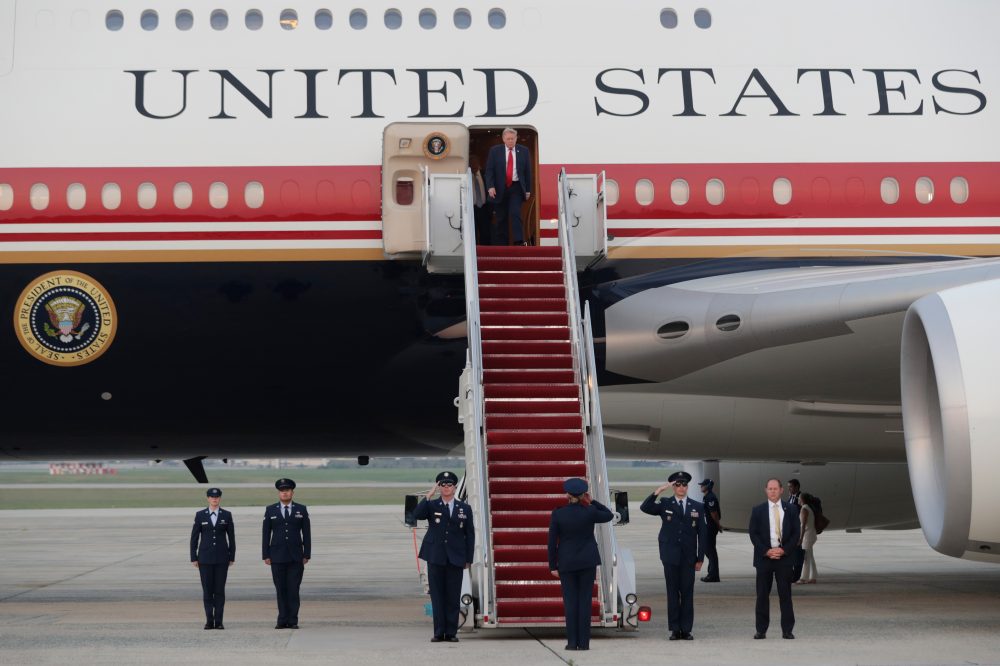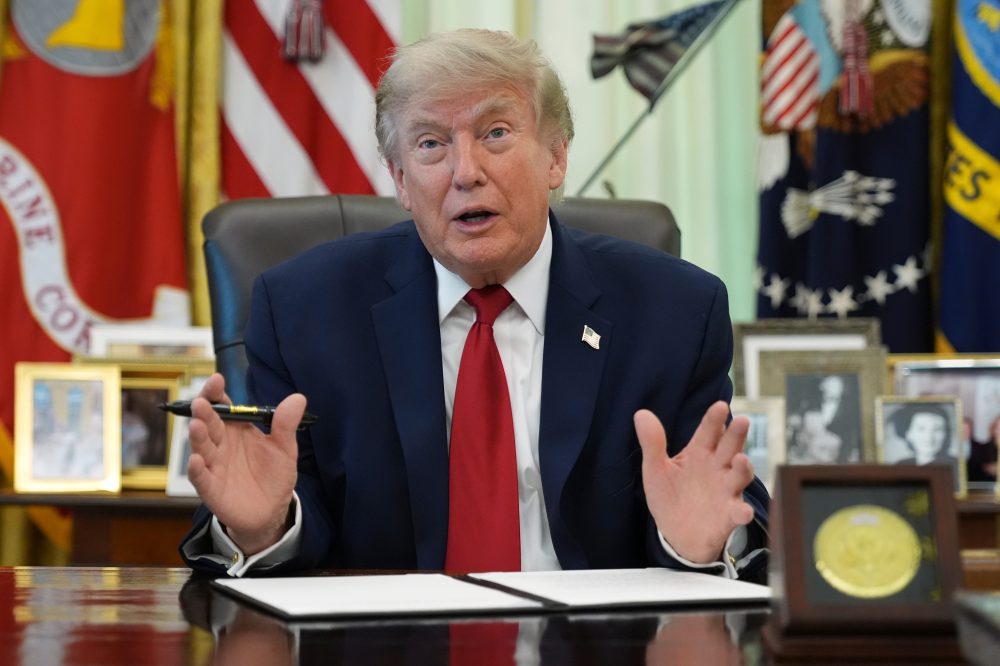

President Donald Trump is making a trip to North Dakota on Wednesday to tour the brand-new Theodore Roosevelt Presidential Library, a massive structure dedicated to the life of the nation’s 26th president — built in the same wild, remote landscape where the young New Yorker forged his conservation beliefs while ranching and hunting during the 1880s.
The 96,000-square-foot facility is set to officially open its doors on July 4th, a fitting date given the nation’s celebrations of the 250th anniversary of the signing of the Declaration of Independence. Trump is arriving ahead of the opening weekend to preview the $450 million project, which was championed by Interior Secretary Doug Burgum during his time as governor of North Dakota. The visit also ties the country’s birthday festivities to a region deeply connected to America’s westward expansion.
All living presidents received invitations to the grand opening. The library joins more than a dozen similar institutions across the country that chronicle the lives and legacies of U.S. presidents — from Ronald Reagan’s in California, to Franklin D. Roosevelt’s in New York, to Herbert Hoover’s in Iowa. The Obama Presidential Center recently opened in Chicago, drawing four former presidents to that celebration.
Library Executive Director Robbie Lauf confirmed that Trump will be the facility’s first official visitor. The president is scheduled to speak at a nearby Western-themed amphitheater at an event organized by Freedom250, a group Trump created that is described as nonpartisan, which he has enlisted to coordinate the week’s festivities. Trump also plans to visit Mount Rushmore in South Dakota on Friday for Independence Day fireworks — a repeat of what he did back in 2020.
Trump has frequently expressed admiration for Roosevelt, and has at times drawn comparisons between himself and the former president. In 2020, he declared himself “the number one environmental president since Teddy Roosevelt.”
Early in his second term, Trump highlighted Roosevelt-era achievements such as the construction of the Panama Canal. He even floated the idea that the U.S. might look to reclaim the waterway from Panama to counter Chinese influence — though that notion was largely overshadowed by his suggestions that Washington could seek control of Greenland or that Canada might become the 51st state.
Ahead of staging a UFC fight on the White House lawn for his 80th birthday, Trump noted his awareness of Roosevelt having held informal boxing matches inside the White House — though he made no reference to the fact that Roosevelt detached the retina of his left eye during one of those sparring sessions.
The North Dakota visit also highlights the president’s high regard for Burgum, who has emerged as a prominent supporter and promoter of the president’s large-scale renovation efforts around Washington.
Roosevelt first traveled to Dakota Territory in 1883 to hunt bison. The following Valentine’s Day brought devastating personal tragedy when his mother and wife died just hours apart in the same home.
Grief-stricken, the New York native retreated to Dakota, where he spent time ranching cattle and hunting big game, primarily between 1884 and 1887. The experience transformed him profoundly — he chased down river boat thieves, stood his ground against a bully in a bar, and earned the respect of cowboys who had initially mocked him for wearing eyeglasses.
Roosevelt, who served as president from 1901 to 1909, later credited his time in North Dakota as essential to his path to the presidency, saying he never would have reached the White House without it.
The library sits near Theodore Roosevelt National Park, where visitors can hike trails and drive through the colorful, rugged Badlands terrain where bison and wild horses still roam freely.
Burgum first pushed the library project to North Dakota’s Republican-led legislature back in 2019 while still serving as governor, making the case for its tourism potential. Lawmakers approved a $50 million operations endowment, on the condition that library organizers raise $100 million in private donations — a target they hit in 2020. Total donations have reached approximately $354 million as of early 2026.
Among the notable donors are oil executive Harold Hamm, the Walton family of Walmart, Citadel founder and CEO Kenneth Griffin, and Burgum himself.
Burgum has also been advocating for Roosevelt’s induction into the Pro Football Hall of Fame. At a recent preview event for the library, he told attendees to “keep your fingers crossed.”
That nod to football history stems from Roosevelt’s concern over the growing number of injuries and deaths among college football players. In 1905, he convened a White House meeting with the presidents of Harvard, Yale, and Princeton to push for safety reforms in the sport. Those conversations eventually helped spark the founding of the NCAA, the governing body of college athletics.
Visitors to the library will explore Roosevelt’s conservation legacy and his leadership of the Rough Riders regiment during the Spanish-American War. But the library won’t shy away from the darker parts of his record. Lauf noted that the facility will also address Roosevelt’s “horrific comments” about Native Americans and other views “that have obviously aged poorly.”
The library houses a wide range of artifacts, many of which have been out of public sight for decades. Among the items on display: Roosevelt’s Rough Riders uniform, his 1884 diary written in the wake of his devastating personal losses, and the eyeglasses case, speech, and bullet-pierced shirt from the 1912 assassination attempt against him.
Organizers are hoping the library will attract families, school groups from across the region, and travelers passing through on their way to Yellowstone National Park and the Black Hills.
“It’s a feature, not a bug, that we are in a county of 1,000 people and a town of 120,” Lauf said. “TR came here for that purpose.”
On Tuesday, the Dakota Resource Council hosted a group of conservation leaders who criticized both Burgum and Trump for policies they argue run counter to Roosevelt’s environmental principles — specifically pointing to staff and budget reductions and the prioritization of energy development on public lands.
Last year, Burgum signed an order aimed at keeping parks open and accessible to the public amid workforce cuts. He has also compared America’s public lands and natural resources to “assets” that should be developed responsibly in pursuit of what he calls “energy dominance.”